Book Description: A girl who can speak to gods must save her people without destroying herself.
A prince in danger must decide who to trust.
A boy with a monstrous secret waits in the wings.
Together, they must assassinate the king and stop the war.
In a centuries-long war where beauty and brutality meet, their three paths entwine in a shadowy world of spilled blood and mysterious saints, where a forbidden romance threatens to tip the scales between dark and light.
Review: This was book-cover love through and through. Sure, the description sounds good enough, but there were also some warning signs there (love triangle??) that would typically make me a bit wary. But I love the simplicity of this cover and the way the colorization is used. Alas, by the end of the book, the cover was still probably my favorite part.
Nadya can speak to the gods, an entire pantheon of them. But for most of her life, she has been hiding and training in a remote monastery, a secret weapon that hasn’t been used yet in a growing political war. One day, that war arrives on her doorstep, quite literally, and everything changes. Now caught up in events moving in ways she barely understands, Nadya finds herself working a boy she’s not sure she can trust but who might also be the key to it all.
Honestly, there wasn’t much I loved about this book. That’s not to say I hated a lot of it either, but more like, I felt like I had read much of it before and read it better. Russian-based fantasy stories have been the rage for a few years it seems, and as such, there have been a million and one entries into the sub-genre with a wide range of quality, as far as I’m concerned. There have definitely been worse ones than this, but when I just finished up the last book in the “Winternight” trilogy, it’s hard to look at this one and not be a bit disappointed.
Aside from that trilogy, the more direct comparison for this book would be Bardugo’s “Grisha” trilogy. I’m pretty sure there have been quite a few comparisons already floated around between the two and I can definitely see it.
The biggest similarity comes with the romance and the enemies-to-lovers trope that is at the heart of both (sort of). On its own, I think this is one of the harder love arcs to right and I would say its this aspect specifically that sunk Bardugo’s series for me as I could never buy this part of the story. So, here, too, I struggled. I could never understand the “whys” behind any emotion our two romantic interests had for each other. Why did they really hate each other in the first place? Patriotic prejudices can only go so far as an explanation. And then, worse, why do they fall for each other? The motivation behind either emotion wasn’t fully fleshed out in any way, and when you’re dealing with some of the strongest emotions out there, love and hate, you need a pretty darn good reason to have your character feel them, and even more so, change from one to another. Throughout the story, the male love interest lied repeatedly to Nadya, and yet somehow, we’re meant to buy her continued interest in him. By about halfway through the book, I started to give up on getting the strong character I wanted from Nadya and was resigned to the fact that she was mostly a love interest in her own story.
I also struggled with the magic system. Again, as it was incorporated in the story, it felt very similar to other Russian-based fantasies I’ve read, but here it only skimmed the surface. The end of the story in particular seemed to really highlight this struggle as aspects of the magic system seemed to come out of nowhere or operate in ways that didn’t really make sense all of a sudden.
On top of that all, I was just bored throughout most of this. Other than the frenetic last few chapters of the story, I just felt like I was following the predictable footsteps of a well-worn path. There wasn’t anything new here, and in a subgenre that has so many offerings, I’d say if you’re looking for Slavic fantasy, you can find better. Just this year there was the final book in the “Winternight” trilogy, “The Winter of the Witch” by Katherine Arden and “Spinning Silver” by Naomi Novik. And if you want a better “enemies to lovers” story, you can check out “Sherwood” by Meagan Spooner.
Rating 6: Nothing terribly bad, but also not really holding its own in a pretty packed subgenre of YA fantasy.
Book: “The Sword and the Dagger” by Robert Cochran
Publishing Info: Tor Teen, April 2019
Where Did I Get this Book: NetGalley
Book Description: During the time of the Crusades, an unlikely trio—a Christian princess, her affianced prince, and a Muslim assassin—embarks on a quest to the court of the most fearsome warrior the world has ever known, Genghis Khan.
A rousing tale of adventure and romance about three young people who must grapple with fundamental issues of loyalty, friendship, faith, honor, and courage against the backdrop of conflicts that still resonate today.
Review: I placed a request for this book based on the strength of its plot description and the beautiful cover. Even though there was a massive red flag telegraphed to me with the love triangle set up, I thought “Sure, why the heck not? Who doesn’t like a good ole fun trip into the time of the Crusades?” Alas, right off the bat I struggled to get into this book, and by the last page I was more confused by the editing (or lack thereof?) of this book than anything else.
The story follows our three intrepid adventureres: Princess Elaine, her betrothed Conrad, and Rashid, an assassin sent to kill Elaine. All three are made up of a complicated mixture of the best and worst aspects of their respective belief systems, be those religious or cultural, as well as a myriad of other aspects that go to prove that no person can be defined so simply. While journeying together through various trials and tribulations, they all must learn that their fellow travelling companions are just as complex as they themselves.
As I said, I didn’t love this book. But before I get into its challenges for me, I want to highlight some aspects of the book that I did enjoy. Firstly, I liked the historical setting and the way that was tied into the book. I also really liked a lot of the broader concepts about prejudice and tolerance that our three main characters explored throughout the story. There were the obvious debates about religious disagreements came to by the Christian Conrad and the Muslim Rashid, but the story also explored gender roles with the limitations placed on Elaine as a woman growing up in a time where very little was expected, or permitted, of women. Overall, there was a nice combination of action and adventure mixed in with these larger debates in a way that allowed the book to explore some pretty big topics without coming across as overly preaching. The fast pace of the story also helped in this regard.
So those are my pros. But mixed within some of those same things that I enjoyed were also the parts of this book that I struggled with. As I said, I liked the historical setting of this book and the fast paced nature of the adventure made for a snappy read. But mixed together, it also left the book feeling oddly light and surface-level as far as its world. Our main characters jump from place to place and action piece to action piece so quickly that I never really felt like I had time to really sit back and examine the intricacies of the setting in which these events were taking place. For a book that covers of settings and ground, I never felt like I was really given any time to appreciate that fact. The plot was too busy getting from point A to point B to allow for this.
The fast paced nature of the story was also fun, but it also felt like it undercut some of the more somber moments in the story and restricted some of the character development. While overall I did like the three main characters, I also never really felt overly attached to any one of them. They often felt like the standard, expected characters for a story like this. So, too, the story they were travelling through also felt pretty expected. There weren’t any big surprises, and the few twists that there were, were exactly the ones you’d come to expect. I don’t need huge surprises around any corner, but at a certain point a sense of newness does help.
But my biggest problem came down to the writing itself and one very specific thing: the POVs would change without any indication or warning. Even in the middle of paragraphs! Even to characters who weren’t one of the main three. In the very first chapter, we’re introduced to Elaine, but then random sentences come through from the perspective of those around her commenting on Elaine herself. There’s no explanation for why we’re suddenly in this new character’s mind and then just as suddenly, we’re back to Elaine. It was incredibly distracting and quickly started to drive me crazy as we went on. I’m not sure what was going on there, but this specific aspect is where I think a good editor was needed. This is the kind of writing tic/flaw that a good editor will flag and help an author work through during the revision process. For some reason that didn’t happen and what could have been a better story suffered for it.
Ultimately, this writing issue was really the nail in the coffin of my enjoyment of this book. There are some good bones here, but for me, I couldn’t get past the distraction of this. That, plus the light descriptions of setting and sometimes too-fast nature of the story, ended up outweighing the parts of the story that I did enjoy. This could be good for fans of historical fiction, especially those interested in this time period. But we warned that if you’re sensitive to writing quirks, this one might be a struggle.
Rating 5: It had some good things to say about prejudices and tolerance, but the weird POV issue was too much for me.
Reader’s Advisory:
“The Sword and the Dagger” is a newer title so it isn’t on many relevant Goodreads lists, but it is on “2019 YA Historical Fiction.”
Book Description: Tea is a bone witch with the dark magic needed to raise the dead. She has used this magic to breathe life into those she has loved and lost…and those who would join her army against the deceitful royals. But Tea’s quest to conjure a shadowglass—to achieve immortality for the one person she loves most in the world—threatens to consume her heart.
Tea’s black heartsglass only grows darker with each new betrayal. And when she is left with new blood on her hands, Tea must answer to a power greater than the elder asha or even her conscience…
Review: Given the timing of when I started reading this series, I was able to get through the first two books quite close together. Which meant I had a long wait ahead of me getting to this one. And, since the storytelling presented in this book is broken into two portions, there were quite a number of cliffhangers and unresolved plotlines left dangling after the second book. All the more nerve wracking as I waited for this, the final book in the trilogy. And, well, I’m not sure that the extra time between reads worked in this book’s favor. Or perhaps I was already on a downward trajectory overall. Either way, unfortunately, I felt like this was a frustrating end to the series.
Things are finally starting to come ahead for both Teas, past and present. The past version of our main character is beginning to feel the walls close around her as one disaster after another seems to strike. Surrounded by a small band of loyal followers, she finds herself on the run from not only the elder Asha but entire nations. Driven by the knowledge that secrets about shadowglass and bone witches are being kept from her and the world, Tea goes on a path of discovery that will lead ultimately to her banishment and the death of many of her loved ones. Present Tea, on the other hand, has come fully into her own, surrounded by her powerful beasts and on a rampage throughout nations. Her plans are not fully clear, but it’s clear that those who stand in her way are not coming out of things on the winning side. Is Tea’s mission one of justice or is it simply the darkness inside of her fully taking control?
I’ve always found these books a bit confusing. The world-building is incredibly unique, and that’s a huge pro for the series. But there is something about its execution that doesn’t read clearly. The writing style, perhaps, leaves something wanting in the clarity department, and the choice to alternate between two story lines, each with its own complications and mysteries, doesn’t help matters. There are aspects of past Tea’s life that are referenced way back in book one, but aren’t answered until this, book three. That’s simply too long for me to have kept track of everything involved in the timeline, especially when all references made in the “present” timeline are obscured through the strange way that present-Tea is made to speak.
This has annoyed me from the start: Tea’s sudden tendency to rattle of pert little phrases of wisdom and mystery. It’s not a natural way to talk and reads in stark contrast to the past Tea who reads and speaks more like a typical person. The mode of present-Tea’s speech added extra layers of confusion to all of the references she made to events from the past. This being the case, as I was reading this book, I constantly felt like I was missing things. And then when I referenced back to the first book, I would fine that present-Tea has entirely misrepresented the situation, usually, again, with some type of unnecessarily cryptic remark. This made for an incredibly frustrating reading experience. I was lucky that I still had copies of the first two books on hand, but even so, I found this need to refer back very annoying.
I also had had some concerns from the very start about how well these two storylines would merge, and I was right to worry. Again, Tea’s sudden transformation from the past version of the character to the cryptic, almost all-powerful Tea of the present didn’t read as natural. Had the chapters been laid out in order, the jump would have been sudden and strange, and the fact that it was broken up over three books didn’t do enough to obfuscate the matter.
I was also unsatisfied with the reveals themselves. Like I said, there were about a million and one referenced mysteries that had been dropped throughout the first two books that needed resolutions here. But as these resolutions appeared, I found them increasingly annoying. Several of the referenced events don’t really make much sense and require characters to be willfully blind to some pretty basic facts to pull off. Tea’s own regrets and feelings of guilt also don’t make sense, now seeing some of these events play out. Everything just felt a bit off.
This feeling of being offkilter was all the worse because the bones (pardon the pun) of the story are still good. Like I said, the worldbuilding is incredibly unique, and I’m always going to applaud an author for creating a complicated world, magic system, and arc for her story. But the slight “offness” of everything, be it the writing itself or the way the storyline actually unfurled, became increasingly hard to read as the series progressed.
Like I said, maybe the fact that I was able to read the first two books more closely together played in their favor. I definitely had to spent a lot more time reminding myself of a lot of details of this world, character, and story as I got into this book which made it hard to simply sink in and enjoy it. I also feel like the time away left me freed up to think more critically about the story and character arc itself, as well as be a bit more put off by the writing style.
This was a disappointing return to the series. Though, I will say that now that the series is complete, readers might have more luck and enjoyment if they are able to read all three books back to back. That mode of reading could play highly in the series’ favor, reducing the confusion of a returning reader and retaining the interest of readers across books. If you do like dark fantasies, I still recommend checking this series out, but definitely plan on reading them all at once. As for returning readers, your experience may be different than mine, but I was left disappointed by this conclusion, not because of the ending itself, but by basic mechanics of the storytelling that seemed to stand out in a more negative light in this book than they had in the first two.
Rating 6: For me, a disappointing end. The writing felt more strained and the storylines didn’t feel like they ultimately linked up together naturally.
Book: “A Boy and His Dog at the End of the World” by C. A. Fletcher
Publishing Info: Orbit, April 2019
Where Did I Get this Book: ARC from the publisher!
Book Description: My name’s Griz. My childhood wasn’t like yours. I’ve never had friends, and in my whole life I’ve not met enough people to play a game of football.
My parents told me how crowded the world used to be, but we were never lonely on our remote island. We had each other, and our dogs.
Then the thief came.
There may be no law left except what you make of it. But if you steal my dog, you can at least expect me to come after you.
Because if we aren’t loyal to the things we love, what’s the point?
Review: Let me tell you, a raging debate took place in my mind when deciding whether or not to place a request to read this book. On one side we have the fact that the book description sounds right up my alley, and I’m almost always looking for a good post-apocalyptic story, especially one that seems to be trying to do something new and avoiding the over-saturated realm of dystopian fiction. On the other hand, the book description references a dog being stolen….and I would NOT be ok if something happened to the dog. And let’s be real, this is a tragic world we’re entering, chances are good something would happen to the dog! But in the end, I let my better angels persuade me that fear of pet-related tragedy wasn’t a good enough reason not to read what otherwise sounded like an awesome book. And I’m so glad I did!
Generations have passed since the end of the world as we know it. But while everything is different, much is still the same, like the love of Griz’s small family and the special connection between Griz and his dogs. In a world gone quiet, made up of brief sailing trips to scavenger for more supplies, the dogs provide crucial support not only in their rabbit-catching abilities but in the happy-go-lucky, loving relationship that has always marked the special bond between dogs and humanity. So when Griz wakes to find one dog has been stolen away, he knows what he must do. What follows is a harrowing tale of endurance in the face of impossible odds, small beauties to be found in emptiness and tragedy, and the special place family, be that human or dog, holds in what could otherwise be a bleak existence.
There was so much to love about this book that it’s hard to know where to start. I think one thing that really stood out to me was the world itself. From the very first page, the emptiness and quiet of this new world was apparent. What also stood out was the fact that our narrator, Griz, has come on the scene several generations after the event that struck down the world we know. That being the case, Griz is piecing together the remnants of a foreign world and society, to varying levels of success. The reader is often left guessing as to what exactly Griz is referencing or describing, since he doesn’t always know the purpose behind the things or places he discovers. There was also a character who spoke a different language and the way this was handled was especially clever. The determined and curious reader will have a lot of fun unpacking these bits.
Griz is also a very effective narrator. The story is written in first person told from a Griz who is relating his story from some period in the future. That being the case, there are often references to the fact that some choice or another will have some impact down the line that past-Griz wouldn’t have known about but that present (and narrating) Griz now reflects upon through different eyes. As for the character, Griz was a lovely combination of being innocently naive while also supremely capable in the face of numerous challenges. There is a sense of sadness woven throughout the story, but Griz’s reflections throughout are poignant and often hopeful in the face of some very sad things. I often found myself wanting to highlight various quotes throughout and will definitely be going back to note a few to reference later.
The story is also both what I expected and much more. There is a lot happening throughout, but it also read at a slow, measured pace, giving ample time to focus on, again, the beautiful, quiet reflections of Griz. I really enjoyed how well-balanced the story felt. There is real danger to this world, and we get a few really great action scenes to highlight this fact (but not necessarily the danger you would expect, which, again worked in favor of keeping the story feeling new and original). But there was also time spent highlighting the strangeness of human interactions and relationships in a world where very few humans even exist.
I won’t spoil anything, but there’s definitely an interesting twist towards the end. I ended up guessing it, but I still think it was done very well. In fact, it’s the kind of follow through on a surprise that I wish we had seen in another book I reviewed recently. If you read this one, you’ll know what other book I’m talking about! I also won’t give away what happens with the dog. I will say that there were tears on and off throughout the book, but I still left it feeling incredibly satisfied and immediately passed it off to my friends and family. If you enjoy post-apocalyptic stories, this is definitely one worth checking out!
Rating 10: I loved this book, heart-wrenching and heart-warming at the same time.
Reader’s Advisory:
“A Boy and His Dog at the End of the World” isn’t featured on any relevant Goodreads lists yet, but it should be on “Best Post-Apocalyptic Fiction.“
So, surprise! I had a baby last month! And in honor of my little one, and to acknowledge that alongside all the great fiction books I’ve read and reviewed over the last 10 months the fact that I’ve also been obsessively researching baby information, I’ve decided to dedicate my two posts for this week to four of my favorite pregnancy/baby-related reads. It really shouldn’t come as a surprise that, as a librarian, reading was/is my go-to coping method when the first-time mom anxiety hit(s) and there are a lot of resources out there. Some were ok, some seemed like a textbook for scare tactics (I’m looking at you “What to Expect” series), but these four were pretty solid for me specifically. Now, of course, pregnancy and parenting is all very individualized to how people approach life and children, so massive warning that these fit what I was looking for and in no way reflect some type of be-all, end-all to the the vast, VAST expanse of resources and approaches on these topics. So, that out of the way, here are the second two I’m highlighting.
Book: “The Science of Mom: A Research-Based Guide to Your Baby’s First Year” by Alice Callahan
Publishing Info:Johns Hopkins University Press, August 2015
Where Did I Get this Book: own it!
Book Description: It seems like every time a new mother turns on her computer, radio, or television, she is greeted with news of yet another scientific study about infancy. Ignoring good information isn’t the right course, but just how does one tell the difference between solid studies, preliminary results, and snake oil?
In this friendly guide through the science of infancy, Science of Mom blogger and PhD scientist Alice Callahan explains how non-scientist mothers can learn the difference between hype and evidence. Readers of Alice’s blog have come to trust her balanced approach, which explains the science that lies behind headlines. The Science of Mom is a fascinating, eye-opening, and extremely informative exploration of the topics that generate discussion and debate in the media and among parents. From breastfeeding to vaccines to sleep, Alice’s advice will help you make smart choices so that you can relax and enjoy your baby.
Mini-Review: So while my first two recommendations on Wednesday had to do with birth and labor, these two books have to do with early infancy and the millions of questions that come with it! I read both of these books when I was pregnant, so at the time, while I knew the information would be useful, I was also coming from a purely theoretical viewpoint. Now, after the fact, I find both of these even more useful. Again, surprising no one, this book focuses on analyzing the research behind the many, MANY recommendations that come with early infancy. And with recommendations comes debate, especially as, if you ask any woman, especially those from different generations, these recommendations are constantly changing. How do you know which to follow and which may be just the most recent “fad?” Well, truthfully, we’re all just guessing. But this book does a good job of really looking at the research behind the current recommendations and letting new parents get at least a better understanding of what the debates are and some basis for coming to their own conclusions. I’ve referenced it a few times now when trying to make decisions about my baby.
Book: “On Becoming Baby Wise: Giving Your Infant the Gift of Nighttime Sleep” by Robert Bucknam & Gary Ezzo
Publishing Info: Hawksflight & Associates, Inc, September 2006
Where Did I Get this Book: own it!
Book Description: The infant management concepts presented in this book have found favor with over two million parents and twice as many contented babies. On Becoming Babywise brings hope to the tired and bewildered parents looking for an alternative to sleepless nights and fussy babies. The Babywise Parent Directed Feeding concept has enough structure to bring security and order to your baby’s world, yet enough flexibility to give mom freedom to respond to any need at any time. It teaches parents how to lovingly guide their baby’s day rather than be guided or enslaved to the infant’s unknown needs.
The information contained within On Becoming Babywise is loaded with success. Comprehensive breast-feeding follow-up surveys spanning three countries, of mothers using the PDF method verify that as a result of the PDF concepts, 88% breast-feed, compared to the national average of only 54% (from the National Center for Health Statistics). Of these breast-feeding mothers, 80% of them breast-feed exclusively without a formula complement. And while 70% of our mothers are still breast-feeding after six months, the national average encourage to follow demand feeding without any guidelines is only 20%. The mean average time of breast-feeding for PDF moms is 33 1/2 weeks, well above the national average. Over 50% of PDF mothers extend their breast-feeding toward and well into the first year. Added to these statistics is another critical factor. The average breast-fed PDF baby sleeps continuously through night seven to eight hours between weeks seven and nine. Healthy sleep in infants is analogous to healthy growth and development. Find out for yourself why a world of parents and pediatricians utilize the concepts found in On Becoming Babywise.
Mini-Review: For a book about sleeping, there sure is a lot of talk about breastfeeding in that book description. I am definitely of the mindset that”fed is best” so take this recommendation for what it is and not any grand statement in favor of exclusive breastfeeding or any other “stance.” No, what appealed to me about this book (beyond the obvious of course! I mean, who doesn’t want their baby sleeping through the night as soon as possible?!) was the nice balance it seemed to strike between hyper scheduling feeding/sleeping and some type of more “baby led” or attachment parenting style. Using the tips from this book, the baby is less on a schedule than on a routine or rotation of activities. I’ve found this so, so helpful! Not only do I feel like nighttime feeds have become more manageable more quickly, but as a panicky new mother, I felt like I had a better guess as to what was actually going on when my baby cried than I would have had otherwise. I really can’t recommend this book enough, regardless of how you feed your baby. With its emphasis on full feeds (rather than “snacking” where the baby eats in short bits and then wakes up 30 minutes later and its a constant, exhausting cycle), I fully believe this booked helped me not lose my sanity in the early days. It took some early commitment, what with keeping baby awake to eat and letting baby fuss a bit in bed, but I do think it set us all off on the right track.
So, surprise! I had a baby last month! And in honor of my little one, and to acknowledge that alongside all the great fiction books I’ve read and reviewed over the last 10 months the fact that I’ve also been obsessively researching baby information, I’ve decided to dedicate my two posts for this week to four of my favorite pregnancy/baby-related reads. It really shouldn’t come as a surprise that, as a librarian, reading was/is my go-to coping method when the first-time mom anxiety hit(s) and there are a lot of resources out there. Some were ok, some seemed like a textbook for scare tactics (I’m looking at you “What to Expect” series), but these four were pretty solid for me specifically. Now, of course, pregnancy and parenting is all very indivualized to how people approach life and children, so massive warning that these fit what I was looking for and in no way reflect some type of be-all, end-all to the the vast, VAST expanse of resources and approaches on these topics. So, that out of the way, here are the first two I’m highlighting.
Book: “Expecting Better: Why the Conventional Pregnancy Wisdom is Wrong – and What You Really Need to Know” by Emily Oster
Publishing Info: Penguin Press, August 2013
Where Did I Get this Book: own it!
Book Description: Pregnancy—unquestionably one of the most profound, meaningful experiences of adulthood—can reduce otherwise intelligent women to, well, babies. We’re told to avoid cold cuts, sushi, alcohol, and coffee, but aren’t told why these are forbidden. Rules for prenatal testing are hard and fast—and unexplained. Are these recommendations even correct? Are all of them right for every mom-to-be? In Expecting Better, award-winning economist Emily Oster proves that pregnancy rules are often misguided and sometimes flat-out wrong.
A mom-to-be herself, Oster debunks the myths of pregnancy using her particular mode of critical thinking: economics, the study of how we get what we want. Oster knows that the value of anything—a home, an amniocentesis—is in the eyes of the informed beholder, and like any complicated endeavor, pregnancy is not a one-size-fits-all affair. And yet medicine often treats it as such. Are doctors working from bad data? Are well-meaning friends and family perpetuating false myths and raising unfounded concerns? Oster’s answer is yes, and often.
Pregnant women face an endless stream of decisions, from the casual (Can I eat this?) to the frightening (Is it worth risking a miscarriage to test for genetic defects?). Expecting Better presents the hard facts and real-world advice you’ll never get at the doctor’s office or in the existing literature. Oster’s revelatory work identifies everything from the real effects of caffeine and tobacco to the surprising dangers of gardening.
Any expectant mother knows that the health of her baby is paramount, but she will be less anxious and better able to enjoy a healthy pregnancy if she is informed . . . and can have the occasional glass of wine.
Mini-Review: As a librarian, I feel like I have a lot in common with the author and her emphasis on research-based decision making. Working in an academic library, none the less, I spend a solid chunk of my time teaching students why it is important to find research to back up their own thoughts and opinions and how to distill that information into choices that are reflected in their work. This book has an incredible wealth of information from someone who has spent the time to really analyze what studies are really saying about pregnancy and decision-making, all presented through the lens that each expectant mother will need to ultimately make whatever decision feels right and most comfortable to her. For me personally, it really helped re-focus my attention on aspects of pregnant life that do require new approaches but also took a lot of fear out of the millions of warnings out there that make pregnant women feel like everything and anything is crazy dangerous for them and their growing baby. It’s all too easy to live the full 9 months feeling like every little thing could be the WORST THING EVER and you’re a BAD MOM if you do such and such thing. This book really helped me give myself a break from much of this. For others looking to know what the science is behind the general recommendations that “everyone knows to be true,” this is a great book to really dig deep. And yes, justify a glass of wine now and then!
Book: “A Good Birth: Finding the Positive and Profound in Your Childbirth Experience” by Anne Lyerly
Publishing Info: Avery, August 2013
Where Did I Get this Book: own it!
Book Description: Most doctors are trained to think of a “good” birth only in terms of its medical success. But Dr. Anne Lyerly knows firsthand that there are many other important elements that often get overlooked. Her three-year study of a diverse group of over one hundred expectant moms asked what matters most to women during childbirth. The results, presented to the public for the first time in A Good Birth, show what really matters goes beyond the clinical outcome or even the usual questions of hospital versus birthing center, and reveal universal needs of women, like the importance of feeling connected, safe, and respected.
Bringing a new perspective to childbirth, the book’s wisdom is drawn from in-depth interviews with women with a wide variety of backgrounds and experiences, and whose birth stories range from quick and simple to complicated and frightening. Describing what went well, what didn’t, and what they’d do differently next time, these mothers give voice to the complete experience of childbirth, helping both women and their healthcare providers develop strategies to address the emotional needs of the mother, going beyond the standard birth plans and conversations. Transcending the “medical” versus “natural” childbirth debate, A Good Birth paves the entryway to motherhood, turning our attention to the deeper and more important question of what truly makes for the best birth possible.
Mini-Review: Yes, yes, again with the studies. But this was one big study conducted by a doctor on women’s experiences with labor, specifically. The author was recognizing that while medical professionals focused, rightly for the most part, only on the outcome of labor to establish whether a birth was “good,” many women, asked later would mention a variety of things that contributed to their feelings on their labor experience. The book is broken up into section that deal with these larger areas (like communication, safety, control, etc) and got into the different, smaller details that influenced how women felt about these larger topics and their birth. The really great thing about this book, I thought, was the way it always circled back to the idea that every woman is going to need different things to feel like she had a “good” birth, and that in a society that is largely fixated on the “right way” to have a baby, we are often losing focus on the fact that the whole idea of a “right way” is a fool’s errand to begin with. One that is often used to shame women about their choices, rather than support the variety of ways that work for the many, many different women (and births!) out there. After having my baby, this book seems even more valuable, as I can still find myself having the tendency to feel guilty about some of the aspects of my labor. But this read is a good reminder that there is no need for that.
Publishing Info: Scholastic Paperbacks, December 2000
Where Did I Get this Book: own it!
Book Description: David, the “sixth Animorph,” is back. When the Animorphs and Ax decided to give another human being the power to morph, it was one of their biggest mistakes. David tried to destroy all of them–and almost succeeded. Rachel and the others thought they’d seen the last of him.
They were wrong.
Rachel knows what a threat David is. He’s cunning and dangerous. Worst of all, he knows their secrets. Now he’s captured Rachel as part of his plan to take over everything. David wants power. Money. But more than anything, he wants revenge.
Narrator: Rachel
Plot: Again, for 90% of this book I was banging my head against a wall at the sheer waste of the very last Rachel book we’re going to get. There’s a strong argument to be made that, other than Jake, Rachel has the most interesting over-arching story line throughout the series. And then, in the last book before we lose her for good, we get this. Dream sequences within dream sequences. A return to the crazy Rachel who wants to fight Jake for leadership. A bizarre Crayak appearance that comes with the worst “morph” (and cover art) ever. And then, at the very end, some truly good stuff about Rachel’s role on the team and how the others view (and use) her. But we’ll save that for just a few throwaway pages at the very end, just to really rub it in your face that there was in fact good stuff to be had here. But we had to get those dream sequences in, you know?! Priorities.
It was trash. Then it was even worse trash. Then it…made some super strong points?? Then it ended on a cliffhanger…
Rachel and the other Animorphs are on a school field trip to the White House when the Yeerks attack, leading with a shot that takes out Tobias. Enraged and assuming that the Yeerks are now going on the open offensive, so they might as well too, Rachel and the others go into their battle morphs. Grizzly!Rachel begins taking out Hork Bajir, but takes a lot of hits while she’s at it. Gorilla!Marco pulls her back and tiger!Jake orders her to stand down; that she’s taken too much damage and is out of control. This enrages Rachel and she decides that she’s done taking orders from Jake and it’s time for them to fight it out for leadership of the group. They fight, but Rachel continues to take too much damage, slowly bleeding out in front of the White House, only to wake up, drenched in sweat in her bed.
Later, Rachel is visiting Ax and Marco in Ax’s scoop in the woods after failing to find Cassie in her barn. Rachel is concerned about the repeated nightmares she’s been having of fighting Jake, one-on-one. On the Internet, the discover a first hand account of the attack on the battle carrier. Rachel expresses her excitement that the war will finally be out in the open. Marco and Ax are both concerned about this level of enthusiasm from Rachel, and she begins to feel ashamed herself. Marco goes on to explain that if the war does come out into the open, the Animorphs are finished.
Eagle!Rachel flies back towards home with Tobias. On the way, they get into another discussion about Rachel’s enthusiasm about the war, with Tobias pointing out that she was beginning to disturb everyone with her attitude. Rachel once again starts down the “Jake is threatened by me” mentality that we are all so familiar with and loved back in the “Rachel is the leader” book. As she ponders this, she almost hits an electrical wire before, again, waking from her dream.
Awake, Rachel is disturbed by her dreams and reflects on the David incident, one of the most extreme examples of her past ruthlessness, but also an example of when the hard thing had to be done and the fact that while the plan ad been Cassie’s, Rachel was the one who had to actually follow through with it.
At school, she sees Jake in the halls and feels that his nod of greeting is more cold than usual. She worries that she is still in another dream, feeling disturbed and as if something is wrong with the world. In class, she begins to see red flashes and thinks she hears rats in the wall, crying out for help. She skips the rest of school and sends a note to Cassie to meet her at Cassie’s barn. When she arrives, she sees Cassie run out, pursued by a mass of rats that being attacking her as she tries to morph. The rats come after Rachel too and she tries to escape them by jumping in a pond. But once there, she is grabbed by something beneath and almost drowns.
She wakes up in some type of dungeon/sewer location, trapped within a hard, plastic cube. Two thugs show up and one pulls out rat!David. David tells her of the horrors of living on the rock island, but explains that, because he’s so smart, he was able to recruit a few of the “smarter” rats as lieutenants and then sneak off the island on a boat brought in by a group of naturalists. Once on the mainland, he was able to recruit another 200 or so rats to his “cause” and, being able to get into small places, like banks, gather the funds to pay off thugs like the two in the sewer with them.
The two get into a conversation where David tries to manipulate Rachel into taking all of the blame for what happened to him and gas-lighting her into thinking he was an innocent victim. For his revenge, he wants to force Rachel to morph rat and become stuck, like him. The red light returns and reveals another corner of the room where Cassie is being held prisoner in similar cube. David says he’ll let her suffocate in the cube if Rachel doesn’t morph. To buy time, Rachel does as he asks, hoping to still find an out. As she tries to think of a way out of the situation, David continues to prod at her about her role on the team. He also reveals that he has a solution to the Yeerk problem: wipe out the humans on Earth with a plague, then the Yeerks have no reason to be here anymore. As David talks, his voice starts to sound strange. He continues to manipulate her, almost hypnotizing her into agreeing that without Jake, Rachel could be in charge and wouldn’t that just be better?
The red glow returns and reveals itself to be an eye. Rachel snaps out of it and realizes that David can’t have an army of rats, they aren’t smart enough for that. And thus nothing that has happened can be real, like her and Cassie being attacked by rats. In the cube, “Cassie” turns into the Drode, and Rachel realizes that the red haze/eye is Crayak. She also realizes that Crayak’s hatred of Jake has been behind her strange dreams, setting Rachel up to hurt him. David, it turns out, is also only working for Crayak.
Crayak tells Rachel that she needs to free herself from herself and magically pops her out of her cage and into a giant, warrior version of herself with claws for fingernails. She is able to transform to and from this form at will, and begins to revel in the power it offers. She tries to attack the Drode, but everything is an illusion. Crayak transforms her back into a rat, now trapped in her cube with David. She gets in a fight with David, but he has more experience as a rat. Just when she is beginning to lose, Crayak pops her back out and into human form. She transforms back into Super-Rachel. He tempts her with thoughts of the power she could have in this form, able to take out the Yeerk force all on her own. Then pops her back into the cage with David, a rat again. The contrast starts to drive Rachel crazy.
Back in Super-Rachel form, Crayak lays out what he wants: she can retain this form and power if she kills Jake. Rachel refuses, telling herself that she is one of the good guys. To push Rachel further, Crayak somehow snaps Visser One/Three into the room. Crayak tells Visser One that he is now involved in a fight to the death with Rachel. If Visser One wins, he gets Earth; if he loses, he and the Yeerks must retreat.
They fight. Rachel is able to instantly morph to any of her forms, including Super-Rachel. When Visser One morphs some type of sentient goo that Rachel can’t fight, she discovers that she can create morphs, essentially, turning into a killer plant of her own imagination. Even after Visser One beheads her, Rachel is able to quickly reform herself. Rachel prepares to kill Visser One. But as Crayak urges her onward, she begins to reflect on Super-Rachel and how the world and the other Animorphs would see her: not as a someone to be honored and respected, but someone to be feared and hated. She releases Visser One, repeating that she is one of the good guys.
Back in the cube, back as a rat, Rachel begins to despair, not sure what is real and what is not. Crayak and the Drode disappear, leaving rat!Rachel with minutes before she is trapped as a rat and with Cassie, back trapped in her airless cube. She remembers the two thugs, and quickly calls out to them, highlighting the crappy situation of working for a talking rat like David. She promises that if they let her out, she will find the money David had promised them and they’ll be free of him. They let her out and she morphs grizzly and scares them off while David scampers away. As they run off, Rachel realizes that eventually they’ll talk and a Controller will realize that there’s a rat out there who knows all about the “Andalite bandits.” She releases Cassie and tells her to go on ahead, that she still has something to do, to return David to the island. Cassie tries to stop her, and Rachel gets angry, saying that Cassie knows what needs to be done, and can she do it herself? When Cassie hesitates and says she doesn’t know, the matter is settled.
She catches up with David, who is sitting staring at the sun; he doesn’t run when she approaches. He tells her he’d rather die than go back to the island. When she tells him that she can’t kill him, that she’s one of the good guys, he replies that she should do the “good thing” and put him out of his misery. Horrified, Rachel tries to tell him to just run away and promise never to tell anyone about them. David laughs a manic laugh and calls her a fool. Despite herself, she feels sorry for him and sorry for herself that they are in this situation. Rachel sets him down and cries, half hoping that he’ll just run away and spare her the decision. But he doesn’t. He repeats that if she is one of the good guys, she’ll do the right thing and kill him. But Rachel doesn’t know what the right thing to do is, so she sits there, a teenage girl in an alley staring at a white rat.
Xena, Warrior Princess: As far as Rachel’s character goes, I feel like we only really get into it towards the last third of this book. There’s a horrible return to the power-hungry Rachel who has some type of grudge against Jake for the first half to two-thirds and I don’t really want to even bother going into my feelings on that yet again (instead I’ll do it in the Jake section next!)
Instead, I wish the story had focused on the David stuff the entire time as there is plenty of character stuff to mine there. Not only do Rachel’s actions in the David trilogy play a big role in her relationship with Jake, but we also see how Rachel’s view of Cassie has been affected by that group of books as well.
I really liked effect had by the repeated mantra of “I’m one of the good guys” and then the heart-braking pay off for that phrase in the end when David asks her to kill him, saying that that would be the “good” thing to do. Crayak mentions that good and evil are only simple to the small-minded (deep burn to Cassie!) and it’s another great payoff that we see that thought in action with Rachel’s decisions at the end of this book. What is the good ting to do?
I also really liked her reflections on her role in the team, once she settles upon the symbiotic nature of the relationship.
I looked at Cassie’s face. It was a sweet face. It was wise, too. But still…I don’t know…oddly innocent somehow.
I’d been protecting her. Them. Jake. Cassie. Tobias. Even Marco and Ax. Helping to protect their innocence. Letting them see themselves as the good guys. It was a symbiotic relationship. Or co-dependent, whatever. They needed me to be the bad guy.
And I needed them to be the good guys. See, if they were good guys, and I was on their team, then that automatically made me a good guy, too. Even if I was different.
For all of the book’s flaws, I’m really glad that this part came out of this story. It’s essentially the conclusion and thesis to Rachel as a character throughout the entire series. It’s just excellent all around. If only it had come in a book that didn’t have a god awful cover of Rachel morphing some mutated version of herself. *sigh*
Our Fearless Leader: It’s unfortunate to see a return to the “Rachel is jealous of Jake’s leadership role” take again in a Rachel book. While the later explanation by Crayak that his goal in recruiting Rachel is to take out Jake, it still seems to play off the idea that Rachel, on her own, still covets the leadership role and harbors some type of violent inclinations towards Jake. It was hard to swallow this the first time and having it reappear doesn’t really improve things. Since that book, again, we’ve seen no evidence that Rachel covets the leadership role, that the other Animorphs would ever accept her as the next in line for leadership, or that any of this type of tension lies at the heart of Rachel and Jake’s relationship. Given where the book ends up in the last third, with Rachel’s realization/acceptance of the role she plays in the team, especially when connected to David, there were a lot more interesting routes that could have been taken with her relationship with Jake given his and Rachel’s interactions back during the David trilogy. And when you know where the series is headed with Jake’s use of Rachel…I just feel like there were a lot better options to explore there than some weird jealously/leadership angle that has never made sense.
A Hawk’s Life: Tobias isn’t even in this book in reality, only in a dream sequence.
Peace, Love, and Animals: You have to wonder whether Rachel and Cassie talk more about this after the fact. And, as I’ll get to in the “crazy plans” section, like David, I’m not sure why real Cassie had to be involved in any of this either. But it’s good that she was, because, again, the end of the book had some good stuff between her and Rachel as Rachel is understand truly where she stands. Rachel thinks repeatedly about the fact that Cassie was the one who came up with the plan to trap David (ironic, since earlier in this book, David mentions that he would have picked Cassie as a companion because she was nice to him, but he didn’t want to torture her with being a rat, so he chose Rachel. If only he had know who the ultimate mastermind of his fate had been!) but how Rachel was the one who had to suffer actually executing it. There’s also this great interaction at the very end when Rachel is having to go after David once again to return him to the island:
“I don’t think you can do it a second time,” Cassie said quietly.
I felt all the old anger bubbling up. Why was she arguing? She knew what had to be done. Why was she pretending not to understand what had to be done? So she could sleep at night? So she could say “I tried to stop her, so it’s not my fault?” so she could say “I didn’t know.”
I looked her in the eye. <I’m not sure I can, either. So will you do it?>
Cassie’s face creased. Her mouth opened and closed. Her eyes flickered.“I don’t know,” she whispered finally.
<I didn’t think so.>
It really highlights how even Rachel’s best friend is willing to let Rachel suffer the brunt of these kinds of things. And Rachel’s right, it’s worse because Cassie and the others often do things like this, use Rachel to do the dirty work and then judge her for it. The symbiotic relationship Rachel references feels a bit uneven at that point. It’s one thing for Rachel to do the dirty work to be one of the good guys, and the others to let her, so that she’s the bad guy. But then taking the extra time/breath to judge her for it, that’s tipping the balance towards the others being in the wrong ultimately. Rachel’s essentially paying a double price at that point.
The Comic Relief: Marco, too, isn’t in this, other than the dream sequence. Though his contributions in the dream conversation hold pretty true to the Marco we know. He’s also the example Rachel uses in her discussion with Tobias about why one bad behavior in the group (Marco’s whining) is tolerated but her gung-ho-ness is not. I’m not sure about this comparison, but, again, it’s a dream sequence so probably not worth over-analyzing it.
E.T./Ax Phone Home: Ax is only in this in the dream sequence, and even there he doesn’t contribute much.
Best (?) Body Horror Moment: I mean, the most horrifying part of this book is the cover. Full stop. Super!Rachel is such a stupid idea. She ends up having unlimited morphing abilities as it is in the fight with Visser One, able to morph instantly and create imaginary morphs. There’s no reason to have some steroid version of herself included too. It’s just stupid and a truly unfortunate choice to include as the cover. If readers weren’t already jumping ship off this series at this point, I’m pretty sure showing up at the bookstore and seeing this cover might have been the death knell for a good number of people.
Couples Watch!: Man, I can’t emphasize enough just how disappointing this book is on this front, considering it’s the last Rachel book we have in the series. The past few Rachel books have been disappointing in this arena for the most part too, and it’s really unfortunate as it felt like at one point about halfway through the series this relationship was going somewhere interesting with the whole “Rachel is frustrated with Tobias’s choice to remain a hawk” thing. But then that whole plot point was just dropped all together pretty much. And the only interactions we get in this book are during a dream sequence that Crayak creates and in which Tobias is again mostly a jerk towards Rachel. What made them an interesting pair was their ability to understand the choices the other made, choices that were often hard for the main group to understand. Rachel can appreciate Tobias’s commitment to the war, and Tobias has his own ruthless streak to match Rachel’s (again, remember that he is ultimately the decider behind the destruction of an entire alien race back in Megamorphs #2). So yeah, it’s a bummer that we’re left out in the cold here. There’s some good David stuff in this book, but I can’t help but be disappointed that in Rachel’s last book we get more on her relationship with psycho David than with Tobias.
If Only Visser Three had Mustache to Twirl: There are essentially three villains in this book: Visser One, Crayak, and David. Visser One only shows up for the brief battle royale and you have to imagine how confusing this whole thing is to him. He tries to get arrogant/snippy with Crayak initially but quickly seems to realize he’s outmatched. And then he lucks out that Rachel has a crisis of conscience at the very end or he would have been a goner.
As for Crayak, he’s again kind of just a nebulous, Sauron-like bad guy with a fixation on Jake. Frankly, other than the “Ellimist” book, the Drode has been the more interesting villain from this group and I think the story might have read better with him and his snark taking point, rather than the pretty cheesy “master villain” vibe that Crayak had going for him.
David is by far the most interesting villain in this story. I’ll get into why it’s weird that he’s here at all a bit later, but regardless of whether it makes sense, I’m glad they included him since the best parts of the book were at the end when Rachel was having to deal with him. He’s pretty interesting throughout this story. We see the full scope of crazy!David, from his extreme egomania, to his the cowardice at the heart of him, to his deranged sense of being wronged and the extremes that he will go to to fight back, to the part that is still a human boy who is living through hell. I’m not convinced that David ever had to come back, but since he did, I would have rather had the entire book deal with him and the fallout from the events back in the David trilogy. Crayak and Visser One just seem kind of ridiculous in comparison to some of the pretty heavy stuff that comes to play with the David sections of the story.
Adult Ugly Crying at a Middle Grade Book: The end of the book definitely got to me. Not only does Rachel begin to feel bad for David, but the reader does too. There are just some really powerful lines and images dropped in there. Like when Rachel first comes across David again after chasing him down and she describes him as standing up on this back legs, facing the sun and delicately waving his paws around to appreciate his freedom and the world. And his pleas that Rachel kill him, that ultimately that is what a “good” person would do, all things considered. And the line, of a girl crying in an alley, staring at a white rat. It really hits home how terrible this situation is and that, regardless of all of this, Rachel is still a teenage girl faced with terrible choices. And choices that her friends have left her to make on her own.
What a Terrible Plan, Guys!: Crayak’s plan to try and turn Rachel on Jake seems overly complex. I’m not sure why David had to be involved at all really? The threat to trap her as a rat with references to her past ruthlessness with David would probably have been just as effective without him. Or, as we see throughout this book, Crayak is perfectly able to create illusions, so the real David was never necessary to the actual plan. And then why David had to have a plan of his own with two actual human thugs to carry it out? What benefit did this have for Crayak other than introducing points of failure to his plan which then…did fail because of them! If those thugs hadn’t been there, and David hadn’t been there, Rachel and Cassie would be done for. I guess maybe this would have been against the “rules” in Crayak and the Ellimist’s game. But the rules are pretty hard to really understand as it is, so I’m not sure that’s a good enough reason for the overly complex nature of this all.
Favorite Quote:
This is a long quote, but it sums up a lot of good stuff from this book and Rachel’s realizations about where she fits in the team. The biggest frustration for me, the reader, a Rachel fan, is the fact that Rachel has realized things like this a few times, but the other members of the group never seem to realize the same thing: that they need Rachel to do these things and that they are foisting a burden on her and the least they could do is keep quiet instead of shaming her further.
I looked into Cassie’s eyes. Did she want to know? Did she really want to know? No. she didn’t. That’s why I’d been so angry. Not just at Jake. At all of them. Because they had kept their hands clean. They had pretended they didn’t know I’d done something extreme like threaten to kill David. And his parents.And when David had confronted them with the truth, they’d made their disapproval known. Separated themselves from me. Made it clear I was deranged and out of control and so, so unlike them.
And then, Cassie had come up with the plan to trap David in morph. But only I’d had the nerve to endure the two gut-wrenching hours of David’s misery.Why hadn’t I fought back? Defended myself against accusations, insinuations of craziness? Okay, I’d confronted Jake. But had anything really changed between us since then? Did he generally approve of my actions? No. Only of their results. He needed my results.
Scorecard: Yeerks 13, Animorphs 16
No change! Nothing really happens in this book and there aren’t any long-standing changes to the overall war effort on either side.
Rating: So, as evidenced by the gif at the beginning and my thoughts throughout, I had a very mixed response to this book. I think the inclusion of Crayak was questionable (and his plan was idiotic), and that the dream sequences were a waste of precious page space in Rachel’s last book. But I also think that the last third of the book dealing with David and Rachel’s realizations about her role on the team and how the others have treated her is crucial character development for her before the final chapter in the series. Other than the obvious end of the series, I think this book highlights why Rachel is one of the more tragic characters in the series. Tobias obviously has the roughest go of it, but I think Rachel might even beat out Jake. Jake at least gets some of the respect that comes with being a leader and the hard choices that come with that. We see in every other Animorphs book how much the others respect and recognize the burden Jake takes on in this role. Rachel, on the other hand, plays an equally important role, and the others use her for it knowingly, but she also gets only derision and shame for doing these hard things.
I also have mixed feelings on the end. I’m not sure if I like or dislike the fact that it doesn’t resolve Rachel’s choice about David. In some ways, it feels like the same type of cop-out that the Animorphs themselves take: leave it up to Rachel. But here, the author just side-steps the whole terrible choice by leaving it unanswered. So yes, on one hand you have the interesting situation where each reader can decide for themselves what Rachel did (or they would do in her place). But it also seems to avoid answering the main question of the entire book and Rachel’s arc throughout the series: what is the “good” thing to do vs. the necessary? And the fact that there really isn’t an answer to that question doesn’t mean that people/characters don’t still have to ultimately decide. Rachel can’t sit in the alley forever.
I do think the last lines of the book is one of the more beautiful endings of any book in the series, however. So I’m torn on whether I’d want to lose that in exchange for some more resolution.
I caught a glimpse of myself in a broken shard of mirror. And saw what anyone looking down the alleyway from the sidewalk would have seen.
A young girl sitting knees-up in the sun, staring at a white rat.
It would be hard to believe the entire fat of the planet depended on that girl.
A girl who wanted to do the right thing.
But who had no idea at all what that was…
Note: I’m not going to rate these books since I can’t be objective at all!
Where Did I Get this Book: audiobook from the library!
Book Description: When Britain intercepted a French ship and its precious cargo–an unhatched dragon’s egg–Capt. Will Laurence of HMS Reliant unexpectedly became master and commander of the noble dragon he named Temeraire. As new recruits in Britain’s Aerial Corps, man and dragon soon proved their mettle in daring combat against Bonaparte’s invading forces.
Now China has discovered that its rare gift, intended for Napoleon, has fallen into British hands–and an angry Chinese delegation vows to reclaim the remarkable beast. But Laurence refuses to cooperate. Facing the gallows for his defiance, Laurence has no choice but to accompany Temeraire back to the Far East–a long voyage fraught with peril, intrigue, and the untold terrors of the deep. Yet once the pair reaches the court of the Chinese emperor, even more shocking discoveries and darker dangers await.
Review: After discovering the absolute joy that was “Hi Majesty’s Dragon,” it was all I could do to wedge in “The Loneliest Girl in the Universe” before going straight to the next on in this series. Already, this series feels like a comfort read, where I know what I’m going to get, to a good extent, and I’m there for it. I can just relax back and enjoy.
At the end of the last book, Temeraire and Laurence discovered that, while they always knew Temeraire was special, he was even more unique than they had thought: a rare Celestial dragon of the sort to only partner with Chinese royalty. His egg had been meant as a gift for Napoleon, but now that they have realized the error, a delegation has been sent to express their insistence that Temeraire be parted from Laurence and returned to China. Refusing to be parted, both dragon and captain must now set off on the long sea voyage across the world. And once arriving at their destination, both are shocked to realize that perhaps there is more to dragon-human relations than they had presumed.
In some ways, I was just as surprised by this book as I had been by the first. In the first, I had expected a lot more military action and was surprised to find such an intense focus on characterization, especially the building relationship between Laurence and Temeraire. But then in the end, we got that great battle scene where Temeraire’s “super power” essentially came to light and I thought “Ok, now we’re going to move into the military action series I had been expecting!” And then I started this book and found…a long sea voyage with political espionage as the main action of the story.
But, as I said, my expectations not being met just turned into yet another delightful surprise once again! I loved the sea voyage. There were a lot of little episodic moments sprinkled throughout that had to deal with Great Britain’s relationship to the slave trade, the relationships between the various military arms (navy vs aerial), cultural distinctions that don’t translate well between countries, and even sea monsters! And many of these domains were made all the more interesting being seen and discussed through the very different eyes of Laurence and Temeraire. Laurence must confront his own assumptions and prejudices, and Temeraire must work through his understanding of humanity, especially as it deals with dragons.
Like Laurence and Temeraire, the reader so far has only been presented with Great Britain’s approach to dragons. While in the previous book Laurence had already challenged a lot of the obvious negatives that popped up, throughout this book, we learn more and more about the true limitations of the Western approach. It was fascinating to explore the cultural differences in how dragons exist in each of these societies.
I also liked the added wrinkle this added to Laurence and Temeraire’s relationship. Temeraire is rightly curious about the country of his origin. And, like I said, he had already been asking questions regarding the limitations and prejudices put upon dragon-kind back in Great Britain, so he is all the more fascinated and intrigued by the freedoms and independence offered in Chinese society. From Laurence’s side of things, however, he also sees a great country in China, but one that has also treated poorly with his beloved Great Britain, and specifically himself and Temeraire. From the comfort and surety of the relationship that was built up in the first book, this one offers challenge upon challenge to both Temeraire and Laurence. Who needs tons of action when you’re on the edge of your seat with worry about how your precious dragon/captain pair are going to make it through this all??
Given the nature of the story and the need to keep some of the mysteries held close until the end of the book, this did read a bit slower than the first. I was fine with it, however, as, like I said, I’m mostly here for the relationship between Temeraire and Laurence. But if you go into this one expecting an uptick in the military action, you’ll probably be disappointed. However, I do feel like there were a healthy number of action scenes that were perfectly sprinkled throughout the story, so I feel like this is only the most nit-picky of nit-picks. If you enjoyed the fist book in this series, I’m sure you’ll love this one too!
Rating 8: An excellent sequel, all the better for once again offering a surprise in the overall direction the series is taking.
Book: “The Loneliest Girl in the Universe” by Lauren James
Publishing Info: HarperTeen, July 2018
Where Did I Get this Book: audiobook from the library!
Book Description: The daughter of two astronauts, Romy Silvers is no stranger to life in space. But she never knew how isolating the universe could be until her parents’ tragic deaths left her alone on the Infinity, a spaceship speeding away from Earth.
Romy tries to make the best of her lonely situation, but with only brief messages from her therapist on Earth to keep her company, she can’t help but feel like something is missing. It seems like a dream come true when NASA alerts her that another ship, the Eternity, will be joining the Infinity.
Romy begins exchanging messages with J, the captain of the Eternity, and their friendship breathes new life into her world. But as the Eternity gets closer, Romy learns there’s more to J’s mission than she could have imagined. And suddenly, there are worse things than being alone….
Review: I had heard great things about this book both from the general online book community, as well as from some of my friends in person. And the fact that when I went to request it from the library list I found myself at the back of a very long waiting list also spoke to the general popularity of this title. So, patiently, I waited. A few weeks ago, my name finally came around and I immediately checked out the audiobook and dove in. Sadly, this entire story ends with the fact that I once again fell victim to a combination of over-hyped books and, probably, my own science fiction snobbery, resulting in me not loving this book.
For the past several years, teenage Romy has lived alone on her spaceshift. Born aboard to the two astronauts originally selected for this first mission to a far off planet, Romy has known nothing but life in space. Her only connections to humanity have been through media and communications with a NASA councelor who has helped her manage her anxiety. With years still ahead of her before she reaches her destination, Romy’s life is one of boredom and loneliness. That is until she hears that another, faster ship is coming. Aboard is J, her first contact with humanity. But their close friendship, developed through messaging back and forth, quickly begins to highlight questions about Romy’s own time on her ship and J’s ultimate mission.
I really, really wanted to love this book. It’s been a while since I’ve read a really good science fiction story, and the premise of this one sounds fantastic. Seriously, full marks to whomever wrote the book description and designed the cover art: this book has serious “hook” value. But then I started reading it and pretty much had immediate problems.
First things first, as I said above, some of this comes down purely to my own science fiction snobbery. I think that perhaps general YA fiction fans would have a lot fewer issues with this book than I did, especially if science fiction isn’t a go-to genre for them. But if I’m going to read a science fiction/space novel, I want that: science fiction. The story starts out with a bang, and after a short action scene, we’re immediately into a character introspection from Romy herself and her thoughts on anxiety. As a discussion on mental health, sure this is good. But there simply wasn’t enough about the science/space angle of things for me. We barely hear anything about the ship itself, or how it was set up to complete its mission, or what specific skills Romy has developed having lived her entire life on this ship. Instead, again, in that very first scene, we see Romy barely avoiding a disaster and then setting out to “read the manual” on the ship so she knows better what to do next time. What? You’re telling me this girl has lived her entire life on this ship, the last several years all alone, and she’s somehow not a complete expert on everything going on here? This starts to get into my character problems, but to summarize this section, this book simply didn’t have enough of the details about life in space and the ship itself to meet my higher expectations for science fiction. There were also a few things that legitimately don’t make any sense for space travel which left me questioning how much research the author really put into this (Romy uses scissors to open food…pretty sure they have tear-off packets of food rather than packing scissors into space for stuff like this).
Now, the characters. As I alluded to in the previous bit, I had some immediate issues with Romy right from the get go. For one thing, I had very mixed feelings about the discussions about Romy’s anxiety and mental health. I get that these are important topics, and it’s great representation to have them included. However, sometimes it starts to feel like these aspects of a character/story are added simply to check some nebulous box, and this works to the detriment of the story. I wanted a science fiction action/thriller story, and instead was getting a lot of character details that were both too much and yet also never quite enough to carry my interest. Beyond that, I found Romy to be very hard to find believable as a character who has grown up in such a unique environment.
We have the weird lack of knowledge of her own ship, yes. But on top of that, she reads just like your average, every day teenage girl. And I just couldn’t get on board with that type of characterization for a protagonist whose entire existence would be shaped by events so out of the ordinary. She hasn’t had human contact in years, and before that, only ever her parents. She’s lived her entire life on a very small ship. And yet she reads like “Jane Doe Teenager” in almost every way. Not only did this not make her interesting, but it actively rubbed wrong against what we know about her life experience. It felt like such a missed opportunity, really.
As for the story itself, I also had a few problems. Romy writes fanfiction as a pastime. Sure, this makes sense for the character. But that doesn’t mean I want to read pages of said fanfiction. It honestly felt like the author was essentially trying to recreate Rainbow Rowell’s “Fangirl” but in space! And that didn’t work for me. Especially when I couldn’t help but mourn the page time devoted to this aspect of the story in place of more science fiction details.
I will say that the twists of the story were interesting. But interesting in the way that they read as exciting, but if you stop and think about them very hard, they also start to fall apart pretty quickly. J’s backstory, motivation, and actions never made much real sense to me, and some of the twists required huge portions of the book to read as strange before the answers are revealed. I spent a good portion of the book questioning the basic premise of the entire mission in a way that was ultimately more distracting than beneficial when the reveal finally put together the pieces in the end.
So, sadly, in the end this book wasn’t for me. I think general YA fiction fans would quite enjoy it (indeed, obviously they have!). But if you like science fiction in particular, I think there are a lot of elements of this story that will read as more frustrating than intriguing. I also feel like the character work was lacking throughout. It’s no fault of the book’s, but when you have similar titles like “The Martian” hanging around out there, that succeeded so well based on the great scientific aspects and, more importantly, incredible main character at its heart, this book feels even more flat than it would in a vacuum.
Rating 5: Some science fiction snobbery on my part, and I think a legitimately weak main character left this book not quite hitting the mark for me.
Reader’s Advisory:
“The Loneliest Girl in the Universe” isn’t on many relevant Goodreads lists for some reason, but it is on “YA Space Operas.”
Where Did I Get this Book: ARC from the publisher!
Book Description: While winter snows keep the Witch Lord Ruven’s invading armies at bay, Lady Amalia Cornaro and the fire warlock Zaira attempt to change the fate of mages in the Raverran Empire forever, earning the enmity of those in power who will do anything to keep all magic under tight imperial control. But in the season of the Serene City’s great masquerade, Ruven executes a devastating surprise strike at the heart of the Empire – and at everything Amalia holds most dear.
To stand a chance of defeating Ruven, Amalia and Zaira must face their worst nightmares, expose their deepest secrets, and unleash Zaira’s most devastating fire.
Review: I have loved this series from the get-go, so it was with very mixed emotions that I picked up and started this book. On one hand, I was dying to know how everything would be wrapped up in one, admittedly long, book. And on the other hand, I didn’t want it to end and had some concerns about whether it would stick the landing. The last book really does make or break a series, and while so far the books have only gotten better and better…you just never know. Luckily, this was a solid landing, and now I’ll just have to wait to see what the author has up her sleeve for a next book/series!
Amalia is coming into her own, heading up her first political action with the introduction of a new law that would grant the magic-wielding Falcons unprecedented freedoms. On top of this all, she is still balancing her complicated feelings for Captain Marcello and the witch-lord Kathe, whom she has been courting for months now. Add to that the mad witch-lord Ruven who is making increasing threats to the Empire and may finally push things to the point where Amalia and Zaira will have to confront the harsh reality of using Zaira’s balefire in combat. But nothing is too great a challenge for a Cornaro. Or is it?
What makes this series special has been the sheer number of points of interest and enjoyment that have pulled me in throughout story. Not only have I enjoyed Amalia as a main character, but I’ve loved her relationship with Zaira. The balance between political and military action has always been on point. The romance has gone in unexpected directions, somehow avoiding gaping pitfalls that many series fall into. And throughout it all, the story tackles larger questions regarding duty, loyalty, and the balance between freedom and safety. This book continued to deliver in all of these areas.
To start with characters (because we all know how much I love character-driven stories), Amalia and Zaira have traversed quite a journey throughout this trilogy and we see the dividends of this slowly built relationship pay off big time in this book. On their own, they are each excellent characters. Amalia’s sense of duty and her clear-eyed vision of her role in the world and the privileges, sacrifices, and burdens that come with it has never been more clear. She is so blessedly free of angst regarding this all. She sees the true dangers of her role (the hardening of one’s heart that comes with making life and death decisions), but doesn’t get caught up in any self-pity or dramatic indecision of the kind that we see all too often from YA protagonists. Zaira, too, is still her prickly self. However, she’s also come to value the relationships she’s built with those around her, and with these connections, she sees her own role in the Empire in a different light. She is still terrified of her balefire and its seeming control over her, but now, with people she loves in danger, she’s willing to risk herself in a way that would never have been true of the self-focused Zaira from the first book.
And together, Amalia and Zaira have come so far. They don’t where BFF bracelets or anything, but the respect and genuine love and friendship between them feels earned and true after the struggles of the first two books. And it’s only through that slow-growth that the almost impossible choices they must face in this book can be believable.
Ruven is also an excellent villain. Not only is he fun to hate, but he is actually given a bit more depth to make him, well, not relatable, but a bit more understandable. And his abilities are legitimately challenging to the point that a way through the threat he presents is never quite clear until the very end, and even then readers are left on the edge of their seat.
And then, of course, we have the romance. In the second book, the author somehow managed to introduce a love triangle that I didn’t hate. I honestly didn’t think this was possible. Much of it comes down to, again, Amalia and her dramatic-free, pragmatic approach to her life and the requirements that come with it. It is believable that she would have feelings for both Kathe and Marcello, and that these feelings could exist at the same time and still be wholly separate from each other. I was incredibly nervous to see how this would ultimately play out, and I was so pleased to find that the resolution presented felt natural and satisfactory. I guess this goes to show that even the most hated tropes don’t always hold true!
This is a long book, however, and it is this length that forces me to drop it down from a perfect 10. There’s a bunch of story here, and it’s not that I was bored at any point. However, especially in the beginning with the ins and outs of Amalia’s political actions to get her Falcon bill approved, there were a few points where I feel like a bit of editing could have been done to streamline the story. When there are all of these greater factors swirling around, this beginning portion almost felt like it was from a different book at times. But not a bad book, even then! Just a different one.
Other than that small, very tiny quibble, I absolutely loved this book and this series as a whole! I so hope that it gets all the attention that it so rightly deserves, and if you haven’t read any of these books yet, just you wait! You have an excellent ride ahead of you!
Rating 9: Perfectly sticks the landing in what turned into one of my favorite trilogies to read in a long time!
Reader’s Advisory:
“The Unbound Empire” is a new book so isn’t on many Goodreads lists, but it is on “Best Political Fantasy.”

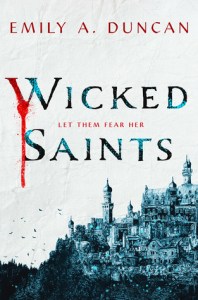 Book: “Wicked Saints” by Emily A. Duncan
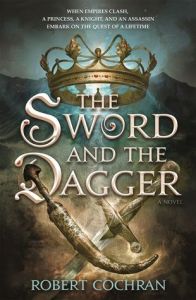 Book: “The Sword and the Dagger” by Robert Cochran
 Book: “The Shadowglass” by Rin Chupeco
 Book: “A Boy and His Dog at the End of the World” by C. A. Fletcher
 Book: “The Science of Mom: A Research-Based Guide to Your Baby’s First Year” by Alice Callahan
 Book: “On Becoming Baby Wise: Giving Your Infant the Gift of Nighttime Sleep” by Robert Bucknam & Gary Ezzo
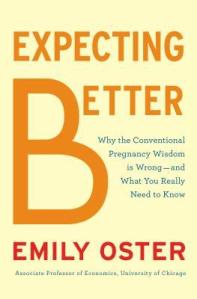 Book: “Expecting Better: Why the Conventional Pregnancy Wisdom is Wrong – and What You Really Need to Know” by Emily Oster
 Book: “A Good Birth: Finding the Positive and Profound in Your Childbirth Experience” by Anne Lyerly
 Animorphs #48: “The Return”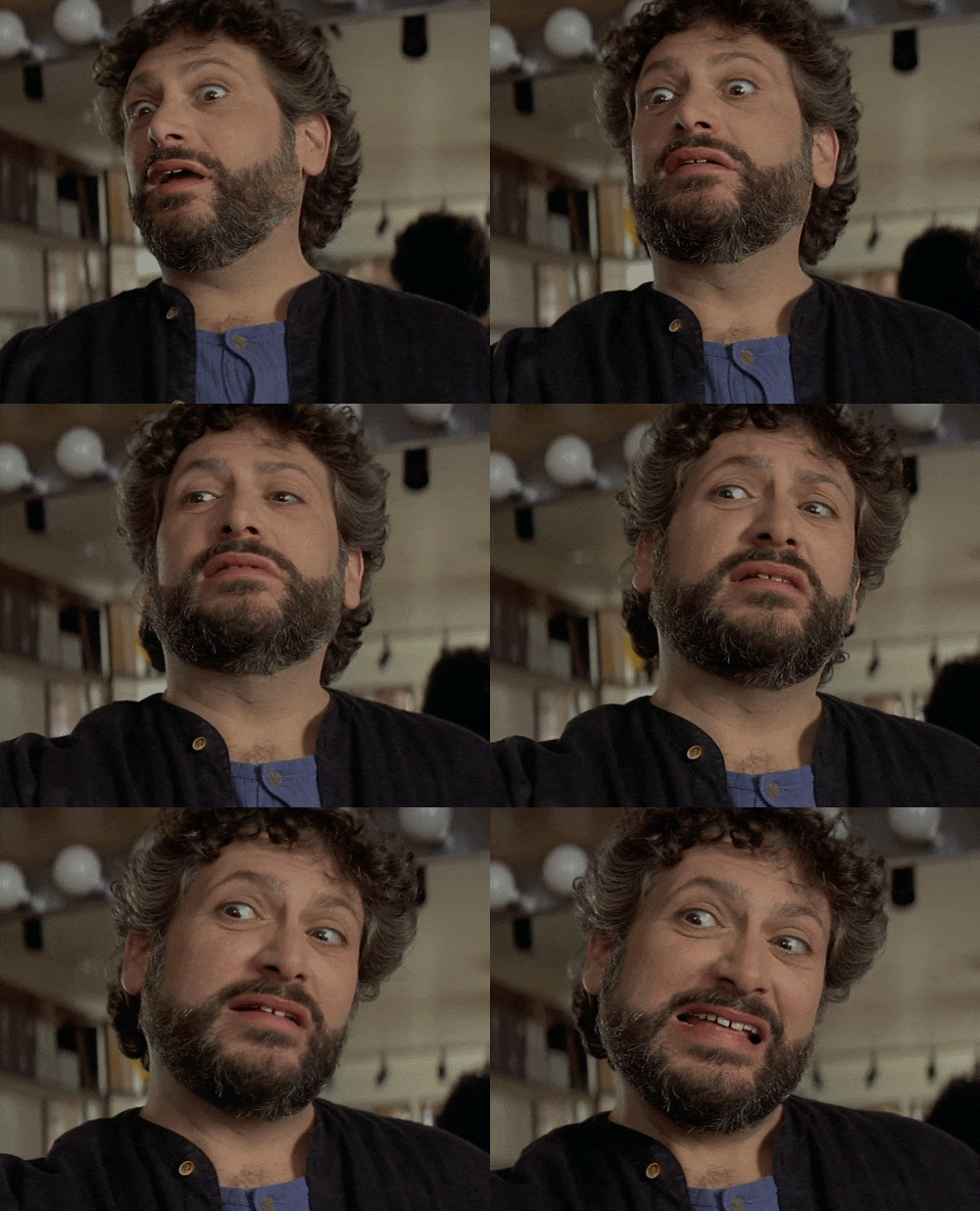
 Book: “Throne of Jade” by Naomi Novik
 Book: “The Loneliest Girl in the Universe” by Lauren James
 Book: “The Unbound Empire” by Melissa Caruso
 The Library Ladies