Fire’s Catching: “The Ballad of Songbirds and Snakes”

This post may contain affiliate links for books we recommend.  Read the full disclosure here.
It’s been eighteen years since Suzanne Collins wrote “The Hunger Games”, the smash hit literary sensation that continues to feel relevant and capture the attention of readers. This ongoing series will be a review series of both the Suzanne Collins books, as well as the film adaptations of the novels. I will post my review on the last Thursday of the month as we revisit the totalitarian world of Panem and the hope of the Mockingjay.

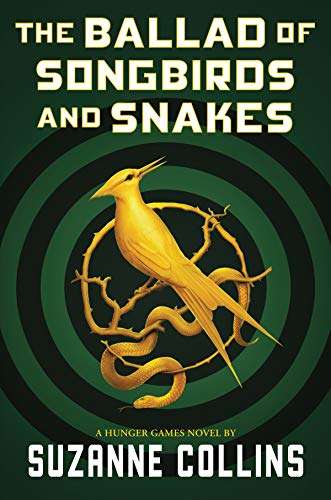
Book: “The Ballad of Songbirds and Snakes” by Suzanne Collins

Publishing Info: Scholastic Press, May 2020

Where Did I Get This Book: I own it

Where You Can Get This Book: WorldCat.org | Amazon | Indiebound

Book Description: Ambition will fuel him.

Competition will drive him.

But power has its price.

It is the morning of the reaping that will kick off the tenth annual Hunger Games. In the Capitol, eighteen-year-old Coriolanus Snow is preparing for his one shot at glory as a mentor in the Games. The once-mighty house of Snow has fallen on hard times, its fate hanging on the slender chance that Coriolanus will be able to outcharm, outwit, and outmaneuver his fellow students to mentor the winning tribute.

The odds are against him. He’s been given the humiliating assignment of mentoring the female tribute from District 12, the lowest of the low. Their fates are now completely intertwined — every choice Coriolanus makes could lead to favor or failure, triumph or ruin. Inside the arena, it will be a fight to the death. Outside the arena, Coriolanus starts to feel for his doomed tribute… and must weigh his need to follow the rules against his desire to survive no matter what it takes.

Review: A few years after “The Hunger Games” trilogy wrapped up with “Mockingjay”, the announcement was made that Suzanne Collins was going to write a prequel story. It was a bit vague at first, and I remember the buzz and anticipation that was tittering throughout the fandom. Who could it be about? Maybe Haymitch’s Games? Or maybe it was going to be about Mags? I was thinking it was maybe going to be about my gal Johanna Mason to see how she played everyone to think she was a scaredy cat and then eventually came out on top through brutality and managed expectations. And then it was announced that it was going to be about Coriolanus Snow, the brutal dictator in charge of Panem in the original trilogy. And I remember people being PISSED.

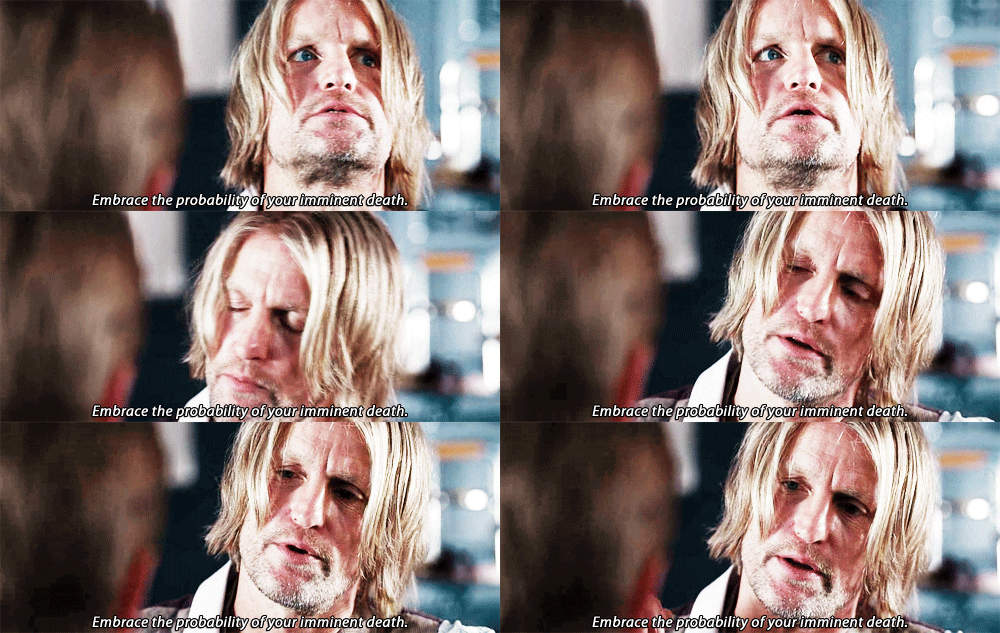
I will admit that as someone who always thinks that fandoms do the absolute most sometimes, I was pretty amused by the tantrums people were throwing. (source)

I wasn’t as put off by the concept. It did take me some time to read the book initially, but I did enjoy it, and re-reading it this year made me appreciate it even more. Because once again, Suzanne Collins knows EXACTLY WHAT SHE IS DOING.

So I will say right off the bat that this is probably my least favorite of the “Hunger Games” books, but that isn’t because it’s a bad book. I still really like this book. But there is a big narrative shift from the original trilogy to follow Katniss Everdeen and all of her innermost thoughts to Coriolanus Snow as a teenager and all of his innermost thoughts. But it’s still a very well written book that only expands more of the lore of Panem and builds the world even more in a way that makes it all the more intriguing. When we follow Coriolanus as he mentors Lucy Gray Baird from District 12 in the 10th Hunger Games, we get to see Panem in a transition period. It’s post-War/Rebellion, and the Capitol is still in shambles (which means you know the districts are having a rougher time as a whole). The Games right now aren’t the big entertainment event that they are when Katniss is reaped; if anything they are kind of run down and gritty. I really loved seeing the huge difference between the two time frames, and it goes to show just how much Snow influenced the Games and how much inspiration he took from his mentee Lucy Gray. Because Lucy Gray is the first one to weaponize her personality to be likable and to make it a bit of a spectacle with her singing and performance to make people root for her. If Coriolanus is a grating narrator (as he is supposed to be), Lucy Gray is a shining light of a character who has moxie and a drive to survive at all costs, even if it means cuddling up with Coriolanus (though I do believe that she DID care for him at one point, even if it wasn’t at the level of obsession and possession that he saw her at; notice I say obsession and possession as opposed to love). I also really liked seeing Lucy Gray’s Covey community, as by the time we get to the original trilogy in the timeline The Covey, a group that was trapped in District 12 after the rebellion after years of being nomadic, have all but disappeared, at least culturally. Seeing how Panem has changed between this book and the original trilogy is jarring but also so, so interesting.

I also liked getting some insight into the Capitol side of things in this book, be it with Coriolanus and his fellow students at The Academy being recruited to mentor the Tributes for the games, or the faculty indoctrinating them and manipulating their every move. We spend so much time in the Districts in the “Hunger Games” trilogy and only see the opulent and decadent Capitol in very specific instances, and in “Ballad” we see a Capitol that is grimy and, as I said, in transition, but it still has the superiority complex and the hints of totalitarianism that is still in shaky stages and is only waiting for a truly ruthless leader to bring it to its full horrific potential. It’s also interesting seeing the politics and ideologies of how the Capitol views the Districts at this point, still dehumanizing them but in a far more overt way at this point, like the Tributes being held in literal zoo cages. Or the way fellow students and Coriolanus look at Sejanus Plinth, who grew up in District 2 and whose family became wealthy and was able to essentially able to buy its way into the Capitol through loyalty and money, but is still looked down upon by others and feels like he is in an identity crisis. There are so many layers here and I greatly appreciated seeing this side of Panem, if only to get context.

Now, I may be treading into some kind of controversial territory here, but I kind of want to address one of the biggest hang ups people have about this book. There were a lot of people I saw, be it in my own life or online, who were very put off by the idea of this book following something of an origin story for President Snow. I had a few people say ‘I am not interested in getting a villain origin story that humanizes PRESIDENT SNOW’, and I mean, hey, that’s a valid worry about the book because there have been some stories where a clearly bad or villainous person gets some kind of redemption arc because of a sad backstory. But I never really had the fear that Collins was going to do that with Snow, as I know that she isn’t going to be an apologist for a fascist dictator just based on the original trilogy. Yes, Coriolanus Snow grew up during a time or war that left his life in shambles, even if his family was on the ‘winning’ side. He and his cousin Tigris are living with their completely indoctrinated grandmother in abject poverty, and while he comes from a prestigious family with name recognition (especially at the school he is attending), he has a huge victim complex because he isn’t living the life he was promised as a Snow. And that victim complex simmers as resentment, then turns into ambition, then turns into a thirst for power at any cost which turns into violence. I have always said that Collins’s “Hunger Games” stories always, ALWAYS have something to say, and the clear message of “The Ballad of Songbirds and Snakes” is about the way that young men can be radicalized by fascist ideology in times of instability within their lives, and while she explains it, she never excuses it with young Coriolanus, especially since we get into his head so deeply and he is just awful. This came out in 2020 when we had been seeing the starts of the Manosphere, and white male grievances were motivating a lot of young white men to embrace far right values, and unfortunately it has only gotten worse since then. So while I understand people not wanting to read about Coriolanus Snow as anything but an irredeemable villain, I also think that turning away from uncomfortable truths about radicalization of people like him in real life just helps the problem grow and grow. Collins doesn’t excuse his actions throughout the book, which are reprehensible even before he becomes president. But to dismiss this kind of exploration as being apologia for his actions is missing the point Collins is trying to make.

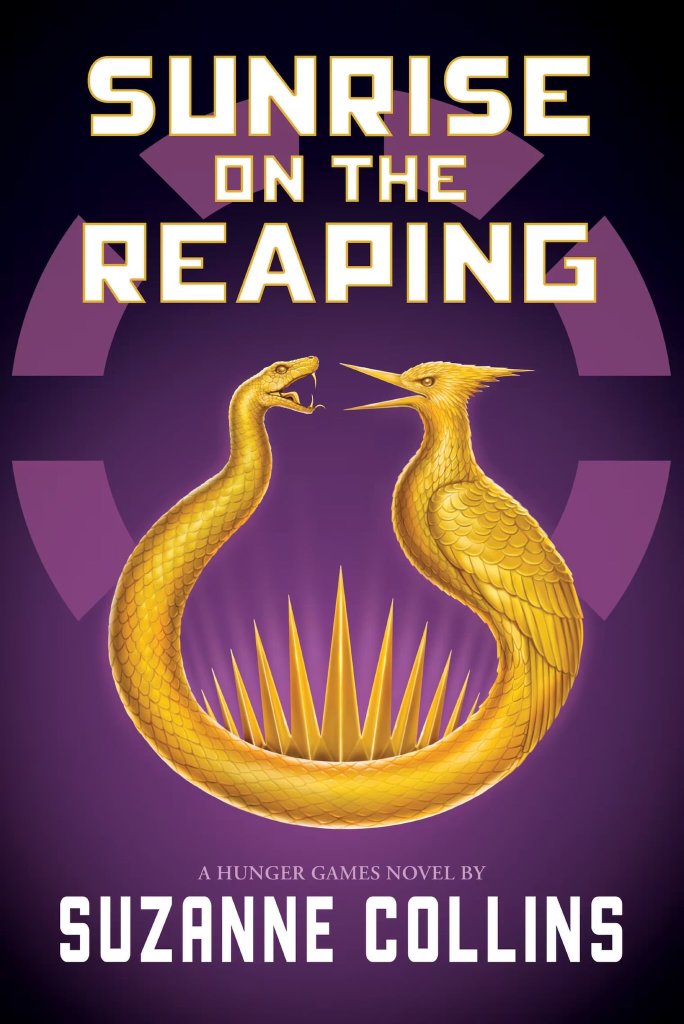
So while “The Ballad of Songbirds and Snakes” is probably my least favorite of the books about Panem, I still really enjoy it whether it’s the new lore and expanded world building of Panem, how it has changed over time and how the Games themselves have changed, and how it explores the dangers of radicalization through one of the biggest monsters in the series. Suzanne Collins does not miss. Next up I take on the next prequel book and the final book in the series “Sunrise on the Reaping”. Haymitch’s moment is upon us.

Rating 8: While it’s probably the weakest of the books for me, I still find it to be compelling and complex with a lot of relevant things to say. Also, I love seeing the huge differences in Panem between Katniss’s time and Snow’s time as a mentor.

Reader’s Advisory:

“The Ballad of Songbirds and Snakes” is included on the Goodreads list “YA Dystopia Novels”.

Kate’s Review: “What We Did To Survive”

This post may contain affiliate links for books we recommend.  Read the full disclosure here.

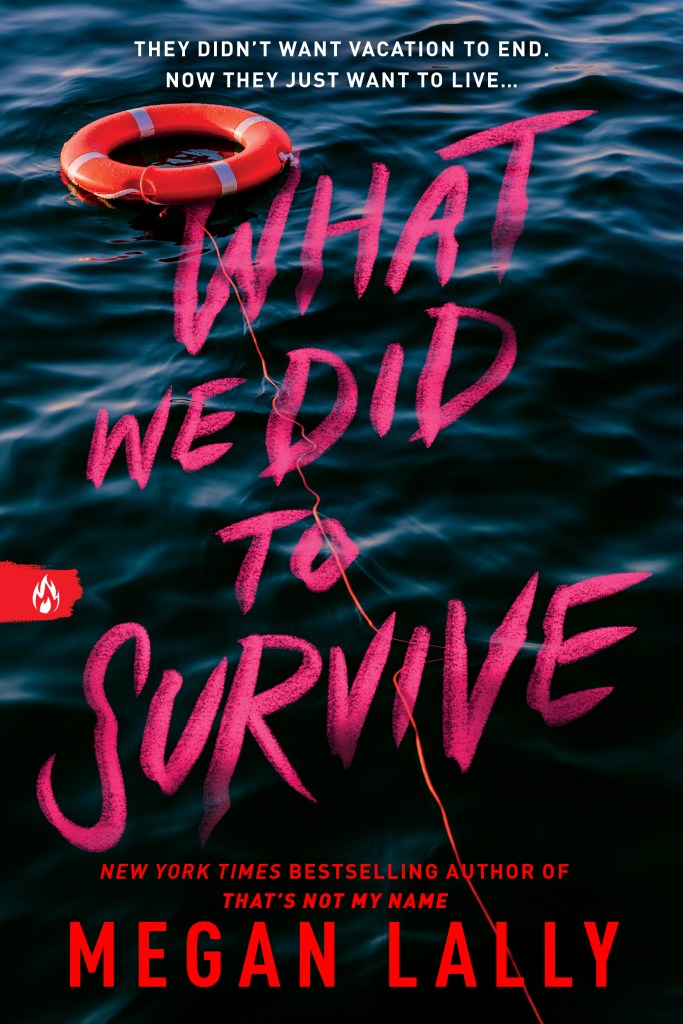
Book: “What We Did to Survive” by Megan Lally

Publishing Info: Sourcebooks Fire, March 2026

Where Did I Get This Book: I received an ARC from the publisher

Where You Can Get This Book: WorldCat.org | Amazon | Indiebound

Book Description: A vacation in paradise turns deadly when four teens’ sailing charter hits stormy seas in this propulsive new thriller from New York Times and USA Today bestselling author Megan Lally!

Hannah is having an incredible spring break. A week at a resort in Mexico with her best friend Emmy and her family is perfect for de-stressing from senior year, even if it’s awkward being around Emmy’s older brother, Jackson, who she’s had a crush on for as long as she can remember.

Still, the beach is gorgeous. So is the guy they meet in the surf. Except Hannah is now the third wheel in Emmy’s vacation romance.

Eager to impress Emmy, her wealthy new boyfriend charters a private sailboat to make the most of their last day in paradise, and Hannah and Jackson are invited along. As the clouds roll in and the skies darken, their boat is the only one leaving the marina. And the further they get into open water, the more unsettled Hannah becomes. A storm is brewing onboard that’s as deadly as the one racing toward them. Forget surviving graduation. Who will make it back to land alive?

Review: Thank you to Sourcebooks Fire for sending me an ARC of this novel!

Even though Spring Break has come and gone (and I opted to spend it someplace not so tropical, but the lake called), I feel like I always enjoy survival thrillers where a tropical vacation goes wrong any time of the year. When I received “What We Did to Survive” by Megan Lally in the mail I knew that it was going to be a fun vacation based survival thriller, as tourists in trouble is always a fun sub-genre within a sub-genre. I jumped into it expecting a ride.

And it was a fun ride in a lot of ways. The basic premise is a familiar one for survival thriller tales: a group of people set out into a wilderness situation unprepared and things go south quickly. In this case it’s teenagers Hannah, her best friend Emmy, Emmy’s brother Jackson (who is also Hannah’s crush), and Emmy’s vacation/situationship based hook up Ben, who are all on vacation at a resort in Puerta Vallarta and want to do more for the last day. Ben charters a boat outside the resort’s purview, and they sail into a storm, with danger and death ensuing. It’s a familiar set up but it’s one that is always entertaining, as they have to fight the elements, secrets, and perhaps even each other to survive. I definitely had a hard time putting it down because Lally keeps it going apace, not wasting any moments and making bad situations worse until it’s clear that not everyone is going to make it out of this. The tension builds well and it reads nice and fast because of it.

But on the other hand, the characters in this were all pretty two dimensional. I did like Hannah a fair amount, probably because we got the most in her head, and I liked her and Jackson, but ultimately Jackson didn’t really bring much outside of a protective love interest for her (though she doesn’t think that it would ever be more than a crush on her part, natch) and a protective big brother to Emmy. Emmy and Ben, however, are both pretty insufferable in their own ways, whether Emmy is the shallow best friend who will drop all sense for a boy, or Ben is an over the top villain built of wealth, privilege, and cowardice. I recognize that sometimes YA novels have a bit more direct characters and want to spend time telling rather than showing, but I think that it’s a disservice to their target demo to assume that such OBVIOUS villains and antagonists are needed as opposed to something more complicated. But then again, seeing how all these rich and privileged people are behaving these days maybe Ben isn’t too far off and I’m just being naive. Nevertheless, it made it less suspenseful than it could have been because I wasn’t as invested in their fates as I could have been.

So fun popcorn reading that would be good for a vacation read, but it doesn’t reinvent the wheel outside of a simple survival thriller story. But sometimes that’s exactly what is needed.

Rating 6: A fun survival thriller that was an entertaining read, though some of the characters were a little flat.

Reader’s Advisory:

“What We Did to Survive” is included on the Goodreads list “YA Suspense/Thriller/Mystery”.

Serena’s Review: “Where No Shadow Stays”

This post may contain affiliate links for books we recommend.  Read the full disclosure here.

Book: “Where No Shadow Stays” by Sara Hashem

Publishing Info: Holiday House, March 2026

Where Did I Get this Book: Netgalley!

Where Can You Get this Book: WorldCat.org | Amazon | IndieBound

Book Description: Seventeen-year-old Mina is always focused on what comes next: exams, school dances, opportunities for a picnic by the lake. Filling up the future keeps her from lingering over how little she knows about her history or where she comes from. Anytime she asks her father questions about Egypt–or about her mother’s mysterious death–he struggles to open up.

When Mina receives an invitation from an aunt she’s never met to visit the Haikal mansion, her mother’s childhood home in El Agamy, Mina accepts. She can’t resist the chance to learn more about her roots or what happened to her mother, even if it means lying to her loves ones for the first time in her life.

But when Mina returns from El Agamy, she doesn’t come back alone.

A sinister entity follows Mina from the Haikal mansion to her tiny California town. Mina is forced to abandon her friends, her father, and everything she loves in order to prevent the entity from violently possessing them. Isolated and fighting for her life, Mina must seek help from an unlikely ally: Jesse Talbot, the mortician’s hostile son and the only person who proves immune to possession. Jesse would rather floss with barbed wire than team up with social butterfly Mina, but he doesn’t exactly have a choice—after all, he’s running from family secrets of his own.

As Mina and Jesse dig deeper into Mina’s family lore, they uncover a bloody debt that must be satisfied if Mina wants to finish senior year alive.

Review: I have once again stolen a book from Kate’s genres, but Hashem wrote one of my favorite fantasy romance duologies of the last several years, so….yeah, I don’t care! I’m going to read whatever she writes at this point!

So, while I don’t typically read horror, this was the kind that I can get behind. Probably because it’s also YA, so the truly horrific stuff that Kate wades into is largely absent here. That said, Hashem does a great job of blending historical fiction and horror together in ways that are both intriguing and disturbing. The tension was perfectly wound tighter and tighter, only to release unexpectedly before starting it all up again.

I really liked the mystery at the heart of this story and learning more about Mina’s family and history. And on top of this central mystery behind what is making up this curse and how it can be defeated, Jesse also had mysteries of his own that were slowly revealed as the story continued.

Hashem also reconfirmed that she excels at writing compelling, swoon-worthy romances. I was a bit unsure how her talents would translate being removed from all of the fantasy trappings, but she definitely proved me wrong. Jesse and Mina’s relationship was so lovely, a slow-burning, tension-filled affair that drew me in right from the start.

I don’t want to go into spoilers with regards to the ending, but it was truly heart-wrenching. I guess I don’t know this for a fact, but I’ve always assumed that horror, as a genre, has a greater tendency to end in tragedy or, at best, an unclear future. And such is the case here. It all played out so well for the story that was being developed, but tissues were definitely needed.

Overall, I really enjoyed this one! Sara Hashem is just an excellent author, all things considered, and I’m happy to genre hop alongside her! If you’re a fan of YA horror stories, I definitely recommend this one!

Rating 8: Tension-filled in every way, both the romantic and the horrific!

Reader’s Advisory:

“Where No Shadow Stays” can be found on this Goodreads list: YA Novels of 2026.

Fire’s Catching: “Mockingjay”

This post may contain affiliate links for books we recommend.  Read the full disclosure here.

It’s been eighteen years since Suzanne Collins wrote “The Hunger Games”, the smash hit literary sensation that continues to feel relevant and capture the attention of readers. This ongoing series will be a review series of both the Suzanne Collins books, as well as the film adaptations of the novels. I will post my review on the last Thursday of the month as we revisit the totalitarian world of Panem and the hope of the Mockingjay.

Book: “Mockingjay” by Suzanne Collins

Publishing Info: Scholastic Press, August 2010

Where Did I Get This Book: I own it

Where You Can Get This Book: WorldCat.org | Amazon | Indiebound

Book Description: My name is Katniss Everdeen. Why am I not dead? I should be dead.

Katniss Everdeen, girl on fire, has survived, even though her home has been destroyed. Gale has escaped. Katniss’s family is safe. Peeta has been captured by the Capitol. District 13 really does exist. There are rebels. There are new leaders. A revolution is unfolding.

It is by design that Katniss was rescued from the arena in the cruel and haunting Quarter Quell, and it is by design that she has long been part of the revolution without knowing it. District 13 has come out of the shadows and is plotting to overthrow the Capitol. Everyone, it seems, has had a hand in the carefully laid plans—except Katniss.

The success of the rebellion hinges on Katniss’s willingness to be a pawn, to accept responsibility for countless lives, and to change the course of the future of Panem. To do this, she must put aside her feelings of anger and distrust. She must become the rebels’ Mockingjay—no matter what the personal cost.

Review: We are now coming to the end of the initial “Hunger Games” Trilogy, and I finally took on the final book in the series “Mockingjay”. Much like “Catching Fire”, I skipped this book in my initial read because I was told that it wasn’t very good. Nay, I was told that it was boring. BORING. After finishing “Catching Fire” and really liking it, I knew that I would probably have a similar experience with this one. Little did I know that I would actually end up ranking it almost as high as the first book. Yeah, I loved “Mockingjay”. It destroyed me (probably thanks in part to listening to Tatiana Maslaney read it, God she was good). As we follow Katniss into her final arc of this saga, I was moved and on edge, even though I knew what was coming thanks to the movies. Suzanne Collins always has something to say. And this time, as we rejoin Katniss, newly whisked away from the wreckage and chaos of the destroyed arena, she is already so damaged and alone, with Peeta captured and Haymitch revealed as hiding the rebellion he helped force her into. Collins’s message this time: War is Hell, and no one comes out unchanged.

We get some new insight to some previous characters, and also meet new characters who become power players for the last book in the series. The biggest stand out for previous characters for me is Plutarch Heavensbee, the game maker for the Quarter Quell who was actually part of the rebellion the entire time. I love Plutarch, not because he’s a good guy (he’s not, really), but because I appreciate his goal of trying to overthrow Snow and the Capitol and think he’s very interesting because he is ruthless and willing to do a lot of bad to achieve his goals. We are also introduced to Alma Coin, the President of District 13, a long forgotten District that has been biding its time underground waiting for a spark of revolution so she can swoop in and help overthrow the Capitol. As Katniss worries about Peeta, who has been captured by the Capitol and is now being used in propaganda as the uprising turns into all out war, she is thrown into the role of being the Mockingjay leading a rebellion when she doesn’t know how to be a leader. It’s just a new situation where a teenage girl is being used by ambitious and power hungry adults for their own ends, and her mental health and PTSD is tossed aside as she is constantly pushed to the brink. Is she a bit more of a passive player in this one? Sure. But while that was used as a criticism by those around me, I actually think it makes complete sense. Katniss never wanted this and is still a child. Her struggles may seem repetitive but she is riddled with trauma. To portray it as anything other than messy and complicated would be unrealistic and, frankly, irresponsible.

I was also struck by how Collins makes it pretty clear from the jump that the Rebellion’s alliance with District 13 is a complicated, possibly even dangerous, one. Katniss is thrown into the depths of District 13’s underground bunker with its highly authoritarian society, finding out that it has been there the entire time living off the grid after striking a deal with the Capitol to be able to walk away in exchange for not using nuclear weapons against Snow’s regime (the absolute gall). We will talk more about the portrayal of 13 in the movies when we get to the film reviews, but in the book? I was immediately put off by President Coin and her government and its brutal ways, both towards its supporters and towards the people who have been pulled in from the rebellion as allies. Hell, EVERYTHING about 13 feels like its own nightmare, with no dissent allowed, dehumanization of anyone seen as collaborators (one instance with Katniss’s Prep Team, who feel like fish a barrel being shot for funsies, really disturbed me), and a very officious and scary power structure that Katniss is suspicious of while her closest friend Gale becomes more and more indoctrinated and into the totalitarian ethos that Coin is feeding him.

And I love that Collins was more than willing to portray that way that a war being fought can have horrific tactics from both sides, even the side that is ultimately more ‘in the right’, and this book really hits it home in the most devastating ways as Katniss has to be the face of a rebellion and to try and keep herself safe from Coin, who clearly wants her gone so she can take over and become the person with the power going forward. She is used as a tool by Coin and Heavensbee (I love the guy and his moral grey character, but man he’s a dick), only a means to an end because they know that Coin won’t cut it, and she is repeatedly victimized in hopes that she can just keep Peeta and Prim safe…and we all know what happens to Prim. Prim and the children of the Capitol, who all become targets of the ‘righteous’ side and are slaughtered to finally put down Snow’s regime in one final bombing… and it is sickening. Collins isn’t going to let the ‘correct’ side off, not only having Katniss’s side commit war crimes that are similar to her enemies, but also murder the person that she sacrificed everything for, almost making all of her suffering and purpose moot. GOD it’s so, so sad. It’s such a harsh truth that people forget all the time, that war, as a whole, is BAD, and ANYONE participating can do MONSTROUS things (even if they are on the side that is OBJECTIVELY more moral) because that is war at its heart. “Mockingjay” tells this truth by spilling more child blood, done by the side that the reader wants to succeed. Fuck Coin. But fuck Gale more. And Katniss is left to pick up the pieces. Again, war. Is. Hell.

The way I sobbed as this book was coming to a close. (source)

But then there is the rebirth. Because Katniss has to keep going. And Peeta has to keep going. The book ends with Panem starting a new path, and it feels hopeful, but tenuous. But for Katniss and Peeta, they have to keep moving forward, and rebuild, and the gentle aftermath of them slowly starting to do so is bittersweet to say the least. But it felt correct and satisfying. Collins doesn’t pretty it up. They are forever changed. They are forever haunted. Katniss and Peeta don’t get better just because they are free and their goals are achieved. But they keep going and find hope and happiness with each other. I know that there are people who hate that Katniss has kids in the future, thinking that it betrays her character because of her refusal to have kids in the first book. But to that I say, her and Peeta having kids is actually the best way to end it, because it shows that Katniss finally, FINALLY, can feel safe enough to live her life because the oppressive society she grew up in and helped overthrow is truly gone. It’s lovely.

I loved “Mockingjay”. It wasn’t flashy and it wasn’t cheerful. But it feels realistic to me in how it portrays trauma, war, and trying to start over after having experienced so much grief, and finding love and peace in spite of it. Next up I will review the first prequel, “The Ballad of Songbirds and Snakes”, where we go back to one of the first Hunger Games, and see the origins of President Coriolanus Snow.

Rating 9: A heavy and bittersweet conclusion to a series that still feels resonant, “Mockingjay” focuses on the hell that is war, the lingering affects of trauma, and picking up the pieces even in the wake of victory that may not feel wholly victorious.

Reader’s Advisory:

“Mockingjay” is included on the Goodreads lists “Best Survival Stories”, and “YA Dystopia Novels”.

Book Club Review: “Girls Made of Snow and Glass”


This post may contain affiliate links for books we recommend.  
Read the full disclosure here.

We are part of a group of librarian friends who have had an ongoing book club running for the last several years. Each “season” (we’re nerds) we pick a theme and each of us chooses a book within that theme for us all to read. Re-visiting some of our past themes, we’re once again pulling random words from and finding a book that matches the prompts. For this blog, we will post a joint review of each book we read for book club. We’ll also post the next book coming up in book club. So feel free to read along with us or use our book selections and questions in your own book club!

Book: “Girls Made of Snow and Glass” by Melissa Bashardoust

Publishing Info: Flatiron Books, September 2017

Where Did We Get This Book: The library!

Where You Can Get This Book: WorldCat.org | Amazon | Indiebound

Prompt Words: Snow, Spell

Book Description: Sixteen-year-old Mina is motherless, her magician father is vicious, and her silent heart has never beat with love for anyone—has never beat at all, in fact, but she’d always thought that fact normal. She never guessed that her father cut out her heart and replaced it with one of glass. When she moves to Whitespring Castle and sees its king for the first time, Mina forms a plan: win the king’s heart with her beauty, become queen, and finally know love. The only catch is that she’ll have to become a stepmother.

Fifteen-year-old Lynet looks just like her late mother, and one day she discovers why: a magician created her out of snow in the dead queen’s image, at her father’s order. But despite being the dead queen made flesh, Lynet would rather be like her fierce and regal stepmother, Mina. She gets her wish when her father makes Lynet queen of the southern territories, displacing Mina. Now Mina is starting to look at Lynet with something like hatred, and Lynet must decide what to do—and who to be—to win back the only mother she’s ever known…or else defeat her once and for all.

Entwining the stories of both Lynet and Mina in the past and present, “Girls Made of Snow and Glass” traces the relationship of two young women doomed to be rivals from the start. Only one can win all, while the other must lose everything—unless both can find a way to reshape themselves and their story.

Kate’s Thoughts

I remember this book crossing my path back when it came out, and while the idea of a “Snow White” reimagining definitely piqued my interest I ultimately never picked it up. Because of this I cackled a bit when it was picked for book club because apparently it was my fate to eventually read this book. I have enjoyed a fair amount of “Snow White” retellings if done well, and I liked the sound of this one because it sounded like it was going to have a bit more insight into the Queen’s motivations. Unfortunately it didn’t quite live up to the expectations I had for it.

I did enjoy the way that Bashardoust approached the relationship between Lynet (our Snow White) and Mina (our evil queen/stepmother). It’s not so often that a reimagining of this story actually tries to create a somewhat positive relationship, or at least the potential for one, between these two characters, and by doing so and making Lynet and Mina more victims of their circumstances (put in place by their fathers) and less mortal enemies, though there is certainly conflict there. It was a unique way to tackle a reimagining, and this was the strongest aspect of the book for me.

But on the other hand, there was a lot of not so complex and somewhat fraught storytelling as we saw Lynet and Mina go on their paths in the narrative. I felt like we didn’t really get a good sense of their relationships with the other characters, even those that would be pretty important, and I felt like the magical systems and their magical afflictions (Mina being made of glass and Lynet being made of snow) were very surface level without much substance. Are they metaphors that could be interesting, sure, but when they are just there to be obvious metaphors it isn’t as compelling as it could be.

So there was a lot of potential and some solid character beats, but overall “Girls Made of Snow and Glass” was pretty middle of the road.

Serena’s Thoughts

On paper, this book should have been right up my alley. And it did work in some ways, just not in all the ways that I wanted. Its biggest positive is the creative take it offers on the “Snow White” tale. This included an elaborate (if a bit confused and badly defined) magic system, a dual perspective shared between the Queen and the Snow White character, and a refocus of the primary relationship away from the romances and more fully on this mother/daughter relationship.

This last part, especially, was particularly well done. It’s rare that you see the major emotional stakes of a YA fantasy story focused on the relationship between two women, especially when one is in a mother/stepmother role. On the other hand, this left the romances feeling very underwhelming. It also felt weighted toward Mina’s relationship, leaving the sapphic love story between Lynet and her love interest feeling fairly weak.

My major problem came down to the writing. It wasn’t bad, by any means. But it was also incredibly dry and simple. There wasn’t much of a voice given to either character, and the author was quick to fall into the trap of telling the readers exactly how they should interpret any given scene. While the themes of beauty, independence, and feminine rage were interesting, none of them were presented or surfaced in anything resembling a subtle way.

So, ultimately, I didn’t dislike this book, but I also had hoped to enjoy it much more than I did. I really love fairytale retellings, but this felt very much “of its time,” a time when YA fantasy especially was given to underestimating its readers and relying on overly simplistic storytelling techniques.

Kate’s Rating 6 : I definitely appreciated the deconstruction of the Snow White and Evil Queen relationship in this book, but I felt like the storytelling wasn’t as focused as I would have liked it to be.

Serena’s Rating 7: While I appreciated the focus on the relationship between Mina and Lynet, the storytelling itself left much to be desired.

Book Club Questions

  1. This is a Snow White retelling that jumps through timelines and through perspectives of both the Snow White character and the Evil Queen character. Were you able to follow it as it jumped between times and perspectives?
  2. What did you think of the father/daughter relationships in this story?
  3. What were your thoughts on the relationship between Lynet and Mina? Was it surprising you to you that Bashardoust went in this direction?
  4. What were your thoughts on Felix? How did he compare to other Huntsmen portrayals?
  5. What did you think of the way the concepts of snow and glass were used as metaphors in this novel? Did it work for you? Why or why not?
  6. Did you have any opinions on the magical systems in this book? Did they seem consistent, and did they make sense?
  7. How did you feel about the ending? Was it satisfying?

Reader’s Advisory

“Girls Made of Snow and Glass” is included on the Goodreads lists 2017 YA Fairy Tale Retellings and YA Fantasy with Major Sapphic Girls.

Next Book Club Pick: “Space Cat” by Nnedi Okorafor

Kate’s Review: “The Darkness Greeted Her”

This post may contain affiliate links for books we recommend.  Read the full disclosure here.

Book: “The Darkness Greeted Her” by Christina Ferko

Publishing Info: Sourcebooks Fire, February 2026

Where Did I Get This Book: I received an ARC from the publisher

Where You Can Get This Book: WorldCat.org | Amazon | Indiebound

Book Description: Penny’s abusive father is dead…but she still hears his voice in her head, encouraging her to hurt those around her. She can’t go to school or be around her friends or even draw with a sharp pencil without her intrusive thoughts urging her toward violence. Desperate to get a handle on her OCD, she agrees to spend the summer at Camp Whitewood—an exclusive therapy retreat in the woods.

She feels optimistic when she arrives. The other girls all have their reasons for being there, which makes Penny feel a little less alone. But then she starts seeing things that can’t possibly be there: the gold watch her father was buried with, his favorite whiskey spilled on her cabin floor…a terrifying figure she calls the Shadow Man looming at the foot of her bed. Penny thinks she is losing her mind, but when a girl goes missing, and is later found dead, it’s clear that whatever is happening at Camp Whitewood isn’t all in her head.

As the hallucinations become increasingly intense and more girls wind up dead, Penny must work with whoever is left standing to figure out what is real before the Shadow Man uses their traumas against them and claims their lives.

Review: Thank you to Sourcebooks Fire for providing me with an ARC of this novel!

I had a LOT of emotional issues when I was a teenager. I had three separate therapists addressing different parts of my mental health, was on medication for a couple of years, and have been in therapy throughout most of my life (and I am incredibly grateful to have had all that access to these things over the years). I never got to the point where I was in need of intensive in patient therapy, and I certainly never found myself shipped off to a wilderness therapy camp that has secrets and perhaps a roving monster in the woods. So while THAT aspect of “The Darkness Greeted Her” by Christina Ferko wasn’t super relatable, the mental health aspects were (at least to some degree, it was NEVER as all encompassing for me as it was for main character Penny).

The biggest theme of his horror novel, as so many horror tales have done in recent years (and I’m not mad about it!), is how people who have gone through traumatizing childhoods are shaped and haunted by said trauma. For Penny and her camp mates, they all come to Camp Whitewood with the hopes of finding peace and psychological help, but instead are being tormented and in some cases eaten by a monstrous entity in the woods that takes the shape of their fears and pain. Old hat? Sure. But for me it’s still effective, and I think that it’s always something to be talked about for YA readers and a message I probably could have used as a depressed teenager back in the day. But not only did we get insight into our first person protagonist’s trauma, I also liked getting some chapters that would lay out the formative moments that brought that other girls to this therapy camp. So we do have a shadow creature living in the woods that is a threat, but at the same time we have a number of teenagers who have dealt with all too real horrors, like abusive alcoholic fathers, guilt over horrible mistakes that have become internalized to a dangerous degree, and other traumas that have festered and caused these girls to be susceptible to the monster’s appetites.

In terms of the suspense and dread, I will say that some of the pacing felt a bit off, and perhaps at times a bit too drawn out. It wasn’t a particularly scary story to me, but that is almost assuredly a ‘your mileage may vary’ situation because there are definitely some creepy and suspenseful aspects, especially with the worries about whether or not Penny was going to be overcome by her Harm OCD tendencies and hurt someone else or herself. The monster was interesting in that it shifts its form to reflect the different campers fears, mixing in folk horror with “Nightmare on Elm Street” to a degree (it also got a little close to Wendigo mythology, but didn’t use the term or the specific background so I feel like it wasn’t fully treading into appropriative territory, correct me if I’m wrong though!). The metaphors of trauma and mental illness bolstered it up quite a bit.

So all in all, “The Darkness Greeted Her” is another solid horror story that makes monsters out of real life horror stories. I think that teenage horror fans will probably enjoy it.

Rating 7: A creepy story about trauma and monsters, of the supernatural and all too human kind, though it felt a bit laggy at times.

Reader’s Advisory:

“The Darkness Greeted Her” is included on the Goodreads list “Queer Fiction Set at Camp”.

Fire’s Catching: “Catching Fire”

This post may contain affiliate links for books we recommend.  Read the full disclosure here.

It’s been eighteen years since Suzanne Collins wrote “The Hunger Games”, the smash hit literary sensation that continues to feel relevant and capture the attention of readers. This ongoing series will be a review series of both the Suzanne Collins books, as well as the film adaptations of the novels. I will post my review on the last Thursday of the month as we revisit the totalitarian world of Panem and the hope of the Mockingjay.

Book: “Catching Fire” by Suzanne Collins

Publishing Info: Scholastic Press, September 2009

Where Did I Get This Book: I own it

Where You Can Get This Book: WorldCat.org | Amazon | Indiebound

Book Description: Sparks are igniting. Flames are spreading. And the Capitol wants revenge.

Against all odds, Katniss Everdeen has won the Hunger Games. She and fellow District 12 tribute Peeta Mellark are miraculously still alive. Katniss should be relieved, happy even. After all, she has returned to her family and her longtime friend, Gale. Yet nothing is the way Katniss wishes it to be. Gale holds her at an icy distance. Peeta has turned his back on her completely. And there are whispers of a rebellion against the Capitol—a rebellion that Katniss and Peeta may have helped create.

Much to her shock, Katniss has fueled an unrest that she’s afraid she cannot stop. And what scares her even more is that she’s not entirely convinced she should try. As time draws near for Katniss and Peeta to visit the districts on the Capitol’s cruel Victory Tour, the stakes are higher than ever. If they can’t prove, without a shadow of a doubt, that they are lost in their love for each other, the consequences will be horrifying.

In Catching Fire, the second novel of the Hunger Games trilogy, Suzanne Collins continues the story of Katniss Everdeen, testing her more than ever before . . . and surprising readers at every turn.

Review: I mentioned before that this is a part re-read/re-watch, part initial read, as while I read “The Hunger Games” proper (as well as “Songbirds” and “Reaping”) and have seen all of the movies, I didn’t read “Catching Fire” or “Mockingjay” because I was told that they weren’t as good as the first book. I don’t know who told me that, thinking back. It wasn’t my husband, who has read ALL of the books (and dove into the series the moment we got back from the first movie), but whoever it was is on notice because while I was reading “Catching Fire” I muttered to myself ‘okay, this is really good, who lied to me?!’

Mystery person, whoever you are, welcome to my shit list. I WILL NOT FORGIVE THIS DISCREPANCY! (source)

I think that what I really liked about this book (and I liked it about the movie version too so why oh WHY couldn’t I have used my brain to realize the book was probably also good!?) is that we get to not only get some expanded lore about Panem and the aftermath of ‘winning’ The Hunger Games, we also see the folly of trying to appease a fascist, and the way that revolutions can slowly gain momentum because of fates aligning in just the right way (I will undoubtedly talk more about this when I eventually review “Sunrise on the Reaping”). Katniss and her Night Lock rebellion at the end of hers and Peeta’s games has enamored her with the citizens of the Capitol, but President Snow sees this moment not as two lovers willing to die for each other, but a direct threat to his power because of how it showed that, in fact, he cannot control the district citizens, and therein cannot control Panem. Since this is a first person perspective and it’s all through Katniss’s eyes we don’t REALLY get to see the way that the uprisings are starting, outside of hints here and there, but as she goes on her Victory Tour and more people connect with her, she becomes more desperate to appease Snow to keep her loved ones safe. She is not in control any more than he is, and it made for such a fascinating trajectory for her.

I also liked spending more time in District Twelve and getting more insight into what her mother and sister Prim have been doing (healers!), and seeing how Katniss and Peeta are heroes but nothing really changes for their community outside of having bragging rights (and honestly, how it just gets worse as Snow gets more desperate and more brutal Peacekeepers are sent into the District and wreak more havoc). And while I don’t like Gale, I do like seeing a bit more of him and his perspective as a non Victor who has to play his own part by nature of being Katniss’s friend (and the first glimmers of radicalization that are being set in motion even more so). By the time things are starting to get out of control and Snow and Katniss both realize she can’t stop it, her death is going to be the only recourse, and therefore the Quarter Quell happens and Victors from all over are pulled into it as a huge ruse to take her out. And probably send a message that none of them better get any ideas. You cannot appease fascists, and that is a clear theme in this novel (as all of Collins’s novels have themes).

And the Games this time around are brutal. I mean, they are always brutal, but we add in a layer of the absolute unfairness of all of these victors being brought back to fight again in spite of the trauma they have already endured and the promise that they could be left alone after their initial win. Katniss doesn’t know who she can trust in the arena, knowing that she has made SOME alliances, or has been thrown into others, and the suspense of having to be in another fight to the death while thinking maybe she CAN trust some of the players (but maybe not?) just adds to the suspense, especially since we are seeing it all through her eyes. This also is the book that we meet one of my other absolute favorite “Hunger Games” characters, Johanna Mason, and having only seen her on screen until this point it was VERY gratifying seeing her on the page. Because she manages to be even MORE bitchy here, and seeing her be a terror was a lot of fun. At the same time, however, I feel like it was almost more interesting leading up to the games, as while this is still pulse pounding and a great dystopian thriller, I don’t think that it could top those initial games because it was so novel in the initial book, even with the added suspense about the other tributes and their motivations.

And the cliffhanger packs a wallop too. Poor Katniss. She tried to hard to keep her loved ones safe and then her whole community gets blown off the map in retaliation. Snow being on the page more this time made it all the more cruel, I think, because she tried her best but it was never going to be good enough. That’s one of the ultimate tragedies of this series that I will probably keep harping on as my reading and viewing goes on: she never wanted this. And even when she grudgingly accepts it, and even if it is for the greater good of Panem, she’s just a kid, and it’s such a weight to carry.

“Catching Fire” was another great read in this series. I’m kicking myself for having left it by the wayside all those years ago. Up next is “Mockingjay”, the one I was told by many was the most boring. But after reading this one and finding it better than I was told, I’m thinking that I will probably be taken aback by how deceived I was with that one too. I guess we’ll see!

Rating 8: We get more into the intrigue of a fomenting revolution seen through the eyes of someone who never meant to start it, as well as more insight into a totalitarian society. Throw in another brutal games and “Catching Fire” is another harrowing read, and I’m glad I finally picked it up!

Reader’s Advisory:

“Catching Fire” is included on the Goodreads lists “Best Young Adult Dystopian Novels”, and “Best Survival Stories”.

Kate’s Review: “We’re Not Safe Here”

This post may contain affiliate links for books we recommend.  Read the full disclosure here.

Book: “We’re Not Safe Here” by Rin Chupeco

Publishing Info: Sourcebooks Fire, November 2025

Where Did I Get This Book: I received an ARC from the publisher

Where You Can Get This Book: WorldCat.org | Amazon | Indiebound

Book Description: Wispy Falls’ town motto is: “You’ll be safe here!” But that doesn’t seem to be true. Because in Wispy Falls, monsters live in the woods, and children go missing, and the bodies are beginning to stack up.

A seventeen-year-old vlogger known as Storymancer is determined to get to the bottom of what’s wrong in Wispy Falls. A few years ago his six-year-old brother went missing in the woods and no one in town seemed to care enough to find him.

So now he’s investigating why every household participates in something called the Bloodmoon Ritual, why cryptid sightings are so common, and why everyone who goes into the woods goes missing. If he can’t fix what’s wrong with the town, he just might be the next body in the woods.

Told primarily through video transcripts, message boards, and radio shows, this Welcome to Nightvale-inspired horror will chill you to your core.

Review: Thank you to Sourcebooks Fire for sending me an ARC of this novel!

It’s been awhile since I read a Rin Chupeco book, not necessarily because I was avoiding it (on the contrary, I’ve enjoyed basically all of the Chupeco books I’ve read!), but just because I lose track of authors sometimes. So when “We’re Not Safe Here” ended up in my mailbox I was excited to say the least. And reading the description of the book made me all the more interested. I love a found footage/media story format, I like the idea of weird dangerous cryptids lurking outside a strange town, and if you’re going to reference “Welcome to Night Vale” I’m going to be all the more intrigued. Quirky and weird podcast reference from awhile back in my personal lore? Yes please! I went in with pretty optimistic expectations. But I’m sorry to say that “We’re Not Safe Here” didn’t live up to the expectations I had.

But first the good. The description does reference the podcast “Welcome to Night Vale”, which was a huge incentive for me to read it because I was REALLY into “Night Vale” for a few years back in the day (I kind of lost interest after the StrexCorp storyline wrapped up). And as I was reading it I definitely got the “Night Vale” vibes, with the found media transcripts of broadcasts and the generally casual speak of cryptids and monsters stalking to woods really harkening to the charm of that podcast that really pulled me in. I also loved some of the gnarly descriptions of the various cryptids, especially The Backwards Lady. Because man, do I LOVE a weirdly misshapen and creepy and menacing lady whose face you cannot see. Chupeco has always done a really good job of taking on these kinds of unsettling horror tropes, and the concept of all of these cryptids and the found footage transcriptions really was incredibly interesting and promising for a horror novel. Top tier concept for sure.

Unfortunately, it never really quite came together. I feel like we were getting hints throughout our transcripts and video descriptions and chat logs and message boards, but it felt like it kept going on and on and there wasn’t really much steady build up. It was more of a continual stall out. I also found a lot of aspects of it to be pretty confusing. I had to keep paging back earlier to double check my facts, and I don’t know if it was because of the format of so much transcription and video footage or if it was something else. And by the time we did get to the end I felt like there were a lot of questions that remained unanswered, as well as a really abrupt end which felt unsatisfying. It was such a shame because I generally have enjoyed the books that Chupeco has put out in the past, and this one felt like such a miss it was kind of shocking.

“We’re Not Safe Here” had a great concept and premise but didn’t execute it super well. I’d sadly have to say skip it.

Rating 5: A great concept with some nice callbacks to “Welcome To Night Vale”, but it dragged a bit by the end and felt rushed and muddled.

Reader’s Advisory:

“We’re Not Safe Here” is included on the Goodreads list “Midnight Reads”.

Fire’s Catching: “The Hunger Games”


This post may contain affiliate links for books we recommend.  
Read the full disclosure here.

It’s been eighteen years since Suzanne Collins wrote “The Hunger Games”, the smash hit literary sensation that continues to feel relevant and capture the attention of readers. This ongoing series will be a review series of both the Suzanne Collins books, as well as the film adaptations of the novels. I will post my review on the last Thursday of the month as we revisit the totalitarian world of Panem and the hope of the Mockingjay.

Book: “The Hunger Games” by Suzanne Collins

Publishing Info: Scholastic Press, October 2008

Where Did I Get This Book: I own it

Where You Can Get This Book: WorldCat.org | Amazon | Indiebound

Book Description: Winning means fame and fortune. Losing means certain death. The Hunger Games have begun. . . .

In the ruins of a place once known as North America lies the nation of Panem, a shining Capitol surrounded by twelve outlying districts. The Capitol is harsh and cruel and keeps the districts in line by forcing them all to send one boy and one girl between the ages of twelve and eighteen to participate in the annual Hunger Games, a fight to the death on live TV.

Sixteen-year-old Katniss Everdeen regards it as a death sentence when she steps forward to take her sister’s place in the Games. But Katniss has been close to dead before-and survival, for her, is second nature. Without really meaning to, she becomes a contender. But if she is to win, she will have to start making choices that weigh survival against humanity and life against love.

Review: I got back from a week long cruise with friends this past Monday, having to sink back into the real world like one always does after a vacation. As I was taking my kid to school on Tuesday and I was pulling into the drop off lane, I noticed something that hadn’t been there before I left: there were now people in green vests standing on the corners by the various drop off and pick up entrances to her elementary school, keeping an eye on the drivers who were coming and going. I immediately clocked that they were there to watch out for ICE. Coming back to reality after a fun trip with dear friends is already hard; it’s even harder when you come back to an occupied metro area that has an ever present anxiety of our neighbors being harassed and kidnapped and murdered, especially when those being targeted include children.

Welcome to “Fire Catching”, my series where I revisit “The Hunger Games”, the dystopia phenomenon written by Suzanne Collins. It had been some time since I read the first book in the series, almost fifteen years probably by my count, though my husband and I have watched the movies many times. When I read it originally it was a fun dystopia with complicated world building, nuanced characters, and a lot of action that fit well together and created a book that I read in about one afternoon. I really loved it then. I still really love it on this revisit, though it feels a bit closer to home these days. This will be a review for the most part! That’s what you are here for. But I’m sure I’ll also be reflective a bit. I feel like I have to be.

(source)

What strikes me about “The Hunger Games” this time around is just how much Collins trusts her readers to be able to handle dark and complicated themes, while also being able to break them down for the audience in ways that aren’t condescending but are easy to understand. Katniss Everdeen is our first person protagonist, a sixteen year old girl living in a poverty stricken community known as District 12, one part of multiple districts that have to answer for a rebellion against The Capitol years earlier. The districts answer by sending two kids, one boy and one girl, drawn by a lottery, to a battle to the death. Katniss isn’t selected, she volunteers so that her gentle younger sister Prim doesn’t have to go. It’s most likely that you know the story. But I never get sick of it, and re-reading it this time I was pleased with how harrowing her story of training, preparing, fighting, and having to perform for her oppressors as entertainment remains. Katniss is prickly, she’s had to grow up far too fast (not just because of life in the Districts but also because of her father’s death leaving her mother catatonic for a spell), and now she has been chosen to be a prop for an oppressive government’s bloodsport. She’s complex and hard headed, but Collins is also great and bringing her vulnerability out, more than happy to remind the reader that she is a child who has been put into a horrifying situation. We see everything through her eyes, and while sometimes it’s a bit on the nose as to how she is misinterpreting things (girl, of COURSE Peeta adores you and has adored you this whole time), but at the same time I fully believe that she has EVERY reason to be paranoid and to think the worst of people, whether it’s her drunk mentor Haymitch, or even the sweet and quiet Peeta.

And we are just starting to scratch the surface of the world building for Panem and its history here, and Collins gives us enough information to make a compelling story while also holding enough back to give us much more to work with as the series goes on. The idea of children’s peril and death being used as punishment and control isn’t new by any means (from The Minotaur to “The Long Walk” to “Battle Royale” it has been seen in so many stories throughout history), but the way that Collins builds this world makes it feel freshly horrifying. With Katniss giving tidbits about how the Hunger Games work, the various ins and outs of how the system can be rigged and gamed based on social standing (because even in the oppressed districts there are still class differences within themselves and between themselves), hints of how The Capitol crushes dissent with a veneer of beauty and wealth, and showing how death has been turned into eagerly eaten up entertainment due to years of propaganda, the world building is rich and incredibly well done. The games themselves are horrifying, more horrifying than I remembered from the first time I read it. I’m sure that’s in part due to the fact I now have a child of my own that I can’t help but project into the horrors, as well as the other stuff going on in my community that seems downright dystopian at the moment. Still so relevant, unfortunately.

This is going to be a gratifying and intense re-read, I can tell. “The Hunger Games” is still such a great start to the series. Next up I will tackle “Catching Fire”. Which I haven’t actually read! So that will be interesting!

And please take a look at this link for Stand With Minnesota, a resource hub for mutual aid, donation drives, and other resources to help communities all over my home state right now. We need help.

Rating 9: Still as harrowing and relevant as when it first came out, which is both a positive (for timelessness purposes) and negative (for the too real feels of it all).

Reader’s Advisory:

“The Hunger Games” is included on the Goodreads lists “Best Dystopian and Post-Apocalyptic Fiction”, and “Best Survival Stories”.

Kate’s Review: “Angelica and the Bear Prince”

This post may contain affiliate links for books we recommend.  Read the full disclosure here

Book: “Angelica and the Bear Prince” by Trung Le Nguyen

Publishing Info: Random House Graphic, October 2025

Where Did I Get This Book: I own it

Where You Can Get This Book: WorldCat.org | Amazon | Indiebound

Book Description: At her lowest point, a teen girl finds solace and a potential crush in her local theater’s mascot’s DMs, sparking a quest to uncover the true identity of this mysterious figure. From the bestselling author of The Magic Fish comes a new fairy tale romance with a twist.

What do you do when you’re the girl who can do it all, and suddenly you can’t?

After burning out last year, Angelica is ready to get her life back together. Thankfully she has amazing friends to support her…including Peri the Bear, the mascot of her town’s local theater. At her lowest moments, Angelica found comfort in private messaging Peri’s social media account, and well, she might have a bit of a crush. Now, Angelica is interning at the local theater in the hopes of finding the person beind the account and thanking them. Who was this mysterious stranger and why did they help her out? Was it just caring for a stranger…or did they feel the same connection that Angelica felt?

Review: I’ll level with people a bit here, I’ve been having an exhausting and draining week with everything going on in the Twin Cities. And whenever I am facing burnout and mental stress, I find it very difficult to concentrate on reading for very long. When I was at a local bookstore gathering information and resources for my community, I saw “Angelica and the Bear Prince” by Trung Le Nguyen. We are reading his previous graphic novel “The Magic Fish” for book club this month (keep an eye out for that in the near future), and one of our members said that she had read this newest book and really liked it. So on a whim I tossed it onto my stack of things and bought it. I figured that maybe my attention span could focus a bit better on another graphic novel. And I was right. Not only because I find graphic novels easier to process during these kinds of times, but also because “Angelica and the Bear Prince” to be delightful and sweet and exactly what I needed.

Much like “The Magic Fish” before it, “Angelica and the Bear Prince” has a gentle feel and a lot of heart. We follow Angelica, or “Jelly” to her loved ones, as she starts an internship at a local theater after having a suffered a severe case of overextension and burnout that left her drained for months. It just so happens that she has struck up a friendship with a fan account of Peri the Bear, the theater’s mascot, and she wonders if working at the theater will help her find out who her new friend is. But a simple rom-comesque premise is actually teeming with a lot of emotion, not just for Jelly but for those around her. The story discusses grief, pushing down emotions, and the downside of trying to persevere, and it isn’t just Jelly who is struggling. We have a rich cast of supporting characters, from Jelly’s mother who is still grieving the death of her own mother (and who has pressed it all down within herself), to Gable, Jelly’s mysterious pen pal who was once Jelly’s friend but is now shy to reveal that they are the person Jelly has been talking with, to Christine, Jelly’s best friend whose relationship is on thin ice. I liked how Nguyen shows all of the different ways that grief and loneliness can affect a person, and how it can apply to so many different situations, be it actual death, or a simple changing of a relationship. But it’s also a story about connection and reconnection, be it renewing old friendships, or a child and a parent finding unexpected commonalities, or finding a new sense of self. It’s just lovely and sweet.

I also liked how it was all backdropped against the fairy tale “East Of The Sun, West Of The Moon”, another fairy tale retelling from Nguyen with similar deconstructions of the themes from the source material. I am not as familiar with “East Of The Sun, West Of The Moon”, but I liked how the bear was Gable’s bear costume for the theater production, and how Jelly was the princess who was trying to find out the secrets of the bear vis a vis figuring out who her mysterious pen pal is. And without going into the story itself as that would require me to talk about spoilers a bit, Nguyen is very creative in taking certain beats of the original story and transferring them to this one, which is more a coming of age contemporary tale as opposed to an actual fairy tale. It just works really well.

And I really like Nguyen’s art style still. He is so good at capturing a contemporary aesthetic as well as a fantastical one, and I really liked how it combined for both kinds of vibes within the story.

(Source)

“Angelica and the Bear Prince” is a charming romance and coming of age tale that felt like a calming balm as I was reading it.

Rating 8: A sweet and gentle romance that talks about grief, love, growing up, and finding connection in many ways. It was a quiet read I needed in this tense and exhausting moment.

Reader’s Advisory:

“Angelica and the Bear Prince” is included on the Goodreads list “YA Novels of 2025”.

Also….

If anyone is wondering how you can help immigrant communities in Minnesota while ICE continues to occupy our streets and cities, HERE is an article that has a lot of mutual aid links of all kinds.