The Great Animorphs Re-Read #47: “The Resistance”

363349Animorphs #47: “The Resistance”

Publishing Info: Scholastic Paperbacks, November 2000

Where Did I Get this Book: own it!

Book Description: The Animorphs and Ax have to make the most important decision they’ve ever had to make: Do they continue to fight the Yeerks in secret, or is it time to let everyone know there is a resistance? That the Animorphs exist. And that Earth does stand a small chance against the invasion.

Jake knows that either choice is a major one. Not one that some kid should be responsible for. But he’s getting tired of the pressure. So, even though he realizes the other Animorphs need him to be strong, he doesn’t feel that way. In fact, he feels just the opposite. And Jake knows if he starts to lose it the Animorphs are done…

Narrator: Jake

Plot: Why. Why would we waste one of the Jake’s last precious books on this steaming pile? It’s only half a Jake book at best, and even that half is so, so not awesome. I think I could have resigned myself to this kind of nonsense if we were still in the doldrums that was much of the books in the 30-range, but here?? Now?! No.
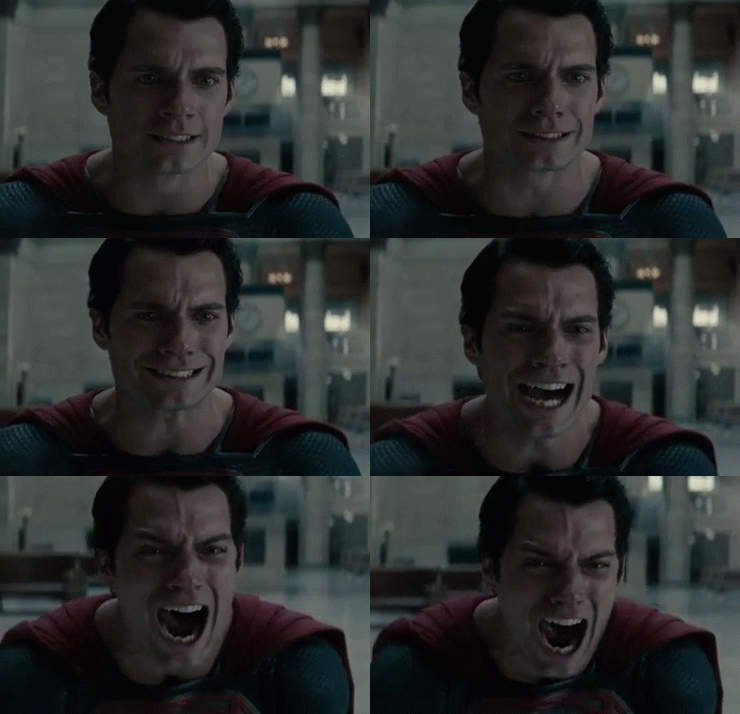
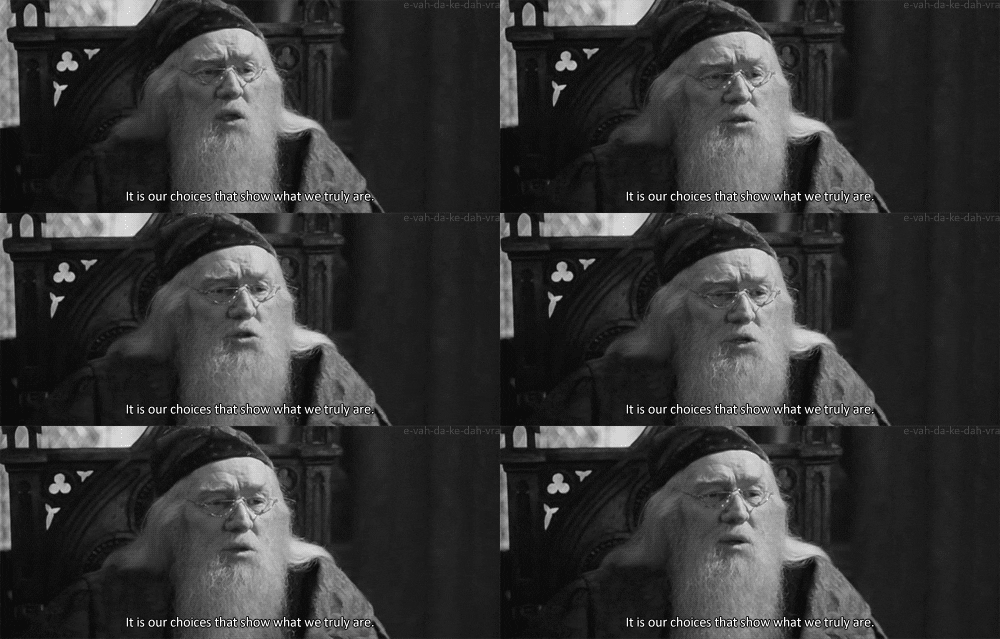
This is the perfect image of rage and sadness at the same time. My feelings for this book so well expressed.

Look, I’m too mad to even detail the Civil War plot. Let’s be honest, I skim read all of these sections. Not only did I not care one bit, but the parallels that were being drawn were so on the nose that it was just uncomfortable at times. And also unnecessary. The series as a whole has always done an excellent job of presenting complicated wartime decisions without the need to prop those conversations up against some historical event. So, here is the plot description for the half of the book that was, you know, actually an Animorphs book.

Jake returns home, exhausted from yet another mission. On top of that, after Marco’s exposure and their exploits on the military ship, the team is in the middle of a serious debate about how/when/or if they should make their war public. Everyone is grumpy, and Jake doesn’t know what is the right choice. His mom greets him with a chores list to clear out the basement. Trudging down, he begins going through boxes and discovers a journal from a past relative who served in the Union during the Civil War. [Here enters the alternating storyline that I will actively try to forget even happened.]

Cassie calls and through code informs Jake that he’s needed at the free Hork Bajir valley. Once he and the others arrive, they are told that the worst has happened: a couple of Hork Bajir warriors have been captured and will have been infested by now, exposing the location of the valley to the Yeerks. Jake and the Animorphs immediately insist that the Hork Bajir must flee the valley, but Toby insists that they want to stay and fight, even in the face of what has to be insurmountable odds. Once it becomes clear that they will not be moved from this position, the Animorphs get down to trying to plan their defense.

As they explore around the valley, they come across a beaver dam and pond. From there, Jake gets an idea: if they build up the dam even further, they can use the pooled water as a timed released to flood out the invading Yeerk forces. The team also discovers a group of campers in the area. The team split up to get to work with several of them morphing beavers and starting to build up the dam. Tobias and Jake head out to try and get the campers to move out.

They decide to approach the campers in their human form with some lame stories about incoming weather. Not surprisingly, the campers don’t believe them. They then decide to just forget it all and morph in front of them. Luckily for them, the campers turn out to be huge Stark Trek nerds and are immediately down with the idea of believing a wild story about invading aliens. Some of them take off, but a small group (a father and his two teenage kids) decide they want to fight alongside the Animorphs and head back to the Hork Bajir valley. There, they join in an assembly line where the Hork Bajir are building spears to fight against the Yeerks.

Finally, the attack comes. They manage to hold back the first line of Hork Bajir, but shortly follows Visser One (Three) himself, in the morph he used in the first book when he chased the Animorphs out of the Yeerk pool, along with a group of Taxxons. Jake frantically signals for the dam to be released as free Hork Bajir fall all around the fighting Animorphs. Tiger!Jake ends up in a one-on-one fight with Visser One, but luckily the flood of water hits right when things start looking bad for him. He manages to swim his way out, and Visser One and the remaining Taxxons retreat.

Knowing that the Yeerks will likely try again, Toby prepares the remaining Hork Bajir to flee into the woods where they will remain until the end of the war. Marco’s parents will accompany them. As for the campers, the dad died in the attack and the two teenage children are shell-shocked. Jake and the Animorphs head home, with Jake reflecting that all they can ever do is what they think is best in the moment.

Our Fearless Leader: The beginning of this book is really great for highlighting just how exhausted Jake has become at this point. He mentions the fact that the group is barely making it through school and are all running on empty. To then get home and be presented with a list of chores…you can see how it would almost be enough to break him. Especially on top of the looming debate about going public.

There are some good moments between him and Tom. Tom even slips up a few times, making comments under his breath that would be suspicious if Jake wasn’t already in the know. It goes to show that the war is beginning to take a toll on the Yeerks as well; everyone’s guard is beginning to fall as things start to come to a head.

As for the rest of the book, we see a few good leadership moments from Jake, especially with his idea about the beaver dam. But we also see a lot of moments where things and people are definitely out of his control. He reflects on the choices that Ax made in the last book and has to come up against Toby and the Hork Bajir when they refuse to follow his direction to flee the valley.

Xena, Warrior Princess: Rachel is, of course, pro to the idea of the team going more public. She also uses her grizzly morph to help get the dam built more quickly when the beavers have a hard time moving some of the bigger logs. Not much else, other than that.

A Hawk’s Life: Tobias is with Jake when they confront the campers, so I equally blame him for the sheer stupidity of this move. I will detail my feelings on this whole “plan” later, but essentially I think it was a pretty terrible choice on both of their parts. I also wish we had gotten more from Tobias with the debate with Toby and the other Hork Bajir about the future of their life in the valley. He’s the closest to this group, so it always feels like a missed opportunity when he’s not more at the center of any discussion or interaction with them.

Peace, Love, and Animals: Cassie is the one to wade into the beaver pond and captures a beaver for them to acquire. Not sure how believable her method is, but if anyone was going to do it, it would be her.

The Comic Relief: Marco, as usual, is the only reasonable one in the group when it comes to the nonsense that is the idea that the Hork Bajir want to stay and fight and the fact that Tobias and Jake revealed themselves to the campers. The entire time, he repeatedly points out that they have no chance of winning and fighting simply for pride or something is just a way to die more quickly.

E.T./Ax Phone Home: I have to say, one of the bigger disappointments of this book is the way that we get very little follow-up on the monumental decisions that Ax made in the last book. Jake pretty much says that they’ve both kind of silently agreed to just not talk about it. Jake admits that he is secretly glad that Ax took the decision out of his hands, but he’s also still mad that Ax would disobey him so directly. For his part, we see that Ax won’t meet Jake’s eyes and clearly still has strong feelings about the entire experience. And that’s about all we get. There is zero reference to the fact that Tobias, Rachel, and Marco all agreed with Ax’s plan and helped him execute it as well, which has to be almost as notable to Jake.

Best (?) Body Horror Moment: Not really a lot. The beaver morph was pretty straightforward, as far as morphing mechanics go. The fight between tiger!Jake and Visser One is pretty  brutal, however. Poor tiger!Jake, always with the neck injuries!

Couples Watch!: Really nothing at all. There were a few nice references to how well Marco’s parents are doing with their life in the valley, but Jake and Cassie don’t have much and neither do Rachel and Tobias.

If Only Visser Three had  Mustache to Twirl: It’s a cool call-back to have Visser One come after them in the same morph he used in book #1. I think this may be one of the first times we’ve ever seen him re-use a morph? I’ve always thought it was strange that he didn’t have preferred battle morphs in the past, but if he was going to have one, this one seems like a solid choice. The only reason it didn’t work way back in the first book was due to its size and the small tunnels in the Yeerk Pool. Out in the open, it seems like a powerful choice. He gets in his usual corny lines, so it’s nice to know that the promotion has done nothing to improve (?) his campy villain mode.

Adult Ugly Crying at a Middle Grade Book: The whole decision with the campers, especially when you look at the end result which is two teenagers who are now orphans. There was absolutely zero reason this had to go down the way it did. It’s one thing to reveal themselves to military personal on the ship, individuals who have signed on and trained for battle. It’s completely another to involve unprepared civilians. Not only  have we seen the Animorphs deal with scenarios exactly like this in the past super easily (just send in grizzly!Rachel and the problem is solved), but they only make the barest attempts to convince the campers to leave before just jumping to “let’s reveal all of our secrets to a group of complete strangers!”

Then, to make matters worse, it becomes immediately clear that the campers are in no way tracking with the seriousness of the issue, making tons of references to Star Trek and such (these were fun for laughs, but should have been seriously worrying for Jake and Tobias). So what do Jake and Tobias do? Agree that sure, it’s fine if some of them want to join in the fight. And sure, it’s fine if the others want to head out, now knowing all of their secrets. Jake and Tobias even make some passing reference to the fact that no one will believe them because they’re Trekkies. Do you know who will believe them? The Yeerks, that’s who!! They’ve known this for literally years now, which is why it’s always been so important to not reveal their human forms. It’s just insane that they now hand-wave it away or “forget” this part of it.

And then what happens? The dad and teenagers get there and then the dad realizes that wait, yes, this is real and death is on the line. But, oops, it’s too late, and now the Animorphs have civilians who all they can do to protect is to tell them to hide. Which they do, and the dad still ends up dead. There’s no reference to what happens to the kids past this point. But there is zero excuse for any of this nonsense. Jake and the others essentially just exposed their whole operation for no reason and got two kids’ dad killed for nothing. It has to go down as one of the worst things they’ve done in the entire series.

What  a Terrible Plan, Guys!: The whole idea that the Hork Bajir wanted to stay and fight. This falls largely on Toby’s shoulders, but also on the rest of the Animorphs for giving in as easily as they do. I get that they couldn’t force the issue, but Toby really has no excuse. There were a lot of pretty lines about freedom and defending one’s home, but all of this is completely pointless in the situation they were in here. Freedom is meaningless if you’re dead. Not to mention, in the middle of battle preparations Toby is also preparing her people for the necessary retreat at the end of it. What the hell?! It’s bad enough to be naive enough to think they could win the battle, but the fact that they know and acknowledge the fact that they’ll need to retreat at the end of it anyways? Then you are literally just throwing your life away for pride or some nonsense. And asking others to do it too by involving the Animorphs. It’s pure stupidity for nothing. They still suffer huge losses, and somehow we’re supposed to believe that this counts as a “win” because now they’ve “protected their home” or some such nonsense? You’re still retreating to life in exile in the woods!! Nothing changed from this other than the fact that you lost a lot of your people for nothing and had the same end result.

I will say that the beaver/dam issue was rather clever. I’m not sure about the mechanics of how this would work (how fast would water really build up?), but it’s a cool idea nonetheless.

Favorite Quote:

A good comical line from Marco. The same could be said about the cover. Here we are, getting close to the end, and we have…a beaver morph.

<You know, this mission is seriously important. I’m thinking the morph should be a little more, I don’t know, glamorous. I mean, going beaver to save an entire colony of aliens is like putting James Bond behind the wheel of a minivan. With a bumper sticker that says, “World’s Greatest Mom.” No offense.>

Marco, again, calling it like it is. Jake’s rebuttal is completely weak, too. Marco legitimately did have to do what he did. Jake absolutely did not. If they had to reveal themselves to every person who’s been in the way on one of these missions, they would have shown themselves to people in almost every book.

<Exactly the problem!> Marco said angrily.<Jake, who decided it was okay to make public appearances?>

“Well, you, actually,” I said. “And that’s not an accusation. It’s a fact. When you told your dad about us. You did what you had to do and so did I.”

<That was different with my dad,> he said forcefully. <Maybe even with those sailors and marines on the aircraft carrier. I don’t know. But come on, Jake. You don’t even know these campers. Who they work for, who they’re related to, where they’re from.>

Scorecard: Yeerks 13, Animorphs 16

A point for the  Yeerks! Not only did the Animorphs/Hork Bajir make terrible decisions throughout this all, but the Yeerks successfully flushed out the Hork Bajir and took one of the Animorphs’ main bases of operation off the table.

Rating: This book was infuriating. I only covered the half that had to do with the Animorphs and as you can see from my multiple rants above, even that part was incredibly angering. And that’s not counting the fact that a full half of the book was wasted on a Civil War plot line that was completely unnecessary. Look, I get that in long-running book series or show, you reach a point where this type of experimentation with storytelling comes to play simply due to ideas running dry. But we were at that point books and books ago. Now, things are actually ramping up! The series is clearly building towards an ultimate conflict. This is absolutely NOT the time to waste an entire half of an already short book on stupidity like this. And really, it’s not like the Civil War story added anything to this. I skim read it, but I could have literally read zero of it and missed nothing. Like I said above, any parallels that were drawn were so on the nose as to seem comical. And Jake’s not even reading this story or anything where he could be making these connections himself as his own story plays out. It’s just two completely seperate stories running next to each other. I’m not here for the Civil War; I’m here for Animorphs, and there’s so little of it left that it’s almost insulting to read a book like this where half the page count is essentially just thrown out on a pointless side story.

Note: I’m not going to rate these books since I can’t be objective at all!

Serena’s Review: “Through the White Wood”

39735900Book: “Through the White Wood” by Jessica Leake
Publishing Info: HarperTeen, April 2019

Where Did I Get this Book: Edelweiss+

Book Description: Katya’s power to freeze anything she touches has made her an outcast in her isolated village. And when she loses control of her ability, accidentally killing several villagers, she is banished to the palace of the terrifying Prince Sasha in Kiev.

At the castle, though, she is surprised to find that Sasha is just like her—with his own strange talent, the ability to summon fire. Instead of punishment, Sasha offers Katya friendship, and the chance to embrace her power rather than fear it.

But outside the walls of Kiev, Sasha’s enemies have organized their own army of people who can control the very earth. Bent on taking over the entire world, they won’t stop until they’ve destroyed everything.

Katya and Sasha are desperate to stop the encroaching army, and together their powers are a fearsome weapon. But as their enemies draw nearer, leaving destruction in their wake, will fire and frost be enough to save the world? Or will they lose everything they hold dear?

Review: I’ve had some good luck recently with Russian-based fairytale/fantasy novels. Plus, I’m always on the look out for a good standalone as I have way too many series I’m currently invested in. It’s a problem. All of that plus a pretty cover, and I was quick to place a request to read an early coy of this. Ultimately, however, it didn’t live up to all of the expectations I had placed on it.

Katya’s life has been one of fear and isolation, except by the elderly couple who has raised her. One night, her worst fears are realized when she releases her incredible power over ice with horribly destructive results. But her banishment turns out nothing like she had imagined. Instead of punishment, she finds more of her kind, people with incredible powers over elements. Even the Prince of Kiev whose own power over fire seems to perfectly balance her own. Now, not only has she found a place of acceptance, but she finds herself drawn into a greater conflict where her rare abilities may be the turning point that saves her entire nation.

As a pro for this book, the greatest thing that stood out to be was the commitment to the darkness at the heart of Katya’s story and the true danger of her powers. This isn’t just Elsa from “Frozen.” People die when Katya loses control. The original incident that results in her banishment is rightly horrifying, and while yes, she is definitely provoked into it, we see how terrible the results are, not only for the villagers but for Katya herself, as at this point in time, she only has limited control of how her abilities manifest. Then, further into the story, when we begin to hear about the larger threats against the country itself, these incidents aren’t left as purely stories of terrible things happening elsewhere to other people. Again, we see the results of these attacks, and it has a direct impact on Katya and her story. I really appreciated that the author made not only the dangers of Katya’s powers, but the villains themselves, feel more real by raising the stakes in this way.

But other than that, this book simply felt too standard to spark my real interest. Even trying to type out that summary above was a struggle because it just sounds so similar to so, so many stories that are just like it. Ice powers, fire powers, what have you. A book about a teenage girl who has some incredible power, is misunderstood, and then turns out to be the “chosen one” essentially to save a nation? Been there, seen that. Add in a love story with, of course, the prince, and you have pretty much checked off every requirement for the base model of YA fantasy novels.

Katya herself could be incredibly frustrating at times, especially early in the story. Yes, her initial confusion about what is going on and what her role is in everything makes sense. But as the story continues, she bizarrely flips back and forth between being trusting of and then suddenly antagonistic against those around her. And there is never any clear instigating factor behind the switch. It never read as a natural reaction to events happening around her, and instead felt like authorial intervention to add drama.

I also hated the romance. It was a terrible case of instalove where I couldn’t see any true chemistry built between the characters and it happened incredibly fast, especially on Sasha’s side. While Katya is going through her little song and dance of “I like him! I don’t trust him! But he’s great! But no, I must be opposed to him!” Sasha was pretty fully invested in Katya from the start. But…why? Again, no reason is actually presented in the book. We’re simply told that this is how it is.

There was nothing truly bad about this book. But there was also nothing that made it stand out to me. The story felt incredibly familiar. The characters seemed to be just going through the motions that we expect from YA fantasy. And the entire read felt slow and plodding, except for a few instances of action thrown in here and there. I can’t even say the idea behind the book was exceptional, as, like I said, it felt very familiar to many other fantasy YA stories featuring powered young women. If you really love those stories, this is more of the same, and you’ll probably like it. But if you’re looking for a new take on things, this isn’t it.

Rating 6: Pretty much exactly what you’d expect after reading the book description. No surprises here, and that was a bad thing.

Reader’s Advisory:

“Through the White Wood” isn’t on many relevant Goodreads lists, but it is on “2019 Must Read Fantasy.”

Find “Through the White Wood” at your library using WorldCat!


Serena’s Review: “A Curse So Dark and Lonely”

43204703Book: “A Curse So Dark and Lonely” by Brigid Kemmerer
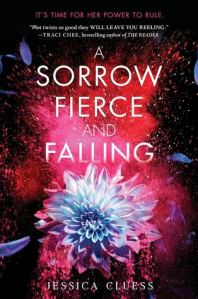
Publishing Info: Bloomsbury YA, January 2019

Where Did I Get this Book: from the library!

Book Description: Fall in love, break the curse.

It once seemed so easy to Prince Rhen, the heir to Emberfall. Cursed by a powerful enchantress to repeat the autumn of his eighteenth year over and over, he knew he could be saved if a girl fell for him. But that was before he learned that at the end of each autumn, he would turn into a vicious beast hell-bent on destruction. That was before he destroyed his castle, his family, and every last shred of hope.

Nothing has ever been easy for Harper Lacy. With her father long gone, her mother dying, and her brother barely holding their family together while constantly underestimating her because of her cerebral palsy, she learned to be tough enough to survive. But when she tries to save someone else on the streets of Washington, DC, she’s instead somehow sucked into Rhen’s cursed world.

Break the curse, save the kingdom.

A prince? A monster? A curse? Harper doesn’t know where she is or what to believe. But as she spends time with Rhen in this enchanted land, she begins to understand what’s at stake. And as Rhen realizes Harper is not just another girl to charm, his hope comes flooding back. But powerful forces are standing against Emberfall . . . and it will take more than a broken curse to save Harper, Rhen, and his people from utter ruin.

Review: So, as always, another “Beauty and the Beast” retelling comes out and I line up obediently to read it. This, if anything, is proof that I am an eternal optimist, as I’ve had pretty poor luck with this particular fairytale and the versions I’ve read. Yes, “Beauty” is and likely will always be one of my absolute favorite fairytale retellings, and I loved “Uprooted.” But from there…maybe a few middling titles, but then it’s straight down to versions that I highly dislike.  So the scale is pretty heavily weighted on both sides of the extreme. Sadly, “A Curse So Dark and Lonely,” while not my least favorite version, joins the ever expanding ranks of disappointments for this story.

In the fairly standard layout of the story, Rhen is our cursed prince, doomed to relive one season over and over again, attempting to win over a new girl every three months. But, what’s worse, his failures don’t simply reset things, but end with his transformation into a terrible beast that kills all those in his path. Harper, a girl growing up in D.C. and with struggles of her own, suddenly finds herself pulled away from her life (one full of its own strife with her ill mother and a brother caught up in crime rings in an attempt to pay off the family debt) and thrust into the middle of this curse, the most recent would-be curse breaker. To make matters worse, this will be the last season and Rhen’s last chance to break the curse and avoid a life ever after as a monstrous beast.

This book has received a lot of positive reviews, so I just want to say right away that there’s a good chance much of what bothered me with this book wouldn’t hold true for others who enjoy YA fairytales. There have been comparison to “A Court of Thorns and Roses,” for example. Which, given the massive appeal of that series, means many will ultimately really like this. I hated ACOTAR, on the other hand, so that comparison might be even more apt. I didn’t hate this book, but it definitely wasn’t for me.

The good thing about this book is that it does what it sets out to do. We have a unique (ish) take on the “Beauty and the Beast” tale that leans into its darker elements (beast!Rhen is truly destructive and dangerous). A heroine who represents those with disabilities in a really great way (she has what seems to be a high functioning version of cerebral palsy). And a story that delivers both action and romance (eventually).

But, for me, it did all of these things in a very “meh” way. The world-building, for one, was an immediate let-down. Emberfall is simply “such and such, generic fantasy world with magic.” There is no real explanation or true creativity behind any of it. The castle itself has some of the standard magical elements that we expect to see (ooooh, musical instruments that play themselves) and even those that we are given are too few and far between. It’s just enough to set the stage as a fantasy land, but not enough to make it stand out in any way from the millions of other fantasy lands we’ve seen.

And when juxtaposed against the “real world,” this lack of world-building is made even more stark. It’s one thing to set a book entirely in a fairly bland fantasy world, but when you have the “real world” as an element in your book and characters from that world, it’s inevitable that the “hows” and “whys” of it all should come more to the forefront. If everyone lives in this fantasy world, there’s more of a “get out of jail free” card in that, naturally, everyone (and thus the reader) would take things at face value. That’s simply not the case when you have “real world” characters who should be asking these questions.

Beyond that, while there was nothing overtly objectionable with Rhen or Harper, neither of them were particularly intriguing either. Obviously, the inclusion of Harper’s disability is an interesting take and, not having any experience with this of my own, seems to be represented well. But that is not enough to make her a fully-fleshed out character. Rhen, too, was just kind of…fine. I just never felt fully invested in either of them, and there wasn’t enough given to either to make them feel like much more than the fairly standard “beauty” and “beast” cut-outs we’ve come to expect.

And, from the get-go, the story set off on the wrong foot. Pretty early in the book, right after Harper is kidnapped and brought to the castle, we start in on the “she’s so different than the other girls” lines of thought. I almost just put the book down at this point for how much I hate this way of writing. For one, it’s lazy. If you can’t make Harper look good without including negative comparisons to “other girls,” than you have a character problem on its own. Beyond that, Rhen is something like 300 years old at this point. So, how many seasons would that be? You’re telling me that in that entire time, girls have been kidnapped from the modern world and ALL of them have only ever been interested in dresses and NONE of them wanted anything to do with daggers or, I don’t know, trying to escape? Not only is this incredibly insulting (especially when it’s linked to another comment about how originally Rhen would ask for beautiful women in particular, so of course they’re also frivolous and, I don’t know, scared of weapons??), but it’s also beyond the point of belief. These women have been kidnapped. There is no way that they all simply got distracted by sparkles and sat around meekly adoring their wardrobes. It’s as if to say that, for women, the standard reaction to kidnapping is complacency, especially if your kidnapper is rich and handsome. And that Harper’s reaction of immediately trying to escape is somehow unique and note-worthy. I could go on and on with my frustrations with this, but I think I’ve made my point and any more would just be indulging myself in ranting.

So yes. This book wasn’t my favorite and sadly joins the list of “Beauty and the Beast” retellings that I won’t be recommending. Like I said, a lot of people have liked this book, so there is definitely an audience for it. But, for me, the world-building and characters were simply too bland to hold my interest and the early introduction of “other women shaming” into the story was an immediate turn-off.

Rating 5: Not for me, alas. Maybe check it out though if you liked ACOTAR?

Reader’s Advisory:

“A Curse So Dark and Lonely” is a newer book, so it isn’t on many relevant Goodreads lists. It is on this one (though I disagree about the “best” in this title): “Best retellings of Beauty and the Beast.”

Find “A Curse So Dark and Lonely” at your library using WorldCat!


Serena’s Review: “A Sorrow Fierce and Falling”

36443576Book: “A Sorrow Fierce and Falling” by Jessica Cluess

Publishing Info: Random House BFYR, October 2018

Where Did I Get this Book: audiobook from the library!

Book Description: It’s time for war.

After suffering terrible losses, Henrietta and Lord Blackwood have led their warriors to Sorrow-Fell, a vast estate where only those invited by a Blackwood may enter–and the ideal place to plan a final assault against the Ancients.

It’s time for a wedding.

Henrietta nervously awaits her marriage to Blackwood, but when the ritual to become his bride reveals a dark secret, she realizes that Sorrow-Fell is not a safe haven; it’s a trap. Convincing the sorcerers of this, however, is not easy. So with Maria, the true chosen one, and Magnus, the young man who once stole her heart, at her side, Henrietta plots a dangerous journey straight into the enemy’s lair. Some will live. Some will die. All will be tested.

In this stunning conclusion to the Kingdom on Fire series, Henrietta must choose between the love from her past, the love from her present, and a love that could define her future. While battles rage, the fate of the kingdom rests on her decision: Will she fall or rise up to become the woman who saves the realm?

It’s time for Henrietta to make her stand.

Previously reviewed: “A Shadow Bright and Burning” and “A Poison Dark and Drowning”

Review: This trilogy has traveled an odd trajectory as far as my feelings for a book series go. I was underwhelmed by the first book, a bit put off by the sheer number of love interests who were introduced. The second one fared better, expanding the world out by quite a bit, upping the ante with the villain, history, and Henrietta’s true role in all of this. And then this one…just kind of threw out a lot of different things and saw what stuck, essentially? I’m not even sure! I’m still experience a bit of whiplash from it all, but I don’t think I liked it, in the end.

Events had been coming to a head at the last book, not least of which saw Henrietta agree to marry Blackwood. However, now, as events continue to spin out of control, Henrietta is forced to re-examine all that she thought she knew about those around her. And with new revelations come new choices, each with their own prices to be paid. Surrounded by her friends and facing new and terrible dangers, Henrietta must face her final challenge.

So, as usual, I’ll try to start with some things I enjoyed about this book. The one consistent thing throughout this series that I have liked has been the general writing style. There’s a nice mixture of interesting turns of phrase alongside stark, to-the-point writing that solidly carries the story along. For the most part, purple prose, of the like that can all too often pop up in YA fantasy that has a strong emphasis on romance, is largely avoided. I also listened to this one on audiobook again (which I did for the second book, too) and enjoyed the narrator’s interpretation of characters. I remember thinking that my increased enjoyment of the second book could have something to do with this change of format. And I now have to think that continuing my read of this series using this format was a wise choice, as I’m not sure I would have made it through this one without the increased enjoyment of the audio narrator.

I also generally still enjoy the world-building. There have always been a plethora of creative ideas at the heart of this story. And I’ve also appreciated the way the author has walked right up to the horror line with many of her villains, making them truly horrible. Much of that still continues here, though it did start to feel overly crowded and muddled at times. It’s only been a year since I read the last book, but there were times where I was still struggling to remember how some of these elements worked together and what there histories were.

However, other than those points, I really had a hard time with this book. I’ve never loved Henrietta as a character, but I also didn’t have any overt issues with her. I was particularly intrigued by the second book where we were introduced to Maria, the “real” chosen one. But here, Henrietta went from blandly ok to outright unlikable. We’ve had three books now to witness her making mistakes as she discovers herself and her role in this conflict. And that’s fine. But by this point, we need to start seeing the growth that comes out of those mistakes. Instead, if anything, Henrietta becomes more indecisive and makes even more nonsensical choices than we’ve seen in the past, often to disastrous results. It makes her not only a frustrating character to read, leaving the reader feeling like the character hasn’t grown at all over two entire books, but this weakness of character was necessary to drive much of the plot, as it revolved around said poor decision making and the results therein.

And, lastly, the romance was a huge problem for me. This has been the biggest question mark for me throughout the entire series. From the very beginning I had huge red flags going up regarding the sheer number of love interests that were introduced. We were way past love triangle and into the realm of love square or even more. It was always too much. As the story progressed, I was mostly able to distract myself from my concerns in these areas. But not here. To finally resolve all of the dangling romantic threads, several characters had to be almost completely re-written. One in particular became almost unrecognizable and the change came out of left field. Beyond this, Henrietta’s reaction to this change was not appropriate, as the character essentially became abusive. There are so many layers of problems with this that I’m tired even thinking about it. Ultimately, it felt like the author didn’t know how to resolve (or even decide!) all of the romantic plotlines that were introduced. So instead of making her main character progress along a natural arc of self-discovery throughout the series that would result in her forming a realistic attachment to one character over the others, the author just got to the last book and decided to write off at least two of the choices, leaving Henrietta with only one viable option anyways. It felt lazy and like a slap in the face to readers. What exactly were we wasting our time on before this point if this is how it’s going to be ultimately resolved?

So, while the book did have some creative ideas with its world-building, in the end that’s all it felt like: a collection of ideas. Looking back over the trilogy as a whole, it looks like the work of an author badly in need of an editor. Everything and the kitchen sink went into this series and it shows worst of all in this last book when you can see the wheels coming off as the author frantically tries to resolve all of the elements that have been introduced (most poorly in the romance arena, perhaps). If you’ve enjoyed this series up to this point, I’m not sure how you’ll feel about this one really. It’s the kind of thing where some readers may really enjoy it and others will hate it, but it’s going to largely come down to what each reader was getting out of the series before and how they wanted things to turn out in the end. For me, it didn’t work and almost retroactively lowered the first two books as well, as it seemed to highlight that there was only ever a shaky overall plot from the very start.

Rating 5: A disappointing conclusion, most especially in the lazy resolution to the multiple love interests that had been introduced.

Reader’s Advisory:

“A Sorrow Fierce and Falling” is fairly new and isn’t on any very relevant Goodreads lists, but it is on “YA Releases of October, 2018.”

Find “A Sorrow Fierce and Falling” at your library using WorldCat.

The Great Animorphs Re-Read #46: “The Deception”

363401Animorphs #46: “The Deception”

Publishing Info: Scholastic Paperbacks, October 2000

Where Did I Get this Book: own it!

Book Description: The Animorphs and Ax have managed to contact the Andalite home world. But the battle is far from over. Visser Two has arrived on earth, and he’s not happy about the state of things. He decides the best way to take over Earth is to have the humans destroy the people and the land the Yeerk’s don’t need. He decides to start World War III.

Ax and his friends know that Visser Two means business and there will probably only be two ways to keep him from destroying everything they know: Find a way to stop the war. Or, find away to stop him …forever..

Narrator: Ax

Plot: Another “beginning of the end” book where we see the start of the expansion of what, to this point, has been a very small war up on to a much larger, global scale. And poor Ax really embraces his role as being of two people and what that means, and it’s just rough.

Poor Ax, with the worst choices of all.

The story picks up right off the back of the last with the Animorphs reaching out to the Andalites. In no surprise to anyone, even, notably, Ax himself at this point, the Andalites are huge dicks and immediately question the validity of the information the Animorphs are providing about the Yeerks preparation for the Andalite fleet. They accuse the Animorphs of potentially just trying to make things up to re-direct the Andalite fleet back towards helping Earth. Ax even gets on at one point and they say that while they’ll take what he says “under consideration,” he “might have confused his loyalties” by all of this time on Earth at this point, so they can’t completely trust him. Again, Andalites, showing their true colors as just the worst (all the more so for always strutting around claiming to be the best).

Later, Ax, Marco and Tobias overhear a garble report from the Yeerks on the transmitter. Ax manages to hack the transmitter into the NSA computer system and with its greater power is able to more fully receive the full Yeerk report: Visser Two is on his way to Earth to begin to put Visser Three’s (now Visser One) more grand plans into action. They overhear a set of coordinates and immediately need to make a plan.

They discover that the location is far out over the Pacific Ocean, and with the short amount of time before the plan, whatever it may be, is set to be put in motion, they won’t have time to make it out there using any of their morphs. This sets off the moral debate about whether or not they’ve finally reached the point where they will need to compromise on their general practice of not morphing humans. Cassie protests, but Jake is able to convince her that by this point in the war, they have to make these tough choices.

They make their way to an air force base and there Rachel and Ax knock out two pilots, morph them, and commandeer a fighter jet. The other morph flea and hang on for the ride, their small bodies able to survive the increased pressure from the incredible speeds the jet reaches. They make their way out to a large nuclear carrier ship in the middle of the ocean. But by the time they’ve gotten there, the original pilots have been discovered and everyone is on high alert. Ax manages to execute a controlled crash into the ocean and they all morph seagulls and make their way to the ship.

Jake, it turns out, has an almost encyclopedic knowledge of huge military ships like this, and using this information, they infiltrate the ship with Ax morphing another human sailor and making his way around. The problem is: they don’t know what they’re looking for! Until they spot some new arrivals who include a familiar face: Chapman. Alongside an officer called Admiral Carrington who they quickly discover is Visser Two, Chapman approaches the ship’s captain and says they have a special delivery for him. Ax slips two of the roach!Animorphs into the captain’s pocket and they are able to get in the room with him, but they are too late and the captain is infested. Ax and the others go to battle morphs to try and help, witnessed by several sailors around them. They barge in and Ax upends the portable Yeerk pool. In the madness, human soldiers barge in and the Animorphs have to bail to avoid hurting innocents.

Cassie and Ax end up together and Ax once more morphs his human sailor morph and, with Cassie on board, makes his way through the ship to an information deck that Jake had mentioned. There, they overhear an announcement of an incoming Chinese missile which shortly after hits with a massive explosion. Ax is quick to put together the Yeerk plot: they are planning on setting off WWIII by instigating a war between the Chinese and the U.S. Ax frantically calls out to Jake who orders him to do whatever he has to to reverse the admiral and captain’s orders to retaliate. Ax shoots the admiral/Visser Two in the leg. When the medics arrive to take him to medical bay, Ax follows them and quickly knocks them out when they are in a private room. He acquires the admiral and returns to the control center where he orders the captain to reverse the order for a counter attack.

Chapman and the captain return to the room where Visser Two is lying, but the room is now also full of the rest of the Animorphs in their battle morphs. They demand to know what the rest of the plan is. In the way of any true villain, Visser Two immediately spills the rest of the plan: in a few hours, the US will hear that the ship has been attacked by the Chinese, and a specific sub, manned by Yeerks, will set out with a nuclear weapon to attack China. They try to threaten Visser Two into telling them which sub is the one controlled, but Visser Two is a true believer and zealously wackadoodle with his visions of Yeerk glory and refuses to tell them.

They are interrupted by the arrival of a bunch of Bug Fighters carrying Hork Bajir. Pandemonium breaks out on the ship with the human crew fighting against the Controlled crew and the alien invaders. Several members of the crew begin to recognize that the Earth animals that have suddenly appeared on the ship are fighting on their side and try to team up with the Animorphs. However, they are all badly outnumbered and it is hard to tell which humans are Controlled and which aren’t in the madness. In the madness, Visser Two escapes.

Ax sets off through the battle to track him down. To do so, he decides to follow Chapman and to do that, he gets another human morph, this time asking the individual in question who quickly agrees. He tracks down Chapman and, holding him at gun point, tries to get him to reveal the location of Visser Two. But before he can make much progress, he gets knocked out. He comes to, returns to his Andalite body, and makes his way back through the ship where he discovers the dying Captain. The Yeerk slithers out, but Ax knows it won’t make it far. The Captain says he tried to fight it, and Ax reassures him that he did all he could and stays with him until he dies.

Ax meets up with Tobias who has also acquired another human morph. All around them, the battle is being lost, with more and more of the ship falling under Yeerk control and the real humans being massacred. They meet up with the others and debate what to do, knowing that Visser Two, in his mania, can’t be threatened into revealing the Yeerk-controlled sub.

It’s at this point that Ax realizes the only way forward and privately thought speaks Jake. He tells him that in this situation, they only threat that could work against Visser Two is  a threat against the Yeerk pool itself. And fighter jets on the ship has some pretty strong bombs…Jake is horrified, knowing that they’d have to kill thousands of humans to drop a bomb through the middle of their city to reach the Yeerk pool. Ax realizes that Jake can’t make this decision, but he, Ax, the alien and outsider, can. He knocks Jake out and tells Cassie that he’s been injured.

He spots Visser Two and calls out to Rachel, Tobias and Marco that he needs there help; he needs to steal a plane and Visser Two needs to be one it with him. Tobias and Rachel don’t stop to question him, but Marco is suspicious asking not only where Jake is but what Ax plans on doing once he’s in a plane with Visser Two.

<You Andalites. You people have a tendency to destroy what you want to preserve.
And that plane is carrying a nuke. I saw it being fitted up by some of the visser’s
men.>

Ax acknowledges that he and Marco have not always trusted each other, but that he, Ax, knows that Marco has always been one to put the mission first, to do what needs to be done in the face of horrible choices. Rachel looks to Marco, and Tobias looks away. Marco finally agrees to help, asking whether they ever really had any choices in this war.

With Marco, Tobias and Rachel’s help, Ax manages to get Visser Two on a plane and take off, right as Cassie and Jake run up. In the plane, Ax lays out the situation for Visser Two: either contact the submarine and have it stand down, or he will drop a nuke on the Yeerk Pool. At the very last moment, Visser Two agrees and Ax lets him use the radio to contact the submarine. He releases Visser Two and makes his way home, wondering how he will be received by his friends.

E.T./Ax Phone Home: This is a big book for Ax, with a lot of important notes for his character. One of the smallest ones, but one I still found interesting, was seeing just how far Ax has come in his understanding of human behavior. Throughout this story, instead of the general confusion and bewilderment at “strange humans” like we’ve seen in past books, instead we saw more and more evidence of how thoroughly Ax has come to understand humanity. From little things like know what rhetorical questions are and even using them himself, to larger things like being able to imagine facial expressions alongside comments made by his friends while in morph, thus increasing his knowledge of what is truly being communicated beyond the words themselves.

We also see in the very beginning of the book how much Ax has had to readjust his perceptions of his own people. He’s no longer completely surprised by the Andalites’ poor response to pleas for help from him and his friends. And, when asked by Jake later, he admits to not knowing whether the Andalites will ultimately listen to their warning.

Throughout the story, we hear more and more about how much Ax now sees himself as both Andalite and human. He is horrified by the evils of each race, but also loyal and and values them both as well. The destruction on the ship and loss of human life hurts him just as much as it does the others. But then, in the end, he also realizes the unique role he has come to inhabit on the team. He has adopted humanity as his own, but he is also still an alien, still the only one capable of making a decision such as the one to drop a nuke on the Yeerk Pool. That being the case, however, we see how much this decision tears him apart. Marco accuses him of perhaps doing it for Andalite glory, but as a reader, inside of Ax’s head, we see how terrible this decision weighs on him the entire time. And, given that Marco, Rachel, and Tobias ultimately agree to help him, we have to imagine they sense that his real reasons are still in the right place: trying to avoid WWIII.

Our Fearless Leader: It’s pretty lucky/convenient that Jake has so much knowledge of the layout and organization of a massive battleship like the one they end up on. But on the other hand, as someone who has been leading an underground war for years now, it’s also probably not surprising that he may have spent his down time researching other military avenues.

The moment between Ax and Jake where Ax brings up the suggestion to bomb the Yeerk Pool is exceptionally good. We see that while Jake has come far in his ruthlessness and willingness to bend moral lines to do what needs to be done, he still has a pretty hard and fast line with regards to the loss of human life. Ax, to his credit, is quick to realize this as well and to even conclude that it hadn’t been right of him to even ask or expect Jake to be able to grapple with a decision like this. This is pretty close to the end of the series, and I think from here on out, Jake’s progress down this ruthless path goes faster and faster.

Xena, Warrior Princess: Rachel doesn’t have a whole lot in this one. Of course, she’s in on the action the entire time and is chosen to be the other Animorph to morph another person to operate the fighter jet with Ax in the beginning. Ax mentions that she was elected to this role for her “nerves of steel,” since the incredible speeds of the plane would be pretty intimidating to most. It’s also worth noting that in the end, when confronted with Ax’s plan, she looks to Marco to make the ultimate decision about whether they will help Ax.

A Hawk’s Life: Tobias, too, doesn’t have much other than his involvement in Ax’s plan in the end. Looking at the three who end up involved in this, I think it makes a lot of sense. Of the entire team, Rachel, Tobias and Marco have a pretty solid history of making big, often ruthless decisions. Let it not be forgotten that Tobias and Ax were the ones to ultimately decide the fate of an entire alien species back in Megamorphs #2.

Peace, Love, and Animals: One of the more notable moments for Cassie came with the discussion about morphing humans. She immediately resists the idea, but Jake is able to convince her that it has to be done (though, notably, she doesn’t do it herself). She also says that Jake is the only one she would trust to know if the time has come where this type of moral compromise is truly necessary.

The Comic Relief: As I said, it makes sense that Marco, Tobias, and Rachel end up being the three to ultimately decide to go with Ax’s plan. It’s also great seeing just how quickly Marco figures out what is going on. Ax even notes that he had prepped for Marco to ask where Jake was, but even with that prep, Marco jumps immediately to the correct conclusion about Ax’s use of the plane as well. It’s interesting to see Marco accuse Ax of potentially doing this for Andalite glory. Being in Ax’s head, especially in this book, we’ve seen the transformation he’s underwent with regards to the naivety he used to have about his own people. We see how much he values Earth and sees the Animorphs as his family. But from an outsider’s perspective, especially someone as naturally cynical and suspicious as Marco, it’s interesting to note that a motivation like this could still be assigned to him. But Ax’s direct reasoning, that WWIII can not be allowed to happen, is exactly the sort of Point A to Point B line of thinking that would resonate with someone like Marco.

Best (?) Body Horror Moment: There wasn’t a whole lot as far as body horror goes in this one, other than your usual morph descriptions. I will say that it’s interesting to see just how “all-in” they went on the morphing humans thing once they decided that was the way to go. Ax ends up acquiring something like three human morphs over this entire book, and he’s the one of them that even has a human morph already that couldn’t be traced (though, of course, the fact that he’s a kid would stand out). And then Tobias and Rachel each morph people. Rachel’s makes sense, but I’m not sure that Tobias really had to. It almost seems a bit too easy, morally speaking. Like once they got the go-ahead, any moral qualms were immediately out of the window, making it seem like the only one who truly cared about this particular issue was Cassie herself. The others just start morphing people willy-nilly.
Couples Watch!: Not a whole lot in this one, unsurprisingly given it’s an Ax book. Marco notes at one point, after riling Rachel up, that he doesn’t know how Tobias does it. And, of course, we see Cassie’s trust in Jake’s judgement when he gets her to agree to them using human morphs.

If Only Visser Three had  Mustache to Twirl: Whelp, it has happened: Visser Three has become Visser One. And we get the introduction of yet another Visser, Visser Two. For the most part, he’s played for pretty comical effect. I mean, the title of this topic area pretty much fits him perfectly. He immediately reveals the Yeerks’ entire plan under very little pressure. And he randomly starts saluting and genuflecting throughout his various speeches about the coming glory. For all of this, he’s also set up as a pretty unmovable foe as far as being threatened into giving up any real advantages. Unlike Visser Three who values his own life above anything, it’s made pretty clear that Visser Two would die before giving up the submarine, which ultimately forces Ax’s hand at the end to take things to a much more extreme level.

Adult Ugly Crying at a Middle Grade Book: There are a handful of pretty sad scenes in the last third of the book when we see the poor human sailors fighting against the Hork Bajir. Ax’s own encounter with the dying captain, and his last words essentially trying to apologize for everything, was pretty heart breaking. But there’s also another scene where at one point a sailor solutes gorilla!Marco, having noted that the Earth animals seem to be on their side. And later in the battle, Ax spots Marco kneeling over the body of this same soldier. Scenes like these also prompt Ax further into action, as well as the others, who all see how badly this individual battle is being lost and are, for the first time, losing fellow human fighters alongside them.

What  a Terrible Plan, Guys!: A lot of people see them morph in this book. Like…a lot. Pretty much immediately it seems they all throw caution to the wind and start morphing/demoprhing in front of pretty much anyone. I don’t get this! For one, it’s pretty well established that they don’t know who is Controlled and who is not. And for two, it’s also pretty well assumed that almost everyone will be eventually Controlled once the Yeerks show up and start laying the smack down. So all of those people who saw kids morphing…not only is now really obvious that its humans morphing, but after the close call with Marco in the last book, it’d be really easy to figure out the exact identity of these kids. Obviously, the whole secrecy thing is going to go out the window pretty quickly now, but the Animorphs themselves have no reason to assume this, so their lack of caution is pretty strange.

The other really strange thing is the idea that somehow preventing the Yeerk-staffed sub from launching an counter attack will do much to stop a domino fall that’s already been started. I mean, it would already be communicated back to who knows how many bases that the Chinese attacked this ship. So…isn’t the mission already successful for the Yeerks? Theoretically, the US on its own would launch a counter attack, no need for a Yeerks-only sub at all!

Favorite Quote:

This line from Jake to Cassie when they are discussing the morality of morphing humans is a pretty good summation of the general thought-process/experience of every one of the Animorphs that we witness playing out in each of their books in the entire series:

“But…doesn’t it always come down to each one of us, all alone, asking ourselves: Am I right in doing whatever it takes for the greater good? And, do I trust myself enough to know I won’t become evil in the process? It always comes down to something that personal.”

There are so many good lines from Ax as he reflects on his choices at the end of the book, but he concludes with this simple, but sad, realization.

I would accept the consequences of my actions. I would accept full responsibility. I was the alien.

Scorecard: Yeerks 12, Animorphs 16

I’m going to give this one to the Animorphs, since preventing WWIII is a pretty big win (regardless of whether or not it’s believable that they actually accomplished this.)

Rating: This was a really good book. It reads a lot differently than other Ax books, which, at this point in the series, is pretty great to see. We see how fully he’s come to embrace his role as belonging to both species and how that effects the way he thinks and interacts with each.

The story does drag a bit in the middle when it feels like they just spend a lot of time running around a huge ship with no real idea of what to do. But then it concludes with a massive battle on the ship, with humans teaming up with the Animorphs for the first time really. And then the excellent, huge moral dilemma that Ax finds himself in at the end of the book.

I didn’t remember that this one ended without really resolving how Ax’s return to the group plays out. I’m not sure I like the cliff-hanger like ending here, though. I get that there’s potentially a lot that would need to be gone through with that reunion, but it also feels wrong to not get that scene from Ax’s perspective in particular, after spending so much time in his head for the rest of it. Oh well, still a great book!

Note: I’m not going to rate these books since I can’t be objective at all!

Serena’s Review: “Sherwood”

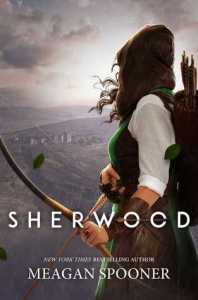
38734256Book: “Sherwood” by Meagan Spooner

Publishing Info: HarperTeen, March 2019

Where Did I Get this Book: Edelweiss+

Book Description: Robin of Locksley is dead.

Maid Marian doesn’t know how she’ll go on, but the people of Locksley town, persecuted by the Sheriff of Nottingham, need a protector. And the dreadful Guy of Gisborne, the Sheriff’s right hand, wishes to step into Robin’s shoes as Lord of Locksley and Marian’s fiancé.

Who is there to stop them?

Marian never meant to tread in Robin’s footsteps—never intended to stand as a beacon of hope to those awaiting his triumphant return. But with a sweep of his green cloak and the flash of her sword, Marian makes the choice to become her own hero: Robin Hood.

Review: As I mentioned in my brief description of this book in our “Highlights” post for March, I was a big fan of Spooner’s wholly unique take on “Beauty in the Beast” in her YA novel “Hunted.” Now, obviously these two stories aren’t connected, but it is clear by the stylization of the cover art that we’re meant to make associations between the two: both feature a strong, independent female main character and both are reinterpreting a story in which that character had varying levels of agency. I’m definitely not one of those readers who subscribes to the whole “Stockholm syndrome” group fret about Belle/Beauty’s role in her story, but there’s no denying that “Hunted” gave this character a bunch more to do. And here, we have a legitimate side character in Marian being firmly placed in the lead role of the classic Robin Hood tale. It was great to see this book live up to the expectations I had placed on it given my feelings for “Hunted.”

Marian has made the best out of a bad situation: she loves her bow, fighting, and generally running wild and has very little interest or skill in the more “womanly” arts. Luckily for her, her childhood friend Robin has always been her partner in crime in these pursuits, and their engagement seems an obvious route to making the  best of out of an inevitable situation. That is, until he rides off to the Crusades and news reaches her of his death. Devastated by the loss, Marian still sees herself as responsible for the livelihood of the people living on both her own and Robin’s land and when the Sheriff’s taxes rise beyond reason, she finds herself donning not only male garb, but the persona of her deceased fiance, Robin of Locksley. Now, pursued by the Sheriff’s right hand man, a man whose desire to catch “Robin” is only matched in his wish to marry Marian, Marian must lead a double life, and one that can only have a catastrophic end.

I really enjoyed this version of Robin Hood. While I’ve read a fair share of stories that insert a female character as a stand-in for Robin, typically Robin himself is still present in the story, often the love interest. That being the case so much of the time, I truly didn’t trust the book description or the first chapter that laid out the concept that Robin died while at the Crusades. It was probably up until about half way through the book before I really let myself trust that he wasn’t going to just pop up. Not that I have a problem with the Robin character typically, but even by a quarter into the story, Marian herself and the way her story was unfolding was already so intriguing that any addition of the more famous Robin could have only detracted from her. Plus, as I said, in those past versions, even a Robin relegated to a love interest role often rubbed up wrong against what the author was trying to do with the actual main character who was supposedly supposed to be taking on the primary role in the action.

Marian was an excellent lead. Her grief for Robin’s death is real, and I appreciate that this wasn’t glossed over. Instead, we see how his loss affects throughout the entire story, first as a hindrance and further on as a motivation. Over time, she also has to re-assess what she knew about the man she was to marry. We, the readers, get a few extra glimpses into past moments between the two, and it is here, too, that we see small, but very important, differences being laid out between who this Marian and this Robin are compared to what we expect from the typical versions of the story. We also see the foundation for how Marian came to possess the skills necessary to take on the role she does here.

Wisely, Spooner leans in heavily to Marian’s skill with a bow, a talent that, while unusual, wouldn’t fall completely out of the realm of something a lady might have learned. Marian is also described as being exceptionally tall. But that aside, it could still have read as unbelievable for her disguise as a man to be fully bought by those around her had the author not carefully crafted every interaction that “Robin” goes into in a way that plays to hiding Marian’s identity. Indeed, Marian herself is written to understand the limitations of her disguise and to use every advantage she has to work within it, instead of breaking past it in ways that could have read as unbelievable and strange.

I also really enjoyed how many of the secondary characters came into play. Several familiar faces show up throughout the story, and each was given a few extra flares to make them stand out from the usual versions of the characters we’ve seen in other books. But I also really enjoyed the addition of unique characters (or at least vastly expanded upon versions of them). Marian’s father, maid, and horse master all were expanded upon quite a bit and I loved them all.

The most notable new addition, of course, is Guy of Gisbourne who is presented as both the villain and the love interest of the story. Again, because I was expecting Robin to pop back up at any moment, it took me a while to really figure out his role in the story. Thinking back, I tend to attribute this to an intentional decision on the author’s part as well, and not only my own skepticism of how the story was originally presented. Marian herself takes a long time to understand Gisbourne, what motivates him, where his moral compass points, and how he truly feels about her. Her own confusion translates perfectly to the reader. This is both a good and a bad thing. I love slow burn romances, and this is definitely that. But at times I think the book was almost too successful at selling me on Marian’s dislike of Gisbourne and his own coldness as a character. There are a few moments that are meant to show their gradual warming to each other, and they do work, for the most part, but I’m not sure it was ultimately enough. At a certain point, it did feel a bit like some type of authorial-driven light switch was just flicked in Marian’s head because it needed to be, rather than because it was earned.

So, too, her past relationship with Robin was also a bit strained. We only see a few glimpses here and there of their childhood and teenage friendship, but the scenes are all so strongly written and their connection so well established that it almost worked against the burgeoning romance with Gisbourne in a way that I don’t think was intended. I liked the idea of what we’re being told with regards to Robin/Marian/Gisbourne: that people are not always who we initially think they are and that love can present itself in very different ways with different people, and that these ebbs and flows don’t undermine one relationship or the other. But I’m just not sure the reader can actually see this message play out, so much as just be on the receiving end of being told.

Ultimately, I almost think it says even more positive things about the story that the downside I can mention has to do with romance and yet that downside in no way tanks the entire story for me. We all know that if you don’t get the romance right for me, often that can lead to my very much not enjoying a story. And here, it’s not that the romance was wrong, necessarily, just that I felt it was the weakest part of the story. But Marian herself, the reimagining of how the Robin Hood story would play out with her at its heart, the action, and the new characters all provided enough of a counter balance to my questions about the romance to lead me to viewing it with still a very positive light. Fans of Robin Hood re-tellings should definitely check this one out!

Rating 8: A bit muddled in the romance department, but an awesome female Robin Hood saves the day in the end!

Reader’s Advisory:

“Sherwood” is included on these Goodreads lists: “Female Robin Hood” and “YA Modern Retellings.”

Find “Sherwood” at your library using WorldCat!

Serena’s Review: “The Bird King”

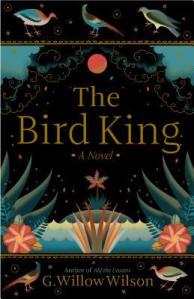
40642333Book: “The Bird King” by G. Willow Wilson

Publishing Info: Grove Press, March 2019

Where Did I Get this Book: Bookish First!

Book Description: Set in 1491 during the reign of the last sultanate in the Iberian peninsula, The Bird King is the story of Fatima, the only remaining Circassian concubine to the sultan, and her dearest friend Hassan, the palace mapmaker.

Hassan has a secret–he can draw maps of places he’s never seen and bend the shape of reality. When representatives of the newly formed Spanish monarchy arrive to negotiate the sultan’s surrender, Fatima befriends one of the women, not realizing that she will see Hassan’s gift as sorcery and a threat to Christian Spanish rule. With their freedoms at stake, what will Fatima risk to save Hassan and escape the palace walls?

Review: I read an excerpt of this on Bookish First and found myself immediately connecting to the beautiful writing that was popping on the page. I placed my request was thrilled when I received a copy. While it was a slower read, ultimately, than I had been expecting, that same strength in writing and the unexpected depth of thought given to the historical events, religious interactions, and cultures of the time period ultimately drew me in.

Fatima and her friend Hassan have built a quiet life for themselves in the circumstances they have found themselves in: she a concubine to the sultan and he a mapmaker. But Hassan is much more than your ordinary mapmaker and possess the incredible gift of not only drawing up intricate maps of the places he’s never been, but also, through these maps, interrupting the weave of reality itself. But when Hassan suddenly falls under the eyes of those who would see his gift as more of a threat than a blessing, he and Fatima must go on the run, seeking out a mystical island as their one port of harbor for a safe life going forward.

I haven’t read too many books set in this time period or within these combinations of cultures. The book is tackling a lot: the persecution under the Spanish Inquisition, the clashes between religious forces taking place in that time, plus a healthy dose of magic realism to differentiate it from a purely historical fiction work. But I think it is this last portion, the interweaving of the fantastical elements that really made this book sing for me. There are a lot of big ideas being tossed around throughout the story, but many of these are explored from a bit of an angle, with the author approaching them almost from the side, using fairytale-like elements to draw readers into a deceptively complicated, real-world issue. Metaphor and stylized writing are also used to great effect to, again, almost backwards-walk readers into topics that can get pretty dicey pretty quickly. Of course, I’m always going to love anything that reads like a fairytale, but I appreciate it all the more when an author is able to use this writing style to get at deeper topics that can often be challenging to get across.

I also very much liked the two main characters in Fatima and Hassan. At first, I wasn’t quite sure how I was going to feel about Fatima, but as the story progressed, I found myself becoming more and more invested in their platonic friendship and love. It’s a rare read to find a story that focuses on this type of strong relationship, one that isn’t based on romantic love (Hassan is gay, another factor that leads to his persecution), but that still highlights the extent to which each party will go for the other. The fact that they aren’t romantically involved never feels like it detracts from what they would do for each other, and, instead, in some ways it feels that their bond is even stronger by being freed from that element. It’s a unique relationship to see explored so thoroughly in this type of book.

I will say, however, that the story is pretty slow going. It takes quite a bit for them to even get started on their journey, and then once they do, it doesn’t speed up much. There’s a lot of travel, camping, small moments of action, and then more travel and camping. The writing was still captivating, which was enough to get me through these slower elements, but I can see how this could be off-putting to many readers, especially ones who may not be as interested in the greater themes being explored at the heart of the story. I do think more could have been done to tighten up this middle portion of the book, as the fact that it ultimately worked for me seems to speak more to my own preference than to the general quality of the story structure.

Overall, “The Bird King” was a surprisingly deep and satisfying read for me. There were, however, some stumbling blocks with the pacing and writing speed, which is what knocks it back a few points for me. It’s a lengthy story, and while it is trying to cover a lot of different things, I do think it could have been tightened up to increase its general appeal. If you like historical fiction blended with magical realism, especially dealing with a unique set of characters and a time period that isn’t often explored in this way, definitely give “The Bird King” a try. Just know that you might need to push through in the beginning before really getting to the good stuff.

Rating 7: A beautifully written story that covers a complicated time with two wonderful characters at its heart. Only lowered by being a bit too slow for my taste.

Reader’s Advisory:

“The Bird King” is included on these Goodreads lists: “Historical Fiction – Spain / Portugal” and “Muslim/Islamic Fiction.”

Find “The Bird King” at your library using WorldCat!

Serena’s Review: “A Dangerous Collaboration”

30518319Book: “A Dangerous Collaboration” by Deanna Raybourn

Publishing Info: Berkley, March 2019

Where Did I Get this Book: a copy from the publisher!

Book Description: Victorian adventuress Veronica Speedwell is whisked off to a remote island off the tip of Cornwall when her natural historian colleague Stoker’s brother calls in a favor. On the pretext of wanting a companion to accompany him to Lord Malcolm Romilly’s house party, Tiberius persuades Veronica to pose as his fiancée–much to Stoker’s chagrin. But upon arriving, it becomes clear that the party is not as innocent as it had seemed. Every invited guest has a connection to Romilly’s wife, Rosamund, who disappeared on her wedding day three years ago, and a dramatic dinner proves she is very much on her husband’s mind.

As spectral figures, ghostly music, and mysterious threats begin to plague the partygoers, Veronica enlists Stoker’s help to discover the host’s true motivations. And as they investigate, it becomes clear that there are numerous mysteries surrounding the Romilly estate, and every person present has a motive to kill Rosamund…

Previously reviewed: “A Curious Beginning,” “A Perilous Undertaking,” and “A Treacherous Curse”

Review: It was a long wait for this book. This is always the challenge when I find a new series to love! On one hand, yay, a reliable series that I can depend on to deliver both excellent characters and a fun story. But on the other hand, the dreadful count-down of days and months until the next one in the series finally arrives. But this count-down was blessedly cut a bit shorter than I had expected when I received a review copy from the publisher, and I was able to begin reveling in it a few weeks early!

Veronica is unsure, for the first time in her life. At the end of the last book, she and Stoker were on the brink of…something. And that “something” is more terrifying to her than any of the murderers and mysteries she’s come across over the last few years. Throwing herself into her work, she begins a campaign of denial and avoidance, before, upon finally returning to London, she ultimately finds herself caught up in yet another mystery. This one taking place on a remote island inhabited by a small village and its possibly haunted castle. Now, in the midst of this emotional turmoil, Veronica and Stoker are once again on the case to unravel the disappearance of a bride on her wedding day several years ago. Where did she go and why? And did she even make it off the island alive?

I really loved this book. It’s not a surprise given my feelings over the first three, but by the end of the last book, I was starting to have a few questions about where the series was ultimately headed. This book not only answered those concerns, but also flipped the scrip on a few aspects of the characters that was surprisingly refreshing. Yes, the basic equation at the heart of these stories has always been strong, but it was such a thrill to find in this book that the story could push past that and offer up even more.

For one, we see a new side of Veronica herself. She’s still her usual supremely self-assured and confident self, willing to take her own life in her hands, make decisions and follow through on them, regardless of the opinion of others. But we also get to see how these same traits can be failings. Her own self-assuredness works against her here, and she’s forced to confront some harsh realities about the very real fears that still exist within her. Her justifications and modes of operation suddenly take on a new light under these reflections and we see her have to confront and grow through some of these before-unknown personal hindrances.

In this same area, we see Stoker come more into his own, becoming more self-assured about what he wants and how to best interact with those around him. Up to this point, Veronica has been the more self-aware character, so it was refreshing to see that turned on its head here, where of the two, Stoker is the one with a firmer grasp on himself and the choices before him.

I also greatly enjoyed the mystery at the heart of this story. There’s a very “Jane Eyre-esque” feel to the whole thing, with a healthy dose of the Victorian obsession with the supernatural and gothic noir. The setting of the story could, at times, be legitimately creepy, something that also felt new to the series. Up to this point, the books have been fun, but comfortably so. This book was also a blast, but there were definitely a few spooks around corners, here. And not all of the secrets and potentially supernatural events are fully resolved at the end, leaving a nice hint of mysticism and mystery left behind, shrouded on the desolate island.

I was so satisfied with this book. It perfectly hit upon any of the possible burgeoning concerns I had been developing after the last book, and upped its game as far as the mystery went, leaving me with some legitimate chills at times. In some ways, it feels like the series could have been wrapped up entirely with this one, but I see that another one is slated for publication in the next year or so. So, alas, I return to my torment of a wait.

Rating 9: Even better than the last one!

Reader’s Advisory:

“A Dangerous Collaboration” is a newer title, so it isn’t on many relevant Goodreads lists. But it should be on “Best Victorian Historical Fiction Set In Britain.”

Find “A Dangerous Collaboration” at your library using WorldCat.

The Great Animorphs Re-Read: “The Ellimist Chronicles”

363351Animorphs #45.5: “The Ellimist Chronicles”
Publishing Info: Scholastic Paperbacks, October 2000

Where Did I Get this Book: own it!

Book Description: He is called the Ellimist. A being with the ability to alter space and time. A being with a power that will never be fully understood. He is the reason Elfangor came to Earth. He is the reason the Earth now has a fighting chance. And though his actions never seem quite right or wrong, you can be certain they are never, ever what anyone expects.

This is the beginning and the middle of the story. A story that needs to be told in order to understand what might happen to the future. The future of the Animorphs. The future of humanity. The future of Earth.

He is called the Ellimist. And this is his story…

Narrator: Toomin/Ellimist

Plot: I only read this one once as a kid, and now I remember why…

tumblr_masu65g8f81qcnb92
That prologue! That epilogue! Just..nooooo!

There will be spoilers for the end of the series in this one for sure! You have been warned.

Bam. An Animorph will die. Just right there, in your face in the first few sentences of this book. I can’t remember my reaction as a kid, but it had to have been terrible. Especially since at that point the books were still being released so I didn’t know how many were left, whether it would happen in the last book itself or the very next one or when at all! Now, having a firm grasp on the few precious books we have left with dear Rachel, it’s not much better. And I had completely forgotten that these small bookend scenes were even part of this story, so that was sure a joy to discover when I picked this one up!

The story starts out in the nebulous unknown with a recently killed, unnamed Animorph questioning the Ellimist about the meaning of it all. Not having a succinct answer, the Ellimist lays out his story.

Long ago, he was born a member of the Ket race, an advanced alien life form that lived on crystal formations that the winged Ket kept in the air through shared lift duting. A young Toomin has lead a happy life of community and, importantly, gaming, where he goes by the gamer tag “Ellimist.” He and his friends regularly participate in a complicated game called “Alien Civilizations” which has complicated scenarios in which players try to control the outcome of alien races throughout time. In the midst of all of this, the Ket are preparing to launch their first Z-space ship to explore the greater galaxy. Toomin is lucky enough to be sponsored and drafted as non-essential crew for this ship.

In the months leading up to its launch, Toomin and his friends (he’s especially pleased to hang around more with the attractive female Aguella) visit another crystal colony where he meets another gamer named Menno. Menno describes how their crystal has recently adapted a democratic system of governance, doing away with the traditional form of following the leadership of an older member of the Ket. His mentality of chasing change crosses over to his approach to gamesmanship. Toomin is both fascinated and distrubed by Menno’s attitude.

As Toomin continues to learn about the ship and his impending trip into space, he and Aquella (also drafted to the crew) are brought into the secret that the Ket race had recently discovered a new species and part of their mission will be to reach out this new race. A few days before the launch, however, a mysterious ship shows. With brutal efficiency, it uses a host of weapons to take out Toomin’s home crystal, killing thousands. Toomin and about one hundred others happen to be on the ship at the time and so escape immediate death. Using a crystal shard, Toomin is able to take out the small alien ship, but as the Ket ship makes its final escape, they trap the now disabled alien ship in their force field. Out in Z-space, Toomin and the others discover that the alien is a member of the race that they had been planning to visit. They know they must head back to their planet to see if they can find any other survivors.

But when they get back, all they find are empty skies. They do manage to find one crystal however: Menno’s crystal that is using cloud cover to run away from the chasing alien ships that are leisurely hunting it. Toomin and the others land and meet up with Menno and the leadership of this crystal. They discover that Menno and the others, so proud of their embrace of change, sent out videos of themselves playing games in “Alien Civilization.” But the real disaster is they sent no explanation for what is being shown in the videos, leaving it to look like the Ket are a race of beings that simply play with the fates of others species for the fun of it. Menno and a few others make it onto the ship before the other aliens blow up that crystal as well.

Over the next 60 some years, Toomin and his crew scour the galaxy for a new home world. Menno, who Toomin makes his second in command to appease the Ket from the other crystal, pushes for them to accept their reality and adapt their own biology to become a land-based species. Toomin, Aguella (the two have now bonded into a pair but are waiting to have children until they can find a home), and the others resist this idea, insisting that they are beings of the air. As they continue their search, they discover a blue moon. Toomin heads up a crew of a handful of Ket who pilot a smaller ship into the ocean that makes up much of the moon. Once there, the ship is quickly destroyed.

Toomin “awakes” to find that he is the only member of his crew that is still alive (Menno and the original ship tried to save them after seeing the exploratory ship being attacked). He has been assimilated, essentially, into the living being that essentially makes up the entire moon and calls itself Father. Using plant-like tentacles, Father attaches himself to the bodies of all the beings trapped on his planet, using their knowledge to build himself up. Over the course of a century, Father insists that Toomin play games with him as a form of entertainment. Toomin continuously loses (something that he was also famous for doing back on his home world when he tried to play there, often focusing on trying to find the most moral route through scenarios). But at one point, Father introduces a new game that involves something called music. This new art form opens Toomin’s mind in a completely new way and he begins to win. As he wins more and more, Father retreats in a huff. While he’s away, Toomin reaches out and begins “downloading” the essences of all the trapped,dead beings around him, including his former Ket crew. When Father finally notices, Toomin has grown strong enough to over throw him and he does so, finally killing his captor.

With all the knowledge and power that Father had now in his control, Toomin “downloads” everything into his own mind and builds himself an advanced ship that incorporates his physical Ket body into it as well as creates a massive “brain” of sorts for his greater being to reside. He destroys the dying moon that was Father and takes off into the world. He wanders for a long time before finding his calling as an all-mighty do-gooder, interceding in the affairs of various civilizations throughout the universe to establish peace and order. After centuries of doing this, he returns to the site of his first “intercession” where he prevented two warring planets from continuing their conflict. He discovers that the change he caused to stop the war inspired one side to discover a new method of warfare that allowed them to completely destroy the species on the other planet. And then, without that conflict driving them, the winning species slipped backwards in technological advancement and is living a primitive life. As the Ellimist watches on in dismay, another all powerful being arrives who calls himself Crayak.

Crayak says he has been searching for this inter-galactic do-gooder and is pleased to finally meet the Ellimist. Crayak shares that he has an opposing goal: where the Ellimist wants to bring order and prosperity, Crayak simply wants to exterminate. And so begins another game, with Crayak racing ahead creating manipulative and cruel “games” with the lives of entire species and forcing the Ellimist to always play what turns out to be a losing hand. Slowly, Crayak begins winning and more and more life begins to disappear from the universe. Eventually, the Ellimist despairs and races away to a far corner of the universe.

There he discovers a primitive race of grass-eaters and he creates a body for himself and goes down to live among them. He calls these aliens Andalites and throws himself into his new life there. He marries a female Andalite and has a child, but is devastated when that child dies from a disease that he knows he could have prevented (though he has learned caution about how far he can/should intercede with the lives of species.) He is shocked when his wife comes to him later saying she wants to have another child. Over time, they have 5 children, two of whom live. It is through his wife’s vision of hope that he finally discovers a way to beat Crayak: where Crayak destroys, the Ellimist will create. Some may die, but others will live. He leaves the Andalites and goes about doing this, spreading life amount the stars. One of his favorite creations is a species called the Pemalites who he sets out to spread life as well.

Eventually, Crayak catches up to him, but by this point the Ellimist is even more powerful. As centuries go by, the Ellimist begins to win their battle of extinction and creation, with more of his lifeforms thriving than Crayak can exterminate. On this high of success, the Ellimist finally confronts Crayak himself. The two engage in a massive battle that takes place across the entire universe, crushing planets and civilizations in their wake. The Ellimist slowly gains on Crayak until, in a bout of over-confidence, he is lead into a trap and is sucked into a black hole. There, somehow, while his entire “body” is destroyed, the vast being that is now the Ellimist survives, even managing to gain control of new abilities like managing time itself. He continues his work against Crayak subtly but is eventually discovered. Now past the point of being able to be physically destroyed by each other, Crayak and the Ellimist strike a deal for one last game with a final winner and loser. It will be the last game and it will need to have rules. And so it has been playing out for millennia.

Back with the dying Animorph, the Ellimist ends his story. The Animorph knows that they cannot ask whether they will ultimately win or lose and the Ellimist agrees that even he does not know that. But the Animorph has one last question: did they matter. And the Ellimist says yes, yes they did.

Ellimist/Toomin: Oof, as per the usual for our “chronicles” characters, Toomin leads a rough life. He essentially has a few happy years as a child and then is thrown into a millennia of existential horror. From the loss of his entire home world, to a few short years (relatively speaking) of aimlessly wandering the galaxy looking for a new home, to witnessing the ultimate destruction of the sole survivors of his race, to being trapped in some mind game scenario surrounded by his dead friends for centuries, to getting caught up in another horror scenario with some random force of evil that tracks him down, to ultimately getting sucked into a black hole during his one brief moment of almost-triumph, to finally, another game that he’s been stuck playing for who knows how long. I mean, what part of any of that sounds like a good time?

In this light, we see how important it must have been for him to have that brief life span as an Andalite where he married and had kids. And even that was tragic, with the loss of his kids, while knowing that he could have saved them!

Of course, the running theme of the book is around his being a brilliant loser, so we have to see him do a lot of just that. And the story does do a good job of highlighting the importance of those few relationships he had to building up his identity and giving him enough strength to persist in what can often feel like foolish optimism in the face of impossible odds. It’s also interesting see all of this “losses” in the light that, from our perspective, we’ve only seen the Ellimist come out ahead, winning all of the smaller skirmishes that he’s been involved in with the Animorphs.

Poor, doomed Animorph: In the prologue, there’s really no clues as to who this Animorph could be. I’d say be the way he/she is written to speak, we can pretty easily write off Ax and Cassie, but other than that, the remaining four would all work. But then once you get to the epilogue, it gets narrowed down quite a bit. The Ellimist refers to the fact that this Animorph wasn’t one of the one he’s selected, but a lucky addition. From what we know from the fourth Megamorphs book, that leaves us with either Rachel or Jake. And, I guess, you could probably make a reasonable guess that Jake wouldn’t be the one to be killed off since that would essentially end the series in a lot of ways. So, without being told as much, by the end of the book, I think it would be fairly reasonable to be confident that Rachel is the going to be the one to go. And, obviously, we know that’s the case. I don’t remember making this connection as a kid, but I think I was so busy being in denial about the whole thing that I didn’t spend much time really thinking about it and putting the pieces together.

Best (?) Body Horror Moment: There are quite a few bad body horror moments in this book, really. But the worst has to be Father and the way that he is essentially a living graveyard, with his tentacles twisting in and out of the millions of dead beings trapped on his surface. Toomin’s brief looks into reality (when he’s not pulled in the gaming mind zone with Father) are pretty stark. He’s surrounded by his dead friends, some of whom are torn up by their deaths, and he can see the tentacles going through his own original body as well. Pulling himself out of all this when he finally escapes is pretty gross, too.

Couples Watch!: We see Toomin/Ellimist form two major relation
If Only Visser Three had  Mustache to Twirl: Crayak is obviously the primary villain in this book, but in some ways I feel like we almost got more from Father than from him. At least with Father, by the end, we understood what he was: essentially a moon-sized sponge the built itself off everything that was caught in it. His motivations were also clear. Crayak…is just kind of evil for evil’s sake? And the main problem in creating an entire book that gives a backstory to an all-powerful, godlike character is that it raises a lot of questions about how another can also exist. There were millions upon millions upon millions of odds that had to play out just right to end up with the Ellimist gaining the abilities he had by the end. It’s hard to imagine a similar order of events playing out for the creation of Crayak. And, if so, I’m just as curious about those as I was am about the Ellimist, if not more so. Not only how did he become as powerful as he was, but why does he have the destructive goals that he does? It all just raises more questions than it answers, ultimately, and Crayak really exemplifies the worst part of this.

Adult Ugly Crying at a Middle Grade Book: Like I said, the “chronicles” characters always have a tragic story it seems, and the same goes for this. I mean, it’s pretty hard to choose a crying moment when you have genocide and then the loss of not one but two spouses. I think though that the saddest part has to go to the loss of his first Andalite child. Not only is the loss of a child horribly tragic, but you have to add that on to the fact that the Ellimist knows that he could have easily prevented the disease that killed his child. And he’s having to choose not to do this. And, of course, this tragedy leads to his greatest realization about how to beat Crayak, by putting his weight behind creation in the face of destruction.

What  a Terrible Plan, Guys!: I mean, the worst plan has to be Menno’s. I have to think that Applegate pulled inspiration from Orson Scott Card’s “Ender’s Game” with the whole misunderstanding of aggression between alien species and how that leads to a war.

We had lost our world because the Capasins thought we were aggressors when we were not.

But man, isn’t it fairly obvious that blasting out videos of your species essentially playing god with entire civilizations and worlds without any explanation that it’s just a game is just a terrible idea?? And it’s definitely interesting that more aliens than just the ones that conquered the Kets must have seen these videos, because this is the exact perception that Ax has about the “Ellimists” as a species when they first encounter the Ellimist: that they’re all-powerful gods that play with other species just for the fun of it.

Favorite Quote:

This quote highlights both the arrogance at the heart of what gets the Ellimist in trouble at various points throughout the story, but still, even at the end, the driving force that moves him as he plays out his “game” with Crayak.

Boldness allied with restraint and a minimalist aesthetic, all in the service of moral certainties: that peace was better than war, that freedom was better than slavery, that knowledge was better than ignorance. Oh, yes, the galaxy would be a wonderful place under my guidance.

Scorecard: Yeerks 12, Animorphs 15

No change!

Rating: I really liked re-reading this book. Mostly because it read so differently this time around as it did as a kid. When I read it the first time, I was pretty not into it to be honest. So much so, that I was actually dreading reading it this go around, as all I could remember was being extremely bored. And really, I can see why I didn’t love it as a kid. This is the most “hard sci-fi” book in the entire series. Not only do we have a ton of alien species thrown at us, with very little explanation for them all, but there are a lot of “high concept” theories being tossed around throughout the story. It’s less one of action and what happens, and more the slow moral development of this godlike character’s approach to creation, destruction, and balance. Expand this book out a bit more, and it would fit in perfectly in the adult science fiction section at the bookstore. But as a kid, there was not enough from our main characters and much of the greater questions and theories either went over my head or were simply not interesting to me at that point.

I do still question whether it really adds something to the Animorphs series as a whole. Like I said, it’s only a few steps away from being a good stand-alone science fiction novel on its own. But as part of this series? I’m not convinced. In many ways, I think it introduces more questions than it answers and there’s almost too much “neatness” in the way that other aspects of the series are all tied together with the Ellimist’s journey (his creation of the Pemalites, his time as an Andalite, etc.). Bitter moment: the fact that this book exists makes me even more angry about the introduction of “the One” in the final book and the weirdness of whatever other godlike creature was at work in Jake’s book a few books back during his period spent in an alternate universe where the Yeerks had won. If you’re going to have a bunch of unexplained god-like creatures, don’t bother explaining any of them. Because all this did was highlight how very much the odds are against any being like this existing, given all of the things that had to play out just so for the Ellimist to end up how he does. And now we have not only the Ellimist, but Crayak (unexplained), the One (unexplained), and the nameless one from Jake’s book that has been noted by the authors to not be the One either (also unexplained). It’s just too much, and while I still would never love that number of god-like characters in a series like this, it would be easier to swallow if we were just given them all on equal footing. The explanation of the Ellimist just highlights the problems with the others.

Note: I’m not going to rate these books since I can’t be objective at all!

Serena’s Review: “Mahimata”

37868558Book: “Mahimata” by Rati Mehrotra

Publishing Details: Harper Voyager, March 2019

Where Did I Get this Book: Edelweiss +

Book Description: Kyra has returned to the caves of Kali, but her homecoming is bittersweet. Her beloved teacher is dead and her best friend Nineth is missing. And gone, too, is Rustan, the Marksman who helped her train for the duel with Tamsyn–and became far more than a teacher and friend.

Shaken by his feelings for Kyra and the truth about his parentage, Rustan has set off on a quest for answers. His odyssey leads him to the descendants of an ancient sect tied to the alien Ones–and the realization that the answers he seeks come with a price.

Yet fate has plans to bring Kyra and Rustan together again. Kai Tau, the man who slaughtered Kyra’s family, wages war on the Orders of Asiana. Hungering for justice, Kyra readies herself for battle, aided by her new companions: the wyr-wolves, who are so much more than what they seem. And determined to keep the woman he loves safe, Rustan joins the fight to ride by her side.

But will this final confrontation ultimately cost them their love…and their lives?

Previously Reviewed: “Markswoman”

Review: I had some mixed feelings about “Markswoman,” but I was particularly intrigued by the interesting mixture of sci-fi elements, a post apoplectic (?) world, fantasy and a region/religious order that pulled heavily from Indian influences. My hangs ups (as they often are) had largely to do with the characterization of the main protagonists and, to a certain extent, the secondary character as well. Unfortunately, this book didn’t raise the bar on my overall feelings and I was left reflecting back on the completed duology in much the same way that I viewed the first book alone.

Kyra and Rustan have been separated and the board, in many ways, has been re-set. Each on their own paths of self-discovery, larger events force them back together at last when the evil  Kai Tau begins a war on the Orders. As mysteries begin to unfold and new ones to be discovered, Kyra and Rustan must, again, fight for not only their love but for the future of all they hold dear.

The story started off on the wrong foot right off the bat by committing one of the cardinal sins of second books: recapping the entire first book. Yes, it’s important to re-establish a few basic things, but I don’t think there’s ever really any excuse for an info-dumping, all out recap of a previous book. Especially not in a series that is only a duology and only had one year between publishing dates for the book. This type of thing immediately sets the wrong tone, most especially in that it essentially cripples this book itself in lieu of trying to serve some imagined need of the first book to be recapped.

And then once the story starts, I was back to being reminded about all that troubled me with the first book. Most especially Kyra and the bizarre ways that those around her interact with her. In the first book, I couldn’t understand why she had been promoted to a Markswoman in the first place, and here, that same idea is taken to the next level with Kyra taking over as leader of her order. But…she’s a teenager! With very few years of experience! It’s hard to imagine that such a well-organized and long-lasting organization such as the Order of Kali would be set-up in such a way that a decision like this wouldn’t lead to extreme confusion and outright rebellion. Yes, yes, Kyra has to be “special” because she’s the protagonist. But there’s “special” and then there’s special to the point that you have to make every character around said special character operate in a completely unrealistic way to justify said special character’s specialness. If the special thing you want to do with your character doesn’t work without undercutting the believability of your established world norms and characters, then maybe you should look for a different way to make that character stand out, one that holds more in line with who they are and what they are, realistically, capable of.

I also had a hard time fully connecting to Rustan and his story line, once again. Again, I’m not sure that many of the choices we see him make in this book really align with the character that had been established in the first book.

Some of the mysteries in the world-building also came with distracting or confusing resolutions. I’m couldn’t quite understand how some of them even made much sense. At times, it felt like the book was suffering from its own restricted page count and some of these explanations felt truncated simply due to that. Again, if an author is going to put the effort into creating such a unique world as the one that was given to us in the first book, it’s really disappointing to get to the second and final one and find yourself marooned at the end feeling as if any explanations given just opened up even more questions.

So yes. This wasn’t the duology for me. Many of my struggles with the first book carried over to this one, and ultimately it’s not a series I would recommend. I know a lot of readers enjoyed the first one and early reviews seem to be positive for this one as well, but for me, the diversity and unique world-building isn’t enough to get past the failings in the more basic parts of writing: good characterization and strong plotting. If you enjoyed the first book, this one will probably hold up for you. But if you were on the fence with that one, as I was, this one’s probably not worth the time or effort.

Rating 5: This seems really low, but I was just that bored with it all.

Reader’s Advisory:

“Mahimata” is a newer title, so it isn’t on many Goodreads lists. It is on “YA Releases of March 2019.”

Find “Markswoman” at your library using WorldCat!