Kate’s Review: “Molka”

This post may contain affiliate links for books we recommend.  Read the full disclosure here.
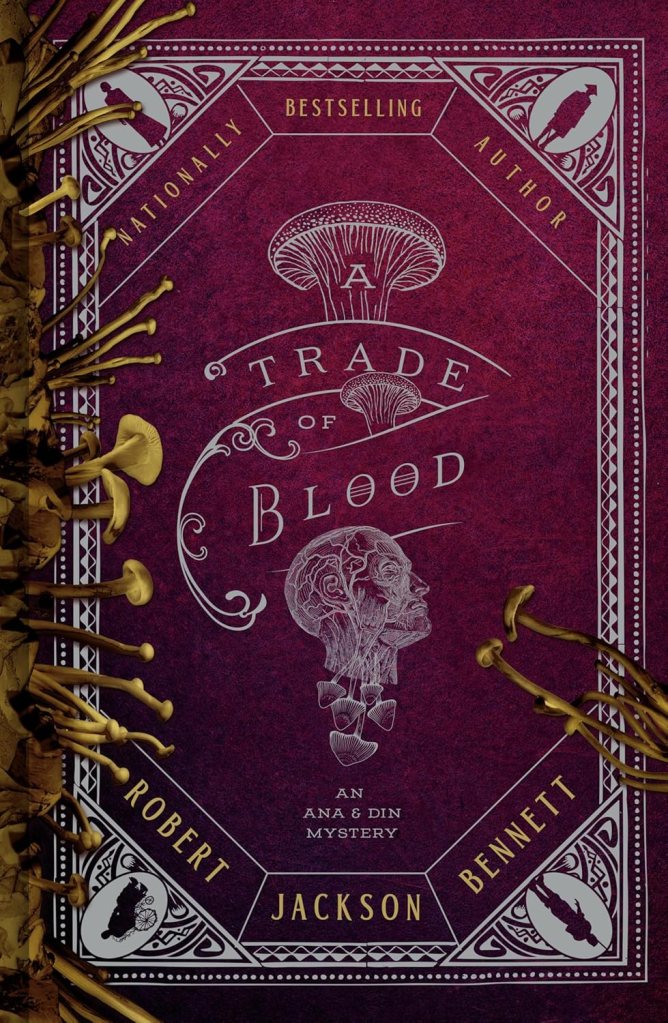
Book: “Molka” by Monika Kim

Publishing Info: Erewhon Books, April 2026

Where Did I Get This Book: I received an ARC at PLA 2026 from the publisher!

Where You Can Get This Book: WorldCat.org | Amazon | Indiebound

Book Description: molka (n): the Korean term for spy cameras secretly and illegally installed, often to capture voyeuristic images and videos

Dahye can’t believe her luck when she finds herself in a whirlwind romance with handsome, charismatic Hyukjoon, the heir to a multi-million dollar fortune.

But then a shocking revelation threatens: the couple has been caught on a spycam amid Korea’s growing molka epidemic, and the video is all over the internet. When Hyukjoon flees the country to avoid the intense public scrutiny, Dahye is left to grapple with the ramifications on her own; and the demons from her childhood, long dormant, begin to surface.

Amid the chaos, she catches the attention of Junyoung, a nerdy, introverted IT tech at work. Junyoung harbours a dark secret: he has been spying on the women at work with his own hidden cameras. As Dahye’s life begins to unravel, she unknowingly becomes the sole target of Junyoung’s perverse obsession.

When the facts surrounding the invasion of her privacy come to light, Dahye is faced with the humiliating truth. Her pain and hurt turn to rage as she faces her past. Her desire for vengeance is insatiable, and she will not rest until the men who have wronged her have paid in blood

Review: Thank you to Erewhon Books for giving me an ARC at PLA 2026!

Okay, before I even go into my introduction to my review, I want to let people know that this review is going to be covering some triggering topics like rape/sexual assault, and sexual exploitation. So just be aware that it’s going to get heavy.

As I was reading “Molka” by Monika Kim the disgusting revelations of a so called online ‘Rape Academy’ broke in the news cycle, where men would drug their partners, rape them, film it, and then upload it for other users to see. It was horrifying but not all that surprising, and it just made me shake my head because the book I was reading was unfolding in real life in a lot of ways. “Molka” is a horror story to be sure, with a good majority of the horrors being completely man made, and Kim doesn’t hold back in her storytelling even if it makes for an incredibly triggering read. But a necessary one, as evidenced by the fact this shit is happening off page and in reality.

Our story takes place in Seoul and has two main POVs. The first is of Dahye, a young woman who has been swept off her feet by Hyukjoon, the son of a millionaire who showers her with gifts and incredible experiences… until footage of them having sex pops up online, seemingly filmed without their knowledge. While Hyukjoon has the wealth and privilege to ride the storm (being a man also helps… more on that in a bit), Dahye does not, and finds herself spiraling as the footage is everywhere, bringing up memories of her sister Euhnye, who killed herself years ago at seventeen after being impregnated by an older man and being terrified of the fallout. Our second POV is that of Junyoung, one of the IT guys at her work who has installed his own hidden cameras, or molkas, in the women’s restrooms so he can spy on unsuspecting women and see their privates, with Dahye catching his eye. Both POVs are so upsetting, whether it’s getting into the head of a predator like Junyoung, or seeing how absolutely wrecked Dahye is because of the violation and because of how women in molka cases are blamed, ignored, and shamed. And seeing them both escalate in their own ways, whether it’s Junyoung’s obsession becoming more dangerous, or Dahye’s mental health spiraling and her rage building, makes for such suspense and tension. Especially when it seems like Eunyhe’s ghost may be manifesting more and more as Dahye becomes more and more frenzied. I loved the bits with Eunyhe, with little hints of water and fleeting glances turning into a full on vengeful ghost egging Dahye on.

But potential supernatural themes aside, the really scary aspect of “Molka” were the real life themes of violent misogyny, sexual exploitation, and gender double standards within societies when it comes to sexuality. For characters like Dahye and Eunhye, as women who experience violence because of their sexuality (whether it’s the assault and exploitation in Dahye’s case or Eunhye killing herself after her out of wedlock teen pregnancy is revealed) are shamed and shunned and driven to the brink. But for people like Hyukjoon and Junyoung, who are men, they can either be wholly unaffected by scandal, or even be abusers either out in the open or hidden in the shadows, and even if their nastiness becomes known they are excused because boys will be boys. There were so many infuriating moments in this book that had to do with the disgusting ways Dahye was sexualized and violated, and Kim makes sure to tread a very fine line that makes sure the reader knows exactly what’s going on without making it feel all the more exploitative of, even worse, titillating. It is a VERY difficult read at times, especially when we see how objectified and dehumanized women are in the eyes of their abusers, but it’s also a searing and unflinching portrayal of feminist rage that has moments of catharsis to balance out the incredibly triggering moments.

“Molka” is a dark and upsetting horror novel, but it also feels like a very timely read, unfortunately. I definitely recommend it to any reader who likes a ‘good for her’ story.

Rating 9: A dark and difficult but unfortunately timely horror story about misogyny, violence against women, and the double standards between the treatment of genders in sexual situations. “Molka” is filled with content warnings, but the message is cathartic and the feminist rage burns bright.

Reader’s Advisory:

“Molka” is included on the Goodreads list “2026 Women in Horror”.

Kate’s Review: “The Caretaker”

This post may contain affiliate links for books we recommend.  Read the full disclosure here.

Book: “The Caretaker” by Marcus Kliewer

Publishing Info: Atria/Emily Bestler Books, April 2026

Where Did I Get This Book: I received an eARC from NetGalley

Where You Can Get This Book: WorldCat.org | Amazon | Indiebound

Book Description: Follow the Rites…

Nothing less than the survival of humanity is at stake.

From Marcus Kliewer, a new “titan of the macabre and unsettling” (Erin A. Craig, #1 New York Times bestselling author), comes a supernatural horror about a young woman who accepts a caretaking job from Craigslist, only to discover the position has consequences far greater—and more dangerous—than she ever could have imagined.

EXCITING OPPORTUNITY:
Caretaker urgently needed. Three days of work. Competitive pay. Serious applicants ONLY
.

Macy Mullins can’t say why the job posting grabbed her attention—it had the pull of a fisherman’s lure, barbed hook and all—vaguely ominous. But after an endless string of failed job interviews, she’s not exactly in the position to be picky. She has rent to pay, groceries to buy, and a younger sister to provide for.

Besides, it’s only three days’ work

Three days, cooped up in a stranger’s house, surrounded by Oregon Coast wilderness.

What starts as a peculiar side gig soon becomes a waking nightmare. An incomprehensible evil may dwell on this property—and Macy Mullins might just be the only thing standing between it, and the rest of humanity.

Follow the Rites… Follow the Rites… Follow the Rites…
..— / ….. / —..

Review: Thank you to NetGalley for sending me an eARC of this novel!

I somehow missed the book “We Have Always Lived Here” by Marcus Kliewer when it came out, and I still haven’t worked it into my reading schedule in spite of the fact basically all of the praise it has received. Like not just from reviewers or influencers, but also people in my life who like horror. It entered my mind that I hadn’t read it yet as I started Kliewer’s newest book “The Caretaker”, as I had a fleeting thought of ‘oh I wonder if I should get to that eventually’. And as I was reading “The Caretaker”, I realized why everyone was praising “We Have Always Lived Here”. Because “The Caretaker” is TERRIFYING.

I did not read this book at night for a reason. (source)

I will reiterate: this was a scary read for me. It read really fast even though it’s a pretty average length of a book, and Kliewer has the pacing and vibe down pat. It starts with a terrifying bang and then cycles back down to a level that has time to build the dread and tension, and BOY does it build. We are following Macy, a woman who finds herself down on her luck and desperate for employment as she has to try and care for herself and her sister in the wake of their father’s tragic death. So a strange ad for a caretaker needed sounds like a good deal, and she applies and gets the job for a LOT of money…. but the instructions seem odd. I loved how strange and out there the rules were, which sound crazy and innocuous, but as Macy fails to follow them (oh my GOD, MACY, GET IT TOGETHER!) things go from weird to horrifying. There were so many moments of just absolute DREAD for me as the tension builds and builds, and I found myself putting the book down a couple of times because I was so stressed out. I don’t want to spoil any of it for people who want to check it out, but let me tell you, the rules may sound innocuous (to a point), but they are anything but. Especially as they all start to fall apart. I also enjoyed how ambiguous things are in this book. I know that sometimes ambiguity or a lack of explanation of supernatural or magical systems are frustrating in books (I find myself irritated from time to time with this kind of thing), Kliewer’s ambiguity adds to the story because it means that the reader can see themselves in Macy’s shoes when the really strange things start happening. And the really strange and weird things REALLY messed with my head.

And Macy herself is an interesting heroine because she is such a mess, but a mess whose messiness makes sense as we find out about her thanks to flashbacks to her childhood, and the loss of her dad. She is clearly struggling with depression and grief, and has to try and pull herself together because of her desperation to keep herself and her sister Jemma (who is a mess in hew own way) afloat. It makes for a lot of her choices and decisions as the story progresses to be believable for the most part. I definitely had a lot of anxiety as she continued to mess up the instructions, though I will fully admit that once we got into some of the late stage ones they do seem a bit impossible or COMPLETELY insane, and a lot of that was because of how much I empathized with her. Kliewer did a great job fleshing her out and making it both easy to root for her and easy to get so frustrated (while fully recognizing I’d probably also mess up like she did).

“The Caretaker” is so incredibly scary and engrossing. I really enjoyed it and if you want something weird and terrifying definitely check it out.

Rating 9: High intensity, a slow building dread, and an overall unsettling and WEIRD vibe that turns into abject horror. “The Caretaker” is scary as hell.

Reader’s Advisory:

“The Caretaker” is included on the Goodreads list “Horror to Look Forward to in 2026”.

Fire’s Catching: “Mockingjay”

This post may contain affiliate links for books we recommend.  Read the full disclosure here.

It’s been eighteen years since Suzanne Collins wrote “The Hunger Games”, the smash hit literary sensation that continues to feel relevant and capture the attention of readers. This ongoing series will be a review series of both the Suzanne Collins books, as well as the film adaptations of the novels. I will post my review on the last Thursday of the month as we revisit the totalitarian world of Panem and the hope of the Mockingjay.

Book: “Mockingjay” by Suzanne Collins

Publishing Info: Scholastic Press, August 2010

Where Did I Get This Book: I own it

Where You Can Get This Book: WorldCat.org | Amazon | Indiebound

Book Description: My name is Katniss Everdeen. Why am I not dead? I should be dead.

Katniss Everdeen, girl on fire, has survived, even though her home has been destroyed. Gale has escaped. Katniss’s family is safe. Peeta has been captured by the Capitol. District 13 really does exist. There are rebels. There are new leaders. A revolution is unfolding.

It is by design that Katniss was rescued from the arena in the cruel and haunting Quarter Quell, and it is by design that she has long been part of the revolution without knowing it. District 13 has come out of the shadows and is plotting to overthrow the Capitol. Everyone, it seems, has had a hand in the carefully laid plans—except Katniss.

The success of the rebellion hinges on Katniss’s willingness to be a pawn, to accept responsibility for countless lives, and to change the course of the future of Panem. To do this, she must put aside her feelings of anger and distrust. She must become the rebels’ Mockingjay—no matter what the personal cost.

Review: We are now coming to the end of the initial “Hunger Games” Trilogy, and I finally took on the final book in the series “Mockingjay”. Much like “Catching Fire”, I skipped this book in my initial read because I was told that it wasn’t very good. Nay, I was told that it was boring. BORING. After finishing “Catching Fire” and really liking it, I knew that I would probably have a similar experience with this one. Little did I know that I would actually end up ranking it almost as high as the first book. Yeah, I loved “Mockingjay”. It destroyed me (probably thanks in part to listening to Tatiana Maslaney read it, God she was good). As we follow Katniss into her final arc of this saga, I was moved and on edge, even though I knew what was coming thanks to the movies. Suzanne Collins always has something to say. And this time, as we rejoin Katniss, newly whisked away from the wreckage and chaos of the destroyed arena, she is already so damaged and alone, with Peeta captured and Haymitch revealed as hiding the rebellion he helped force her into. Collins’s message this time: War is Hell, and no one comes out unchanged.

We get some new insight to some previous characters, and also meet new characters who become power players for the last book in the series. The biggest stand out for previous characters for me is Plutarch Heavensbee, the game maker for the Quarter Quell who was actually part of the rebellion the entire time. I love Plutarch, not because he’s a good guy (he’s not, really), but because I appreciate his goal of trying to overthrow Snow and the Capitol and think he’s very interesting because he is ruthless and willing to do a lot of bad to achieve his goals. We are also introduced to Alma Coin, the President of District 13, a long forgotten District that has been biding its time underground waiting for a spark of revolution so she can swoop in and help overthrow the Capitol. As Katniss worries about Peeta, who has been captured by the Capitol and is now being used in propaganda as the uprising turns into all out war, she is thrown into the role of being the Mockingjay leading a rebellion when she doesn’t know how to be a leader. It’s just a new situation where a teenage girl is being used by ambitious and power hungry adults for their own ends, and her mental health and PTSD is tossed aside as she is constantly pushed to the brink. Is she a bit more of a passive player in this one? Sure. But while that was used as a criticism by those around me, I actually think it makes complete sense. Katniss never wanted this and is still a child. Her struggles may seem repetitive but she is riddled with trauma. To portray it as anything other than messy and complicated would be unrealistic and, frankly, irresponsible.

I was also struck by how Collins makes it pretty clear from the jump that the Rebellion’s alliance with District 13 is a complicated, possibly even dangerous, one. Katniss is thrown into the depths of District 13’s underground bunker with its highly authoritarian society, finding out that it has been there the entire time living off the grid after striking a deal with the Capitol to be able to walk away in exchange for not using nuclear weapons against Snow’s regime (the absolute gall). We will talk more about the portrayal of 13 in the movies when we get to the film reviews, but in the book? I was immediately put off by President Coin and her government and its brutal ways, both towards its supporters and towards the people who have been pulled in from the rebellion as allies. Hell, EVERYTHING about 13 feels like its own nightmare, with no dissent allowed, dehumanization of anyone seen as collaborators (one instance with Katniss’s Prep Team, who feel like fish a barrel being shot for funsies, really disturbed me), and a very officious and scary power structure that Katniss is suspicious of while her closest friend Gale becomes more and more indoctrinated and into the totalitarian ethos that Coin is feeding him.

And I love that Collins was more than willing to portray that way that a war being fought can have horrific tactics from both sides, even the side that is ultimately more ‘in the right’, and this book really hits it home in the most devastating ways as Katniss has to be the face of a rebellion and to try and keep herself safe from Coin, who clearly wants her gone so she can take over and become the person with the power going forward. She is used as a tool by Coin and Heavensbee (I love the guy and his moral grey character, but man he’s a dick), only a means to an end because they know that Coin won’t cut it, and she is repeatedly victimized in hopes that she can just keep Peeta and Prim safe…and we all know what happens to Prim. Prim and the children of the Capitol, who all become targets of the ‘righteous’ side and are slaughtered to finally put down Snow’s regime in one final bombing… and it is sickening. Collins isn’t going to let the ‘correct’ side off, not only having Katniss’s side commit war crimes that are similar to her enemies, but also murder the person that she sacrificed everything for, almost making all of her suffering and purpose moot. GOD it’s so, so sad. It’s such a harsh truth that people forget all the time, that war, as a whole, is BAD, and ANYONE participating can do MONSTROUS things (even if they are on the side that is OBJECTIVELY more moral) because that is war at its heart. “Mockingjay” tells this truth by spilling more child blood, done by the side that the reader wants to succeed. Fuck Coin. But fuck Gale more. And Katniss is left to pick up the pieces. Again, war. Is. Hell.

The way I sobbed as this book was coming to a close. (source)

But then there is the rebirth. Because Katniss has to keep going. And Peeta has to keep going. The book ends with Panem starting a new path, and it feels hopeful, but tenuous. But for Katniss and Peeta, they have to keep moving forward, and rebuild, and the gentle aftermath of them slowly starting to do so is bittersweet to say the least. But it felt correct and satisfying. Collins doesn’t pretty it up. They are forever changed. They are forever haunted. Katniss and Peeta don’t get better just because they are free and their goals are achieved. But they keep going and find hope and happiness with each other. I know that there are people who hate that Katniss has kids in the future, thinking that it betrays her character because of her refusal to have kids in the first book. But to that I say, her and Peeta having kids is actually the best way to end it, because it shows that Katniss finally, FINALLY, can feel safe enough to live her life because the oppressive society she grew up in and helped overthrow is truly gone. It’s lovely.

I loved “Mockingjay”. It wasn’t flashy and it wasn’t cheerful. But it feels realistic to me in how it portrays trauma, war, and trying to start over after having experienced so much grief, and finding love and peace in spite of it. Next up I will review the first prequel, “The Ballad of Songbirds and Snakes”, where we go back to one of the first Hunger Games, and see the origins of President Coriolanus Snow.

Rating 9: A heavy and bittersweet conclusion to a series that still feels resonant, “Mockingjay” focuses on the hell that is war, the lingering affects of trauma, and picking up the pieces even in the wake of victory that may not feel wholly victorious.

Reader’s Advisory:

“Mockingjay” is included on the Goodreads lists “Best Survival Stories”, and “YA Dystopia Novels”.

Serena’s Review: “This Kingdom Will Not Kill Me”

This post may contain affiliate links for books we recommend.  Read the full disclosure here.

Book: “This Kingdom Will Not Kill Me” by Ilona Andrews

Publishing Info: Tor, March 2026

Where Did I Get this Book: ARC from the publisher!

Where Can You Get this Book: WorldCat.org | Amazon | IndieBound

Book Description: When Maggie wakes up cold, filthy and naked in a gutter, it doesn’t take her long to recognize Kair Toren. It’s a city she knows intimately from the pages of a famously unfinished dark fantasy series – one she’s been obsessively reading and re-reading, while waiting years for the final novel.

Her only tools for navigating this gritty world of rival warlords, magic and mayhem? Her encyclopaedic knowledge of the plot, the setting and the characters’ ambitions and fates. But while she quickly discovers she cannot be killed (though many will try!), the same cannot be said for the living, breathing characters she’s coming to love – a motley band that includes a former lady’s maid, a deadly assassin, various outrageous magical creatures and a dangerously appealing soldier. Soon, instead of trying to return home, she finds herself enmeshed in the schemes – and attentions – of duelling princes, dukes and villains. This all while trying to save them and the kingdom of Rellas from the ending she’s seen on the a cataclysmic war.

Review: To this day, Andrews’ Kate Daniels series is my favorite urban fantasy series. For one thing, she knew when to end the darn thing (side-eyeing the Mercy Thompson series right now). But it was also a solid run of books with very few missteps along the way. What’s more, not only was Kate herself an excellent heroine, but the romantic interest was excellent, and the love story managed to retain drama and tension without resorting to contrived angst. All of this to say, I was thrilled when I saw that Andrews was starting up a new series, and this time in one of my favorite subgenres of fantasy: portal/epic fantasy!

There’s so much to love about this book that I barely know where to start! But let’s just start with the world-building. This book makes one of the best uses of the “portal fantasy” concept that I’ve seen in a while. Andrews doesn’t get too bogged down in the “how” of it all, simply starting up the story several days after the fact, with our heroine doing quite poorly living on the streets. The realization that she can’t die is a welcome, if terrifying and painful, game-changer. But what’s so fun about this set-up is subtle nods and jabs to epic fantasy and G.R.R. Martin’s Game of Thrones that are scattered throughout this story.

Much of the world-building is explained and built out through our heroine’s encyclopedic knowledge of the original books, the first two in a trilogy that now seems destined to never be finished, as its author seemingly abandoned it (you see what we’re doing there). Maggie’s wealth of information comes from the plethora of POV characters who were given chapters in the original books (sometimes only a single chapter), insights which she uses to gain the upper hand when meeting these people in this world. Again, sound familiar? For those familiar with some of the criticisms of Game of Thrones, so much of this was laugh-out-loud funny while also perfectly working within the scope of this book. It’s not just lip service; Andrews nimbly weaves together these references and inside jokes alongside equally important plot points.

What’s more, even some of the greater scope of this world sounded familiar, with numerous families all vying for power and control, even down to an aloof, brutal, and, crucially, necessary lord from the north who is on touchy ground with the throne. But before you worry that it’s all just copying other fantasy novels, while it’s apparent that the author is making some key references with the “book within a book” that Maggie has read, this story itself is completely new and fresh. She herself begins to realize the limits of the knowledge she gathered from the books, necessitating re-evaluating characters/people she thought she understood.

The pacing is excellent. This is a long book, but I read it in only a few days. It starts off in the middle of the action and really never lets up, in the best of ways. What’s more, I’m impressed with Andrews’ ability to balance a lighter overall tone (something in the manner and styling of the writing, perhaps) while also dealing with some incredibly dark themes and scenes. Maggie’s whole “can’t die” thing is explored in all of the worst ways. Readers should definitely not go into this expecting a cozy fantasy, regardless of what that cover art is selling.

And, of course, the characters were all excellent. Maggie is similar to Kate in all of the best ways: smart, independent, and understanding of her limits and the necessity of building up a crew around herself. This group is made up of a wide cast of fantastic side characters, of which it would be hard for me to pick favorites. And, of course, a rock-solid love interest.

I have to say, while reading this book, I almost had a “romantasy PTSD” moment. From the beginning, Maggie meets a number of good-looking male characters. There was one that felt like he was set up as the main love interest, but as I was reading, I kept getting shivers of worry that the rug was going to be pulled out from under me and one of the “dark, bad boys” who made an appearance a time or two would pull the old “bait and switch” that I hate so much. I can’t get into too many details, as there are some surprising twists and turns, but I’m hopeful that Andrews has set up a primary romance here, and I’m excited to see it play out going forward. Please, PLEASE, do not give me another fake-out, for the love of everything. As it stands, I really enjoy the romance we had here and want to see how things play out going forward.

The only thing that holds this back from being a “10 rating” is the fact that there were a handful of times where we had the narrative writing out terms like “oof” and “yikes,” which I always hate. It wasn’t too often, thankfully, but I do think the book would have been stronger to have avoided it altogether. In some ways, it felt like a carryover from urban fantasy, where this sort of narration is more prevalent. You see it less in epic fantasy, and this one would have been better without it.

That said, this is by no means a deal-breaker, and I highly recommend this one to pretty much any fantasy fan! Readers familiar with epic fantasy and Game of Thrones will perhaps enjoy the meta commentary the most, but this is a romp of a good time that shouldn’t be missed!

Rating 9: A banger of a good time! Andrews brings the fun to epic fantasy, while also delivering solid characters and fantastic world-building.

Reader’s Advisory:

“This Book Will Not Kill Me” can be found on these Goodreads lists: Epic High Fantasy/Romance/Mythology in 2026 and 2026 Most Anticipated Romantasy & Fantasy Romance Releases.

Kate’s Review: “Ducks”

This post may contain affiliate links for books we recommend.  Read the full disclosure here.

Book: “Ducks: Two Years in the Oil Sands” by Kate Beaton

Publishing Info: Drawn and Quarterly, September 2022

Where Did I Get This Book: The library!

Where You Can Get This Book: WorldCat.org | Amazon | Indiebound

Book Description: Before there was Kate Beaton, New York Times bestselling cartoonist of Hark A Vagrant fame, there was Katie Beaton of the Cape Breton Beatons, specifically Mabou, a tight-knit seaside community where the lobster is as abundant as beaches, fiddles, and Gaelic folk songs. After university, Beaton heads out west to take advantage of Alberta’s oil rush, part of the long tradition of East Coasters who seek gainful employment elsewhere when they can’t find it in the homeland they love so much. With the singular goal of paying off her student loans, what the journey will actually cost Beaton will be far more than she anticipates.

Arriving in Fort McMurray, Beaton finds work in the lucrative camps owned and operated by the world’s largest oil companies. Being one of the few women among thousands of men, the culture shock is palpable. It does not hit home until she moves to a spartan, isolated worksite for higher pay. She encounters the harsh reality of life in the oil sands where trauma is an everyday occurrence yet never discussed. Her wounds may never heal.

Beaton’s natural cartooning prowess is on full display as she draws colossal machinery and mammoth vehicles set against a sublime Albertan backdrop of wildlife, Northern Lights, and Rocky Mountains. Her first full-length graphic narrative, Ducks: Two Years in the Oil Sands is an untold story of Canada: a country that prides itself on its egalitarian ethos and natural beauty while simultaneously exploiting both the riches of its land and the humanity of its people.

Review: In February I ended up going to see “Les Miserables” with my husband and some friends, and as I always do when seeing “Les Mis” I mentioned to the group my favorite “Hark, a Vagrant!” comic set that has Javert at the forefront. There’s just something about him burning down the Life Café in “Rent” that just tickles me. One of my friends mentioned Beaton’s graphic memoir “Ducks: Two Years in the Oil Sands”, saying that he really enjoyed it and that I should check it out. I had intended to do so back when it first came out a few years ago, but for whatever reason I didn’t get around to it, but made a note to head to the library and get it as soon as I could. And shortly thereafter I had it in hand and was ready to dive in, not totally sure what to expect but certain it would be something different from the whimsical cartoons I’ve known Beaton for over the years. And I have to say, my friend was right, it was very good.

“Ducks” is the story of Kate Beaton’s time after college where, worried about a lack of financial opportunities in her home of Cape Breton Island and the looming student loans post college, she took a job in the oil sands in Fort McMurray, Alberta, knowing the pay would be higher and the time to getting out of debt would be faster. While she isn’t prepared at all for what the oil sands will be like, she has to adjust to a huge change in her life, with jarring experiences, harsh conditions, and an experience unlike anything she’s had until this point. I found her story to be incredibly poignant and sobering, as while she finds connection and does seem to find her groove, she has to deal with cold management, misogynistic male co-workers (made all the worse due to a huge lack of other women, making her even more of a target), and grueling yet monotonous work. Throw in the bleakness of the way the beauty of the natural world around her is being stripped down and exploited for oil profits and we have an unflinching account of climate destruction that also brings financial opportunities to so many who are in desperate need of it. I don’t know that much about Canada and its history with oil and natural resources, but I felt like I learned a fair amount from this book in a way that was very accessible.

What I really loved the most about this memoir is that Beaton is very measured and thoughtful when telling her story, and is able to acknowledge the nuances of the oil sands and her time there while also examining and holding multiple truths. It’s true that the oil sands provided financial opportunities that she was having a hard time achieving elsewhere after her education was through and her student loans were looming, but it’s also true that she had some horrific experiences with misogyny, gross comments, and even sexual assault that went unacknowledged and without justice. She does a good job of showing the terrible men that she worked with there who objectified and wounded her, but also shows the good people there who did their best and supported her. She acknowledges the horrible climate and environmental harms that these oil sands bring to Alberta, with chemical spills, higher cancer rates, and nasty day to day symptoms, while showing the great beauty of being out in that part of the world and in the nature surrounding it. She shows the gross men and doesn’t excuse their vile behaviors and the sometimes all too unfortunate ways they would turn to drugs to get through their shifts, but also acknowledges how hard it can be for the workers who are so isolated from greater society that regression is almost unpreventable. She also takes great care to address the way that these oil sands affect Indigenous communities, be it how it can infect their water and affect their environment, or the way that Indigenous women can be so vulnerable to violence from the people who work there. It’s all very heavy and the themes are difficult, but the conversations surrounding it are necessary and I appreciate how she was able to parse out all of the nuance that comes with it.

And the art is what I would expect from Beaton, while also capturing some really well done emotional beats and some lovely depictions of the place that was such a pivotal moment in her life.

(source)

“Ducks” is a fantastic and personal graphic memoir that I highly recommend. I learned so much about a very specific aspect of Canada that leaks into greater realities, and I thought it was simply sublime.

Rating 9: A deeply personal and nuanced graphic memoir that tells a story of financial opportunity that comes with a cost, climate destruction, and Canada itself, “Ducks: Two Years in the Oil Sands” was informative, interesting, and emotional.

Reader’s Advisory:

“Ducks” is included on the Goodreads lists “Graphic Memoirs”, and “Oh, Canada!”.

Serena’s Review: “The Half-Hearted Queen”

This post may contain affiliate links for books we recommend.  Read the full disclosure here.

Book: “The Half-Hearted Queen” by Charlie N. Holmberg

Publishing Info: 47North, March 2026

Where Did I Get this Book: Netgalley!

Where Can You Get this Book: WorldCat.org | Amazon | IndieBound

Book Description: Nym never told Prince Renn she loved him. And now, as a captive and political pawn to the ruthless King Nicosia, Nym finds herself guarding more than her forbidden feelings for Renn as the kingdoms of Cansere and Sesta clash and the bloodshed of war rages. Nym’s connection to Renn is more than just romantic—it’s magical, and King Nicosia will stop at nothing to find Renn’s weakness and claim the kingdoms as his.

Now Nym must find a way to escape the cruel and twisted fate of imprisonment as she faces the unimaginable horrors and dangerous secrets hidden within King Nicosia’s palace walls. With the succession of kings on the line and a dangerous prophecy unfolding, Prince Renn faces his own impossible choice. The future of the throne hinges on a political alliance that means forsaking his love for Nym. If he can’t fulfill his destiny and unite the kingdoms, King Nicosia will destroy them all.

Previously Reviewed: “The Shattered King”

Review: Ok, let’s just get this out of the way from the start: I absolutely adored this duology. There, review spoiled and we can all go on our way! But seriously, this duology really took me by surprise. Like I said in my last review, I had read a book by this author previously, but while I enjoyed it, it didn’t blow me away. But man, she really came with this new book, writing a fantasy romance that feels tailor-made for me!

The story picks up directly after the events of the first book (so mild spoilers if you haven’t read that one), and things are looking bleak. Nym and Renn’s sister is captured by enemy forces and taken deep into enemy territory. Honestly, I was surprised by how dark this book went in this portion, and it’s not a small portion either! There’s probably a solid third of the book that is taken up by Nym’s travails and the ways in which she copes with and deals with the situation she finds herself in. But while these scenes were definitely tough to read at times, they also deeply reinforced what an awesome lead character Nym is.

Her strength is unparalleled, alongside her cool-headed evaluation of the truly desperate situation she finds herself in and the limited options before her. She’s badass in the more realistic ways, the kind that rely on true strength of character in the face of horror. Through this portion of the book and the fallout of these experiences, the author does an amazing job dealing with themes regarding pain, PTSD, and resilience. Nym’s experiences aren’t gotten over easily, but we also follow a character whose strength leads her to rise to meet any and all challenges placed before her.

Readers should also be aware that due to these circumstances, it takes quite a while for our two lovebirds to be reunited. And even then, their path forward is littered with new challenges. I loved the development of this romance and the obstacles they faced. Nothing felt like unnecessary angst or silly miscommunication drama. Instead, the conflict was rooted in their circumstance and the dire state of the war. Renn was such a great love interest throughout this book, and there were a bunch of moments between them that were peak romance for me.

The book also gets more into Renn’s story in the second half, and here, again, the author carefully digs into warfare, violence, and the scars that even justified killing leaves on a person. For Renn in particular, an individual who had been sequestered from participating in the world for so long, these new roles are particularly challenging.

I also really enjoyed the deeper look into the magic system. Nym’s choices at the end of the last book opened up a completely new pathway for the magic system of this world, and I loved learning more about how this worked. The story also addressed the tension between magic users and the rest of the population, noting that it’s not as easy as waving a magic wand to make both groups work well together.

Overall, this was a fantastic sequel and a great conclusion to this duology. I enjoyed the heck out of my read, and if forced to ding it in any way, it would be that it wrapped up too quickly!

Rating 9: Absolutely brilliant! The Half-Hearted Queen manages to be both deeply romantic while also dealing with some incredibly dark themes in a careful, intentional manner.

Reader’s Advisory:

“The Half-Hearted Queen” can be found on these Goodreads lists: My favorite Medieval Fantasy novels and A book with a character who has curly hair.

Book Club Review: “The Magic Fish”


This post may contain affiliate links for books we recommend.  
Read the full disclosure here.

We are part of a group of librarian friends who have had an ongoing book club running for the last several years. Each “season” (we’re nerds) we pick a theme and each of us chooses a book within that theme for us all to read. Re-visiting some of our past themes, we’re once again pulling random words from and finding a book that matches the prompts. For this blog, we will post a joint review of each book we read for book club. We’ll also post the next book coming up in book club. So feel free to read along with us or use our book selections and questions in your own book club!

Book: “The Magic Fish” by Trung Le Nguyen

Publishing Info: Random House Graphic, October 2020

Where Did We Get This Book: The library!

Where You Can Get This Book: WorldCat.org | Amazon | Indiebound

Prompt Words: Asian, Voyage

Book Description: Tiến loves his family and his friends…but Tiến has a secret he’s been keeping from them, and it might change everything. An amazing YA graphic novel that deals with the complexity of family and how stories can bring us together.

Real life isn’t a fairytale.

But Tiến still enjoys reading his favorite stories with his parents from the books he borrows from the local library. It’s hard enough trying to communicate with your parents as a kid, but for Tiến, he doesn’t even have the right words because his parents are struggling with their English. Is there a Vietnamese word for what he’s going through?

Is there a way to tell them he’s gay?

A beautifully illustrated story by Trung Le Nguyen that follows a young boy as he tries to navigate life through fairytales, an instant classic that shows us how we are all connected. The Magic Fish tackles tough subjects in a way that accessible with readers of all ages, and teaches us that no matter what—we can all have our own happy endings.

Kate’s Thoughts

This is my second time reading “The Magic Fish” by Trung Le Nguyen, and this was actually my pick for book club after pulling the phrases ‘Asian’ and ‘Voyage’ from the hat. I had to think about it a bit, and decided that this would be a good fit to fill the prompts. It had been a bit since I had first read it, so going back in had some surprises that I hadn’t remembered.

I still really enjoyed this book on the second time around. Tiến’s story and how it juxtaposes with his mother Hiền’s story, as well as three fairy tales with commonalities, is still very sweet, sometimes sad, and really moving. We have Tiế, who is contemplating coming out to his family and feeling nervous and hesitant about doing so. And we also have his mother Hiến, who has to return home to Viet Nam after years of being away after she and her husband left after the war, leaving family behind for a new life, one that puts in place a barrier to her life before. We both see their anxieties and their sadness, whether it is Tiến being Othered by greater society and fearing his family’s rejection, or Hiến who made a choice to leave her family behind, and then didn’t have them in her life, and the worries about how they viewed her choice. I also found more appreciation for the themes of communication and stories as a universal connector, as both mother and son connect via fairy tales, and how the fairy tales they connect with reflect their own feelings and thoughts within the moment.

And yes, I still love the artwork. It harkens to manga a bit, and it is so ethereal and beautiful. I also appreciated more of the details this time around, really noticing the coloring corresponding to the timeline and the storyline at hand, which was subtle and clever and a really neat choice to make.

It was great revisiting “The Magic Fish”! It’s still a lovely coming of age novel with sprinkles of fairy tale magic.

Serena’s Thoughts

I’ve said it before, but I’ll say it again: one of the best things about being in a bookclub is that it will encourage you to read outside of your usual genres or formats. I hardly ever pick up graphic novels on my own, but it’s great having a bookclub full of people who know how to pick them, so that when I do read one, it’s always so great! Kate actually gifted me this book years ago and, sadly, I hadn’t gotten around to reading it until now. But she has now done the job of not only getting me the book but also placing it physically on the top of my TBR through bookclub!

This is a great example of a graphic novel where the art and subject matter come across in a lovely way. The art itself was beautiful and it paired so nicely with the deeper things of family and identity. There were several pages that I just lingered over, appreciating the depth of detail and beauty.

Of course, I love everything having to do with fairytales as well! And the inclusion of tales from both Eastern and Western cultures were beautifully woven through the story, reflecting the themes that were being explored in the primary story. Each tale on its own was lovely, and I think the way they tied into our main character’s struggles with his identity, his fears and sense of “otherness” was perfect.

Overall, I really enjoyed this one! The artwork itself is the true standout for me, but I also think the story is charming in pretty much every way!

Kate’s Rating 9: A charming and gentle coming of age tale that seamlessly incorporates fairy tale magic into the pages.

Serena’s Rating 8: A lovely pairing of fairytale magic alongside a heart-felt story about identity and family.

Book Club Questions

  1. How familiar were you with the three fairy tales that Nguyen picked to contrast the story at hand? Did you felt like they lined up well with the story of Tiến and his mother?
  2. Since one of the prompts was ‘voyage’, let’s focus on the immigration voyage that Hien took from Vietnam and the new life she made and the life she left behind. What did you think of her story compared to that of Tiến’s?
  3. Language and communication is another huge theme in this book. What kinds of examples of language or communication are portrayed either as a gap or a bridge between characters?
  4. What were your thoughts on the tweaks and changes that Nguyen made to the fairy tales?
  5. What did you think of the use of colors to communicate timelines and story lines?
  6. What were your thoughts on Tiến’s coming out to his mom and the ending in general?

Reader’s Advisory

“The Magic Fish” is included on the Goodreads lists “YA Pride Graphic Novels”, and “Queer Books by AAPI Authors”.

Next Book Club Pick: “Girls Made of Snow and Glass” by Melissa Bashardoust

Serena’s Review: “Weavingshaw”

This post may contain affiliate links for books we recommend.  Read the full disclosure here.

Book: “Weavingshaw” by Heba Al-Wasity

Publishing Info: Del Rey, February

Where Did I Get this Book: ARC from the publisher!

Where Can You Get this Book: WorldCat.org | Amazon | IndieBound

Book Description: Three years ago, Leena Al-Sayer awoke with a terrible power.She can see the dead.Since then, she has hidden herself from the world, knowing that if she ever reveals her curse she will be locked away in an asylum.

When her beloved brother, Rami, falls fatally ill, Leena is faced with a terrible CHOICE: Let him die or buy the expensive medicine that will save his life by bartering the only valuable thing she has—her secret.

The Saint of Silence, a ruthless merchant who trades in confessions and is shrouded in unearthly rumors of cruelty and power, accepts her bargain, for a deadly price. Leena must find the ghost of Percival Avon, the last lord of Weavingshaw—or lose her freedom to the Saint forever.

As Leena’s search takes her and the Saint to Weavingshaw, she finds the estate and the surrounding moors to be living things—hungry for blood and sacrifice. Fighting against Weavingshaw’s might, Leena must also fight her growing pull toward the enigmatic Saint himself, whose connection to Percival Avon remains a mystery.

As the house begins to entomb them, time is running out on their desperate hunt for answers. For Leena has come to see that here in Weavingshaw, the dead are not hushed—and some secrets are better left buried with them.

Review: Gothic fantasy/horror has to be one of the more reliable subgenres for my own particular reading preferences. As long as the correct atmosphere is struck, the story will always start out a mile ahead of others. And here, that note was struck right away. This world is one of grim realities where the average person is caught between corporations trying to drain every last ounce from them and political forces in various countries working to subdue rebellions. Further, their history is one made up of demons and dark magic. And their only salvation? A mysterious trader of secrets for wealth, bargains that can turn deadly more often than not. And that’s not even getting into the location of Weavingshaw itself (to be fair, and to set expectations, the book doesn’t even move to this location until about halfway through) or the greater world-building/magical reveals that come later in the story.

And, of course, both of the main characters have their own ties to dark magic. The book takes place entirely from Leena’s perspective (again and always: well done for avoiding the trap of dual POVs that seem to always lead to a “telling” style of writing as far as relationship development!), so we learn a lot about her abilities to see ghosts. I really liked the various ways that her abilities were used, not only to move the plot along, but to bring together story elements and important pieces of characters’ histories. She was also a great character beyond her magic, determined to save her family and unwilling to fall under the thumb of her powerful employer. The slow-burn relationship between her and the Saint was so well done. These two have no reason to trust one another, especially Leena. It’s only slowly, as the story progresses, that she begins to understand the deeper, more tragic layers hidden beneath the Saint’s icy exterior.

I also really liked the Saint himself. It would have been so easy for him to come across as yet another shadow daddy love interest. There are definitely a few familiar notes of that even now. However, the book does a great job of including various other POV chapters sprinkled throughout that further develop his story, giving us greater insights into his past and motivations. While he and Leena grow slowly closer to one another, neither gives up their own goals. I can’t say too much about this character, as much of his story is a mystery that is only slowly revealed, but I loved what we got from him and the set up for the next book.

While the book starts out with a fairly straightforward setup (Leena indebted and working for the mysterious Saint of Silence), I was honestly surprised by the direction the story took. Given the title and cover, I went in expecting a gothic, haunted house story. But, like I said above, we don’t even get to Weavingshaw until about halfway through the story. And even then, it was much more of a setting for the plot than an integral part itself (usually in gothic stories, houses are a character in and of themselves, to some degree). Again, I don’t want to spoil the reveals, but this is much more a developed fantasy world than I had expected initially.

I really enjoyed this one! While it wasn’t quite what I was expecting, in many ways, it was even better for these changes! The slow-burn romance was well done, and the character work remained solid throughout. The story definitely ends in a setup for the next book, so readers should be aware of that going in. However, for me, this just made me all the more eager to get to the sequel as soon as possible!

Rating 9: Not what I was expecting in the best way possible! Gothic fantasy, but with a more developed fantasy world and swoon-worthy slow-burn romance!

Reader’s Advisory:

“Weavingshaw” can be found on these Goodreads lists: Gothic Fantasy and 2026 Most Anticipated Romantasy & Fantasy Romance Releases.

Fire’s Catching: “The Hunger Games”


This post may contain affiliate links for books we recommend.  
Read the full disclosure here.

It’s been eighteen years since Suzanne Collins wrote “The Hunger Games”, the smash hit literary sensation that continues to feel relevant and capture the attention of readers. This ongoing series will be a review series of both the Suzanne Collins books, as well as the film adaptations of the novels. I will post my review on the last Thursday of the month as we revisit the totalitarian world of Panem and the hope of the Mockingjay.

Book: “The Hunger Games” by Suzanne Collins

Publishing Info: Scholastic Press, October 2008

Where Did I Get This Book: I own it

Where You Can Get This Book: WorldCat.org | Amazon | Indiebound

Book Description: Winning means fame and fortune. Losing means certain death. The Hunger Games have begun. . . .

In the ruins of a place once known as North America lies the nation of Panem, a shining Capitol surrounded by twelve outlying districts. The Capitol is harsh and cruel and keeps the districts in line by forcing them all to send one boy and one girl between the ages of twelve and eighteen to participate in the annual Hunger Games, a fight to the death on live TV.

Sixteen-year-old Katniss Everdeen regards it as a death sentence when she steps forward to take her sister’s place in the Games. But Katniss has been close to dead before-and survival, for her, is second nature. Without really meaning to, she becomes a contender. But if she is to win, she will have to start making choices that weigh survival against humanity and life against love.

Review: I got back from a week long cruise with friends this past Monday, having to sink back into the real world like one always does after a vacation. As I was taking my kid to school on Tuesday and I was pulling into the drop off lane, I noticed something that hadn’t been there before I left: there were now people in green vests standing on the corners by the various drop off and pick up entrances to her elementary school, keeping an eye on the drivers who were coming and going. I immediately clocked that they were there to watch out for ICE. Coming back to reality after a fun trip with dear friends is already hard; it’s even harder when you come back to an occupied metro area that has an ever present anxiety of our neighbors being harassed and kidnapped and murdered, especially when those being targeted include children.

Welcome to “Fire Catching”, my series where I revisit “The Hunger Games”, the dystopia phenomenon written by Suzanne Collins. It had been some time since I read the first book in the series, almost fifteen years probably by my count, though my husband and I have watched the movies many times. When I read it originally it was a fun dystopia with complicated world building, nuanced characters, and a lot of action that fit well together and created a book that I read in about one afternoon. I really loved it then. I still really love it on this revisit, though it feels a bit closer to home these days. This will be a review for the most part! That’s what you are here for. But I’m sure I’ll also be reflective a bit. I feel like I have to be.

(source)

What strikes me about “The Hunger Games” this time around is just how much Collins trusts her readers to be able to handle dark and complicated themes, while also being able to break them down for the audience in ways that aren’t condescending but are easy to understand. Katniss Everdeen is our first person protagonist, a sixteen year old girl living in a poverty stricken community known as District 12, one part of multiple districts that have to answer for a rebellion against The Capitol years earlier. The districts answer by sending two kids, one boy and one girl, drawn by a lottery, to a battle to the death. Katniss isn’t selected, she volunteers so that her gentle younger sister Prim doesn’t have to go. It’s most likely that you know the story. But I never get sick of it, and re-reading it this time I was pleased with how harrowing her story of training, preparing, fighting, and having to perform for her oppressors as entertainment remains. Katniss is prickly, she’s had to grow up far too fast (not just because of life in the Districts but also because of her father’s death leaving her mother catatonic for a spell), and now she has been chosen to be a prop for an oppressive government’s bloodsport. She’s complex and hard headed, but Collins is also great and bringing her vulnerability out, more than happy to remind the reader that she is a child who has been put into a horrifying situation. We see everything through her eyes, and while sometimes it’s a bit on the nose as to how she is misinterpreting things (girl, of COURSE Peeta adores you and has adored you this whole time), but at the same time I fully believe that she has EVERY reason to be paranoid and to think the worst of people, whether it’s her drunk mentor Haymitch, or even the sweet and quiet Peeta.

And we are just starting to scratch the surface of the world building for Panem and its history here, and Collins gives us enough information to make a compelling story while also holding enough back to give us much more to work with as the series goes on. The idea of children’s peril and death being used as punishment and control isn’t new by any means (from The Minotaur to “The Long Walk” to “Battle Royale” it has been seen in so many stories throughout history), but the way that Collins builds this world makes it feel freshly horrifying. With Katniss giving tidbits about how the Hunger Games work, the various ins and outs of how the system can be rigged and gamed based on social standing (because even in the oppressed districts there are still class differences within themselves and between themselves), hints of how The Capitol crushes dissent with a veneer of beauty and wealth, and showing how death has been turned into eagerly eaten up entertainment due to years of propaganda, the world building is rich and incredibly well done. The games themselves are horrifying, more horrifying than I remembered from the first time I read it. I’m sure that’s in part due to the fact I now have a child of my own that I can’t help but project into the horrors, as well as the other stuff going on in my community that seems downright dystopian at the moment. Still so relevant, unfortunately.

This is going to be a gratifying and intense re-read, I can tell. “The Hunger Games” is still such a great start to the series. Next up I will tackle “Catching Fire”. Which I haven’t actually read! So that will be interesting!

And please take a look at this link for Stand With Minnesota, a resource hub for mutual aid, donation drives, and other resources to help communities all over my home state right now. We need help.

Rating 9: Still as harrowing and relevant as when it first came out, which is both a positive (for timelessness purposes) and negative (for the too real feels of it all).

Reader’s Advisory:

“The Hunger Games” is included on the Goodreads lists “Best Dystopian and Post-Apocalyptic Fiction”, and “Best Survival Stories”.

Book Club Review: “The Hacienda”

This post may contain affiliate links for books we recommend.  Read the full disclosure here

Book: “The Hacienda” by Isabel Cañas

Publishing Info: Berkley, May 2022

Where Did We Get This Book: The library!

Where You Can Get This Book: WorldCat.org | Amazon | Indiebound

Book Description: In the overthrow of the Mexican government, Beatriz’s father is executed and her home destroyed. When handsome Don Rodolfo Solórzano proposes, Beatriz ignores the rumors surrounding his first wife’s sudden demise, choosing instead to seize the security his estate in the countryside provides. She will have her own home again, no matter the cost.

But Hacienda San Isidro is not the sanctuary she imagined.

When Rodolfo returns to work in the capital, visions and voices invade Beatriz’s sleep. The weight of invisible eyes follows her every move. Rodolfo’s sister, Juana, scoffs at Beatriz’s fears—but why does she refuse to enter the house at night? Why does the cook burn copal incense at the edge of the kitchen and mark its doorway with strange symbols? What really happened to the first Doña Solórzano?

Beatriz only knows two things for certain: Something is wrong with the hacienda. And no one there will help her.

Desperate for help, she clings to the young priest, Padre Andrés, as an ally. No ordinary priest, Andrés will have to rely on his skills as a witch to fight off the malevolent presence haunting the hacienda and protect the woman for whom he feels a powerful, forbidden attraction. But even he might not be enough to battle the darkness.

Far from a refuge, San Isidro may be Beatriz’s doom.

Serena’s Thoughts

I’ve had this one on my TBR for a while now, ever since reading Kate’s review and thinking that it sounded like my sort of horror novel (that is, on the gothic side and only mildly horrific!). So when my prompt for book club was ghosts (guess whose prompt that was…), I knew that this was my opportunity, and boy did it not disappoint!

There was so much to love about this book that I’m not sure where to start. One thing really stood out, however: I don’t know enough about this location and point in history. The historical setting and events of the time played a crucial role in much of the story, and while the book didn’t go into tons of detail, I really enjoyed what we did see. For one thing, I liked the careful handling of the realities of so many revolutions. Often, they don’t end when they “end,” and there are rarely sides that are completely in the right or wrong, or who won’t switch positions on the moral compass as a conflict progresses. I didn’t expect to see these themes in a gothic ghost story, but I definitely enjoyed them!

I also really enjoyed our two main characters. Beatriz was brave but believably mystified about how to handle her increasingly terrifying prospects. And while Andres brings many answers to the situation, even he is challenged by the extreme horror of the situation before them. I really enjoyed the relationship that was built up between them, and the story took a surprisingly romantic turn toward the end of the book.

The gothic elements were also on point. The house itself was a character in and of itself (something that I think is almost a requirement for any haunted house story), and just when you think you have a handle on the mysteries, another wrench is thrown into the situation.

I really enjoyed this one! So much so that I definitely plan on checking out the other books by this author! Vampires, here I come!

Kate’s Thoughts

I still really love this book on a re-read. I was so happy that Serena picked it because going back to it with new eyes sounded like a fun time, and my opinions haven’t really changed much. It just goes to show that there’s a reason that Isabel Cañas is one of my favorite horror authors writing today.

Reading this again, I still feel like some of the strongest elements are the way that Cañas addresses the ways that European colonialism has destabilized and completely uprooted so much of the culture that Beatriz and Andres have been living within, whether it’s the realities of colorism and racism that Beatriz and other darker Mestizo characters have to deal with, or how Andres has decided to hide his brujo and healing skills by joining the Catholic Church as a priest.

And the book is still really really unnerving, with a great ghost story and a Gothic flair in a place that isn’t as expected in Gothic stories. Cañas is so good at capturing a time and place and creating unease and fear, while having many supporting players to be terrorized (or in some cases doing the terrorizing).

I really love “The Hacienda”! It absolutely holds up on a re-read and it created a lot of good discussion in our book club to boot!

Serena’s Rating 9: Just the right combination of fantastic and horrific, with a splash of historical fiction and romance to sweeten the pot!

Kate’s Rating 9 : Still so wonderfully Gothic and creepy with lots of interesting history and critique of imperialism within the aftermath of a revolution.

Book Club Questions

  1. How familiar were you with this time and place? What did you learn that was new?
  2. The various women in this book all experienced limited choices regarding their own lives and futures. What stood out to you about these women’s tales and what you have done similarly or differently?
  3. The story has a lot to say about religion, both Catholicism and author’s interpretation of local faith systems. How did religion and magic mix in this book and how well do you feel these themes were explored?
  4. This is a gothic horror novel. Did you enjoy the horror elements? What there a scene that was particularly scary to you and why?
  5. Beatriz and Padre Andres both experienced challenges in this book, ultimately turning towards one another to face their foe. Did you enjoy this relationship? How did you interpret the ending?

Reader’s Advisory

“The Hacienda” is included on the Goodreads lists 2022 Gothic and Books Set in Mexico.

Next Book Club Pick: “The Magic Fish” by Trung Le Nguyen