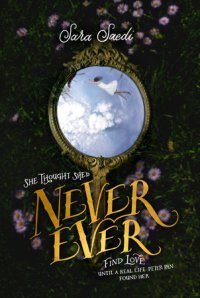
Book Description: Wylie Dalton didn’t believe in fairy tales or love at first sight.
Then she met a real-life Peter Pan.
When Wylie encounters Phinn—confident, mature, and devastatingly handsome—at a party the night before her brother goes to juvie, she can’t believe how fast she falls for him. And that’s before he shows her how to fly.
Soon Wylie and her brothers find themselves whisked away to a mysterious tropical island off the coast of New York City where nobody ages beyond seventeen and life is a constant party. Wylie’s in heaven: now her brother won’t go to jail and she can escape her over-scheduled life with all its woes and responsibilities—permanently.
But the deeper Wylie falls for Phinn, the more she begins to discover has been kept from her and her brothers. Somebody on the island has been lying to her, but the truth can’t stay hidden forever.
Review: My unfortunate streak of disappointing reads continues. It always seems to happen like this, you’ll be on a roll and then BAM! A few books just fail to live up to expectations and it is very disappointing. I included this title in my “Highights” picks for June based on two things: 1) a pretty cover (my first mistake) and 2.) a Peter Pan retelling! a Peter Pan retelling! And sure, the cover lived up to its hype and is very pretty in person. The Peter Pan retelling itself, not so much.
So, first off, a Peter Pan retelling has a lot of things going for it, in theory. The fantasy set up is all there, the adventure, the story of friendship and family, and depending on the route you take, the romance. All the ingredients for things I like in my fantasy stories. And pros first, the author did have a creative take on how adapt what is a story about children into a young adult novel. It was entertaining to see the nods to the originals (though the on-the-nose naming conventions were a bit much at times. Wylie is a coyote, not a teenage girl protagonist. There’s even a bit where she talks about how much she likes her name as if, very secretly, the author could see my eyebrows raising into my hairline…). The close sibling relationship between Wylie and her brothers is sweet and reminiscent of the original, as well.
Sadly, that’s about it for things I liked from this book. My biggest problem was the writing and plotting of the story. Listen, I have read a good amount of fanfiction in my day, and there is a lot of really great stuff out there. But this? This read like the worst kind of generic, stereotypical Peter Pan fanfiction: clunky dialogue, the author’s hands all over the plot which you can spot from outer space, the worst kind of tropes. Tinka (these names!) is everything you’d guess for a Tinkerbell-like character in this type of story. At one point, Wylie, out loud in her own head, admires Tinka’s “perky breasts.”
And the story never recovered from the very first few chapters where Wylie made repeated decisions that earned her a too-dumb-to-live badge of honor. At a party, Wylie meets a strange boy who has been staring at her from across the room. And then what does she do? Immediately leaves the party with him! Sure, she tells her friends that’s she’s leaving, but I’m awarding her zero points for this as it is still inexcusably dumb. She later consumes a very sketchy plant that he just casually offers her at McDonald’s (where he took her, which should have been her…well, not first sign, that was much earlier…how about tenth sign to get the hell out of there). And then, after convincing her brothers to also take this plant-drug (it allows them to fly, you’d never guess!), it turns out the plant also, conveniently, knocks them all out cold when it wears off. And they wake up being born away on Phynn’s super sweet sail boat. So…Phynn pretty much rufied them all and then kidnapped them. But don’t worry, this doesn’t hinder Wylie’s insta-attraction to him.
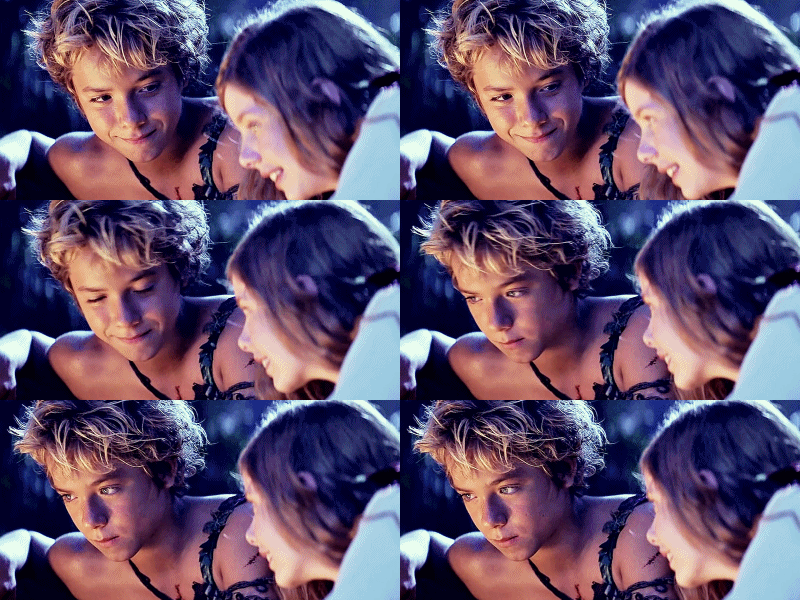
What we all wanted from a Peter Pan lead:
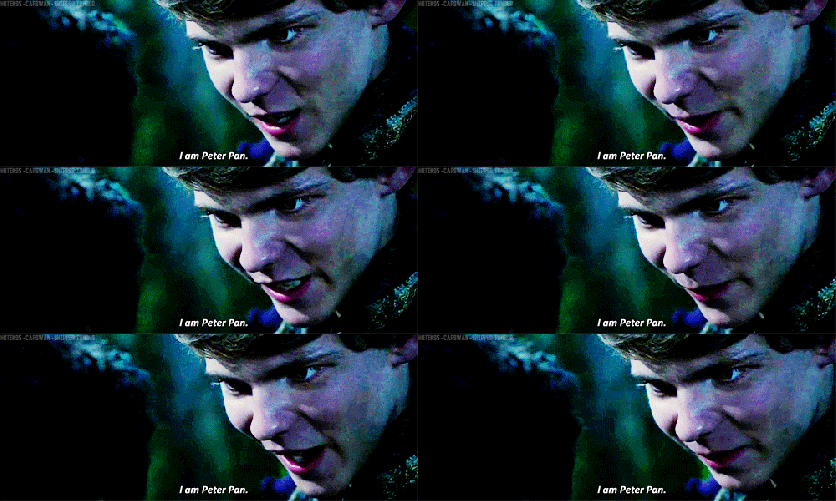
What we got from Phynn:
I won’t bore you with a review for the rest of the book. There was a decision towards the end of the story that did finally bring a bit more creativity to the novel, but nothing could save it from what was, sadly, very poor writing. Of course, there will be sequels. I won’t be checking them out.
Rating 3: A ridiculous heroine, a creepy hero, and writing that did the story no favors.
Reader’s Advisory: This is a very new book, so it isn’t on many lists. But, as it happens, I have read some Peter Pan fanfiction in my day and much of it was lightyears better than this. One of the best Peter Pan fanfic authors I’ve found is “weezer42.” Here is her page of Peter Pan stories. “Whither by Moonlight” is probably my favorite.
Book Description:Kami has lost the boy she loves, is tied to a boy she does not, and faces an enemy more powerful than ever before. With Jared missing for months and presumed dead, Kami must rely on her new magical link with Ash for the strength to face the evil spreading through her town.
Rob Lynburn is now the master of Sorry-in-the-Vale, and he demands a death. Kami will use every tool at her disposal to stop him. Together with Rusty, Angela, and Holly, she uncovers a secret that might be the key to saving the town. But with knowledge comes responsibility—and a painful choice. A choice that will risk not only Kami’s life, but also the lives of those she loves most.
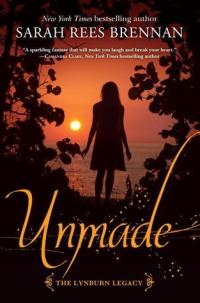
Review: I finally got around to picking up the last book in the “Lynburn Legacy” trilogy. And, while I was left a bit cold by the second book in this series, I am happy to report that “Unmade” pulled the series back from the edge and ended on a solid note.
But first, before I go into any details about the book itself, can we take a moment to be aghast together at this cover? For the sake of discussion, here are the three covers in the series:
Obviously there was a huge shift between the first book and the second. My guess is that the first cover was coming across as “middle grade” and the publishers thought to “age it up” by switching cover art. But to this? Generic back-of-girl-walking-into-distance artwork? At least the first was interesting and unique. The second two just look like every other book on the shelf. I’ve never been a fan of the titles of these books, either. They say next to nothing about what the story is (what genre is this? what time period? what’s unique here?). And this problem is only exasperated by these generic covers. And what’s worse, by the time we get to the third one, the generic cover actually makes no sense! There is absolutely zero reference to the ocean or to Sorry-in-the-Vale even being anywhere near the ocean in these books. While the second cover at least draws feelings of mystery and suspense with a creepy woods (there is at least a creepy woods in the story), the third cover looks like something from Spring Break: Hawaii!! It’s truly awful. I have many feelings re: book covers, and usually I’m good at tamping it down, but this time…
But, enough of that, on to the review! Kami and co. start off this book in a pretty low spot. Rob Lynburn has taken control of the town, Jared is missing, presumed dead, and Kami sharing a sorcerer/source bond unwillingly with Ash. It’s all very awkward and uncomfortable. First off, I commend Brennan for “going there” with the darkness in this book. It doesn’t pull any punches with the horror of what the Lynburn legacy of magic and might stands for, and the type of rule that Rob hopes to usher back in. With that, however, comes a challenging hole to be dug out of. I was concerned that some type of magical out was going to appear, but for the most part I was satisfied with the direction this story took in its final third. While I’ve always wished for a bit more explanation into the magic system (it seems like people just “have” powers and can then do anything. Harry Potter has spoiled an entire generation to fantasy reading where we expect to hear about our characters “learning” their magic!), over all I the expanded ideas with regards to connections between sorcerers and sources was entertaining and interesting.
As I’ve said in my previous two reviews, the characters are what drive this story and the reason I kept returning to the series. Kami is such a healthy, balanced teenage girl protagonist. She struggles with not only the fantasy elements of the story, but problems that many teenagers face: shifting relationships with parents, connections with siblings, evolving friendships, and, of course, romance.
The romance is probably the weakest element of this story for me. By the end of the second book, I thought things had been largely resolved in that area and I was looking forward to a story more closely focused on plot than on the romance angst. Unfortunately, it is made a thing again. And really, because it had been seemingly resolved in the second book, it felt like hoops and out-of-character behavior had to be used to create drama in this department, a writing trope that I never appreciate. At this point in the story, especially when there were serious events going on in life, the relationship angst felt contrived and I almost was rooting for Kami to just slam the door in Jared’s whiny, mopey face once and for all. Alas, she did not. Ultimately, this also resolved itself in a surprisingly satisfying manner by the end of the book, but I feel like a lot less page time could have been devoted to the whole plot line to begin with.
There are moments of this story where the dialogue is laugh-out-loud in its witticisms, but I’ll be honest, there were a few parts that were cry-worthy as well. All in all, it was a very satisfying conclusion to a solid trilogy in the YA fantasy genre. If any of these elements are up your alley, I definitely recommend checking out this series!
Rating 7: A satisfying conclusion full of witty and fun characters!
Book: “Girl Last Seen” by Heather Anastasiu and Anne Greenwood Brown
Publication Info: Aw Teen, March 2016
Where Did I Get This Book: The Library!
Book Description:Kadence Mulligan’s star was rising. She and her best friend, Lauren DeSanto, watched their songs go viral on YouTube, then she launched a solo career when a nasty throat infection paralyzed Lauren’s vocal chords. Everyone knows Lauren and Kadence had a major falling-out over Kady’s boyfriend. But Lauren knows how deceptive Kadence could be sometimes. And nobody believes Lauren when she claims she had nothing to do with the disappearance. Or the blood evidence As the town and local media condemns Lauren, she realizes the only way to clear her name is to discover the truth herself. Lauren slowly unravels the twisted life of Kadence Mulligan and sees that there was more to her than she ever knew. But will she realize she’s unknowingly playing a part in an elaborate game to cover up a crime before it’s too late?
Review: Sometimes I take a chance on a book that I have never heard of. Working at a library means that I see a lot of books pass by me, so I get tempted to be spontaneous fairly often. “Girl Last Seen” is one of those books that I decided to take a chance on. I had a long plane trip ahead of me, and something fluffy and easy sounded really good to me. However, I didn’t want it to be THAT fluffy and easy. And unfortunately, “Girl Last Seen” fell very much into that camp. It was kind of like the idea was ‘what if we took “Gone Girl” and made it for teens?’ I have news for you. Teenagers could just read “Gone Girl”. And I didn’t like “Gone Girl” either. So you know that this isn’t looking good for this book.
First of all, none of the characters were very interesting. You have Lauren, a musician and lyricist who is part of a musical duo with her best friend Kadence. But of course the moment that Lauren lost her voice semi permanently due to a nasty infection she contracted, Kadence dropped her and went solo. Lauren is your typical victimized best friend, who did crappy things to become popular, like dropping her old best friend Nathan. Then there’s Nathan, who became a pariah after he lost Lauren, so much so that he left school for awhile. He’s back now, though, and conveniently hot. And he’s going by the name Jude. He’s also kind of stalkery and hell bent on revenge against Kadence and Lauren, but not really Lauren because he’s still madly in love with her. This is normally a trope that I’m on board with, but in this case he wasn’t sympathetic enough for me to pledge my alliance to him. Then there is Kadence’s boyfriend Mason, the guy who put another wedge between Kadence and Lauren by kissing Lauren in the heat of the moment. Which is just another reason that people in their community think that Lauren has something to do with Kadence’s disappearance. All tropes that we’ve seen before. I’m fine with tropes, but only if they are made into their own well rounded characters and plot points, and none of them are.
There was also a strange choice in writing with this book, in that it tried to take an epistolary approach for the chapters that concerned Kadence. But instead of using written things like texts, or emails, or instant messages (is that still a thing?), the authors try to write out what is happening on web videos or news reports. When trying to write out something that is so visual, it comes off as very stilted and strange. I didn’t understand why that choice was made, when it could have been something like a blog post or a bunch of tweets. Instead we got a lot of things like ‘she looks away from the camera and looks upset’, which is the EPITOME of telling and not showing!!! That is a huge pet peeve of mine. If this were an actual web series, sure, a girl looking away from a camera and looking upset may show instead of tell, but in this case it just was awkward and irritating.
And there wasn’t really any big mystery to this whole thing. I pretty much knew what was happening from the beginning, and while the authors tried to throw some red herrings in there, it didn’t really fool me. That said, there was one final big twist that I didn’t see coming, which I do have to give them props for. It was much better than what the initial explanation was, and I did take that at face value at first. So kudos in that regard, as not only was it surprising, but it did end up being the most satisfactory of endings that I could get from this book. But one small twist that shocked me didn’t make up for lots of other things that didn’t quite add up in my eyes.
Seriously, teens could just read “Gone Girl” and get basically the same gist. It’s a shame because the summary was intriguing and I like being spontaneous, but when my spontaneity isn’t rewarded I feel more of a need to stick to planning out what I’m going to read.
Rating 3: This one just didn’t do it for me. The characters were flat, the mystery has been done, and most of the twists were predictable.
Thank you for reading our joint series review for “The Raven Cycle” by Maggie Stiefvater. As promised, here is our longer, in-depth Reader’s Advisory post for the entire series now that we have completed it. On to the picks!
Serena’s Picks:
Series: “Daughter of Smoke and Bone” series by Laini Taylor
This book is right up there as one of my newer favorite young adult fantasy series. If you liked the combination of fantasy and horror that you got with the “Raven Cycle,” this series is right up your alley. Also, if you liked anything about Mary Shelley’s “Frankenstein”…don’t want to give it away, but yikes! Taylor also introduces a strong cast of characters, and while the romance is probably a stronger element in this series than it was in the “Raven Cycle,” it never overpowers what is otherwise an incredibly creative and unpredictable fantasy story.
Book: “Sabriel” by Garth Nix
This is one of my all time favorite fantasy novels. I wasn’t as aware of it as a teenager reading the story, but man is it dark as well! I guess there are necromancers in it, so I should have been aware as a kid, but for some reason, as an adult reader who regularly revisits this book, I’ve come to appreciate how well Nix handles the dark fantasy elements in this book. It also features a kickass heroine in Sabriel herself, a slow-burn romance that doesn’t overtake the story, and snarky cat. So, it’s pretty much the perfect book. It can also be read as a standlone, but Nix has written several sequels in the years since it was first published. I still prefer this one above all and so am only highlighting it here, but if you do read it and enjoy it, I did enjoy the others, too.
Book: “The Scorpio Races” by Maggie Stiefvater
Maybe this is a cheaty answer, but I don’t care! Obviously, if you like Stiefvater’s writing for this series, you are likely to enjoy her writing in this book. Mythology in the modern day, this book is simply a beautiful imagining of an only slightly alternate world where horses can come from the sea and are as beautiful as they are dangerous. The writing is exquisite, the two main characters are sympathetic and strong, and, it’s a stand alone that leaves the reader fully satisfied. Regardless of anything else, if you love horses or books about horses, this story is perfect for you.
Kate’s Picks:
Series: “Locke and Key” by Joe Hill and Gabriel Rodriguez
A dark fantasy comic about family, magic, friendship, and demons, “Locke and Key” by Joe Hill (one of my favorite authors writing today) and Gabriel Rodriguez (Illustrator) is a dark and fantastical story. It follows the Locke Family, who has moved back to the childhood home of the recently murdered patriarch. Inside the house the three children, Tyler, Kinsey, and Bode, find many magical things, such as magical keys, a door that once you cross you can leave your body, and a magical crown. But there is also a demon inside the well on the property that wants the keys. The tone is both frightening and coming of age, and it is a wonderful adventure filled with action, metaphors, and heart.
Book: “Bone Gap” by Laura Ruby
The town of Bone Gap has an entertaining set of citizens, including a man who treats his chickens like they are people, a hippie lady who makes honey and honey based products, and the O’Sullivan brothers, Sean and Finn, who took in a mysterious woman named Roza. But then Roza disappeared, and Finn saw a dark and mysterious man with her whose face he cannot remember. “Bone Gap” is a story about evil beings that are seeking beautiful princesses, teenagers falling in and out of love, and a very odd town with very odd characters. I picked this because of the town Bone Gap itself, which, like Henrietta, has a feel to it that makes it feel like it’s very own character.
Book: “Far Far Away” by Tom McNeal
Noah Czerny is one of my favorite characters in “The Raven Cycle”, the ghost who is still walking this earth because of the magical Ley Line. “Far Far Away” deals with a ghost as well, but this ghost is a familiar one: Jacob Grimm, of the Brothers Grimm. “Far Far Away” is a story about a boy named Jeremy Johnson Johnson, whose closest confidant is Jacob, who is there to watch over him and protect him from an unknown evil. The friendship between Jacob and Jeremy is a sweet one, as is the friendship between Jeremy and a free-spirited girl named Ginger. And the horror elements of this story are also solid, involving a mysterious entity that is threatening Jeremy, taking fairy tale’s darkest points and making them even creepier.
And this wraps up our week long retrospective of “The Raven Cycle” by Maggie Stiefvater. If you have read “The Raven Boys” or any other books in the series, what books do you think are similar?
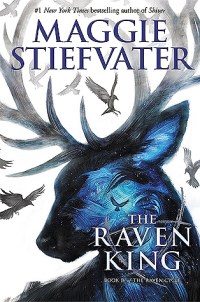
This week we’re bringing to you a special, all-week review series of Maggie Steiefvater’s “Raven Cycle” books. Containing both fantasy and horror elements, we’ve both been independently reading this series, and with the release of the fourth and final book earlier this spring, we thought it was about time to share our thoughts! So each day check in to read our thoughts on the next in the series. To round out the week, on Friday we’ll be posting a more extensive list of other books/series that we recommend if you enjoyed the “Raven Cycle.” Today we review the fourth and final book in the series, “The Raven King.”
Book: “The Raven King” by Maggie Stiefvater
Publishing Info: Scholastic Press, April 2016
Where Did We Get This Book: Both got the audiobook from the library!
Book Description:Nothing living is safe. Nothing dead is to be trusted.
For years, Gansey has been on a quest to find a lost king. One by one, he’s drawn others into this quest: Ronan, who steals from dreams; Adam, whose life is no longer his own; Noah, whose life is no longer a lie; and Blue, who loves Gansey… and is certain she is destined to kill him.
Now the endgame has begun. Dreams and nightmares are converging. Love and loss are inseparable. And the quest refuses to be pinned to a path.
Kate’s Thoughts:
I waited long and not totally patiently to get to this, the conclusion to “The Raven Cycle”. The book version taunted me on the shelf at work, because I was determined to hear Will Patton give life to these characters one last time, and that is what I did. And boy was it worth the wait. When early in the story some strange, ethereal beings that looked just like Blue Sargent came walking through the woods saying ‘make way for the Raven King’, in a weird, strange way, I knew that I was going to enjoy the end of all things. And all of our Raven Boys (and Blue) are so completely burdened during this book that the way that this all shakes out is going to be very, very important and consequence filled.
I was mostly happy and satisfied with how it did, which is the good news! Stiefvater had a lot of plots to wrap up, but I feel like she addressed most of them and gave them closure. The reality of their situation has started to take it’s toll on The Raven Boys and Blue. Blue is coping with the prophecy that has haunted her her entire life, now that she has found a true love in Gansey. Gansey knows that he’s doomed to die in a sacrifice, and is trying to make peace with this. Ronan is still creating things and creatures and pulling them out of his dreams (including a little girl with hooves he calls Orphan Girl), but the responsibilities with this gift are weighing on him. Adam is a powerful scryer, but the loss of Persephone in “Blue Lily, Lily Blue” is still haunting him, as is his abuse filled past. And Noah seems to be wasting away before their eyes. Seeing all of this was both very sad, but very good in the sense that it was a good reminder that they are all teenagers. If they weren’t as affected by these things as they were, it would seem very disingenuous on Stiefvater’s part. It felt appropriate that they were all in their own little angst bubbles in this book.
It was also fun seeing Piper Greenmantle again, newly teamed up with Neve and a really disgusting demon that looks like a giant wasp. The demon always felt like a serious threat, and Stiefvater’s descriptions of it and the hell that it wreaked upon the characters in this book were very scary and made me squirm. But I think that this could tie into one of the weaknesses of this book. While Stiefvater did a good job of wrapping up most of the storylines, there were a few that felt very rushed to wrap up. I don’t want to give spoilers away, necessarily, but there were a couple characters who were brought back just to be thrown to the side. I went in thinking that these characters were going to be there for the remains of the book, especially the ones that have been gone since early in the series, to give them a large send off. But then they would be over and done with after, like, a chapter. I didn’t like how rushed that felt, and I think that sometimes it was done to make room for the new characters, which didn’t seem too fair.
That said, I LOVED a few of the new characters, Henry Cheng especially. We hadn’t seen very much of him in the previous “Raven Cycle” books, but he was given a prominent role in this book as he gets closer to Gansey and Blue. His friendship with Blue was especially nice, since in the previous book he highly offended her without meaning to and it caused a lot of tension between her and Gansey. By the end of this he kind of felt like Carol Cleveland’s role in the “Monty Python” group: not officially a part of the gang, but important enough and there enough that he was totally a part of the gang all things considered. I also liked the introduction of his mother, Sun, a dealer in magical and antique items, a fact that manages to tie a lot of the realties of this world and the conflict that is in it together.
There was another thing that I was worried about in this book, and that was Gansey’s ultimate demise. I, of course, hoped that there would be a way to make this prophecy not so, as I love Gansey, I love his relationship with his friends, and I love his relationship with Blue. But at the same time, this Death Kiss had been so hyped and so matter of fact, that if Stiefvater did some sort of cheap cop out or cliched solution, I would only be disappointed. I was worried and very skeptical that she would muck it up in some way. I’m not going to say much else on the matter, except that this was NOT the case at all, and that she was able to reconcile everything together in a way that I really, really enjoyed.
And Adam and Ronan. Oh my gosh, Adam and Ronan. I love everything about their relationship, and there were absolutely beautiful descriptions about each of them through the other’s eyes that felt so achingly romantic and tender that I got choked up a few times. You wouldn’t think that describing someone as an oil spill would be breathtaking in this regard, and yet Stiefvater managed to do it. Both of these characters are filled with so much anguish and pain, and they understand each other so well and so fully that it always hits the mark in the exact way that it should.
Overall I enjoyed “The Raven King”. I’m going to miss all of these characters and this world that Stiefvater has created, but I am so happy that she ended it the way that she did. Fantasy fans need to check this one out..
Serena’s Thoughts:
And so it ends. I was so nervous for this book. For one, sticking the landing is notably difficult for any series. And for two, Stiefvater had seemingly dug herself quite the hole to dig her way out of. Beyond the obvious prediction of Gansey’s death that has hung over the series as a whole from the very first chapter of the first book, none of these characters have had an easy time of it.
Blue, with her struggles to find a place for herself in a world that she doesn’t seem to fit within all while carrying this heavy burden with regards to love and death tangled in such a way that would break most adults. Ronan, so powerful and yet so trodden down with the burdens of his gift and the losses that just seem to keep coming. Adam, who has come so far, but still carries the scars of his home life, and the internal struggle to accept the gifts of friendship that he has been given, and now has to contend with the full extent to which his promise to be Cabeswater’s hands and eyes will affect his life. And Gansey, now aware of his doom, who can feel the end coming but doesn’t know how to get there or even what role he is to play, now surrounded by such supernaturally powerful friends as Ronan, Blue, and Adam have become. How does to end all of these stories in a way that is true to the tone of the book?
It will be very hard to review this story without spoilers, but I will say that I was immensely satisfied with the ending. These are incredible challenges to face, and I think that Stiefvater handled them all with aplomb. Further, and I really shouldn’t even be surprised any more by this, she adds another character, Henry, who comes with his own baggage and gifts and was slotted in so seamlessly that by the end of the story, I was just as invested in his outcome as the others. Seriously, how does she do this??
The horror in this book also reaches its peak. There were pieces of imagery that were incredibly disconcerting, and often the scene-setting even played hand-in-hand with the type of story-telling you will find in the best horror/thriller novels. At one point, a scene is described through a character’s perspective who cannot see what is happening around him. In many ways, the scene was exactly like one you would come across in a horror movie, when suddenly a room is plunged into darkness and all you have to go on is scuffling and the random shout of dialogue to piece together what is happening. Stiefvater, just like a director of a film scene like this, understands perfectly that sometimes our imagination will make the unseen a million times more terrifying than anything actually presented. It was excellent.
And, while I was satisfied with the ending, Stiefvater doesn’t fall into the trap of happily-ever-after. The villain in this story is a demon, and if that’s what you’ve got to fight against, a story can’t end with only rainbows and butterflies. A few villains from previous books make surprise appearances, and the background into Mr. Grey’s life as a hitman hired by an underground network of magical art dealers, essentially, is more fully fleshed out in a very creative manner. Sacrifices are made and there were times were I was definitely crying.
But like I said, it did end perfectly. The paths that are lain before the remaining characters were believable and true to the types of people they had all grown into by the end of the series. There was the possibility lain down for future stories for the characters, but I’m not sure how I would feel about a return to this series. This all felt wrapped up so neatly, and I am more than content imagining their future adventures without needing actual follow-up novels. But, at the same time, I’ve started out skeptical about how Stiefvater could pull of this series and live up to the hype, and she’s completely surpassed my expectations. Maybe I should be more trusting! Either way, this was a fantastic conclusion, and I highly, highly recommend this entire series to fans of young adult fantasy and horror.
Kate’s Rating 8: Some of the plot points are hastily tied up, but overall the characterization is spot on and the ending is very satisfying.
Serena’s Rating 9: Practically perfect ending.
Reader’s Advisory:
We’ll include a detailed Reader’s Advisory post for the whole series on Friday!
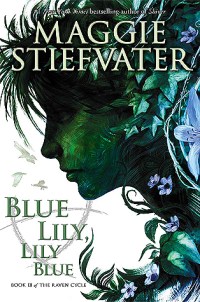
This week we’re bringing to you a special, all-week review series of Maggie Steiefvater’s “Raven Cycle” books. Containing both fantasy and horror elements, we’ve both been independently reading this series, and with the release of the fourth and final book earlier this spring, we thought it was about time to share our thoughts! So each day check in to read our thoughts on the next in the series. To round out the week, on Friday we’ll be posting a more extensive list of other books/series that we recommend if you enjoyed the “Raven Cycle.” Today we review the third in the series, “Blue Lily, Lily Blue.”
Book: “Blue Lily, Lily Blue” by Maggie Stiefvater
Publishing Info: Scholastic Press, October 2014
Where Did We Get This Book: We both got an audiobook from the library
Book Description:There is danger in dreaming. But there is even more danger in waking up.
Blue Sargent has found things. For the first time in her life, she has friends she can trust, a group to which she can belong. The Raven Boys have taken her in as one of their own. Their problems have become hers, and her problems have become theirs.
The trick with found things though, is how easily they can be lost.
Friends can betray. Mothers can disappear. Visions can mislead. Certainties can unravel.
Kate’s Thoughts:
And it is finally in this, “Blue Lily, Lily Blue,” that “The Raven Cycle” taps into its dark fantasy potential and runs crazy with it. I had been waiting, SO EAGERLY, for this book to become creepy and unsettling, and when things started getting real and eerie stuff started happening I rejoiced. And then pathos set in, and my rejoicing turned to almost crying. Maggie Stiefvater ran me through the ringer with this book, and Will Patton was an accomplice. And I want to ask both of them, how dare you?
When the story begins, Maura, Blue’s Mom and ringleader of the psychics at Fox Way, has disappeared from the house, leaving nothing but a vague note. Blue, understandably worried about her mother, isn’t one to sit around waiting for her to come back, and she enlists her Raven Boys to help her out. The power of friendship is so very strong with this group, and Stiefvater writes them all so believably and gently and tenderly that I can’t help but love every moment of it. Poor Blue is in a situation where she has the most friends that she has ever had in her life, but now her mother has left with little explanation and may never come back. This horrible situation takes it’s toll on Blue throughout the novel, and her desperation is an undercurrent in this story. But along with being afraid for her mother, this is the book where Blue and Gansey finally (kind of) start up a romantic relationship between the two of them. There is, of course, the problem that Blue cannot kiss him, as she is, according to prophecy, doomed to kill her true love after she kisses him. But this kind of works out for the better, as Stiefvater has to portray great sexual chemistry between these two without going to the obvious kissing and make out sessions. The result is incredibly romantic.
Speaking of romance, as a firm shipper of Ronan and Adam, this book was a feast of delightful implications when it comes to those two and their relationship. While part of me was definitely like ‘JUST GET TO THE KISSING!’, I really appreciated how slowly and meticulously Stiefvater decided to build their relationship. Because of this choice, it felt very natural and not unrealistic for Adam and Ronan to start gravitating towards each other. Had Adam just fallen in head over heels, especially with everything going on and his comparatively recent break-up with Blue, it would have rung quite false and come off as patronizing. Adam is starting to understand the way that Ronan feels about him, but he still has aways to go to understand how he feels about Ronan. Seeing them work these things out for themselves is a good way to build to a very satisfying and realistic pay out, and Adam and Ronan are well on their way there.
And then there’s the horror elements that I really, really liked. There were scenes that involved possession (poor Noah, things just keep getting worse and worse for him), and very claustrophobic scenes in caves and forests and darkness. It was in these parts that we met one of very very favorite new characters of this series, Gwenllian. Gwenllian is the daughter of Glendower, and a very potent psychic who tied up and left in a cave beneath Henrietta, where she remained for thousands of years under magical influence. And boy oh boy, is she both super creepy and a super hoot. She has her own abilities, abilities that are similar to Blue’s, though that isn’t one hundred percent made clear in this story. Gwenllian merely says that she and Blue and both mirrors of sorts, and that because of this Blue is safe to stand between the magical (and dangerous) mirrors in the house that made Neve, Maura’s sister, disappear. And Gwenllian comes at just the right time, there to fill the void when shit gets super real and we lose one of the women at the Fox Way house. I won’t tell you which one, but I will say that it’s absolutely heartbreaking, and it was the first time that I felt like the stakes in this series were, indeed, very high. The moment that a recurring character is killed in a series like this, that’s when you know that no one is really safe.
Serena’s Thoughts:
Whew! I felt like I had been put through the ringer when I finished this book! The first two stories slowly built to their climax points towards the end of the novel, but this book was ON the whole time. Throughout it all was the feeling that they were always on the cusp of something, that just around the next corner, on the next page, something even more fantastical was going to appear. And given that we had thousands of cars and nightmare-griffons being pulled out of dreams in the last book, topping herself in the fantasy department seemed like it would be too great a challenge for the author. Nope!
What was notable about the fantasy elements in this story as compared to the first two, perhaps, was the tinges of darkness that prevailed throughout it all. I’m sure Kate was pleased with the increased horror, and speaking for the more casual (read: more easily freaked out) horror reader, the darkness was at just the right level to give chills without veering fully into horror with a capital “H.”
The villains in this book were my favorites so far. Piper and Colin Greenmantle were the exact sort of people you live next to for years, then it comes out that they were psychopathic serial killers, and you’re just like, what? They did yoga! Even better was seeing their bizarre relationship dynamic from within. Their own casual approach to villainy right alongside quaint discussions of domesticity was almost just as disconcerting as all the fantasy horror elements.
Kate’s Rating 8: The stakes for all of our characters are raised exponentially as “The Raven Cycle” takes its darkest turn yet. I was immersed in the story progression, sufficiently eeked out by the horror elements, and I had my heart pummeled. Bring on the end, Stiefvater! I’m ready.
Serena’s Rating 8:
Reader’s Advisory:
We’ll include a detailed Reader’s Advisory post for the whole series on Friday!
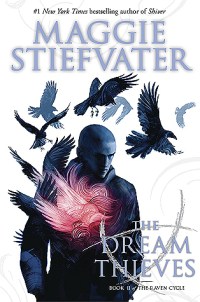
This week we’re bringing to you a special, all-week review series of Maggie Steiefvater’s “Raven Cycle” books. Containing both fantasy and horror elements, we’ve both been independently reading this series, and with the release of the fourth and final book earlier this spring, we thought it was about time to share our thoughts! So each day check in to read our thoughts on the next in the series. To round out the week, on Friday we’ll be posting a more extensive list of other books/series that we recommend if you enjoyed the “Raven Cycle.” Today we review the second in the series, “The Dream Thieves.”
Book: “The Dream Thieves” by Maggie Stiefvater
Publishing Info: Scholastic Press, September 2013
Where Did We Get This Book: Both got the audiobook from the library!
Book Description:If you could steal things from dreams, what would you take?
Ronan Lynch has secrets. Some he keeps from others. Some he keeps from himself.
One secret: Ronan can bring things out of his dreams.
And sometimes he’s not the only one who wants those things.
Ronan is one of the raven boys—a group of friends, practically brothers, searching for a dead king named Glendower, who they think is hidden somewhere in the hills by their elite private school, Aglionby Academy. The path to Glendower has long lived as an undercurrent beneath town. But now, like Ronan’s secrets, it is beginning to rise to the surface—changing everything in its wake.
Of The Raven Boys, Entertainment Weekly wrote, “Maggie Stiefvater’s can’t-put-it-down paranormal adventure will leave you clamoring for book two.” Now the second book is here, with the same wild imagination, dark romance, and heart-stopping twists that only Maggie Stiefvater can conjure.
Kate’s Thoughts:
After reading “The Raven Boys” I wasn’t in the biggest rush to read “The Dream Thieves”. It wasn’t that I didn’t like “The Raven Boys”, because I did. But I wasn’t absolutely entranced by it, as while it was supernatural and supposed to be creepy, it didn’t quite live up to my probably unfair and impossible standards. But then I was looking at the audiobook selection from the library, and I saw that “The Dream Thieves” was available. And not only was “The Dream Thieves” available, my absolutely favorite audiobook reader, Will Patton, was the one who was reading it. So that clinched it. It was on.
So I don’t know if it was the Patton factor or what, but I ended up enjoying “The Dream Thieves” more than I did “The Raven Boys”. Okay, no, I take that back. It wasn’t the Patton factor, as potent and aggressive as that may be. It was because this book focused on Ronan Lynch, my favorite Raven Boy. Ronan is angry and brooding and emotionally unstable, so of COURSE I can’t help but love him to bits. And in this book not only is he given the spotlight, his personality and back story is explored quite a bit, so we get to see why he is so volatile and angry. We find out more about Ronan’s abilities in this book specifically the fact that he can pull objects and beings out of his dreams. Now that Cabeswater’s ley lines have been fully awakened, this ability has become more powerful. He’s taking not only objects out of his dreams, but creatures as well, creatures that aren’t exactly friendly. Along with this he is still affected and traumatized by the murder of his father, a tragedy that has connections to the present day situation with Glendower and the ley line, and to the fact that his mother has been comatose since. So as far as I’m concerned, Ronan has earned any and all of the angst that he’s showing. Along with the angst we got to see a softer side of him as well, not only with his younger brother Matthew, but also with Adam Parrish. Because Ronan is secretly in love with Adam. Which, of course, made me squee like an idiot. Seeing Ronan struggle with his past, his feelings, and his abilities were wonderful explorations.
Ronan wasn’t the only character to be explored more in depth in this book. We also got to see more of Adam and his own connection to the Ley Line and Cabeswater. Adam has always felt inferior to his group of friends because of their wealth and privilege, a fact that has never really been made easier by Gansey, whose good intentions are received as condescending more than kind. Adam is convinced that Gansey pities him and will hold his generosity over his head, and their relationship is heavily strained because of this. And to heap on the baggage afforded to Adam this time around, Blue, realizing she doesn’t share his feelings, dumps him. Sad for Adam. But AWESOME for me! I was worried that we were going to be subjected to this tired and annoying trope for the entire series, but NOT SO!
But Adam’s worth, perhaps unseen by him, becomes far more clear in this book. Noah is a ghost. Ronan is a Dream Weaver. And Adam seems to be a little bit psychic. Which super, super intrigued me going further into this series. That, and the feelings that Ronan has for him. Really for me, “The Dream Thieves” was all about Ronan and Adam.
AHHH, and the psychic women that live with Blue, but I feel like I’ve rambled enough. Just know that Maura, Calla, Persephone, and Orla also get stuff to do in this book, and that they also get depth. Noah gets depth too, and his relationship with Blue gets a very sweet aspect to it. Let’s just say that ghosts don’t need to worry about dying if a girl whose kiss is prophetically deadly kisses them. I loved it. I loved so much about this book.
“The Dream Thieves” was the book that got me fully invested in “The Raven Cycle.” It’s blend of fantasy, the supernatural, and teenage suds makes it a super fun book and really gave the series the oomph I was looking for.
Serena’s Thoughts:
I second everything that Kate said, so I will try and discuss different points than the ones that she has already covered.
First off, the fantasy element is given a big injection of adrenaline in this book. While bits were sprinkled around quite nicely in the first book, that initial groundwork pays off big in this book. Magic is suddenly more than just a mysterious forest that appeared in the countryside. It’s alive and walking around in both Ronan and Adam. Ronan’s dreamer-abilities are so astounding and seemingly limitless. While also completely terrifying, which saves it from feeling like a magical “get out of jail free” card for any future problems. And Adam’s connection with Cabeswater is more complicated than it had at first seemed.
I’ll discuss Adam mostly, since Kate covered Ronan for the both of us. Oh, poor sweet Adam. Nothing is easy for him in this book. His hasty deal with Cabeswater comes with more strings attached then he had expected. And I loved the parallels that were drawn between the darkness that was imposed on this connection because of a lack of understanding on Adam’s part of what exactly it was that he agreed to. Looking life in the eye, looking one’s own flaws in the eye, and finding that clear-eyed honesty, while terrifying, is important to growth. Adam’s personal history is tragic, and I appreciated the honesty with regards to the effects that this would have on Adam’s life and ability to form healthy relationships around himself. His friendship with Gansey is pushed right to the breaking point and made me want to cry for them both. They were both just TRYING SO HARD and still not able to truly communicate their feelings.
And, importantly, while it is noted that nothing that had happened in Adam’s family life was his own fault or deserved or in any way not awful, I appreciated the fact that Adam wasn’t let off the hook for his own bad behavior. It’s completely understandable why he is the way he is, but Blue’s reaction to him behaving very poorly was so appropriate and something that Adam needed to go through to really gain self acceptance (not that he’s there yet, but there were steps).
This tied into my concern from the first book about the love triangle. There is no love triangle! Thank heavens. Just a natural, teen romance where you can fall equally out of interest as you did in, and that’s all ok. Blue is sad that she doesn’t feel as Adam does, but she’s honest with herself and, eventually, with him as well. There’s no dramatics, other than usual heartbreak, and both determine that their short lived romance can be turned into friendship with a little work. And Blue doesn’t suddenly fall head over heels for Gansey either. It is clear that they are both becoming more aware of their own feelings, and, in Blue’s case at least, this comes with a lot of adjustment needing to be made to her original judgements.
I also can’t end this review without mentioning Kavinski. Want to talk about a complicated, heart breaking story? Ronan’s angst and inner struggles are so perfectly paired against this completely new character (can I just say how impressed I am by Stiefvater’s abilities to manage so many characters and give them all so much depth in so few pages??). Kavinski is what Ronan could so easily have been without his friends and it is heartbreaking. Even as Kavinski spirals out of control, you can’t help but feel a deep ache for him.
I was already enjoying this series with “The Raven Boys,” but this book really sealed the deal for me!
Kate’s Rating 8: All of the characters are back and better than ever, and Ronan gets some back story and some delicious brooding time and cool magic. A great fantasy read.
Serena’s Rating8: Very strong second showing. The fantasy elements were great, and the increased focus on complicated character like Ronan and Adam was appreciated.
Reader’s Advisory:
We’ll include a detailed Reader’s Advisory post for the whole series on Friday!
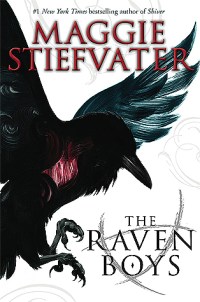
This week we’re bringing to you a special, all-week review series of Maggie Steiefvater’s “Raven Cycle” books. Containing both fantasy and horror elements, we’ve both been independently reading this series, and with the release of the fourth and final book earlier this spring, we thought it was about time to share our thoughts! So each day check in to read our thoughts on the next in the series. To round out the week, on Friday we’ll be posting a more extensive list of other books/series that we recommend if you enjoyed the “Raven Cycle.” Today we start with the first book in the series, “The Raven Boys.”
Book: “The Raven Boys” by Maggie Stiefvater
Publishing Info: Scholastic Press, September 2012
Where Did I Get this Book: Serena got the audio book from the library, and Kate got the print version from the library.
Book Description:Every year, Blue Sargent stands next to her clairvoyant mother as the soon-to-be dead walk past. Blue never sees them–until this year, when a boy emerges from the dark and speaks to her.
His name is Gansey, a rich student at Aglionby, the local private school. Blue has a policy of staying away from Aglionby boys. Known as Raven Boys, they can only mean trouble.
But Blue is drawn to Gansey, in a way she can’t entirely explain. He is on a quest that has encompassed three other Raven Boys: Adam, the scholarship student who resents the privilege around him; Ronan, the fierce soul whose emotions range from anger to despair; and Noah, the taciturn watcher who notices many things but says very little.
For as long as she can remember, Blue has been warned that she will cause her true love to die. She doesn’t believe in true love, and never thought this would be a problem. But as her life becomes caught up in the strange and sinister world of the Raven Boys, she’s not so sure anymore.
Serena’s Thoughts:
I had heard a lot about this series before I started the first book. All three of the first books were already published and raved about. So, I was nervous. I’ve been burned by the YA hype machine in the past. Further, I had read “Shiver” a few years ago, and while I thought the writing was lovely, I wasn’t overly impressed by yet another werewolf love story, even if the fantasy elements were more creative than one typically finds in the tried and true genre of werewolf romance! But, color me surprised! “The Raven Boys” was a very enjoyable reading experience!
One assumption I made from reading the jacket description and from previous experience with young adult fantasy fiction was that this was going to be Blue’s story. Blue’s perspective. Blue’s thoughts and feelings. I was surprised and so pleased to find that it was more than that. The concept of the story felt like it was primed for a “special snowflake” character basking in the attention of a bunch of boys. But instead we have Blue as only one of several characters who have formed deep and complicated friendships with one another. Indeed, Blue is the most recent addition, so in this book the friendships between Gansey, Adam, Ronan and Noah were the deeper and more interesting relationships, with Blue’s “new comer” status serving as a portal into this world for the reader.
Adam and Gansey have a particularly trying relationship and there were several moments when I just wanted to bang their heads together. But this reflects Stiefvater’s success to not only depict a realistic male friendship, one that is challenged by the strong personalities and differing perspectives of each member, but also of the real and deep seeded effects of privilege and how formative unique life experiences are on the way that individuals approach life and decision making. Kate talks about this a bit more, but I was really impressed by the careful and very true handling of many hard subjects.
And, impressively, I wasn’t overly bothered by what seemed to be the set up for a love triangle. Maybe it was the absence of the hyperbolic language that usually accompanies this trope. The girl is always “torn” between “two great loves” and “oh my, what can she do she just can’t pick they’re both so hawttttt!” This is a much more honest approach to teen relationships. Boy meets girl. Maybe they’re interested. Maybe they’re not. They’re not quite sure. Let’s maybe see? Still, though, finishing the book, I wasn’t convinced that this element added to the book, necessarily. Sure, it didn’t detract from it in the way I typically expect, but it also wasn’t making headway in any direction that felt necessary. I was curious and a bit apprehensive for how this would be resolved going forward.
While the fantasy was light in this book, I enjoyed what we had of it. If anything, the light sprinkling of details made these fantastical elements feel as if they were knitted into a “real world” setting in a much more believable way than other examples I can think of where BAM magic arrives!
I also listened to this as an audio book and I can’t rave enough about the reader Will Patton. He is by far the best reader I’ve come across in my forays into audiobook. He commits so fully to the reading, varies is voice expertly for all the different characters ( to the point where I could tell from the first sentence of each chapter whose perspective it was from simply by the adjusted cadence to Patton’s voice), and slows/speeds/emotes/ in line with what is happening in the story. I honestly worry that I loved this book more than I would have reading it simply on the grounds that his narration was so amazing.
Kate’s Thoughts:
I picked up the print version of “The Raven Boys” a couple years ago as part of my stack for a vacation. I have fond memories of reading this book, about ghosts and the supernatural and other spooky themes, while staying in a supposedly haunted hotel room in America’s Most Haunted City (aka, Savannah, Georgia). Because how appropriate, right?! While reading this book, however, I remember not being as impressed by it as I had hoped I would be. I really liked the characters as they were presented to us, and I liked the idea of Blue’s psychic family and her ability to feed psychics as her power. I just didn’t find the central conflict in this one very intriguing. The main villain didn’t do much for me, and even though I liked the lay line storyline, I wasn’t totally sold. What sells me about this book is Blue, her household, and her Raven Boys. I’m someone who has always gravitated towards platonic male friendships ever since I was a small girl, and therefore seeing Blue’s friendships with Gansey, Adam, Ronan, and Noah really resonated with me.
I also really liked how well thought out the town of Henrietta was in this book. Stiefvater did a very good job of making a fictional small town community, with the ups and downs that a small town community has. The age old conflict between the privileged students of the local school and the townies is very present in this book, and the reader can understand both sides that these characters are coming from. I especially like how naively good Gansey is when it comes to Adam, who is a student at the school on scholarship but lives in a poverty stricken and abusive household. Gansey sees Adam as his best friend, but there will always be that conflict there because of the class divide. I also find it very realistic that while Blue and Gansey are very clearly drawn to each other in this book, that class thing is there for them as well, which in turn makes her feel more comfortable with Adam. Can you say ‘love triangle’?
That was another big problem I had with this book, outside of the weaker supernatural plot. I am totally sick of seeing love triangles in YA fiction. It is so overdone and it is a lazy way to add conflict. I was none too happy to see that this trope was being trotted out again in a book that otherwise had some really lovely platonic interactions between Blue and all of her Raven Boys.
I actually think that “The Raven Boys” is, for me, the weakest in the series. Stiefvater did a lot with the characters since the beginning, and their growth is evident.
Serena’s Rating 7: Great start to a series, appropriately laying the ground work, though the romantic angle was questionable.
Kate’s Rating 7: Lovely characters and a great setting made for a good start, though the main conflict of the story did not interest me as much as I’d hoped it would.
Reader’s Advisory:
We’ll include a detailed Reader’s Advisory post for the whole series on Friday!
Publishing Info: G.P. Putnam’s Sons Books for Young Readers, April 2016
Where Did I Get this Book: the library!
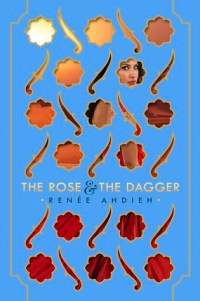
Book Description:In a land on the brink of war, Shahrzad is forced from the arms of her beloved husband, the Caliph of Khorasan. She once thought Khalid a monster—a merciless killer of wives, responsible for immeasurable heartache and pain—but as she unraveled his secrets, she found instead an extraordinary man and a love she could not deny. Still, a curse threatens to keep Shazi and Khalid apart forever.
Now she’s reunited with her family, who have found refuge in the desert, where a deadly force is gathering against Khalid—a force set on destroying his empire and commanded by Shazi’s spurned childhood sweetheart. Trapped between loyalties to those she loves, the only thing Shazi can do is act. Using the burgeoning magic within her as a guide, she strikes out on her own to end both this terrible curse and the brewing war once and for all. But to do it, she must evade enemies of her own to stay alive.
Review: I picked up this book right on the heels of finishing the first, and while I enjoyed the first one for the most part, I was almost more intrigued by this sequel because it wouldn’t be that. The “retelling” of “A Thousand and One Nights” had been thoroughly wrapped up in the first book, so endless opportunities were spread before this one. And the cliffhanger left some good room for growth. For the most part, I think this succeeds, though it does get bogged down by the trappings of the first book.
Originality played highly in this book’s favor. Freed from the original trappings of serving as a retelling, the author had room to take world-building and character growth in her own directions, and for me, this really succeeded. While before the story was trapped largely within the confines of the palace in Rey, here Shazi has been released on the greater world and new and exciting destinations come with it. And alongside these fantastical new settings, adventures followed.
In fact, I would classify this book as an adventure story, first and foremost. Its predecessor was largely a romance, and the hints of a love triangle made me nervous for this book’s direction. Gladly, these worries were unnecessary. The romance served as motivation and fuel to the fire of Shazi’s attempts to end the curse, but it is a matured romance that is steady and sure of itself. No needless wavering or second-guessing.
I also really enjoyed the nods to Aladdin in this book. The scenes with the magic carpet were beautiful and obviously made me want one for myself. And the inclusion of a genie-like character was inspired, most especially given the well-rounded characterization that is applied in the relatively short amount of page time that is devoted to the character.
There were a few downsides, however. While I enjoyed the increased time that was spent from Shazi’s sister’s perspective, there was also a rushed romance here that felt unnecessary. Irsa’s journey was one of self-discovery. As a character who had spent a life time comparing herself unfavorably to her fire-y and strong sister, Irsa’s path to self-acceptance and appreciation for her own unique talents was one that I believe would speak to many readers. No need to add in the distraction of a burgeoning love. It felt like this was inserted purely to compensate for the fact that Shazi and Khalid’s own love story was past the “discovery” phase, and the author worried that more romance was needed. Unfortunately, I feel that this addition was a disservice to both Shazi’s and Irsa’s story. It was refreshing to read a series where the primary romance progressed in a normal manner, from new love to steady love, and the addition of a love interest to Irsa’s own tale distracted from the more interesting story of personal growth.
The other small niggle I had with this book was the inclusion of stories-within-stories. I listed this as part of the reason I enjoyed the first book, and given the fact that its a retelling of “A Thousand and One Nights,” it plays a large and natural role within the narrative. That’s all well and good. Unfortunately, this book isn’t that. The adventure and more action-packed nature of the story doesn’t serve as a natural vehicle for the insertion of shorter tales. While I understand that the author was attempting to highlight the importance of story-telling and reinforce what made Shazi so special to begin with, the addition of a few of these tales were more distracting than anything else. I wish the author had felt more comfortable letting her previous work stand for itself and allowed this book to be its own thing as well.
Overall, however, this book was a solid conclusion to the series. Characterization, over all plot progression, and the new additions to the story all served to fully round out the duology. For fans of retellings, or readers looking for a fantasy story set in a non-European setting, I highly recommend this book and series!
Rating 6: A solid conclusion, if a little undermined by trying to be too similar to the first book.
Book: “The Boy Who Lost Fairyland” by Catherynne M. Valente
Publishing Info: Feiwel & Friends, March 2015
Where Did I Get this Book: from the library!
Book Description:When a young troll named Hawthorn is stolen from Fairyland by the Golden Wind, he becomes a changeling – a human boy — in the strange city of Chicago, a place no less bizarre and magical than Fairyland when seen through trollish eyes. Left with a human family, Hawthorn struggles with his troll nature and his changeling fate. But when he turns twelve, he stumbles upon a way back home, to a Fairyland much changed from the one he remembers. Hawthorn finds himself at the center of a changeling revolution–until he comes face to face with a beautiful young Scientiste with very big, very red assistant.
Review:
This book marks a notable shift from the books previous to it in the series. Alas, our beloved September is nowhere in sight! And instead of experience the bizarre transition from “reality” to “fairyland,” the trip has been reversed with poor baby troll, Hawthorn, being selected as a changling and mailed (the postal service exists everywhere it seems!) to the “real world.” Here he faces the challenges of adapting his nonsensical worldview to a very sensible (or so it claims) world. While the story differs, the beautiful writing, philosophical musings, and abundant creativity remains. So following my established reviewing format for this series, here are a few passages that stood out to me.
Growing up has been a theme throughout this entire series, and this book was no different. The mixture of melancholy and joy, confusion and excitement, and the general sense that we don’t have this whole thing figured quite out is wonderfully discussed.
I shall tell you an awful, wonderful, unhappy, joyful secret: It is like that for everyone. One day you wake up and you are grown. And on the inside, you are no older than the last time you thought Wouldn’t it be lovely to be all Grown-Up right this second?
So, too, the coping mechanisms of childhood. I, obviously, identify with this last method.
Some small ones learn to stitch together a Coat of Scowls or a Scarf of Jokes to hide their Hearts. Some hammer up a Fort of Books to protect theirs.
One of my favorite things about this series are the quirky insights into aspects of life that, on the surface, have very little to do with the story of a Changeling troll or a wandering human girl in Fairyland. One of my favorites from this book:
English loves to stay out all night dancing with other languages, all decked out in sparkling prepositions and irregular verbs. It is unruly and will not obey—just when you think you have it in hand, it lets down its hair along with a hundred nonsensical exceptions.
Philosophical views on life are vivid and rich in this book. I’m still surprised by how seamlessly the author works these in. What could so easily become preachy and silly-ly on-the-nose instead reads as a beautiful side note placed directly next to an excellent fairy tale.
A choice is like a jigsaw puzzle, darling troll. Your worries are the corner pieces, and your hopes are the edge pieces, and you, Hawthorn, dearest of boys, are the middle pieces, all funny-shaped and stubborn. But the picture, the picture was there all along, just waiting for you to get on with it.
The other books probably had this as well, but in this story I found myself appreciating the shorter, one sentence thoughts that sprung off the pages. Someone should make a coffee table book out of these stories with some of these quotes.
She’s an old woman possessed of great powers–but aren’t all old women possessed of great powers? Occupational hazard, I think.
Lovely.
It is not so easy to always remember who you are.
True.
Rules are for those who can’t think of a better way.
Correct.
A thing too familiar becomes invisible
Worth an extra thought.
While the beautiful language and creativity remained in this story, I found myself missing our familiar characters. Hawthorn is a lovely protagonist, but I had spent three books coming to know September, and the last books ends with the feeling that she is on the cusp of something important. And, while she does make an appearance towards the end of this story and I see the neat place that this story fill within the larger narrative, I still found myself finishing it and wishing for a bit more.
That said, I still highly enjoyed this book and it is clearly setting the series up for this final book. I’m both excited and so, so nervous! Please let things work out for my lovely September!
Rating 7: Still quite enjoyable, but slightly less preferred than others in the series
 Book: “Never Ever” by Sara Saedi
 Book: “Unmade” by Sarah Rees Brennan



 Book: “Girl Last Seen” by Heather Anastasiu and Anne Greenwood Brown


 Book: “Sabriel” by Garth Nix
 Book: “The Scorpio Races” by Maggie Stiefvater


 Book: “Bone Gap” by Laura Ruby
 This week we’re bringing to you a special, all-week review series of Maggie Steiefvater’s “Raven Cycle” books. Containing both fantasy and horror elements, we’ve both been independently reading this series, and with the release of the fourth and final book earlier this spring, we thought it was about time to share our thoughts! So each day check in to read our thoughts on the next in the series. To round out the week, on Friday we’ll be posting a more extensive list of other books/series that we recommend if you enjoyed the “Raven Cycle.” Today we review the fourth and final book in the series, “The Raven King.”
 This week we’re bringing to you a special, all-week review series of Maggie Steiefvater’s “Raven Cycle” books. Containing both fantasy and horror elements, we’ve both been independently reading this series, and with the release of the fourth and final book earlier this spring, we thought it was about time to share our thoughts! So each day check in to read our thoughts on the next in the series. To round out the week, on Friday we’ll be posting a more extensive list of other books/series that we recommend if you enjoyed the “Raven Cycle.” Today we review the third in the series, “Blue Lily, Lily Blue.”


 Book: “The Rose and the Dagger” by Renee Andieh
 Book: “The Boy Who Lost Fairyland” by Catherynne M. Valente
 The Library Ladies