Publication Info: Walker Childrens, September 2013
Where Did I Get this Book: the library!
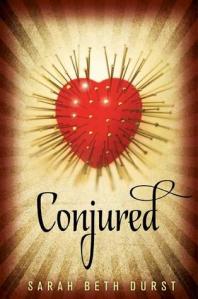
Book Description:Eve has a new home, a new face, and a new name—but no memories of her past. She’s been told that she’s in a witness protection program. That she escaped a dangerous magic-wielding serial killer who still hunts her. The only thing she knows for sure is that there is something horrifying in her memories the people hiding her want to access—and there is nothing they won’t say—or do—to her to get her to remember.
At night she dreams of a tattered carnival tent and buttons being sewn into her skin. But during the day, she shelves books at the local library, trying to not let anyone know that she can do things—things like change the color of her eyes or walk through walls. When she does use her strange powers, she blacks out and is drawn into terrifying visions, returning to find that days or weeks have passed—and she’s lost all short-term memories. Eve must find out who and what she really is before the killer finds her—but the truth may be more dangerous than anyone could have ever imagined.
Review: I’ve read several of Sarah Beth Durst’s books in the past, and they are if anything, always unique. So when I discovered this one, with its creepy carnival imagery, amnesia, and serial killer nemesis, I knew that the story would be in the hands of an author capable of fully taking advantage of these elements.
The story started off slowly for me, to be honest. While Eve’s amnesia is an important part of the story, it also leaves the reader in an awkward place being equally (perhaps even more so!) in the dark as she is. We’re pretty much plopped down into a situation with no background information and a narrator who doesn’t know anymore than we do, but who is clearly involved in something nefarious, with hints being thrown every direction by other characters. Durst also wasn’t in a rush to resolve this. I was about a third of the way into the book before I started feeling truly invested in the story. And while this is a rather large hurdle to leap for many readers, I would say the later pay off is definitely worth it.
Eve herself is such a unique narrator. Her voice is so strange and it speaks to the deftness of Durst’s abilities that she can show Eve’s growth through even the most minute of changes in Eve’s outlook on what goes on around her. When the reveal comes towards the end of the story, I actually found myself paging back through the book trying to spot these change points, many of which I missed in my initial read through.
As for the twist itself, parts of it I was able to guess, but others came completely out of the blue. The motivation of the villain, Eve’s true back story in relation to the villain, was both heart breaking and distinctly chilling. I particularly appreciated the fact that the story is not quickly wrapped up once some of these twists become clear and we get to fully explore the reality of these developments and spend time in this new world order.
Further, the confusion and distrust that leads to these reveals were excellent. Eve has been told everything, she remembers/knows none of it for herself. So as she begins to question those around her, so do we, the reader. Her bouts of amnesia were both frustrating and refreshingly new to this type of story. She isn’t just a narrator who doesn’t remember her past but whose stories unfolds neatly from there on out. Eve keeps forgetting. Between chapters even! Like I said, frustrating, but also very interesting.
As for supporting characters, these were a bit more hit and miss. I loved Malcom from the get go, and grew to love his partner as well. However, I was less thrilled with the three other teens Eve meets: Aiden, Victoria, and Topher. They seemed like a neat idea, but ultimately, I feel like they didn’t even need to be in the story. Very little of the outcome would have been changed, and they were often so unlikable that I found myself wanting to skim read through their portions.
And as for the love interest, Zack…I just don’t know. There are elements of his character that I liked, but he never fully recovered for me from his introductory line of dialogue when first meeting Eve:“I think it’s a shame that it’s customary to shake hands upon greeting when what I really want to do is kiss your lips and see if you taste like strawberries.”
Personally, if a guy introduced himself to me that way the door would be slammed on the chance of us even be acquaintances, let alone romantically involved, right then and there. It’s supposed to be twisted together with Zack’s defining characteristic: he does not tell lies. And while this plays an important role later in the story, I think there is an obvious miss between “not telling lies” and “not spewing out every ridiculous-bordering-on-creepy thought that comes into your head to a complete stranger.”
Slow start and creepy Zack aside, once pieces of the mystery started fitting together, I couldn’t put this book down. If you like dark, fantasy stories and can be patient with unreliable narrators and a slow start, definitely check this one out!
We are part of a group of librarian friends who have gone the extra mile and created our own bookclub. Each “season” (we’re nerds) we pick a theme and each of us chooses a book within that theme for us all to read. Our current theme is “Across the Decades,” we each drew a decade and had to select a book that was either published or set in that decade.
For this blog, we will post a joint review of each book we read for bookclub. We’ll also post the next book coming up in bookclub. So feel free to read along with us or use our book selections and questions in your own bookclub!
Book: “A Brief History of Montmaray” by Michelle Cooper
Publishing Info: Knopf Books for Young Readers, October 2009
Where Did We Get This Book: audiobook from the library!
Book Description:Sophie Fitzosborne lives in a crumbling castle in the tiny island kingdom of Montmaray with her eccentric and impoverished royal family. When she receives a journal for her sixteenth birthday, Sophie decides to chronicle day-to-day life on the island. But this is 1936, and the news that trickles in from the mainland reveals a world on the brink of war. The politics of Europe seem far away from their remote island—until two German officers land a boat on Montmaray. And then suddenly politics become very personal indeed.
Kate’s Thoughts
So as a fan of “Downton Abbey”, and as a fan of kicking the shit out of Nazis, I had high hopes that “A Brief History of Montmaray” would combine the best of both worlds. I had this vision of Mary Crawley punching an S.S. officer in the face a la “Indiana Jones” while making some snippy and cruel remark, and in my mind that was just the best damn thing that I had ever thought of in the history of ever, crossover wise.
And she’ll never tell where the bodies are buried either. (source)
While the book did have some likable characters (the cousin Veronica, in particular) overall I was a bit disappointed that “A Brief History of Montmaray” was more focused on the dysfunctional, if quirky, royal family and the problems that they are facing in love, life, and succession. Our narrator, Sophie, is pretty good at laying out the family lines and showing how the royal family connects to each other (King John has no male heir, so the next in line should be his nephew Toby, Sophie’s older brother). Sophie, not having as much investment in the royal line to the throne, is a good choice for narrator, as she doesn’t have the pressure of being a direct heir like her brother, nor does she have the frustration of being an ineligible heir like her cousin based solely on her gender. Because of this she can present a pretty fair view of how things are supposed to work in this family. She is a fine narrator and a good lens to see these conflicts, but at the same time she isn’t as interesting as I wanted her to be. I much preferred Veronica, the incredibly intelligent and capable daughter of the King, who would make a fine queen if only Montmaray approved of female succession. She was by far the most interesting character, as she has so much more interest in her home country than Toby, the flaky rightful heir. It’s the perfect example of an unjust and sexist society that is probably really screwing itself over. Veronica is also quite well rounded, probably the most well rounded of all the characters. She is cunning and ambitious, but also loves her home and her family, so much so that she puts rightful succession above all else even though you know she is aching for it. Had the story been following Veronica’s POV, I think that I would have been able to forgive it a bit more for not focusing on the Nazi storyline, and the storyline about how Europe was in serious, serious danger at this time. I do realize that this is a series and that there were two other novels to focus on that, and that this novel was more about introducing us to this family. But to me, the family wasn’t the part that I wanted to focus on outside of Veronica. It was a bit too “I Capture The Castle” for me, a book that I recognize as being significant and a classic, but one that I also am not terribly fond of as a whole.
And yes, I’m resentful that there weren’t enough Nazis, at least not as much as the summary would suggest. True, the Germans do land on Montmaray, sending the FitzOsbourne family into turmoil for many reasons. But they are there for a moment in the middle, and then come back at the end. The rest of the book is about the family and their squabbles and scandals. And hey, I like a nice soap as much as the next person, but it all felt kind of trite compared to the things I knew were coming, even further into the series. It’s hard for me to care about awful (AWFUL) housekeepers and their stupid secrets when I know that a whole lot of awful pain is about to rain down on the rest of Europe. And maybe for me it’s still a little raw since there was recently just footage of a bunch of these guys doing the Hitler salute in D.C. But had I known that the family malarky and hoopla was going to be the focus (aka, more “Downton” and less “Indiana Jones”), my expectations would have been more in line with how it turned out, and therefore I would have been more receptive to it. As it was, I kept saying to myself “BUT WHEN ARE ALL THE NAZIS GOING TO REALLY GET THEIR COMEUPPANCE?!”
Preferably in this kind of endgame situation. (source)
So I think that it’s fair to say that “A Brief History of Montmaray” was at a disadvantage because of misplaced expectations. It’s not necessarily the fault of Cooper, but more so how it was promoted. I loved Veronica, but that was about the only thing that I really enjoyed, and sadly that’s not really enough to keep me going.
Serena’s Thoughts
This book had been on my reading list for a while as it was well reviewed by several other blogs that I followed. And when I ended up with the 30s as my decade of choice for our bookclub theme this go-around, it seemed like a perfect time to finally get around to it!
As the historical fiction reviewer on this blog, it’s probably not a surprise that I enjoyed this book more than Kate. For the most part, the historical detail is what captures me in these stories, and I enjoy books about quirky families (ala “Anne of Green Gables” and Jane Austen novels). The addition of a bit more action than is usually found in this type of book was the extra cherry on the top for me.
I agree with Kate’s assessment of the characters themselves. Sophie was an interesting narrator and I enjoyed the transformation she goes through during this book. The combination of teenage silliness mixed with a healthy dose of self-awareness with regards to said silliness made her a very endearing teenage protagonist. Veronica, however, is the type of character I generally gravitate towards. Intelligent, snappy, and a girl who firmly has her head on her shoulders. Seriously, nothing would get done if Veronica wasn’t there. And she has by far the most challenging set of circumstances to deal with, what with the sexism involved in the rules of ascension and the terrible family life (crazy dad who hates her, abandoned by her mother).
As for the boys involved, I found myself increasingly frustrated with Simon, the set up love interest for Sophie. I couldn’t help agreeing with Veronica’s assessment of him as a bit of a self-serving prat. And while I generally liked Toby, I found myself becoming more and more annoyed with his selfishness. I mean, the guy gets to go out and live in the world to go to school, make friends, be in society, and, yes, there are responsibilities to being the heir, but that’s a huge amount of privilege, too. So for him to whine to his cousin and sisters who are living in a castle that is literally falling down around them and who have no friends of any sort really just seems ridiculous and made me want to slap some sense into him.
As for the Nazi involvement: I actually really appreciated that this book didn’t go the expected route with them. There was a lot of discussion with regards to the political climate in Europe and it does a lot to remind modern readers that the Nazi party didn’t just sprout out of the ground fully formed. There were a lot of moving pieces and many years went by before it became clear just what everyone was dealing with. There were some interesting nuggets that were very…Indiana Jones-ish…and were quite fun, and another lesser used mode of introducing Nazis into the story. I do agree that the book summary can be misleading, so if you go into it expecting clashes with Nazis and said comeuppance served upon them it might not be for you. However, given the year that this is set in, and that it’s the first in a trilogy, I guess I was more prepared for delayed gratification re: Nazi destruction.
All in all, I enjoyed this book quite a bit. It’s definitely more geared towards readers who enjoy slower paced historical novels. There’s a good amount of family drama, family mystery ala books like “Rebecca,” and historical detail. And, while there is action and Nazis towards the end, those aspects definitely come later and don’t take up as much page time as the rest.
Kate’s Rating 6: Though I greatly enjoyed the character of Veronica, overall the story didn’t match my expectations, and therefore didn’t grab me as I thought it would.
Serena’s Rating 8: Strong historical detail and interesting characters, though beware the lighter Nazi involvement if that’s what you were here for!
Bookclub Questions:
1.) How did we feel about Sophie as a narrator? What do you think the story would have been like if it had been told from the perspective of a different character?
2.) Montmaray is an imaginary kingdom that is meant to exist in an otherwise historically accurate version of Europe. Did it succeed in this way? Were there aspects of the historical set-up that you particularly enjoyed or found distracting?
3.) The Nazis: How did you feel about them? Their entrance into the story, their mission, and the resolution to their involvement?
4) For a first-person narrated story, it feels as if we get a good amount of detail about many of the side characters. Were there characters who stood out? What about Rebeca and Simon?
5) The book does seem to involve some supernatural elements, how did you feel about this inclusion and twist?
6.) This is the first in a trilogy. Where do you think/want the story to go from here?
The Next Book Selection: Not sure yet! We’re at the switching point between one “season” and another. For our next theme, we all chose two things (“a book that’s been turned into a musical!” or “a book about animals!”) and had to draw from a hat for our own options. We’ll see what comes up!
Book: “The King of Attolia” by Megan Whalen Turner
Publishing Info: Greenwillow Books, January 2006
Where Did I Get this Book: the library!
Book Description:By scheming and theft, the Thief of Eddis has become King of Attolia. Eugenides wanted the queen, not the crown, but he finds himself trapped in a web of his own making.
Then he drags a naive young guard into the center of the political maelstrom. Poor Costis knows he is the victim of the king’s caprice, but his contempt for Eugenides slowly turns to grudging respect. Though struggling against his fate, the newly crowned king is much more than he appears. Soon the corrupt Attolian court will learn that its subtle and dangerous intrigue is no match for Eugenides.
Review: We’re back for some more of Eugendides’ hi-jinks and even more fantasy political drama. After the shake-up with narrative style that came with the previous book (going from a first person narrative from Gen’s perspective in the first book, to a third person POV with multiple characters in the second), I wasn’t sure what to expect with this one. How can an author keep her main character so tricky when readers are on to the cons after two books? Well, without spoiling it, Whalen Turner is definitely up to the task!
Our story starts with poor Gen exactly where he never wanted to be: ruling a country. Further, he’s now the King in a land ruled by a clear-headed, hard-handed Queen who rules over a land that was often at odds with his own native Eddis. I very much enjoyed the exploration of this relationship. This is by no means the happy, fluffy, “ever after” story that one is used to seeing after a royal wedding. Gen and Attolia have a complicated relationship, both in regards to their own rather, ahem, strife-ridden history, but also due to the aforementioned political power posturing that comes with a foreigner gaining a position of authority in a new land. Attolia is not the easiest woman to understand, as is made clear in the last book. And Gen plays his own thoughts and feelings close, for all that he seems so lackadaisical about everything. The exploration of this relationship was excellent.
Further, while the third person POV style was kept for this book, we are introduced to a new character, Costis, a guard in Attolia’s court. Costis is our eyes and ears representing both the feelings of many in the land of Attolia after Gen’s ascension to the throne, but also the necessary fop to be conned by Gen’s playacting. And while it is, of course, immensely enjoyable watching Costis’s eyes be opened to the true genius that is Gen, I continue to be impressed by how effectively Whalen Turner can still con the reader, as well. From the last two books, it is clear that Gen is the type of character who would chafe under the restrictions of royal life. This being the case, even I had a hard time knowing what was or was not an act on his part.
Other than Gen’s struggles at court, the larger plot of this story deals with the continued political turmoil going on in this region between the three main power houses: Attolia, Eddis, and the often-aggressive, Sunnis. Between this and the corruption in Attolia’s own court, the book’s plot is mainly political strategy and lighter on the action than both previous books (though after the action-packed “The Thief,” the previous book’s action was also much lighter). With this, the third in the series, it increasingly feels as if the first book stood alone in many ways, both in style, tone, and the type of story it was telling. These last two books seem represent the true direction that Whalen Turner is wanting to take this series. While I very much enjoyed “The Thief,” I’m loving these last two. If you’re looking for a series that doesn’t fall into any of the tropes or familiar storylines that are often present in fantasy series, definitely check out this series!
Rating 9: Excellent. I continue to be impressed with the author’s ability to retain Gen’s “trickiness!”
Book Description:In the enchanted kingdom of Brooklyn, the fashionable people put on cute shoes, go to parties in warehouses, drink on rooftops at sunset, and tell themselves they’ve arrived. A whole lot of Brooklyn is like that now—but not Vassa’s working-class neighborhood.
In Vassa’s neighborhood, where she lives with her stepmother and bickering stepsisters, one might stumble onto magic, but stumbling away again could become an issue. Babs Yagg, the owner of the local convenience store, has a policy of beheading shoplifters—and sometimes innocent shoppers as well. So when Vassa’s stepsister sends her out for light bulbs in the middle of night, she knows it could easily become a suicide mission.
But Vassa has a bit of luck hidden in her pocket, a gift from her dead mother. Erg is a tough-talking wooden doll with sticky fingers, a bottomless stomach, and a ferocious cunning. With Erg’s help, Vassa just might be able to break the witch’s curse and free her Brooklyn neighborhood. But Babs won’t be playing fair…
Review: Another book that I had on my highlights post for Septmeber that finally showed up a week or so ago! I wasn’t familiar with the original Russian fairytale that inspired this book, so I came into it with very little idea of what it was going to be. Magic in Brooklyn and a Baba Yagga villain. Sounded awesome.
And large parts of it were! The general worldbuilding was very interesting. Your mileage with this will largely depend on how willing you are as a reader to “just go with it” as far as explanations and magic systems. There’s really no explanation for why and how magic exists in this area of the world. Further, the type of magic that is presented is much closer to the nonsense magic seen in “Alice in Wonderland” than to a more outlined and rule-bound magic like “Harry Potter.” That being the case, there is a lot of things popping up here and there with no rhyme or reason and then disappearing just as quickly. Some of these things I particularly enjoyed, like a group of swans that Vassa befriends, and a pair of sinister hands that operate as Babs’ henchmen, essentially.
Other parts felt a bit contrived, however, and as if Porter was simply trying too hard. Particularly some of her efforts to involve nonsense word-play (similar to the Fairyland books I had just read). And maybe having just come off those which were almost the perfect example of nailing this writing style, I was a bit biased against Porter’s attempts here. But I also feel that it was simply not executed well. While nonsense writing can be very insightful, this was clunky and actually confusing. At several points I had to re-read section to try and understand them and then, more often than not, came away with the conclusion that this was just another unexplained element. And while some of these unexplained magical oddities were enjoyable, it didn’t translate here. Dialogue and descriptions needs to be clear, regardless of how little you as an author are providing insights into other magical elements.
Vassa was a very strong protagonist. Her voice was unique and interesting, and I especially enjoyed her relationship with her sisters, especially her elder sister. As I’ve said, I always like sister stories! And, of course, Vassa’s primary partner in crime: Erg, the animated doll. I was both creeped out by and intrigued by Erg. I don’t think I was supposed to be as creeped out as I was, but there were certain elements of her and Vassa’s relationship that was confusing to me. Erg is definitely an intelligent individual with her own opinions, motives, and outlooks on life. So it was very strange switching from her and Vassa debating what do do about some problem or another to Vassa petting and nuzzling her the way you would a kitten. It was strange. But, as I’ve said, so was the whole book.
Ultimately, this book was stronger as a concept than it was as an actual story. There were almost too many weird things thrown in at every moment which prevented me from ever becoming fully invested in the story. I was too busy being confused by some of the writing choices and bouncing from one thing to another to really be able to draw a connecting line throughout the book or form real attachments to characters. There were random chapters inserted here or there attempting to provide some background information that only opened up more doors and left more dangling plot lines (Vassa’s father’s storyline was one of these). While this book is probably the closest thing I’ve seen to an actual dark fairytale set in an urban setting (vs. most urban fantasy which often is the usual, generic, vampires and witches and such in an in every other way normal city), it was too weighed down by its own concept to every really take off.
Rating 6: A unique concept and interesting worldbuilding places too much burden on a confusing plot.
Reader’s Advisory:
“Vassa in the Night” is a new book and isn’t included on many Goodreads lists. However, it should be on “Dark Fairy Tales.”
Though we do tend to read different genres, there is sometimes overlap in the books that we pick up and devour. When this happens, we decide to do a joint review, giving our thoughts through our own personal lenses of what we look for in reading material. When we were putting together our October Highlights post, we discovered that we each had picked this book. Obviously, a joint review was in order!
Book: “One Was Lost” by Natalie D. Richards
Publishing Info: Sourcebooks Fire, October 2016
Where Did We Get this Book: the library!
Book Description:Damaged. Deceptive. Dangerous. Darling. Are they labels or a warning? The answer could cost Sera everything.
Murder, justice, and revenge were so not a part of the plan when Sera set out on her senior camping trip. After all, hiking through the woods is supposed to be safe and uneventful.
Then one morning the group wakes up groggy, confused, and with words scrawled on their wrists: Damaged. Deceptive. Dangerous. Darling. Their supplies? Destroyed. Half their group? Gone. Their chaperone? Unconscious. Worst of all, they find four dolls acting out a murder—dolls dressed just like them.
Suddenly it’s clear; they’re being hunted. And with the only positive word on her wrist, Sera falls under suspicion…
Serena’s Thoughts
Whelp, I knew going in that this book was either going to be a great hit or potentially a big miss for me. A little background: I grew up in a very, very rural part of northern Idaho. I’m talking “only had an outhouse/had to sno-mobile 5 miles in during the winter/wood stove for heat and cooking/solar power/etc” type of remote. That being the case, I spent large portions of my childhood running around in the woods with my sister. So, for one, the woods aren’t a natural “fear factor” for me. And for two, I grew up learning a lot about how to survive in these types of situations. All of that said, because of this, I always find myself gravitating to books like these that focus on the experiences of others in the woods, just because I love the setting. But that also means that I approach these types of stories from a hyper critical standpoint, which isn’t the book’s fault. So I have to spend a lot of time balancing my personal reaction to a book like this against that of the average reader. But, since we’re joint reviewing this, Kate will be here to give her perspective as the non “woodland wild child” reader!
But first, I don’t want to give the impression that this book was a complete failure for me. I feel like the main cast of characters were very likable. They were a diverse group (if perhaps a bit too stereotypical), and I liked the attention that was spent addressing the difference challenges that each of these teens had faced in the typical highschool experience. Sera herself was a very good narrator. While the writing and voice were rather simplistic, she was likable and for the most part I was fully on board with her as a protagonist. There was an interesting backstory with her mother and with the impact that this relationship has had on Sera’s own life and sense of self. I wish there had been even more on this, as the ending felt a bit rushed with her ability to resolve what has to be a huge, ongoing personal conflict. There was also a romance that, while I still don’t feel that it was necessary and had an overly dramatic backstory that proved to be a let down when it was revealed, wasn’t as terrible as I first suspected. Just wish there was less of it.
But, as I mentioned in the beginning of this post, I had some very specific issues with this book, and what frustrates me the most is that much of it comes down to poor research on the author’s part. Look, I know this book is about teens out in the wilderness and that, due to this, they aren’t going to know all the ins and outs of wilderness survival. However, they make SO MANY WILDLY BAD DECISIONS!
About a third of the way in, after they wake up with the words written on their wrist, there are a few chapters that are made up of just one bad decision after another. There’s the very basics that most people know: never wander off. If you’re completely lost, stay put. Here, not only are they not lost, but they have a perfectly good trail with only a three days’ walk out, which in the grand scheme, really isn’t much. So it’s a million times more stupid to instead go wandering out into the wilderness with the hope that you might not get turned around and you might find the road and maybe rescuers will find you even though you are now putting miles between yourself and where they would know to look.
Then there are more specific things that are just common sense. Obviously, water is your most important priority (after not wandering off! And not fixating on food, which they do. Obsessively. For the record, you can live three weeks without food and do not, in fact, start feeling massive effects after ONE DAY). And maybe, maybe, river water is a safer bet than water that is being left for you by a madman who has ALREADY POISONED YOUR WATER ONCE! Any bacteria in a river (if there even is any, fast moving water is usually a safe bet as long as it’s not draining directly out of a cow field) is going to be curable once you’re found. And if you’re not found…you have bigger problems.
And then, just because you shouldn’t camp near a river that may flood, this does NOT somehow make it too dangerous to follow (civilization is found near water). Like, what do they think is going to happen? The river is somehow going to instantaneously flood enough to take them out in seconds if they’re walking along it? Walk a ways above the water line, for crying out loud.
The story was much stronger when it simply focused on the thriller aspects and left aside any survival choices. After this initial string of events ends, the mystery/thriller aspects picked up again and I was able to shut my brain off for a good portion. And if it had maintained this until the end, I might have given the book a pass. Unfortunately, near the end, it lost me again with what was the last straw for me as far as poor research goes. Sera has a cut hand. They find peroxide to put on it. And then there are several paragraphs about how horribly painful it is applying the peroxide….
Peroxide is painless. The author clearing didn’t do one iota of research and simply failed to spend the time differentiating between rubbing alcohol and peroxide. Which, look, I get that it’s a small thing. But after all the rest, it was the final straw to my patience with this book. If you, an author, are going to write a survival story about teens in the woods, it is not too much to ask that you do basic research. And I, the reader, expect more. There was some more nonsense about finding a 4 wheeler but not leaving immediately because “Omg, cliffs!”…as if headlights aren’t a thing. And the fact that they find a RV along with the 4 wheeler, but somehow there are no roads (how did it get there??) necessitating said wandering in the woods. And…I was done with the book at this point.
Kate’s Thoughts
And then there’s me, City Girl Kate! I was raised in the city, by two parents who grew up on farms and decided that nature just wasn’t their bag once they could escape it. So nature isn’t MY bag either! And therefore, I went into “One Was Lost” with less knowledge about what the dos and don’ts are when it comes to wilderness trekking and survival. While some of the obvious mistakes jumped out at me, most of the others Serena mentioned went right over my head. I’d probably die in the woods, because I’m pretty clueless.
Oh, you can drink fast running water? Huh! (source)
So I guess I was kind of able to go in with less critical eyes in my head, at least when it came to the survival skills trope. HOWEVER, when it came to horror tropes and thriller plot points, I too had a harder time swallowing “One Was Lost”. I was hoping for some kind of “Blair Witch Project” story (For crying out loud, the cover alone is a nod to it), but sadly it didn’t quite live up to the expectations that I placed upon it. Perhaps unfairly, but placed upon nonetheless.
I did like the characters that we followed, I want to make that perfectly clear. Sera was a relatable and interesting protagonist, whose baggage is kind of unique when looking at YA protagonists. I liked her backstory and I thought that it was believable enough to explain some of her reasoning and decisions she made down the line, as well as parallel some of the revelations as they were exposed. I agree with Serena that the romance she had with Lucas was a bit unnecessary, though I did like Lucas and the foil he provided when verbally sparring with Sera. Emily and Jude were also interesting enough, though we didn’t get to see as much of either of them so they fell a bit more into their stereotypes (Emily as the quiet victimized girl, Jude as the spoiled and privileged adoptee. Side note, I think Jude could have been VERY interesting being a transracial adoptee of two gay men, but that wasn’t focused on at all). I think that their introductions were a little rushed, as we pretty much hit the ground running. As the plot kept going and as they all found themselves in worse and worse situations, I got a pretty good idea as to what was going on, at least in terms of who was probably harassing them and stalking them. Maybe not in the bigger picture as to motive, granted, but I called who the culprit was long before the big reveal. I know that I’m a horror girl and a thriller girl, and I know what to look for. But there were things that tipped me off and they are things that have been seen in many, many other stories of both genres.
I also found myself rolling my eyes when the urban legend/ghost story that was told had to do with “Cherokee Spirits” living in the woods. Jeeze. Why is it that sometimes these stories feel a need to trot out Indigenous stories while totally butchering them? It was uncomfortable for me, especially given the recent dust up with “The Continent”. Luckily this was kept to a minimum, but really, it shouldn’t have been in there in the first place.
So for me, “One Was Lost” was also a disappointment, though I did like Sera and the personal journey that she went through. I just wish that this book had done more, because the potential really was there, and I wish that some choices that were made had been taken out before publishing.
Serena’s Rating 5: A strong premises and lead character, all foiled by very poor research that kept kicking me out of the story.
Kate’s Rating 5: I liked the characters and I liked the backstory, but the plot was a bit too predictable for me, and some of the storytelling devices were a bit aggravating.
Reader’s Advisory:
“One Was Lost” is a new book so it isn’t on many Goodreads lists yet, but it should be on “Wilderness Horror Stories.”
Book: “The Girl Who Raced Fairyland All the Way Home” by Catherynne M. Valente
Publishing Info: Feiwell and Friends, March 2016
Where Did I Get this Book: the library!
Book Description:Quite by accident, September has been crowned as Queen of Fairyland – but she inherits a Kingdom in chaos. The magic of a Dodo’s egg has brought every King, Queen, or Marquess of Fairyland back to life, each with a fair and good claim on the throne, each with their own schemes and plots and horrible, hilarious, hungry histories. In order to make sense of it all, and to save their friend from a job she doesn’t want, A-Through-L and Saturday devise a Royal Race, a Monarckical Marathon, in which every outlandish would-be ruler of Fairyland will chase the Stoat of Arms across the whole of the nation – and the first to seize the poor beast will seize the crown. Caught up in the madness are the changelings Hawthorn and Tamburlaine, the combat wombat Blunderbuss, the gramophone Scratch, the Green Wind, and September’s parents, who have crossed the universe to find their daughter…
Review: I delayed it for a few months, but here we are at last, woefully at the last book in the “Fairyland” series. But there are two things bolstering my spirits after finishing this series. 1.) It ended on such a great note! Always a concern that somehow something so good will be bungled and tarnished forever by a whiff on the ending. And 2.) now that it has been finished, and finished so well, I can happily go out and purchase the entire series and re-read them to my heart’s content!
Per my usual review method for this series, I’m going to include some of my favorite quotes from the book. If I’ve said it once, I’ve said it a million times: the writing in this series is so beautiful and has to be its biggest selling point.
“One of the awful secrets of seventeen is that it still has seven hiding inside it. Sometimes seven comes tumbling out, even when seventeen wants to be Grown-Up and proud. This is also one of the awful secrets of seventy.”
We’ve watched September grow up throughout these books. If the theme of the entire series could be summed up, it would be: growing up is a terrible, onerous process and then once you get there, you realize it was all kind of a hoax to begin with. Throughout all of the books, I very much enjoyed Valente’s razor sharp views on childhood. It’s all too easy to let childhood morph into a time and place of wildflowers and carefree days, and as adults forget the truly awful parts about it. The helplessness, the lack of freedom, the unassuredness, the constant changes both in yourself and in how the world see/treats you.
“We have all of us got it jumbled up. You never feel so grown up as when you are eleven, and never so young and unsure as when you are forty. That is why time is a rotten jokester and no one ought to let him in to dinner.”
New to this book, we meet Septemeber’s parents and her Aunt more fully! The interlude chapters document their journey. It was particularly enjoyable reading about their experiences, both in Fairyland and as the ones who were left behind by a wandering September. We always hear about the kids who get swept off to magical lands, but nothing about the poor parents who are left missing their children. Further, the reminder that these same parents and adults were once children and had adventures of their own.
“The Land of Parents is strange and full of peril.”
While Hawthorne and Tamburlaine do play a role in this story, it was again September’s story and her friends that we follow throughout the book. However, Blunderbuss, the combat wombat, plays a much larger role than I had expected and it was awesome. She is by far the best new addition to group from the last few books. Her acerbic wit and blunt way of speaking often provided the most hilarious bits of the story. And her contribution to the ending was as surprising as it was welcome.
“You gotta be nice to strangers even when they are the worst, because they don’t know you well enough to understand how shut your big face can mean I’ve missed you more than the whole world can know.”
And, finally, I cannot end this review without talking a bit about my darling pairing of September and Saturday. I have to say, this was my biggest concern about the story and one of the reasons I held off reading this book for so long. How could this be resolved in a way that wasn’t going to be heart breaking somehow? And, while the ending wasn’t anything like I could have expected, it was so, so satisfactory. So, go forth dear readers without fear on this account!
“The tales lovers tell each other about how they met are hushed and secret things. They change year by year, for we all meet many times as we grow up and become different and new and exciting people–and this never stops, even for a minute, even when we are ninety.”
I really can’t rave enough about this book. While “The Boy Who Lost Fairyland” was very good, it did feel like a step away from the Fairyland books that I had come to love. So I was a bit concerned when starting this one that maybe the magic had worn off just a little. But this book comes roaring back, and I would say it most closely rivals my love of the first book in the series. When/if I have children, this series will definitely be making an appearance on the must-read-aloud list. If you like fantasy, especially of the sweet and nonsensical kind, ala “Alice in Wonderland,” don’t miss out on this series!
And with that…
“Endings are rubbish. No such thing. Never has been, never will be. There is only the place where you choose to stop talking. Everything else goes on forever.”
Rating 9: An amazing story on its own, but also an unexpected and poignant ending to the series as a whole.
Book Description:Lucy Acosta’s mother died when she was three. Growing up in a Victorian mansion in the middle of the woods with her cold, distant father, she explored the dark hallways of the estate with her cousin, Margaret. They’re inseparable—a family.
When her aunt Penelope, the only mother she’s ever known, tragically disappears while walking in the woods surrounding their estate, Lucy finds herself devastated and alone. Margaret has been spending a lot of time in the attic. She claims she can hear her dead mother’s voice whispering from the walls. Emotionally shut out by her father, Lucy watches helplessly as her cousin’s sanity slowly unravels. But when she begins hearing voices herself, Lucy finds herself confronting an ancient and deadly legacy that has marked the women in her family for generations.
Review: Halloween seems like it was so long ago, and yet I’m still digging into the books that I put on my list for Horrorpalooza that didn’t quite make the cut, timing wise. True, it was a long list so that’s to be expected. The next one that didn’t quite get the timing right is “The Women in the Walls” by Amy Lukavics. Lukavics wrote one of my favorite horror stories last year, “Daughters Unto Devils”. It was one of the scariest books I read last year, and it was a reminder that YA horror can have serious chops if you get the right writer. Seriously, horror fans need to check it out and how. So I was very excited when I found out that she had another one coming out, and digging into it was something I was very much looking forward to.
I think that there were a couple of mitigating factors that made this book not as engrossing as “Daughters Unto Devils” was, specifically that I was reading it during Election Week. And hey, let’s be honest, given how I felt about how that all went down, it would have taken a SERIOUSLY engrossing and charismatic read for me not to be totally distracted and brought down while reading it. But at the same time, “The Women in the Walls” just didn’t quite hook me the way that “Daughters Unto Devils” did. True, I can’t be sure if the extenuating circumstances had any blame, but as I read this book I wasn’t as scared or enthralled as I’d hoped to be. To begin, I didn’t feel as much of a connection to Lucy, or protagonist, as I wanted to. I understood her plight and sympathized for her, of course, but I didn’t feel like there was much heart to her through actions as much as her narration told me why there was heart to her. That is one of the perils of first person narration. I didn’t want Lucy to tell me that she was close with her aunt Penelope, or that she was best friends with her cousin Margaret, or that she resented her Dad because he was keeping secrets from her. I wanted to see it through action. I also just wasn’t as empathetic to her as I was probably supposed to be, and some of her character traits seemed a bit trite and just there to foster sympathy as opposed to give her actual depth.
But, the good news is that this book does have a lot of really scary and creepy moments and themes in it. Lukavics still doesn’t hold back when it comes to putting some upsetting imagery in her stories. Be it a desolate cemetery in the middle of the woods, a faded blood stain on an attic floor, or a bag full of human teeth, there were many moments where shivers were sent up my spine. She took a few old hat tropes and made them fresh and interesting, which is definitely a plus for me. She also does a very good job of building dread and letting unsettling moments slowly evolve into something that is so far beyond what you’d expected. There are definitely some parts of this book that made me squirm, and I don’t squirm that easily. So as a pro-tip, I would just suggest that if you have a thing about insects, well….. tread carefully.
I love that Lukavics has the guts to put some Stephen King levels of fear and shocks into her books for teens, because I think that some teens (especially seasoned horror fans) want to have scarier and grittier stories. I would have loved to have these books when I was a teen, as seeing teen girls in horror literature wasn’t something that I was used to back then because if I wanted horror, I had to go to the adult section. To be fair, YA literature wasn’t as prominent when I was that age, but even these days a lot of the teen horror is pretty tame and wouldn’t have satiated me even then. By having books like Lukavics’ available it says that this is a genre that can be for you too, ladies. Okay, soapbox moment here. Horror as a genre is still kind of a Boys Club in a lot of ways, so getting women writers in there to write books that teen girls are going to read really brings me great joy. Even if some of the stuff in this book also had me totally yucked out. I know it’s strange, but to me that’s a good thing.
So I guess that while I wasn’t as invested in this story as I had hoped I would be, I still did enjoy quite a bit about “The Women in the Walls” and what it gives to the genre as a whole. I’m definitely still considering myself a fan of Lukavics’, and I will be seeking out whatever books she puts out there. This is the kind of YA horror I want to see.
Rating 6: Though I wasn’t too fond of the main character and though it sometimes was too on the nose, I enjoyed the scary and horror moments of “The Women in the Walls” quite a bit.
Reader’s Advisory:
“The Women in the Walls” isn’t really on any Goodreads lists yet, but it would fit in on the following lists: “Haunted Houses”, and “Gothic YA”.
Book: “The Queen of Attolia” by Megan Whalen Turner
Publishing Info: Greenwillow Books, April 2000
Where Did I Get this Book: the library!
Book Description:Revenge When Eugenides, the Thief of Eddis, stole Hamiathes’s Gift, the Queen of Attolia lost more than a mythical relic. She lost face. Everyone knew that Eugenides had outwitted and escaped her. To restore her reputation and reassert her power, the Queen of Attolia will go to any length and accept any help that is offered…she will risk her country to execute the perfect revenge.
…but Eugenides can steal anything. And he taunts the Queen of Attolia, moving through her strongholds seemingly at will. So Attolia waits, secure in the knowledge that the Thief will slip, that he will haunt her palace one too many times.
…at what price? When Eugenides finds his small mountain country at war with Attolia, he must steal a man, he must steal a queen, he must steal peace. But his greatest triumph, and his greatest loss, comes in capturing something that the Queen of Attolia thought she had sacrificed long ago…
Review: Well, as predicted, I’m well on my to zipping through this entire series well before the publication of the newest book (expected sometime next spring). But I just can’t help myself!
Coming off the strength of the last book, I was very excited picking up this book to discover what new adventures Gen would get himself into next! So I was a bit dismayed when I soon realized that the format of this book has changed from the first. “The Thief” was told from Gen’s first person perspective. This book is not only told from a third person perspective, it also has widened the cast to include chapters from other characters. But I should have had faith! This book was even better than the last, and this change in format is largely responsible for the improvements.
The first person perspective often seems like the more intimate style of storytelling. You’re living fully in a character’s head, so of course readers feel more closely connected to a character written this way. However, as I’ve discussed before, there are also limitations to this type of storytelling. Here we see the strengths of the third person approach. In many ways, it better suits the type of story that Whalen Turn is trying to tell. After pulling the rug out from under readers the way she did at the end of the first book, the author couldn’t use the same trick twice. We all know how clever Gen is and won’t be fooled again! Or will we…
A third person perspective and the increased use of other characters allowed the plot to become that much more intricate, especially given the shift in tone that this story takes. The first was largely an adventure/heist story. This is political intrigue, and very smart political intrigue at that. Often in YA, political intrigue seems to be dumbed down to such an extent that you can barely call it “intrigue.” Not so here. And the added character perspectives, most notably, those of the Queen of Attolia, add so much to this broadened take on the relationships between our main characters and the countries they rule.
I can’t say enough how impressed I am with the tale that was built for the Queen of Attolia (the character, not to be confused with the title of the book itself!). After the first book, I had her comfortably slotted into the “evil queen” character type and nothing more. Low and behold, Whalen Turner had miles more of character development in store for her.
And, of course, I can’t end this review without specifically talking about Gen. While we get less of him, I feel that by the end of this book, I understood this complex, flawed, but brilliant character that much more. The author makes a very brave choice with regards to Gen early in this book, and I was thrilled that she didn’t take any easy outs with how she dealt with the fallout of this choice. Honestly, like I said earlier, I thought that after being fooled once I would be enough on the look out to spot plot developments in this book. But not so. I was shocked when it happened, and even more shocked with the brilliant way that Whalen Turner faced her building narrative straight on, all while cleverly pulling the wool over readers’ eyes.
I can’t rave enough about this series. There is a lot more political maneuvering in this book than in the first (and than is often found in YA fantasy). But these days, with “Game of Thrones” at the the height of its power, I feel that this series is primed for a resurgence.
Rating 10: Brilliant plotting, complex characters, gutsy risk taking that pays off!
Publishing Info: Knopf Books for Young Readers, July 2016
Where Did I Get This Book: The library!
Book Description:It’s the Salem Witch Trials meets Mean Girls in a debut novel from one of the descendants of Cotton Mather, where the trials of high school start to feel like a modern day witch hunt for a teen with all the wrong connections to Salem’s past.
Salem, Massachusetts is the site of the infamous witch trials and the new home of Samantha Mather. Recently transplanted from New York City, Sam and her stepmother are not exactly welcomed with open arms. Sam is the descendant of Cotton Mather, one of the men responsible for those trials and almost immediately, she becomes the enemy of a group of girls who call themselves The Descendants. And guess who their ancestors were?
If dealing with that weren’t enough, Sam also comes face to face with a real live (well technically dead) ghost. A handsome, angry ghost who wants Sam to stop touching his stuff. But soon Sam discovers she is at the center of a centuries old curse affecting anyone with ties to the trials. Sam must come to terms with the ghost and find a way to work with The Descendants to stop a deadly cycle that has been going on since the first accused witch was hanged. If any town should have learned its lesson, it’s Salem. But history may be about to repeat itself.
Review: I need you, readers, to go back and read that description. I will wait…
Okay, did you read it again? Does it not sound absolutely BANANAS?!?! If you said anything other than ‘yeah totally’, I want to know what your life is, because to me this is totally bonkers. Which is why I put it on my list, of course. Because you have a YA novel about teenage witches in Salem, Massachusetts, and the teenage girl descendent of Cotton Mather, written by an ACTUAL descendant of Cotton Mather, that has magic, bitchy teen girls, a Puritan era curse, and a ghost who is a partner in detection.
Look, I’m going to be honest. There are many thing that I would criticize: The writing is clunky, Sam is very much a stereotypical ‘I’m so edgy and no one understands me!’ protagonist, the dialog borders on unbelievable, the metaphor of witch hunts as modern day bullying is kind of ham fisted, and there were so many cliches that I lost track of them. But guess what? I DID NOT CARE!!! All these things aside, it pretty much met all the needs that I needed it to meet! “How To Hang A Witch” by Adriana Mather is a sanitized version of “The Craft” and “American Horror Story: Coven” and yes, it’s over the top and silly, but I’m not mad because I thoroughly enjoyed the time I spent with it.
Why, you ask? Well, lots of reasons. I like witch stories. I liked that Mather has clearly done a lot of actual research about the Salem Witch Trials and the history of the town, and her family. I like that she does manage to incorporate a lot of that history into the narrative, even if it’s forced in at times. And I was kind of left guessing about who the perpetrator of the curse was, as Mather does put in some good red herrings that did distract me here and there. What could have easily just been a gimmicky book written by a descendant of someone who was there turned out better than it could have. I also did ultimately like our main character, Sam Mather, even if she is close to falling into many a trope in YA literature. As a descendant of Cotton Mather, of COURSE she’s a target for bullying by The Descendants, who are descendants of accused witches. So I was able to forgive Sam’s dark sulking, because unlike other sulking protagonists in YA stories that shall go unnamed, her father is in a coma, her mother is dead, all of her friends have had terrible things happen to them, and now she’s being tormented by most everyone around her. EVEN THE TEACHERS, I kid you not. Because of all this I get her defensiveness and I’m more willing to forgive it, even if it all seemed a bit heaped on. True, when in the first paragraph she warned the reader that she’s super sarcastic I was skeptical, and her constant spats with most everyone in town were also worrisome and repetitive. But as the book went on that forced edginess eventually tapered off, and Sam became more natural in her interactions with those around her, so it didn’t feel as ridiculous. It would have been easy to make it her against the world and that’s it, but she grew and developed, and therein found more common ground with others, which made her more sympathetic and easy to swallow.
But we do need to talk about the love triangle. Because boy, is it a doozy in this one. First you have Jaxon, the nice boy next door type who believes in Sam and is kind and nice to her, if not a little flat and boring. He’s fine. He’s a pretty clear ‘best friend I don’t have feelings for or do I?’ contender. But then…. Then there’s Elijah. Elijah, the thoughtful, brooding, sarcastic, GHOST. A GHOST, GUYS.
What even is this and why do I kind of love it? (source)
So yeah, that happened. Man, I really do hate love triangles, especially when there is seriously no reason for them. But I did like Elijah, because there was enough sarcastic and snarky personality to him that he wasn’t just an ‘awwwww, woe is meeeeee’ stereotype of the supernatural love interest. He and Sam always felt like they were on equal footing in their investigation of the mystery of the curse, and while he may not have totally adhered to a lot of Puritanical values for sake of storytelling, it was a pretty okay representation of parties equally giving and taking. His motivation was his own as well, with his backstory tied up in the curse and the tragedies of the Salem Witch Trials, so it didn’t feel like he was just thrown in for the love angle alone. He was at least justified in being there. Him being a ghost was a bit silly, sure, but it did add a tragic spin to his romance with Sam. I think that the friendship and intimacy between the two also emphasized that Sam has a harder time fitting in with her living peers (which is dangerous because she teeters towards ‘I’m not like the other girls’-dom). But Jaxon just felt unnecessary to me, and shoe horned in because there needed to be some extra drama in the romance department for whatever reason. True, he starts by serving as the one person who trusts and supports Sam, but then that is rendered unnecessary as time goes on. I’m wondering if he was just there to potentially set up more drama down the line, because looking at Goodreads it looks like this is considered the first in a series. Given how it ended, in kind of an ‘end of “District 9″‘ sort of way…. well, I’d probably read the next one if it does come to fruition.
So to recap: this book is cheesy, silly, and painted with a broad brush, but I found myself deeply entertained while reading it. Is it going to be something I’d point to if you are genuinely interested in reading about the Salem Witch Trials? Hell no. Is it something I’d point you to if you wanted a spot of fun and a quick read about teen witches? Hell yes. “How To Hang A Witch” was a doozy, and I just decided to buckle up and enjoy the ride, which worked in my favor. No regrets!
Rating 7: At times cheesy and predictable, but also very fun and a nice fluffy read, “How To Hang A Witch” was an entertaining book with characters I cared about and a sappy romance I enjoyed. It’s bananas and I loved that about it.
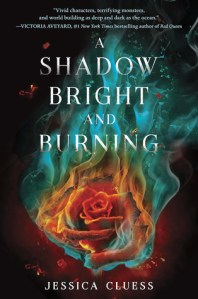
Book: “A Shadow Bright and Burning” by Jessica Cluess
Publishing Info: Random House BFYR, September 2016
Where Did I Get this Book: the library!
Book Description:I am Henrietta Howel. The first female sorcerer. The prophesied one. Or am I?
Henrietta Howel can burst into flames. When she is brought to London to train with Her Majesty’s sorcerers, she meets her fellow sorcerer trainees, young men eager to test her powers and her heart. One will challenge her. One will fight for her. One will betray her. As Henrietta discovers the secrets hiding behind the glamour of sorcerer life, she begins to doubt that she’s the true prophesied one. With battle looming, how much will she risk to save the city–and the one she loves?
Review: I featured this book back on one of my highlights posts, and low and behold it finally showed up on my library hold shelf! While I sped through the story and it did avoid most YA tropes that are immediate turn offs for me, I ultimately found myself slightly underwhelmed.
As the book description proves, this story is pretty typical young adult fantasy fare, right down to the special power being fire-related (why is it always fire??). I have to say, if I were an author, I’d be staying as far away as I could from anything that might leave my main character open to “girl on fire” comparisons to Katnis…but that’s just me. Further, the introduction of a million and one love interests, a secret life that she must hide, and a prophesy, completes the trope infestation. But, like I said, Cluess did do just enough to avoid falling completely into any one of these pitfalls.
Henrietta, first off, was a good narrator. She isn’t going to win any awards as the most exciting protagonists out there, but her voice was still interesting and she rarely had any “too dumb to live” moments that one sees too often. The setting, an alternate Victorian London that is under siege by a host of powerful magical entities, was creative, but also opened up the door for one of my biggest sticking points with the book.
There’s an inherent struggle when writing any book that has ties to actual history. The protagonist, especially a young woman character, needs to be true to her time, but the author still needs to create room for her to move. Too often, we have young women with ideas that are far too progressive, or who seems to too easily shuck off the constraints of her time period. So, here, I appreciated what Cluess tried to do. There are several moments where it is clear that Henrietta struggles with the mindset about women’s capabilities that is woven deep into this time period’s culture. However, ultimately, her path is just as easy, leaving the story feeling very awkward. And, while I appreciate the attempts to keep these biases realistic, there were almost too many of them, or they were awkwardly placed, undoing and often muddying the character’s own story arc.
For example, at one point, after Henrietta has already proven to herself and many around her that she is a powerful force to be dealt with, another character expresses a very misogynistic opinion to her, and she simply rolls over and agrees. Obviously, one show of force by a powerful young woman isn’t going to change the minds of everyone, but I would have liked to see the character’s own perspective on these things adjust accordingly as the book progressed and she gained more confidence in herself. A story of a young woman growing to appreciate her own strength and question what she has been told is the obvious route for a story like this, and ultimately, that’s where the narrative is going. But, as I said, these moments were still woven throughout the book in a very odd way that left me feeling off balance with regards to Henrietta’s actual character arc. It felt like the character’s growth was being sacrificed to continue the charade of her own insecurity (another one of my least favorite tropes: the character who must remain insecure just to garner compliments from those around them).
And, of course, there were the whiffs of a love triangle. The story avoids my biggest qualm with this trope, when it takes over the story in place of actual action, but it’s still there, and I don’t feel that it adds anything to the narrative itself. If it had been left out completely, I honestly feel like there would have been absolutely zero change to the story itself, and that’s never a good thing. And, due to this and my general wariness from being once burned, twice shy, it was hard to become fully invested in the many, many young men characters that surround Henrietta, as I have no idea which one will be the next love-triangle fodder in following sequels.
Ultimately, while the story was enjoyable and I was able to speed through it without any major hiccups, this book isn’t doing anything new for the genre. Almost every piece of it felt familiar and reminiscent of one or another young adult fantasy series. If you enjoy this type of story, then go ahead and read it. But if you’re looking for a new take on young adult fantasy, or are too burned out on some of these tropes (love triangles, special girl with special powers, limited world building), then you might want to give this one a pass.
Rating 6: While inoffensive, it was also slightly uncreative and had a few too many familiar pieces trying to pose as unique.
 Book: “Conjured” by Sarah Beth Durst
 Book: “A Brief History of Montmaray” by Michelle Cooper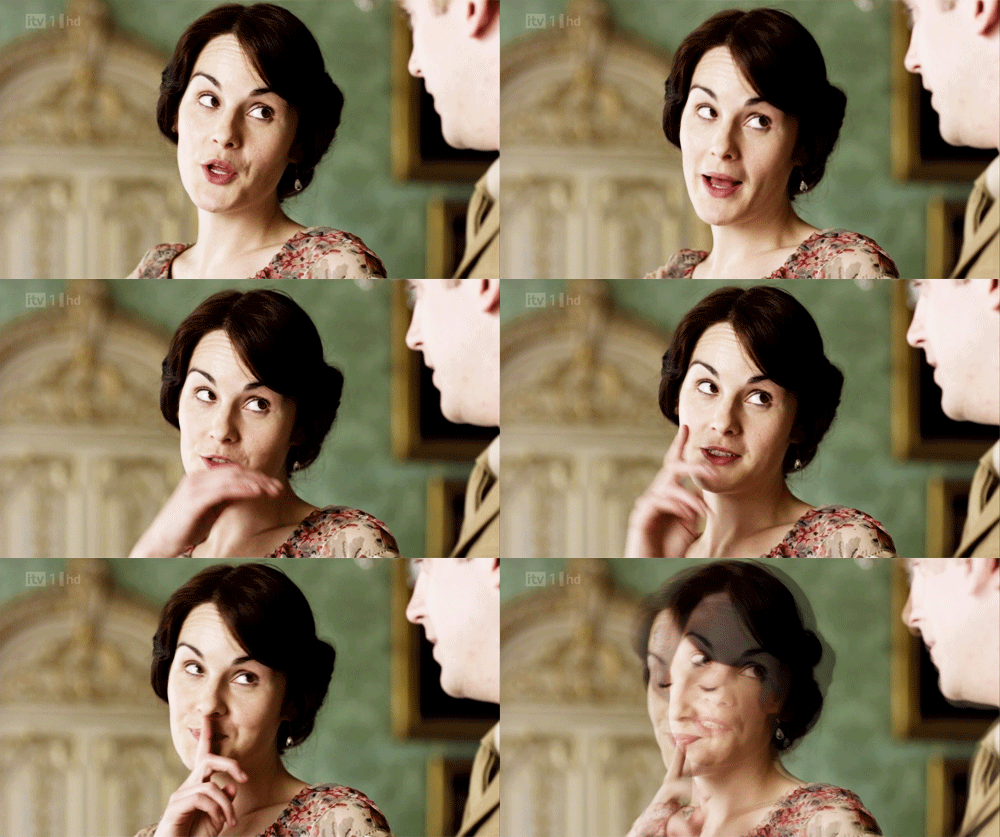

 Book: “The King of Attolia” by Megan Whalen Turner
 Review: “Vassa in the Night” by Sarah Porter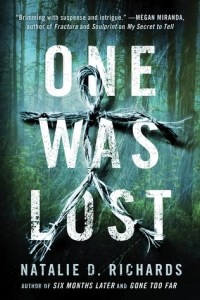


 Book: “The Girl Who Raced Fairyland All the Way Home” by Catherynne M. Valente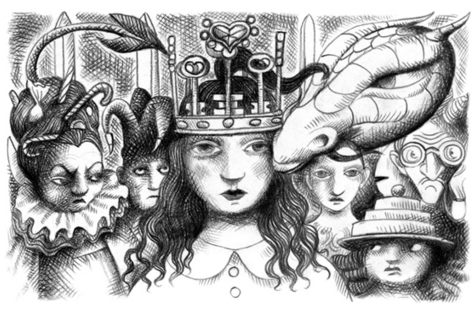
 Book: “The Women in the Walls” by Amy Lukavics
 Book: “The Queen of Attolia” by Megan Whalen Turner
 Book: “How To Hang a Witch” by Adriana Mather

 Book: “A Shadow Bright and Burning” by Jessica Cluess
 The Library Ladies