Serena’s Review: “The Dark Days Pact”

26061581Book: “The Dark Days Pact” by Alison Goodman

Publishing Info: Viking Books for Young Readers, January 2017

Where Did I Get this Book: from the library!

Book Description: June 1812. Just weeks after her catastrophic coming-out ball, Lady Helen Wrexhall—now disowned by her uncle—is a full member of the demon-hunting Dark Days Club. Her mentor, Lord Carlston, has arranged for Helen to spend the summer season in Brighton so that he can train her new Reclaimer powers. However, the long-term effects of Carlston’s Reclaimer work have taken hold, and his sanity is beginning to slip. At the same time, Carlston’s Dark Days Club colleague and nemesis will stop at nothing to bring Helen over to his side—and the Duke of Selburn is determined to marry her. The stakes are even higher for Helen as she struggles to become the warrior that everyone expects her to be.

Previously Reviewed: “The Dark Days Club”

Review: Ok, I haven’t ranted about a cover for a long time. But man. MAN! This one deserves a good rant. Not only is this cover truly awful on its own, but when you compare it to the first book’s cover, it just gets even worse.
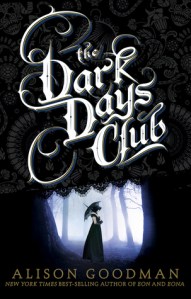
15993203

That cover is good. It’s not doing anything super brilliant or unique, but it’s getting the job done. We know this is a historical novel, and we get that there is some darkness involved in the story, likely fantasy-related. And then we have this new cover…The model looks ridiculous. The weird magical sword is bizarre (and hard to connect with anything in the book). And the whole thing looks like the type of book you’d scoff at in an airport. We’d all like to think that we don’t judge books by their covers, but we do. And this series was already criminally underappreciated, and I can’t imagine this change to cover art helped anything. Also, spoiler alert, it definitely DOESN’T improve with the third book. *sigh*

Lady Helen has forgone the life of marriage and respectability she had previously seen as her future. Instead, she is now a full-fledged member of the Dark Days Club, a secretive society that fights against demonic beings that lurk among the unwary. More to the point, she and her colleagues suspect that the Grand Deceiver is on the move, one of the most powerful and evil beings the Club has ever faced. But Lady Helen is also still in training, with much to learn not only about her own unique abilities, but how she is to balance her responsibilities to the society as well as her loyalties to her friends. Especially Lord Carlston, whose erratic behavior has set him smack dab in the cross hairs of the leadership in the Dark Days Club.

While this book was a bit more wishy-washy for me (not really a surprise for the dreaded “second book” in a trilogy), there were still several aspects of the series that I greatly enjoyed. For one, the pitch perfect mixture of historical regency “manners” story, flitting through ballrooms and strolls through parks with parasols, and magical adventure featuring some legitimately dark villains. Lady Helen must be given full credit as a well-drawn character who is capable of reading as believable in both these very different scenarios. What’s more, both versions of herself, socialite and powerful Reclaimer, are not two suits that fit well together. Those who know her as a well-bred lady first and foremost, question her ability to exist in an action-packed and dangerous world. Here, she rises to the occasion by learning to fight and donning an alter-ego as a young man. On the other side, her Reclaimer friends don’t see the importance or value that Helen does in maintaining a grip on her role as a woman in society. And here, she proves that a well-timed conversation with the right person can be just as valuable as pulling out a sword.

I still also very much like the world that has been imagined here. Reclaiming is a dangerous business, and we see that though Helen has great power, she still has much to learn to survive in this world. Not only that, the most successful Reclaimer must still deal with the negative side-affects of their work, which we see in Lord Carlston’s quick spiral into violence and madness. We also see that the Deceivers themselves can come with a wide variety of motives and ways of living in the world, some more destructive than others. There are also more than a few humans who prove that you don’t have to be a demonic being to be evil.

While I liked all of these general aspects, I did find myself struggling with much of the book. For having so much action and adventure, the pacing also felt very slow. This is a long book, and towards the middle I was becoming more and more tempted to skim along. This is partly due to Helen’s arc itself within the story. Yes, she is new to this world and still trying to figure out who to trust and how to align herself. But she was just so indecisive, trying to play a middle field that anyone a mile away could see as a fool’s quest from the start. She also falls victim to the unfortunate and all too common martyr complex, choosing to make incredibly stupid decisions rather than, I don’t know, communicate with her friends. And for heaven’s sake, it seems all too clear who and what the Duke of Selbourn really is. Even the most naive lady of the time would be side-eyeing a man like this so determinedly not being put off by the repeated refusals and strange revelations about his lady love.

So, while I still liked much of the story, it ultimately felt a bit too long, a bit too predictable, and a bit too clumsy with its main character. But, that said, I’m still all in for the third and final book. At the very least, I can’t wait to read about Lady Helen finally waking the hell up about some things that I’m sure most readers have already guessed.

Rating 7: Falls victim to “second novel syndrome” a bit, but still has enough going for it to pull readers in for the final story.

Reader’s Advisory:

“The Dark Days Pact” is included on these Goodreads lists: “Fantasy of Manners” and “YA Historical Fantasy” (though I wouldn’t classify this as YA).

Find “The Dark Days Club” at your library using Worldcat!

Kate’s Review: “You May Now Kill The Bride”

35603814Book: “You May Now Kill The Bride” (Return to Fear Street #1) by R.L. Stine

Publishing Info: HarperTeen, July 2018

Where Did I Get This Book: The library!

Book Description: Two sisters, divided by time. Each with a terrible resentment she can barely contain.

Two Fear family weddings, decades apart… Each bride will find that the ancient curse that haunts the Fears LIVES ON. It feeds off the evil that courses through their blood. It takes its toll in unexpected ways, and allows dark history to repeat itself.

In this all-new Fear Street story, family ties bind sisters together—till DEATH do they part.

Review: In time for Halloween, this week I am doing something a little different. Instead of reviewing a classic “Fear Street” book, I’m taking on the first book in R.L. Stine’s newest “Fear Street” series, “Return to Fear Street”! Just to make a note right off the bat: I am not going to treat “You May Now Kill The Bride”, or any other future “Return to Fear Street” books, like I’m treating my retro “Fear Street” re-read. Stine is approaching these books differently than he did back in the day, and therefore I am going to approach them like I would any other non-“Fear Street” novel.

“Fear Street” is back, guys, and for the most part it is not the “Fear Street” you remember from your youth. This is something of a second comeback for “Fear Street”, as before HarperTeen picked it up St. Martin’s Press did with books like “Party Games” and “The Lost Girl”. I’m not completely certain why a second reboot with a new publisher happened, but “You May Now Kill The Bride” is the inaugural novel. Now that publishers and authors know that teens are able/willing to read books that are more than one hundred and twenty pages long, and that have complex characters, “Fear Street” has to up it’s game. And “You May Now Kill The Bride” accepts that challenge, repackaging “Fear Street” for a modern teen audience.

There are two narratives in this book: the first is the story of Ruth-Ann and Rebecca Fear, two sisters in the 1920s who are part of the illustrious and wealthy Fear Family. Ruth-Ann is jealous of her beautiful and popular older sister, who is about to get married to the man that Ruth-Ann loves. As you can imagine, the wedding has disastrous results, all because of a family curse that the Fears have upon them. The second narrative is about Harmony and Marissa Fear, two sisters in modern times who are having similar problems. Marissa is about to get married to her high school sweetheart Doug, and while Harmony isn’t in love with Doug, she and Marissa have been at odds ever since Harmony messed up Marissa’s relationship with a different guy named Aiden. In a really horrific way, I should mention. The similarities don’t end there, however: not only is Harmony a witch, like Ruth-Ann was (seems that all Fears have the ability to be), but Marissa’s wedding is going to be at the same lodge that Rebecca’s wedding was. While this does sound like a pretty standard “Fear Street” tale (and in a lot of ways, it is, but more on that later), Stine has reworked the old set ups and tropes, and has improved upon the long trotted out formulas of the past.

The pacing is far more drawn out in “You May Now Kill The Bride”. Stine isn’t in any hurry to get to the action points, and he lets the characters slowly explore the scenes they are in just as he lets the exposition flow at it’s leisure. “You May Now Kill The Bride” isn’t rushing to get to action moments or cliffhangers, so when these moments do arrive they have more oomph. There is also more complexity to the plot, and the threads that exist between the 1920s story and the modern story take a lot more time to come together, with the hints and puzzle pieces being dropped throughout both timelines. Stine trusts his audience a bit more to be able to parse out the nuance and the implications, and because he trusts his readers, the book rarely feels like it’s being spoon fed. He also has a pretty good grasp on the fact that people like me, former “Fear Street” junkies turned horror aficionados, are probably going to pick this up, so little nods, winks, and references are dropped throughout the book. The one that actually made me shriek out was a character who was staying at the lodge, and what room was he in? Room 237.

giphy4
I love feeling in on the joke, sir. (source)

That isn’t to say that it doesn’t fall into familiar “Fear Street” traps. While I think that the characters are definitely more rounded in this book than previous characters have been, and while I did enjoy how Harmony was complex and sometimes morally ambiguous, there are still obvious and beaten down tropes in others. There’s the loutish uncle character we’ve seen before, the familiar sparring sister relationship, the clueless parents. And there are a number of huge plot holes, and confusing moments that I still haven’t quite wrapped my head around. There are even still some kind of dumb cliffhangers at the end of various chapters (though he has definitely toned it down from the past). But these weaknesses are kind of just what you have to expect to come with the territory when it comes to “Fear Street”, and in some, odd ways it vaguely adds to the charm of this reboot, if only because it feels familiar and comforting that some things never change.

I didn’t really go in expecting much from “You May Now Kill The Bride”, and I ended up enjoying it. If this is what “Fear Street” is going to be for this new generation of teenagers, I am very excited for the kind of horror fans it is going to nurture.

And with that, Horrorpalooza has come to an end! From me to you, I am hoping that you all have a FABULOUS Halloween tomorrow!

Rating 7: Solid for a new “Fear Street” novel, “You May Now Kill The Bride” is a new return to an old favorite series that exceeded many of my expectations. It’s fun, it’s creative, and it’s giving a new feel to an old favorite.

Reader’s Advisory:

“You May Now Kill The Bride” isn’t on any Goodreads lists, but it should quite obviously be on “Best Fear Street Books”, and, for funsies, “Books With a Wedding Theme”.

Find “You May Now Kill The Bride” at your library using WorldCat!

Kate’s Review: “The Witch Elm”

39720991Book: “The Witch Elm” by Tana French

Publishing Info: Viking, October 2018

Where Did I Get This Book: I received an ARC from NetGalley.

Book Description: Toby is a happy-go-lucky charmer who’s dodged a scrape at work and is celebrating with friends when the night takes a turn that will change his life – he surprises two burglars who beat him and leave him for dead. Struggling to recover from his injuries, beginning to understand that he might never be the same man again, he takes refuge at his family’s ancestral home to care for his dying uncle Hugo. Then a skull is found in the trunk of an elm tree in the garden – and as detectives close in, Toby is forced to face the possibility that his past may not be what he has always believed.

A spellbinding standalone from one of the best suspense writers working today, The Witch Elm asks what we become, and what we’re capable of, when we no longer know who we are.

Review: Thank you so much to NetGalley for providing me with an eARC of this novel!

I first read Tana French with her first “Dublin Murder Squad” novel “In The Woods” around the time it came out. I liked it enough, but didn’t really move on until I read “Faithful Place” a few years later. I like French’s style, and I like her characters, but the mysteries themselves never really intrigued me as much as I wanted them to. But when I read about her newest novel, “The Witch Elm”, I was immediately interested in the premise. A man returns to a childhood family home and while he’s there a skull is found in a wych elm. Given that it sounds a little like the ‘who put Bella in the wych elm?’ crime, I wanted to see what French would do with it given her prowess for eeriness and dark characterizations.

“The Witch Elm” is a mystery about how this skeleton got into this tree, as well as how our main character Toby is connected to it. But ultimately it is more a story about family, memory, and how our perceptions of reality can change. Toby is an unreliable narrator not in that he is deliberately hiding facts from the reader, but in that he has gaps in his memory because of time and because of a traumatic brain injury sustained at the start of the book. French did a very good job of integrating the burglary and attack into the plot without making it feel purely plot driven, as there was a slow build up to it and then a sustained period of immediate consequences after that lingered well before the main drive of the plot at Toby’s Uncle Hugo’s home. And since Toby is constantly questioning his own memory, and his potential culpability in regards to the body in the tree, the reader also has to wonder whether or not we are following an innocent bystander caught up in a murder, or the murderer himself. But French is also very adept at presenting other characters who could also have a hand in murder, for many realistic and believable reasons. I quite enjoyed the mystery and seeing where it was going to go next.

I also very much enjoyed the family dynamic that Toby had with those around him, from his Uncle Hugo to his cousins Susanna and Leon. While the relationship with Susanna and Leon was a bit strained, be it because of their potential to be suspects to their differing views on how they should be dealing with their uncle to baggage from the past, it felt very real for a family with various dysfunctions. And Toby’s relationship with Hugo is quite lovely, as Hugo is dying of a brain tumor and Toby, having his own medical set backs and problems with cognition, really connects with him. They all did feel like a real family with it’s ups and downs, and this aspect of the book was probably the strongest for me.

I think that the main quibbles I had were with the length of the story. It takes a little bit of time to get started, for one thing, and while I understand why it does (as mentioned above, French is careful to make the attack and break in feel like more than just a device to get Toby’s mind foggy), I felt like it dragged its feet a bit. I found myself tempted to skip ahead to the family estate, and while I didn’t do that I do think that it took just a little too long to get all of the set up into place. And then it went on a bit longer than it had to, with a tacked on moment at the end that didn’t feel lit it needed to be there. I don’t wish to spoil it so I won’t say what it is here, but a new moment of conflict with very dire consequences happens well after we’ve found out the solution to the Wych Elm mystery at hand. And I didn’t quite understand why it had to happen at all. It felt unnecessary and it didn’t add much to the plot.

But all that said, Tana French is still an author who knows how to write an atmospheric mystery with some fascinating characters. “The Witch Elm” was a fun detour from her “Dublin Murder Squad” series, and I will be very curious to see if she is going to write more stand alone novels down the line, because this one stood on it’s own two feet pretty handily.

Rating 7: While there was a compelling mystery and family story at it’s heart, “The Witch Elm” took a bit too long to get going, and lagged longer than it had to.

Reader’s Advisory:

“The Witch Elm” is included on the Goodreads lists “Autumn Seasonal Reads”, and I think it would fit in on “Popular Family Secrets Books”.

Find “The Witch Elm” at your library using WorldCat!

Kate’s Review: “Bombshells United: American Soil”

37489649Book: “Bombshells United (Vol. 1): American Soil” by Marguerite Bennett, Marguerite Sauvage (Ill.), Marcelo DiChiara (Ill.), and Siya Oum (Ill.).
Publishing Info: DC Comics, July 2018

Where Did I Get This Book: The library!

Book Description: The DC Bombshells unite in this collection BOMBSHELLS UNITED VOL. 1, continuing the hit franchise!

Author Marguerite Bennett (DC BOMBSHELLS, BATWOMAN) unites the women of DC BOMBSHELLS in an alternate history tale with Wonder Woman on the front lines of battle.

The Bombshells are back in an all-new series! As our new tale begins, the year is 1943 during WWII, and Wonder Woman is called to Arizona for help by two young girls named Cassie Sandsmark and Donna Troy! The girls’ friends and families are being displaced from their homes and forced into internment camps! To save them, can Wonder Woman fight against the same people she once fought alongside?

To make matters worse, Clayface has infiltrated the camp and is disguised as loved ones to throw Wonder Woman off. Collects issues #1-6.

Review: Thus, we being with the first collection of the final series of DC Bombshells. I’m still livid and bitter that this series was cancelled, but I’m going to see it through and enjoy it/support it until the very end. What I found most fascinating when I read about the “Bombshells United” series is that this one isn’t going to just look at the ills that foreign nations committed during WWII, but also the rotten things that happened on the home front, and in the country that The Bombshells swore to protect. To me, it’s refreshing that Marguerite Bennett decided to turn scrutiny on the United States for this next arc, because we did some absolutely shameful stuff during WWII. The big theme of “Bombshells United: American Soil” is that of Executive Order 9066: Japanese Internment. And given that we seem to have forgotten our own history, it’s an important reminder that we are not unfamiliar with grievous civil rights abuses. Especially since we seem to be on the path to repeating them.

We get to see Wonder Woman back at the forefront at the start of this new series, and it is always a breath of fresh air to see her. Diana Prince is truly one of the most pure and good DC Superheroes, and it felt fitting that she would be the Bombshell to be confronting the evils of the Japanese Internment. It allows us as a reader to measure up our very imperfect (and in this case horrendous) policies to Wonder Woman as the ideal we should strive for. But what makes it a bit more interesting is the introduction of Donna Troy and Cassie Sandsmark, two Wonder ladies in their own right (both of them filling the Wonder Girl role at different times). Cassie and Donna in this both have vested and personal interests against the Japanese internment, as they are both Japanese American (though Cassie is white passing, she still would have been imprisoned based on the law). You throw in Emily Sung and Yuri and Yuki, and you have a group of marginalized people who are participating in the dissent and the resistance, which in turn makes it so Wonder Woman doesn’t act solely as a white savior. It’s pretty well done, and I liked the dynamic that Bennett created between them and Wonder Woman (as they eventually form to become The Wonder Girls) that allows them to fight against heinous domestic policy. In fact, at the end of this arc in the collection, Bennett lists a great number of resources people can look up regarding the Japanese Interment (along with some additional resources about how Indigenous peoples were treated during this time; Dawnstar does show up, and while I liked how powerful and important she was I’m a LITTLE afraid that Bennett is kind of falling into the ‘magical Indian’ trope with her).

HOWEVER, there were a few stumbling moments in this series to me. The first involves the introduction of Clayface. He is the face of antagonism in this series, as he’s a former soldier who is very in favor of the internment. It all comes back to him seeing the American Ideal that must be protected at all costs, and he is obsessed with Wonder Woman because to him, that’s what she represents. This in and of itself is a very intriguing concept and metaphor for blind nationalism. But my problem is less to do with that and more to do with the pay off. For those who don’t want to know, we have our usual

16693958
(source)

Clayface, of course, sees the light through compassion, empathy, and the selfless sacrifice of Wonder Woman. This does two things: it makes it so the Wonder Girls get a little bit more to do in their own story (which is fine), but it also trades in one really well done and rounded character at this point for five new characters who are brand new to the story and not very complex as of yet. Donna is the exception, but the rest of the Wonder Girls as of now could VERY easily get lost in the crowd, which is a similar problem with the Bat Girls in previous issues. Speaking of the Bat Girls, the story of Harvey Dent going from villain to ally all through the power of love has basically been regurgitated with The Wonder Girls, as now Clayface is fighting on the side of good. We’ve seen this already! And I want to see more of that kind of thing with Harvey, if I’m being honest! Oh, and it happens with Baroness Paula van Gunther, as she ALSO shows up for about three seconds to say that SHE TOO has seen the error of her ways! WHY? In execution it’s because of Dawnstar, but in terms of why it has happened characterization wise, that remains to be seen. The good news is that Wonder Woman isn’t gone for good, as she has pretty much reappeared by the end of the collection (SORT OF, she’s kind of become a hybrid of Diana and Donna, it’s complicated), but it definitely feels like she may be stepping aside. Which I have a lot of feelings about.

On top of that, it has become very clear that even MORE Bombshells are going to be added to this universe. The heartening thing about that is that Bennett really wants to give all these awesome ladies their due, but the worrying aspect is we are getting VERY close to fantasy bloat territory here. I worry that by adding all these characters, they REALLY won’t be able to shine properly because they will always be competing for page time. Especially since the series was so unceremoniously cancelled before it could go as far as it wanted to. But hey, there is some good news in this slew, and I mean SLEW, of new faces.

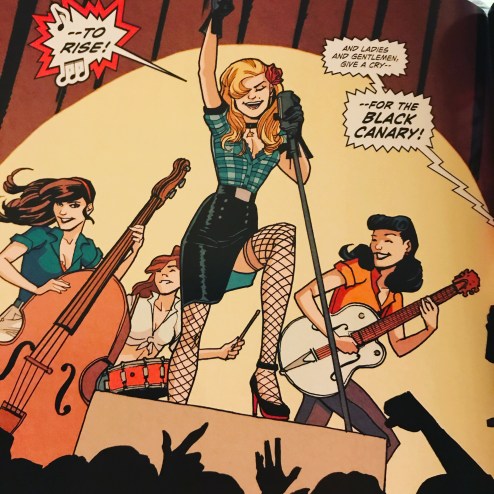
BLACK CANARY IS HERE!!!!!

IMG_2350
Looking good, Dinah! (source: DC Comics)

So overall, BOMBSHELLS UNITED was an important collection with an important story, but I’m starting to worry that this series is getting overcome with the number of characters it has. I really don’t want it to get bogged down. But that said, I’m excited to see where it goes next!

Rating 7: An important message and mostly responsible storytelling kicks off this new Bombshells series, but some of the recycled themes and explosion of new characters was a bit harder to swallow this time around.

Reader’s Advisory:

“Bombshells: United (Vol.1): American Soil” is included on the Goodreads lists “If You Liked Agent Carter, Try…”, and “Historical Fiction About Japanese Internment Camps”.

Find “Bombshells: United (Vol.1): American Soil” at your library using WorldCat!

Previously Reviewed:

Kate’s Review: “We Sold Our Souls”

37715859Book: “We Sold Our Souls” by Grady Hendrix

Publishing Info: Quirk Books, September 2018

Where Did I Get This Book: I received an ARC from NetGalley

Book Description: A new novel of supernatural horror (and pop culture) from the author of Horrorstor, My Best Friend’s Exorcism, and Paperbacks from Hell.

In the 1990s, heavy metal band Dürt Würk was poised for breakout success — but then lead singer Terry Hunt embarked on a solo career and rocketed to stardom as Koffin, leaving his fellow bandmates to rot in rural Pennsylvania.

Two decades later, former guitarist Kris Pulaski works as the night manager of a Best Western – she’s tired, broke, and unhappy. Everything changes when she discovers a shocking secret from her heavy metal past: Turns out that Terry’s meteoric rise to success may have come at the price of Kris’s very soul.

This revelation prompts Kris to hit the road, reunite with the rest of her bandmates, and confront the man who ruined her life. It’s a journey that will take her from the Pennsylvania rust belt to a Satanic rehab center and finally to a Las Vegas music festival that’s darker than any Mordor Tolkien could imagine. A furious power ballad about never giving up, even in the face of overwhelming odds, We Sold Our Souls is an epic journey into the heart of a conspiracy-crazed, paranoid country that seems to have lost its very soul…where only a girl with a guitar can save us all. 

Review: A special thanks to NetGalley for sending me and eARC of this book!

My musical heart deftly belongs to New Wave and Punk music, but I have indeed dabbled in the wonders of metal, specifically Norwegian Black Metal bands like Mayhem and Darkthrone. So with my slight knowledge of some history of the evolution of black metal (thanks, Last Podcast on the Left!) I was all the more intrigued by Grady Hendrix’s new horror novel “We Sold Our Souls”. Given how much I thoroughly enjoyed “My Best Friend’s Exorcism”, I had high hopes that his newest work would be a similar reading experience.

giphy6
But with more corpse paint. (source)

We follow Kris, a former heavy metal musician whose life has gone off the rails. She used to be a founding member of gritty club band Dürt Würk that was on the edge of stardom, only for one night that has haunted her ever since to throw them all off track. Now Kris is working at a Best Western, and her former friend and bandmate, Terry Hunt, has found stardom through Nu Metal with a band called Koffin. Kris is a fairly typical Hendrix protagonist, in that she is flawed and damaged, but scrappy as hell. Her passion for metal is apparent from the get go, but Hendrix never falls into any familiar tropes that other less skilled authors may have implemented. Kris isn’t a sexy bad girl with dyed hair and a snarly attitude, nor is she too edgy for her own good (because ‘edgy’ is obviously how a woman metal head would be). On the contrary, she’s older, she’s a bit used up, and she’s somewhat unlikable, but she also has a heart and a soul and a drive to reclaim her past and the success that she assuredly is owed. Her love of the genre is thrown into every page, with quick and dirty history lessons tossed in here and there to give her a serious grounding within her place and her motivations. Hendrix is great at tossing in the pop culture without being overt about it, so it feels organic and natural as opposed to slapped on for the sake of it. Her journey of reconnecting with her bandmates, and then figuring out that they are in danger because of an ever present dark force that goes back to the night the band broke up, is a fun journey that has a lot of moments of pathos, be it about lost friendships, the unfairness of the music industry, or loving something so much and just not quite achieving a life within in no matter how hard you try. Kris’s story in this regard absolutely worked for me.

What didn’t work as well were the actual horror aspects of this book. As it says in the description, Kris’s soul was sold to a demonic entity so that Terry could succeed. It isn’t as simple as a Mephistopheles kind of deal, as Hendrix makes his own mythos and runs with it. While I appreciate the creativity here, I think that Hendrix does falter a bit when it comes to the horror elements of his books. There were scenes with various demonic beings, creatures, and forces that were meant to scare and unsettle, but every time we interacted with them it felt a little bit forced. Some of the scariest moments had nothing to do with the demons, and more to do with everyday horrors that felt plausible and completely realistic. For example, there is a scene where Kris has found herself in an underground pipe system, and can’t go backwards, only forwards, not knowing if the pipe is going to dead end out, or if she is going to get stuck. THIS was the part of the book that had my heart racing, not seeing someone get torn to pieces by possessed followers of Terry. Hendrix’s true strength is within the heart he gives his characters, and if this book had just been about a former band member confronting the person who did her wrong, without the supernatural elements, it would have been just as lovely and effective. But that doesn’t say much about the horror elements, now does it.

All that said, I did enjoy reading “We Sold Our Souls”, and think that Hendrix has once again delivered an entertaining and heartfelt book. Now if you’ll excuse me, I’m going to go blast some Darkthrone on a loop for a bit and just get lost in the music that he so lovingly brings to life within the pages of this book.

Rating 7: A fun love letter to heavy metal, “We Sold Our Souls” has a lot of strengths, but also falls into familiar traps when Hendrix tries a little too hard to be scary.

Reader’s Advisory:

“We Sold Our Souls” is fairly new and not on any Goodreads lists as of yet. But if you are interested in metal music, “Lords of Chaos” may be of interest to you, and it would also fit in on “Books for Metalheads”.

Find “We Sold Our Souls” at your library using WorldCat!

Kate’s Review & Giveaway: “The Good Demon”

38945097Book: “The Good Demon” by Jimmy Cajoleas
Publishing Info: Amulet Books, September 2018

Where Did I Get This Book: I was sent an eARC from NetGalley and a printed ARC from Amulet Books.

Book Description: True Detective meets The Exorcist in this gripping YA mystery debut about one girl’s exorcism—and her desperate quest to reunite with her demon

Clare has been miserable since her exorcism. The preacher that rid her of evil didn’t understand that her demon—simply known as Her—was like a sister to Clare. Now, Clare will do almost anything to get Her back. After a chance encounter with the son of the preacher who exorcised her, Clare goes on an adventure through the dark underbelly of her small Southern town, discovering its deep-seated occult roots. As she searches for Her, she must question the fine lines between good and evil, love and hate, and religion and free will. Vivid and sharp, The Good Demon tells the unusual story of friendship amid dark Gothic horror.

Review: I want to extend a special thank you to both NetGalley and Amulet books for sending me an eARC and a print ARC of this book.

I know that Halloween Season isn’t QUITE here yet (though honestly, once Labor Day hits I’m thinking about ghosts and ghouls and all things horror), but I just couldn’t wait for Horrorpalooza to pick up “The Good Demon” by Jimmy Cajoleas. I was fortunate enough to get approved for a copy on NetGalley, but then imagine my extra delight when I was at Serena’s and she said that we’d received a print ARC of it as well.

giphy5
Me flailing in glee when I got this book. (source)

I’d been hearing about this novel since this past summer, when it was all over my twitter feed during BookExpo. While I’m not usually someone who is super into demonic possession/exorcism stories (with a FEW exceptions, as you guys probably remember), the idea of a girl wanting her exorcised demon BACK was one that piqued my interest. The demonic possession stories I like usually buck some of the familiar tropes that are associated with the genre, but ultimately they usually still maintain the demon=bad concept. “The Good Demon” sounded like it was going to take that down as well, so picking it up I went in with some lofty expectations.

What struck me most about “The Good Demon” was Clara, our main character who is desperate to find her demon, Her, again. In many demonic possession and exorcism stories, the person being possessed is usually passive, and a secondary character that the main character is trying to help. Clara defies these trends, as not only is she the main character, she is incredibly active and entrenched in ‘doing’ within the narrative. Her reasons for wanting Her back are understandable because of how Cajoleas has written her: her father’s death was a traumatic moment in her life, her mother is an addict who has effectively picked her new husband over her own daughter, and Clara has no other friends or support systems in her life now that Her has been exorcised. While there were ample opportunities for Clara to fall into stereotypical traps of a ‘bad girl’, Cajoleas always kept her from teetering, and kept her grounded in a realistic personality. She always felt like a realistic teenage girl who has seen some shit, and her voice was authentic and natural. As she uncovers the mysteries of the small, closed minded town that she is living in, you see her go up against obstacles that aren’t always because of supernatural or occult driven issues; many of the problems she faces are because of misogyny and prejudice that is entrenched within an Evangelical culture. I liked seeing her interact with basically all of the characters, be it within flashbacks to her friendship with Her, to the fraught and sad relationship with her mother, to the complicated and bittersweet relationship she takes up with Roy, the son of the preacher who performed the exorcism. Roy is a particularly interesting foil to her, as her sullenness is matched with his fundamentalist driven optimism, and her bitterness towards his father is in stark contrast to Roy’s submission to him. It was a relationship that felt very teenager-y, with both of them making decisions that feel right in the moment, but may have fallouts that they cannot see.

I had more mixed feelings about the actual possession story. I loved the flashbacks to Her, and I liked seeing Clara and Her interact, and have a complex relationship. It sets a groundwork that makes it very believable that Clara would go as far as she would go to get Her back. That was a very fresh take on possession, that perhaps this ‘demon’ wasn’t necessarily a ‘bad’ thing. But by the end, it becomes pretty clear that the full deconstruction of the ‘possession’ story isn’t going to happen. It gets part way there, I will give it that, but ultimately it didn’t take a bold stance on redefining ‘demons’, and why people like Roy’s Dad might conflate something that empowers or emotionally supports girls and women as ‘demonic’.  I appreciate that ultimately Cajoleas is promoting the idea that you should feel secure within yourself and to be able to stand on your own, but I think that this message ultimately undercuts the positive female friendship message that I was hoping we would get from it.

While it didn’t QUITE live up to my expectations, “The Good Demon” was a fast and fun read, and it’s absolutely one that dark fantasy and horror fans should pick up during the upcoming spooky season. And I have good news, because it’s your chance to own this new dark fantasy novel! We’re giving away the print ARC of “The Good Demon”! This giveaway is open to U.S. Residents only, other terms and conditions are within the giveaway information in the link below.

Enter the Giveaway Here!

Rating 7: An interesting take on the possession/exorcism story with an interesting protagonist, “The Good Demon” deconstructs common tropes to a point, but falls a little short in it’s deconstruction by the end.

Reader’s Advisory:

“The Good Demon” is coming out on Tuesday, September 18th, and isn’t on many relevant Goodreads lists yet. That said, I think it would fit in on “Demons, Mystics, and Black Magic”, and “Small Towns and Secrets”.

Find “The Good Demon” at your library using WorldCat!

Serena’s Review: “Strange Grace”

32824058Book: “Strange Grace” by Tessa Gratton

Publishing Info: Margaret McElderry Books, September 2018

Where Did I Get this Book: Edelweiss

Book Description: Long ago, a village made a bargain with the devil: to ensure their prosperity, when the Slaughter Moon rises, the village must sacrifice a young man into the depths of the Devil’s Forest.

Only this year, the Slaughter Moon has risen early.

Bound by duty, secrets, and the love they share for one another, Mairwen, a spirited witch; Rhun, the expected saint; and Arthur, a restless outcast, will each have a role to play as the devil demands a body to fill the bargain. But the devil these friends find is not the one they expect, and the lies they uncover will turn their town—and their hearts—inside out.

Review: I requested this book a whim based on the book description and, frankly, the beautiful cover art. I mean, c’mon, that’s one attractive book cover! But the description also appealed to me, seeming to follow some standard fairytale modes of storytelling as well as focusing on the love and friendship between three characters. While I did feel there were a few stumbling blocks and surprises along the way, I think “Strange Grace” will be a sure fire hit for many audiences.

A small village has existed in a state of semi-paradise for many, many years. No one is ever injured or killed. But this idealic life is bough with a steep price. Every seven years, the town folk must sacrifice a boy to the dark woods to buy themselves another period of safety. But this year is different, falling only a few years after the last sacrifice, a new boy is already being demanded. Three friends find themselves searching for an answer to what seems like an impossible choice, and they and their town will never be the same again.

The strongest aspect of this book for me was the writing and the tone. While I don’t typically read straight up horror novels, I like dark fantasies. A few that come to mind as similar to this are “The Beast is an Animal” and the “Raven Cycle” series. Each delve into magical elements, but instead of fairies and unicorns, there’s a lot more dark shadows and tree branches shaped like fingers scraping at our heroes’ backs. So, too, here. ‘”Strange Magic” fully embraces its own dark themes and doesn’t pull back from exploring some fairly graphic body horror. While I enjoyed most of the creepiness here, there were bits that were a stretch for me, so go in with that warning.

So, too, this story also aligns similarly to those previously mentioned fantasy novels in writing style. The writing is lyrical, whimsical, and edged with unexpected sharp points at times. For those looking for straight forward writing this might be a bit off-putting, but if you are a fan of the writing found in books like the “Raven Cycle,” this is very well might appeal to you. I for one found it lovely and was immediately caught up in the weave of the story.

What did hold me up, however, was the pacing. While the writing was beautiful, it didn’t do quite enough to distract me from the fact that the first 40-50% of the story was very slow-moving. What’s worse, that slowly built arc was never fully resolved. The story moved as if a climax of sorts was coming, but instead the author chose to use some odd time jumps that leap-frogged right over some of the parts of the story that I had been most looking forward to experiencing. It was an odd choice that made the story feel choppy and unresolved.

The other stumbling block was the characterization of our main trio. There is a lot of diversity to be found in this group of individuals, and if you’re looking for a fantasy story that features non-binary leads, than this is a great book to find that. But other than representation alone, I never felt fully invested in any of the three characters. I understood their individual motivations and histories, but as the story unfolded, I could never quite latch on to how they were processing their own experiences. There was a lot of “telling” and not much “showing” as far the relationships between them all went. One relationship is already established when the book begins, and not much is done to expand that much further, even though events occur that would at the very least warrant a re-evaluation of how each members is experience said relationship. Instead, we are simply told that characters feel a certain way and don’t see much internal dialogue about how they are processing these changes. Another relationship between another two is established with only a few brief conversations, but based on that, we are meant to understand that they, too, have deep feelings. In the end, as far as characters go, I was simply left wanting more.

Overall, I like much of the writing and fantasy/horror aspects of the book, but I struggled more with the pacing/structure and the characters themselves. However, if you like dark fantasies and are looking for a diverse cast of characters, “Strange Magic” is definitely worth a look!

Rating 7: Beautiful writing and truly creepy dark fantasy was a bit hindered by a clunky plot and characters who never felt like they quite connected with reader or with what was happening around them.

Reader’s Advisory:

“Strange Grace” is a new title so it isn’t on many Goodreads lists, but it is on “2018 YA Books with LGBT Themes.”

Find “Strange Grace” at your library using WorldCat!

Serena’s Review: “Seafire”

378225341Book: “Seafire” by Natalie C. Parker

Publication Info: Razorbill, August 2018

Where Did I Get this Book: Edelweiss

Book Description: After her family is killed by corrupt warlord Aric Athair and his bloodthirsty army of Bullets, Caledonia Styx is left to chart her own course on the dangerous and deadly seas. She captains her ship, the Mors Navis, with a crew of girls and women just like her, whose lives have been turned upside down by Aric and his men. The crew has one misson: stay alive, and take down Aric’s armed and armored fleet.

But when Caledonia’s best friend and second-in-command just barely survives an attack thanks to help from a Bullet looking to defect, Caledonia finds herself questioning whether or not to let him join their crew. Is this boy the key to taking down Aric Athair once and for all…or will he threaten everything the women of the Mors Navis have worked for?

Review: There’s no doubt about it, this summer has been the summer of the pirates as far as my reading list as gone. It’s as if all of the authors and publisher all got together and decided that now, now was the time, just long enough for memories of the more recent “Pirates of the Caribbean” to fade away and soon enough that there is still nostalgia lingering from the very beginning. My feelings on the last several pirate-themed books have been very hit and miss, and the last was quite the miss indeed. But where “These Rebel Waves” failed, “Seafire” was there to redeem this budding genre!

Caledonia and her best friend trusted a Bullet once. And from that trust game death and destruction upon both of their families. Since then, the two women have gone on to gather together a crew of other women and a ship of their own. Together, they fight back against the Bullet’s reign of terror, and Caledonia is still looking for revenge on the boy who betrayed her. But when a Bullet ends up on their ship after saving Caledonia’s first mate, Cal is given a chance to trust again. Should she take it for the chance at new and potentially live-changing information?

So first off, thank god! A pirate story that actually has pirates and takes place on the sea! “Seafire” is just what it claims to be, as far as its action and world-building go. There are ships, a sea battles, and pirates, and all of the best type of action that one looks for in action adventure stories like these. It’s all fairly standard, but in this case, that’s a compliment.

What makes this book stand out from the rest is the cast of characters made up of the found family crew of women. The story delves into great themes such as loyalty, friendship, and of course, the love a family, be it your born family or chosen. It also explicitly deals with the challenges that family present to each other and the ways that they can let each other down, and that this applies to both born and chosen families. Each come with their own struggles, and navigating these relationships can be perilous.

Beyond these broader topics, I genuinely cared about a pretty large group of characters introduced in this book. I typically find myself only invested in the 1-2 main characters in most books, but here I found myself rooting and worrying for a much larger group. There is also good representation in this group with a solid f/f relationship between two secondary characters. But all of this investment also came with a price, since the book doesn’t shy away from the tragedies that can befall characters who regularly engage in sea battles.

As for the main characters, I mostly liked our main character, Cal. The fact that I only “mostly” liked her is also probably a point in the book’s favor, highlighting the attention given to creating a flawed, real teenage girl. Cal is by no means perfect. She is brave and determined, but all too often she makes choices based on her own personal need for revenge. She is slow to give up prejudices, but is also completely devoted to the group of women she has taken under her wing. Towards the end, I did begin to struggle more and more with her character and some of her decision-making, but I was on board enough with the rest of the story to not let myself get too bogged down in that.

There is a minor subplot of romance in the story, but I was fine with this part not taking up more time. The true relationships in this book are those built on sisterhood and friendship. As for the pacing, the book does have a slower start, but picked up quite a lot towards the end, so some patience is required when getting going. But, other than that, “Seafire” was a solid book full of badass women doing badass pirate-y things!

Rating 7: Delivers on its concept with an exciting pirate story full of strong women. The main character was at times not the most likable and it started slow, but was worth it in the end!

Reader’s Advisory:

“Seafire” is on these Goodreads lists: “YA Female Ensemble Casts” and “Lady Pirates.”

Find “Seafire” at your library using WorldCat.


Serena’s Review: “Lies You Never Told Me”

36547961Book: “Lies You Never Told Me” by Jennifer Donaldson
Publishing Info: Razorbill, May 2018

Where Did I Get this Book: BookishFirst

Book Description: Gabe and Elyse have never met. But they both have something to hide.

Quiet, shy Elyse can’t believe it when she’s cast as the lead in her Portland high school’s production of Romeo and Juliet. Her best friend, Brynn, is usually the star, and Elyse isn’t sure she’s up to the task. But when someone at rehearsals starts to catch her eye–someone she knows she absolutely shouldn’t be with–she can’t help but be pulled into the spotlight.

Austin native Gabe is contemplating the unthinkable–breaking up with Sasha, his headstrong, popular girlfriend. She’s not going to let him slip through her fingers, though, and when rumors start to circulate around school, he knows she has the power to change his life forever.

Gabe and Elyse both make the mistake of falling for the wrong person, and falling hard. Told in parallel narratives, this twisty, shocking story shows how one bad choice can lead to a spiral of unforeseen consequences that not everyone will survive.

Review: Whaaaat? A thriller review by Serena and not Kate?! That’s right, people! Buckle up and get ready for a good look at what it’s like for a fantasy reader to read a YA thriller! Spoiler alert: probably not that different, though much more naive as far as predicting twists. I’m sure Kate would have figured this one out, but oh well!

The story is told in dueling, first-person narratives. In one, we follow the story of Gabe, a teenage boy who, after being involved in a car accident and rescued by a mysterious girl, finds himself struggling to escape the clutches of his mean-girl girlfriend, Sasha, to pursue this new savior girl. The other narrative follows Elyse who on a whim auditions for a role in “Romeo and Juliet” and quickly finds herself entangled in a complicated web revolving around a person she knows she should avoid.

Both stories were engaging, however I did find myself more pulled into Elyse’s plot. Her struggles and circumstances were a bit more relatable to the average reader, while Gabe’s story could verge a bit into the unbelievable, particularly where his ex-girlfriend Sasha was involved. It was a bit hard to believe that she had so little oversight in her life that she could pull off some of the very unbalanced stunts she did.

The story is told in first-person, which I thought worked fairly well for the story. At times it did make the writing feel a bit too simple, and I found myself wanting a little more depth in the descriptions of scenes. This is a typical limitation of this writing tense, however, so it wasn’t overly distracting, just not my preferred type. And I do think that keeping it in first-person allowed readers to more fully identify with the mental and emotional struggles that Elyse and Gabe go through.

I also very much liked the diversity of the cast. Gabe is Mexican American and his sister has Down Syndrome. I especially loved the relationship between Gabe and his sister, and it was great to see a relationship like that portrayed on the page. The story also tackled several other topics such as poverty, addiction, and, of course, abusive romantic relationships.

As I’ve said, I haven’t read too many thrillers. So, while I know that there will some twist coming, I wasn’t able to spot this one. Maybe fans more familiar with the genre would have had an easier time of it, but I was genuinely surprised. Specifically, I was left wondering throughout most of the book how Elyse’s and Gabe’s storylines were tied together, and it was exciting to finally find out in the end. However, as surprising as it was, it also had an affect on how I viewed the rest of the story in the end, and I’m not sure it was a change for the better.

Ultimately, I very much enjoyed “Lies You Never Told Me” even though it falls outside of my usual genre preferences. I’m sure it will be a hit for regular thriller fans as well!

Rating 7: While thrillers are probably never going to be my favorite, I found this book a compulsive read and a fun reminder of what this genre has to offer!

Reader’s Advisory:

“Lies You Never Told Me” is on these Goodreads lists: “Secrets and Lies” and “2018 YA Mysteries.”

Find “Lies You Never Told Me” at your library using WorldCat.

Kate’s Review: “Vox”

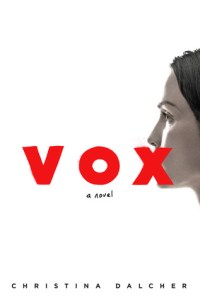
37796866Book: “Vox” by Christina Dalcher

Publishing Info: Berkley, August 2018

Where Did I Get This Book: I was sent an eARC from the publisher via NetGalley.

Book Description: Set in an America where half the population has been silenced, VOX is the harrowing, unforgettable story of what one woman will do to protect herself and her daughter.

On the day the government decrees that women are no longer allowed more than 100 words daily, Dr. Jean McClellan is in denial–this can’t happen here. Not in America. Not to her.

This is just the beginning.

Soon women can no longer hold jobs. Girls are no longer taught to read or write. Females no longer have a voice. Before, the average person spoke sixteen thousand words a day, but now women only have one hundred to make themselves heard.

But this is not the end. 

For herself, her daughter, and every woman silenced, Jean will reclaim her voice.

Review: A special thanks to Berkley Publishing and NetGalley for sending me an eARC of this book!

People keep asking me if I have watched “The Handmaid’s Tale” yet, and as of now I still haven’t. I know that it’s supposed to be super super good, and I know that a number of my friends really love it, but I haven’t been able to bring myself to watch it because it really just feels ‘too real’ right now. So I will admit that when I was sent the book “Vox” by Christina Dalcher from Bentley, I also had that moment of cringe, not because I doubted that it was good, but because I felt that it would touch on a raw nerve. Perhaps a few years ago I would have said that the idea of the American Government stripping women of all rights, and limiting their daily speech to 100 words total, as preposterous. Now? I’m not as certain about it. But I did eventually decide that it was time to buckle down and read it, and once I did, as terrifying as the themes were, I had a hard time putting it down.

The first big win of this book is that Dalcher creates a fairly realistic pathway for how American Society can change it’s societal values and ideals in such a drastic way in such a comparatively short amount of time. Our protagonist, Jean, is in her early forties, and she can trace the origins of this super right wing group, The Pure Movement, within her lifetime dating back towards her college years. Through flashbacks involving Jean and other people in her life, mostly her old friend and feminist advocate Jackie, we can see how a woman who became a renowned expert in neuroscience eventually ended up as a housewife with no rights and a counter on her hand to track her words. Dalcher presents a slow take over of right wing politics and ideals, and the apathy of ‘that will never happen here’ that does nothing until it is far too late. Dalcher also presents a fairly realistic progression of how Jean’s family is affected by the law, and how the men in her life betray her in different ways even though they also ‘love’ her (I hate putting that in quotations, but I feel like I have to). Be it her husband Patrick, who is a flunky to the government who doesn’t REALLY believe in the law, but does nothing to stop it, or her son Steven, who at seventeen is drinking the Kool Aid of The Pure Movement and becoming a traitor to his mother and general decency.

d8b2afb044495e7f49faddae3a8580b5-sound-of-music-movie-soldiers
I was consistently picturing THIS motherfucker whenever Steven was on page. (source)

Because of these things the plot was gripping and engrossing. I was horrified by the things that the Pure Movement does in this book (be it to women, LGBTQIA people, or other marginalized groups), but Jean was so compelling and so easy to root for that I kept reading, needing to know if she was going to overcome the persecution, if not completely overthrow it.

There were a couple of things that didn’t quite work for me. I did feel that the pacing was a bit off by the end, as I felt that I suddenly wrapped up very quickly. There were a couple of inconsistencies within the ending that felt like they went against a few of the characters and their personalities, and while I do believe that some people can change their minds about certain things (I’m trying so hard to be vague), to go from one side of opinion to an opinion on the other VERY extreme side felt uncharacteristic and hard to swallow. I can’t really divulge much more without spoiling anything vital, but just trust me when I say it was a leap. That and I feel that some characters who did nasty things got too easy of a pass. I’m kind of over giving people who do crappy and disturbing and oppressive things the benefit of the doubt, so while I like me a redemption arc to a point, I’m not sure that I can stomach one that gives something of a pass to bigots, even if they were slowly brainwashed. 

Still and all, “Vox” is an entertaining read that give enough darkness to feel allegorical, but enough hope that you don’t want to just crawl into a hole and never come back out. I think that this could be a hot read come Fall, and think that anyone frustrated or scared may be able to work out some feelings by trying it out!

Rating 7: A gripping and addicting thriller that feels all too real at the moment, “Vox” was a disturbing, and somewhat cathartic, read about women being silenced by their own government and those who fight back.

Reader’s Advisory:

“Vox” is included on the Goodreads lists “Patriarchal Dystopias”, and “Best Books To Read When You Need A Reminder of Why Feminism Is Important”.

Find “Vox” at your library using WorldCat!