Serena’s Favorite Reads of 2020: Picks 10 through 6

Another a year, another almost impossible task trying to each choose our Top 10 Reads of the year! For me, the word “favorite” is an important part of this list. As I go through the last year’s worth of reading, I often found that some books would strike particular chords within me more deeply than others, even if, quality-wise, another book might be stronger. Of course, this just makes it all that much harder to put them in any order. But here it goes! Today I’m going to countdown my favorites reads, ten to six. And since it’s the end of the reading year, don’t forget to enter our “12 Days of Christmas Giveaway!”

#10 “The Body in the Garden” by Katharine Schellman

“The Body in the Garden” Review

This was a book that definitely took me by surprise this last year. I had fairly randomly requested it on NetGalley just based on the fact that it was a historical mystery. The cover looked kind of derpy and I hadn’t heard of the author. But then it absolutely blew me away! Not only do I just love this type historical mystery featuring a crime-solving lady, but this one broke a lot of the molds and tropes that I had begun to tire of from other similar series I’ve been reading recently. Our main character is a widow, for one thing, and one who has only fairly recently lost her husband and is still clearly mourning him. There is, of course, a gentleman friend introduced in the story, but given the circumstances, the development of any romance will look very different and there was none in this book. I also liked the inclusion of a more racially diverse cast with one of the main character’s friends being a POC young woman. The book also featured a solid mystery and found ways for a lady such as Lily Adler to solve the crime without falling into too many traps of anachronisms in behavior for a woman of the time.

#9 “Driftwood” by Marie Brennan

“Driftwood” Review

I also read the first in Brennan’s popular “The Memories of Lady Trent” series this year, but it was this, her recently released stand-alone novel that really captured me. It’s a strange little book about essentially the afterlife where worlds go to finally die after whatever apocalyptic event took them out in the first place. There, these worlds shrink slowly and whatever people remain, must make due in a patchwork place made up of all sorts of different peoples and worlds. It’s a place where change is everything, except for one man, Last, an individual who no one seems to really know but who has been around forever. The story jumps through various people’s tales of their interactions with Last, and through these tales, we explore a taste of the wide variety of worlds and peoples that make up Driftwood. It was such a unique story, I don’t think I’ve ever read anything like it. It’s definitely a must-read for fans of science fiction/fantasy.

#8 “Mexican Gothic” by Silvia Moreno-Garcia

“Mexican Gothic” Review

This was a joint review for both Kate and I, and we both enjoyed it immensely. I think I’ve included a book by Moreno-Garcia on my last two “Top 10” lists, as well, so that should demonstrate my general love for this author. All of her books have been completely different, a Regency romance/fantasy, a Mexican folklore/fable, and here we have a Gothic horror story also set in Mexico. I never know what I’m going to get, but I do know that it’s always good. This book was definitely the creepiest thing I’ve read by her. It plays with all of the Gothic horror tropes in really creative ways and even has tinges of other horror stories like “The Yellow Wallpaper.” The setting is so cool, a rural town in Mexico during the 1950s, and Noemi is an excellent heroine. Fans of the author will definitely enjoy this, and as Kate can attest, horror-lovers will likely enjoy it, too.
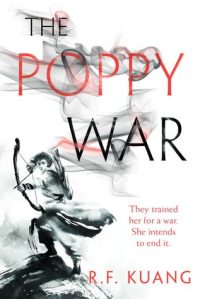
#7 “The Poppy War” by R. F. Kuang

“The Poppy War” Review

I’m currently reading the second book in this series, “The Dragon Republic,” and it’s bringing back all the memories of why I enjoyed the first book so much. Don’t get me wrong, both the fist and the second are tough reads, but that’s also because Kuang doesn’t shy away from the absolute horror that is warfare, especially the terrible impact it has on innocents caught in the crossfire. The series also explores the burdens that warfare places on its soldiers. Rin’s story is dark, heavy, but also completely compelling. She’s just the sort of character you can’t help but fall in love with while also wanting to constantly shake her and say “No, don’t do that!! Can’t you see??” I also really enjoy the interesting magic system and pantheon of gods that are introduced. Magic comes with a heavy, heavy price, and we see Rin’s struggle with it lead her into incredibly challenging moral areas. The third book came out this fall, so I’m a bit late to this series, overall. But fantasy lovers, especially military fantasy lovers, are sure to enjoy this.

#6 “A Memory Called Empire” by Arkady Martine

“A Memory Called Empire” Review

I think this was the most straight-up science fiction story I read this year, and it’s only fitting that it made it’s way onto this list. It’s also another one that came out a bit ago and for whatever reason, I didn’t get to until this fall. I blame long library audiobook wait lists for delaying the pure joy that was my experience reading this book. I really loved everything about it: the interesting technology that is introduced, the various cultures that we see, the exploration of topics such as colonialism, empire, and reform. And, of course, our main character Mahit Dzmare is lovely. Taking on the role as a new ambassador to the sprawling Empire, Mahit’s story is one of untangling a complex web of politics and opposing motivations. Through her eyes, we, too, get to explore the tensions that come between both loving and fearing such an immense force as an Empire that is slowly sprawling out across the galaxy and subsuming all it finds in its path. The second book in the series is coming out this spring, and I have an e-ARC all queued up, so this time I’ll be more on top of things!

So that’s ten through six. Next time I will give a countdown of my top five. What have been some of your favorite reads of 2020?

Kate’s Favorite Reads of 2020: Picks 10 Through 6

Another a year, another almost impossible task trying to each choose our Top 10 Reads of the year! Like past years I won’t be including re-reads, and I also realized that sometimes my opinion of a book could change and evolve after I had read it, so some surprises may be up near the top. Boy let me tell you it was a HARD year to pick ten, as it was a year of HIGH quality books. And since it’s the end of the reading year, don’t forget to enter our “Twelve Days of Christmas Giveaway”! Today I’m going to countdown my favorite reads, ten to six. 

10. “Superman Smashes the Klan” by Gene Luen Yang and Gurihiru (Ill.)

“Superman Smashes the Klan” Review

I love me some DC as you all know, and I am still super thrilled that Gene Luen Yang will take on various titles every one in awhile. But “Superman Smashes the Klan” is above and beyond his other Superman stories, if only because of how seamlessly he weaves in themes of social justice and anti-racism along with the Superman stuff. Not only do we have some well done and nuanced takes on the difficulties of immigrant families when it comes to dealing with racism and the expectations to assimilate, we get a fantastic juxtaposition with Superman, who has his own identity hurdles that he’s facing. And who doesn’t love seeing a stand in for the Klan get their asses handed to them by one of the most beloved superheroes of all time?

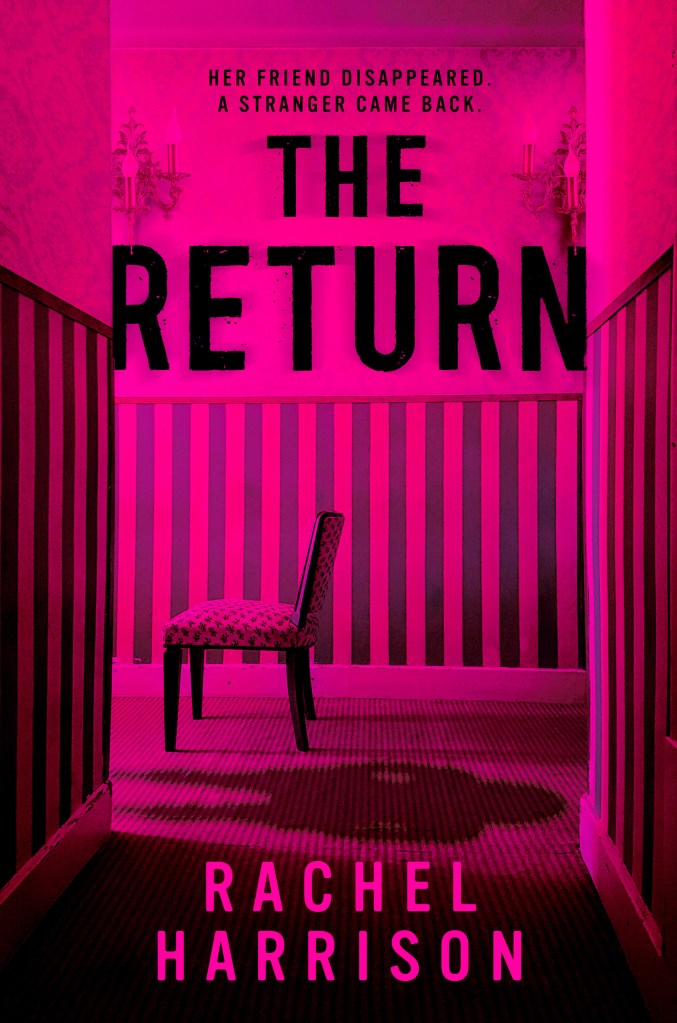
9. “The Return” by Rachel Harrison

“The Return” Review

Weird hotel? Check! A strained female friendship? Check! Creepy imagery and a totally unsettling horror undercurrent that ties these things together and more? Check mate! “The Return” is an unsettling horror story about a missing woman who suddenly reappears, and her closest (but waning) friend realizes that something about her is… off. But what “The Return” is really about is how sometimes friendships slowly melt away, and how we have to come to terms with letting go of something that is no longer giving us what we need, even though it brought us joy in the past. It’s a horror story that had the right amount of pathos, frustration, and bittersweetness to go with some really scary moments.

8. “Mexican Gothic” by Silvia Moreno-Garcia

“Mexican Gothic” Joint Review

A Gothic horror story set in the rural Mexican countryside, starring a Latina woman who is battling an unknown malevolent force that is inside the home of a white, Colonialist family? Hot damn, now THAT sounds interesting! And “Mexican Gothic” certainly was a wild and disturbing read that subverted a lot of Gothic tropes. Noemí enters the strange and dark setting of My Place and introduces us to some twisted body horror, a screed against colonialism, and a genuinely haunting and atmospheric tale of terror that continues the grand tradition of using horror to address issues of social justice. And now Silvia Moreno-Garcia is on my must read list of authors.

7. “A Good Girl’s Guide to Murder” by Holly Jackson

“A Good Girl’s Guide to Murder” Review

While sometimes popular YA thrillers don’t quite catch my attention as much as I want them to, “A Good Girl’s Guide to Murder” completely exceeded my expectations and became one of my favorite thrillers of 2020! Plucky teen Pip’s obsession with a local murder case sucks her into a tangled web of suspects, threats, and lies, and as she works to clear the name of a suspect whose family is still grieving, she finds twists, turns, and lots of surprises. I was completely enthralled by this book, and I cannot WAIT for the sequel, which will be arriving in April (and has already been pre-ordered from my favorite indie children’s book store)! “A Good Girl’s Guide to Murder” is a hoot and a half.

6. “The Only Good Indians” by Stephen Graham Jones

“The Only Good Indians” Review

2020 was the year I finally got in gear and read Stephen Graham Jones, and his newest horror novel “The Only Good Indians” was quite the story to start with. This folk horror tale about four Indigenous men who did something terrible on a hunting trip, and then become hunted themselves, burrowed into my brain and kept me thinking about it for days afterwards. But again, along with the horror comes a story about identity, tradition, grief, and trauma, and the heart and hope that glimmer amongst the despair and destruction was incredibly emotional and touching. A truly visceral and haunting horror tale that may not be for the faint of heart, but should be read by horror fans everywhere.

So that’s ten through six. Next time I will give a countdown of my top five. What have been some of your favorite reads of 2020?

12 Days of Christmas Giveaway!

Happy holidays fellow book lovers! And in honor of this time of year when presents  giving is everything, we’re hosting our fourth annual “12 Days of Christmas” Giveaway. But, tricky us, it’s actually two giveaways, each one comprised of six books from our preferred genres. Read on to see what books are included in each prize package and enter for your chance to win! Both giveaways are open to U.S. residents only and end on January 1.

Serena’s Prize Package

“The Wolf in the Whale” (My Review)

“The Affair of the Mysterious Letter”

“The Good Luck Girls”

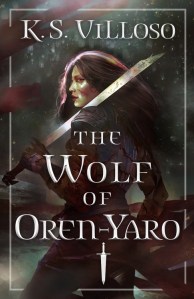
“The Wolf of Oren-Yaro” (My Review)

“The Ikessar Falcon” (My Review)

“Once Upon a River” (My Review)

Click here to enter!

Kate’s Prize Package

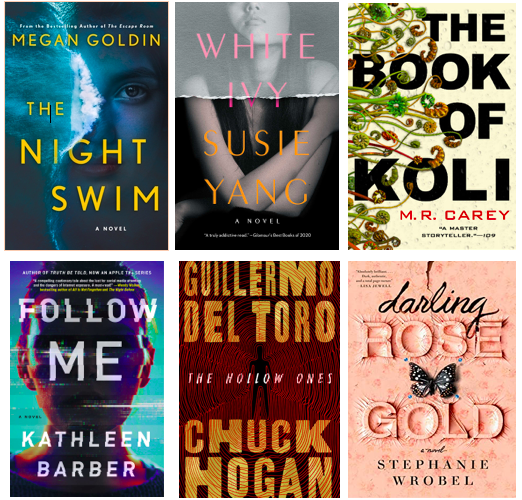
“White Ivy” by Susie Yang (My Review)

“Follow Me” by Kathleen Barber (My Review)

“The Book of Koli” by M.R. Carey (My Review)

“The Night Swim” by Megan Goldin (My Review)

“The Hollow Ones” by Guillermo del Toro and Chuck Hogan (My Review)

“Darling Rose Gold” by Stephanie Wrobel (My Review)

Click HERE To Enter!

My Year with Jane Austen: “Persuasion” [2007]

Movie: “Persuasion”

Release Year: 2007

Actors: Anne Elliot – Sally Hawkins

Captain Wentworth – Rupert Penry-Jones

Mr. Elliot – Tobias Menzies

Comparison – “Indulge your imagination in every possible flight.”

I really like this adaptation of “Persuasion.” I think it captures the overall tone of the book really well, and introduces a useful trick of the having Anne journal throughout the story to get at the deeper, emotional points of her story. Really, the book is all about the emotional arcs for both of our main characters. The actual events taking place around them are almost secondary. So between having the inner monologue from Anne showing her feelings throughout and the inclusion of more scenes of Wentworth on his own, we get a much better progression of this aspect of the story.

I also think the casting was much, much better here than in the 1995 version. Other than perhaps Mrs. Croft who I preferred in the older movie (though I have no problems with the Mrs. Croft here either), I liked every secondary actor they used here better than the ones from that movie. I think I also like the Sally Hawkins and Rupert Penry-Jones better, too, but I didn’t have a problem with the other actors there either. I particularly think they improved on the casting for Sir Walter and Elizabeth (they do away with the silly emotional outbursts that the other movie did), the two Musgrove sisters (Louisa seems more lively and a better fit for the character described in the book), and Captain Benwick. The Benwick we see here is all the emo-esque, dour young man that we’d expect. While it’s a fairly significant change to the story, I thought it also worked well having Anne and Benwick have the conversation about men, women, and loving longest. It fit in really well with their general conversation about morose poetry.

Heroines – “I hate to hear you talk about all women as if they were fine ladies instead of rational creatures.”

I really like Sally Hawkins’ version of Anne in this adaptation. Unlike the 1995 version, this Anne is clearly a do-er from the very beginning and comes across as less withdrawn overall. She’s first introduced as busy at work taking stock of the house and preparing it to be let. While her father and sister laze around, Anne is the one actually getting things done. This idea is quickly reinforced with the way this movie tackles the injury to Mary’s son. Anne quickly jumps in and diagnoses the problem, a disjointed collar bone, and then just as quickly fixes it. I’m not sure how realistic this is, really, but I think it serves a good purpose of distinguishing Anne’s character as someone who puts others before herself, is very humble, etc. (all the things that would lead her to turn Wentworth away originally), but is also ready and able to jump in when she sees a need. This then neatly sets up her later actions during Louisa’s fall.

I also like what she does with the journaling/breaking of the third wall with the camera. It’s kind of a tough thing to sell, having to look directly at the camera to express deeper emotions. It’s all well and good to pull a Jim from “The Office” and roll your eyes at the camera all the time for humorous effect. Hawkins has to express heartbreak and all of its stages while staring directly at a camera. Seems really challenging, but I think she does a good job. It really helps tell Anne’s story. As so much of it is internal and deeply personal, it’s a hard thing to convey in a movie. I don’t think the 1995 version quite managed it. But this method works well, though I think in a lesser actress’s hands it could also have gone very badly.

Heroes – “What are men to rocks and mountains?”

I also like Rupert Penry-Jones as Captain Wentworth. He doesn’t quite have the same grizzled look of a Navy sea captain that Ciaran Hinds brought to the role, but I think he also fits better to the immediate, natural charm that Wentworth was described as having. It’s easy to see why everyone around him would be immediately taken in by him. He also does a good job of balancing the humor and good manners that would attract the Musgrove girls while also giving brief glimpses into the lingering anger and hurt feelings that still bubble just below the surface whenever he’s around Anne. It’s played in just the right way that the viewer feels like only they and Anne would really catch the double-meaning behind some of his looks and words.

I also really like how this movie devotes a good amount of time to showing us scenes between Captain Wentworth and Captain Harville that give us even more insight into Wentworth’s mindset. We see the moment he realizes he may have trapped himself into an engagement with Louisa and all the horror that comes with it. And we also get a great scene later between these two when he goes on about his awakening to his true feelings about Anne. I think this was a big improvement on the way the 1995 version handled Wentworth’s story. There, his change of heart kind of seemed to come out of nowhere. Here we get to see the progression and get to use a lot more of the romantic statements and sentiments that Wentworth expresses in the book (there most of it comes out in the final few chapters after the two have reconciled, but I think it works better in a movie the way they do it here).

There’s also a really small moment where Captain Wentworth first introduces Anne to Captain Harville as “Miss Elliot.” Harville than clarifies, “Anne Elliot?” making it pretty clear that Wentworth has talked to Harville about her in the past. It’s these small things that I think really bolster this version.

Villains – “I do not want people to be very agreeable, as it saves me the trouble of liking them a great deal.” 

While I think that Tobias Menzies does a good job as Mr. Elliot, he’s definitely one of those actors who is type cast into villain roles. Anyone familiar with the actor can pretty easily guess that whenever he shows up, he’s not going to be a great guy. He does have good chemistry with Sally Hawkins, however, and plays up the charm of this character very well. I think there’s also something particularly unctuous about his version of the character that makes the reveal of his motives very understandable. Unlike the 1995 version, this movie sticks with the idea that he’s only really in it for the title. It’s a harder sell to modern audiences, but I think Menzies’ version of the character sells this idea pretty well. It’s easy enough to believe that he’d be all in on getting his hands on a title like this.

Romance – “A lady’s imagination is very rapid: it jumps from admiration to love, from love to matrimony in a moment.”

I also like the romance in this movie. It feels like we get a lot more of it, being more privy to Anne’s inner thoughts and seeing/hearing more from Wentworth. It’s also interesting that this movie chose to include the scene with Wentworth asking Anne about whether she and Mr. Elliot will want the Crofts to move out when they become married. It’s a scene that wasn’t in the book but was added in the 1995 movie. I think it works even better here, since Anne at least as the presence of mine to more clearly refute these rumors about her and Mr. Elliot.

Unfortunately, this then leads into one of the more ridiculous sequences in the movie where Anne runs around Bath trying to chase down Captain Wentworth. It’s a bit much. She starts out running, gets caught up by Mrs. Smith who shares the truth about Mr. Elliot. Then she runs some more. And some more. Then she gets the letter from Captain Wentworth delivered by Captain Harville. Then she reads it and, you guessed, it runs some more. I think the point is to illustrate how determined she has become in the years since she was persuaded to give him up, but it becomes a bit over the top. It isn’t then helped by the ridiculous kissing scene where it takes like 30 seconds for the two to actually get there. It’s pretty awkward, really, and I’m not sure why they went this route.

It’s definitely a change from the book and probably not that believable (who really thinks that Sir Walter would sell his home to a Navy captain?), but I do like the last scene where Wentworth surprises Anne with the purchase of her home. Throughout the movie, we’ve seen that Anne values her family’s home much more than the rest of them do, so it’s a nice little button on this aspect of the story to have the happy couple settle there in the end.

Comedy – “For what do we live, but to make sport for our neighbors, and laugh at them in our turn?”

Sir Walter is both funny and horrible in this version. I think the actor pretty perfectly captured the casual snobbery of the character, and his delivery on some of the classic lines (like the shrubberies being approachable) is great. And then to later see him and Elizabeth tripping all over themselves to be introduced to the Dalyrimples. Good stuff.

I also really liked Mary in this version. She’s sniveling and silly which just offsets her moments of extreme pride all the better. I particularly like the scene towards the end where she arrives in Bath and declares it to be her last hope. And then, with a burst of pure energy and healthy, jumps in to say hello to her father and invite herself to a dinner party. She also is very easy to dislike, especially in the scene where she’s essentially whining her way into Anne’s role as nursemaid to Louisa, yet again claiming that it is all due to “her condition.”

Fun facts – “Life seems but a quick succession of busy nothings.”

Tobias Menzies and Joseph Mawle (Captain Harville) appeared on “Game of Thrones.” I obviously recognized Menzies (yet again playing an unlikable character in that show), but I didn’t recognize Mawle as Benjen Stark.

Anne’s costuming is deliberately left simple in Bath to reflect the fact that she dislike the city and does not actively join into society or embrace the culture there.

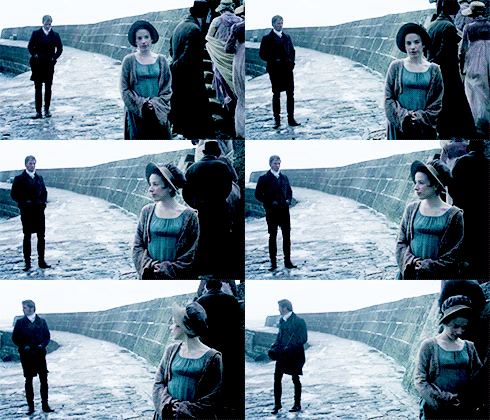
Best Movie Gif/Meme: “I dearly love a laugh.”

I like the little moments like this that highlight the ongoing tension between the two throughout throughout the movie.

This rounds out my official year of reviewing Jane Austen books/adaptations. I’m planning one bonus post in two weeks, however, to cover a few other adaptations that didn’t make the list for full reviews.

Kate’s Review: “Secret Santa”

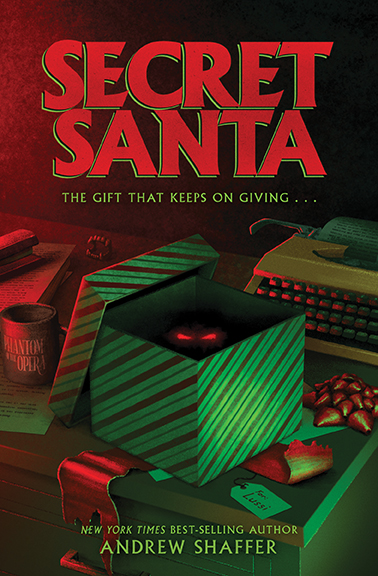
Book: “Secret Santa” by Andrew Shaffer

Publishing Info: Quirk Books, November 2020

Where Did I Get This Book: I received an eARC from the publisher via NetGalley.

Book Description: The Office meets Stephen King, dressed up in holiday tinsel, in this fun, festive, and frightening horror-comedy set during the horror publishing boom of the ’80s, by New York Times best-selling satirist Andrew Shaffer.

Out of work for months, Lussi Meyer is desperate to work anywhere in publishing. Prestigious Blackwood-Patterson isn’t the perfect fit, but a bizarre set of circumstances leads to her hire and a firm mandate: Lussi must find the next horror superstar to compete with Stephen King, Anne Rice, and Peter Straub. It’s the ’80s, after all, and horror is the hottest genre.

But as soon as she arrives, Lussi finds herself the target of her co-workers’ mean-spirited pranks. The hazing reaches its peak during the company’s annual Secret Santa gift exchange, when Lussi receives a demonic-looking object that she recognizes but doesn’t understand. Suddenly, her coworkers begin falling victim to a series of horrific accidents akin to a George Romero movie, and Lussi suspects that her gift is involved. With the help of her former author, the flamboyant Fabien Nightingale, Lussi must track down her anonymous Secret Santa and figure out the true meaning of the cursed object in her possession before it destroys the company—and her soul.

Review: Thank you to Quirk Books and NetGalley for providing me with an eARC of this novel!

Happy Holidays, everyone! I know that it’s kind of a weird holiday season for SO MANY reasons, but I hope that everyone is making do with the circumstances and being safe as well as finding joy and togetherness. Even if that means doing it via FaceTime. In our house we’re wrapping up Hanukkah and getting ready to have a solitary Christmas, which means I’m digging into books when I’m not eating all the latkes. If you’re like me and like it when the horror genre and Yuletide combine, enjoying movies like “Gremlins”, or “Black Christmas” (more the old one. The new one was cathartic, but also SUPER hamfisted), then “Secret Santa” by Andrew Shaffer may be the kind of book you want with your holiday cheer.

Is this a scene from “Gremlins”, or is this me stuffing my face with Christmas cookies? (source)

Shaffer is known for his satire and cheeky humor, so it’s safe to say that “Secret Santa” isn’t the scariest book you could read this time of year. Luckily, I wasn’t expecting it to be terrifying, so that worked for me, for the most part. I liked Lussi, our ambitious protagonist, as she fits the ‘ambitious woman in a man’s world’ mold in a way that adds to the story. You understand her wants and her determination to succeed in the publishing industry, especially as a young woman in the 1980s. I liked her sarcasm and her wit, and I felt that her characterization fit into the story as a whole, reflecting a snide and cutthroat time and place. The mystery as to what is going on at Blackwood-Patterson when things start to go awry is a slow build, and it reads less like a horror novel building up the dread and more like a strange whodunnit. By the time we circle back to the actual origin on what is going on (I don’t want to spoil TOO much, but do know that occultism and Nazis do enter into it. Take that as you will), the lack of scares was a little frustrating. That isn’t to say that there aren’t creepy elements involved with this tale. Let’s just say that if you don’t like dolls, you will find a lot to be scared about. But overall, the scary elements are very obviously harkening to a very specific time in horror publishing, when pulp paperbacks were the rage and strange concepts weren’t hard to come by (I seriously suggest looking into “Paperbacks from Hell” by Grady Hendrix if you want more information on this). This will work for some people, but it may leave others in the cold.

But what worked the most was that this book is clearly a love letter to 1980s horror fiction, be it paperback pulp horror novels or films that involve tiny beings that wreak havoc and gaslight those around them into thinking they are losing their minds. You can tell that Shaffer really loves the horror of this era, and the winks and nods to the genre are fun for someone like me who has an affection for it. Sometimes the 80s references in general got a little heavy handed, but you feel like you’re in on the joke, so I was able to deal with it with minimal eye rolling. This book is very clearly a love letter to a very specific kind of fiction, and I, for one, really loved seeing it all unfold. You can just feel the fun he was having writing this book, and frankly, that’s charming as hell.

“Secret Santa” is a tongue in cheek ode to horror paperbacks with a festive holiday bow placed right on top. If you’re looking for some holiday creeps, it could be the right book to have by the fire with a glass of eggnog.

Rating 7: Entertaining and sardonic, “Secret Santa” has some Christmas fun as well as some creepy moments if you don’t like dolls. It’s not terribly scary, but it has more than enough 80s horror nostalgia to make up for it.

Reader’s Advisory:

“Secret Santa” isn’t included on any Goodreads lists as of yet, but it would fit in on “Creepy Christmas” to be sure!

Find “Secret Santa” at your library using WorldCat, or a local independent bookstore using IndieBound!

Serena’s Review: “Knight of the Silver Circle”

Book: “Knight of the Silver Circle” by Duncan M. Hamilton

Publishing Info: Tor Books, November 2019

Where Did I Get this Book: NetGalley

Book Description: Three dragons wreak havoc throughout Mirabay–eating livestock, killing humans, and burning entire villages to ash. It was nearly impossible to kill one, using a legendary sword and the magic of the mysterious Cup; to tackle three, Guillot dal Villerauvais will need help.

The mage Solène fears having to kill again; she leaves Gill to gain greater control over her magic.

The Prince Bishop still wants Gill dead, but more than that, he wants the Cup, and he’ll do whatever he has to to get it, even sending his own daughter–a talented thief and assassin–into the dragons’ path.

As secrets mount on secrets and betrayals on betrayals, both Guillot and Solène face critical decisions that will settle not only their own fate but that of all Mirabaya.

Previously Reviewed: “Dragonslayer”

Review: While I didn’t absolutely love the first book in this series, I could still appreciate what it was trying to do and the type of approachable, sword and magic fantasy story it was telling. The characters, while fairly predictable, were also well-drawn and familiar enough that I was definitely not set against continuing with the series. On a whim, I requested this one a while back. It took a while to get to it, but here we are! Overall, while it’s still not my favorite fantasy series ever, I did like this one better than “Dragonslayer.”

After returning with a dragon’s head, Gill has re-established himself as a dragonslayer of note. Parting ways with Solene, the two are set to go about their lives again, not expecting to see one another again. But it soon becomes apparent that dragons aren’t done with them let. Three new ones begin pestering the countryside, drawing Gill out once again and now against worse odds than ever. For her part, Solene fears what is coming and is still working on gaining full control of her powers. But there may not be time as the Prince Bishop continues to make his own moves.

So, overall, this was very similar to the first book. It’s your tried and true classic fantasy story where the heroes are heroic, the mages struggle with their magic, and the bad guy does ad things. But in a lot of ways I think it also improved on the first book. For one thing, part of what I liked about the first book was the inclusion of POV chapters from the dragon’s perspective. Here we get more of that, which I still think is pretty unique, but we also dive more into dragon culture. We learn the variety of dragons out there, how some are just rampaging beasts essentially, but how others are quite intellectual and have a sort of society amongst themselves. I definitely continued to be interested in this angle of the story.

As far as Gill goes, I still think that he’s a bit of a cookie-cutter hero in that he’s almost exactly what you’d expect. In my review of the first book, I struggled with the lack of exploration into his emotional arc dealing with the loss of his family. But I was glad to see here that his struggles with alcoholism weren’t simply swept under the rug after the first book. Yes, he had success again as a dragonslayer and is largely coming into his own again as an esteemed fighter. But we still see him struggle with his past and the part of him that has dwelled in booze for so long.

I also liked that we got more from the villain of the story, the Prince Bishop. In the first book, he, too, was fairly one dimensional. Here, we see more from him and learn more about his own motives and how far he is willing to go against our heroes. It gave him enough depth to make him more of an interesting character to follow in his own right.

The writing is also still solid and Hamilton is clearly an adept storyteller. However, the series continues to feel a bit one note. And, like I said in my first review, it still seems as if it’s not bringing much new to the genre as a whole. There’s definitely an appeal and an audience for this type of book, but I also like fantasy stories that surprise me in some way or another. A good example would be Michael J. Sullivan’s “Age of Myth” series. That, too, is a fairly typical fantasy adventure story with elves, dwarves, humans, and dragons. But the story also takes several surprising turns, focusing in on characters you originally cast as side-characters and doing away with some whom you thought would be around for the long haul and occupying important roles in the story. But, all of that said, fans of classic fantasy will still likely enjoy this second entry from Hamilton.

Rating 7: Improves on the first novel, but still a bit bland to really hit home for me.

Reader’s Advisory:

“Knight of the Silver Circle” isn’t on any other Goodreads lists other than November 2019 Book Releases.

Find “Knight of the Silver Circle” at your library using WorldCat!

Kate’s Review: “Superman Smashes the Klan”

Book: “Superman Smashes the Klan” by Gene Luen Yang and Gurihiru (Ill.)

Publishing Info: DC Zoom, May 2020

Where Did I Get This Book: I own it.

Book Description: The year is 1946, and the Lee family has moved from Chinatown to Downtown Metropolis. While Dr. Lee is eager to begin his new position at the Metropolis Health Department, his two kids, Roberta and Tommy, are more excited about being closer to the famous superhero Superman!

Tommy adjusts quickly to the fast pace of their new neighborhood, befriending Jimmy Olsen and joining the club baseball team, while his younger sister Roberta feels out of place when she fails to fit in with the neighborhood kids. She’s awkward, quiet, and self-conscious of how she looks different from the kids around her, so she sticks to watching people instead of talking to them.

While the Lees try to adjust to their new lives, an evil is stirring in Metropolis: the Ku Klux Klan. The Klan targets the Lee family, beginning a string of terrorist attacks. They kidnap Tommy, attack the Daily Planet, and even threaten the local YMCA. But with the help of Roberta’s keen skills of observation, Superman is able to fight the Klan’s terror, while exposing those in power who support them–and Roberta and Superman learn to embrace their own unique features that set them apart. From multi-award-winning and New York Times bestselling author Gene Luen Yang comes an exciting middle grade tale featuring Superman. 

Review: Gene Luen Yang is no stranger to Superman. He’s written for Superman before, as well as creating an offshoot character Super-Man that is based in China (and that I have reviewed here on the blog). But I think that “Superman Smashes the Klan” is the Superman story of his that almost immediately caught my eye when I heard it was a thing. I had seen this bouncing around various book and comics circles, and bought it for myself as I love Yang’s work, and I am always in the mood to see a good smashing of racists and fascists. Especially these days.

“Superman Smashes the Klan” follows both Superman as he tries to come to terms with his own identity, as well as the Lee Family, a Chinese-American family that is moving from Chinatown to downtown Metropolis. Our main focuses are on charismatic and popular Tommy and his younger sister Roberta, who is a little more reserved and unsure of herself. While Tommy can seemingly easily code switch with the white kids in their new community, Roberta has a harder time reconciling her Chinese-American identity with this new environment. When the Lees become a target of the hate group The Klan of the Fiery Cross (more on this name in a bit), both Tommy and Roberta want to fight back in their own ways, while their parents are just trying to not make waves to keep themselves and their children safe. I liked how Yang not only addressed the full blown bigotry and violent racism of the Klan, but also the more subtle and systemic racism of society, mostly through Tommy and Roberta’s parents. Dr. Lee, their father, has taken a new job at the health department, and encourages his children and wife to assimilate (many a time does he tell his wife to speak English instead of Chinese), as well as wanting to fit in with his white colleagues and superiors and not be associated with other minorities. We also see Tommy playing down his Chinese identity by being self deprecating in hopes of fitting in too.

And as I mentioned earlier, Superman himself is dealing with his own identity crisis in this story, as he has been downplaying some of his powers that make it more clear that he isn’t just a very strong or gifted human. Specifically, he hasn’t allowed himself to really fly after an incident in his childhood where he lost control of that ability for a moment, and some people in Smallville nearly turned on him because they thought he was possessed. I LOVED this for two reasons. The first is that initially in the comics Superman couldn’t fly, he just could jump really, really high and far. It was genius for Yang to incorporate this character change into the story in this way. But the other reason is that it’s a great way to show kids who are reading this book that Superman, a strong, nearly perfect, ideal of a superhero, ALSO has struggles with his own identity, and that he too is from a group that could easily be Othered and discriminated against because he’s different.

I do want to talk about The Klan of the Fiery Cross as well. What I didn’t realize until we got to the super helpful author’s note at the end is that this is based on a story arc from the Superman Radio Show from the 1940s! That story was pretty similar, a Chinese-American family moves into a white neighborhood, and the Klan of the Fiery Cross (at the time the KKK was a powerful group after its second wave post “Birth of a Nation” with many members, and the radio show didn’t want to get sued for using their actual name) targets them, and Superman saves the day. Yang, of course, expands upon this within this new story, and it works very, very well. We see the Klan for the hate filled racists that they are, but he also touches on how some people who are really just looking for power and money will latch on to racist and fascist movements in hopes of getting the power and clout they crave (sounds familiar). You’d think that it would be hard to break this down in a kids book, but Yang does it and makes it super understandable for the audience the book has been written for.

And finally, the art work. Gurihiru has some clear manga influences and styles, and it works for the story. I also loved the use of colors and the character designs, be it body designs or period appropriate clothing.

“Superman Smashes the Klan” is a fast paced and charming story that has a lot to say without getting heavy handed or too bogged down. Yang’s story telling talents match perfectly with the story at hand, and fans of Superman should definitely read it!

Rating 9: An action-filled screed against racism that is filled with empathy and hope, “Superman Smashes The Klan” is no doubt an exciting read for children and adults alike.

Reader’s Advisory:

“Superman Smashes the Klan” is included on the Goodreads lists “Middle School Social Justice”, and “Paper Lantern Writers: Best Own Voices Historical Fiction”.

Find “Superman Smashes the Klan” at your library using WorldCat, or a local independent bookstore using IndieBound!

Book Club Review: “I Will Always Write Back”

We are part of a group of librarian friends who have had an ongoing bookclub running for the last several years. Each “season” (we’re nerds) we pick a theme and each of us chooses a book within that theme for us all to read. Our current theme is “Around the World”, in which we each picked a continent and had to match a book that takes place there and/or is written by an author from that continent or of that continent’s descent.

For this blog, we will post a joint review of each book we read for book club. We’ll also post the next book coming up in book club. So feel free to read along with us or use our book selections and questions in your own book club!

Book: “I Will Always Write Back: How One Letter Changed Two Lives” by Caitlin Alifirenka, Martin Ganda, and Liz Welch

Publishing Info: Little, Brown Books for Young Readers, April 2015

Where Did I Get This Book: The library!

Continent: Africa

Book Description: The true story of an all-American girl and a boy from an impoverished city in Zimbabwe and the letter that changed both of their lives forever.

It started as an assignment. Everyone in Caitlin’s class wrote to an unknown student somewhere in a distant place. All the other kids picked countries like France or Germany, but when Caitlin saw Zimbabwe written on the board, it sounded like the most exotic place she had ever heard of–so she chose it.
Martin was lucky to even receive a pen pal letter. There were only ten letters, and forty kids in his class. But he was the top student, so he got the first one
.

That letter was the beginning of a correspondence that spanned six years and changed two lives.

In this compelling dual memoir, Caitlin and Martin recount how they became best friends –and better people–through letters. Their story will inspire readers to look beyond their own lives and wonder about the world at large and their place in it.

Kate’s Thoughts

Well when we started our “Around the World” Series for Book Club, we thought that it would outlast quarantine and that it would be a fun way to pass that time. The reality is that we’re in an even worse place than we were back when we started once this session ended. But even if we have more COVID times ahead of us where we have to meet virtually, I’m glad that we did our “Around the World” cycle, as we got to read books that I may not have read otherwise. Our last book was “I Will Always Write Back”, a dual memoir by Caitlin Alifirenka and Martin Ganda, two pen pals whose friendship became so much more.

I went into this book with a very rudimentary knowledge of Zimbabwe under Mugabe’s regime, and with the unease that we may have been starting a ‘white savior’ narrative. But “I Will Always Write Back”, I think, did a good job of walking that line without crossing it, and I think that the main reason for that is because we got both Caitlin’s perspective, that of a teenage white American living in a comfortable economic situation, and Martin’s, who is a Black Zimbabwean who was living in abject poverty. Getting to hear Martin’s side of the story in his own words and getting his perspectives and experiences really helped keep it away from centering Caitlin’s journey in the narrative, which was good. Martin’s chapters were the ones that I most looked forward to, as while Caitlin was relatable (we are the same age, so I was doing and experiencing similar teenage America girl things that she was in this book), I wasn’t as interested in her story. I think that there could have been a little more introspection on her part at times, but then again, she was a teenager and young adult through the crux of it, so maybe throwing that in would have felt out of place. Luckily Martin’s sections gave the reader a lot to think about, and I feel like I got more from this story from him.

I was interested in seeing their friendship grow and change, however, and liked seeing the two of them interact with each other. You can feel the love and care they have for each other within this books pages, and seeing the two of them have each other’s backs was absolutely uplifting. Given that any pen pal situation that I had in grade school completely floundered, the fact that they kept this friendship going and changed each other’s lives so much is a lovely story in and of itself. This is the kind of book that I would recommend to teens who are wanting to start looking at cross cultural themes and issues, as I think it’s a good introduction to the idea of reaching out to others who may not have the exact same life as you, but could have very similar goals and dreams that you have.

Kate’s Rating 7: An undeniably uplifting memoir about friendship and cross cultural connection, “I Will Always Write Back” has heart and earnestness, though not as much introspection as I was hoping for.

Book Club Questions

  1. What were some of your reactions to the comparisons and contrasts when it came to the lives that Caitlin and Martin were living when they started their correspondence?
  2. Were you knowledgable about the history and the cultural and societal situation of Zimbabwe during Mugabe’s rule?
  3. Do you think that teenagers today would relate to the teenage voices of the people in this book who were teens twenty years ago?
  4. As the book goes on, we learn that Caitlin and her family help Martin out in many ways. How do you think this changed and affected their friendship?
  5. Recently there has been criticism of publishers elevating and publishing ‘white savior’ narratives in books and the publishing industry. Do you think that “I Will Always Write Back” could be considered a white savior narrative? Why or why not?

Reader’s Advisory

“I Will Always Write Back” is included on the Goodreads lists “Must Read Memoirs”, and “Southern Africa”.

Find “I Will Always Write Back” at your library using WorldCat!

Next Book Club Book: “Sailor Moon: Eternal Edition Vols. 1 &2

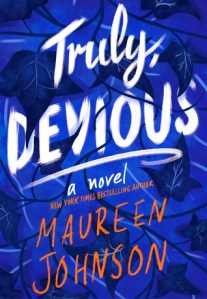
Serena’s Review: “Truly, Devious”

Book: “Truly, Devious” by Maureen Johnson

Publishing Info: HarperCollins, January 2018

Where Did I Get this Book: audiobook from the library!

Book Description: Ellingham Academy is a famous private school in Vermont for the brightest thinkers, inventors, and artists. It was founded by Albert Ellingham, an early twentieth century tycoon, who wanted to make a wonderful place full of riddles, twisting pathways, and gardens. “A place,” he said, “where learning is a game.”

Shortly after the school opened, his wife and daughter were kidnapped. The only real clue was a mocking riddle listing methods of murder, signed with the frightening pseudonym “Truly, Devious.” It became one of the great unsolved crimes of American history.

True-crime aficionado Stevie Bell is set to begin her first year at Ellingham Academy, and she has an ambitious plan: She will solve this cold case. That is, she will solve the case when she gets a grip on her demanding new school life and her housemates: the inventor, the novelist, the actor, the artist, and the jokester. But something strange is happening. Truly Devious makes a surprise return, and death revisits Ellingham Academy. The past has crawled out of its grave. Someone has gotten away with murder. 

Review: As is probably pretty evident by now, Kate is the true crime aficionado on our blog. I’ve casually looked into a few cases based on her recommendations, but my penchant for mysteries often falls into the historical, detective fiction more than anything. I also don’t read too many contemporary YA novels. So in a lot of ways, this book didn’t really meet many of my usual criteria for picking a new book. But it had fabulous ratings on Goodreads and happened to show up on my audiobook list right when I was between reads. And here we are!

Stevie Bell is shocked when she’s accepted into the exclusive, expensive private school of Ellingham Academy. It’s most highschoolers’ dream, but only accepts a handful of applicants per year. At that, they don’t even specify what they’re looking for! But apparently Stevie interest in and proficiency with true crime investigations hit some mark. What’s more, Ellingham Academy itself is the location of one of history’s most notorious unsolved crimes, the abduction of the founders wife and infant daughter. The only clue was an enigmatic riddle that has been poured over and pondered now for decades. But Stevie Bell is determined that once she’s on the grounds, she will solve this cold case. What she doesn’t expect is for this cold case to suddenly warm up with a new murder and the return of “Truly, Devious.”

So there were things I enjoyed about this book, and there were things I didn’t. Before I even get to the things I didn’t, I’ll just say again that this book has really high ratings on Goodreads, so there’s a fairly decent chance that most of the things that didn’t work for me were due to the fact that the book was way outside my usual genres of choice. But on to the good!

For one thing, I was not expecting the format that this book is told from. It’s not simply Stevie’s story while at Ellingham trying to solve this cold case. Instead, the story is told in alternating chapters between the present, which follows Stevie as she works a new murder as well, and the past, where we see various characters’ perspectives on the events that lead up to and during the abduction of Mr. Ellingham’s wife and infant daughter. I really enjoyed these chapters in the past. They really helped bring to life this cold case and avoided what otherwise would have had to be a pretty info-dumpy style of writing to give the reader the same information that Stevie would have already had. It also leaves readers free to begin making their own connections and theories, outside the influence of Stevie’s own thoughts on the mystery.

I also really liked Stevie herself. She’s your typical highschooler, in many ways, but I liked the way the story incorporated her struggles with anxiety and the differences she feels between herself and her parents. She deals with a lot of the fears and challenges that any new student comes across at a new school, but it’s made all the more interesting by the eccentric friends she meets there. The way Ellingham is described, it’s definitely the kind of school I would have loved to attend as a highschooler myself!

My problems with the book, however, also come from the modern timeline of the book. I wasn’t into the romance at all. I felt like it came out of nowhere but was also so entirely predictable that it landed flat immediately. The book tries to insert some more tension and mystery towards the end, but I just didn’t care enough about this couple to have any strong feelings about the drama or reveals. I also thought that the modern mystery was fairly predictable. The motive and history of the victim were especially obvious which just undermined Stevie’s own prowess as a burgeoning detective.

Lastly, I wasn’t expecting this book to not solve the mystery of the cold case. So there’s definitely a cliff-hanger sort of ending as far as that goes. If this book was up your alley, maybe this wouldn’t bother you as much. But for me, who enjoyed it for the most part but wasn’t in love by any means, I was just annoyed that I’d be forced to continue reading to get more answers to the one part of the book that really intrigued me. As it is, we’ll see if I get around to it or not. I’m guessing it will be a similar story, that if I do read it, it will be more a matter of happy chance than anything else. Fans of contemporary mysteries and true crime, however, will likely really like this. Just a bit too far out of my genres of choice to really hit home for me.

Rating 7: A tale of two stories: one of the past, which was excellent, and one of the future, which was more meh.

Reader’s Advisory:

“Truly, Devious” is on these Goodreads lists: Young Adult Crime/Murder Mysteries and Dark Academia.

Find “Truly, Devious” at your library using WorldCat!

Kate’s Review: “This Is Not a Ghost Story”

Book: “This Is Not a Ghost Story” by Andrea Portes

Publishing Info: HarperTeen, November 2020

Where Did I Get This Book: I received an eARC from NetGalley.

Book Description: I am not welcome. Somehow I know that. Something doesn’t want me here.

Daffodil Franklin has plans for a quiet summer before her freshman year at college, and luckily, she’s found the job that can give her just that: housesitting a mansionfor a wealthy couple.

But as the summer progresses and shadows lengthen, Daffodil comes to realize the house is more than it appears. The spacious home seems to close in on her, and as she takes the long road into town, she feels eyes on her the entire way, and something tugging her back.

What Daffodil doesn’t yet realize is that her job comes with a steep price. The house has a long-ago grudge it needs to settle . . . and Daffodil is the key to settling it.

Review: Thank you to NetGalley for providing me with an eARC of this novel!

I love haunting and eerie ghost stories of the Gothic variety, though I will admit that I sometimes find them to be predictable. The genre itself has such specific building blocks to it that a little bit of a road map is in place from the get go, which is perfectly okay. Because of this, I thought that I knew where “This Is Not a Ghost Story” by Andrea Portes was going to go when I picked it up. I was still excited to read it, mind you, but my overconfident ass thought that it wouldn’t have much new to say. But lo and behold, this story took me by surprise in all the best ways possible.

While the set up definitely seems run of the mill (money strapped college student agrees to house sit an isolated home, strange things start happening), Portes has created a Gothic ghost story that feels unique and fresh specifically because of how she has chosen to tell it. Daffodil, our first person protagonist, has a stream of consciousness and anxious voice in her narration, and as she tells the reader what is happening to her in this house and in the town around it, we have a slow build up of dread in the way that Daffodil would be experiencing it. As she tries to write off strange occurrences as they happen, we see the panic rise and rise until she is unable to deny that something very bad is happening, which I REALLY liked. From things that could very easily be explainable to the absolutely disturbing, Daffodil’s stream of consciousness builds the tension and also becomes VERY relatable as the story goes on. And all along she is cracking wise, making funny observations, and generally cracking me up, which helped cut the tension but didn’t ruin it. But along with the present bad things happening inside the house and on the grounds, we also get a slow unfolding of Daffodil’s past, and why her anxiety and unease is ever present. Most of this involves a love story with her high school boyfriend Zander, someone that she had always felt was out of her league but who loved her very much. Their high school romance felt real, and as it runs its course in her memories and unfolds in tragic ways, you see a whole other side to Daffodil that makes her all the more endearing.

In terms of scares and plotting, “This Is Not A Ghost Story” has some elements that are old hat, and some reveals that didn’t quite catch me by surprise in the way that they were probably supposed to do. But Portes still manages to write these elements and reveals in a way that made them enjoyable, and they still felt pretty fresh and convincing. I worry that if I say too much we’ll start getting into spoiler territory, but I do want to mention two aspects that worked really well for me. The first is the uncanny creepiness, of things going missing or ending up in places that don’t make sense. The other is the slow building unease with the people on and around the property, from a construction worker on the guest house named Mike to a nosy and stuffy neighbor named Penelope. We think one thing about them at first, but Portes picks away at our perceptions of them and makes them suspenseful in their own way (though I will say that Daffodil does the thing that MANY women do when it comes to men who may be threatening: she second guesses herself and her instincts. THIS was so well done that it felt like a GREAT way to show the target audience that no, your instincts should probably be listened to).

So while it may not have shocked me or really scared me too much, “This Is Not A Ghost Story” was an enjoyable and poignant ghostly tale of trauma, forgiveness, and the things that haunt us. Fans of Gothic horror should definitely check it out!

Rating 8: A haunting, bittersweet, and sardonically funny Gothic tale, “This Is Not a Ghost Story” will keep you guessing, and will stay with you.

Reader’s Advisory:

“This Is Not a Ghost Story” is new and not on many specific Goodreads lists, but I think it would fit in on “Modern Gothic”, and “Not the Normal Paranormal”.

Find “This Is Not a Ghost Story” at your library using WorldCat, or a local independent bookstore using IndieBound!