My Year with Jane Austen: “Clueless” [1995]

mv5bmzbmogq0nwitotzjzc00zdaxltgyotetodjiywq2ywniywvjxkeyxkfqcgdeqxvynte1njy5mg4040._v1_sy1000_cr006691000_al_Movie: “Clueless”

Release Year: 1995

Actors: Cher – Alicia Silverstone

Josh – Paul Rudd

Tai – Brittany Murphy

Christian – Justin Walker

Comparison – “Indulge your imagination in every possible flight.”

“Clueless” is definitely a movie of its time, but it’s still a blast to watch today. Similarly to “Bridget Jones’s Diary,” is a modern adaptation of Jane Austen’s work which means that while some things follow along pretty faithfully, there are also a lot of changes to make it work as a modern tale.

I really like the initial match-making switch. Instead of a governness, we see Cher setting up two of her teachers in an attempt to improve her grade. On one hand, this makes Cher’s reasons much more self-centered than Emma’s, but the change works well, I think. After her initial success, Cher decides that she likes helping people like she did for these two, sad, pathetic teachers. And so she takes Tai (Harriet Smith) under her wing. In many ways, her goal in helping Tai is much more centered around making Tai popular than specifically matching her up with someone. In the book, Emma had already proclaimed a desire to match Mr. Elton up before zeroing in on Harriet. Here, we see Cher directing Tai’s love life more because Tai’s original interest (a drugged up skater boy) would not be a good match for a popular girl. Elton is then selected as a proper match for someone of Tai’s aspiring popularity.

This arc then comes full circle when we see Tai become truly popular and then snap at Cher in all of Tai’s mean girl glory. So Cher’s “what have I done?” is much less about her project girl being interested in someone whom she realizes she cares for (though that is a factor), and more to do with how sweet and nice Tai had been before Cher’s meddling in her life. Luckily, on Tai seems to course correct on her own at the end of the movie.

All of the actors cast for various parts work great, and it’s definitely one of those movies where you see really young version of actors who went on to do bigger projects. Brittany Murphy, for example, is barely recognizable as Tai. And obviously Paul Rudd would go on to be a household name type actor. But even the smaller roles, like the two teachers and Cher’s father, are all pitch perfect and really help round out the movie.

Heroines – “I hate to hear you talk about all women as if they were fine ladies instead of rational creatures.”

Cher is probably the least likable Emma we’ve come across so far. On one hand, this is understandable because she’s the only teen version we’ve had. At 15-16, she’s four or five years younger than the version in the book and the other two adaptations I’ve reviewed. Not to mention the very different education and expectations she would face in L.A. in the mid-90s versus the Regency period. But she’s also given the fewest opportunities to show her good side as well. The movie leans in heavily to how spoiled she is, doing very little to counterbalance it with good deeds. Like in many other versions, it mainly relies on showing her care towards her father as the best look into her inherent goodness. But as her father is also less likable than other versions…

Not to say that you don’t end up rooting for the character, just that it’s a bit harder. Her constant up-speak is also a bit tough to handle, dating the movie and also signaling what is now a cliche of an entire new level. At the time, it was just a valley girl thing, but now the trope is so often connected with idiocy that it doesn’t do the character any favors to modern viewers.

I do like that the big realization moment for her is less her being rude to one individual, but seeing the type of person she’s turned Tai into. Tai was originally this sweet, friendly character. And after snapping and being rude to Cher, we see Cher realize that actual “value” of the things she’s been sharing with Tai. Tai is like a brutal mirror that is held up to Cher, and that, along with the realization about her general “clueless-ness” is enough to inspire change. It’s also pretty clear that she doesn’t do any of this in an effort to impress Josh, making it feel like the type of change that will be more lasting.

Heroes – “What are men to rocks and mountains?”

Josh is a pretty solid mid-90s teenage interpretation of Mr. Knightley. Having him being interested in a law (and with a less than stellar mother) is a good excuse for having him want to hang around Cher’s house and work with her dad. Of course, we can’t have him scolding Cher in quite the same way. It wouldn’t come off nearly as well with the age difference being so much more close and the times making it all sound much more patronizing and unappealing if he had done. Instead, we see him being more subtly critical of Cher’s superficial tendencies while at the same time clearly enjoying her company.

And, of course, no discussion about Paul Rudd can be had without acknowledging the freakishness of his lack of aging. It almost makes the age difference seem weird since he looks so much the same when he’s much older that he could just as well be in his mid-thirties in this movie as younger twenties.

I really liked that they included a version of him coming to Tai’s rescue and dancing with her. This version does a weird thing where we have the “rescue” of Tai by Christian, as well, but then it does nothing with this. It’s already established that Christian is gay at this point, and there is no inclusion of Cher becoming confused by any reference of a “rescue” by Tai. It’s kind of a weird choice. Instead, it’s used mostly to elevate Tai’s popularity which results in her later nastiness to Cher. But eh, I still like that they included the Tai/Josh dance thing. It’s a great moment for giving Cher more insight into why Josh is such a great guy.

Villains – “I do not want people to be very agreeable, as it saves me the trouble of liking them a great deal.” 

Elton is by far the biggest “villain” in this movie. Not only is he not interested in Tai, a stuck-up ass about popularity status, and all of that. He repeatedly accosts Cher when she’s clearly said “no,” pretty much forcing her to get out of the car to avoid him. And then he leaves her in a bad part of town to be mugged. Much worse that the book version of Mr. Elton. I do like that he’s one of the few characters whose name remained the same. I guess it works pretty well for a snobby L.A. teenage boy in the 90s.

Christian, on the other hand, is really not much of a villain at all. Other than perhaps leading on Cher more than he should have, he seems like a pretty decent guy. It’s kind of unclear why he misleads her at all in the first place. He must know that she’s misinterpreting his actions, but at the same time, he’s not too subtle about hiding true orientation. Everyone other than Cher seems to see it, and we don’t see any push back in the movie itself about it. It’s definitely a unique take on her misunderstanding with this character role. This makes much more sense than any hidden romance would have, given the time period. And it’s kind of nice to have the movie end with Cher and Christian kind of being besties, instead of the tense, friendship-pretty-much-over state that Emma and Frank Churchill are in at the end of the book.

There’s also the jerk lawyer guy who snaps at Cher at the very end of the movie, thus making Josh come to her defense, thus serving as the impetus for the relationship getting started. So is he really a villain in the end?

Romance – “A lady’s imagination is very rapid: it jumps from admiration to love, from love to matrimony in a moment.”

The romance in this movie does play second fiddle to the comedy. There are a few moments here and there that speak to Josh and Cher’s ultimate future, but they are scattered in between the bigger comedy scenes featuring Tai, Cher, and Dionne’s antics. We have the aforementioned dancing scene, of course.  There’s a small moment where Cher and Josh are hanging out at home watching a movie, and Cher seems to make a passing comment that sometimes having a quiet evening at home is more fun than all the social outings one could come up with.

And Josh is the one to come to Cher’s rescue after the Elton incident. This serves as a good point for Josh realizing that he’s into Cher as we see Cher correct Josh’s then girlfriend on some quote from Shakespeare. Josh smiles at this and seems not at all concerned that his girlfriend is pretty displeased at being shown up by a high schooler. And we get an even clearer idea of his interest when he follows Christian and Cher on their “date” just for “safety.” It’s very cute.

The actual romantic conclusion of them kissing on the stairs is a bit awkward, I think but fine enough. And then I think the cut to the wedding scene is pretty hilarious and a nice hats off to Jane Austen’s endings always featuring weddings of the main characters. And in this scene, the already established relationship between Josh and Cher reads as much more natural and enjoyable to witness.

Comedy – “For what do we live, but to make sport for our neighbors, and laugh at them in our turn?”

Well, watching it now, there’s two sides to the comedy coin. There are the things the movie meant to be funny. And there are the things that are simply hilarious because of how dated it makes the movie feel. The very first scene, even, with Cher selecting her outfit on this old computer screen is just comical. Especially because it’s supposed to be set up as a way to establish how well-off Cher is. But to modern eyes…it’s some janky stuff.

The fashion, also, is hilarious. Even growing up in the 90s myself, it’s hard to get a good read on how accurate this way versus how much of it was blown up to extremes to show off Cher’s situation. Either way…man, gotta love it. Even Cher spends a moment (in an odd tonal break in the movie) to point out how bad men’s fashion was at the time. But, on the other hand, her friend Dionne is pretty much literally wearing a plastic bucket for a hat in the opening scene. So.

Dionne and her boyfriend don’t have any obvious parallels in the book itself that I can think of. But they play well for humor here. I especially like how all the comedic moments early on that highlight their bickering and public feuding are later tied together to show that, while they enjoy the drama in the crowd, in private they are much more caring and loving towards each other. In this way, they serve as a good example of love to Cher as she’s going through her awakening period.

Fun facts – “Life seems but a quick succession of busy nothings.”

The director was asked to simply create a movie for teenagers. It was her own fondness of reading “Emma” as a teenager that inspired her to adapt that book into a teen movie.

There are 63 different costume changes in this movie.

Gwyneth Paltrow was considered for the role, but never auditioned. One would imagine she had her own “Emma” thing going around then.

While according to filming this was his second movie, “Clueless” was released first and thus is the movie that introduced the world to the lovely Paul Rudd.

Best Movie Gif/Meme: “I dearly love a laugh.”

I didn’t actually do it, but I was tempted to count the number of “As ifs!” we had in this movie.
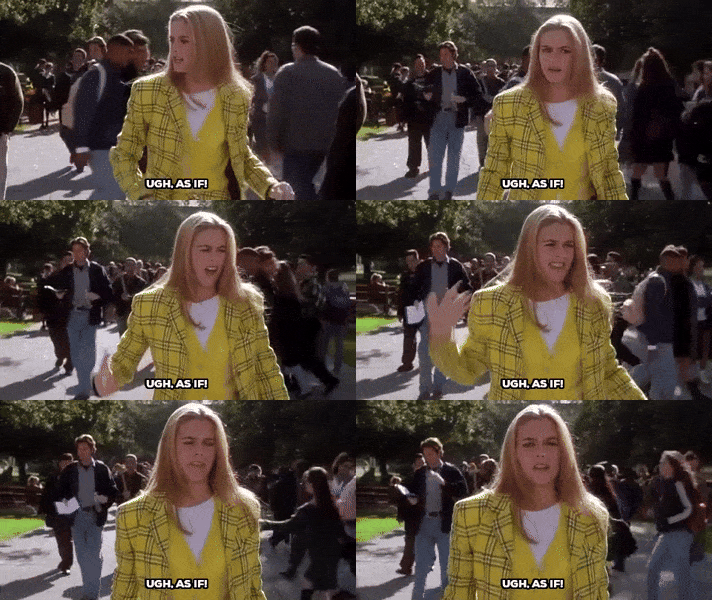
This seemed to be the most classic “Emma” moment in the entire movie:
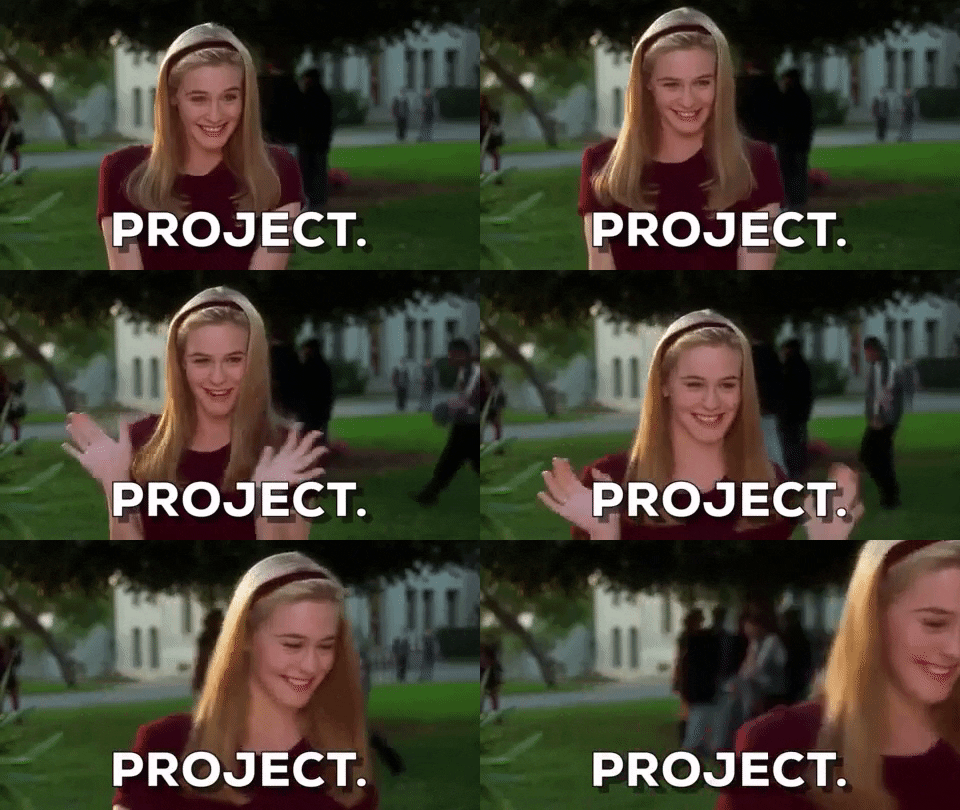
In two weeks, I’ll review the YouTube series “Emma Approved.”
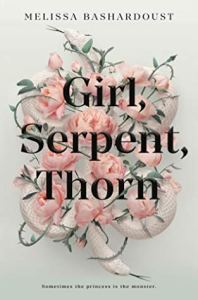
Serena’s Review: “Girl, Serpent, Thorn”

51182650._sx318_sy475_Book: “Girl, Serpent, Thorn” by Melissa Bashardoust
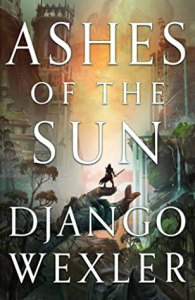
Publishing Info: Flatiron Books, July 2020

Where Did I Get this Book: NetGalley!

Book Description: There was and there was not, as all stories begin, a princess cursed to be poisonous to the touch. But for Soraya, who has lived her life hidden away, apart from her family, safe only in her gardens, it’s not just a story.

As the day of her twin brother’s wedding approaches, Soraya must decide if she’s willing to step outside of the shadows for the first time. Below in the dungeon is a demon who holds knowledge that she craves, the answer to her freedom. And above is a young man who isn’t afraid of her, whose eyes linger not with fear, but with an understanding of who she is beneath the poison.

Soraya thought she knew her place in the world, but when her choices lead to consequences she never imagined, she begins to question who she is and who she is becoming…human or demon. Princess or monster.

Review: Here was another book I requested based mostly on cover lust. But the description itself, particularly the original fairytale-ness of it all, was another sure a attraction. It’s also yet another book that seems to feature siblings, though this one is only from Soraya’s POV, which is a nice change of pace in my reading lately. The story took a few twists and turns that I wasn’t expecting, but most of them turned out for the good, and I enjoyed this read!

Soraya is a forgotten princess. With a power that kills at her touch, she’s spent her life sequestered in shadows, separated from her family, friends, and people. She’s spent her life watching her brother pass all of the milestones that she herself has missed out on. And now it is coming to a head with his marriage to a lost friend from Soraya’s childhood. In unexpected places she begins to find new allies and new pathways, opening doors that she never dreamed possible. Some of them lead into the light, and some further into the dark. Which will she choose?

I ended up really enjoying this book. It was an original fairytale, something I always love, and it took a few unexpected twists and turns as it was told. On top of all of that, it’s a standalone novel. One small criticims there, however, was the story did feel like it had to distinctive arcs that may have been better suited to their own books, making the story into a duology. But even typing that feels wrong as I love standalone books so much and they’re hard to find! It’s kind of a mixed bag thing, here, I guess. The two storylines work well enough, and I don’t feel like either was truly lacking much. Just that as a complete work, it did feel oddly balanced with the first half telling one tale and the second another.

I really liked Soraya herself. She had a great narrative voice, and she was easy to become immediately invested in. This was important as the book took a twist down an antihero path that I hadn’t seen coming from the book description. Looking back now, yeah, it’s kind of there. But it was another nice surprise for me when going through this book. It’s always tough to sell a true antihero story, as often your main character is doing some pretty questionable things and walking a very narrow line. This made the likablity of Soraya’s character incredibly important. It was easy to understand her struggles and even some of her more questionable decisions, especially in the context of the life she had lived prior to this story.

Another surprise for me was that Soraya was a bisexual and the main romance ends up being a f/f one. For the book itself and its story, I really enjoyed this romance. I’ve read a bunch of f/f/ stories recently, and really liked them! Just last week, I reviewed a book by Django Wexler who is known for almost always giving his heroine a female love interest. My problem with it being a surprise here isn’t the book’s fault. It’s the marketing.

Looking over the book description, it’s clear that it’s intentionally deflecting away from using gendered pronouns in places, and then goes out of its way to place interest on the male love interest. The male love interest is a thing, so that’s fine. But there should be mention, clearly, of the female option. I really dislike these type of marketing techniques. It seems clear that its done out of mistrust of one’s audience, and that’s never going to work. Either your reader is game for a f/f romance, in which case readers like me would like to know ahead of time what to expect without having to delve into Goodreads reviews to get basic information like this. Or your reader is not down and once it becomes clear that you tried to hoodwink them with your marketing, they’ll put the book down. It’s bad faith marketing, and we need to get past this.

Overall, I really liked this book. If you’re looking for an original fairytale story with a morally grey main character, this is definitely the book for you!

Rating 8: A great standalone fantasy novel featuring an interesting anti-heroine!

Reader’s Advisory: 

“Girl, Serpent, Thorn” is on these Goodreads lists: “2020 YA LGBT+ Sci-Fi/Fantasy” and “Magical Realism.”

Find “Girl, Serpent, Thorn” at your library using WorldCat!

Serena’s Review: “Ashes of the Sun”

52822248._sx318_sy475_Book: “Ashes of the Sun” by Django Wexler

Publishing Info: Orbit, July 2020

Where Did I Get this Book: ARC from the publisher

Book Description: Long ago, a magical war destroyed an empire, and a new one was built in its ashes. But still the old grudges simmer, and two siblings will fight on opposite sides to save their world, in the start of Django Wexler’s new epic fantasy trilogy

Gyre hasn’t seen his beloved sister since their parents sold her to the mysterious Twilight Order. Now, twelve years after her disappearance, Gyre’s sole focus is revenge, and he’s willing to risk anything and anyone to claim enough power to destroy the Order.

Chasing rumors of a fabled city protecting a powerful artifact, Gyre comes face-to-face with his lost sister. But she isn’t who she once was. Trained to be a warrior, Maya wields magic for the Twilight Order’s cause. Standing on opposite sides of a looming civil war, the two siblings will learn that not even the ties of blood will keep them from splitting the world in two.

Review: This will be the third Django Wexler book I’ve read this year, so I’m definitely on a roll! I had read a book by him before, but I think because it was the first in a long-ish series, I became intimidated and kind of let it slide. But I loved his new YA series and am looking forward to the final one in that coming out soon. Which made me all the more surprised when this, a beginning to a new adult series, suddenly popped up! I’m not sure how long of a series is planned, but based on this first book, I’m all in!

When his little sister, Maya, is taken away at age 5 by the powerful Twilight Order, Gyre’s idealic family life is broken. Years of simmering anger build until he comes of age to make is own way. And that way includes spending every resource he has delving into the underworld of the Republic in search of a power strong enough to destroy the organization that stole his sister and, in many ways, controls his world. Maya, raised by the Order and on the bring of becoming independent, is committed to the ideals of her organization. Raised to believe that the Order protects and serves, Maya sees the good that she and her people can do for the common folk who are plagued by dangerous monsters. But as she comes closer and closer to striking out on her own, she begins to see cracks among her people and a corruption that may go deeper than she thought.

The world-building in this story is excellent. It almost seems to be set in a post-apocaptic version of the “Star Wars” universe. Kind of an odd comparison, but once you read the book, you’ll totally see it. The author has a great afterward where he even states “Star Wars” as an influence, but it’s so subtly done, that at no point does this in any way feel like a “Star Wars” book. So it feels both familiar as well as incredibly unique all at once. I really liked the glimpses we have into the history of this world, and there were a lot of great reveals that game out over the course of the story. Of course, most of these just raised more questions than they answered, but what else can you expect from the first book in a series?

I also really liked both Maya and Gyre. This is one of those rare, great examples of a book where the duel narrators are equally strong and compelling. Especially since they are essentially representing opposing forces. It’s quite difficult to write two such characters and maneuver your reader into rooting for them both, a losing battle from the start. Gyre was perhaps a bit less sympathetic to start, but he definitely grew on me. And Maya is just the sort of bad-ass warrior women I gravitate towards. They also each had unique romance arcs that were at times quite unexpected.

The story is also action-packed from start to finish. It did take quite a while to get into the main conflict, with what felt like a bunch of side/mini quests taking up the majority of the first half. But as the main conflict begins to unfold, we see the importance of these early action scenes in setting the stage for the character choices are two leads make and how they end up where they are. Each also came with their own set of side characters, sidekicks, and enemies, so there was a lot of groundwork that needed to be laid out to really set the stage for the grand finale.

And while the grand finale itself was pretty intriguing, it was also clear that this was only the beginning. Sure, the current big bad was dealt with, but Maya and Gyre, while both questioning their own goals, are still clearly on opposing sides of a brewing conflict. I can’t wait to find out where their adventures lead them next and how or if they will ever be able to find a middle ground between them.

Also, don’t forget to enter to win an ARC copy of this book! I also had an e-book copy, so this is a completely fresh ARC ready and waiting for its first reader! Enter to win!

Rating 8: A rollicking adventure story with two fantastic leads at its heart.

Reader’s Advisory:

“Ashes of the Sun” is a new title, so it isn’t on many Goodreads lists. But it is on “Can’t Wait Sci-Fi/Fantasy of 2020.”

Find “Ashes of the Sun” at your library using WorldCat!


Giveaway: “Ashes of the Sun”

52822248._sx318_sy475_Book: “Ashes of the Sun” by Django Wexler

Publishing Info: Orbit, July 2020

Where Did I Get this Book: ARC from the publisher

Book Description: Long ago, a magical war destroyed an empire, and a new one was built in its ashes. But still the old grudges simmer, and two siblings will fight on opposite sides to save their world, in the start of Django Wexler’s new epic fantasy trilogy

Gyre hasn’t seen his beloved sister since their parents sold her to the mysterious Twilight Order. Now, twelve years after her disappearance, Gyre’s sole focus is revenge, and he’s willing to risk anything and anyone to claim enough power to destroy the Order.

Chasing rumors of a fabled city protecting a powerful artifact, Gyre comes face-to-face with his lost sister. But she isn’t who she once was. Trained to be a warrior, Maya wields magic for the Twilight Order’s cause. Standing on opposite sides of a looming civil war, the two siblings will learn that not even the ties of blood will keep them from splitting the world in two.

Giveaway Details: I’ve only recently rediscovered Django Wexler. Several years ago, I read a military fantasy by him which I really liked. But for some reason (too many books!) I never got back around to finishing the many other books in that series. Then this past winter, I was blew through two of his new YA fantasy books, and it really cemented him as an author worthy keeping my eyes on. So I was really excited when Orbit sent me an ARC for his upcoming fantasy title releasing this summer. It’s been a challenge holding off on reading it right away as I had many other books I wanted to get to and review first, but finally the time has come!

The story seems to be some combination of a post-apocalyptic tale and a traditional fantasy story with a bunch of new elements. It also seems like Orbit has went all in on this “siblings on the opposite side of a battle” theme, as this will be the second fantasy story from them I’ve read with that premise this spring/summer. But, while I wasn’t a huge fan of “The Ranger of Marzanna,” I have full faith that Wexler will be able to better pull off this type of set up. Mostly, I know that he can handle multiple POV characters in one book, the most important element in this type of storytelling. Both the military adult fantasy novel I read several years ago and the second in the YA fantasy series I read last winter had more than one POV character. I usually had preferences for one over another, but I always liked reading about them both. So I’m super excited to see what he’ll do with these two characters!

I’ve also skimmed through the book and noticed that there is a fairly extensive glossary of terms at the end of the book. That, and books that have maps, are often some of the first signs I look for in a fantasy book that has a lot to offer. An extensive glossary, in this case, hints that the world-building and magic system are extensive and complicated enough to warrant this type of added explanation.

So, overall, I’m really excited to jump into this one. I’ll have a full review of this book coming out this Friday. But, as the book itself doesn’t come out until later in July, make sure to take advantage of this opportunity to win an ARC copy of this book (I also had an eARC so this copy is completely untouched). The giveaway is open to U.S. residents only and ends on July 15.

Enter to win!

My Year with Jane Austen: “Emma” [2009]

mv5bmtgxmdc1mzqxmv5bml5banbnxkftztcwmzy0mzuwmw4040._v1_TV Mini Series: “Emma”

Release Year: 2009

Actors: Emma – Romola Garai

Mr. Knightley – Jonny Lee Miller

Harriet Smith – Louise Dylan

Frank Churchill – Rupert Evans

Comparison – “Indulge your imagination in every possible flight.”

As it is so much longer than the previous version, this mini series was able to do what the 1995 BBC version of “Pride and Prejudice” was able to do for that story. Every  major scene and character is included, and the series doesn’t shy away from adding its own touches here and there which further flesh out side characters like Frank Churchill and Jane Fairfax. The series also plays fairly fast and loose with the dialogue, but overall it retains the spirit of every exchange and there are few instances where these changes stand out.

One of the more major changes from the book is in the framing of the story around Emma, Jane Fairfax and Frank Churchill and how their lives were greatly influenced by the losses they experienced as children. This version of the story devotes quite a bit of time to the story before where the book itself picks up. In this way, we really do see how Emma has always been the center of attention. Unlike the other two children without a parent(s), she stays home. We see that even as a governess, Miss Taylor is bewitched by the charming Emma. And, of course, her father can see no flaws in her. Mr. Knightley is the only one to critique her, and even he admits privately that she’s the most beautiful and smart of her family. The movie also does a lot of groundwork to set the stage for Emma’s matchmaking. This version has Emma claiming to be the influence behind her sister and John’s marriage, a change from the book. So by the time she gets to Miss Taylor and Mr. Weston and has success there, it’s hardly any wonder that she believes herself an expert in this area.

The cast is also superb. There’s not a single misstep in the entirety. If forced to single someone out, I might say that this version of Jane Fairfax leaned very heavily into the reserved portion of her character at the expense of her elegance. In this way, the 1996 version may have come out ahead. The Jane we saw there was undeniably elegant, and it was easy to see why Emma would be threatened by her. This Jane had a tendency to fade into the background and read as more shy than anything else. But other than that small quibble, I really loved everyone who was cast in this. Michael Gambon is probably the standout as far as excellent side characters, and he really helps sell the loving, but dependent, relationship Mr. Woodhouse has for his daughter.

Heroines – “I hate to hear you talk about all women as if they were fine ladies instead of rational creatures.”

Romola Garai’s Emma is very different than Gwyneth Paltrow’s. Where Paltrow’s version was more cool and collected, Garai’s is joyous and exuberant.  This version of Emma seems to ground more of her flaws in youth and actual inexperience with the world and people than in any true character flaws. In many ways, I think this is very accurate to the book. Both there and here, we see a character who has always been the center of every social situation she’s in: family, friends, and the greater neighborhood overall. It’s like Frank Churchill notes later, “she presides over all.” It’s no wonder that this early regard from almost everyone in her life, regard pushed to the point of adoration even, would have this effect on her. We only ever see Mr. Knightley be critical of Emma and her decisions and even he can’t resist pairing his criticism with compliments (to her looks, when he is talking to Mrs. Weston, and to her wit, however misused, when he’s fighting with Emma herself).

Garai’s version of the character definitely pops on the screen, and it’s easy to see how the eyes of all would be drawn to her. She has a much more playful take on Emma’s matchmaking than we’ve seen before, but is still able to capture the more serious moments as well. When she confesses to Harriet, after revealing the truth about Mr. Elton, that she would be lucky to resemble Harriet in any small way, it’s very touching.

I also like all the attention that is given to Emma’s relationship with her father in this version. We see many small moments of the two of them together, with Emma fretting over her father’s scarf and worrying over the brewing conflict between him and John Knightley. I also really liked the way they dealt with the situation about their living arrangements after Emma and Mr. Knightley get engaged. It works both as a comedic scene, with Emma barging into Knightley’s office and declaring they can never marry and rushing out again, and as a serious one, as we can also see the true pain Emma is feeling about the prospect of hurting her father and her refusal to put him through that.

Heroes – “What are men to rocks and mountains?”

I absolutely love Jonny Lee Miller in most everything, and his take on Mr. Knightley is probably one of the strongest selling points for this version of the story for me. I really have zero criticisms for the way he portrays this character. In the book, Mr. Knightley really doesn’t have a lot to do in the first half of the story. He kind of pops in and out, has a big fight with Emma, and then disappears for a good bit until reappearing about halfway through the story. But this version makes good work of including him better in scenes and giving him more lines here and there to keep him ever present in viewers minds.

Miller has great delivery on some of the more comedic lines, like his and Emma’s teasing about the use of carriages. And, of course, he excels in the scenes in which he fights with Emma. This version’s fight over the Harriet/Mr. Martin situation is the most extended of all the versions, and it’s great watching them both shine. And then in the Miss Bates scolding, I love the way he delivers his lines, especially the “badly done.” You can see a marked difference in this fight versus the first. Miller’s able to add a new layer of disappointment and concern that speaks well to the character’s change in perspective to Emma.

I also liked all the scenes they include of Mr. Knightley walking about the countryside, playing in the snow with his nieces and nephews, etc. It’s a good highlight of the type of active, outdoorsman that he is presented as. This version also gives us personal insight into Mr. Knightley’s own thoughts. After the ball scene, we see him imaging Emma in his own home. It’s a good contrast to the two scenes we had before where Emma imagines Mr. Knightley married to Jane Fairfax. It’s great having both scenes with the different insights into their different thoughts and feelings.

The movie also includes several little scenes between Harriet and Mr. Knightley. We see them walking together, sitting next to each other, and talking privately. It all comes across in a very natural way, but then when Harriet brings up her hopes for the future, we, the audience, can see the groundwork lain. And it’s easier to understand Emma’s real concern that Harriet may be a true threat to Emma’s future happiness.

Villains – “I do not want people to be very agreeable, as it saves me the trouble of liking them a great deal.” 

The Frank Churchill of this version leans heavily in on the villainous side of the character. He takes every opportunity to criticize Jane behind her back, commenting to Emma about her hair being ugly and how unlovable a reserved person is. He seems to be criticizing her when he sidehandedly comments about the mistake he made in bring up Dr. Perry’s carriage plans when hardly anyone else knew about it. And the flirtation with Emma is at a peak. At the Box Hill party we see him making more snide comments to Jane, all while being completely overboard with his compliments to Emma, even laying on her lap at one point, a shocking level of familiarity at that time.

He also seems often poor tempered. Whining and complaining about his life to Emma during the strawberry picking, and then, again, being a poor tempered brat at Box Hill. The actor’s take on the character really works well with this interpretation of the character, as he has a bunch of perfect facial expressions that highlight how shallow and spoiled Frank can often be. All in all, it’s hard not to agree with Knightley’s assessment of the situation: that Jane could do much better.

There is an interesting added twist to his character in that we see early in the movie the scene where he is sent away from home after his mother dies. And then towards the end, we see him return to the same spot. It seems to be implying that he holds some bitterness towards his father for sending him away. But the movie just barely brushes on this angle, and even the interpretation I’m making from it is by no means super clear. It’s an odd little track that I wish they had either more fully committed to exploring, in context of the character traits Frank exhibits as an adult, or left out entirely. As it is, it’s a bit weak, and like I said, I don’t feel fully confident that I even understand fully what they were going for.

Romance – “A lady’s imagination is very rapid: it jumps from admiration to love, from love to matrimony in a moment.”

I really, really like what they do with the romance in this version. Like I pointed out in my review of the book, the romantic plotline isn’t really even hinted at until over halfway through the story. So if readers aren’t invested in Emma’s comedy and antics, it can be a bit of a letdown. And in a movie version of the story, it’s even harder to pull of this type of late-game introduction of a romantic storyline.  If not handled right, it can make the romance seen as an afterthought and not properly built to.

Here, however, by giving Mr. Knightley more to do and more lines, the movie is careful to lay a thorough groundwork for the romance throughout. There are at least two instances that I can think of specifically where the movie goes out of its way to show how Mr. Knightley’s actions are often motivated by his feelings for Emma. First, when John and Isabella are visiting and John begins to become snappish with Mr. Woodhouse, the camera cuts to Mr. Knightley’s face and we see him observing Emma becoming more and more distressed. Even though they are still fighting a bit over the Harriet/Mr. Martin thing, it’s clear that Mr. Knightley’ speaks up to redirect his brother in an effort to bring Emma more peace. And secondly, at the ball, we see Emma become increasingly upset as she dances nearby Harriet and witnesses the rudeness of Mr. Elton. Again, the camera cuts to Mr. Knightley and we see his face as he watches Emma becoming more and more upset before he steps forward to aide Harriet. Both of these are very small moments, but they are so important for constantly fixing audiences’ attention on the importance of Emma to Mr. Knightley. And in both instances, Emma expresses thanks for Mr. Knightley’s actions, either in a quiet smile towards him or directly spoken to him.

I also really like the way they film the proposal scene and the moments directly afterward. I would say I wish they had filmed it in a bit less of a sunny location as you can tell both actors are having to squint at each other while talking. But as for the added dialogue and the delivery of lines, I think it’s excellent. Miller has perfect delivery on the “If I loved you less, I could talk about it more” line. And I really liked the added lines they gave Emma for her response to his declaration. As the book doesn’t include these lines, all the movies have to make something up here, and I think they did very well.

I also like the scenes after, the quiet, intimate moments when the two are sitting on a private bench discussing when they realized they loved each other. It has a nice balance of romance and a continuation of the type of friendly teasing that will always be in their relationship. And, of course, we get to see them go on their honeymoon and go to the seaside. The movie does a good job of introducing this fact, that Emma has never been to the seaside, early in the movie and then touching on it here and there throughout. So it’s a neat little button on the movie to end with her and Knightley standing on a cliff side looking out over the ocean.

Comedy – “For what do we live, but to make sport for our neighbors, and laugh at them in our turn?”

Louise Dylan does a fantastic job as Harriet Smith. She perfectly captures the character’s simple beauty and charm, but also her lack of real depth. I love her facial expressions as she’s posing for her portrait and trying to secretly sneak Mr. Elton’s pencil. I also think one of the funniest lines in the entire movie is when she’s trying to work out Mr. Elton’s riddle and when asked by Emma to put the words “ship” and “court” together, she excitedly comes up with “Ship court!” Good stuff.

The Eltons are also always good for a laugh in more of a love-to-hate them sort of way. Mr. Elton’s exuberance early in the movie is overwhelming. And he’s at his peak at the Christmas party where he rudely snaps at one of the servants not to crush Emma’s coat. And then constantly bothers her with questions and, later, literally wedges himself in between her and another guest. You have to wonder if Emma was beginning to question whether Elton would even due for Harriet, let alone herself.

One of Mrs. Elton’s best moments is when she commenting about abhorring being over-trimmed while literally being covered with feathers and ruffles. The movie also does a great just with some quick cuts between characters when Emma is trying to plan the trip to Box Hill. We see how instantaneously Mrs. Elton dominates every social plan to make herself the center of attention. It’s also a nice little karma moment for viewers when we see Mr. Elton struggling to pull along the donkey that Mrs. Elton insisted on riding to strawberry picking. It’s completely ridiculous, but he literally yoked himself to this situation, so…

Fun facts – “Life seems but a quick succession of busy nothings.”

I remember hearing in some commentary or another that the stylists exaggerated Mr. Elton’s puffed up hair do more and more throughout the movie to signify is growing ego and ridiculousness.

Jonny Lee Miller and Blake Ritson (Mr. Elton) had both previously played the same Austen hero, Edmund Bertram, in two different adaptations of “Mansfield Park.” We should have seen them both in those first had I reviewed these in the right order, but alas. I bet everyone can guess who I thought did the character better…

There was a surprise spattering of snow outside the house that was staged as Hartfield one day.  And when the director was notified of it, they rushed cameras down, along with the signature swan that was often shown outside of the house, to capture the view for the winter scenes.

Christina Cole (Mrs. Elton) played Caroline Bingley in “Lost in Austen.” A pretty good fit, I’d say.

Emma is often shown at Hartfield wearing a small watch adornment attached to her dress. This was included to signify that she was the lady of the house.

Best Movie Gif/Meme: “I dearly love a laugh.”

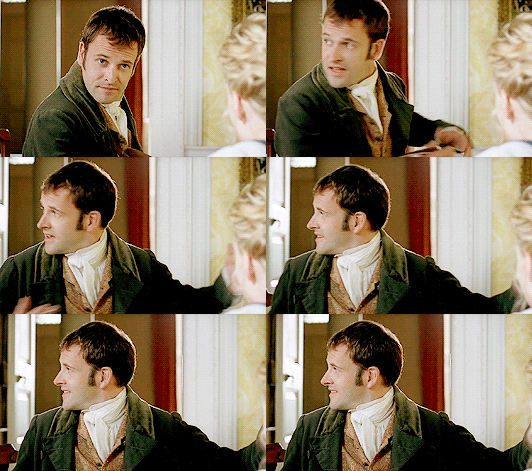
Have I mentioned that I love Jonny Lee Miller’s version of this character? Even in small moments like this, when he’s being exasperated by Emma’s silliness:

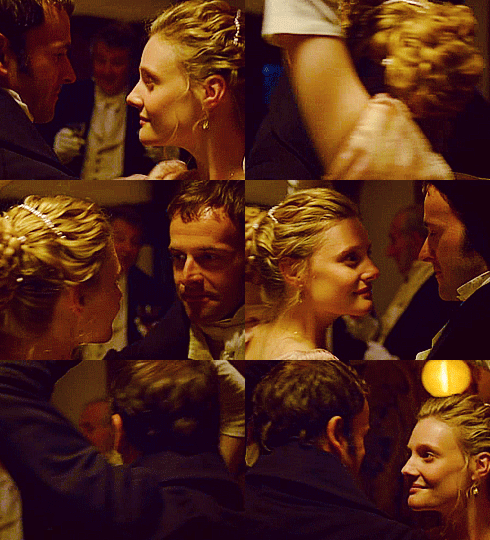
And this movie has one of the best Austen dance scenes, as we get to see our two main characters dance together while clearly enjoying each other’s company. It’s also fun because Miller makes several awkward facial expressions throughout that show that he is becoming more and more aware of how in love with Emma he is, even though she’s still obviously clueless.

In two weeks, I’ll review a modern adaptation, “Clueless.”

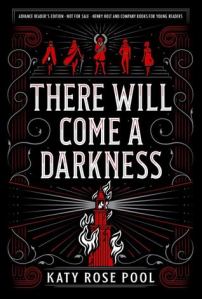
Serena’s Review: “There Will Come a Darkness”

41823536._sx318_Book: “There Will Come a Darkness” by Katy Rose Pool

Publishing Info: Henry Holt Books for Young Readers, September 2019

Where Did I Get this Book: audiobook from the library!

Book Description: For generations, the Seven Prophets guided humanity. Using their visions of the future, they ended wars and united nations―until the day, one hundred years ago, when the Prophets disappeared.

All they left behind was one final, secret prophecy, foretelling an Age of Darkness and the birth of a new Prophet who could be the world’s salvation . . . or the cause of its destruction. As chaos takes hold, five souls are set on a collision course:

A prince exiled from his kingdom.
A ruthless killer known as the Pale Hand.
A once-faithful leader torn between his duty and his heart.
A reckless gambler with the power to find anything or anyone.
And a dying girl on the verge of giving up.

One of them―or all of them―could break the world. Will they be savior or destroyer? 

Review: June has been the month of “better late than never” as far as my reading goes. This is at least the second book that I’ve read this month that was hugely popular last fall and yet…I didn’t get to it until just now. But there’s just so much good fantasy out there, and, I’ll admit, I’m always a bit hesitant about these books that seems to flare up as “the next big thing” in YA fantasy. My track record with these super popular new fantasy series hasn’t been good. But I liked “The Merciful Crow” more than I was expecting, so I thought I’d give another big title a chance. Sadly, this wasn’t as much of a hit for me, though I’ll likely still keep reading the series.

Five young people are living very different lives in very different spheres. Some from wealth, some from poverty, some who are running, and some who know that it is up to them to find what no one else can. But their world is on the brink of change, with powerful forces moving against those with magical abilities and a prophesy that has loomed over the heads of the people for generations. Each with their own role to plays, these disparate lives begin to cross and the pieces begin to fall in place. But who is the savior and who is the source of destruction?

I already gave away that this book wasn’t a hit for me, but I will start with a few positives before getting into my critiques. As the description gives away, this is an ensemble cast, but I was so pleased to find that it wasn’t another YA fantasy ensemble ala “Six of Crows.” For one thing, it’s centered around a prophesy and not heists, and more importantly, besides one exception, all of our main characters start out not knowing anything about the others. And this holds true though out most of of the story. Some characters weave in and out of other’s stories, but by the end, only a few of them have even ended up together with others still scattered to the wind.

But other than the unique approach to its ensemble cast, this book was barely even a book. Instead, it read much more like an extended prologue before the last few chapters sort of got into things. With such a large cast of characters and the fact that they all have unique histories and no nothing about each other (losing the opportunity to cross-tell their stories through various POVs that you often see in other books with large casts), the book has to devote almost two thirds of the story to introducing its main characters. The chapters were also short, so just when I felt like I was settling into one character’s life, struggles, and thoughts, I was suddenly bounced into a completely different character’s story. Between all of these switches, it was hard to become truly invested in any of them. And, like I said, it left very little room for the story to actually develop.

Frankly, very little actually happens in this book. We do get some action towards the end, but even that was a bit of a letdown. Some of the “reveals” I could see from a mile off and fell flat when they came. There was a big bad character who was talked about through much of the story, but when he finally appeared on page, he, too, felt like a let down and not nearly the threat he was meant to represent. The prophesy itself seemed interesting, but we barely scratched the surface of that here. Like I said, it read more like an extended prologue and introduction than a book itself.

Beyond that, I struggled to actually like any of the main characters. Several of them continued to make poor decisions that didn’t seem to fall in line with the roles they were in. Even as things fell apart around them and they began to see the negative consequences of their choices, they just continued to do so. It ended up being incredibly frustrating. One of the main characters, also, has an incredibly predictable story arc and was simply pretty dull all around. There were maybe two characters who I could kind of become invested in. But even I even struggled with them at times. A lot of the character choices and plot points just made several characters very unsympathetic. Even by the end of the book, it felt like many of them had learned nothing at all. This also played into the feeling that the book was an extended introduction. We don’t really see much true character growth on the page, and it ended with them all still feeling rather half-baked.

Overall, I was pretty disappointed by this book. But, like I said in the beginning, I’ll likely give the second one a go just because of the fact that this one read so much more like a prologue than a story itself. I want to see if the action will actually pick up in the next one! If you really like ensemble stories and want one that isn’t focused on heists, this may be worth checking out. But don’t go in with your expectations too high.

Rating 6: Not fully realized on its own, the plot was lacking and the characters shallow, leaving a lot of work for the sequel to improve upon.

Reader’s Advisory: 

“There Will Come a Darkness” is on these Goodreads lists: “Prophecies” and, amusingly enough, “The books that I bought during the pandemic to make me feel better….”

Find “There Will Come a Darkness” at your library using WorldCat!

Serena’s Review: “Dragonslayer”

40045979Book: “Dragonslayer” by Duncan M. Hamilton
Publishing Info: Tor Books, July 2019

Where Did I Get this Book: NetGalley!

Book Description: Once a member of the King’s personal guard, Guillot dal Villevaurais spends most days drinking and mourning his wife and child. He’s astonished–and wary–when the Prince Bishop orders him to find and destroy a dragon. He and the Prince Bishop have never exactly been friends and Gill left the capitol in disgrace five years ago. So why him? And, more importantly, how is there a dragon to fight when the beasts were hunted to extinction centuries ago by the ancient Chevaliers of the Silver Circle?

On the way to the capitol city, Gill rescues Solène, a young barmaid, who is about to be burned as a witch. He believes her innocent…but she soon proves that she has plenty of raw, untrained power, a problem in this land, where magic is forbidden. Yet the Prince Bishop believes magic will be the key to both destroying the dragon and replacing the young, untried King he pretends to serve with a more pliable figurehead. Between Gill’s rusty swordsmanship and Solène’s unstable magic, what could go wrong?

Review: While, like Kate, I prefer my dragon stories to have the dragons on the good guys’ side, I’ll take what I can get as far as they go. And the title was obvious enough! I also really like this particular cover art illustrator who does a lot of work for books published by Tor, so whenever I see one of his works, I’m often even more interested. But, while this book did deliver on what it promised, it sadly didn’t do much else.

Gill has it fairly well settled that his heroic days are in the past. Content to spend his days drinking and mourning the loss of his family, he’s shocked when he’s call upon by the Prince Bishop to kill a dragon. For one, aren’t dragons gone? And for two, why on earth would the Prince Bishop choose him of all people? But every good hero needs a companion, and Gill finds his in an unexpected place: a witch burning. While Solene has very little control over her powers, it is possible that her abilities could be necessary to dispose of the dragon. And so this odd couple sets out on what could either be a grand adventure or a grand disaster.

This is one of those strange books to review. I know it, and the other two books in the series, were very positively reviewed, and I understand why. The writing is solid. The characterization is interesting and fleshed out. And the adventure is just what is says it is: two oddballs on a dragon-slaying quest. There’s nothing technically wrong with any of these things, and I think I can say with some confidence, judging on all the positive reviews, there is definitely an audience out there who wants this type of straight-forward, non-challenging fantasy adventure. I can even be one of them sometimes, as I know I’ve definitely come across books that haven’t pushed the limit much but still scratched a particular entertainment itch. For me, though, I just wanted…more.

In many ways, we’ve seen Gill and Solene many, many times before. Especially Gill. He’s the drunken, ex-hero who lost his family and lost his vaulted position in society until he gets an unexpected call-to-arms. I get that personal loss is a deep well of emotional motivation and exploration, but man, the drunk dude who loses his wife and kid, sinks into drinking, but then once the adventure starts never gives them a second though? Seen that guy a few too many times. If you’re going to kill off the family and make the loss still poignant enough that your main character is essentially drinking himself to death over it still, I want to see the story address his actual emotional arc for getting through that. Not just have an adventure happen and have it seem like all he really needed was a distraction to put those pesky deaths out of his mind.

Solene, too, was fine enough. But again, we’ve seen the magic user with no control of her powers in a land that hates magic a million times before. The fact that others may want to use her powers for their own ends is no shocker and a theme that has been run to death. Like Gill, she’s a likable character on her own, it’s just that there wasn’t much there to make her stick out from the massive crowd of characters just like her who came before.

I think one of the best and most unique things about this book were the chapters from the antagonist’s perspective, the dragon’s perspective. This was probably one of the few major twists and interesting takes the story had to offer, and I thought the author pulled it off very well. The dragon had a very interesting voice, and hearing that side of the equation is definitely not something I had seen before in this type of book.

Overall, there’s nothing really wrong with this book. I’ve just read this type of swords and staffs fantasy adventure a million times before. The main characters didn’t have enough to make them stand out, and while the adventure was fun enough, it never seemed to dive any deeper than the surface level on any given theme. In many ways, it’s a beach read fantasy story. And that’s not an insult! Sometimes we all just need a solid, expected, non-challenging story to get us through the day. I think I had just hoped for more from this one.

Rating 6: A bit of a let down and not adding much that is new to the genre.

Reader’s Advisory: 

“Dragonslayer” isn’t on many Goodreads lists, but it is on “Fantastical, Bingeable Backlist.”

Find “Dragonslayer” at your library using WorldCat!

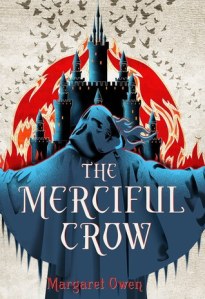
Serena’s Review: “The Merciful Crow”

36483378._sx318_Book: “The Merciful Crow” by Margaret Own

Publishing Info: Henry Holt, July 2019

Where Did I Get this Book: audiobook from the library!

Book Description: A future chieftain.

Fie abides by one rule: look after your own. Her Crow caste of undertakers and mercy-killers takes more abuse than coin, but when they’re called to collect royal dead, she’s hoping they’ll find the payout of a lifetime.

A fugitive prince.

When Crown Prince Jasimir turns out to have faked his death, Fie’s ready to cut her losses—and perhaps his throat. But he offers a wager that she can’t refuse: protect him from a ruthless queen, and he’ll protect the Crows when he reigns.

A too-cunning bodyguard.

Hawk warrior Tavin has always put Jas’s life before his, magically assuming the prince’s appearance and shadowing his every step. But what happens when Tavin begins to want something to call his own?

Review: As with many popular YA fantasy series (there are just too many!), I often don’t get around to them until I see the sequel start popping up on early release sites. And then in a temporary lapse of judgement I request the sequel only to quickly realize that means, oh wait, I have to get my hands on the first one, get it read, and review it before I can even start the book I just so eagerly requested. I do this again and again, and do I ever learn? Nope! It’s even more frustrating when I read the first book and don’t care for it, knowing I’ve already committed myself to the sequel. Luckily, that’s not the case with this one!

Fie belongs to the lowest of the low, a caste of people whose only job is to care for the dead and dying of a deadly plague that sporadically grips various villages and townships. While completely necessary to the function of society, Crows are at best ignored and at worst hunted in the night. So, when one of their typical jobs caring for two dying young men ends up with Fie and her fellow caught up in a plan of an escaping prince and his comrade, Fie takes the opportunity for all its worth, bargaining for a better future for her and her people. But first, she must find a way to deliver these two to safety, despite everything set against them.

Every once in a while when I read an audiobook, I’m aware of how my reading experience is probably affecting my overall take on the book in hand. This can go two ways, of course, with a poor narrator sinking a book almost immediately, and a skilled one catching my in more quickly than I might have been had I been reading in the traditional manner. I think this is one of the latter experiences. The narrator for this book was excellent, giving many characters, especially Fie herself, unique accents and ways of speaking. The book was certainly written to suggest that Fie had a Scottish accent of sorts, so it was great that the narrator was able to fully capture this aspect of the story. She was also able to add a lot of understated tension and emotion to Fie, something that I think probably wasn’t as obvious just on the page itself.

The book obviously had certain things in its favor regardless of media format. I really liked the bird-based caste system and world-building that the author set up. There were interesting connections and powers that neatly aligned with the type of bird that was used to represent a certain caste. Crows, obviously, deal with the dead. Hawks are skilled hunters and warriors. And so on.

While overall I understood the role the Crows played in this society, I did question the vehemence at which they were often hated by those around them. They seem to perform a pretty essential task, dealing with the plague-ridden, and as the only caste that doesn’t suffer from this plague, they’re really the only options for people. We also learn that pretty dire things happen if a plague ridden body isn’t dealt with properly. Given all of this, I can get how a Caste like this might inspire wariness from the general public, but how do we get to the state where they’re literally hunted down and killed at times? Seems pretty backward for really the only Caste that is actually necessary to the ongoing survival of a people. There were bits and pieces of the world-building like this that I never felt were fully explained or lined up properly. It was often distracting when these questions came up, as I was usually able to sink into just enjoying the main character and her journey and was only jarred out of it when these moments arose.

Fie herself was an excellent main character. She’s rough and tumble and perfectly exemplifies the type of no-nonsense person that would survive and grow into a leadership position in this type of society. She’s seen things and has no time for the nonsense of others. Her very different relationships with Tavin and Jasimir are also very interesting. The romantic relationship was perhaps a bit too easy and obvious. But I enjoyed the struggles that she went through in understanding the prince and of them both coming to a place of mutual respect. Each had to learn of the restrictions placed on the other and how their own worldviews influenced how they saw change happening going forward.

While I was interested in Fie’s own personal story, the book did drag a bit in the middle. There’s a lot of traveling.  A lot. And often if felt like not much was really happening in between some of the bigger scenes. It’s also the type of book that, while I enjoyed it in the moment, it hasn’t stuck with me as much as I had hoped. Even now, only a week or so after I finished it, I’m struggling a bit to remember exactly how things lay in the set-up for book two. That said, however, I definitely enjoyed it enough to be looking forward to the sequel and conclusion of this story. It will be interesting to see how it does not in audio format as well.

Rating 7:  A bit forgettable with some questionable world-building, but a strong main character and audiobook narrator really sold this one for me.

Reader’s Advisory:

“The Merciful Crow” for some reason isn’t on many interesting Goodreads lists, but it is on “Crows and Ravens.”

Find “The Merciful Crow” at your library using WorldCat!


My Year with Jane Austen – “Emma” [1996]

mv5bn2e1ytuzzdatodq2ys00mwnjlwezmzatzjgwy2m3ztcwotjhxkeyxkfqcgdeqxvynje5mjuyotm40._v1_uy268_cr00182268_al_Movie: “Emma”

Release Year: 1996

Actors: Emma – Gwyneth Paltrow

Mr. Knightley – Jeremy Northam

Harriet Smith – Toni Collette

Frank Churchill – Ewan McGregor

Comparison – “Indulge your imagination in every possible flight.”

This and the 1995 “Pride and Prejudice” were probably my earliest adaptations of Jane Austen books that I watched repeatedly. Since the release of the 2009 version of “Emma,” I’ve preferred that one, but much of that comes down to its longer length and my never-ending love for Johnny Lee Miller. I ultimately still enjoy this version and can appreciate Paltrow’s version of the main character.

The movie definitely stays more true to the book in the first half of the story, covering the Harriet/Elton/Emma love triangle pretty effectively. Once Frank Churchill and Jane Fairfax arrive on the scene, the story diverges more and leaves about a bunch of fairly critical information/scenes that really establish the situation going on there. While effectively changing the way that story line plays out and the fallout of that situation, overall, given the time restraints of this movie, things still seems to come together well enough. If you were going to cut back on a portion of the story, it makes sense that it would be that one. It really does take all of those extra scenes and little side comments from Frank Churchill to establish the full history of between him and Jane and why she would choose to pursue being a governess. There’s no way to really include all of that without either cutting back on Harriet’s story or cutting back on Knightley and Emma, which would be inexcusable.

The movie keeps a few important lines of dialogue, but definitely strays pretty far from adhering to close to the original. More often than not, it will cover similar scenes and topics of conversation but mildly tweak the actual dialogue itself. Most of this works well enough, though I didn’t care as much for this version of the final romantic exchange between Mr. Knightley and Emma. Instead, I appreciated more the added small jokes that the movie threw in between these two characters which I thought worked very well and highlighted the good chemistry between the two actors.

While I still prefer the 2009 version (it’s really just impossible to compete with a version that can devote literally two times more time to the story), I do like this adaptation overall. I don’t have any real complaints with Paltrow’s interpretation of the character or much of what is cut. I also think the music, costuming, and many of the outdoor sets are also excellent and tie well together with the overall tone of the movie.

Heroines – “I hate to hear you talk about all women as if they were fine ladies instead of rational creatures.”

Since this film’s release, Gwyneth Paltrow has developed a certain reputation that often plays against her. I’m not quibbling with that, as she has definitely said and done some things that deserve all the raised eyebrows. But as a performer, I’ve never had a problem with her. And in my opinion she’s pretty perfectly cast as Emma. Even the weirdness of the actress kind of makes sense for a character like Emma!

While she definitely plays Emma a bit more cool than some of the version we’ll see later on,  I do think that this interpretation is pretty close to the book’s description and to what one could expect of a lady of the time in her position. She’s polite and proper for the most part, but we do see small breaks that show that she’s still a flawed young woman: snapping a bit at Mr. Elton at the Christmas party, deferring performing at the party until Jane is suggested as an alternative, etc.

The movie also includes a bit of inner narration for the character which I think is an interesting and almost necessary aspect to really get at Emma’s inner thoughts and all the flaws in her own reasoning. To make up for where this tactic doesn’t work, the movie adds in more talks between Emma and Mrs. Weston that further elaborate. Emma confesses to Mrs. Weston the mess she made of the Elton/Harriet situation, swears off matchmaking, and then promptly begins wondering aloud who would be right for Harriet. She also confesses her realization about her own feelings for Mr. Knightley to Mrs. Weston later in the movie. Here, in something that I think is unique to this adaptation, we see Mrs. Weston give Emma instructions that exactly match what Emma had told Harriet to do with regards to Harriet’s love life earlier. It’s a nice touch that highlights just how much of Emma’s true wisdom came from Mrs. Weston originally, as we see in this later exchange that these instructions must have been things she had said before to Emma.

I also liked the way that Emma experiences the fall-out of her cruelty to Miss Bates. The event itself is made pretty heart-wrenching with Miss Bates commenting that she must be pretty intolerable for an old friend to say something like that. Mrs. Weston shoots her many disapproving looks. And, of course, the lecture from Mr. Knightley is harsh, and we see Emma immediately break down under the crushing disappointment of her friend. To make matters worse, in this version, Miss Bates refuses to see Emma the next day when Emma attempts to visit to make up for things.

I also really like Toni Collette’s version of Harriet. She’s immensely likable, and it’s impossible not to feel for her as she suffers from Emma’s nonsense. Another interesting change in her storyline is that Emma thinks up Harriet and Frank as a couple before the interaction with the gypsies. I’m not sure exactly why they changed this, as it seems much more random this way. Though we don’t hear any dialogue, I like that we see a small snippet of Emma having to confess to Harriet that she has yet again become the object of love of the man Harriet has been pining for. We see Harriet run from the room and it really help it hit home how hard this would have been for both Harriet and Emma.  To balance this out, I really like that we get an additional scene, later, where Harriet herself tells Emma about her new engagement to Robert Martin, and the two make up. It’s a bit more happy and seems to set up a future of friendship between the two than the more distanced ending in the book, but I don’t mind the change.

Heroes – “What are men to rocks and mountains?”

Jeremy Northam definitely brings his own take to the character of Mr. Knightley. I’m not sure how accurate I feel it is to the book version, however. Not that this is a huge complaint, as I think the version he brings works well with the overall tone of this movie. He’s much more teasing and laughing than the more generally serious Knightley we see in the book. The movie adds a number of additional quips and jokes between Emma and Knightley, and I think the chemistry between the two actors works well to establish this type of familiar, teasing friendship. Northam has a great way of laughing with his eyes whenever the camera cuts to him after one of Emma’s more silly moments. It’s a nice way of seeing him “in” on some of Emma’s plans that probably go unnoticed by most of the other people around them. Even their fight over Harriet and Robert Martin is more light-hearted than what we see in the book, with a few of the more heated exchanges getting broken up with humor.

The age difference thing was pretty weird, however. The movie goes out of its way to include a very specific line about how these two are 16 years apart in age, but this age discrepancy doesn’t hold true at all when actually looking at the characters involved. I’m not sure why they chose to even include this line as it wasn’t necessary in any way to the story they were telling and just threw me out of things since it seemed so glaringly inaccurate with the casting.

Villains – “I do not want people to be very agreeable, as it saves me the trouble of liking them a great deal.” 

I guess we’ll throw Frank Churchill in this section, though I think one of the bigger changes this movie makes is in really scaling back his storyline and making him much less “villainous” than he was in the book. For one, when he goes to confess to Emma in the first half of the movie, he ends up being interrupted and the way it is played makes it seem much more like he was actually planning on telling her the truth about him and Jane.

From there on out, he’s much less flirtatious with Emma than the version in the book. And he’s also much less cruel to Jane, both in secret jokes with Emma and in public. The Dixon joke goes nowhere, and we never see Emma and Frank put Jane on the spot over this. They don’t fight at the strawberry picking. Frank doesn’t flirt obnoxiously with Emma at Box Hill, instead spending his time distracting Mrs. Elton from her persistent haranguing of Jane about her future as a governess. And then due to all of this, Jane never takes the extreme step of actually reaching out to an employer and making plans for her future down that path. In the end, this leaves much of the harm from the Frank/Jane secret fairly toothless. Emma rants for a bit to Mrs. Weston about Frank’s being lucky that she wasn’t more attached, but from what we saw, Frank’s behavior to her wasn’t that extreme to begin with. All told, he gets off with much less criticism (particularly from Mr. Knightley) and behaves better here than he does in the book.

Ewan McGregor’s performance is solid, and he has a way of making his charm slightly sleazy at the same time, which immediately sets him apart from ever being considered a true love interest for Emma. He gets an opportunity to sing, as well, which is always a bonus!

Romance – “A lady’s imagination is very rapid: it jumps from admiration to love, from love to matrimony in a moment.”

The romance is nice enough in this movie. I think it plays second fiddle to much of the comedy, however. Even Emma and Mr. Knightley’s relationship plays better in their teasing friendship stage than the actual romance itself. There’s this weird running commentary of them being like brother and sister and then not actually brother and sister that I just found off-putting. I don’t need the mental image of them being like siblings ever introduced in the equation, even if they set it aside later. Just leave it be.

The dance scene is also a bit of a let-down. The dance they used in particular had Northam needing to prance about a bit more than is becoming. And the way it is filmed is never very intimate, undercutting what is usually one of the more romantic (or at least important) scenes in any Austen story. The camera stays at a distance for much of it, and while I get the symbolism of Knightley and Emma always coming together and then moving apart, it didn’t really hit home the way other dance scenes in other Austen adaptations have.

Lastly, the proposal/love confession scene at the end of the movie. I liked the awkwardness at the lead up and the way Emma shuts him down only to catch him back up and continue the conversation. The movie does include the pivotal “if I loved you less maybe I could about it more” line, but this is one of the few moments where Northam’s winking smile undercuts the sincerity of the line that makes it really hit home. They also had to add in more lines to make up for the fact that Austen never actually wrote a response for Emma. It’s ok, but I wouldn’t list this scene as the best original writing in the movie, which is too bad.

Comedy – “For what do we live, but to make sport for our neighbors, and laugh at them in our turn?”

Miss Bates is quite good in this version. She adds a few tics, like shouting random words at her elderly mother, and continuously interrupting herself to fetch napkins, that really work well. She doesn’t have tons of screen time, but she works well with what she has and sets the character up well enough that the viewer really feels the cruelty in Emma’s throwaway comment at her about talking too much.

Unfortunately, Mr. Woodhouse has even less screen time so much of his humor is drastically cut back. They still include the cake moment in the beginning of the movie, which is always funny. But for much of the rest of the movie he kind of fades into the background.

Instead, the Eltons, both Mr. and Mrs., really hold the spotlight on the comedy side of things. This version of Mr. Elton really leans in to the ridiculousness of the character. He’s not made out to be very handsome or charming at all, something that the character is noted as being in the book as Knightley comments that Elton won’t waste these advantages in marriage. One almost feels sorry for any potential future Harriet would have with this version of the character. His pestering of Emma at the Christmas party is quite funny. And his cruelty towards Harriet at the ball is equally harsh.

Mrs. Elton is pretty great all around. Her constant interrupting of Mr. Elton really cements the unfortunate future he has ahead of him with this woman he deemed better than the sweet Harriet. She doesn’t have tons of screen time, so we miss some of her good moments from the book, but the movie does what it can. Instead of having her lord her position as a new bride over the ball, the movie shows various characters spotting the Eltons coming and making quick escapes, another glance into the future these two have before them. She also gets the only break of the third wall in the entire film when she speaks directly to the camera/audience, criticizing Emma’s wedding for having a deplorable lack of satin.

Fun facts – “Life seems but a quick succession of busy nothings.”

The same dance used for Emma and Mr. Knightley is also used in the 1995 version of “Pride and Prejudice” for Mr. Darcy and Elizabeth. We see much less of it here, of course. I will say that I think it was much better suited for the latter film. The rather stuffy, overly regal tone of the dance fit better with Elizabeth’s perceptions of Darcy at the time. And the less intimate style of dance also suited the awkwardness of that situation for those two characters at that point in the story. In this story, the dance between Emma and Mr. Knightley should be one of the first overtly romantic moments we see. And, if nothing else, we should have a style of dance that highlights the close relationship these two already have, not something that distances them.

Mrs. Bates and Miss Bates are real life mother and daughter, though it was just chance that they were both cast. They are also mother and sister to Emma Thompson, so yet another Austen adaptation with some connection to that actress (the third)!

Ewan McGregor regretted being in this movie. It’s not super clear why, but he disliked his performance and noted that the atrocious wig was definitely not doing him any favors.

Best Movie Gif/Meme: “I dearly love a laugh.”

Mr. Knightley’s line here is “Try not to shoot my dogs.” This is part of the scene where they’re fighting over Harriet’s future and her turning down Robert Martin. It’s a nice example of the teasing approach to the character that Northam has.

In two weeks, I’ll review the 2009 version of “Emma”

Serena’s Review: “The Empire of Gold”

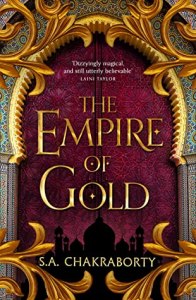
46033842._sy475_Book: “The Empire of Gold” by S.A. Chakraborty

Publishing Info: Voyager, June 2020

Where Did I Get this Book: Edelweiss+

Book Description: Daevabad has fallen.

After a brutal conquest stripped the city of its magic, Nahid leader Banu Manizheh and her resurrected commander, Dara, must try to repair their fraying alliance and stabilize a fractious, warring people.

But the bloodletting and loss of his beloved Nahri have unleashed the worst demons of Dara’s dark past. To vanquish them, he must face some ugly truths about his history and put himself at the mercy of those he once considered enemies.

Having narrowly escaped their murderous families and Daevabad’s deadly politics, Nahri and Ali, now safe in Cairo, face difficult choices of their own. While Nahri finds peace in the old rhythms and familiar comforts of her human home, she is haunted by the knowledge that the loved ones she left behind and the people who considered her a savior are at the mercy of a new tyrant. Ali, too, cannot help but look back, and is determined to return to rescue his city and the family that remains. Seeking support in his mother’s homeland, he discovers that his connection to the marid goes far deeper than expected and threatens not only his relationship with Nahri, but his very faith.

As peace grows more elusive and old players return, Nahri, Ali, and Dara come to understand that in order to remake the world, they may need to fight those they once loved . . . and take a stand for those they once hurt.

Previously Reviewed: “City of Brass” and “Kingdom of Copper”

Review: Oh man, I’ve been looking forward to this book for so long! It’s pretty funny to think that I discovered the first book in this excellent trilogy when Kate and I were accidentally trespassing early in the main room of the convention hall at ALA several years ago. I nabbed a copy before we figured out that we weren’t supposed to be there. (By the by, we had planned to go to ALA again finally this year as a reward for surviving our first year as mothers…damn you, Covid!!) Anyways, there was an even longer wait between this book and the last, a year and a half compared to the usual year, so I was really excited when I nabbed an early review copy. And, best of all, this is the perfect ending to such a great series!

The wheel of violent retribution has turned, and like so many other revolutions and wars of the past, Daevabad must suffer through it. But while tragedy and violence are nothing new to a city that throughout history has been fought over, this time is different, as much more has been lost then ever before. And Dara, Nahri, and Ali are the keys to moving forward. But to do so, they each must grapple with the truths of their past: the unknown, the forgotten, and all of the things buried deep in themselves. What they each discover will not only reshape who they are but will reshape the future of Daevabad itself.

The last book in this trilogy left off on a massive cliffhanger. Daevabad had just been horrifically invaded by Dara and Nahri’s mother who used a dastardly plan that involved mass genocide of Ali’s father and people. Nahri and Ali fled the city and somehow ended up back in Nahri’s homeland of Cairo, Egypt, the powerful ring of Suileman in their possession. The stakes were nothing if not high. And given the incredibly long history of tensions between the various daeva tribes, the shafit (their part-human progeny), and the various other magical players on the board, it was almost impossible to imagine how all of the various threads would be tied up in this final book.

And obviously I won’t spoil it for you! There are so many surprises and twists and turns to this book that completely blew me away. I had a few ideas about what could come to pass. But let me just say, I’m so pleased I wasn’t the author, as not only did none of my ideas happen, but they were all massively underwhelming compared to what we were given! This book not only tackles the tangled web of politics and horrible tribal tensions within Daevabad itself, but it expands the world out so much further than we’ve seen in previous books. We spend more time in Nahri’s Cairo. We travel down the Nile and meet crocodile kings. We get captured by pirates and end up in a wondrous jungle empire. And that’s all probably in the first half of the book, before things really go crazy!

In my past reviews for this series, I’ve talked a lot about the dark history that is laid out before us in this trilogy. And all of that is here as well, with a few extra knife twists to just make it all the more grim. But what stood out to me in this book was just how incredibly funny Chakraborty’s writing is as well. As I was reading, I found myself agian and again highlighting passages on my Kindle that made me laugh out loud. I’m sure this was present in the first two books as well. Indeed, it kind of must have to balance out said darkness. But for some reason, the casual and effortless humor really stood out here. Especially with regards to Nahri and Ali’s characterization, and their tenuous relationship.

Nahri concludes this series as probably one of my all-time favorite fantasy heroines. She never loses sight of who she is throughout this entire series, and she’s just the sort of level-headed, pragmatic, no-nonsense character that I prefer. And, like I said, she’s hilarious. But Ali is really the character to go through the biggest arc in this book. In the first book, I remember being slightly put-off when I discovered I had to give up page time with Nahri to hear about this rather ridiculously idealistic princeling. But over the course of the trilogy, Ali has really come into his own, and it’s in this last book where I really fell in love with him and his story. With the world crashing around him, Ali is forced to finally confront the balance between his ideals and the world that is before him. Not only this, but his is the story that holds the most mysteries and goes to the most unexpected places.  I really loved how both of these characters’ story turned out in the end.

Dara, on the other hand…oof. We all knew his story was tragic, and it’s more of the same here. His lows are just so much lower than anyone else’s that it’s hard to know how he gets through it. He’s half villain, half victim, but you can’t help but feel for him at every turn. Really, though, any villainous acts that he commits are so out-shown by the main villain, Manizeh that it pales in comparison. The villains have always been strong in this book, but wow, she takes the cake.

The writing and world-building is just as strong here as it was in the first two books, so there’s not much new to report here other than the fact that excellence remains excellent. It’s a testament to the strength of the author though that she managed to pull out this conclusion. Like I said before, it was almost impossible to see how she would write herself out of the seemingly inescapable corner the story was in at the end of the last book. It looked like there was no possible ending that didn’t result in death and despair for at least one of our main characters. And while we did still have some of that, I will say that I was completely and utterly satisfied with the conclusion of this story. If you’ve been gobbling up these books like I have, you’re in for a treat with this last one!

Rating 10: A feat of masterful story craft, exploding out the world while also never losing sight of the intimate moments driving its main characters. Simply excellent.

Reader’s Advisory:

“The Empire of Gold” is a newer title so it isn’t on many Goodreads lists, but it is on “Upcoming 2020 SFF with female leads or co-leads.”

Find “The Empire of Gold” at your library using WorldCat!