
Kate’s Favorite Reads of 2019: Picks 10 Through 6

Another a year, another almost impossible task trying to each choose our Top 10 Reads of the year! Like past years I won’t be including re-reads, and I also realized that sometimes my opinion of a book could change and evolve after I had read it, so some surprises may be up near the top. And since it’s the end of the reading year, don’t forget to enter our “Twelve Days of Christmas” Giveaway! Today I’m going to countdown my favorites reads, ten to six. 
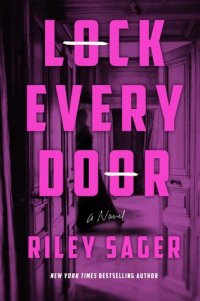
41837243Pick Number 10: “Lock Every Door” by Riley Sager

“Lock Every Door” Review

It took a lot of mulling and hemming and hawing to decide which book was going to be the first to make the Top 10 of 2019. But the book that eventually got the honor was Riley Sager’s “Lock Every Door”, which means all of Sager’s books have been in my Top 10 in the years that they’ve been published. This book got the spot because it was compulsively readable, it had some delicious homages to the creepiness of the Dakota in New York and “Rosemary’s Baby”, and kept me guessing for a majority of the time. Sager still finds ways to surprise me and I greatly, GREATLY look forward to his books every year, and “Lock Every Door” was a wicked and paranoia inducing thriller that will make you question if you’re actually safe in your own home, and if perhaps someone is watching your every move.

38225791Pick Number 9: “Two Can Keep A Secret” by Karen M. McManus

“Two Can Keep A Secret” Review

Karen M. McManus is well on her way to becoming a YA mystery guru, with her debut “One of Us Is Lying” becoming a runaway hit and it’s sequel “One of Us Is Next” coming out early next year. And between those was the (as of now) standalone “Two Can Keep A Secret”, a YA mystery involving missing people, a small town with secrets, and intrepid twins who are new in town. “Two Can Keep A Secret” sucked me in and made sure that I was fully invested in twins Ellery and Ezra and their transition to the town of Echo Ridge. Ellery and her love interest Malcolm were some of the best YA characters I read in 2019, and their romance and tangentially shared traumas that involve a notorious tragedy came together and wove a story I was completely obsessed with. I still think that fans of adult thrillers would find a lot to like in McManus’s books, and “Two Can Keep A Secret” would be the perfect place to start!

42527866Pick Number 8: “They Called Us Enemy” by George Takei

“They Called Us Enemy” Review

Being a “Star Trek” fan I was of course very interested in reading Takei’s graphic memoir about his time in an interment camp during WWII, and “They Called Us Enemy” became one of the best graphic novels I read in 2019 because of it’s scary timeliness. Takei recounts a traumatic and disgusting part in American history where American citizens were imprisoned because of their race and ethnicity, and he gives it a personal and vulnerable spin. Takei’s story is combined with how Executive Order 9066 came to be, and gives a comprehensive and easy to follow history lesson of one of our nation’s greatest shames. Given that there are internment camps along the border now in 2019, it goes to show that perhaps history isn’t so hard to repeat. “They Called Us Enemy” is necessary reading, and one of the most powerful memoirs of the year.

35133922Pick Number 7: “Educated” by Tara Westover

Goodreads Info

Ah ha, the first book of my Top 10 of 2019 that didn’t make it onto the blog due to time and theme! But I would be remiss if I left the fantastic “Educated” off my list. This memoir tells the story of how Tara Westover went from a fundamentalist and abusive home where her education and worth were thrown by the wayside, to becoming an incredibly educated and  independent woman free from her toxic family’s influence. “Educated” is a story that I couldn’t put down and read in one night, and Westover’s deeply personal tale was hard to read at times (from her mentally ill father who isolated the family, to her complicit mother,  to her abusive older brother and the violence he heaped at her), but at the same time it was completely inspirational as she did everything she could to escape. There’s a reason this was such a runaway hit. If you haven’t read “Educated” yet and were mulling it, do it. DO IT.

60931Pick Number 6: “Kindred” by Octavia Butler

“Kindred” Review

The speculative fiction/historical fiction/science fiction epic from Octavia Butler was the stand out book club pick of the year for me! I had always meant to read “Kindred” but hadn’t gotten around to it, but when we picked it for the club it was finally time. This story of a black woman sent back in time to an Antebellum plantation has been hailed as a classic of sci-fi, and it’s commentary on race, racism, and privilege is still resonant in the decades after it was first published. Butler isn’t afraid to tell violent truths about slavery in America, and she also finds ways to show how it still continues to haunt society in the 20th Century, and beyond (which she probably hadn’t intended, and yet here we are). “Kindred” is a hard read, but it’s excellent, and necessary if you want to see what speculative fiction can achieve when it comes to commentary on society.

So that’s ten through six. Next time I will give a countdown of my top five. What have been some of your favorite reads of 2019?
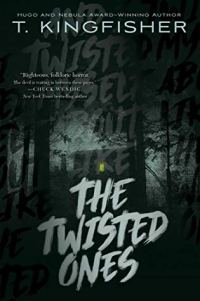
Kate’s Review: “The Twisted Ones”

42527596._sy475_Book: “The Twisted Ones” by T. Kingfisher

Publishing Info: Gallery/Saga Press, October 2019

Where Did I Get This Book: The library!

Book Description: When a young woman clears out her deceased grandmother’s home in rural North Carolina, she finds long-hidden secrets about a strange colony of beings in the woods.

When Mouse’s dad asks her to clean out her dead grandmother’s house, she says yes. After all, how bad could it be?

Answer: pretty bad. Grandma was a hoarder, and her house is stuffed with useless rubbish. That would be horrific enough, but there’s more—Mouse stumbles across her step-grandfather’s journal, which at first seems to be filled with nonsensical rants…until Mouse encounters some of the terrifying things he described for herself.

Alone in the woods with her dog, Mouse finds herself face to face with a series of impossible terrors—because sometimes the things that go bump in the night are real, and they’re looking for you. And if she doesn’t face them head on, she might not survive to tell the tale.

From Hugo Award–winning author Ursula Vernon, writing as T. Kingfisher. 

Review: Of all the horror genres, folk horror tends to be one of the few that I have a hard time sinking my teeth into. While I love the movie “The Wicker Man” (and “The Blair Witch Project”, if you can classify it as such? I feel like maybe you could?), I still haven’t seen “Midsommer” and don’t feel a huge draw to do so. I’ve read a few folk horror novels, and none of them really stood out to me as particularly engrossing or engaging. But I am always wanting to give the subgenre a chance. Because of this, I wanted to read “The Twisted Ones” by T. Kingfisher. After all, while it was described as ‘folk horror’ by some reviewers, the idea of monsters in the woods slowly creeping up was too good of a premise to pass by.

rtuq
Have I been burned by this premise before? Yes. Yet I keep the faith that I won’t be frustrated every time I pick up such a book. (source)

“The Twisted Ones” starts out with a lot of promise. A woman named Mouse (our first person narrator) has gone to her grandmother’s house (along with her dog Bongo) to clean it out after she has died. Mouse and her grandmother didn’t get along, as her grandmother was a TERRIBLE human being, but Mouse was close to her stepgrandfather, Cotgrave, and as she’s cleaning memories of her time with him bubble up. At night she has to contend with her grief and guilt regarding Cotgrave, her anger at her grandmother, and strange noises she hears outside that Bongo just won’t leave alone. As one might guess, the noises aren’t just harmless nature sounds, and soon Mouse finds herself being drawn into stories of ‘twisted ones’, and stumbling into landscapes that shouldn’t be there. Throughout all of this, I was definitely enjoying this story and the slow burn that Kingfisher was putting forth. I liked how through Mouse’s narration we are tuned in with her own initial skepticism (and delightful snark), though we have a dread in our gut that the noises and the weird blurs of animals running around in the dark aren’t just run of the mill North Carolina fauna. As it slowly becomes clear that Mouse and Bongo are dealing with something sinister and threatening, the tension is so tightly wound that the reader will potentially look out their own dark window at night and worry about what they will see. The building tension is grand, as are the supporting characters that Mouse meets while she is in the cabin in the woods. From Foxy the eccentric woman down the road to Tomas the helpful handyman, Mouse and the cast of characters feel real and sympathetic, to the point where you care about them and what happens to them.

All that said, once we get to the heart of the horror and find out what these creatures are any why they are here, the fear and scares immediately departed for this reader. I think that when it comes to ‘monsters in the woods stories’, I am only interested until the monster is revealed. The terror and dread is the unknown, the strange noises in the woods, the blurs in the moonlight. When we get to portals and interactions with the actual beings face to face, and the other revelations as to what they may or may not with Mouse, my interest was completely lost. But I think that has more to do with a lot of my own folk horror tastes, which are firmly placed more towards ambiguity and the unknown. I am far more taken in by an unseen Blair Witch who may or may not be stalking a group of filmmakers in the woods, than I am by a reveal of ‘monsters in the woods aren’t real but used to control the town’ two thirds of the way through the narrative. You have me when it’s ambiguous in folk horror. The moment you explain it, my interest wanes.

This is very much an instance of my own personal tastes getting in the way of the story, and that shouldn’t dissuade ride or die folk horror fans from checking it out. “The Twisted Ones” has some tense moments and scary themes regardless of how I felt about the last third of the book. So don’t take my word for it. Give it a go if this sounds like a book that will keep you up at night and out of the woods.

Rating 6: This had some tense moments and a fun and snarky narrator, but the big reveal was a bit of a let down. That said, it could be just me, and not the book itself.

Reader’s Advisory:

“The Twisted Ones” is included on the Goodreads lists “A Walk in the Woods”, and “Best Supernatural Books, No Romance, No Series”.

Find “The Twisted Ones” at your library using WorldCat!

Kate’s Review: “Monster, She Wrote”

44594661Book: “Monster, She Wrote: The Women Who Pioneered Horror and Speculative Fiction” by Lisa Kröger and Melanie R. Anderson
Publishing Info: Quirk Books, September 2019

Where Did I Get This Book: The library!

Book Description: Weird fiction wouldn’t exist without the women who created it. Meet the female authors who defied convention to craft some of literature’s strangest tales. And find out why their own stories are equally intriguing.

Everyone knows about Mary Shelley, creator of Frankenstein; but have you heard of Margaret Cavendish, who wrote a science-fiction epic 150 years earlier? Have you read the psychological hauntings of Violet Paget, who was openly involved in long-term romantic relationships with women in the Victorian era? Or the stories of Gertrude Barrows Bennett, whose writing influenced H.P. Lovecraft? Monster, She Wrote shares the stories of women past and present who invented horror, speculative, and weird fiction and made it great. You’ll meet celebrated icons (Ann Radcliffe, V.C. Andrews), forgotten wordsmiths (Eli Coltor, Ruby Jean Jensen), and today’s vanguard (Helen Oyeyemi). And each profile includes a curated reading list so you can seek out the spine-chilling tales that interest you the most.

Review: Even though horror is hands down my favorite literary genre (or genre of any kind of consumable media), that doesn’t exclude it from my general lack of experience with ‘the classics’. Sure, I’ve read books like “Frankenstein”, “Dracula”, and “The Turn of the Screw”, but in general I have kept my horror experiences fairly solidly in the 20th century and beyond. On top of that, a lot of what I’ve read has been fairly male dominated. So when I saw that “Monster, She Wrote: The Women Who Pioneered Horror and Speculative Fiction” was a book that was coming out, I decided that I needed to educate myself about horror classics, specifically those written by women, and to expand my ‘to-read’ list to fit the recommendations made within this book.

And boy are there many recommendations! “Monster, She Wrote” gives us a list of female authors of horror and speculative fiction, gives a comprehensive but succinct biography of each of them, and explains the importance and significance of a few of their works, or at the very least gives us the plot and lets us suss out the significance for ourselves. Lisa Kröger and Melanie R. Anderson are sure to cast a wide net throughout the genres, covering a number of different authors and subgenres within the genres. Each section is divided based on the subgenres, which I liked because it made is so I could give extra focus on the kinds of stories that really tickle my fancy and to hone in on the authors that perfected the stories. While they, of course, cover some of the heavy hitters like Mary Shelley and Shirley Jackson, they also are sure to bring in diverse perspectives, including women like Toni Morrison and Helen Oyeymi, so that the texts discussed and recommended aren’t incredibly white in nature (side note, I loved that “Beloved” was included in this book and Morrison by association. It’s one of my favorite books and at it’s heart it is, indeed, a very effective ghost story). I also got to learn about a number of authors who I had either only heard of in passing, or had never heard of, and because of this I now have added people like Edith Wharton and Anne Radcliffe to my list of ‘must reads’, as well as modern voices like Oyeymi (I will be talking to my Mom so I can borrow her copy of “Boy, Snow, Bird”). Finally, at the end of each biography we get a handy dandy list of books to try out, split into three categories, labeled ‘Not To Be Missed’, ‘Also Try’, and ‘Related Work’. These suggestions are stories by the authors themselves, as well as other stories and tales by different people whose themes are either direct call backs or similar in tone. How great to have a curated and well put together list of suggestions!

It’s also important to note that throughout all of these biographies and personal histories of these women authors, there are hints and senses of the difficulties and obstacles that many of them faced or face as women living at their respective times in their respective societies. These hardships could be due to gender, class, or race, and Kröger and Anderson, while never focusing on it, absolutely acknowledge it and make the reader realize that women voices in the genre have been very important and formative, and yet have been downplayed or, in some cases, almost forgotten (there were a few instances in which an author’s ‘Not To Be Missed’ work was noted as being out of print. How incredibly upsetting).

Any horror or speculative fiction fan ought to do themselves a favor and read “Monster, She Wrote”. You will undoubtedly get some new reading ideas, or gain new appreciation for authors you already love, or authors you have yet to discover.

Rating 8: And informative and expansive history of significant female voices in horror and speculative fiction, “Monster, She Wrote” has a lot of reading ideas and a lot of fun and interesting facts about an array of authors.

Reader’s Advisory:

“Monster, She Wrote” isn’t on many Goodreads lists as of now (why?), but it is included on “Best Books About Genre Fiction”.

Find “Monster, She Wrote” at your library using WorldCat!

Kate’s Review: “Trace of Evil”

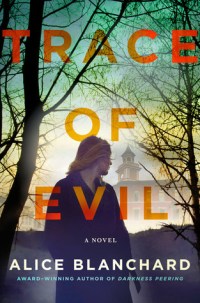
43263388Book: “Trace of Evil” (Natalie Lockhart #1) by Alice Blanchard

Publishing Info: Minotaur Books, December 2019

Where Did I Get This Book: I received an eARC from NetGalley.

Book Description: A riveting mystery that introduces a bold and audacious rookie detective assigned to hunt for a killer who is haunted by the past in this gripping murder case…

Natalie Lockhart always knew she was going to be a cop. A rookie detective on the Burning Lake police force, she was raised on the wisdom of her chief-of-police father. These cases will haunt you if you let them. Grief doesn’t come with instructions.

But the one thing her father couldn’t teach her was how to handle loss. Natalie’s beloved sister was viciously murdered as a teenager, and she carries the scars deep in her heart. Although the killer was locked up, the trace evidence never added up, and Natalie can’t help wondering―is the past really behind her?

As the newest member on the force, Natalie is tasked with finding nine missing persons who’ve vanished off the face of the earth, dubbed “the Missing Nine.” One night, while following up on a new lead, she comes across a savage crime that will change everything.

Daisy Buckner―a popular schoolteacher, wife to a cop, and newly pregnant―lies dead on her kitchen floor. As Natalie hunts for Daisy’s killer in the wake of the town’s shock, her search leads to a string of strange clues―about the Missing Nine, about Daisy’s secret life, and reviving fresh doubts about her sister’s murder.

As the investigation deepens, Natalie’s every move risks far-reaching consequences―for the victims, for the town of Burning Lake, and for herself.

Spellbinding and gripping, Trace of Evil is a novel of twisting suspense that will leave you breathless.

Review: Thanks to NetGalley for sending me an eARC of this novel!

Awhile back one of the librarians I follow on Twitter was speaking highly of a book by an author I hadn’t heard of. He had an ARC of “Trace of Evil” by Alice Blanchard, and when I clicked on the description it sounded like it would be up my alley. Small town police detective, missing people, a victim with secrets, all matters that will pull me into a story on any given day. I got it from NetGalley, and opened it up, expecting all of those things but maybe not much more. And what else did I get?

Witchcraft, covens, and teenagers with secret ties to black magic rituals.

giphy-1
Oh HELL YES. (source)

“Trace of Evil” has three main mysteries that make up the guts of the plot. The first is the most obvious, that of the murder of Daisy Buckner. Natalie Lockhart, our plucky but haunted protagonist, has her own personal connections to Daisy. Not only is she colleagues with Daisy’s husband, Natalie’s older sister Grace wa very close with Daisy, so Natalie’s personal investment is high. I enjoyed seeing Natalie slowly piece together various components to the murder, and how Blanchard was sure to show some of the downfalls of being a woman detective in a small town where everyone knows everything about your past. The second mystery involves a number of missing women, or the Missing Nine, that Natalie has been trying to solve since she joined the force. But along with that obsession, Natalie has her own personal mystery to try and solve; when she was a kid, a masked boy attacked her in the woods. Natalie has spent the rest of her life trying to find out who that boy was. Throw in the fact that her oldest sister Willow was the victim of a horrific murder, and you have a lady cop with a lot of emotional baggage on top of the usual caseload that she has to take on every day. But these various bits of backstory never bog Natalie down, nor does Blanchard make it an excuse to make Natalie overly prickly, overly reckless, or overly damaged. Her traumas absolutely have shaped her, but instead of taking the obvious route of ‘broken but brilliant cop’, Natalie is instead multifaceted and achingly human. I really, really like her as a protagonist (and yes, I’m already rooting for her and her colleague Luke to hook up. She’s had a thing for him since childhood, y’all, it’s great!). Blanchard also is able to take all three mysteries and to show how they are connected, even in the most superficial of ways, and really make the reader buy into the connections. This was one of those instances where I didn’t guess any of the solutions to any of the mysteries, and that left me tickled.

And yes, there is a witchcraft element that I thoroughly enjoyed, if only because I totally saw my own dabbling in Wicca within this plot point. Burning Lake, the town Natalie lives in, has a history of witchcraft and witch trials, and it has permeated a lot of the culture and turned it into a Salem-esque community. Not only did Natalie and her sisters dip their toes into it, but now Natalie’s niece and her friends have started to dabble. But, as is the case in other tales, cliques and infighting tends to lead to a misuse of the ‘magic’, and I loved seeing Blanchard bring that into this story and finding ways to not only connect it to the mystery at hand, but to also show how teen girls who feel powerless can be drawn in to the idea of magic and ritual.

I really, really loved “Trace of Evil”. My hope is that Natalie Lockhart comes back soon, because I now have a new mystery series that I fully intend to keep up with. I highly recommend this thriller to all fans of the genre, and hope that you love it as much as I did.

Rating 10: Suspenseful, detailed, engaging, and filled with great characters, “Trace of Evil” is a promising start to a new series that I thoroughly loved.

Reader’s Advisory:

“Trace of Evil” is new and not included on many Goodreads lists. But I think that it would fit in on “Small Towns with Secrets”, and “Spellbinding Fiction”.

Find “Trace of Evil” at your library using WorldCat!

Kate’s Review: “The Dead Girls Club”

45701350Book: “The Dead Girls Club” by Damien Angelica Waters
Publishing Info: Crooked Lane Books, December 2019

Where Did I Get This Book: I received an eARC from NetGalley

Book Description: A supernatural thriller in the vein of A Head Full of Ghosts about two young girls, a scary story that becomes far too real, and the tragic–and terrifying–consequences that follow one of them into adulthood.

Red Lady, Red Lady, show us your face…

In 1991, Heather Cole and her friends were members of the Dead Girls Club. Obsessed with the macabre, the girls exchanged stories about serial killers and imaginary monsters, like the Red Lady, the spirit of a vengeful witch killed centuries before. Heather knew the stories were just that, until her best friend Becca began insisting the Red Lady was real–and she could prove it.

That belief got Becca killed.

It’s been nearly thirty years, but Heather has never told anyone what really happened that night–that Becca was right and the Red Lady was real. She’s done her best to put that fateful summer, Becca, and the Red Lady, behind her. Until a familiar necklace arrives in the mail, a necklace Heather hasn’t seen since the night Becca died.

The night Heather killed her.

Now, someone else knows what she did…and they’re determined to make Heather pay.

Review: Thank you to NetGalley for sending me an eARC of this novel!

I’ve spoken before about how my childhood was distinctly lacking in spooky urban legends about my community and neighborhood. I don’t know if that’s just larger city living or if I was surrounded by people who didn’t have time for such nonsense, but I do feel a little sad that we had a serious lack in fun, innocent creepy stories (and instead contended with actual creepy stories, like the flasher who’d jump out at joggers on the path by our house). I think that because of this I am especially drawn to stories with scary local folklore themes, and that was the main draw of “The Dead Girls Club” by Damien Angelica Walters. Well, that and the description of a group of teen girls who liked to talk serial killers for funsies. I wish I had that kind of friendship as a teenager. I went into “The Dead Girls Club” with high hopes and expectations that it would meld teenage girl angst with the supernatural, and for awhile I thought it had succeeded. Until it didn’t.

But before we talk about my frustrations, I want to emphasize that “The Dead Girls Club” was a pretty fun ride for the majority of the story. It hops between timelines, that of the present day, and that of the early 1990s. Our focus is mostly on Heather, a woman whose childhood best friend, Becca, was killed one fateful summer, after telling tales of a supposed witch called The Red Lady. Becca, Heather, and their friends were part of a secret club that liked the creepy things in life, but Becca’s obsession with the Red Lady urban legend starts to take over all of their lives. Especially when it seems that this made up story may have some truth to it. In the present we see Heather have to confront this summer when she starts getting secret messages from an anonymous someone (or perhaps something) that hints to knowing the truth about what actually happened to Becca, and what role Heather played in it. We see her try to discern who is stalking her, and see how her lingering fear of The Red Lady starts to take it’s toll on her life and psyche. This is interspersed with flashbacks to when Becca first started telling the stories, and we get to see the slow burn and build up of a deteriorating friendship and what exactly happened between the two girls, which left Becca dead.

I thought that the biggest strengths in this book laid in two factors: the first was the mythology and ambiguity of The Red Lady. Walters gives us enough evidence on both sides of the coin to make the argument that The Red Lady is real, or that The Red Lady is a combination of a lonely child’s imagination run amok and the hysteria shared between friends that are looking to freak themselves out. I do think that the narrative falls on one solution eventually, but I did like that a lot of left up to interpretation for a majority of the story. The other strength was in how Walters portrayed the complicated nature that some teenage friendships can have, specifically between two girls. I know this complexity and complication pretty well from my own experience, and seeing how Becca and Heather both start to grow apart and yet still cling desperately to each other was well written and completely believable. Hell, the Red Lady story itself was a fun and scary one, with smatterings of feminist revenge and all the best ghost stories that come with it. Walters also peels back the motivations for both Heather AND Becca, and once you get to the cores of both of them the spectre of tragedy is just as heavy as the spectre of the Red Lady. They are both sympathetic and frustrating characters, and I think that is the only way they could be written.

But the reason this gets bumped down a few ratings is because, unfortunately, Walters decided to throw in one big and out of left field twist that, for me, derailed the entire story. I won’t spoil it, as I think this is still worth the read, but by the time one of the big reveals came to be I rolled my eyes and muttered a frustrated but not terribly surprised ‘seriously?’ Again, I am not a hater of well done twists. If you can set it up effectively enough that in the moment you have a ‘but of COURSE’ epiphany based on small clues that came before it, I’m going to sing it’s praises forever. But in this case it just felt like a twist for the sake of a twist, and not one that was earned. You gotta earn those twists, people. That’s the only way to stick that landing.

“The Dead Girls Club” is a creepy and unsettling story that didn’t live up to its potential. It’s still worth taking a look, and I am definitely putting Damien Angelica Walters on my radar. But it could have been stronger.

Rating 6: A creepy thriller with a fantastic urban legend at its heart, but it gets derailed by a frustrating twist ending.

Reader’s Advisory:

“The Dead Girls Club” is new and not included on many relevant Goodreads lists, but I think that it would fit in on “Mysteries Featuring Urban Myths/Folklore”.

Find “The Dead Girls Club” at your library using WorldCat!

Kate’s Review: “American Fire”

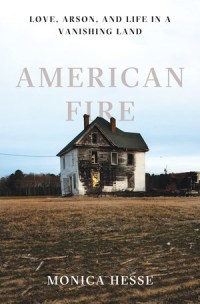
32191677Book: “American Fire: Love, Arson, and Life in a Vanishing Land” by Monica Hesse
Publishing Info: Liveright, July 2017

Where Did I Get This Book: Audible

Book Description: Shocked by a five-month arson spree that left rural Virginia reeling, Washington Post reporter Monica Hesse drove down to Accomack County to cover the trial of Charlie Smith, who pled guilty to sixty-seven counts of arson. But Charlie wasn’t lighting fires alone: he had an accomplice, his girlfriend Tonya Bundick. Through her depiction of the dangerous shift that happened in their passionate relationship, Hesse brilliantly brings to life the once-thriving coastal community and its distressed inhabitants, who had already been decimated by a punishing economy before they were terrified by a string of fires they could not explain. Incorporating this drama into the long-overlooked history of arson in the United States, American Fire re-creates the anguished nights that this quiet county spent lit up in flames, mesmerizingly evoking a microcosm of rural America – a land half gutted before the fires even began.

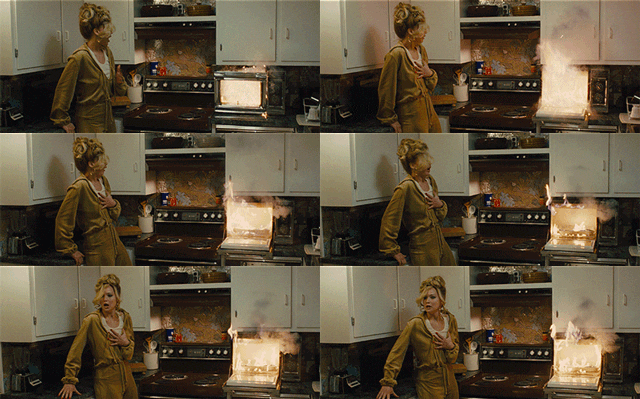
Review: True crime is a genre that is known for a focus on the more horrific crimes that can be committed. You will usually find stories of murder, kidnapping, and missing people, and I’ll admit that those are the kinds of stories that float my boat the most. But there is a very large swath of topics that can be covered in the genre, and for the people who are interested in the recent true crime boom but not interested in the blood and gore, I have good news for you. “American Fire: Love, Arson, and Life in a Vanishing Land” by Monica Hesse may be the perfect true crime book to check out. Because not only does it address relevant social issues, and focus on a crazy and obsessive romance, it has a shit ton of fires and arson that are incredibly nuts in their origins and motives.

giphy-3
Buckle up, buttercups, it’s about to get weird. (source)

Hesse doesn’t beat around the bush when it comes to revealing the perpetrators of the 60+ arsons that were set in Accomack County, Virginia in 2012. Given that she initially wrote articles for the Washington Post about these fires, the identities of Charles Smith and Tonya Bundick were already out there for all to see if you had followed Hesse’s writings. But that doesn’t make “American Fire” any less compelling. On the contrary, it’s almost more fascinating to be told the backgrounds of Smith and Bundick, the ways that the investigation unfolded for those who had to fight and solve the arsons, and to explore the economic and social circumstances that Accomack County was in when the arsons occurred. What you end up taking away is a smorgasbord of both maddening and upsetting circumstances that came together to create a vortex where these fires terrified and fascinated a community already on its knees. We get to see the relationship between Smith and Bundick come to fruition, and by learning about their backgrounds (from the menial and petty crimes that Smith had already committed to Bundick’s past relationships, be they romantic of familial) we see the context of how these two people found each other, clung to each other, and did completely outlandish acts (like ARSON) together. Hesse compares and contrasts them with other criminal romances, and tries to figure out how their codependence and passion could take such a strange and destructive turn. I thought that she gave them a pretty fair shake, in that she never excuses their actions, but paints a picture that leaves it so the reader can get inside their heads and potentially empathize, at least a little bit. And let me tell you, it’s one crazy ride that reads like something out of a Coen Brothers film, which is only buoyed by Hesse’s writing style and how gifted she is a narrative non-fiction.

But what’s even more interesting is how Hesse peels back the layers of Accomack County itself, and gives us an idea of what it was like in 2012. The arsons were all committed in buildings that were long abandoned, and given that it was 60+ buildings it goes to show that, like other rural parts of America during this time, the economic downturn really hit this area hard. With corporate agriculture and big box stores moving in and pushing independent businesses and their owners out, and with the general nosedive the economy took during the Recession, Accomack County was already going through something bleak, and its residents were in dire straights even before the fires began. The fires became a literal hell scape in a lot of ways, though they also piqued the interests of those in the communities as to who could be doing it. It’s an interesting prelude to what has become such a hot topic as of late, because of the cultural shift that seems to have happened with the 2016 election and how these communities and their grievances have been connected to it. Accomack County feels like a ghost of itself in this book, a place that has been left behind in some ways, and I couldn’t help but think of present day and how it feels like everything is burning to the ground and the inevitable tie our political climate now has to the idea of the forgotten rural areas. It just struck a lot of nerves for me as I read it. And I think that was part of the point that Hesse was trying to make.

“American Fire” might be the perfect true crime book for those who want to give the genre a try, but are reluctant to read something that has too much violence or nihilism. It’s a bizarre tale to be sure, but it has a lot of resonance that I didn’t expect from a book about two lovers who burn shit to the ground. But then one should expect the unexpected when it comes to this book.

Rating 8: A fascinating and a little bonkers tale of romance, fires, and a shifting American culture that reads stranger than fiction.

Reader’s Advisory:

“American Fire” is included on the Goodreads lists “Books About Middle America – NonFiction”, and “Murderino Reading List”.

Find “American Fire” at your library using WorldCat!

Kate’s Review: “A Madness of Sunshine”

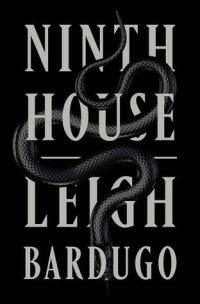
43419669._sx318_Book: “A Madness of Sunshine” by Nalini Singh
Publishing Info: Berkley, December 2019

Where Did I Get This Book: I received an eARC from NetGalley.

Book Description: New York Times bestselling author Nalini Singh welcomes you to a remote town on the edge of the world where even the blinding brightness of the sun can’t mask the darkness that lies deep within a killer…

On the rugged West Coast of New Zealand, Golden Cove is more than just a town where people live. The adults are more than neighbors; the children, more than schoolmates.
 
That is until one fateful summer—and several vanished bodies—shatters the trust holding Golden Cove together. All that’s left are whispers behind closed doors, broken friendships, and a silent agreement not to look back. But they can’t run from the past forever.
 
Eight years later, a beautiful young woman disappears without a trace, and the residents of Golden Cove wonder if their home shelters something far more dangerous than an unforgiving landscape.
 
It’s not long before the dark past collides with the haunting present and deadly secrets come to light.

Review: Thanks to NetGalley and Berkley Books for providing me with an eARC of this novel!

Back at my previous library job, I spent a lot of my time shelving books in all sections of the library. This branch had a very high circulating romance section, and therefore I shelved a lot of Nalini Singh. This was my only exposure to her before Berkley Books sent me the link to an eARC of “A Madness of Sunshine”. I am not really one for romance novels in general, but the description caught my attention for two reasons. The first is that the plot is described like a gritty thriller. Missing women, a town with secrets, a potential serial killer, all of these things entice me. The other is the location: it takes place in New Zealand, my favorite place in the entire world! Could I relive the best vacation of my life through the pages of this book? I was willing to try!

giphy-1
Two of my favorite Kiwis, who did not make an appearance in this book. (source)

“A Madness of Sunshine” is framed as a mystery/thriller, with the main thread of the story being about the disappearance of Miriama, a young and effervescent woman who goes missing and whose absence is noticed by many people within the small town of Golden Cove. It also happens to harken back to similar cases of young women who had gone missing a number of years previously. But the focus is more upon the two people who have their own reasons for wanting to find her. The first is Anahera, a woman who was born and raised in Golden Cove, and then left after a traumatic experience and she met a man who whisked her off to London. She’s back home, now a new widow (and reeling from the shock of his infidelity), and has a personal friendly connection to Miriama and her family. The other is Will, a detective who is trying to move on after he bungled an investigation in such a way that it left collateral damage. As the two of them try to put together the clues towards where Miriama could be, they start to get closer to each other. Which, given that Singh is a prolific and well received romance author, makes sense. I enjoyed both Anahera and Will, and while I didn’t really feel like they grew as much as I would have liked them to within the narrative I liked the heat gradually sparked between them. I did like learning about both of their backgrounds as well, and their various tragic backstory details made me really root for them to find happiness when all was said and done.

However, this is a thriller at it’s core, and when it came to that aspect of this book “A Madness of Sunshine” could have been a bit stronger. I would have liked to have more exploration of the missing women from years earlier, as it felt like they just got mentioned and brought up every once in awhile. I also felt like Miriama was more of an ideal than a character that we were supposed to care about, and because of that I didn’t really care one way or the other if she was found safe and sound at the end of the day. In terms of what happened to her, and what happened to the missing women prior, the solutions to those mysteries were standard and kind of bland. They made sense, but by the time we got to them I was less rocked by the revelations, and more ‘oh, okay’ when all was said and done. Not exactly the kind of reaction I like to have when it comes to the solution of a tantalizing thriller or mystery!

But the biggest positive of this book for me was the New Zealand locale. Singh effortlessly brings the town of Golden Cove to life, and the references to various aspects of New Zealand culture, geography, and history really anchored the setting for me. It makes me think about picking up more Nalini Singh novels, with the expectation of romance and heat, and see what they do for me. After all, it was the romance aspects that were the strongest parts of this book.

I think that if you are a thriller fan who isn’t used to a mix of other genres, “A Madness of Sunshine” may not satisfy your reading itch. But if you are going in with the expectation of a little bit of romance and angst, it might be a pretty good fit!

Rating 6: While it was a bit more heavy on the romantic and hidden past elements than the thriller ones, “A Madness of Sunshine” was an entertaining read, and takes place in my favorite place on Earth.

Reader’s Advisory:

“A Madness of Sunshine” isn’t on many relevant Goodreads book lists yet, but I think it would fit in on “Popular Missing Persons Books”, and “New Zealand”.

Find “A Madness of Sunshine” at your library using WorldCat!

Kate’s Review: “Ninth House”

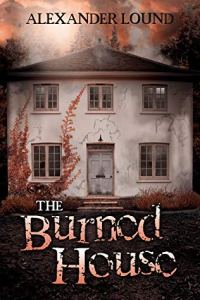
43263680Book: “Ninth House” (Alex Stern #1) by Leigh Bardugo
Publishing Info: Flatiron Books, October 2019

Where Did I Get This Book: The library!

Book Description: Galaxy “Alex” Stern is the most unlikely member of Yale’s freshman class. Raised in the Los Angeles hinterlands by a hippie mom, Alex dropped out of school early and into a world of shady drug dealer boyfriends, dead-end jobs, and much, much worse. By age twenty, in fact, she is the sole survivor of a horrific, unsolved multiple homicide. Some might say she’s thrown her life away. But at her hospital bed, Alex is offered a second chance: to attend one of the world’s most elite universities on a full ride. What’s the catch, and why her?

Still searching for answers to this herself, Alex arrives in New Haven tasked by her mysterious benefactors with monitoring the activities of Yale’s secret societies. These eight windowless “tombs” are well-known to be haunts of the future rich and powerful, from high-ranking politicos to Wall Street and Hollywood’s biggest players. But their occult activities are revealed to be more sinister and more extraordinary than any paranoid imagination might conceive.

Review: I was never going to be Ivy League material and I never had the aspirations to be. The only thing that sounded at all interesting about Yale was the collection of secret societies that are scattered throughout the campus community, but even that came off as pretentious as hell to teenage me (though secretly I thought how cool to be admitted into one). Never did I consider that these secret societies would make a genuinely solid premise to a dark fantasy novel, but if anyone could pull it off, it would be Leigh Bardugo. Which brings us to “Ninth House”, Bardugo’s foray from YA fantasy into adult dark fantasy, a jump that I was very interested in seeing in motion. While I haven’t really cared for Bardugo’s fantasy tales like the “Grisha” series or the “Six of Crows” duology, I liked her take on “Wonder Woman”, and LOVED her short story “Verse Chorus Verse”. It stood to reason that Bardugo would probably do something at least interesting with a dark fantasy magic story set on the Yale Campus. I went in with midlevel expectations, and those expectations were blown out of the water. I loved “Ninth House”.

Bardugo has created a fun melding of the real world and a magical environment, with Yale University as an unlikely and yet seamless backdrop. She brings in themes class, privilege, and misogyny, and stirs them into magic, ghosts, the afterlife, and the occult. It’s no surprise that these themes can blend together with little problem, but Bardugo does it in a way that really packs a punch and gets her intent across. At first glance the idea of Yale’s secret societies as magical groups could feel a bit “Harry Potter”, but the darkness is there from the get go, with histories of said groups abusing their powers and preying on the less privileged and ‘less valued’, at least in their eyes, all for a perceived ‘greater good’. It’s up to Lethe House to keep them in line, lest they start abusing their stature and powers again, though you get the impression that Lethe is more there to work as ‘fixers’ should things go wrong, as the corruption is still very much in play. The social commentary may seem a little obvious, but it’s written in such a charming and engaging way that I didn’t even care. Bardugo also creates a unique ghost system. The ghosts, or ‘Grays’ as they are called, are everywhere, though they are mostly unseen by regular people (more on that in a moment). They can also disrupt magical rituals, and that would be a bad thing to the secret societies. I loved the descriptions of the Grays, from the ones who just meander around campus, to the more sinister and scary, to one whose notorious reputation may not be earned. This one in particular was great. His name is North, he may have killed his fiancee during the Victorian Era, he’s dark and broody and I, of course, fell in love with him almost immediately.

giphy-3
Is he a potential murderer? Yes. Do I care even a little bit? No. (source)

The person tying all of this together is Alex Stern, a first year student at Yale who has a dark past and a purpose for her enrollment. Stern has been able to see Grays her entire life, and a horrific encounter with one left her traumatized (quick content warning moment here: there is a scene of sexual assault in this book that was upsetting and potentially triggering). After falling into drugs to cope, Alex fell into the wrong crowd and ended up the lone survivor of a multiple murder. This is when Yale set their sights on her, her talent to see Grays incredibly valuable, valuable to offer her a full ride and a fresh start. Alex is a fish out of water at Yale, and her pluckiness and grit makes for a fun character whose determination is very easy to root for. While at first she’s perfectly happy being a member of Lethe house and getting the perks of the Ivy League, the murder of a townie girl plunges her into the very dark past of the secret societies. Add in the loss of her mentor, Darlington, and Alex has to find her footing in a strange and dangerous world. Her story is told through time jumps and a nonlinear structure, and it’s an effective way to show how Alex got to where she is, and the influences people and events from her past have shaped her. I especially liked her relationship with Darlington, a Golden Boy of Lethe whose idealistic nature and earnest personality is a fun contrast to Alex, and whose absence makes for a lingering sense of sadness over the story, for both the characters and the reader. But it also makes Alex figure things out on her own, which makes her journey and investigation a bit more empowering.

On top of all this, the story is very engaging and paced perfectly. I had a hard time putting it down, finding myself reading during my down time when I should have been taking care of various tasks around the house. Oh well! What’s a neglected laundry pile in comparison to an addictive read?

“Ninth House” was a fun and fantastic dark fantasy story with lots to love. It’s set up for another book, and I for one cannot wait to get my hands on the next one. I need to know what Alex is going to do next!

Rating 10: A fast paced and well plotted dark fantasy, “Ninth House” builds a complex world of magic and ghosts within an unlikely setting. I’ll be looking forward to the next Alex Stern adventure!

Reader’s Advisory:

“Ninth House” is included on the Goodreads lists “Dark Academia”.

Find “Ninth House” at your library using WorldCat!

Kate’s Review: “The Burned House”

48575470._sy475_Book: “The Burned House” (Jonny Roberts #2) by Alexander Lound

Publishing Info: Self Published, November 2019

Where Did I Get This Book: The author sent me an eARC

Book Description: Nearly a year after learning that he can speak to the dead, Jonny Roberts has spent much of his time working with his new medium friend, Aaron. Whether it’s reconnecting loved ones with dead relatives, or helping spirits to cross over, Jonny has been happy to help.

That is, until a young boy is found dead, his body impaled with floorboards, sharpened into knife points; and in the same house where a family died seven years earlier, in a tragic fire.

Suspecting that the event might be down to the supernatural, Aaron and Jonny soon investigate. But when the spirit makes it clear that it doesn’t intend to stop at the boy, they begin to wonder if this might be their most dangerous case yet…

Review: Thank you to Alexander Lound for approaching our blog and sending me an eARC of this book!

Halloween has long passed, but there’s always time for a ghost story as far as I’m concerned. So when Alexander Lound emailed me asking if I would be interested in reading and reviewing the second book in the Jonny Roberts series, “The Burned House”, there was really only one way I could answer.

giphy
Honestly I’m halfway convinced that all of my reactions to anything could be summed up by one of the Rose siblings. (source)

If you recall, I enjoyed the first in the series, “The Spirit in the Crypt” as I found it to be an engaging ghost story with likable characters and high stakes. Teenage medium Jonny Roberts is a fun protagonist, and I was eager to see where things went next for him and his girlfriend Cassy, as well as his medium mentor Aaron. Now that we’ve established Jonny as a full fledged medium, that meant that he’d have to delve deeper into his powers, and with that could mean upped stakes and higher tension. And boy oh boy did we go in both those directions.

In “The Burned House”, Jonny has started to come into his own as a medium, helping Aaron with various spirit cases, and while he and his girlfriend Cassy are still happy and in love, the tension with his ‘profession’ has started to come to the surface. And in this story, there is reason to believe that Cassy’s hesitance may be right, as Jonny and Aaron are soon entangled in the death of a boy, whose body was found in a house in which a family burned to death a few years prior. It soon becomes clear that it’s the work of an angry spirit, and the only insight they have is from the surviving family member, a teenage girl named Megan. Jonny, of course, wants to help, but the good intentions he has involve more and more risk. The story is basically Jonny potentially biting off more than he can chew, and how that threatens not only his life, but his relationships. I liked that Lound showed how someone with his abilities would potentially have a lot of difficulties with relationships with ‘normal’ people, and that you can understand why both he AND Cassy have legitimate reasons to feel the way they do about his new calling. It also means that we get some deliciously angsty scenes with teenagers. And as a teenager who was in love with her boyfriend and had to deal with some problems that felt earth shattering at the time, these scenes felt very, very true to life.

The mystery and motivation behind the angry spirit was well plotted out and fun to get through. I cracked the code early on, but that doesn’t necessarily mean it was easy to crack. I’ve just been reading these kinds of stories for years, so I know what to look for. And even though I guessed the outcome early, I still enjoyed the journey that we took to get to said outcome. Lound really does up the stakes this time around, with the looming threat of injury and death at the hands of an angry spirit a very real issue. And we don’t pussyfoot around what all of this could mean for Jonny and his friends; on the contrary, there is a very significant loss in this book, one that I didn’t see coming, and one that was a bit of a bummer. But no spoilers here. I just want to hit the point home that we are starting to see the consequences that Jonny has to contend with because he has decided to pursue being a medium.

“The Burned House” was a thrilling and fun follow up to “The Spirit in the Crypt”. It checks all of my favorite boxes of a ghost story and medium story, and I’m eager to see where Jonny Roberts goes next!

Rating 8: Another satisfying YA ghost story, “The Burned House” continues the adventures of Jonny Roberts, and shows the upped stakes that being a medium means, both physically and emotionally.

Reader’s Advisory: 

“The Burned House” isn’t on any Goodreads lists, but I think that it would fit in on “YA Novels and Psychic Abilities”, and “Young Adult Ghost Stories”.

“The Burned House” isn’t available on WorldCat as of now, but it will be available for purchase this week. For more information, go to Alexander Lound’s WEBSITE.

Previously Reviewed: “The Spirit in the Crypt”

Kate’s Review: “Whisper Network”

41555931._sy475_Book: “Whisper Network” by Chandler Baker

Publishing Info: Flatiron Books, July 2019

Where Did I Get This Book: The library!

Book Description: Four women learn their boss (a man who’s always been surrounded by rumors about how he treats women) is next in line to be CEO—what will happen when they decide enough is enough?

Sloane, Ardie, Grace, and Rosalita are four women who have worked at Truviv, Inc., for years. The sudden death of Truviv’s CEO means their boss, Ames, will likely take over the entire company. Ames is a complicated man, a man they’ve all known for a long time, a man who’s always been surrounded by…whispers. Whispers that have always been ignored by those in charge. But the world has changed, and the women are watching Ames’s latest promotion differently. This time, they’ve decided enough is enough.

Sloane and her colleagues set in motion a catastrophic shift within every floor and department of the Truviv offices. All four women’s lives—as women, colleagues, mothers, wives, friends, even adversaries—will change dramatically as a result.

“If only you had listened to us,” they tell us on page one, “none of this would have happened.”

Review: When my husband and I first brought our daughter home, we had to adjust to spending more time at the house and finding ways to spend the evenings when we weren’t directly caring for the kiddo. One of those ways was to watch “Mad Men” on Netflix, a show that neither of us watched when it was on originally but had been on our lists. I think that both of us were struck and angered by the casual misogyny that a number of the women characters experienced during the course of the show, both at home and at work. Around this time I also got the book “Whisper Network” by Chandler Baker, a Reese’s Book Club pick that had a pretty long hold list at the library. As I read “Whisper Network” I kept thinking about “Mad Men” and how the women at the ad agency had to deal with terrible, abusive men. It wasn’t lost on me that the similarities were incredibly high, even though fifty some years had passed between the timelines in which the characters from both stories were living. Goes to show that while in a number of ways we’ve progressed in terms of women in the work force, some things stay the same, and boy does that rile me up.

giphy
A phrase I’ve related to so many times in the past few years. (source)

“Whisper Network” has been described as a #MeToo story, though the themes have been present long before the movement. Our protagonists, Sloane, Ardie, and Grace all work in the legal department at a high powered corporation, and all of them have had run ins of varying degrees with the soon to be new CEO Ames Garrett. Ames is a well liked member of the company’s corporate boys club, and while he seems to be a shoe in for the position his abusive and harassing tendencies have been swept under the rug. Sloane, Ardie, and Grace are all competent and capable women, and as of now have kept their mouths shut when it comes to their experiences with Ames because they don’t necessarily think that tangling with him directly would be worth it. It’s when a new employee, the young and seemingly naive Katherine, enters the mix that they think perhaps they need to speak up, lest Ames set his predatory sights on her. What comes next involves lies, deception, back stabbing, and an untimely death that Sloane, Ardie, and Grace are blamed for because they decided to speak up. Baker does a really good job of addressing how sometimes victims of harassment, especially if the accused is seen as ‘likable’, can be demonized and vilified for speaking of their experiences. Some of the most effective moments of this were told through ‘witness’ interviews after the main incident, where coworkers, male and female alike, are questioning the veracity of the accusations, and also questioning the stability or motivations of those who have spoken out. It’s angering to read in its realism.

The mystery of “Whisper Network” is pretty straightforward (what really happened to the victim we see at the beginning), though I didn’t really find myself too invested in the solution to it. I was more invested in what was going to happen to those who were left behind as the fallout comes crashing down. I was also more invested in Sloane, Grace, and Ardie getting justice for what had happened to them at the hands of an abusive boss, and at the hands of those who don’t believe them and try to drag their names through the mud. None of the characters really stood out for me, but were all likable enough and relatable enough that I did care about them and how things worked out once the book was done. The character that I liked the most, however, was Rosalita, a night cleaning lady at the company who doesn’t have the same privileges as our main three, and who has her own story to tell, or not tell as the case may be. I liked how Baker brought in a bit of intersectionality when it comes to this #MeToo story, as unlike other characters Rosalita doesn’t have the class privilege they do, and as a woman of color she has more reasons to stay quiet against a powerful white man. I think that Baker could have done more with this, as to me it was the most interesting component to the story.

“Whisper Network” will probably anger you as you read it, but it’s a story that has resonance as the spotlight of #MeToo continues to highlight misogyny and sexual harassment in our culture. The mystery comes second to the social commentary, but it’s still an entertaining page turner.

Rating 7: A #MeToo story with a slow burn mystery, “Whisper Network” is a relevant and upsetting tale of work place harassment and how victims can be unfairly punished for speaking out against powerful harassers.

Reader’s Advisory:

“Whisper Network” is included on the Goodreads lists “MeToo”, and “ATY 2020 – Books Related to News Stories”.

Find “Whisper Network” at your library using WorldCat!