Kate’s Review: “The Year of the Witching”

49789629Book: “The Year of the Witching” by Alexis Henderson

Publishing Info: Ace, July 2020

Where Did I Get This Book: I received and eARC from NetGalley.

Book Description: A young woman living in a rigid, puritanical society discovers dark powers within herself in this stunning, feminist fantasy debut.

In the lands of Bethel, where the Prophet’s word is law, Immanuelle Moore’s very existence is blasphemy. Her mother’s union with an outsider of a different race cast her once-proud family into disgrace, so Immanuelle does her best to worship the Father, follow Holy Protocol, and lead a life of submission, devotion, and absolute conformity, like all the other women in the settlement.

But a mishap lures her into the forbidden Darkwood surrounding Bethel, where the first prophet once chased and killed four powerful witches. Their spirits are still lurking there, and they bestow a gift on Immanuelle: the journal of her dead mother, who Immanuelle is shocked to learn once sought sanctuary in the wood.

Fascinated by the secrets in the diary, Immanuelle finds herself struggling to understand how her mother could have consorted with the witches. But when she begins to learn grim truths about the Church and its history, she realizes the true threat to Bethel is its own darkness. And she starts to understand that if Bethel is to change, it must begin with her.

Review: Thank you to NetGalley for providing me with an eARC of this novel!

So for the past few months some friends and I have been continuing our ‘Horror Movie Club’ that we had just started before social distancing became the name of the game. We log into Netflix and open up Netflix Party, then watch a scary movie every Tuesday. Back in May we watched “The VVitch”, one of my favorite witch movies because damn, that ending. I was the only one who had seen it, and when that ending twist came the chat exploded with glee and I basked in the (what I see as ) feminist message at the end. You intertwine witchcraft and feminism and I am totally there. So when I read the description for “The Year of the Witching” by Alexis Henderson, I immediately, IMMEDIATELY, requested it from NetGalley. I want MORE feminist witchcraft in my reading, after all.

giphy-1
EMPOWERMENT! HEXES! PATRIARCHY SMASHING! I WANT IT ALL! (source)

First and foremost, it should be noted that “The Year of the Witching” is a dark fantasy, bordering on straight horror story. Horror in terms of scary imagery, but also horror in terms of the horrors of fundamentalism, misogyny, racism, and corruption. Bethel is a community that seems to take some of its inspiration from Puritanism and the Fundamentalist Church of the Latter Day Saints, with nods to Puritan beliefs of witch craft and the FLDS notions of a Prophet and polygamy. Citizens are kept in line with religion, and girls and women are the ones who bear the brunt of the hardships and the punishments for stepping out of place. Immanuelle is accepted by her family and mostly by the community, but is always Othered because of her mother’s ‘sin’ and because of her race. It’s far too seldom that witch stories involve Black of brown witches (with a few recent exceptions), so for Immanuelle to have the potential for magical powers and to be biracial with dark skin is pretty awesome. It also opens up the potential to  not only explore misogyny in Bethel, but also misogynoir as well. The entire society is an exploration in how a society can use fear and religion to exert control and power over its members, and at the top of this is the Prophet, who leads the town and passes judgements that sometimes end in pyres where women and outsiders are burned for the sins of being women and outsiders. And while the people in Bethel are being subjectted to this, it’s very clear that they are still complicit in this system.

That isn’t to say that Henderson falls into the trap of ‘one side is completely evil and the other side is completely good’, as the witches of the Darkwood that Immanuelle is drawn to (as was her mother) are described as evangelists in their own right. Immanuelle is caught between two extremes, and has to suss out if out of reaction to one side she will swing all the way to the other side, which has its own malevolence. Henderson really figured out how to find the nuance, which we don’t always get to see in stories that have as much rage and revolution in them as “The Year of the Witching” does. Which is awesome. Instead of falling merely into rage, even if that rage is completely justified, Henderson lets Immanuelle explore other ways to proceed when it comes to the liberation of herself and the women in her life. And I loved that.

And yes, this is a very creepy tale with some really neat witch mythos inside of it. You have your usual ‘cast out women who were seeking power’ tale, but Henderson goes a little further with it, giving each witch in the coven a specific backstory, specific roles they played before and after the clash, and unique descriptors that harken to folk horror as well as body horror. I especially loved the descriptions of Lilith, aka The Mother, who is the leader and in direct opposition of The Father and what the people of Bethel believe. I don’t want to spoil her description because I really want it to to be a surprise to readers, but holy hell, it’s both something out of a nightmare and also powerful as hell.

“The Year of the Witching” is an excellent YA horror novel with a lot to say. Do yourself a favor and get your hands on it. Especially if you loved the end of “The VVitch”.

Rating 10: Spooky, angry, feminist and empowering, “The Year of the Witching” is a dark and scary tale of agency, independence, and discovering your inner power.

Reader’s Advisory:

“The Year of the Witching” is included on the Goodreads lists “Dystopias with Gender or Religion-specific Phobics”, and “Black Heroines 2020”.

Find “The Year of the Witching” at your library using WorldCat, or a local independent bookstore using IndieBound!
Kate’s Review: “The Cold Vanish”

48717769Book: “The Cold Vanish: Seeking the Missing in North America’s Wildlands” by Jon Billman

Publishing Info: Grand Central Publishing, July 2020

Where Did I Get This Book: I received an eARC from NetGalley.

Book Description: For readers of Jon Krakauer and Douglas Preston, the critically acclaimed author and journalist Jon Billman’s fascinating, in-depth look at people who vanish in the wilderness without a trace and those eccentric, determined characters who try to find them.

These are the stories that defy conventional logic. The proverbial vanished without a trace incidences, which happen a lot more (and a lot closer to your backyard) than almost anyone thinks. These are the missing whose situations are the hardest on loved ones left behind. The cases that are an embarrassment for park superintendents, rangers and law enforcement charged with Search & Rescue. The ones that baffle the volunteers who comb the mountains, woods and badlands. The stories that should give you pause every time you venture outdoors.

Through Jacob Gray’s disappearance in Olympic National Park, and his father Randy Gray who left his life to search for him, we will learn about what happens when someone goes missing. Braided around the core will be the stories of the characters who fill the vacuum created by a vanished human being. We’ll meet eccentric bloodhound-handler Duff and R.C., his flagship purebred, who began trailing with the family dog after his brother vanished in the San Gabriel Mountains. And there’s Michael Neiger North America’s foremost backcountry Search & Rescue expert and self-described “bushman” obsessed with missing persons. And top researcher of persons missing on public wildlands Ex-San Jose, California detective David Paulides who is also one of the world’s foremost Bigfoot researchers.

It’s a tricky thing to write about missing persons because the story is the absence of someone. A void. The person at the heart of the story is thinner than a smoke ring, invisible as someone else’s memory. The bones you dig up are most often metaphorical. While much of the book will embrace memory and faulty memory — history — The Cold Vanish is at its core a story of now and tomorrow. Someone will vanish in the wild tomorrow. These are the people who will go looking.

Review: Thank you to NetGalley for providing me with an eARC of this book!

I love National Parks. I’m not really an outdoorsy person in the sense that I don’t like camping, but I do love hiking, I do love nature, and I do love epic landscapes. And National Parks give me all of that and more! While it’s hard to pick a favorite, I will say that my most recent National Park trip, Rocky Mountain National Park last summer, was beautiful and breathtaking. But one of the weird/surreal moments during our trip was standing at the top of a trail head and seeing a Missing Person poster for a man who had disappeared in the park earlier in the spring. It was a grim reminder that while the National Parks are treasures and wonderful opportunities for education and exploration, they are not without their dangers. Enter “The Cold Vanish: Seeking the Missing in North America’s Wildlands” by Jon Billman, a book I had been looking forward to ever since I read his Outside Magazine article that inspired it. Missing people in public lands is scary, guys. And Billman does a great job of demonstrating why while personalizing some of the missing, and how in some cases they vanished with nary a trace.

Billman’s main focus is on the disappearance of Jacob Gray, who disappeared after going for a bike ride in Olympic National Park. Jacob had been showing signs of mental illness and depression, but his family members don’t believe that he was suicidal. His bike and stuff was found but he never was. Billman follows the family members, especially father Randy, as they continue the search in the park well beyond the initial date missing. It feels a little voyeuristic, but at the same time I did like that we got to see the fallout for the family members after the searches, or lack thereof (more on that in a moment) stopped and it was left up to family and friends to go on. The search takes Randy and in turn Billman far and away from the park, and they have to parse through conspiracy theories, rumors of serial killers, and even Bigfoot sightings in hopes of finding a lead. It’s emotional and very sad, but also quite compelling to see how these searches can go. There are other stories dropped in as well, such as a woman who went missing while on a run (who may have been killed by her husband… or maybe it was a serial killer who had means and opportunity), another hiker who went missing in Olympic National Park around the same time that Jacob did, and a hiker who disappeared while on a trail in Mesa Verde. It’s strange and distressing, but Billman is sympathetic and respectful in his accounts. On top of that we also get a look into cadaver dogs and how they’re trained, various histories of some of the settings, and some deep dives into Bigfoot theory. So many Bigfoot theories.

For me the most interesting aspect of this book was not so much about the missing person cases themselves (though some are admittedly fascinating as hell), but how the bureaucracy when it comes to doing official searches gets so gunked up when people disappear on public lands like this. Billman talked about this in his article, but it’s no less frustrating when he talks about the issues specifically in Jacob’s case. For example, there was question as to whether he disappeared in the park itself, or if he crossed the river and the disappeared in the Olympic National Forest. Both places wanted to shirk the duty onto the other, and then there was a large delay in getting any official search parties on the ground when time is of the essence. The unclear jurisdiction issues are one of many issues. Another one that confounded me was that there was no database of missing people in various public lands and parks. One would think that you’d want to have records of this, but it seems the government is barely keeping on top of the number of people missing, much less who they are and other pertinent info. It just kind of reiterates how messed up our government can be in some ways, and it doesn’t make me want to do any heavy duty hiking or camping in remote areas any time soon if it’s to be done on public land. I’ll stick to the paved trails, thanks.

Overall, “The Cold Vanish” is fascinating and eerie, and digs a little deeper than a typical ‘missing persons’ themed book.

Rating 8: A look at missing people and the mysteries of so called ‘conquered’ wilderness, “The Cold Vanish” is strange, bittersweet, and compelling.

Reader’s Advisory:

“The Cold Vanish” isn’t on many specific Goodreads lists as of yet. But if you liked “Into the Wild” or other books about disappearing into the wilderness, this would be for you.

Find “The Cold Vanish” at your library using WorldCat, or at a local independent bookstore using IndieBound!

Kate’s Review: “The Only Good Indians”

49045750Book: “The Only Good Indians” by Stephen Graham Jones

Publishing Info: Gallery/Saga Press, July 2020

Where Did I Get This Book: I received an eARC from NetGalley.

Book Description: The creeping horror of Paul Tremblay meets Tommy Orange’s There There in a dark novel of revenge, cultural identity, and the cost of breaking from tradition in this latest novel from the Jordan Peele of horror literature, Stephen Graham Jones.

Seamlessly blending classic horror and a dramatic narrative with sharp social commentary, The Only Good Indians follows four American Indian men after a disturbing event from their youth puts them in a desperate struggle for their lives. Tracked by an entity bent on revenge, these childhood friends are helpless as the culture and traditions they left behind catch up to them in a violent, vengeful way.

Review: Thank you to NetGalley for providing me with an eARC of this novel!

It wasn’t until recently that I decided to give Stephen Graham Jones a try in terms of looking at a new horror author. I knew that he was a favorite of a friend of mine, and I had requested his book “Mongrels” but never got around to reading it. But when I saw that his newest book, “The Only Good Indians” was available as a ‘Wish For It’ option on NetGalley (aka if you throw your hat in the ring, you may get lucky and get a copy. Kind of a literary lottery for us book reviewers!), I thought why the heck not, and clicked the wish button. To my great (and pleasant) surprise, I was sent an eARC of the book, and waited until it was closer to the publication date to give it a go. It became very clear from the get go of two things: this was going to be quite the experience, and that I had really missed out during my wishy washy ‘I’ll get to him eventually’ malarkey.

“The Only Good Indians” is a horror novel, but it takes great care to go much deeper than merely trying to scare the reader. Along with the tension and scares, we get a deep and heartfelt look into the minds and lives of our main players, all of whom are marked for doom, though the reasons as to why are held close to the vest. Four men, Lewis, Gabriel, Cassidy, and Ricky are four Blackfeet men who were friends in their youth but have vaguely grown apart for various reasons. But the biggest thing that connects them now is a decade old hunting trip that ended with not only the breaking of important traditions. Not only did they hunt on a part of the reservation that was reserved for the elders of the group, they also killed far more elk than they really needed to, including one young female that really, really fought to live. Though they tried to make things right by using as much of the bodies as they could, and giving all the meat to the elders, they were banned from hunting on the reservation ever again. And now, something is hunting them down one by one. It seems like it could be a paint by numbers vengeance folk horror story, but Jones dives in deeper, slowly letting the reader get to know each of these men and the various highs and lows that they reckon with in their day to day lives. By the time vengeance has arrived, you know so much about these men that them being in danger raises the stakes higher than they normally would be. And not only do we get to know them, Jones intermingles their stories along with themes of what modern Indigenous people both on and off the reservation have to contend with, from a loss of identity to a disconnect from traditions to substance abuse to flat out racism. When you take this weaving of social justice issues into a horror motif, what you get is a story that hits you all the more in the gut, but also brings in bits of humor and joy and hope that, if not for these men, that things can slowly be better for those they care about of the younger generations. That is, if this hellbent on revenge and angry entity doesn’t get to them first.

And let’s talk about the horror aspects. Because HELL YES, this is EXACTLY what I want from my folk horror. Jones lets the tension ebb and flow, with slow burning building up and explosive climaxes, and a slow build up again onto the next. It makes the dread feel palpable and makes it so that it’s hard to put the story down. On top of that, the reader really gets into the minds of not only the four hunters, but also that of the thing that is after them. You understand it’s motives, you understand it’s rage, and you can’t help but feel like all of that is justified. It’s easy just to have a monster that slowly takes people out one by one, but far more satisfying to see what makes the monster tick. And with the more subtle and cerebral horror of that we also get some very graphic, gross you out body horror and unsettling imagery that has stuck with me ever since I finished the book. Take all this into account with the social justice issues, and I think that the comparisons between Jones and Jordan Peele are fairly justified. Though that said, Jones stands on his own, no question.

“The Only Good Indians” was a fantastic and emotional horror novel. Don’t make the same mistake I did, people! If you’ve been sleeping on Jones, go out and read this book. You will not regret it.

Rating 9: Haunting, horrifying, and hopeful, “The Only Good Indians” is an examination of revenge, identity, and the circles of violence that can cause such pain.

Reader’s Advisory:

“The Only Good Indians” is included on the Goodreads lists “2020 Books by Native Authors and Authors of Color”, and “2020 Horror to Scream For”.

Find “The Only Good Indians” at your library using WorldCat!

Kate’s Review: “Child Star”

44280824Book: “Child Star” by Box Brown

Publishing Info: First Second, June 2020

Where Did I Get This Book: I received an eARC from NetGalley.

Book Description: Child Star is a fictional documentary-style graphic novel about how growing up in the spotlight robs young actors of a true childhood.

Child star Owen Eugene had it all: a hit sitcom on prime time, a Saturday morning cartoon, and a memoir on the bestseller list. The secret to his success was his talent for improvisation . . . and his small size. On screen he made the whole world laugh, but behind the scenes his life was falling apart. Hollywood ate him alive.

Inspired by real-life child stars, bestselling author Brian “Box” Brown created Owen Eugene, a composite character whose tragic life is an amalgam of 1980s pop culture.

Review: Thanks to NetGalley for sending me an eARC of this graphic novel!

My love for “The Lost Boys” meant that when Corey Haim died I sat down and cried very deeply. He (and his costar and friend Corey Feldman) were two child stars who were plagued by personal demons that were brought on by fame (and all the bad things and people that come with it), so his death by overdose was tragic, but not surprising. He was just one in a long line of child stars whose life turned to tragedy. I would be lying if I said that I wasn’t thinking of Corey Haim, Corey Feldman, Gary Coleman, and so many others as I read Box Brown’s new graphic novel “Child Star”. Which is, of course, the point.

giphy
My heart….. (source)

This is kind of new for Brown, as up until now his graphic novels have been non-fiction. “Child Star” is written in a faux documentary style, so the approach feels like a ‘True Hollywood Story’ kind of tale. I definitely found it interesting that even in a fictional take (though arguably this is the life of Gary Coleman, fictionalized) Brown approaches the content in a just the facts manner. We are told the story of Owen Eugene, a child actor whose popularity exploded due to a 1980s family sitcom, and his small stature as caused by a genetic disorder. We see Eugene’s rise and fall through the eyes of family, friends, and colleagues, and trace how his life in Hollywood changed, and ruined, his life. I really enjoyed the documentary style put on the page, and liked how it truly felt like I was watched a seedy VH1 TV show as I read it. From his parents who clearly took advantage of their son’s fame to the predatory higher ups in Hollywood to the people who knew Eugene due to personal and professional settings, Brown creates a very well thought out, and incredibly tragic, tale of a person all based on the perceptions of those around him, and the reliability and unreliability of their words. Owen Eugene as a character is always a bit of a mystery because of this secondary source template, but I think that we get a nuanced and complex characterization, even if it’s being told through the eyes of others. He has a lot of analogs in real life, and while Gary Coleman is clearly the main influence the sad truth is that so many child stars suffer similar paths and fates that you can see many others inside of this tale.

There is a certain nostalgia on these pages to go with the pathos, and that is for 1980s family sitcoms. I was a little too young to experience it in real time, though I saw my share of reruns of “Growing Pains” and “Who’s The Boss” thanks to syndication. “Child Star” taps into the feel for how these sitcoms would play out, their plots derivative and their casts charming if not a little generic. What struck me the most, however, was how Box worked in the whole way that politics and Nancy Reagan’s ideals would weasel their way into these shows and put forth ‘very special episodes’ about various societal ills. Looking back at those episodes through more modern lenses usually means that we see how cloying they are (especially the ‘don’t do drug’ episodes; I remember rewatching the “Growing Pains episode where frat boys offer Michael cocaine and then mock him when he says no. Coke is EXPENSIVE. No one is going to mock you for saying no, it’s more for them!). It also comments on how Owen was just used in a whole different way for other peoples motives, even if those other people were the President and First Lady.

I will say that while I haven’t had issues with Brown’s art style in the past, for some reason in “Child Star” it felt a little out of place and took away from the impact. I think that part of it is because in the other books I’ve read by him, the stories do have emotional aspects, but are also filled with hope and a little bit of whimsy. In “Child Star” it just feels like a tragedy, and therefore seeing the very cartoony illustrations was a little jarring.

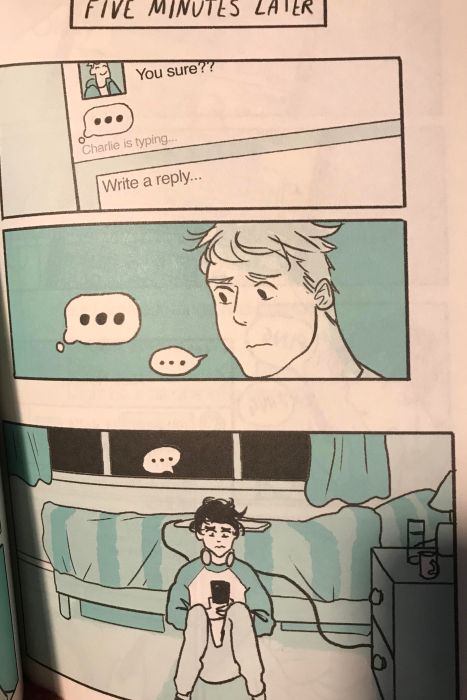
Screen Shot 2020-06-17 at 5.34.03 PM
(source)

Overall, “Child Star” is another well done graphic novel by Box Brown. It’s a bummer to be sure, but also interesting to look at these issues that no doubt still haunt various celebrities.

Rating 7: A poignant and sad faux documentary graphic novel that explores the wrecked life of a child actor, “Child Star” makes you think about the dark side of fame, especially for those who are too young to handle it.

Reader’s Advisory:

“Child Star” isn’t included on many Goodreads lists, but honestly any memoirs by former child actors, like Corey Haim’s “Coreyography”, and Tatum O’Neal’s “A Paper Life”.

Find “Child Star” at your library using WorldCat, or at a local independent bookstore using IndieBound!

Kate’s Review: “Survivor Song”

52581895Book: “Survivor Song” by Paul Tremblay

Publishing Info: William Morrow, July 2020

Where Did I Get This Book: I received an eARC from NetGalley.

Book Description: “Fresh and surprising. Survivor Song may be one of Tremblay’s best—beautifully detailed, viscerally frightening, and deep with emotional resonance. —Dan Chaon, New York Times bestselling author of Ill Will

A riveting novel of suspense and terror from the Bram Stoker award-winning author of The Cabin at the End of the World and A Head Full of Ghosts.

In a matter of weeks, Massachusetts has been overrun by an insidious rabies-like virus that is spread by saliva. But unlike rabies, the disease has a terrifyingly short incubation period of an hour or less. Those infected quickly lose their minds and are driven to bite and infect as many others as they can before they inevitably succumb. Hospitals are inundated with the sick and dying, and hysteria has taken hold. To try to limit its spread, the commonwealth is under quarantine and curfew. But society is breaking down and the government’s emergency protocols are faltering.

Dr. Ramola “Rams” Sherman, a soft-spoken pediatrician in her mid-thirties, receives a frantic phone call from Natalie, a friend who is eight months pregnant. Natalie’s husband has been killed—viciously attacked by an infected neighbor—and in a failed attempt to save him, Natalie, too, was bitten. Natalie’s only chance of survival is to get to a hospital as quickly as possible to receive a rabies vaccine. The clock is ticking for her and for her unborn child.

Natalie’s fight for life becomes a desperate odyssey as she and Rams make their way through a hostile landscape filled with dangers beyond their worst nightmares—terrifying, strange, and sometimes deadly challenges that push them to the brink. 

Paul Tremblay once again demonstrates his mastery in this chilling and all-too-plausible novel that will leave readers racing through the pages . . . and shake them to their core.

Review: Thanks to NetGalley for sending me an eARC of this novel!

Given that I have greatly enjoyed everything that Paul Tremblay has written, it was a no brainer that I was super interested when I found out that he had a new book coming out called “Survivor Song”. I am pretty sure it was this past winter that I requested it on NetGalley to read an advanced copy, maybe January or February. I tend to like to hold off on reading the ARCs I get from NetGalley until it’s closer to the publication date, just so a review is fresh in my mind. So it wasn’t until we were in the clutches of a pandemic, with PPE shortages, high death rates, a mysterious virus, and quarantine that I picked up a book about an epidemic…. with PPE shortages, high death rates, a mysterious virus, and quarantine….

giphy-2
For. Fuck’s. Sake. (source)

BUT, we beat on, boats against the current etc, because it’s Paul Tremblay, a favorite author of mine. And I knew that if anyone was going to make the best of it, it is him. And hey, given another significant theme in this story at least I’m not pregnant too! You have to look for the bright side.

“Survivor Song” is a terrifying epidemic story that takes the zombie tale and twists it around into something else. I’d say that the closest comparison I could draw would be to “28 Days Later”, as in this story it isn’t the undead that are wreaking havoc, but people infected with a sped up rabies-like virus. But unlike “28 Days Later”, “Survivor Song” has a whole lot of hopeful heart beating at its center, and that is because of the enduring friendship between our protagonists, Romola and Natalie. These two women are racing against the clock, as very pregnant Natalie was bitten by an infected person and they hope to get her to a hospital where they can administer a vaccination. As one can imagine, it doesn’t go as planned, and both women have to venture forth in hopes of a plan B as the clock ticks away. Tremblay so effortlessly paints their relationship and friendship that you are immediately rooting for them, and the reader can see themself and their best friend in these characters very easily. I loved how realistic their friendship was, from the compassion and support to the sniping and the desperation. They meet a few people along the way, from teenage wise asses to terrifying milia members, and as they journey forth and the stakes rise higher and higher, the tension spikes and will leave you scared for them, and hoping they make it through. Both women feel real, and their motivations are laid out plainly. Even though it is made clear at the beginning that this is no fairy tale, you still have hope. Tremblay always knows how to give the reader hope, even when things are dark and despairing. It’s one of the things I love about his work.

In terms of the horror, oh boy. The timing of this book, as mentioned above, couldn’t have been better or worse depending on how you want to look at it. Tremblay nails every issue that we are currently experiencing with the COVID-19 pandemic, from PPE shortages to anti-scientific thought to conspiracies run amok to a government that doesn’t act and dooms thousands. As I was reading this book I just shook my head. It’s too real. That would be the only reason that I wouldn’t rate this book as high as I might have otherwise. That isn’t Tremblay’s fault. Hell, if anything he nailed it. But as of now, when I don’t feel safe going into public for extended periods of time, or feel like my parents can hold my kid, or I see more and more deaths as people say that having to wear a mask is tyranny, “Survivor Song” just hits a little too close to home.

Don’t let that stop you from reading this book. It’s really quite good, even if it’s hard to handle. Paul Tremblay is one of my faves for a reason. “Survivor Song” reiterates that.

Rating 8: Definitely a little hard to ‘enjoy’ in this moment, “Survivor Song” is both terrifying and emotional, but showcases the power of lady friendship above all else.

Reader’s Advisory:

“Survivor Song” isn’t on any Goodreads lists yet, but I think that it would fit in on “Smart Apocalyptic and Dystopian Fiction”, and “Books for a Pandemic”.

Find “Survivor Song” at your library using WorldCat, or a local independent bookstore using IndieBound!

Kate’s Review: “The Sandman (Vol.2): The Doll’s House”

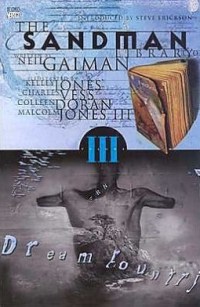
25099Book: “The Sandman (Vol.2): The Doll’s House” by Neil Gaiman, Steve Parkhouse (Ill.), Chris Bachalo (Ill.), Michael Zulli (Ill.), Mike Dringenberg (Ill.), & Malcolm Jones III (Ill.)

Publishing Info: Vertigo, June 1990

Where Did I Get This Book: I own it.

Book Description: A being who has existed since the beginning of the universe, Dream of the Endless rules over the realm of dreams. In The Doll’s House, after a decades-long imprisonment, the Sandman has returned to find that a few dreams and nightmares have escaped to reality. Looking to recapture his lost possessions, Morpheus ventures to the human plane only to learn that a woman named Rose Walker has inadvertently become a dream vortex and threatens to rip apart his world. Now as Morpheus takes on the last escaped nightmare at a serial killers convention, the Lord of Dreams must mercilessly murder Rose or risk the destruction of his entire kingdom.

Collecting issues #9-16, this new edition of The Doll’s House features the improved production values and coloring from the Absolute Edition.

Review: Our revisit of this classic comic series presses on, and now that Morpheus/Dream has reclaimed his power over The Dreaming, he has more work to do! As I continue my re-read I have been struck by how visceral and enchanting “The Sandman” universe is, and while it does still harken to other DC characters and mythos on occasion, we have started to stay firmly within a world of Gaiman’s making. And it is just as engrossing this time as it was the first time.

I don’t know why I waited so long to revisit Dream, The Endless, and the Dreaming, because going back to “The Sandman (Vol. 2): The Doll’s House” really hit home how much I love this series. There’s dark humor, there’s lovely fantastical world building as you get more familiar with The Dreaming (Dream’s domain he rules over) and begin to meet other Endless (specifically Desire in this arc), and there’s an undercurrent of horror to go along with the fantasy. Our main drive this time is that of Rose Walker, a woman who is, unknown to her, a Dream Vortex, and therefore something very dangerous for The Dreaming as her very existence could damage it beyond repair. On top of that, a few of Dream’s Nightmares have escaped, and are wreaking havoc in different ways. In this volume Dream is still trying to re-steer his ship after his captivity, and we see just how far the damage of his absence has  gone. Rose has her own mission, and it is to find her little brother, who has gone missing. With the help of a mysterious but kind man named Gilbert, Rose goes looking for her brother, just as Dream starts looking for her. We see a few callbacks to other parts of “Preludes and Nocturnes”, which were done in slow and subtle ways, which made them feel all the more satisfactory as they were peeled back and revealed. The dreamlike atmosphere of this series is still present, as is the darkness. This time that horror aspect is in the form of a ‘Cereal Convention” that Rose and Gilbert stumble upon, which is actually a gathering of serial killers that are hoping to share insight with each other. I had forgotten how twisted this entire thing was, and let me tell you Gaiman doesn’t hold back. To the point that I really feel a need to give a content warning for abuse and sexual assault (and also a note that there is descriptions of violence against trans people in particular. Which felt very problematic but also very of the time that this series was going).

But once again, it’s a standalone story that has a lot of philosophical oomph and a lot of heart that stood out to me in this volume. While the arc of Rose Walker and the ‘cereal’ convention is definitely stellar, it was the story “Men of Good Fortune”, in which Dream and Death decide to give a man named Hob Gadling eternal life after they hear him waxing philosophical about mortality in a pub in 1389. Every hundred years, Hob and Dream meet at this pub, and Hob tells Dream about what he is doing with his eternity. There are highs and lows as Hob experiences the evolution of London, and we get to see how he changes the direction of his life and how it leads to success and devastation. What struck me the most about this story, outside of seeing how one person might shift and evolve with the world they live in were they to have eternity to do so, is that Hob and Dream are an unlikely set of friends whose friendship feels natural and touching. I remembered that Hob pops up here and there throughout the series, but I had forgotten how lovely his introduction was.

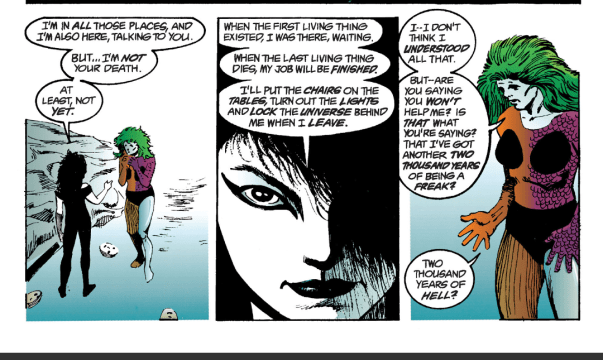
The art is still excellent. We’ve started to see more experimentation in design, style, and placement, and while sometimes there is a very traditional art style (like in “Men of Good Fortune”), sometimes it is very abstract. It really just adds to the flavor of the atmosphere that they’re all trying to create, and for the most part it works.

“The Sandman (Vol.2): The Doll’s House” opens up the series to more possibilities, and more darkness. You can tell that this is something very special on these pages.

Rating 9: More chills and world building along with introductions to more of the Endless, “The Sandman (Vol. 2): The Doll’s House” keeps the horror elements up while also showing moments of true tenderness.

Reader’s Advisory:

“The Sandman (Vol.2): The Doll’s House” is included on the Goodreads lists “Great Non-Superhero Graphic Novels”, and “Psychological and Philosophical Comics”.

Find “The Sandman (Vol.2): The Doll’s House” at your library using WorldCat, or a local independent bookstore using IndieBound!

Previously Reviewed: 

Kate’s Review: “I Killed Zoe Spanos”

50202540Book: “I Killed Zoe Spanos” by Kit Frick

Publishing Info: Margaret K. McElderry Books, June 2020

Where Did I Get This Book: I received an eARC from NetGalley.

Book Description: This gripping thriller follows two teens whose lives become inextricably linked when one confesses to murder and the other becomes determined to uncover the real truth no matter the cost.

What happened to Zoe won’t stay buried…

When Anna Cicconi arrives to the small Hamptons village of Herron Mills for a summer nanny gig, she has high hopes for a fresh start. What she finds instead is a community on edge after the disappearance of Zoe Spanos, a local girl who has been missing since New Year’s Eve. Anna bears an eerie resemblance to Zoe, and her mere presence in town stirs up still-raw feelings about the unsolved case. As Anna delves deeper into the mystery, stepping further and further into Zoe’s life, she becomes increasingly convinced that she and Zoe are connected–and that she knows what happened to her.

Two months later, Zoe’s body is found in a nearby lake, and Anna is charged with manslaughter. But Anna’s confession is riddled with holes, and Martina Green, teen host of the Missing Zoe podcast, isn’t satisfied. Did Anna really kill Zoe? And if not, can Martina’s podcast uncover the truth?

Review: Thank you to NetGalley for sending me an eARC of this novel!

In case you were wondering, I’m still on my bullshit when it comes to True Crime podcasts. I haven’t really strayed into new territory outside of the old reliables, but if you have some recommendations, send them my way! More and more we’re seeing podcast themes making their way into mysteries, perhaps in part due to this true crime boom within the listening world. Sometimes it works, other times it doesn’t, but I’m always game to try that kind of book out. So of COURSE “I Killed Zoe Spanos” by Kit Frick caught my eye! It has elements that I greatly enjoy in my thrillers: a luxurious summer setting, a missing girl, secrets that the privileged and the non-privileged alike keep close to their vests. SO, you throw in a podcast angle and I am gonna be there! “I Killed Zoe Spanos” really hooked me in, and it was just the kind of read I could see myself reading on the beach. You know, if I was going to the beach this summer. Which I’m not.

giphy-1
Goddamn pandemic. (source)

“I Killed Zoe Spanos” follows two distinct perspectives. The first is of Anna Cicconi, a teenager who has come to the Hamptons town of Herron Mills to be a live in babysitter. Herron Mills has a lot of money, a lot of privilege, and is currently haunted by the fact that local girl Zoe Spanos has gone missing that past New Year’s. Eventually Anna confesses to killing Zoe, even though as far as anyone knows there is no connection between the two. The other perspective is that of Martina Green, a local teen who is best friends with Zoe’s sister Aster, and puts out a podcast about the case. Anna’s perspective is mostly in the past and in the first person, while Martina’s is in the present and in the third. Sometimes I have a hard time when there are two kinds of POV styles in a book unless I feel it’s warranted, and with “I Killed Zoe Spanos” I felt like it worked fairly well. It made it so that we could get both the unreliability of Anna’s perspective, given that we have no idea what her connection to Zoe is, even though there is clearly something going on, and also the outside third person lens that Martina has as she is trying to solve the mystery herself. Throw in the transcripts for Martina’s podcast, which adds a whole other layer of potential unreliability (or at least bias), and you have a lot of potential for looking at Zoe’s disappearance and death from all sides. I thought that these three views all complemented each other pretty well, and had enough potential for red herrings within them all to make the mystery interesting. I enjoyed a few of the twists and turns quite a bit, though I will admit that I think that there was a bit of an overreach that came up right at the end. You don’t have to overdo it is all I’m saying.

As far as the characters go, no one really stood out too much in terms of going beyond their templates. Anna is unreliable and mysterious, perhaps threatening but maybe not. Martina is tenacious and truth seeking. I think that there was some interesting potential in some of the side characters, particularly Zoe’s boyfriend Caden, a transracial adoptee whose skin Others him within a very wealthy, and white, insular community. But we didn’t really go looking too deeply into many of these side characters, no matter how interesting they might be.

“I Killed Zoe Spanos” is definitely the kind of book that will take you in this summer! If you are a thriller fan and do find yourself able to safely go to a beach, or sit by a pool, this would be a great read to accompany that kind of excursion!

Rating 7: A fun mystery with some interesting turns, “I Killed Zoe Spanos” is a reliable summer read for thriller fans and fans of true crime podcasts alike.

Reader’s Advisory:

“I Killed Zoe Spanos” is included on the Goodreads lists “What’s My YA Name Again”, and “Can’t Wait Crime, Mystery, & Thrillers 2020”.

Find “I Killed Zoe Spanos” at your library using WorldCat, or a local independent bookstore using IndieBound!

Kate’s Review: “Home Before Dark”

50833559._sx318_sy475_Book: “Home Before Dark” by Riley Sager

Publishing Info: Dutton Books, June 2020

Where Did I Get This Book: I received an eARC from NetGalley.

Book Description: What was it like? Living in that house.

Maggie Holt is used to such questions. Twenty-five years ago, she and her parents, Ewan and Jess, moved into Baneberry Hall, a rambling Victorian estate in the Vermont woods. They spent three weeks there before fleeing in the dead of night, an ordeal Ewan later recounted in a nonfiction book called House of Horrors. His tale of ghostly happenings and encounters with malevolent spirits became a worldwide phenomenon, rivaling The Amityville Horror in popularity—and skepticism.

Today, Maggie is a restorer of old homes and too young to remember any of the events mentioned in her father’s book. But she also doesn’t believe a word of it. Ghosts, after all, don’t exist. When Maggie inherits Baneberry Hall after her father’s death, she returns to renovate the place to prepare it for sale. But her homecoming is anything but warm. People from the past, chronicled in House of Horrors, lurk in the shadows. And locals aren’t thrilled that their small town has been made infamous thanks to Maggie’s father. Even more unnerving is Baneberry Hall itself—a place filled with relics from another era that hint at a history of dark deeds. As Maggie experiences strange occurrences straight out of her father’s book, she starts to believe that what he wrote was more fact than fiction.

In the latest thriller from New York Times bestseller Riley Sager, a woman returns to the house made famous by her father’s bestselling horror memoir. Is the place really haunted by evil forces, as her father claimed? Or are there more earthbound—and dangerous—secrets hidden within its walls?

Review: Thank you to NetGalley for providing me with an eARC of this book!

Back when I was a teenager and I was using my Blockbuster privileges to rent horror movies, I took an opportunity to rent “The Amityville Horror”, classic haunted house/’based on a true story’ horror movie. I remember eating take out tacos form a local taqueria and sitting in the basement watching this movie, banished there as no one else in my family likes horror movies and the upstairs VCR was reserved for something else. I remember really enjoying it at the time. It was a few years after that that I came upon the ample evidence that it was all a hoax, a lie to give the Lutz family a nice pay day and to set up a murder defense for Ronny DeFeo, who had murdered his entire family in the house before the Lutzes moved in. I read the book a couple years ago, and taking it as the fiction story that it is I thought it was fun, if not a little cliche. When I found out that Riley Sager’s new book “Home Before Dark” was a haunted house story, and that was basically a homage to the entire “Amityville” saga, let me tell you I was incredibly excited and couldn’t wait to see what kinds of twists and haunts Sager was going to bring to this concept.

tumblr_ojjgcyvx0c1ut1d6co1_540
I will admit I was hoping for a ghost pig. Maybe not named Jody. But some kind of ghost pig anyway. (source)

“Home Before Dark” has two stories within its pages: it tells the story of the book ‘House of Horrors’, a narrative of the Holt Family, who moved into the notorious Baneberry Hall, tried to live within its walls, but then ran after being there for a few weeks due to an increasingly violent haunting, never to return. The second is that of Maggie Holt, the daughter and the main target of the ghosts within the book, who had to live with the runaway hit that ‘House of Horrors’ became, even if she has no memory of such horrors happening and believes that it was all lies her father Ewan made up. The juxtaposition of Maggie’s present reality, and the reality that Ewan perhaps made up for his book, mesh very well together, and lend context to each other just when it’s most needed. Both mysteries we follow are interesting and kept me guessing, and as Maggie starts to wonder if perhaps her father wasn’t lying when her stay at Baneberry Hall starts to take strange and disturbing turns, it makes the reader all the more interested in what is coming next in the ‘House of Horrors’ section in the book. Sager puts the pieces in all the right places, and the suspense keeps building and you will keep questioning if maybe, just maybe, there are ghosts after all that are lying in wait for Maggie after all. I didn’t figure any of the twists or surprises out, which gives this extra points to be certain. Sager has always kept me guessing, and “Home Before Dark” was no different.

The scary moments are very well done, creepy and ominous and definitely scary enough to make me giggle with glee and just a little bit of hesitance. Sager sets the atmosphere and gives the house a very dark history, and while it definitely references some of the tropes that you expect in stories like this, it still feels very fresh and interesting. And ‘House of Horrors’ is just the perfect love letter to “The Amityville Horror”, with cheeky references and nods to an iconic haunted house that still lives (on even if it’s all bullshit at the end of the day). It was a great idea to give us that entire narrative as well, because that way you get two great tales for the price of one, and one of those tales is a stellar ghost story.

“Home Before Dark” continues Riley Sager’s streak of great thriller/horror stories. I always go into his new books worried that there will be a stumble, but as of now, he’s four for four. And “Home Before Dark” might be my favorite of the lot.

Rating 9: Another great scary story from one of my favorite scary story authors, “Home Before Dark” will give you the willies even on the warmest summer day.

Reader’s Advisory:

“Home Before Dark” is included on the Goodreads lists “Horror To Look Forward To in 2020”. And if you want to experience the book it seems to take inspiration from, pick up “The Amityville Horror”.

Find “Home Before Dark” at your library using WorldCat, or at a local independent bookstore using IndieBound!

Kate’s Review: “The Girl from Widow Hills”

52754102Book: “The Girl from Widow Hills” by Megan Miranda

Publication Info: Simon & Schuster, June 2020

Where Did I Get This Book: I received an eARC from NetGalley.

Book Description: Everyone knows the story of “the girl from Widow Hills.”

Arden Maynor was just a child when she was swept away while sleepwalking during a terrifying rainstorm and went missing for days. Strangers and friends, neighbors and rescue workers, set up search parties and held vigils, praying for her safe return. Against all odds, she was found, alive, clinging to a storm drain. The girl from Widow Hills was a living miracle. Arden’s mother wrote a book. Fame followed. Fans and fan letters, creeps, and stalkers. And every year, the anniversary. It all became too much. As soon as she was old enough, Arden changed her name and disappeared from the public eye.

Now a young woman living hundreds of miles away, Arden goes by Olivia. She’s managed to stay off the radar for the last few years. But with the twentieth anniversary of her rescue approaching, the media will inevitably renew its interest in Arden. Where is she now? Soon Olivia feels like she’s being watched and begins sleepwalking again, like she did long ago, even waking outside her home. Until late one night she jolts awake in her yard. At her feet is the corpse of a man she knows—from her previous life, as Arden Maynor.

And now, the girl from Widow Hills is about to become the center of the story, once again, in this propulsive page-turner from suspense master Megan Miranda.

Review: Thanks to NetGalley for sending me an eARC of this book!

There are some authors out there that I really want to like, but I have very hit or miss interactions with their books. I will usually keep going back unless a book is so poorly done that I decide that I don’t have the reading time to continue giving chance after chance. I thought that Megan Miranda was going to be one of those authors, where I liked one book but nothing else worked for me. After her last book, “The Last Houseguest”, I thought that I was done for good. But something told me that I should give her newest novel “The Girl from Widow Hills” a chance. And am I glad I did. Megan Miranda has missed the chopping block for now, because I think that “The Girl from Widow Hills” is my favorite of her books that I’ve read.

“The Girl from Widow Hills” has a compelling mystery that drives it, a complicated and perhaps unreliable narrator, and a little bit of critiqued nostalgia for human interest journalism, which combined to make a very enjoyable read. Our protagonist is Arden, a woman whose claim to fame was being swept up in a flood when she was six years old and miraculously surviving as a community, and then a nation, watched with bated breath to find out her fate. The trauma of that experience, being trapped for a few days until a man passed by and found her, has followed her the rest of her life, as her mother profited off of the story and the public began to think that she was ungrateful of their support as she tried to live her life. Now living under the name Olivia, I thought that Olivia/Arden’s trauma and need to escape her past was very realistic. It also made for an interesting and perhaps unreliable narration device, as she doesn’t remember much about those days where she was missing. It felt different from unreliable narrations we see in this genre in that the gaps in her story aren’t gaps that she has placed on purpose, but rather the result of being so young at the time, and suffering from PTSD after the fact. The mysteries that she’s trying to solve, mostly why did the man who saved her back then end up dead on her property now, given they have had no connection since, are very compelling and kept me guessing for a lot of the story. I liked following Olivia/Arden, and liked seeing the clues come together. And while it’s true that I did figure a couple things out before the end, and while it’s also true that the reveal at the end felt a little farfetched, just getting there was an enjoyable experience, so I didn’t even mind that it was a bit clunky, reveal wise.

But the thing that I liked the most was the way that Miranda shows the entitlement and ownership that the public can get when it comes to these heartwarming human interest stories. The media and the community focused in on this missing little girl, much like the Baby Jessica story, and rejoiced in her being recovered safely. But then the joy and relief slowly turns poisonous as Arden tries to move on with her life, and people think that she should be more grateful of the donations, well wishes, and care that was sent her way. It’s a very pointed criticism of how people expect to be rewarded for doing good things, and that victims can continue to be victimized when they don’t act or behave in a way that others deem ‘worthy’. That was the aspect of this book that I really, really enjoyed. It felt like the ballsiest thing I’ve seen Miranda put in her books.

“The Girl from Widow Hills” was an addictive thriller, and if you haven’t put it on your summer reading list yet you definitely should! I’ll definitely be taking a look at whatever Megan Miranda has in store next!

Rating 8: A fun and suspenseful thriller with some searing social commentary, and definitely a book that revives my faith in Megan Miranda!

Reader’s Advisory:

“The Girl from Widow Hills” is included on the Goodreads lists “Mother and Daughter Thrillers”, and “Family Secrets (mystery/suspense/thriller only)”.

Find “The Girl from Widow Hills” at your library using WorldCat, or at a local independent bookstore using IndieBound!

Kate’s Review: “Know My Name”

50196744._sx318_sy475_Book: “Know My Name: A Memoir” by Chanel Miller

Publishing Info: Viking, September 2019

Where Did I Get This Book: I own it.

Book Description: She was known to the world as Emily Doe when she stunned millions with a letter. Brock Turner had been sentenced to just six months in county jail after he was found sexually assaulting her on Stanford’s campus. Her victim impact statement was posted on BuzzFeed, where it instantly went viral–viewed by eleven million people within four days, it was translated globally and read on the floor of Congress; it inspired changes in California law and the recall of the judge in the case. Thousands wrote to say that she had given them the courage to share their own experiences of assault for the first time.

Now she reclaims her identity to tell her story of trauma, transcendence, and the power of words. It was the perfect case, in many ways–there were eyewitnesses, Turner ran away, physical evidence was immediately secured. But her struggles with isolation and shame during the aftermath and the trial reveal the oppression victims face in even the best-case scenarios. Her story illuminates a culture biased to protect perpetrators, indicts a criminal justice system designed to fail the most vulnerable, and, ultimately, shines with the courage required to move through suffering and live a full and beautiful life.

Know My Name will forever transform the way we think about sexual assault, challenging our beliefs about what is acceptable and speaking truth to the tumultuous reality of healing. It also introduces readers to an extraordinary writer, one whose words have already changed our world. Entwining pain, resilience, and humor, this memoir will stand as a modern classic.

Review: Honestly, when I started “Know My Name” by Chanel Miller, I realized that while I wanted to review it, I had a conundrum in front of me. How do you fully review such a deeply personal memoir about a very personal event in someone else’s life? For those who may be unfamiliar with the name Chanel Miller, perhaps you know the name Emily Doe, the woman that Brock Turner raped, and then was only sentenced to six months in jail (he eventually only served three, by the way). His sentence set off a firestorm across the world, and was one of the many focuses on the disparities in our justice system when it comes to class, race, gender, and sexual assault. I really wanted to read and review this book because Miller’s story is so important. But again… how does one review a story such as this?

Chanel Miller has such a powerful and all consuming writing style, and her story focuses on the night she was raped and what followed afterwards, from having to process her trauma, having to go to court, and having to be dragged and scrutinized in the public spotlight, even if she was technically anonymous. She is unflinching and candid about what happened the night that Turner assaulted her and how it was in the days afterwards, and while those moments are especially hard to read in this book Miller does such a great job of really laying everything on the table. She isn’t afraid to put herself completely out there, and her honesty about what her experience was like really hits the reader in the heart. Her writing style is beautiful, and really gets her sadness, anger, incredulity, and fortitude across. You saw glimpses of this in her victim impact statement that went viral shortly after it was made public, but now seeing it with the complete context of her life and experience just shows how very talented she is as a writer.

She also really emphasizes what it is like to be a victim of a high profile sexual assault case, and how trying and awful it can be. From having to see her actions before the assault dissected and laid out in the open, to having people imply that she asked for it because of said actions, to seeing how Brock Turner’s potential was held in higher regard than her experience of being victimized by him, Miller shows how hard it is for victims to come forward. The entitlement of Turner and the way that the judge sentenced him based on his potential as a wealthy white man is infuriating, and Miller gets to address these issues with her own words. And in the process she shows the world the story that a lot of people may not think about when a man with ‘high potential’ or high profile is outed as a predator: the story of a victim who will have to live with a traumatic event for the rest of their life, and how the fallout is going to effect them. Miller emphasizes how society favors protecting men like Turner at the expense of victims like her, and while we may know that, it doesn’t hurt any less to have it reaffirmed.

I highly recommend “Know My Name”. It is going to be a hard read, and it’s going to probably hurt, but it’s an important story, and Chanel Miller deserves to have her truth amplified.

Rating 9: A very personal, powerful, and beautifully written memoir.

Reader’s Advisory:

“Know My Name: A Memoir” is included on the Goodreads lists “Breaking The Silence: Talking About Violence Against Women”, and “ATY 2020 – Books Related to News Stories”.

Find “Know My Name: A Memoir” at your library using WorldCat, or a local independent bookstore using IndieBound!