Kate’s Review: “Basketful of Heads”

50490087._sy475_Book: “Basketful of Heads” by Joe Hill and Leomacs (Ill.)

Publishing Info: DC Comics, September 2020

Where Did I Get This Book: I received an eARC from NetGalley.

Book Description: June Branch visits her boyfriend, Liam, on Brody Island for a relaxing last weekend of summer. After an escaped group of criminals breaks into the house that June and Liam are watching, Liam is taken by them. June grabs a strange Viking axe and flees from the intruders. When one of the attackers finds her, she swings the axe and takes off his head, which rolls away and begins to babble in terror. For June to uncover the truth, she’ll need to hear the facts straight from the mouths of her attackers, with…or without their bodies attached. Collects issues #1-7.

Review: Thank you to NetGalley for sending me an eARC of this graphic novel!

While it’s true that we aren’t getting a new Joe Hill novel this year, never fear fellow Hill lovers! He has made his triumphant return into the comics world with DC’s imprint Hill House Comics! Given how intricate and awesome “Locke and Key” is, when I heard that he was coming up with his own comic imprint I was very happy. When his premiere contribution “Basketful of Heads” became available in its full form on NetGalley I downloaded it almost immediately after I saw it. I had high hopes, and like most Hill content that comes my way, it met my expectations.

First thing is first, Hill has created some fun characters and a fun setting for this story. Brody Island feels exactly like the kind of beach town you would see in 1970s and 80s lore, with heavy nods to “Jaws” in particular (as this is one of Joe Hill’s favorite movies I wasn’t surprised; Brody Island named for the police chief in that movie, as well as a character saying someone should be hung up by their ‘buster browns’, a la the mayor). In this limited scope of a story you get a sense of the town and the people who live there, and the nostalgia factor was on point. Our protagonist June is the kind of lady character I’ve come to expect from Hill. She’s tough, she’s no nonsense, but she isn’t forced into a stereotypical ‘badass woman’ box we sometimes see when these kinds of characters are on the page. While it’s true that she’s lopping people’s heads off in hopes of saving herself and her boyfriend Liam, which is incredibly badass, she retains her personality and her core being. June also has some well done complexity, as she loves her boyfriend but has aspirations of her own through her education and focus on psychology. While others disparage her aspirations, she values them and holds true to them. I loved June. Add her to the list of excellent Hill heroines.

And then there’s the horror and mystery aspects of this story. As June takes off the heads of violent men who want to do her and Liam harm, we see a lot of gore and splatterpunk-esque violence that is very entertaining. We don’t really know what it is about the axe that June is carrying that makes people’s heads stay alive after being removed from the body, but ultimately it doesn’t matter. The bigger question is why were June and Liam targeted by their attackers. And as that mystery slowly unfolds, we get a well plotted and full of twists ride that I really enjoyed. Hill has a number of tricks up his sleeves, and I found all of them entertaining as hell. I sped through this story wanting to know how it was all going to turn out, and with every reveal I was excited to learn more. Throw in some really fun Easter egg references to Stephen King and his work (prisoners from Shawshank on the run, the location of “Derry County”) and I could barely contain the smiles on my face that kept breaking out.

On top of all that, I liked the art style quite a bit. It is splatterpunk and gory when it needs to be, but also has some moments of cartoony camp and intimate expressions on our characters faces.

basketfulofheads11
(source)

“Basketful of Heads” was a really fun story, and I couldn’t be happier now that Joe Hill is back to doing some work in comics. I will definitely be looking into his imprint more to see what other stories come out of it. Summer may be over, but if you want to cling to it a little while longer and you like this kinda thing, pick it up!

Rating 8: Super fun, super gory, super twisty, “Basketful of Heads” is a hoot and a half and a hell of a ride.

Reader’s Advisory:

“Basketful of Heads” is new and isn’t included on any Goodreads lists, but I think that it would fit in on “Best Horror Comics/ Graphic Novels”.

Find “Basketful of Heads” at your library using WorldCat, or at a local independent bookstore using IndieBound!

Kate’s Review: “One by One”

50892433._sy475_Book: “One by One” by Ruth Ware

Publishing Info: Scott Press, September 2020

Where Did I Get This Book: I received an eARC from NetGalley.

Book Description: The #1 New York Times bestselling author of The Turn of the Key and In a Dark Dark Wood returns with another suspenseful thriller set on a snow-covered mountain.

Getting snowed in at a beautiful, rustic mountain chalet doesn’t sound like the worst problem in the world, especially when there’s a breathtaking vista, a cozy fire, and company to keep you warm. But what happens when that company is eight of your coworkers…and you can’t trust any of them?

When an off-site company retreat meant to promote mindfulness and collaboration goes utterly wrong when an avalanche hits, the corporate food chain becomes irrelevant and survival trumps togetherness. Come Monday morning, how many members short will the team be?

Review: Thanks to NetGalley for providing me with an eARC of this novel!

We are leaving the summer months here in Minnesota and I, for one, am actually actively dreading winter this time around. That isn’t my usual M.O., as someone who likes cold better than heat, but given that heat is the only way we can in person socialize with people right now, weather wise, this Minnesota Winter is going to be even more isolating than usual.

giphy
Yes, I’ve been a Debbie Downer during the pandemic. Look for a more cheerful Kate in 2021 (hopefully). (source)

But all that said, I do try to remind myself that it can always be worse, so at least I’m not going to be stuck in an avalanche ravaged chalet with a potential murderer on the loose, right? That brings us to “One by One”, the new mystery thriller from Ruth Ware! I have mostly enjoyed Ware’s takes on the whodunnit murder mystery, so I was eager to read her newest foray into the genre.

Like what we can usually expect from Ware, “One by One” is an Agatha Christie-esque murder mystery where isolation is the name of the game, someone ends up dead, and almost everyone is a suspect because they all have motive, means, and opportunity. This time we dive into the world of Start Ups, when the team behind music app Snoop go on a mountain retreat to get some skiing in while discussing the future of the company. We have two narrative perspectives we follow. The first is of Erin, one of the employees at the Chalet whose job is to make everyone’s stay a happy one. The other is Liz, a former employee who doesn’t seem to fit in with the posh and entitled rest. Both women have their secrets, their traumas, and their parts to play. I feel like we mostly got a sense of what both women were about, though that said Erin definitely felt a little more well characterized than Liz at times. But for the most part by the time I was done with the book and the characters, I felt like both Erin and Liz played their parts well. Heck, most of the characters, even the ones that we didn’t get into the minds of, were drawn well enough that they felt believable in their actions and attitudes. Topher, the co-founder and one of the heads of Snoop, was especially intriguing to follow from out outsider perspective, as his smarm and ambition would occasionally give way to a complex person, depending on whether it was Liz or Erin that was perceiving him in that moment, and therefore shaping the reader’s perceptions of him. We got to see that for a few of the characters, actually, and it was a fun device to show that people have multiple sides to themselves.

The mystery itself was fairly standard, but that’s not necessarily a bad thing. I sort of figured it out before it all came together, but that didn’t make the journey any less enjoyable. I thought that the setting of a mountain retreat was a fun isolation tactic, and seeing the characters start to unravel as their situation became more dire and murdery was suspenseful, with questions as to who would be next on the chopping block always in the back of the mind. Throw in a unique and pulse pounding climax and I was kept on the edge of my seat, wondering if the characters I liked were going to be safe and the ones who were doing wrong were going to get their comeuppance. My one complaint was that the book felt a need to wrap up a number of ends after the fact, which just made for the ending to feel a little too long and drawn out long after the high tension of the climax was gone. On top of that, a few reveals were left for afterwards as well, when they probably should have been addressed earlier. I feel that had Ware put some of those solutions into other parts of the book it would have worked out a little better, as it threw off the tone as the story was wrapping up. It didn’t ruin the story as a whole, but it did give me a little bit of pause when I should have just been riding out the final pages.

“One by One” is going to be a fun mystery for the autumn and winter as we isolate in our homes and ride out our own storms. Ruth Ware is a reliable distraction during times when reliability is something we need more of.

Rating 8: Suspenseful, twist filled, and appropriately isolated, “One by One” is another fun mystery from Ruth Ware!

Reader’s Advisory:

“One by One” is included on the Goodreads lists “Can’t Wait Crime, Mystery, and Thrillers 2020”, and “Upcoming Books That Sound Cool” (seems subjective but that title just tickles me).

Find “One by One” at your library using WorldCat, or a local independent bookstore using IndieBound!

Kate’s Review: “Race Against Time”

52754197._sx318_sy475_Book: “Race Against Time: A Reporter Reopens the Unsolved Murder Cases of the Civil Rights Era” by Jerry Mitchell

Publishing Info: Simon & Schuster, February 2020

Where Did I Get This Book: I own it.

Book Description: On June 21, 1964, more than twenty Klansmen murdered three civil rights workers. The killings would become known as the “Mississippi Burning” case and even though the killers’ identities, including the sheriff’s deputy, were an open secret, no one was charged with murder in the months and years that followed.

It took forty-one years before the mastermind was brought to trial and finally convicted for the three innocent lives he took. If there is one man who helped pave the way for justice, it is investigative reporter Jerry Mitchell.

In Race Against Time, Mitchell takes readers on the twisting, pulse-racing road that led to the reopening of four of the most infamous killings from the days of the civil rights movement, decades after the fact. His work played a central role in bringing killers to justice for the assassination of Medgar Evers, the firebombing of Vernon Dahmer, the 16th Street Church bombing in Birmingham and the Mississippi Burning case. His efforts have put four leading Klansmen behind bars, years after they thought they had gotten away with murder.

Review: Something that the United States hasn’t quite come to terms with is that our country is still a very deeply racist place. Our country was built on the backs of slaves, and the reverberations of that system are still being felt today, even though we don’t want to admit it. In the 1960s during the first Civil Rights Movement in this country, a number of people who were fighting for justice and rights for Black people were murdered for their values and actions, and for many years many of these cases went unsolved. Jerry Mitchell, a investigative journalist, was struck by the cold case of the Mississippi Burning Murders, in which three civil rights workers were murdered by upwards of twenty Klansmen, and were never given justice. That was the start of his career in investigating cold cases around murders during The Civil Rights Era. “Race Against Time” is his memoir about his work around said cases. And frankly, it’s necessary reading for any true crime fans, or anyone interested in justice for those who died for Civil Rights.

As one can imagine, “Race Against Time” is intense, dark, and harrowing. Mitchell pursues leads in a few notorious, recently solved cases of murders of people that Klan members killed to intimidate and silence those who were fighting for racial justice. Mitchell made deep connections to the family members left behind, and as he devotes each section of the book to these cases, you see how he earned the trust of those people, as well as doggedly pursued the probably perpetrators. His writing style is what you’d expect for a seasoned and well respected reporter, and his narrative flows in a very consumable way. Along with that, he really knows how to convey the pain and hope of the family members, and the fear and tension he was feeling when he did meet with suspects and Klansmen, having to keep his cool as they not only say horrifically racist things, but also brag about violence. I really appreciated seeing all of the work that he did, as well as his takes on how the court cases went once they did eventually get to court, decades after the fact. The cases he covers I mostly knew, but seeing this perspective he lays out as opposed to the ones in American History books I had encountered in my past was fresh and insightful. He doesn’t mince words about the evil of white supremacy and how it drives The Klan, and it made for a difficult, but important read.

What struck me the most as I was reading this book is that while this is arguably Jerry Mitchell’s memoir on his work in investigative journalism regarding the murders of Civil Rights figures, it is decidedly centered on the victims and their families as opposed to him. Sure, he talks about the various things he had to do, like putting himself in harms way by interviewing Klansmen and then exposing them. Or talking about the fears that his family had during some of this time. But it always reads as him putting the victims and those they left behind first, and delving into their backgrounds, their stories, and their truths. While I definitely worried about Mitchell on some of his assignments, I was mostly hoping for the best outcomes possible for people like Medgar Evers, Vernon Dahmer, and the Four Little Girls of the 16th Street Church bombing. Mitchell devotes time and pages to all of their stories, and really peels back the way that bigotry and racism hindered justice for so long, as well as exposing the violent racists who almost got away with murder. But it never feels like he’s patting himself on the back or tooting his own horn, and is also quick to point out that there are SO MANY cases that have gone without justice over the years. Mitchell is here to remind us that justice is far from done, and that as a country we still have a long way to go when it comes to righting the wrongs of our racist past and present.

“Race Against Time” is necessary reading when it comes to The Civil Rights Movement, and also a great case study in the importance of investigation journalism. There is still work to do, folks, and people like Mitchell can show us effective ways to do it.

Rating 8: A fascinating and harrowing memoir that centers the victims instead of the author, “Race Against Time” is a must read for those who seek justice against white supremacy.

Reader’s Advisory:

“Race Against Time” is included on the Goodreads lists “True Crime on Tap”, and “White Power, Terrorism, White Supremacy, and White Nationalist Movements in the United States (nonfiction)”.

Find “Race Against Time” at your library using WorldCat, or a local independent bookstore using IndieBound!

Kate’s Review: “Wayward Witch”

53038638._sx318_sy475_Book: “Wayward Witch” by Zoraida Córdova

Publishing Info: Sourcebooks Fire, September 2020

Where Did I Get This Book: I received an eARC from NetGalley.

Book Description: Rose Mortiz has always been a fixer, but lately she’s been feeling lost. She has brand-new powers she doesn’t understand, and her family is still trying to figure out how to function in the wake of her amnesiac father’s return home. Then, on the night of her Deathday party, Rose discovers her father’s memory loss has been a lie.
 
As she rushes to his side, the two are ambushed and pulled through a portal to the land of Adas, a fairy realm hidden in the Caribbean Sea. There, Rose is forced to work with a group of others to save Adas. Soon, she begins to discover the scope of her powers, the troubling truth about her father’s past, and the sacrifices he made to save her sisters.
 
But if Rose wants to return home so she can repair her broken family, she must figure out how to heal Adas first.

Review: Thank you to NetGalley for providing me with an eARC of this novel!

It’s been a four year journey with the Mortiz Sisters in the “Brooklyn Brujas” Trilogy by Zoraida Córdova, and what a genre bending, empowering, and unique (to me) journey it’s been. Given that books one (“Labyrinth Lost”) and two (“Bruja Born”) followed the oldest and middle sisters, Alex and Lula, I knew that “Wayward Witch”, the last in the trilogy, was destined to be Rose’s story. Rose has always been the sister that has intrigued me the most, as she has always been quiet, reserved, and a little bit mysterious because of it. I was eager to get into her head for the last story, hoping that Córdova would give her a lot to do and work with, and perhaps explore a new genre like she did with Lula. The fulfillment of those hopes was a mixed bag.

Since I want to focus on the positives, I will get my negatives out of the way, particularly as they are no fault of the book. We have gone back to a fantasy focused story in “Wayward Witch”. I had been hoping that after the genre shift in “Bruja Born” we might be experimenting with a whole other genre again, but that was not the case. As much as I can appreciate the care and detail that Córdova put into the world of Adas, and as much as it definitely was unique and steeped in cultural influence that you don’t see as much in fantasy, it’s still a world building fantasy story. And outside of very specific examples that I love, it’s a genre that doesn’t really click with me. Along with that, I had hoped to see more sister interaction like we had in “Bruja Born”, but given that Rose was on her own for a majority of the story, that didn’t happen.

But, that said, I am so happy that we finally got to Rose’s story, and that she got to have this kind of adventure that is so different from the ones that her sisters had. Rose has been dealing with magical changes in her life, as her power has shifted to being a person who can take on the powers of those around her. You enter that in with the dramatic changes in her family life (her father returning from his long absence, her family having to move to Queens after their home was destroyed, her Deathday celebration), and she is feeling stressed and unheard. Not to mention her relationship with her father is a bit strained, as she has few memories of him before he disappeared. I liked that his reappearance in her life specifically is a bit messier and more complicated. But her journey to Adas with her father allows her to see her powers in a new way, as to the fae there she is a savior and a warrior who is there to stop The Rot that is destroying their world. Seeing her function in this totally different realm could have been similar to Alex’s journey in “Labyrinth Lost”, but Rose is so different from Alex that it feels pretty new and fresh. Her magical powers are also neat to see in focus, as the upsides, and the downsides, of being a ‘magic hacker’ as she likes to refer to it are shown in different ways. Be they amusing, or potentially dangerous. And even though the fantasy themes didn’t really connect with me, I did like the characters that Córdova created in Adas, especially Princess Iris. Iris has a lot to prove to both her father, the King, and to herself as well. It was refreshing to see usual fantasy gender norms being bent between her and her twin brother Arco. While Iris is the more ferocious and determine warrior type, Arco is a bit more sensitive and reserved, and Rose’s interactions with both of them helped round out her character, and perhaps made up for the fact we didn’t see her interacting with Alex and Lula in similar ways.

So while the fantasy elements as a whole weren’t as interesting as the horror elements from the previous books, I thought that “Wayward Witch” gave Rose the attention that she deserved, and wrapped up the series in a mostly satisfying way. I’m so happy that Zoraida Córdova got to tell her story about these bruja sisters, and that YA audiences have been given a great example of how witches don’t have to be white.

Rating 7: A return to otherworldly fantasy means that this conclusion didn’t connect as much as the previous book, but “Wayward Witch” gives Rosie Mortiz a strong tale that shows off her abilities, and wraps up a fun and dreamy fantasy series.

Reader’s Advisory:

“Wayward Witch” is included on the Goodreads lists “Latina Leads in YA and Middle Grade Fiction”, and “2020 YA Books with LGBT Themes”.

Find “Wayward Witch” at your library using WorldCat, or a local independent bookstore using IndieBound!

Previously Reviewed:
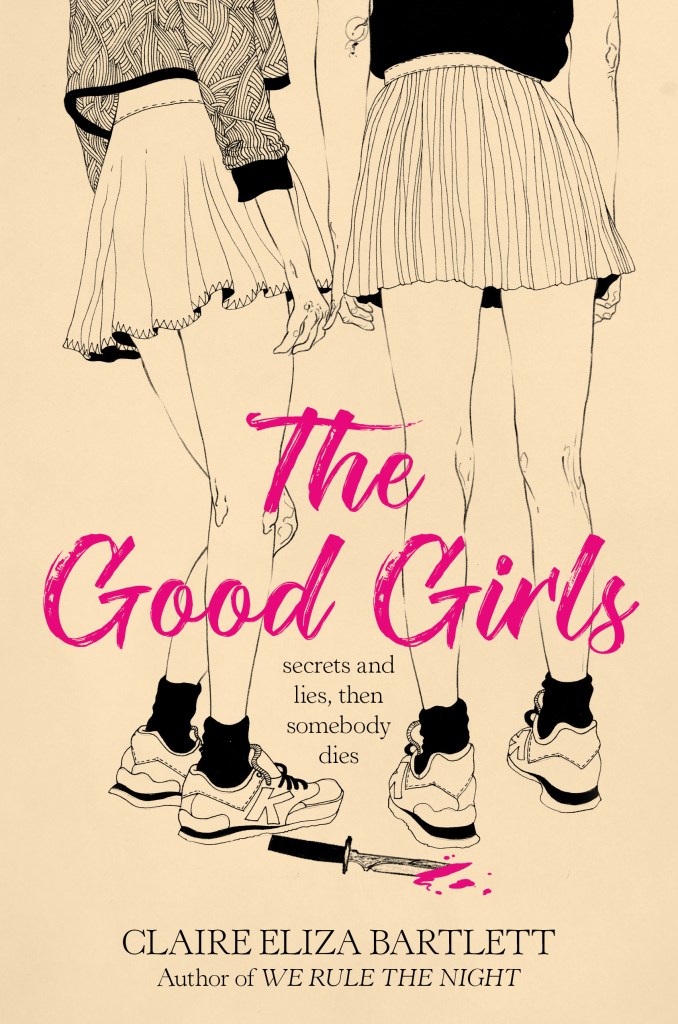
Kate’s Review: “Heartstopper (Vol.1)”

50160417Book: “Heartstopper (Vol.1)” by Alice Oseman

Publishing Info: Graphix, May 2020

Where Did I Get This Book: I own it.

Book Description: Boy meets boy. Boys become friends. Boys fall in love. A sweet and charming coming-of-age story that explores friendship, love, and coming out.

Shy and softhearted Charlie Spring sits next to rugby player Nick Nelson in class one morning. A warm and intimate friendship follows, and that soon develops into something more for Charlie, who doesn’t think he has a chance.

But Nick is struggling with feelings of his own, and as the two grow closer and take on the ups and downs of high school, they come to understand the surprising and delightful ways in which love works.

Review: Sometimes you just need a good romance. While it’s not really my go to genre, I do have a soft spot for a kissing book every once in awhile, and in graphic novel form that’s all the better. Given how things have been going as of late, when I was throwing money at my local indie bookstore I decided to order “Heartstopper (Vol.1)” by Alice Oseman, given that a few of my friends had read it and enjoyed it. I waited for a day where I was stressed out and needed a nice fluffy distraction. And if you too are looking for a nice fluffy distraction, “Heartstopper (Vol.1)” will do you just fine.

giphy-4
This book showing up to shower you with romantic goodness. (source)

“Heartstopper (Vol.1)” is about two teenage boys. The first is Charlie, a shy and introverted 10th year at his school who is out and used to be bullied because of it. The other is Nick, a gregarious and charming rugby player who gets along with all sorts of people. After being seated next to each other in class they strike up a friendship, and then perhaps something more starts to develop. This is a very straightforward story about two boys who are still trying to find themselves, and by finding each other they grow and change and blossom. While there isn’t much in terms of twists or turns or crazy drama or conflict, the quiet pangs of seemingly impossible crushes and the confusing moments of shifting (or perhaps merely expanding) sexuality bring enough relatable angst and joy to the reader that you will still be invested. Charlie and Nick’s friendship is realistic and darling, and seeing Charlie yearn for Nick while thinking he has no chance, and seeing Nick become more and more drawn to Charlie makes it so that you are completely taken in by their tale and will want to see what happens. Both Charlie and Nick are extremely likable, and I loved seeing how they interacted with each other and how their potential romance slowly built up through these interactions. What I found the most satisfying about this story is that while Charlie makes mention of past bullying, and while there are definitely moments of ‘soft’ homophobia from some characters (by no means to I mean not harmful, but more thinking in stereotypes of what a gay person is ‘supposed’ to be), it isn’t the main conflict for Charlie within the narrative. After all, while addressing the oppression that members of the LGBTQIA+ have to face is important, it’s also important not to define their stories by that oppression. So to have Charlie and Nick navigating the highs and lows of a potential romance in very run of the mill ways was refreshing. I also appreciated how Oseman addressed that one’s sexuality can shift and change when you are trying to figure out who you are, as Nick is going through a lot of self discovery. And that can be hard. The story is definitely soft and sweet, and while it does end on something of a cliffhanger you also have hope going into the next volume. Whenever that may be. Soon, I hope!

And finally, I really liked the artwork for this comic. Oseman’s style is very simple, but there are little hints of originality that I found very endearing. Be it sometimes writing out sound effects to have in the panel, or how the words are hand written and typed out letters are reserved for texts and messages between characters, or how body language gets translated into words, there is something very endearing and charming about how Oseman tells her story with her imagery.

heartstopper
Please ignore the not so good quality picture, I had to improvise. (Source: Graphix)

“Heartstopper (Vol.1)” is a lovely start to this pleasant story, and I am very eager to see where Charlie and Nick go from here.

Rating 8: Soft and sweet, “Heartstopper (Vol.1)” is a darling romance with lovely characters and a charming coming of age plot line.

Reader’s Advisory:

“Heartstopper (Vol.1)” is included on the Goodreads lists “Great M/M Webcomics”, and “Let Boys Be Soft”.

Find “Heartstopper (Vol.1)” at your library using WorldCat, or at a local independent bookstore using IndieBound!

Kate’s Review: “Rico Stays”

53148827._sx318_Book: “Rico Stays” by Ed Duncan

Publishing Info: Independently Published, May 2020

Where Did I Get This Book: I received a print copy from Book Publicity Services.

Book Description: After enforcer Richard “Rico” Sanders stepped in to protect his girlfriend from a local mob boss’s hot-headed nephew, all hell broke loose.

When the smoke cleared, the nephew had vanished, but three goons who had tried to help him lay dying where they’d stood. Fighting for his life, Rico was alive but gravely wounded.

Out of the hospital but not fully recovered, he needed a place to crash – a place where he wouldn’t be found by men who surely would be looking. A place like the cabin owned by lawyer Paul Elliott, whose life Rico had saved more than once. Trouble was, Paul’s girlfriend hadn’t forgotten Rico’s dark history. Or Paul’s fascination with him.

Using Rico’s girlfriend as bait, vengeful killers soon would be coming for him. The only question was whether he would face them alone or with help from Paul.

Review: Thank you to Book Publicity Services for sending me a print copy of this novel!

When I got the summary for “Rico Stays” by Ed Duncan in our email box, the premise was intriguing enough to catch my interest. I had recently finished my first watch through of “The Sopranos”, so taking on a thriller centering around a hit man trying to lay low while also trying to keep his girlfriend safe sounded like it could have promise. Once I picked it up and began reading, I started to get the feeling that something was off. The characters seemed like they were established already, in that we got some little blips about them, but it was a lot of telling in small summaries instead of slow unveiling of characterizations. I went back online to do some digging, and I realized something that I missed the first time: this was the third book in a series, not a standalone. A series I had not read.

giphy-6
(source)

I definitely take some responsibility for this, as within the email there was a link to more information that does mention “Rico Stays” is part of a series within the broader information summary. I didn’t realize that. But I made a commitment to review this book, so review it I shall. But know that this review is going to be a little…. different.

So what I did like about this book is that there is no denying that it is action packed. The conflict and action sequences basically start up right away, and it’s written in such a way that it feels like you could see it on a TV screen. Did I imagine some of these characters as “Sopranos” characters? Why yes I did. I also really liked Rico’s girlfriend Jean, whose kind and supportive character is also no nonsense and a problem solver. I greatly enjoyed how she advocated for Rico after he was in danger, and was able to connect with Paul, a lawyer who has a connection to Rico from past books. Also, Paul! I liked Paul too, as he clearly has a clear set of morals that he wants to abide by, and that sometimes comes in conflict with the various morals and ethics of his profession as a lawyer… namely, providing shelter for a hitman whom he owes a life debt to. That’s an interesting conundrum for this character, and it definitely puts not only his conscience, but his relationship, on the line.

But as a whole, I spent a fair amount of “Rico Stays” a bit… lost, shall we say? There were clear background plot points feeding into this story, be they as to why Rico is being targeted in the first place or why he and Paul have a tense but amicable relationship, or even as to how Rico and Jean’s relationship has progressed and changed. Without knowing these things, I had a harder time connecting to the story as a whole, and didn’t really find myself terribly invested in Rico’s predicament even as the stakes continued to mount. But I can’t be sure as to whether or not that is the fault of the story, or the fault of my ignorance.

So I think I’m going to have to do something I haven’t done before, and not really GIVE a full on rating on this book. It’s not a DNF because I finished it, but it also feels like I missed a good deal of context because this was the third in a series. So I am creating a new rating:  N/A. I can’t give this book a fair rating because it would be like jumping into the third installment of a movie trilogy that has a linear story, and trying to get the whole story from that alone. “Rico Stays” has solid moments on its own, but without the full context, I don’t really know what to think of it as a whole.

Rating N/A: I don’t know enough about the characters and the overarching plot line to really say if this book stuck the landing for the trilogy, but I did find some things about “Rico Stays” that were enjoyable. If you like Mafia or hitman stories, maybe go back to the beginning with “Pigeon-Blood Red” and start there.

Reader’s Advisory:

“Rico Stays” isn’t on any Goodreads lists, but I’m sure if would fit in on “The Mafia Connection Group’s Favorite Mafia Themed Reads”!

Find “Rico Stays” and the rest of the “Pigeon-Blood Red” Trilogy at Ed Duncan’s website! Or on Amazon!

Kate’s Review: “Displacement”

39908611._sx318_Book: “Displacement” by Kiku Hughes

Publishing Info: First Second Books, August 2020

Where Did I Get This Book: I received an eARC from NetGalley.

Book Description: A teenager is pulled back in time to witness her grandmother’s experiences in World War II-era Japanese internment camps in Displacement, a historical graphic novel from Kiku Hughes.

Kiku is on vacation in San Francisco when suddenly she finds herself displaced to the 1940s Japanese-American internment camp that her late grandmother, Ernestina, was forcibly relocated to during World War II.

These displacements keep occurring until Kiku finds herself “stuck” back in time. Living alongside her young grandmother and other Japanese-American citizens in internment camps, Kiku gets the education she never received in history class. She witnesses the lives of Japanese-Americans who were denied their civil liberties and suffered greatly, but managed to cultivate community and commit acts of resistance in order to survive.

Kiku Hughes weaves a riveting, bittersweet tale that highlights the intergenerational impact and power of memory.

Review: Thank you to NetGalley for providing me with an eARC of this graphic novel!

I am always going to keep hammering home the point that if we don’t know our own history, we are going to repeat it, especially now when our country seems to be determined to undercut civil liberties of its own citizens. Between police brutality, towards minorities (particularly Black people), a Muslim ban, and children in cages at the border, it feels like we are slipping more towards times in American history where we committed terrible atrocities that we haven’t really faced as of yet. That brings me to “Displacement” by Kiku Hughes, a graphic novel on the Japanese American Internment during World War II. I’ve read my fair share about this horrific practice (and reviewed another graphic novel on the topic, “They Called Us Enemy” by George Takei), and figured that this would be another powerful, but familiar, take on this period in history. And I can safely say that “Displacement” wasn’t really what I was expecting.

“Displacement” is both fiction, and non-fiction. The non-fiction aspect is that Kiku Hughes’s grandmother Ernestina was held prisoner at both Tanforan and Topaz Internment camps, and that Kiku and her mother did a lot of research into it as Ernestina didn’t open up about it while she was alive. But the fictional aspect is a device that works very well, in which Kiku tells a story of herself being transported back in time, or ‘displaced’ to the 1940s, and ending up at the same Internment sites as Ernestina, therein letting the reader see this historical atrocity through the same modern lens that Kiku may. It’s very similar to “Kindred” by Octavia Butler, and Hughes mentions her specifically in her acknowledgements. I thought that it worked really well because it makes the story feel more personal than perhaps a textbook would, and more relatable since Hughes is a young adult who doesn’t know that much about the camps and what life there was like for Ernestina. It’s a perfect read for tweens and teens who might be wanting to learn about this topic, as while it’s ‘fantasy’, it’s also very realistic and provides the same perspective that they may be going in with. I read “Farewell to Manzanar” by Jane Watasuki Houston when I was in seventh grade, and while I did like it and got a lot from it, I think that if I had something like “Displacement” I may have connected more with it just because of the modern lens. Hughes also makes very clear connections to the current political climate we are in today with Trump and his goons in power, and how there are stark, STARK similarities between the prejudices they hold and the policies they are inflicting upon marginalized groups, and the ones inflicted upon the Issei and Nisei in this country during the Internment.

While “Kindred” is the book Hughes mentions specifically as influence, I also see a lot of similarities to Jane Yolen’s “The Devil’s Arithmetic”, in which a modern day (well modern when it came out) Jewish girl named Hannah is transported back to Poland right as the Nazis take over. I kept going back to that story as I saw Kiku pre-displacement, thinking about how Hannah, like Kiku, doesn’t feel that much connection to her heritage. While “Displacement” certainly does a great job of talking about what specifically happened to her grandmother during the Internment, Hughes also makes direct connections as to how the Internment facilitated a loss of identity for Japanese Americans, and played a part in generational trauma that still lingers today. It’s a theme that I haven’t seen as much in other books, be they fiction or non-fiction, about the Internment, and it is a really powerful way to show that there are far reaching consequences that touch later generations when it comes to trauma and violence directed towards a group of people. Kiku recounts (in the true story part of this book) how she and her mother decided to do their own research about Ernestina’s life in the camps, and about the camps themselves, and find out things that neither of them knew because of survivors not wanting to talk about it due to trauma and shame. This was the aspect that stood out to me the most.

And finally, I really liked Hughe’s artwork style. It feels not dissimilar to what you might expect from modern comics, but there are undercurrents of more realistic artwork and imagery that kind of remind the reader that this is based on something real, and terrible.

wtbchhrnj1x3brfhsqpb
(source)

“Displacement” is a book that I really think educators should have in their curriculums when teaching teens about the Japanese American Internment. It’s easy to understand, easy to parse, and has a whole lot to say about identity, racist policy, and trauma that can last beyond a generation.

Rating 8: A powerful graphic novel and the perfect introduction to the subject for tween and teen audiences, “Displacement” takes on a reprehensible part of American history with a magical realism twist.

Reader’s Advisory:

“Displacement” is included on the Goodreads lists “Surviving in the Japanese Relocation Centers of WW2”, and “2020 YA/MG Books With POC Leads”.

Find “Displacement” at your library using WorldCat, or a local independent bookstore using IndieBound!

Kate’s Review: “This Is My America”

52855111._sx318_sy475_Book: “This Is My America” by Kim Johnson

Publishing Info: Random House Children’s Books, July 2020

Where Did I Get This Book: I received an eARC from NetGalley.

Book Description: Dear Martin meets Just Mercy in this unflinching yet uplifting YA novel that explores the racist injustices in the American justice system.

Every week, seventeen-year-old Tracy Beaumont writes letters to Innocence X, asking the organization to help her father, an innocent Black man on death row. After seven years, Tracy is running out of time—her dad has only 267 days left. Then the unthinkable happens. The police arrive in the night, and Tracy’s older brother, Jamal, goes from being a bright, promising track star to a “thug” on the run, accused of killing a white girl. Determined to save her brother, Tracy investigates what really happened between Jamal and Angela down at the Pike. But will Tracy and her family survive the uncovering of the skeletons of their Texas town’s racist history that still haunt the present?

Fans of Nic Stone and Jason Reynolds won’t want to miss this provocative and gripping debut.

Review: Thanks to NetGalley for sending me an eARC of this novel!

Though I don’t live right in the city, I live close enough to Minneapolis that I was following the aftermath of the George Floyd murder with a heavy heart and no small amount of anger. Anger towards the MPD, anger towards racists who were saying awful shit, anger at the white supremacists who came into the city to stir up trouble (a bit of fear of that too; given that we’re a Jewish household, for a few nights there we were taking precautions). While I hope that this senseless murder and the protests that came after will start to produce some change when it comes to race in this country, I also know that racism is a deep part of our society and not easily swayed. It was around this time that I got “This Is My America” by Kim Johnson. While I love that more books are being published that address the racism in our country, be it societal or systemic, it’s terrible that things have changed so little that these books continue to be necessary. Circumstances aside, “This Is My America” is another serious contender for one of my favorite reads of the summer.

First and foremost as mentioned above, the themes of this book of racism in the American Justice System and in America itself are pressing and emotional, and I thought that through Tracy’s story Johnson has a more unique perspective. I’ve read a good number of YA books where an unarmed Black person is murdered by the police, which is of course a horrific reality, but in “This Is My America” we look at a different injustice: wrongfully convicted/accused Black men who end up on Death Row. Tracy’s father has been on Death Row for seven years and his date of execution is less than a year away, so for her and her family the hope of his case being revisited is imperative. We see how the trauma has affected her family, from the financial burden laying on their mother, to her younger sister Corinne never knowing her father at home, to Tracy’s obsession affecting her relationships at home and at school. It’s an angle that we don’t get to see as often, that even when ‘justice’ is supposedly served, for a lot of Black men in prison there is no actual justice. Tracy’s desperation is compounded when her brother Jamal is accused of murdering his friend Angela, a white girl who had an on and off again relationship with the sheriff’s son. Jamal didn’t do it, but given that he’s Black he doesn’t trust the police, so he runs. And as Tracy starts to dig into what happened to Angela, she starts to see that it’s not the Black community in their small Texas town that is the threat, but a hidden rot of White Supremacy that has started to rise in the current social conditions. Add into that a corrupt police force and sheriff’s office and you have Tracy trying to find justice on her own. Johnson addresses all of these themes with care and shows the complexity, and it never feels like she’s talking down to her audience. The only time that it feels like it’s being spoon fed or explained is when within the story one would be carefully explaining the ideas, so it fit and didn’t feel out of place. And on top of all that, Johnson included a very substantial Author’s Note at the end that provided a lot of context and resources for the topics in this book.

As if a fabulous overall thematic wasn’t enough, we also get a really well done and well thought out mystery! I wanted to know who killed Angela, just as I wanted to know what actually happened to the couple whose murder sent Tracy’s father to prison. Johnson lays out a lot of clues, a lot of suspects, and a lot of suspenseful moments as Tracy takes the investigation into her own hands, and manages to weave a lot of complexities into the story. I was kept in suspense and on the edge of my seat as more sinister clues were unveiled, and genuinely taken in with each reveal.

One qualm that kept it from a perfect rating: there is a love triangle between Tracy, her best friend Dean, and her childhood friend Quincy (whose father was killed by the police while Tracy’s father was arrested). I don’t really know why there is a love triangle, but there is. I found it a little hard to believe that Tracy would even be entertaining the idea of romance with two different boys when her brother is wanted for murder, her father’s days on death row are dwindling, and there is a potential threat of the Klan being directed towards her family. But at the same time, I know that teenagers can get caught up in hormones maybe? It wasn’t distracting enough to totally throw me off, but it felt out of place.

But really, “This Is My America” is fantastic. It absolutely deserves to  become the next YA sensation, and given how a lot of the themes in this story seem to have come to a head this summer, it feels all the more relevant and all the more pressing. Kim Johnson, I cannot wait to see what you do next!

Rating 9: Incendiary, powerful, and still far too relevant, “This Is My America” peels back systemic racism in the American Legal Justice System, and has a compelling mystery to boot.

Reader’s Advisory:

“This Is My America” is included on the Goodreads lists “YA Books Similar to THUG”, and “YA Contemporary by Black Authors”.

Find “This Is My America” at your library using WorldCat, or at a local independent bookstore using IndieBound!

Kate’s Review: “The Sandman (Vol.3): Dream Country”

25100Book: “The Sandman (Vol.3): Dream Country” by Neil Gaiman, Kelley Jones (Ill.), Charles Vell (Ill.), Colleen Doran (Ill.), and Malcolm Jones (Ill.)

Publishing Info: Vertigo, 1991

Where Did I Get This Book: I own it.

Book Description: The third volume of the Sandman collection is a series of four short comic book stories. In each of these otherwise unrelated stories, Morpheus serves only as a minor character. Here we meet the mother of Morpheus’s son, find out what cats dream about, and discover the true origin behind Shakespeare’s A Midsummer’s Night Dream. The latter won a World Fantasy Award for best short story, the first time a comic book was given that honor. collecting The Sandman #17–20.

Review: One of the things that I need to get used to when going back and re-reading “Sandman” is that Gaiman sometimes like to meander and experiment with stories in their tone and mythologies. So while “Sandman” does have an overarching plot line, on occasion you will find tales that don’t fit in. Sometimes I really love this, as in both of our previous collections I’ve highlighted these standalone stories. So theoretically I should have been totally game with “The Sandman (Vol.3): Dream Country”, as it has four stand alone tales that don’t really focus on Dream and his journey. I’m all for experimentation, just like on my first read through, “Dream Country” didn’t live up to the books before.

Our first standalone story, “Calliope”, is one of the ones that most fascinates me, but also has some really problematic elements to it. In concerns the Muse Calliope, Morpheus’s former lover and mother of their late son Orpheus, who has been imprisoned by an author so that her influence will make him write amazing works. While in captivity Calliope is isolated and raped repeatedly, and she calls upon Morpheus for help in escaping. I greatly enjoy the concept of a person using the means of a Muse for ill will, and I liked the harkening back to the Greek Mythology that Morpheus has some part in, but I really had a hard time with the way that Calliope is abused by one man, and is basically damsel in distressed until another man saves her. The concept was my favorite of the four, but the execution was very upsetting and felt a bit tone deaf by today’s standards.

The second is “A Dream of a Thousand Cats”, a fun and kind of sad story about house cats and how they went from ruling the wild to being subjugated by human kind. Given my love for cats, the idea of cats wanting to rise up and free themselves from their human ‘captors’ is very fun, if only because it has been said that if house cats were much larger they would absolutely try to kill their owners. Morpheus is here (in the form of a cat, no less!), but it really could have been anyone waylaying this information to our feline protagonists. This probably could have worked as a short story out of the “Sandman” universe, and I wonder if Gaiman had the idea for this kind of story outside of this narrative, as it felt a bit forced into the box of the Sandman world.

The third story is “A Midsummer Night’s Dream”, a World Fantasy Award winning tale (the first comic to win this award even!) in which Morpheus brings people of the faerie realm to come watch Shakespeare’s traveling troupe put on “A Midsummer Night’s Dream”. Basically Morpheus and Shakespeare cut a deal and this is the first of two plays that Shakespeare has written for him. We get a lighthearted version of “A Midsummer Night’s Dream”, and get to see their ‘real world’ counter parts react to the way that they are portrayed within the play. Cute to be sure. I think that were I a bigger fan of the play itself I’d have enjoyed this more, but “A Midsummer Night’s Dream” isn’t a fave of mine, Shakespeare wise.

It’s the fourth story that I really, really liked, and kind of saved this whole collection for me. “Facade” is the saddest tale within this collection, and it doesn’t even have Morpheus in it! Instead we get to see my girl Death shine, though she, too, plays a smaller role in lieu of a new original character. Raine is a woman who, when on an archaeological dig in Egypt, was cursed with immortality. Though she is going to live possibly forever, her body is slowly deteriorating, rendering her isolated and scared and desperate to die. She puts on fake faces to go into public, but it’s by no means a long term solution, and after a particularly bad day Death hears her begging, and decides to talk to her. Looking at the consequences of what immortality would actually be is always sobering, and Raine is such a sad character that you ache for as the story goes on. And while it was kind of surprising to see that Morpheus wasn’t in this one, I think that Death was really the character to use given her empathetic nature (unlike Dream, who is prickly at best), and it was really nice seeing her getting a little more spotlight. She is such an intriguing character on her own, after all. I also really liked the artwork for this one. It’s a lovely design for Death.

k5ucirmlsrq31
(source)

“The Sandman (Vol.3): Dream Country” is a fine detour from the main storyline, but I’m eager to get back to see what Morpheus is up to. I definitely encourage you to read these if you are taking on the series, but if you have to go to Volume 4 before this one, that’s probably going to be fine.

Rating 7: These standalone stories are enjoyable for the most part, but they don’t really progress the plot, and feel a bit dated in some of their themes.

Reader’s Advisory:

“The Sandman (Vol.3): Dream Country” is included on the Goodreads lists “Books About Faery”, and “Mythic Fiction Comics”.

Find “The Sandman (Vol.3): Dream Country” at your library using WorldCat, or a local independent bookstore using IndieBound!

Previously Reviewed: 
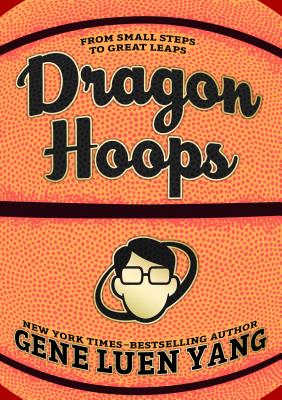
 

Kate’s Review: “Hell in the Heartland”

52218496Book: “Hell in the Heartland: Murder, Meth, and the Case of Two Missing Girls” by Jax Miller

Publishing Info: Berkley, July 2020

Where Did I Get This Book: I received an eARC from NetGalley

Book Description: The stranger-than-fiction cold case from rural Oklahoma that has stumped authorities for two decades, concerning the disappearance of two teenage girls and the much larger mystery of murder, police cover-up, and an unimaginable truth…

On December 30, 1999, in rural Oklahoma, sixteen-year-old Ashley Freeman and her best friend, Lauria Bible, were having a sleepover. The next morning, the Freeman family trailer was in flames and both girls were missing.

While rumors of drug debts, revenge, and police collusion abounded in the years that followed, the case remained unsolved and the girls were never found.

In 2015, crime writer Jax Miller–who had been haunted by the case–decided to travel to Oklahoma to find out what really happened on that winter night in 1999, and why the story was still simmering more than fifteen years later. What she found was more than she could have ever bargained for: jaw-dropping levels of police negligence and corruption, entire communities ravaged by methamphetamine addiction, and a series of interconnected murders with an ominously familiar pattern.

These forgotten towns were wild, lawless, and home to some very dark secrets.

Review: Thank you to NetGalley for sending me an eARC of this book!

For someone who enjoys a good true crime podcast and likes to spend time on the Reddit sub “Unresolved Mysteries”, I am always taken in by the story of a cold case, murder, or strange mystery that I have never heard of before. So when I was browsing NetGalley’s list of upcoming true crime books, “Hell in the Heartland: Murder, Meth, and the Cse of Two Missing Girls” by Jax Miller caught my attention. The case has all the components of an “Unsolved Mysteries” episode. You have two missing teenagers in rural Oklahoma, Ashley Freeman and Lauria Bible. Lauria was sleeping over at Ashley’s trailer home, but early the next morning it was found burning. First responders and police found the body of Ashley’s mother, and later her father’s body was also found. But there was no sign of Ashley or Lauria, and they haven’t been seen ever since. I thought that it would be a tantalizing and strange story, and it certainly is. But Miller takes it even further, and decides to paint a broader picture than just a tale about two missing teens. We also get a study of police negligence, small town criminality, and the way that a community like this has fallen on hard times, and how that has broad repercussions.

“Hell in the Heartland” is for the most part a true crime mystery, and the case is a head scratcher to be sure. There are two prevailing theories about what may have happened to Ashley and Lauria, and it seems to be split along family lines as to whom those theories appeal to. Miller gives due diligence to both theories, and while I think that probability falls far more on the side of one, I liked that in this book we got pretty strong arguments for both. The first, subscribed to by Ashley’s surviving family members, is that the local enforcement officials were trying to cover up some wrong doing. After all, Ashley’s brother Shane had been shot and killed by an officer not too long before Ashley disappeared and her parents were murdered. The officer claimed that he had drawn a gun, but the Freemans never believed it. The circumstances were suspicious, and the way that the police bungled a few things about the investigation into the Freeman murders and missing girls was absolutely reckless at best, and damning at worst. I have no problem believing that a department feeling sore about unwanted attention because of a grieving family wanting justice would mishandle a case regarding said family, so it’s not really a stretch to think that maybe the police could be capable of something so terrible. The other theory is that local meth kingpins were the ones that committed this crime, as their proximity and potential involvement with the Freeman family would give motive, means, and opportunity. As the book goes on this seems to be a more likely scenario, especially given recent arrests and evidence that ties them to the girls. But all that said, Miller still wants to present all of the evidence and to give a very clear picture of both possibilities, as at the end of the day we still don’t know where Ashley and Lauria are, even if we think we know what happened to them. While there may be an official ‘end’ in terms of how our legal system is seeing it, Miller makes it very clear to the reader that there is no closure and there is no real justice, because Ashley and Lauria never came home in one way or another. And for Lauria’s parents especially, that isn’t justice.

But beyond the case itself, “Hell in the Heartland” paints a very grim and sad picture about the rural community that Ashley and Lauria were living in when they disappeared. From Ashley’s brother Shane dying at the hands of a police officer with no repercussions, to Ashely’s grandparents very clear mental health issues that aren’t being addressed, to poverty in general and how the meth trade takes root within it, we see that Ashley and Lauria’s kidnapping, and the murder of the Freemans, wasn’t within a vacuum. Hell, the fact that one of the big drug lords was a known violent lunatic, with assault, domestic violence, and other horrible things being is M.O., and no one could do anything but stay out of his way, says volumes. Violence and secrets are more common than we may think in small towns like this, and to me that was one of the harder things to swallow about this story.

“Hell in the Heartland” is a story that you may not know about even if you’re a true crime aficionado, but after reading this book you’ll want to know more. Jax Miller has really shined a light on a case that hasn’t really left Oklahoma, and hopefully it will have a wide enough reach that one day Ashley and Lauria will be brought home.

Rating 7: A sad and strange cold case that has no official end, “Hell in the Heartland” takes a look at the story of two missing girls, and some very sad facts and dangers about the community they lived in.

Reader’s Advisory:

“Hell in the Heartland” is new and not included on any Goodreads lists yet, but it would fit in on “Poverty in the USA”, and “Corruption in High Places”.

Find “Hell in the Heartland” at your library using WorldCat, or at a local independent bookstore using IndieBound!