Kate’s Review: “Mother, Mother”

17262187Book: “Mother, Mother” by Koren Zailckas

Publishing Info: Crown, September 2013

Where Did I Get This Book: The library!

Book Description: Josephine Hurst has her family under control. With two beautiful daughters, a brilliantly intelligent son, a tech-guru of a husband and a historical landmark home, her life is picture perfect. She has everything she wants; all she has to do is keep it that way. But living in this matriarch’s determinedly cheerful, yet subtly controlling domain hasn’t been easy for her family, and when her oldest daughter, Rose, runs off with a mysterious boyfriend, Josephine tightens her grip, gradually turning her flawless home into a darker sort of prison.

Resentful of her sister’s newfound freedom, Violet turns to eastern philosophy, hallucinogenic drugs, and extreme fasting, eventually landing herself in the psych ward. Meanwhile, her brother Will shrinks further into a world of self-doubt. Recently diagnosed with Aspergers and epilepsy, he’s separated from the other kids around town and is homeschooled to ensure his safety. Their father, Douglas, finds resolve in the bottom of the bottle—an addict craving his own chance to escape. Josephine struggles to maintain the family’s impeccable façade, but when a violent incident leads to a visit from child protective services, the truth about the Hursts might finally be revealed.

Review: It is times like these that I thank the heavens that my mother is a wonderful, funny, awesome person who raised me well with a lot of encouragement and love. Sure, my teenage years, like most teenage years, were trying for both of us, but she and I have a very good relationship now, and I know that I am lucky for that. Because there are some people who have mothers like Josephine Hurst, and that scares the bejesus out of me. Josephine Hurst is one of the most twisted villains I have encountered in fiction this year, and like the other villains that have shook me to the core it’s because of her plausibility. She is the classic narcissist parent, who coddles and smothers and brainwashes one child (the neurotic and eager to please son Will), and torments the other (the tortured and lost Violet). I had gone into this thinking that it was going to be something kind of soapy and cartoony like either Kathleen Turner in “Serial Mom” or Marcia Cross on “Desperate Housewives”, but then when it was a really upsetting and scary book about the dangers of narcissistic parenting I was a bit taken aback. Though I suppose I should have expected something along those lines from the woman whose memoir, “Smashed: The Story of a Drunken Girlhood”, was about her tumultuous teenage years on booze. Still, how I hoped for a campy Bree Van de Kamp-Hodge revisit.

giphy12
Shady lady. (source)

I will say this much, this book was super upsetting and very terrifying to me because of how relentlessly evil Josephine was, and not in a fun way. Watching her manipulate her children and husband and wage psychological warfare against them was just hard to read. It’s told from two perspectives, that of Will, the doted on and pampered child, and that of Violet, the black sheep who Josephine psychologically abuses. The overarching mystery in this book is a pretty clever one, in that you don’t realize that it’s a mystery until about half way through, and that is of the oldest child, Rose. Rose ran away from the family shortly before the events started, and Zailckas does a very good job of slowly revealing why things may not be as they seem in not just this situation, but in many other situations in this book. We get the perspective of Violet, who resents her sister for leaving, and Will, who has been convinced that his oldest sister is basically evil, and I wanted to smack and shake both of them and protect them from this horrible woman who is raising them. I’ve seen and heard about narcissistic parents in the lives of my friends and acquaintances and family, and Josephine is written very, very convincingly. Even though I wanted to shake both Will and Violet for different reasons, I not once said to myself ‘well that just wouldn’t happen’, because Josephine was incredibly real. I definitely enjoyed the Violet sections more, but that may have been because the Will sections were a bit too disturbing to me. Will is the child who is loved and praised and coddled, but you also see just how far gone he is, and how screwed he is going to be because of his connection to his horrible and abusive mother. That said, I also think that the Violet parts showed a more well thought out character, as Violet, though she rebels against her mother with her fascination with Eastern religion and philosophy, is also completely controlled and dominated by her. Violet had the strongest voice of the three children, and I really felt for her and invested in her.

However, I kind of guessed a couple of the big twists pretty early on in the story, and I don’t know if it was because I read too much thriller fiction or because Zailckas didn’t parse out the clues in a very tricky way. I had a harder time with some of the red herrings that were thrown in, as they were only there to distract but then had no explanation or payoff. I also wish that we had a little more dichotomy between Josephine and Beryl, the mother of Violet’s friend Imogene and the positive female influence in her life. We got to see Beryl a little bit, but I wanted more juxtaposition between them. I also felt that Beryl was almost too two dimensional in her portrayal, both a compassionate maternal angel and a literal martyr, as she is suffering from terminal cancer. I think that had we seen more of her and had she had more depth it would have felt more sincere. And without giving away any spoilers, I wished for more closure than we got. I know that life doesn’t always have closure, and I know that rarely do awful people really get what they deserve. But sometimes I am desperate for it, and when it doesn’t happen the way I want it to I have a harder time accepting it.

“Mother, Mother” is a solid thriller mystery and most of the characters are well thought out. But I warn you, it is very upsetting, and it tends to have a bit more emotional baggage than it can carry. Koren Zailckas captures narcissistic personality disorder very well, and should you dare read this, be ready to feel all the ick.

Rating 7: While some of the parts are hard to read and some of the plot twists and diversions are unnecessary, “Mother, Mother” paints a haunting portrait of a horribly abusive mother and her suffering children.

Reader’s Advisory:

“Mother, Mother” is included on these Goodreads lists: “Narcissistic Mothers”, and “Gillian Flynn Read Alikes”.

Find “Mother, Mother” at your library using WorldCat!

Kate’s Review: “Burn Baby Burn”

25982606Book: “Burn Baby Burn” by Meg Medina

Publishing Info: Candlewick Press, March 2016

Where Did I Get This Book: The library!

Book Description: Nora Lopez is seventeen during the infamous year 1977 in New York.

After a freezing winter, a boiling hot summer explodes with arson, a blackout, and a serial killer named Son of Sam, who is shooting young people on the streets seemingly at random.

Not only is the city a disaster, but Nora has troubles of her own: her brother, Hector, is growing more uncontrollable by the day, her mother is helpless to stop him, and her father is so busy with his new family that he only calls on holidays.

And it doesn’t stop there. The super’s after her mother to pay their overdue rent, and her teachers are pushing her to apply for college, but all Nora wants is to turn eighteen and be on her own. There is a cute guy who started working with her at the deli, but is dating even worth the risk when the killer especially likes picking off couples who stay out too late?

Award-winning author Meg Medina transports readers to a time when New York seemed about to explode, with temperatures and tempers running high, to discover how one young woman faces her fears as everything self-destructs around her.

Review: So, okay, I may be kind of cheating with this one, as I know that I am usually here to review horror, thrillers, and graphic novels. “Burn Baby Burn” is KIND OF a thriller, but at it’s heart it’s a historical fiction that focuses on family strife and societal tensions. Whatever, I don’t care, because this book did set me on edge and that’s what thrillers do. So it counts. Plus, Meg Medina is a fabulous YA author, whose wonderful “Yaqui Delgado Wants To Kick Your Ass” won the Pura Belpré Award in 2014, and I have been keeping my eye on her. While that book had it’s moments of suspense, “Burn Baby Burn” is constantly walking on a line of intensity that is about to explode. And given the year and the setting (1977 in Queens, New York), it’s no wonder.

The scariest part of this story, where most of the suspense comes from, is not the Son of Sam cloud that is constantly hanging over these characters (more on that in a bit). Instead, it is the fact that Nora is sharing an apartment with her brother Hector, who is turning more and more into a violent psychopath as every day goes by. When he isn’t lashing out at his mother or kicking the neighborhood mutt in the ribs (poor Tripod!!! Once you kick an animal you are DEAD TO ME), Hector is stealing pills to sell with the neighborhood drug dealer, and threatening his sister’s life. I was kind of worried that Hector was going to just be a crazed, violent antagonist without purpose, but Medina makes it pretty clear from the get go that Hector has had serious issues ever since he was a child, and that a racist and disenfranchised community he has to live in hasn’t made things better. She doesn’t not excuse his behavior, but she does make the reader see more layers to him, which makes Nora’s home life all the more tragic.

Nora is a protagonist who is both super easy to root for, but also realistic enough that she makes big, teenage mistakes that make you want to shake her. She thinks that since she’s almost eighteen that she can handle everything that is thrown her way, but it’s very clear that this is not the case. Of course, her parents haven’t made things any easier for her. Her father can’t be bothered with his first family, and her mother flips between making excuses for Hector’s sociopathy, ignoring outright, and blaming Nora. While Nora finds solace an safety with her best friend Kathleen and her family, there is always a socioeconomic and racial divide between them, unspoken as it may be, and Medina does a good job of addressing that without casting any kind of judgment towards either girl. Nora is also in a league of her own in her goals. She isn’t interested in college or academia, but does have a passion in woodworking, and is more interested in going to a trade school to master that craft. In a world where so many of the YA girl protagonists we see are writers, artists, or poets at heart, it was delightfully surprising to see one who is interested in a nontraditional vocation (one that is disappearing from our schools). And I say that as one of those artsy writer girls. Nora was a breath of fresh air on all levels.

Time and place is phenomenal in this book. 1977 Queens was filled with lots of tension, from racial tensions in the community to Son of Sam stalking couples in cars. Having this backdrop for Nora’s coming of age story was incredibly original and also very appropriate. The specter of violence and bloodshed that haunted the entire city is a fabulous juxtaposition to the specter of violence that is haunting Nora’s own home. She is more afraid of a serial killer that she is her abusive brother, or tells herself she is. And with the nods to pop culture of the time really tied this story together. Nora is into disco, she and her boyfriend Pedro go see “Star Wars: A New Hope” in the theater, and Hector wants to go to CBGBs to see The Ramones. Medina really captured 1977 without hitting us over the head with it. Though this is probably due in part to the fact that some of the themes from then (systematic racism, frustrated youth, misogyny) are just as relevant today as they were back in 1977. And as everything started to come to a boil, even though I knew what was coming, when it happened it was still incredibly nerve wracking.

“Burn Baby Burn” is probably one of the best YA novels I’ve read this year, and Meg Medina once again has written a story about a situation many of us may not think about in our day to day lives. I was tied up in knots as I read it, and think that it deserves some serious recognition and a wider audience. The nostalgia and ferocity come off of it in waves, and Nora Lopez has a great tale to tell. Seek it out!

Rating 9: Both an intense story about familial strife, and a coming of age tale during a tumultuous and frightening time. Nora Lopez is the YA protagonist we need to see more of.

Reader’s Advisory:

“Burn Baby Burn” can be found on these Goodreads Lists: “YA Set in the 1970s”, and “#ReadPOC: List of Books by Authors of Color”.

Find “Burn Baby Burn” at your library using WorldCat!

Kate’s Review: “Dark Night: A True Batman Story”

30357924Book: “Dark Night: A True Batman Story” by Paul Dini and Eduardo Risso (Ill.)

Publishing Info: Vertigo, June 2016

Where Did I Get This Book: The library!

Book Description: This is a Batman story like no other-the harrowing and eloquent autobiographical tale of writer Paul Dini’s courageous struggle to overcome a desperate situation.

The Caped Crusader has been the all-abiding icon of justice and authority for generations. But in this surprising original graphic novel, we see Batman in a new light-as the savior who helps a discouraged man recover from a brutal attack that left him unable to face the world.

In the 1990s, legendary writer Paul Dini had a flourishing career writing the hugely popular BATMAN: THE ANIMATED SERIES and TINY TOON ADVENTURES. Walking home one evening, he was jumped and viciously beaten within an inch of his life. His recovery process was arduous, hampered by the imagined antics of the villains he was writing for television including the Joker, Harley Quinn and the Penguin. But despite how bleak his circumstances were, or perhaps because of it, Dini also always imagined the Batman at his side, chivvying him along during his darkest moments.

A gripping graphic memoir of one writer’s traumatic experience and his deep connection with his creative material, DARK NIGHT: A TRUE BATMAN STORY is an original graphic novel that will resonate profoundly with fans. Art by the incredible and talented Eduardo Risso (100 BULLETS, TRANSMETROPOLITAN).

Review: I’m a lifelong Batman fan. Superman is my favorite DC Superhero, but Batman will always have a piece of my heart because I grew up with him and all the villains that came with him. Batman pajamas, Batman sheets, Batman comics, Batman school supplies (well namely Catwoman, but still), I love Batman unabashedly even if I think that he’s kind of a lunatic. Even though I grew up with Batman, I only sporadically watched “Batman: The Animated Series”, as I think it ran opposite “Bill Nye, The Science Guy” where I grew up. Apparently to me the only hero greater than Batman was Bill Nye.

giphy11
This probably comes as a shock to no one. (source)

But of the episodes I did watch, I greatly enjoyed, and Paul Dini is one of the people to give huge thanks to for that (along with “Tiny Toons” and “Batman Beyond”). We also need to bow down and kiss his feet for creating Harley Quinn. I had no idea that Dini went through a traumatic near-death experience, as how much does the average comic fan know about those who write the stories? So when I heard that he was releasing a graphic memoir of his attack and recovery, I was definitely interested. Dini is a master storyteller, and when it comes to telling his own story it’s that much more powerful.

Not only is this a story of trauma and healing, it’s also a story of self reflection. Dini had a lot of problems even before he was attacked by two random men while walking home one night. His anxiety levels were high, his self esteem levels were low, and he had moments of depression and self mutilation even before the night he was nearly killed. The way that Dini lays his anxieties out in this comic are as various Batman villains he has written for. Poison Ivy is there to torment his conceptions about his sexual life. Scarecrow is there to freak him out about medicine and the healing aftermath of his attack. And then there is the original Big Bad himself, Joker, who is used to show Dini just wanting to turn his back on his world and self destruct. These villains are the perfect representations of all the worst fears he had at the time, and they are matched up well to those fears. And then there is the Caped Crusader himself, representing Dini’s struggle to overcome these issues and fears. I liked how Dini stayed true to the nature of all of these characters, but still was able to apply them to his own personal issues at the time. They never felt shoe horned in to fit his agenda, which I was worried about when I picked this book up. But Dini is a great writer, and he knows what he’s doing with these characters.

I think that Dini is also very brave for telling this story. He is more than willing to talk about his own flaws as well as the cruelty of others, and never makes himself out to be a sad sack perpetual victim in this. He calls himself out in the moments that he was acting foolish, and is honest about when he hit rock bottom and failed not only himself, but those around him as well. He talks about his PTSD after the fact, but the near emotional breakdown he was teetering towards even before he was attacked, stemming from a childhood of being an outsider and an adulthood of neuroses. A lot of his story really resonated with me on a personal level, and as someone with her own personal Jokers, Ivys, and Scarecrows she deals with (though not as extreme as Dini’s), seeing one of comics greatest minds open up about his demons was very, very satisfying and relatable. The message I loved most from this story was his message of “When someone hurts you, you are so much more than what they took from you.” A mentality that is very hard for victims of trauma to remember sometimes. Dini certainly had a hard time remembering. But he fought to remember.

I also need to note the artwork in this book. Eduardo Risso is no stranger to amazing artwork in the comics world, as he has done the art for “100 Bullets”, “Transmetropolitan”, and other Batman stories. He’s an Eisner Award winner as well. The art in “Dark Night” is gritty and haunting, with lots of shadows, darker or muted tones, and vibrant splashes of reds and oranges and pinks for blood and panic and mania.

https3a2f2fblueprint-api-production-s3-amazonaws-com2fuploads2fcard2fimage2f1309492f9a1c9c86b42b4e1dab8565d44aa758ef
(source)

But when there is hope, and yes, there is hope, the colors are lighter, less harsh, and more vibrant and welcoming. One scene in particular, with Dini’s creation Harley Quinn, has a soft and kind feel to it that made me smile, and made me feel comfortable that there is light at the end of the tunnel for him, and for others struggling with mental illness and traumatic events. Dini takes solace in his creative works, just as many take solace in them as well. It’s a lovely concept.

“Dark Night: A True Batman Story” is incredibly brave and poignant. Dini continues to amaze, but this time it’s with his own redemptive arc rather than that of the Caped Crusader. Batman fans, I implore you to pick this up and read it. It is a testament to how important Batman, and other fictional characters, can be, especially when the night is at it’s darkest.

Rating 9: A deeply personal story that explores the importance of creative works within a healing mind and soul. This is a beautifully written memoir, with Batman at his most important.

Reader’s Advisory:

“Dark Night: A True Batman Story” is not on any Goodreads lists yet, but I think that it would fit perfectly on “Popular Graphic Memoir Books”, and “Memoirs of Mental Illness”.

Find “Dark Night: A True Batman Story” at your library using WorldCat!

Kate’s Review: “DC Comics: Bombshells (Vol.2): Allies”

29429565Book: “DC Comics: Bombshells (Vol.2): Allies” by Marguerite Bennett, Mirka Andolfo (ill.), and (Laura Braga (ill.).

Publication Info: DC Comics, July 2016

Where Did I Get This Book: The library!

Book Description: The shadow of WWII looms ever larger as the Bombshells battle the Axis Powers across the globe.

In Gotham City, a quartet of copycat Batgirls are doing their part to protect the home front.

In Greece, Wonder Woman faces a battalion of the undead, led by the villainous Baroness Paula von Gunther.

In London, Stargirl and Supergirl learn a shocking-and dangerous-family secret, while Mera encounters a monstrous threat from the sea that not even she can control.

And in Berlin, Zatanna attempts to thwart the evil magic that’s been released into the world, while the Catwoman and Huntress rescue a captured Batwoman from the clutches of the Third Reich.

But the paths of these superheroines will converge as they face their greatest challenge yet. To defeat the undead tenebrae soldiers overtaking London, they’ll have to form a Justice League of their own!

Inspired by the popular DC Collectibles line, DC COMICS: BOMBSHELLS VOL. 2: ALLIES throws the world’s finest heroines into one of the greatest battles in history!

Review: When I originally looked into the second collection of “Bombshells” comics, it was said that it wouldn’t be published until September of this year. Which left me to have to muster up a lot of patience for it, as I loved the first collection of the series (I will link to my review of it at the end). But I put myself on the list at the library, and told myself that I was willing to wait for it. So imagine my unbound joy when, in AUGUST, I got a notification that it was ‘in transit’ to my library. August is NOT September and I don’t think I’ve ever been so happy of this fact as I was at that moment.

giphy7
BEST SURPRISE OF 2016. Book wise I mean. (source)

Now I had a feeling going in that perhaps it wasn’t going to live up to the first collection. And how could it, really? The first one laid out all of the characters, set up their stories, and gave them all a lot to do, yet not so much that they were overshadowing each other. Unfortunately this time around, we got less characters, and of those characters the focus was uneven. I am VERY sad to say that there was no Harley or Ivy whatsoever!!! Given that their shenanigans in France was one of my personal highlights from the first collection, I was pretty darn disappointed. And other characters like Batwoman and Zatanna really had few things to do this time around. A lot of the attention was on Supergirl, Stargirl, Wonder Woman, and the rise of the Tenebrae Undead Army that the Axis has unleashed.

Which is still admittedly pretty damn cool.

Nazi zombies are always a fun villain to hate, and seeing them controlled by the rotten Baroness Paula von Gunther (aka one of Wonder Woman’s recurring enemies) was a DELIGHTFUL treat. I imagine that it would have been tempting to have one of DC’s more popular, MALE villains to be in charge of them, but instead Bennett went with von Gunther and I was pretty pleased by that. There are some great moments for Diana and Steve Trevor too, as poor Steve is very clearly suffering from PTSD (and a fairly sensitive and accurate depiction of it to boot) and she is his protector. But the most important character arc was that of Stargirl (whose name is Kortni in this timeline, the Russian equivalent to Courtney), a superheroine I was not terribly familiar with before these comics, but who became one of my favorites in this series. Stargirl is dealing with the insecurity of her power being relegated to her staff, and not within herself, unlike her adopted sister, Supergirl. In an effort to find out more about herself, Kortni goes to find her biological father, which in turn makes Kara feel like she too is out of place. She doesn’t know what her background is. It’s a lovely way of showing both girls feeling the same isolation in spite of each having what the other longs for. There was also a lot of really nice homages to their Russian origins, with their flashbacks being drawn in a similar style to a lot of Russian Artwork, the kind that my Mom is obsessed with and insists on having coffee table book after coffee table book on. And you can see Swamp Thing in one of these drawings. DELIGHTFUL.

We also got to see a fun new side group back in Gotham, with the rise of the Batgirls! They are a group of (pretty diverse!) teen girls who have decided to take on Batwoman’s ‘cowl’ and take out corruption back on the home front. While it sort of felt like a weird thing to shoehorn in when there were lots of other characters to see, I did enjoy that it gave us glimpses of something a bit more light hearted. Also, Tim Drake showed up in this storyline. I’m okay with this male DC character showing up, as he’s still pretty relegated to sidekick status. Love the dudes, but this is a comic to showcase the ladies!

And then, tragedy. I won’t spoil the tragedy here, but it marked the end of one large story arc, and along with that end came the loss of a character. Given my love for all of these girls, I knew that I was going to be a mess regardless of who kicked the bucket first, but by the time I got to that plot point I was pretty much a weeping mess on the couch, in awe of how bittersweet, touching, and sorrowful it was. These stories are so well written, you guys. I love all of the Bombshells and everything hurts now. I didn’t want to say goodbye. AND WHY DID THE SEND OFF HAVE TO BE SO BEAUTIFUL AND DEVASTATING?????

giphy8
Why must you hurt me in this way, Marguerite Bennett? (source)

So while “DC Bombshells (Vol.2): Allies” wasn’t as strong as “Enlisted!”, it was still pretty damn good and filled with a lot of feelings and emotions and great plot lines. It’s probably gonna be a long wait until the next trade comes out, but I have a feeling that it will be worth it. The Bombshells are hands down my favorite comic characters out there today. And it’s filled with more Girl Power than a Spice Girls Video

Rating 9: Not as strong as it’s predecessor, and it’s too bad that some characters were absent, but “DC Bombshells: Allies” was a very good follow up. Lots of great storylines wrapping up, and lots of emotions and tears on my part.

Reader’s Advisory:

“DC Bombshells (Vol 2): Allies” is not on any Goodreads lists yet. BUT, if you like the “Ms. Marvel” comics this could be for you. Also, for more fun female superhero stuff, check out “The Supergirls” by Mike Madrid. It’s a great history on female superheroes.

Find “DC Bombshells (Vol.2): Allies” at your library using WorldCat!

Previous reviews of “DC Bombshells”: “Enlisted”.

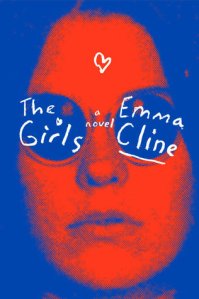
Kate’s Review: “The Girls”

26893819Book: “The Girls” by Emma Cline

Publishing Info: Random House, June 2016

Where Did I Get This Book: I own it.

Book Description: Northern California, during the violent end of the 1960s. At the start of summer, a lonely and thoughtful teenager, Evie Boyd, sees a group of girls in the park, and is immediately caught by their freedom, their careless dress, their dangerous aura of abandon. Soon, Evie is in thrall to Suzanne, a mesmerizing older girl, and is drawn into the circle of a soon-to-be infamous cult and the man who is its charismatic leader. Hidden in the hills, their sprawling ranch is eerie and run down, but to Evie, it is exotic, thrilling, charged—a place where she feels desperate to be accepted. As she spends more time away from her mother and the rhythms of her daily life, and as her obsession with Suzanne intensifies, Evie does not realize she is coming closer and closer to unthinkable violence, and to that moment in a girl’s life when everything can go horribly wrong.

Review: When I was sixteen, I read “Helter Skelter” by Vince Bugliosi. It was summertime, my sister, cousin, and I were visiting my aunt in Iowa City, and I would stay up late at night to read about Charles Manson and his cult of followers. I know that I’m not the only person fascinated by this case; there have been movies, miniseries, documentaries, and many books about Manson and the horrific murders his group committed at his behest. Because of my fascination, it should come as no surprise that I was super intrigued by “The Girls” by Emma Cline. Emma Cline already sold the movie rights to this book before it was even released, which only further demonstrates how we as a culture can’t get enough of Manson. “The Girls” isn’t really about the Manson family, per se…. But it totally is, as there are numerous parallels between the plot of the book and what happened in the California desert in 1969, from characters to circumstances to settings. But instead of focusing on Manson (or Russell, as is the charismatic cult leader in the book), it instead focuses on fourteen year old Evie Boyd. Evie is a restless teenager: she is dissatisfied with school, has few friends, is confused about sex and her sexuality, and resents her divorced parents. I think that it was a very compelling idea to tell the story of this group through the eyes of one of the members, especially the member who is still an outsider. Evie was more infatuated with Suzanne, a cool and beautiful older girl who takes Evie under her wing. The girl who is very blatantly supposed to be Susan “Sexy Sadie” Atkins, the Manson Family member who stabbed pregnant Sharon Tate to death.

Evie is a very compelling narrator, whose life we see during her summer with Suzanne and Russell’s group, and then in a more modern day time. In the modern timeline she gets caught up with a couple of young adults, a sociopathic boy named Julian and his devoted and doe-eyed girlfriend Sasha. While I enjoyed the flashback parts of the story more, the present timeline was a great way to show that while we decry and denounce the blind devotion the Manson Girls had towards Charlie, we actively encourage this behavior by making girls in our culture feel like they need the romantic partners in their lives, no matter how dangerously flawed they are. Evie knows this, as her need to be with and excuse Suzanne’s actions almost led to her own destruction. Seeing Evie have this knowledge, and yet be unable to show Sasha the terrible path she could be on, was one of the more melancholic parts (of many melancholic parts) of this story.

But like I said, the parts in 1969 were definitely the strongest parts of this book, and it wasn’t even just the cult stuff that was intriguing. Evie comes from a broken home, with her father married to a much younger woman and her mother seeking solace and fulfillment in fad self help therapies and new boyfriends. Both of her parents are so concerned with their own pleasure and happiness that they see Evie as a non-priority. So of course the poor thing is desperate to find some stability, and therefore drawn into this cult. By telling Evie’s story, we get to see a humanized side to a group of women (though so many of them were actually girls) who have been painted merely and solely as violent and foolish sheep. Is there a teenage self centeredness and feeling on invincibility that has some motivation in what Evie does, and what many of these girls do? To be certain, and it would be dishonest to imply otherwise. But Evie is here to remind us that ultimately, she is still a teenage girl, and that the things that she has to go through, both at Russell’s ranch and even at home with her actual family and friend group, are tragic and unfortunate. She is desperate to find acceptance somewhere, desperate to be loved, and because of this she willingly spirals towards a very dangerous conclusion.

Cline did a great job of creating and building parallels between the actual Manson Murders and what Russell’s family does in this book. Most of the characters have their real life counterparts (Russell is Manson, Suzanne is Susan Atkins, and I’m pretty sure Evie is Diane Lake, a fourteen year old who was caught up with the Manson Family), and the murders have similar foundations in the book to real life (Russell is denied a music deal, and sends his girls to attack the house of the man who he thinks did him wrong, just to find someone else there who they kill anyway). As someone familiar with and interested in the history of Charles Manson and his followers, picking out the analogs in this book was quite a bit of fun. Cline did a lot of research and put in a lot of the details of the original murders, while putting her own story into them as well. Her writing style is also a shining star in this book, as it flows and evokes the sights and feelings of this time period with clarity and ease. She gives Evie such a realistic and sad voice, and she manages to make this book seem less exploitative and seedy than it could have been. It’s definitely sad as opposed to titillating, and the tragedy is all over the damn place, on both sides of it.

Some of the sadness kind of spills over into today and current events. Just recently, Leslie Van Houten, one of the women who participated in the LaBianca Murders in 1969, was granted parole, only to have Governor Jerry Brown overturn it. I have a lot of feelings about this. On one hand, she is indeed a murderer, participating in the horrific killings of Rosemary and Leno LaBianca. On the other, she was high on LSD at the time, and has really, really turned her life around while in prison, having gotten both a Bachelor’s and Master’s degree and has had positive reports by the prison staff. Not to mention that it was so, so many years ago, and the point of parole is to take all of these circumstances into account. Plus, he fact that a few of the dudes in the Manson group have been granted parole (ahem, Clem Grogan and Bruce Davis, both also convicted of torture and murder) kind of makes this all the more perplexing, and makes “The Girls” feel all the more pertinent. Girls who are brainwashed into devotion to a significant other (by both society and the perpetrator, in Manson’s case) are punished when they take that devotion too far. It’s just fascinating seeing Cline’s point played out beyond the page.

“The Girls” is a fabulous debut novel. Cline does a great job of not excusing the actions of a number of violent and misguided girls, while still showing the tragedy of their circumstances.  I hope that this is just the start to a long and great career for Emma Cline, because I’m on board. “The Girls” is tense and upsetting, and a must read for people who are interested in the Manson Family, if only to see a side that perhaps hasn’t been seen yet.

Rating 9: A dark and sad story of growing up, and a really well done fictionalized account of the Manson Family, specifically the women involved.

Reader’s Advisory: 

“The Girls” is included on the following Goodreads lists: “Cults and Communes in Fiction”, and “The Femme Buzz: To Be a Well Read Woman Reader”.

Find “The Girls” at your library using WorldCat!

I’m also going to list some resources on The Manson Family, because there is a lot out there, but not all of it is great.

“You Must Remember This: Charles Manson’s Hollywood”: This podcast about Hollywood devoted ten episodes to Charles Manson, his Family, and Tinseltown in the late 1960s to give it all some context. It’s absolutely fabulous. Start here, and then you can find the way to the next episode at the bottom of the page.

“Helter Skelter: The True Story of the Manson Murders” by Vincent Bugliosi: This is the definitive book by the prosecutor of the Tate and LaBianca murders.

Flavorwire’s Charles Manson in Pop Culture Guide: A list of various Manson related materials as compiled by Flavorwire.

Biography.com’s list of the Manson Family Members: Links to Biography.com’s information about various members of the family.


Kate’s Review: “The Natural Way of Things”

28251422Book: “The Natural Way of Things” by Charlotte Wood

Publishing Info: Europa Editions, June 2016 (originally Allen & Unwin, October 2015)

Where Did I Get This Book: The library!

Book Description: Two women awaken from a drugged sleep to find themselves imprisoned in an abandoned property in the middle of a desert in a story of two friends, sisterly love and courage – a gripping, starkly imaginative exploration of contemporary misogyny and corporate control, and of what it means to hunt and be hunted.

Strangers to each other, they have no idea where they are or how they came to be there with eight other girls, forced to wear strange uniforms, their heads shaved, guarded by two inept yet vicious armed jailers and a ‘nurse’. The girls all have something in common, but what is it? What crime has brought them here from the city? Who is the mysterious security company responsible for this desolate place with its brutal rules, its total isolation from the contemporary world? Doing hard labour under a sweltering sun, the prisoners soon learn what links them: in each girl’s past is a sexual scandal with a powerful man. They pray for rescue – but when the food starts running out it becomes clear that the jailers have also become the jailed. The girls can only rescue themselves.

The Natural Way of Things is a gripping, starkly imaginative exploration of contemporary misogyny and corporate control, and of what it means to hunt and be hunted. Most of all, it is the story of two friends, their sisterly love and courage.

With extraordinary echoes of The Handmaid’s Tale and Lord of the Flies, The Natural Way of Things is a compulsively readable, scarifying and deeply moving contemporary novel. It confirms Charlotte Wood’s position as one of our most thoughtful, provocative and fearless truth-tellers, as she unflinchingly reveals us and our world to ourselves.

Review: Have you ever wondered what it would be like to read a version of “The Handmaid’s Tale” that was amped up on steroids? Well “The Natural Way of Things” takes it a few steps further and puts it on PCP. This is one of the books that I heard about through a description my mother sent me via email. She knows what I like. Set in a desolate Outback wasteland, I also got hints of “Mad Max: Fury Road” from this book, as it’s a violent tale of misogyny run amok. Unfortunately in this one the imprisoned women don’t have an Imperator Furiosa or Max Rockatansky there to whisk them away in a tanker truck. These women, their crimes getting caught in a sex scandal with a man or men with a considerable amount of power, are trapped in a desert complex with sadistic guards and a dwindling food supply. Rough, rough stuff. Thanks for sending it my way, Mom. This is the same woman who sent me a review of the awesome “What Belongs To You”, a book that starts with a gay hook-up in a public bathroom in Bulgaria.

giphy2
Probably my Mom whenever she shoots me an edgy book recommendation. (source)

But I’m glad that it’s rough stuff. I like that Charlotte Wood takes a hideous thing and doesn’t make it titillating, doesn’t gloss it over. There are descriptions in this book, from wounds to violence to homemade tampons with gross supplies, that made me cringe and flinch. The crime these women committed was the crime of being sexual beings whose sexuality threatened male power structures. Is it a little on the nose? Sure. But that doesn’t make it any less effective.

We mainly follow two women in particular. There’s the young and fierce Yolanda, who had sex with a number of players on a sports team (though the consent of this was, to me, questionable at best). Then there’s Verla, a bit more mild mannered and caught in an affair with a high powered politician. They cope in different ways with their capture. Yolanda becomes obsessed with trapping and skinning rabbits for food, while Verla hunts ceaselessly for mushrooms. Their routines and their deep friendship is what keeps them going, but their circumstances are so horrific you kind of wonder why they would want to. I loved both of them in their own ways, Yolanda for her ferocity and Verla for her cunning. They are strong in very different ways, being two examples of well written and tough female characters who are still realistic within their circumstances. The other women are also given a lot of depth, with a lot of them having their own unique personalities. Some of them are kind, others are not, but they are all victims and Wood makes it clear that none of them deserve what is being heaped upon them.

Wood’s writing is literary and her prose is haunting. There are passages and phrases in this book that flow effortlessly and evoke vivid imagery. She portrayed this camp so well that I could see the dust in the air, feel the heat, smell the stenches. It was a hard read, but in it’s horror and devastation there was a beauty in her words and a poetry in her writing. Her characters are also well drawn out, from the prisoners to the guards as well. There are a couple of guards we focus on, and while they do have their moments of extreme violence towards women, their disdain for women in general adds to the violence in another way. One of the guards is described as a hippie type who loves yoga, but his poisonous bile he spews about his ex girlfriend goes to show that words can also reduce women to animals, almost as much as leashes and prisons can. I almost had a harder time reading these horrible words he was saying about a woman who wasn’t even present, just because who knows how many women are spoken of in such a dehumanizing and objectifying way every minute of every day. This was the realest part of the book, and it was a punch in the gut.

I think that the only part of this book I had an actual critical hard time with (because I mean, I had a hard time with a lot of it) was that I wasn’t totally certain if this was supposed to be set in the present, real Australia, or a fictional dystopian Australia. Lots of people have listed it as Sci-Fi and Speculative fiction, but I didn’t really see much that would imply that this was the case. Well, outside of the whole ‘women rounded up and sent to a prison camp for being involved in sex scandals’ thing. I guess that to me it didn’t really scream Sci-Fi as a whole with just that aspect of it.

In a time where rape culture and misogyny is being spoken of more and more, I think that a book like “The Natural Way of Things” is an important work to showcase and talk about. “Mad Max: Fury Road” brought up these themes and attracted the ire of angry misogynists all over the Internet. “The Natural Way of Things” pushes these themes further, and flat out spits in the faces of those same creeps. It wasn’t an easy book to read, but it’s scathing take down of societal hypocrisy and violent chauvinism makes it a must read.

Rating 8: A scathing and well written novel about dangerous misogyny and rebellion. This should probably be on Women’s Studies reading lists everywhere, and that’s not snark.

Reader’s Advisory: 

“The Natural Way of Things” is included on the following Goodreads lists: “Best Feminist Fiction”, and “Australian Speculative Fiction”.

Find “The Natural Way of Things” at your library using WorldCat!

Kate’s Review: “The Woman in Cabin 10”

28187230Book: “The Woman in Cabin 10” by Ruth Ware

Publishing Info: Gallery/Scout Press, July 2016 (first published in June 2016)

Where Did I Get This Book: The library!

Book Description: From New York Times bestselling author of the “twisty-mystery” (Vulture) novel In a Dark, Dark Wood, comes The Woman in Cabin 10, an equally suspenseful novel from Ruth Ware—this time, set at sea.

In this tightly wound story, Lo Blacklock, a journalist who writes for a travel magazine, has just been given the assignment of a lifetime: a week on a luxury cruise with only a handful of cabins. At first, Lo’s stay is nothing but pleasant: the cabins are plush, the dinner parties are sparkling, and the guests are elegant. But as the week wears on, frigid winds whip the deck, gray skies fall, and Lo witnesses what she can only describe as a nightmare: a woman being thrown overboard. The problem? All passengers remain accounted for—and so, the ship sails on as if nothing has happened, despite Lo’s desperate attempts to convey that something (or someone) has gone terribly, terribly wrong…

With surprising twists and a setting that proves as uncomfortably claustrophobic as it is eerily beautiful, Ruth Ware offers up another intense read.

Review: Earlier this year I reviewed the book “In a Dark, Dark Wood” by Ruth Ware, and if you recall I greatly enjoyed it. Ware created a very creepy and tense thriller, with some very fun and interesting characters. When I found out that she had written another book that was coming out this summer, I was pretty stoked! I had a feeling that it was going to be difficult to follow up “In a Dark, Dark Wood”, at least in my eyes, but I was hoping that Ware would be able to prove that she has what it takes to stick around and become a pillar in the grit-lit writing community. Suffice to say, I was very, very hopeful that it would be good…. okay, I was nervous. PLEASE let it be good.

giphy3
Please please please please. (source)

I was a little nervous at first as I started reading too. Lo Blacklock starts out and seems like a typical Grit Lit mess. Since I am not fond of that trope and since I had recently come off another book that had that trope as the main character, I was feeling quite a bit sensitive to it. The good news, though, is that Ware is very, very conscientious about how she writes her main characters. While she may appear typical, Lo has a very well plotted out backstory, one that gives every reason for her to be this way, and not because of any one specific life changing incident. The PTSD she is suffering post-break in is just another layer to it, and I really liked that it wasn’t the one thing that totally messed her up for ever and always. But all that said, since it is first person and since she does have a number of problems, the reader does sort of question everything, and you do wonder if she is just imagining things and losing it, or if something really did happen on this ship. There were many shades of grey in this book, and it could have very easily been one circumstance over the other. It was written believably for multiple outcomes.

The setting of a cruise ship was also absolutely perfect. I already am totally not on board with cruise ships. Between the horror stories you hear about illness and malfunction, or the fact that it is, indeed, very social (introvert’s nightmare), there have been instances of people just disappearing off of ships. So not only is it claustrophobic, it’s also an expansive void. If you are in the middle of the ocean and fall off the side and no one sees, you are probably going to die and no one will ever know what happened to you.

giphy4
(source)

So the claustrophobic atmosphere in conjunction with Lo’s paranoia and unreliable first person POV really made a creepy and tense story. Everyone on this damn boat is a suspect, but then maybe there are no suspects! But ultimately, I did kind of guess at least part of the puzzle that was presented to us in this book. Not all of it, but some of it. That isn’t saying much, because I am usually pretty good at guessing these things, so don’t take this as me condemning the mystery. There are plenty of red herrings to go around.

There was one aspect of the book that kind of caught me off guard and seemed very awkward, out of place, and kind of upsetting. It’s just one scene, but I did want to address it because, wow. So Lo’s ex boyfriend Ben is on the ship as well, as he’s a writer too. The night of the possible murder, before all that, Lo drinks a lot, as does Ben, and then he corners her and grabs her breast. Which she is pretty clearly not cool with. She does push him off and he stops right away, realizing that he was misreading her signals (WHAT SIGNALS, I couldn’t tell you, as she sure seemed not interested), but it wasn’t treated like the sexual assault that it was! It was more brushed off and seen as inconsequential, more like a cherry on top to an already not great night. That didn’t sit well with me, personally, as it wasn’t really given the weight that it should have been given. Which was all the more frustrating because outside of that Ben wasn’t exactly a terrible character or meant to be a bad guy. Kind of a prick but certainly not predatory. From that moment on every scene with him just felt off, and he never recovered in my eyes. Odd choice and not a great one.

“The Woman in Cabin 10”, however, did almost live up to “In a Dark, Dark Wood”, and I am happy that Ruth Ware has managed to solidify herself as a major talent in this genre! Grit-lit fans rejoice! We have Ruth Ware and it seems like she is here to stay!

Rating 8: A twisty and well plotted out mystery with a well written main character. Some strange choices were made, but overall this thriller is sufficiently creepy and tense!

Reader’s Advisory:

“The Woman in Cabin 10” is included on these Goodreads lists: “If You Enjoyed Gone Girl, You Might Also Like…”, and “Booklist Best Mystery Fiction 2016 (part 2)”.

Find “The Woman in Cabin 10” at your library using WorldCat!

Kate’s Review: “All the Missing Girls”

23212667Book: “All the Missing Girls” by Megan Miranda

Publication Info: Simon & Schuster, June 2016

Where Did I Get This Book: The library!

Book DescriptionLike the spellbinding psychological suspense in The Girl on the Train and Luckiest Girl Alive, Megan Miranda’s novel is a nail-biting, breathtaking story about the disappearances of two young women—a decade apart—told in reverse.

It’s been ten years since Nicolette Farrell left her rural hometown after her best friend, Corinne, disappeared from Cooley Ridge without a trace. Back again to tie up loose ends and care for her ailing father, Nic is soon plunged into a shocking drama that reawakens Corinne’s case and breaks open old wounds long since stitched.

The decade-old investigation focused on Nic, her brother Daniel, boyfriend Tyler, and Corinne’s boyfriend Jackson. Since then, only Nic has left Cooley Ridge. Daniel and his wife, Laura, are expecting a baby; Jackson works at the town bar; and Tyler is dating Annaleise Carter, Nic’s younger neighbor and the group’s alibi the night Corinne disappeared. Then, within days of Nic’s return, Annaleise goes missing.

Told backwards—Day 15 to Day 1—from the time Annaleise goes missing, Nic works to unravel the truth about her younger neighbor’s disappearance, revealing shocking truths about her friends, her family, and what really happened to Corinne that night ten years ago.

Like nothing you’ve ever read before, All the Missing Girls delivers in all the right ways. With twists and turns that lead down dark alleys and dead ends, you may think you’re walking a familiar path, but then Megan Miranda turns it all upside down and inside out and leaves us wondering just how far we would be willing to go to protect those we love.

Review: Oh look, ANOTHER book that involves a missing person or persons! The good news is that once this is done we’ll kind of move away from that theme, at least for awhile. Because let’s be fair, this theme is totally a no brainer for the thriller and grit lit genre. So our most recent missing person story is “All the Missing Girls” by Megan Miranda. This one almost made my highlights list in June, and even though it was eeked out at the last minute I still put it on request, because the buzz is that this could become another huge runaway hit. And yeah, I guess I agree with that. But unfortunately, it fell short of other grit lit books that I have read. Yes, it has a very cool frame in how it’s told, as Miranda decides to tell the main arc of the story backwards. We start at Day 15 of Annaleise’s disappearance, and work out way back to Day 1, peppering flashbacks to Corinne’s disappearance as well. A pretty strong gimmick, but the problem with gimmicks is that sometimes that is all a product has going for it. And sadly, I think that if “All the Missing Girls” was told in linear order, it wouldn’t stand out.

Nic is the standard main character in this genre: she’s emotionally a mess, she is stuck in a past that she tries to escape, and she can’t see past her current, bad situation, which them causes harm to those in her new life. It’s a character archetype in these stories that is getting a little old. I mean, the moment that she said that she had a handsome, smart, wonderful fiance named Everett I knew that poor Everett was going to be run through the ringer thanks to her shenanigans. I don’t know what rule has been written that says that these damaged women need to treat everyone who cares about them like crap, but Nic holds fast to it. Sometimes it’s done well and you can see the flaws in their loved ones who just don’t (or won’t) understand them, but in this one I just felt bad for Everett because Nic is a trainwreck. She has a strained relationship with her brother, she is still hung up on her ex boyfriend Tyler (who is ALSO a walking trope as the puppy eyed ex boyfriend whose candle still burns bright for his lost lady love), and she misses her frenemy Corinne in spite of the fact that Corinne was just the worst. Protagonists like this are so hard for me to like, because while I like that these women aren’t perfect and are complex and can be complete messes a la the guys in “True Detective” or something, it’s getting a little old.

giphy1
And honestly, “True Detective” had gotten a little old by season 2. (source)

But as far as the structure go, gimmicky as it may be, it did make the story more intriguing. I kind of had to wrap my head around it, as going backwards but revealing the truths about Corinne in a forward time was kind of a mind twister, but once I got the hang of it I did enjoy this creative choice. It also allowed us to find out the past after we got to see the present and future, and in doing so it did give some of the revelations a stronger reveal and emotional punch. It also was fun seeing that you think that you know what the solution is because you started at the end, but then as you move backwards you realize that no, you’re totally off base and so wrong. I am kind of curious if Miranda wrote it out in order first, or if she always started at the end and worked her way back to the beginning. It couldn’t have been easy, and so I do have to give her props for sticking the landing. I just wish that the story itself was stronger, to match the strong storytelling choices.

There was also a lot to explore when it came to Nic and her relationship with her father. Her Dad is suffering from dementia, and Miranda did a very good job of portraying someone who loves her father and hates to see him that way, but also gets easily frustrated and upset with him even though she knows that he can’t control his lapses. As someone who watched her mother and aunts have to deal with their dementia-ridden mother, and how hard it was, I really appreciated that Miranda showed multiple sides to how this can affect family members. While the dementia could have just been used as a plot device (and it was to an extent), it was handled with enough care that it didn’t feel cynical or clunky.

“All the Missing Girls” serves mostly more of the same, but the plot structure was pretty neat. I don’t know if I’d pick up another book by Miranda, but who knows how I will feel if another one comes out and it sounds promising. Give this a whirl if you want a new way of reading a mystery, but don’t be shocked if it feels all too familiar.

Rating 7: The way the story is framed is definitely cool and intriguing, but with weaker characters it feels like the story relies too heavily on the gimmick.

Reader’s Advisory:

“All the Missing Girls” is included on these Goodreads lists: “Women with Moxie”, and “Great Discussion Starters”.

Find “All the Missing Girls” at your library using WorldCat.


Kate’s Review: “What She Knew”

25817531Book: “What She Knew” by Gilly Macmillan

Publishing Info: William Morrow, December 2015

Where Did I Get This Book: On audiobook from the library!

Book Description: In her enthralling debut, Gilly Macmillan explores a mother’s search for her missing son, weaving a taut psychological thriller as gripping and skillful as The Girl on the Train and The Guilty One.

In a heartbeat, everything changes…

Rachel Jenner is walking in a Bristol park with her eight-year-old son, Ben, when he asks if he can run ahead. It’s an ordinary request on an ordinary Sunday afternoon, and Rachel has no reason to worry—until Ben vanishes.  

Police are called, search parties go out, and Rachel, already insecure after her recent divorce, feels herself coming undone. As hours and then days pass without a sign of Ben, everyone who knew him is called into question, from Rachel’s newly married ex-husband to her mother-of-the-year sister. Inevitably, media attention focuses on Rachel too, and the public’s attitude toward her begins to shift from sympathy to suspicion.

As she desperately pieces together the threadbare clues, Rachel realizes that nothing is quite as she imagined it to be, not even her own judgment. And the greatest dangers may lie not in the anonymous strangers of every parent’s nightmares, but behind the familiar smiles of those she trusts the most.

Where is Ben? The clock is ticking…

Review: Yeesh, as I started listening to this book I noticed something of a theme in the books I’ve been taking on lately. So many missing people and/or children! I think that had it been one or two books that had this theme I would have been less likely to notice it, but given “What She Knew” (and another one I will be reviewing at a later date), my total number of missing persons/children books in the past month will be at five. Grim, grim stuff. So the theme continues with this book, one that I had on my list for awhile and just so happened to find on audiobook download at my library. But the difference between this book and the other ones I’ve read is that this one not only deals with a missing child, but the toxic shame culture that has risen when it comes to how we perceive other’s parenting and how we express our displeasure about it. Specifically, via the Internet. Why this summer alone there have been two very high profile cases of tragedies involving children, those of Harambe the Gorilla and the Walt Disney World alligator attack. In one instance an animal was killed when a child fell into it’s enclosure, and in another instance a child was taken and killed by an alligator, which led to Disney killing more alligators in the search for the culprit. And boy oh boy did people take to the Internet to blame the parents, saying that if they had just been paying closer attention, all of this could have been avoided. I kept thinking about these cases and others as I listened to this book, as one of the most villainous culprits in this book is parent-shaming. Macmillan pulls no punches when she shows the insidious cruelty of the shame centered Internet.

The mystery to this book was pretty stellar, even though it occasionally treaded a bit towards the unhinged. There was twist after twist after twist, and since I was listening to it it wasn’t as easy to keep up with it. I couldn’t really skip back that easily, so I would just have to say ‘okay, I guess I remember this stuff’ and hope that I actually did. I think that sometimes when trying to throw out red herrings, Macmillan just went a bit overboard. First the person who did it would be Person A, then it would be Person B, then it would be Person A again, but then no wait, it’s Person C! Just a few too many flip flops for my taste. The benefit of the flip flops, though, is that I was taken by surprise as to how it all shook out, which is always a good thing when it comes to my reading materials.

The characters in this book ran the gamut from run of the mill to pretty complex. I really liked Rachel, the harried and terrified mother of the missing Ben. She was a well done picture of someone who is terrified that she has lost her child forever, and yet is willing to pull out all of the stops and kick down all of the doors in London to find him. At times I wanted to shake her and tell her to, for the love of GOD, listen to the professionals who are trying to bring your child back to you, but I am pretty sure that was the whole point. Her relationship with her older, controlling sister Nicky was one of the strongest things about this book, as they blatantly love each other fiercely, but lock horns over under the surface conflicts that aren’t apparent until later. That said, these under the surface conflicts are the product of a very out there plot twist that didn’t feel necessary. I know that it was supposed to instill doubt in the reality of their relationship (and I will leave it at that), but there were a lot of less ridiculous ways that Macmillan could maintained the doubt, in my opinion. It kind of baffled me.

I also found the parts that centered on Detective Inspector Clemo to be a bit superfluous. I liked him enough as a character, and it was nice seeing the police side of the investigation and the hindrances that they faced in this situation (probably pretty realistic hindrances), but the troubles in his personal life and his emotional problems just didn’t quite do it for me. I know that the way that it was told (as sometimes therapy transcripts were used to tell his side of the story) was just another way to make the reader wonder what was happening, but I found myself hoping that these parts of the story would go faster. It was a good dichotomy to show the police approach versus the proactive approach Rachel wanted to take, so that aspect was appreciated.

I listened to this on audiobook, and both a male and female narrator were used depending on whose side of the story was being told. Penelope Rawlings covered the Rachel parts, and Dugald Bruce-Lockhart covered Clemo. Sometimes they kind of had different cadence and voice styles for the same character, which was a little distracting, but overall I thought that they both did a good job. Rawlings especially conveyed Rachel’s desperation very well.

“What She Knew” was a good book to listen to in the car, and I enjoyed it for what it was. It’s a good story to add to the lady centered thrillers that have exploded in popularity, and I think that fans of the grit-lit genre should definitely give it a try!

Rating 7: This was a pretty tight thriller with a lot of good twists, but there were so many that it almost gave me whiplash. The narrators did a good job, and the story was satisfying, though some parts were stronger than others.

Reader’s Advisory:

“What She Knew” is included on these Goodreads lists: “Female Psychological Thrillers/Suspense”, and “Book of the Month Club Picks”.

Find “What She Knew” at your library using WorldCat!

Kate’s Review: “Disappearance at Devil’s Rock”

27064358Book: “Disappearance at Devil’s Rock” by Paul Tremblay

Publishing Info: William Morrow, June 2016

Where Did I Get This Book: The library!

Book Description: Late one summer night, Elizabeth Sanderson receives the devastating news that every mother fears: her fourteen-year-old son, Tommy, has vanished without a trace in the woods of a local park.

The search isn’t yielding any answers, and Elizabeth and her young daughter, Kate, struggle to comprehend his disappearance. Feeling helpless and alone, their sorrow is compounded by anger and frustration. The local and state police haven’t uncovered any leads. Josh and Luis, the friends who were with Tommy last, may not be telling the whole truth about that night in Borderland State Park, when they were supposedly hanging out a landmark the local teens have renamed Devil’s Rock— rumored to be cursed.

Living in an all-too-real nightmare, riddled with worry, pain, and guilt, Elizabeth is wholly unprepared for the strange series of events that follow. She believes a ghostly shadow of Tommy materializes in her bedroom, while Kate and other local residents claim to see a shadow peering through their own windows in the dead of night. Then, random pages torn from Tommy’s journal begin to mysteriously appear—entries that reveal an introverted teenager obsessed with the phantasmagoric; the loss of his father, killed in a drunk-driving accident a decade earlier; a folktale involving the devil and the woods of Borderland; and a horrific incident that Tommy believed connected them all and changes everything.

As the search grows more desperate, and the implications of what happened becomes more haunting and sinister, no one is prepared for the shocking truth about that night and Tommy’s disappearance at Devil’s Rock.

Review: So the other night, the moment finished “Disappearance at Devil’s Rock”, I closed the book, set it on my night stand, and thought to myself

efb3b3726eb37d9373b211f4eb19ae21
(source)

I knew that I would need to ruminate on it for a little bit and let it stew. Its interesting, because Tremblay’s other book I’ve read, “A Head Full Of Ghosts”, seemed pretty straight forward and clear cut to me. I devoured that one, made an opinion, and called it a day, even though I know that others contest my theory about it (my friend Hillary in particular). But with “Disappearance at Devil’s Rock” I found myself filled with questions. After going back and not only thinking about it, but re-reading parts of it as well, I have made up my mind about this book: I greatly enjoyed it. Part of that enjoyment comes from the fact that there isn’t really any clarity as to what really happened. We have about as much knowledge as the characters in this book, cobbled together from diary entries, hearsay, unreliable witness statements, and local legends and rumors. The big question is what happened to Tommy Sanderson? Is it supernatural, or just a regular, worldly evil? Tremblay is great at making you question the things that you read in his books, and boy was I questioning everything.

I first want to talk about the family that is holding out hope for Tommy. Tremblay writes the horror a parent feels when their child is missing in an honest and empathetic way, as Elizabeth is at times both completely panicked and anxiety driven, to numb and almost subdued. She has her moments of doubting everyone around her, even her other child, Kate, and wondering if anyone is being one hundred percent honest with her and what they know. It doesn’t help matters that she is convinced that she saw a vision of Tommy in his room after his disappearance, a shadowy shape crouched down and looking distorted. She feels his presence, she sees him, she smells him, but questions if it’s Tommy, or a ghost, or an omen, or merely her faculties starting to fall apart. This isn’t the first horrific loss that the family has experienced, as the family patriarch left them and then was killed in a drunk driving accident, which raises more questions about Tommy as well. Is this something that has haunted him and affected him for all these years? Is this a trauma that he never really recovered from, and that has altered his state of emotional being? Is this why he’s obsessed with zombies and disaster? Elizabeth’s inability to know and the fact that it is driving her mad is so heartbreaking, but so real. It’s also very hard to read about how it’s all affecting Kate, her other child and Tommy’s little sister. Kate is also hurting and scared, but has this twelve year old girl need to be tough and a supportive, so much so that she makes some very bad decisions when she thinks that she is taking care of her Mom. Seeing the role reversal of a child caring for a parent in this way is always so sad, and Elizabeth and Kate are just another well done example of this dichotomy. I really liked Kate and how Tremblay wrote her, complications and all.

The only insight we get into Tommy’s state of mind is through a frenzied journal, and what his friends and loved ones say about him. His friends portray him as just one of the gang, part of a group that is still having their long summer adventures a la “Stand By Me” or “The Goonies”. But Tremblay slowly reveals that maybe this isn’t the case, and that maybe even their perceptions and depictions of him, even beyond the secrets they are keeping, aren’t quite true either. Those around him only see him through the lenses of a mother, a little sister, and his pals, until the strange and upsetting diary is found. And even that is unclear as to what is the truth and what isn’t. I think that by making Tommy so mysterious, even when so much of him is laid out in the open, is what makes this book all the more scary, and all the more tragic. The one thing that is clear from all of the misdirection and false fronts is that Tommy is lost in more ways than one, and seeing it all written out and pieced together was incredibly heartbreaking. He is searching for someone to really understand him, and unfortunately a rather cryptic and strange character realizes this, and decides to take advantage of it. In this way, the horror of the story is far more real than ghosts, or devils, or other things that go bump in the night. It became evident that, even though perhaps there are strange and supernatural things afoot, the real scary thing is that sometimes we don’t really know those that we care about the most, and if they disappear we will be left with a huge, gaping hole that is filled with far too many questions. And we ultimately may not be able to protect them from those who want to take advantage of them.

And since this is a horror book, and since Tremblay is a damn fine horror writer, I need to talk about the creepy and weird shit that goes down. I already have an abject fear of waking up in the night to see a strange shadow person in the window or in the corner of my room, so whenever this part of the story happened shivers ran up my spine. Shadow people are present in many different kinds of folklore, and the way that they were described in this book was so effective and upsetting that I still feel a bit disturbed by it, a few days after finishing it. I like that Tremblay gives different explanations, from mass hysteria to the Third Man Phenomenon to just plain out supernatural terror. There is one scene written out in transcript form, that describes a Shadow Being combined with a bit of Uncanny horror to top it off, and I was practically shaking I was so tense. I don’t want to give anything away, but my God, it was so unsettling that it’s really sticking with me. Ultimately, the concept of shadow figures and shadow doubles could be a metaphor for other things, or it could just be a flat out creepy entity to instill fear into the reader. But it doesn’t really matter. What does matter is that it scared the hell out of me, as unless it were a “Parent Trap” kind of situation I think that the thought of running into a Shadow Double or Doppelganger is just the very worst. Ugh. Thanks, Mr. Tremblay, for freaking me the hell out in that regard.

giphy8
More like ‘let’s stalk outside peoples’ windows together’, am I right?! (source)

I was left super disturbed by “Disappearance at Devil’s Rock”, and though it took a bit to build up and terrify me, terrify me it did. Paul Tremblay has continued to prove himself to be one of the best horror writers out there at the moment, filling his stories with scares and also a lot of emotions. And a whole lot of ambiguity, which I have accepted and come to really, really appreciate. If you read it at night, don’t do it by a window.

Rating 8: A slow burn horror story that is both terrifying and tragic, this newest book from the fabulous Paul Tremblay is another true winner. Ambiguity abound, but that can be the best thing about a horror story.

Reader’s Advisory:

Since “Disappearance at Devil’s Rock” is still fairly new, it isn’t on many Goodreads Lists at the moment. However, with the themes it has, I would say look at “Popular Missing Persons Books” and “Popular Coming of Age Books”. And hey, if you have Netflix, give “Stranger Things” a try because MAN are they similar in a lot of ways (and I mean that it absolutely the best way possible)!

Find “Disappearance at Devil’s Rock” at your library using WorldCat!