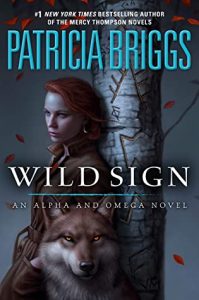
Serena’s Review: “Wild Sign”

Book: “Wild Sign” by Patricia Briggs

Publishing Info: Ace Books, March 2021

Where Did I Get this Book: NetGalley

Book Description: In the wilds of the Northern California mountains, all the inhabitants of a small town have gone missing. It’s as if the people picked up and left everything they owned behind. Fearing something supernatural might be going on, the FBI taps a source they’ve consulted in the past: the werewolves Charles Cornick and Anna Latham. But Charles and Anna soon find a deserted town is the least of the mysteries they face.

Death sings in the forest, and when it calls, Charles and Anna must answer. Something has awakened in the heart of the California mountains, something old and dangerous — and it has met werewolves before.

Previously Reviewed: “Burn Bright”

Review: If you go back and read my review of the previous book in the “Alpha and Omega” series, you’ll see that I was…less than thrilled with that entry. My concerns from that book spanned both this series as well as the “Mercy Thompson” books. But as my review earlier this week demonstrated, that series managed to sidestep the implications of the events in “Burn Bright.” But I was always a bit more concerned with how the next book in this series would do, given that Bran is more of a main character here. And, well, Briggs tries to walk it back a bit, I guess. But unfortunately the distraction offered in the main plot just introduces another frustration of mine.

Old things live in the dark wilds of the forest. And if you stay on the path, maybe you’ll miss the dangers lurking there. But when an entire town’s worth of people go missing, what lurks in the shades of the trees leaves a mark to big to ignore. Anna and Charles are called into action to track down the mystery. Where do you start, though, when all of the victims seem to have vanished into the air leaving behind no trace? Clues exist however in rumors of a powerful force that once lived there centuries before and may have faced werewolves before.

So, I did like this book overall. It’s hard, however, to write a review without taking up tons of wordcount on how this book deals with the fallout of the previous one. Or getting sucked into a long commentary piece on my frustrations with one particular aspect of it that I’m beginnig to struggle with more and more. So…I’ll try to write a fairly general bit before getting into any of that.

Overall, I liked the villain at the heart of this story. Its powers and backstory were very unique and interesting and left me guessing for much of the story. I was able to piece a few bits together early on, but there were a number of genuine surprises throughout that really helped build towards the final conflict. The action and threat-level felt high when it needed too, and there was a underlying sense of doom that pervaded the book in a really nice, creepy way.

I also liked what we got from Charles and Anna. Brother Wolf, the personified version of Charles’s wolf half was given more to say/do here and it was almost like having an entire third character. Might be a bit unfortunate, though, when your wolf character is more interesting than the two humans. Not that Charles and Anna are bad characters, but they still seem a bit dull and one-note, especially in comparison to the characters in the Mercy Thompson series.

The book also introduces a few chapters from Leah’s perspective. On the surface, this is a good thing. The story largely has to do with events in her history, and it’s great seeing inside the head of a character who has been at the heart of so much conflict earlier in the series and even in the “Mercy Thompson” series. It seems clear that by doing this Briggs is attempting to respond to the criticism of the previous book. Her history is such that Bran’s actions in her life are highly criticized by both Charles and Anna. Briggs also seems to try to build up a more true relationship between Leah and Bran with Bran needing to deal with his own past actions and open up to Leah more. It’s all well and good, I guess, but, really, it just makes the previous book’s “reveal” about Bran’s feelings for Mercy feel more about of place. This book not only doesn’t address that but seems to want to just paint over that with some alternative history in which Bran does care for Leah and that whole Mercy thing…never happened.

But when diving into Leah’s history, Briggs steps right into another big problem that I have. I’ve already struggled with the fact that both of Briggs’ leading ladies has a history of being a rape victim. Several SFF authors have written about how pervasive this particular trauma is within the genre and how unfortunate that fact is. Here are two of my favorite pieces, one by Seanan McGuire and one by Sarah Gailey. Each tackles the topic much more thoroughly and eloquently than I can.

Unfortunately, this book not only includes another rape attempt on our main character, but gives the only other POV female character we have a history of rape as well. Now all three POV female characters we’ve had in both series have experienced this particular trauma. Beyond that, the topic is placed firmly at the center of the conflict in this book. I wouldn’t have a problem with that fact on its own if it wasn’t for this established history of using it for our two other main characters. It not only begins to feel a bit much, but Briggs is falling into the exact trap that McGuire and Gailey discuss in their pieces: that somehow rape and sexual assault are almost necessary traumas that female heroes must go through in the ever-chased goal of “character development” and “added depth.” And in Leah’s case, particularly, it almost seems to be used as a way to excuse her abusive treatment of Mercy in the past. The entire thing reads as lazy and uninventive at best and as exploitative at worst.

So, there you go. Another book in this series that’s hard to evaluate based only on the merits of the story itself, but instead gets stuck in challenging topics that outweigh much of the rest. At this point, I’m sure I’ll still continue to read this series if there are more to come. But I’m on high alert now with this author and if these topics continue to come up in this manner, it might be time to throw in the towel.

Rating 6: A solid story is marred by the unfortunate, recurring use of sexual assault as a character-building tactic.

Reader’s Advisory:

“Wild Sign” isn’t on many relevant Goodreads lists, but it is on this funny-titled one: My Vampire Book Obsession Book Boyfriends

Find “Wild Sign” at your library using WorldCat!
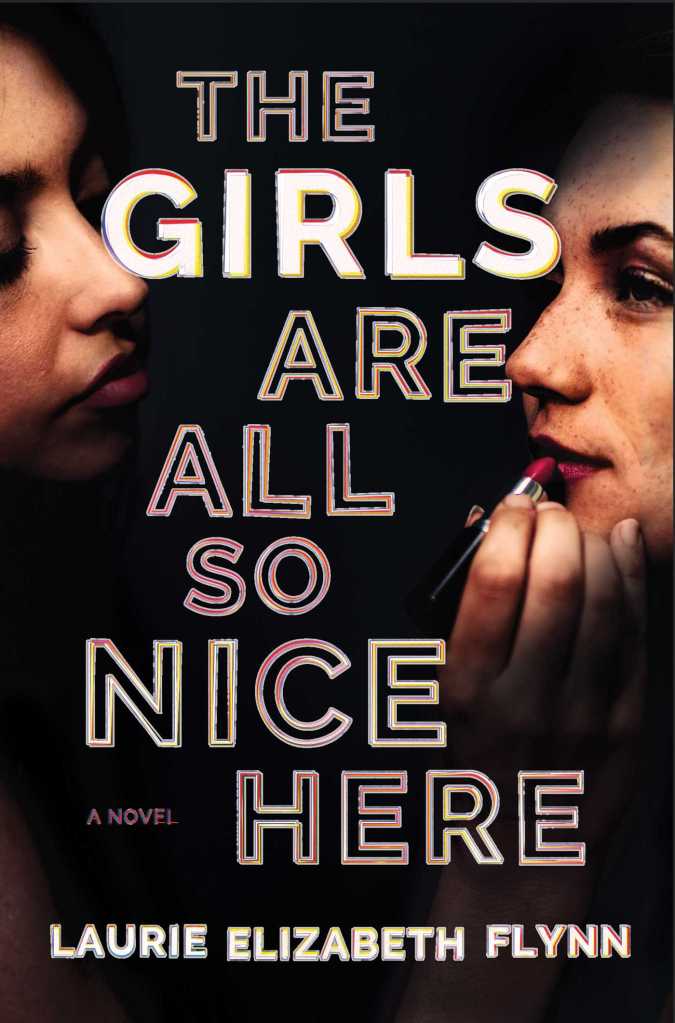
Kate’s Review: “The Girls Are All So Nice Here”

Book: “The Girls Are All So Nice Here” by Laurie Elizabeth Flynn

Publishing Info: Simon & Schuster, March 2021

Where Did I Get This Book: I received an eARC from NetGalley.

Book Description: Two former best friends return to their college reunion to find that they’re being circled by someone who wants revenge for what they did ten years before—and will stop at nothing to get it—in this shocking psychological thriller about ambition, toxic friendship, and deadly desire.

A lot has changed in the years since Ambrosia Wellington graduated from college, and she’s worked hard to create a new life for herself. But then an invitation to her ten-year reunion arrives in the mail, along with an anonymous note that reads “We need to talk about what we did that night.”

It seems that the secrets of Ambrosia’s past—and the people she thought she’d left there—aren’t as buried as she’d believed. Amb can’t stop fixating on what she did or who she did it with: larger-than-life Sloane “Sully” Sullivan, Amb’s former best friend, who could make anyone do anything.

At the reunion, Amb and Sully receive increasingly menacing messages, and it becomes clear that they’re being pursued by someone who wants more than just the truth of what happened that first semester. This person wants revenge for what they did and the damage they caused—the extent of which Amb is only now fully understanding. And it was all because of the game they played to get a boy who belonged to someone else, and the girl who paid the price.

Alternating between the reunion and Amb’s freshman year, The Girls Are All So Nice Here is a shocking novel about the brutal lengths girls can go to get what they think they’re owed, and what happens when the games we play in college become matters of life and death.

Review: Thank you to NetGalley for providing me with an eARC of this novel!

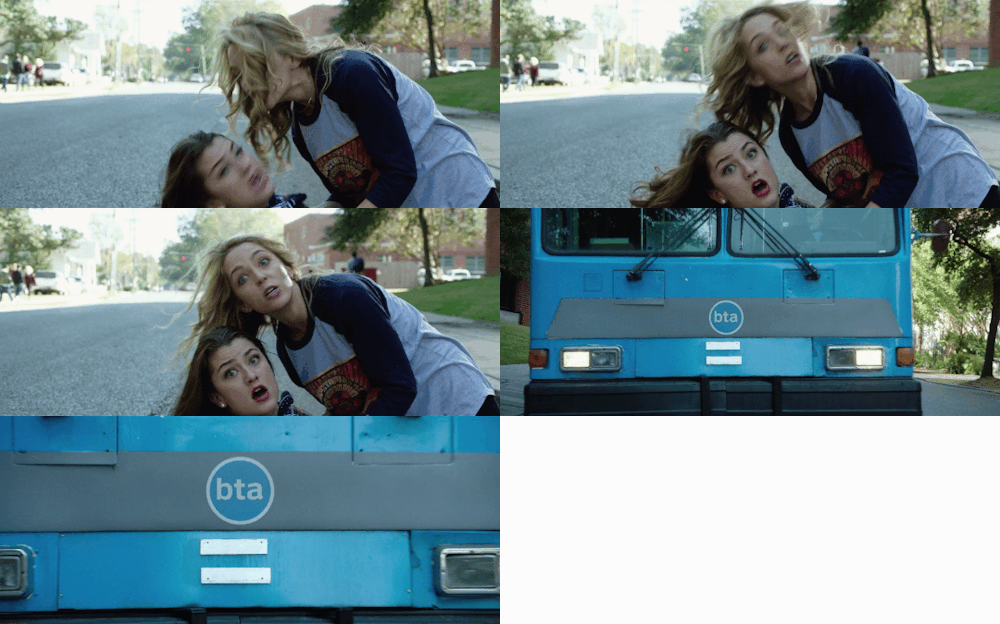
Having gone to a large public university (two, really, as I transferred after freshman year from one U of MN campus to another) and having only lived in the dorm for one year, I didn’t really find myself caught up in any dorm drama or scandals. Perhaps my dorm was just boring, or perhaps I wasn’t looking hard enough. The closest I got was having a roommate with whom I initially bumped heads (but even that doesn’t really count because now she’s one of my dearest friends). But I guess that I can believe that such things do happen. And “The Girls Are All So Nice Here” by Laurie Elizabeth Flynn is steeped, and I mean STEEPED, in the poisonous shenanigans that some college kids get up to while living on campus. I’ll admit that I was just picturing Danielle from “Happy Death Day” as I read the description. And while I wasn’t too far off, it didn’t rise to the occasion that I was anticipating.

Danielle and Tree play my expectations when they’re smacked back to reality. (source)

“The Girls Are All So Nice Here” has some pretty good hits, and a few glaring misses. I’ll start with the hits, however, as there were definitely things that worked really well. We have ourselves a mystery at hand. Our narrator, Amb, has done her best to leave her college days behind and forget about them. She has a kind husband, lives in New York, and has cultivated a scandal free life. But when her college reunion looms, she starts getting strange messages from an anonymous person saying that they need to ‘talk about what they did that night’. The story is Amb going back to the school to find out who is sending the messages, and we as the readers slowly get to find out what it is she did, through flashbacks and the present day reunion weekend. It’s a device that we’ve seen before, but it works well here as Flynn carefully peels back the layers of Amb’s freshman year, and her relationships. Specifically those she had with her then best friend Sully, the resident mean girl, and Flora, Amb’s sweet and well loved roommate. I will say that what we find out is pretty damn upsetting, with mean girl bullshit spiraling out of control, jealousy and pettiness getting the best of people, and the entitlement thinking one deserves more than they have leading to very bad things. I’m being vague deliberately, because the plot itself is well done. When I thought a character couldn’t stoop lower, she did. When I thought that a twist was one thing, it ended up being something else. A couple reveals felt a bit convenient, but ultimately I was enjoying the ride enough that it didn’t put me too off.

What didn’t work as well for me were the characterizations of the various players in our toxic soup of a story. I definitely understand having garbage people being at the forefront in a story like this, and I don’t have a problem with following an unreliable narrator who is also an unlikable and nasty person. But I think that if you are going to do that, I would like a little bit of exploration as to what it is that makes them that way, or at least make them wickedly entertaining in their nastiness. With Amb, we get a lot of telling that she is insecure, that she is jealous of Flora and how easy it is for ‘girls like her’, but there wasn’t really much in Amb’s background that we see that made me fully see the complexities that go with this kind of dangerous coveting and jealousy that leads to very bad things. Sully, too, is just nasty with no reason or exploration into her nastiness. We just see she’s horrible and that’s all we get from her, and she isn’t interesting enough to even make it fun to hate her. Perhaps one would think that Flora may get a bit of depth here, given that she is the one who is hurt the most by Amb and Sully, but no. Flora is your two dimensional really nice girl that is there to be a martyr. Even when she talks with Amb or other characters talk about her with Amb in the past and the present, all we know about Flora is SUPER sweet which, sure, makes your blood boil when Amb and Sully treat her like crap. But that only gets me so far.

So while the plot was engrossing and had some genuine tricks up its sleeves, “The Girls Are All So Nice Here” was a fairly run of the mill thriller about women behaving badly. It gets the job done, but it probably could have done more.

Rating 6: A twisty thriller with some fun surprises, “The Girls Are All So Nice Here” will keep you guessing, but doesn’t have anyone to root for.

Reader’s Advisory:

“The Girls Are All So Nice Here” is included on the Goodreads list “Mystery & Thriller 2021”.

Find “The Girls Are All So Nice Here” at your library using WorldCat, or a local independent bookstore using IndieBound!

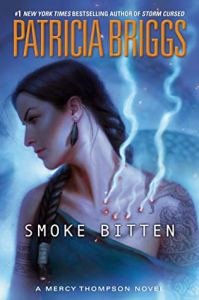
Serena’s Review: “Smoke Bitten”

Book: “Smoke Bitten” by Patricia Briggs

Publishing Info: Ace, March 2020

Where Did I Get this Book: from the library!

Book Description: I am Mercedes Athena Thompson Hauptman. My only “superpowers” are that I turn into a thirty-five pound coyote and fix Volkswagens. But I have friends in odd places and a pack of werewolves at my back. It looks like I’m going to need them.

Centuries ago, the fae dwelt in Underhill–until she locked her doors against them. They left behind their great castles and troves of magical artifacts. They abandoned their prisoners and their pets. Without the fae to mind them, those creatures who remained behind roamed freely through Underhill wreaking havoc. Only the deadliest survived.

Now one of those prisoners has escaped. It can look like anyone, any creature it chooses. But if it bites you, it controls you. It lives for chaos and destruction. It can make you do anything–even kill the person you love the most. Now it is here, in the Tri-Cities. In my territory.

It won’t, can’t, remain.

Not if I have anything to say about it.

Previously Reviewed:“Moon Called,” “Blood Bound,” “Iron Kissed,” “Bone Crossed,” “Silver Borne,” “River Marked,” “Frost Burned,”and “Night Broken” and “Fire Touched” and“Silence Fallen” and “Storm Cursed”

Review: This series has probably been the longest-running Urban Fantasy series I’ve read. With a series that has run for so long and includes so many books, it’s assumed that there will be highs and lows. There was a period a few books back that had me worried, with several underwhelming entries in a row. But the last one was super dark and very good, so it was with a refreshed interest in the series that I picked up this latest book. And while it wasn’t my favorite, it at least didn’t backslide into the low points that had come before.

All is not well for Mercy Thompson. Her husband, Adam, has been withdrawing from her for the last few months, clamming up when asked and shutting down the magical bond between them. On top of this, another werewolf pack is attempting to move in on their territory and the magical creator Underhill has created a doorway to her realm in Mercy’s backyard. And a door goes both ways, letting thins in…and out. Not a powerful magical creature is on the loose, taking over people and making them murder to fuel its terrible power. But so is the life of one Mercy Thompson: full of madness and danger. Will she, Adam, and their pack be able to tackle this most recent threat?

This book was kind of hit and miss. There were several things I really liked about it, and then some that I didn’t care for as much. For the positives, I like that we’re back to the trend of having Mercy as our one and only narrator. Some of the weaker installments were the ones that deviated from her and included POV chapters from Adam. He’s great as a romantic interest, hero type. But it was pretty boring being in his head. Mercy’s voice remains strong and compelling, lending needed animation to even the less exciting mysteries and villains.

I also really liked the action in this book. The fight scenes were fast and thrilling, and the aspects of the fight that existed on a more magical element were also interesting. I liked the increased exploration of how the pack’s bonds and Mercy and Adam’s bond work and affect each other. Mercy’s own background and heritage adds an extra level of interest into how she deals with magical threats and powers. There was also the return of a fairly beloved element of her magic, which was fun to see.

I also liked the story regarding Adam and the reasons behind why he was pulling away from Mercy. At first I was concerned that it was going to be some sort of silly melodrama, especially with the return of his ex-wife’s meddling early in the book. But luckily it went a different route and even tied back to some of the challenges that we know Adam has faced throughout his long life. There was also an unexpected sense of real danger to this particular problem. If anything, it was almost the bigger threat than the actual villain of the story.

And that I didn’t love as much: the main villain and the threat he/she/it presents. For one thing, I was able to very quickly guess who/what they were dealing with, which just made the delay for the final reveal to read as boring at best and frustrating at worst. It’s implied that Mercy figures it out around the time that I did, so at least it doesn’t dumb her down in the process. But I still felt like the build-up itself didn’t work and the story would have done better without it. A few more jokes and references would have been way more fun than the false tension.

There were also a few story elements and subplots that I didn’t think were needed. The book wasn’t super long, so maybe these were used just to pad out the wordcount. But I think that speaks to problems with the main plot that needed to be tweaked anyways. Not only did these subplots not add anything to the overall story, but they drained out some of the tension when they popped up again here and there throughout the story.

That said, I still enjoyed this book overall. It could be a bit slower than I’d prefer at times, but I still found the characters compelling, especially the evolving relationship between Adam and Mercy. Fans of the series will likely be pleased with this installment.

Rating 8: Not as good as the one that came before it, but still much better than the low-points of the series.

Reader’s Advisory:

“Smoke Bitten” isn’t on too many Goodreads lists, but it is on I checked it out of the library!

Find “Smoke Bitten” at your library using WorldCat!

Kate’s Review: “Last Call: A True Story of Love, Lust, and Murder in Queer New York”

Book: “Last Call: A True Story of Love, Lust, and Murder in Queer New York” by Elon Green

Publishing Info: Celadon Books, March 2021

Where Did I Get This Book: I received an eARC from NetGalley.

Book Description: The gripping true story, told here for the first time, of the Last Call Killer and the gay community of New York City that he preyed upon.

The Townhouse Bar, midtown, July 1992: The piano player seems to know every song ever written, the crowd belts out the lyrics to their favorites, and a man standing nearby is drinking a Scotch and water. The man strikes the piano player as forgettable. He looks bland and inconspicuous. Not at all what you think a serial killer looks like. But that’s what he is, and tonight, he has his sights set on a gray haired man. He will not be his first victim. Nor will he be his last.

The Last Call Killer preyed upon gay men in New York in the ‘80s and ‘90s and had all the hallmarks of the most notorious serial killers. Yet because of the sexuality of his victims, the skyhigh murder rates, and the AIDS epidemic, his murders have been almost entirely forgotten. This gripping true-crime narrative tells the story of the Last Call Killer and the decades-long chase to find him. And at the same time, it paints a portrait of his victims and a vibrant community navigating threat and resilience.

Review: Thank you to NetGalley for providing me with an eARC of this book!

As someone who has had a deep fascination with psychopaths and serial killers since she was a kid, it sometimes takes some digging for me to be completely caught off guard by a story that I’ve never heard of. But the sad truth is that in the cases I’ve never heard of it, a lot of the time is because of the fact that the victims fall into the ‘less dead’ category (aka marginalized groups, such as POC, drug addicts, sex workers, LGBTQIA, etc) and because of that, it’s not as publicized. This is basically what I ran into when I learned about “Last Call: A True Story of Love, Lust, and Murder in Queer New York” by Elon Green. My initial though was ‘why haven’t I heard of this?’, and then I realized that if a serial killer was preying on the gay community in 1990s New York City, it was going to get muffled for a myriad of reasons. So I decided I needed to read it.

“Last Call” is about Richard Rogers, aka the Last Call Killer, a man who murdered gay men after interacting with them at a piano bar in New York City in the early 1990s. This time period was tumultuous for the LBGTQIA community, as violence, HIV/AIDS, and prejudice were constant threats to a group whose safety wasn’t really a high priority for law enforcement officials. Green does a really good job of capturing an contextualizing the time period and the place, breathing life into a New York City that has been transformed from that time, though for both better and worse depending on what angles you decide to approach it by. The socio-political context is incredibly important to this story; there was still a lot of fear and stigma around gay men because of misconceptions about HIV/AIDS, as well as their sexuality, so for gay men to be targeted in this way wasn’t exactly focused on or considered a priority. While some detectives were dogged in their investigations, you get the overall sense that there wasn’t much urgency in spite of the fact dismembered bodies with similar M.O.s were being dumped like trash on the outskirts of the city. Green really sets all of this up well, and as he tracks the case as time goes on and explores how things began to change in the city, he shows how it all is connected. Throw in a lot of really helpful notes and research information at the end, and you have a well researched true crime story that’s brimming with historical context! Which I love.

But the other thing about this book that I really liked is that Green is very careful to shine a light on each of the victims that Rogers murdered. Given that true crime does have a problem with exploitation and salacious framing as it strives for ‘entertainment’, Green wants to be sure that each of the people who Rogers murdered has a voice and is depicted as more than a victim, especially given how forgotten this whole thing was. There are sections devoted to each victim’s background, from their childhood, to how they were faced with prejudice and turmoil because they were gay, to the friends that they made and the found families that the crafted while living in New York City. Along with this we see the resilience and determination of a community that is having to contend with so much strife and trauma. As if it wasn’t enough that prejudice and threats of general violence and an epidemic were threats that the LGBTQIA community was having to think about at the time, a serial killer that the police weren’t exactly gunning for was another horrible reality.

And Green is also very dogged in his investigation into Rogers as a person. Though Rogers didn’t cooperate with this book (and whatever, that’s fine, there’s no need to give the guy a platform), Green still does a deep dive into his life and psyche, building a compelling argument that there were undoubtedly more victims that we never heard about, even going further back into his history to reveal that there had been ANOTHER murder he had committed even before the Last Call murders (but the record was sealed due to various circumstances). It’s impressive and thorough journalism.

“Last Call” is bleak and sad, but it gives voice to horrible crimes that deserve to be remembered, for the sake of the victims. It’s a deep dive with a lot of notes, and while it’s a hard and tragic read, I think that true crime fans should make note to read it.

Rating 8: An impactful and haunting book about a forgotten killer and his forgotten victims, “Last Call: A True Story of Love, Lust, and Murder in Queer New York” shines a light on how some true crime stories are lost due to society’s prejudices.

Reader’s Advisory:

“Last Call: A True Story of Love, Lust, and Murder in Queer New York” is included on the Goodreads list “Can’t Wait Nonfiction of 2021”, and would fit in on “Tales of New York City”.

Find “Last Call” at your library using WorldCat, or a local independent bookstore using IndieBound!

Book Club Review: “The Right Swipe”

We are part of a group of librarian friends who have had an ongoing bookclub running for the last several years. Each “season” (we’re nerds) we pick a theme and each of us chooses a book within that theme for us all to read. Our current theme is “Outside the Genre Box”, in which we each picked a book from a genre or format that we don’t usually read.

For this blog, we will post a joint review of each book we read for book club. We’ll also post the next book coming up in book club. So feel free to read along with us or use our book selections and questions in your own book club!

Book: “The Right Swipe” by Alisha Rai

Publishing Info: Avon, August 2019

Where Did We Get This Book: I own it.

Genre/Format: Romance

Book Description: Alisha Rai returns with the first book in her sizzling new Modern Love series, in which two rival dating app creators find themselves at odds in the boardroom but in sync in the bedroom.

Rhiannon Hunter may have revolutionized romance in the digital world, but in real life she only swipes right on her career—and the occasional hookup. The cynical dating app creator controls her love life with a few key rules:

– Nude pics are by invitation only

– If someone stands you up, block them with extreme prejudice

– Protect your heart

Only there aren’t any rules to govern her attraction to her newest match, former pro-football player Samson Lima. The sexy and seemingly sweet hunk woos her one magical night… and disappears. Rhi thought she’d buried her hurt over Samson ghosting her, until he suddenly surfaces months later, still big, still beautiful—and in league with a business rival. He says he won’t fumble their second chance, but she’s wary. A temporary physical partnership is one thing, but a merger of hearts? Surely that’s too high a risk…

Kate’s Thoughts

Though I tend to stick to a few genres that I tackle on this blog, in my overall reading habits I try to be varied and open minded when it comes to what book I decide to pick up. But like most people, I do have my blind spots in genres. My goal this year is to try and read more romance because of this. So the fates were lining up when I decided to take on the Outside the Genre Box book for February. After all, our book club meeting was going to be on Galentine’s Day, the day before Valentine’s Day. Obviously picking a romance was going to happen. I decided on “The Right Swipe” by Alisha Rai for a couple of reasons. 1) It had some good reviews and solid hype. 2) I saw that it had a diverse cast of characters, and 3) I’m not quite ready to jump into Regency era bodice rippers, so something contemporary felt just right.

And I really enjoyed “The Right Swipe”. I liked our main characters, Rhiannon and Samson, whose one night stand could have turned into something more, had Samson not ghosted on Rhiannon before their second date. It’s a pretty typical premise, and I was expecting it to be fairly obvious in execution of the plot (they meet again, it’s frosty at first, then it gets hot, then it gets cold, then it ends up okay in the end). But that may have just been my preconceived notions of the genre, because it didn’t go in ways that were expected for me. I liked both Rhiannon and Samson as characters, as they both had their flaws and their strengths, and all of that felt realistic. Their chemistry is palpable, and it’s very easy to root for them because they are both good people who clearly are right for each other. But you also understand why Rhiannon is reluctant to give him another chance with her past relationship traumas, and why Samson has his own insecurities and hurt from past experiences. They just click, but aren’t perfect, nor melodramatic.

But what really struck me was that Rai brings in some really relevant and meaty social issues into this story that both Rhiannon and Samson have to deal with. For Rhiannon, it’s the fact that she is a social media mogul on the rise, but has to work twice as hard and be twice and brilliant because she is a Black woman in a white dominated industry, and has an unearned difficult reputation because of a vindictive white man whom she used to be involved with. You see her drive and her hunger, as well as the emotional labor and pain that comes with the constant roadblocks because of her race and her gender. For Samson, his history of being a professional football player from a family of football greats is darkened by the very real issue of CTE. While he himself doesn’t have it, people he cared about suffered and deteriorated because of it, and while Rai doesn’t overtly call out the NFL for how it has ‘handled’ the issue, the commentary is very much there.

And yeah, it’s definitely steamy. It lives up to all my expectations of the genre in that regard, and that is a compliment to be sure.

I really liked “The Right Swipe”, and I am definitely going to continue on in Rai’s series. I’m expanding my literary horizons, people, and it feels good!

Kate’s Rating 8: A cute and steamy romance with some really good social commentary, “The Right Swipe” is a fun read, and a great place to begin if you want to check out the romance genre with little experience within it.

Book Club Questions

  1. What did you think of Rhiannon and Samson’s relationship? Healthy? Unhealthy?
  2. What were your thoughts on Rhi’s personal rules for dating? Did you find the rules too stringent? Not stringent enough?
  3. Both Rhi and Samson have some pretty significant back stories. What did you think of them? Did you like one more than the other?
  4. What were your opinions on the CTE subplot? How aware were you of CTE before this book?
  5. Rhi has a number of roadblocks she has to deal with being a Black woman in the dating app industry. Did you think that Rai did a good job balancing these themes with the plot?
  6. This is the first in a series. Assuming the next books are going to follow side characters, whose story would you like to hear in the coming books?

Reader’s Advisory

“The Right Swipe” is included on the Goodreads lists “Radical Romance”, and “2019 Romance Books by Authors of Color”.

Find “The Right Swipe” at your library using WorldCat, or a local independent bookstore using IndieBound!

Next Book Club Book: “Red at the Bone” by Jacqueline Woodson

Monthly Marillier: “Child of the Prophecy”

“Monthly Marillier” is a review series that is, essentially, an excuse for me to go back and re-read one of my favorite author’s back catalog. Ever since I first discovered her work over fifteen years ago, Juliet Marillier has been one of my favorite authors. Her stories are the perfect mixture of so many things I love: strong heroines, beautiful romances, fairytale-like magic, and whimsical writing. Even better, Marillier is a prolific author and has regularly put out new books almost once a year since I began following her. I own almost all of them, and most of those I’ve read several times. Tor began re-releasing her original Sevenwaters trilogy, so that’s all the excuse I needed to begin a new series in which I indulge myself in a massive re-read of her books. I’ll be posting a new entry in this series on the first Friday of every month.

Book: “Child of the Prophecy” by Juliet Marillier

Publishing Info: Tor, June 2003

Where Did I Get this Book: own it!

Book Description: Magic is fading… and the ways of Man are driving the Old Ones to the West, beyond the ken of humankind. The ancient groves are being destroyed, and if nothing is done, Ireland will lose its essential mystic core.

The prophecies of long ago have foretold a way to prevent this horror, and it is the Sevenwaters clan that the Spirits of Eire look to for salvation. They are a family bound into the lifeblood of the land, and their promise to preserve the magic has been the cause of great joy to them… as well as great sorrow.

It is up to Fainne, daughter of Niamh, the lost sister of Sevenwaters, to solve the riddles of power. She is the shy child of a reclusive sorcerer, and her way is hard, for her father is the son of the wicked sorceress Oonagh, who has emerged from the shadows and seeks to destroy all that Sevenwaters has striven for. Oonagh will use her granddaughter Fainne most cruelly to accomplish her ends, and stops at nothing to see her will done.

Will Fainne be strong enough to battle this evil and save those she has come to love?

Review: Several years after the events in “Son of the Shadows,” we meet Fainne, the daughter of Niamh, Liadan’s lost sister. Growing up in practical isolation, and with the loss of her mother early in life and a reclusive father, Faine’s life has been one of quiet and seclusion. In many ways, Faine feels that she and her father aren’t simply hiding from his cruel, sorceress mother, Oonagh, but they are hiding from their own dark potential. But when the currents shift and Faine is forced out into the world and finds herself in her mother’s ancestral home of Sevenwaters, Faine must begin to make choices about her own future. Will she follow in her grandmother’s footsteps? Or will she choose a new way like her aunt and maternal grandmother before her?

By the time I got to this book, I’d actually read a few of Marillier’s other works. This was probably for the best as this is one of my less favorite of her books. It’s kind of surprising, because overall, I think her Sevenwaters series has been one of her biggest draws to her fantasy readership. But for me, something felt off about this book almost from the start. However, let’s talk about the things I liked, first off.

Marillier’s writing is almost freakish in its consistency. If you read a lot of her books, you’ll soon be able to immediately recognize her unique style of lyrical prose and straightforward storytelling. There’s a sense of wonder and comfort in much of her work, even as she touches on some dark topics. Every word feels delicate and intentional. There’s no denying the craftmanship of her work, and that was all on display here, especially when working with a character like Faine who is very different than the leading ladies who came before her.

I also liked seeing some familiar faces again. I, of course, really enjoyed Liadan and Bran’s story, so it was great seeing them again. It was also interesting to see side characters who had grown into roles they had just begun in “Son of the Shadows.” Sean, for example, has now been leader of Sevenwaters for over a decade. We also see Aisling, his wife, in her role as the lady of Sevenwaters. And, most jarring but also best of all, we get to see a grown Johnny balancing his role as heir to Sevenwaters and presumed fulfiller of the much-debated prophesy that has sat at the heart of the story from the start.

The problem with all of this, however, is that these side characters, both the very familiar, like Liadan and Bran, and the less so, like Johnny, are more intriguing than Faine. Much of Marillier’s work lives and dies on the strength of her characters. Most of her books are slow on the action and heavy on the introspection. So that main character has a lot of heavy lifting to do. And unfortunately, Faine just isn’t up to it. To some extent, I appreciate the challenges that Faine represents. Liadan and Sorcha were almost perfect women, so it’s refreshing to see Marillier tackling a heroine who faces challenges both physical and emotional. Faine walks with a limp, and due to her reclusive lifestyle, she struggles to form connections and maintain relationships. These parts of her character I thought were very well-drawn, and it was interesting watching her learn to piece together human interactions with people who are family in name only to her.

Unfortunately, her naivety turns into almost willful stupidity at points. Her concern of the darkness within her drives her actions past the point of reason. It’s hard to be sympathetic at points when events around her and those who would seek to use her are less than subtle. She does some pretty bad stuff for some pretty weak reasons. And much of her motivation seems weak and more told to the reader than shown in any way that would make it truly threatening feeling.

I also really disliked the romance. It’s not that it was bad, and the hero had his charming, appealing moments. But in comparison to the deep, well-drawn relationships that came in the books before, this one just feels shallow and uninteresting in comparison. I never felt any real chemistry between these characters, and there was very little tension in the proceedings. Some dramatic events happen towards the end, but even then, what should have been heavy hits felt fairly removed for me. I just didn’t care that much.

Of the original trilogy, this book is the weakest by far. It had a really interesting premise, featuring a character who has grown up more on the fringes of Sevenwaters and its stretching legacy, but several aspects of the book just felt a bit off. Faine wasn’t nearly as compelling as Sorcha and Liadan. And the romance felt stilted and thin. It’s still worth reading, however, if you’re a fan of the series as some pretty significant events occur and many of the mysteries laid down in the first two books are resolved. Events that occur here will also be referred to loosely in the second trilogy in the series.

Rating 6: Underwhelming after the flashes of mastery that were the first two books in the trilogy.

Reader’s Advisory:

“Child of the Prophecy” is on these Goodreads lists: Great Celtic Fiction and Myth and Folktale Retellings.

Find “Child of the Prophecy” at your library using WorldCat!
Kate’s Review: “The Sandman (Vol.7): Brief Lives”

Book: “The Sandman (Vol.7): Brief Lives” by Neil Gaiman, Jill Thompson (Ill.), & Vince Locke (Ill.).

Publishing Info: Vertigo, 1993

Where Did I Get This Book: I own it.

Book Description: Dream’s youngest sister, the loopy Delirium, convinces him to go on a quest for their missing brother, Destruction. But Dream may learn that the cost of finding his prodigal sibling is more than he can bear.

Review: This was the storyline in “Sandman” that I was most looking forward to revisiting. My love for Morpheus’s younger sister Delirium knows no bounds, and I remembered that the story that has so much to do with her was the one that touched me the most on my first read through of this series. Her childlike innocence and whimsy, which is also steeped in the darkness of her past, has always been so utterly charming and lovely, and “Brief Lives” puts her at the forefront as she gets in her mind the idea of finding the long lost Endless Sibling, Destruction. When both Desire and Despair say no, she turns to Dream, who is mourning the end of a romantic relationship and decides to go. What comes next is a story that sets the wheels in motion for where this series eventually ends. As well as a road trip tale between the unlikeliest of companions, Delirium and Dream. And I LOVE a good road trip.

Someday we will road trip again! (source)

I, of course, loved “Brief Lives” thanks mostly to Delirium, whose character and design is just a joy as well as a little sad. She is very clearly not in her right mind, gravitating towards those who are in the same boat, so seeing her and the stoic and matter of fact Dream is both quite amusing and bittersweet. It is interesting, however, that she is the Endless that is so determined to find Destruction, who left the family and disappeared three hundred years previously. We see flashbacks of Destruction interacting with some of his siblings, as well as the moment that he decided to go, foreseeing that the Age of Enlightenment and a move towards reason across humanity would bring forth things that would almost make him a bit pointless. Delirium is the perfect sibling to want to find him, as one must only seek Destruction if they were in a similar place as she is. I hesitate to say ‘crazy’. It’s far more complex than that. We get some great moments of humor with her and Dream on this trip, as her driving a car or interacting with nonplussed humans is really great fun.

We also get to see that she didn’t start as Delirium, but as Delight, and that the change she went through was in part thanks to Destruction. This change or multi faceted characterization is a HUGE theme in this tale, especially for the dysfunctional siblings; Destruction talks about how the Endless are two sided coins and aren’t just one thing, but also the inversion of that thing. Delirium is insane, but also one of the most clear headed of her siblings. Death brings, well, Death, but is also the kindest. Desire is both filled with want, but also incredibly vicious. And so forth. I loved seeing these concepts explored as Dream and Delirium go on their journey, inadvertently causing destruction on their quest to find Destruction. This is probably the arc in which we get to see the intricate relationships between The Endless, who are both otherworldly beings with scope and metaphysical attributes that tie into humanity, but also a dysfunctional family group with shifting alliances, petty grievances, and old hurts that siblings know far too well.

And finally, we do get a final visit to the relationship between Morpheus and his son Orpheus, who, cursed with immortality, is just a head being cared for by a family on an island off of Greece. As we saw in “Fables and Reflections”, Orpheus begged his father to kill him, as he is really the only one that can grant him that wish, and Dream turned his back on his son. Now Morpheus has to confront that decision, and to face the child that he abandoned for reasons that Orpheus does not understand. I don’t really want to spoil how this all plays out, but it’s significant and sets the course for what is going to happen next in the series. Also, it made me weep.

And finally, once again, the artwork is lovely. I haven’t gushed enough about Delirium’s design, which is excellent and cheerful and creepy at once. But there was one particular panel that really stuck out to me near the end that just sums up the vast, ever-changing realities of The Endless and their worlds.

Source: Vertigo

“Brief Lives” is a significant story arc and is still my favorite thus far. It really captures the philosophy, the humor, the pathos, and the wonder of the entire series.

Rating 10: A lovely story arc about family, grief, and change, “The Sandman: Brief Lives” is my favorite tale in the series.

Reader’s Advisory:

“The Sandman (Vol.7): Brief Lives” is included on the Goodreads lists “Mythic Fiction Comics”, and “Death Gods and Reaper Protagonists”.

Find “The Sandman (Vol.7): Brief Lives” at your library using WorldCat, or at a local independent bookstore using IndieBound!

Previously Reviewed:

Serena’s Review: “The Bone Maker”

Book: “The Bone Maker” by Sarah Beth Durst

Publication Info: Harper Voyager, March 2021

Where Did I Get this Book: Edelweiss+

Book Description: Twenty-five years ago, five heroes risked their lives to defeat the bone maker Eklor—a corrupt magician who created an inhuman army using animal bones. But victory came at a tragic price. Only four of the heroes survived. 

Since then, Kreya, the group’s leader, has exiled herself to a remote tower and devoted herself to one purpose: resurrecting her dead husband. But such a task requires both a cache of human bones and a sacrifice—for each day he lives, she will live one less.

She’d rather live one year with her husband than a hundred without him, but using human bones for magic is illegal in Vos. The dead are burned—as are any bone workers who violate the law. Yet Kreya knows where she can find the bones she needs: the battlefield where her husband and countless others lost their lives. But defying the laws of the land exposes a terrible possibility. Maybe the dead don’t rest in peace after all.  

Five warriors—one broken, one gone soft, one pursuing a simple life, one stuck in the past, and one who should be dead. Their story should have been finished. But evil doesn’t stop just because someone once said, “the end.”

Review: Sarah Beth Durst has always been a bit of a hit or miss author for me. When she’s on her game, I really love her books. But there are others of her titles that have really not worked for me. So I never quite know which one I’m going to get when I pick up a new book by her. But this one, with its interesting premise and its focus on an older woman as its heroine, sounded like something that would be right up my alley!

What was a day of triumph to the nation was a day of horror to Kreya. While she and her four companions were successful in the heroic mission they set out upon, to take down the viscous bone maker Eklor, Kreya lost her husband in the process. Now, years later, Kreya is living as a recluse, desperately working forbidden magic to buy just one more day with her lost love. When she seeks out a method to work this magic on a more long-term basis, she discovers horrors that she thought were long ago settled. Now she and the others must grapple with the reality that their story may not actually be finished, and they’re not sure they can win this time.

This book checked two boxes of interest for me. Recently, I’ve really been enjoying stories that look at the “after” of heroic tales. Veronica Roth’s “Chosen” was one of my favorite reads last year and dealt with this very topic. While both that book and this one essentially present the same story, that the first “ending” wasn’t really the end at all but simply a pause on everything, they each tackle the topic of what life is like for these heroes in what they think is the end. While this book is mostly Kreysa’s story, Durst also offeres insights into the other heroes who fought alongside her. Through them all, we see the various methods each is using to handle an entire lifetime after such a momentous start. You save the world in your twenties…then what? Not only is the resulting PTSD and trauma something that must be carried afterwards, but the sense that one’s biggest moment in life is already behind one has to play with the mind. I really like the variety we see between the heroes and how they are all coping, nor not coping, with these challenges.

The second point of interest is its focus on an adult heroine. The book never specifies Kreya’s or her friends’ age, but we know their fight happened 25 years ago and that Kreya was married at the time. It’s like that she’s in her late forties or older. It’s always refreshing to read a book that focuses on older characters. By necessity, their lives look very different than the young adult heroes and heroines we so often see. Instead of new love, it’s often an established relationship or a second love. Instead of the challenges of coming into one’s power for the first time, it’s managing a life that has already contained a multitude of defining moments. Kreya and her friends have lived a quarter of a century’s worth of life since their grand adventure. During that time they’ve built lives and come to terms with the events of their youth. They also have to face these new challenges as the people they are now, not the people they were when they first fought their foe. There are both new strengths and challenges that come with taking up the mantle of heroism again later in life.

I specifically enjoyed the established romance between Kreya and her husband. We see all the strengths that have been built into it over the years of loving the same person. But there are also some unique challenges that come along with this. Specifically, of course, the fact that one member of the marriage has been dead on and off for the last 25 years…but it also speaks to the way that relationships grow and change alongside the individuals in them.

The only ding I have against the book is that the world-building and magic system are kind of simplistic and lack detail and depth. There are some cool monsters that live in a particular forest, some magically-operated cable cars, and a few other things. But none of them are described very fully or really made to feel like they are part of a fully-realized world. However, it was also clear that the focus of the book was meant to be largely about its characters, so while the world wasn’t very complex, I wasn’t necessarily feeling that it was lacking while I was reading. Fans of Durst’s work are sure to enjoy this, and fantasy lovers who prefer a more mature hero and stories focused on the “after” of the heroic journey should definitely check it out!

Rating 9: A very enjoyable, fast read that highlights the fact that no hero’s journey is every really over.

Reader’s Advisory:

“The Bone Maker” isn’t on many Goodreads lists, but it is on Can’t Wait Sci-Fi/Fantasy of 2021.

Find “The Bone Maker” at your library using WorldCat!

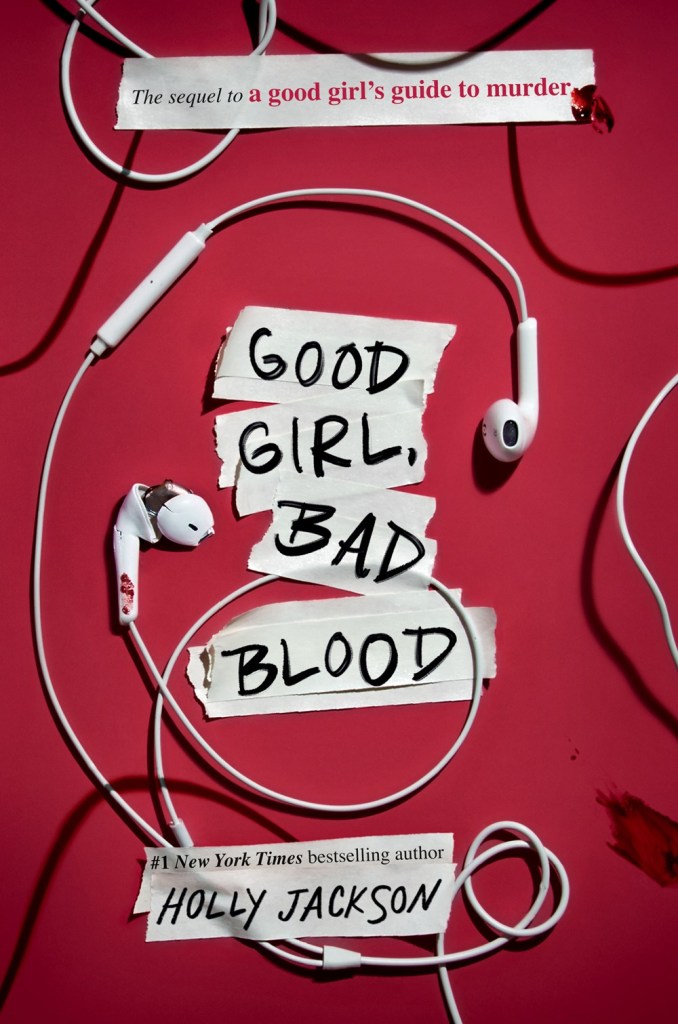
Kate’s Review: “Good Girl, Bad Blood”

Book: “Good Girl, Bad Blood”(A Good Girl’s Guide to Murder #2) by Holly Jackson

Publishing Info: Delacorte Press, March 2021

Where Did I Get This Book: I received an eARC from NetGalley.

Book Description: The highly anticipated sequel to the instant New York Times bestseller, A Good Girl’s Guide to Murder! More dark secrets are exposed in this addictive, true-crime fueled mystery.

Pip is not a detective anymore. With the help of Ravi Singh, she released a true-crime podcast about the murder case they solved together last year. The podcast has gone viral, yet Pip insists her investigating days are behind her.

But she will have to break that promise when someone she knows goes missing. Jamie Reynolds has disappeared, on the very same night the town hosted a memorial for the sixth-year anniversary of the deaths of Andie Bell and Sal Singh. The police won’t do anything about it. And if they won’t look for Jamie then Pip will, uncovering more of her town’s dark secrets along the way… and this time everyone is listening. But will she find him before it’s too late?

Review: Thank you to NetGalley for providing me with an eARC of this novel!

Perhaps you remember that last year I greatly enjoyed the YA mystery “A Good Girl’s Guide to Murder” by Holly Jackson, and it even made my Top Ten Books of 2020. I also mentioned in that review that I was super stoked for the sequel. Well folks, the time has arrived. “Good Girl, Bad Blood” is here.

My first highly anticipated thriller book of the year! (source)

We pick up not to far after we left off in “A Good Girl’s Guide to Murder”. Pip is no longer actively seeking out mysteries to solve, instead working on a podcast about the Andie Bell/Sal Singh case, and attending the trial of serial rapist Max Hastings. Pip, however, is drawn into helping her friend Connor, whose brother has gone missing, and dedicates a new season of her podcast to her investigation. What I liked most about “Good Girl, Bad Blood” is that while Jackson could have set Pip up to be a modern day Nancy Drew who is just going to solve cases and move on to the next, instead we get a front seat at the physical, mental, and emotional labor that she has to endure to help those she cares about. Well, and to give her that purpose that she felt she had in the first book. It’s an angle that may seem obvious, but Jackson does it in a way that makes you really start to wonder how much of this is all worth it as Pip gets sucked into another case, and risks her safety in trying to solve it. I didn’t expect it to go in this direction, and I was happy that it did. Jackson also takes this time to examine the weaknesses in our current law and order systems, as the police in town aren’t really taking Jamie’s missing status seriously, and the rape trial of Max Hastings follows a lot of the same ‘he said, she said’ injustices we see in real life. All of these things combine that leaves Pip in some pretty bleak places as the story goes on, and since there is going to be another book in the series, I want to see how Jackson tackles this for our imperfect heroine.

In terms of the plot itself, “Good Girl, Bad Blood” has a lot of the same strengths as the first book. I still really like Pip, and I loved seeing her relationship with Ravi Singh evolve and flourish (cutest couple ever). I also liked getting to know some of her other friends a little bit better, like Connor. As to the mystery, once again we got a taut and suspenseful thriller, and we get to see everything laid out in a cohesive way through podcast transcripts and Pip’s notes. It’s a much better way to keep everything organized without making any of the characters seem like they’re reciting facts in a robotic way, and I really enjoy it. I will say that there were a couple of trip ups for me, however. The first was that a couple of red herrings tossed out there didn’t really get resolved as red herrings or not. Like, I think that they were? But it felt a little too touched upon in the narrative to just be left behind without explanation. That’s nitpicky. The other issue isn’t as such, in that one of the big puzzle pieces that ties everything together wasn’t even hinted at until well into the last fourth of the book. It felt sort of like a deus ex machine, but for a plot point. But that said, I was pretty much kept guessing until the end. And what an ending it was. It has set us up for the next book in the series. And now, once again, I am waiting anxiously to see where Pip can go next.

“Good Girl, Bad Blood” continues a fun series that is on my must read list going forward. If you haven’t tried these books yet and like a good YA mystery/thriller, you absolutely need to pick them up.

Rating 8: A twisty and suspenseful sequel, “Good Girl, Bad Blood” has a couple of stumbles, but is overall a great follow up to a runaway hit!

Reader’s Advisory:

“Good Girl, Bad Blood” is included on the Goodreads lists “Young Adult Crime/Murder Mysteries”, and “Fiction Books Featuring Podcasts”.

Find “Good Girl, Bad Blood” at your library using WorldCat, or a local independent bookstore using IndieBound!

Previously Reviewed: “A Good Girl’s Guide to Murder”

Highlights: March 2021

The temperature is finally starting to rise, the snow is starting to slowly melt, and we can sometimes hear a bird or two chirping in our neighborhoods! Does this mean that we can assume that we’re in the clear regarding another snow storm? Not on your life! But as we start to dream of Spring after an arduous pandemic winter, we have some books that we are also looking forward to this month.

Serena’s Picks

Book: “The Bone Maker” by Sarah Beth Durst

Publication Date: March 9, 2021

Why I’m Interested: Durst has always been a bit of a hit or miss author for me. But when I do enjoy her books, I really love them. Conversely, of course, there are a few of her that I really haven’t enjoyed. But a few things about this title stood out to me. First, it’s main character is a middle aged woman. I’ve talked before about how rare it is to find fantasy books that feature with middle aged or older women. Everyone has to have their grand adventure in their twenties, apparently! The story also focuses on what happens to the heroes after they have one. Kreya and her friends defeated their mortal enemy, but at great cost. And now she and they have had to go on living their lives for twenty more years coping with the fallout. Of course, evil lingers in the dark and seems to be rising again. I so hope that this is one of Durst’s hits!

Book: “An Unexpected Peril” by Deanna Raybourn

Publication Date: March 2, 2021

Why I’m Interested: “Interested” is definitely the right word here. I can no long unequivocally say that I’m “excited” for the next entries in this series. There have been too many flops, most recently the last one to come out, for me to think of this series as at all reliable in what it delivers. I’ve really loved some of the books, but it’s also begun to all feel a bit tired and stretched too thin. However, this book seems to involve Veronica and Stoker solving the mystery of a mountaineer’s death and sees them tied up in international politics when a princess goes missing. Seems like a fresh enough story, though I’m not to pleased about the line in the description about Veronica’s own ties to the Royal family. I’m so sick of that plot line. We shall see!

Book: “Namesake” by Adrienne Young

Publication Date: March 16, 2021

Why I’m Interested: I really loved “Fable” when I read it last year. I love pirate/sea-faring stories but I also seem to be fairly picky about what I expect those sorts of books to deliver. “Fable” had it all. An appropriately ruthless main character. Adventure on the high seas. A treasure hunt. And a constant guessing game as to who one should trust. In the end, it seemed to wrap up most of the plot lines before jumping to a sudden cliffhanger. The book description seems to be hinting that Fable will begin to uncover more about her mother. This is a really interesting concept, as the first book largely focused on Fable’s dysfunctional relationship with her father. I’m a bit wary about where the romance is headed, though, since it was already well-established at the end of the first book. Please no added drama in some misguided attempt to pique interest!

Kate’s Picks

Book: “She’s Too Pretty to Burn” by Wendy Heard

Publication Date: March 30, 2021

Why I’m Interested: This one grabbed my attention as I was perusing NetGalley, and I decided to go out on a limb and ‘Wish For It’. After getting lucky, and reading up on the description, it became VERY clear that I had hit the jackpot. Veronica is a fledgling teen photographer who is looking for inspiration. She then meets Mick, a shy and magnetic girl, at a party, and they immediately hit it off and fall for each other. When Veronica impulsively takes Mick’s picture, even though Mick hates having her picture taken, it starts a chain reaction of desire, obsession, art elevation, and perhaps even murder. We have a teenage Sapphic romance in the art world, AND, not only that, it’s a re-imagining of “The Picture of Dorian Gray”. I mean COME ON! It just SCREAMS ‘KATE IS GOING TO LIVE FOR THIS!’

Book: “Good Girl, Bad Blood” by Holly Jackson

Publication Date: March 2, 2021

Why I’m Interested: I loved loved LOVED “A Good Girl’s Guide to Murder” last year, and I told myself that I would absolutely hop into any more stories that concerned teenage detective Pip Fitz-Amobi and her penchant for looking into mysteries in her home town. This time, Pip has sworn off of her detective work and has instead dived deep into a podcast about her previous case and the court cases that come after. But when one of her close friends approaches her to investigate his older brother’s disappearance, Pip thinks that maybe she could solve another crime. But as she starts to investigate, she starts to find weird connections to people in her town, and begins to wonder if there is more danger at hand than she thought. Wherever Pip goes, I will follow, and given this book has been on my list awhile, the excitement is real.

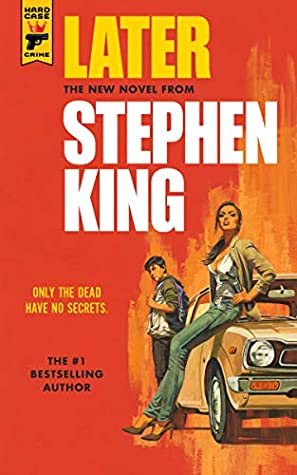
Book: “Later” by Stephen King

Publication Date: March 2, 2021

Why I’m Interested: My man Stephen always has a spot on my highlights lists when he has a new book coming out, for one thing. The pulp looking cover is also to die for. But as always, it’s the content that pulls me in, and “Later” is no exception. Jamie is the son of a single mother who has preternatural abilities that he is trying to keep secret. But when a detective catches wind of his talents, she enlists him to help her in a strange case involving a dead murderer who may make good on a promise to keep on killing. It sounds like it’s going to be eerie, and in line with King’s old school stories about coming of age, grey areas of morality, and a good old fashioned supernatural threat. Hopefully my wait on the library hold list won’t be TOO long…

What books are you looking forward to this month? Let us know in the comments!