Book Description:The king’s scholar, the magus, believes he knows the site of an ancient treasure. To attain it for his king, he needs a skillful thief, and he selects Gen from the king’s prison. The magus is interested only in the thief’s abilities.
What Gen is interested in is anyone’s guess. Their journey toward the treasure is both dangerous and difficult, lightened only imperceptibly by the tales they tell of the old gods and goddesses.
Review: As you can see in the publishing information section, this is a book that’s been around in the young adult fantasy lexicon for quite a while. It routinely comes up in lists of fan favorites and has the bonafides to back it up being listed as a Newbery Honor Book. It is also a long running series, not necessarily in total number of books, but in their slow, steady release. After a long break after this, the first, Turner has released a new novel in the series every 4-5 years it seems, and the next is scheduled to be published next spring. So, with this in mind, I decided that now was a good time to dive into this series!
At first I wasn’t quite sure what to make of this story. Told from the perspective of Gen, a common thief who is rotting in prison until he is enlisted to aid in a royal treasure hunt, the story seemed like a fairly straight forward adventure. The story telling came across rather stilted at first, with Gen often coming across as a lazy, unlikable protagonist. The writing and plot also seemed a bit too simplified for my expectations for a Newbery book. And yet…
Turner masterfully handles her protagonist. As I’ve said before, it’s a challenging task to write an unreliable narrator, even more so in these circumstances as the narrator is unreliable for reasons that might make him even harder to write than normal. I know that wasn’t a very helpful sentence, but I don’t want to give away things.
Further, the slow build in plot development also had huge pay offs in the end. The story itself is very short, so that may have been part of my initial skepticism with its slow burn approach to plot. But, ultimately, the adventure, fantasy, and world building were ultimately fleshed out in truly great ways. There were a lot of twists and turns throughout the story that I didn’t expect, including a dive into the mystical that came a bit out of left field for me.
While this story only briefly touches on the politics and relationships found between the countries in this fantasy world, I can see the groundwork that is being lain here. The story itself, however, does read as a stand-alone, so it’s a curious place to be, knowing there are several novels to follow.
But, as I mentioned, I feel that this book garnered its award purely on the strength of Gen as a narrator. His voice is unique (so unique that I wasn’t quite sure what I was dealing with initially and was prone to disliking him, as I mentioned), but, depending on how the next few books go, I think he has the potential to be one of my favorite leading characters.
This is a short, quick read that is well worth its time! Make sure to give it the chance it deserves if you find yourself, like me, struggling with the beginning. The payoff is well worth it! Now, we’ll see how successful I am at spacing out the rest of the books before next spring’s new release. Or…I’ll just read them all right away and waste away in anticipation like the rest of the poor fanbase who have been waiting so much longer than I will have!
Rating 8: A truly unique narrator who is worth the effort it takes to understand him!
Publishing Info: Little, Brown Books for Young Readers, September 2016
Where Did I Get This Book: The library!
Book Description:A stunning, terrifying novel about a house the color of blood and the two sisters who are trapped there, by The Dead Houseauthor Dawn Kurtagich
When Silla and Nori arrive at their aunt’s home, it’s immediately clear that the “blood manor” is cursed. The creaking of the house and the stillness of the woods surrounding them would be enough of a sign, but there are secrets too–the questions that Silla can’t ignore: Who is the beautiful boy that’s appeared from the woods? Who is the man that her little sister sees, but no one else? And why does it seem that, ever since they arrived, the trees have been creeping closer?
Filled with just as many twists and turns as The Dead House, and with achingly beautiful, chilling language that delivers haunting scenes, AND THE TREES CREPT IN is the perfect follow-up novel for master horror writer Dawn Kurtagich.
Review: What makes a good gothic horror story? There are many things that need to come together to really make a horror story a gothic one. You usually need a protagonist who is female, though really this isn’t a hard and fast rule anymore. It was just a very common protagonist type back in the Victorian era when these stories were super popular and remain classics. You also need a house or place of action that is isolated and generally creepy in ambiance, like a manor house or a hospital. And there usually has to be a question of what or who is actually causing the conflict of the story: is it something otherworldly, or is it just our poor isolated protagonist losing a grip on reality. “And the Trees Crept In” by Dawn Kurtagich is a pretty good representation of the gothic horror genre, and since it’s written for teens who may be more interested in something that’s more in your face than filled with nuance, I think that it’s a breath of fresh air, YA literary world wise. You have Silla and Nori, two sisters who have fled their abusive home life to live with their Aunt Cath, whose large blood red manor house is in the middle of a forest. From the get go things are strange for the sisters. There’s no technology in the house to be seen, Aunt Cath is both very happy to have them but filled with anxiety, and house seems to be in all kinds of disrepair. Soon Aunt Cath has locked herself in the attic and the trees in the woods seem to get closer and closer to the house. “I am ON BOARD!” I crowed to myself as I started this book, and given that there was talk of a Slenderman-like creepy thing in the woods (super tall, no eyes, huuuuge grin), I was even more elated to devour this book.
While the Gothic genre is certainly supposed to be about isolation and questions of sanity, “And the Trees Crept In” kind of took it a little too far and into a realm that was beyond cohesive and more muddled. The story is told mostly from Silla’s point of view, though sometimes Nori’s random scribbles and notes do get some play as well. But mostly it’s a first person narrative from Silla, and diary entries from Silla, which lends perfectly to an unreliable narrator device. However, as Silla’s diary entries go on, they become more and more unclear as to what exactly is going on, just as her narration starts to fall to pieces as well. Normally this is fine in this genre, but I feel that Kurtagich almost took it too far, as by the time we got to the end of the book I was just lost and more frustrated than not. Writing a well done and believable descent into madness is hard to do, to be sure, and while a valiant effort was made here, it didn’t totally work. That being said, everything does eventually get explained in a narrative moment given by Silla’s love interest Gowan. While I appreciated that explanation was given, and while it did TOTALLY make sense, I think that it shouldn’t take a literal monologue of rundown and explanation to achieve that. And on TOP of that, there is a HUGE random twist at the end that just came completely out of left field! That was strange and I didn’t know how to feel about it. There wasn’t really any reason for it to go on top of the other twist that was revealed.
And let’s talk about Gowan and Silla a little bit. Silla’s characterization of a girl who is possibly losing her mind made it very hard for me to be like ‘oh yes, Silla and Gowan FOREVER’. While Gowan does serve a purpose in terms of wrapping things up for us readers in a tight little bow, I don’t quite buy into the romance that these two are supposed to have. I mean, after all is said and done I GET it, but I still don’t quite buy it. There wasn’t enough there before the end to make me really feel all that invested in it. I was far more interested in Silla’s relationship with her little sister Nori. The dynamic was not only interesting because of the age difference (Silla was ten when Nori was born and has always felt like a second mother to her), but because of the fact that Nori is mute. They can communicate with each other, and they have a strong love and bond through their clandestine communication, which gave a more desperate dynamic to both of them. In one sense it makes Silla more desperate to protect her since she seems to have that added layer of vulnerability, but it also makes a tension bubble up because Silla has a harder and harder time having her only company (outside of Gowan’s intermittent visits) be someone who has no voice and is different from her. And Nori’s fascination with the strange being in the woods adds even more tension still. I am admittedly pretty ignorant when it comes to what it is like to be a mute person, but I feel that Nori was portrayed in a sensitive manner.
At the end of the day, I did enjoy this confusing gothic tale of terror. I think that it definitely could have been a bit less convoluted while still maintaining it’s gothic aura. I would tell readers that it does all make sense. You just have to be willing to wait for it.
Rating 7: A pretty confusing and odd tale with a plot that needed explanation, but once it was clear what was going on I was pretty okay with it. There were some unsettling and creepy moments and the Slenderman-esque imagery was spooky.
Book Description:Nothing says Happy Birthday like summoning the spirits of your dead relatives.
I fall to my knees. Shattered glass, melted candles and the outline of scorched feathers are all that surround me. Every single person who was in my house – my entire family — is gone.
Alex is a bruja, the most powerful witch in a generation…and she hates magic. At her Deathday celebration, Alex performs a spell to rid herself of her power. But it backfires. Her whole family vanishes into thin air, leaving her alone with Nova, a brujo boy she can’t trust. A boy whose intentions are as dark as the strange markings on his skin.
The only way to get her family back is to travel with Nova to Los Lagos, a land in-between, as dark as Limbo and as strange as Wonderland…
“Beautiful Creatures”meets “Daughter of Smoke and Bone”with an infusion of Latin American tradition in this highly original fantasy adventure.
Review: So I am kind of switching it up for my second Horrorpalooza review! While I know that Serena is usually the user to do fantasy novels, when I got “Labyrinth Lost” by Zoraida Córdova, I thought that it was going to be more horror based. I mean, the main character is a bruja, which is a kind of witch for this story and it’s purposes, and I did say that witches are going to count in this Horrorpalooza. So while this is less horror and more a remix of “Alice in Wonderland”, I am going to count it as a win because this is the kind of Witch-esque Mythology that I really enjoy: powerful, matriarchal bonds that sustain a family with just as much love as magic. Also, scary demons. Plus, it’s always a plus to see YA books with a POC protagonist, as books for kids and teens (and really all people) should be telling the stories of many different experiences.
So we will start with the good. “Labyrinth’s Lost” takes a concept we’ve seen before (teenage witches) and makes it it’s own unique tale. Alex is a bruja, the most powerful bruja of her generation, and the magical systems that Córdova created for this story are always interesting and taking from Latin American traditions. There are some pretty good source notes at the end of this book where Córdova explains what parts come from tradition, and what parts were invented for the story, and I think that it is valuable to learn about this background. Too often to do you see people using Latin American imagery of spirits and the dead, especially around Halloween, and this book shows the importance of some of this imagery and why it isn’t just spooky makeup. I also loved the magical world of Los Lagos, as it does harken to Wonderland but still maintains its own character and ambiance. The magical system of cantos as opposed to spells also gives a new spin on traditionally Western ideas of witchcraft, and I liked that every chapter started out with a passage from the family Book of Cantos. These Bruja communities are portrayed as incredibly tight knit, and the camaraderie and love was very apparent. I also like that the distinction is made that all brujas are witches, but not all witches are brujas. They are not necessarily interchangeable and one cannot make assumptions about brujas just because they are a kind of witch.
Alex is a fairly realistic protagonist, and while she does teeter towards the trope of ‘chosen one who rejects her power’, I think that there is enough reason given that she may not want to have this power in the first place so as not to be twee or stereotypical. To be an Ecantrix means to have a dangerous power that is hard to control, and given that Alex partially blames herself for the loss of her father, her petulance is excusable. I also greatly appreciated that not only is our main character a Latina girl, she is also bisexual, and her love interest is her best friend Rishi. Rishi gets to come along on this adventure with Alex and the mysterious brujo Nova, and I was pleasantly surprised to see how natural Alex and Rishi got on. Her bisexuality was always treated as just a fact of her being, not as a novelty that needed to be pointed out and doted on.
But with these positives do come a few negatives. One of those is really just out of my own personal preferences: I have a really hard time with fantasy fiction. Sometimes it really grabs me, and other times it’s harder to keep me interested. While I liked a lot about “Labyrinth Lost”, I did find the stuff inside Los Lagos to be far less interesting to me than her life in the real world. I think that had the magic stayed in an urban or real world setting it would have held my interest. but once new lands come into play, I’m really not all that invested unless that world is called Middle Earth or Fantastica. So when we got to Los Lagos, I found it easier to put down. I did like the villain, The Devourer, as she was menacing and seductive all at once, a being that has started to take over Los Lagos and in doing so has made it start to crumble under her oppressive force. She was good, but I wanted more of her.
“Labyrinth Lost” is book one in a series (what is it with YA Fantasy books seemingly always packaged as a series?), and even though Alex is very much devoted to Rishi, by the end of this book you just get the feeling that Nova is going to be a threat to this relationship in the near future. After all, even though he does things in this book that should be pretty hard to forgive, he’s being set up as the tragic antihero that is hopelessly devoted to Alex. I really don’t like love triangles, and I had hoped that we were getting away from that, but apparently not. Plus, this book ends on a blatant cliffhanger, making it totally unable to stand alone, and I hate it when books end like that. It just galls me.
All of those complaints aside, I really do think that “Labyrinth Lost” is a really fun read about magic and brujas. I will probably keep going in the series, though I don’t know how long the wait is going to be. I’m not really in any hurry, which is both good, and bad.
Rating 7: A very unique twist on witches and Wonderland with diverse characters, though some of the plot progression left me colder than I would have wanted.
Publishing Info: Little, Brown Books for Young Readers, August 2016
Where Did I Get this Book: the library!
Book Description:Now a Challenger, Jessamy is moving up the ranks of the Fives–the complex athletic contest favored by the lowliest Commoners and the loftiest Patrons alike. Pitted against far more formidable adversaries, success is Jes’s only option, as her prize money is essential to keeping her hidden family alive. She leaps at the chance to tour the countryside and face more competitors, but then a fatal attack on her traveling party puts Jes at the center of the war that Lord Kalliarkos–the prince she still loves–is fighting against their country’s enemies. With a sinister overlord watching her every move and Kal’s life on the line, Jes must now become more than a Fives champion…. She must become a warrior.
Review: After finishing, and loving, “Court of Fives,” I immediately requested “Poisoned Blade” from the library, and last week it arrived! Full disclosure, I may have set aside other reading projects for the sole purpose of bringing this book with me on a trip to the cabin last weekend. It seemed like the perfect “mini break” read, and it didn’t let me down!
“Poisoned Blade” picks up immediately after “Court of Fives.” And when I say “immediately,” I mean that it starts the very night after the final scene in the previous book with Jes sneaking into the royal grounds to find and apologize to Kal. Needless to say, he doesn’t take this well. Luckily, both characters are written in a very relatable and believable manner. Jes feels bad for her decision, but doesn’t regret it and wouldn’t do things differently. Yes, it costs her her relationship with Kal, but she saved her family in the process. It’s refreshing to see a character in a young adult series who is so realistically portrayed with regards to the relationships in her life. Obviously, as saddening as it would be for her to lose the trust of a boy she was beginning to love but had only know for a few weeks, her priorities would remain with her beloved mother and sisters.
While “Court of Fives” wasn’t primarily focused on the romance between Jes and Kal, with their immediate falling out at the beginning of this book, Elliott opened up a lot of space for herself to dive more fully into the political intrigue and action of the world she has created. We are more fully exposed to characters who only existed on the periphery of things in the other book, like Menoe (the sister of Kal and new wife of Jes’s father), the royal couple, and their ailing son, Prince Temnos. I thoroughly enjoyed the expansion of the cast and the deeper currents that were exposed through Jes’s interactions with these groups. In every way, the choices that she is faced with both expand and narrow at the same time as she is made aware of the complicated web (Ha! Get it? “Web” because her nickname is “Spider?” I’m super clever…) of relationships, schemes, and history that exist.
You don’t need to fake it, guys, I know I’m hilarious…(source)
The world-building is also expanded when Jes takes part in a traveling party that tours the outer reaches beyond the city. This opened up a lot of doors for further action and new challenges for our main character. Really, the action was upped big time in this sequel, and I thoroughly enjoyed all of it. Particularly, the spider scouts and their magical/mechanical spiders were more fully explored in this book, which I really liked, as they made such a brief appearance in the first story and left a lot of questions unanswered. Jes also spends a lot more time fully realizing the role she has to play and is much more deliberate with her choices, many of which are not easy and force her to behave in a way that she would have thought impossible in the previous book. I love it when the main character must slide into moral shades of grey!
This book embraced the strengths that were set up in the first, and then went wild with the world-building and the addition of multiple plot layers. I very much enjoyed the whole thing and strongly recommend it for fans of young adult fantasy series. This has been one of the more enjoyable ones of the last few years so far, and I’m excited to see how Elliott wraps the whole thing up! Sadly, I have to wait until NEXT JULY!
Rating 9: A strong sequel, probably even better than the first!
Though we do tend to read different genres, there is sometimes overlap in the books that we pick up and devour. When this happens, we decide to do a joint review, giving our thoughts through our own personal lenses of what we look for in reading material. A few weeks ago, we reviewed the first book in Gwenda Bond’s “Lois Lane” series, and now we’re back with the sequel!
Book: “Double Down” by Gwenda Bond
Publishing Info: Switch Press, May 2016
Where Did We Get this Book: The library!
Book Description:Lois Lane has settled in to her new school. She has friends, for maybe the first time in her life. She has a job that challenges her. And her friendship is growing with SmallvilleGuy, her online maybe-more-than-a-friend. But when her friend Maddy’s twin collapses in a part of town she never should’ve been in, Lois finds herself embroiled in a dangerous mystery that brings her closer to the dirty underbelly of Metropolis.
Kate’s Thoughts:
I think that a YA series is a great platform for Lois Lane to really shine. It’s pretty tempting to just make her a damsel in distress when she’s serving as a counterpart to Superman, or to just push her aside completely. So if you’re coming to this series looking for solid Lois characterization, this is going to be the series for you! If you’re coming into it looking for an original and well plotted main story that only strengthens her character, well….. Maybe not.
I think that is what frustrates me the most about this series. I read it because I want to see Lois shine more on her own, and shine she does, but at the same time I find myself wanting to get back to the scenes with SmallvilleGuy. I WANT LOIS TO STAND ON HER OWN, but in this series she isn’t completely able to do that. Sure, she is a new coming of Veronica Mars in her own way, and I love how she is written, but in terms of the mysteries that she gets to solve without Clark, they aren’t very strong. In this one we get a strange mystery involving her best friend Maddy’s twin sister Melody, and a secretive conspiracy involving the mayor’s office, the former mayor (who happens to be her friend James’s disgraced father), and human cloning. This plot line was boring and didn’t interest me at all, which isn’t good seeing as it was the main storyline of the book. However, I was definitely invested in her progressing relationship with SmallvilleGuy, and the side mystery that the two of them were working on, involving a mysterious internet handle who claims that they have knowledge of a mysterious flying man. For Lois this could mean finding out what happened to her and her father one night long ago in rural Kansas. She doesn’t know what it means for SmallvilleGuy, of course, but is glad that he’s interested too. This was a mystery I could sink my teeth into, because it puts both Lois AND Clark in a dangerous position, even though we’re only seeing it from Lois’s point of view. It legit felt like some “X-Files” malarky going on, and I was living for it. Especially since Lois fears that her father may be in on it, which I thought was a perfect plot point to introduce. Sam Lane has been contentious in various iterations, and I think to make him a potentially shady government being is a very clever direction to take him in. This storyline also set up for some potential future storylines as the series goes on. One involves a mysterious source who just signs their correspondence with ‘A’. And the other was short and sweet: while Lois and SmallvilleGuy were in a virtual reality world, being represented by their own created avatars, a mysterious, silent avatar was following them around occasionally. An avatar that looks like a bat.
My face when the book I’m reading may be teasing an unexpected Batman arc. (source)
Damn do I love Batman and all his broody shenanigans. The thought of teenage Bruce somehow interacting with Lois Lane, even if it’s just for a little bit, really, REALLY makes me giddy.
I’ve just kind of come to terms with the fact that I am reading this series because it’s a spot on Lois portrayal that I really, really like. It’s not terribly innovative and had it been about an original plucky high school reporter I would have jumped ship awhile back, but it’s my girl Lois and she keeps it centered. She’s ambitious and whip smart without being cruel or vain, and has realistic flaws that make her interesting. I could read about this Lois Lane all day long, and I am still wanting to see more.
Serena’s Thoughts:
When I started this series, I agreed with Kate’s first thought: that YA is a great vehicle for a Lois Lane story. And, while I still am very much enjoying the novelty of getting to read a Lois Lane centric series, I’m not as sure that this is really true for me any more.
I agree with much of what Kate said regarding the central mystery of this story. The biggest failure in this book for me was this plot and its “believablility” issues. Look, we know this is based on a Superman story, so going in I have “bought in” to the world where an alien being has arrived on earth and has all of these amazing ability. But…that’s really supposed to be the only fantastical difference between this world and our own. The first book featured virtual reality; this is easy to get on board with as it feels like we’ve been one step away from this in reality for the last decade. But this book used cloning as its central plot device. And, look, cloning is something that has actually happened in our world! It shouldn’t be so hard to believe! But the explanations, science, and plot devices behind it always felt weak, through me out of the story, and for a plot dealing with “twin bonds,” clone tanks, and a mob boss, I was surprisingly bored through a lot of it.
I also second what Kate said about the secondary mystery that Lois and SmallvilleGuy were involved in being much more interesting. There were actual stakes involved in this. I never really cared about Melody, the only connection readers have to her is that she is Maddy’s twin sister (and frankly, I’ve never particularly been super attached to Maddy herself!), but heck yeah I’m invested in sneaky government agencies trying to discover the identity of the flying man!
This is the central problem that I’m coming to see with this series. There’s just no way to balance the primary and secondary characters properly. SmallvilleGuy is firmly a secondary character. His plots are secondary, his page time is secondary, and, I’m sorry, that’s just not going to work in the long run for most readers when the series is being sold based on the strength of Lois Lane, whom everyone knows through her connections to Clark Kent/Superman and the other classic DC characters. There is no way to write unique, original characters who are going to stand up as more interesting or more worthy of their more central roles in the plot when you have a character like SmallvilleGuy lingering on the sidelines with all of this previously established history and backstory. It’s just an impossible situation. It’s not that Maddy, Devin, James, or any of them are bad characters; they’ve just been plopped into a losing battle. I found myself almost skimming through large chunks of the story, just to get back to the Lois/SmallvilleGuy action, and this isn’t good.
Going back to what I originally said, I at first thought the idea of a YA Lois Lane book had a lot of good things going for it. But I’ve now come to realize that what I was really excited about was just the idea of a Lois Lane book all told. The YA aspect of the series is starting to feel like an anchor, rather than a boost. The action and stakes never feel like they have any true threat, which is another factor contributing to my general boredom/lack of interest in the central mystery, and you just can’t put Clark Kent on the sidelines and expect original characters to carry the show. When readers know the truth of the matter, it’s easy to start feeling impatient for Lois to get there too. And I start looking at this series, and due to it being YA, I just see a never-ending line of books before we get any kind of resolution in this area, unless Bond commits to fully re-writing history (which frankly, I’d be more than ok with!) Just get them in the same room and working together!!
So, ultimately, I found this book fairly frustrating. And largely this has to do with the fact that parts of it are so good! I love Lois herself, the characterization is spot on perfect for me.
And SmallvilleGuy, too! But right there, if your two, let’s face it, MAIN characters are both so strong, it’s tough to read a series where one of them is sidelined and the other spends most of her time on plots that have very little at stake and with characters who just can’t stand up on their own. I shouldn’t be more interested in a flying bat machine that literally gets 4 sentences worth of page time than in Lois’s actual highschool friends. Can we just have a massive time jump and start writing the series from Lois’s perspective while at Daily Planet with Clark??
Serena’s Rating 6: I just love Lois and SmallvilleGuy so much that I’m finding it harder and harder to appreciate the other aspects of this series. But, of course, I’ll continue reading, because there’s no way I’m NOT supporting a “Lois Lane” series!
Kate’s Rating 7: The main plot and mystery isn’t very interesting, but Lois’s side mystery with SmallvilleGuy and the government’s hunt for the flying man has me fully invested.
Publishing Info: Dutton Books for Young Readers, August 2016
Where Did I Get This Book: The library!
Book Description:17-year-old Arman Dukoff is struggling with severe anxiety and a history of self-loathing when he arrives at an expensive self-help retreat in the remote hills of Big Sur. He’s taken a huge risk—and two-thousand dollars from his meth-head stepfather—for a chance to “evolve,” as Beau, the retreat leader, says.
Beau is complicated. A father figure? A cult leader? A con man? Arman’s not sure, but more than anyone he’s ever met, Beau makes Arman feel something other than what he usually feels—worthless.
The retreat compound is secluded in coastal California mountains among towering redwoods, and when the iron gates close behind him, Arman believes for a moment that he can get better. But the program is a blur of jargon, bizarre rituals, and incomprehensible encounters with a beautiful girl. Arman is certain he’s failing everything. But Beau disagrees; he thinks Arman has a bright future—though he never says at what.
And then, in an instant Arman can’t believe or totally recall, Beau is gone. Suicide? Or murder? Arman was the only witness and now the compound is getting tense. And maybe dangerous.
As the mysteries and paradoxes multiply and the hints become accusations, Arman must rely on the person he’s always trusted the least: himself.
Review: This summer my husband and I went on a few airplane trips, and on one of them we were overhearing (okay, eavesdropping on) a conversation between two people in front of us. While we only got the context of their trip from this one conversation, it sure sounded like we were sitting behind a couple of members going to a big cult meeting. We kept hoping that they wouldn’t turn around and see us and try to sell us whatever kind of nutritional supplement pyramid scheme they had gotten themselves into, and the moment that they mentioned that at the big welcome concert they had a strict dress code of all white, we looked at each other like
Is this going to be on the news in the near future? (source)
I’m sure it was all harmless, but I did have a few fleeting moments of thinking about Heaven’s Gate and things like that. I also thought of a book I’d requested from the library, “The Smaller Evil” by one of my favorite YA authors Stephanie Kuehn. Kuehn has written some pretty intense thrillers for teenagers, thrillers that have enough appeal that I think would be pretty tempting to adult audiences if they were willing to just give YA literature a try already. I love her debut novel “Charm and Strange”, and I have had her on my radar ever since I picked it for Book Club during our inaugural session. Kuehn writes with intensity, passion, and a searing amount of pathos, as her characters are all very messed up and very alone in the world. I’m a true sucker for that. I had pretty high hopes for “The Smaller Evil”, what with the fact that it sounded like it was going to tackle the topic of cults. Because with psychopathy, child abuse, sexual assault, and mental illness, why not add something like this to her repertoire, especially since she writes on these matters with sensitivity and eloquence.
The cult storyline itself was a bit more Lifespring than Jonestown, which was not as interesting to me as I had hoped it would be. Which probably makes me kind of monstrous but eh, I’ll own it. I had hoped that there would be some really creepy scenes with group think and herd mentality, and while Beau and his followers were by no means totally on the up and up, bordering into unhealthy, I never felt like there was much of a threat from them. This made it so I wasn’t as worried about Arman, which in turn made me not as invested in him as I probably should have been. I also had a feeling about what the big reveal or twist was going to be, and then really felt it when a reference was made to a 1960s film called “Bunny Lake is Missing”, in which a mother of a missing little girl has her sanity questioned. I did appreciate the fact that it was unclear as to whether or not the main conflict, specifically Beau’s disappearance and possible death, was an actuality, or all in Arman’s head. And I think that had I not seen “Bunny Lake Is Missing” I wouldn’t have been able to figure out just what was gong on, but since I’m a cinephile with a taste for the obscure there mystery was kind of sucked out of the story for me. But then, I don’t think that it would have been so clear to me had I never seen that movie, so that is hardly Kuehn’s fault. I just wish that the conflict with the cult had been a bit more pressing, as as it was, even without knowing the connection, I just never quite bought them as totally threatening as a whole. Misguided and saps, sure. But not dangerous, and that took some of the suspense out.
However, this made it so my focus and interest could be solely on Arman and trying to figure out what makes him tick. Like I mentioned, Kuehn does a really good job of writing mentally ill characters in a realistic and gentle way. Arman suffers from very severe anxiety from the get go, and the reader is slowly shown what has happened to him in his life that has brought him to such a precarious state. He is always on the verge of an anxiety attack, and his first instinct is to run from the issues. When we meet him he’s on his way to Evolve, the compound in the beautiful backdrop of Big Sur, California, he’s stolen a lot of money from his drug dealing stepfather. Arman is searching for a father figure, as his biologial father is a criminal and his stepdad is just as dangerous. I wholly believed that Arman would find himself mixed up with the charismatic and potentially manipulative Beau, and I never questioned the choices that he made throughout this book. His mental illness also felt very real, and his anxiety never treaded into campy territory. It also always felt real enough that one could plausibly wonder if he was just a victim of his own delusions, without portraying him as a complete ranting and raving lunatic. The only aspect of Arman that I did question was his relationships to a fellow teenage member of Evolve named Kira, and his simultaneous dalliances with the beautiful and sexually aggressive camp cook. Neither of these characters were really fleshed out enough for me to really understand their motivations when it came to Arman, and it felt a bit too bad to me that the two potential love interests were kind of relegated to the sexual awakening (the cook) and the idealized but out of reach romance (Kira). The other female character at the forefront was Mari, one of the lower ranked officials at Evolve who puts the screws to Arman when Beau disappears. This book is definitely more about Arman and his journey, and while I really liked finding out what his journey was, it was kind of a shame that the ladies didn’t have as much time to shine or grow as they could have.
Though I think that “The Smaller Evil” isn’t as strong as “Charm and Strange” or “Delicate Monsters”, even a weaker story from Kuehn is still far and away some of the best writing for Young Adults out there. I am continually impressed by the stories that she tells, and I am once again going to have to wait for her next novel to come out. I really hope I don’t have to wait too long.
Rating 8: I was expecting more cult, but “The Smaller Evil” had me questioning everything that I was reading and on the edge of my seat.
Where Did I Get this Book: audiobook from the library!
Book Description:As a general’s daughter in a vast empire that revels in war and enslaves those it conquers, seventeen-year-old Kestrel has two choices: she can join the military or get married. But Kestrel has other intentions.
One day, she is startled to find a kindred spirit in a young slave up for auction. Arin’s eyes seem to defy everything and everyone. Following her instinct, Kestrel buys him—with unexpected consequences. It’s not long before she has to hide her growing love for Arin.
But he, too, has a secret, and Kestrel quickly learns that the price she paid for a fellow human is much higher than she ever could have imagined.
Review: This book was somehow exactly what I expected and completely unexpected at the same time. I still can’t quite decide how I feel about it, but I’ll give it a go!
The story starts off with a quick introduction to Kestrel, our protagonist who, as the daughter of a most-esteemed general and an astute strategist herself, is struggling against pressure to make big life decisions: join the army or get married. Beneath this all lies Kestrel’s true passion for music, specifically the piano, which is not an acceptable life path for individuals in a society where the arts are to be paid for, not to be done oneself. Cue life changing event: Kestrel finds herself drawn to a young slave, purchases him, and FEELINGS HAPPEN.
So, my summary probably gives some clues to the strengths and weaknesses of the story. The set up is pretty obvious and frankly I was a bit weary reading through the inevitable relationship build-up between Kestrel and Arin.
I was much more intrigued by the world itself. What makes the situation presented here so interesting is the recentness of things. Arin’s country was invaded and his people enslaved within his own lifetime, only 15 years ago. Often stories like these involve countries with a much more lengthy history. Kestrel’s questions regarding Arin’s previous life offer a fascinating view into what living in a conquered country would be like, for both the winners and the losers, when history has barely been written. The strengths of the book definitely lay in this area, especially with a twist that happened about 2/3 of the way through the story which really tossed the plot in a completely unexpected, and frankly, relieving direction.
The first two thirds, as I mentioned, were pretty typical and I was at times ready to put the book aside. As a character, Kestrel was…fine. She didn’t pop off the page for me, but she also didn’t fall into any traps that are often the downfall of YA heroines. Arin, for his part, had a lot less page time, but what there was from him was interesting. I did have trouble buying in to their relationship. The author did a respectable job throwing in good moments and discussions that could justify burgeoning feelings between these two. But, especially for Arin, it’s hard to imagine that years worth of resentment, fear, and anger could be overcome.
Does Kestrel have feelings for Arin?? Does he have feelings for her??…Meh. (source)
The twist truly does save it. I don’t want to give it away, as it was a game changer for me with the series, throwing some much needed reality onto a at times a bit cheesy romance plot. I was worried that much of the history of their various cultures and the current society they both inhabited would be too easily swept aside. Boy was I wrong. I was thrilled that the author “went there” on a lot of these issues and really forced her characters into tough situations.
While ultimately the book still came off as a bit too “light” for me, I admire the direction the author is taking this series and the ending really did pull it back from the brink. I’ll put it down on my list to follow-up with the series, but I’m also not in a super rush due to some of these criticisms.
Rating 6: Weak start, bland characters, but ultimately a decent recovery with an unexpected switch in direction towards the end.
Book Description:Nora Lopez is seventeen during the infamous year 1977 in New York.
After a freezing winter, a boiling hot summer explodes with arson, a blackout, and a serial killer named Son of Sam, who is shooting young people on the streets seemingly at random.
Not only is the city a disaster, but Nora has troubles of her own: her brother, Hector, is growing more uncontrollable by the day, her mother is helpless to stop him, and her father is so busy with his new family that he only calls on holidays.
And it doesn’t stop there. The super’s after her mother to pay their overdue rent, and her teachers are pushing her to apply for college, but all Nora wants is to turn eighteen and be on her own. There is a cute guy who started working with her at the deli, but is dating even worth the risk when the killer especially likes picking off couples who stay out too late?
Award-winning author Meg Medina transports readers to a time when New York seemed about to explode, with temperatures and tempers running high, to discover how one young woman faces her fears as everything self-destructs around her.
Review: So, okay, I may be kind of cheating with this one, as I know that I am usually here to review horror, thrillers, and graphic novels. “Burn Baby Burn” is KIND OF a thriller, but at it’s heart it’s a historical fiction that focuses on family strife and societal tensions. Whatever, I don’t care, because this book did set me on edge and that’s what thrillers do. So it counts. Plus, Meg Medina is a fabulous YA author, whose wonderful “Yaqui Delgado Wants To Kick Your Ass” won the Pura Belpré Award in 2014, and I have been keeping my eye on her. While that book had it’s moments of suspense, “Burn Baby Burn” is constantly walking on a line of intensity that is about to explode. And given the year and the setting (1977 in Queens, New York), it’s no wonder.
The scariest part of this story, where most of the suspense comes from, is not the Son of Sam cloud that is constantly hanging over these characters (more on that in a bit). Instead, it is the fact that Nora is sharing an apartment with her brother Hector, who is turning more and more into a violent psychopath as every day goes by. When he isn’t lashing out at his mother or kicking the neighborhood mutt in the ribs (poor Tripod!!! Once you kick an animal you are DEAD TO ME), Hector is stealing pills to sell with the neighborhood drug dealer, and threatening his sister’s life. I was kind of worried that Hector was going to just be a crazed, violent antagonist without purpose, but Medina makes it pretty clear from the get go that Hector has had serious issues ever since he was a child, and that a racist and disenfranchised community he has to live in hasn’t made things better. She doesn’t not excuse his behavior, but she does make the reader see more layers to him, which makes Nora’s home life all the more tragic.
Nora is a protagonist who is both super easy to root for, but also realistic enough that she makes big, teenage mistakes that make you want to shake her. She thinks that since she’s almost eighteen that she can handle everything that is thrown her way, but it’s very clear that this is not the case. Of course, her parents haven’t made things any easier for her. Her father can’t be bothered with his first family, and her mother flips between making excuses for Hector’s sociopathy, ignoring outright, and blaming Nora. While Nora finds solace an safety with her best friend Kathleen and her family, there is always a socioeconomic and racial divide between them, unspoken as it may be, and Medina does a good job of addressing that without casting any kind of judgment towards either girl. Nora is also in a league of her own in her goals. She isn’t interested in college or academia, but does have a passion in woodworking, and is more interested in going to a trade school to master that craft. In a world where so many of the YA girl protagonists we see are writers, artists, or poets at heart, it was delightfully surprising to see one who is interested in a nontraditional vocation (one that is disappearing from our schools). And I say that as one of those artsy writer girls. Nora was a breath of fresh air on all levels.
Time and place is phenomenal in this book. 1977 Queens was filled with lots of tension, from racial tensions in the community to Son of Sam stalking couples in cars. Having this backdrop for Nora’s coming of age story was incredibly original and also very appropriate. The specter of violence and bloodshed that haunted the entire city is a fabulous juxtaposition to the specter of violence that is haunting Nora’s own home. She is more afraid of a serial killer that she is her abusive brother, or tells herself she is. And with the nods to pop culture of the time really tied this story together. Nora is into disco, she and her boyfriend Pedro go see “Star Wars: A New Hope” in the theater, and Hector wants to go to CBGBs to see The Ramones. Medina really captured 1977 without hitting us over the head with it. Though this is probably due in part to the fact that some of the themes from then (systematic racism, frustrated youth, misogyny) are just as relevant today as they were back in 1977. And as everything started to come to a boil, even though I knew what was coming, when it happened it was still incredibly nerve wracking.
“Burn Baby Burn” is probably one of the best YA novels I’ve read this year, and Meg Medina once again has written a story about a situation many of us may not think about in our day to day lives. I was tied up in knots as I read it, and think that it deserves some serious recognition and a wider audience. The nostalgia and ferocity come off of it in waves, and Nora Lopez has a great tale to tell. Seek it out!
Rating 9: Both an intense story about familial strife, and a coming of age tale during a tumultuous and frightening time. Nora Lopez is the YA protagonist we need to see more of.
Book Description:No one expects a princess to be brutal. And Lada Dragwlya likes it that way. Ever since she and her gentle younger brother, Radu, were wrenched from their homeland of Wallachia and abandoned by their father to be raised in the Ottoman courts, Lada has known that being ruthless is the key to survival. She and Radu are doomed to act as pawns in a vicious game, an unseen sword hovering over their every move. For the lineage that makes them special also makes them targets.
Lada despises the Ottomans and bides her time, planning her vengeance for the day when she can return to Wallachia and claim her birthright. Radu longs only for a place where he feels safe. And when they meet Mehmed, the defiant and lonely son of the sultan, Radu feels that he’s made a true friend—and Lada wonders if she’s finally found someone worthy of her passion.
But Mehmed is heir to the very empire that Lada has sworn to fight against—and that Radu now considers home. Together, Lada, Radu, and Mehmed form a toxic triangle that strains the bonds of love and loyalty to the breaking point.
Review: I stumbled across this book when researching new titles for our “Highlights” post for June. I think I almost did a double take with this one: a re-imaging….of Vlad the Impaler…as a brutal, hard-edged young woman. Ooookkk, then. Color me fascinated! Well, I picked it up this week, not knowing what to expect, and was blown away!
First off, I feel that this book description is misleading, this is as much Radu’s story as it is Lada’s. The chapters alternate perspectives between the two, and each brings such a different and fascinating angle/interpretation to the events they are both experiencing.
I’ll start with Lada. Now THIS is what I’m talking about when it comes to writing a compelling anti-hero! When they bill Lada as “brutal” in the first line of the book description, I was picturing the typical “faux fierceness” that is fairly common in YA protagonists (or maybe I’m still smarting after the disappointment that was “The Young Elites). But Lada is not this; she’s mean-spirited, viscous, self-centered, and completely sympathetic. A half-wild girl who yearns for the approval of a father who can’t get past the fact that she’s not the son he wanted, Lada’s arc is as heartbreaking as it is inspiring. Not only are the facts of her life tragic, the powerlessness and helplessness that comes with being a woman who has been thrown into the grips of a foreign power as a royal hostage with only the limited options of a forced marriage before her, but her inner struggle is so honest, frank, and, again, heartbreaking. Her love for her brother Radu, that she can only show by ignoring him to protect him, her growing feelings for Mehmed, her friend but also the man who would prevent her from re-claiming her homeland. This is good stuff, guys!
And Radu, I had zero idea what to expect with his story! And wow, did I love his story, too! His voice is almost the complete opposite of Lada’s. He, too, struggles to find his place in the world, both admiring and loving his strong sister, but also fearing and, at times, hating her for being what he cannot. It was so hard flitting from one character to the other and seeing how each sibling made choices that seemed right to them, but would be misunderstood and hurtful to the other. Radu also brings voice to a completely separate set of struggles and conflicts, both in his conversion to Islam as well as his burgeoning feelings for Mehmed.
I loved the details of this world, the intricacies of the Ottoman Empire and its relationship to the other world powers at the time. The setting was also refreshing for not being the typical medieval European setting that is more commonly chosen. The court of the sultan, the politics, the religion, all were explored with rich detail and woven neatly into the story. This is a massive book, and yet it never dragged.There is court intrigue, assassination attempts, sieges, first loves, marriage, the list goes on! And yet, I would say this book is largely a reflective story, leaning most heavily on the characterization of its two protagonists and their complicated relationship with each other and their mutual friend, Mehmed.
For a book that I just stumbled upon, and for one with such a bizarre concept at its core, “As I Darken” was a complete surprise. It was serious, reflective, tragic story, and one that ends with a great set-up for the continued saga. I strongly recommend this book if you enjoy historical fiction and are comfortable with some tampering (small things…like making Vlad a woman!)
Rating 9: I really loved this book. Lada and Radu were such compelling characters and the setting was refreshingly new and vibrant.
Publishing Info: Little, Brown Books for Young Readers, August 2016
Where Did I Get this Book: audiobook from the library!
Book Description:Jessamy’s life is a balance between acting like an upper-class Patron and dreaming of the freedom of the Commoners. But away from her family, she can be whomever she wants when she sneaks out to train for the Fives, an intricate, multilevel athletic competition that offers a chance for glory to the kingdom’s best competitors.
Then Jes meets Kalliarkos, and an improbable friendship between the two Fives competitors—one of mixed race and the other a Patron boy—causes heads to turn. When Kal’s powerful, scheming uncle tears Jes’s family apart, she’ll have to test her new friend’s loyalty and risk the vengeance of a royal clan to save her mother and sisters from certain death.
Review: As advertised on the cover of this book, Kate Elliott is a World Fantasy Award Finalist, which puts me to shame when I admit that before this, I hadn’t read anything by her. But after reading “Court of Fives,” I definitely will!
Jes and her sisters walk a precarious and lonely path. As the daughters of a Patron father who has been making a name for himself with militaristic achievements and their Commoner mother, a woman their father can’t legally marry, they do not fit in either world. With such limited choices, each sister must find her own solace and way forward, and for Jes, that escape is the Fives, an intricate, Olympics-like sports competition that rests at the heart of society. But when her world begins to crumble around her, Jes must put these same skills to the real test: saving her mother’s and sisters’ lives.
This was perfect timing, as far as books go. Just coming off the amazingness that was the Summer Olympics, I was perfectly primed for a book about an awesome woman athlete kicking ass and taking names. I mean, I’m pretty sure I would have been perfectly happy with this book if it had just been scene after scene of Jes rocking it out at the Fives competition. And that was one thing I truly appreciated about this story. Jes starts out fully confident in her abilities, and then…lives up to her own word! Sure, she meets legendary athletes who help her train, and I’m sure will play more of a role in future books, but Jes is never “downgraded” by “reality” which is so often the case with stories like this. Girl starts out really good at THING, meets boy who then beats her at THING, boy and girl form competitive relationship where girl improves over the course of the book to maybe be awesome by the end. There is none of that. Jes is clearly at the top of her game throughout the story, and gains the respect and admiration of her colleagues for it.
Especially from Kal. I loved their friendship. There’s never any doubt that Jes is the superior player, but Kal is a gracious friend who doesn’t feel the need to tear her own for this, but sees her for the mentor she can be in his own quest to improve. It was a fun dynamic.
Adding to that, I really enjoyed the clashing cultures, classism, and struggle due to colonization that is on display in this book. Each culture/society is well-rounded and it was interesting watching Jes come to the “history is told by the winner” conclusion. Her struggles as a child of two worlds and the realities of the choices she has before her were also well done. There were no easy answers, and it was never forgotten that Jes, her sisters, her mother, and even her father, were constantly bound by the roles that society imposed on them.
I also really enjoyed the relationship that Jes had with her family. Her challenging relationship with a father whose choices she didn’t always understand or agree with, her mother who chose a life of scorn from outsiders to be with the man she loved, and Jes’s sisters, all dealing with the same restrictions as Jes. I particularly enjoyed the sisters, and the fact that none of them became pigeon-holed into the roles they are initially laid out in. At first I was rather dismissive of them all: you have the scholar, check; the rebel, check, and the beautiful, spoiled baby of the family, check. But each character broke from their roles in ways that surprised me.
I really enjoyed this book. There was such depth to this world and the culture, and the mores serious issues regarding classism and imperialism were balanced by fun sports moments and lots of adventure. The ending also made some brave choices, denying Jes an easy resolution and setting readers up for the sequel. My library request is already placed!
Rating 9: A complicated and challenging world, peopled with fun characters. The beginning of a trilogy that earns its follow up stories!

 Book: “The Thief” by Megan Whalen Turner
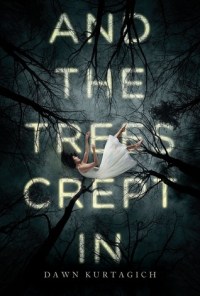 Book: “And the Trees Crept In” by Dawn Kurtagich
 Book: “Labyrinth Lost” by Zoraida Córdova
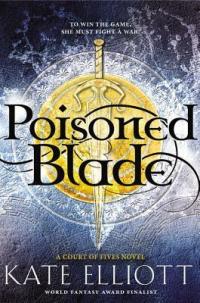 Book: “Poisoned Blade” by Kate Elliott
 Though we do tend to read different genres, there is sometimes overlap in the books that we pick up and devour. When this happens, we decide to do a joint review, giving our thoughts through our own personal lenses of what we look for in reading material. A few weeks ago, we reviewed the first book in Gwenda Bond’s “Lois Lane” series, and now we’re back with the sequel!

 Book: “The Smaller Evil” by Stephanie Kuehn
 Book: “The Winner’s Curse” by Marie Rutkoski
 Book: “Burn Baby Burn” by Meg Medina
 Book: “As I Darken” by Kiersten White
 Book: “Court of Fives” by Kate Elliot
 The Library Ladies