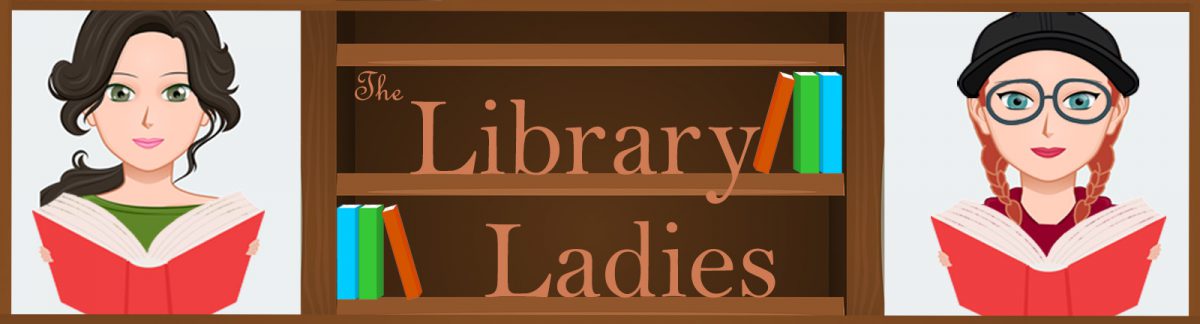
Book Description from Goodreads:On the surface, Sorry-in-the-Vale is a sleepy English town. But Kami Glass knows the truth. Sorry-in-the-Vale is full of magic. In the old days, the Lynburn family ruled with fear, terrifying the people into submission in order to kill for blood and power. Now the Lynburns are back, and Rob Lynburn is gathering sorcerers so that the town can return to the old ways.
But Rob and his followers aren’t the only sorcerers in town. A decision must be made: pay the blood sacrifice, or fight. For Kami, this means more than just choosing between good and evil. With her link to Jared Lynburn severed, she’s now free to love anyone she chooses. But who should that be?
Spoilers for “Unspoken!”
Review: “Untold” picks up directly after the events that unfolded in “Unspoken.” The Lynburn family is in the midst of a civil war and the small town of Sorry-in-the-Vale is caught in the middle. Unwilling to simply sit on the sidelines while the fate of her town is decided without her, Kami gathers her friends and begins her own preparations. All while balancing her new, uncomfortable, un-linked relationship with Jared Lynburn. “Unspoken” ended with a bang, and between the now open secret that is the sorceror infestation in the town, and Kami and Jared’s evolving relationship from source/sorceror to…who knows what, there was a lot of material to work with. And sadly, I feel like most of that material was dropped in favor of witty dialogue.
This may be an example of an author’s strengths playing against her. As I mentioned in my review of the first book, this story, too, was peppered with snappy and fun language. However, unlike the first book, the stakes are much higher from the very beginning of this story. There is much less room in the natural evolution of the plot for characters to all stand around chatting like they’re in an episode of “Gilmore Girls.” So to create these situations, the author had to put the brakes on her story and create relationship drama, all to a largely disappointing effect.
Unfortunately, that relationship drama manifests itself not only in the upping of the love triangle potential seen in the first book, but also in creating a tangent storyline for Holly who is dealing with her confusing feelings after being kissed by Angela. The love triangle is doomed from the very beginning. Aside from my feeling that it is impossible to write a realistic love triangle, this one is made all the more silly from bizarre situations like “oops, it was dark and I kissed the wrong boy!” to the classic misunderstandings that are only possible due to incredible amounts of plot acrobatics. And then when they “suddenly” realize things…
And as for the drama regarding Holly, I have mixed feelings about this. In some ways, it was a great exploration of burgeoning awareness of a character’s more complicated sexuality, and there were some great moments where this topic was explored from a variety of perspectives. But at other times, it was used as yet another “misunderstanding” plot wedge between Kami and Jared, which just undervalued most of the work that had been done up to this point. Suddenly, Holly’s exploration of herself and her feelings for others was just one more crinkle in the main straight couple’s issues. That frustration aside, I don’t want to end this paragraph on a completely negative point, since I do still really appreciate the diversity that is the cast of characters in this book.
Another of the strengths of the first book was its inclusion of Kami’s family members as active, important people in her life (none of the “invisi-parent” that is so often found in YA). And in this aspect, “Untold” goes even further. Kami’s whole family is affected by this sorcerer war, having been connected to the Lynburn family for years in some mysterious way. Her father and mother struggle to reconcile their reactions to this changing worldview, and her brothers, Tomo and Ten, may be caught up in the struggle as well. Throughout the story, Kami’s thoughts are never far from her family, and it is clear that she loves them deeply and that they are at the forefront of her mind when she plans her resistance against Rob Lynburn. This was a refreshing inclusion.
So, while I did still enjoy “Untold,” I also feel that it succumbed to “second novel syndrome.” The author had to put the brakes on her own story so as to leave material for the third and final installment. And to do that, a lot of relationship nonsense was added. But, while disappointing, I’m still invested enough to want to read the final book, so that will be making its way onto my reading list.
Rating 6: A step down from the first book, but still enjoyable.
Book Description from Goodreads: Kami Glass loves someone she’s never met . . . a boy she’s talked to in her head ever since she was born. She wasn’t silent about her imaginary friend during her childhood, and is thus a bit of an outsider in her sleepy English town of Sorry-in-the-Vale. Still, Kami hasn’t suffered too much from not fitting in. She has a best friend, runs the school newspaper, and is only occasionally caught talking to herself. Her life is in order, just the way she likes it, despite the voice in her head.
But all that changes when the Lynburns return.
The Lynburn family has owned the spectacular and sinister manor that overlooks Sorry-in-the-Vale for centuries. The mysterious twin sisters who abandoned their ancestral home a generation ago are back, along with their teenage sons, Jared and Ash, one of whom is eerily familiar to Kami. Kami is not one to shy away from the unknown—in fact, she’s determined to find answers for all the questions Sorry-in-the-Vale is suddenly posing. Who is responsible for the bloody deeds in the depths of the woods? What is her own mother hiding? And now that her imaginary friend has become a real boy, does she still love him? Does she hate him? Can she trust him?
Review: I’m not sure how this book ended up on my TBR pile. I’ve read some Sarah Rees Brennan in the past, but it has been a while since I picked up one of her books. So, it was a pleasant surprise when I was browsing the library shelves (Goodreads app in hand to check against my to-read lists) and found this book right there waiting for me and didn’t have a lot of pre-existing expectations set in place going in. And it was good! Brennan manages to balance many classic YA tropes with a fresh voice and perspective that allows them to grow past their typical, clumsy restraints.
From the get go, I liked Kami Glass. She’s pretty much a half-Japanese, British born, Lois-Lane-in-the-making. And we all know how much I love Lois Lane. Full of spunk, wit, and drive, Kami pursues her goals with an energy that can’t help but draw in those around her. And in a testament to the author’s creative ability, the cast of characters who surround Kami are as diverse as they are typical, without falling over the stumbling block stereotypes often found in young adult literature. Kami has a female best friend, Angela, who is very clearly her strongest support system (stereotype avoided: lack of female friends for the female protagonist so as to cement her “difference” from “other girls”). There is even a third female friend, Holly, one of the more popular girls at school (stereotype avoided: “mean girls”). Angela has an older brother who is a healthy, non-romantic male friend of Kami’s (stereotype avoided: meet-cute with the boy-next-door who is a love interest). Kami has a very stable, loving family complete with two parents and two younger brothers (stereotype avoided: nonexistent/absent parents, lack of siblings or poor relationship with a distasteful, often older, sibling).
And, while there are the makings of a love triangle, this too is waded through carefully and with respect to the emotional struggles that would exist due to the situation. In fact, the way the relationship between Kami and Jared was portrayed was one of my favorite aspects of the story. Each honestly believed the other was a made-up character in their own head. Discovering at age 16 that your imaginary friend is not only real, but here in your own town, going to your own school, would have dramatic affects. This is not a romantic, blissful situation. Suddenly the closeness and emotional vulnerability becomes real and, perhaps, invasive. Kami begins to question where she leaves off and Jared begins. Physical contact is uncomfortable to the extreme.
I can’t say how much I appreciated the author’s handling of this situation. What could have so easily been twisted into a silly, romantic plot device is instead highlighted as intensely unhealthy, especially when Kami and Jared attempt to build a real friendship/relationship with their fully existing selves. In a book notable for its witty dialogue and punchy descriptions, Kami spends a significant amount of time analyzing independence, a sense of self, and what a healthy relationship should look like.
The mystery and fantasy elements of the story were also strong. The history of the Lynburn family and this small, British town was chilling and the book does a good job setting up this conflict for the remaining two books in the series. My one point of real criticism is the location for the book. It is set in England, however, the language felt very Americanized. Not being natively British, I’m not sure if maybe my expectations are out of sorts or whether this is an actual failing. But I routinely forgot that this was set in England at all. The lack of British terms and turns of phrase in the dialogue felt odd. Other than creating a “manor family” legacy for the Lynburns and the town of Sorry-in-the-Vale, this setting felt underutilized and perhaps even disingenuous with regards to the other narrative decisions.
Overall, I enjoyed this book and have already placed a request at the library for the second one!
Rating 7: Very good, though a few questionable decisions with regards to underutilizing its setting.
We are part of a group of librarian friends who have had an ongoing bookclub running for the last year and a half. Each “season” (we’re nerds) we pick a theme and each of us chooses a book within that theme for us all to read. Our current theme is “Books with Movie Adaptations.”
For this blog, we will post a joint review of each book we read for bookclub. We’ll also post the next book coming up in bookclub. So feel free to read along with us or use our book selections and questions in your own bookclub!
Book: “Warm Bodies” by Isaac Marion
Publishing Info: Atria, October 2010
Where Did We Get This Book: Serena owns it, Kate got the audiobook from the library
Book Description from Goodreads:R is a young man with an existential crisis–he is a zombie. He shuffles through an America destroyed by war, social collapse, and the mindless hunger of his undead comrades, but he craves something more than blood and brains. He can speak just a few grunted syllables, but his inner life is deep, full of wonder and longing. He has no memories, no identity, and no pulse. Just dreams.
After experiencing a teenage boy’s memories while consuming his brain, R makes an unexpected choice that begins a tense, awkward, and strangely sweet relationship with the victim’s human girlfriend. Julie is a burst of vibrant color in the otherwise dreary and gray landscape that R lives in. His decision to protect her will transform not only R, but his fellow Dead, and perhaps their whole lifeless world…
Serena’s Thoughts:
I read this book several years ago, and watched the movie right when it came out, so when bookclub decided to do a “book/movie” theme, this was an easy choice for me! I hadn’t re-read it since, and with the movie version being the more recent version I had experienced for the story, it was fun reviewing the original material and seeing the difference from the reverse perspective as well.
I think this book flew beneath the radar for quite a while before it was announced as a movie, and then when it was, everyone dismissed it as “zombie romance.” Which, really, shouldn’t that intrigue people, not put them off? But alas, judgement arose. And given that the new editions of the books have been released with the movie cover (a whole post could be committed to the subject of how much I hate movie-covers for books), I can’t even blame people who pass this over with that thought. I mean, look at this thing!
Can you get any more teen-pop-stereotypical-romance-looking than that? No, the answer is no. And this is a tragedy, because the story is not that at all. Sure, there is some romance, but it’s sad to see what is a very philosophical book be overlooked simply because of that inclusion.
R is such an intriguing narrator. For a character whose actual dialogue is limited to brief syllables, he’s quite verbose as a protagonist. While much of the changing that he goes through can be attributed to his run in with Perry’s brain (the teenage boy he eats on one scavenging trip) and Julie, the living girl he befriends, R is clearly a force of change himself. With brutal honesty, he evaluates zombie society, humanity, and the force of human will.
With so many pop-culture representations of zombie-hood currently, Marion’s version is very intriguing. Zombies are often just stumbling, groaning, beasts. But here, they have, at the most basic sense, a world of their own. Their attempts to re-create life through human constructs such as marriage, school, and religion, all while bereft of the inner feelings that accompany them is not only sad but deeply disturbing. Further, Marion succeeds at something that the poor, struggling writers of “The Walking Dead” tv series have been attempting for so long: connecting the dots between the living and the zombie-fied. “We are the walking dead,” and all of that, but done in a subtle and truly impactful manner (unlike certain shows…).
I haven’t spent much time talking about Julie, and I think she was the biggest surprise for me when I re-read this book. The first go around, I didn’t really put much thought into her as a character. This time, looking more closely, I appreciate the fine line that Marion walked when writing her. She could so easily fall into the Manic Pixie Dream Girl category. But for all of her snappy lines and crafty bedroom design (cuz of course, she’s a teen girl, then obviously she must paper mache her room!), Julie’s background is dark. Much darker than I had remembered. These struggles help round her out as a character and allow her to offer a unique perspective into the world of the Living, without getting too caught up in the super sweet, “hope is all you need!” naivety that she could have been reduced to.
All in all, I had a really fun time returning to this book!
Kate’s Thoughts:
Perhaps you will be surprised to hear that it wasn’t me who picked the zombie book for our bookclub, but our dear Serena. But that should just go to show that this book isn’t just for fans of the horror and zombie genre. I think that the nice thing about the zombie genre, when done well, is that it’s usually far more about humanity and the human psyche than it is about marauding monsters. The few exceptions I can think of are “Dawn of the Dead” (the original), in which zombies are drawn to a mall because of a instinctual need for the routine of their past lives, and “Day of the Dead,” in which Bub the zombie starts to relearn various human emotions and actions, and feels affection for the man who has “created” him in a way. So “Warm Bodies” kind of took that concept and ran with it. Marion takes it even further though, and deconstructs just what makes humanity in a person, and gets way existential about it. Which kind of surprised me in the best way possible.
It took me a little while to warm up to R, as I did, admittedly, have a hard time with how he just kind of took Julie under guise of keeping her safe, and hid from her that he had, uh, eaten her boyfriend. But as he went on, he really, really grew on me, and I became very fond of him and his journey of self discovery. His rumination about what it means to be human, and his descriptions of the zombie culture and how it functions on indifference and complacence, were so thought provoking and tragically beautiful that I was completely enraptured with his voice and narration. I love the idea that zombies aren’t really totally lost if they look for connections and seek out beauty in life (because of R and Julie and their own connection).
Julie too makes for a very good character, like Serena said. She never rang false and never felt like she was too perfect, or too understanding and good. I really, really loved her relationship with R. Their connection grew and progressed in a natural way, and I never felt like it was unrealistic or forced as time went on. It was also very complicated and had many layers, as R did, indeed, kill and eat her boyfriend, Perry. But even that was resolved and reconciled in a way that I found believable, and I was thinking that there was no way that I was going to be satisfied with that whole thing. Joke’s on me, I guess.
And I also want to say that M, R’s best friend, was exactly the kind of pal that I aspire to be. Snarky and sarcastic (even as a zombie) but ultimately loyal, and pretty damn great. I also liked Julie’s best friend, Nora, who is pragmatic and thoughtful, but never feels like she’s just a second fiddle. It goes to show that Marion took great care when crafting his supporting characters as well.
I greatly enjoyed “Warm Bodies.” I am so glad that I finally got to it with Serena’s good taste in book club books!
Serena’s Rating 9: Really great, even better the second time around.
Kate’s Rating 9: Such a complex and enjoyable love story, and a very deep look at what makes a human a human.
Book Club Notes and Questions:
“Warm Bodies” came out a couple years ago, nearing the end of the paranormal romance phase of teen movies and right in the midst of the rise of dystopia as the new theme. As a film, it’s a bit more light-hearted than the original source material, but that isn’t to say that it isn’t a good adaptation. Nicholas Hoult plays R, a casting choice that makes almost perfect sense. First of all, his eyes are huge and expressive, and can convey so much emotion as R, even when he is still in the midst of being in his limited zombie phase. He is nuanced and subtle in his acting, and makes a believable zombie who is slowly evolving. Theresa Palmer plays Julie, and also brings justice to that role. Her back story isn’t as dark and depressing, at least it isn’t explored as much, and while it’s nice that things worked out a bit better for her, it’s too bad that we lost that character exploration. It’s also too bad that the decision was made to cast Nora, in the book a biracial woman, as a white woman. It’s not that Analeigh Tipton didn’t do a good job, because she is pretty great, but it’s a sad reminder that Hollywood is still fully into white washing characters.
1. Zombie stories have always arose from what seems to be society’s own existential fear. What is your perspective on the unique version of zombies and human society that is presented in this book?
2. It is never made quite clear what the “Bonies” are in this world. The human equate them almost to aliens and the zombies themselves almost fear them. How do you think they came to exist? Did they have their own inner society? Own goals and agendas?
3. The movie lightened up the story a lot and there were a few significant changes. What changes did you like? Were there ones you wished they hadn’t changed?
4. What notable differences between the book and movie did you see in the portrayal of the main characters (R, Julie, Perry, Nora, and M)?
5. Music, writing, and art are discussed a lot in this book. Does the story have anything to offer on the impact these things have on humanity? And the more fun question, if you were a zombie and had a favorite song, what would it be?
Book: “The Girl Who Soared Over Fairyland and Cut the Moon in Two” by Catherynne M. Valente
Publishing Info: Feiwel & Friends, October 2013
Where Did I Get this Book: audiobook from the library!
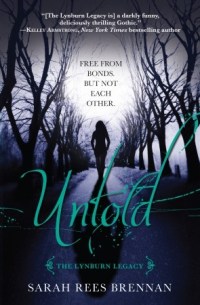
Book Description from Goodreads:September misses Fairyland and her friends Ell, the Wyverary, and the boy Saturday. She longs to leave the routines of home, and embark on a new adventure. Little does she know that this time, she will be spirited away to the moon, reunited with her friends, and find herself faced with saving Fairyland from a moon-Yeti with great and mysterious powers.
Review: Can my whole review just be this gif?:
No? Ok, fine, but I have to say, with this, the third installment in Valente’s “Fairyland” series, my love of these books has only continued to grow and my coherence for a reviewing them continues to deteriorate. But onwards we go in my now usual fashion for this series: blatant and unapologetic quoting!
September is growing up. We spend the longest portion yet in this series with September home in the “real world” waiting, wondering, and, now as an older girl, preparing for her trip to Fairyland. And with this growing up comes feelings, so many feelings! Fear, sadness, worry, and, suddenly, the thought that one must hide all of these feelings away. September has been practicing her “stern” face.
“It is such hard work to keep your heart hidden! And worse, by the time you find it easy, it will be harder still to show it. It is a terrible magic in this world to ask for exactly the thing you want. Not least because to know exactly the thing you want and look it in the eye is a long, long labor.”
But finally her traveling companion and escort to Fairyland arrives in the form of a very grumpy Blue Wind and she’s away! In the previous story, with September’s adventures in Fairyland Below, we spent a lot of time with the shadow versions of her companions, the wyverary A-Through-L, and the madrid Saturday, who were not quite the same as the true versions of themselves. So, as a reader, I could sympathize with September’s reflections on missing friends and loved ones and the complex feelings that arise from being reunited with those we care about after years of grieving their absence (though I am a spoiled reader who only had to wait until the next book to find my beloved characters again).
“September laughed a little. She tried to make it sound light and happy, as though it were all over now and how funny it was, when you think about it, that simply not having another person by you could hurt so. But it did not come out quite right; there was a heaviness in her laughing like ice at the bottom of a glass. She still missed Saturday, yet he was standing right beside her! Missing him had become a part of her, like a hard, dark bone, and she needed so much more than a few words to let it go. In all this while, she had spent more time missing Saturday than seeing him.”
The breadcrumbs that had been laid out in past books regarding the slow build relationship between September and Saturday come to a head in this story. Fully ensconced in “teenagedom,” September and Saturday struggle with the everyday challenges of first love while also dealing with the very-not-everyday-challenges of dating a madrid whose experiences with time as a river that can be traveled up and down with ease puts uncomfortable truths in the forefront. September had a glance of what could be her and Saturday’s daughter in the very first book, and a few run-ins with an adult Saturday in this story just further highlights her discomfort with fate, love, and choosing.
“But the trouble is, I do want to be surprised. I want to choose. I broke the heart of my fate so that I could choose. I never chose; I only saw a little girl who looked like me standing on a gear at the end of the world and laughing, and that’s not choosing, not really. Wouldn’t you rather I chose you? Wouldn’t you rather I picked our future out of all the others anyone could have?”
And per what is typical of these books, September’s adventures through bizarre and magical lands, meeting nonsensical and wonderful creatures, is all peppered with philosophical ponderings that speak to deeper truths. A few of my favorites include:
“Marriage is a wrestling match where you hold on tight while your mate changes into a hundred different things. The trick is that you’re changing into a hundred other things, but you can’t let go. You can only try to match up and never turn into a wolf while he’s a rabbit, or a mouse while he’s still busy being an owl, a brawny black bull while he’s a little blue crab scuttling for shelter. It’s harder than it sounds.”
and
“It’s Latin, which is an excellent language for mischief-making, which is why governments are so fond of it.”
and, of course,
“All Librarians are Secret Masters of Severe Magic. Goes with the territory.
I don’t think I have mentioned it in past reviews, but these books come with beautiful illustrations by Ana Juan. I listened to this book on audiobook (read by the author herself, and she was very good), so I missed the illustrations here. I nabbed a copy of the printed version to peruse them and they are beautiful, as they were in the previous books. Yet another plus to the series as a whole!
by Ana Juan
Rating 10: The perfect balance of beautiful and poignant.
Book Description from Goodreads:Keri has been struggling to run her family bakery since her mother passed away. Now the father she barely knew—the Lord of Nimmira—has died, and ancient magic has decreed that she will take his place as the new Lady. The position has never been so dangerous: the mists that hide Nimmira from its vicious, land-hungry neighbors have failed, and Keri’s people are visible to strangers for the first time since the mists were put in place generations ago.
At the same time, three half-brothers with their own eyes on the crown make life within the House just as dangerous as the world outside. But Keri has three people to guide her: her mysterious Timekeeper, clever Bookkeeper, and steadfast Doorkeeper. Together they must find a way to repair the boundary before her neighbors realize just how vulnerable Nimmira is.
Review: I have read a few other titles by Rachel Neumeier, and I’m beginning to come to a bit of a conclusion about her work. She has great ideas and the book summary is always amazing, but the actual execution somehow makes even the most thrilling concept seem tedious.
Everything about this book description is right up my alley. Features a strong leading lady, set in a unique fantasy setting, aided by her friends with a dash of romance, and out to save a kingdom. And it all started out well. Keri, an outcast in her own town given the questionable nature of her birth, is attempting to run her recently deceased mother’s bakery on her own when her life is turned upside down. She is suddenly the new heir to the small, but economically wealthy, country of Nimmira and the invisibility spells that have protected it for so long from its vicious and greedy neighbors are failing. With the help of her childhood friends, Tassel and Cort, she must set out to right what is wrong before her country falls.
Unfortunately, for what sounds like an action-packed start, the story quickly falls into several pitfalls right off the bat. Firstly, Tassel and Cort, for as little page time as they get in the beginning of the story, are each intriguing characters. Keri’s character is itself rather bland, but when played against the more flamboyant Tassel or the stern, responsible Cort, her character is seen in the best light. Unfortunately, both characters, especially Cort, are absent for large chunks of the story, leaving us with Keri at her most pale.
Further, with magical protections failing, a new kingdom to run, and the arrival of questionable neighbors with perhaps evil intentions, you would think there would be a lot of room for the story to move. Instead, we spend pages and pages with characters just talking and planning on what to talk about next, and who should talk to who, and on and on. And look, I’m all for detailed storytelling and character building, but when huge portions of the book are simply characters rehashing the exact same subject over and over again I lose my patience. There was one line about a neighboring country perhaps not realizing that Nimmira was vulnerable that was repeated at least 5-6 times throughout the book. It would have been laughable, if it wasn’t frustrating.
What makes many of these factors all the more irritating is the strong premises, like I mentioned. The author has created a unique magic system, but then fails to explain how it works. With almost any fantasy novel, there is a level of basic acceptance that readers are expected to go in with, but unfortunately this story pushed past this point. Keri, Tassel, and Cort all come into their new roles and discover their own specific brand of magic. However, the limits, boundaries, or rules of each of their abilities is never explored. There were several points where one or another character would conveniently discover just the right ability at just the right time to get them out of whatever scenario they were stuck in. This is not a magic system, this is a plot magic.
And sadly, the romance was not what I had hoped for either. It’s odd that I’m usually complaining about instalove relationships in young adult books, and while this was definitely not that, it was equally unsatisfying. Cort is absent for large portions of the book, which means that any progression of feelings (Keri starts off respecting Cort but very definitely not interested) isn’t based on any interactions between the characters, but more a “realization” towards the end of the story that she had always felt that way. Similar to the sudden magical abilities that were never hinted at before, this was sudden love feelings that we are shown no examples of, just merely told are suddenly there, on both characters’ part. It was very disappointing.
All in all, while there were strengths to this story (a creative world, an interesting idea for a magical system, and the beginnings of good characters), none of these strengths were ever fully realized, and it was ultimately a frustrating and disappointing read.
Rating 5: For having such a strong premises, the story and characters never felt fully fleshed out or sure of themselves.
Book: “The Girl Who Fell Beneath Fairyland and Led the Revels There” by Catherynne M. Valente
Publishing Info: Feiwel & Friends, October 2012
Where Did I Get this Book: the library!
Book Description from Goodreads:September has longed to return to Fairyland after her first adventure there. And when she finally does, she learns that its inhabitants have been losing their shadows—and their magic—to the world of Fairyland Below. This underworld has a new ruler: Halloween, the Hollow Queen, who is September’s shadow. And Halloween does not want to give Fairyland’s shadows back.
Review: It’s another home run, folks! And, since I am not one for changing routine, I’m going to conduct this review in the same manner as I did the last: Insert beautiful quotes and weep at the author’s literary majesty. Here we go!
“A book is a door, you know. Always and forever. A book is a door into another place and another heart and another world.”
September is waiting anxiously to return to Fairyland and continue her adventures. But this time around, her return is marked not with the exultation of a savior, but the practical results of her previous actions. Her shadow, lost in exchange for aide the last go around, is loose and making trouble in Fairyland-Below and it is up to Septmeber, as the owner of said shadow and therefore responsible, to set things straight (or as straight as they can get in such a nonsense world).
“You know, in Fairyland-Above they said that the underworld was full of devils and dragons. But it isn’t so at all! Folk are just folk, wherever you go, and it’s only a nasty sort of person who thinks a body’s a devil just because they come from another country and have different notions. It’s wild and quick and bold down here, but I like wild things and quick things and bold things, too.”
September is also growing up, much to her own dismay. She is no longer a Heartless Child and her new, untried heart proves to be quite a struggle in this book. She must bargain away a first kiss as well as time itself, an even more precious and unknowable currency.
“For though, as we have said, all children are heartless, this is not precisely true of teenagers. Teenage hearts are raw and new, fast and fierce, and they do not know their own strength. Neither do they know reason or restraint, and if you want to know the truth, a goodly number of grown-up hearts never learn it.”
This new heart proves troublesome with her friends as well, new and old. The realization that friends are different, individual people with their own thoughts, feelings, and priorities challenges September’s perception of herself and the world. But A-Through-L and the Madrid, Saturday, are as wonderful as ever. Her relationship with Saturday grows deeper and even more confusing for poor child-on-the-verge-of-adulthood hearts.
“And then she felt her Ell’s great strong presence beside her, and Saturday slipped his hand in hers. Oh. Oh. They would not abandon her. Of course, they would not. How silly she had been. They were her friends—they had always been. Friends can go odd on you and do things you don’t like, but that doesn’t make them strangers.”
Valente continues her unique writing style of beautiful lyricism, grammatical twists, and deep truths masked in narrative gymnastics. I continue to enjoy her insertions of the narrator’s own voice on the story.
“Oh, September! It is so soon for you to lose your friends to good work and strange loves and high ambitions. The sadness of that is too grown-up for you. Like whiskey and voting, it is a dangerous and heady business, as heavy as years. If I could keep your little tribe together forever, I would. I do so want to be generous. But some stories sprout bright vines that tendril off beyond our sight, carrying the folk we love best with them, and if I knew how to accept that with grace, I would share the secret.”
As I’ve mentioned, the real joy of these books lies in the combination of nonsensical world building and creativity alongside very deep, and often sad, thoughts on life and living. This book, specifically, deals a lot with September’s father, his absence while fighting in a war in Europe, and the effects that war itself has on a person.
“Her father’s shadow looked sadly down at her. “You can never forget what you do in a war, September my love. No one can. You won’t forget your war either.”
September learns several lessons regarding grief, friendship, love, betrayal and forgiveness all while cavorting in an underworld ruled by her own capricious shadow. The shadow-selves in this story are a fascinating look at the unknown self, the better and worse aspects of each being that lie out of our own sight and awareness.
“For there are two kinds of forgiveness in the world: the one you practice because everything really is all right, and what went before is mended. The other kind of forgiveness you practice because someone needs desperately to be forgiven, or because you need just as badly to forgive them, for a heart can grab hold of old wounds and go sour as milk over them.”
All around, another amazing story featuring September and Fairyland. I loved this book almost as much as the first, the only detraction being my own rush to want to return to the beloved Fairyland characters from the first story, which is a hard thing to hold against a series that is themed around creative new ideas and worlds. Again, I will be rushing on to the third book and am pretty sure that this series will end up being purchased and added to my own personal library.
“A library is never complete. That’s the joy of it. We are always seeking one more book to add to our collection.”
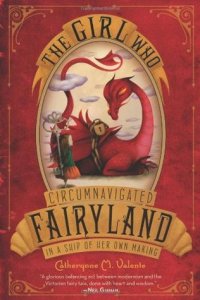
Book: “The Girl Who Circumnavigated Fairyland in a Ship of Her Own Making” by Catherynne M. Valente
Publishing Info: Feiwel & Friends, May 2011
Where Did I Get this Book: from the library!
Book Description from Goodreads:Twelve-year-old September lives in Omaha, and used to have an ordinary life, until her father went to war and her mother went to work. One day, September is met at her kitchen window by a Green Wind (taking the form of a gentleman in a green jacket), who invites her on an adventure, implying that her help is needed in Fairyland. The new Marquess is unpredictable and fickle, and also not much older than September. Only September can retrieve a talisman the Marquess wants from the enchanted woods, and if she doesn’t . . . then the Marquess will make life impossible for the inhabitants of Fairyland. September is already making new friends, including a book-loving Wyvern and a mysterious boy named Saturday.
Book: It’s going to be so hard to talk about this book without gushing. Or crying. Or gushing. Or crying/gushing. (Gushily crying?)
But remember how I listed the “Oz” books as one of the formative series of my childhood? Along side a similar love for the “Narnia” series and a brief stint as Alice in a children’s theater production of “Alice in Wonderland,” I have a special fondness in my heart for books about children traveling to fantastic and nonsensical worlds. But the true joy of this book was its heart, the deeper meanings, feelings, and yes, tragedies, that could be seen sparkling through the ridiculous trappings of a crazy Fairyland world. And I loved every minute of it.
Beyond the gushing, it’s also going to be hard to write about this book given what it is. While there is a plot, and there are great characters, its all wrapped up in the trappings of madness. And the language itself is what makes the story great. How do I really capture that in a review? So, I might try something different here, and pull out some of my favorite quotes and use those to frame my thoughts.
“Stories have a way of changing faces. They are unruly things, undisciplined, given to delinquency and the throwing of erasers. This is why we must close them up into thick, solid books, so they cannot get out and cause trouble.”
September, our 12 year old heroine, is ready for an adventure. As a child who loves to read, she is well accustomed to what it would take to be a great traveler and is only waiting for her invitation.
“One ought not to judge her: all children are Heartless. They have not grown a heart yet, which is why they can climb high trees and say shocking things and leap so very high grown-up hearts flutter in terror. Hearts weigh quite a lot. That is why it takes so long to grow one. But, as in their reading and arithmetic and drawing, different children proceed at different speeds. (It is well known that reading quickens the growth of a heart like nothing else.) Some small ones are terrible and fey, Utterly Heartless. Some are dear and sweet and Hardly Heartless At All. September stood very generally in the middle on the day the Green Wind took her, Somewhat Heartless, and Somewhat Grown.”
And one day it comes in the form of a Green Wind riding a leopard ready to whisk her away to Fairyland where she will get in an awful lot of trouble, meet some great friends like a Wyverary (a wyvern/library definitely NOT dragon) and a mysterious boy names Saturday, and be called upon to de-throne a monarch.
“Such lonely, lost things you find on your way. It would be easier, if you were the only one lost. But lost children always find each other, in the dark, in the cold. It is as though they are magnetized and can only attract their like. How I would like to lead you to brave, stalwart friends who would protect you and play games with dice and teach you delightful songs that have no sad endings. If you would only leave cages locked and turn away from unloved Wyverns, you could stay Heartless.”
The beautiful language in this book can not be praised enough. It is difficult enough to write a nice, straight forward story. But to write nonsense, and nonsense that hides deep, dark truths while also just being simply beautiful to read and repeat aloud, that is a unique and rare talent.
“… but as has been said, September read often, and liked it best when words did not pretend to be simple, but put on their full armor and rode out with colors flying.”
Valente also employs another tricky technique, that of inserting her own authorial voice into the story. I’ve seen this ploy used all too often to super-cheesy effect. But here, like with everything else, Valente captures the perfect balance of whimsy and wit, so instead of being read as intrusive or tonally jarring, these insertions only add depth and further insight to the story.
“It is true that novelists are shameless and obey no decent law, and they are not to be trusted on any account, but some Mysteries even they must honor.”
So, I have successfully reviewed this book while mostly relying on the author’s own work to speak for itself and done very little myself. But, that too, is a praise of the book and of the author herself. I am proceeding straight to the next book and, if it is as amazing as this one, will likely be equally incoherent in my next review.
“All stories must end so, with the next tale winking out of the corners of the last pages, promising more, promising moonlight and dancing and revels, if only you will come back when spring comes again.”
Rating 10: Could have gotten this rating for this quote alone, but the book also completely earned it.
“She sounds like someone who spends a lot of time in libraries, which are the best sorts of people.”
Reader’s Advisory:
“The Girl Who Circumnavigated Fairyland in a Ship of Her Own Making” is included on these Goodreads lists: “Books that Love Words” and “Girls with Dragons” (but A-Through-L is NOT a dragon!!)
We are part of a group of librarian friends who have had an ongoing bookclub running for the last year and a half. Each “season” (we’re nerds) we pick a theme and each of us chooses a book within that theme for us all to read. Our current theme is “Books with Movie Adaptations.”
For this blog, we will post a joint review of each book we read for bookclub. We’ll also post the next book coming up in bookclub. So feel free to read along with us or use our book selections and questions in your own bookclub!
Book: “Tomorrow, When the War Began” by John Marsden
Publishing Info: Pan Macmillian, 1993
Where Did We Get This Book: Both from the library!
Book Description from Goodreads:When Ellie and her friends return from a camping trip in the Australian bush, they find things hideously wrong — their families are gone. Gradually they begin to comprehend that their country has been invaded and everyone in their town has been taken prisoner. As the reality of the situation hits them, they must make a decision — run and hide, give themselves up and be with their families, or fight back.
Kate’s Thoughts:
When our dear friend and co-book club member Melissa picked “Tomorrow, When The War Began” for book club, I hadn’t heard of it. In my mind I was picturing something like “A Boy and His Dog”, which is… decidedly not what this book is. I think that I hadn’t heard of it because of a few things, the most obvious being that I was younger than it’s demo when it came out in 1993, and when I did become part of the YA reading age group I had already pretty much graduated to adult novels. So suffice to say, this was a whole new experience for me.
One thing that struck me about this book was that it was pretty grim by today’s standards, so the fact that it was published in 1993 kind of boggles my mind. There are many themes in this book that seemed pretty dark and mature for a book written for teens about twenty years ago. The first thing that is striking and out in the open is the violence. Marsden isn’t gratuitous with the violence that Ellie and her friends encounter, but he isn’t unflinching with it either. It always feels very real, be it Ellie coming home to find her dogs dead or dying, or Ellie blowing up a lawnmower and in turn causing the deaths of some invading soldiers. The reactions to violence from most of the group also feels very true to life, as they don’t automatically turn into commandos right away. Ellie is definitely uncomfortable with hurting people, even if she eases into it out of necessity, and other characters in the group also have to adapt and react in their own ways.
I was also quite impressed with how Marsden so wonderfully captured the voice of a teenage girl. I by no means think that guys can’t write girl voices or vice versa, but I was a little worried that it may come off as a bit stereotypical, even if he hadn’t meant to. So I was very happy when Ellie did seem like a pretty normal, and typical teenage girl. I thought that the way she thought and approached certain situations seemed reasonable and understandable given her character, and while I was a bit irritated that there was a brief possibility of a love triangle between her, nice boy Lee, and her best friend Homer, it was quashed pretty quickly and acknowledged as displaced feelings. After all, Lee is the one that gets her going both intellectually and physically, at the end of the day. I also thought that Marsden’s approach to sex was pretty realistic too, as Ellie definitely has urges and does think about these things. While I know there are some people out there who may think that these kids would have more on their minds than their sex lives, I think that they are humans at the end of the day, and teenagers to boot.
I think that my qualms were definitely more just about the story as a whole. I like end of days dystopia kinds of stories, but this one almost felt a bit too realistic for me to be able to get super into it. A strange criticism, I know. The ending felt abrupt, and while I know and get why he wrote it the way he did, it just seemed like a fast way to wrap things up. Luckily, there are a bunch of other books in the series, so it’s not like it ended completely on a note of ambiguity…. Or maybe it does, I don’t know I haven’t read them. Overall I did enjoy reading “Tomorrow, When the War Began”, but I don’t think I’ll keep going. This was good enough as it was.
Serena’s Thoughts:
I was one of only two book club members who had already read this book. Not only that, but I had read the entire series! So all the gold stars for me! (Is self-congratulatory speech a good look??) I grew up in rural Idaho and for some reason the librarians at the tiny local library were all about Australian, teen guerilla warfare and had bought the complete series. I remember blowing through them as a kid, and have from time to time thought of them as an adult when reminscing about favorites books as a kid. But I hadn’t re-read them, so it was a treat getting to re-visit the series now as an adult.
I must say, it holds up. If anything, I’m kind of impressed with kid-Serena’s good taste (the self praise has gotten out of control! But seriously, I had many other questionable favorites as a kid, so this was a bit reassuring, really.) As Kate said, I was impressed by many things in this book, especially given when it was written. The author doesn’t shy away from the violence or trauma of the events he lays out. His characters are never given any easy outs and the variety of reactions and coping methods that the different teens fall back on seem all too realistic. Certain characters whom you might not expect to thrive under the stress rise to the occasion, while others struggle more. Moreover, there is never any criticism for these different reactions.
And, also following Kate’s lead, the author’s take on a teenage girl’s inner thought process and voice is spot on. As a kid, I never spent much time thinking about whether an author was a man or a woman (take that publishing companies that think teenagers fret about that stuff!), so when I picked it up as an adult and saw that it was a male author, I was actually a bit surprised. Especially given that the book was written in first person, an easier narrative style for many young readers and often a go-to for these type of books even now, this ability to slip into the skin of his female protagonist was really impressive. As simplistic as first person narration is, I think it can also be more challenging in specific situations like this where the author has to so completely encompass the full perspective of the character.
Specifically, there was a moment in the book where Ellie is having a conversation with one of her male friends and there is an inner line where she recognizes his tactics as typical of a teenage boy, trying to “bully” her into a relationship almost. This is so spot on! Reading it myself, I instantly recognized the type of conversation that was happening, and for an adult man to so fully capture this inner working of teenagedom from a young girl’s perspective is truly impressive.
My one complaint was that the book was a bit long on the descriptions. I don’t remember noticing this as a kid, and it may have simply been a factor of my re-read. I knew where things were going and was maybe in a rush to get there. But while there might have been a lot of text given over to these descriptions of scenes and locales, the writing was on point and really did an excellent job of painting the scene of the Australian wilderness.
All in all, I thoroughly enjoyed returning to this series. I also heard from a fellow book club member that there is a follow-up series, “The Ellie Chronicles,” that I might need to check out now, too!
Kate’s Rating 7: An impressive narrative and story for what I was expecting! It wasn’t totally my jam, thematics wise, but it was a worthwhile reading experience!
Serena’s Rating 8: I greatly enjoyed returning to this series and am almost even more impressed with it now as an adult than I was the first time around as a teen.
Book Club Notes and Questions:
In due diligence to our book club theme, we watched the 2010 version of “Tomorrow, When the War Began” which is currently available on Netflix. I, for one, really enjoyed this movie. The casting was spot on, specifically the actors they got for Ellie and Homer. While they did have to leave out several parts of the book (sadly a lot of the time they spent in Hell the second go around), most of the decisions made sense and it seemed that the movie could stand alone. The biggest disappointment, probably, was the fact that several of the characters had to be narrowed down to meet the shorter screen time they were allotted, so we didn’t have as fully rounded character arcs for some of them. Again, understandable, if not a bit disappointing. And while the Australian scenery in the film was beautiful, I think Kate (and everyone at book club) will agree that the only Australian scenery that is ever needed is this:
Hugh Jackman in “Australia”
1. This book was published in 1993, but has a lot of themes that are pretty common in today’s YA literature. Do you think that this book would be as successful if it came out today, and took place in the early 21st century instead of the late 20th?
2. What did you think of the invading army’s ‘identity’ being ambiguous? Do you think that having to know who was invading would have improved the story? Hindered it? Not made any difference?
3. How did you feel about Ellie as a character? Do you think that her voice was authentic and relatable?
4. Who was your favorite character in the book? The movie? If they were different, why?
5. If you went on a camping trip and came back to find your homeland invaded, what 6 other people would be in your group? Would you turn to guerilla warfare? Hide?
Book: “This Shattered World” by Amie Kaufman and Meagan Spooner
Publishing Info: Disney-Hyperion, December 2014
Where Did I Get this Book: audio book from the library!
Book Description from Goodreads:Jubilee Chase and Flynn Cormac should never have met.
Lee is captain of the forces sent to Avon to crush the terraformed planet’s rebellious colonists, but she has her own reasons for hating the insurgents.
Rebellion is in Flynn’s blood. Terraforming corporations make their fortune by recruiting colonists to make the inhospitable planets livable, with the promise of a better life for their children. But they never fulfilled their promise on Avon, and decades later, Flynn is leading the rebellion.
Desperate for any advantage in a bloody and unrelentingly war, Flynn does the only thing that makes sense when he and Lee cross paths: he returns to base with her as prisoner. But as his fellow rebels prepare to execute this tough-talking girl with nerves of steel, Flynn makes another choice that will change him forever. He and Lee escape the rebel base together, caught between two sides of a senseless war.
Review: After reading and liking “These Broken Stars,” the first book in the “Starbound” trilogy, I was excited to jump right into the sequel. As I said in that review, I was even more intrigued by this book (and this series) by the fact that it was being written as companion novels, each featuring new characters, while spinning out a larger mystery that connects them all. When most YA series have recently followed a very predictable path, this was a creative take and a way to “have your cake and eat it, too” as an author. Sustainable series that will build and maintain a reading followership? Check. Get to write exciting, new characters and storylines? Check. Garner new readers with each book by not requiring knowledge of a previous story to engage with the current one? Check. So, in theory, “This Shattered World” was a brilliant concept. In reality, it was a swing and a miss for me.
Starting with the things I liked. Strengths from the previous novel were still present here: strong grounding in science fiction, not shying away from the realities and horror of the story’s premises, and the ability to draw characters who are both flawed and sympathetic and whose journey to mutual understanding is believable and compelling. These are no easy marks to meet, and I can’t emphasize enough how impressed I have been by the authors’ ability to balance alternating character chapters in a way that makes each perspective relatable and interesting in both of these stories. I personally found Jubilee’s voice more compelling, but this is likely due to my own personal preference for her character type as opposed to the more quiet and introspective Flynn.
Further, I was impressed with the way that the previous book’s main characters were tied into this story. The larger conflict dealing with Lilac’s father, his company, LaRoux Industries, and the experiments they have been undertaking on a mysterious alien life form were neatly woven in to this book. The unique conflict and peril of the story, the growing rebellion between the military and rebel leaders, were balanced nicely with this larger plot point. And while Lilac and Tarver are not present for much of the story, when they do make an appearance, it doesn’t feel forced or contrived. This story neatly builds upon the first one and does a good job laying down more groundwork and pushing the narrative towards the inevitable confrontation that will take place in the final book in the trilogy.
Now, sadly, for the negatives. First off, the writing in this book, overall, felt weaker than the last. The limited vocabulary was noticeable to a point of distraction. At one point, the word “shattered” was used 4 times within 2 pages. Hearts shattering. Sound shattering. Thoughts shattering. And it was only later that day when I remembered that that word was also in the title! I wouldn’t necessarily say that this is a marked difference from the first book, but instances like this did happen often enough to make me notice it in this story. Whether that comes down to the fact that there was an actual drop in writing quality in this book, or instead an indicator that I was not as thoroughly invested in this story enough that I was noticing things like this, I don’t know. Honestly, neither explanation is very good.
For some reason, beyond the alternating character chapters, the authors chose to include dream sequences from Jubilee’s perspective between each chapter. In a book as long as this is and with chapters as short as they were, that’s a lot, A LOT, of dream sequences. Way too many to be of any actual use to the story. A few of them may have contributed some background knowledge into Jubilee’s past, but I’m not convinced that this method was the best way to go about this. We learned Flynn’s past fine without resorting to 20+ dream sequences spread out through the entire book. And by the time the story gets to the final act, these dream sequences were not only failing to add to the story, but actively distracting from it and inserting a jarring tonal change between action-packed sequences. Further, there were more writing quality issues with the decision to refer to Jubilee as “the girl” throughout each dream sequence. “The girl hid under the table. But the girl could not see anything.” This writing technique is only rarely successful, from my experience, and there needs to be a good reason to choose to do it. That wasn’t the case here.
This also ties in neatly to my last critique. Typically I don’t have a lot to say about the audiobook version of a book I’ve read. Maybe I’ve just been lucky so far and had good experiences. This, however, was decidedly not. The writing challenges were only further highlighted, I feel, when listening to the story. And some of the creative decisions were very poor. For instance, they decided to have three narrators, one for Jubilee, one for Flynn, and another for the dream sequences portion.
The direction for the dream sequences was absolutely atrocious, and I don’t say that lightly. For some reason, they decided to include this whispery murmuring and wind sound affect in the background for each bit. And the voice actor read the entire thing in a very dreamy, whispered voice. It was almost impossible to take it seriously. The combination of these affects, and the dramatic reading voice, alongside the very simplistic writing style and the whole “the girl” narrative style, was severely off putting. It was taking itself way too seriously and ultimately made a joke of the whole thing. This is very unfortunate. I feel like I would have disliked the dream sequences even if I had simply read the book for the reasons I highlighted earlier, but the audio book version almost made them unbearable.
And sadly, the voice actor who read for Flynn was also not a favorite of mine. His tonal inflection was very bland and he didn’t vary his voice at all between characters which made several portions of the story very difficult to follow. The woman who narrated Jubilee, however, did a very good job. It is just too bad that having only one successful voice actor out of three makes a serious impact on the audio book’s success overall.
I would have rated the story alone as a 6. The strengths from the previous book were still present, however this book suffered from slightly weaker characters, a slightly weaker plot, and even perhaps slightly weaker writing. However, when the audio book is as bad as this one, I have to detract another point. It just goes to show how important it is to properly cast and direct an audio book. It has a huge effect on a story, making small flaws that much more noticeable and potentially adding points of distraction and distaste to an otherwise adequate story.
Rating 5: The story was ok, but the audio book was not.
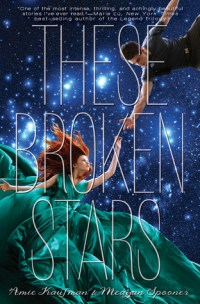
Book: “These Broken Stars” by Aime Kaufman and Meagan Spooner
Publishing Info: Disney Hyperion, December 2013
Where Did I Get this Book: from the library!
Book Description from Goodreads:Luxury spaceliner Icarus suddenly plummets from hyperspace into the nearest planet. Lilac LaRoux and Tarver Merendsen survive – alone. Lilac is the daughter of the richest man in the universe. Tarver comes from nothing, a cynical war hero. Both journey across the eerie deserted terrain for help. Everything changes when they uncover the truth.
Review: For all the proliferation of young adult fantasy novels, there is a distinct lack of young adult science fiction. I’m not quite sure why this is the case as the two genres are so often combined into one “fantasy/sci-fi” due to the vast number of similarities. Further, if there was ever a saturation point for readers, I have to think we’re reaching it with the number YA fantasy series out there right now. In this way, “These Broken Stars” stands out. Not only is it distinctly science fiction, but it is also a book that can be read as a stand alone! Both of these aspects were a refreshing change, and while there were some weak points in the story, for the most part “These Broken Stars” left me very satisfied.
Heiress and socialite Lilac LaRoux and war hero Tarver Merendsen have a typical meet-cute: plummeting towards a planet aboard a malfunctioning escape pod from an exploding spaceship. But really, the ship was called the “Icarus,” what did they expect? Why would anyone, ever, get on a ship named the “Icarus”?? There’s your first mistake. After crash landing, the two discover they are the only survivors of the wreck and must trek across an unknown planet in the hopes of discovering some means of sending a distress signal and escaping alive.
This is a solid plot. I appreciated the fact that Kaufman and Spooner didn’t pull any punches with the realities of a disaster of this magnitude. Not only do Tarver and Lilac have to deal with the challenges of their maroonment, but gruesome details of the crash and its aftermath are not shied away from. There are no easy outs. Injuries, starvation, dehydration, the confusion of a new environment, the grief and fear of a situation so fully out of one’s control: these are all painted with deft strokes. At one point, Tarver and Lilac reach the main wreck of the ship and the practicalities and horror of the situation is fully explored. Often, young adult novels can have a tendency to go easy on the realities of the story in favor of focusing on character drama. It can be very disappointing and also distracting. (Why is that character fretting between her love interests when an army is invading her kingdom?!?!) Not so, here.
And that’s not to say the characters in this do not experience their own drama. It’s only that their drama seems more grounded in the situation they find themselves in and their own biases and preconceived notions of the individual they have been forced to experience this trial alongside. The love story feels earned with its two characters going through misunderstanding, frustration, and anger, before building mutual understanding, respect, and care.
There were a few points where Tarver and Lilac fell a bit too closely into stereotypical characterizations. Or, more like, their “shocking reveal” anti-stereotypical characterizations. Of course Lilac isn’t just a socialite, but also a wiz at mechanics! However, each time I was about to roll my eyes at some overdone character moment, the authors would surprise me with a bit of realism that was enough to draw me back in. Lilac may be a wiz at mechanics, but she still struggles with her situation. So, too, Tarver, who could easily be written as the character more fully in the know and the right with his judgements of his companion, is also given flaws that make him more relatable and believable. Their physical and emotional journey is surprisingly balanced.
The mystery was also surprising. I enjoyed the reveal, and the final challenge in the third act of the story came completely out of left field. Also, while loose ends remained, the story also wrapped itself up in a way that was satisfying. Again, in young adult fiction where trilogies, cliff hangers, and dangling romantic plot lines that are drawn out through at least three books are the norm, I can’t emphasize enough how much I appreciated this respite.
There are two more books in this “series.” However, they each seem to focus on a new pair of individuals. This is a unique framing technique for what I’m guessing will be the larger conflict that was begun in this story. I’m curious to see how it will all pan out!
Rating 7: A solid outing for a young adult science fiction novel!
 Book: “Untold” by Sarah Rees Brennan

 Book: “Unspoken” by Sarah Rees Brennan
 We are part of a group of librarian friends who have had an ongoing bookclub running for the last year and a half. Each “season” (we’re nerds) we pick a theme and each of us chooses a book within that theme for us all to read. Our current theme is “Books with Movie Adaptations.”

 Book: “The Girl Who Soared Over Fairyland and Cut the Moon in Two” by Catherynne M. Valente

 Book: “The Keeper of the Mist”
 Book: “The Girl Who Fell Beneath Fairyland and Led the Revels There” by Catherynne M. Valente
 Book: “The Girl Who Circumnavigated Fairyland in a Ship of Her Own Making” by Catherynne M. Valente


 Book: “This Shattered World” by Amie Kaufman and Meagan Spooner
 Book: “These Broken Stars” by Aime Kaufman and Meagan Spooner

