Book Club Review: “A Thousand Beginnings and Endings”

35430013._sx318_We are part of a group of librarian friends who have had an ongoing bookclub running for the last several years. Each “season” (we’re nerds) we pick a theme and each of us chooses a book within that theme for us all to read. Our current theme is “Around the World”, in which we each picked a continent and had to match a book that takes place there and/or is written by an author from that continent or of that continent’s descent.

For this blog, we will post a joint review of each book we read for book club. We’ll also post the next book coming up in book club. So feel free to read along with us or use our book selections and questions in your own book club!

Book: “A Thousand Beginnings and Endings” by Ellen Oh and Elsie Chapman (Eds.)

Publishing Info: Greenwillow Books, June 2018

Where Did I Get This Book: I own it.

Continent: Asia

Book Description: Star-crossed lovers, meddling immortals, feigned identities, battles of wits, and dire warnings: these are the stuff of fairy tale, myth, and folklore that have drawn us in for centuries.

Sixteen bestselling and acclaimed authors reimagine the folklore and mythology of East and South Asia in short stories that are by turns enchanting, heartbreaking, romantic, and passionate.

Compiled by We Need Diverse Books’s Ellen Oh and Elsie Chapman—who both contributed stories to this edition, as well—the authors included in this exquisite collection are: Renée Ahdieh, Sona Charaipotra, Preeti Chhibber, Roshani Chokshi, Aliette de Bodard, Melissa de la Cruz, Julie Kagawa, Rahul Kanakia, Lori M. Lee, E. C. Myers, Cindy Pon, Aisha Saeed, Shveta Thakrar, and Alyssa Wong.

A mountain loses her heart. Two sisters transform into birds to escape captivity. A young man learns the true meaning of sacrifice. A young woman takes up her mother’s mantle and leads the dead to their final resting place.

From fantasy to science fiction to contemporary, from romance to tales of revenge, these stories will beguile readers from start to finish. For fans of Neil Gaiman’s Unnatural Creatures and Ameriie’s New York Times–bestselling Because You Love to Hate Me.

Kate’s Thoughts

I read the short story collections “A Thousand Beginnings and Endings” back when it first came out in 2018, and for being a short story collection I greatly enjoyed it! I felt like there was a hearty mix of genres and perspectives in its pages, and was more satisfied than not with the tales that were derived from various Asian folklores and mythologies. When our Book Club picked it, I was eager to re-read the stories, but didn’t expect to feel any differently. But what I discovered as I re-read the book was that my own perspectives changed, and my old favorites either had new depth, or completely shifted out in favor of new ones.

The two stories that remained favorites for me were “Olivia’s Table” by Alyssa Wong and “The Land of the Morning Calm” by E.C. Myers. “Olivia’s Table” is about a young woman who has inherited her mother’s job of ‘exorcist’ for a small ghosttown in the Southwest, in which actual ghosts of the area congregate during the Hungry Ghost Festival. Olivia makes them a feast that helps them cross over. “The Land of the Morning Calm” is about a teen whose mother’s ghost is seemingly trapped inside an MMORPG based upon Korean folklore. I mean, of course stories about ghosts are always going to float my boat, so it’s probably no surprise that those were still near and dear. But both of them had some very touching themes about mother/daughter relationships, grief, and moving on which were incredibly touching and emotional. But as mentioned above, this time around I had stories move up in my rankings upon a second read. The best example of this was Julie Kagawa’s “Eyes Like Candlelight”, which takes the Japanese fox spirit mythology and puts it into a short story about love, loss, and vengeance. A fox spirit falls for a man whose village is being taken advantage of by tax collectors, and after tragedy strikes she takes her revenge on those who wronged her and her lover. I don’t even know why this one didn’t catch my eye the first time around, because this time I REALLY liked the tone and storytelling.

And the best thing about all of the stories in this book is that at the end of each of them, there is an author’s note about the original mythology or folktale that gives it context and allows the reader to see how the stories have been adapted for this collection. I love me an authors note with historical factoids, and having that at the end really enhanced the experience for me. As someone who hadn’t been familiar with a lot of the story origins on my first read, I found this to be super helpful. This time around it was nice just having the reminder, as I hadn’t retained all of the information after two years. It’s just a great idea to have this kind of thing in general. On top of context, this is such a varied collection of all different type of genres, I feel like it has something for everyone. There’s mild horror, modern teen hijinks, romance, Sci-Fi, “A Thousand Beginnings and Endings” shows the vast creativity of these authors, and it has encouraged me to read more of a few of their works.

“A Thousand Beginnings and Endings” is engaging and varied, and if you are looking for a short story collection with a vast range of tastes, this is a great choice.

Kate’s Rating 8: A varied and well rounded selection of stories with influences from the Asian Diaspora, “A Thousand Beginnings and Endings” is a well done collection with something for everyone.

Book Club Questions

  1. Did you have a favorite story in this collection, or any that particularly stood out to you? What was it about this story that caught your attention? How about a least favorite?
  2. How familiar were you with the folklore in this book?
  3. What did you think of the interpretations of some of these myths and folktales and how they were re-told within their new stories or genres? Were any of the genre choices surprising to you?
  4. Had to read any of the authors whose works were in this collection? If not, did this collection inspire you to pick up their other works?
  5. Who would you recommend this book to?

Reader’s Advisory

“A Thousand Beginnings and Endings” is included on the Goodreads lists “Modern Mythologies”, and “Alternative Summer Reading List”.

Find “A Thousand Beginnings and Endings” at your library using WorldCat, or a local independent bookstore using IndieBound!

Next Book Club Book: “The BreakBeat Poets Vol.4: LatiNext” by Felicia Rose Chavez, José Olivarez, and Willie Perdomo (Eds.).
 

Serena’s Review: “The Lost Sun”

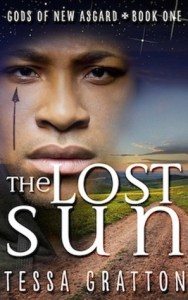
27230933Book: “The Lost Sun” by Tessa Gratton

Publishing Info: Createspace Independent Publishing Platform, October 2015

Where Did I Get this Book: audiobook from library!

Book Description: Fans of Neil Gaiman’s “American Gods” and Holly Black’s “The Curse Workers” will embrace this richly drawn, Norse-mythology-infused alternate world: the United States of Asgard. Seventeen-year-old Soren Bearskin is trying to escape the past. His father, a famed warrior, lost himself to the battle-frenzy and killed thirteen innocent people. Soren cannot deny that berserking is in his blood–the fevers, insomnia, and occasional feelings of uncontrollable rage haunt him. So he tries to remain calm and detached from everyone at Sanctus Sigurd’s Academy. But that’s hard to do when a popular, beautiful girl like Astrid Glyn tells Soren she dreams of him. That’s not all Astrid dreams of–the daughter of a renowned prophetess, Astrid is coming into her own inherited abilities.

When Baldur, son of Odin and one of the most popular gods in the country, goes missing, Astrid sees where he is and convinces Soren to join her on a road trip that will take them to find not only a lost god, but also who they are beyond the legacy of their parents and everything they’ve been told they have to be.

Review: This is another one of those mystery books that has been hanging out on my audiobook “to read” list at the library. I have no memory of where I heard of it originally or why I requested it specifically. I mean, looking at the description, it definitely seemed interesting, but there are also a million and one fantasy books out there, so why this one? Maybe I was going through a Thor/Loki moment when I stumbled on it and put it on here? Either way, it was available the other day when I was looking for my next book, so I checked it out! It was definitely an interesting read, but also not quite all I had hoped for.

Soren’s days have been largely devoted to training, both physically in the skills of a warrior, and mentally in the self-control needed to keep the beserking rage he inherited from his father in check. Often this means missing out on social activities with friends and keeping to himself. But when Astrid, the daughter of a famed seer, joins the school, she seeks him and begins to pry into his solitary existence. After a beloved god goes missing, Soren now finds himself on a roadtrip mission with Astrid in the hopes of finding this lost deity and returning him to where he belongs. But that’s only the beginning of a journey that will take them far and uncover much about themselves, their pasts, and their future.

What stood out the most in this book was the creative world-building. What we have here is an alternate version of the United States in which the Norse gods are very real and have a very real influence on every aspect of society: government structure, education, career paths, you name it. I really enjoyed how creative the author was with such a bizarre idea, and how seamless was the end result, considering how strange it is, overall.

This is Soren’s story, so much of the history and current state of the world is told through his point of view. Soren is a good narrator, in this respect, as all of these needed details to flesh out this type of world were delivered in a believable, non-exposition manner, something that is definitely a challenge for a book written in first person. Soren’s own history, that of having a father who gave in to the beserker madness and killed innocent people, is never far from his mind, and from the very beginning we see the limited future Soren sees for himself. He is constantly battling an inner war, and his fear of himself and his abilities stains almost every choice he makes.

The  main problem for me arrived in the form of the other main character, Astrid. Right from the start she struck me as very “manic pixie dream girl” in her behaviors and descriptions. I think the character had potential, but it was really hard to get behind her part of the story when that impression was so strong right off the bat. As the story started moving more, it was easier to be distracted from it. But it was still the sort of thing that popped up throughout and left me having a hard time feeling really too compelled or interested in her part of the story. And then, since so much of Soren’s story becomes tied up with hers, I also lost some interest in him.

Overall, I thought this was a really creative, fun book. My problem most centered around some of the characterization choices that made it hard for me to feel truly invested in the story’s main characters. But if you’re into Norse mythology and want to read a new take on the subject, this might be one worth checking out!

Rating 7: A fun, unique fantasy story set in a re-imagined United States, though the characters left something to be desired.

Reader’s Advisory: 

“The Lost Sun” is on these Goodreads lists: “Best Alternate History Novels and Stories” and “Books with Lost or Found in the Title.”

Find “The Lost Sun” at your library using WorldCat!

Kate’s Review: “Some Kind of Animal”

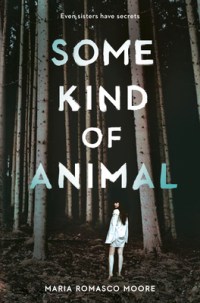
41016362Book: “Some Kind of Animal” by Maria Romasco Moore
Publishing Info: Delacorte Press, August 2020

Where Did I Get This Book: I received an eARC from NetGalley.

Book Description: A story about two girls guarding a secret no one would ever believe and the desperate lengths they will go to in order to protect each other from the outside world.

Jo lives in the same town where her mother disappeared fifteen years ago. Everyone knows what happened to Jo’s mom. Now people are starting to talk about Jo. She’s barely passing her classes and falls asleep at her desk every day. She’s following in her mom’s footsteps. Jo has a secret — she has a twin sister. Her sister is not like most people. She lives in the woods, wild and free. Night after night, as often as she can manage, Jo slips out of her bedroom window and meets her sister in the woods, where together they run, fearlessly.

When Jo’s twin attacks a boy from town, the people in town assume it must have been Jo. Now Jo has to decide whether to tell the world about her sister or to run. SOME KIND OF ANIMAL is an accessible, feminist thriller that digs into themes of sisterhood, family, and friendship.

Review: Thanks to NetGalley for providing me with an eARC of this novel!

My bachelor’s degree is in Psychology, and one of the most interesting topics from one of my classes was the story of Victor of Aveyron, aka the Wild Boy of Aveyron. In the late 1700s in France a feral twelve year old boy was found roaming the countryside. He was eventually taken into society and studied, and various people attempted to acclimate him to the human world. While he never fully acclimated, there was some progress while he was in the care of a medical student named Jean Marc Gaspard Itard. Feral children have been seen in history and in literature, and “Some Kind of Animal” by Maria Romasco Moore brings that theme to a YA thriller. The feral child plot point is what drew me in initially, I think, though I had theories that this story couldn’t possibly actually be dealing with a feral child, because it seemed like it would be difficult to pull off in the setting that it was functioning in. And yet.
I went into “Some Kind of Monster” believing that our main character Jo didn’t actually have a twin sister named Lee who was living in the wilderness outside her small town. Given Jo’s traumatic childhood, after her mother disappeared and was possibly murdered, and growing up with a harried aunt and a toxic grandmother, as well as being unable to shake the reputation her mother had, I thought it would be a manifestation of her trauma. But I can tell you right now that no, there is absolutely a feral twin living in the woods, and reader, I just don’t think that I quite believed it. Don’t get me wrong, the groundwork is kind of laid to show how Lee ended up there, and how she stayed and survived out there without anyone knowing about her existence outside of Jo. Explanations are given, but I’m still not totally certain that I buy them. I also don’t quite buy Jo not telling anyone who MIGHT listen to her about her twin. Grandma Margaret, sure, that woman is awful and her reaction to what she perceives as a lie definitely tracks, therein making Jo’s reluctance to insist upon Lee’s existence completely believable. But not telling her Aunt Aggie? Not telling her best friend Savannah? I can’t suspend my disbelief that hard. On top of that, there are a lot of twists and reveals that happen once the action in this book gets going, but once they are revealed a fair number of them don’t have much pay off. There is a rather big one regarding a character’s paternity that I thought would have a lot of reverberations, but it’s barely touched upon for the rest of the book, at least in a way that might bring some insight into both characters. It just felt rushed. And the ending? VERY rushed.

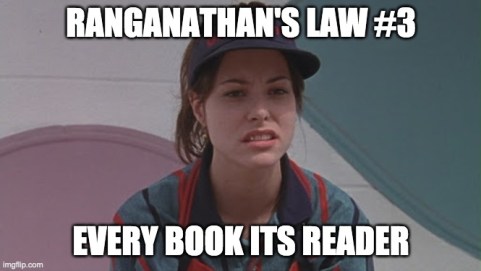
Along with a hard to believe and hasty plot, most of the characters weren’t very interesting or multifaceted. Again, I thought that this book was going to be an exploration of Jo’s traumatic childhood, but while it’s acknowledged it was a hard time and that she has trouble trusting people, it’s a whole lot of telling and not much showing. Lee, too, is relegated to feral girl role, and she just isn’t terribly interesting outside of ‘so is she going to attack someone again?’ I will say, however, that there was one character who didn’t feel two dimensional or incomplete, and that is the character of Jo’s Aunt Aggie. There was a very quiet sadness about Aggie, who has been raising Jo as best she can while also mourning the loss of her little sister, and trying to keep Jo away from Aggie’s toxic mother Margaret. I thought that Aggie was the most compelling character because she is very obviously in over her head when it comes to being the guardian to her neice, and doesn’t make the wisest decisions when it comes to her own life and choices (shacking up with the new pastor in town when she herself has turned her back on God seems like maybe not the BEST idea, especially since the pastor is clearly trying to save himself by saving others). She really reminded me of Parker Posey’s character Libby Mae in “Waiting for Guffman”, if Libby Mae was a bit more beaten down by life.

tenor-1
(source)

I was quite disappointed that “Some Kind of Animal” didn’t gel for me. But that doesn’t mean that it won’t gel for you! I could definitely see myself recommending it to the right person. After all…

libbymaeranganathan

Rating 4: A promising idea falls short. Improbable plot points and two dimensional characters really dragged this story down.

Reader’s Advisory: 

“Some Kind of Animal” is included on the Goodreads list “2020 YA Mysteries and Thrillers”.

Find “Some Kind of Animal” at your library using WorldCat, or a local independent bookstore using IndieBound!

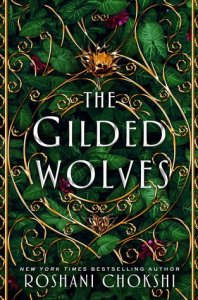
Serena’s Review: “The Gilded Wolves”

39863498Book: “The Gilded Wolves” by Roshani Chokshi

Publishing Info: Wednesday Books, January 2019

Where Did I Get this Book: ebook from the library!

Book Description: It’s 1889. The city is on the cusp of industry and power, and the Exposition Universelle has breathed new life into the streets and dredged up ancient secrets. Here, no one keeps tabs on dark truths better than treasure-hunter and wealthy hotelier Séverin Montagnet-Alarie. When the elite, ever-powerful Order of Babel coerces him to help them on a mission, Séverin is offered a treasure that he never imagined: his true inheritance.

To hunt down the ancient artifact the Order seeks, Séverin calls upon a band of unlikely experts: An engineer with a debt to pay. A historian banished from his home. A dancer with a sinister past. And a brother in arms if not blood.

Together, they will join Séverin as he explores the dark, glittering heart of Paris. What they find might change the course of history–but only if they can stay alive.

Review: I was a bit hesitant to pick this book for a few reasons. First, as readers of this blog know, the last year or so has been made up of a lot of middling reviews from me for books that I feel are WAY too similar to “Six of Crows” to be called much more than blatant cash grabs on the part of authors and publishers who want in on the lingering popularity of that duology. And secondly, I’ve tried to read Roshani Chokshi’s books in the past because she’s a fairly beloved YA author and…haven’t loved her work. But, I thought I’d give it one more go. And, in an improvement on my opinions on her other books, this one was…ok.

Severin had been on the cusp of entering into an inheritance that would establish him into one of the most exclusive and privileged circles in the nation, if not the world. But, in the eleventh hour, he is rejected and outcast. Ever since, Severin has worked to gather up a crew of other outcasts in an attempt to regain his birthright. Each with their own speckled past and hopes for the future, this ragtag group will now find themselves caught up in conspiracies grander than they could ever had expected. But with the potential riches, comes the equally dangerous perils.

So, to start with the pros of this book. One of my major complaints about Chokshi’s work in the past was my distaste for her overly flowery writing. It was of the type too often found in YA where it seems like the authors are just playing word spaghetti and hoping to string together sentences that sound pretty. Who cares if they don’t make any actual sense or the metaphors are pure nonsense if looked at for more than half a second? But luckily, here, there was less of it, especially of the flowery type. I still think the writing left something to be desired, however. No one can fault the author for her dialogue writing, as that was witty and fast. But the actual description of how the magic system worked or some of the actions scenes were confusing, and even after re-reading, I didn’t have a solid image in my mind for what exactly she was trying to describe.

I also enjoyed most of the characters, though this two is both a positive of the book and a negative. The author does a great job of peopling her story with a diverse cast of characters. They come from different cultures, religions, orientations, you name it. However, when you’re actually reading the chapters, many of their voices sound very similar, which seems to detract from the actual celebration of differences that she seems to be setting out to accomplish. Given the author’s note at the back and the author’s own story, I don’t believe she was just trying to check boxes, but I do think that, again, her writing itself let her down where these characters were concerned. And, of course, I can’t end a section on characters and not acknowledge the giant elephant/”Six of Crows” shadow in the room: several of these characters were disturbing similar to characters in that book. The story itself was very different, but the characters….the two “main” characters and their romances were especially disconcertingly similar to that of Kaz and Ines.

I was intrigued by the world-building and the history of the magic in this world and how it worked. There were a lot of creative ideas thrown around, and some of them were definitely unique and whimsical, fitting in perfectly with the author’s style and the story she was laying out with its tone and characters. There were times, however, where I felt like there was always some magical “out” or McGuffin that the team could use to solve almost every problem. It didn’t really seem like you had to be all that clever or skilled to pull of the things they were doing, and more just needed to have the right magical tools that did the job for them. And at the same time, the existence of all these magical get-arounds seemed to undermine the dangers or protections that the crew was setting out to get around. What good are all of these magical wards if they are so easily bypassed by some other magical tool or what not? I wish the story had been a bit more clever in these areas.

So, as you can see, I had a fairly middling experience with this book. It was a fast read, and the adventure and snappy dialogue kept things moving to the point that I never felt the need to put the book down (as I have with other books by this author in the past). But on deeper reflection, once I’d finished the book, a lot of the elements involved seemed to be wanting in some way. The story definitely ends with a set-up for the next, and I’m intrigued enough to continue. I’m hopeful that as this book seemed an improvement on some of the author’s works of the past, that things will continue in that direction and the second book will feel a bit more solid. If you’re not totally burned out on “Six of Crows” read-alikes, this one might be worth checking out. If you’re a fan of this author, than definitely.

Rating 7: Most of the pros had corresponding cons, but I’m in it enough to want to continue on to the next, which is a bigger compliment than I’ve paid the author’s books in the past.

Reader’s Advisory:

“The Gilded Wolves” is on these Goodreads lists: “Speculative Fiction Heist/Caper Stories” and “YA Fantasy by WOC.”

Find “The Gilded Wolves” at your library using WorldCat!

Serena’s Review: “Storm and Fury”

40291564Book: “Storm and Fury” by Jennifer L. Armentrout

Publishing Info: Inkyard Press, June 2019

Where Did I Get this Book: audiobook from the library!

Book Description: Eighteen-year-old Trinity Marrow may be going blind, but she can see and communicate with ghosts and spirits. Her unique gift is part of a secret so dangerous that she’s been in hiding for years in an isolated compound fiercely guarded by Wardens—gargoyle shape-shifters who protect humankind from demons. If the demons discover the truth about Trinity, they’ll devour her, flesh and bone, to enhance their own powers.

When Wardens from another clan arrive with disturbing reports that something out there is killing both demons and Wardens, Trinity’s safe world implodes. Not the least because one of the outsiders is the most annoying and fascinating person she’s ever met. Zayne has secrets of his own that will upend her world yet again—but working together becomes imperative once demons breach the compound and Trinity’s secret comes to light. To save her family and maybe the world, she’ll have to put her trust in Zayne. But all bets are off as a supernatural war is unleashed…

Review: This book had been hanging out on my audiobook holds list long enough that I had forgotten completely why I put it on there! Which can be a good and bad thing. For the good, it was a complete surprise, as I typically don’t read this type of book and probably wouldn’t have prioritized it if I had known that it was a modern YA fantasy. For the bad, I didn’t realize that this was a companion series to another, already finished series. Not that it had a huge effect on this read, but it was a factor. But, overall, I wasn’t super impressed with this book.

Trinity has been raised by the Wardens, taught to fight demons, and hidden from humans. But she is not any of them. Though going blind, Trinity’s unique abilities, aided by her excellent combat skills, have made her a force to be reckoned with. Her future, however, is anything but clear. It is made all the more murky when a group of stranger arrive with ill-boding news. And soon that news strikes closer than home than any of them would like. Now Trinity, with the help of the oddly appealing but supremely frustrating Zayne, must venture outside her home and put her true powers to the test.

So, as I said, this is the beginning to a companion series that had already completed. I will give props to the writer, however, for making this one feel pretty approachable all on its own. I felt like I had a pretty good understanding of the world and various players in it fairly early on. Once the main character and her love interest from the previous story showed up, I did feel like some background on their story and, particularly, their histories with Zayne would have been helpful. But even there, as they are all new to Trinity, it wasn’t hard to be introduced to them the first time through her eyes. If anything, I was more fully in her boat than I would have been otherwise, also not knowing what to believe between the various histories being told.

I also liked Trinity’s voice well enough at the beginning. She was funny and only ridiculous at times. Unfortunately, these traits swapped as the story went on, and she quickly became less funny and more ridiculous. Surprising no one, this change corresponded with the increased page time devoted to the romance. Again, not knowing the history between other characters and Zayne, it was all too easy to have to be mired in the nonsense of insecurity and drama alongside our main character.

The romance itself was everything I hated. First off, we have instalove or instattraction. Tons of mentions of how Trinity felt an inexplicable draw and interest in him. And he, too, with very little true development, is of course interested in her as well. Then you add in the forced drama in the middle. And then you get to the end and find out it was all just kind of pointless? I don’t want to spoil it or anything…but it’s another of my least favorite tropes. So the book strikes out three for three in the romance department.

The story is also incredibly long, something like 500 pages? Much of this is devoted to witty repartee and smaller character moments. Some have value, others not so much. And the few action scenes we get are brief and over before you really realize what’s going on. Overall, the story probably could have lost about 200 pages worth of filler and been a tighter, more compelling story for it.

I also really, really disliked the “reveal” at the end of the book. It wasn’t so much that I could see it coming, as that it just didn’t make that much sense. We get a bland, villain speech as an explanation, but no groundwork or character development had been laid down beforehand to make any of it feel earned or believable.

Yeah, so not much about this book worked for me. I was mildly intrigued by the characters who were introduced from the other book, but I also don’t trust this author anymore as far as developing an interesting, trope-free romance. So, I think I’ll probably skip those and not continue this either. If you’re a fan of her other series, this may be worth checking out. But if you’re new to this author, I can’t recommend this. If it sounds like your thing, probably just read the other series first and go from there.

Rating 5: A cringe-worthy romance really killed the mood on this one.

Reader’s Advisory:

“Storm and Fury” is on a bunch of fairly random Goodreads lists, but this one made me laugh and given my rating…“I’ve Thought About Reading… But I Probably Won’t.”

Find“Storm and Fury” at your library using WorldCat!

Kate’s Review: “The Year of the Witching”

49789629Book: “The Year of the Witching” by Alexis Henderson
Publishing Info: Ace, July 2020

Where Did I Get This Book: I received and eARC from NetGalley.

Book Description: A young woman living in a rigid, puritanical society discovers dark powers within herself in this stunning, feminist fantasy debut.

In the lands of Bethel, where the Prophet’s word is law, Immanuelle Moore’s very existence is blasphemy. Her mother’s union with an outsider of a different race cast her once-proud family into disgrace, so Immanuelle does her best to worship the Father, follow Holy Protocol, and lead a life of submission, devotion, and absolute conformity, like all the other women in the settlement.

But a mishap lures her into the forbidden Darkwood surrounding Bethel, where the first prophet once chased and killed four powerful witches. Their spirits are still lurking there, and they bestow a gift on Immanuelle: the journal of her dead mother, who Immanuelle is shocked to learn once sought sanctuary in the wood.

Fascinated by the secrets in the diary, Immanuelle finds herself struggling to understand how her mother could have consorted with the witches. But when she begins to learn grim truths about the Church and its history, she realizes the true threat to Bethel is its own darkness. And she starts to understand that if Bethel is to change, it must begin with her.

Review: Thank you to NetGalley for providing me with an eARC of this novel!

So for the past few months some friends and I have been continuing our ‘Horror Movie Club’ that we had just started before social distancing became the name of the game. We log into Netflix and open up Netflix Party, then watch a scary movie every Tuesday. Back in May we watched “The VVitch”, one of my favorite witch movies because damn, that ending. I was the only one who had seen it, and when that ending twist came the chat exploded with glee and I basked in the (what I see as ) feminist message at the end. You intertwine witchcraft and feminism and I am totally there. So when I read the description for “The Year of the Witching” by Alexis Henderson, I immediately, IMMEDIATELY, requested it from NetGalley. I want MORE feminist witchcraft in my reading, after all.

giphy-1
EMPOWERMENT! HEXES! PATRIARCHY SMASHING! I WANT IT ALL! (source)

First and foremost, it should be noted that “The Year of the Witching” is a dark fantasy, bordering on straight horror story. Horror in terms of scary imagery, but also horror in terms of the horrors of fundamentalism, misogyny, racism, and corruption. Bethel is a community that seems to take some of its inspiration from Puritanism and the Fundamentalist Church of the Latter Day Saints, with nods to Puritan beliefs of witch craft and the FLDS notions of a Prophet and polygamy. Citizens are kept in line with religion, and girls and women are the ones who bear the brunt of the hardships and the punishments for stepping out of place. Immanuelle is accepted by her family and mostly by the community, but is always Othered because of her mother’s ‘sin’ and because of her race. It’s far too seldom that witch stories involve Black of brown witches (with a few recent exceptions), so for Immanuelle to have the potential for magical powers and to be biracial with dark skin is pretty awesome. It also opens up the potential to  not only explore misogyny in Bethel, but also misogynoir as well. The entire society is an exploration in how a society can use fear and religion to exert control and power over its members, and at the top of this is the Prophet, who leads the town and passes judgements that sometimes end in pyres where women and outsiders are burned for the sins of being women and outsiders. And while the people in Bethel are being subjectted to this, it’s very clear that they are still complicit in this system.

That isn’t to say that Henderson falls into the trap of ‘one side is completely evil and the other side is completely good’, as the witches of the Darkwood that Immanuelle is drawn to (as was her mother) are described as evangelists in their own right. Immanuelle is caught between two extremes, and has to suss out if out of reaction to one side she will swing all the way to the other side, which has its own malevolence. Henderson really figured out how to find the nuance, which we don’t always get to see in stories that have as much rage and revolution in them as “The Year of the Witching” does. Which is awesome. Instead of falling merely into rage, even if that rage is completely justified, Henderson lets Immanuelle explore other ways to proceed when it comes to the liberation of herself and the women in her life. And I loved that.

And yes, this is a very creepy tale with some really neat witch mythos inside of it. You have your usual ‘cast out women who were seeking power’ tale, but Henderson goes a little further with it, giving each witch in the coven a specific backstory, specific roles they played before and after the clash, and unique descriptors that harken to folk horror as well as body horror. I especially loved the descriptions of Lilith, aka The Mother, who is the leader and in direct opposition of The Father and what the people of Bethel believe. I don’t want to spoil her description because I really want it to to be a surprise to readers, but holy hell, it’s both something out of a nightmare and also powerful as hell.

“The Year of the Witching” is an excellent YA horror novel with a lot to say. Do yourself a favor and get your hands on it. Especially if you loved the end of “The VVitch”.

Rating 10: Spooky, angry, feminist and empowering, “The Year of the Witching” is a dark and scary tale of agency, independence, and discovering your inner power.

Reader’s Advisory:

“The Year of the Witching” is included on the Goodreads lists “Dystopias with Gender or Religion-specific Phobics”, and “Black Heroines 2020”.

Find “The Year of the Witching” at your library using WorldCat, or a local independent bookstore using IndieBound!

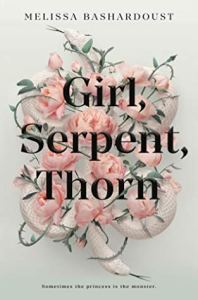
Serena’s Review: “Girl, Serpent, Thorn”

51182650._sx318_sy475_Book: “Girl, Serpent, Thorn” by Melissa Bashardoust
Publishing Info: Flatiron Books, July 2020

Where Did I Get this Book: NetGalley!

Book Description: There was and there was not, as all stories begin, a princess cursed to be poisonous to the touch. But for Soraya, who has lived her life hidden away, apart from her family, safe only in her gardens, it’s not just a story.

As the day of her twin brother’s wedding approaches, Soraya must decide if she’s willing to step outside of the shadows for the first time. Below in the dungeon is a demon who holds knowledge that she craves, the answer to her freedom. And above is a young man who isn’t afraid of her, whose eyes linger not with fear, but with an understanding of who she is beneath the poison.

Soraya thought she knew her place in the world, but when her choices lead to consequences she never imagined, she begins to question who she is and who she is becoming…human or demon. Princess or monster.

Review: Here was another book I requested based mostly on cover lust. But the description itself, particularly the original fairytale-ness of it all, was another sure a attraction. It’s also yet another book that seems to feature siblings, though this one is only from Soraya’s POV, which is a nice change of pace in my reading lately. The story took a few twists and turns that I wasn’t expecting, but most of them turned out for the good, and I enjoyed this read!

Soraya is a forgotten princess. With a power that kills at her touch, she’s spent her life sequestered in shadows, separated from her family, friends, and people. She’s spent her life watching her brother pass all of the milestones that she herself has missed out on. And now it is coming to a head with his marriage to a lost friend from Soraya’s childhood. In unexpected places she begins to find new allies and new pathways, opening doors that she never dreamed possible. Some of them lead into the light, and some further into the dark. Which will she choose?

I ended up really enjoying this book. It was an original fairytale, something I always love, and it took a few unexpected twists and turns as it was told. On top of all of that, it’s a standalone novel. One small criticims there, however, was the story did feel like it had to distinctive arcs that may have been better suited to their own books, making the story into a duology. But even typing that feels wrong as I love standalone books so much and they’re hard to find! It’s kind of a mixed bag thing, here, I guess. The two storylines work well enough, and I don’t feel like either was truly lacking much. Just that as a complete work, it did feel oddly balanced with the first half telling one tale and the second another.

I really liked Soraya herself. She had a great narrative voice, and she was easy to become immediately invested in. This was important as the book took a twist down an antihero path that I hadn’t seen coming from the book description. Looking back now, yeah, it’s kind of there. But it was another nice surprise for me when going through this book. It’s always tough to sell a true antihero story, as often your main character is doing some pretty questionable things and walking a very narrow line. This made the likablity of Soraya’s character incredibly important. It was easy to understand her struggles and even some of her more questionable decisions, especially in the context of the life she had lived prior to this story.

Another surprise for me was that Soraya was a bisexual and the main romance ends up being a f/f one. For the book itself and its story, I really enjoyed this romance. I’ve read a bunch of f/f/ stories recently, and really liked them! Just last week, I reviewed a book by Django Wexler who is known for almost always giving his heroine a female love interest. My problem with it being a surprise here isn’t the book’s fault. It’s the marketing.

Looking over the book description, it’s clear that it’s intentionally deflecting away from using gendered pronouns in places, and then goes out of its way to place interest on the male love interest. The male love interest is a thing, so that’s fine. But there should be mention, clearly, of the female option. I really dislike these type of marketing techniques. It seems clear that its done out of mistrust of one’s audience, and that’s never going to work. Either your reader is game for a f/f romance, in which case readers like me would like to know ahead of time what to expect without having to delve into Goodreads reviews to get basic information like this. Or your reader is not down and once it becomes clear that you tried to hoodwink them with your marketing, they’ll put the book down. It’s bad faith marketing, and we need to get past this.

Overall, I really liked this book. If you’re looking for an original fairytale story with a morally grey main character, this is definitely the book for you!

Rating 8: A great standalone fantasy novel featuring an interesting anti-heroine!

Reader’s Advisory: 

“Girl, Serpent, Thorn” is on these Goodreads lists: “2020 YA LGBT+ Sci-Fi/Fantasy” and “Magical Realism.”

Find “Girl, Serpent, Thorn” at your library using WorldCat!

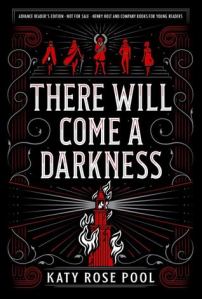
Serena’s Review: “There Will Come a Darkness”

41823536._sx318_Book: “There Will Come a Darkness” by Katy Rose Pool
Publishing Info: Henry Holt Books for Young Readers, September 2019

Where Did I Get this Book: audiobook from the library!

Book Description: For generations, the Seven Prophets guided humanity. Using their visions of the future, they ended wars and united nations―until the day, one hundred years ago, when the Prophets disappeared.

All they left behind was one final, secret prophecy, foretelling an Age of Darkness and the birth of a new Prophet who could be the world’s salvation . . . or the cause of its destruction. As chaos takes hold, five souls are set on a collision course:

A prince exiled from his kingdom.
A ruthless killer known as the Pale Hand.
A once-faithful leader torn between his duty and his heart.
A reckless gambler with the power to find anything or anyone.
And a dying girl on the verge of giving up.

One of them―or all of them―could break the world. Will they be savior or destroyer? 

Review: June has been the month of “better late than never” as far as my reading goes. This is at least the second book that I’ve read this month that was hugely popular last fall and yet…I didn’t get to it until just now. But there’s just so much good fantasy out there, and, I’ll admit, I’m always a bit hesitant about these books that seems to flare up as “the next big thing” in YA fantasy. My track record with these super popular new fantasy series hasn’t been good. But I liked “The Merciful Crow” more than I was expecting, so I thought I’d give another big title a chance. Sadly, this wasn’t as much of a hit for me, though I’ll likely still keep reading the series.

Five young people are living very different lives in very different spheres. Some from wealth, some from poverty, some who are running, and some who know that it is up to them to find what no one else can. But their world is on the brink of change, with powerful forces moving against those with magical abilities and a prophesy that has loomed over the heads of the people for generations. Each with their own role to plays, these disparate lives begin to cross and the pieces begin to fall in place. But who is the savior and who is the source of destruction?

I already gave away that this book wasn’t a hit for me, but I will start with a few positives before getting into my critiques. As the description gives away, this is an ensemble cast, but I was so pleased to find that it wasn’t another YA fantasy ensemble ala “Six of Crows.” For one thing, it’s centered around a prophesy and not heists, and more importantly, besides one exception, all of our main characters start out not knowing anything about the others. And this holds true though out most of of the story. Some characters weave in and out of other’s stories, but by the end, only a few of them have even ended up together with others still scattered to the wind.

But other than the unique approach to its ensemble cast, this book was barely even a book. Instead, it read much more like an extended prologue before the last few chapters sort of got into things. With such a large cast of characters and the fact that they all have unique histories and no nothing about each other (losing the opportunity to cross-tell their stories through various POVs that you often see in other books with large casts), the book has to devote almost two thirds of the story to introducing its main characters. The chapters were also short, so just when I felt like I was settling into one character’s life, struggles, and thoughts, I was suddenly bounced into a completely different character’s story. Between all of these switches, it was hard to become truly invested in any of them. And, like I said, it left very little room for the story to actually develop.

Frankly, very little actually happens in this book. We do get some action towards the end, but even that was a bit of a letdown. Some of the “reveals” I could see from a mile off and fell flat when they came. There was a big bad character who was talked about through much of the story, but when he finally appeared on page, he, too, felt like a let down and not nearly the threat he was meant to represent. The prophesy itself seemed interesting, but we barely scratched the surface of that here. Like I said, it read more like an extended prologue and introduction than a book itself.

Beyond that, I struggled to actually like any of the main characters. Several of them continued to make poor decisions that didn’t seem to fall in line with the roles they were in. Even as things fell apart around them and they began to see the negative consequences of their choices, they just continued to do so. It ended up being incredibly frustrating. One of the main characters, also, has an incredibly predictable story arc and was simply pretty dull all around. There were maybe two characters who I could kind of become invested in. But even I even struggled with them at times. A lot of the character choices and plot points just made several characters very unsympathetic. Even by the end of the book, it felt like many of them had learned nothing at all. This also played into the feeling that the book was an extended introduction. We don’t really see much true character growth on the page, and it ended with them all still feeling rather half-baked.

Overall, I was pretty disappointed by this book. But, like I said in the beginning, I’ll likely give the second one a go just because of the fact that this one read so much more like a prologue than a story itself. I want to see if the action will actually pick up in the next one! If you really like ensemble stories and want one that isn’t focused on heists, this may be worth checking out. But don’t go in with your expectations too high.

Rating 6: Not fully realized on its own, the plot was lacking and the characters shallow, leaving a lot of work for the sequel to improve upon.

Reader’s Advisory: 

“There Will Come a Darkness” is on these Goodreads lists: “Prophecies” and, amusingly enough, “The books that I bought during the pandemic to make me feel better….”

Find “There Will Come a Darkness” at your library using WorldCat!

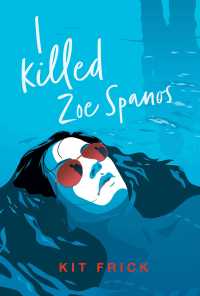
Kate’s Review: “I Killed Zoe Spanos”

50202540Book: “I Killed Zoe Spanos” by Kit Frick
Publishing Info: Margaret K. McElderry Books, June 2020

Where Did I Get This Book: I received an eARC from NetGalley.

Book Description: This gripping thriller follows two teens whose lives become inextricably linked when one confesses to murder and the other becomes determined to uncover the real truth no matter the cost.

What happened to Zoe won’t stay buried…

When Anna Cicconi arrives to the small Hamptons village of Herron Mills for a summer nanny gig, she has high hopes for a fresh start. What she finds instead is a community on edge after the disappearance of Zoe Spanos, a local girl who has been missing since New Year’s Eve. Anna bears an eerie resemblance to Zoe, and her mere presence in town stirs up still-raw feelings about the unsolved case. As Anna delves deeper into the mystery, stepping further and further into Zoe’s life, she becomes increasingly convinced that she and Zoe are connected–and that she knows what happened to her.

Two months later, Zoe’s body is found in a nearby lake, and Anna is charged with manslaughter. But Anna’s confession is riddled with holes, and Martina Green, teen host of the Missing Zoe podcast, isn’t satisfied. Did Anna really kill Zoe? And if not, can Martina’s podcast uncover the truth?

Review: Thank you to NetGalley for sending me an eARC of this novel!

In case you were wondering, I’m still on my bullshit when it comes to True Crime podcasts. I haven’t really strayed into new territory outside of the old reliables, but if you have some recommendations, send them my way! More and more we’re seeing podcast themes making their way into mysteries, perhaps in part due to this true crime boom within the listening world. Sometimes it works, other times it doesn’t, but I’m always game to try that kind of book out. So of COURSE “I Killed Zoe Spanos” by Kit Frick caught my eye! It has elements that I greatly enjoy in my thrillers: a luxurious summer setting, a missing girl, secrets that the privileged and the non-privileged alike keep close to their vests. SO, you throw in a podcast angle and I am gonna be there! “I Killed Zoe Spanos” really hooked me in, and it was just the kind of read I could see myself reading on the beach. You know, if I was going to the beach this summer. Which I’m not.

giphy-1
Goddamn pandemic. (source)

“I Killed Zoe Spanos” follows two distinct perspectives. The first is of Anna Cicconi, a teenager who has come to the Hamptons town of Herron Mills to be a live in babysitter. Herron Mills has a lot of money, a lot of privilege, and is currently haunted by the fact that local girl Zoe Spanos has gone missing that past New Year’s. Eventually Anna confesses to killing Zoe, even though as far as anyone knows there is no connection between the two. The other perspective is that of Martina Green, a local teen who is best friends with Zoe’s sister Aster, and puts out a podcast about the case. Anna’s perspective is mostly in the past and in the first person, while Martina’s is in the present and in the third. Sometimes I have a hard time when there are two kinds of POV styles in a book unless I feel it’s warranted, and with “I Killed Zoe Spanos” I felt like it worked fairly well. It made it so that we could get both the unreliability of Anna’s perspective, given that we have no idea what her connection to Zoe is, even though there is clearly something going on, and also the outside third person lens that Martina has as she is trying to solve the mystery herself. Throw in the transcripts for Martina’s podcast, which adds a whole other layer of potential unreliability (or at least bias), and you have a lot of potential for looking at Zoe’s disappearance and death from all sides. I thought that these three views all complemented each other pretty well, and had enough potential for red herrings within them all to make the mystery interesting. I enjoyed a few of the twists and turns quite a bit, though I will admit that I think that there was a bit of an overreach that came up right at the end. You don’t have to overdo it is all I’m saying.

As far as the characters go, no one really stood out too much in terms of going beyond their templates. Anna is unreliable and mysterious, perhaps threatening but maybe not. Martina is tenacious and truth seeking. I think that there was some interesting potential in some of the side characters, particularly Zoe’s boyfriend Caden, a transracial adoptee whose skin Others him within a very wealthy, and white, insular community. But we didn’t really go looking too deeply into many of these side characters, no matter how interesting they might be.

“I Killed Zoe Spanos” is definitely the kind of book that will take you in this summer! If you are a thriller fan and do find yourself able to safely go to a beach, or sit by a pool, this would be a great read to accompany that kind of excursion!

Rating 7: A fun mystery with some interesting turns, “I Killed Zoe Spanos” is a reliable summer read for thriller fans and fans of true crime podcasts alike.

Reader’s Advisory:

“I Killed Zoe Spanos” is included on the Goodreads lists “What’s My YA Name Again”, and “Can’t Wait Crime, Mystery, & Thrillers 2020”.

Find “I Killed Zoe Spanos” at your library using WorldCat, or a local independent bookstore using IndieBound!

Serena’s Review: “The Merciful Crow”

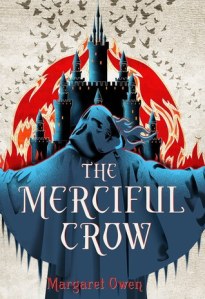
36483378._sx318_Book: “The Merciful Crow” by Margaret Own

Publishing Info: Henry Holt, July 2019

Where Did I Get this Book: audiobook from the library!

Book Description: A future chieftain.

Fie abides by one rule: look after your own. Her Crow caste of undertakers and mercy-killers takes more abuse than coin, but when they’re called to collect royal dead, she’s hoping they’ll find the payout of a lifetime.

A fugitive prince.

When Crown Prince Jasimir turns out to have faked his death, Fie’s ready to cut her losses—and perhaps his throat. But he offers a wager that she can’t refuse: protect him from a ruthless queen, and he’ll protect the Crows when he reigns.

A too-cunning bodyguard.

Hawk warrior Tavin has always put Jas’s life before his, magically assuming the prince’s appearance and shadowing his every step. But what happens when Tavin begins to want something to call his own?

Review: As with many popular YA fantasy series (there are just too many!), I often don’t get around to them until I see the sequel start popping up on early release sites. And then in a temporary lapse of judgement I request the sequel only to quickly realize that means, oh wait, I have to get my hands on the first one, get it read, and review it before I can even start the book I just so eagerly requested. I do this again and again, and do I ever learn? Nope! It’s even more frustrating when I read the first book and don’t care for it, knowing I’ve already committed myself to the sequel. Luckily, that’s not the case with this one!

Fie belongs to the lowest of the low, a caste of people whose only job is to care for the dead and dying of a deadly plague that sporadically grips various villages and townships. While completely necessary to the function of society, Crows are at best ignored and at worst hunted in the night. So, when one of their typical jobs caring for two dying young men ends up with Fie and her fellow caught up in a plan of an escaping prince and his comrade, Fie takes the opportunity for all its worth, bargaining for a better future for her and her people. But first, she must find a way to deliver these two to safety, despite everything set against them.

Every once in a while when I read an audiobook, I’m aware of how my reading experience is probably affecting my overall take on the book in hand. This can go two ways, of course, with a poor narrator sinking a book almost immediately, and a skilled one catching my in more quickly than I might have been had I been reading in the traditional manner. I think this is one of the latter experiences. The narrator for this book was excellent, giving many characters, especially Fie herself, unique accents and ways of speaking. The book was certainly written to suggest that Fie had a Scottish accent of sorts, so it was great that the narrator was able to fully capture this aspect of the story. She was also able to add a lot of understated tension and emotion to Fie, something that I think probably wasn’t as obvious just on the page itself.

The book obviously had certain things in its favor regardless of media format. I really liked the bird-based caste system and world-building that the author set up. There were interesting connections and powers that neatly aligned with the type of bird that was used to represent a certain caste. Crows, obviously, deal with the dead. Hawks are skilled hunters and warriors. And so on.

While overall I understood the role the Crows played in this society, I did question the vehemence at which they were often hated by those around them. They seem to perform a pretty essential task, dealing with the plague-ridden, and as the only caste that doesn’t suffer from this plague, they’re really the only options for people. We also learn that pretty dire things happen if a plague ridden body isn’t dealt with properly. Given all of this, I can get how a Caste like this might inspire wariness from the general public, but how do we get to the state where they’re literally hunted down and killed at times? Seems pretty backward for really the only Caste that is actually necessary to the ongoing survival of a people. There were bits and pieces of the world-building like this that I never felt were fully explained or lined up properly. It was often distracting when these questions came up, as I was usually able to sink into just enjoying the main character and her journey and was only jarred out of it when these moments arose.

Fie herself was an excellent main character. She’s rough and tumble and perfectly exemplifies the type of no-nonsense person that would survive and grow into a leadership position in this type of society. She’s seen things and has no time for the nonsense of others. Her very different relationships with Tavin and Jasimir are also very interesting. The romantic relationship was perhaps a bit too easy and obvious. But I enjoyed the struggles that she went through in understanding the prince and of them both coming to a place of mutual respect. Each had to learn of the restrictions placed on the other and how their own worldviews influenced how they saw change happening going forward.

While I was interested in Fie’s own personal story, the book did drag a bit in the middle. There’s a lot of traveling.  A lot. And often if felt like not much was really happening in between some of the bigger scenes. It’s also the type of book that, while I enjoyed it in the moment, it hasn’t stuck with me as much as I had hoped. Even now, only a week or so after I finished it, I’m struggling a bit to remember exactly how things lay in the set-up for book two. That said, however, I definitely enjoyed it enough to be looking forward to the sequel and conclusion of this story. It will be interesting to see how it does not in audio format as well.

Rating 7:  A bit forgettable with some questionable world-building, but a strong main character and audiobook narrator really sold this one for me.

Reader’s Advisory:

“The Merciful Crow” for some reason isn’t on many interesting Goodreads lists, but it is on “Crows and Ravens.”

Find “The Merciful Crow” at your library using WorldCat!