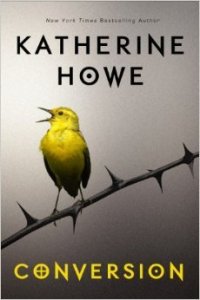
Kate’s Review: “Conversion”

18667792Book: “Conversion” by Katherine Howe

Publishing Info: G.P. Putnam’s Sons Books for Young Readers, July 2014

Where Did I Get This Book: Audiobook from the library!

Book Description: It’s senior year at St. Joan’s Academy, and school is a pressure cooker. College applications, the battle for valedictorian, deciphering boys’ texts: Through it all, Colleen Rowley and her friends are expected to keep it together. Until they can’t.
 
First it’s the school’s queen bee, Clara Rutherford, who suddenly falls into uncontrollable tics in the middle of class. Her mystery illness quickly spreads to her closest clique of friends, then more students and symptoms follow: seizures, hair loss, violent coughing fits. St. Joan’s buzzes with rumor; rumor blossoms into full-blown panic.
 
Soon the media descends on Danvers, Massachusetts, as everyone scrambles to find something, or someone, to blame. Pollution? Stress? Or are the girls faking? Only Colleen—who’s been reading The Crucible for extra credit—comes to realize what nobody else has: Danvers was once Salem Village, where another group of girls suffered from a similarly bizarre epidemic three centuries ago . . .
 
Inspired by true events—from seventeenth-century colonial life to the halls of a modern-day high school—Conversion casts a spell. With her signature wit and passion, New York Times bestselling author Katherine Howe delivers an exciting and suspenseful novel, a chilling mystery that raises the question, what’s really happening to the girls at St. Joan’s?

Review: So I was one of those kids who went to a private prep school in St. Paul from Kindergarten up through Senior Year. Gotta say, while it definitely more than adequately prepared me for college and graduate school, at the time I was under immense, immense pressure. So when I started listening to “Conversion” by Katherine Howe, there were a lot of things that were familiar to me. An ‘Upper School’ building for upper classmen. Homeroom being called ‘advisory’. A Dean of Students. I will say, however, that while I was under stress, I wasn’t going to school in a town that had a notorious history of people being falsely accused of witchcraft and then hanged. So yeah, I couldn’t say that I could totally relate to the tale that was told. In fact, I would say that beyond having the occasional moment of ‘ha, we had that too’, I didn’t really relate to the characters in “Conversion”, even if I was probably supposed to to a certain degree. While Howe definitely put in a good effort at writing teenage girls, a lot of the time it fell pretty darn flat.

I think that the first problem was Colleen herself. While I understand where Howe was trying to go with her, I found her to be incredibly naive and dense, far more dense that someone who is supposedly a legitimate contender for Harvard and neck in neck for Valedictorian at this prestigious prep school. I don’t really want to go into any spoilers here, but there are a few plot points that I feel would have been pretty damn obvious for a number of people who would have been in the situation and experiencing it first hand. I understand that to draw out suspense and story line she would have to be, but it felt like her intelligence was in conflict with the plot. And while I didn’t have as many problems with Colleen’s personality as others have, I didn’t find her to be terribly compelling as a narrator. Neither are her friends. Usually I can find a side character that keeps me going even if the protagonist isn’t too interesting, but in this one we didn’t even really get that. They are all pretty privileged girls whose problems, while mostly relatable given my high school experience, just didn’t connect to me.

Our other narrator is Anne Putnam, one of the girls in Salem Village who accused her neighbors of bewitching her. Far less sympathetic than Colleen (someone who isn’t really all that sympathetic to begin with), Anne tells her story from two perspectives: the time she was accusing people, and the time where she is gearing up to confess her sins to the rest of the town, long after the trials have finished and the fallout has left a mark. While I liked the fact that Howe clearly did a lot of research into the trials and the people involved, making them as realistic and historically accurate as possible. Sure, she took license with motivation, as we don’t know why these girls accused all of these innocent people of crimes that sealed their deaths, but I think that her theories in this story make sense. They definitely have more weight behind them than Arthur Miller’s “The Crucible”, though in his defense that wasn’t really about Salem. We all know that. Howe really committed to telling an accurate story. The problem is, while it is meant to serve as a juxtaposition to what is going on in Danvers in 2012, it doesn’t quite work.

And let me tell you why it doesn’t work. Howe has two stories that have similar themes (mass ‘hysteria’), but they ultimately don’t line up. Outside of being two groups of teen girls in the same geographical region, Howe throws in a couple of twists that ultimately undermine the juxtaposition that she put out there in the first place (side note: one of the solutions IS up to interpretation, I will give you that, but boy is it laid on pretty, and supernaturally, thick). I suppose that one could argue that one other connection may be a feeling of powerlessness for adolescent girls, which manifests in puritan times to the modern age, but again…. It’s undermined. I won’t say how, but it is, and that irritated me to no end.

Something that does work, though, is the modern analogs for the Witch Trials, in the form of a trial by media as opposed to a puritanical court room. The press is, of course, whipped into a frenzy about this ‘mysterious illness’ that has fallen upon these girls, and their attention on the school and the students just feeds into it and makes things much, much worse. Adding into that is the factor of rich, entitled, nasty parents who are rightfully afraid for their children, but then lash out when answers aren’t readily apparent. And then, of course, love the media attention, both for awareness an for their own egos. A few people definitely end up on the other end of their fury, and on the other end of the fallout of the mysterious illness. This was both the most interesting, and angering, plot point. Howe wrote this SO well, she has her fingers on the pulse of the nastiest parts of human nature, both in the modern time line and the past time line. These parts made me the angriest, and hey, that was a serious emotional reaction that she no doubt wanted. So she did her job. I did find myself frustrated that sometimes I think she wanted me to feel sympathy for the girls in Salem, as a being a Puritan was very hard, and being a female Puritan was even harder. The lack of power and the lack of agency was apparent. But nope. These girls condemned a number of innocent people to their deaths. I have no sympathy for that.

Finally, this was an audiobook, and the narrator was pretty good! I thought that she did a good job of making her voice sound like a teenage girl when she needed to, but also an adult when the character called for it. Her accents seemed pretty good to me, though I admittedly don’t know much about the linguistics of the Puritan era in America. Overall, I think it was more her that kept me going. Had I been reading this in print form I may have struggled.

So “Conversion” has its moments, but I didn’t like it as much as I thought I would. Though now I’m definitely interested to learn more about the actual people of Salem beyond what was told to me in “The Crucible”.

Rating 6: Though the historical accuracy and research was spot on, “Conversion” had too few interesting characters and too many missed opportunities.

Reader’s Advisory:

“Conversion” is included on these Goodreads lists: “Prep School Mysteries”, and “Salem”.

Find “Conversion” at your library using WorldCat!

Kate’s Review: “Dear Amy”

26244587Book: “Dear Amy” by Helen Callaghan

Publishing Info: Harper Paperbacks, October 2016

Where Did I Get This Book: The library!

Book Description: As a thirty-something Classics and English literature teacher, working at a school in Cambridge, Margot Lewis leads a quiet life. In her spare time, she writes an advice column for the local newspaper. But she can’t help feeling that she’s the last person who should be doling out advice, because her marriage has failed.

When one of Margot’s students, fifteen-year-old Katie Browne, disappears, the police immediately suspect she’s been kidnapped. Then, not long after Katie goes missing, Margot receives a disturbing letter at the newspaper offices. The letter is supposedly from Bethan Avery, a fifteen-year-old girl who was abducted from the local area twenty years ago…and never found. In the letter, Bethan states that she is being held captive and is in terrible danger. The letter ends with a desperate plea for her rescue.

The police analyze the letter and find it matches a sample of Bethan’s handwriting which they’ve kept on file since her disappearance. This shocking development in an infamous cold case catches the attention of Martin Forrester, a criminologist who has been researching Bethan Avery’s puzzling disappearance all those years ago. Spurred on by her concern for both Katie and the mysterious Bethan, Margot sets out—with Martin’s help—to discover if the two cases are connected. But then Margot herself becomes a target…will she be next?

Riveting to the final page, this is a masterful, sophisticated, and electrifying debut.

Review: Oh Grit Lit, I wish I could quit you. Well, maybe that’s a bit harsh. When it’s good, it’s really quite entertaining, a genre that keeps me interested and on my toes. When it’s bad, well……

giphy6
(source)

Given the pendulous possible outcomes, I definitely go in treading lightly, and try to keep my expectations low enough that I’m not terribly disappointed, but high enough that I don’t just give up on it. Sometimes this works. Other times it kind of just a was from the get go and I can see it from a mile away. And this is what happened with “Dear Amy” by Helen Callaghan. I found myself charging through it not so much because I wanted to know what was going to happen, but because I just wanted to get it over with. Which is never really a resounding cheer for a book. Now it wasn’t “Gone Girl” levels of hot boiling rage on my part, but I did have just a few too many qualms with it as a whole that left me less than enthused about it. So let’s just kind of unpack it, shall we? I think there are going to be spoilers here, guys. I need to talk about them to really show you why I’m irritated.

So first of all, Margot just punches every single Bingo square for stereotypical Grit Lit Heroine. She has been betrayed by her rat bastard husband (Eddy left her for another woman). She is outwardly pretty together as a teacher and advice columnist, but is afraid that if her dark past were to come out (heroin addiction being the worst part of it in her mind) everything would be ruined. And she is, of course, mentally unstable, with moments of questioning her sanity and the things that she is seeing in front of her. Old hat stuff, to be sure. But that’s not all. Oh no. Because in trope-y fashion, there of course has to be a huge twist, and this one was a doozy. Okay, here come the spoilers, folks. Get ready. Skip ahead if you really don’t want to be spoiled.

Margot is Bethan. Bethan is Margot. Margot has been in a dissociative fugue state all this time in regards to her trauma, and has been writing the letters to herself, as the Katie kidnapping set her off.

giphy8
Of course she is. (source)

Okay, look, I like a good twist as much as the next person, but this one was a bit too ludicrous for me to swallow. I’m all for unreliable narrators, but when you have to work really hard to make them unreliable, going to ludicrous lengths to do it, that’s when I start to have a hard time with it. I think I actually said ‘what?’ when it was revealed, and then it felt like just a way to say ‘what is real and what is a lie?!’. Come off it. And given that this is the second thriller novel I’ve read in the past couple of months that has ‘dissociative fugue!’ as one of the ‘what a twist’ moments, it’s already starting to feel played out as well as totally random and unnecessary. That said, there is one more twist that I did like, involving Margot and a friend of hers named Angelique from when she was in a halfway house as a teenager. This was a plot point that I did enjoy, and while I saw it coming as well, it was still more believable than the huge Bethan Avery twist. Hell, had this twist I did like been the only curveball, I probably would have liked it more.

Overall I was more interested in the Katie parts of the book, but even they felt a bit out of place because while Margot’s were in the first person, we’d jump to Katie’s chapters in the third person just so we could see what was going on with her. I think that it may have worked better if she had been in the first person as well, just because the way that it jumped into a different perspective made it feel almost like a cheat instead of a literary device to tell both stories in a consistent and interesting way. If this book had been from Katie’s POV I probably would have liked it more, even if it would have had the potential to get a BIT exploitative.

So while I liked parts of this book, “Dear Amy” ultimately didn’t really do much for me. I think that Helen Callaghan definitely has writing skills, and I think that I could see myself giving her another shot, this one was a little too far on the Billy Eichner side of the pendulum.

Rating 5: “Dear Amy” had promise but then it fell into far too many familiar traps of the Grit Lit genre. Some parts were interesting, but overall it wasn’t my thing.

Reader’s Advisory:

“Dear Amy” is not on any Goodreads lists yet. But it will fit in on “Female Psychological Thrillers/Suspense”, and “If You Enjoyed “Gone Girl” You Might Also Like…”.

Find “Dear Amy” at your library using WorldCat!

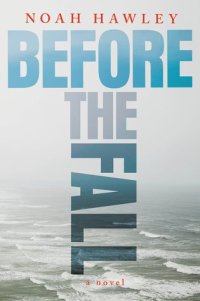
Kate’s Review: “Before The Fall”

26245850Book: “Before the Fall” by Noah Hawley

Publication Info: Grand Central Publishing, May 2016

Where Did I Get This Book: The library!

Book Description: On a foggy summer night, eleven people–ten privileged, one down-on-his-luck painter–depart Martha’s Vineyard headed for New York. Sixteen minutes later, the unthinkable happens: the passengers disappear into the ocean. The only survivors are Scott Burroughs–the painter–and a four-year-old boy, who is now the last remaining member of a wealthy and powerful media mogul’s family.

With chapters weaving between the aftermath of the tragedy and the backstories of the passengers and crew members–including a Wall Street titan and his wife, a Texan-born party boy just in from London, a young woman questioning her path in life, and a career pilot–the mystery surrounding the crash heightens. As the passengers’ intrigues unravel, odd coincidences point to a conspiracy: Was it merely dumb chance that so many influential people perished? Or was something far more sinister at work? Events soon threaten to spiral out of control in an escalating storm of media outrage and accusations–all while the reader draws closer and closer to uncovering the truth.

The fragile relationship between Scott and the young boy glows at the heart of this novel, raising questions of fate, human nature, and the inextricable ties that bind us together.

Review: For the past couple of years I have been OBSESSED with the FX show “Fargo”. I love the movie, but the show has knocked it out of the park the two seasons it has been on, with a third coming up in the nearish future. I seriously can’t wait because I LOVE this show, and I love how it portrays the deep and violent underbellies of Minnesota life. While still being so damn Minnesotan.

giphy5
(source)

Little did I realize that Noah Hawley, the showrunner for that series, is also an author. I didn’t realize this until after I had checked out his most recent novel “Before The Fall”, and once I did I was pretty damn excited and even more intrigued by it. Hawley has a skill for writing and creating complex and nuanced characters, as seen in Bear and Peggy and Molly and Lorne Malvo on the show he’s in charge of. It shouldn’t be much surprise that he brought that same skill and nuance to a number of his characters in “Before The Fall”. Well, a few of them anyway.

Since the cast is characters is pretty big and their fates sealed from the get go, Hawley only has to really show a little bit of motivation for how each person got on this ill fated plane, and what role, if any, they played in it’s crash. Much of the focus, however, is on former addict and down on his luck painter Scott, an artist with a need to try and understand tragedy and accidents even before he survives a plane crash. Scott is by far the most interesting character in this book, because it is mostly through his eyes that we see the aftermath of such a tragedy. I liked Scott as a character, a pretty good guy trying to figure himself out who finds himself the center of a tragedy, and the person that everyone is trying to get answers from. He wasn’t necessarily a hero in a stereotypical sense; he did what he could in an emergency and was able to save himself and J.J., the four year old lone survivor to a media fortune. But of course the fact he isn’t perfect or the ideal heroic figure, that works against him in the eyes of some, which was a fascinating angle to take. He is a wonderful foil to Eleanor, J.J.’s aunt through his mother, who has been thrust into motherhood while in intense grief. Both Scott and Eleanor care very deeply about J.J., but neither of them really know how to adjust to their new roles that have been heaped upon them, be it hero or mother. It seemed kind of on the nose that Eleanor’s husband Doug was just the worst, more interested in dollar signs than his wife or nephew as they navigate their grief, but he just goes to show that Eleanor is strong, and deep. Perhaps his two dimensional characterization is just there to bolster her when she can stand on her own two feet, but I liked having a clear person to hate, so that’s fine!

And along with that, we see how the world tries to make sense, and tries to point fingers towards blame, and how the media (especially media with vested interests in outcomes) can drive a narrative. The media has been accused of influencing people’s opinions a lot lately, especially in the sense of putting info out there that isn’t totally true, or is flat out false. “Before The Fall” focuses a lot on this plot point, as one of the victims, David Bateman, was the head of a Fox News-esque network that is very controversial because of how it spins things or emphasizes sensationalism over facts. The face of the network, Bill Cunningham, is both incredibly stereotypical and yet one of the more intriguing character in the book, as his need to know what happened to his friend and mentor completely clouds his already super cloudy professional judgement. This of course leads to a very bloodthirsty Witch Hunt that his viewers, and other media, partake in. On one hand you feel for him because he’s very clearly in mourning, but on the other he’s such a bastard for exploiting this tragedy for ratings that you can’t help but hate him as well. So yeah, a bit stereotypical, but at the same time you kind of have to wonder about him. He never really gets a full exploration like many of the other players, but isn’t just flat and boring in his wretchedness like Doug. Friggin’ Doug.

I enjoyed how this book slowly revealed the backstories of the victims of the plane crash, showing the things happening in their immediate lives right before their deaths, or in some cases the events that REALLY put them on this path. I do think that it was kind of a fizzle out in some ways, however, as while we get all this background, so much of it doesn’t really end up being totally relevant to the plot and the outcome. But then, that in and of itself is kind of perfect, because that’s the point. Sometimes things happen, randomly, coincidentally, and these things may not actually matter in the long run, at least at the end of all things. These things may just happen but other things outside of your control can change your destiny. That’s the problem Cunningham never quite figures out, and while some may find it to be pointless, I find it poignant as all get out. And so very “Fargo”.

So while it ended up taking me on a long chase and sometimes superfluously, I did end up really enjoying “Before The Fall”. The twists and turns were a fun ride, and I liked how it ended even if it wasn’t what I have come to expect from thriller mysteries such as these. I say check it out.

Rating 8: A well characterized thriller with a lot of interesting plot paths. Though some characters are flat and obvious, many are very intricate and fascinating, and the ideas the book explored were very good.

Reader’s Advisory:

“Before the Fall” is included on these Goodreads lists: “Best Books of Secrets”, and “What She’s Reading This Summer”.

Find “Before The Fall” at your library using WorldCat!

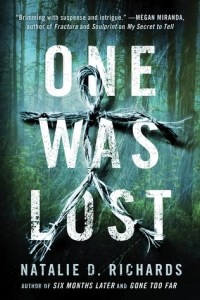
Joint Review: “One Was Lost”

28321033

Though we do tend to read different genres, there is sometimes overlap in the books that we pick up and devour. When this happens, we decide to do a joint review, giving our thoughts through our own personal lenses of what we look for in reading material. When we were putting together our October Highlights post, we discovered that we each had picked this book. Obviously, a joint review was in order!

Book: “One Was Lost” by Natalie D. Richards

Publishing Info: Sourcebooks Fire, October 2016

Where Did We Get this Book: the library!

Book Description: Damaged. Deceptive. Dangerous. Darling. Are they labels or a warning? The answer could cost Sera everything.

Murder, justice, and revenge were so not a part of the plan when Sera set out on her senior camping trip. After all, hiking through the woods is supposed to be safe and uneventful.

Then one morning the group wakes up groggy, confused, and with words scrawled on their wrists: Damaged. Deceptive. Dangerous. Darling. Their supplies? Destroyed. Half their group? Gone. Their chaperone? Unconscious. Worst of all, they find four dolls acting out a murder—dolls dressed just like them.

Suddenly it’s clear; they’re being hunted. And with the only positive word on her wrist, Sera falls under suspicion…

Serena’s Thoughts

Whelp, I knew going in that this book was either going to be a great hit or potentially a big miss for me. A little background: I grew up in a very, very rural part of northern Idaho. I’m talking “only had an outhouse/had to sno-mobile 5 miles in during the winter/wood stove for heat and cooking/solar power/etc” type of remote. That  being the case, I spent large portions of my childhood running around in the woods with my sister. So, for one, the woods aren’t a natural “fear factor” for me. And for two, I grew up learning a lot about how to survive in these types of situations. All of that said, because of this, I always find myself gravitating to books like these that focus on the experiences of others in the woods, just because I love the setting. But that also means that I approach these types of stories from a hyper critical standpoint, which isn’t the book’s fault. So I have to spend a lot of time balancing my personal reaction to a book like this against that of the average reader. But, since we’re joint reviewing this, Kate will be here to give her perspective as the  non “woodland wild child” reader!

But first, I don’t want to give the impression that this book was a complete failure for me. I feel like the main cast of characters were very likable. They were a diverse group (if perhaps a bit too stereotypical), and I liked the attention that was spent addressing the difference challenges that each of these teens had faced in the typical highschool experience. Sera herself was a very good narrator. While the writing and voice were rather simplistic, she was likable and for the most part I was fully on board with her as a protagonist. There was an interesting backstory with her mother and with the impact that this relationship has had on Sera’s own life and sense of self. I wish there had been even more on this, as the ending felt a bit rushed with her ability to resolve what has to be a huge, ongoing personal conflict. There was also a romance that, while I still don’t feel that it was necessary and had an overly dramatic backstory that proved to be a let down when it was revealed, wasn’t as terrible as I first suspected. Just wish there was less of it.

But, as I mentioned in the beginning of this post, I had some very specific issues with this book, and what frustrates me the most is that much of it comes down to poor research on the author’s part. Look, I know this book is about teens out in the wilderness and that, due to this, they aren’t going to know all the ins and outs of wilderness survival. However, they make SO MANY WILDLY BAD DECISIONS!

About a third of the way in, after they wake up with the words written on their wrist, there are a few chapters that are made up of just one bad decision after another. There’s the very basics that most people know: never wander off. If you’re completely lost, stay put. Here, not only are they not lost, but they have a perfectly good trail with only a three days’ walk out, which in the grand scheme, really isn’t much. So it’s a million times more stupid to instead go wandering out into the wilderness with the hope that you might not get turned around and you might find the road and maybe rescuers will find you even though you are now putting miles between yourself and where they would know to look.

Then there are more specific things that are just common sense. Obviously, water is your most important priority (after not wandering off! And not fixating on food, which they do. Obsessively. For the record, you can live three weeks without food and do not, in fact,  start feeling massive effects after ONE DAY).  And maybe, maybe, river water is a safer bet than water that is being left for you by a madman who has ALREADY POISONED YOUR WATER ONCE! Any bacteria in a river (if there even is any, fast moving water is usually a safe bet as long as it’s not draining directly out of a cow field) is going to be curable once you’re found. And if you’re not found…you have bigger problems.

And then, just because you shouldn’t camp near a river that may flood, this does NOT somehow make it too dangerous to follow (civilization is found near water). Like, what do they think is going to happen? The river is somehow going to instantaneously flood enough to take them out in seconds if they’re walking along it? Walk a ways above the water line, for crying out loud.

The story was much stronger when it simply focused on the thriller aspects and left aside any survival choices. After this initial string of events ends, the mystery/thriller aspects picked up again and I was able to shut my brain off for a good portion. And if it had maintained this until the end, I might have given the book a pass. Unfortunately, near the end, it lost me again with what was the last straw for me as far as poor research goes. Sera has a cut hand. They find peroxide to put on it. And then there are several paragraphs about how horribly painful it is applying the peroxide….

957
Annndd…I’m out. (source)

Peroxide is painless. The author clearing didn’t do one iota of research and simply failed to spend the time differentiating between rubbing alcohol and peroxide. Which, look, I get that it’s a small thing. But after all the rest, it was the final straw to my patience with this book. If you, an author, are going to write a survival story about teens in the woods, it is not too much to ask that you do basic research. And I, the reader, expect more. There was some more nonsense about finding a 4 wheeler but not leaving immediately because “Omg, cliffs!”…as if headlights aren’t a thing. And the fact that they find a RV along with the 4 wheeler, but somehow  there are no roads (how did it get there??) necessitating said wandering in the woods. And…I was done with the book at this point.

Kate’s Thoughts

And then there’s me, City Girl Kate! I was raised in the city, by two parents who grew up on farms and decided that nature just wasn’t their bag once they could escape it. So nature isn’t MY bag either! And therefore, I went into “One Was Lost” with less knowledge about what the dos and don’ts are when it comes to wilderness trekking and survival. While some of the obvious mistakes jumped out at me, most of the others Serena mentioned went right over my head. I’d probably die in the woods, because I’m pretty clueless.

giphy4
Oh, you can drink fast running water? Huh! (source)

So I guess I was kind of able to go in with less critical eyes in my head, at least when it came to the survival skills trope. HOWEVER, when it came to horror tropes and thriller plot points, I too had a harder time swallowing “One Was Lost”. I was hoping for some kind of “Blair Witch Project” story (For crying out loud, the cover alone is a nod to it), but sadly it didn’t quite live up to the expectations that I placed upon it. Perhaps unfairly, but placed upon nonetheless.

I did like the characters that we followed, I want to make that perfectly clear. Sera was a relatable and interesting protagonist, whose baggage is kind of unique when looking at YA protagonists. I liked her backstory and I thought that it was believable enough to explain some of her reasoning and decisions she made down the line, as well as parallel some of the revelations as they were exposed. I agree with Serena that the romance she had with Lucas was a bit unnecessary, though I did like Lucas and the foil he provided when verbally sparring with Sera. Emily and Jude were also interesting enough, though we didn’t get to see as much of either of them so they fell a bit more into their stereotypes (Emily as the quiet victimized girl, Jude as the spoiled and privileged adoptee. Side note, I think Jude could have been VERY interesting being a transracial adoptee of two gay men, but that wasn’t focused on at all). I think that their introductions were a little rushed, as we pretty much hit the ground running. As the plot kept going and as they all found themselves in worse and worse situations, I got a pretty good idea as to what was going on, at least in terms of who was probably harassing them and stalking them. Maybe not in the bigger picture as to motive, granted, but I called who the culprit was long before the big reveal. I know that I’m a horror girl and a thriller girl, and I know what to look for. But there were things that tipped me off and they are things that have been seen in many, many other stories of both genres.

I also found myself rolling my eyes when the urban legend/ghost story that was told had to do with “Cherokee Spirits” living in the woods. Jeeze. Why is it that sometimes these stories feel a need to trot out Indigenous stories while totally butchering them? It was uncomfortable for me, especially given the recent dust up with “The Continent”. Luckily this was kept to a minimum, but really, it shouldn’t have been in there in the first place.

So for me, “One Was Lost” was also a disappointment, though I did like Sera and the personal journey that she went through. I just wish that this book had done more, because the potential really was there, and I wish that some choices that were made had been taken out before publishing.

Serena’s Rating 5: A strong premises and lead character, all foiled by very poor research that kept kicking me out of the story.

Kate’s Rating 5: I liked the characters and I liked the backstory, but the plot was a bit too predictable for me, and some of the storytelling devices were a bit aggravating.

Reader’s Advisory:

“One Was Lost” is a new book so it isn’t on many Goodreads lists yet, but it should be on “Wilderness Horror Stories.”

Find “One Was Lost” at your library using WorldCat!


Kate’s Review: “How To Hang a Witch”

27405351Book: “How To Hang a Witch” by Adriana Mather

Publishing Info: Knopf Books for Young Readers, July 2016

Where Did I Get This Book: The library!

Book Description: It’s the Salem Witch Trials meets Mean Girls in a debut novel from one of the descendants of Cotton Mather, where the trials of high school start to feel like a modern day witch hunt for a teen with all the wrong connections to Salem’s past.

Salem, Massachusetts is the site of the infamous witch trials and the new home of Samantha Mather. Recently transplanted from New York City, Sam and her stepmother are not exactly welcomed with open arms. Sam is the descendant of Cotton Mather, one of the men responsible for those trials and almost immediately, she becomes the enemy of a group of girls who call themselves The Descendants. And guess who their ancestors were?

If dealing with that weren’t enough, Sam also comes face to face with a real live (well technically dead) ghost. A handsome, angry ghost who wants Sam to stop touching his stuff. But soon Sam discovers she is at the center of a centuries old curse affecting anyone with ties to the trials. Sam must come to terms with the ghost and find a way to work with The Descendants to stop a deadly cycle that has been going on since the first accused witch was hanged. If any town should have learned its lesson, it’s Salem. But history may be about to repeat itself.

Review: I need you, readers, to go back and read that description. I will wait…

Okay, did you read it again? Does it not sound absolutely BANANAS?!?! If you said anything other than ‘yeah totally’, I want to know what your life is, because to me this is totally bonkers. Which is why I put it on my list, of course. Because you have a YA novel about teenage witches in Salem, Massachusetts, and the teenage girl descendent of Cotton Mather, written by an ACTUAL descendant of Cotton Mather, that has magic, bitchy teen girls, a Puritan era curse, and a ghost who is a partner in detection.

giphy
(s0urce)

Look, I’m going to be honest. There are many thing that I would criticize: The writing is clunky, Sam is very much a stereotypical ‘I’m so edgy and no one understands me!’ protagonist, the dialog borders on unbelievable, the metaphor of witch hunts as modern day bullying is kind of ham fisted, and there were so many cliches that I lost track of them. But guess what? I DID NOT CARE!!!  All these things aside, it pretty much met all the needs that I needed it to meet! “How To Hang A Witch” by Adriana Mather is a sanitized version of “The Craft” and “American Horror Story: Coven” and yes, it’s over the top and silly, but I’m not mad because I thoroughly enjoyed the time I spent with it.

Why, you ask? Well, lots of reasons. I like witch stories. I liked that Mather has clearly done a lot of actual research about the Salem Witch Trials and the history of the town, and her family. I like that she does manage to incorporate a lot of that history into the narrative, even if it’s forced in at times. And I was kind of left guessing about who the perpetrator of the curse was, as Mather does put in some good red herrings that did distract me here and there. What could have easily just been a gimmicky book written by a descendant of someone who was there turned out better than it could have. I also did ultimately like our main character, Sam Mather, even if she is close to falling into many a trope in YA literature. As a descendant of Cotton Mather, of COURSE she’s a target for bullying by The Descendants, who are descendants of accused witches. So I was able to forgive Sam’s dark sulking, because unlike other sulking protagonists in YA stories that shall go unnamed, her father is in a coma, her mother is dead, all of her friends have had terrible things happen to them, and now she’s being tormented by most everyone around her. EVEN THE TEACHERS, I kid you not. Because of all this I get her defensiveness and I’m more willing to forgive it, even if it all seemed a bit heaped on. True, when in the first paragraph she warned the reader that she’s super sarcastic I was skeptical, and her constant spats with most everyone in town were also worrisome and repetitive. But as the book went on that forced edginess eventually tapered off, and Sam became more natural in her interactions with those around her, so it didn’t feel as ridiculous. It would have been easy to make it her against the world and that’s it, but she grew and developed, and therein found more common ground with others, which made her more sympathetic and easy to swallow.

But we do need to talk about the love triangle. Because boy, is it a doozy in this one. First you have Jaxon, the nice boy next door type who believes in Sam and is kind and nice to her, if not a little flat and boring. He’s fine. He’s a pretty clear ‘best friend I don’t have feelings for or do I?’ contender. But then…. Then there’s Elijah. Elijah, the thoughtful, brooding, sarcastic, GHOST. A GHOST, GUYS.

giphy1
What even is this and why do I kind of love it? (source)

So yeah, that happened. Man, I really do hate love triangles, especially when there is seriously no reason for them. But I did like Elijah, because there was enough sarcastic and snarky personality to him that he wasn’t just an ‘awwwww, woe is meeeeee’ stereotype of the supernatural love interest. He and Sam always felt like they were on equal footing in their investigation of the mystery of the curse, and while he may not have totally adhered to a lot of Puritanical values for sake of storytelling, it was a pretty okay representation of parties equally giving and taking. His motivation was his own as well, with his backstory tied up in the curse and the tragedies of the Salem Witch Trials, so it didn’t feel like he was just thrown in for the love angle alone. He was at least justified in being there. Him being a ghost was a bit silly, sure, but it did add a tragic spin to his romance with Sam. I think that the friendship and intimacy between the two also emphasized that Sam has a harder time fitting in with her living peers (which is dangerous because she teeters towards ‘I’m not like the other girls’-dom). But Jaxon just felt unnecessary to me, and shoe horned in because there needed to be some extra drama in the romance department for whatever reason. True, he starts by serving as the one person who trusts and supports Sam, but then that is rendered unnecessary as time goes on. I’m wondering if he was just there to potentially set up more drama down the line, because looking at Goodreads it looks like this is considered the first in a series. Given how it ended, in kind of an ‘end of “District 9″‘ sort of way…. well, I’d probably read the next one if it does come to fruition.

So to recap: this book is cheesy, silly, and painted with a broad brush, but I found myself deeply entertained while reading it. Is it going to be something I’d point to if you are genuinely interested in reading about the Salem Witch Trials? Hell no. Is it something I’d point you to if you wanted a spot of fun and a quick read about teen witches? Hell yes. “How To Hang A Witch” was a doozy, and I just decided to buckle up and enjoy the ride, which worked in my favor. No regrets!

Rating 7: At times cheesy and predictable, but also very fun and a nice fluffy read, “How To Hang A Witch” was an entertaining book with characters I cared about and a sappy romance I enjoyed. It’s bananas and I loved that about it.

Reader’s Advisory: 

“How To Hang A Witch” can be found on the following Goodreads lists: “YA & Middle Grade: The Salem Witch Trials”, and “Horror Extravaganza: 31 Days of Halloween”.

Find “How To Hang a Witch” at your library using WorldCat!

Kate’s Review: “You Will Know Me”

25251757Book: “You Will Know Me” by Megan Abbott
Publishing Info: Little Brown, July 2016

Where Did I Get This Book: The library!

Book Description: Katie and Eric Knox have dedicated their lives to their fifteen-year-old daughter Devon, a gymnastics prodigy and Olympic hopeful. But when a violent death rocks their close-knit gymnastics community just weeks before an all-important competition, everything the Knoxes have worked so hard for feels suddenly at risk. As rumors swirl among the other parents, revealing hidden plots and allegiances, Katie tries frantically to hold her family together while also finding herself drawn, irresistibly, to the crime itself, and the dark corners it threatens to illuminate. From a writer with “exceptional gifts for making nerves jangle and skin crawl,” (Janet Maslin) You Will Know Me is a breathless rollercoaster of a novel about the desperate limits of desire, jealousy, and ambition.

Review: When I was a kid my parents signed me up for gymnastics classes at the local Y. They weren’t terribly hardcore or intense. I learned how to walk a balance beam, how to do proper somersaults, and cartwheels, and even how to do a pretty basic routine on the bars, i.e. how to flip around one bar and MAYBE shift your position from one direction to another. There were no delusions that this was just to give me something to do and round my childhood experiences out a bit more, but I did enjoy it for the two years that I did it. I was never going to be exceptional at it, even good at it. I was fine. And while maybe that would break some people’s hearts, it doesn’t break mine, because to be truly exceptional at something means you are investing all you have into it. I’m content watching the Women’s Gymnastics Team at the Olympics every four years, I never needed to be there with them. “You Will Know Me” takes that idea of exceptionalism and explores the darkest sides of devoting one’s life to sheer raw talent. It’s the sacrifice behind the glory, along with some soapy suds, lies, and murder. Aka, everything I ever wanted from a novel about gymnastics.

giphy7
Bela Karolyi’s rollercoaster of emotions is my love for soapy thriller novels about gymnastics personified. (source)

I’ve read two other Megan Abbott books about toxic girlhood. “Dare Me” was about high school cheerleading, and “The Fever” was about tenuous friendships. “You Will Know Me” is a bit different, because while it’s definitely about Devon, the very gifted and laser beam determined fifteen year old gymnast, it’s from the perspective of her mother Katie. Katie and Eric have put their entire life into Devon’s gymnastics, having put themselves into serious monetary and emotional debt so she could pursue her dream. Perhaps it’s out of pride, but you also get the sense that it’s out of guilt on both their parts, as a freak accident left Devon with a deformed foot at three years old, an accident that certainly could have been prevented. To see their negligence bloom into something phenomenal is the solace they can take from it, I suppose. Of course, it leaves their younger son Drew a bit neglected in his own right, as now everything, especially for Eric, is about Devon’s success and their collective dream of Olympic Gold. The pride mixed with the toxicity of the need for affirmation is one of the more disturbing things about this book, and Abbott does not hold back on showing how much damage is being done to this family. Even before the unexpected death of Ryan, a young handyman close to the team and their families, you can tell that the Knoxes are in a sedate, yet very real, turmoil. They have put 100% of their eggs into the Gymnastics Basket, and that’s a serious problem. Toxicity indeed.

Abbott does a pretty good job of showing the problems instead of telling them, slowly laying out the information across the story and its characters. The mystery of what happened to Ryan is the heart of the tale, but some of the more interesting parts to me were the family dynamics. You have Katie, a woman who got married young because she was pregnant, who is very much in love with her husband but knows all too well that youth is exciting and maddening. Perhaps that’s why she’s on board with Devon having all this structure in her life, since she herself didn’t have any. Then there’s Eric, a man who never thought he would be married and now his entire life is (one of) his children. And Devon, well…. She’s robotic and scary. The mystery is surrounding this family and the secrets that all of them have, but I do have to say that if you really think about it and the clues that are not so subtly dispersed throughout the story, you will probably be able to figure it out pretty quickly. Maybe you won’t be able to figure out the motive right away, but that too will become pretty obvious if you put some thought into it. So as I was reading I resolved myself to enjoying it for the character study as opposed to the mystery that was presented. And honestly, that was just fine. I devoured this book because I was just taken in by how dysfunctional and screwed up the Knox Family was. Seriously, I read this book in basically a night because even though I pretty much knew what was going to happen, I wanted to see it happen. That’s what I liked about Abbott’s book “The Fever”: it really pulled me in even if I couldn’t tell you much about the mystery now. I love it when a book can do that.

So I suppose that as a mystery and a thriller, “You Will Know Me” didn’t really have any surprises for me personally, but ultimately that didn’t really matter. Abbott does a good enough job of telling an entertaining surrounding story that it kept me going in spite of the lack of mystery.

Rating 7: Though the mystery wasn’t too hard to figure out, the portrayal of family tension and drama was spot on and engrossing.

Reader’s Advisory:

“You Will Know Me” can be found on the following Goodreads lists: “The Girl on the Train Readalikes”, and “Women Are Writing The Best Crime Novels”.

Find “You Will Know Me” at your library using WorldCat!

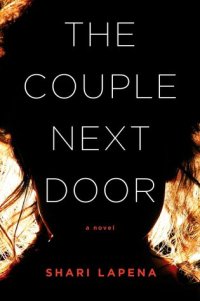
Kate’s Review: “The Couple Next Door”

28815474Book: “The Couple Next Door” by Shari Lapena

Publishing Info: Pamela Dorman Books, August 2016

Where Did I Get This Book: The library!

Book Description: How well do you know the couple next door? Or your husband? Or even—yourself?  

People are capable of almost anything. . . 
Anne and Marco Conti seem to have it all—a loving relationship, a wonderful home, and their beautiful baby, Cora. But one night when they are at a dinner party next door, a terrible crime is committed. Suspicion immediately focuses on the parents. But the truth is a much more complicated story.

Inside the curtained house, an unsettling account of what actually happened unfolds. Detective Rasbach knows that the panicked couple is hiding something. Both Anne and Marco  soon discover that the other is keeping secrets, secrets they’ve kept for years. 

What follows is the nerve-racking unraveling of a family—a chilling tale of  deception, duplicity, and unfaithfulness that will keep you breathless until the final shocking twist.

Review: Whenever I pick up a grit-lit thriller novel, I like to try and guess what the big messy twist is going to be. If I go off of logistics of the story and my previous knowledge of the genre, I can sometimes guess some of the twists and turns that are coming up. Barring, of course, that the author either does a really good job of concealing their twists, or brings twists out of nowhere that make little to no sense whatsoever. I can tell you that “The Couple Next Door” has a little bit of both, which flip flopped between the frustrating and the satisfying.

So even though the description is vague, I’m sure that you can guess that the terrible crime that is committed is that baby Cora disappears from her crib while Anne and Marco are at the dinner party in the adjoining home of the duplex. So the question becomes who is behind it? The police, specifically Detective Rasbach, is convinced that it has to be either Anne or Marco. I had made my own predictions about thirty pages in (as Serena can attest to, as she was there when I was spouting off my theories). I’m pretty happy to say that my predictions were pretty wrong, but that isn’t to say that this book wasn’t devoid of issues. Neither Marco nor Anne had a lot of shining moments, and I had issues with both of these characters and how they were portrayed. I’m glad that there weren’t any reckless depictions of post-partum depression, but Anne as a whole wasn’t very interesting, being an incredibly passive player in this entire thing. It’s not that I wanted her to go out and kick people’s teeth in until she found her baby, but I wanted more than her being in a constant state of victimization and having things happen to her instead of making things happen (except late, late, LATE in the game. But a bit more on that later). And then there’s Marco, who manages to make every single terrible decision a person could make in his situation, so while I know that we are probably supposed to feel a teeny bit of sympathy for him, boy I sure didn’t. One of the twists involving him was a surprise, but it made sense, and it just accentuated his stupidity even more. As for the side characters, they were fine, but they did feel like they were just the same old characters that we get in these stories: the slutty neighbor who doesn’t care who she hurts, the cold and judgmental in laws, and the hardened but nonetheless affected detective. They served their purpose, but they weren’t exactly reinventing the wheel, and when the protagonists weren’t really endearing themselves to me it was all the more glaring.

I also need to take a moment to lambast the ending. I am going to avoid giving spoilers here because I do think that this book is worth reading if you like thrillers and grit lit. But be warned, the ending is incredibly, INCREDIBLY tacked on and unnecessary. Especially given the implications that it has about other mental illnesses, as while Lapena was pretty good in her portrayal of post-partum depression she was not as great at other depictions of other disorders. When the big ‘final’ twist as referenced in the description came up, I was pretty miffed and turned off. It was out of place and aggravating. We didn’t need that one last twist. And it derailed the entire story for me.

Ridiculous twist aside, as I mentioned before other reveals and surprises made a lot of sense and did keep me on my toes. I thought that I would be able to predict a lot of it, but I found myself unable to put it down because of the need to now what was going to happen. Lapena does a very good job of parsing out her story, putting the pieces into place in a meticulous and well thought out way. I think that ultimately what I look for in a story like this is whether or not the plot keeps me guessing, and “The Couple Next Door” achieved that. If you are just looking for an entertaining thriller, and can look past the less fleshed out characterizations and ridiculous ending, “The Couple Next Door” is probably a good choice. I don’t regret reading it, I just wish that it had been a bit more.

Rating 6: The plot itself was pretty solid, but the main characters were lacking. Add in a ridiculous ending and it wasn’t what it could have been.

Reader’s Advisory:

“The Couple Next Door” is included on these Goodreads lists: “Female Psychological Thriller/Suspense”, and “2016: What Women Born in the 1970s Have Read So Far This Year”.

Find “The Couple Next Door” at your library using WorldCat!

Kate’s Review: “Lady Killer (Vol.1)”

23995491Book: “Lady Killer (Vol.1)” by Jöelle Jones and Jamie S. Rich (Ill.)

Publishing Info: Dark Horse Books, September 2015

Where Did I Get This Book: The library!

Book Description:  Betty Draper meets Hannibal! Josie Schuller is a picture-perfect homemaker, wife, and mother—but she’s also a ruthless, efficient killer for hire! A brand-new original comedy series that combines the wholesome imagery of early 1960s domestic bliss with a tightening web of murder, paranoia, and cold-blooded survival.

Review: As much as the 1950s was an incredibly toxic time for just about anyone who wasn’t a white Christian straight man, I must say that the cover of “Lady Killer (Vol.1)” drew me in because of the very Susie Homemaker aesthetic. Well, and the bucket of gore. But really, I think that the 1950s setting for Josie Schuller and her assassin life is a perfect time and place because of how restricted women were during this time period. Not only is it the darkest of gallows humor, it’s also a commentary on gender politics during the time period, which I didn’t expect from this book. Josie is a cold hearted assassin working for a secretive group, but she also has a husband and twin daughters at home that she appears to love very much. Her skills at balancing this family life with her job raises questions for her male bosses, Stenholm and Peck, as they think that being a wife and mother is going to ultimately make her unable to do her job, which leads to the main conflict of this series. So essentially, “Lady Killer” takes the idea of women being unable to have it all and shoves it into a 50s motif, and I was living for it.

Josie herself is a very fun and fascinating protagonist. Balancing this double life seems to be something she can do with ease, and it is, in fact, Stenholm (the big boss) and Peck (her handler) that set her up to fail based of their fear that as a woman she won’t be able to do her job. The rampant sexism that was thrown at a top female assassin was both infuriating and yet so damn appropriate for the time period (and also recent times) that I was seething and yet nodding in recognition. So too was it very satisfying to see her turn the tables on them and prove that not only can she do it all, she can do it better than they can. Sometimes it felt like Josie might be a little too good at her job, but hey, if James Bond can be practically perfect in every way, why not Josie Schuller? It was also very refreshing seeing that Josie isn’t like James Bond in the sense that she had no interest in Peck, whose constant advances on her were met with scorn instead of flirtation. I was worried that to be seen as a perfect assassin she would have to also have no actual attachments to her husband and children, but that isn’t the case. Jones opted to give her a more complex value system than one could have, as while she is a murderer for hire, she does love her husband and children with all her heart, and wants to keep them safe, both physically and emotionally.

I also appreciated that there were gross and unfortunate signs of the times that could have easily been ignored. For example, the first time we meet Josie’s daughters they are playing Indian, which was jarring and set my teeth on edge. There is also a moment that Josie follows Peck to a Chinese restaurant, that is clearly overdone and done up to appeal to the white clientele who expect a certain Chinese Fantasy of the female waitresses. This moment was brief and it introduced us to a very cool fellow assassin named Ruby, but you definitely get the sense that Ruby has her own set of nasty expectations thrust upon her being both a woman and Asian.

The drawings in this book are by Jamie S. Rich. They are also something of note, as they are very throw back with their pastels and bright hues, but realistic and gritty when they need to be. In the same frame there can be vibrant 50s retro chic style mixed with extreme violence and bleakness, which offered a fun juxtaposition and just adds to the gallows humor of the series.


ladykiller
Source: Dark Horse Books

“Lady Killer (Vol.1)” was a fun and nasty romp, and it makes me sad that the next trade collection isn’t expected until December of 2017. Seriously. So I guess that just means that I’m going to have to head on down to the local comic book shop and see if they have the newest series in single issue form. I’m not going to wait for Josie Schuller, I want her now.

Rating 8: A fun and gritty series with dark humor and social commentary, “Lady Killer (Vol.1) has introduced another kick ass female comic character that I am obsessed with.

Reader’s Advisory:

“Lady Killer (Vol.1)” can be found on the following Goodreads lists: “Women Kicking Ass (Graphic Novels/Comics)”, and “Women Creators in Comics”.

Find “Lady Killer (Vol.1)” at your library using WorldCat!

Kate’s Review: “The Smaller Evil”

27774725Book: “The Smaller Evil” by Stephanie Kuehn

Publishing Info: Dutton Books for Young Readers, August 2016

Where Did I Get This Book: The library!

Book Description: 17-year-old Arman Dukoff is struggling with severe anxiety and a history of self-loathing when he arrives at an expensive self-help retreat in the remote hills of Big Sur. He’s taken a huge risk—and two-thousand dollars from his meth-head stepfather—for a chance to “evolve,” as Beau, the retreat leader, says.

Beau is complicated. A father figure? A cult leader? A con man? Arman’s not sure, but more than anyone he’s ever met, Beau makes Arman feel something other than what he usually feels—worthless.

The retreat compound is secluded in coastal California mountains among towering redwoods, and when the iron gates close behind him, Arman believes for a moment that he can get better. But the program is a blur of jargon, bizarre rituals, and incomprehensible encounters with a beautiful girl. Arman is certain he’s failing everything. But Beau disagrees; he thinks Arman has a bright future—though he never says at what.

And then, in an instant Arman can’t believe or totally recall, Beau is gone. Suicide? Or murder? Arman was the only witness and now the compound is getting tense. And maybe dangerous.

As the mysteries and paradoxes multiply and the hints become accusations, Arman must rely on the person he’s always trusted the least: himself.

Review: This summer my husband and I went on a few airplane trips, and on one of them we were overhearing (okay, eavesdropping on) a conversation between two people in front of us. While we only got the context of their trip from this one conversation, it sure sounded like we were sitting behind a couple of members  going to a big cult meeting. We kept hoping that they wouldn’t turn around and see us and try to sell us whatever kind of nutritional supplement pyramid scheme they had gotten themselves into, and the moment that they mentioned that at the big welcome concert they had a strict dress code of all white, we looked at each other like

tumblr_n2z3ube2ph1qbeq9po1_500
Is this going to be on the news in the near future? (source)

I’m sure it was all harmless, but I did have a few fleeting moments of thinking about Heaven’s Gate and things like that. I also thought of a book I’d requested from the library, “The Smaller Evil” by one of my favorite YA authors Stephanie Kuehn. Kuehn has written some pretty intense thrillers for teenagers, thrillers that have enough appeal that I think would be pretty tempting to adult audiences if they were willing to just give YA literature a try already. I love her debut novel “Charm and Strange”, and I have had her on my radar ever since I picked it for Book Club during our inaugural session. Kuehn writes with intensity, passion, and a searing amount of pathos, as her characters are all very messed up and very alone in the world. I’m a true sucker for that. I had pretty high hopes for “The Smaller Evil”, what with the fact that it sounded like it was going to tackle the topic of cults. Because with psychopathy, child abuse, sexual assault, and mental illness, why not add something like this to her repertoire, especially since she writes on these matters with sensitivity and eloquence.

The cult storyline itself was a bit more Lifespring than Jonestown, which was not as interesting to me as I had hoped it would be. Which probably makes me kind of monstrous but eh, I’ll own it. I had hoped that there would be some really creepy scenes with group think and herd mentality, and while Beau and his followers were by no means totally on the up and up, bordering into unhealthy, I never felt like there was much of a threat from them. This made it so I wasn’t as worried about Arman, which in turn made me not as invested in him as I probably should have been. I also had a feeling about what the big reveal or twist was going to be, and then really felt it when a reference was made to a 1960s film called “Bunny Lake is Missing”, in which a mother of a missing little girl has her sanity questioned. I did appreciate the fact that it was unclear as to whether or not the main conflict, specifically Beau’s disappearance and possible death, was an actuality, or all in Arman’s head. And I think that had I not seen “Bunny Lake Is Missing” I wouldn’t have been able to figure out just what was gong on, but since I’m a cinephile with a taste for the obscure there mystery was kind of sucked out of the story for me. But then, I don’t think that it would have been so clear to me had I never seen that movie, so that is hardly Kuehn’s fault. I just wish that the conflict with the cult had been a bit more pressing, as as it was, even without knowing the connection, I just never quite bought them as totally threatening as a whole. Misguided and saps, sure. But not dangerous, and that took some of the suspense out.

However, this made it so my focus and interest could be solely on Arman and trying to figure out what makes him tick. Like I mentioned, Kuehn does a really good job of writing mentally ill characters in a realistic and gentle way. Arman suffers from very severe anxiety from the get go, and the reader is slowly shown what has happened to him in his life that has brought him to such a precarious state. He is always on the verge of an anxiety attack, and his first instinct is to run from the issues. When we meet him he’s on his way to Evolve, the compound in the beautiful backdrop of Big Sur, California, he’s stolen a lot of money from his drug dealing stepfather. Arman is searching for a father figure, as his biologial father is a criminal and his stepdad is just as dangerous. I wholly believed that Arman would find himself mixed up with the charismatic and potentially manipulative Beau, and I never questioned the choices that he made throughout this book. His mental illness also felt very real, and his anxiety never treaded into campy territory. It also always felt real enough that one could plausibly wonder if he was just a victim of his own delusions, without portraying him as a complete ranting and raving lunatic. The only aspect of Arman that I did question was his relationships to a fellow teenage member of Evolve named Kira, and his simultaneous dalliances with the beautiful and sexually aggressive camp cook. Neither of these characters were really fleshed out enough for me to really understand their motivations when it came to Arman, and it felt a bit too bad to me that the two potential love interests were kind of relegated to the sexual awakening (the cook) and the idealized but out of reach romance (Kira). The other female character at the forefront was Mari, one of the lower ranked officials at Evolve who puts the screws to Arman when Beau disappears. This book is definitely more about Arman and his journey, and while I really liked finding out what his journey was, it was kind of a shame that the ladies didn’t have as much time to shine or grow as they could have.

Though I think that “The Smaller Evil” isn’t as strong as “Charm and Strange” or “Delicate Monsters”, even a weaker story from Kuehn is still far and away some of the best writing for Young Adults out there. I am continually impressed by the stories that she tells, and I am once again going to have to wait for her next novel to come out. I really hope I don’t have to wait too long.

Rating 8: I was expecting more cult, but “The Smaller Evil” had me questioning everything that I was reading and on the edge of my seat.

Reader’s Advisory:

“The Smaller Evil” is included on these Goodreads lists: “Cults, Sects, and Religious Conflict for Young Adults”, and “Can’t Wait Books of 2016”.

Find “The Smaller Evil” at your library using WorldCat!

Kate’s Review: “Mother, Mother”

17262187Book: “Mother, Mother” by Koren Zailckas

Publishing Info: Crown, September 2013

Where Did I Get This Book: The library!

Book Description: Josephine Hurst has her family under control. With two beautiful daughters, a brilliantly intelligent son, a tech-guru of a husband and a historical landmark home, her life is picture perfect. She has everything she wants; all she has to do is keep it that way. But living in this matriarch’s determinedly cheerful, yet subtly controlling domain hasn’t been easy for her family, and when her oldest daughter, Rose, runs off with a mysterious boyfriend, Josephine tightens her grip, gradually turning her flawless home into a darker sort of prison.

Resentful of her sister’s newfound freedom, Violet turns to eastern philosophy, hallucinogenic drugs, and extreme fasting, eventually landing herself in the psych ward. Meanwhile, her brother Will shrinks further into a world of self-doubt. Recently diagnosed with Aspergers and epilepsy, he’s separated from the other kids around town and is homeschooled to ensure his safety. Their father, Douglas, finds resolve in the bottom of the bottle—an addict craving his own chance to escape. Josephine struggles to maintain the family’s impeccable façade, but when a violent incident leads to a visit from child protective services, the truth about the Hursts might finally be revealed.

Review: It is times like these that I thank the heavens that my mother is a wonderful, funny, awesome person who raised me well with a lot of encouragement and love. Sure, my teenage years, like most teenage years, were trying for both of us, but she and I have a very good relationship now, and I know that I am lucky for that. Because there are some people who have mothers like Josephine Hurst, and that scares the bejesus out of me. Josephine Hurst is one of the most twisted villains I have encountered in fiction this year, and like the other villains that have shook me to the core it’s because of her plausibility. She is the classic narcissist parent, who coddles and smothers and brainwashes one child (the neurotic and eager to please son Will), and torments the other (the tortured and lost Violet). I had gone into this thinking that it was going to be something kind of soapy and cartoony like either Kathleen Turner in “Serial Mom” or Marcia Cross on “Desperate Housewives”, but then when it was a really upsetting and scary book about the dangers of narcissistic parenting I was a bit taken aback. Though I suppose I should have expected something along those lines from the woman whose memoir, “Smashed: The Story of a Drunken Girlhood”, was about her tumultuous teenage years on booze. Still, how I hoped for a campy Bree Van de Kamp-Hodge revisit.

giphy12
Shady lady. (source)

I will say this much, this book was super upsetting and very terrifying to me because of how relentlessly evil Josephine was, and not in a fun way. Watching her manipulate her children and husband and wage psychological warfare against them was just hard to read. It’s told from two perspectives, that of Will, the doted on and pampered child, and that of Violet, the black sheep who Josephine psychologically abuses. The overarching mystery in this book is a pretty clever one, in that you don’t realize that it’s a mystery until about half way through, and that is of the oldest child, Rose. Rose ran away from the family shortly before the events started, and Zailckas does a very good job of slowly revealing why things may not be as they seem in not just this situation, but in many other situations in this book. We get the perspective of Violet, who resents her sister for leaving, and Will, who has been convinced that his oldest sister is basically evil, and I wanted to smack and shake both of them and protect them from this horrible woman who is raising them. I’ve seen and heard about narcissistic parents in the lives of my friends and acquaintances and family, and Josephine is written very, very convincingly. Even though I wanted to shake both Will and Violet for different reasons, I not once said to myself ‘well that just wouldn’t happen’, because Josephine was incredibly real. I definitely enjoyed the Violet sections more, but that may have been because the Will sections were a bit too disturbing to me. Will is the child who is loved and praised and coddled, but you also see just how far gone he is, and how screwed he is going to be because of his connection to his horrible and abusive mother. That said, I also think that the Violet parts showed a more well thought out character, as Violet, though she rebels against her mother with her fascination with Eastern religion and philosophy, is also completely controlled and dominated by her. Violet had the strongest voice of the three children, and I really felt for her and invested in her.

However, I kind of guessed a couple of the big twists pretty early on in the story, and I don’t know if it was because I read too much thriller fiction or because Zailckas didn’t parse out the clues in a very tricky way. I had a harder time with some of the red herrings that were thrown in, as they were only there to distract but then had no explanation or payoff. I also wish that we had a little more dichotomy between Josephine and Beryl, the mother of Violet’s friend Imogene and the positive female influence in her life. We got to see Beryl a little bit, but I wanted more juxtaposition between them. I also felt that Beryl was almost too two dimensional in her portrayal, both a compassionate maternal angel and a literal martyr, as she is suffering from terminal cancer. I think that had we seen more of her and had she had more depth it would have felt more sincere. And without giving away any spoilers, I wished for more closure than we got. I know that life doesn’t always have closure, and I know that rarely do awful people really get what they deserve. But sometimes I am desperate for it, and when it doesn’t happen the way I want it to I have a harder time accepting it.

“Mother, Mother” is a solid thriller mystery and most of the characters are well thought out. But I warn you, it is very upsetting, and it tends to have a bit more emotional baggage than it can carry. Koren Zailckas captures narcissistic personality disorder very well, and should you dare read this, be ready to feel all the ick.

Rating 7: While some of the parts are hard to read and some of the plot twists and diversions are unnecessary, “Mother, Mother” paints a haunting portrait of a horribly abusive mother and her suffering children.

Reader’s Advisory:

“Mother, Mother” is included on these Goodreads lists: “Narcissistic Mothers”, and “Gillian Flynn Read Alikes”.

Find “Mother, Mother” at your library using WorldCat!