Kate’s Review: “Into the Water”

33151805Book: “Into the Water” by Paula Hawkins

Publishing Info: Riverhead Books, May 2017

Where Did I Get This Book: The library!

Book DescriptionA single mother turns up dead at the bottom of the river that runs through town. Earlier in the summer, a vulnerable teenage girl met the same fate. They are not the first women lost to these dark waters, but their deaths disturb the river and its history, dredging up secrets long submerged.

Left behind is a lonely fifteen-year-old girl. Parentless and friendless, she now finds herself in the care of her mother’s sister, a fearful stranger who has been dragged back to the place she deliberately ran from—a place to which she vowed she’d never return.

With the same propulsive writing and acute understanding of human instincts that captivated millions of readers around the world in her explosive debut thriller, The Girl on the Train, Paula Hawkins delivers an urgent, twisting, deeply satisfying read that hinges on the deceptiveness of emotion and memory, as well as the devastating ways that the past can reach a long arm into the present.

Beware a calm surface—you never know what lies beneath.

Review: A couple years ago I got the book “The Girl on the Train” from my library, a spoil of war known as the ‘New Items Wall’. I had been waiting for it to be up for the allotted amount of time employees have to wait before it’s up for grabs, and as soon as that time was up I grabbed it and claimed it as my own. It didn’t take me long to read it. I found it pretty okay. I was entertained, even if I guessed the big twist long before the reveal was meant to happen. Though it’s gotten a bit of backlash as of late, I knew that anything else that Paula Hawkins wrote would get a lot of attention, and that I would be interested in reading it. So enter “Into the Water”, the newest book by Paula Hawkins. Like “The Girl on the Train”, I had to wait for this one to pass the time limit. And then I grabbed it for myself.

When “Into the Water” took me in, it took me in pretty hard. The book is told through multiple perspectives, each of them slowly giving tiny pieces of the overall puzzle as to what exactly happened to the two dead ladies who drowned in the local pond. The first is Katie, a teenage girl who jumped to her death from the cliff above the drowning pool. The second is Nel, a single mother whose daughter, Lena, was best friends with Katie. No one knows what happened to Nel. She was writing a book about the large number of women who died in the drowning pool over the years, either by suicide, witch craft trial, or straight up murder. Various perspectives include the eyes of Jules, Nel’s sister, Lena, Nel’s daughter, Sean, a detective and a man with his own connection to the pool, and Erin, Sean’s partner on the force. These four voices were the strongest of the bunch, as others either felt overdramatic (the mother of Katie was especially grating, even though I did feel sympathy for her), superfluous (a local psychic who has her own beef with Sean’s family), or just downright yucky (Mark, a teacher who may have had an improper relationship with one of his students). While they all added their own important pieces, it was hard to keep track of all of them at times at first. You add in chapters from Nel’s book about the other women who died in the drowning pool and you get a lot of information to process as you are paging through quickly because it’s so enthralling.

I had a few theories about what was going on this book, and unlike “The Girl on the Train” I wasn’t totally convinced about what had happened very early one. While I liked that it kept me guessing pretty well, I did take issue with the fact that this book is the kind of story that likes to keep yanking the rug out from under you. I am okay with twists and turns, but I get really sore when a solution is presented, a conclusion is presumed, and then in the last paragraph, NAY, the last SENTENCE, the solution is completely thrown out the window and a new reality is set in place. That’s not clever to me, that’s not inventive or an ‘ah ha!’ moment. That’s a cop out, and I am not impressed with cop outs.

giphy1
(source)

I think that I need to just start to accept the fact that while I am definitely going to keep up with Paula Hawkins books in the future, I’m going to have to accept that for me it’s going to be less about the solution and more about the journey getting there. I would definitely say that “Into the Water” kept me entertained and captivated well until the final pages were turned, but on the other side of the coin the ending was a huge let down. What I will say is that Hawkins knows how to construct a mystery and a thriller, and just because the endings have disappointed me it doesn’t mean that I will completely overlook the experience as a whole.

Rating 6: Incredibly engrossing and addictive, but with a dud of an ending, “Into the Water” kept me going but left me frustrated.

Reader’s Advisory:

“Into the Water” is included on the Goodreads lists “2017 Crime Books You’re Excited For!”, and “2017 Suspense and Thrillers”.

Find “Into the Water” at your local library using WorldCat!

Kate’s Review: “The River At Night”

29430686Book: “The River At Night” by Erica Ferencik

Publishing Info: Gallery/Scout Press, January 2017

Where Did I Get This Book: The library!

Book Description: A high-stakes drama set against the harsh beauty of the Maine wilderness, charting the journey of four friends as they fight to survive the aftermath of a white water rafting accident, The River at Night is a nonstop and unforgettable thriller by a stunning new voice in fiction.

Winifred Allen needs a vacation.

Stifled by a soul-crushing job, devastated by the death of her beloved brother, and lonely after the end of a fifteen-year marriage, Wini is feeling vulnerable. So when her three best friends insist on a high-octane getaway for their annual girls’ trip, she signs on, despite her misgivings.

What starts out as an invigorating hiking and rafting excursion in the remote Allagash Wilderness soon becomes an all-too-real nightmare: A freak accident leaves the women stranded, separating them from their raft and everything they need to survive. When night descends, a fire on the mountainside lures them to a ramshackle camp that appears to be their lifeline. But as Wini and her friends grasp the true intent of their supposed saviors, long buried secrets emerge and lifelong allegiances are put to the test. To survive, Wini must reach beyond the world she knows to harness an inner strength she never knew she possessed.

With intimately observed characters, visceral prose, and pacing as ruthless as the river itself, The River at Night is a dark exploration of creatures—both friend and foe—that you won’t soon forget.

Review: As I have mentioned before, I have some serious guilty pleasures (though I don’t REALLY believe in guilty pleasures when it comes to reading) when it comes to the books that I stack up on my nightstand. One of those guilty pleasures is wilderness survival horror/thriller. I am not an outdoorsy person by any stretch of the imagination beyond the occasional hike or walk, and so I love stories that involve people getting messed up by wilderness. Seriously, I think that I’m so scared of nature that I love seeing fictional people finding terror in the woods, or on the open ocean, or in the mountains, or whatever. This is the girl who freaked out about the Nutty Putty Cave Incident, made her entire book club listen to a long rant about it, and then watched “The Descent” a few times in a row as personal therapy, because she LOVES that movie due to the wilderness survival theme. So yeah. When I found a book that kind of sounds like “The Descent” exists, but takes out the cave, replaces it with a river, and replaces monsters with tangible real life horrors… Oh, I was so there.

7e1e765ade6959582e218422993504ae
Me leaving the library with my copy. (source)

“The River At Night” even seems like “The Descent” in it’s premise, at least a little bit. A group of ladyfriends go on a trip that involves adrenaline pumping extreme sports, with one of them recovering from a serious loss in her life while the others don’t really know how to approach her about it. Winifred is our protagonist, and she is still reeling from her divorce and the death of her brother Marcus. Her friends Pia, Sandra, and Rachel have always been her travel companions, on out-there and intense adventures (thanks to Pia, a true free spirit with no fear), and while Wini has reservations, the thought of white water rafting in the Maine Wilderness sounds… fun? I will be the first to admit that these four women are all pretty two dimensional caricatures, with the self involved adrenaline junkie (Pia), the tightly wound recovering addict (Rachel), the quiet sweetheart with a troubled home life (Sandra), and the wounded but determined wallflower (Wini). And I will also be the first to admit that some of the situations they found themselves in were a bit convenient, and cliche, and a little bit farfetched.

But guess what? I didn’t care because DAMN was “The River At Night” a fun as hell read!!!!

giphy
Cliche, shmiche, I’m just here to be entertained. (source)

“The River At Night” has just the right amount of suspense, as well as the right amount of relationship tension, that I had a hard time putting it down once I was completely absorbed by it. I had thoughts on where things were going to go, plot wise, but I was kept guessing for a lot of the big reveals. Ferencik did a really good job of building up the tension and setting the scene, and I felt like I could very easily and plainly see the Maine Wilderness as I made my way through the story.

I also really did like Wini as a protagonist. She is, of course, the character we get to know the best, and I felt like I understood her motivations in every choice that she made. I felt for her and I really did connect to the undercurrent of pain that she was fighting against, be it the end of her marriage or the loss of her brother, who was mute, and never really fit in outside of when he was with her. Her guilt in both of these losses was never overdone, but it was always present, like a very sad elephant in the room. It was pretty refreshing that Wini and her friends were all women who were encroaching upon middle age, an age range that we don’t really get to see much when it comes to women in books such as these. The way that they interacted with each other was pretty believable in terms of how sometimes friendships can be rife with tension, especially friendships that have gone on for so long and have seen so much. I believed every single action and choice that each of the characters made, and while I liked some more than others (Rachel was just the absolute worst and Pia was also pretty insufferable) I think that each of them added a unique piece to the whole of the story.

On top of that there were very sweet moments involving Wini and a character who is introduced a little more than halfway through the story. I don’t want to give any of it away, but just know that I thought that it was very touching for a book that had a slew of moments where I thought I was going to fall of my seat because of the ratcheted up tension. It was nice to see some legitimate moments of tenderness, even if some of the circumstances were a bit hard to swallow, realism wise. I absolutely found myself a bit teary eyed at a few of these moments, especially when Wini was thinking about Marcus and how she felt she failed him.

Realistic or not, “The River At Night” was an unsettling and adrenaline pumping survival thriller that captured my attention for a full evening. Thriller fans, MAKE NOTE. This will be a great book for the upcoming summer months to take along on a vacation.

Rating 9: Super fun, pushing all my guilty pleasure buttons, and suspenseful as all get out. I really enjoyed “The River At Night” and think that any fan of a nature survival thriller should check it out ASAP.

Reader’s Advisory:

“The River At Night” is, for whatever reason, not on many relevant Goodreads lists, but I think it would fit in on “Best Wilderness Horror Stories”, and “Best Wilderness Survival Books”.

Find “The River At Night” at your library using WorldCat!

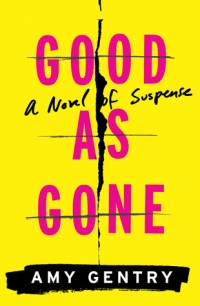
Kate’s Review: “Good As Gone”

29975458Book: “Good As Gone” by Amy Gentry

Publishing Info: Houghton Mifflin Harcourt, July 2016

Where Did I Get This Book: The library!

Book Description: Thirteen-year-old Julie Whitaker was kidnapped from her bedroom in the middle of the night, witnessed only by her younger sister. Her family was shattered, but managed to stick together, hoping against hope that Julie is still alive. And then one night: the doorbell rings. A young woman who appears to be Julie is finally, miraculously, home safe. The family is ecstatic—but Anna, Julie’s mother, has whispers of doubts.  She hates to face them. She cannot avoid them. When she is contacted by a former detective turned private eye, she begins a torturous search for the truth about the woman she desperately hopes is her daughter.

Propulsive and suspenseful, Good as Gone will appeal to fans of Gone Girl and The Girl on the Train, and keep readers guessing until the final pages.

Review: So back in the day there was a “Law and Order: Special Victims Unit” episode called “Stranger” in which a girl who disappeared a number of years prior came back to her family, but it turned out that she wasn’t actually the girl who had disappeared. She was an imposter, and it turned out that the reason the sister was so skeptical and cruel towards her was because SHE HERSELF HAD KILLED THE MISSING GIRL ALL THOSE YEARS AGO. WHAT A TWIST.  God I love “SVU”. This is run of the mill nonsense on that show and I come back for it seventeen years in.

giphy3
I can’t even deny this. (source)

This episode is based on the real life case of Nicholas Barclay, a Texas boy who disappeared at age 13 in 1994. His family was reunited with a man saying that he was Barclay years later… But it turned out he was a fraud named Frédéric Bourdin, a French man who conned many people using false identities. If I’m being honest, when I picked up the book “Good As Gone”, I half expected that to be the case (well maybe not so far as the sister doing the deed in the first place. That’s Grade A SVU malarky right there). But instead of detached and procedural methodical Benson/Stabler realness, I got a book that was actually a bit more twisty and turny, and one that attempts at genuine emotional connection along with the mystery it puts forth.

It’s established right away that Julie may or may not actually be who she says she is. We see these mysterious deceptions through the eyes of Anna, the mother, and through ‘Julie’ herself. I kind of liked that the mystery itself wasn’t based on whether Julie was actually Julie, and that the mystery was whether or not Anna was going to figure it all out. And really, this book is more about the tragedy and trauma that a family has to endure when one of their children disappears, and how everyone copes should they suddenly come back. I think that a lot of the time we only hear about the family being reunited, but rarely do we hear about how hard it can be for everyone to readjust when so much has changed. “Room” certainly takes that theme on, and honestly, “Room” does it better. While it’s good that Gentry did make it clear that the damage is far reaching in this family, and that a potential reappearance isn’t going to just fix everything, I think that the problem for me is that, outside of younger sister Jane, I didn’t really connect to any of the characters in this book. Anna, while I have no doubt her actions are in step with how a person would react in her situation, was so cold and cruel to Jane and sometimes Tom, her husband, I just couldn’t quite get behind her completely. While I don’t doubt that the emotional trauma of losing a child is going to make anyone act in ways that aren’t always healthy, Anna didn’t grab at my sympathy heartstrings so much as put me completely off.

‘Julie”s sections were interesting, going backwards from her ending up on the family doorstep and marching back through time, showing how she got there and the experiences she had to go through. While I know this was done to humanize her and to better understand her psyche, I found myself tempted to skim through these parts. It was a neat way to explain who she was, I will fully admit that, but since she herself didn’t do much for me I wasn’t as invested as others may be. We’re meant to have a lot of mixed feelings about her, and unfortunately it was hard to recover from deep suspicion. And like Anna, I just didn’t quite feel myself attaching to her as a character, even when I saw her going through really horrible and terrible things. Ultimately, it didn’t matter to me if she was who she said she was. The moments I liked best were between her and Jane, the younger sister who always blamed herself for letting a man walk out the door with her older sister as she hid in the closet. Jane was by far the character who intrigued me most, as she has basically been emotionally neglected by her parents because she’s the child who was left behind. Her own guilt festers and manifests in self imposed isolation, and her mother’s veiled resentment throws a wall between them that neither really can push through. It really did make me think about what it must be like for the kids who are left behind in stories like this, and how they handle it.I think that had this book had some perspective chapters from Jane I probably would have enjoyed it quite a bit more.

And on top of everything, the ending (which I’ll leave a mystery for everyone so as not to spoil anything) felt so haphazardly thrown together, with a number of things tied up neatly in a number of bows, that I had a hard time swallowing it. Some things were just too conveniently explained away, and other things were not really addressed as much as I wanted them to be.

“Good As Gone” has all the elements that it needs to make a great book, but the execution left a little to be desired for me. So instead of a great read, it was a fine one. I think that it’s worth your time if you like this genre, but it may leave readers as satisfied as they wish to be.

Rating 6: Yeah, it surprised me a bit here and there, and I liked the overall focus. But I didn’t really connect with any of the characters. I wasn’t really invested in whether the girl claiming to be Julie was actually Julie, and I wasn’t completely satisfied with how it all shook out.

Reader’s Advisory:

“Good As Gone” is included on the Goodreads lists “Female Psychological Thrillers/Suspense”, and “Thrillers You Must Read!”.

Find “Good As Gone” at your library using WorldCat!

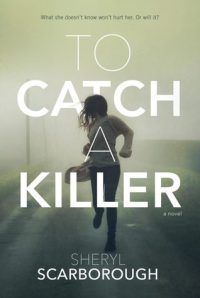
Kate’s Review: “To Catch a Killer”

29939266Book: “To Catch a Killer” by Sheryl Scarborough

Publishing Info: Tor Teen, February 2017

Where Did I Get This Book: The library!

Book Description: Erin Blake has one of those names. A name that, like Natalee Holloway or Elizabeth Smart, is inextricably linked to a grisly crime. As a toddler, Erin survived for three days alongside the corpse of her murdered mother, and the case—which remains unsolved—fascinated a nation. Her father’s identity unknown, Erin was taken in by her mother’s best friend and has become a relatively normal teen in spite of the looming questions about her past.

Fourteen years later, Erin is once again at the center of a brutal homicide when she finds the body of her biology teacher. When questioned by the police, Erin tells almost the whole truth, but never voices her suspicions that her mother’s killer has struck again in order to protect the casework she’s secretly doing on her own.

Inspired by her uncle, an FBI agent, Erin has ramped up her forensic hobby into a full-blown cold-case investigation. This new murder makes her certain she’s close to the truth, but when all the evidence starts to point the authorities straight to Erin, she turns to her longtime crush (and fellow suspect) Journey Michaels to help her crack the case before it’s too late.

Review: Back in the mid 2000s, the world was introduced to the character of Dexter Morgan in the book “Darkly Dreaming Dexter”, which in turn became a hit television series. In this book/TV series, the premise is that Dexter, a forensics lab employee in Miami, is a murderous psychopath, his psychopathy put into place when he witnessed his mother brutally murdered when he was a toddler and was left in a storage locker with her body for a couple of days. In “To Catch A Killer” similar circumstances just leaves Erin with some mild PTSD and a deep interest in forensics. Now I don’t know which situation is more true to life, and my guess is that for a lot of people it would be more a happy medium between the two. But that said, I’m less inclined to believe Scarborough’s scenario than Dexter’s.

Honestly, there were a few things in “To Catch A Killer” that I had a hard time stomaching. For one thing, it felt to me like many of the characters weren’t terribly well thought out. First of all, there’s Erin. I liked Erin enough, actually, she had a solid voice and some pretty fun snappy moments. But like I mentioned above, I just have a hard time thinking that a person who went through that kind of trauma would have more issues than a fascination with forensics and some pretty remote and just mentioned in passing PTSD symptoms. Oh, and a hard time trusting boys, leading to a dating drought in her life. While I did appreciate her quirks and her interests (as I too was a fan of “Natural Born Killers” when I was a teenager), I was never quite buying how together she was, especially since it made it sound like Rachel, her guardian, never really wanted to discuss the murder with her, or even talk about her mother at all. Along with Erin feeling a bit unrealistic, her friends were broad templates of the ‘awesome best friends’ without ever really having much depth added to them. Spam especially, who is the ‘cool gamer girl with the funky sense of style’ trope, and never really moves beyond it. Lysa also functions as a loyal but pragmatic sidekick, there to be a voice of reason and to temper down Spam’s spitfire. I did enjoy that the three of them have their own “Cheater Check” service, where they offer up their forensic investigative services to catch cheating boyfriends and girlfriends, so it wasn’t just Erin who was a science minded lady. I’ll always support girls having science minded role models in fiction. And then there’s Journey, the love interest/potential suspect. Erin knows that he couldn’t have done it, which takes on an interesting angle that could have been explored. While it may be a sort of trite angle, without it Journey is a bit watered down. He has a tragic backstory as well involving his father, but it never really elicited much emotion from me. These teens never felt like they were real teens, but a broad idea of what teenagers act like.

The mystery of ‘who killed Miss P/Erin’s Mom’ is the bigger theme of this book, and the smaller one is ‘who is Erin’s Dad’. Within the first few chapters I had pretty clearly figured out the answers to both questions, and while many red herrings were thrown at me, I ended up being right in the end. I think that had I enjoyed the journey of getting to the conclusion, had I enjoyed the characters and enjoyed how they pieced things together, I would have liked this book more overall. I don’t necessarily read books like this just for the mystery, but for the detection and the investigation. The only parts that I really enjoyed involved Erin’s uncle Victor, Rachel’s brother. He’s an FBI Agent who has written a number of books about crime investigations, and I did enjoy it when he and Erin interacted and geeked out over forensics. These scenes were both fun because of the well researched science that was involved, and because the chemistry between Erin and Victor did feel genuine. Their moments of science and tech geekery were really fun ways to introduce this kind of stuff to the reader, and I really can appreciate that.

I think that overall “To Catch A Killer” had promise, but it just wasn’t the book for me. Perhaps someone super into forensics would enjoy it more, but it didn’t quite stand on it’s own when it wasn’t talking about that stuff.

Rating 4: While it had scenes and moments of cool science and a pretty solid (if not at times unrealistic) main character, “To Catch A Killer” didn’t stand up underneath all it wanted to do.

Reader’s Advisory:

“To Catch a Killer” is fairly new and not on many specific lists, but I think that it would fit in on “Forensics: If It Doesn’t Walk, We Bring Out The Chalk”, and  “Forensic Fiction”.

Find “To Catch a Killer” at your library using WorldCat!

Kate’s Review: “Her Every Fear”

29938032Book: “Her Every Fear” by Peter Swanson

Publishing Info: William Morrow, January 2017

Where Did I Get This Book: The library!

Book Description: Growing up, Kate Priddy was always a bit neurotic, experiencing momentary bouts of anxiety that exploded into full-blown panic attacks after an ex-boyfriend kidnapped her and nearly ended her life. When Corbin Dell, a distant cousin in Boston, suggests the two temporarily swap apartments, Kate, an art student in London, agrees, hoping that time away in a new place will help her overcome the recent wreckage of her life.

Soon after her arrival at Corbin’s grand apartment on Beacon Hill, Kate makes a shocking discovery: his next-door neighbor, a young woman named Audrey Marshall, has been murdered. When the police question her about Corbin, a shaken Kate has few answers, and many questions of her own—curiosity that intensifies when she meets Alan Cherney, a handsome, quiet tenant who lives across the courtyard, in the apartment facing Audrey’s. Alan saw Corbin surreptitiously come and go from Audrey’s place, yet he’s denied knowing her. Then, Kate runs into a tearful man claiming to be the dead woman’s old boyfriend, who insists Corbin did the deed the night that he left for London.

When she reaches out to her cousin, he proclaims his innocence and calms her nerves–until she comes across disturbing objects hidden in the apartment and accidentally learns that Corbin is not where he says he is. Could Corbin be a killer? What about Alan? Kate finds herself drawn to this appealing man who seems so sincere, yet she isn’t sure. Jet-lagged and emotionally unstable, her imagination full of dark images caused by the terror of her past, Kate can barely trust herself, so how could she take the chance on a stranger she’s just met?

Review: In February of 2016, I was on a lovely family vacation in Hawai’i. On this trip I brought a number of books, one of which was Peter Swanson’s “The Kind Worth Killing” (I reviewed it on this blog here). I read that book in the span of about one day, sitting on a Lanai on Kauai and devouring it ravenously. In February of 2017, I was in St. Cloud, Minnesota, sitting in the Stearns County Courthouse and waiting for my husband to finish up judging a Mock Trial competition. Perhaps not as glamorous of a setting, but I brought Peter Swanson’s book “Her Every Fear”. It was almost a year to the day later. And boy, did I devour this one as well.

The thing about Peter Swanson’s thrillers is that he has a knack for completely making you question everything, and taking the reader by complete surprise. Much like in “The Kind Worth Killing”, there is a moment in “Her Every Fear” where the game completely changes, and I had to set the book down for a moment and try and regroup after the big reveal. But before I talk more about the plot, I want to talk about the characters in this book, specifically Kate and Alan. I really, really appreciated how Swanson portrayed Kate and her anxiety disorder/PTSD. As someone who also has an anxiety disorder, I thought that he captured the constant, if not usually mild, fears that just kind of plague you in your day to day life, be it intrusive thoughts, or the feeling that something awful is going to happen even if there is no reason to believe so. In a lot of books like this this could be used as a character flaw to show just how broken she is, but with Kate there is nothing but sympathy for her and what she went through in her past. Alan is a character I had a harder time wrapping my head around, as he’s someone who is definitely a little bit off, mentally. I don’t want to spoil anything because there are so many reveals that are masterfully executed, but I will say that there is lots of sympathy for Alan as well in his own crippling oddness. He could have easily been painted one way, but I ended up kind of understanding him, and like that Swanson put him together the way that he did.

The mystery itself is very well done, with twists and turns that come slowly to the surface. It’s a slow burn, and you think that you may have something figured out, but then things will completely change on you. He also does a very good job of slowly turning the screws of suspense, and wrote moments that really messed with my memory and consciousness. There was a moment involving a cat being let out of Kate’s apartment, only to be found in the apartment again in the middle of the night. Not only did she question if she had let him out in the first place, I TOO QUESTIONED IT, and had to prevent myself from flipping back and checking. It’s this kind of uncanny and upsetting horror that really gets me, and makes me super squeamish (so much so that I had to set the book down and go watch “Frasier” for a couple of hours). Swanson is also deft at skillfully switching perspectives, be it Kate, or Alan, or one of the other perspective chapters of other characters (whom I shan’t spoil here). All of them had complete and well rounded voices, and I feel like he really lets the reader get into all of their heads. The puzzle pieces are laid out for the taking, and gosh did I enjoy picking them up and putting them together. While I managed to figure it out eventually, it wasn’t long before the reveal, and I was still pretty blown away by it all.

“Her Every Fear” is a great thriller, one that I tore through and highly recommend to fans of the genre. And if you haven’t already, go back and pick up “The Kind Worth Killing” as well, and treat yourself to a double header of awesome twisty thrills!

Rating 9: Another home run by Peter Swanson! I devoured this book and it had me on the edge of my seat the entire time!

Reader’s Advisory:

“Her Every Fear” is included on the Goodreads lists “Twisty Page Turners”, and “2017 Crime Novels You’re Excited For”.

Find “Her Every Fear” at your library using WorldCat!

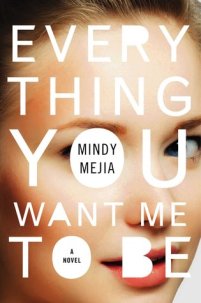
Kate’s Review: “Everything You Want Me To Be”

29276588Book: “Everything You Want Me To Be” by Mindy Mejia

Publishing Info: Atria/Emily Bestler Books, January 2017

Where Did I Get This Book: The library!

Book Description: Full of twists and turns, Everything You Want Me to Be reconstructs a year in the life of a dangerously mesmerizing young woman, during which a small town’s darkest secrets come to the forefront…and she inches closer and closer to her death.

High school senior Hattie Hoffman has spent her whole life playing many parts: the good student, the good daughter, the good citizen. When she’s found brutally stabbed to death on the opening night of her high school play, the tragedy rips through the fabric of her small town community. Local sheriff Del Goodman, a family friend of the Hoffmans, vows to find her killer, but trying to solve her murder yields more questions than answers. It seems that Hattie’s acting talents ran far beyond the stage. Told from three points of view—Del, Hattie, and the new English teacher whose marriage is crumbling—Everything You Want Me to Be weaves the story of Hattie’s last school year and the events that drew her ever closer to her death.

Evocative and razor-sharp, Everything You Want Me to Be challenges you to test the lines between innocence and culpability, identity and deception. Does love lead to self-discovery—or destruction?

Review: Small towns and their secrets. It’s a plot device that I am a huge sucker for. I don’t know if it’s because both my parents grew up in small towns and have many stories to tell and spill the tea on, but it has always been the kind of story that I can get behind. From “Twin Peaks” to “Peyton Place”, the Small Town Secrets trope can be incredibly tantalizing. The description of “Everything You Want Me To Be” makes it pretty clear from the get go that this is the kind of book that you’re going to be reading, and I can’t tell ya  enough how happy that makes me. Sudsy, dark, seedy, scandalous books are sometimes just what the doctor ordered, and it was a page turner that I greatly enjoyed.

Okay, so yes, perhaps part of that enjoyment is taken from the fact that this book takes place in small town Minnesota. Any book or film or show that takes place in my home state is going to get an advantage from me, just because you don’t see it all that often. And Mejia being from here definitely gave it that feel of authenticity, as you can tell that she knows the culture and knows some of the nuances of the people and towns that are outside of the larger cities. As I read this book I couldn’t help but think about the Jacob Wetterling Case a little bit, a kidnapping that happened in central Minnesota that went unsolved for 27 years (go HERE for a very well done podcast about the crime, the investigation, and the aftermath). There were many people who thought that it could just never happen there, and whenever something along those lines was said about Pine Valley, my stomach clenched up. Mejia captured the naïveté of a ‘simpler’ life and society very well.

I also thought that all of the perspective characters in this book were written very well. None of them were simple caricatures, when they very easily could have been. The first perspective is from Del Goodman, the sheriff of the county who is in charge of investigating the murder of Hattie Hoffman. He’s a friend of her family and has always known her as a sweet, intelligent girl who had big dreams and a big heart. That is really how most of the town knows her, and Del is determined to bring her killer to justice. He could very, VERY easily fall into the trope of craggy and stubborn sheriff who has seen a lot but never can accept that it ‘could happen here’. But instead he’s pretty level headed and is there to piece together the clues that we get as he finds them. But along with him we get two more perspectives. The first is if Peter, the new English teacher at the school who moved to small town Minnesota with his wife Mary to help his ailing mother in law. He’s a fish out of water from Minneapolis, and Mary has made it clear that she doesn’t see him as robust and ‘manly’ now that he’s on the farm. So when he starts up an online relationship with the mysterious “HollyG”, he finds validation and solace he feels he’s lost at home. Of course, as one could guess, HollyG is Hattie. Peter could VERY easily be portrayed as a predatory and insecure asshole who is merely trying to manipulate and recapture his youth/stroke his ego. But Mejia definitely makes him far more complex than that. He radiates ennui and frustration, and desperation, and while she never lets him off the hook, you can understand how he got on the hook in the first place. And then there’s Hattie. Hattie could either be portrayed as a small town girl with big dreams who gets caught up in her own hopes and wishes…. Or of a man-eater whose ambitions lead to manipulation and abject cruelty all in the name of getting what she wants. However, she really treads the line between both, and instead you get a girl who feels trapped inside a place that is far too small for her, and is desperate to escape by any means necessary. I was expecting to end up hating her, be it because she was too pure or because she was a complete psycho. But she never went that far. And I ended up pleased with that.

Mejia brings these three narratives together to tell a very strong mystery about what happened to Hattie. And I will say, I was definitely taken for quite the ride. There were hints and clues that were dropped that I thought were far too obvious, only for them to be completely different from what I thought. Then there were things that I thought had to be red herrings, that actually ended up being completely legitimate, but framed in such a way that you HAD to think they were misleading! It was a real trip. All of this bundled together to make it so I didn’t know who did it, I wasn’t certain of the motive, and everything I knew was wrong. True, there were a couple of revelations and resolutions that left me feeling a little ‘oh, is that all?’ because of so many well done twists and turns, but ultimately I really enjoyed the path that we had to take to get to the solution to the crime. And boy was it hard for me to put this book down until I had that solution. For the first time in a long while I was at work wishing that the day could just be over already specifically because I wanted to go home and finish this book.

“Everything You Want Me To Be” is the best thriller of the year so far, and it’s going to have to have some pretty stiff competition thrown it’s way to have it overthrown. Definitely, DEFINITELY check this one out if you like thrillers. You will not be disappointed.

Rating 9: A provocative and addictive book that kept me guessing the whole time. Though I feel there was a slight anticlimax, I was still very drawn in and entertained. Definitely one to check out if you want a fun and worthwhile thriller.

Reader’s Advisory:

“Everything You Want Me To Be” can be found on the following Goodreads lists: “Gripping Stand Alone Page Turners”, and “January 2017 Buzz Books”.

Find “Everything You Want Me To Be” at your library using WorldCat!


Kate’s Review: “The X-Files Origins: Devil’s Advocate”

29244734Book: “The X-Files Origins: Devil’s Advocate” by Jonathan Maberry

Publishing Info: Imprint, January 2017

Where Did I Get This Book: The library!

Book Description: How did Fox Mulder become a believer? How did Dana Scully become a skeptic? The X-Files Origins has the answers in this young adult origin story.

The X-Files Origins: Devil’s Advocate will explore the teen years of Dana Scully, the beloved character depicted in the cult-favorite TV show The X-Files. Her story is set in the spring of 1979, when serial murder, the occult, and government conspiracy were highlighted in the news.

The book will follow Scully as she experiences life-changing events that set her on the path to becoming an FBI agent.

Review: Who is one of my very favorite TV queens? Who is one of the TV characters that I love for her inspirational strength, her smarts, her snark, and her perseverance? Who is up there in my personal hall of fame of badass ladies on the small screen?

Dana. Freakin’. Scully.

giphy10
You rang, fives? (source)

So the very moment that I discovered that both Mulder and Scully of “The X-Files” fame got their own origin stories, I knew that I’d save Scully for second. I wanted to savor her. I wanted to bask in her story and her background. Jonathan Maberry had a huge character to take on, and I really wanted him to do her justice. And it took me a little while, but eventually I decided that Maberry did.

This story, since again we don’t get much background in the description, finds Dana as a fifteen year old adjusting to a new life in Maryland. She’s close with her sister Melissa, and trying to fit in in school, even though she knows she’s more introverted and reserved than her sister and her peers. And she’s also been having dreams, visions of violence and carnage. She’s seeing an ‘angel’ in her dreams, an angel who is killing. As teenagers in the area keep dying in accidents, Scully can’t shake the feeling that they are connected to the dreams that she doesn’t understand. What she doesn’t know is that she may be in a more dangerous situation than she realizes.

So this book takes the “Scully is a psychic’ theory and totally runs with it. There have been hints at her intuitive abilities throughout the series (in “Beyond the Sea” she sees a vision of her father right before his death; “Irresistible” finds Scully kidnapped, and she sees her kidnapper’s face shifting into different iterations of evil), but it was never truly confirmed. But I liked that Maberry decided to take this theory and give it a lot of life in her background. I was kind of wondering how he would make it believable that she could have psychic visions in her youth, and then have such a skeptical foundation in the series when it starts. Without spoiling anything, I can tell you that he pulls it off, and that I really liked how he did it. And seeing Dana react and manage these very scary visions was fascinating to watch. I think that she is still very much within her character, even as a fifteen year old. She feels younger and perhaps less secure in herself, but still feels like Dana Scully, even when in a situation that is so not something you’d think she’d be in. I sort of liked the mystery that she had to solve, because it’s foundation was a good harkening to her faith, her abilities, and her ultimate road to skepticism. I had a feeling I knew what was going on from the get go, so it wasn’t terribly surprising in it’s completion. But it wasn’t about the mystery itself for me. It was about how Dana was going to solve it with her strengths and wits.

I really enjoyed seeing the Scully family as well. In the series you get to know a few of her family members, specifically her sister Melissa and her mother Margaret, though you also get some solid and touching insight into Dana’s relationship with her Dad. You know that she was close to him in a lot of ways, from her reaction to his death in Season 1, to their nicknames for each other (Ahab and Starbuck!), to her seeing him in other visions as the series went on. In “Devil’s Advocate” we see how that close relationship is also a bit strained, and that Captain Scully was a bit more closed off from his family than maybe we realized. There were many moments between Dana and Captain Scully that made me misty eyed, as well as a wonderful scene with them reading from their favorite book “Moby Dick”. Whenever he called her Starbuck, I practically began to cry. I also loved seeing Dana and Melissa close and partners in crime, because their relationship on the show, while loving, was a bit contentious because they were so different. Having Melissa and Dana go to a New Age coffee shop and store for yoga and advice from local New Age practitioners just tickled me completely. Maberry also made an interesting choice of taking one of the Men in Black from the original series (the Red Haired Man), and gave him a role in a side plot. This was kind of a weaker part of this book for me, just because it took away from the main plot. In the Mulder book the surveillance parts involving X and Cigarette Smoking Man felt like a foregone conclusion; Mulder’s life had been intertwined with Cigarette Smoking Man since the beginning. Scully having this surveillance stuff in her life just felt… odd. Yes, later in life that aspect was there. I just had a harder time swallowing it in her youth.

I generally liked the new characters that Maberry created to interact with Scully, be it Corinda the New Age guru (her shop also makes an appearance in the Mulder book “Agent of Chaos”), or Scully’s love interest Ethan. Like in “Agent of Chaos” I was skeptical that a love interest had to happen in this book, since we know that he’s not going to be around ultimately, but Ethan was an okay addition. He was really there to give Scully some support from someone who was more like her, which I appreciated. Her relationship with him was also a good platform to show some of the casual sexism that Dana, as a fifteen year old girl in the late 1970s, could run into, even from someone who really does care about her. Seeing her push back against that was very gratifying, and seeing Ethan try to learn from it was refreshing and a good message to modern teens who may read this. While Ethan wasn’t as strong of an original character as Phoebe was in “Agent of Chaos”, I liked having him there for Dana to bounce more down to Earth ideas off of and help her find her voice. I liked that their partnership was it’s own thing, not just a predecessor to her eventual partnership with Mulder.

“The X-Files Origins: Devil’s Advocate”, showcased my girl Scully. I know that we probably won’t get anymore teen books about Scully and Mulder, just because it would feel a bit absurd to take it too far with their backgrounds, but I really enjoyed how Scully was showcased in this one. It did a good job of speculating how she became the person she was when “The X-Files” started.

Rating 8: While the mystery itself wasn’t as entertaining as it could have been, the character study of Dana Scully as a questioning teenager was incredibly effective, and very well done.

Reader’s Advisory:

“The X-Files Origins: Devil’s Advocate” is fairly new and not on any Goodreads lists yet. But I think it would fit in on “X-Files Related Books”, and “YA Novels about Psychic Abilities”.

Find “The X-Files Origins: Devil’s Advocate” at your library using WorldCat!

Kate’s Review: “The X-Files Origins: Agent of Chaos”

29244700Book: “The X-Files Origins: Agent of Chaos” by Kami Garcia

Publishing Info: Imprint, January 2017

Where Did I Get This Book: The library!

Book Description: How did Fox Mulder become a believer? How did Dana Scully become a skeptic? The X-Files Origins has the answers.

The X-Files Origins: Agent of Chaos explores the teen years of Fox Mulder, the beloved character depicted in the cult-favorite TV show The X-Files. His story is set in the spring of 1979, when serial murder, the occult, and government conspiracy were highlighted in the news.

The book will follow Mulder as he experiences life-changing events that set him on the path to becoming an FBI agent.

Review: When I was growing up, my family had three different Family TV nights as time went on. The first one was “Lois and Clark”. The last one, up until the end of high school, was “Buffy the Vampire Slayer”. And the middle one, the one that I have the fondest memories of, was “The X-Files”. I started watching “The X-Files” with my Dad when I was in fifth grade. I was both terrified and enthralled by it, and I loved both Fox Mulder and Dana Scully as they investigated the weird and unexplained happenings of potential supernatural malarky and/or government conspiracies with aliens. The revival last year was enough to keep me sated for a bit, though I was definitely left wanting more. And since it looked to be awhile before we were going to get more, imagine my delight when I found out that two books about teenaged Mulder and Scully were coming out. I started with the one about Mulder, “Agent of Chaos”, which was written by YA heavyweight Kami Garcia. I started with this one because while I’m probably more like Mulder, I have a deep, deep love for Scully, and want to savor her and save her for last. So off we go into teenage Mulder in 1979. It’s like “That 70s Show”, but far more insidious.

To give a bit more description than the one above: Fox Mulder, a seventeen year old living in Washington D.C., is still feeling the pain of his sister Samantha’s abduction from a few years prior. His family has been shattered, and he is trying to adjust to his new life with his Dad, as his Mom is still back on Martha’s Vineyard. His best friend Phoebe is back on the island, but he’s made a new friend in Gimble, the nerdy son of an unbalanced former Air Force Major. When children in the area start disappearing, Mulder is reminded of Samantha’s abduction, and decides that he and his friends need to try and solve this case. This was so wonderfully Mulder, convinced so deeply of something and so entrenched in his belief of it, that he would throw everything he has into trying to figure it out. I also appreciated that this harkened back to the greatest tragedy of Mulder’s life, the disappearance of his younger sister. Though we all know now what did end up happening to her (and while this truth is touched upon in this book ever so briefly), the sadness and pain revived right away, and quite effectively (side note: anyone who thinks that “Closure” is a sappy episode of “The X-Files” can seriously bite me). It was a pretty obvious idea to make Mulder’s story about Samantha at it’s heart, but at the same time Garcia did it in such a delicate way that it was masterful and touching.

We got to see some old favorites in this tale otuside of Mulder. While I kind of had a feeling that The Cigarette Smoking Man was going to make an appearance, because how could he not, I was very pleasantly surprised to see X, a ‘man in black’ and FBI operative from the series, play a fairly large role in this story as well. But along with these old characters, Garcia created some very fun new characters to act as foils for Mulder. The first is Gimble, Mulder’s best friend in D.C. who is a D & D playing Trekkie. Gimble served us some very appreciated, if not sometimes awkward, comic relief. But even he has a bit more tragedy to him, as his father is a mentally unbalanced man who believes in all kinds of conspiracy theories due to his former involvement with the Government. The Major, as he calls himself, was the weakest part for me in this book, as it seemed a bit too on the nose to have Mulder bond with a man who is both brilliant, and yet bogged down by lunacy and paranoia. Plus, it was just hard to watch The Major interact with Gimble, because MAN that has to be a hard way to grow up. Granted, the government conspiracy stuff was always my least favorite part about the show, so to have it kind of leak in here, while totally understandable, wasn’t really for me. But by far my favorite new character was Phoebe, Mulder’s best friend and sort of love interest. So sure, it’s clear that Mulder and Phoebe are not at all end game, given that his real true love is Scully. But I liked that Garcia took a risk and put a capable, smart, supportive yet no nonsense girl into this for Mulder to have as a foil. Because why couldn’t Mulder have two great loves of his life? Phoebe is the anchor that Mulder has always needed in his life, serving the Scully role and keeping him in check. Plus, her love of all things geek made her very relatable, and kind of refreshing. The girl’s first appearance has her hair done up in Princess Leia buns for God’s sake!

Overall this was a fun origin story that I think did justice to Fox Mulder. I can’t say if hardcore “X-Files” fans will like it, but this pretty big fan quite enjoyed the journey it took me on. I really can’t wait to read the one about teenage Dana Scully now.

Rating 8: A fun little origin story to give one of my favorite TV characters. Though I sometimes felt that parts of it were a bit too over the top, seeing Mulder, X, and The Cigarette Smoking Man doing things again was a delight, and reliving the sadness of Samantha Mulder was tragically beautiful.

Reader’s Advisory:

“The X-Files Origins: Agent of Chaos” is pretty new and not on any Goodreads lists. But I think it would fit in at “X-Files Related Books”, and “Government Agencies Dealing with Paranormal”.

Find “The X-Files Origins: Agent of Chaos” at your library using WorldCat!

Kate’s Review: “When We Go Missing”

33382556Book: “When We Go Missing” by Kristen Twardowski

Publishing Info: CreateSpace Independent Publishing Platform, December 2016

Where Did I Get This Book: An ARC was provided by the author in exchange for an honest review.

Book Description: Once, Alex Gardinier was a successful physical therapist and a happy wife. Now she is trapped in a crumbling hospital room. Seven years ago Alex’s ex-husband, Nathan, was convicted of murdering five girls, and he has been rotting in prison ever since. Except the doctors say that Nathan isn’t in prison. In fact, they don’t believe that he is a criminal at all. According to them, Nathan is a devoted husband who visits her every week. But Alex can’t recall ever seeing him at the hospital, and the last time they met he was holding her hostage on a boat.

Maybe the doctors are right – maybe these memories of his crimes are her own personal delusions – but if they are wrong, then Nathan somehow escaped from prison. If they are wrong, he has trapped Alex in a psychiatric ward.

If they are wrong, he is hunting her sister.

Review: During my time studying psychology in my high school and college careers, there were a number of case studies that freaked me out. Be it because of ethical problems (The Milgram Experiment), animal cruelty (Harlow Monkey Experiment), or just flat out human terribleness (The Stanford Prison Experiment), many studies have told us a lot, but have ridiculous messed up connotations. But one that seems perfect for a horror story is the Rosenhan Experiment, where non-mentally ill people faked symptoms to get inside mental institutions… and then found it pretty near impossible to get out, even when they stopped reporting symptoms. So when “When We Go Missing” ended up in the blog email box, and seemed to touch on exactly that, I thought “Oh yes. This could work.” And on top of that, it was written by fellow book and literature blogger Kristen Twardowski! So of course I gotta give a shout out of solidarity to her!

giphy2
(source)

And there may be mild spoilers here, but I promise that I won’t give too much away, nor will I give away anything that I don’t think isn’t established pretty early on, and therefore fair game.

Though the description makes it sound like it’s going to be mostly from Alex’s point of view, “When We Go Missing” actually follows the experiences and points of view of a number of women, all of whom are connected to Alex in one way or another. All of them have their own unique perspectives and experiences, and I appreciated the pieces of the larger, overarching puzzle that they provided. I do think that the description may be a little misleading in some ways, as I feel that through these multiple perspectives we find out quite early that Alex is not necessarily crazy, and that Nathan has somehow gotten away with sticking her into a Portuguese mental institution after he escaped from prison. But this still works, because now the mystery is how did he do this, how is Alex going to escape when she has been diagnosed as insane, and is Nathan going to get away with it. I am far more interested in figuring this out as opposed to ‘is Alex an unreliable narrator?’, a trope that I am pretty much well and over at this point.

Besides Alex’s story, be it before her time in the asylum or during it, we get the stories of Carolyn, Sandra, and Lucia. Carolyn is Alex’s sister, a woman who has never felt comfortable or trusting around Nathan, but doesn’t know how to say so. I really appreciated how her character progressed, and I totally believed her choices when it came to her sister and her sister’s marriage. While some may wonder how Carolyn couldn’t tell Alex her reservations, I found it to be pretty realistic that she may not feel it her place, or that she doesn’t have a leg to stand on. I’m someone who isn’t terribly close to her sister, and while the girl has a great head on her shoulders and has yet to make a terrible decision in regards to her personal life, I wonder if I’d have the courage to say if she had. So that resonated with me. Another character, Sandra, is actually the character I was most intrigued by, and found to be the most tragic. Sandra’s daughter disappeared, and she is trying to make sense of what happened to her. This journey takes her to the realization that a lot of women, many whom society may not miss, have gone missing, and that they may be connected. Her story was the one that I most looked forward to in terms of plotting, as it was definitely the saddest and the one that made me feel the most of all of the threads. And finally there was Lucia, a nurse at the asylum that Alex was being held in. She was another very interesting device for the story, acting as detective for the reader as we followed the hospital storyline through her eyes as well as Alex’s. I liked seeing Lucia try to figure out if the woman being detained in room 203 is insane, or if there is a larger conspiracy going on around her, and just how high up it goes. Because really, while the Rosenhan Experiment was upsetting in how it exposed the ineptitude of psychiatric hospitals diagnostic practices, wouldn’t it have been so much worse if it had all been one big conspiracy to keep the ‘patients’ in? And THAT is the thing about this book that freaked me out the most.

giphy1
No drinking fountains in sight to throw through a window either. (source)

There was a fair amount of jumping around in this book, timeline wise, which was a little confusing at first. Once I got the hang out it, however, it went a lot smoother, and I didn’t feel as lost as when I started. I think that it’s just a matter of getting used to the pacing and the jumping, which took a little bit of patience from me, a girl with ADD and a need for instant gratification.

“When We Go Missing” was an entertaining read that kept me guessing in a number of ways up through the last pages. It definitely hits a number of original themes and plot points, and I think that it would appeal to those of us who want something fresh from our psychological thrillers.

And be sure to come back here on Monday, January 23rd! Because the author of this book, Kristen Twardowski, is publishing a guest post here about writing, inspiration, and the creative process!

Rating 8: An entertaining and suspenseful book with a lot of well fleshed out characters, “When We Go Missing” was a very unsettling and tense novel with twist, turns, and a solid mystery!

Reader’s Advisory:

“When We Go Missing” can be found on the following Goodreads lists: “Fancy a Debut Psychological Thriller Author?”, and “Female Psychological Thrillers/Suspense”.

“When We Go Missing” is not available on WorldCat yet, but it can be found in paperback and ebook form at amazon.com.

Kate’s Review: “The Trap”

32813330Book: “The Trap” by Melanie Raabe (Imogen Taylor Translation)

Publishing Info: Grand Central Publishing, 2016 (Translation)

Where Did I Get This Book: The library!

Book Description: The renowned author Linda Conrads is famous for more than just her bestselling novels. For over eleven years, she has mystified fans by never setting foot outside her home. Far-fetched, sometimes sinister rumors surround the shut-in writer, but they pale in comparison to the chilling truth: Linda is haunted by the unsolved murder of her younger sister, whom she discovered in a pool of blood twelve years ago, and by the face of the man she saw fleeing the scene.

Now plagued by panic attacks, Linda copes with debilitating anxiety by secluding herself in her house, her last safe haven. But the sanctity of this refuge is shattered when her sister’s murderer appears again–this time on her television screen. Empowered with sudden knowledge but hobbled by years of isolation, Linda resolves to use her only means of communication with the outside world–the plot of her next novel–to lay an irresistible trap for the man.

But as the plan is set in motion and the past comes rushing back, Linda’s memories of that traumatic night–and her very sanity–are called into question. Is this man really a heartless killer or merely a helpless victim?

Review: At work one night my friend Paul (and fellow librarian) was subbing with me at the desk. He told me about a book he’d read, and that he thought that I should give it a whirl. It was a German book, recently translated into English, called “The Trap”. I requested it pretty much immediately, because Paul knows my reading tastes pretty well (and movie tastes; we proceeded to have a long conversation about “The Conjuring 2”). I think that I was expecting more horror by his description, and instead found myself with another Messed Up Lady Narrator book. But hey, I was okay with it, because I had yet to read a German Messed Up Lady Narrator book!

Side note: I’VE BEEN MISUSING THE PHRASE GRIT LIT THIS ENTIRE TIME!!! I could have sworn that Grit Lit was the phrase for these female psychological thrillers, but I guess it’s more the hip new slang for Southern Gothic. Huh.

giphy7
So ignore that from before. (source)

I have some good news right off the bat. This was a Messed Up Lady Narrator Book (I need to find a good snappy phrase for this genre) that I mostly, basically, enjoyed. While it perhaps doesn’t reach the high highs of “In A Dark, Dark Wood”, it was a gripping read with a tense plot. I did get a little nervous as the book progressed, because you all know how frustrated I get with psychological thriller heroines and their issues. Linda isn’t really any exception, as she is suffering from agoraphobia and PTSD after walking in on her sister Anna’s murder scene. While the trope of ‘damaged heroine’ is firmly in place with Linda, while it is realistically and necessarily dramatic, it never really feels overdramatic. Linda is very up front with her problems, she recognizes that she is, indeed, very messed up, and she isn’t the usual absolute WORST to everyone that you sometimes see in these books. Plus, I feel like she has actually earned her messed up personality, while sometimes the trope can feel forced and cliche. I mean, a mentally ill character usually means that there are going to be moments of ‘is all of this actually happening the way I think it is?’, especially in a book like this. It happened in “The Girl on the Train”, it happened in “The Couple Next Door”, and it definitely happened in this. I don’t want to spoil anything here, because I do think that this is a good read and definitely worth your time, but I think that it would have worked better and been a bit more revelatory if Linda wasn’t so sure about everything from the get go, if maybe we hadn’t jumped in with her mid-revenge plot. Surprises ended up not being too surprising, and while I was ultimately okay with it, the stakes never felt terribly, terribly high, and I didn’t feel like I was really solving anything along with her. I like taking the journey of detection and gumshoe-ing. This book didn’t really have that element to it, or at least not enough for me.

Linda’s relationships were also something that I want to address. I had a problem with a kind of out of nowhere forced romance sub plot that arrived a bit too late for my liking. There were hints about Linda’s simmering relationship with Julian, the detective of her sister’s case, but he didn’t really show up until the last third of the book. And I think that if I was really going to buy it, I needed him to really show up and make an impression well before that, not just as an analog character in the book that she has written (yes, we do get to see excerpts from the book. They were fine. They didn’t really add or detract). But I still liked Linda’s relationship with him as a whole, just as I liked her relationships with those around her, be it her assistant or her publisher. As I said, I think that there is a stereotype in pop culture and literature that people who are mentally ill are going to be completely difficult to deal with at all times and that they are going to put people off because of it. What I liked about Linda is that she has her problems, she has this uphill battle that she is fighting, but she still has relationships and isn’t portrayed as toxic or a pariah. She has friends and people who care about her. That meant a lot to me.

And then there’s the villain character, or whom Linda is convinced is a villain, Lenzen. Linda thinks that Lenzen, an established and well respected journalist, is the man who killed her sister a decade earlier. And since we, of course, know that there is going to be some doubt about him based on the plot description alone, I was very curious as to how Raabe was going to approach him. I liked that she did do a pretty good job of making it hard to tell what his deal was. Many of the things he did in the interactions he had with Linda could be chalked up to calculated sociopathy… Or they could have just as easily been something a regular, innocent man would do. Tricky. Very tricky. I liked that I was constantly questioning him, which shows to me that Raabe made effective use of the device that she set up. And believe me, sometimes a writer can make a real mess of it.

So while it ultimately did end up feeling suspenseful throughout the book, I wasn’t really surprised by much of anything that happened. True, I had my questioning moments, but I never had a “WOW!” moment. But honestly, I prefer a well written if simple plot to one that just has twist after twist after twist. “The Trap” was a fast paced and enjoyable read, and I hope that it takes off here in the U.S. as much as it did in Germany.

Rating 7: While it didn’t necessarily enthrall me and stagger me, “The Trap” was a fun and tense read that I found entertaining and not as overwrought as other books in the genre.

Reader’s Advisory:

“The Trap” is new and isn’t on any Goodreads lists. But it would be at home on “Female Psychological Thrillers/Suspense”, and “Psychological Chillers by Women Authors”.

Find “The Trap” at your library using WorldCat!