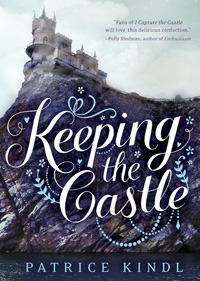
Serena’s Review: “Keeping the Castle”

12871232Book: “Keeping the Castle” by Patrice Kindl
Publishing Info: Viking Childrens Books, 2012

Where Did I Get this Book: the library!

Book Description: Seventeen-year-old Althea is the sole support of her entire family, and she must marry well. But there are few wealthy suitors–or suitors of any kind–in their small Yorkshire town of Lesser Hoo. Then, the young and attractive (and very rich) Lord Boring arrives, and Althea sets her plans in motion. There’s only one problem; his friend and business manager Mr. Fredericks keeps getting in the way. And, as it turns out, Fredericks has his own set of plans . . .

Review: This book has been hanging around on my Goodreads TBR pile for quite a while. Like, years. Between all the new releases and series that I’ve been reading so far, it’s never made its way to the top. Until last month when I was heading out on vacation and realized I had nothing on my Kindle that was particularly calling to me. Not to mention, I’ve been reading a heavy dose of fantasy/sci fi books recently, it was about time I got back to good, old historical fiction. So without further ado, I checked it out and raced through it.

The castle that Althea, her mother, her brother and her two snobby (but rich!) step-sisters live in is falling apart around them. Literally. Pieces of the ceiling pose a danger at any moment and the family must carefully arrange chairs when they have guests over to limit the risk of said chairs caving in from sheer age and decrepitude. Althea knows her duty: to save the castle by marrying well. Luckily, while fortune is not on her side, she does have a good amount of looks. Armed with this and a healthy dose of determination, Althea sets her eyes on their new neighbor, Lord Boring. But can she even get at him when the ever present, ever annoying Mr. Fredericks is always by his side?

From that description alone, you can probably guess the majority of the story. That, or having read/been exposed to any Jane Austen in your lifetime. I’m not leading with this as a criticism of the book (though it did have its downsides, which I’ll get into later), but as a general description of what this book sets itself up to be from the very beginning. There are no illusions of creating a completely distinct work. Instead, the story walks a line between parodying other classic works while also trying to work in a few surprises of its own. Some pieces of this were more successful than others.

Many of the characters had similarities to other stereotypical characters one usually finds in historical romance. Althea was an entertaining blend of Emma from “Emma” and Elizabeth from “Pride and Prejudice.” At her core, she’s a good-willed, smart woman. But she also has a healthy dose of foolishness that leads to all of the some-what expected shenanigans one could hope for from a light-hearted story like this. The two step-sisters were, of course, terrible, each exhibiting comical combinations of idiocy, selfishness, and petty cruelty.

The characters I was a bit more surprised with were Althea’s mother and the two gentlemen who are introduced. The mother was neither foolish nor absent! That alone is kind of shocker for stories like this. Instead, Althea’s mother is a very compassionate character and had her own mini arc throughout the book. As for the men, it’s not a spoiler to reveal that OF COURSE Althea has it all wrong about both of them. But their backgrounds and motivations where different than one might expect. This played to varying success. I liked the evaluation of Lord Boring and the choices he makes, revealing that in some ways, men and women in this time are not all that different.

But, while I liked Mr. Fredericks for the most part, I still struggled a bit with his “change” and the romance between him and Althea. Her frustrations with him are, largely, completely valid. And while he does make up for some his errors, I wasn’t quite convinced that I saw a discernible change in their relationship as the book progressed. Althea just kind of suddenly realizes that she has feelings. But it several of the better traits about Mr. Fredericks haven’t even been revealed! It isn’t a huge complaint, as I still enjoyed their scenes and dialogue together. But I also never really felt the chemistry between them either, which is a problem for a book like this where the romance is key.

As for the plot, like I said earlier, there are a lot of references to plot points from Jane Austen novels and the like in this book. While I enjoyed these for the most part, there were also moments when the book simply felt predictable because of how closely it was following the storyboard of those types of books. There were very few real surprises in here.

But, again, this is a book that one reads for the light, fluffy romance and for the writing style itself. There, the author very much succeeded. She did manage to neatly grasp the way of talking and writing that is common to stories set in this time period, and there were several turns of phrase that had me laughing out loud and highlighting bits.

All in all, it was a very pleasing book. It didn’t push any boundaries or surprise me, but it was just what it claimed to be: a light historical romance with some witty banter.

Rating 7: A fun, easy read, but don’t expect to be surprised or challenged in any way.

Reader’s Advisory:

“Keeping the Castle” is on these Goodreads lists: “Teen novels related to Jane Austen” and “Clean Regency (or around then) Romance Novels.”

Find “Keeping the Castle” at your library using WorldCat!


Serena’s Review: “Into the Bright Unknown”

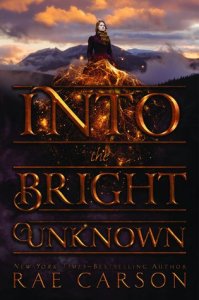
18054074Book: “Into the Bright Unknown” by Rae Carson

Publishing Info: Greenwillow Books, October 2017

Where Did I Get this Book: audiobook from the library!

Book Description: Leah Westfall, her fiancé Jefferson, and her friends have become rich in the California Territory, thanks to Lee’s magical ability to sense precious gold. But their fortune has made them a target, and when a dangerous billionaire sets out to destroy them, Lee and her friends decide they’ve had enough—they will fight back with all their power and talents. 

Lee’s magic is continuing to strengthen and grow, but someone is on to her—someone who might have a bit of magic herself. The stakes are higher than ever as Lee and her friends hatch a daring scheme that could alter the California landscape forever. 

Previously reviewed: “Walk on Earth a Stranger” and “Like a River Glorious”

Review: This is the last in the “Gold Seer” trilogy and after the previous book which seemed to wrap up much of the story and do-away with its main villain, I wasn’t sure where this book would go from there. I was also still smarting from the pretty graphic and hard-to-read scenes that made up a good chunk of that book, so I went into this one hopeful that we’d have a return to the “Oregon Trail” adventures of the first book. What we got was probably something in-between.

Life is moving along in Glory, California. Lee and her friends have on their hands what looks to be a growing and bustling town. Except for the fact that the town charter they had paid for from the wealthy Henry Hardwick in the last book has yet to arrive. With this problem before them, a large chunk of our main characters head off to San Fransisco. What they find is a man much more villainous than they had suspected and before long, Lee and her friends have much more to deal with than just a small town charter.

With this as the last book in the trilogy, looking back, it’s hard to get a real sense for this series as a whole. The first one was a fairly straight-forward travelogue with fun call-outs to the tropes of Oregon Trail games and stories. The second took a nose dive into the worst parts of humanity and left Lee as a bit of a passive character. And this one gets the gang back together, adds a new villain, and pretty much turns into a heist story. It’s all a little strange, from that angle.

But to judge this book on its own, there were definite areas of improvement from the last book but it still didn’t manage to reclaim the highs of the first. I very much enjoyed the return of many of our familiar characters who were largely absent in the second book. In particular, Becky, who had snuck up on me in the first book as a favorite and then disappeared in the second installment. As a heist story, it makes sense to have this large cast and the book already had many of these people on hand, so it was fun seeing them all interact and plan together in a way that was intentional, rather than the hap-hazard manner in which they had been forced by circumstances on the trail to work together before.

Lee and Jefferson’s relationship was also good. I was glad to see them working together for much of this book after being separated for so much of it during the previous one. The lack of relationship drama was also a welcome relief given that all too often it seems as if authors feel the need to throw a wrench in their romances in the last book from a misguided attempt to “build tension.”

One of the strongest portions of this book, for me, was the increased focus on Lee’s abilities. There was a big shift in the end of the last book with how her gold sense operated, and it was interesting watching Lee continue to practice and explore the possible new uses of her powers. There were several moments in this book where she came up with clever ways to put this power to use, and after being mostly useless in the second book, the success of their plans ultimately did fall to Lee’s own abilities, both with her powers and her planning. I was also surprised when an arc was introduced that dealt more fully with where these abilities might have come from and what other forms of magic might exist in the world. It was a nice addition as, up to this point, it felt a little strange to have Lee be the only exception to a world that otherwise seemed magic-less and true to history.

Those were the stronger aspects of the book. However, I did still struggle with the main plot itself and the villains. It’s a weird complaint, but like the second book, the villains were almost TOO villainous. In that they all seemed evil simply…because. And while I know that money and influence could go a long way then (and still can today), it also bordered on unrealistic that some of the villains’ actions could have been overlooked for so long. A man is killed in a crowd of people at one point, and no one bats an eye. Even with prejudices in mind, I have to think that this would have lead to something more.

The heist itself was interesting enough. But it was also a bit too complicated, for my thoughts. Or, barring that, not easy enough to put together on ones own without a massive infodump at the end explaining it all. A good heist story keeps some cards hidden, but still leaves room for the reader to put things together for themselves. Here, while there were parts that I could guess, the infodump where “all was told” was still long and confusing. This could partly be due to the simple fact that no finesse was used for said infodump: characters just spilled it out in long chunks of dialogue. At the best, it was just boring. At the worst, it left me still confused but not wanting to expose myself to the boredom again in an attempt to try to understand with a second read-through.

In the end, the series never quite regained the high that was the first book and seemed to flounder around for purchase and focus in the last two books, each presenting wildly different stories both in tone and topic. If I was to recommend this series, I’d almost say to just stop with the first. The second two are not worthless, but they’re also the kind of books that I will quickly forget. But if you are still enjoying these characters and the unique combination of realistic history with small doses of magic, this book was still an improvement on the second and might be worth checking out.

Rating 6: A serviceable story with a few highs relating to Lee’s magic, but a heist that was too confusing to be truly enjoyable.

Reader’s Advisory:

“Into the Bright Unknown” can be found on these Goodreads lists: “California Gold Rush in YA & Middle Grade Fiction” and “Young Adult Books Without Insta-Love.”

Find “Into the Bright Unknown” at your library using WorldCat!

Kate’s Review: “Dread Nation”

30223025Book: “Dread Nation” by Justina Ireland

Publishing Info: Balzer + Bray, April 2018

Where Did I Get This Book: The library!

Book Description: Jane McKeene was born two days before the dead began to walk the battlefields of Gettysburg and Chancellorsville—derailing the War Between the States and changing America forever. In this new nation, safety for all depends on the work of a few, and laws like the Native and Negro Reeducation Act require certain children attend combat schools to learn to put down the dead. But there are also opportunities—and Jane is studying to become an Attendant, trained in both weaponry and etiquette to protect the well-to-do. It’s a chance for a better life for Negro girls like Jane. After all, not even being the daughter of a wealthy white Southern woman could save her from society’s expectations.

But that’s not a life Jane wants. Almost finished with her education at Miss Preston’s School of Combat in Baltimore, Jane is set on returning to her Kentucky home and doesn’t pay much mind to the politics of the eastern cities, with their talk of returning America to the glory of its days before the dead rose. But when families around Baltimore County begin to go missing, Jane is caught in the middle of a conspiracy, one that finds her in a desperate fight for her life against some powerful enemies. And the restless dead, it would seem, are the least of her problems.

Review: Zombies have been a genre trope of choice for awhile now in horror fiction. They are usually used to show that in a world of zombies, humans are still the real monsters, and that’s a theme that I enjoy no matter how often it is invoked. But the thing is, zombies are starting to feel a bit stale. With “The Walking Dead” hemorrhaging viewers and post apocalyptic horror movies choosing to go other routes, the zombie story has needed a jolt for awhile now to, uh, revive it. So that is probably why I enjoyed “Dread Nation” so much. “Dread Nation” definitely breathes new life into the zombie story, quite possibly because the zombies are not the focus, nor are they the ultimate bringer of the end of the world. Zombies pale in face of the true enemy in this book, and that enemy is racism in American society. So that means fans of “Lovecraft Country”, this might be the next  book you should add to your list.

Justina Ireland has created an alternate timeline history of America, the divergence happening during the Civil War when the Undead (or Shamblers, as they are called in this) suddenly rose from the ground. The alternate history is so rich and new, and yet so familiar, that it definitely feels like this how things would have worked out had this occurrence actually happened in American History. Jane is our protagonist, and she is a true delight as a YA historical fiction/horror/thriller heroine. She has some character similarities to other greats in the genre (Katniss Everdeen comes to mind), mainly because Jane doesn’t necessarily seek out being a leader or a rabblerouser and just wants to live life by her own rules. But unlike books like “The Hunger Games” series, which have a vague and malleable version of oppression and dystopia, the one in “Dread Nation” is right out of the history books: Jane is a black girl living in a racist society, and the injustices that she deals with are still relevant in real world American in 2018, not limited to an alternate history of this nation. Jane, like other kids of color her age, has been sent to a school to learn how to fight the zombie hordes so the white people in society don’t have to, and while she is learning to be an Attendant (a more prestigious position in some ways, as she learns not only to fight but also trains in etiquette to serve a rich white woman) it’s still a subservient place in society. Much like the modern wars of Vietnam and the Gulf Wars, it’s the minorities who are on the front lines giving up their bodies while the white elite sit by and live their lives blissfully unaffected. Jane faces systemic racism and oppression from positions of authority because of her skin, but those aren’t the only themes that still apply today. Jane’s classmate/frenemy Katherine is a white passing black girl, and while her skin means she can shield herself from racism, she doesn’t feel like she has a place in the black community or the white community. Ireland does a great job of bringing these themes (and more) to the forefront, and making them feel relevant today even though the story takes place two centuries ago.

(Note: There has been some criticism of “Dread Nation” regarding how it discusses and portrays the Native characters and themes, most prominently from Debbie Reese. While I did like the book for the most part and think that it does a good job with its portrayal of racism in America, these criticisms are important to see and think about.)

But what about the zombies, you may be asking. As a zombie aficionado (even as they start to feel a bit played out), I can say that I really liked Ireland’s take on them. The action scenes with them never failed to disappoint, and the mythology that Ireland has built around them feels fresh because this isn’t a fallen society, but a society that is trying to coexist with these things. That is a narrative that you don’t see often, and given that I’ve always wanted to see it explored more I was so happy that Ireland went in that direction with the Undead world building. I also felt like she integrated it enough into actual events in American History and changed some of the outcomes or paths in response to it that it felt believable that this is how society would have reacted. Because of this, it always does feel like Civil War Era America, even with a zombie uprising. The Undead storyline, too, finds ways to  bring forward social justice topics on race that still concern society today and back then, with science, medicine, and research being done at the expense of black lives and bodies.

“Dread Nation” was a great read that has re-energized my love for the zombie genre. Ireland has given it so much more meat, and I hope that people who read it will think about all of the things she’s trying to say, even if they just came in for the Undead.

Rating 8: A tense and unique historical fiction/horror novel, “Dread Nation” not only tinkers with the zombie story, it also uses it to examine modern issues of race and racism in America.

Reader’s Advisory:

“Dread Nation” is included on the Goodreads lists “Black Lives Matter Library Ideas”, and “Zombie Apocalypse by Black Authors or w/ Black Main Characters”.

Find “Dread Nation” at your library using WorldCat!

Serena’s Review: “A Perilous Undertaking”

30008834Book: “A Perilous Undertaking” by Deanna Raybourn

Publishing Info: Berkley Books, January 2017

Where Did I Get this Book: audiobook from the library!

Book Description: London, 1887. At the Curiosity Club, a ladies-only establishment for daring and intrepid women, Victorian adventuress Veronica Speedwell meets the mysterious Lady Sundridge, who begs her to take on an impossible task–saving society art patron Miles Ramsforth from execution. Ramsforth, accused of the brutal murder of his mistress, Artemisia, will face the hangman’s noose in a week’s time if the real killer is not found.

But Lady Sundridge is not all that she seems, and unmasking her true identity is only the first of many secrets Veronica must uncover. Together with her natural-historian colleague, Stoker, Veronica races against time to find the true murderer. From a Bohemian artists’ colony to a royal palace to a subterranean grotto with a decadent history, the investigation proves to be a very perilous undertaking indeed…

Previously reviewed: “A Curious Beginning”

Review: I’ve finally gotten around to writing a review for the second book in this series! Confession: I read this several months ago…But! There have been several more recent releases that I’ve read between then and now that I wanted to get in nearer their publication date, so here we hare. #blogproblems. Anyways, all of that to say, the delay in this had nothing to do with reservations about the series or this book in general, because turns out, I liked this one just as much as the first, maybe even more!

Veronica Speedwell and Stoker have finally settled into a routine and are excited to set out on their first expedition with their wealthy patron. That is until he trips on a tortoise and has to cancel the whole thing, leaving Veronica and Stoker at a loss with how to fill their time. Wouldn’t it be nice if a mystery would fall on their doorstep right about now? And lo and behold, one does! This time with a murder in a close knit of artist friends and a speculation that the man found covered in blood at her feet may be innocent after all. Now it’s up to Veronica and Stoker to not only get to the bottom of all the shenanigans that this group has been getting up to over the years, but also to unravel a complicated knot of possible relationships and motives to hopefully save the life of an innocent man. Or is he?

Man, I’m just enjoying the heck out of these books! Veronica is such a hoot, and she’s even better in this book, now having found a new pursuit at which to aim her talents and intelligence. Stoker plays the reluctant side kick in front of Veronica’s unparalleled enthusiasm, and it sets a great tone for the series going forward. Further, in the midst of the mystery itself, we get some nice added building blocks to both of our main characters. Veronica is still reeling from the revelations about her parentage that she discovered in the last book. It’s not something that can simply be shrugged off, and specific elements of this mystery bring some of these lingering feelings to a head. Stoker, too, is still managing reconciling his complicated history with his past wife with his growing attachment (mostly just partnership, at this point) with another strong-willed woman.

The mystery itself also plays to both of these characters strengths and there were some fun swaps in gender roles that played for a lot of good comedic value. Stoker, for example, ends up being the distraction for fawning admirers while Veronica sneaks around hunting for clues. The pair also find themselves caught up in an underground…um…risque club? Stoker, of course, is horrified. Veronica is curious and enthusiastic. Which leads to even more horror on Stoker’s part.

The cast of possible suspects was large and I enjoyed many of the secondary characters that were introduced through the artists’ group. However, like the first book, I did find the ending a bit rushed and was able to predict the correct villain and their motivation fairly early on. But for me this didn’t dampen my enjoyment of the story. The writing is swift and sure, balancing excellent comedic dialogue with a never-faltering first person narrator.

One last criticism may be that I feel like the relationship between Veronica and Stoker might be moving a bit slowly, but this might just be due to the mental comparisons I can’t help but draw  between this series and the Amelia Peabody series. They are very alike, both with the historical setting and the general temperaments of the two leads. And with that one, we’ve seen how successfully the series moved forward even after the two main characters got married in the very first book. Here, it feels like the author might be shying back a bit out of fear that the romantic suspense is what is driving the story. I don’t believe it is, and I’ve seen how well characters like these can flourish, even if the initial romance has been resolved happily early on. But I just received the third book from the library today, so we’ll see how things progress there.

All told, I enjoyed this second novel just as much as the first. Having already been introduced to these characters and had the partnership between Veronica and Stoker already built, I might even say this was the stronger outing of the two. If you enjoyed the first book, definitely check this one out!

Rating 9: No second book slump to be seen here!

Reader’s Advisory:

“A Perilous Undertaking” is on these Goodreads lists: “Best Victorian Historical Fiction Set In Britain” and “Lady detectives.”

Find “A Perilous Undertaking”  at your library using Worldcat!

Kate’s Review: “DC Bombshells (Vol.6): War Stories”

35939533Book: “DC Bombshells (Vol.6): War Stories” by Marguerite Bennett, Aneke (Ill.), Mirka Andolfo (Ill.), Laura Braga (Ill.).

Publishing Info: DC Comics, April 2018

Where Did I Get This Book: The library!

Book Description: The ultra-popular statues from DC Collectibles come to life in their own ongoing hit comic book series, now in its sixth and final installment!

The Bombshells face their final battle as a supernatural Nazi invasion begins! On top of that, Hugo Strange unleashes his failed lab experiments on Harley Quinn and Poison Ivy’s circus and Lois Lane has her chance to avenge her family on the villain — will she take the shot? Amid the chaos, discover Lex Luthor’s true colors as he reveals which side he’s really on, and what that means for the future of the Bombshells!

The incredibly popular DC Collectibles line is brought to life in these stories that reimagine the course of history! From writer Marguerite Bennett (BATGIRL, EARTH 2: WORLD’S END) and featuring artists including Marguerite Sauvage (HINTERKIND), Laura Braga (Witchblade) and Mirka Andolfo (Chaos) comes DC COMICS: BOMBSHELLS VOL. 6. Collects DC COMICS: BOMBSHELLS #25 and #30-33.

Review: I didn’t realize it when I reviewed our previous “DC Bombshells” Collection that “War Stories” was the last in the first large series within this alternate historical universe starring the awesome ladies of DC. I also didn’t realize that the second series, “DC Bombshells: United” was cancelled about a year into it’s run. Trust me, if I had known these things when we last visited this series, I would have gone on a long rant. In fact I’m pretty sure that I will be ranting before this review is through. But for now I’m going to try and focus on the big finale and pretty solid wrap up that was “DC Bombshells: War Stories”. Let’s see how long it takes me before I start going off. I’ll try to keep my cool.

giphy
Don’t mind me, I’m totally calm. (source)

When we left off, Ivy and Harley were in Russia helping civilians out, Raven had stowed away with them to try and find her father, Zatanna and Constantine were trying to find her, and Kara and Lois Lane had tracked down Hugo Strange and found that he’d used some of Kara’s DNA to make a clone of her, whom he called Power Girl. Also there was another captive they rescued, named Superman. And The Suicide Squad showed up, led by Batgirl and including Frankie, Killer Croc, Enchantress, and Ravager. So in this volume, all of these stories come to a head. Sadly, this means that Wonder Woman, Batwoman, The Batgirls, and Mera are all absent from this final volume in this large arc/first series, and to me that didn’t sit right. I know that all of them are going to have more to do in “DC Bombshells United” as the focus turns to the home front and the ills the American Government commits against it’s own citizenry, but this was a significant end and shift, and I think they should have shown up in some capacity. But the stories here as they are are all pretty satisfactory in spite of this glaring absences. I especially enjoyed the Suicide Squad mission, which took our team into a German Sub in hopes of finding Luc, Batgirl’s long lost paramour. I liked this storyline  because while it continued the themes of Nazi occultism and mystic plotting, we got to see Edward Nygma and a few Lovecraftian-esque threats. Plus, this Suicide Squad is pretty excellent, all of them with a 1940s flair, which means that in my mind Killer Croc has a Mid-Atlantic accent and that just tickles me. Along with this already bonus storyline we get another one involving some of the Batgirl of Burnside characters, mainly Frankie, Qadir, and Nadimah dabbling in some magical mischief. It was a one off and didn’t really add much to the overall plot, but it was still enjoyable and fun to see more characters appear in this alternate timeline.

The climax of this series, however, comes with the Battle of Leningrad, as the Bombshells have to come together to not only fight Hugo Strange, Killer Frost, and the Nazis, but to try and save Leningrad and the people there. I liked seeing all of the ladies come together in one place, and I felt like they all got some decent moments to shine within this final battle. That said, it wouldn’t be a pivotal battle of a series if there wasn’t some sadness and sacrifice, and while it never reaches levels of Stargirl loss here, there are definitely repercussions and moments of sadness for some of our characters, which all were executed with deft emotion and feeling. What I love about this series is that it shows that sadness and pain are not weaknesses in our characters,, and it’s refreshing to see that some characters do get lost in their emotions, both in good ways and in bad ways. But even when it’s in bad ways you never get the sense that these emotions are bad to have, just that they need to be used in less destructive ways. Its a theme we see a lot in these stories and it makes me wonder if a comic that was starring the males of DC would be so bold as to take that stance. I think I know the answer to that, sadly.

And finally, there is a whole new threat that comes from the Russian side and brings more storyline to Kara and her origins: Faora Hu-El from Krypton has arrived once more (seen previously WAAAAAY back when Supergirl and Stargirl were being used as Russian Propaganda), and boy has she brought some serious baggage to our finale. And since I want to discuss it here, this is our SPOILER ALERT moment that almost always pops up in this series. One of the things that “DC Bombshells” has done is made this universe and it’s characters and storylines very female centric, and that has altered some backstories here and there. The biggest alterations to date are pretty Kryptonian centric. Not only is Superman a clone of unknown origins created in Strange’s lab (as far as well know at this juncture), Kara’s own origin story is shaken up with the arrival of Faora, who tells her that she is a perfect being created by Faora, Alura, and Lara. It’s pretty neat and ballsy to reveal within this final battle that Supergirl, the last true Kryptonian (given Superman’s new origin) and most powerful being in the story,  is the product of three women and Kryptonian science. I have this image of ‘well actually’ toxic nerdboys pitching a HUGE fit about this. But that’s what “DC Bombshells” has always been about: it’s about women at the forefront, women supporting and loving and fighting women, and women as the main components of a story, with guys playing the traditional roles that women have played in comics for years. Frankly, it’s genius.

Which is ALL THE MORE REASON THAT IT SUCKS THAT DC HAS PULLED THE PLUG. Representation in comics is so important because representation in all types of media is important. With women being in the lead, women of all races, religions, and sexual orientations, “DC Bombshells” has been one of the best comic series DC has when it comes to representation (especially since apparently “Batwoman” is ALSO getting axed! Sure, I wasn’t a fan, but BATWOMAN IS IMPORTANT)! DC is still going to toss a whole lot of bank into it’s middling AT BEST movies (“Woman Woman” not included, and holy SHIT is THAT ironic given the context of this rant) and keep rebooting Batman and Superman over and over AND bastardize Alan Moore’s “Watchmen” universe for funsies, but it can’t throw a bone to a series where women are at the forefront and aren’t sexualized and objectified through a male-only gaze? IT’S UNACCEPTABLE!!!!

giphy1
Hey, I lasted awhile before I full on lost it, right? (source)

Well, regardless, this first arc of “DC Bombshells” comes to a solid close in “War Stories”, and while I know that “Bombshells United” isn’t as long, I’m going to really, REALLY savor it as I make my way through. These DC women continue to create a better world filled with compassion and justice, and I know that even though it’s ending that won’t change the importance of this series as a whole.

Oh, and is Black Canary going to show up in this next series? Asking for a friend.

Rating 8: A solid and mostly satisfying end to the first major arc of the “Bombshells” comics, “DC Bombshells: War Stories” is a wrap up with most of the characters we love, though a few notables were missing and it was very noticeable.

Reader’s Advisory:

“DC Bombshells (Vol.6): War Stories” is included on the Goodreads lists “2018 Lesbian Releases”, and it would fit in on “Diverse Heroes in Comics/Graphic Novels”.

Find “DC Bombshells (Vol.6): War Stories” at your library using WorldCat!

Previously Reviewed:


Serena’s Review: “Like a River Glorious”

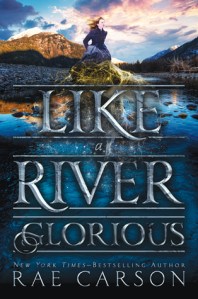
18054071Book: “Like a River Glorious” by Rae Carson

Publishing Info: Greenwillow, September 2016

Where Did I Get this Book: audiobook from the library!

Book Description: After a harrowing journey across the country, Leah Westfall and her friends have finally arrived in California and are ready to make their fortunes in the Gold Rush. Lee has a special advantage over the other new arrivals in California—she has the ability to sense gold, a secret known only by her handsome best friend Jefferson and her murdering uncle Hiram.

Lee and her friends have the chance to be the most prosperous settlers in California, but Hiram hasn’t given up trying to control Lee and her power. Sabotage and kidnapping are the least of what he’ll do to make sure Lee is his own. His mine is the deepest and darkest in the territory, and there Lee learns the full extent of her magical gift, the worst of her uncle, and the true strength of her friendships. To save everyone, she vows to destroy her uncle and the empire he is building—even at the cost of her own freedom.

Previously reviewed: “Walk on Earth a Stranger”

Review: As I said in my review of the first book in this series, “Walk on Earth a Stranger” was pretty much what you’d get if you turned the old Oregon Trail game into a full length novel. Add in a small dash of fantasy with Lee’s gold sense, a few more references to the prejudices and wrongs of the time, and there ya go! As a travelogue, I very much enjoyed the story. But in the end, they arrived at California. Without the travel/Oregon Trail part of the story, would this series continue to hold up. And the answer is…kind of?

Lee and her friends have finally arrived in California, found a claim spot ripe with gold, relying on Lee’s gold sense, and begun to set up their own little town. But when a string of misfortune’s start befalling the growing township and its residents, Lee’s the only one to suspect the truth: her uncle Hiram is back after her and these little “accidents” are his way of warning her. Determined to set things straight once and for all, Lee and Jefferson set out to confront her uncle and gain Lee’s freedom. But it all goes wrong, and Lee is about to find out just how awful her uncle truly is.

So I have very mixed feelings on this book. But I’ll start with the things that I know I enjoyed. I still very much liked the mixture of a historical setting and Lee’s magical abilities. If nothing else, the author makes you feel like you’re in this time period. There are no missteps, and I always felt fully immersed in this world. The challenges of living during this period are clear: weather, nature, sickness/injury, they must overcome it all and the day to day life is so distinct and well-described that I never questioned the authenticity of this world. The real skill was then in merging Lee’s magical abilities into this world without disturbing the balance of realism. Her gold sense played a background role in the first book, serving primarily as a motivation for the villain and coming into play here and there when needed. Here, even with Lee’s growing understanding of her own powers, her gold sense still remains mostly in the background. It is the crux of the conflict, but it isn’t really used much beyond that, besides in the final conflict. This balance allowed the historical elements and characters themselves to serve instead as the main point of interest for the book.

I also still enjoyed Lee as a character.  Here, she is forced to confront the role that she plays in the way that history is unfolding. Yes, she is sympathetic and “ahead of her time” for a character living in this period of history, but she is not excused from responsibility. She’s still claimed land that belonged to others and through her and the others mining for gold, irrecoverably changed the very landscape upon which they’re living. I liked that she wasn’t let off the hook for these actions and, while she recognizes the harm, she doesn’t have, or is given, any quick and easy solutions. What’s more, she doesn’t always come to these conclusions on her own, but must be informed of her own ignorance and remaining prejudices by those around her.

However, Lee wasn’t given much to do in this book, frankly. In the last, we saw how she contributed to the wagon train which she was a part of. She took action on her own and used her own skills, not just her gold sense, to solve problems. Given the nature of this story, Lee is sidelined for much of this book. It is up to others to plan and plot, and while she’s not strictly speaking a damsel in distress, she’s probably only one step away. And, because the story is told from her point of view, the reader is left with a lot of inaction and waiting, just as Lee is herself.

And in that time, the book becomes very hard to read. As I said, the author doesn’t flinch away from portraying some very ugly realities for what this time period could be like for many people, especially at the hands of the worst of the white settlers (though, as I said, even the “best” are not let off the hook for their own compliance and ultimate self-interest). While I admire this dedication to revealing the ugliness that existed, it also began to be almost too much as the story progressed. Because of Lee’s own captivity, the reader also feels like a captive audience to pages and pages of depravity and various horrors.

It is this combination of reduced action for Lee herself and this laser focus on some very tough scenes that made the story lag quite a bit in the middle. “Lag” is even a strange word for it, since boredom was definitely not the emotion most sparked by the harsh images presented. But plot-wise, the story did feel adrift and wallowing. The action picked up again in the end, and I liked that even in the resolution, things do not end in any type of perfect, utopia-like fashion. This specific horror might have been ended, but the world that they all are living in is unchanged.

Again, this story also resolves in a way that leaves me questioning where the third book will go from here, similarly to the first. While I did struggle with this book a bit, I’m still curious to see where things will ultimately end up and I’m sure I’ll pick up the next one soon!

Rating 6: A reduced role for our heroine combined with some really tough scenes seemed to negatively affect the pacing of this book. But the historical aspects are still excellent.

Reader’s Advisory:

“Like a River Glorious” can be found on these Goodreads lists: “YA & Middle Grade California Gold Rush Fiction” and “YA Historical Fiction of 2016.”

Find “Like a River Glorious” at your library using WorldCat!


Kate’s Review: “Lady Killer: Vol. 2”

30347784Book: “Lady Killer: Vol.2” by Joëlle Jones

Publishing Info: Dark Horse Comics, May 2017

Where Did I Get This Book: The library!

Book Description: The killer housewife is back! The Schuller family has moved to Cocoa Beach, Florida, where life carries on as usual. Josie continues to juggle Tupperware parties, her kids, and a few human heads. However, when someone from her past tails her on a hit, she may be in for more than she bargained for.

“Lady Killer is worth its weight in gold for the art alone, but the enigmatic Josie Schuller is the real appeal.”—Newsarama
“A level of violence that can only be described as Mad Men’s Betty Draper meets Dexter.”—Comic Book Resources

Review: Given that I enjoyed the first volume of “Lady Killer” by Joëlle Jones, it was a long and difficult wait for “Volume 2” to finally come out. Assassin Housewife Josie Schuller was a character that went above and beyond my expectations in the initial tale, an archetype that could have easily fallen into sex kitten kitsch lie so many other ‘badass’ women before her (Harley Quinn, anyone?). But the strength of her character lies within her complexity, and her multifaceted life and personality makes her an intriguing and fascinating protagonist, and I was excited to see where the choices she made in the previous book took her.

When we left Josie she had broken ties from the group that hired her on as an assassin. In a rather, uh, flamboyant way. Now she and her family (consisting of her husband Gene, her twin daughters Jane and Jessica, and her suspicious mother in law Mrs. Schuller) has moved to Florida, and Josie is working as a free agent assassin as well as maintaining the role of a perfect homemaker. By day she throws cocktail parties and barbecues, by night she’s killing targets. The duality of an ideal 1960s housewife and a cold blooded killer is both hysterical, but a bit barbed as well. Even hit women need to juggle it all, and have certain facades to maintain just as many women today feel a need to do so. I love seeing Josie interact with both her targets and her family. Her love and devotion to Gene is lovely to see (especially since he’s so clueless about who she is and what she is capable of), and little interactions with her daughters shows the fierce love she has for them and keeping them safe, be it from physical dangers or loutish, inappropriate men and their ‘humor’.

josie
She slits people’s throats but she’ll be damned if some creep says nasty stuff in front of her kids. (source: Dark Horse Comics)

One of the realities of Josie’s new life, however, is that by working solo she doesn’t have the support she had in the past, which makes flying under the radar more difficult. It was one thing to take out a target and have others there to clean up for you; it’s quite another to have to deal with it yourself, especially if you are a petite lady. I like that Jones was realistic in that Josie, capable assassin or not, struggled with body disposal and clean up, and had to turn to a shady character from the past, Irving, to help her with it all, as well as finding herself approached by another group that may want to strike a partnership. I like that Josie is frustrated that she needs help, and wants to continue her career on her own terms. But of course, with everyone having ulterior motives and underestimating the excellence that is Josie Schuller, nothing can come easy, and she finds herself the victim of the toxic assumptions that even though she’s a trained killer, ultimately she’s a woman, and therefore exploitable. The themes are evergreen, aren’t they?

Speaking of underestimating women, Josie isn’t immune to it. We get some background to her crabby and suspicious mother in law, Mrs. Schuller, who up until now Josie has seen as a mere thorn in her side. Turns out, Mrs. Schuller has a lot of stuff she’s been hiding, and some of her knowledge and backstory sparks off some dangers for Josie, and in turn their shared family. I am going to go into this a bit because I have a lot to say and dissect with this revelation, so consider this your warning for

giphy5
(source)

As it turns out, Mrs. Schuller used to work as a clerk for the Nazis. She’s now living a secret life in the U.S., hiding her past from those around her. I personally was uncomfortable with this revelation. While I like that it helped propel another plot line further along, it feels gross to me that this woman is pretty much getting off scott free as of now for being an honest to God Nazi. I appreciate the device of her being able to recognize ‘badness’ when she sees it, and that it means that she has some, um, skills that may come in handy down the line, but ultimately I really dislike that she is a foil to Josie. It’s a monster recognizing a ‘monster’ kind of situation, and I find it hypocritical that she wants Josie away from her son and grandchildren when she actively helped commit genocide. It’s a huge blip in what had, up until that point, been a stellar story, and sets it off kilter for me. But if we are willing to set aside the whole Nazi thing, it does show some interesting parallels between Josie and her mother in law, and how they both love their family fiercely in the face of hiding  very large and very dangerous secrets. Secrets that can’t keep sustaining themselves.The idea that Gene will forever be in the dark about Josie’s profession is a tedious one, and I was worried that we would continue to see Josie making roasts, stirring martinis, and keeping him in the dark to a laughable degree. But Jones makes a pretty ballsy decision in this volume that lays the groundwork for Josie’s perfect facade to start cracking as things become more and more out of control. We are left on a pretty big cliffhanger and potential gamechanger about this, as well as the return of someone who could REALLY mess things up for Josie’s personal life.

So Nazi storyline aside, I really enjoyed “Lady Killer: Volume 2”, and the growth and shift that Josie Schuller maneuvers within in. I had to wait so long for this volume, and I have the feeling the the next one will also be a wait. It’s one that I am more than willing to wait for, though. However impatient I may be.

Rating 8: A fun follow up with my favorite assassin housewife, Josie Schuller continues to buck gender norms and subvert expectations of 1960s womanhood! “Lady Killer: Vol. 2” keeps the fun going and I can’t wait for the story to continue.

Reader’s Advisory:

“Lady Killer: Vol.2” is included on the Goodreads lists “Great Graphic Novels (released in 2017)”, and should be included on “Women Creators in Comics”.

Find “Lady Killer: Vol. 2” at your library using WorldCat!

Serena’s Review: “A Curious Beginning”

28186322Book: “A Curious Beginning” by Deanna Raybourn

Publishing Info: Berkley Books, September 2015

Where Did I Get this Book: audibook from the library!

Book Description: London, 1887. After burying her spinster aunt, orphaned Veronica Speedwell is free to resume her world travels in pursuit of scientific inquiry—and the occasional romantic dalliance. As familiar with hunting butterflies as with fending off admirers, Veronica intends to embark upon the journey of a lifetime.

But fate has other plans when Veronica thwarts her own attempted abduction with the help of an enigmatic German baron, who offers her sanctuary in the care of his friend Stoker, a reclusive and bad-tempered natural historian. But before the baron can reveal what he knows of the plot against her, he is found murdered—leaving Veronica and Stoker on the run from an elusive assailant as wary partners in search of the villainous truth.

Review: Honestly, I’m not sure how I’ve been going along all of this time with no awareness of Deanna Raybourn. After the first twenty or so pages of this book, in which I was in shock by how much I was absolutely adoring it pretty much immediately, I did some research and found that Raybourn has been around for a while, long enough to have another hugely popular series already finished! How have I missed this? As a huge fan of lady sleuth historical mysteries, especially if said lady at all resembles Amelia Peabody as far as giving a damn what others think, it’s almost like Christmas whenever I discover another series that can scratch this particular itch.

Veronica Speedwell knows she should be sad at the death of her aunt, but instead, she only sees the glorious future ahead of her, full of independence and the freedom to fully devote her life to her passion for science and butterfly hunting. Of course, her history isn’t one of being cooped up anyways, with many trips abroad full of exploration, adventure, and yes, a few liaisons, if you will. But things do not go as planned when she finds herself caught up in a murder and pursued by villains unknown. What’s more, she finds herself in the company of the mysterious and rather grumpy Stoker, a man whose past is equally curious.

Veronica Speedwell is a delight. Truly, a book like this lives and dies on the voice of its lead character, and she was absolutely wonderful. Witty, confident, and employing all of those great snooty, very British-y turns of phrase that make me super jealous of their vocabulary and diction. (I also listened to this as an audiobook, and the reader was spot on. So good in fact that I think I’m going to hold out for the audiobook versions of the next two as well).

I also really enjoyed the backstory that is given to Veronica, particularly the fact that this isn’t her first time out and about in the world. She has the actual experience to back up her confidence and claims of capability. Not only is she and established scientist, having published a few articles under an assumed name and sold rare specimens gathered from her adventures to wealthy collectors, but she has taken a firm hold on her life and choices. Men are nothing new to her, and she has established a neat system for dealing with them and her reputation: liaisons are ok abroad, damn the whispers, but once on home ground, she is willing to play by the rules. For all of these strengths, she’s also appropriately vulnerable when the plot strikes close to home. The tendency with characters like this can be an almost unrealistic level of competences and assuredness that leaves the character feeling not quite human. Veronica reacts in a believable manner to big revelations, but nothing keeps her off her stride for long!

As a secondary character, I also very much loved Stoker. And yes, he also kind of reminded me of Emerson. (But for all of these similarities between our leads, I never felt like the book strayed too close to the Amelia Peabody series). His was the perfect level of brusqueness and emotional outbursts to balance Veronica’s more cool demeanor. For all that his walls begin to come down throughout the story, by the end of the book, we still do not know his entire history, which I really liked. His character still has much room to grow, but what we do know already sets him up as an excellent, rather comedic, romantic hero.

The story itself is full of action, jumping from one adventure to another. We have a traveling circus, an eccentric collector and his family, the Tower of London, and more. And throughout it all, the mystery is solid, leaving readers equally in the dark about the motives, and even the identity, of those pursuing our main characters. While a few of these mini adventures could feel a bit tacked on, especially the traveling circus bit, I was having such fun watching our main characters play on these sets, that I didn’t even care.

My one real criticism of this book comes with the end. The way the mystery is resolved felt a bit rushed and almost too neat. Things fell into place in a very convenient manner and we have yet another example of a villain pretty much killing himself off, so that our leads’ hands won’t be bloodies. While I get that all of this kind of goes hand in hand with the type of light and fun mystery story that this is, I always wish there could be a bit more “oomph” put behind resolutions such as this. If anything, letting the story get a bit more dark when it needs to can be a nice balance to the rest of the more light plotline. It just read a bit too “PG” for me.

But this is a minor quibble, and one that has built up over time after reading endings like this again and again in mysteries such as this. On its own, “A Curious Beginning” is an absolutely delightful introduction to a new leading lady and new mystery series. Definitely check this one out if you’re a fan of lady sleuth mysteries ala Amelia Peabody!

Rating 8: An absolute romp of a story. Veronica Speedwell, welcome to the ranks of excellent lady sleuths!

Reader’s Advisory:

“A Curious Beginning” can be found on these Goodreads lists: “Victorian/Regency Female Sleuths/Mysteries” and “Books with Witty Banter/Dialogue.”

Find “A Curious Beginning” at your library using WorldCat!


Serena’s Review: “Walk on Earth a Stranger”

17564519Book: “Walk on Earth a Stranger” by Rae Carson

Publishing Info: Greenwillow Books, September 2015

Where Did I Get this Book: audiobook from the library!

Book Description: Lee Westfall has a strong, loving family. She has a home she loves and a loyal steed. She has a best friend—who might want to be something more.

She also has a secret.

Lee can sense gold in the world around her. Veins deep in the earth. Small nuggets in a stream. Even gold dust caught underneath a fingernail. She has kept her family safe and able to buy provisions, even through the harshest winters. But what would someone do to control a girl with that kind of power? A person might murder for it.

When everything Lee holds dear is ripped away, she flees west to California—where gold has just been discovered. Perhaps this will be the one place a magical girl can be herself. If she survives the journey.

Review: I always love it when I can find a book that crosses several of my preferred genres. This time it is fantasy and historical fiction. What’s more, the period of history is unique and I don’t think I’ve ever run across a book quite like this! There are a million and one fantasy novels set in Victorian England, a handful during the Regency period, and tons and tons set in some made-up world that pulls loosely from medieval history. But fantasy on the Oregon Trail? Haven’t heard of that! Let’s dive in!

Lee’s life isn’t perfect, but she has a loving family, a loyal friend, and a steady life filled with honest work. But she also has a secret, and one that she and her family have had to hide her entire life: she can sense gold. A gift that should make them rich, instead forces the small family to live in fear of their neighbors. And these fears are realized in the worst way when tragedy strikes. Now, disguised as a boy, Lee flees West, hoping that in a land said to be dripping in gold, her unique skill will go less noticed and she can lose those those who pursue her.

As I said, the book is set up to mix fantasy elements along with a historical setting. But let me just say now, the fantasy elements of this story are so minor that they might as well be non-existent. Lee’s gift serves as a driving force for much of the action, and motivation for her secrecy and the villain’s plots, but other than a few moments here or there, this “magic” plays almost no part in the story. Instead, what we get is essentially a novelized version of the game “The Oregon Trail.” This is not a complaint!

oregontrail
The dreaded screen of my childhood.

Once Lee is forced out of her home and onto the road, the story is very episodic in the way that it plays out. There are mini events (a robbery, a trip down the river on a raft, illness) all spaced between jumps in time during which she continues to travel. I very much enjoyed this style of writing, but I will warn that it could be read as slow and plodding for those less interested in the day-to-day life of a wagon trip such as this.

And when I compared it to “The Oregon Trail” I wasn’t exaggerating. The same locations are visited, like Independence Rock. There are the required discussions about provisions and wagon weight (should we bring that extra wagon axel??). There are measles attacks, complete with terrible characters leaving behind measles blankets. A stampede, as well as a show of the terrible over-hunting of bison that took place, wastefully leaving behind hundreds of carcasses that couldn’t be carried. I mean, all it needed was someone to die from a snake bite. Again, I enjoyed all of this as I haven’t really read many novels about traveling the Oregon Trail. But it definitely wasn’t providing anything unique in these areas, either, I will admit.

Lee’s own story is one of learning to balance maintaining her secret and also growing to trust those around her. I also always love stories where girls dress up as boys, and through Lee’s own experiences, it is starkly clear the differences in freedoms she is allowed traveling the trail in this guise. What’s more, we’re spared any of the silly “I have a crush on this guy but he doesn’t know I’m a girl!!” angst by the fact that her best friend, Jefferson knew her before she took up trouser-wearing. Jefferson is also half Native American, and between him and a freed African American shop owner Lee also befriends, the story does a good job of acknowledging and addressing the prejudices faced by these groups during this time.

For the most part, the other characters largely served in fairly stock roles. You have the leader of the wagon train, various families with different foibles, the doctor (who has his own secrets), and the family that Lee has signed on with as a helping hand. The wife in this family group was probably the most interesting secondary character presented (other than Jefferson). I really disliked her when she first showed up, but through out the story the author continued to reveal layers of her story that, by the end, left her as probably the most complex character in the party.

Like I said, the magical elements were pretty non-existent, so your enjoyment of this book solidly lies on how much you want to read a novel version of “The Oregon Trail.” But I do feel that Lee herself was a solid narrator, and if you can get by some of the distracting “old timey” elements of the way she’s written to speak/think, she’s a fun character to follow through a story like this. I’m also pretty intrigued by what will happen now that they’ve arrived in California (spoilers??) and the author will have done away with the Oregon trail happenings!

Rating 8: Light on the fantasy, but heavy on the Oregon Trail goodness!

Reader’s Advisory:

“Walk on Earth a Stranger” can be found on these Goodreads lists: “Girls disguised as Boys” and “California Gold Rush Fiction.”

Find “Walk the Earth a Stranger” at your library using WorldCat!

Serena’s Review: “Sky in the Deep”

34726469Book: “Sky in the Deep” by Adrienne Young

Publishing Info: Wednesday Books, April 2018

Where Did I Get this Book: NetGalley

Book Description: Raised to be a warrior, seventeen-year-old Eelyn fights alongside her Aska clansmen in an ancient rivalry against the Riki clan. Her life is brutal but simple: fight and survive. Until the day she sees the impossible on the battlefield—her brother, fighting with the enemy—the brother she watched die five years ago.

Faced with her brother’s betrayal, she must survive the winter in the mountains with the Riki, in a village where every neighbor is an enemy, every battle scar possibly one she delivered. But when the Riki village is raided by a ruthless clan thought to be a legend, Eelyn is even more desperate to get back to her beloved family.

She is given no choice but to trust Fiske, her brother’s friend, who sees her as a threat. They must do the impossible: unite the clans to fight together, or risk being slaughtered one by one. Driven by a love for her clan and her growing love for Fiske, Eelyn must confront her own definition of loyalty and family while daring to put her faith in the people she’s spent her life hating.

Review: I immediately requested this book when I strayed upon it on NetGalley. For one, I live in Minnesota, so it’s almost obligatory that I read any YA novel about Vikings. But that aside, the Viking things alone would be enough regardless of geography simply because it sounded like a breath of fresh air. I mean, I love fairytales and royalty fantasy fiction as much as the next person, but there’s been A LOT of those published recently. But a young woman Viking? Sign me up!

Eelyn is a warrior. Her father is a warrior, her brother was a warrior, before dying tragically several years ago, and her entire society is built around a strict rotation of warring and preparing to war with their rival clan, the Riki. But, as the book description above states, things go very wrong when she catches sight of her should-be dead brother battling against her clan alongside a fellow Riki warrior. Now, captured, alone, and surrounded by the enemy, Eelyn struggles to understand a brother she no longer knows and a people who seemingly frighteningly similar to her own.

The first thing I loved about this book was the author’s willingness to live in the world she built. Unlike other books, *cough*”The Cruel Prince”*cough*, Eelyn is a warrior and we SEE her fight. She kills people, and she doesn’t make apologies for it. This is her world, so why would she question these ways? Again and again, even as the battle lines move and the enemies change, we see Eelyn’s skills and why she is respected as a fighter. Further, there is never any mention of her gender playing any role in things. For one thing, she’s by no means unique for being a female warrior. Her best friend fights alongside her, and they have a practiced, methodical way of moving across a battlefield that only comes through much repetition and trust. So, too, in the Riki camp, women are just as likely to take up an axe or sword as the men. It was refreshing how free of comment this book was on this premise.

The action scenes in particular stood out. They are sprinkled throughout the story, successfully picking back up the pace just when things were on the verge of becoming a bit slow. The battles were also given a good amount of page time, with many details about the use of the land in strategy and the actual fights taking place. I was all over this, but it does mean you have to be a fan of battle scenes and sword/axe fighting to enjoy this book.

The storyline itself was fairly predictable. We all know going in that it’s going to be a pretty tried and true version of a main character learning that those she’s always hated might not be all that bad and oh look, here’s a convenient OTHER that they can both band up with against and she will be the point of connection between them. However, for all of that, I feel like the story was managed well and saved from too much predictability by the honest and challenging inner struggles that Eelyn goes through, particularly with her feelings towards a brother who she mourned but now finds alive and well, living with her enemy.

Eelyn is not a perfect person, and it is her imperfections that save what could have been a pretty typical story. Her anger, resentment, and prejudices do not go quickly or easily away. Even by the end of the book, it is still clear that she struggles to accept what her brother chose, and she is quick to understand and sympathize with her people’s distrust when she proposes banding together.

I did enjoy the romance as well, though it did progress a bit quickly for my taste. The book is fairly short, however, so this was maybe a bit unavoidable. What really made it was how free this plotline was from any grand romantic gestures or flowery, angsty prose. Fiske was an example of one of my more favorite romantic heroes: silent and steady. Between his solid presence, and the fact that most of the emotional stakes of the book were still tied up between Eelyn and her feelings towards her brother, the romantic plotline served as an understated but sweet portion of the book.

Again, given the shortness of the book, things did progress quite quickly throughout the entire story. I could have done with several more chapters of Eelyn’s time in the Riki village and a slower arc for her coming to understand these people. However, the writing was beautiful, particularly the descriptions of winter in the deep forest. And the action is appropriately violent and exciting. If you’re a fan of historical fiction and are looking for a quick, standalone read, I definitely recommend checking out “Sky in the Deep!”

Rating 7: A breath of fresh air in YA fiction, where the female warrior is appropriately badass and the action carries readers through what could be a slightly predictable story.

Reader’s Advisory:

“Sky in the Deep” is a new title, so it isn’t on many relevant Goodreads list, but it is on “2018 YA Historical Fiction.”

Find “Sky in the Deep” at your library using WorldCat!