Serena’s Review: “A Dangerous Collaboration”

30518319Book: “A Dangerous Collaboration” by Deanna Raybourn

Publishing Info: Berkley, March 2019

Where Did I Get this Book: a copy from the publisher!

Book Description: Victorian adventuress Veronica Speedwell is whisked off to a remote island off the tip of Cornwall when her natural historian colleague Stoker’s brother calls in a favor. On the pretext of wanting a companion to accompany him to Lord Malcolm Romilly’s house party, Tiberius persuades Veronica to pose as his fiancée–much to Stoker’s chagrin. But upon arriving, it becomes clear that the party is not as innocent as it had seemed. Every invited guest has a connection to Romilly’s wife, Rosamund, who disappeared on her wedding day three years ago, and a dramatic dinner proves she is very much on her husband’s mind.

As spectral figures, ghostly music, and mysterious threats begin to plague the partygoers, Veronica enlists Stoker’s help to discover the host’s true motivations. And as they investigate, it becomes clear that there are numerous mysteries surrounding the Romilly estate, and every person present has a motive to kill Rosamund…

Previously reviewed: “A Curious Beginning,” “A Perilous Undertaking,” and “A Treacherous Curse”

Review: It was a long wait for this book. This is always the challenge when I find a new series to love! On one hand, yay, a reliable series that I can depend on to deliver both excellent characters and a fun story. But on the other hand, the dreadful count-down of days and months until the next one in the series finally arrives. But this count-down was blessedly cut a bit shorter than I had expected when I received a review copy from the publisher, and I was able to begin reveling in it a few weeks early!

Veronica is unsure, for the first time in her life. At the end of the last book, she and Stoker were on the brink of…something. And that “something” is more terrifying to her than any of the murderers and mysteries she’s come across over the last few years. Throwing herself into her work, she begins a campaign of denial and avoidance, before, upon finally returning to London, she ultimately finds herself caught up in yet another mystery. This one taking place on a remote island inhabited by a small village and its possibly haunted castle. Now, in the midst of this emotional turmoil, Veronica and Stoker are once again on the case to unravel the disappearance of a bride on her wedding day several years ago. Where did she go and why? And did she even make it off the island alive?

I really loved this book. It’s not a surprise given my feelings over the first three, but by the end of the last book, I was starting to have a few questions about where the series was ultimately headed. This book not only answered those concerns, but also flipped the scrip on a few aspects of the characters that was surprisingly refreshing. Yes, the basic equation at the heart of these stories has always been strong, but it was such a thrill to find in this book that the story could push past that and offer up even more.

For one, we see a new side of Veronica herself. She’s still her usual supremely self-assured and confident self, willing to take her own life in her hands, make decisions and follow through on them, regardless of the opinion of others. But we also get to see how these same traits can be failings. Her own self-assuredness works against her here, and she’s forced to confront some harsh realities about the very real fears that still exist within her. Her justifications and modes of operation suddenly take on a new light under these reflections and we see her have to confront and grow through some of these before-unknown personal hindrances.

In this same area, we see Stoker come more into his own, becoming more self-assured about what he wants and how to best interact with those around him. Up to this point, Veronica has been the more self-aware character, so it was refreshing to see that turned on its head here, where of the two, Stoker is the one with a firmer grasp on himself and the choices before him.

I also greatly enjoyed the mystery at the heart of this story. There’s a very “Jane Eyre-esque” feel to the whole thing, with a healthy dose of the Victorian obsession with the supernatural and gothic noir. The setting of the story could, at times, be legitimately creepy, something that also felt new to the series. Up to this point, the books have been fun, but comfortably so. This book was also a blast, but there were definitely a few spooks around corners, here. And not all of the secrets and potentially supernatural events are fully resolved at the end, leaving a nice hint of mysticism and mystery left behind, shrouded on the desolate island.

I was so satisfied with this book. It perfectly hit upon any of the possible burgeoning concerns I had been developing after the last book, and upped its game as far as the mystery went, leaving me with some legitimate chills at times. In some ways, it feels like the series could have been wrapped up entirely with this one, but I see that another one is slated for publication in the next year or so. So, alas, I return to my torment of a wait.

Rating 9: Even better than the last one!

Reader’s Advisory:

“A Dangerous Collaboration” is a newer title, so it isn’t on many relevant Goodreads lists. But it should be on “Best Victorian Historical Fiction Set In Britain.”

Find “A Dangerous Collaboration” at your library using WorldCat.

Book Club Review: “Sky in the Deep”

34726469We are part of a group of librarian friends who have had an ongoing bookclub running for the last several years. Each “season” (we’re nerds) we pick a theme and each of us chooses a book within that theme for us all to read. Our current theme is ‘genre mash-ups’, where we pick two random genres and try to find a book that fits both. 
For this blog, we will post a joint review of each book we read for book club. We’ll also post the next book coming up in book club. So feel free to read along with us or use our book selections and questions in your own book club!

Book: “Sky in the Deep” by Adrienne Young

Publishing Info: Wednesday Books, April 2018

Where Did We Get This Book: Kate got it from the library,

Genre Mash-Up: Fantasy and Romance

Book Description: Raised to be a warrior, seventeen-year-old Eelyn fights alongside her Aska clansmen in an ancient rivalry against the Riki clan. Her life is brutal but simple: fight and survive. Until the day she sees the impossible on the battlefield—her brother, fighting with the enemy—the brother she watched die five years ago.

Faced with her brother’s betrayal, she must survive the winter in the mountains with the Riki, in a village where every neighbor is an enemy, every battle scar possibly one she delivered. But when the Riki village is raided by a ruthless clan thought to be a legend, Eelyn is even more desperate to get back to her beloved family.

She is given no choice but to trust Fiske, her brother’s friend, who sees her as a threat. They must do the impossible: unite the clans to fight together, or risk being slaughtered one by one. Driven by a love for her clan and her growing love for Fiske, Eelyn must confront her own definition of loyalty and family while daring to put her faith in the people she’s spent her life hating.

Kate’s Thoughts

I went into this book with hesitance, if only because it’s described as ‘fantasy’ and you all know how I am about fantasy books. I had remembered that Serena had read it and enjoyed it, and I do have to admit that the idea of Viking based mythology was a tantalizing thought. Still, I was nervous. But it turned out that I had nothing to be nervous about, because “Sky in the Deep” ended up being a really fun read for me!

The greatest appeal of this book was Eelyn, as not only is she a fierce and strong warrior, she is also a complex character who is still a relatable teenage girl. She loves her family and she is very set in her beliefs, and when her belief system is questioned she has to reconcile that life isn’t as black and white and straightforward as she previously thought. But even in the face of these changes to her opinions and realizations of nuance, she still remained true to her self, and it didn’t feel like she strayed from her character in ways that seemed unbelievable. I also really enjoyed seeing how she had to relearn about, and learn to forgive, her brother Iri after his perceived betrayal. I felt that while her relationship and eventual romance with Fiske was an interesting dynamic, I was more invested in whether or not Eelyn would be able to reconcile with Iri.

The world that Young built also kept me interested in the story. I have very little working knowledge of Viking lore and history, so I went into this with little to no expectations. This worked in my favor in two ways: one, I had no idea of anything stood out as ‘inaccurate’ (though as a fantasy that doesn’t necessarily need to enter into it), and it was still exciting enough that it  kept me going. I liked the world building and the explanations of the different cultures and how they were similar and dissimilar, and felt like they were distinct from each other. The action sequences and conflicts were also very well written, and I found myself on the edge of my seat with worry for all the characters I liked. Investment in characters is always a huge plus!

“Sky in the Deep” was a really fun read and a great exception to my usual lukewarm feelings towards fantasy. It makes me feel like people who may not like fantasy will find things to like here!

Serena’s Thoughts

I was excited when I heard that this book was chosen for one of our bookclub picks. Yes, I had already read it, but I had liked it the first go around and was more than happy to revisit it. On a second read-through, my feelings remain pretty much the same. The short and sweet of it: I liked the main character quite a lot, the story could be predictable at times, but the awesome action and subdued romance all hit the right marks for me.

Again, this re-read, the thing that really stood out to me was just how badass Eelyn is. This book is the epitome of showing and not telling as far as warrior skills go. All too often, readers are simply informed that the main character is “such and such incredible fighter” but we either never see it in action, or only get a brief glimpse. This could partly be due to the fact that writing good fight/battle scenes simply isn’t as easy as one would think. But Young rises to the challenge and again and again we see Eelyn’s abilities on display, both in larger battles scenes (like the ones at the beginning of the book) to the smaller skirmishes that Eelyn gets in throughout the story. What’s more, we’re free from having to read through any moral hand-wringing about all of this violence. This is the culture and world that Eelyn has grown up in. It’s brutal and bloody and it simply never occurs to her to question her own role in taking part in this. Through a modern lens, we can have our questions. But through a realistic portrayal of a character living in this world, she wouldn’t have these same thoughts.

Beyond this, one thing that did stand out more for me this re-read was just how beautiful some of the turns of phrase were. Much of the book is action, but there are a few quieter moments throughout the story that are really quite gorgeous, either in the depth of the reflections taking place (especially Eelyn’s struggles to understand her brother and his choices) or simple descriptions of a winter-y scene. The title of the book draws from one of these moments. I think these quieter moments really worked well to balance out what was otherwise a very fast-paced story.

Obviously, re-reading this, I knew what was coming when, so my original criticism of its being a bit predictable is harder to evaluate a second go-around. I do think that that thought remains true, however. Much of this probably has to do with the length of the book. It’s a standalone (yay!), but it also doesn’t have a terribly long page count on its own. Within these restrictions, plot points need to be gotten through fairly efficiently, and the manner in which this is accomplished is, yes, fairly predictable to readers familiar with this type of story.

Overall, however, I still very much enjoyed this book, and it’s definitely one worth checking out if you’re looking for a standalone story that mixes fantasy, history, and romance in an action-packed book.

Kate Rating 8: An action packed adventure with a compelling set of characters and distinct world building, “Sky in the Deep” was a fun surprise!

Serena Rating 8: I’m going to actually up my rating a point after this re-read. I think the strength of the writing as a whole stood out even more this go-around, and it deserves that edge up.

Book Club Questions

  1. This story mixes several different genres all together: fantasy, historical fiction, romance. Did one of these areas standout for you?
  2. Eelyn must grapple with a lot of prejudices and preconceptions in this book. How well do you think her growth in this area was handled?
  3. There are two primary relationships at the heart of this story: Eelyn and her brother, Iri, and Eelyn and Fiske? Were you more invested in one or the other and why?
  4. The book covers a host of dark themes and can be quite violent at times. What did you think about how these aspects of the story were handled?
  5. The story also focuses a lot on found families. Were there any notable elements in this area that stood out for you?

Reader’s Advisory

“Sky in the Deep” is on these Goodreads lists: “YA Vikings” and “YA Fantasy Standalones.”

Find “Sky in the Deep” at your library using WorldCat!

Next Book Club Book: “Girl Squads: 20 Female Friendships That Changed History” by Sam Muggs.

Serena’s Review: “His Majesty’s Dragon”

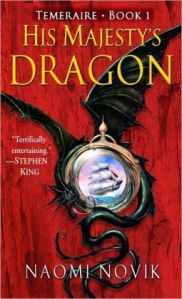
28876Book: “His Majesty’s Dragon” by Naomi Novik
Publishing Info: Del Rey, March 2006

Where Did I Get this Book: audiobook from the library!

Book Description: Aerial combat brings a thrilling new dimension to the Napoleonic Wars as valiant warriors ride mighty fighting dragons, bred for size or speed. When HMS Reliant captures a French frigate and seizes the precious cargo, an unhatched dragon egg, fate sweeps Captain Will Laurence from his seafaring life into an uncertain future – and an unexpected kinship with a most extraordinary creature. Thrust into the rarified world of the Aerial Corps as master of the dragon Temeraire, he will face a crash course in the daring tactics of airborne battle. For as France’s own dragon-borne forces rally to breach British soil in Bonaparte’s boldest gambit, Laurence and Temeraire must soar into their own baptism of fire.

Review: I loved both “Uprooted” and “Spinning Silver,” both fairytale retellings by Naomi Novik. I’ve heard repeatedly about her Temeraire series, and yet for some reason hadn’t picked it up. While I do like fantasy fiction that mixes together historical and military fiction as well, I think I always just read the book description for this one and was overwhelmed with flashes of “Master and Commander.” But when my last audiobook expired and I was perusing my audiobook list, the library must have been going through some high demand period and none of the books I had mentally lined up for next were available. But there was “His Majesty’s Dragon” with a glowing, green “available” next to it. So, with no excuses left, I checked it out. Only a few days later, I now have the same problem with trying to find a replacement audiobook because I blew through this one so quickly!

Laurence is proud of his career as a naval man. While impressed with the aerial corps, he’s always preferred this avenue of military life and has looked with wonder at those who live a very different life paired with their dragon companions. But when his ship captures another that carries an egg that is about to hatch, Laurence finds his life taking quite the turn. With the birth of Temeraire, a rare dragon from across the world, Laurence is introduced to an entirely different world, and one that is only marginally understood by society as a whole. Now, on the brink of invasion by Napoleon and his forces, Laurence and Temeraire must learn where they will fit in the challenging future that is unfolding before them.

So, no surprise given my introduction paragraph, but I loved this book! I really don’t know what my problem was. Novik is definitely a strong writer and this book routinely shows up on “best of” fantasy lists. Like I said, all I can blame is having only read a very different sort of fantasy from her in the past (fairytale fantasy) and my completely-unfounded-on-any-facts concern that the story would be mostly about military action with only a dash of dragons. And while, yes, there are highly descriptive battle scenes and the rules and regulations of life in the military are an important part of Laurence and Temeraire’s arc, there was also just a ton of great dragon stuff. Not only between Laurence and Temeraire and their wonderful relationship, but in the entire concept of what a world would look like if dragons were a common thing.

Novik includes tons of detail on the many different types of dragons that make up the world, both the ones native to England and the ones coming from other regions of the world. Their strengths and weaknesses are then used in very specific ways when it comes to military action. In her version of dragon riders, dragons are more like ships, big enough to have entire crews and to operate in coordinated maneuvers with the other dragons around them. In this way, Laurence is both a bonded partner with Temeraire, but also a captain who much command the group of other military personnel who also “crew” the dragon. The whole thing was so incredibly unique. As I just got done saying in my last review about phoenix riders, we’ve seen a lot of books with dragon riders. But here, Novik has come up with a truly original way of approaching the concept and there is so much room to use and expand on this idea.

But, of course, for me the most important thing often comes down to characters, and I absolutely loved both Laurence and Temeraire. Laurence is just a good guy: honorable, noble, able to adjust to his changed circumstances with grace and care. In the beginning, we get a good understanding for just what a life change it means for Laurence to suddenly become a dragon captain and have to leave behind a promising career as a naval captain. But through it all, he puts Temeraire first, always, and handles the skepticism and often out-right reproach of those who resent his new role with firm grace. In these ways, the book is almost as much a fantasy of manners story as anything else. My Jane-Austen-loving ways were all over the intricacies of honor and politeness that Laurence displayed.

And, of course, Temeraire was amazing. He’s a unique type of dragon, not one common to England, so much of the book is learning more about him and what his strengths are. It is clear from the start that he is incredibly intelligent, and Laurence and he form a quick bond based on mutual friendship and respect. He also expresses his own set of moral codes, something that Laurence must struggle to understand when it varies from his own sense of duty. Perhaps due to Temeraire’s unique attributes, but also largely due to Laurence’s not having been raised up in the aerial corps, the two of them see the relationship between riders and dragons and the mode of operation of the entire corp through a unique lens. Along with the reader, they are learning as much as we are, but also coming to see flaws that have long been accepted, challenging norms as they go.

The book does have some excellent battle scenes and even a few scenes that made me tear up. But it also definitely reads as an introduction to a series. Much of the story is made up of world-building and scene-setting, letting readers get to know Laurence and Tameraire slowly throughout the story and setting up conflicts to come. This is where Novik’s strength as a writer comes to play. In another author’s hands, this type of book, that reads largely as a set-up for books to come, could feel plodding and useless. Instead, all of the details and attention to character building were completely absorbing in their own right.

I really can’t say enough good things about this book. Fans of fantasy fiction, especially dragons (and for those looking for a unique take on the whole “dragon rider” concept), should definitely check this one out. If you like historical fiction and military fiction as well, that can only be a plus! For me, these books are already added to my mental list of long-running series that I will need to work my way through in the years to come!

Rating 9: With two incredibly endearing protagonists at its heart, this military fantasy series is sure to appeal to dragon-loving readers!

Reader’s Advisory:

“His Majesty’s Dragon” is included on these Goodreads lists: “Best Alternate History Novels and Stories” and “Best Book With or About Dragons.”

Find “His Majesty’s Dragon” at your library using WorldCat!

Serena’s Review: “Stalking Jack the Ripper”

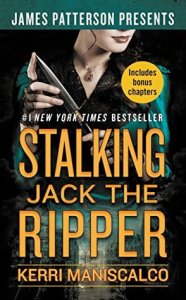
40727470Book: “Stalking Jack the Ripper” by Kerri Maniscalco

Publishing Info: Jimmy Patterson, September 2016

Where Did I Get this Book: audiobook from the library!

Book Description: Seventeen-year-old Audrey Rose Wadsworth was born a lord’s daughter, with a life of wealth and privilege stretched out before her. But between the social teas and silk dress fittings, she leads a forbidden secret life.

Against her stern father’s wishes and society’s expectations, Audrey often slips away to her uncle’s laboratory to study the gruesome practice of forensic medicine. When her work on a string of savagely killed corpses drags Audrey into the investigation of a serial murderer, her search for answers brings her close to her own sheltered world.

Review: I’m always on the lookout for another good historical mystery series. While I have several that I’m currently following, there’s always room for more! I’d seen this title floating around in a few discussions with other fans of historical mysteries and was intrigued by not only the concept (while I’m not at Kate’s level of knowledge of famous serial killers, we all know about Jack the Ripper!), but also by the fact that it was  YA series. So off to the library I went where I was pleased to find a lovely audiobook version ready and waiting!

Ever since her mother’s death, Audrey Rose has turned to science to understand the world. Under the tutelage of her eccentric uncle, she has learned the ins and outs of anatomy and even begun conducting procedures herself. But what began as a pursuit of knowledge turns a deadly angle when a streak of murders of women hit London. Called upon for the forensic knowledge, Audrey Rose, her uncle, and his apprentice, the irritating but handsome, Thomas, are pulled into the dark and disturbing mind of a mad man. And as they begin unraveling the crimes, Audrey Rose begins to suspect that the mysterious “Jack” may be stalking them, in turn.

So, right off the bat, this is going to be a mixed review. On one hand, I genuinely enjoyed reading this book and whizzed through it quite quickly. But on the other side of things, once completed, I found myself looking back on many aspects of the storytelling with some dissatisfaction. But, as always, we shall begin with the strengths!

One of the things that intrigued me most about this book and series was the combination of a historical mystery based on a real-life crime spree and the young adult genre. I’ve mostly read adult historical mysteries in the past, and it’s pretty obvious that fantasy, and now to some extent contemporary fiction, is still dominating the YA genre. Historical mysteries/thrillers are hard to come by! And I do think the author managed to pull off the merging of all of these elements quite well. For fans of historical mysteries, there were familiar elements in the detailed depiction of the time period and the creation of a romantically-tinged buddy cop duo in Audrey Rose and Thomas. The mystery was solid enough, probably enhanced mostly by its connection to the true crimes, and it walked right up to the horror line, if not crossing it a bit towards the end in a surprisingly gruesome manner. And for YA fans, Aubrey Rose and Thomas checked most of the boxes for what readers expect from their teenage protagonists.

This horror aspect and the reveal at the end of the murderer and their motivations was also one of the strongest aspects of the book. While I felt that the identity of the murderer was telegraphed fairly early on, the motivation came as a complete surprise and the manner of its explanation and end game was particularly horrific. There was almost a cross-over with another famous story in a way that I hadn’t been expecting at all.

The writing was also snappy and quick-moving, with the dialogue between Aubrey Rose and Thomas rising to the top as often particularly enjoyable. However, here was also where I began to struggle with the story. There was something verging on anachronistic in the relationship and mode of speaking that was built up between these two. As I said, this type of buddy cop/romantic relationship is fairly standard for historical mystery fare, and often that involves a rather progressive man and woman at its heart. However, here, there were a few elements that pushed this typical pattern over some unseen line in my mind. Part of it could have to do with their age. For example, both Veronica and Amelia were independent, fully grown women when they set off on their adventures. Age, experience, and, importantly, financial and social freedom that was rarely seen in the time, allowed them to interact with others and the world in the way they did. Aubrey Rose is still quite young, not even “out” in society, and still a member of her father’s household. This then ended up rubbing up wrongly against some of her choices and ways of speaking, especially in her interactions with Thomas.

So, too, Thomas’s flirty and sarcastic way of speaking was also hampered by not only his relatively young age, but also the fact that he was supposedly raised to be a gentleman and was interacting with a young, often unchaperoned, girl. This left some of his more suggestive remarks reading not as the fun flirtation that I’m sure they were meant to portray, but instead as rather boorish and unflattering. All together, it was the kind of an odd, unhappy mixture of modern YA romance tropes on top of a historical setting that isn’t equipped to manage those tropes in the same way.

Further, while I generally enjoyed Aubrey Rose as a character, she did have her fair share of really poor decision making and thinking. And while these flaws were often made clear to her, eventually, it was still a frustrating read at times when aspects of the mystery were only too clear to readers, but Aubrey Rose, through plot necessity, was forced to remain and act clueless. In this same way, her interactions with Thomas became equally frustrating as she insisted on “misinterpreting” his flirtations throughout the entire book, even when those same flirtations became almost inappropriately obvious.

In the end, it was a bit of a mixed bag. I really enjoyed what the author was attempting to do, and I think she should be applauded for managing to merge so many genres together. However, this same merging of genres also let the author and the book down at times when tropes from each didn’t play well together. But, as I said, I also whizzed through this book quite quickly, so I still plan on checking out the next in the series. We’ll evaluate again from there! Fans of historical mysteries may want to check this series out, but if you’re not a fan of YA fiction to some extent, you may be frustrated by some of those elements.

Rating 6: A fast-paced, fun read, just try not to think about it too much afterwards though or you may become frustrated.

Reader’s Advisory: 

“Stalking Jack the Ripper” isn’t on many Goodreads lists for some reason, but it is on  “YA Fiction set in the 1880s.”

Find “Stalking Jack the Ripper” at your library using WorldCat!

Serena’s Review: “The Wolf in the Whale”

39603796Book: “The Wolf in the Whale” by Jordanna Max Brodsky
Publishing Info: Redhook, January 2019

Where Did I Get this Book: ARC from the publisher!

Book Description: Born with the soul of a hunter and the language of the gods, Omat is destined to become a shaman like her grandfather. To protect her people, she invokes the spirits of the sky, the sea, and the air.

But the gods have stopped listening, the seals won’t come, and Omat’s family is starving.

Desperate to save them, Omat journeys through the icy wastes, fighting for survival with every step. When she meets a Viking warrior and his strange new gods, together they set in motion a conflict that could shatter her world…or save it.

The Wolf in the Whale is a powerful tale of magic, discovery and adventure, featuring an unforgettable narrator ready to confront the gods themselves.

Review: I was very excited when I received a ARC of this book. I wasn’t familiar with the author, but the brief description was immediately intriguing. I’ve found very few fantasy/historical novels (especially adult fiction, for some reason) that focus on the culture and history of the Inuit people. What’s more, the ancient trips of the Vikings to North America are included, another topic that I’ve rarely come across. And, now a resident of Minnesota where the Vikings and their previous trips here are kind of a big deal, this book felt like a no-brainer. And I’m pleased to report that not only did it live up to my excitement, but it surpassed it!

Omat’s being is made up of many parts, but most especially she carries the spirit of her deceased father in herself. This duel nature between a man’s spirit and a woman’s body has not prevented her from contributing to her small, family group, struggling to survive, mostly alone, out on the tundra. But when their small life is intruded upon by strangers, Omat’s role, shaman abilities, and future are suddenly, horribly, called into question. Now alone in the world, it is up to Omat to carve her own path to save her people and to merge the powerful spirits she’s walked with her entire life with the new deities being carried to her world from across the frozen sea.

One of the primary themes in this book is identity, most especially called into light through Omat’s journey of self-discovery and self-acceptance. The religious beliefs of her people state that the spirits of the deceased can come to life again in a newly born person. That person is then both the new embodiment of that being but also still their new self at the same time. For Omat, this complicated balance is made more difficult by the spirit inhabiting her coming from her father, a man who had been an important provider for their poor family group before his unexpected death. Omat is thus raised as a man, developing both the important and necessary roles of shaman and hunger and garnering the respect that comes along with these duties, but also acquiring the same dismissal attitude towards the womens’ work accomplished by the women in their family. I particularly enjoyed how this tension played out throughout the story, as we see Omat’s struggles to retain the independence and respect that came with her man’s role, but slowly learns to respect and see with a new eyes the crucial roles that women play. The author also neatly avoids falling into any traps that would make Omat’s journey of self-discovery feel too modern or anachronistic. Instead, it feels like a natural path for a character in her position in the time. Meaning, of course, that while she comes to a balance for herself, she is still an exception, even in her own eyes, to the traditional roles assigned to each group. It was a fascinating journey.

The story itself neatly weaves in fantastical elements that pull from Inuit folk tales and religious beliefs. These then, eventually, mix with the Vikings’ own belief system, and we even see the beginning tendrils of spreading Christianity and how that rubs up against these two other, older beliefs. Again, the author presented an interesting balance between exploring faith but also presenting walking/talking gods in the more recognizable, fantasy-based way. The Inuit folklore was especially strong, with several of the tales introduced in the beginning of the book coming to life throughout the story and playing a major role in influencing the outcomes of certain events. I also enjoyed the romantic story that is introduced about halfway through, perfectly balancing itself within the greater story as a whole without overshadowing Omat or her journey.

This was almost a perfect read for me, but there were a few dings against it that came out mostly in the first half of the book. For one, it is slow to get started. There’s a good third of the book to get through before the real action begins to take place, and while this portion is laying important groundwork, it simply read slowly and delayed my full immersion into the story.

I also wish that the publisher had marketed this book differently. Since it’s all out in the open anyways, it’s no spoiler that Omat is a woman. But the way the story plays out, in the beginning chapters of the book, readers, and Omat herself to some extent, aren’t aware that the main character is female. The reveal is then ruined by our previous knowledge from the book’s marketing. I’m guessing this was just a risk the publisher didn’t want to take, but I think that it underestimates readers and severely undercuts what could have been a great reveal, and one that tied neatly to the major themes of the book (our perceptions of gender roles).

The last thing wasn’t so much a mark against the book as a general warning: there are a few fairly graphic scenes dealing with violence and assault against women. Readers can kind of get a sense that the story is headed in this direction, but these scenes were still very hard to read.

But, those quibbles aside, I adored this book! The setting felt fresh and new, and Omat’s journey was both exciting as an adventure and fascinating as an introspection into the roles of men and women. If you enjoy historical fantasy, and especially if you’re longing for something new, NOT set in medieval Europe, definitely give “The Wolf in the Whale” a try!

Rating 9: Simply excellent! I’ll definitely be on the look-out for more books from this author!

Reader’s Advisory:

“The Wolf in the Whale” is a new title and isn’t on many relevant Goodreads lists, but it should be on “Popular Inuit Books” and “Canadian Arctic.”

Find “The Wolf in the Whale” at your library using WorldCat!

Kate’s Review: “Bombshells United: War Bonds”

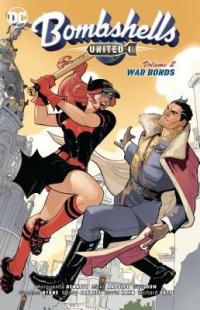
39208018Book: “Bombshells United (Vol.2): War Bonds” by Marguerite Bennett, Stephen Byrne (Ill.), Mirka Andolfo (Ill.), Sia Oum (Ill.), and Sandy Jarrell (Ill.).

Publishing Info: DC Comics, October 2018

Where Did I Get This Book: The library!

Book Description: Years ago, before she became the battling Bombshell known as Batwoman, Kate Kane and Renee Montoya loved and fought together in the Spanish Resistance, and even formed a family with their adopted son Jasón. But their lives were turned upside down, and Kate found a new life and a new love for herself in Gotham City.

Now Kate is back in Spain, working with Renee once again to save the country from a tyrannical ruler…only this time the despot has unstoppable occult powers. His name is Black Adam, and he’s lived for millennia seeking the moment he can gain control of the powers of life and death.

Batwoman, Renee and Black Adam are all defined by whom they’ve loved and lost. But beneath the ancient streets of Madrid, a mystical labyrinth conceals the means to bring life back to the dead: a Lazarus Pit. 

With this incredible power, will Black Adam gain the final piece he needs to crush the entire world under his heel? Or will the dead have their own say in it?

Writer Marguerite Bennett (Batwoman) and artists Mirka Andolfo (Harley Quinn), Siya Oum (Lola XO) and Stephen Byrne (Green Arrow) bring fan-favorite Bombshell Kate Kane back to where she began…but how much will her past define her future? Collects Bombshells: United #7-12.

Review: I’m feeling a bit morose that this is going to be the second to last “Bombshells” story collection for the foreseeable future. I’ve moved on from being angry to depressed when it comes to this series being cancelled, and I’m thinking that I’m moving closer and closer to acceptance. There are a couple of reasons for this acceptance that are more on the unfortunate side, but more on that in a little bit. Because at the end of the day I still think that it is a damn travesty that DC cancelled this title just because of how unique it is and how it covers a vast swath of characters who come from diverse backgrounds and give diverse voices to the stories they are telling. And now it sounds like I’m reverting back towards anger, so before that happens let’s get to the nitty gritty of what worked, and what didn’t, in “Bombshells United: War Bonds”.

It’s been a little while, but we once again have caught up with Kate Kane and Renée Montoya, aka Batwoman and The Question. They have moved on from their final battle and have ended up back in Spain, where they first met and fell in love. But it’s also where they lost their adopted son Jasón, when mercenary The Cheetah murdered him for the hell of it. The loss is still gaping, and while Kate and Renée have found each other again the pain lingers. I liked that we got to see their grief in this way, as something that will always be with them, even if it isn’t as all encompassing as it had been initially. This theme of grief is where the crux of this story comes in, post-Franco Spain,’s new ruler is a whole new tyrant that we know as Black Adam, who is also haunted by a terrible loss from his past. He is looking for a way to resurrect his dead queen Isis, and has heard of a pit with magical powers that can bring people back to life. But it’s Kate and Renée who stumble upon it first, finding this Lazarus pit in the middle of an underground labyrinth. And who else do they find there, but Talia Al Ghul and Cheetah. And Cheetah is there because she has brought Jasón back to life, as she is now driven by guilt and a need for forgiveness and redemption.

giphy
Me as I realized that this kind of plot point seemed VERY familiar… (source)

Okay folks, it’s real talk time. I really, REALLY appreciate that Bennett is trying to think beyond the usual physical and violent conflict resolution that we see in superhero stories, and I understand that it’s a fun way to show that women’s roles and stereotypes of being peacemakers and nurturers can be subverted into something powerful enough to stand up against super villainy. But, for the love of God, this is the fourth time that a nemesis has seen the evil of their ways thanks to spending time with the Bombshells (or in Cheetah’s and Paula Van Gunther’s cases, just kind of needing the conflict resolution to fit an upcoming plot device), and it is getting old. I am all for redemption arcs, and I think that it’s especially important that bad women in fiction get these arcs since it feels like men do when it suits the storyteller. But I want them to be complex and interesting, not just tossed together in a moment because of peace love and understanding. It also makes it so that our cast of villains becomes smaller and smaller, and you instead need to introduce new (albeit familiar) antagonists to stir the pot, like Black Adam. I will admit that I’m not as familiar with him, as Shazam (aka Miri Marvel as she is in this story) was never a title that I got into very much. But even if I had been into him, I feel like introducing a new huge big bad at this point was just another example of fantasy bloat that “Bombshells” is starting to see more of.

That makes it sound like that I didn’t like anything about this turn of events, and that’s not totally true. Like many stories with similar themes that come before it, Kate and Renée will have to contend with the unforeseen consequences of Jasón’s resurrection. Though it isn’t full on zombie Jasón or anything like that, you do get the sense as the story goes on that perhaps things won’t be as happily ever after as Cheetah intended it to be. I also liked that for Kate and Renée, Cheetah’s actions weren’t automatically welcomed with open arms. They didn’t forgive her automatically because of this, and I thought that that was a realistic and refreshing turn of events. It’s one thing of the Batgirls or Wonder Girls  are able to take a former enemy into the fold and show them compassion. But Harvey Dent and Clayface didn’t murder their kids just for the fun of it. I thought that Bennett hit that nail on the head, that atonement doesn’t automatically earn forgiveness.

The art in this collection worked better for me than it did in “Bombshells United: American Soil”, mainly because it didn’t feel as cutesy. There were also nice moments of pondering or waxing poetic on mythology that felt more muted and subdued, and I really took to it. Maybe it helped that during one of these sequences Kate ACTUALLY ACKNOWLEDGED THAT MAGGIE SAWYER IS STILL BACK HOME WAITING FOR HER. In any case, I thought that the design worked well and added a lot to the retro style narrative.

a615d3fbcae22150f3ce5761beb3ff36._SX1280_QL80_TTD_
(source)

As mentioned above, we are only getting one more collection of “Bombshells United” before it’s over. One more. There are so many things that haven’t really been addressed across the other characters, and given that there has been a new explosion of characters I’m worried that the focus is in no way going to be brought back to where it needs to be to have a totally satisfying ending where all loose ends get tied up. And while that is in part certainly the fault of the cancellation (I’m sure that Bennett had lots of really good ideas and paths on how and when she was going to take them on), it’s also in part an example of why exploding character rosters and plot lines can come back and bite you in the butt. As I slide closer to acceptance that this series has ended, I hope that in the next, and final, issue I will walk away with some satisfaction. And that Kate, Diana, Kara, Harley, and all the rest are given their due that they so richly deserve.

Rating 6: There was a lot to like about “Bombshells United: War Bonds”, but repetitive storytelling is starting to take it’s toll.

Reader’s Advisory:

“Bombshells United (Vol.2): War Bonds” is not on any Goodreads lists as of yet, but I think that it would fit in on “Girls Read Comics”, and “Show Me Your Queers”.

Find “Bombshells United (Vol 2): War Bonds” at your library using WorldCat!

Previously Reviewed:

Serena’s Review: “Once Upon a River”

40130093Book: “Once Upon a River” by Diane Setterfield

Publishing Info: Atria/Emily Bestler Books, December 2018

Where Did I Get this Book: ARC from the publisher!

Book Description: A dark midwinter’s night in an ancient inn on the Thames. The regulars are entertaining themselves by telling stories when the door bursts open on an injured stranger. In his arms is the drowned corpse of a little child.

Hours later the dead girl stirs, takes a breath and returns to life.

Is it a miracle?

Is it magic?

Or can it be explained by science?

Review: I’ve heard the name “Diane Setterfield” tossed around here and there over the last few years. Her novels, that often combine fantastical elements and historical settings, are the type that would likely appeal to me, so she’ll pop up on lists here and there that I glance through. All that said, for some reason or another, I’ve never actually taken the time to pick up one of her books. Big mistake! Apparently, I needed someone to take the choice out of my hands, so I’m very thankful for the publisher sending me a copy and giving my butt a good kick towards this excellent book and author.

There is an inn on a river. An inn where late nights are full of stories, tellers and listeners all gathering together over their beers to share new and familiar tales. Until one night, a story unfolds at their feet with the unexpected appearance of a little girl, apparently dead until…she’s not. But who is she? Where did she come from? Everyone has their own story, their own connection to this strange young girl. But what is the truth?

The very first thing that struck me is the writing tone of this book. In my opinion, any story that is going to also focus on storytelling as its subject matter must master this element first and foremost, and Setterfield accomplishes this quickly and thoroughly. From the very first few pages, one is swept into a lyrical story that reads like the best fairytales and folklore stories. The language is simple, but beautiful, and it’s easy to imagine sitting in the very same smoky inn, drinking mulled cider, while someone recounts this story aloud. The atmosphere is set incredibly, and while it only takes a few pages for the small girl to arrive, I already felt completely immersed in this world.

As the story progressed, I enjoyed the introduction of a larger cast of characters, all with their own distinctive stories and connections to the girl. In each story, we’re given just enough to begin forming assumptions and connections ourselves, but mysteries are ever present. Half of the fun of the book was attempting to weave all of these narratives together to form a complete circle.

Further, the setting was left a bit nebulous, but in this type of story, it seemed to work. It took a while for me to settle on what time period this was taking place in, which seems like it could be a criticism. But, like the best stories, a tale should be able to simply exist, without hard dates lodging it in time. Further, as the summary alludes to, there is a running question throughout the story of the fantastical. The little girl was dead. Everyone who saw her could confirm this. But then she wasn’t. Various characters come down on different sides when attempting to prescribe an explanation for this event. And readers, too, are left questioning what exactly is going on. Is there a level of fantasy being introduced here? Or is it the type of “fantasy” that we can all see in our everyday life, now, if we really look for it?

“Once Upon a River” is a beautiful story, mysterious and ever-flowing like the river that is at its heart. Fans of Setterfield’s previous books are sure to be pleased with this more recent entry. And new readers, like me, who enjoy stories about stories and lyrical writing will also come away satisfied. It’s just the kind of cozy book that is perfect to settle down with on these cold, winter nights.

Rating 8: A story that immediately draws you in with its beautiful writing and mysterious weave of intersecting tales.

Reader’s Advisory:

“Once Upon a River” is on these Goodreads lists: “Winter Seasonal Reads” and “Historical Fiction 2018.”

Find “Once Upon a River” at your library using WorldCat!

Kate’s Review: “The Spellbook of Katrina Van Tassel”

37638211Book: “The Spellbook of Katrina Van Tassel: A Story of Sleepy Hollow” by Alyssa Palombo

Publishing Info: St. Martin’s Griffin, October 2018

Where Did I Get This Book: The library!

Book Description: When Ichabod Crane arrives in the spooky little village of Sleepy Hollow as the new schoolmaster, Katrina Van Tassel is instantly drawn to him. Through their shared love of books and music, they form a friendship that quickly develops into romance. Ichabod knows that as an itinerant schoolteacher of little social standing, he has nothing to offer the wealthy Katrina – unlike her childhood friend-turned-enemy, Brom Van Brunt, who is the suitor Katrina’s father favors.

But when romance gives way to passion, Ichabod and Katrina embark on a secret love affair, sneaking away into the woods after dark to be together – all while praying they do not catch sight of Sleepy Hollow’s legendary Headless Horseman. That is, until All Hallows’s Eve, when Ichabod suddenly disappears, leaving Katrina alone and in a perilous position.

Enlisting the help of her friend – and rumored witch – Charlotte Jansen, Katrina seeks the truth of Ichabod Crane’s disappearance, investigating the forest around Sleepy Hollow using unconventional – often magical – means. What they find forces Katrina to question everything she once knew, and to wonder if the Headless Horseman is perhaps more than just a story after all. In Alyssa Palombo’s The Spellbook of Katrina Van Tassel nothing is as it seems, and love is a thing even death won’t erase.

Review: I’ve had a deep affection for “The Legend of Sleepy Hollow” ever since I was a little girl. My first exposure to it was the Bing Crosby Disney vehicle, with it’s jaunty music and admittedly all too terrifying Headless Horseman. My favorite adaptation is the utterly faithless but still WAY fun and interesting Tim Burton film “Sleepy Hollow”, as while Johnny Depp is a creep his portrayal of Ichabod Crane as an earnest and logical detective is a preferable contrast to the original superstitious gold digger Washington Irving imagined. But something that cannot be denied in either version, from the fairly true to the quirky retelling, is that the female love interest, Katrina Van Tassel, really isn’t given much to do outside of being an object of affection. While it’s certainly true that Christina Ricci’s version of Katrina is perfectly adequate (hell, she gets to be a witch, which is pretty neat), it is mostly Ichabod’s story. So when I read about “The Spellbook of Katrina Van Tassel” by Alyssa Palombo, I knew that I had to read it, as it is a retelling of “The Legend of Sleepy Hollow” but from a female centered perspective.

This isn’t so much a ghost story this time around as it is a romance and mystery, and it’s certainly presented through a feminist lens. Like in the original tale, Katrina is the daughter of wealthy farmer Baltus Van Tassel, but instead of being merely a point in a love triangle she is a sharp and independent woman who sees life beyond Sleepy Hollow and the path that is planned out for her. While her father does encourage her studies and her interests, ultimately he sees her marrying her childhood friend Brom Van Brunt, aka Brom Bones, who remains the WORST. Katrina has other ideas, as she has come to despise him because of his treatment of her best friend Charlotte, the daughter of the town midwife. Brom is very much the macho and of the time ideal of a man, popular and the son of another successful (and therefore land owning) farmer, though his misogyny and bigotry turns Katrina off. It’s a solid portrayal of a timeless villain, and while he remains antagonistic, Palombo does a good job of making him a little more complex than merely the town brute. But don’t get me wrong, he’s still awful.

giphy5
It has to be done. (source)

Katrina’s loyalties are to Charlotte because Charlotte is one of two profoundly meaningful female relationships she has in this book, the other being Nancy, her former nursemaid. I loved that not only do we get Katrina to steer the ship of feminist interpretations, but that Charlotte and Nancy provide examples of positive and supportive female friendship that could otherwise have been completely waylaid. It also is a good way to address horrific realities of the time in organic ways. It brings up the distrust people had towards women like Charlotte and her mother, who are midwives and herbalists who are seen as potential witches, and the evil that was chattel slavery, as Nancy is a former slave who is now employed by the Van Tassels. While it is made clear that she is  given a wage and has her freedom, her past as property is not ignored, and it is addressed in a way that shows the privileges that women like Katrina and Charlotte DID have during this time because of their skin that were not afforded to Nancy. These three women band together and support each other, and it felt fairly even handed, as neither Charlotte nor Nancy felt like props there merely to hold Katrina up.

The romance between Katrina and Ichabod was very satisfying as well. Since it is through Katrina’s eyes, her agency and intent are always present, as Ichabod is portrayed as a man of intellect who sees Katrina as an equal in all ways. Her self worth and independence are only bolstered by him, and their love affair is not only on even footing, it’s also VERY romantic. And smutty. My GOODNESS is this book heavy on the love scenes during the first part. Palombo manages to make these love scenes feel fairly real for the time and place, and the romance is a slow burn that really makes you root for Katrina and Ichabod, even if the original story has mapped out a very clear, and tragic, path for it to take. Unlike “Sleepy Hollow”, “The Spellbook of Katrina Van Tassel” doesn’t completely throw the source material out the window, and while I knew that going in there would absolutely be bittersweetness, I wasn’t prepared for how emotional Katrina and Ichabod’s romance, and his ultimate disappearance, was going to be. Palombo constructs a love that feels timeless and complex, and makes Ichabod far more than a gold digging schemer, as well as more than a deep thinking hero. Yet ultimately, this IS Katrina’s story, and while her love for Ichabod sets it in motion she is the one fully in control beyond her relationship with him. She has to make some tough choices in the wake of his disappearance, choices that she doesn’t want to make and yet must because of the time period, and her drive to find out what did happen to the love of her life, be it him running off or Headless Horseman taking him, make her an all the more intriguing heroine. Because while love is a huge theme, there is also a lot of grief, and what grief can do to a person.

But given the ambiguity of the original source material (was it a Horseman who was responsible for Ichabod’s disappearance, or a very mortal man?), “The Spellbook of Katrina Van Tassel” would be missing something if the supernatural aspect wasn’t there. Luckily, Palombo does have eerie elements. Katrina is haunted by visions of the Headless Horseman her entire life, her gift for Sight being a main theme in this book. She and Charlotte both have seemingly otherworldly powers, though they are never overdone or overshot. Given that I LOVE The Headless Horseman as a ghost and antagonist, I was worried that he was going to be more of an afterthought in this story. But while he does play a smaller role, and a more opaque one at that, there was enough of him and the idea of him that still gave him a presence throughout the narrative. Palombo brings in other folklore from the original tale and region (and provides handy author’s notes at the end about it), as Katrina collects and tells the stories of ghosts and spectres through the area. After all, she too is haunted by things, though they are perhaps more of this Earth. By the end of this book I really liked how the ghostly tales were woven into the overall story arc, and how they could serve as metaphors for the things that Katrina was going through. And yes, The Headless Horseman does have one pretty damn satisfying moment, as ambiguous as it may be. After all, he himself is an ambiguous character in the original tale, so this time around it feels extra sweet to see the big moment that is given to him.

giphy6
#teamhorseman (source)

Overall, I really liked “The Spellbook of Katrina Van Tassel”. It retold a story that I love in a unique and female centered way. I’m setting this book on the shelf next to my copy of “The Legend of Sleepy Hollow” so they can coexist in the way the two tales really ought to.

Rating 9: A lovely romance with a bittersweet mystery “The Spellbook of Katrina Van Tassel” re-tells an old classic with a female focused lens, and brings it satisfying new characterizations.

Reader’s Advisory:

“The Spellbook of Katrina Van Tassel” isn’t on many relevant Goodreads lists, but I think that it would fit in on “The Best Fairytales and Retellings”.

Find “The Spellbook of Katrina Van Tassel” at your library using WorldCat!

Serena’s Review: “The Dark Days Deceit”

26061583Book: “The Dark Days Deceit” by Alison Goodman

Publishing Info: Viking Books for Young Readers, November 2018

Where Did I Get this Book: ARC from the publisher

Book Description: Lady Helen has retreated to a country estate outside Bath to prepare for her wedding to the Duke of Selburn, yet she knows she has unfinished business to complete. She and the dangerously charismatic Lord Carlston have learned they are a dyad, bonded in blood, and only they are strong enough to defeat the Grand Deceiver, who threatens to throw mankind into chaos. But the heinous death-soaked Ligatus Helen has absorbed is tearing a rift in her mind. Its power, if unleashed, will annihilate both Helen and Carlston unless they can find a way to harness its ghastly force and defeat their enemy.

Previously Reviewed: “The Dark Days Club” and “The Dark Days Pact”

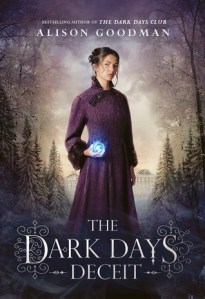
Review: Whelp, as I warned, the horrid covers continue. I mean, look, we all know how I feel about cover models: almost always worse than a cover without a model. But if you’re going to go the whole “girl in a dress” route for a historical novel, at least have the basic decency to choose a beautiful dress!!! I mean, what even is that thing? A dress? A weird, wizard robe? And the model’s sneering facial expression doesn’t help matters. Now not only do I have to stare at this ugly cover whenever I pick the book up, but I have to actively concentrating on NOT letting that model take over my imagined image of Lady Helen.

After the events of the previous book, Lady Helen is preparing to become the next Duchess of Selburn. However, her work with the Dark Days Club is in no way over. In fact, the world is becoming more and more dangerous as the threat of the Grand Deceiver looms ever nearer. What’s more, after absorbing the Litigus, Lady Helen is struggling to contain the damage is creating. Will her bond with Lord Carlston as the Grand Reclaimer be enough to stop this oncoming nightmare?

My feelings for this, the final book in the trilogy, are kind of what I expected after reading the second book. The trilogy started out on a massive high, masterfully balancing dark fantasy elements, high-stakes action, and a prim and proper Regency setting. The second book, while moving the larger story forward, did get stuck a bit with its character arc, leaving Lady Helen floundering in indecision a few too many times for my taste. So here, while we never return to the high that was the first book, I ultimately found myself satisfied with the trilogy overall.

Lady Helen’s character, for one, I felt was largely improved in this book. After some of the revelations and resolutions found in the second book, Lady Helen continues to gain a better grasp on the players at work and her own role in the looming battle ahead.

I still enjoy the historical elements of the story, and for fans of period pieces, there are a lot of nice little details that speak to the time. This element of the book will gain better traction with some readers than others. These books are long. They’ve always been long, and this one is no different. So while yes, you’re getting lots of magical battles with demonic creatures, you’re also getting extended shopping expeditions to Bath. Personally, as much as I love these historical details and segments, I do feel like all of the books, including this one, could have benefited from a bit more tightening around the waste. Ideally, this balance would be found in trimming back not only on some of these extended shopping scenes, but also in some of the slower moving fantasy action as well.

I was pleased to find that there were in fact a few twists and turns that came as unexpected surprises. As I mentioned in my reviews of the other books, there were a few secrets that were all too easy to call, even from early in the series. Unfortunately, this aspect of the story, its tendency to be a bit too predictable, didn’t help the aforementioned pacing issues, again causing the book to read as a bit long as slow. However, while some of those “big reveals” did indeed fall flat, there were also a few surprises that did enough to keep me turning pages with interest. I still loved all the gentlelady fighting scenes, and we got even more of them here, in a few unexpected places.

And, of course, readers were all waiting on pins and needles to see how the romance of the story would be resolved. This too was a balance of good and bad for me. I very much like slow-burn romances, and this was nothing if not that. But throughout the trilogy, there was also a tendency to create unnecessary angst through silly decisions and lack of communication that never felt grounded in true characterization. I was pleased with the way the romance was tied up here, though I will say that I wish there had been a bit more of it. Again, if the book is going to insist on being as long as it is, and readers had to go through an entire trilogy full of angst and will they/won’t they-ness, I felt like we deserved a bit more than we got here.

While for me the trilogy never quite lived up to the strength of its initial concept and book, it also stands on its own as a shining example of mixing historical, Regency romance with dark fantasy action. Lady Helen, other than a few moments here and there of indecision, was a fantastic leading lady and aptly carried the trilogy. The romance was solid, perhaps striking different chords for different readers simply depending on preferences. And the fantastical elements and action, while predictable at times, were also exciting and appropriately dark. Overall, the trilogy was an entertaining and reliable, never presenting any major stumbling blocks to its readers and sticking its final landing.

Rating 8: Fans of the first two books are sure to enjoy this one!

Reader’s Advisory:

“The Dark Days Deceit” is a newer book, so it isn’t on many interesting lists. It is on this one (though I’d debate the use of YA for this series): “YA Regency Fantasy.”

Find “The Dark Days Deceit” at your library using WorldCat!


Bookclub Review: “Abraham Lincoln: Vampire Hunter”

7108001We are part of a group of librarian friends who have had an ongoing bookclub running for the last several years. Each “season” (we’re nerds) we pick a theme and each of us chooses a book within that theme for us all to read. Our current theme is ‘genre mash-ups’, where we pick two random genres and try to find a book that fits both. 

For this blog, we will post a joint review of each book we read for book club. We’ll also post the next book coming up in book club. So feel free to read along with us or use our book selections and questions in your own book club!

Book: “Abraham Lincoln: Vampire Hunter” by Seth Grahame-Smith

Publishing Info: Grand Central Publishing, March 2010

Where Did We Get This Book: Kate owns it,

Genre Mash-up: True Crime and Speculative Fiction (a doozy to be sure)

Book Description: Indiana, 1818. Moonlight falls through the dense woods that surround a one-room cabin, where a nine-year-old Abraham Lincoln kneels at his suffering mother’s bedside. She’s been stricken with something the old-timers call “Milk Sickness.”

“My baby boy…” she whispers before dying.

Only later will the grieving Abe learn that his mother’s fatal affliction was actually the work of a vampire.

When the truth becomes known to young Lincoln, he writes in his journal, “henceforth my life shall be one of rigorous study and devotion. I shall become a master of mind and body. And this mastery shall have but one purpose…” Gifted with his legendary height, strength, and skill with an ax, Abe sets out on a path of vengeance that will lead him all the way to the White House.

While Abraham Lincoln is widely lauded for saving a Union and freeing millions of slaves, his valiant fight against the forces of the undead has remained in the shadows for hundreds of years. That is, until Seth Grahame-Smith stumbled upon The Secret Journal of Abraham Lincoln, and became the first living person to lay eyes on it in more than 140 years.

Using the journal as his guide and writing in the grand biographical style of Doris Kearns Goodwin and David McCullough, Seth has reconstructed the true life story of our greatest president for the first time-all while revealing the hidden history behind the Civil War and uncovering the role vampires played in the birth, growth, and near-death of our nation.

Kate’s Thoughts

I first read this book when it came out in 2010, having been taken in by the concept of taking one of the country’s past and most beloved Presidents and making him a vampire hunter. I mean, it sounds ridiculous, and yet I was so enamored with the idea that I got my hands on this book and then spent almost all of my free time devouring it. I was very much into vampire mythology in my younger years, and I had grown weary of vampires as love interests and yearned for them to be scary again. And while “Abraham Lincoln: Vampire Hunter” didn’t make them scary, per se, at least they were antagonistic to a degree. So I read it, loved it, and it had been sitting on my shelf ever since.

Re-reading it for book club was something that excited and scared me. I had such happy memories of this book, and I was afraid that revisiting it eight years later was going to be disillusioning. I’m pleased to say that my fond memories weren’t totally tainted by the re-read, but going back and looking at it critically was something that, while necessary, was a bit bittersweet. But I’ll start with the things that did still work for me. As a person who really likes American History, especially during the Victorian Era (as yes, much of Lincoln’s life was during the Victorian Era), I love how Seth Grahame-Smith uses diary entries, letters, historical documents, and footnotes to tell this alternate history where Lincoln fought and killed vampires. I greatly enjoy the various connections that he makes between world events that have enough ambiguity that they could have a vampiric element, one of my favorite examples being the Colony of Roanoke. I always had a fun time seeing various other historic figures, from Edgar Allan Poe to Marie Laveau, play into the story. Easter Eggs like this are my bread and butter.

But the biggest problem that I had with it this time around that I wasn’t really thinking about the first time I read it was that one of the biggest plot devices in this book is the Civil War. Namely, the practice of chattel slavery. In this book, one of the big plot points is that vampires were working directly with the Southern elites in order to keep slavery around, as it directly benefited both of them (the humans in terms of money, the vampires in terms of food). When I first read this book I thought that it was a clever way to show an evil and yet symbiotic relationship, but looking at it again now it just makes me uncomfortable. Slavery in this country was an evil practice, and the repercussions of it are still seen and felt today because of generational trauma, lingering systemic racism, and marginalization towards African Americans in this country. To flippantly say ‘and also, VAMPIRES!’ just feel uncomfortable, and a little too cheeky at the expense of very real pain and injustice.

That said, “Abraham Lincoln: Vampire Hunter” is overall a bit of crazy stupid fun, and it’s written in a way that history buffs and vampire fans alike will probably find it enjoyable. It didn’t fully stand the test of time, but there were still plenty of moments that made me grin.

Serena’s Thoughts

I had not read this book before, but I’m pretty sure I saw the movie at some point (though my super vague memories of it or what I even thought of it at the time might say more than anything). I think at the time I was still in a huff about “Pride and Prejudice and Zombies” and mentally sorted this book into the same category and wrote it off. That said, I was pleased when it was picked for bookclub as I generally try to avoid tendencies like the one I used for this book: judging it without reading it. I was even more pleased to find that I enjoyed it! (Though, it must be acknolwedged that this was always going to be an easier sell then trying to convince me that Elizabeth Bennett killing zombies is something I should take seriously).

What I enjoyed most about the book what its historical aspects and the stylization of the way the story is told through letter and other historical documents. These were all used to great affect and very much sold the concept of telling a story that could be wedged in alongside the version of true history that we are more or less familiar with. One’s own knowledge of the actual history of the time period also goes along way as, like Kate mentioned, there were nice references to other happenings of the time that would reward diligent readers. Not an extreme history buff myself, I can’t even be sure I knew exactly where some of these lines between fiction and true history were being drawn.

The story itself was also the kind of semi-campy fun that simply makes for an enjoyable read, and I think if approached in this way, it is best appreciated. As Kate also referred to, a closer examination of the work can lead to potential discomfort with superimposing layers of vampire nonsense over a truly challenging time in American history. I, for one, was generally ok with this aspect of the story as I think the point of the book was to do just that: make up a nonsensical version of a traumatic period of history and essentially make a satire out of it by highlighting just how truly horrible it was! The addition of vampires merely underscores the fact that, while they are fantasy creations, the true human players in this existed. Plus, the Civil War has, deservedly, garnered a huge wealth of books that cover its history in a more serious, thoughtful tone. And I don’t expect every book set in this time period to do the same thing, which I think does a disservice to the creativity of tactics that can used in criticizing events such as these.

Overall, I enjoyed this read. It wasn’t the type of book that I likely would have picked up on my own, and while fun enough, it also didn’t neatly fit into my wheelhouse and I came away with it pleased, but not feeling as if I had been really missing anything by not reading it before now.

Kate’s Rating 8: While it didn’t hold up as well from when I first read it, “Abraham Lincoln: Vampire Hunter” is still a bit of silly fun that entertained me as person who likes horror and history.

Serena’s Rating 7: I liked it; I didn’t love it.

Book Club Questions

  1. What did you expect from a book that brings a vampire and supernatural spin to an actual person and an actual time in history? Did you feel that the author integrated the two ideas well?
  2. Were there any characters or moments from history you especially liked seeing in this book? Were there any that you could have done without, or felt didn’t work as well?
  3. What were your thoughts on the character of Henry? Did you feel that you got a good impression of him as a character?
  4. What did you think of the theme of vampires and slavery in this book? Did you think that it was a good metaphor, or do you think that it was inappropriate to use it as a plot point?
  5. What did you think of the ending? Did you fee like the revelation at the end fit with the rest of the story and the themes given Lincoln’s relationship and opinions towards vampires?

Reader’s Advisory:

“Abraham Lincoln: Vampire Hunter” is included on the Goodreads lists “The Monster Mash”, and “Vampire Mashups”.

Find “Abraham Lincoln: Vampire Hunter” at your library using WorldCat!

Next Book Club Book: “The Shadow Cipher” by Laura Ruby.