Kate’s Review: “The Everlasting Rose”

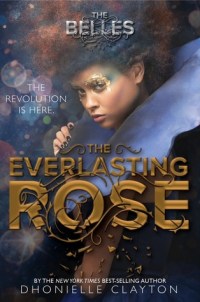
39080472Book: “The Everlasting Rose” by Dhonielle Clayton

Publishing Info: Freeform, March 2019

Where Did I Get This Book: I was received an eARC from NetGalley.

Book Description: In this sequel to the instant New York Times bestseller, Camille, her sister Edel, and her guard and new love Remy must race against time to find Princess Charlotte. Sophia’s Imperial forces will stop at nothing to keep the rebels from returning Charlotte to the castle and her rightful place as queen. With the help of an underground resistance movement called The Iron Ladies-a society that rejects beauty treatments entirely-and the backing of alternative newspaper The Spider’s Web, Camille uses her powers, her connections and her cunning to outwit her greatest nemesis, Sophia, and restore peace to Orleans.

Review: I want to extend a big thank you to NetGalley for sending me an eARC of this novel!

Last year you may remember that Serena and I both reviewed the book “The Belles” by Dhonielle Clayton. We both enjoyed it for the most part, it’s fantasy world focused on beauty and opulence a neat new theme to bring to a fantasy story. I was lucky enough to snag a copy an eARC from NetGalley, and while I gave it some time on my Kindle I finally caved and had to read it around the beginning of 2019. Given that it’s kind of rare for me to enjoy fantasy novels, I had really high hopes for “The Everlasting Rose,” the sequel and final installment in this duology. And there will be allusions to plot points of “The Belles” in this review, so tread carefully if you want to remain spoiler free for that book.

When we left off in “The Belles,” Camille, her fellow Belle/sister Amber, and former Imperial Guard Remy had escaped Orleans after the sociopathic Princess Sophia was positioned to take the crown after his mother died. Meeting up with rebellious and escapee Belle Edel, the group now knows that the only way to save Orleans from a cruel and capricious ruler is to find her sister Charlotte, believed dead but possibly only in hiding (and still comatose). So the stakes are high from the get go, with Camille under threat of capture and certain torture, if not death. There is so much action and so many plot points that need to be introduced that there are few moments of quiet and organic exposition. For the most part this wasn’t a bad thing; it made it so the action was fast paced and kept me in its thrall. But I did find it to be too bad that, unlike in “The Belles”, that these points couldn’t slowly unfold at a more ruminative pace. But I did like a good number of these points, from information on what Sophia is doing to The Belles who didn’t escape (sufficiently horrifying!) to how the kingdom is starting to fight back against her upcoming coronation and reign. It just felt a bit stuffed in. On top of that, the ending was a bit rushed, and I ended up wanting more focus and exposition there as well. I know that people are burnt out of YA trilogies, especially in stories of fantasy and dystopic themes, but I think that perhaps this series could have benefited from one more book.

I also was on a higher alert after I read some criticism of “The Belles”, a criticism I feel like I should have seen last time. A number of people were critical that in “The Belles”, the two prominent LGBTQIA+ characters were killed off for plot device and character conflict. The “Bury Your Gays” trope is certainly one that is not only overdone, but can also be damaging and hurtful to LGBTQIA+ readers. It was with that new perspective in my mind that I went into “The Everlasting Rose”. The good news is that there are more LGBTQIA+ characters in this one, and no, not all of them get fridged, but I would warn readers that there may still be some problematic optics regarding these characters. I don’t feel that I can say for sure given that I’m a hetero and cis, but just know that there were still things that I found a bit questionable.

But some of the huge strengths this book does have are the characters and the setting of Orleans. I was once again completely taken in with the descriptions of the world, from the tea cup animals (and YES, there are TEA CUP DRAGONS THIS TIME!!) to the descriptions of the foods and the colors and the beauty treatments. Clayton’s writing makes it so that the reader can really visualize what she sees in her mind’s eye. And I loved seeing more of Edel, my favorite Belle, whose rebellion and questioning personality has made her a formidable member of the Resistance. She and Camille are great foils for each other, as they have both experienced similar things in different ways, which makes them have to see the other’s perspective. Camille herself has changed a lot from the beginning of the first novel, and I still like how developed she is, from her strengths to her flaws. Her relationships all feel real and filled with complexity. Her burgeoning romance with Remy feels very in character with both of them, and while Clayton does tread a bit too much towards love triangle for my tastes, the interactions she does have with Auguste (her initial love interest and now consort of Sophia) aren’t overwrought or too sappy. It, too, felt a little quick to resolve, but ultimately it went in a satisfying way.

It was kind of a bummer that “The Everlasting Rose” was a bit of a disappointment, but I’m glad that we got to go back to Orleans one last time, and that we got to see how Camille’s story ended. If Clayton wanted to revisit this world, I would absolutely go along for the ride.

Rating 6: A bit of a let down from its predecessor, “The Everlasting Rose” was an okay finish to a story filled with beauty and darkness.

Reader’s Advisory:

“The Everlasting Rose” is included on the Goodreads lists “#ReadPOC: List of Books by Authors of Color”, and “Most Anticipated 2019 SFF Books”.

Find “The Everlasting Rose” at your library using WorldCat!

Previously Reviewed:
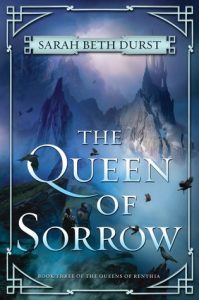
Serena’s Review: “The Queen of Sorrow”

36039814Book: “The Queen of Sorrow” by Sarah Beth Durst
Publishing Info: Harper Voyager, May 2018

Where Did I Get this Book: audiobook from the library!

Book Description: Queen Daleina has yearned to bring peace and prosperity to her beloved forest home—a hope that seemed doomed when neighboring forces invaded Aratay. Now, with the powerful Queen Naelin ruling by her side, Daleina believes that her dream of ushering in a new era can be realized, even in a land plagued by malevolent nature spirits who thirst for the end of human life.

And then Naelin’s children are kidnapped by spirits.

Nothing is more important to her than her family, and Naelin would rather watch the world burn than see her children harmed. Blaming the defeated Queen Merecot of Semo for the kidnapping, Naelin is ready to start a war—and has the power to do it.

But Merecot has grander plans than a bloody battle with her southern neighbors. Taking the children is merely one step in a plot to change the future of all Renthia, either by ending the threat of spirits once and for all . . . or plunging the world into chaos.

Previously Reviewed: “The Queen of Blood” and “The Reluctant Queen”

Review: I picked up this book purely on the strength of the first book in the trilogy, which I absolutely loved. The second book, on the other hand, held some pretty serious set-backs for me with the introduction of a new main character who not only distracted from the original main character who I was invested in but who also, in my opinion, was fairly unlikeable. But the unique world-building and the growing overall conflict that had been laid down between the first two books were enough to spur me on to pick up this one. Unfortunately, the book doubled down on the elements from the second one that I didn’t like and ended up muddling up the world-building that had been the element that was carrying me along so far. Alas.

Aratay should be stronger than ever. With an unprecedented situation of having two Queens at its head, each with her own strengths, it would seem that nothing could threaten them. However, the powerful Queen Merecot, whose schemes almost brought down the realm in the last book, is at work once again and this time she strikes at the heart of the matter: Naelin’s children. Now Queen Daleina must find a way to hold the world in order, with her fellow queen going mad with worry and her childhood friend threatening everything she’s worked so hard to create.

Oh man, this book. It was really disappointing, especially because I so clearly remember the high that was reading the first book. And many of those elements can still be glimpsed here, but then…I don’t know what happened? The world gets too bogged down introducing new elements and questions without resolving them. The great character of Daleina ends up taking a back seat once again, and it all was just not for me.

The world-building has always been one of the biggest draws for me to this series. The sheer maliciousness of the spirits and the way that humanity has built up a system for living in an environment that literally wants to kill them has been fascinating. We’ve gotten little peaks here and there behind the curtain to figure out that there is more to the spirit world than what we’re seeing, but it’s always been shrouded in the type of mystery that simply makes up any world and doesn’t necessarily need to be explained.

However, this book takes that world-building and completely turns it on its head. A bunch of new questions and additional layers (largely unnecessary in my opinion) were introduced that complicated so many elements the world and the way humanity functioned in it. What’s worse, most of these are then not even resolved by the end of the book. Instead, readers are now left with an upended understanding of the entire series because…why? Any potential that was gained by these additions was either squandered away with a return to the norm by the end of this book, in which case, why bother? Or left completely unanswered and only raising more confusion in their wake.

Beyond this, I have to again, go back to my dislike of the character of Naelin. Many of my problems in the last book centered around her characterization as a mother and a to-be Queen of this realm. By the end of the book, it felt like much of this had been resolved in a way that was satisfactory (if still annoying that it had taken an entire book to arrive at). But here, that same can of worms is torn open. Now fully a Queen and responsible for the lives of an entire nation, Naelin once again fails to behave in a way that garners any respect as a leader. She sounds like an excellent mother; but she shouldn’t be anywhere near a position where she holds an entire nation’s worth of lives in her hands.

Further, even Daleina begins to behave in a way that doesn’t hold with her own view of the responsibility of being a Queen in a country like this where the role is necessary to literally save the lives of the people. Both behave so sporadically and recklessly that it’s a wonder things don’t fall apart instantly. Daleina’s reunion with Merecot was also unsatisfactory, given up the very challenged history the two now have.

Overall, this book was the weakest of the entire trilogy for me. My known issues with the second book were just as prevalent here, and instead of being able to fall back on my interest in the world and magic system, that too was pulled out from under my feet with the introduction of a whole host of unnecessary and dead-ended additions to the mythology. If I was going to recommend this series, I would say just stop with the first one. It functions perfectly fine as a stand-alone novel and nothing the next two have to offer improves on that first story. In my opinion, they only detract from it.

Rating 5: A disappointment all around. I won’t be checking out the companion novel that is coming out soon.

Reader’s Advisory:

“The Queen of Sorrow” isn’t on many relevant lists, but it is on “Original Stories . . . a Breath of Fresh Air.”

Find “The Queen of Sorrow” at your library using WorldCat!

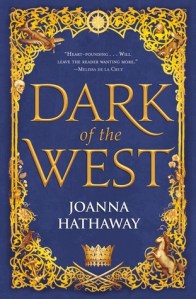
Serena’s Review: “Dark of the West”

32949202Book: “Dark of the West” by Joanna Hathaway

Publishing Info: Tor Teen, February 2019

Where Did I Get this Book: Netgalley

Book Description: Aurelia Isendare is a princess of a small kingdom in the North, raised in privilege but shielded from politics as her brother prepares to step up to the throne. Halfway around the world, Athan Dakar, the youngest son of a ruthless general, is a fighter pilot longing for a life away from the front lines. When Athan’s mother is shot and killed, his father is convinced it’s the work of his old rival, the Queen of Etania—Aurelia’s mother. Determined to avenge his wife’s murder, he devises a plot to overthrow the Queen, a plot which sends Athan undercover to Etania to gain intel from her children.

Athan’s mission becomes complicated when he finds himself falling for the girl he’s been tasked with spying upon. Aurelia feels the same attraction, all the while desperately seeking to stop the war threatening to break between the Southern territory and the old Northern kingdoms that control it—a war in which Athan’s father is determined to play a role. As diplomatic ties manage to just barely hold, the two teens struggle to remain loyal to their families and each other as they learn that war is not as black and white as they’ve been raised to believe.

Review: I’m pretty sure I came across this book just by browsing through NetGalley one day and being intrigued by its rather simple cover. The fact that I couldn’t really guess what it was about based on the cover was mystery enough (this is a fun little game if you’re a book lover and have too much time on your hands: the match the cover with the general synopsis game). Then I read the description and became even more intrigued. Spies, and royalty, and…wait…fighter pilots? One of these does not go with the other!

The world is teetering on the brink, torn between a past that was ruled by a council of kings and queens who all regarded royal blood as the necessary component in leadership in their various countries, and a new world that, built on the back of technology, would suggest that leadership and charisma, regardless of the birthright of the one who carries these traits, are all that is needed. If the people follow you, your family history means nothing. Aurelia and Athan each come from opposing sides of this political stand-off. Aurelia has grown up a princess, confident in her place in the world, if still struggling to find a path forward that will fulfill her. Athan has had his life’s plan laid before his feet by his ambitious military leader father since the day he can remember. Neither fully understands the complicated history and political environment they have been thrust into, but in each other, they find a kinship that is as unexpected as it will be challenging.

This book took my so happily by surprise! Even with the book description, I had very little idea what I was getting into (part of the appeal, of course), so I turned to page one with a bit of hesitation. But immediately I was drawn in. For one, the writing in this is so solid. The very first chapter had me convinced that I had made the right choice in picking this one up. It’s one of those parts of reviewing books that I find most challenging: how to explain exactly what it was about the writing style that appealed to me.

For one, the book is a shared dual narrative between Aurelia and Athan. The challenge here, of course, is to effectively differentiate the voice between two characters who should read very differently. And right away, this is expertly handled. I think I ended up preferring Athan’s narrative style, but this potentially could have to do with his story being the one with the larger scale view of happenings in mind. Aurelia spends much of her time much more out of the loop. But either way, their voices were immediately distinct and their characteristics informed the way they spoke about and looked at the events unfolding around them.

From a more basic level, the writing is varied and complex. This is the weird part of evaluating writing where one feels tempted to start talking about the extent of the vocabulary used or the sentence structure. Again, not too sexy of a topic for book review material. But these are the kinds of things that you know when you see them, that make a book immediately pop out from the very first few pages.

All of this emphasis on writing is very important for a book like this. It’s a longer title and, as far as action goes, it’s a slow read. There’s a lot of complicated political and military tactics that are discussed, hidden, and revealed throughout the story. Our main characters are often only aware of the tip of the iceberg of it all, and that is felt by the reader. Schemes only become clear in the very end, and even then, one is never quite sure they have a finger on who all the players are in all of this. I believe there will be a map in the final version, but without that as well, the complicated geographical relationships between the various countries could also be overwhelming. To sum up: there’s a lot of talking and thinking in this book. Without strong writing, it could come across as pretty dull. But for me, it all came together perfectly.

This is also a strange book to assign to a genre. It’s technically referred to as a YA title and fantasy. But that said, I feel like this could easily be new adult or simply adult fiction; and any fantasy involved has to do with it being a made-up world. There aren’t any dragons or spells flying around here. Instead, the fascinating mixture of a completely invented world and history with very familiar, WWII level technology was refreshingly new.

There is, of course, a romance at the heart of the story. And I really enjoyed how this played out as well. Aurelia and Athan don’t simply fall instantly in love and all of their differences fade away. They come from different worlds, with different parental figures who have imparted very different lessons on their children. Throughout the story, no easy answers are provided and instead a slow sense of dread builds to what will be an inevitable clash.

As I said, this book took my completely by surprise. Luckily for me, it hit a lot of the tick boxes I look for in a story, but I can also see how the very unknown nature of it could leave other readers cold. If you go in with your typical YA/fantasy expectations in place, there’s a good chance this will feel like a slower, less interesting read. But for those looking for a more complicated, politically-focused story with a hard look at warfare and nationalism (with a dash of young love added in), this will be the perfect book for you!

Rating 9: Complicated and well-written, this book will appeal to fans of “Game of Thrones” who would be ok without all the dragons/white walkers stuff.

Reader’s Advisory:

“Dark of the West” is included on these Goodreads lists: “Books Marketed as Young adult that might be New Adult, Adult Fiction” and “YA Second World Fantasy.”

Find “Dark of the West” at your library using WorldCat!

Serena’s Review: “Four Dead Queens”

34213319Book: “Four Dead Queens” by Astrid Scholte
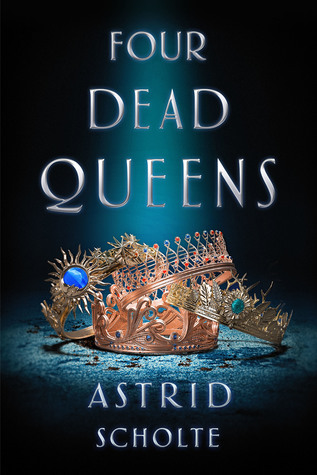
Publishing Info: Putnam, February 2019

Where Did I Get this Book: BookishFirst

Book Description: Get in quick, get out quicker.

These are the words Keralie Corrington lives by as the preeminent dipper in the Concord, the central area uniting the four quadrants of Quadara. She steals under the guidance of her mentor Mackiel, who runs a black market selling their bounty to buyers desperate for what they can’t get in their own quarter. For in the nation of Quadara, each quarter is strictly divided from the other. Four queens rule together, one from each region:

Toria: the intellectual quarter that values education and ambition
Ludia: the pleasure quarter that values celebration, passion, and entertainment
Archia: the agricultural quarter that values simplicity and nature
Eonia: the futurist quarter that values technology, stoicism and harmonious community

When Keralie intercepts a comm disk coming from the House of Concord, what seems like a standard job goes horribly wrong. Upon watching the comm disks, Keralie sees all four queens murdered in four brutal ways. Hoping that discovering the intended recipient will reveal the culprit – information that is bound to be valuable bartering material with the palace – Keralie teams up with Varin Bollt, the Eonist messenger she stole from, to complete Varin’s original job and see where it takes them.

Review: There are definitely some staple fantasy tropes that are sure to draw me in: dragons, women disguised as men, sisterhood, fairytale elements, etc. etc. Included in these is “thieves as protagonists.” While nothing has ever topped Megan Whalen Turner’s “Queen’s Thief” series, I’m still always on the lookout for a new favorite take on this theme. Not only does “Four Dead Queens” meet that criteria, but it was given an extra boost in that it’s a stand-alone novel. Rare, indeed, in this YA fantasy climate! But while there were definitely some good elements and legitimate surprises to be had in the story, in the end I was left feeling a bit flat after getting through this book.

Keralie is just your typical thief, happy to continue her life of petty crime and freedom. The politics and greater movements of the complicated city that she calls home, made up of four quadrants each ruled by its own queen, exist largely outside of her life and she’s fine with that. Until, that is, one of her jobs goes side-ways and she finds herself caught up in a murder mystery that is greater than could be imagined. Not one. Not two. Not even three. No, all four queens have been brutally murdered. And now Keralie and the mark she hit that lead her into all of this mess find themselves wrapped up in a conspiracy that goes further than they could have ever imagined.

I really liked the complicated world-building that was constructed for this story. The four quadrants and the various cultures and philosophical approaches they take were well-established and interesting. The world felt “lived in” and fully realized in a way that I think is fairly impressive given the fact that there have been, again, a sort of over-abundance of this type of world-building in YA fantasy in the past (ascribing generic traits to regions/cultures and calling your world good). Given the fast-paced nature of the book and the fact that it was a stand-alone, I was pleased to see a decent avoidance of info-dumping to convey this type of background information. Could more have been done? Yes. But it’s hard to both rant about how there aren’t enough stand-alone novels out there and then ding the ones that do come out too heavily for having a restricted word count within which to do their work. So I’ll give that a pass here.

As I mentioned, the story was fast-paced. The action starts from the very first page and there is very little let-up as the mystery unfolds. I was able to guess at a few things here and there, but there were also a surprising number of twists and turns that I failed to see coming. That said, the fast-paced nature of the story could also work against the plot as well. Time itself didn’t feel very well delineated or established. Some of the action felt like it was all happening at once and then a bit later I would realize that no, several days had actually taken place. Again, kind of a weird complaint, but the fact that I was buzzing through the book as quickly as I was almost worked against it. I couldn’t quite settle in, at times. So while I didn’t guess some of the reveals, I’m not sure whether this was because they were truly surprising or because I was so off-balance by the speed of the book that I didn’t have time to think about it.

I also only felt marginally attached to our main characters. While Keralie had many of the traits that I like to see in my thief protagonists, she also felt a bit like a cardboard cut-out of everything we’ve come to expect from a character like this. The romance, also, was incredibly dull and uninteresting to me.

Like I said, I’m always really excited to come across a stand-alone fantasy novel. But they are, by their nature, very different things than books that are setting up, or continuing, a series. Much needs to be done with fewer words and fewer pages. That being the case, I often find myself wishing that authors would choose to simply leave somethings out when they go the stand-alone route. You simply can’t fit in every standard YA fantasy trope that usually takes place over a trilogy or series into one, single book. Does there have to be a romance at its heart? Does the world-building need to be simplified or the action condensed to a few big scenes? Simply put, this book felt like it was trying to mash every fantasy expectation we have into one book and the word count simply couldn’t support it. Luckily, the fast-moving plot largely distracted from this as I was reading. But looking back, I do find it disappointing. If you’re looking for more of a “beach read” fantasy story, however, the past, hard-hitting action of this book might be just the ticket!

Rating 6: Had a lot of good bones in all the places that mattered, but never felt fully fleshed out in a way that is necessary for me to fully buy-in.

Reader’s Advisory:

“Four Dead Queens” is included on these Goodreads lists: “NEW ADULT fantasy & paranormal romance” and “Queen in Title.”

Find “Four Dead Queens” at your library using WorldCat!

February Fantasy Giveaway: “Crown of Feathers” & “Four Dead Queens”

There are a lot of great new fantasy titles coming out this spring, and in celebration of a new year’s worth of reading about magical beasts and royal plottings, we’re giving away two ARCs of titles that came out this February! Check out the details and enter to win below!

“Crown of Feathers” by Nicki Pau Preto

35715518

I had a sister, once…

In a world ruled by fierce warrior queens, a grand empire was built upon the backs of Phoenix Riders—legendary heroes who soared through the sky on wings of fire—until a war between two sisters ripped it all apart.

I promised her the throne would not come between us.

Sixteen years later, Veronyka is a war orphan who dreams of becoming a Phoenix Rider from the stories of old. After a shocking betrayal from her controlling sister, Veronyka strikes out alone to find the Riders—even if that means disguising herself as a boy to join their ranks.

But it is a fact of life that one must kill or be killed. Rule or be ruled.

Just as Veronyka finally feels like she belongs, her sister turns up and reveals a tangled web of lies between them that will change everything. And meanwhile, the new empire has learned of the Riders’ return and intends to destroy them once and for all.

Sometimes the title of queen is given. Sometimes it must be taken.


“Four Dead Queens” by Astrid Scholte

34213319

Get in quick, get out quicker.

These are the words Keralie Corrington lives by as the preeminent dipper in the Concord, the central area uniting the four quadrants of Quadara. She steals under the guidance of her mentor Mackiel, who runs a black market selling their bounty to buyers desperate for what they can’t get in their own quarter. For in the nation of Quadara, each quarter is strictly divided from the other. Four queens rule together, one from each region:

Toria: the intellectual quarter that values education and ambition
Ludia: the pleasure quarter that values celebration, passion, and entertainment
Archia: the agricultural quarter that values simplicity and nature
Eonia: the futurist quarter that values technology, stoicism and harmonious community

When Keralie intercepts a comm disk coming from the House of Concord, what seems like a standard job goes horribly wrong. Upon watching the comm disks, Keralie sees all four queens murdered in four brutal ways. Hoping that discovering the intended recipient will reveal the culprit – information that is bound to be valuable bartering material with the palace – Keralie teams up with Varin Bollt, the Eonist messenger she stole from, to complete Varin’s original job and see where it takes them.

Enter to win!

Giveaway Details: Giveaway is open to U.S. residents only and runs through Sunday, February 24, 2019.

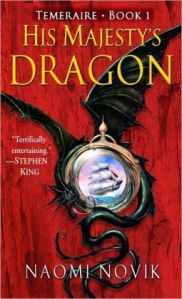
Serena’s Review: “His Majesty’s Dragon”

28876Book: “His Majesty’s Dragon” by Naomi Novik

Publishing Info: Del Rey, March 2006

Where Did I Get this Book: audiobook from the library!

Book Description: Aerial combat brings a thrilling new dimension to the Napoleonic Wars as valiant warriors ride mighty fighting dragons, bred for size or speed. When HMS Reliant captures a French frigate and seizes the precious cargo, an unhatched dragon egg, fate sweeps Captain Will Laurence from his seafaring life into an uncertain future – and an unexpected kinship with a most extraordinary creature. Thrust into the rarified world of the Aerial Corps as master of the dragon Temeraire, he will face a crash course in the daring tactics of airborne battle. For as France’s own dragon-borne forces rally to breach British soil in Bonaparte’s boldest gambit, Laurence and Temeraire must soar into their own baptism of fire.

Review: I loved both “Uprooted” and “Spinning Silver,” both fairytale retellings by Naomi Novik. I’ve heard repeatedly about her Temeraire series, and yet for some reason hadn’t picked it up. While I do like fantasy fiction that mixes together historical and military fiction as well, I think I always just read the book description for this one and was overwhelmed with flashes of “Master and Commander.” But when my last audiobook expired and I was perusing my audiobook list, the library must have been going through some high demand period and none of the books I had mentally lined up for next were available. But there was “His Majesty’s Dragon” with a glowing, green “available” next to it. So, with no excuses left, I checked it out. Only a few days later, I now have the same problem with trying to find a replacement audiobook because I blew through this one so quickly!

Laurence is proud of his career as a naval man. While impressed with the aerial corps, he’s always preferred this avenue of military life and has looked with wonder at those who live a very different life paired with their dragon companions. But when his ship captures another that carries an egg that is about to hatch, Laurence finds his life taking quite the turn. With the birth of Temeraire, a rare dragon from across the world, Laurence is introduced to an entirely different world, and one that is only marginally understood by society as a whole. Now, on the brink of invasion by Napoleon and his forces, Laurence and Temeraire must learn where they will fit in the challenging future that is unfolding before them.

So, no surprise given my introduction paragraph, but I loved this book! I really don’t know what my problem was. Novik is definitely a strong writer and this book routinely shows up on “best of” fantasy lists. Like I said, all I can blame is having only read a very different sort of fantasy from her in the past (fairytale fantasy) and my completely-unfounded-on-any-facts concern that the story would be mostly about military action with only a dash of dragons. And while, yes, there are highly descriptive battle scenes and the rules and regulations of life in the military are an important part of Laurence and Temeraire’s arc, there was also just a ton of great dragon stuff. Not only between Laurence and Temeraire and their wonderful relationship, but in the entire concept of what a world would look like if dragons were a common thing.

Novik includes tons of detail on the many different types of dragons that make up the world, both the ones native to England and the ones coming from other regions of the world. Their strengths and weaknesses are then used in very specific ways when it comes to military action. In her version of dragon riders, dragons are more like ships, big enough to have entire crews and to operate in coordinated maneuvers with the other dragons around them. In this way, Laurence is both a bonded partner with Temeraire, but also a captain who much command the group of other military personnel who also “crew” the dragon. The whole thing was so incredibly unique. As I just got done saying in my last review about phoenix riders, we’ve seen a lot of books with dragon riders. But here, Novik has come up with a truly original way of approaching the concept and there is so much room to use and expand on this idea.

But, of course, for me the most important thing often comes down to characters, and I absolutely loved both Laurence and Temeraire. Laurence is just a good guy: honorable, noble, able to adjust to his changed circumstances with grace and care. In the beginning, we get a good understanding for just what a life change it means for Laurence to suddenly become a dragon captain and have to leave behind a promising career as a naval captain. But through it all, he puts Temeraire first, always, and handles the skepticism and often out-right reproach of those who resent his new role with firm grace. In these ways, the book is almost as much a fantasy of manners story as anything else. My Jane-Austen-loving ways were all over the intricacies of honor and politeness that Laurence displayed.

And, of course, Temeraire was amazing. He’s a unique type of dragon, not one common to England, so much of the book is learning more about him and what his strengths are. It is clear from the start that he is incredibly intelligent, and Laurence and he form a quick bond based on mutual friendship and respect. He also expresses his own set of moral codes, something that Laurence must struggle to understand when it varies from his own sense of duty. Perhaps due to Temeraire’s unique attributes, but also largely due to Laurence’s not having been raised up in the aerial corps, the two of them see the relationship between riders and dragons and the mode of operation of the entire corp through a unique lens. Along with the reader, they are learning as much as we are, but also coming to see flaws that have long been accepted, challenging norms as they go.

The book does have some excellent battle scenes and even a few scenes that made me tear up. But it also definitely reads as an introduction to a series. Much of the story is made up of world-building and scene-setting, letting readers get to know Laurence and Tameraire slowly throughout the story and setting up conflicts to come. This is where Novik’s strength as a writer comes to play. In another author’s hands, this type of book, that reads largely as a set-up for books to come, could feel plodding and useless. Instead, all of the details and attention to character building were completely absorbing in their own right.

I really can’t say enough good things about this book. Fans of fantasy fiction, especially dragons (and for those looking for a unique take on the whole “dragon rider” concept), should definitely check this one out. If you like historical fiction and military fiction as well, that can only be a plus! For me, these books are already added to my mental list of long-running series that I will need to work my way through in the years to come!

Rating 9: With two incredibly endearing protagonists at its heart, this military fantasy series is sure to appeal to dragon-loving readers!

Reader’s Advisory:

“His Majesty’s Dragon” is included on these Goodreads lists: “Best Alternate History Novels and Stories” and “Best Book With or About Dragons.”

Find “His Majesty’s Dragon” at your library using WorldCat!

Serena’s Review: “Crown of Feathers”

35715518Book: “Crown of Feather” by Nicki Pau Preto

Publishing Info: Simon Pulse, February 2019

Where Did I Get this Book: Edelweiss +

Book Description: I had a sister, once…

In a world ruled by fierce warrior queens, a grand empire was built upon the backs of Phoenix Riders—legendary heroes who soared through the sky on wings of fire—until a war between two sisters ripped it all apart.

I promised her the throne would not come between us.

Sixteen years later, Veronyka is a war orphan who dreams of becoming a Phoenix Rider from the stories of old. After a shocking betrayal from her controlling sister, Veronyka strikes out alone to find the Riders—even if that means disguising herself as a boy to join their ranks.

But it is a fact of life that one must kill or be killed. Rule or be ruled.

Just as Veronyka finally feels like she belongs, her sister turns up and reveals a tangled web of lies between them that will change everything. And meanwhile, the new empire has learned of the Riders’ return and intends to destroy them once and for all.

Sometimes the title of queen is given. Sometimes it must be taken.

Review: As I mentioned in the Highlights post for this book, I was pretty excited about this one purely based on the phoenixes. While I love me some dragons, there have been approximately a million and a half books written about them, often including dragon riders as well, over the last several years. Obviously this has always been an appealing topic to writers and readers alike, but I have to think a certain HBO show has also had a hand in the sheer explosion of dragon books we’ve seen. But, all of that said, there are a lot more fantastical beasts out there to feature in books, so I was thrilled when I saw this cover and read the description that features riders not of dragons but of phoenixes! Add in some sister drama, and it sounded like it would be right up my alley. Unfortunately, while there were a lot of good elements included, it fell a bit flat for me.

Veronyka and her older sister have been living a vagrant life almost since Veronyka can remember. And all that has kept them going has been their shared dream of finding phoenix eggs and bringing back the famed Phoenix Riders who have faded almost into myth in the midst of civil war. But when things go wrong, Veronyka finds herself alone with this dream, hiding her identity from those around her. And, of course, there is much more going on than what there seems. What is the truth behind Veronyka and her sister’s strange family history? And what role will they each play in building a new future?

Most of what I liked about this book had to do with the world-building, and, of course, the entire concept of an organization of phoenix riders. Yes, there is a lot of cross-over between this and what we’ve seen from similar dragon rider books, but the unique attributes of phoenixes (notably their regenerative proprieties) adds a new layer of intrigued to how these great birds would operate with their partners. I also liked the complicated relationship laid out between Veronyka and her sister. From the very beginning, we see the tension that lies between them. There is love, but its always tinged with just a bit more. Sometimes jealousy, sometimes anger, sometimes suspicion. As the book plays out, this relationship becomes even more important to the story, and while I was able to guess at the reveal in the end, it was still a pretty interesting concept and a great set-up for the next book.

But beyond those things, I simply had a hard time getting into this book. I was never able to slip fully into the experience and instead the process of reading it began to feel like a chore. I think there were probably a few reasons for this.

One, there is a lot of info-dumping in the first quarter to a third of the book. The story alternates between Veronyka and another character, and between the two of them, they almost end up repeating the exact same historical and cultural lessons back to back. Information provided by one character will be almost directly repeated by the other, but with a few changes in perspectives (but by no means enough to justify the repeated dump). Not only was the repetition annoying, but info-dumping on its own is always a quick way to kick me out of a reading experience. Most of this information could have been sprinkled throughout and come up in more natural ways.

Second, the story drags. There are blips of exciting action only to be followed with long chunks of very slow plot movement. The story probably could have been significantly shorter and be better for it.

Third, the characters on their own weren’t all that interesting. While I did like the complicated sisterly relationship, that aspect of the characters’ relationships would often fall to the side. And when left with Veronyka herself and the other male character, Sev, I was often simply bored. Which is really saying something, given how much I typically enjoy girls-disguised-as-boys stories.  They both simply felt pretty flat. I was also not terribly interested in the romance included in the story.

So, while the book had a lot of good things going for it (world-building, unique fantasy elements, a diverse cast of characters), I have to ding it down a few ratings simply because I didn’t enjoy reading it. And really, at its heart, that’s my main requirement for a book! Readers who have more patience than me and who are looking for a YA fantasy novel that is still pretty awesome with its handling of phoenixes, this may be the book for you! Just wasn’t for me, sadly.

Rating 6: Info-dumping and a floundering plot bogged down this book despite the cool factor that comes with having a story about girls riding around on phoenixes!

Reader’s Advisory:

“Crown of Feathers” is included on these Goodreads lists: “Fantasy / Sci-fi Books With POC Leads” and “Fiction: Phoenix (Mythological Bird).”

Find “Crown of Feathers” at your library using WorldCat!

Serena’s Review: “The Caged Queen”

35843937Book: “The Caged Queen” by Kristen Ciccarelli
Publishing Info: HarperTeen, September 2018

Where Did I Get this Book: audiobook from the library!

Book Description: Once there were two sisters born with a bond so strong that it forged them together forever. Roa and Essie called it the hum. It was a magic they cherished—until the day a terrible accident took Essie’s life and trapped her soul in this world.

Dax—the heir to Firgaard’s throne—was responsible for the accident. Roa swore to hate him forever. But eight years later he returned, begging for her help. He was determined to dethrone his cruel father, under whose oppressive reign Roa’s people had suffered.

Roa made him a deal: she’d give him the army he needed if he made her queen. Only as queen could she save her people from Firgaard’s rule.

Then a chance arises to right every wrong—an opportunity for Roa to rid herself of this enemy king and rescue her beloved sister. During the Relinquishing, when the spirits of the dead are said to return, Roa discovers she can reclaim her sister for good.

All she has to do is kill the king.

Previously Reviewed: “The Last Namsara”

Review: As promised, I decided to give the second book in this series (more of a companion novel) a go even though I struggled through the first. That one had enough cool factors with its world-building, history, and, of course, dragons to push past my ultimate dislike of its main character. I also liked the small scenes we got for Roa in that book and was curious to see how she would be handled as a main character. Alas, I’ve now come to the conclusion that while this author has some great ideas for stories and fantasy worlds, I simply can’t stand her characters, especially when they take on a POV role.

Roa is a reluctant queen, having involved herself in the political corruption and upheaval that we read through Asha’s eyes in the first book through marriage to the heir to the throne, Dax. Doing this, not only helped secure Dax the throne, but also secured an alliance that would see peace and prosperity for her own people, often at odds with the greater realm. But she has her own history with Dax, as well, and one that has not lead her to look upon him kindly. Now, caught up once again in political maneuverings, Roa is offered a way out: kill her husband, the king.

Frankly, I feel like I could almost copy and paste my review for “The Last Namsara” into this post, make a few edits for name changes, remove the dragons and that about covers it. The strengths and weaknesses were so identical between the two! Again, the world-building, magical elements, and folktales/history that are scattered throughout the story are what stand out. It’s in these elements that we see what a strong writer the author is. Again, the fables that we hear throughout the story, and that serve as a parallel to the choices presented to Roa, are told with a beautiful, simple lyrical style that I greatly enjoyed. Really, if Ciccarelli wanted to produce a small collection of short stories and fables set in this world, I’d be all over it! She clearly has a knack for story-telling itself as an art.

Also, while we sadly had many fewer dragons in this book, I liked the other fantasy elements introduced. Most notably, Roa’s connection to her deceased sister whose spirit has been trapped in this world and who has been a steady companion for Roa for the last several years. Again, this element of Roa’s story connects to the same fables that we’re given early on in the book in very clever ways. There’s some decent exploration of loss, love, and determination in the face of impossible odds that come into play through this story line.

But, again, the characters and romance are where this story falters. In the first book, Roa is introduced as a mature, serious character. One who, of all of them, is living in the real world and is willing to make hard choices to secure an outcome that is for the betterment of her people. While Dax and Asha flit around, ruled by their emotions and indecisive to the extreme, Roa seemed to be the steadying presence that held it all together. But here…what happened to that character? In the very first chapter, we find Roa literally running away from her problems. Easily anticipated struggles of a politically arranged marriage seem to have now taken her completely by surprise, and she’s full of complaints, regrets, and indecision, all expressed through what can only be described as immature whining. Her dead, bird sister even criticizes her for it! And really, of those two, who has more of a right to complain?

And these traits continue throughout the story. Gone is the competent, mature Roa we were given in the first book. Instead, we have an insecure, indecisive character who gets herself caught up in *sigh* a love triangle where all the “challenges” presented her could be solved with one simple attempt at communication. I wouldn’t enjoy this character had I come upon her completely fresh, but it was twice as frustrating to read her this way, after being given such a different, more intriguing version of the character in the first book. What’s more, many of these struggles and character flaws are identical to the problems I had with Asha, making the characters now read as very similar people. Sure, they had different struggles and histories, but swap that out and leave the voices and ways they deal with things? You wouldn’t be able to differentiate. And when that happens, I’m forced to conclude that the author simply struggles with characterization as a whole and is stuck in her own writing hole (that, or has bought into the false idea that indecisive, whiny teen girls are the only type of protagonists YA readers are into).

Ultimately, I disliked this book even more than the first one. Some of the fantasy elements (the dragons) that helped buoy that book were more absent here, and Roa wasn’t simply a let down as a character, but a complete reversal on what we had been promised. I think there’s a third book set to be released as a companion to these two, but at this point, I feel like I’ve already read it anyways, so why bother.

Rating 4: All the same problems of the first, if even more disappointing for now being repetitive problems.

Reader’s Advisory: 

“The Caged Queen” isn’t on many Goodreads lists, but it is on “2018 – Sequels.”

Find “The Caged Queen” at your library using WorldCat!

Serena’s Review: “Markswoman”

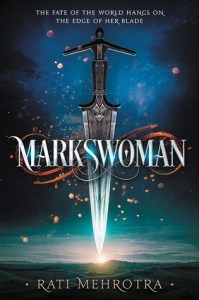
35008759Book: “Markswoman” by Rati Mehrotra

Publishing Info: Harper Voyager, January 2018

Where Did I Get this Book: audiobook from the library!

Book Description: Kyra is the youngest Markswoman in the Order of Kali, one of a handful of sisterhoods of highly trained elite warriors. Armed with blades whose metal is imbued with magic and guided by a strict code of conduct, the Orders are sworn to keep the peace and protect the people of Asiana. Kyra has pledged to do so—yet she secretly harbors a fierce desire to avenge her murdered family.

When Tamsyn, the powerful and dangerous Mistress of Mental Arts, assumes control of the Order, Kyra is forced on the run. She is certain that Tamsyn committed murder in a twisted bid for power, but she has no proof.

Kyra escapes through one of the strange Transport Hubs that are the remnants of Asiana’s long-lost past and finds herself in the unforgiving wilderness of a desert that is home to the Order of Khur, the only Order composed of men. Among them is Rustan, a disillusioned Marksman whose skill with a blade is unmatched. He understands the desperation of Kyra’s quest to prove Tamsyn’s guilt, and as the two grow closer, training daily on the windswept dunes of Khur, both begin to question their commitment to their Orders. But what they don’t yet realize is that the line between justice and vengeance is thin . . . as thin as the blade of a knife.

Review: As I was scrolling through upcoming releases, I happened upon a book that seemed intriguing. Once I looked into it a bit further, I realized that it was in fact a sequel to this book that came out last year and somehow missed my radar. Mission in hand, I set off to the library and was able to snag an aubiobook version of the story. I knew from a few other book reviewers I follow that this was a fairly popular title last year, so I had high hopes. Sadly, the hype machine let me down once again.

Ever since tragedy struck her village and family when she was young, Kyra has been raised by an order of all-female assassins, training to become a Markswoman herself. In this land, Markswomen (and the one order of men to also take on this calling, though there is much controversy over the legitimacy of their claim) are the sole arbitrators of justice, doling out death sentences when crimes have been committed. To do this, they use specially crafted blades that they have bonded with and hold unique powers. But soon after Kyra gains her role as  Markswoman, things go wrong in her order and she finds herself alone in the world and on the run from her own kind. She meets up with a young man from the male version of the assassin order, and together they must face the growing strife overtaking the land.

There is a lot to like about this story, and I can understand why it was popular for so many readers. Most notably, the world-building is incredibly unique. The story appears to be set in some version of India and there are various references to gods that come from the Hindu religion, most notably, Kali, the Markswoman’s patron goddess of death. But on top of this fantasy version of the region, we’re also quickly given hints to an even greater past. There are references to ancient beings who once walked the earth but retreated to the skies long ago. However, they left a series of doorways that operate using some type of technology that is not understood and that can quickly transport an individual from one place to another. This science fiction element was completely unexpected and probably one of the most intriguing aspects of the entire series. I was much more interested in the history of this world and this technology than in Kyra’s story itself, which, of course, is ultimately one of my problems with the book.

Frankly, I didn’t much care for Kyra or Rustan, each coming with their own unique frustrations. We’ll start with Kyra. We meet her during her first assignment that marks her as a fully-fledged Markswoman. She immediately hits with the expected hesitation and moral questioning I’ve now come to (sadly) expect from many assassin stories. Once back at the Order, she continues to flounder in her role, being easily provoked by another girl who is still at an apprentice level to the point where Kyra walks right up to a line of behavior that would see her immediately expelled. Lastly, in a discussion with her mentor, she seems to still be confused by her own order’s purpose, wishing to use her newly-gained role to go on a revenge quest against the people who attacked her family all those years ago. All together, only a few chapters in, we’ve seen literally ZERO evidence that Kyra has the maturity, responsibility, or thoughtfulness to have earned her this promotion. She doesn’t seem to have engaged at all with the greater meaning and purpose behind her own order; she questions authority at every opportunity; she is easily pushed into poor decision making by peers who are now her lessers; she’s not even particularly skilled in any of her lessons. I came away from these chapters with literally no idea what had made Kyra special enough to have been granted an early promotion other than, of course, the necessity of it for plot purposes, the WORST kind of story structure. I found it incredibly frustrating and it ultimately irreparably damaged the character in my mind early in the book. Even when the action picks up to the point that some of these flaws fade into the background, the damage was done.

Rustan, too, has similar character issues. He’s given fewer chapters than Kyra from the get-go, leaving the character with an uphill battle. And, again, we see another assassin who is really pretty terrible at being an assassin. He ultimately spends much of the first half of the book fretting over events in a way that was both repetitive and useless. Not to mention, again, at odds with the basic concepts of any assassin order that one could imagine.

Then the two get together and the inevitable romance begins. Here, too, the book flounders and this element of the story falls into many tropes and pitfalls. We’re never given any solid reasons why these two are drawn together and really, it seems to happen over night and out of nowhere. What starts as an antagonistic relationship literally upends itself for no good reason. I’d be more mad about it if I wasn’t quite so bored by how predictable it all was.

Ultimately, I was pretty disappointed by this book. The world-building and story at the heart of it had so much potential. But this just made it all the more frustrating to see those things being squandered and buried beneath poor characterization and an aggressively trope-ridden romance. I had already requested the sequel book for review when I picked up this one (this is what I get for blindly trusting in the hype machine), so we’ll see how that one turns out. Hopefully improvements will be made!

Rating 5: Having a lot of good things going for it just made it all the more painful to watch this one stumble its way through.

Reader’s Advisory: 

“Markswoman” is on these Goodreads lists: “South Asian YA/MG” and “Indian Science Fiction and Fantasy.”

Find “Markswoman” at your library using WorldCat!

Kate’s Review: “Victor LaValle’s Destroyer”

36100937Book: “Victor LaValle’s Destroyer” by Victor LaValle, Dietrich Smith (Ill.)
Publishing Info: BOOM! Studios, March 2018

Where Did I Get This Book: The library!

Book Description: The legacy of Frankenstein’s monster collides with the sociopolitical tensions of the present-day United States.

Mary Shelley’s Frankenstein beseeched his creator for love and companionship, but in 2017, the monster has long discarded any notions of peace or inclusion. He has become the Destroyer, his only goal to eliminate the scourge of humanity from the planet. In this goal, he initially finds a willing partner in Dr. Baker, a descendant of the Frankenstein family who has lost her teenage son after an encounter with the police. While two scientists, Percy and Byron, initially believe they’re brought to protect Dr. Baker from the monster, they soon realize they may have to protect the world from the monster and Dr. Baker’s wrath.

Written by lauded novelist Victor LaValle (The Devil In Silver, The Ballad of Black Tom), Destroyer is a harrowing tale exploring the legacies of love, loss, and vengeance placed firmly in the tense atmosphere and current events of the modern-day United States.

Review: Victor LaValle is an author whom I greatly enjoy, as I don’t think I’ve read one thing by him that underwhelmed me. I really liked his mental institution horror story “The Devil In Silver”, I found “The Ballad of Black Tom” to be a fun deconstruction of a racist Lovecraft tale, and I REALLY liked “The Changeling” and how it made a modern day dark fairy tale out of New York City. So when my friend Tami told me that he had written a graphic novel that decided to take on “Frankenstein”, I absolutely had to read it. It was a long wait at the library, but when “Destroyer” finally came in I sat down and devoured it in one setting. Even if it ran me through the wringer and then some. I guess I never thought about how “Frankenstein” could be combined with present day socio-political themes, and yet LaValle meshed them so well that I was blown away.

The Monster has emerged from the Arctic in modern times, and his former longing of being included and understood has been thrown out the window. He is a beast that is intent on destruction of the human race, as he believes that it has wronged him, as well as everything else around it, and does not deserve to go on. In contrast, we meet a modern day descendent of Victor Frankenstein. Her name is Dr. Baker, and she, too, has her heart set on destroying the society that she has continuously wronged her. For her, though, that is mostly because she lost her son Akai after a witness mistook his little league bat for a gun, and police killed him. Her science experiment has brought Akai back from the dead, though her scientific genius has made him a wonder of modern technology as well as an undead twelve year old. It’s the perfect metaphor for the rage and despair that parents like her have felt over and over again, and her urge to destroy every part of the racist society that destroyed her life. Her rage and plotting is utterly terrifying, but damn does it make sense. I loved Dr. Baker, as you get to see her life before Akai’s death through flashbacks, including her time at a top scientific research organization (that basically fired her when she got pregnant, because heaven forbid a woman in a STEM profession want to start a family). That organization has also stolen her ideas and technology and intends to use it against her, which is another indictment of power structures stealing ideas from groups that it wrongs. LaValle does a very good job of showing how she could go from a bright eyed and enthusiastic young scientist to a revenge intent victim, and while I don’t think he ever makes it seem like her urge to kill everyone in society is correct, he makes you really understand why she’d feel that way.

Dr. Baker a great juxtaposition to The Monster, who has also decided to take a path of destruction because of his grievances. It takes those themes of science gone too far and what makes a monster and applies them to a T. Hell, the other little homages are also on point, like the names of the agents Percy and Byron, named for the two men to whom Mary Shelley first shared her vision of a Modern Prometheus. The Easter eggs are plentiful, and I had a hell of a time finding them. It’s a really fun thought exercise about what The Monster would possibly be like today if it finally left the Arctic, and boy is it bleak. I don’t know if I really like the idea of The Monster being reduced to, well, a monstrous/brainless being, because far too often has Shelley’s vision been misinterpreted from the thinking, and therefore plagued, creature of her intention. But in this case, I think that LaValle does it in a way that would be a potential foregone conclusion, and it does add to the symbolism all the more.

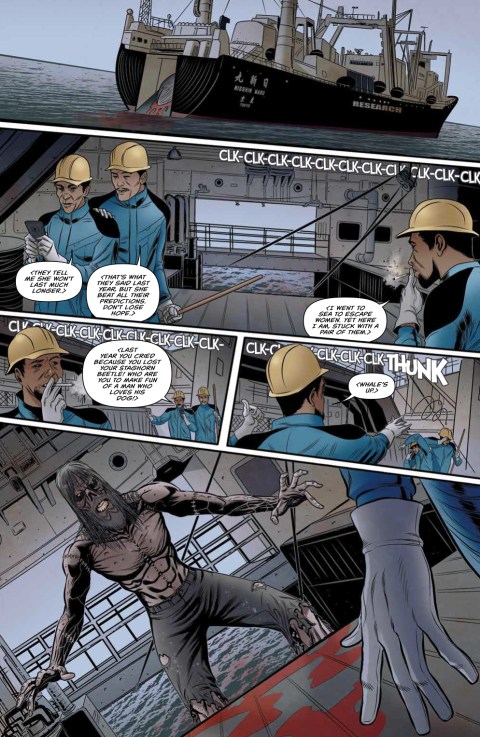
I really enjoyed the art work that Dietrich Smith brought to this story. It felt sufficiently comic book, but it also had bits of depth and darkness and shadow that conveyed various points of tragedy and sadness. I also liked the more abstract design of the cover (done by Micaela Dawn), though the drawing style inside was the design that I preferred. The details from the gore and the violence to the varied facial expressions are very well done.

Destroyer_001_PRESS_6
(source)

“Destroyer” is a superb reinterpretation of a classic story of horror and tragedy, and LaValle has once again shown his talent and retelling stories with a socially conscious lens that reflects today’s ills. It’s another update of “Frankenstein” that I think Mary Shelley would appreciate.

Rating 8: A dark and biting retelling of “Frankenstein”, “Victor LaValle’s Destroyer” takes a classic story and applies it to modern social justice themes with powerful results.

Reader’s Advisory:

“Victor LaValle’s Destroyer” is included on the Goodreads lists “Frankenstein Revisionist Novels”, and “Black Lives Matter Library Ideas”.

Find “Victor LaValle’s Destroyer” at your library using WorldCat!