
Kate’s Review: “The Eyes of the Dragon”

848162Book: “The Eyes of the Dragon” by Stephen King

Publishing Info: Signet Books, February 1987

Where Did I Get This Book: An eBook from the library!

Book Description: Once upon a time, in the Kingdom of Delain, King Roland is murdered and his son and heir, Peter, is framed for the crime. Peter and his loyal friends must battle an evil wizard and Peter’s usurper brother, Thomas, for the throne. Imprisoned in a tower, Peter conceives an escape plan that will take him years to execute before taking on Flagg, the powerful sorcerer who has masterminded this coup.

Review: I’m sure that this has been brought up before, but one of my favorite literary characters of all time is Stephen King’s Randall Flagg, the villainous but charismatic demon from multiple works in the Stephen King Universe. It probably goes Gandalf, Anne Shirley, and then Flagg (and what a group that is!). But for loving Flagg so much, I hadn’t read many books that have his presence outside of “The Stand”. “The Dark Tower” series is an endeavor I plan to take on eventually, but given its vastness the commitment is terrifying. So after needing a SERIOUS palate cleanser post “Game of Thrones” and all the bad storytelling havoc it wrought, I wanted a fantasy novel to make me feel better. Even though fantasy isn’t really my cup of tea outside of a few exceptions, I felt that King could potentially give me the fantasy story I needed, so I picked up “The Eyes of the Dragon”. And who is the villain within the story? A magician named FLAGG!!! 

14a06f8749d1b5f2cd7e8d43fada8bab
This look was so dated but whatever, he was still scary. (source)

I think I knew that he was in this book on some level, but in the moment it was a pleasant surprise. So I dove into the audiobook of “The Eyes of the Dragon”, and was not let down by King and his fantasy storytelling.

“The Eyes of the Dragon” is admittedly pretty basic fantasy with a clear hero, a clear villain, and a cut and dry conflict that has high, deadly stakes. It takes place in the kingdom of Delain, a medieval-esque world with kings, lords, and peasants. King Roland is a mediocre but passable ruler, and his court magician Flagg is biding his time and hoping to seize power so that he can cause chaos throughout the realm (as is his prerogative in most everything he does). He therein poisons the king and frames the oldest and more noble son, Peter, for his murder, so that he can put Thomas, the younger and more malleable son, in a puppet rule. Peter then has to prove his innocence and get his throne back. Very basic fantasy tropes that are now well worn, so much so that a lot of modern fantasy, I’d bet, would never dare do something so simplistic. But it’s the simplicity that I liked most while I was listening to “The Eyes of the Dragon” (more on that format choice in a bit). I can’t tell you if it was because I was gun shy after being so let down by “Game of Thrones”, or the fact that the fantasy stories I have enjoyed most in the past have been pretty cut and dry. Whatever it was, having a clear hero and a clear villain, especially a villain that I already love, was a literary comfort. The strength of this story really does come from its characters, which should be no surprise given that King is the one who created them. While none of them are particularly complex, they were still characters that I could easily root for, and against, and in some cases feel a deep, deep pity for. And while a lot of the fantasy themes and elements are things we’ve seen before (including a serious lack of female characters outside of the badass Naomi and her dog Friskie), I still feel like King implemented them in effective ways, from creating creative poisons, unique lore, and a kingdom whose culture, economy, and power structure felt well developed and fleshed out. This version of Flagg is also interesting in that he’s still malevolent, but he is lacking the charm that he oozed in “The Stand”. But that, too, still works because in “The Stand” his main goal is to recruit a number of modern day, Earthly psychopaths and degenerates, whereas in Delain he is the foreboding and all knowing court magician who has the ear of kings. It shows the chameleon-like personality shifts that he has throughout the various King works he appears in, and I REALLY liked that.

I also really want to focus on the narrator of the audiobook, who is none other than Bronson “Balki” Pinchot. While most of us probably think of Pinchot as a flamboyant character actor who plays over the top comedic characters (more often than not with odd European accents), he is phenomenal as our book narrator. He has differing voices for all of the characters, he isn’t afraid to emote in the ways that the characters are emoting, even if that means he’s legitimately screaming at the top of his lungs, and he provides the proper pacing and beats for every moment. I knew that he had dramatic acting chops from a few things I’d seen him in, but goddamn he knocks this story out of the park on every level.

giphy-6
I don’t know what I expected, but you’re killing it, Pinchot, you’re KILLING IT! (source)

Overall, “The Eyes of the Dragon” was a comfort read of a fantasy novel that I needed in that moment. While I’m still a bit intimidated to take on “The Dark Tower”, it gives me an idea of how King approaches his fantasy stories. And I am always happy to see my man Flagg show up, no matter in what form it may be.

Rating 8: A satisfying and fun dive into fantasy, “The Eyes of the Dragon” is a different work from Stephen King, but one that I enjoyed quite a bit.

Reader’s Advisory:

“The Eyes of the Dragon” is included on the Goodreads lists “The Dark Tower: Connections”, and “Fantasy One-Shots”.

Find “The Eyes of the Dragon” at your library using WorldCat!
Serena’s Review: “Fray”

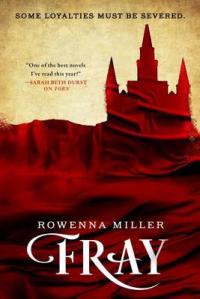
40696990Book: “Fray” by Rowenna Miller

Publishing Info: Orbit, June 2019

Where Did I  Get this Book: ARC from the publisher

Book Description: Open revolt has been thwarted — for now — but unrest still simmers in the kingdom of Galitha. Sophie, despite having built a thriving business on her skill at both dressmaking and magic, has not escaped unscathed from her misadventures in the workers’ rebellion. Her dangerous foray into curse casting has rendered her powers unpredictable, and her increasingly visible romantic entanglement with the Crown Prince makes her a convenient target for threatened nobles and malcontented commoners alike.

With domestic political reform and international alliances — and her own life — at stake, Sophie must discern friend from foe… before her magic grows too dark for her to wield.

Previously Reviewed: “Torn”

Review: I enjoyed the political, magical-sewing, romance story that was “Torn,” so it was a no brainer to request a copy of its sequel. The first book had moved rather slowly, for all that it was introducing new characters and a new world, so I was hopeful that now that that groundwork had been laid, the pace would pick up a bit more here. Unfortunately no.

Sophie’s orderly life of quiet competence as a small business owner is quickly falling apart. Not only does she have a rebel leader for a brother, one whom she was tied closely to in the failed revolt that took place not too long ago, but her growing attachment to the Crown Prince is thrusting her into a completely new part of society, and one that doesn’t look too kindly on the doings of revolutionaries. On top of all this, after she used her magic in new ways in the last book, she has begun to lose control of it. These dueling priorities are often at odds with each other and it’s beginning to look like Sophie is going to have to choose a side eventually.

Many of my opinions from the first book carried over to this one, however, ultimately, I didn’t enjoy it as much. For one thing, the pace of the book is still incredibly slow. I enjoy a political fantasy novel as much as the next person, but much of the slowness here is spent on minute day-to-day details, rather than backroom scheming. Much of what helped the first book manage its slow pace was the fact that it was a first book and was throwing tons of new stuff at the reader simply due to that fact. With a second book, and an established world and main character, the story itself needs to provide the points of interest. Unfortunately, it didn’t really do that and I still feel like the book could have been edited down significantly.

I also still enjoyed the magic system, however. Especially now that it is getting out of Sophie’s control. In the first book, it was made clear that Sophie herself didn’t fully understand her magic, and when she pushed herself into new aspects of charming, she was exploring without much of a guide. Seeing the calm, controlled Sophie that we knew from the first book deal with the unexpectedness that is now her magic was fun to read. It was also interesting having her explore the morality of how she uses her magic and how that ties into the way the magic behaves itself.

The romance was also still fairly bland for my taste. But I did like how the book was tackling the sexist laws of the land that will prevent Sophie from owning her own business once she gets married.

However, the one big strike against this  book for me was Sophie herself and the way the brewing revolution seems to be being handled. One of the most compelling aspects of the first book was the honest look at what revolutions look like, the tough places where idealism and practicality meet and explode. The fact that there are good and bad people on both sides. And, even more importantly, there are people in the middle who can understand both sides but just want to get on with life. That was Sophie. Unfortunately, here, in the second novel, much of that nuance and layered exploration is thrown out. Sophie seems almost out of character with how much she sides now with the revolutionaries. And, conveniently, the story itself has molded the two sides to make this choice easier. The common people are fully in the right. The aristocrats are completely evil. It’s a really unfortunate loss, simplifying matters back into the easy good vs. evil conflicts we’ve seen a million times. And with the unoriginal “common folk vs. the evil nobility” theme nonetheless.

In the end, I don’t feel that this book moved the series in the right direction. Some of the flaws from the first one (slow pace, bland romance) carried over to this one. And the interesting additional layers to Sophie’s magic weren’t enough to make up for the fact that the complicated political philosophizing was thrown out the window for a more standard, less interesting, revolution of the good folk against the bad ones. If you enjoyed the romance and the pace of the first book more than me, perhaps this one won’t be as much of a let down. But unfortunately, it was a bit of a dud for me.

Rating 6: Loses its nuance, and with it, its point of interest.

Reader’s Advisory:

“Fray” is a newer book so isn’t on any Goodreads list but it, like “Torn,” should be on “Crafty Magic.”

Find “Torn” at your library using WorldCat!

Serena’s Review: “Empire of Ivory”

129510Book: “Empire of Ivory” by Naomi Novik

Publishing Info: Del Rey, September 2007

Where Did I Get this Book: audiobook from the library!

Book Description: Tragedy has struck His Majesty’s Aerial Corps, whose magnificent fleet of fighting dragons and their human captains valiantly defend England’s shores against the encroaching armies of Napoleon Bonaparte. An epidemic of unknown origin and no known cure is decimating the noble dragons’ ranks–forcing the hopelessly stricken into quarantine. Now only Temeraire and a pack of newly recruited dragons remain uninfected–and stand as the only means of an airborne defense against France’s ever bolder sorties.

Bonaparte’s dragons are already harrowing Britain’s ships at sea. Only one recourse remains: Temeraire and his captain, Will Laurence, must take wing to Africa, whose shores may hold the cure to the mysterious and deadly contagion. On this mission there is no time to waste, and no telling what lies in store beyond the horizon or for those left behind to wait, hope, and hold the line. 

Previously Reviewed: “His Majesty’s Dragon” and “Throne of Jade” and “Black Powder War”

Review: I continue to power through this series! Not much new to add to this intro: I still am enjoying the heck out of the story. The audiobook narrator is awesome which is part of the reason I’m speeding through so quickly as they’re all available at my local library with pretty much no wait time to speak of. If you do like audibooks, this is definitely a series that translates well into that format. So, without further ado, on to the review!

Lawrence and Temeraire have finally made it back home. But the warm welcome they had both been anticipating to keenly for the last several months is not to be found. Instead, their friends and almost all of the other dragons have been struck down by a slow, deadly disease. Not only is this a massive personal strike, as watching their friends suffer is torturous indeed, but with Napoleon’s forces progressing so steadily on the continent, the loss of England’s aerial corps would spell sure doom for the nation. Now, on a desperate mission to find a cure, Temeraire and Lawrence return to the cape of Africa. But all is not well there either, as forces are at work that are greater than they, or anyone, could expect.

As I’m sure I mentioned in one of my past reviews, one of the things I enjoy the most about this book is how Novik has used the introduction of dragons throughout the world to re-arrange cultures and histories. Cultures and historic events are still recognizable, but everything is also slightly different. China was largely the same. However the dragons they revered were living breathing animals who walked their streets. England is a nation that prides itself on its navy, with the dragons and the aerial corp coming second. Napoleon is still a masterful strategist, only now we see his schemes play out with the use of dragons, as well.

But here we begin to see how the introduction of dragons into the world could have major effects on cultures and history. For one, the disease that strikes down the dragons is thought to have come across the ocean from North America on one of their local dragons. This is an interesting twist on the tragic loss of life that came from the introduction of new diseases into the Americas. Now we see it travel the other direction and strike down dragons instead of humans. There are also a lot of conversations about the challenges of colonization into parts of the world that have dragons. Not only do the indigenous peoples in these worlds have differing relationships with their native dragons, but there are feral dragons as well to content with.

I particularly enjoyed new role for dragons within a culture that is introduced in this book. We get a good look into some African nations and the ways that dragons are viewed there. And the book does a good job of highlighting just how huge that continent is and that while the tribes they encounter have one way of doing things, that is in no way representative of the continent as a whole.

The story itself is action packed. By this point in the story, we have a good connection with the dragons as a whole, particularly the ones that form Temeraire and Lawrence’s closer friend group. So the urgency behind their mission is felt keenly. But added on to this story is a greater conflict that is growing in Africa between the native peoples, the colonies, and the ongoing slave trade. I don’t want to spoil anything, but I loved how, again, Novik is giving herself free license to play with history, all centering around one key change: the introduction of dragons.

I’m of course still loving Temeraire and Lawrence’s lovely friendship. However, with all of the action that is slotted into this book, these personal relationship moments do take a bit of a back burner. Given the events in the last portion of the book, however, I expect that this part of the story will get more attention in the next in the series. Speaking of the end, again, it does seem to come out of nowhere (this may have something to do with the my reading the audiobook where I’m less sure of where I am in the story at any given moment). It is also the most like a cliffhanger we’ve seen so far in the series. But as the next book is out and the series is completed, I don’t see this as much of a problem! Just added fuel to my fire to keep on reading!

Rating 9: Still excellent! I love that the author is giving herself more room to really play with history in these later books.

Reader’s Advisory:

“Empire of Ivory” is included on these Goodreads lists: “Military Fantasy” and “A Re-imagined British Empire.”

Find “Empire of Ivory” at your library using WorldCat!

Serena’s Review: “Shadow & Flame”


40042001Book: “Shadow & Flame” by Mindee Arnett

Publishing Info: Balzer + Bray, June 2019

Where Did I Get this Book: from the library!

Book Description: From acclaimed author Mindee Arnett comes the thrilling conclusion of the stunningly epic, action-packed, and romantic fantasy adventure about a powerful girl possessed of strange magic, the outcast prince she loves, and the kingdom that has torn them apart.

Kate and Corwin are on the run, desperate for allies in a new world of war among the kingdoms of Rime. As the book opens, Kate suffers a massive loss, one that will shape the struggle for freedom of all wilders and magic folk—that is, if Kate can learn to control her own power.

Previously Reviewed: “Onyx & Ivory”

Review: I really enjoyed “Onyx & Ivory” when I read it last year. It was a fresh new fantasy story, and I particularly enjoyed the romance at the heart of it. Kate and Corwin had been attached in the past, but after a disaster through them apart, they slowly came back together throughout this story. It was a refreshing new angle on the romance subplot. The story ended fairly abruptly, however (I even wondered if my early copy wasn’t complete or something). So I was excited to see that the sequel was coming out only a year later and I placed my library request for it the first chance I got!

A year or so after the events of “Onyx & Ivory,” Kate struggles to reconcile the massive success of the Wilder rebellion, resulting in their now ruling an independent city of their own, with her own personal tragedy with the loss of Corwin in a failed rescue attempt a year past. Grown determined and ruthless in her grief, Kate has used her “sway” abilities to not only win the war, but to keep her city safe, earning her the title of the “Wilder Queen.” Unbeknownst to her, Corwin is alive and struggling to stay that way working in the deep mines of their enemy. Slowly but surely, however, their paths are winding towards one another where they will meet in the most challenging of circumstances.

I’m not really sure if my little synopsis above is a spoiler, but I don’t know how to review this book without the reveal that Corwin is alive. Indeed, that information is only in question for a brief 30-ish page section right in the beginning (and I doubt it had many readers fooled even then.) But at the same time, the book description itself goes to lengths to avoid this. Who knows!

Overall, I felt like this book was a lot darker than the first one. It’s main topic is exploring the morality of Kate’s sway power, both in her own hands and at the hands of a man much less scrupulous. It is the kind of power that wins wars, but one that comes at a high cost. In the hands of an enemy, we see just how brutal its effects can be. I particularly enjoyed this exploration of the power. We are able to get into the heads of those who suffer under the influence of someone using sway against them, forcing them to do things they never would have considered under their own free will. It’s not only tragic in the moment but leaves lasting scars that take time to heal.

Even Kate’s (the good guy) use of her power comes under question as we see how grief and loss have hardened her into a sense of rightness in the use of her power to protect those she loves, even against their own will. The debate between free will and security plays out in a very interesting manner throughout the story. And Kate herself must learn to balance her own fears with a respect for the individuality of those she cares about and their right to make choices for themselves, even if it puts them in danger.

The story took a lot of twists and turns that took me by surprise and kept me on the edge of my seat. There was a great balance between these slower scenes of character growth and moral exploration and action pieces that ramped things back up. There were also a lot of good moments that paid off on things set up in the first book and I really liked how it was all tied together in the end.

The romance took a bit of a back seat for much of the book as Kate and Corwin aren’t even reunited until halfway through the story. And then from that point there is a lot of baggage that has built up on both sides and takes time to be worked through. While I do appreciate the commitment to how the events of the last year would affect them both, there was also an unfortunate tendency to seemingly draw out the drama by not allowing the characters to communicate. Some of these instances made sense, but there were others where it felt more contrived. And as this technique to insert romantic tension into a story by having characters simply not say the obvious things is one of my least favorite, I did struggle with the romance aspect of this book more than I did with it in the first.

That aside, however, I very much enjoyed this book and felt like it was a fitting conclusion to the story that was set-up in the first. I appreciate the darker nature of the story and the fact that it delved so deeply into the concepts of free will and the darker side of being a “hero” when the hero takes away the choice of those they are saving. Where is the line when you are dealing with the question of “for the greater good?” If you enjoyed the first book, I think you’ll be happy with this conclusion. Just beware that the romance is put on the back burner a bit more.

Rating 8: A solid end to the duology that tackles some tough subjects and pays off on the mysteries laid out in the first book.

Reader’s Advisory:

“Shadow & Flame” is a new title, so it isn’t on many relevant Goodreads lists, but it is on “End of Series in 2019.”

Find “Shadow & Flame” at your library using WorldCat!


Serena’s Review: “Gods of Jade and Shadow”

36510722Book: “Gods of Jade and Shadow” by Silvia Moreno-Garcia
Publishing Info: Del Rey, July 2019

Where Did I Get this Book: Edeweiss+

Book Description: The Jazz Age is in full swing, but Casiopea Tun is too busy cleaning the floors of her wealthy grandfather’s house to listen to any fast tunes. Nevertheless, she dreams of a life far from her dusty small town in southern Mexico. A life she can call her own. 

Yet this new life seems as distant as the stars, until the day she finds a curious wooden box in her grandfather’s room. She opens it—and accidentally frees the spirit of the Mayan god of death, who requests her help in recovering his throne from his treacherous brother. Failure will mean Casiopea’s demise, but success could make her dreams come true.

In the company of the strangely alluring god and armed with her wits, Casiopea begins an adventure that will take her on a cross-country odyssey from the jungles of Yucatán to the bright lights of Mexico City—and deep into the darkness of the Mayan underworld.

Review: It’s no secret that I love fairy tale fantasy fiction, and while the genre is definitely getting a lot of attention recently, many of its stories are fairly familiar. At best, they may be pulling from lesser known tales, but many are still set in a European setting of some sort. The description of this story promised a fairy tale of a very different sort. And, wow, did it deliver.

Casiopea has grown up wishing to be anywhere but where she is, the lesser family member in a small village removed from a world that is moving ever forward, full of music, dancing, and fast moving cars. She has dreams of driving one of those cars one day, swimming in the ocean, and so much more. Adventure finally does arrive on her door, but in no manner that she could have expected. Now, bound to the fate of a god who is in the middle of a battle with his brother for the throne of their underworld kingdom, Casiopea begins to realize that the world is even bigger and more strange than she had ever imagined.

There are so many things I loved about this book that it’s hard to know where to start. I guess, with the writing itself, probably. What I’ve always enjoyed about fairy tale fantasy is the freedom it gives authors to simply write beautiful stories. While I appreciate a good magic system as much as the next person, there’s something particularly beautiful about wondrous and strange scenes that require no explanation for the whys and hows. The author perfectly capitalizes on this freedom while deftly avoiding the pitfalls of flower-y or saccharine writing that can often come hand in hand. Particularly, the scenes in the underworld were fascinating. Beautiful, yet treacherous. Dark, mysterious, and filled with creatures and beings that were out of this world but written in such a way that they seemed to simply appear in the mind’s eye, fully formed.

I’m not familiar with any of the Mayan folktales that inspired portions of this story (though there is an interesting afterward from the author that goes into a few details), so it’s hard to know which of these fantastical elements are traditional to these stories and which were objects of the author’s own imagination. I guess it doesn’t matter as the most important test has been passed simply by the fact that I couldn’t distinguish. Moreno-Garcia’s story feels as if it could be as well-known as some of the European fairy tales we all know, complete in every way.

I’ve only read one other book by this author, “The Beautiful Ones,” which I also very much enjoyed. The books are completely different, but there is one connecting factor that also seems to be a unique aspect of this author specifically as I haven’t seen used often (or well) by other authors. That is in both of these books we are given chapters from the villains’ point of view. What’s so great about these chapters is that while they do give insight into the mindset of these characters, they don’t ask readers to like them, in the traditional sense, or forgive them for the wrongs they have done or, often, are in the midst of still doing. It’s a tough feat to pull off, humanizing them just enough to be understood but not so much that one feels guilty about siding completely with the hero/heroine, even though they are often operating on less knowledge than the reader, not being privy to the villains’ thoughts and feelings. In this book, more so that “The Beautiful Ones,” the villains are not even villainous in the traditional sense. They each have major flaws, but by the end of the book, I was satisfied that their characters had a satisfactory arc of their own.

As for the heroine of our story, Casiopea is excellent. She is intrepid, bold, and compassionate, meeting the challenges set before her, bizarre as they often are, with acceptance and courage for the role she must play. The relationship that builds between her and her god-companion is perfectly real, full of individual flaws and pain, but gaining in mutual respect and regard as they make their way across the country.

I also really loved the setting for this book. I haven’t read many books that take place in Mexico (let alone fantasy novels that do). And I also haven’t read many books that take place during the Jazz Age. In many ways, the cities they visit, vibrant with the signs of the local culture and this point in history, are just as magical feeling as the actual fantasy locations that are introduced. The story feels just as colorful and vibrant as the buildings and people its describing.

This was a wonderful book. If you enjoy fairy tales, this is definitely a must. But I also feel that fans of historical fiction will appreciate this story simply based on the strength of its setting and time period. Really, there’s no excuse not to check this book out!

Rating 10: Rich, vibrant, transporting the reader into a time and place that feels magical, and I’m not only talking about the fantasy elements.

Reader’s Advisory:

“Gods of Jade and Shadow” is included on these Goodreads lists: “2019 Latinx/Latin American SFF” and “Fantasy Novels by Women of Color.”

Find “Gods of Jade and Shadow” at your library using WorldCat!


Serena’s Review: “The Storm Crow”

38330596Book: “The Storm Crow” by Kalyn Josephson

Publishing Info: Sourcebooks Fire, July 2019

Where Did I Get this Book: NetGalley

Book Description: In the tropical kingdom of Rhodaire, magical, elemental Crows are part of every aspect of life…until the Illucian empire invades, destroying everything.

That terrible night has thrown Princess Anthia into a deep depression. Her sister Caliza is busy running the kingdom after their mother’s death, but all Thia can do is think of all she has lost.

But when Caliza is forced to agree to a marriage between Thia and the crown prince of Illucia, Thia is finally spurred into action. And after stumbling upon a hidden Crow egg in the rubble of a rookery, she and her sister devise a dangerous plan to hatch the egg in secret and get back what was taken from them.

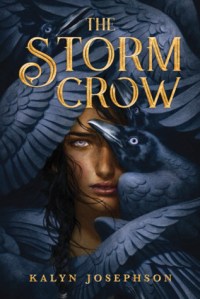
Review: Whatever my feelings ultimately were for this book (an ominous beginning if ever there was one), there is no denying that it has beautiful cover art. That, coupled with an intriguing description of a world built around the powerful abilities of magical crows, made it a pretty easy decision to request a copy from NetGalley. However, while the book does a lot of things right, most especially for its representation of a main character who is struggling with depression, it never quite clicked for me.

Thia’s life literally crashes and burns around her when her city is attacked by invading enemies, killing her mother and all of the magical crows that serve as the foundation for their culture. Before the disaster, Thia had been on the brink of gaining her own crow and joining the ranks of those who protect and build there country. Now, with that future lost foreer, Thia struggles daily to see what life holds for her. However, the world continues turning, and with new challenges banging on her door (like an unwanted marriage prospect), This is forced to re-engage with the world and begin building a new future for herself and, hopefully, her country.

There were a few things that I really did like about this book. For one, I think the idea of crows with elemental powers is a pretty intriguing idea. Yes, they’re essentially the same as dragons, but whatever. What really made them stand out, however, was the variety of ways that their powers were used. It wasn’t just battle crows, which is the expected route to go with something like this. No, the crows are used in almost every area of life in Thia’s land, including farming, travel, and more. It is because of this deep dependency on crows that the attack and their annihilation hits as hard as it does on Thia’s nation. It wasn’t just their military that was taken out, but basic needs like food and water are struggles without the crows.

The other thing I like is the fact that This struggles with depression. I haven’t experienced this myself, so I can’t speak to how accurate the portrayal is, but I appreciate that it is included in a YA fantasy book like this where you typically only see one type of main character: badass young woman! And Thia definitely does have strength, having to struggle through really tough feelings while her country is also in crisis.

However, even with my appreciation for what the author was trying to do with Thia, I could never really connect with the character. I can’t put my finger on exactly what the struggle was, but I was never fully invested in her plight or in her as a unique character, distinct from all the other YA fantasy heroines one reads about. She was better in theory than in actuality, I guess.

Part of my struggle with the character could also just be simply an off-shoot of my greater struggle with the pacing of the book. Unlike some other books that suffer from a slow start, this book takes off with a bang with the invasion of Thia’s home. From there, naturally, things slow down a bit. But I kept waiting for it all to pick back up as the story progressed. And I waited. And I waited. And it never really happened. The story was simply slow throughout the rest of the book, not helped by the fact that since I wasn’t overly attached to Thia as a character, I wasn’t able to sustain an interest for the character’s sake.

I was also underwhelmed by the end. Combined with the slow pacing of the story, it, and many other plot/character beats felt extremely predictable. There weren’t any huge twists, and what had started out as such an interesting concept, quickly faded into the background as we simply waited for Thia’s crow to hatch.

There is a sequel coming out and I’m mildly curious to see where things go from here. But I have to say, I won’t be racing out to get my hands on it. Likely, I’ll either read it or not simply based on how short or high my TBR pile is at the time. This is by no means a bad book, and for those with personal experience with depression, it may very well be just the book you’re looking for. But for me, from a purely reading-experience point-of-view, I didn’t love this book.

Rating 6: The cool premise died with the crows, unfortunately.

Reader’s Advisory:

“The Storm Crow” isn’t on many relevant Goodreads lists, but it is on “The Most Beautiful Covers Of 2019.”

Find “The Storm Crow” at your library using WorldCat!


Serena’s Review: “Heartwood Box”

41541611Book: “Heartwood Box” by Ann Aguirre

Publishing Info: Tor Teen, July 2019

Where Did I Get this Book: NetGalley!

Book Description: In this tiny, terrifying town, the lost are never found. When Araceli Flores Harper is sent to live with her great-aunt Ottilie in her ramshackle Victorian home, the plan is simple. She’ll buckle down and get ready for college. Life won’t be exciting, but she’ll cope, right?

Wrong. From the start, things are very, very wrong. Her great-aunt still leaves food for the husband who went missing twenty years ago, and local businesses are plastered with MISSING posters. There are unexplained lights in the woods and a mysterious lab just beyond the city limits that the locals don’t talk about. Ever. When she starts receiving mysterious letters that seem to be coming from the past, she suspects someone of pranking her or trying to drive her out of her mind. To solve these riddles and bring the lost home again, Araceli must delve into a truly diabolical conspiracy, but some secrets fight to stay buried…

Review: This was an impulse request mostly because I was in the mood for something creepy and the title/cover art combo seemed to fit those criteria pretty well. The description of a teenager discovering the mysteries of a strange, small town just cemented by interest. But while the book does deliver on what it sets out to do, it didn’t quite match up with what I was looking for.

Araceli doesn’t know what to expect when she shows up at the small town where her great-aunt lives. But a town full of missing people and mysterious happenings in the woods surrounding it is not what she had in mind for her visit. Soon enough these mysteries end up knocking on her own door and curiosity and bewilderment quickly turn into fear and a fight for not only her future, but those who have been lost before her.

This is a tough book to evaluate, mostly due to the fact that it’s just not the type of book I read often. And for the reason that I typically don’t enjoy them as much as others. I’m not sure where the line is between “contemporary fantasy” and “urban fantasy,” but there definitely is one and it’s enough to make me greatly prefer the latter to the former. In this book’s case, there were a few aspects of the former that didn’t quite fit with what I was looking for.

First, our main character, Araceli. Most of the fantasy fiction that I read that features young protagonists is set in a world or time period where a young age doesn’t mean the same thing it does here. Teenagers often find themselves in very adult situations and it is perfectly normal that they be there. And, in fact, they have often been raised to expect to operate in an adult fashion by this age. This makes many YA fantasy novels essentially read as adult fantasy novels (I won’t start up again on the marketing mechanisms behind these choices).

So in part I’m simply not used to reading teenagers that, well, act like teenagers. It’s not really the fault of the book that Araceli is a believable teen and thus often makes poor decisions. But I won’t concede some of the dialogue. Teenage characters don’t have to sound immature in their speaking, and there were often bits of both her actual voiced comments as well as the commentary in her head that read as even more juvenile than necessary for belivablilty.

My other main struggle came down to genre confusion. Simply put, there are too many genres and genre conventions vying for page time in this book. I had a hard time settling in to any one type of story. Some genre blending is to be expected, but this one had a bit too much on its hands with fantasy, thriller, horror, and mystery all packed in. I think it was more a fault of blending than anything. It felt a bit too obvious when the story switched from one genre focus to another, reading as bumpy and jarring rather than a smooth, unnoticeable transition.

The mystery of the story is good, though the comparison to “Stranger Things” is a bit too on the nose. I mean, creepy woods. Dudes in bio-hazard outfits. People disappearing. We get it. But still, I was intrigued enough about discovering what exactly was going on that I was able to get through my general frustration with the main character and some bumpy writing.

Essentially, if you’re a fan of contemporary YA fiction and enjoy a fantasy/horror aspect to your tale, you might really like “Heartwood Box.” Most of my complaints for this one are purely my own preference, so take that with what you will. I do think the writing lacks a bit to be desired overall, but that’s not a deal breaker if this kind of story is your thing.

Rating 6: Not for me. “Realistic” teenagers apparently annoy me too much.

Reader’s Advisory: 

“Heartwood Box” is  a new title and isn’t on many Goodreads lists. But it should be on “YA Fantasy Set in the Real World.”

Find “Heartwood Box” at your library using WorldCat!

Serena’s Review: “Age of Legend”

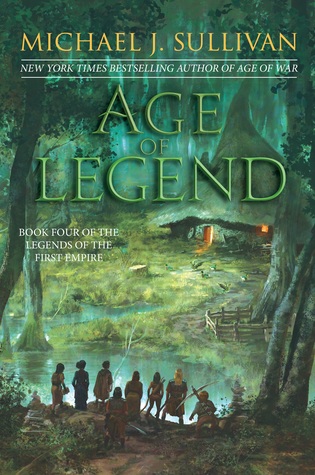
22819354Book: “Age of Legend” by Michael J. Sullivan
Publishing Info: Grim Oak Press, July 2019

Where Did I Get this Book: ARC from the publisher!

Book Description: With “Age of Myth,” “Age of Swords,” and “Age of War,” fantasy master Michael J. Sullivan riveted readers with a tale of unlikely heroes locked in a desperate battle to save mankind. After years of warfare, humanity has gained the upper hand and has pushed the Fhrey to the edge of their homeland, but no farther. Now comes the pivotal moment. Persephone’s plan to use the stalemate to seek peace is destroyed by an unexpected betrayal that threatens to hand victory to the Fhrey and leaves a dear friend in peril. Her only hope lies in the legend of a witch, a forgotten song, and a simple garden door.

Previously Reviewed: “Age of Myth” , “Age of Swords” and “Age of War”

Spoiler Warning: There will be spoilers for the first three books in this review, so reader beware!

Review: I don’t know how many ways there are to write an introductory paragraph to a series of books that you’ve been raving about the entire time. Yes, more of the same! Loved, loved, loved it! Yada yada. So without any ado for that, let’s just jump into the book summary and actual discussion!

While humankind one a massive victory in the last book, one that also cost an enormous price, the war has now been dragging on for years. Persephone and her people have slowly pushed forward, and it’s clear that they pose a real threat to the Fhrey people. This growing fear results in the leaders of the Fhrey admitting one crucial fact: regardless of the “crudeness” of the human species, they have a powerful weapon in the form of Suri, the only human so far to master the Art, and thus she must be dealt with before all else. This realization sets off a tragic chain of events that can only be stopped by another band of characters setting off on an impossible mission, this time one that leads into the very heart of the Fhrey land.

Given the dramatic events in the previous book, it was inevitable that this one would read very differently. For one, the loss of Raithe is huge. Not only do we lose the man whose actions ultimately lead to this conflict and a pretty important POV character, but he had a lot of important connections to the other characters. His loss is felt by both the reader and these other characters. I very much appreciate the fact that Sullivan picked up the story at a few different time periods. By doing this, he allowed readers an insight into the thoughts and feelings of characters into this loss over a period of time. We see the initial loss and signs of grief (anger, regret, etc.), and we also see how this loss continues to play out as characters, especially Suri and Persephone, are forced to make difficult choices.

Suri’s burden is by far the heavier. The dragon she created with Raithe’s sacrifice was pretty much solely responsible for the humans’ victory. It is so powerful that the knowledge and use of this “spell,” for lack of a better word, is pretty much all it takes to win the war for one side of the other. But the price is incredibly high and Suri has had to pay it twice now. Naturally, her conclusion is that she must not love anyone or anything to avoid future tragedy. But she’s not alone in this war, and there are those on both sides of the fight who would pay dearly for her to use it again or to teach someone else how to wield this deadly ability.

Persephone, for her part, has to deal with the regret she feels for turning Raithe away with false words of disinterest all those years ago. Instead, she has had to follow the path she set out for herself, making practical decisions for the betterment of her people. These decisions have come with some joy, but also a lot of increased pain, worry, and self-sacrificed. The Persephone we see in this book is the worn-down leader, a war-time general who has been fighting for too long.

As I’ve mentioned in previous reviews, one of the things that stands out the most in this series is Sullivan’s ability to juggle a large cast of characters and choose just the right POV character for every situation. We’re always seeing event through the perfect angle, and just when you begin wondering what so-and-so’s take would be on events, bam! They get the very next chapter! It all plays out so smoothly and at times it feels like the author is reading one’s mind with regards to what is needed next to keep this perfect juggling act in order. This being the case, there were several characters in this book who we got to see more POV chapters from and I very much enjoyed it.

I also loved the story itself, though it is a bit handicapped by the overall nature of the book. Sullivan provides and introduction to the work and in it explains that the book was originally one longer book that was split into two. This is pretty clear as one reads the book, and especially at the end (big cliffhanger warning there!). But this is a half-hearted complaint at worst. For one, in the hands of a more strict editor trying to force it into one book, we may have lost some of the early chapters that gave us earlier scenes in time than when the majority of the story takes place. We might have missed out on some of the important character work that was laid down in these chapters, especially dealing with the fall-out of Raithe’s death, as I mentioned above. This type of devotion to key character moments is what has allowed the series to maintain its large cast. So while the pacing of this story might have suffered for having to be split into two books, I would still prefer this result to the likely other option of reduced character moments in the service of plot.

Like I said, there’s a pretty major cliffhanger at the end of this book, but don’t let that deter you! I zipped through this book, and it has done all the work needed to set up the next one as even more thrilling. Definitely check it out! And don’t forget to enter for our current giveaway for an ARC version of the book. 

Rating 8: There aren’t really any new ways of praising this series other than to wag my finger at any epic fantasy readers who haven’t jumped on this wagon yet!

Reader’s Advisory

“Age of War” isn’t on many relevant Goodreads lists, but it should be “Popular Ensemble Cast Books.”

Find “Age of War” at your library using WorldCat!

Giveaway: “Age of Legend”

22819354Book Description:With “Age of Myth,” “Age of Swords,” and “Age of War,” fantasy master Michael J. Sullivan riveted readers with a tale of unlikely heroes locked in a desperate battle to save mankind. After years of warfare, humanity has gained the upper hand and has pushed the Fhrey to the edge of their homeland, but no farther. Now comes the pivotal moment. Persephone’s plan to use the stalemate to seek peace is destroyed by an unexpected betrayal that threatens to hand victory to the Fhrey and leaves a dear friend in peril. Her only hope lies in the legend of a witch, a forgotten song, and a simple garden door.

Giveaway Details: I’ve been loving this series so far. It’s always great to find a new fantasy series to follow along. This series in particular has stood out due to Sullivan’s incredible work with a large ensemble cast of characters. Through the first three books, we’ve followed a handful of different characters and early work in the first book or two has paid off as characters have risen and fallen in important to each book’s unique plot.

This is technically a prequel series to Sullivan’s other works, but I haven’t read them and it doesn’t seem to be hindering my enjoyment. I’m sure for longtime fans, there are references I’m missing, but it stands well on its own.

It also stands out particularly well for its large cast of interesting female characters. Epic fantasy has come a long way since “Lord of the Rings” which, while lovely and amazing, has very few women characters and really only one notable (but awesome!) moment for any of them. Here, however, there are several including a powerful mystic, an inventor, and even the supreme leader of the human clans is a woman.

So yes, I’ve enjoyed the books so far. But this was the first one I really had to wait for and it was a trial indeed. Luckily for me, I received an ARC of this book in the mail a few months early and was able to dive in then. My full review will come out this Friday, but in the meantime, I wanted to share the love and host a giveaway for this copy! The giveaway is open to U.S. residents only and ends July 9, 2019.

Enter here!

Serena’s Review: “Grave Mercy”

9565548Book: “Grave Mercy” by Robin LaFevers

Publishing Info: Houghton Mifflin Harcourt, April 2012

Where Did I Get this Book: audiobook from the library!

Book Description: Seventeen-year-old Ismae escapes from the brutality of an arranged marriage into the sanctuary of the convent of St. Mortain, where the sisters still serve the gods of old. Here she learns that the god of Death Himself has blessed her with dangerous gifts—and a violent destiny. If she chooses to stay at the convent, she will be trained as an assassin and serve as a handmaiden to Death. To claim her new life, she must destroy the lives of others.

Ismae’s most important assignment takes her straight into the high court of Brittany—where she finds herself woefully under prepared—not only for the deadly games of intrigue and treason, but for the impossible choices she must make. For how can she deliver Death’s vengeance upon a target who, against her will, has stolen her heart?

Review: Our bookclub theme this go-around is books that have been on our TBR list for over two years. And there are a lot. My lists is somewhere in the mid-300s though, so cut me some slack! But while going through it, I tried to match up a few titles with ones that are currently available at the library in audiobook format and I struck across “Grave Mercy” and thought “Why not? Killer nuns sounds pretty neat.” And here we are. Sadly, killer nuns were not, in fact neat. But one could argue that the story wasn’t really about that anyways, so some other author could still cash in on what sounds like a cool idea.

Just as Ismae’s life is taking a distinct turn for the worst (an arranged marriage, said husband being an abusive jerk, etc. etc.), she’s caught up by a mysterious organization., a convent that follows an old god, one who calls upon his followers to take out evil in the world. The convents train in these deadly arts to carry out this work. With a new route before her, Ismae excels in her new life and role. But when the straight-forward plan of killing targets gets caught up in a much more murky world of courtly politics, Ismae finds herself out of her depth. Add in some romantic feelings, and she’s in a real mess.

To start with any pros, the best thing this book has going for it is the cool premise. I was excited to pick up this book, as assassins always seem like they would be good for an action-packed story full of potentially interesting moral quandaries. Unfortunately, the book itself fails to follow through on this premise, so even that is a pretty luke warm pro.

My biggest problem with this book comes down to the writing itself, both the style of sentences construction as well as the numerous plotting issues. I’m not personally a fan of first person present tense writing, and this one definitely falls prey to the weaknesses of this tense. The voice is often wooden and off-putting. Her emotions are conveyed using a handful of cliches that do nothing to really show us Ismae’s feelings, rather just informing us of them, as a matter of fact. I’m not sure I would have loved the character of Ismae had she been presented in another way, but this definitely didn’t help.

The other big problem with the writing is the way numerous writing crutches are used. The story opens with Ismae’s abusive first day of married life, quickly moves on to her being taken in by the convent and informed, succinctly, of their role in the world. Then two seconds later Ismae’s all on board and we have a time jump. Suddenly, she’s now this badass assassin out on her first mission. It all happens too fast and readers are left to just swallow it all, no questions. There is far too much telling and no showing. We never see Ismae gain any of these so-called skills, and with the introduction of a magical knife that kills with just the barest touch, we’re left wondering why any training is needed at all.

Frankly, it feels as if the author did the barest amount of work in the beginning of her story to get to the part she really wanted to write about. Which, fine. But if that’s your goal, just skip it all together and introduce these pieces of history as the current story plays out. This method would have worked much better and solved several of these problems.

I also struggled with the romance. It’s pretty much just what you would think, so I don’t really need to even bother explaining any of the details. But given Ismae’s early marriage (which, by the way, seems fairly valid and never is addressed again) and the abuse that came with it, I would have hoped for a more nuanced approach to her love story. Instead, we have generic googly eyes at the hawt guy and, again, a long list of cliched descriptions and emotions.

Assassin books are a strange thing for me, now. I feel like I really like them. But when I try to think of examples of books with this theme that I’ve enjoyed, there are really very few. And on the other hand, a rather long list of books with this plot that I’ve absolutely hated. It makes sense: how do you write about something as brutal as assassination without also taking the time to really address the moral issues at the heart of it? Far too many authors simply want the badass points of it all without the latter responsibility to the emotions and decisions behind it. So we end up with books like this, where we’re told that our main character is a badass and then proceed on to a pretty bland love story that is more focused on court politics that assassinations, anyways.

Rating 4: The weak writing really killed this one for me.

Reader’s Advisory:

“Grave Mercy” is on these Goodreads lists: Books With Heroes/Heroines Who Are Assassins and Young Adult Books Without Love Triangles.

Find “Grave Mercy” at your library using WorldCat!