Kate’s Review: “Wilder Girls”

42505366Book: “Wilder Girls” by Rory Power

Publishing Info: Delacorte Press, July 2019

Where Did I Get This Book: I received an eARC from NetGalley.

Book Description: It’s been eighteen months since the Raxter School for Girls was put under quarantine. Since the Tox hit and pulled Hetty’s life out from under her.

It started slow. First the teachers died one by one. Then it began to infect the students, turning their bodies strange and foreign. Now, cut off from the rest of the world and left to fend for themselves on their island home, the girls don’t dare wander outside the school’s fence, where the Tox has made the woods wild and dangerous. They wait for the cure they were promised as the Tox seeps into everything.

But when Byatt goes missing, Hetty will do anything to find her, even if it means breaking quarantine and braving the horrors that lie beyond the fence. And when she does, Hetty learns that there’s more to their story, to their life at Raxter, than she could have ever thought true.

Review: Thanks to NetGalley for sending me an eARC of this novel!

Oh boy, look what we have here. Another boarding school book! And on top of a boarding school book, we got some plague horror, some vague cosmic horror, and some queer representation thrown in for good measure. Suffice to say, when I read about “Wilder Girls”, I was interested enough to request an eARC from NetGalley.

What makes “Wilder Girls” by Rory Powers a bit different from other plague horror that I’ve seen lately is that we don’t know WHAT the Tox is. The students at Raxter School for Girls just know that they have been stricken with this disease, which causes body disfigurement, severe aggression, and in many cases (such as that of most of the faculty members and huge portion of the student body) death. They are cut off from the outside world immediately, and those who do have the tenuous connection to the outside world that sends supplies their way aren’t saying much. In many plague horror stories we will ultimately get at least some information as to what happened, be it a government made virus run amok a la “The Stand” or a supermutated flu a la “Station Eleven”. But in “Wilder Girls” it is largely unknown, and that fear of the unknown (both in origin of The Tox and what it has done to the woods outside the school) is what takes this towards Cosmic Horror territory, and makes it feel a bit more unique than similar tales that I’ve read. And, hooray but also YIKES, along with cosmic horror comes body horror, and “Wilder Girls” has that AND THEN SOME. From descriptions of mutated wildlife to body mutilation to other moments of supreme yuck, Powers knows how to up the gross factor in ways that would make David Cronenberg proud.

giphy-6
Kinda like this in some ways. Also, this movie is devastating. (source)

Plus, when you combine plague and the unknown you have a volatile situation in terms of how the social structures have changed, and Raxter School for Girls has DEFINITELY degraded as they try to wait for their rescue, even as supplies dwindle more and more and desperation starts to cloud the judgments and actions of those who are supposed to be friends. Powers doesn’t shy away from some really brutal moments that are set off by these moments of desperation, be it those in power abusing those below, or those who are friendly towards each other suddenly attacking each other verbally AND physically. There are connections to the outside world, sure, but it becomes clearer and clearer that the outside world, in whatever state it may be in, is forgetting about these girls, and it may be intentional.

I also really enjoyed the slow growing and complicated relationship between Hetty, our main protagonist, and Reese, a sometimes friend but mostly roommate to Hetty and their friend Byatt. Byatt is the main connector between the three girls, as both Hetty and Reese have their affections for her. But when Byatt disappears, the two girls left, who have had rocky at best interactions as of late, have to learn to trust each other, and also deal with how they may actually feel for each other. The romance isn’t really at the forefront of this story, and it doesn’t end up defining either character, but it is always a bit below the surface, and I found it realistic that these two girls in a horrifying situation would have a lot of complex feelings towards each other. Especially when they had been vying for the attention of the bright and friendly Byatt.

But for me, and for reasons I can’t really figure out, the broader plot of “Wilder Girls” really didn’t interest me as much as I had hoped it would. While the parts about The Tox and the dwindling hope of rescue were absolutely right up my alley, for the life of me I couldn’t bring myself to care about Byatt’s disappearance. Sure, I usually like the conspiratorial themes that this book was filled with (why did Byatt disappear? Who knows more than they’re telling?), but I think that I was more interested in The Tox itself. Since we jumped in AFTER the Tox has already ravaged this school and it’s inhabitants, and since the school has adjusted, albeit poorly as it turns out, I wish we had a little more information about the build up and fall out of that initial infection. To me that seemed like a better story than that of a missing friend. That said, I can understand why the emphasis on that might be more interesting to other people. As it was, I wasn’t into it. On top of that, we got a clunker of an ending that felt like it was trying too hard to tread between ‘we definitely could end this story here if we needed to’, and ‘promises of more secrets and perhaps a sequel is the only thing to be done’. It felt too obvious as to what it was trying to do.

“Wilder Girls” was a bit of a disappointment to me, but that doesn’t mean it will be disappointing to all fans of plague and cosmic horror. If you want more focus on The Tox, it may not give you what you need, but if you are fine dealing with the fallout alone, it could be a good fit.

Rating 6: While it had a good premise and some interesting female characters, I didn’t find myself as invested in “Wilder Girls” as I had hoped I would be.

Reader’s Advisory:

“Wilder Girls” is included on the Goodreads lists “Sapphic Boarding School Books”, and “YA Cosmic Horror”.

Find “Wilder Girls” at your library using WorldCat!
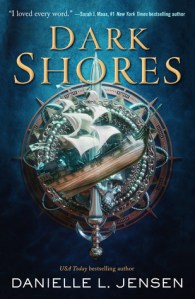
Serena’s Review: “Dark Shores”

41438037Book: “Dark Shores” by Danielle L. Jensen

Publishing Details: Tor Teen, May 2019

Where Did I Get this Book: NetGalley

Book Description: In a world divided by meddlesome gods and treacherous oceans, only the Maarin possess the knowledge to cross the Endless Seas. But they have one mandate: East must never meet West.

A PIRATE WITH A WILL OF IRON

Teriana is the second mate of the Quincense and heir to the Maarin Triumvirate. Her people are born of the seas and the keepers of its secrets, but when her closest friend is forced into an unwanted betrothal, Teriana breaks her people’s mandate so her friend might escape—a choice with devastating consequences. 

A SOLDIER WITH A SECRET

Marcus is the commander of the Thirty-Seventh, the notorious legion that has led the Celendor Empire to conquer the entire East. The legion is his family, but even they don’t know the truth he’s been hiding since childhood. It’s a secret he’ll do anything to protect, no matter how much it costs him – and the world. 

A DANGEROUS QUEST

When an Empire senator discovers the existence of the Dark Shores, he captures Teriana’s crew and threatens to reveal Marcus’s secret unless they sail in pursuit of conquest, forcing the two into an unlikely—and unwilling—alliance. They unite for the sake of their families, but both must decide how far they are willing to go, and how much they are willing to sacrifice.

Review: I never got around to reading “Stolen Songbird,” but it’s been on my TBR list for quite some time and I know that a lot of people really enjoyed it. So when I saw a new title by this author available on NetGalley I thought, “Here’s my chance!” Unfortunately, this wasn’t a complete hit with me, however.

Two worlds divided by a vast ocean and with only one people who know of the existence of both. Teriana comes from this people and a family of peaceful traders. Marcus comes the opposite side of things, known for his keen tactics and manipulations that have seen him slowly but steadily gaining territory for his Empire. The two could not be more different, but each are thrown when secrets, betrayals, and political maneuverings begin fraying the edges of their lives. Now, these two unlikely comrades, must come together to chart a new path for themselves and their peoples.

I struggled with this book from the very start, but I don’t want to start my review with a list of complaints. As I read on, I did find some things that stood out as strengths, so I’ll highlight those first. One, while not as complex as I might have wished, I did enjoy the world building at the heart of this story. The clear inspirations from Ancient Rome were interesting not only for the cultural aspects, but also for how Marcus’s story of conquest plays out. I also enjoyed the general pacing of the book. It was a quick read and I flew through it pretty quickly. There were a few moments here and there where this pacing seemed to stumble, but overall it was a fast read and for those looking for a quick, easy read, this book will hit those marks.

But, like I said, I had struggles. These started right away with the introduction of Teriana whom I immediately had troubled connecting with. She reads as very immature, to the point that it was almost hard to believe that she was meant to be the age she is presented as. It’s hard to come back from first impressions like this, so while Teriana had some good moments throughout the story, I was never able to get over some of this. I didn’t have as many direct problems with Marcus, but he also didn’t connect for me. Not that there was anything standing out with the character as much as with Teriana’s, but…nothing really stood out with the character at all, either.

This book also suffered from a false expectations. There story is promoted as being about pirates and adventures on the high seas. Alas, no. This is much more of a political fantasy at its heart. Which would be fine on its own, since some of my favorite fantasy novels are political at their heart. But when I pick up a book being told its about one thing and then find out that that thing isn’t in it at all, we have problems. I really hate marketing ploys like this. There are readers for the book as it actually is, target them. Stop trying to misrepresent your book to his some type of fad. Do they actually think that readers who were tricked into picking up a book on the promise of one thing (pirates, in this case) are not going to notice when that thing isn’t even really there? You’re just going to end up with disappointed readers and miss out on the ones who would have truly enjoyed the book and praised it for what it actually is.

I also have to mention that the romance was not to my taste. I enjoy a good enemies-to-lovers romance as much as the next person, but it really is starting to get old. It feels like this is almost the only type of romance one finds anymore in YA fiction. And what’s worse, it always feels rushed. This is the first book in a series. Why do the main characters need to fall in love in this book? Isn’t it more believable that it would take longer than this to move from pretty opposite extremes, enemies to lovers? Plus, drawing it out builds anticipation. It’s a win/win. Trust that readers can appreciate some delayed gratification.

So, yes, this book wasn’t for me. I can’t say whether or not going in with my expectations properly targeted towards a political fantasy and away from pirates would have made all the difference, but it would have helped. Ultimately, however, poor characterization for Teriana and a tepid romance killed it for me.

Rating 6: Fails to bring anything new to the table, though it is a quick read if you’re looking for a beach book.

Reader’s Advisory:

“Dark Shores” is a newer title, so it isn’t on any relevant Goodreads lists, but it should be on “Political Themed YA Fiction.”

Find “Dark Shores” at your library using WorldCat!

Book Club Review: “Girl Squads: 20 Female Friendships That Changed History”

We are part of a group of librarian friends who have had an ongoing bookclub running for the last several years. Each “season” (we’re nerds) we pick a theme and each of us chooses a book within that theme for us all to read. Our current theme is ‘genre mash-ups’, where we pick two random genres and try to find a book that fits both. 

For this blog, we will post a joint review of each book we read for book club. We’ll also post the next book coming up in book club. So feel free to read along with us or use our book selections and questions in your own book club!

39873981Book: “Girl Squads: 20 Female Friendships that Changed History” by Sam Maggs
Publishing Info: Quirk Books, October 2018

Where Did We Get This Book: from the library!

Genre Mash-Up: Non-fiction and short stories

Book Description: A modern girl is nothing without her squad of besties. But don’t let all the hashtags fool you: the #girlsquad goes back a long, long time. In this hilarious and heartfelt book, geek girl Sam Maggs takes you on a tour of some of history’s most famous female BFFs, including:

• Anne Bonny and Mary Read, the infamous lady pirates who sailed the seven seas and plundered with the best of the men
• Jeanne Manon Roland and Sophie Grandchamp, Parisian socialites who landed front-row seats (from prison) to the French Revolution
• Sharon and Shirley Firth, the First Nations twin sisters who would go on to become Olympic skiers and break barriers in the sport
• The Edinburgh Seven, the band of pals who fought to become the first women admitted to medical school in the United Kingdom
• The Zohra Orchestra, the ensemble from Afghanistan who defied laws, danger, and threats to become the nation’s first all-female musical group

And many more! Spanning art, science, politics, activism, and even sports, these girl squads show just how essential female friendship has been throughout history and throughout the world. Sam Maggs brings her signature wit and warmth as she pays tribute to the enduring power of the girl squad. Fun, feisty, and delightful to read—with empowering illustrations by artist Jenn Woodall—it’s the perfect gift for your BFF. 

Serena’s Thoughts

This was my bookclub pick. I drew “nonfiction” and “short stories,” which on first glance was a pretty terrifying and unintuitive draw for me. I read very little nonfiction and only a handful of short story collection, all of which were decidedly NOT nonfiction and definitely were lots of fantasy/magic/aliens action that in no way could be pass off as “true to life.” But after thinking about it a bit more, short biographies seemed like the obvious choice and when I stumbled on this title when browsing around, it was an obvious pick.

Overall, I really enjoyed this story. Collections like this about women of history who have largely gone unnoticed have had a bit of a spotlight recently and our bookclub, when asked, could rattle off three or four similar titles off the top of their heads. But the interesting quirk that made this one stand out was its focus on female friendships and partnerships. All too often we hear stories about the one woman who stood out as unique (and often forgotten) among all of the men who surrounded her, so it was a breath of fresh air to read this book that focused on the fact that it wasn’t just one in a million women who was doing interesting things and chances were good that she surrounded herself by other like-minded women who are worth noting, not just a bunch of dudes.

Many of the stories were unfamiliar to me and I really liked that about the story. There were a few familiar ones as well, but even those felt as if they were providing new insights into the lives of these women. Overall, I enjoyed most of the choices provided. However, the book is broken up into section that have an over-arching theme with the women included in each, like “sports,” “science,” and “warriors.” I get the reasoning for this, but I do feel it might have worked against the book, as readers who are less interested in certain areas, like sports, perhaps, might go into a segment of stories prepared to be bored. And then, because they have similar focuses, the way each story plays out could begin to feel a bit predictable and repetitive. Had the stories been presented in a more random manner, this might have helped this aspect.

My only other complaint comes with annoyances with the writing style. At times, it can read as very dry and a bit pedantic. And then, in an obvious effort to counterbalance this very thing, the author would throw in some quirky, conversational-style line to try and “spice things up.” I found these one-liners very distracting and fairly eye-roll-worthy most of the time. Other than that, though, I really enjoyed this book and was glad that my bookclub pairings lead me to it!

Kate’s Thoughts

I, for one, am always going to be happy to see women’s history showcased, especially if they are stories that haven’t really been brought to the public’s attention on a large scale level in the past. So when Serena picked “Girl Squads” for her book club pick, I was definitely excited to learn some new things about some awesome ladies.

And new things did I find! While there are some familiar stories in this book, like the stories of the three present Women Supreme Court Justices or the ‘Hidden Figures’ of NASA, a lot of the tales of lady friendships and partnerships were new to me. I enjoyed the variety and range of the stories told, from sports and athletics, to warriors and battles, to innovators and creatives and more. It was both really empowering to read all these different tales, and also frustrating that so many of these tales have gone unnoticed or under-told for as long as they have, at least in terms of what I’ve been exposed to. My favorites included the Haenyo Divers on Jeju Island, South Korea, and the Japanese Women’s Olympic Volleyball team.

I also really liked that Maggs made a concerted effort to tell a variety of stories from all over the world, so as not to focus mostly on white, European narratives. Given that our educational system in this country is so Euro-centric, seeing stories from all over the world and many different experiences was really enlightening. Given that academia, like many other communities, has problems with diversity, I was happy to see that Maggs intended to write an intersectional book.

But like Serena I had similar problems with the structure of the book and the conversational tone it attempted to implement. By the time I reached the final fourth of the book, I found myself skimming and missing various sections of the chapters due to zoning out. It just got to be a little long, and, as Serena mentioned, the structure made it feel repetitive and lagging. And when it comes to the conversational commentaries that Maggs tried to drop in every once in awhile, I had very little patience for it. I think that this kind of creative choice CAN be done, as I’ve read a few books that manage to nail the fun quirky tone with the more ‘serious’ subject matter, but Maggs’s attempts felt more ‘how do you do, fellow kids?’, as opposed to natural or organic.

Those things aside, overall I enjoyed “Girl Squads” because of the stories that it told.

Serena Rating 7: Never quite felt like it found the writing style or organization that best fit it, but the stories were interesting and enlightening, none the less.

Kate Rating 7: With similar complaints about the writing style and structure, this book tended to take me out of the moment more often than not. That said, I liked learning new things about women I wasn’t familiar with.

Book Club Questions

  1. Which story was your favorite and why?
  2. Were there any stories that you want more information on or think could have been improved? Which one would you read a full-length biography on?
  3. Are there any women you would have like to see highlighted who weren’t included and what notable aspects of their life would you draw upon?
  4. How did you feel about the writing style and organization of the collection?
  5. Are there any other “themes” (like “girl squads”) that you would like to see be used to create a collection of short biographies? Who would you include in a collection like that?

Reader’s Advisory:

“Girl Squads: 20 Female Friendships that Changed History” is on these Goodreads lists: “Biographies of Women, by Women” and “Great Books For Young Girls.”

Find “Girl Squads: 20 Female Friendships that Changed History” at your library using WorldCat!

Next Book Club Book: “Northhanger Abbey” by Jane Austen.

Serena’s Review: “Wicked Saints”

36118682Book: “Wicked Saints” by Emily A. Duncan

Publishing Info: Wednesday Books, April 2019

Where Did I Get this Book: NetGalley

Book Description: A girl who can speak to gods must save her people without destroying herself.

A prince in danger must decide who to trust.

A boy with a monstrous secret waits in the wings. 

Together, they must assassinate the king and stop the war.

In a centuries-long war where beauty and brutality meet, their three paths entwine in a shadowy world of spilled blood and mysterious saints, where a forbidden romance threatens to tip the scales between dark and light.

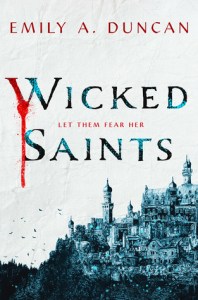
Review: This was book-cover love through and through. Sure, the description sounds good enough, but there were also some warning signs there (love triangle??) that would typically make me a bit wary. But I love the simplicity of this cover and the way the colorization is used. Alas, by the end of the book, the cover was still probably my favorite part.

Nadya can speak to the gods, an entire pantheon of them. But for most of her life, she has been hiding and training in a remote monastery, a secret weapon that hasn’t been used yet in a growing political war. One day, that war arrives on her doorstep, quite literally, and everything changes. Now caught up in events moving in ways she barely understands, Nadya finds herself working a boy she’s not sure she can trust but who might also be the key to it all.

Honestly, there wasn’t much I loved about this book. That’s not to say I hated a lot of it either, but more like, I felt like I had read much of it before and read it better. Russian-based fantasy stories have been the rage for a few years it seems, and as such, there have been a million and one entries into the sub-genre with a wide range of quality, as far as I’m concerned. There have definitely been worse ones than this, but when I just finished up the last book in the “Winternight” trilogy, it’s hard to look at this one and not be a bit disappointed.

Aside from that trilogy, the more direct comparison for this book would be Bardugo’s “Grisha” trilogy. I’m pretty sure there have been quite a few comparisons already floated around between the two and I can definitely see it.

The biggest similarity comes with the romance and the enemies-to-lovers trope that is at the heart of both (sort of). On its own, I think this is one of the harder love arcs to right and I would say its this aspect specifically that sunk Bardugo’s series for me as I could never buy this part of the story. So, here, too, I struggled. I could never understand the “whys” behind any emotion our two romantic interests had for each other. Why did they really hate each other in the first place? Patriotic prejudices can only go so far as an explanation. And then, worse, why do they fall for each other? The motivation behind either emotion wasn’t fully fleshed out in any way, and when you’re dealing with some of the strongest emotions out there, love and hate, you need a pretty darn good reason to have your character feel them, and even more so, change from one to another. Throughout the story, the male love interest lied repeatedly to Nadya, and yet somehow, we’re meant to buy her continued interest in him. By about halfway through the book, I started to give up on getting the strong character I wanted from Nadya and was resigned to the fact that she was mostly a love interest in her own story.

I also struggled with the magic system. Again, as it was incorporated in the story, it felt very similar to other Russian-based fantasies I’ve read, but here it only skimmed the surface. The end of the story in particular seemed to really highlight this struggle as aspects of the magic system seemed to come out of nowhere or operate in ways that didn’t really make sense all of a sudden.

On top of that all, I was just bored throughout most of this. Other than the frenetic last few chapters of the story, I just felt like I was following the predictable footsteps of a well-worn path. There wasn’t anything new here, and in a subgenre that has so many offerings, I’d say if you’re looking for Slavic fantasy, you can find better. Just this year there was the final book in the “Winternight” trilogy, “The Winter of the Witch” by Katherine Arden and “Spinning Silver” by Naomi Novik. And if you want a better “enemies to lovers” story, you can check out “Sherwood” by Meagan Spooner.

Rating 6: Nothing terribly bad, but also not really holding its own in a pretty packed subgenre of YA fantasy.

Reader’s Advisory: 

“Wicked Saints” is included on these Goodreads lists: “Villain as Romantic Love Interests” and “Creepy, Dark YA and MG Books.”

Find “Wicked Saints” at your library using WorldCat!


Serena’s Review: “The Shadowglass”

38504533Book: “The Shadowglass” by Rin Chupeco

Publishing Info: Sourcebooks Fire, March 2019

Where Did I Get this Book: Edelweiss+

Book Description: Tea is a bone witch with the dark magic needed to raise the dead. She has used this magic to breathe life into those she has loved and lost…and those who would join her army against the deceitful royals. But Tea’s quest to conjure a shadowglass—to achieve immortality for the one person she loves most in the world—threatens to consume her heart.

Tea’s black heartsglass only grows darker with each new betrayal. And when she is left with new blood on her hands, Tea must answer to a power greater than the elder asha or even her conscience…

Previously Reviewed: “The Bone Witch” and “The Heart Forger”

Review: Given the timing of when I started reading this series, I was able to get through the first two books quite close together. Which meant I had a long wait ahead of me getting to this one. And, since the storytelling presented in this book is broken into two portions, there were quite a number of cliffhangers and unresolved plotlines left dangling after the second book. All the more nerve wracking as I waited for this, the final book in the trilogy. And, well, I’m not sure that the extra time between reads worked in this book’s favor. Or perhaps I was already on a downward trajectory overall. Either way, unfortunately, I felt like this was a frustrating end to the series.

Things are finally starting to come ahead for both Teas, past and present. The past version of our main character is beginning to feel the walls close around her as one disaster after another seems to strike. Surrounded by a small band of loyal followers, she finds herself on the run from not only the elder Asha but entire nations. Driven by the knowledge that secrets about shadowglass and bone witches are being kept from her and the world, Tea goes on a path of discovery that will lead ultimately to her banishment and the death of many of her loved ones. Present Tea, on the other hand, has come fully into her own, surrounded by her powerful beasts and on a rampage throughout nations. Her plans are not fully clear, but it’s clear that those who stand in her way are not coming out of things on the winning side. Is Tea’s mission one of justice or is it simply the darkness inside of her fully taking control?

I’ve always found these books a bit confusing. The world-building is incredibly unique, and that’s a huge pro for the series. But there is something about its execution that doesn’t read clearly. The writing style, perhaps, leaves something wanting in the clarity department, and the choice to alternate between two story lines, each with its own complications and mysteries, doesn’t help matters. There are aspects of past Tea’s life that are referenced way back in book one, but aren’t answered until this, book three. That’s simply too long for me to have kept track of everything involved in the timeline, especially when all references made in the “present” timeline are obscured through the strange way that present-Tea is made to speak.

This has annoyed me from the start: Tea’s sudden tendency to rattle of pert little phrases of wisdom and mystery. It’s not a natural way to talk and reads in stark contrast to the past Tea who reads and speaks more like a typical person. The mode of present-Tea’s speech added extra layers of confusion to all of the references she made to events from the past. This being the case, as I was reading this book, I constantly felt like I was missing things. And then when I referenced back to the first book, I would fine that present-Tea has entirely misrepresented the situation, usually, again, with some type of unnecessarily cryptic remark. This made for an incredibly frustrating reading experience. I was lucky that I still had copies of the first two books on hand, but even so, I found this need to refer back very annoying.

I also had had some concerns from the very start about how well these two storylines would merge, and I was right to worry. Again, Tea’s sudden transformation from the past version of the character to the cryptic, almost all-powerful Tea of the present didn’t read as natural. Had the chapters been laid out in order, the jump would have been sudden and strange, and the fact that it was broken up over three books didn’t do enough to obfuscate the matter.

I was also unsatisfied with the reveals themselves. Like I said, there were about a million and one referenced mysteries that had been dropped throughout the first two books that needed resolutions here. But as these resolutions appeared, I found them increasingly annoying. Several of the referenced events don’t really make much sense and require characters to be willfully blind to some pretty basic facts to pull off. Tea’s own regrets and feelings of guilt also don’t make sense, now seeing some of these events play out. Everything just felt a bit off.

This feeling of being offkilter was all the worse because the bones (pardon the pun) of the story are still good. Like I said, the worldbuilding is incredibly unique, and I’m always going to applaud an author for creating a complicated world, magic system, and arc for her story. But the slight “offness” of everything, be it the writing itself  or the way the storyline actually unfurled, became increasingly hard to read as the series progressed.

Like I said, maybe the fact that I was able to read the first two books more closely together played in their favor. I definitely had to spent a lot more time reminding myself of a lot of details of this world, character, and story as I got into this book which made it hard to simply sink in and enjoy it. I also feel like the time away left me freed up to think more critically about the story and character arc itself, as well as be a bit more put off by the writing style.

This was a disappointing return to the series. Though, I will say that now that the series is complete, readers might have more luck and enjoyment if they are able to read all three books back to back. That mode of reading could play highly in the series’ favor, reducing the confusion of a returning reader and retaining the interest of readers across books. If you do like dark fantasies, I still recommend checking this series out, but definitely plan on reading them all at once. As for returning readers, your experience may be different than mine, but I was left disappointed by this conclusion, not because of the ending itself, but by basic mechanics of the storytelling that seemed to stand out in a more negative light in this book than they had in the first two.

Rating 6: For me, a disappointing end. The writing felt more strained and the storylines didn’t feel like they ultimately linked up together naturally.

Reader’s Advisory: 

“The Shadowglass” is on these Goodreads lists: “Asian Fantasy & Science Fiction” and “Speculative Fiction by Women of Color.”

Find “The Shadowglass” at your library using WorldCat!

Kate’s Review: “Daughters of the Lake”

38927017Book: “Daughters of the Lake” by Wendy Webb
Publishing Info: Lake Union Publishing, November 2018

Where Did I Get This Book: The library!

Book Description: The ghosts of the past come calling in a spellbinding heart-stopper from the “Queen of the Northern Gothic.”

After the end of her marriage, Kate Granger has retreated to her parents’ home on Lake Superior to pull herself together—only to discover the body of a murdered woman washed into the shallows. Tucked in the folds of the woman’s curiously vintage gown is an infant, as cold and at peace as its mother. No one can identify the woman. Except for Kate. She’s seen her before. In her dreams…

One hundred years ago, a love story ended in tragedy, its mysteries left unsolved. It’s time for the lake to give up its secrets. As each mystery unravels, it pulls Kate deeper into the eddy of a haunting folktale that has been handed down in whispers over generations. Now, it’s Kate’s turn to listen.

As the drowned woman reaches out from the grave, Kate reaches back. They must come together, if only in dreams, to right the sinister wrongs of the past.

Review: As someone who grew up in Minnesota, I have fond childhood memories of spending summer trips by Lake Superior. Even in my adult life I try to get up to Duluth and the north shore at least once a year, as the beauty of the lake shore and the north woods is hard to resist. Because of my affection for this part of the state, I am almost always going to give Wendy Webb a shot when it comes to her books. And given that she’s a local author, the wait list at the library is usually pretty long, so unless you’re on top of the publication dates it may be a wait. When “Daughters of the Lake” came out I wasn’t on top of it, but after a few months wait it came in for me, and I was eager to start it.

Webb’s books have always managed to capture the feel and essence of Lake Superior towns and what it’s like to live there. She describes the lake itself just how it is in real life, with the beauty, power, and danger that comes with it. Her descriptions of the lake shore and the towns on it really transported me to a part of this state that I love, and that alone made it so that I was going to finish this book no matter what. The characters were plenty likable as well. Kate, our main character, is a relatable protagonist, and you believe her pain as a woman whose marriage has fallen apart due to her husband’s infidelity and lies, and her need to have a change of scenery. More interesting, still, was her cousin Simon, a sympathetic and supportive bed and breakfast owner who has turned the family estate into a cozy resort. I liked their relationship, though sometimes Simon treaded little close to the ‘supportive gay bestie’ trope, especially since it seemed his sole purpose was to play as her sidekick. I was definitely invested in both of them, though, and the mystery at hand. I also liked the moments in the past, told both through Kate’s strange psychic visions and also perspective chapters. In those sections the focus on on Addy, a young woman whose birth culminated with her literally floating on the waters of the Lake with no harm done. The supernatural aspect of her story is slowly peeled away, and I enjoyed seeing those layers peeled back.

But unfortunately, a promising plot with fairly solid characters gets muddled in the last half of the book. The first issue I had I can’t really go into much detail about, as I don’t want to spoil anything. But some of the supernatural aspects of this book seemed to work without a magical system that was sorely needed to make believable. By the time the book had wrapped up I still wasn’t totally sure that there had been a full explanation of how this twist of fate worked. Secondly, there were small hints of other ghostly elements in this book that implied they were building up to something big, but by the time it was revisited it was rushed and crammed in near the last minute. There were also a number of plot twists that were either a little too obvious, or out of left field without any sort of build up. And one of these twists was the kind that I absolutely cannot abide: the plot twist that happens in the last few pages, which completely changes the outcome of the entire story.

giphy-11
(source)

I’m occasionally willing to give this kind of thing a pass, mostly if it’s inconsequential in it’s outcome, or if it’s SO well done and so well placed that it takes my breath away. But in this case it just felt like a cheap last moment ‘gotcha’, and I rolled my eyes as it unfolded because it felt totally unnecessary. My fear about this kind of turn of events in thrillers is that authors will start to think that a well plotted story is all about the twists, and will therefore try to add twists for the sake of twists. I don’t recall Webb doing this in her past works (well, not in ALL of them anyway), so I don’t think I need to worry about her future books. But it always makes me wary.

Ultimately, while I liked the setting and the building blocks of the plot and characters to “Daughters of the Lake”, there were a few too many stumbles for me to be able to give it a really high rating. It’s an eerie gothic read to be sure, but I had wanted more from it.

Rating 6: While the plot was fun and the setting kept me interested, “Daughters of the Lake” had a few too many hokey twists and felt disjointed in the story telling.

Reader’s Advisory:

“Daughters of the Lake” isn’t featured on any Goodreads lists, but I think that it would fit in on “Lake Superior Mysteries”.

Find “Daughters of the Lake” at your library using WorldCat!

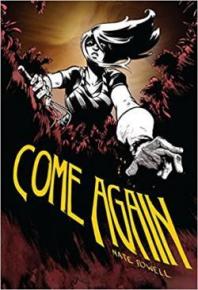
Kate’s Review: “Come Again”

36710841Book: “Come Again” by Nate Powell

Publishing Info: Top Shelf Productions, July 2018

Where Did I Get This Book: The library!

Book Description: The first and only comic book artist ever to win a National Book Award returns with a haunting tale of intimacy, guilt, and collective amnesia.

As the sun sets on the 1970s, the spirit of the Love Generation still lingers among the aging hippies of one “intentional community” high in the Ozarks. But what’s missing?

Under impossibly close scrutiny, two families wrestle with long-repressed secrets… while deep within those Arkansas hills, something monstrous stirs, ready to feast on village whispers.

Nate Powell, artist of the National Book Award-winning March trilogy returns with a new creator-owned graphic novel.

Review: I have read a couple of graphic novels that Nate Powell did the artwork on, and given that one of those was the stupendous “March” Trilogy I hold him in high regard. I first heard about his new graphic novel, “Come Again”, at work, when a coworker had requested it and couldn’t remember why. When she told me what it was about and who wrote it, I requested it myself. Not only was I interested in a supernatural story that takes place on a commune in the fading days of communes, I was also curious to see what Nate Powell would do as a writer as well as an illustrator.

“Come Again” has a number of themes that it addresses, and some of these themes work better than others. I will start with the aspects that I liked, because I liked them a lot. Our main character, Haluska, has lived in an Ozark based ‘intentional community’ (or as some laymen may call it, a commune) with her close friends and son Jake for the greater part of the 1970s. The idealistic 1960s are long over, though when Hal, her ex Gus, and their friends Adrian and Whitney first started living there it was 1971, and the world seemed filled with possibility. Now we are at the end of the decade, and though the community remains it has shrunk considerably, and Hal has been carrying on an affair with Adrian that is based in an underground cave they found in the forest. Their affair doesn’t seem to have much joy or passion to it, though neither seem willing to give it up, even though they have to take it literally underground. Haluska certainly feels guilt, but not enough to end it, and her attachment to a comfortable relationship that may not be what it used to be resonates within the greater storyline. The ideals of the Love movement, and the commune itself, are fading away, and with that change comes uncertainty and the impulse to cling harder to something that may not be there anymore. There was a moment that I found to be quite powerful, when Hal and Adrian go into town to sell goods at a farmer’s market. Their somewhat strained relationship with the ‘traditional’ town has been buoyed by the give and take system they have with each other. But on this specific day, a local band has been booked to perform. They happen to be a punk band, and their angry song of rebellion angers the townsfolk, but connects with Hal in ways she may not totally understand in that moment. Knowing that the 80s are coming, and the cynical and predatory social changes that are in store, it feels like a greater reflection of what’s to come, though Hal may not know it. These aspects of this book, of isolation, and guilt, and the secrets we keep from even the ones we love most, worked supremely well for me.

It was the dark fantasy and supernatural elements that fell a bit flat. There is something living in the cave that Hal and Adrian use, a disembodied voice that sinks into the various pages. After Hal’s son Justin and Adrian’s son Shane find the cave, Shane is lost within the depths, depths that may not be there all the time. This, of course, helps feed into Hal’s guilt about her affair with his father, but then it becomes clear that something supernatural is going on that only Hal can see. While I usually really like strange supernatural elements (and am enough of a ghoul that missing people is a theme that I like), I didn’t feel that this part of the book was as strong as it could have been. We don’t know what it is that is living in this cave, we don’t know why the spell it casts manifests in the way that it does, and as we see the consequences of the disappearance and spell start to unfold, we don’t really get answers as to why or how it’s happening. I understand that ambiguity is a key component of a story like this, and I can appreciate it to a point, but in this story I was left more confused than anything else. It ultimately leads to a sacrifice that Hal has to make, and though I understood the resonance of the sacrifice it also felt a bit like a cop out when it came to her having to own up to some of her past mistakes (and the mistakes that others have made as well). I think if the story had leaned in more to the magical or supernatural system I would have liked that part more, but it could have easily functioned as a historical fiction meditation on self, secrets, and guilt.

But Nate Powell’s style is still very unique and stands out in my mind. I liked seeing how he used shades, shadows, and a semi-realistic stylization to tell this story. I especially liked how the disembodied voice of the monster/whatever was written, in ways that made it seem like it was literally floating on the wind.

comeagain_01
(source)

“Come Again” was a book that didn’t quite give me what I want from the premise and author. It certainly had strong moments, but overall it didn’t have to ghostly oomph I expected.

Rating 6: While I enjoyed the broader themes of isolation, secrets, and guilt, the supernatural elements left much to be desired.

Reader’s Advisory:

“Come Again” isn’t on many Goodreads lists, but it is included on “NPR’s Best Books of 2018”.

Find “Come Again” at your library using WorldCat!

Serena’s Review: “Through the White Wood”

39735900Book: “Through the White Wood” by Jessica Leake
Publishing Info: HarperTeen, April 2019

Where Did I Get this Book: Edelweiss+

Book Description: Katya’s power to freeze anything she touches has made her an outcast in her isolated village. And when she loses control of her ability, accidentally killing several villagers, she is banished to the palace of the terrifying Prince Sasha in Kiev.

At the castle, though, she is surprised to find that Sasha is just like her—with his own strange talent, the ability to summon fire. Instead of punishment, Sasha offers Katya friendship, and the chance to embrace her power rather than fear it.

But outside the walls of Kiev, Sasha’s enemies have organized their own army of people who can control the very earth. Bent on taking over the entire world, they won’t stop until they’ve destroyed everything.

Katya and Sasha are desperate to stop the encroaching army, and together their powers are a fearsome weapon. But as their enemies draw nearer, leaving destruction in their wake, will fire and frost be enough to save the world? Or will they lose everything they hold dear?

Review: I’ve had some good luck recently with Russian-based fairytale/fantasy novels. Plus, I’m always on the look out for a good standalone as I have way too many series I’m currently invested in. It’s a problem. All of that plus a pretty cover, and I was quick to place a request to read an early coy of this. Ultimately, however, it didn’t live up to all of the expectations I had placed on it.

Katya’s life has been one of fear and isolation, except by the elderly couple who has raised her. One night, her worst fears are realized when she releases her incredible power over ice with horribly destructive results. But her banishment turns out nothing like she had imagined. Instead of punishment, she finds more of her kind, people with incredible powers over elements. Even the Prince of Kiev whose own power over fire seems to perfectly balance her own. Now, not only has she found a place of acceptance, but she finds herself drawn into a greater conflict where her rare abilities may be the turning point that saves her entire nation.

As a pro for this book, the greatest thing that stood out to be was the commitment to the darkness at the heart of Katya’s story and the true danger of her powers. This isn’t just Elsa from “Frozen.” People die when Katya loses control. The original incident that results in her banishment is rightly horrifying, and while yes, she is definitely provoked into it, we see how terrible the results are, not only for the villagers but for Katya herself, as at this point in time, she only has limited control of how her abilities manifest. Then, further into the story, when we begin to hear about the larger threats against the country itself, these incidents aren’t left as purely stories of terrible things happening elsewhere to other people. Again, we see the results of these attacks, and it has a direct impact on Katya and her story. I really appreciated that the author made not only the dangers of Katya’s powers, but the villains themselves, feel more real by raising the stakes in this way.

But other than that, this book simply felt too standard to spark my real interest. Even trying to type out that summary above was a struggle because it just sounds so similar to so, so many stories that are just like it. Ice powers, fire powers, what have you. A book about a teenage girl who has some incredible power, is misunderstood, and then turns out to be the “chosen one” essentially to save a nation? Been there, seen that. Add in a love story with, of course, the prince, and you have pretty much checked off every requirement for the base model of YA fantasy novels.

Katya herself could be incredibly frustrating at times, especially early in the story. Yes, her initial confusion about what is going on and what her role is in everything makes sense. But as the story continues, she bizarrely flips back and forth between being trusting of and then suddenly antagonistic against those around her. And there is never any clear instigating factor behind the switch. It never read as a natural reaction to events happening around her, and instead felt like authorial intervention to add drama.

I also hated the romance. It was a terrible case of instalove where I couldn’t see any true chemistry built between the characters and it happened incredibly fast, especially on Sasha’s side. While Katya is going through her little song and dance of “I like him! I don’t trust him! But he’s great! But no, I must be opposed to him!” Sasha was pretty fully invested in Katya from the start. But…why? Again, no reason is actually presented in the book. We’re simply told that this is how it is.

There was nothing truly bad about this book. But there was also nothing that made it stand out to me. The story felt incredibly familiar. The characters seemed to be just going through the motions that we expect from YA fantasy. And the entire read felt slow and plodding, except for a few instances of action thrown in here and there. I can’t even say the idea behind the book was exceptional, as, like I said, it felt very familiar to many other fantasy YA stories featuring powered young women. If you really love those stories, this is more of the same, and you’ll probably like it. But if you’re looking for a new take on things, this isn’t it.

Rating 6: Pretty much exactly what you’d expect after reading the book description. No surprises here, and that was a bad thing.

Reader’s Advisory:

“Through the White Wood” isn’t on many relevant Goodreads lists, but it is on “2019 Must Read Fantasy.”

Find “Through the White Wood” at your library using WorldCat!


Kate’s Review: “The Everlasting Rose”

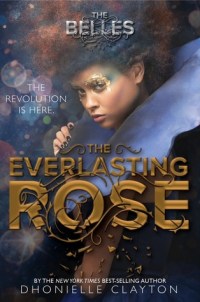
39080472Book: “The Everlasting Rose” by Dhonielle Clayton
Publishing Info: Freeform, March 2019

Where Did I Get This Book: I was received an eARC from NetGalley.

Book Description: In this sequel to the instant New York Times bestseller, Camille, her sister Edel, and her guard and new love Remy must race against time to find Princess Charlotte. Sophia’s Imperial forces will stop at nothing to keep the rebels from returning Charlotte to the castle and her rightful place as queen. With the help of an underground resistance movement called The Iron Ladies-a society that rejects beauty treatments entirely-and the backing of alternative newspaper The Spider’s Web, Camille uses her powers, her connections and her cunning to outwit her greatest nemesis, Sophia, and restore peace to Orleans.

Review: I want to extend a big thank you to NetGalley for sending me an eARC of this novel!

Last year you may remember that Serena and I both reviewed the book “The Belles” by Dhonielle Clayton. We both enjoyed it for the most part, it’s fantasy world focused on beauty and opulence a neat new theme to bring to a fantasy story. I was lucky enough to snag a copy an eARC from NetGalley, and while I gave it some time on my Kindle I finally caved and had to read it around the beginning of 2019. Given that it’s kind of rare for me to enjoy fantasy novels, I had really high hopes for “The Everlasting Rose,” the sequel and final installment in this duology. And there will be allusions to plot points of “The Belles” in this review, so tread carefully if you want to remain spoiler free for that book.

When we left off in “The Belles,” Camille, her fellow Belle/sister Amber, and former Imperial Guard Remy had escaped Orleans after the sociopathic Princess Sophia was positioned to take the crown after his mother died. Meeting up with rebellious and escapee Belle Edel, the group now knows that the only way to save Orleans from a cruel and capricious ruler is to find her sister Charlotte, believed dead but possibly only in hiding (and still comatose). So the stakes are high from the get go, with Camille under threat of capture and certain torture, if not death. There is so much action and so many plot points that need to be introduced that there are few moments of quiet and organic exposition. For the most part this wasn’t a bad thing; it made it so the action was fast paced and kept me in its thrall. But I did find it to be too bad that, unlike in “The Belles”, that these points couldn’t slowly unfold at a more ruminative pace. But I did like a good number of these points, from information on what Sophia is doing to The Belles who didn’t escape (sufficiently horrifying!) to how the kingdom is starting to fight back against her upcoming coronation and reign. It just felt a bit stuffed in. On top of that, the ending was a bit rushed, and I ended up wanting more focus and exposition there as well. I know that people are burnt out of YA trilogies, especially in stories of fantasy and dystopic themes, but I think that perhaps this series could have benefited from one more book.

I also was on a higher alert after I read some criticism of “The Belles”, a criticism I feel like I should have seen last time. A number of people were critical that in “The Belles”, the two prominent LGBTQIA+ characters were killed off for plot device and character conflict. The “Bury Your Gays” trope is certainly one that is not only overdone, but can also be damaging and hurtful to LGBTQIA+ readers. It was with that new perspective in my mind that I went into “The Everlasting Rose”. The good news is that there are more LGBTQIA+ characters in this one, and no, not all of them get fridged, but I would warn readers that there may still be some problematic optics regarding these characters. I don’t feel that I can say for sure given that I’m a hetero and cis, but just know that there were still things that I found a bit questionable.

But some of the huge strengths this book does have are the characters and the setting of Orleans. I was once again completely taken in with the descriptions of the world, from the tea cup animals (and YES, there are TEA CUP DRAGONS THIS TIME!!) to the descriptions of the foods and the colors and the beauty treatments. Clayton’s writing makes it so that the reader can really visualize what she sees in her mind’s eye. And I loved seeing more of Edel, my favorite Belle, whose rebellion and questioning personality has made her a formidable member of the Resistance. She and Camille are great foils for each other, as they have both experienced similar things in different ways, which makes them have to see the other’s perspective. Camille herself has changed a lot from the beginning of the first novel, and I still like how developed she is, from her strengths to her flaws. Her relationships all feel real and filled with complexity. Her burgeoning romance with Remy feels very in character with both of them, and while Clayton does tread a bit too much towards love triangle for my tastes, the interactions she does have with Auguste (her initial love interest and now consort of Sophia) aren’t overwrought or too sappy. It, too, felt a little quick to resolve, but ultimately it went in a satisfying way.

It was kind of a bummer that “The Everlasting Rose” was a bit of a disappointment, but I’m glad that we got to go back to Orleans one last time, and that we got to see how Camille’s story ended. If Clayton wanted to revisit this world, I would absolutely go along for the ride.

Rating 6: A bit of a let down from its predecessor, “The Everlasting Rose” was an okay finish to a story filled with beauty and darkness.

Reader’s Advisory:

“The Everlasting Rose” is included on the Goodreads lists “#ReadPOC: List of Books by Authors of Color”, and “Most Anticipated 2019 SFF Books”.

Find “The Everlasting Rose” at your library using WorldCat!

Previously Reviewed:

Kate’s Review: “#FashionVictim”

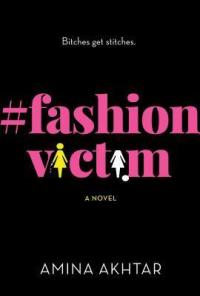
39049255Book: “#FashionVictim” by Amina Akhtar

Publishing Info: Crooked Lane Books, September 2018

Where Did I Get This Book: The library!

Book Description: Fashion editor Anya St. Clair is on the verge of greatness. Her wardrobe is to die for. Her social media is killer. And her career path is littered with the bodies of anyone who got in her way. She’s worked hard to get where she is, but she doesn’t have everything.

Not like Sarah Taft. Anya’s obsession sits one desk away. Beautiful, stylish, and rich, she was born to be a fashion world icon. From her beach-wave blonde hair to her on-trend nail art, she’s a walking editorial spread. And Anya wants to be her friend. Her best friend. Her only friend.

But when Sarah becomes her top competition for a promotion, Anya’s plan to win her friendship goes into overdrive. In order to beat Sarah…she’ll have to become her. Friendly competition may turn fatal, but as they say in fashion: One day you’re in, and the next day you’re dead.

ReviewEven though on any given day you will probably find me lounging around my house in leggings and an oversized Sex Pistols tee shirt, I do have a certain pleasure for various aspects of the fashion industry. I used to watch “Project Runway” fairly religiously, loved the fashion shoots on old school “America’s Next Top Model”, and still enjoy seeing whatever nutty campaigns the likes of Gucci, Chanel, and Versace have going on at any given time. But it’s really an acknowledged fact that the fashion industry as a whole can be incredibly toxic and dehumanizing, so my enjoyment is probably fairly problematic. But toxic and dehumanizing means that it is ripe for the picking when it comes to satire, and that is where Amina Akhtar comes in. Akhtar used to be a fashion writer and editor, having been on the staff of such powerhouses and Vogue and Elle, but has now settled into the life of a novel writer. Her experiences I’m sure inspired her to write the deliciously named “#FashionVictim”. Just hearing about this book made me giggle with pleasure. Fashionistas resorting to murder to get ahead? I can’t get on board fast enough.

giphy3
File footage of me as I read the description of this novel. (source)

Our main character is Anya St. Clair, a fashion writer and associate editor who is at a prestigious fashion magazine called La Vie, who starts a killing spree in hopes of making it to the top. She’s obsessive and deranged, and her object of obsession is her colleague Sarah, the entirely unlikable poster child of the privileged fashion darling. Anya isn’t likable by any stretch of the imagination, but then, no one in this book is. After all, if you’re going to do a satire of the fashion industry, everyone needs to live up to the highest of stereotypes, so screeching and vapid bitches, both of the female and male persuasion, is the way to go. Anya is outwardly a perfect fit for this world, but in her mind lies a true maniac who idolizes Sarah yet despises her for the praise and accolades she has heaped upon her. Her inner monologue is frenzied and at times very funny, with delusions and intrusive thoughts intermingling with “Law and Order: SVU” trivia. Her drawn out massacre of those around her and those who get between her and what she wants (be it a promotion or the coveted BFF friendship with Sarah) is violent and jarring, but also has moments of gallows humor that you can’t help but laugh at, even if it feels kind of wrong to do so. “#FashionVictim” achieves the satirical levels that I’ve seen other books attempt, yet falter on. It digs its heels into the mess and violence, but at always feels like a nudge and a wink to the reader because the characters are such caricatures. And really, isn’t the fashion industry itself brutal and unforgiving in its own ways, pitting women against other women to do incredibly destructive things? Perhaps not murder. But destructive nonetheless.

But I think that as much as this is satire and a fun read, it doesn’t quite have the teeth that it could have had to really drive the point home. I think that because “#FashionVictim” is so over the top, you can say ‘oh, this is just a book, this could never happen in real life’. And while though the reader is in on the joke, I think that it could have been FAR more effective had it gone for a little bit of realism to go along with the satire. By being so out there and laughably ridiculous, it made it so that by the end I was less unsettled, and more ‘ha, what a romp’. That’s not a bad thing by any means, but it did make to so that it never quite made it to ‘great’ satire levels, and I think that it really could have gotten there had it not limited itself in such a way. I know that you’re all probably sick of my constant comparisons to “You”, but I think that kind of satire is stupendous BECAUSE you can see it happening in real life. While I don’t always need my satire to be based in realism, I do think that “#FashionVictim” could have had that extra oomph if it had stepped back just a little bit.

“#FashionVictim” was definitely a fun read, and I absolutely want to see what Amina Akhtar comes out with next. Go in expecting some bloody satire, but don’t expect to walk away totally creeped out.

Rating 6: Fun and dripping with satire, “#FashionVictim” was a breezy read, though I wish it had a little more creepy bite.

Reader’s Advisory:

“#FashionVictim” isn’t on many Goodreads lists as of yet, but it is included on “2018 Books by Authors of Color/Native Authors”, and I think that if you want “The Devil Wears Prada” with a little more teeth it would be for you.

Find “#FashionVictim” at your library using WorldCat!