Serena’s Review: “Tidelands”

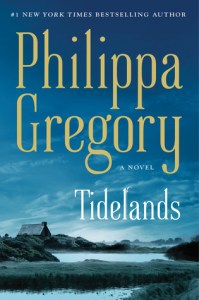
43260625Book: “Tidelands” by Philippa Gregory

Publication Info: Simon & Schuster, August 2019

Where Did I Get this Book: e-ARC from the publisher

Book Description: England 1648. A dangerous time for a woman to be different . . .

Midsummer’s Eve, 1648, and England is in the grip of civil war between renegade King and rebellious Parliament. The struggle reaches every corner of the kingdom, even to the remote Tidelands – the marshy landscape of the south coast. 

Alinor, a descendant of wise women, crushed by poverty and superstition, waits in the graveyard under the full moon for a ghost who will declare her free from her abusive husband. Instead she meets James, a young man on the run, and shows him the secret ways across the treacherous marsh, not knowing that she is leading disaster into the heart of her life.

Suspected of possessing dark secrets in superstitious times, Alinor’s ambition and determination mark her out from her neighbours. This is the time of witch-mania, and Alinor, a woman without a husband, skilled with herbs, suddenly enriched, arouses envy in her rivals and fear among the villagers, who are ready to take lethal action into their own hands.

Review: Philippa Gregory was probably one of the authors I associate most strongly with my first experiences reading historical fiction as a teenager. With a few exceptions, up to that point I read fantasy/sci-fi and really that was it. But I whizzed through “The Other Boleyn Girl” and was hooked on a new genre from there on out. I read a good number of Gregory’s works over the years, and enjoyed many them. However, after a bit, I was ready to move on from her tried and true political, royal scheming stories that were starting to feel a bit stale to me. So I was excited when I heard about “Tidelands” and saw that we would be getting something outside of that wheelhouse with a story about a poor widow who comes under suspicion as a witch.

Alinor is a woman between worlds. Her husband is missing, so she is not a widow. So she’s still a wife but one without a provider, left to live independently with all of the challenges that come with it, but none of the securities that come with being a widow (mostly having to do with a woman’s honor and all of that fun stuff). But her and her children’s lives change when she runs across a priest attempting to find safety out on the ever-changing and dangerous tidelands. New opportunities are now opening before her, but with these changes come new dangers, and the watchful and suspicious eyes of neighbors are always watching.

It was nice to return to a historical fiction novel that wasn’t also a mystery. Looking back over what I’ve read the last year or so, almost all of my historical reading has been a combination of the two genres. Gregory has always impressed with her detailed descriptions of life in the time period in which her stories take place and the historical accuracy of the political and cultural experiences of those living then. This book in particular delved into the brewing tensions between the new church and the old, the new king and the old. I didn’t know a whole lot about the parties and beliefs at play here, but I enjoyed learning more about it throughout this novel. I especially enjoyed the way that Gregory approached it through Alinor’s eyes, as a common woman who has lived an isolated life away from much of the drama that is gripping the nation.

But with these details also comes a fairly slowly moving plot. The story takes a long time to get going and, thinking back on it, I’m not sure it ever even did, other than a very brief section near the end. Much of it revolves around Alinor’s romantic plot line, and even that moved at a fairly glacial speed. Once I accepted that that was what the story would be, I was better able to settle in, being now less focused on desperately trying to locate a plot. But even then, the story felt out of balance. It’s one thing to not have a strong plot in favor of focusing on characters and their relationships, but I was also never strongly attached to any of those either.

I also had hoped for a bit more from the fantastical elements teased in the description. I wasn’t expecting a fantasy, of course, but I had hoped for more on the witch front. Again, it took a long time to get there, and then it felt pretty rushed. The ending itself seemed to come out of nowhere and just kind of…end. It wrapped up in only a few pages, leaving several subplots unexplained and with an abrupt shift in characters’ lives, with little build up or exploration provided. This is the first in a series, so there’s room to expand on these things from here. But even with a series, each book should feel self-contained and have a natural beginning, middle, and end. Here, the end felt slapped on because the book needed to end, nothing more.

Overall, this was a bit of a lackluster read for me. While I liked many of Gregory’s early books, this one reminded me why I had stopped keeping up with her works. There is nothing technically wrong with it, but the story never grabbed me, the characters were not especially likable, and I felt like the historical details, while accurate and reflective of Gregory’s strong research, overwhelmed what little story there was left. Fans of her later work may very well enjoy this book, but it wasn’t really for me, sadly.

Rating 6: A bit too slow, a bit too detailed, and a bit off the mark at the end.

Reader’s Advisory:

“Tidelands” is a new book so it isn’t on any relevant Goodreads lists, but it should be on “Witch Hunts in Historical Fiction.”

Find “Tidelands” at your library using WorldCat!
Serena’s Review: “Fray”

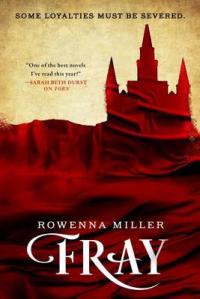
40696990Book: “Fray” by Rowenna Miller

Publishing Info: Orbit, June 2019

Where Did I  Get this Book: ARC from the publisher

Book Description: Open revolt has been thwarted — for now — but unrest still simmers in the kingdom of Galitha. Sophie, despite having built a thriving business on her skill at both dressmaking and magic, has not escaped unscathed from her misadventures in the workers’ rebellion. Her dangerous foray into curse casting has rendered her powers unpredictable, and her increasingly visible romantic entanglement with the Crown Prince makes her a convenient target for threatened nobles and malcontented commoners alike.

With domestic political reform and international alliances — and her own life — at stake, Sophie must discern friend from foe… before her magic grows too dark for her to wield.

Previously Reviewed: “Torn”

Review: I enjoyed the political, magical-sewing, romance story that was “Torn,” so it was a no brainer to request a copy of its sequel. The first book had moved rather slowly, for all that it was introducing new characters and a new world, so I was hopeful that now that that groundwork had been laid, the pace would pick up a bit more here. Unfortunately no.

Sophie’s orderly life of quiet competence as a small business owner is quickly falling apart. Not only does she have a rebel leader for a brother, one whom she was tied closely to in the failed revolt that took place not too long ago, but her growing attachment to the Crown Prince is thrusting her into a completely new part of society, and one that doesn’t look too kindly on the doings of revolutionaries. On top of all this, after she used her magic in new ways in the last book, she has begun to lose control of it. These dueling priorities are often at odds with each other and it’s beginning to look like Sophie is going to have to choose a side eventually.

Many of my opinions from the first book carried over to this one, however, ultimately, I didn’t enjoy it as much. For one thing, the pace of the book is still incredibly slow. I enjoy a political fantasy novel as much as the next person, but much of the slowness here is spent on minute day-to-day details, rather than backroom scheming. Much of what helped the first book manage its slow pace was the fact that it was a first book and was throwing tons of new stuff at the reader simply due to that fact. With a second book, and an established world and main character, the story itself needs to provide the points of interest. Unfortunately, it didn’t really do that and I still feel like the book could have been edited down significantly.

I also still enjoyed the magic system, however. Especially now that it is getting out of Sophie’s control. In the first book, it was made clear that Sophie herself didn’t fully understand her magic, and when she pushed herself into new aspects of charming, she was exploring without much of a guide. Seeing the calm, controlled Sophie that we knew from the first book deal with the unexpectedness that is now her magic was fun to read. It was also interesting having her explore the morality of how she uses her magic and how that ties into the way the magic behaves itself.

The romance was also still fairly bland for my taste. But I did like how the book was tackling the sexist laws of the land that will prevent Sophie from owning her own business once she gets married.

However, the one big strike against this  book for me was Sophie herself and the way the brewing revolution seems to be being handled. One of the most compelling aspects of the first book was the honest look at what revolutions look like, the tough places where idealism and practicality meet and explode. The fact that there are good and bad people on both sides. And, even more importantly, there are people in the middle who can understand both sides but just want to get on with life. That was Sophie. Unfortunately, here, in the second novel, much of that nuance and layered exploration is thrown out. Sophie seems almost out of character with how much she sides now with the revolutionaries. And, conveniently, the story itself has molded the two sides to make this choice easier. The common people are fully in the right. The aristocrats are completely evil. It’s a really unfortunate loss, simplifying matters back into the easy good vs. evil conflicts we’ve seen a million times. And with the unoriginal “common folk vs. the evil nobility” theme nonetheless.

In the end, I don’t feel that this book moved the series in the right direction. Some of the flaws from the first one (slow pace, bland romance) carried over to this one. And the interesting additional layers to Sophie’s magic weren’t enough to make up for the fact that the complicated political philosophizing was thrown out the window for a more standard, less interesting, revolution of the good folk against the bad ones. If you enjoyed the romance and the pace of the first book more than me, perhaps this one won’t be as much of a let down. But unfortunately, it was a bit of a dud for me.

Rating 6: Loses its nuance, and with it, its point of interest.

Reader’s Advisory:

“Fray” is a newer book so isn’t on any Goodreads list but it, like “Torn,” should be on “Crafty Magic.”

Find “Torn” at your library using WorldCat!

Serena’s Review: “Kingdom of Exiles”

42366222Book: “Kingdom of Exiles” by Maxym M. Martineau
Publishing Info: Sourcebooks Casablanca, June 2019

Where Did I Get this Book: copy from the publisher!

Book Description: Fantastic Beasts meets Assassin’s Creed in this epic, gripping fantasy romance from debut author Maxym M. Martineau.

Exiled beast charmer Leena Edenfrell is in deep trouble. Empty pockets forced her to sell her beloved magical beasts on the black market—an offense punishable by death—and now there’s a price on her head. With the realm’s most talented murderer-for-hire nipping at her heels, Leena makes him an offer he can’t refuse: powerful mythical creatures in exchange for her life.

If only it were that simple. Unbeknownst to Leena, the undying ones are bound by magic to complete their contracts, and Noc cannot risk his brotherhood of assassins…not even to save the woman he can no longer live without.

Review: This has been a sad run for me lately in the urban fantasy arena. First, the Patricia Briggs’ “Alpha and Omega” series introduced a new aspect into a beloved character that has some pretty unfortunate consequences not only for that series but for the “Mercy Thompson” one as well (though I’m working my way through the latest, so check back soon to see how that fares!). And then my beloved “Kate Daniels” series finished up. So, naturally, I’m on the look out for a replacement urban fantasy series and when I saw “Kingdom of Exiles” pop up on NetGalley, I requested it right away.

Leena values her magical beasts above anything. But when things get dire, she finds herself exactly where she didn’t want to be: deep in the underbelly of society, trading away her beats. And things only get worse when an assassin shows up on her doorstep with an order marking her for death. Luckily for her, Noc is too intrigued to simply off her right then and there, and they both find themselves caught up between several rocks and hard places, with their growing affection and love putting the other at greater and greater risk.

For me, the largest appeal of this story was the unique “charming” ability that Leena possesses and the super cool magical beasts who surround her because of it. Like the book description implies, there are a lot of similarities with these animals and the ways in which Leena interacts with them and keeps them that feels very similar to the “Fantastic Beasts” series. So if you’re a fan of that particular aspect of that story, the same will be found here. But I was glad to see there were some added twists to this version of the concept, namely the idea that these beasts can be animal familiars, essentially. And it is this fact that makes them so valuable and Leena’s ability to gather and control them so important.

The comparison to “Assassin’s Creed” is a bit less on the money, and this is where things began to fall apart for me a bit. The action of the story was quite a bit less than I’m used to finding in my urban fantasy/paranormal stories. Compared to the two series I mentioned earlier, this one has very little going on in that area. There were a couple of action-oriented scenes, but they felt very fleeting. This also added to the uneven read of the book, with the balance between plot and character moments felt odd at times.

I also didn’t love Leena or Noc, particularly. I could see how on their own they might be better, but for a book that is a paranormal romance story, it’s pretty important that they work well together. Leena, who comes across as pretty competent in the beginning of the story, immediately falls into the trope hole of becoming useless and making stupid decisions once the love interest shows up. Noc, for his part, talks on and on about how important it is to keep one’s distance from one’s target and then promptly makes zero effort to follow his own advice, quickly falling for Leena.

The romance itself was also not to my taste. It was a bizarre mix of the type of romance you would typically find in YA stories, full of angst and unnecessary drama. But then all of the steamy scenes one can expect from adult romance novels. The two did not mix well together, in my opinion. But I’m generally not a fan of angsty or dramatic romantic relationships, so this was going to be a hard sell for me regardless of anything else.

Overall, this book wasn’t for me. I think the world-building and fantasy elements were very interesting. And I could even wave away some of the pacing issues as simply the learning curve of a debut book. But my dislike for the main characters and the way their romance played out was enough to land this book solidly in the “meh”-to-dislike category. However, if you are more interested in this type of romance, this could potentially be a good paranormal romance series to get in on early! And to help you with that, make sure to enter our giveaway for a copy of the book!

Rating 6: More romance (and not my favorite kind either) than urban fantasy, this book was a miss for me.

Reader’s Advisory:

“Kingdom of Exiles” can be found on these Goodreads lists: “Fantasy Romance” and “From Contest to Contract.”

Find “Kingdom of Exiles” at your library using Worldcat!


Serena’s Review: “The Storm Crow”

38330596Book: “The Storm Crow” by Kalyn Josephson
Publishing Info: Sourcebooks Fire, July 2019

Where Did I Get this Book: NetGalley

Book Description: In the tropical kingdom of Rhodaire, magical, elemental Crows are part of every aspect of life…until the Illucian empire invades, destroying everything.

That terrible night has thrown Princess Anthia into a deep depression. Her sister Caliza is busy running the kingdom after their mother’s death, but all Thia can do is think of all she has lost.

But when Caliza is forced to agree to a marriage between Thia and the crown prince of Illucia, Thia is finally spurred into action. And after stumbling upon a hidden Crow egg in the rubble of a rookery, she and her sister devise a dangerous plan to hatch the egg in secret and get back what was taken from them.

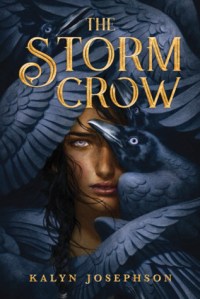
Review: Whatever my feelings ultimately were for this book (an ominous beginning if ever there was one), there is no denying that it has beautiful cover art. That, coupled with an intriguing description of a world built around the powerful abilities of magical crows, made it a pretty easy decision to request a copy from NetGalley. However, while the book does a lot of things right, most especially for its representation of a main character who is struggling with depression, it never quite clicked for me.

Thia’s life literally crashes and burns around her when her city is attacked by invading enemies, killing her mother and all of the magical crows that serve as the foundation for their culture. Before the disaster, Thia had been on the brink of gaining her own crow and joining the ranks of those who protect and build there country. Now, with that future lost foreer, Thia struggles daily to see what life holds for her. However, the world continues turning, and with new challenges banging on her door (like an unwanted marriage prospect), This is forced to re-engage with the world and begin building a new future for herself and, hopefully, her country.

There were a few things that I really did like about this book. For one, I think the idea of crows with elemental powers is a pretty intriguing idea. Yes, they’re essentially the same as dragons, but whatever. What really made them stand out, however, was the variety of ways that their powers were used. It wasn’t just battle crows, which is the expected route to go with something like this. No, the crows are used in almost every area of life in Thia’s land, including farming, travel, and more. It is because of this deep dependency on crows that the attack and their annihilation hits as hard as it does on Thia’s nation. It wasn’t just their military that was taken out, but basic needs like food and water are struggles without the crows.

The other thing I like is the fact that This struggles with depression. I haven’t experienced this myself, so I can’t speak to how accurate the portrayal is, but I appreciate that it is included in a YA fantasy book like this where you typically only see one type of main character: badass young woman! And Thia definitely does have strength, having to struggle through really tough feelings while her country is also in crisis.

However, even with my appreciation for what the author was trying to do with Thia, I could never really connect with the character. I can’t put my finger on exactly what the struggle was, but I was never fully invested in her plight or in her as a unique character, distinct from all the other YA fantasy heroines one reads about. She was better in theory than in actuality, I guess.

Part of my struggle with the character could also just be simply an off-shoot of my greater struggle with the pacing of the book. Unlike some other books that suffer from a slow start, this book takes off with a bang with the invasion of Thia’s home. From there, naturally, things slow down a bit. But I kept waiting for it all to pick back up as the story progressed. And I waited. And I waited. And it never really happened. The story was simply slow throughout the rest of the book, not helped by the fact that since I wasn’t overly attached to Thia as a character, I wasn’t able to sustain an interest for the character’s sake.

I was also underwhelmed by the end. Combined with the slow pacing of the story, it, and many other plot/character beats felt extremely predictable. There weren’t any huge twists, and what had started out as such an interesting concept, quickly faded into the background as we simply waited for Thia’s crow to hatch.

There is a sequel coming out and I’m mildly curious to see where things go from here. But I have to say, I won’t be racing out to get my hands on it. Likely, I’ll either read it or not simply based on how short or high my TBR pile is at the time. This is by no means a bad book, and for those with personal experience with depression, it may very well be just the book you’re looking for. But for me, from a purely reading-experience point-of-view, I didn’t love this book.

Rating 6: The cool premise died with the crows, unfortunately.

Reader’s Advisory:

“The Storm Crow” isn’t on many relevant Goodreads lists, but it is on “The Most Beautiful Covers Of 2019.”

Find “The Storm Crow” at your library using WorldCat!


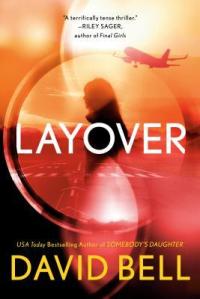
Kate’s Review: “Layover”

3083348Book: “Layover” by David Bell

Publishing Info: Berkley Books, July 2019

Where Did I Get This Book: I received an eARC from the publisher through NetGalley

Book Description: In this high concept psychological suspense novel from the USA Today bestselling author of Somebody’s Daughter, a chance meeting with a woman in an airport sends a man on a pulse-pounding quest for the truth…

Joshua Fields takes the same flights every week for work. His life is a series of departures and arrivals, hotels and airports. During yet another layover, Joshua meets Morgan, a beautiful stranger with whom he feels an immediate connection. When it’s time for their flights, Morgan gets up to leave, leans over and passionately kisses Joshua, lamenting that they’ll never see each other again.

As Morgan slips away, Joshua is left feeling confused by what just happened between them. That’s when he looks up and is shocked to see Morgan’s face flashing on a nearby TV screen. He’s even more shocked when he learns the reason why–Morgan is a missing person.

What follows is a whirlwind, fast-paced journey filled with lies, deceit, and secrets to discover the truth about why Morgan is on the run. But when he finally thinks every mystery is solved, another rears its head, and Joshua’s worst enemy may be his own assumptions about those around him…

Review: Thanks to Berkley Books and NetGalley for providing me with an eARC of this book!

I used to really hate flying, and while it’s still not exactly my favorite activity I’ve found ways to make it less stressful. Namely, make sure I got to the airport with lots of time to spare, and once through security plop down with my travel companion and order food and drink until it’s time for boarding. It’s not something I do terribly often, certainly not enough to feel like I’m an expert, but I know people who do travel a fair amount for work who deal with the stress of flights and layovers on a weekly basis. So going into “Layover” by David Bell reminded me of my friends who do this kind of thing quite a bit. I hadn’t ready any Bell before this book, though lord knows he’s been on my ‘meaning to read’ list for a long while. This just finally gave me reason to actually do it. 

The set up for “Layover” is absolutely compelling. Joshua, one of our protagonists (I’ll get to the next in a bit) is travelling for work. He works for his father’s company, and while he is terrified of flying he makes due by popping xanax and having a drink before boarding. You get the sense that he’s not totally happy with his life in spite of the fact he’s making a good living (and had a perfectly nice and loving girlfriend until recently). So while there is definitely precedent for him to perhaps make the plunge and follow the random beautiful stranger he meets while on a layover, it’s still a big risk that could have consequences that he never dreamed of. On top of that, you have another path you follow, that of a detective named Kimberly who is trying to solve the disappearance of a missing, and important man. Combine these two narratives and it’s fun to try and figure out how these two plot lines will converge, because you know they will. I thought that when they did ultimately come together that it was done in a way that was believable and well set up. I especially liked Kimberly’s investigation of the case, and how she has to balance her work life and her personal life (even if it’s a story we’ve seen before). 

I had a much harder time with Joshua’s plot line, and how he was characterized. It wasn’t so much his ennui with his life (though honestly, when you’re in your twenties and have a well paying job AND a perfectly lovely and supportive significant other you aren’t going to get much pity from me, bored or not), but it was the incredibly stupid and irresponsible decisions that he made, with little to no justification for doing so. It’s one thing to throw caution to the wind and drop your business responsibilities to follow a girl you just met onto a flight (as uncool as it may be). It’s quite another to continuously keep dropping everything and knowingly putting yourself in danger for a girl who continuously screws you over or gets you hurt. That I start to lose patience with. I didn’t feel like Joshua’s character was well established enough for him to just keep doing these stupid and reckless things, and I didn’t think that his connection with Morgan was strong enough or interesting enough for me to have ANY sort of investment in what happened to the two of them and their supposed ‘relationship’. Because of all of this, whenever it was his perspective chapters I would find myself becoming frustrated and hoping that we’d get back to Kimberly as soon as possible. Perhaps had Bell done more background work for Joshua, or made Morgan more than just a mysterious potential femme fatale, I would have bought into it more. As it was, this entire aspect really weakened the story for me.

“Layover” was a pretty well done mystery, but I had hoped for a bit more. I’m not writing David Bell off completely, but I’m back in the same place I was where I intend to go back and read him while not making myself do so any time soon.

Rating 6: Although I really enjoyed one of the perspectives and the mystery itself was well crafted, I had a very hard time with the second perspective, and found it hard to get invested in that part of the story.

Reader’s Advisory:

“Layover” isn’t included on many relevant Goodreads lists, but it would fit right in on “The Terminal”.

Find “Layover” at your library using WorldCat!

Serena’s Review: “Heartwood Box”

41541611Book: “Heartwood Box” by Ann Aguirre

Publishing Info: Tor Teen, July 2019

Where Did I Get this Book: NetGalley!

Book Description: In this tiny, terrifying town, the lost are never found. When Araceli Flores Harper is sent to live with her great-aunt Ottilie in her ramshackle Victorian home, the plan is simple. She’ll buckle down and get ready for college. Life won’t be exciting, but she’ll cope, right?

Wrong. From the start, things are very, very wrong. Her great-aunt still leaves food for the husband who went missing twenty years ago, and local businesses are plastered with MISSING posters. There are unexplained lights in the woods and a mysterious lab just beyond the city limits that the locals don’t talk about. Ever. When she starts receiving mysterious letters that seem to be coming from the past, she suspects someone of pranking her or trying to drive her out of her mind. To solve these riddles and bring the lost home again, Araceli must delve into a truly diabolical conspiracy, but some secrets fight to stay buried…

Review: This was an impulse request mostly because I was in the mood for something creepy and the title/cover art combo seemed to fit those criteria pretty well. The description of a teenager discovering the mysteries of a strange, small town just cemented by interest. But while the book does deliver on what it sets out to do, it didn’t quite match up with what I was looking for.

Araceli doesn’t know what to expect when she shows up at the small town where her great-aunt lives. But a town full of missing people and mysterious happenings in the woods surrounding it is not what she had in mind for her visit. Soon enough these mysteries end up knocking on her own door and curiosity and bewilderment quickly turn into fear and a fight for not only her future, but those who have been lost before her.

This is a tough book to evaluate, mostly due to the fact that it’s just not the type of book I read often. And for the reason that I typically don’t enjoy them as much as others. I’m not sure where the line is between “contemporary fantasy” and “urban fantasy,” but there definitely is one and it’s enough to make me greatly prefer the latter to the former. In this book’s case, there were a few aspects of the former that didn’t quite fit with what I was looking for.

First, our main character, Araceli. Most of the fantasy fiction that I read that features young protagonists is set in a world or time period where a young age doesn’t mean the same thing it does here. Teenagers often find themselves in very adult situations and it is perfectly normal that they be there. And, in fact, they have often been raised to expect to operate in an adult fashion by this age. This makes many YA fantasy novels essentially read as adult fantasy novels (I won’t start up again on the marketing mechanisms behind these choices).

So in part I’m simply not used to reading teenagers that, well, act like teenagers. It’s not really the fault of the book that Araceli is a believable teen and thus often makes poor decisions. But I won’t concede some of the dialogue. Teenage characters don’t have to sound immature in their speaking, and there were often bits of both her actual voiced comments as well as the commentary in her head that read as even more juvenile than necessary for belivablilty.

My other main struggle came down to genre confusion. Simply put, there are too many genres and genre conventions vying for page time in this book. I had a hard time settling in to any one type of story. Some genre blending is to be expected, but this one had a bit too much on its hands with fantasy, thriller, horror, and mystery all packed in. I think it was more a fault of blending than anything. It felt a bit too obvious when the story switched from one genre focus to another, reading as bumpy and jarring rather than a smooth, unnoticeable transition.

The mystery of the story is good, though the comparison to “Stranger Things” is a bit too on the nose. I mean, creepy woods. Dudes in bio-hazard outfits. People disappearing. We get it. But still, I was intrigued enough about discovering what exactly was going on that I was able to get through my general frustration with the main character and some bumpy writing.

Essentially, if you’re a fan of contemporary YA fiction and enjoy a fantasy/horror aspect to your tale, you might really like “Heartwood Box.” Most of my complaints for this one are purely my own preference, so take that with what you will. I do think the writing lacks a bit to be desired overall, but that’s not a deal breaker if this kind of story is your thing.

Rating 6: Not for me. “Realistic” teenagers apparently annoy me too much.

Reader’s Advisory: 

“Heartwood Box” is  a new title and isn’t on many Goodreads lists. But it should be on “YA Fantasy Set in the Real World.”

Find “Heartwood Box” at your library using WorldCat!

Kate’s Review: “Wilder Girls”

42505366Book: “Wilder Girls” by Rory Power

Publishing Info: Delacorte Press, July 2019

Where Did I Get This Book: I received an eARC from NetGalley.

Book Description: It’s been eighteen months since the Raxter School for Girls was put under quarantine. Since the Tox hit and pulled Hetty’s life out from under her.

It started slow. First the teachers died one by one. Then it began to infect the students, turning their bodies strange and foreign. Now, cut off from the rest of the world and left to fend for themselves on their island home, the girls don’t dare wander outside the school’s fence, where the Tox has made the woods wild and dangerous. They wait for the cure they were promised as the Tox seeps into everything.

But when Byatt goes missing, Hetty will do anything to find her, even if it means breaking quarantine and braving the horrors that lie beyond the fence. And when she does, Hetty learns that there’s more to their story, to their life at Raxter, than she could have ever thought true.

Review: Thanks to NetGalley for sending me an eARC of this novel!

Oh boy, look what we have here. Another boarding school book! And on top of a boarding school book, we got some plague horror, some vague cosmic horror, and some queer representation thrown in for good measure. Suffice to say, when I read about “Wilder Girls”, I was interested enough to request an eARC from NetGalley.

What makes “Wilder Girls” by Rory Powers a bit different from other plague horror that I’ve seen lately is that we don’t know WHAT the Tox is. The students at Raxter School for Girls just know that they have been stricken with this disease, which causes body disfigurement, severe aggression, and in many cases (such as that of most of the faculty members and huge portion of the student body) death. They are cut off from the outside world immediately, and those who do have the tenuous connection to the outside world that sends supplies their way aren’t saying much. In many plague horror stories we will ultimately get at least some information as to what happened, be it a government made virus run amok a la “The Stand” or a supermutated flu a la “Station Eleven”. But in “Wilder Girls” it is largely unknown, and that fear of the unknown (both in origin of The Tox and what it has done to the woods outside the school) is what takes this towards Cosmic Horror territory, and makes it feel a bit more unique than similar tales that I’ve read. And, hooray but also YIKES, along with cosmic horror comes body horror, and “Wilder Girls” has that AND THEN SOME. From descriptions of mutated wildlife to body mutilation to other moments of supreme yuck, Powers knows how to up the gross factor in ways that would make David Cronenberg proud.

giphy-6
Kinda like this in some ways. Also, this movie is devastating. (source)

Plus, when you combine plague and the unknown you have a volatile situation in terms of how the social structures have changed, and Raxter School for Girls has DEFINITELY degraded as they try to wait for their rescue, even as supplies dwindle more and more and desperation starts to cloud the judgments and actions of those who are supposed to be friends. Powers doesn’t shy away from some really brutal moments that are set off by these moments of desperation, be it those in power abusing those below, or those who are friendly towards each other suddenly attacking each other verbally AND physically. There are connections to the outside world, sure, but it becomes clearer and clearer that the outside world, in whatever state it may be in, is forgetting about these girls, and it may be intentional.

I also really enjoyed the slow growing and complicated relationship between Hetty, our main protagonist, and Reese, a sometimes friend but mostly roommate to Hetty and their friend Byatt. Byatt is the main connector between the three girls, as both Hetty and Reese have their affections for her. But when Byatt disappears, the two girls left, who have had rocky at best interactions as of late, have to learn to trust each other, and also deal with how they may actually feel for each other. The romance isn’t really at the forefront of this story, and it doesn’t end up defining either character, but it is always a bit below the surface, and I found it realistic that these two girls in a horrifying situation would have a lot of complex feelings towards each other. Especially when they had been vying for the attention of the bright and friendly Byatt.

But for me, and for reasons I can’t really figure out, the broader plot of “Wilder Girls” really didn’t interest me as much as I had hoped it would. While the parts about The Tox and the dwindling hope of rescue were absolutely right up my alley, for the life of me I couldn’t bring myself to care about Byatt’s disappearance. Sure, I usually like the conspiratorial themes that this book was filled with (why did Byatt disappear? Who knows more than they’re telling?), but I think that I was more interested in The Tox itself. Since we jumped in AFTER the Tox has already ravaged this school and it’s inhabitants, and since the school has adjusted, albeit poorly as it turns out, I wish we had a little more information about the build up and fall out of that initial infection. To me that seemed like a better story than that of a missing friend. That said, I can understand why the emphasis on that might be more interesting to other people. As it was, I wasn’t into it. On top of that, we got a clunker of an ending that felt like it was trying too hard to tread between ‘we definitely could end this story here if we needed to’, and ‘promises of more secrets and perhaps a sequel is the only thing to be done’. It felt too obvious as to what it was trying to do.

“Wilder Girls” was a bit of a disappointment to me, but that doesn’t mean it will be disappointing to all fans of plague and cosmic horror. If you want more focus on The Tox, it may not give you what you need, but if you are fine dealing with the fallout alone, it could be a good fit.

Rating 6: While it had a good premise and some interesting female characters, I didn’t find myself as invested in “Wilder Girls” as I had hoped I would be.

Reader’s Advisory:

“Wilder Girls” is included on the Goodreads lists “Sapphic Boarding School Books”, and “YA Cosmic Horror”.

Find “Wilder Girls” at your library using WorldCat!

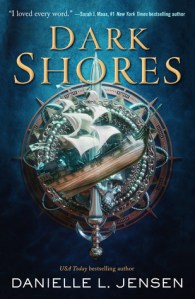
Serena’s Review: “Dark Shores”

41438037Book: “Dark Shores” by Danielle L. Jensen

Publishing Details: Tor Teen, May 2019

Where Did I Get this Book: NetGalley

Book Description: In a world divided by meddlesome gods and treacherous oceans, only the Maarin possess the knowledge to cross the Endless Seas. But they have one mandate: East must never meet West.

A PIRATE WITH A WILL OF IRON

Teriana is the second mate of the Quincense and heir to the Maarin Triumvirate. Her people are born of the seas and the keepers of its secrets, but when her closest friend is forced into an unwanted betrothal, Teriana breaks her people’s mandate so her friend might escape—a choice with devastating consequences. 

A SOLDIER WITH A SECRET

Marcus is the commander of the Thirty-Seventh, the notorious legion that has led the Celendor Empire to conquer the entire East. The legion is his family, but even they don’t know the truth he’s been hiding since childhood. It’s a secret he’ll do anything to protect, no matter how much it costs him – and the world. 

A DANGEROUS QUEST

When an Empire senator discovers the existence of the Dark Shores, he captures Teriana’s crew and threatens to reveal Marcus’s secret unless they sail in pursuit of conquest, forcing the two into an unlikely—and unwilling—alliance. They unite for the sake of their families, but both must decide how far they are willing to go, and how much they are willing to sacrifice.

Review: I never got around to reading “Stolen Songbird,” but it’s been on my TBR list for quite some time and I know that a lot of people really enjoyed it. So when I saw a new title by this author available on NetGalley I thought, “Here’s my chance!” Unfortunately, this wasn’t a complete hit with me, however.

Two worlds divided by a vast ocean and with only one people who know of the existence of both. Teriana comes from this people and a family of peaceful traders. Marcus comes the opposite side of things, known for his keen tactics and manipulations that have seen him slowly but steadily gaining territory for his Empire. The two could not be more different, but each are thrown when secrets, betrayals, and political maneuverings begin fraying the edges of their lives. Now, these two unlikely comrades, must come together to chart a new path for themselves and their peoples.

I struggled with this book from the very start, but I don’t want to start my review with a list of complaints. As I read on, I did find some things that stood out as strengths, so I’ll highlight those first. One, while not as complex as I might have wished, I did enjoy the world building at the heart of this story. The clear inspirations from Ancient Rome were interesting not only for the cultural aspects, but also for how Marcus’s story of conquest plays out. I also enjoyed the general pacing of the book. It was a quick read and I flew through it pretty quickly. There were a few moments here and there where this pacing seemed to stumble, but overall it was a fast read and for those looking for a quick, easy read, this book will hit those marks.

But, like I said, I had struggles. These started right away with the introduction of Teriana whom I immediately had troubled connecting with. She reads as very immature, to the point that it was almost hard to believe that she was meant to be the age she is presented as. It’s hard to come back from first impressions like this, so while Teriana had some good moments throughout the story, I was never able to get over some of this. I didn’t have as many direct problems with Marcus, but he also didn’t connect for me. Not that there was anything standing out with the character as much as with Teriana’s, but…nothing really stood out with the character at all, either.

This book also suffered from a false expectations. There story is promoted as being about pirates and adventures on the high seas. Alas, no. This is much more of a political fantasy at its heart. Which would be fine on its own, since some of my favorite fantasy novels are political at their heart. But when I pick up a book being told its about one thing and then find out that that thing isn’t in it at all, we have problems. I really hate marketing ploys like this. There are readers for the book as it actually is, target them. Stop trying to misrepresent your book to his some type of fad. Do they actually think that readers who were tricked into picking up a book on the promise of one thing (pirates, in this case) are not going to notice when that thing isn’t even really there? You’re just going to end up with disappointed readers and miss out on the ones who would have truly enjoyed the book and praised it for what it actually is.

I also have to mention that the romance was not to my taste. I enjoy a good enemies-to-lovers romance as much as the next person, but it really is starting to get old. It feels like this is almost the only type of romance one finds anymore in YA fiction. And what’s worse, it always feels rushed. This is the first book in a series. Why do the main characters need to fall in love in this book? Isn’t it more believable that it would take longer than this to move from pretty opposite extremes, enemies to lovers? Plus, drawing it out builds anticipation. It’s a win/win. Trust that readers can appreciate some delayed gratification.

So, yes, this book wasn’t for me. I can’t say whether or not going in with my expectations properly targeted towards a political fantasy and away from pirates would have made all the difference, but it would have helped. Ultimately, however, poor characterization for Teriana and a tepid romance killed it for me.

Rating 6: Fails to bring anything new to the table, though it is a quick read if you’re looking for a beach book.

Reader’s Advisory:

“Dark Shores” is a newer title, so it isn’t on any relevant Goodreads lists, but it should be on “Political Themed YA Fiction.”

Find “Dark Shores” at your library using WorldCat!

Book Club Review: “Girl Squads: 20 Female Friendships That Changed History”

We are part of a group of librarian friends who have had an ongoing bookclub running for the last several years. Each “season” (we’re nerds) we pick a theme and each of us chooses a book within that theme for us all to read. Our current theme is ‘genre mash-ups’, where we pick two random genres and try to find a book that fits both. 

For this blog, we will post a joint review of each book we read for book club. We’ll also post the next book coming up in book club. So feel free to read along with us or use our book selections and questions in your own book club!

39873981Book: “Girl Squads: 20 Female Friendships that Changed History” by Sam Maggs
Publishing Info: Quirk Books, October 2018

Where Did We Get This Book: from the library!

Genre Mash-Up: Non-fiction and short stories

Book Description: A modern girl is nothing without her squad of besties. But don’t let all the hashtags fool you: the #girlsquad goes back a long, long time. In this hilarious and heartfelt book, geek girl Sam Maggs takes you on a tour of some of history’s most famous female BFFs, including:

• Anne Bonny and Mary Read, the infamous lady pirates who sailed the seven seas and plundered with the best of the men
• Jeanne Manon Roland and Sophie Grandchamp, Parisian socialites who landed front-row seats (from prison) to the French Revolution
• Sharon and Shirley Firth, the First Nations twin sisters who would go on to become Olympic skiers and break barriers in the sport
• The Edinburgh Seven, the band of pals who fought to become the first women admitted to medical school in the United Kingdom
• The Zohra Orchestra, the ensemble from Afghanistan who defied laws, danger, and threats to become the nation’s first all-female musical group

And many more! Spanning art, science, politics, activism, and even sports, these girl squads show just how essential female friendship has been throughout history and throughout the world. Sam Maggs brings her signature wit and warmth as she pays tribute to the enduring power of the girl squad. Fun, feisty, and delightful to read—with empowering illustrations by artist Jenn Woodall—it’s the perfect gift for your BFF. 

Serena’s Thoughts

This was my bookclub pick. I drew “nonfiction” and “short stories,” which on first glance was a pretty terrifying and unintuitive draw for me. I read very little nonfiction and only a handful of short story collection, all of which were decidedly NOT nonfiction and definitely were lots of fantasy/magic/aliens action that in no way could be pass off as “true to life.” But after thinking about it a bit more, short biographies seemed like the obvious choice and when I stumbled on this title when browsing around, it was an obvious pick.

Overall, I really enjoyed this story. Collections like this about women of history who have largely gone unnoticed have had a bit of a spotlight recently and our bookclub, when asked, could rattle off three or four similar titles off the top of their heads. But the interesting quirk that made this one stand out was its focus on female friendships and partnerships. All too often we hear stories about the one woman who stood out as unique (and often forgotten) among all of the men who surrounded her, so it was a breath of fresh air to read this book that focused on the fact that it wasn’t just one in a million women who was doing interesting things and chances were good that she surrounded herself by other like-minded women who are worth noting, not just a bunch of dudes.

Many of the stories were unfamiliar to me and I really liked that about the story. There were a few familiar ones as well, but even those felt as if they were providing new insights into the lives of these women. Overall, I enjoyed most of the choices provided. However, the book is broken up into section that have an over-arching theme with the women included in each, like “sports,” “science,” and “warriors.” I get the reasoning for this, but I do feel it might have worked against the book, as readers who are less interested in certain areas, like sports, perhaps, might go into a segment of stories prepared to be bored. And then, because they have similar focuses, the way each story plays out could begin to feel a bit predictable and repetitive. Had the stories been presented in a more random manner, this might have helped this aspect.

My only other complaint comes with annoyances with the writing style. At times, it can read as very dry and a bit pedantic. And then, in an obvious effort to counterbalance this very thing, the author would throw in some quirky, conversational-style line to try and “spice things up.” I found these one-liners very distracting and fairly eye-roll-worthy most of the time. Other than that, though, I really enjoyed this book and was glad that my bookclub pairings lead me to it!

Kate’s Thoughts

I, for one, am always going to be happy to see women’s history showcased, especially if they are stories that haven’t really been brought to the public’s attention on a large scale level in the past. So when Serena picked “Girl Squads” for her book club pick, I was definitely excited to learn some new things about some awesome ladies.

And new things did I find! While there are some familiar stories in this book, like the stories of the three present Women Supreme Court Justices or the ‘Hidden Figures’ of NASA, a lot of the tales of lady friendships and partnerships were new to me. I enjoyed the variety and range of the stories told, from sports and athletics, to warriors and battles, to innovators and creatives and more. It was both really empowering to read all these different tales, and also frustrating that so many of these tales have gone unnoticed or under-told for as long as they have, at least in terms of what I’ve been exposed to. My favorites included the Haenyo Divers on Jeju Island, South Korea, and the Japanese Women’s Olympic Volleyball team.

I also really liked that Maggs made a concerted effort to tell a variety of stories from all over the world, so as not to focus mostly on white, European narratives. Given that our educational system in this country is so Euro-centric, seeing stories from all over the world and many different experiences was really enlightening. Given that academia, like many other communities, has problems with diversity, I was happy to see that Maggs intended to write an intersectional book.

But like Serena I had similar problems with the structure of the book and the conversational tone it attempted to implement. By the time I reached the final fourth of the book, I found myself skimming and missing various sections of the chapters due to zoning out. It just got to be a little long, and, as Serena mentioned, the structure made it feel repetitive and lagging. And when it comes to the conversational commentaries that Maggs tried to drop in every once in awhile, I had very little patience for it. I think that this kind of creative choice CAN be done, as I’ve read a few books that manage to nail the fun quirky tone with the more ‘serious’ subject matter, but Maggs’s attempts felt more ‘how do you do, fellow kids?’, as opposed to natural or organic.

Those things aside, overall I enjoyed “Girl Squads” because of the stories that it told.

Serena Rating 7: Never quite felt like it found the writing style or organization that best fit it, but the stories were interesting and enlightening, none the less.

Kate Rating 7: With similar complaints about the writing style and structure, this book tended to take me out of the moment more often than not. That said, I liked learning new things about women I wasn’t familiar with.

Book Club Questions

  1. Which story was your favorite and why?
  2. Were there any stories that you want more information on or think could have been improved? Which one would you read a full-length biography on?
  3. Are there any women you would have like to see highlighted who weren’t included and what notable aspects of their life would you draw upon?
  4. How did you feel about the writing style and organization of the collection?
  5. Are there any other “themes” (like “girl squads”) that you would like to see be used to create a collection of short biographies? Who would you include in a collection like that?

Reader’s Advisory:

“Girl Squads: 20 Female Friendships that Changed History” is on these Goodreads lists: “Biographies of Women, by Women” and “Great Books For Young Girls.”

Find “Girl Squads: 20 Female Friendships that Changed History” at your library using WorldCat!

Next Book Club Book: “Northhanger Abbey” by Jane Austen.

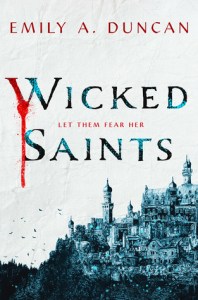
Serena’s Review: “Wicked Saints”

36118682Book: “Wicked Saints” by Emily A. Duncan

Publishing Info: Wednesday Books, April 2019

Where Did I Get this Book: NetGalley

Book Description: A girl who can speak to gods must save her people without destroying herself.

A prince in danger must decide who to trust.

A boy with a monstrous secret waits in the wings. 

Together, they must assassinate the king and stop the war.

In a centuries-long war where beauty and brutality meet, their three paths entwine in a shadowy world of spilled blood and mysterious saints, where a forbidden romance threatens to tip the scales between dark and light.

Review: This was book-cover love through and through. Sure, the description sounds good enough, but there were also some warning signs there (love triangle??) that would typically make me a bit wary. But I love the simplicity of this cover and the way the colorization is used. Alas, by the end of the book, the cover was still probably my favorite part.

Nadya can speak to the gods, an entire pantheon of them. But for most of her life, she has been hiding and training in a remote monastery, a secret weapon that hasn’t been used yet in a growing political war. One day, that war arrives on her doorstep, quite literally, and everything changes. Now caught up in events moving in ways she barely understands, Nadya finds herself working a boy she’s not sure she can trust but who might also be the key to it all.

Honestly, there wasn’t much I loved about this book. That’s not to say I hated a lot of it either, but more like, I felt like I had read much of it before and read it better. Russian-based fantasy stories have been the rage for a few years it seems, and as such, there have been a million and one entries into the sub-genre with a wide range of quality, as far as I’m concerned. There have definitely been worse ones than this, but when I just finished up the last book in the “Winternight” trilogy, it’s hard to look at this one and not be a bit disappointed.

Aside from that trilogy, the more direct comparison for this book would be Bardugo’s “Grisha” trilogy. I’m pretty sure there have been quite a few comparisons already floated around between the two and I can definitely see it.

The biggest similarity comes with the romance and the enemies-to-lovers trope that is at the heart of both (sort of). On its own, I think this is one of the harder love arcs to right and I would say its this aspect specifically that sunk Bardugo’s series for me as I could never buy this part of the story. So, here, too, I struggled. I could never understand the “whys” behind any emotion our two romantic interests had for each other. Why did they really hate each other in the first place? Patriotic prejudices can only go so far as an explanation. And then, worse, why do they fall for each other? The motivation behind either emotion wasn’t fully fleshed out in any way, and when you’re dealing with some of the strongest emotions out there, love and hate, you need a pretty darn good reason to have your character feel them, and even more so, change from one to another. Throughout the story, the male love interest lied repeatedly to Nadya, and yet somehow, we’re meant to buy her continued interest in him. By about halfway through the book, I started to give up on getting the strong character I wanted from Nadya and was resigned to the fact that she was mostly a love interest in her own story.

I also struggled with the magic system. Again, as it was incorporated in the story, it felt very similar to other Russian-based fantasies I’ve read, but here it only skimmed the surface. The end of the story in particular seemed to really highlight this struggle as aspects of the magic system seemed to come out of nowhere or operate in ways that didn’t really make sense all of a sudden.

On top of that all, I was just bored throughout most of this. Other than the frenetic last few chapters of the story, I just felt like I was following the predictable footsteps of a well-worn path. There wasn’t anything new here, and in a subgenre that has so many offerings, I’d say if you’re looking for Slavic fantasy, you can find better. Just this year there was the final book in the “Winternight” trilogy, “The Winter of the Witch” by Katherine Arden and “Spinning Silver” by Naomi Novik. And if you want a better “enemies to lovers” story, you can check out “Sherwood” by Meagan Spooner.

Rating 6: Nothing terribly bad, but also not really holding its own in a pretty packed subgenre of YA fantasy.

Reader’s Advisory: 

“Wicked Saints” is included on these Goodreads lists: “Villain as Romantic Love Interests” and “Creepy, Dark YA and MG Books.”

Find “Wicked Saints” at your library using WorldCat!