Serena’s Review: “Winterwood”

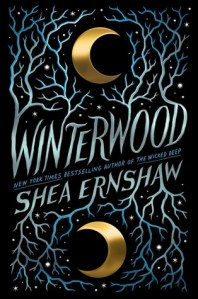
40148425._sy475_Book: “Winterwood” by Shea Ernshaw

Publishing Info: Simon Pulse, November 2019

Where Did I Get this Book: NetGalley

Book Description: Be careful of the dark, dark wood . . .

Especially the woods surrounding the town of Fir Haven. Some say these woods are magical. Haunted, even.

Rumored to be a witch, only Nora Walker knows the truth. She and the Walker women before her have always shared a special connection with the woods. And it’s this special connection that leads Nora to Oliver Huntsman—the same boy who disappeared from the Camp for Wayward Boys weeks ago—and in the middle of the worst snowstorm in years. He should be dead, but here he is alive, and left in the woods with no memory of the time he’d been missing.

But Nora can feel an uneasy shift in the woods at Oliver’s presence. And it’s not too long after that Nora realizes she has no choice but to unearth the truth behind how the boy she has come to care so deeply about survived his time in the forest, and what led him there in the first place. What Nora doesn’t know, though, is that Oliver has secrets of his own—secrets he’ll do anything to keep buried, because as it turns out, he wasn’t the only one to have gone missing on that fateful night all those weeks ago.

Review: Yet another sophomore book from an author whom I missed out on the first go around. Not quite sure why I never got around to “The Wicked Deep,” but when I saw this one pop up, once again I decided to be late to the party and see what all the fuss was about. Unfortunately, while this strategy has worked with other books (shout out again to “Song of the Crimson Flower”!), here it just proved that I probably made the right choice with the first book and these are just not for me.

Nora is out in the woods after one of the worst winter storms in years. Everything is closed down, but she is not like others: she is a Walker woman and does not fear the woods. Instead, she shares a close bond with this strange, mysterious place where others dare not to walk. This connection leads to her a lost boy, missing for weeks and presumed dead. But he has survived the forest…somehow. As they grow closer to each other, Nora begins to suspect that Oliver has secrets of his own. Perhaps he, too, shares a connection with the forest? But what is it and does it pose a threat?

There were several reasons this book didn’t work for me, and most of them have to do with either the YA fantasy genre reading as a bit tired recently, or it’s just me. But the first thing that stood out to me as a warning sign that this book and I might not get along was the writing itself. I had heard that this, like the author’s first book, was noted for its atmospheric writing. I think I may have a different understanding of that word than the way it is often used. I have used it myself, don’t get me wrong. Probably recently, because if I didn’t say it in my review of “The Starless Sea,” then that’s an example of the type of book that I would describe that way. But when I use that word it has to do with how an author draws a scene. It doesn’t have to be restrained to the physical characteristics of setting, but to a scene as a whole: the action of it, the location, the indescribable “feel” of a situation. An atmospheric style of writing adds depth and is beautiful to read on its own, often with a poetic choice of words.

But I feel that when it is used to describe books like this one, most reviewers are getting at something different. I think it’s still consistently used for these books, but in a different way than what I described above. Most notably, I think the “atmosphere” is often applied to the characters themselves. Perhaps there is still some sense of poetry to the words chosen, but beautiful words devoid of rational meaning don’t result in much, in my opinion. This then ends up with books that use random, disconnected phrases to describe characters. In this book, only two pages in, the main character is describing herself as “more darkness than girl.” Ok. Sounds nice enough, I guess. But what does that actually mean? I have no idea, and given that we’re only two pages into the book, I don’t even have any context where I could try to parse out an actual meaning from that. Instead, it reads as if the author is simply throwing around  pretty phrases and not bothering to ground them in anything, or, frankly, make them worth while to the story at all. This is only one example, but it continues throughout the book.

This is the type of “atmosphere” that I find all too often in YA fantasy, and it’s always a red flag for me. It may not always be true (I’m sure there are exceptions if I really thought about it), but usually it’s a good predictor that the author seems to be having more fun writing pretty strings of words than constructing an actual story. Paired with this habit often comes bland characters, convenient plots, and stories that sound good on paper but prove to be underwhelming. Unfortunately, that all proved to be true here as well.

I didn’t care about our main characters. Neither of them were bad, but I also didn’t feel particularly attached to them. How can I be attached to someone who introduces herself to me as “more darkness than girl?” I don’t know what that means, and honestly I’m too lazy to find out. It’s the books job to make me care, and that doesn’t do it. I did like the general overview of the story, and the witchy elements and spooky woods were promising. But they were paired with a convenient and predictable plot. I was able to guess many of the twists (including the big one) right away which cut the legs out of it right from the start.

I feel like I’ve come down hard on this book, and I don’t want to make it seem that this one is any worse than most of the run-of-the-mill YA fantasy stories out there like this. I guess I was just in a mood to talk about this particular frustration, and this book had the bad luck of being the most recent one to show up on my reading list featuring this specific peeve. Fans of the author’s first book and her writing style will likely be pleased with this. But those who recognize the traits I’m talking about may find themselves underwhelmed by this story.

Rating 6: Hits a nerve for one of my pet peeves, but is otherwise a fairly standard, if uninspiring, story.

Reader’s Advisory:

“Winterwood” is a newer title, so it isn’t on many relevant Goodreads lists. But it should be on “Magical Trees.”

Find “Winterwood” at your library using WorldCat!
Serena’s Review: “The Long Way to a Small, Angry Planet”

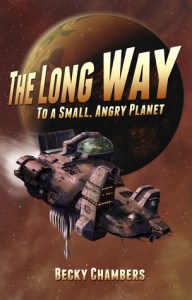
22733729Book: “The Long Way to a Small, Angry Planet” by Becky Chambers

Publishing Info: CreateSpace Independent Publishing Platform, July 2014

Where Did I Get this Book: audiobook from the library!

Book Description: Rosemary Harper doesn’t expect much when she joins the crew of the aging Wayfarer. While the patched-up ship has seen better days, it offers her a bed, a chance to explore the far-off corners of the galaxy, and most importantly, some distance from her past. An introspective young woman who learned early to keep to herself, she’s never met anyone remotely like the ship’s diverse crew, including Sissix, the exotic reptilian pilot, chatty engineers Kizzy and Jenks who keep the ship running, and Ashby, their noble captain.

Life aboard the Wayfarer is chaotic and crazy—exactly what Rosemary wants. It’s also about to get extremely dangerous when the crew is offered the job of a lifetime. Tunneling wormholes through space to a distant planet is definitely lucrative and will keep them comfortable for years. But risking her life wasn’t part of the plan. In the far reaches of deep space, the tiny Wayfarer crew will confront a host of unexpected mishaps and thrilling adventures that force them to depend on each other. To survive, Rosemary’s got to learn how to rely on this assortment of oddballs—an experience that teaches her about love and trust, and that having a family isn’t necessarily the worst thing in the universe.

Review:  One of my librarian friends recommended this book a few years ago, so I had dutifully added it to my TBR list. And there it sat. But recently I was finding myself in the mood of a sci fi read, realizing I hadn’t read and reviewed a book in that genre for quite a while, and while browsing, there it was! I was able to nab an audiobook copy from the library, and I was off!

Rosemary is running from her past. And what better place to forget where she came from than a ship that travels to the outer reaches of space itself. Staffed by an odd assortment of crew made up of a diverse species and peoples, Rosemary soon learns that life on this ship is not like ordinary space travel. There is more danger to be sure, but she also finds that through these adventures and close calls, the bonds that form between this oddball family can be stronger than anything she’s known before.

I’ll admit to having a hard time with this book, but it’s for a reason that is pretty new to me. For all that every book is different and each reading experience offers something new, I can definitely point to some typical things that throw me out of a story: nonsense characters, love triangles, predictable plots trying to be pretentious. But this was a new one for me. This book was just too…nice. Obviously, with a complaint like that, there are also a lot of pros to talk about, too, so let me cover those first before trying to explain myself.

First things first, the story largely depends on its cast of characters that make up the crew. I appreciated the diversity that the author brought to this group. Not only did she create original alien species who are all physically unique from humans, but they each had distinct cultures with differing approaches to communication, relationships, food, and many other aspects of life. One of the more interesting aspects of the book was exploring the ins and outs of each of these distinct characters and learning more about how their species differs from humanity. Several of them were simply entertaining, with quippy dialogue and fun interactions. However, these fun characters did ultimately end up washing out Rosemary herself. She quickly felt more like the readers point of entrance into the story and very little else.

The problems with the “niceness” start here, too. In some ways, this book reminds me of what “Star Trek” set out to do: to show an idealized future where most of humanity’s internal conflict has been set to rest and exploration and understanding are the sole mission. Here, while humanity as a whole does not have its act together, the crew largely does. It’s a weird thing to complain about, but there simply wasn’t enough conflict. I don’t need tons of drama or in-fighting or anything, but the story seemed to lack tension.

The crew fly in and out of a variety of adventures, and while some aspects of these were thrilling enough on their own, the crew’s seemingly perfect “woke” attitude about it all became almost tiring. It was hard to continue to read them all as fully realized characters when there were very few, if any, flaws in sight. This leaves the characters with very few emotional arcs of their own. The quippy-ness, while fun at the beginning, quickly began to feel cutesy and disingenuous.

This book has been compared to “Firefly” and I would add “Star Trek” to that mix. But what both of those shows got right was that these tight knit families of crew members were pulled together in spite of their ongoing flaws, not because they simply didn’t have any. Like I said, it’s a weird complaint. In the end, I guess I was just looking for a bit more of a serious sci-fi read and this one was too light for my own taste. Readers who want a fun, beach-read-style sci-fi story might enjoy this more.

Rating 6: While fun enough at times, there simply wasn’t enough real conflict or tension to really sink my teeth into the book.

Reader’s Advisory:

“The Long Way to a Small, Angry Planet” is on these Goodreads lists: “Optimistic Space Scifi” and “Alien Diplomacy and Interspecies Friendship.”

Find “The Long Way to a Small, Angry Planet” at your library using WorldCat!

Serena’s Review: “Sisters of Shadow and Light”

9781250208408_8e486Book: “Sisters of Shadow and Light” by Sara B. Larson

Publishing Info: Tor Teen, November 2019

Where Did I Get this Book: NetGalley

Book Description: “The night my sister was born, the stars died and were reborn in her eyes…”.

Zuhra and Inara have grown up in the Citadel of the Paladins, an abandoned fortress where legendary, magical warriors once lived before disappearing from the world―including their Paladin father the night Inara was born.

On that same night, a massive, magical hedge grew and imprisoned them within the citadel. Inara inherited their father’s Paladin power; her eyes glow blue and she is able to make plants grow at unbelievable rates, but she has been trapped in her own mind because of a “roar” that drowns everything else out―leaving Zuhra virtually alone with their emotionally broken human mother.

For fifteen years they have lived, trapped in the citadel, with little contact from the outside world…until the day a stranger passes through the hedge, and everything changes.

Review: I highlighted this book as one I was looking forward to reading this month. I had requested it based on the fact that it seemed to be a YA fantasy that centered around a relationship between sisters, a pretty basic plot that I typically enjoy. Unfortunately, while it does deliver on the elements that drew me to it originally, there wasn’t enough else to keep me invested, and a few too many YA tropes that induced eyerolls.

Zuhra and Inara have grown up in the wreckage of what was once a great power in the world. Locked in a fortress and surrounded by a sentient hedge that keeps out all others, the two sisters have grown up isolated from the world with only their fragile mother as a connection to not only their origins but also the world outside the walls. Inara is isolated even further by a power that manifests itself in ways that produce great effects but also cut her off from the world outside her own mind. But the world has continued to move outside their small home, and one day it breaks in, bringing new faces and new challenges.

While this book wasn’t for me, I do, as always, want to start with the things I did appreciate. I requested this book based on my love for sister stories, and luckily for me, that was the aspect of the story that was the strongest throughout. There was a clear, consistent bond between the two from start to finish, without any delving into melodrama or cattiness. We start out the story with only Zuhra’s POV, so there was a lot of time spent setting up how she view the relationship between herself and her sister, who is very cutoff from those around her. This was all well and good. But this aspect of the story was greatly strengthened when, about a third of the way in, we’re given Inara’s perspective as well. Having both POVs really fleshed out the nuances of their relationship, and while I did struggle with much of the rest of the book, I did still enjoy this portion of the story throughout.

Alas, much of the rest of it wasn’t as much of a hit. For me, part of the problem was how similar this read felt to “Strange the Dreamer.” The set up of siblings, some with magical abilities, growing up isolated from the world in the husk of a place that used to belong to god-like beings, one of whom was the father of said siblings? It’s pretty identical. And “Strange the Dreamer” was a superb book, so it’s rare that a direct comparison like this is going to go well for another book. Had I read this one without that one in mind, perhaps some things would have been better received. But that’s also the world of books: readers will always approach stories in the context of what they’ve read before. This can be a good or bad thing; unfortunately, here it was a bad thing. While the elements were similar, they were noticably weaker than Laini Taylor’s similar set-up.

While I liked the sister relationship between our two main characters, I still never really connected to either of them as wholly realized characters on their own. Zuhra, in particularly, was hard to identify with, especially in the beginning when we are left with only her perspective. Both sisters fell into the unfortunate trap of immediately going googly-eyed over the first boys they see, which felt not only silly, but also undermined some of the strengths we had been told they possess, having grown up needing to be so self-reliant.

The world and plot suffered from a writing style that erred more towards telling rather than showing. The middle of the book especially dragged, which I find is often a problem with this style of writing. When you have a new world to introduced, it’s easier for a “tell vs show” style to go unnoticed amid all of the new things being thrown at the reader. And the end typically has enough action when building to the climax of the story to also get away with it. But the middle is where it always shows up, and it was just as true here as in other books with a similar writing issue.

There were some good ideas in this book, and I did enjoy the sister relationship. I was able to predict a few of the twists, but one or two did actually catch me by surprise. However, all of that was not enough to pull the book through. The characters fell into a few too many YA “boy crazy” tropes, the world and plot were a bit on the limp side, and the style of writing was particularly captivating. Not to say that this book should be written off anyone’s list full-stop. But I do think there are betters versions of it out there.

Rating 6: An OK read, but one that felt flat and dim in comparison to its contemporaries.

Reader’s Advisory: 

“Sisters of Shadow and Light” can be found on this Goodreads list: “We Fire the Darkness And Flame At Night.”

Find “Sisters of Shadow and Light” at your library using WorldCat!

Book Club Review: “An Ember in the Ashes”

20560137We are part of a group of librarian friends who have had an ongoing bookclub running for the last several years. Each “season” (we’re nerds) we pick a theme and each of us chooses a book within that theme for us all to read. Our current theme is ‘Books On Our To Read Shelf’, where we pick books that we’ve been meaning to read but haven’t gotten to.
For this blog, we will post a joint review of each book we read for book club. We’ll also post the next book coming up in book club. So feel free to read along with us or use our book selections and questions in your own book club!

Book: “An Ember in the Ashes” by Sabaa Tahir

Publishing Info: Razorbill, April 2015

Where Did We Get This Book: The library!

Book Description: Laia is a slave.  Elias is a soldier. Neither is free.

Under the Martial Empire, defiance is met with death. Those who do not vow their blood and bodies to the Emperor risk the execution of their loved ones and the destruction of all they hold dear.

It is in this brutal world, inspired by ancient Rome, that Laia lives with her grandparents and older brother. The family ekes out an existence in the Empire’s impoverished backstreets. They do not challenge the Empire. They’ve seen what happens to those who do.

But when Laia’s brother is arrested for treason, Laia is forced to make a decision. In exchange for help from rebels who promise to rescue her brother, she will risk her life to spy for them from within the Empire’s greatest military academy.

There, Laia meets Elias, the school’s finest soldier—and secretly, its most unwilling. Elias wants only to be free of the tyranny he’s being trained to enforce. He and Laia will soon realize that their destinies are intertwined—and that their choices will change the fate of the Empire itself.

Kate’s Thoughts

I like to think of myself as a good sport when it comes to my willingness to read genres that I’m not too keen on. Be it in an effort to stretch my reading wings or going off a recommendation from a close friend, I will try and be open minded about a book even if I wouldn’t really pick it up on my own or of my own volition. This happens a lot of book club with YA fantasy fiction, and I will be the first to admit that I’ve found some pretty good books this way that I wouldn’t have normally read. But when it comes to “An Ember in the Ashes”, it HAD been on my list in spite of the genre, it just never came up in my reading rounds. So when it was the selection for the month, I went in apprehensive but hopeful. YA fantasy, sure, but based on Roman history! That’s something I could enjoy, right?

giphy-2
(source)

“An Ember in the Ashes” does have strengths that I did like about it. For one, as mentioned, the Roman influenced world was unique for me and fun to see, as I’ve had a fascination with Ancient Rome (specifically the Julio-Claudian Emperors) since college. I liked that Tahir took influence from the culture in terms of not only the way the characters were, but in the way that world was built. While it’s been tweaked to fit the story, there were definitely aspects of the society that felt familiar, and the society itself was definitely interesting enough that I wanted to know more about it. On top of that, the story itself was engaging and filled with enough conflict and stakes that I wanted to know what was going to happen next. I wanted to see what was going to happen to Elias and Laia, and wanted to know how their fates were going to tie together, as promised. We get two narratives within this story, of Laia and Elias, and of the two I liked Elias’s narrative more. One of the reasons for that is that I thought that his voice was more interesting to me as someone who is incredibly good at what he does, though he secretly despises it and plans to abandon it as soon as he can. The other reason, and the far more pressing one, is that while I liked Laia and was interested in what she was doing her ‘reluctant but willing rebel who has devoted everything to avenging and saving her family’ is a theme we have seen in YA for a very long time now, and it didn’t feel all that new or unique, nor did it stand out from the other narratives out there. Throw in some awfully cartoony/not terribly well fleshed out antagonists, and you have a story that has promise, but doesn’t quite land.

I thought that “An Ember in the Ashes” was an entertaining read, but I don’t think that I’m going to go on in the series. Should someone tell me that I should give it a chance, I will happily be a good sport and do so. But as it stands now, I am parting ways with Elias and Laia where we left them.

Serena’s Thoughts

I…wasn’t a fan of this book. I’ll also admit that right out of the gate I wasn’t feeling super hopeful about this one, as I remember it coming out and then looking into it at the time and choosing to pass. It then blew up into a huge read of the year, and I still didn’t read it. I can’t remember now why I didn’t read it, but I’m guessing that some of the trusted reviewers I follow must have flagged it and I had enough other things on my plate (a perpetual non-problem!problem) to write it off as likely not for me. But, like Kate said, bookclub is super handy in that it pushes me to read books that I otherwise wouldn’t, for whatever reason. And as I said, this was a huge fantasy novel, so really, it’s good that I read it so I could form my own opinion.

Most of what I liked about the book, Kate already covered. Though, even there, I had some pretty big qualifiers to my enjoyment of most of them. First off, the world-building. I did enjoy the Roman aspects that were being used and the unique world that was built around it. However, having read a lot of YA fantasy, these elements also didn’t standout as breaking some huge mold. Roman society and influences are at the heart of a lot of second world fantasy. I did find it interesting, however, that the rebellion seemed to be stemming from a different cultural background. Irish, I would guess, based on the naming conventions. One of our booklcub members had a theory that the world here was essentially the Roman empire shrunk down to a more manageable size. So some of the nearby cultures could be representing other place in the world that Romans expanded out to, like Ireland. It’s an interesting theory, and one that I think would be super clever. However, this is never explicitly said in the book itself, and I’m not sure there’s enough to conclusively say that that was the purpose behind some of these choices. If it was, I wish the author had made it more clear, because it is a very interesting idea.

The other thing that stands out as notable about this book was the violence of it all. I think that this was one of the aspects of the story that made it stand-out when it was first published, that it went further than other YA fantasy. But this is also where I started having major problems with the book. Primarily, the violent, serious nature of the world that our characters are living in didn’t match up with the often frivolous and silly nature of their thoughts and priorities, especially with regards to their romances. In other words, the book was trying to walk an unnatural line. It wanted to be “Game of Thrones,” but still have “Twilight” level romances. This simply doesn’t work. “Game of Thrones” is known for having teen characters involved at the heart of the story. The difference here is that when presented with the dire and very serious nature of the world around them, their thoughts and actions appropriately reflect that.

Laia and Elias have grown up in a world where violence and the threat of violence is around every corner. Beyond this, sex is used as a weapon and prostitution is a fairly normal thing for soldiers to participate in. Yet, Laia and Elias don’t reflect this as characters. Instead, right next to rape threats and horrific deaths, we have two characters who read so PG as to be almost laughable. It also weirdly worships the purity of these two characters. Elias is not like other boys and while he is constantly admiring the beauty of the women around him, he’s never engaged in anything himself. They both talk about physical attraction and love in the same way that teenagers today would. But that doesn’t work in a world where they would have grown up past this type of purity quickly (if they ever had it in the first place). You just can’t convince me that a character whose family has been murdered and is a spy for an evil queen would be so caught up in this love square or whatever it was.

I also didn’t appreciate the repeated rape threats made to Laia and Elias’s near constant worry about rape happening to the women in his life. It felt like the topic was used to further darken the world but was never explored further on how it would shape the lives of these women. Attempted rape has its own horrific aftereffects and yet none of this is explored with Laia.

Perhaps if this book had been written for adults I would have appreciated it more. There were some strong bones with the world and the political nature of the story. Elias and Laia, if aged out of their teenage swooning, could have also been good characters. But as it stands, the book seems to be presenting a weird position where tons of violence and rape threats are a totally ok topic for teen readers, but consensual sex between characters would be too “adult” so Laia and Elias must weirdly fixate the belly flutters. It’s a strange position to take and I don’t think it fits well.

Kate’s Rating 6: An engaging read to be sure, though a lot of the themes and characterizations we’ve seen in this genre over and over again.

Serena’s Rating 5: Not for me. I don’t think it did enough to address some of the serious topics it throws around and the romance didn’t mesh with the world that was created.

Book Club Questions

  1. What did you think of the world building in this novel? Did you think that it took accurate aspects from Ancient Rome and applied them well?
  2. There are two narrative POVs within this book. Did you connect more with Laia’s storyline, or Elias’s storyline?
  3. This book is labeled as a YA fantasy, though some would argue that it doesn’t have as many fantasy elements as other fantasies do. What do you think of this genre classification?
  4. What are your opinions on the antagonists of this story, specifically Marcus and The Commandant?
  5. Do you think that the romance aspects of the book lined up with the world that the characters lived within? More specifically, can people still be fixated on potential romance or attraction when they are surrounded by darkness and horrors?
  6. This is the first in a four book series. Do you have predictions on where the plot is going to go? Do you think you’ll keep reading?

Reader’s Advisory

“An Ember in the Ashes” is included on the Goodreads lists “Free Range and Morally Complex YA”, and “‘High Fantasy’ With Female Leads/Protagonists”.

Find “An Ember in the Ashes” at your library using WorldCat!

Next Book Club Book: “A Christmas Carol” by Charles Dickens

Serena’s Review: “In the Woods”

46650269._sy475_Book: “In the Woods” by Carrie Jones and Steven E. Wedel

Publishing Info: Tor Teen, July 2019

Where Did I Get this Book: NetGalley

Book Description: It should have been just another quiet night on the farm when Logan witnessed the attack, but it wasn’t.

Something is in the woods.
Something unexplainable.
Something deadly.

Hundreds of miles away, Chrystal’s plans for summer in Manhattan are abruptly upended when her dad reads tabloid coverage of some kind of grisly incident in Oklahoma. When they arrive to investigate, they find a witness: a surprisingly good-looking farm boy.

As townsfolk start disappearing and the attacks get ever closer, Logan and Chrystal will have to find out the truth about whatever’s hiding in the woods…before they become targets themselves. 

Review: This was kind of a whim request on my part. The description itself sounds more like the kind of book Kate would typically read than me. But I knew I’d need to have a few scary-ish stories lined up for October to at least pretend to be in the season of things, so here we are! However, it turned out that this book was more closely aligned to my reading habits than I had thought. Alas, that didn’t necessarily translate into increasing my enjoyment of it.

Something or someone is attacking things in Logan’s rural hometown. First it was cattle, but now people are beginning to be attacked as well. And the killer is only growing more bold, coming literally out of the shadows to attack in broad daylight. When Chrystal and her father, a man who chases adventure, arrive on the scene, they team up with Logan and his family to try and catch whomever or whatever is behind these mutilations. And as Logan and Chrystal grow steadily closer to each other romantically, and closer to the truth of the mystery, they soon find themselves no longer the hunters, but now the hunted.

So this was a tricky book for me. It’s so different than what I thought it would be that it’s hard to know how much of my experience was due to my expectations and how much was due to the book just not hitting the mark for me. It’s a strange twist, however, when the fact that I had thought I was intentionally reading out of my preferred genre somehow backfired when I found out I was actually reading more within it. I’m not quite sure what the marketing decisions were behind why this book was presented as it was, but I definitely went in thinking it was going to be some type of creepy, YA, serial killer story. Nope! Much more aligned with monster horror and cryptozoology stories. And yeah, on the face of it, those are my thing, but something about the way it was presented here just didn’t click for me.

Really, I don’t think it had anything to do with the monster angle. Yeah, I was looking for serial killer, but let’s face it, I’m not super dedicated to that or anything. My bigger problems had to do with the story itself and its two main character. There are hints of good characters here, but the writing itself let them down. The dialogue was almost laughable at times, and their relationship falls into the worst traps of instalove. They literally first meet and “feel a connection.” Not only is this not interesting, but it’s the laziest kind of romance building. No need to establish why two characters come together when they both “just know” instantly! Done, hard work finished. Now onto the mushy stuff! Ugh. My feelings about instalove have been well-established, so I’ll stop there.

The plot itself was rather lackluster. Sure, there were some fun, tense scenes sprinkled here and there, but there were too many moments where things happened that didn’t make sense or stretched my sense of plausibility beyond enjoyment. Much of the mystery is telegraphed to the reader pretty early in the story, so the reader is often ahead of the characters in terms of reveals. This is all made harder due to the writing which was just kind of banal. As I mentioned before, the dialogue was the real problem; didn’t read as natural which made it a constant distraction.

In the end I think it was six of one as to why this book didn’t click for me. On one hand, it wasn’t what I expected and contemporary stories featuring instalove have to be up there on my “most disliked” list. On the other hand, the strained writing and lackluster plot didn’t recommend it to me either. Readers who are more interested in contemporary YA and monster stories (notably NOT serial killers) might enjoy this. But I also think there are better options out there doing similar things.

Rating 5: Right down the middle of my rating system and largely forgettable.

Reader’s Advisory: 

“In the Woods” isn’t on any Goodreads lists, but it should be on “Cryptofiction.”

Find “In the Woods” at your library using Worldcat!

Kate’s Review: “The Institute”

43798285Book: “The Institute” by Stephen King

Publishing Info: Scribner, September 2019

Where Did I Get This Book: The library!

Book Description: From #1 New York Times bestselling author Stephen King, the most riveting and unforgettable story of kids confronting evil since It—publishing just as the second part of It, the movie, lands in theaters.

In the middle of the night, in a house on a quiet street in suburban Minneapolis, intruders silently murder Luke Ellis’s parents and load him into a black SUV. The operation takes less than two minutes. Luke will wake up at The Institute, in a room that looks just like his own, except there’s no window. And outside his door are other doors, behind which are other kids with special talents—telekinesis and telepathy—who got to this place the same way Luke did: Kalisha, Nick, George, Iris, and ten-year-old Avery Dixon. They are all in Front Half. Others, Luke learns, graduated to Back Half, “like the roach motel,” Kalisha says. “You check in, but you don’t check out.”

In this most sinister of institutions, the director, Mrs. Sigsby, and her staff are ruthlessly dedicated to extracting from these children the force of their extranormal gifts. There are no scruples here. If you go along, you get tokens for the vending machines. If you don’t, punishment is brutal. As each new victim disappears to Back Half, Luke becomes more and more desperate to get out and get help. But no one has ever escaped from the Institute.

As psychically terrifying as Firestarter, and with the spectacular kid power of It, The Institute is Stephen King’s gut-wrenchingly dramatic story of good vs. evil in a world where the good guys don’t always win.

Review: Whenever a new book I really want to read is about to come out, I try to get myself positioned high on the request list at the library. When this doesn’t work, I will make sure it’s going to be available at my former job on the day it comes out, as copies from that branch don’t go to the request list. And then once it’s publication day, if I can I will rush to that branch before opening, and become that patron that I used to kvetch about: the one who hangs out outside before the doors open and rushes the new wall as soon as they do. This made it so I got a copy of Stephen King’s “The Institute” at the library the day it came out, and yeah, I was a bit of a sore winner when I snagged it off the display. We are kind of in the midst of a King Renaissance right now, from new books to adaptations of his works in movie theaters and on TV and computer screens. I’m always going to be stoked for anything King related, and he has so much content to explore that you have a lot to work with. Unfortunately, on the flip side of that is the fact that not everything is going to be a winner, and “The Institute”, for me, was not a winner.

But like usual, we’ll start with the good. Even in books he’s written that don’t quite click with me, I am almost always happy with the way that King portrays childhood experiences and childhood friendships. From “It” to “The Body”/”Stand By Me”, the way that he can capture the innocence and yet importance of these childhood bonds and put them on the page is almost always incredibly effective. He brings this talent to “The Institute”, as whenever he focuses on Luke Ellis, Kalisha, and the other child prisoners it feels like you’re seeing real kids interacting with each other. I was worried that the innate precociousness of the children, especially super genius Luke, would stunt the dialogue and relationships, but I greatly enjoyed all of them whether they were playing, scheming, or mourning. While I didn’t feel like I got to know all of them as deeply as I got to know The Losers Club or the four boys who went looking for a dead body, I still liked seeing the glimpses into the relationships that we did, as it was always entertaining. With a resurgence in popularity of ‘kids solving mysteries/fighting back against more powerful entities’ because of “Stranger Things”, I definitely get tapping back into that kind of tale. It is also very hard to deny that, given the horrific reality that children are being imprisoned in cages at the Southern Border, some of the themes are all the more resonant in this story. King does a good job of drawing comparisons without treading into distaste, and given that I’m sure this book had already been submitted to the publisher before some of the more recent developments I definitely couldn’t help but connect his story to the horrible things our Government is doing. Especially as the slow reveal of The Institute’s true intentions is carefully peeled back. Plus, the pacing was well done and it never felt slow, so it was mostly entertaining.

The reason that this doesn’t get a higher score from me is because “The Institute”, while being entertaining, didn’t quite evoke the emotions I have come to want from Stephen King novels. Yes, the concept is horrible and scary, and there were certainly thrilling aspects of the plot as we reach the end, but I never felt the actual tension, elation, sadness, and fear. For whatever reason it just didn’t connect with me. I think that part of it was that this felt less like a horror novel and more like a conspiracy thriller, and while that’s fine and I generally like a good conspiracy thriller, this one just didn’t quite click. And I think the other part I already kind of touched on earlier, in that while I liked the characters and the relationships they had with each other (the kids especially), I don’t think that we got to know them well enough for me to really connect with them. And if I’m not as connected, I’m not as invested. I don’t think “The Institute” was a bad read by any definition, but if a book falls into these traps that I’ve mentioned, I’m just not going to enjoy it as much.

I’m so happy that Stephen King is still writing, and that he’s getting all kinds of attention right now. While “The Institute” was a miss, the man is still my favorite horror author of all time. And given that there’s already rumors of this book being adapted into yet another TV series based on King source material, it may be in your interest to give it a go regardless of what I thought!

Rating 6: While “The Institute” was an entertaining read and had its moments and details that I liked, overall it fell a little flat for me.

Reader’s Advisory:

“The Institute”, surprisingly, isn’t included on many relevant or specific Goodreads lists. But I think that it would fit in on “Conspiracy Fiction”, and “Books like Stranger Things”.

Find “The Institute” at your library using WorldCat!

Kate’s Review: “Mooncakes”

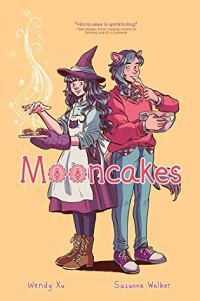
44774415._sy475_Book: “Mooncakes” by Suzanne Walker and Wendy Xu (Ill.)

Publishing Info: Lion Forge, October 2019

Where Did I Get This Book: I received an eARC from NetGalley.

Book Description: A story of love and demons, family and witchcraft.

Nova Huang knows more about magic than your average teen witch. She works at her grandmothers’ bookshop, where she helps them loan out spell books and investigate any supernatural occurrences in their New England town.

One fateful night, she follows reports of a white wolf into the woods, and she comes across the unexpected: her childhood crush, Tam Lang, battling a horse demon in the woods. As a werewolf, Tam has been wandering from place to place for years, unable to call any town home.

Pursued by dark forces eager to claim the magic of wolves and out of options, Tam turns to Nova for help. Their latent feelings are rekindled against the backdrop of witchcraft, untested magic, occult rituals, and family ties both new and old in this enchanting tale of self-discovery.

Review: Thanks to NetGalley for providing me with an eARC of this book!

I know that not everyone has the same love and affinity for all things horror that I do. And while I know that for me the month of October is all about the ghosts, ghouls, slashers, and monsters that I want to associate with, for others that may not be as appealing. So for today’s Horrorpalooza book, we’re actually inching away from the horror, and looking at a kinder, gentler kind of book of the season, where witches and werewolves fall in love, and magic can lead to self discovery. Today I’m going to talk about the sweet and romantic graphic novel “Mooncakes” by Suzanne Walker and Wendy Xu, a story about a witch named Nova and a werewolf named Tam and the magic that surrounds their lives, for better or for worse.

“Mooncakes” takes the kinder, gentler witch story and gives it some new and unique twists. Nova’s family life is the familiar matriarchal witch household, as she is living with her grandmothers Quili and Nechama and learning about magic and spells from them. While I do love a vengeful or spiteful witch, or one who has legitimate grievances with society and the patriarchy, I do have to say that I also like the positive stories of witches empowering other witches through education, family, and love. “Mooncakes” really embodies this positive trope, and Quili and Nechama are the perfect supportive and bustling mother figures that fill the void of Nova’s parent’s deaths. Nova herself is a unique main character. She is Chinese American, so her culture influences not only her home life but also her magic. Along with that she also has hearing aids, and after she lost her hearing she began to master the art of nonverbal magical spells, a concept that we may see (as sometimes witches don’t have to say ANYTHING to make magic happen in stories), but is rarely explored. But it’s her romance with Tam that is the center of the story. Tam and Nova were childhood friends, but Tam left town and has been wandering on their own, living as a werewolf and distancing themself from an abusive home life. When Tam and Nova reconnect, their lingering feelings for each other start to re-boot. Their romance is sweet and not terribly complicated, and I liked that Tam’s nonbinary identity wasn’t the focus of the conflict, and that they were easily and readily accepted by the other characters.

The plot and the magical aspects of this story, however, weren’t as strong as I had hoped they would be. We know that Tam is being targeted for some kind of nefarious spells, as when we meet them they are in conflict with a horse demon in the woods. Nova is there for Tam and is determined to figure out what is going on, but I never felt like that aspect of the plot was really focused on. We get hints as to who may be behind it, and while I feel like Walker tried to hide the culprit, it felt pretty obvious as to who it was going to be. While we are told that Tam is in some serious danger, it never feels like the stakes are all that high. And once we got to the big showdown, things resolved themselves rather easily, and threw in some obvious tropes that have been seen many times before for good measure in terms of resolution. Is that a bad thing? Not necessarily! I love a ‘the love for the other person is able to fight through a spell’ twist as much as the next person, but when the rest of the magical plot and conflict feels a little haphazard, that doesn’t exactly make the twist seem stronger. I think that had this story paid more attention to building up the conflict and magic issues, it would have worked better. As it was, it felt more like an afterthought.

The art, however, is totally adorable and sweet! I really like Wendy Xu’s style, and I love the details and designs that she brought to the characters.

tumblr_nxl5ltyonv1ubonrfo1_1280
(source)

If you want a sweet romantic story with magical elements, “Mooncakes” could be a good choice. I wouldn’t go in expecting a whole lot of magical system building, but it does have charming characters and some great representation. And if you don’t want something scary this witchy season, it’s a good alternative.

Rating 6: A cute and romantic story about witches, family, and magic, “Mooncakes” is filled with a lot of sweetness, though not much complexity.

Reader’s Advisory:

“Mooncakes” is included on the Goodreads lists “Comics for Witches”, and “Graphic Novels Featuring LGBTQ Themes”.

Find “Mooncakes” at your library using WorldCat!

Kate’s Review: “The Turn of the Screw”

12948._sy475_Book: “The Turn of the Screw” by Henry James
Publishing Info: The Macmillan Company, October 1898

Where Did I Get This Book: I own it.

Book Description: A very young woman’s first job: governess for two weirdly beautiful, strangely distant, oddly silent children, Miles and Flora, at a forlorn estate…An estate haunted by a beckoning evil.

Half-seen figures who glare from dark towers and dusty windows- silent, foul phantoms who, day by day, night by night, come closer, ever closer. With growing horror, the helpless governess realizes the fiendish creatures want the children, seeking to corrupt their bodies, possess their minds, own their souls…

But worse-much worse- the governess discovers that Miles and Flora have no terror of the lurking evil.

For they want the walking dead as badly as the dead want them.

Review: I’ve mentioned in the past that I have a huge gap in my literature experience when it come to ‘the classics’. I took a rather unconventional load of English and Lit courses in high school and college, and because of that a number of stories have been left behind. The horror genre is no exception, surprisingly enough. I have had “The Turn of the Screw” in the back of my mind since I was a teenager, and it sat on my Kindle for a few years after I purchased a few old school horror reads that then just sat there. My motivation to finally read this book came from two places; I read “The Turn of the Key” by Ruth Ware and knew I was probably missing less known references, and the next Mike Flanagan “Haunting” series is going to be based on this Henry James ghost story. It was obviously time to dive in and read the tale of terror that has influenced so much of the genre.

“The Turn of the Screw” was one of those game changing tales that pushed the ideas of horror and what you could do within the genre itself. There is no denying that Henry James paved the way for modern haunted house tales like “The Haunting of Hill House” and movies like “The Others” when he took ideas of unreliable narrators and unsettling ghosts vs over the top ghosts and put them on the page. Some of the things that I really liked about this book were because of these tweaks and experimentations. “The Turn of the Screw” takes great Gothic elements and completely acknowledges the influence from Gothic stories, be it references to “Jane Eyre” or “The Mysteries of Udolpho”. Bly is isolated and distant, and the unnamed Governess is left there with two strange children, another servant, and no head of house for guidance or direction. As she falls more and more into physical isolation, so too does her mind fall into mental isolation, which is really what you need for a Gothic theme to really have a punch. I also really appreciate how James wrote this story in a way that makes the Governess a completely unreliable narrator, and that we can’t quite figure out whether or not there are actual ghosts and Bly that want to take the children, or if she is slowly descending into madness and she is the actual threat the whole time. It’s left up to interpretation, and arguments can be made for either scenario. I honestly don’t know where I fall on the ‘was it ghosts or insanity’ argument, James was so convincing of both. And frankly, I don’t know which would be the worse answer, given how the story ends. Along with that, in my mild bit of research into the background of this story, James was one of the first people to write ghosts in an unsettling way as opposed to over the top and melodramatic. And that really stands out in this story, as the ghosts of Quint and Miss Jessel are more inclined to move through the grounds or appear in dark hallways and merely stand there as opposed to rattling chains and wailing. And for me, that’s far more creepy and disturbing. There were moments of imagery in this book that sent chills up my spine.

giphy-2
Was it a mistake to read this book after dark while my husband was out of town? Almost assuredly. (source)

However, the reason that I am giving “The Turn of the Screw” a lower rating than one might expect from my praise is because of the writing style of the time period. This almost always knocks me off my game and distracts me when it comes to ‘classic’ stories, and “The Turn of the Screw” definitely fell into the trap of a lot of flowery language and slogging scenes with not as much action as I would have liked. When comparing it to another classic haunted house story like “The Haunting of Hill House”, I felt like it didn’t have the kind of pacing where the stakes were being repeatedly raised and the dread was building after every incident. I appreciate how this would have been groundbreaking for the time and how much it has done for the ghost stories that came after it. But for me, it was more of a slog to get through than I would have liked.

I think that reading “The Turn of the Screw” was ultimately a good choice, as I see how it works as a foundation for so many stories that I love. But it’s not one that I see myself revisiting as time goes on, as I might with “The Haunting of Hill House” or other classics like “The Legend of Sleepy Hollow”.

Rating 6: A classic horror story that paved the way for many themes within a genre, “The Turn of the Screw” has moments of dread, but sometimes is held back by the style it was written in.

Reader’s Advisory:

“The Turn of the Screw” is included on the Goodreads lists “Books With Unreliable Narrators”, and “Quick Books”.

Find “The Turn of the Screw” at your library using WorldCat!

Serena’s Review: “Steel Crow Saga”

43264755._sy475_Book: “Steel Crow Saga” by Paul Kreuger

Publishing Info: Del Rey Books, September 2019

Where Did I Get this Book: Edelweiss+

Book Description: A soldier with a curse
Tala lost her family to the empress’s army and has spent her life avenging them in battle. But the empress’s crimes don’t haunt her half as much as the crimes Tala has committed against the laws of magic… and her own flesh and blood.

A prince with a debt
Jimuro has inherited the ashes of an empire. Now that the revolution has brought down his kingdom, he must depend on Tala to bring him home safe. But it was his army who murdered her family. Now Tala will be his redemption—or his downfall.

A detective with a grudge
Xiulan is an eccentric, pipe-smoking detective who can solve any mystery—but the biggest mystery of all is her true identity. She’s a princess in disguise, and she plans to secure her throne by presenting her father with the ultimate prize: the world’s most wanted prince.

A thief with a broken heart
Lee is a small-time criminal who lives by only one law: Leave them before they leave you. But when Princess Xiulan asks her to be her partner in crime—and offers her a magical animal companion as a reward—she can’t say no, and soon finds she doesn’t want to leave the princess behind.

This band of rogues and royals should all be enemies, but they unite for a common purpose: to defeat an unstoppable killer who defies the laws of magic. In this battle, they will forge unexpected bonds of friendship and love that will change their lives—and begin to change the world.

Review: I feel like I was a bit tricked with this one, and really, I can only applaud the marketing team for managing it. The cover, the use of the word “crow,” and the general description of a story featuring a cast of characters who all must work together, though each comes from a very different background, all brings to mind “Six of Crows,” which I loved. Like I said, I’m not criticizing! The marketing is just about getting the reader to pick up the book, and they do what they must to appeal to as many readers as they can. It’s the author’s job to stick the landing and keep the reader invested. And here, sadly, these surface-level similarities didn’t hold true throughout.

With political and cultural clash, comes constantly reforming chaos. And at its heart comes four individuals, each representing their own stake on the future, as they see it. Tala and Jimuro are natural enemies; she a soldier whose family died at the hands of the family from which Jimuro comes. Thrown together, they must now form a tenuous alliance as they journey towards Jimuro’s home. And Xiulan and Lee each have very different priorities. Lee lives by a code of thievery that puts her own needs and freedom above all, while Xiulan, a princess in disguise, plays her own games. Again, two who should be at odds must find a way to come together to complete Xiulan’s mission of regaining her throne.

There are some good bones to this book. The story is marketed as Pokemon meets “The Last Airbender,” and even without being hugely familiar with either, I can see the comparisons. The shades and their connections with the people definitely rings familiar and some of the action sequences with them were quite fun to read. I also liked the overall world-building which is clearly Asian-inspired and attempts to delve into the challenges of changing borders, colonization, and the fall-out when temporary alliances need to be tested in peace time. There’s also some good diversity and representation in the main characters, all handled adeptly and without ado.

But sadly, those bones weren’t enough for me to fall in love with the book. As I said, I did appreciate the basic outline of the world-building, but for a book so long, I still don’t feel like I had a complete grasp on the varying countries and their points of conflict. The two that Tala and Jimuro represent are easy enough (a general conflict over how shades are perceived), but the other two…I’m having a hard time even remembering if we were ever given real motivations to their conflict? If I was, it wasn’t enough to make it stick for me. And without that conflict fully defined, I had a hard time caring.

And you have to care, because this book is long! I appreciate that the author put a lot of thought and care into describing the setting and events taking place in this book, but there does come a point where I feel like it begins to detract from the overall story. This book is nearly 600 pages, I believe. I think it easily could have been around 300 and read much more easily. I had a poetry teacher who always said to take your finished poem and then dip it in an acid bath; whatever remained as necessary made up your truly finished poem. That could be said here as well. Yes, descriptions are important. But they have to be the right ones. And the fact that I’m not clear on some of the central politics at play, but can describe a market scene perfectly means that that balance hasn’t been struck properly.

This carried over to my appreciation of the characters. Again, Tala and Jimuro’s cultural and historical conflict was much more clear from the beginning and their own personal conflict was also better laid out. For the most part, I enjoyed these two’s story as it played out. But at the same time, while the relationship between the other two was compelling, I feel like there wasn’t enough time given to their story to make me care as much about the two of them. I almost think they all would have been bettered served had each pair had their own book instead of cramming them all into one, super long story. All four also seemed very predictable, not offering much new on top of their basic character foundation: prince, soldier, disguised princess, thief.

I struggled with this book. There was both too much and too little at the wrong times for each. I could see a good idea at the heart of it, but I had a hard time working myself up to caring. There are some fun action sequences and the idea of shades and the connections they formed with people was definitely interesting. But the book was too long and the characters too predictable for me to fully immerse myself.

Rating 6: A few flashes of fun but too weighed down by its own length and unremarkable characters to really be a hit.

Reader’s Advisory: 

“Steel Crow Saga” is a newer title so it isn’t on many Goodreads lists, but it is on “Crows and Ravens.”

Find “Steel Crow Saga” at your library using WorldCat!

Kate’s Review: “The Babysitters Coven”

38856385Book: “The Babysitters Coven” by Kate Williams
Publishing Info: Delacourte Press, September 2019

Where Did I Get This Book: I received an eARC from NetGalley.

Book Description: Adventures in Babysitting meets Buffy the Vampire Slayer in this funny, action-packed novel about a coven of witchy babysitters who realize their calling to protect the innocent and save the world from an onslaught of evil.

Seventeen-year-old Esme Pearl has a babysitters club. She knows it’s kinda lame, but what else is she supposed to do? Get a job? Gross. Besides, Esme likes babysitting, and she’s good at it.

And lately Esme needs all the cash she can get, because it seems like destruction follows her wherever she goes. Let’s just say she owes some people a new tree.

Enter Cassandra Heaven. She’s Instagram-model hot, dresses like she found her clothes in a dumpster, and has a rebellious streak as gnarly as the cafeteria food. So why is Cassandra willing to do anything, even take on a potty-training two-year-old, to join Esme’s babysitters club?

The answer lies in a mysterious note Cassandra’s mother left her: “Find the babysitters. Love, Mom.”

Turns out, Esme and Cassandra have more in common than they think, and they’re about to discover what being a babysitter really means: a heroic lineage of superpowers, magic rituals, and saving the innocent from seriously terrifying evil. And all before the parents get home.

Review: Thanks to NetGalley for sending me an eARC of this book!

Once the weather turns from summer heat and sunshine to chilly breezes and longer nights, I immediately get into a full on Halloween mindset. True, Horrorpalooza 2019 is still a few weeks away, but we’re going to get into the spirit with a new YA book about witches! When I read the description of “The Babysitters Coven” by Kate Williams, I was totally on board. Teen girl babysitters with magical powers being snarky and protecting the world from evil? Now where have I seen this before?

giphy-6
I love them both but Faith was the goddamn best! (source)

I may have gone in with too high of hopes, because while I did mostly enjoy “The Babysitters Coven”, it fell into familiar traps that I’ve seen in YA paranormal fiction.

But, like always, we start with the positive. It’s hard to deny that “The Babysitters Coven” is an original and cheeky concept. For any other late 80s, early 90s kids like me, the homage to “The Baby-sitters Club” is charming as hell and really taps into a children’s literature nostalgia. As someone who wanted to be a part of the BSC, I was smiling whenever the implicit (and sometimes explicit) references to that series were made (though how dare Esme imply that Mary Anne was the lame person to be? MARY ANNE SPIER IS THE BEST!). On top of that, I did really like our protagonist Esme and her best friend Janis. Their friendship felt like a realistic and fun teen girl relationship, and I enjoyed that they were both kind of geeky and always up for making references to things that I enjoy. It made them all the more relatable when they would talk about the original “Halloween” or “Buffy the Vampire Slayer”, amongst other things from fandoms that I like. The backstory to Esme, her surprising supernatural abilities, and the abilities of the new girl Cassandra were well thought out and I liked how they were slowly revealed. I don’t want to give too much away, but what I will say is that there is a mythos here that has a lot of meat to it with more exploration to go.

But a few of these strengths do have flip sides to weaknesses. The first is that while there is a lot of exposition here, and mythology and magical system building, I felt like too much time was spent on the set up and not enough on the actual main conflict. Because of this, the big bad and final showdown felt like it jumped from zero to one hundred, with not enough build up in between. I know that this is the first in a planned series, so perhaps Williams wanted to spend most of this book setting up for future things. But the problem with that is that a balance needs to be struck between set up and conflict, and it definitely felt uneven. There was also the issue I had with the character of Cassandra, who never really grew from mysterious cool girl, even after she officially joined Esme and Janis’s group. I wish that we had more insight into who she was and more complexity, but as of right now I don’t really have a good sense of who she is, unlike Esme and Janis. And finally, “The Babysitters Coven” tends fall far too close to the dreaded ‘aggressively quirky’ tone that I really cannot abide in any kind of story. I’m sure that a lot of this has to do with trying to create a self insertion fantasy for the target reading demographic, which is admittedly not a woman in her mid thirties. And hey, that’s fine! Escapist power fantasies are all well and good and who am I to begrudge a teen girl from getting to enjoy such things? But for me, entertaining writing it does not make all by itself.

“The Babysitters Coven” has the potential to be a really fun new paranormal fantasy series, and its first book has its ups and downs. I think that while I may not move on to the next installation, there will be a lot of geeky, supernatural obsessed readers out there who will find it to be a joy to read!

Rating 6: A cute idea with some admittedly fun moments tends to get bogged down in exposition over plot, and edges towards the aggressively quirky.

Reader’s Advisory:

“The Babysitters Coven” is new and not on many specific Goodreads lists as of yet, but I think it would fit in on “Books With Supernatural Females”.

Find “The Babysitters Coven” at your library using WorldCat!