Serena’s Review: “To the Waters and the Wild”

45440239._sy475_Book: “To the Waters and the Wild” by S.C. McGrath

Publishing Info: Seanchie Press, May 2019

Where Did I Get this Book: BookishFirst

Book Description: Shrouded in mystery, ancient Eire nurtured a people both eloquent and fierce. Scholars and warriors were honored with like reverence and women were recognized as equals to men. Within this isolated world of poetry and warfare, Keelin, a fearless chieftain’s daughter, struggles to understand her fate. Gifted by the gods in the arts of healing and telepathy, and destined to become a priestess, she nonetheless rails against such a solitary and self-sacrificing life. She chafes under the strict tutelage of the austere priestess, Nuala, who demands unerring scholarship and dedication. Torn by conflicting emotions, Keelin imagines a life possible only in her dreams.

Keelin’s troubles are soon overshadowed by a dire threat to her island home: the most powerful civilization in the ancient world has turned a covetous eye toward Eire and an invasion is imminent. Rife with clan rivalries and blood feuds, Eire and its defiantly independent people seem doomed, forcing Keelin to resolve her internal strife and quickly hone her extrasensory powers to help defeat the invader. So, too, Eire’s clans must unite their warriors to battle the forces of the Roman Empire. Among these warriors is Brian, who Keelin has alternately hated and loved for as long as she can remember. The approaching battle will irrevocably seal their fate.

Review: I was excited when I snagged a copy of this title from BookishFirst. The description and short synopsis that I had early access to made it seem like just the kind of book that would be up my alley being in a similar vein as many of Juliet Marillier’s works (which we all know are my favorite). When I received my copy I dove right in, but sadly it didn’t live up to these, perhaps too high, expectations.

Set in an alternative ancient Ireland, Keelin has her future before her. Destined to be one of the wise women, valued for their gifted abilities, Keelin brings to the table her own abilities as a healer and a variation of telepathy. But any fears she has about the restriction placed on her in this role are suddenly done away by the very real threat of war on her people’s doorstep. Now she, and a warrior who has always inspired strong feelings, both good and bad, find themselves with the fate of their people in their hands.

As I mentioned above, this was a pretty easy book request for me to place. On paper it had everything I liked: a historical setting mixed with a dash of fantasy, romance, and a lyrical style of writing ala one of my favorite authors. But also as I mentioned, it ended up not being for me. For most of the book, this boiled down to my feeling rather “meh” about the entire thing. And then we got to end and while a stronger feeling was drawn forth, it was definitely not a positive one.

The biggest thing that stood out to me throughout the story was the fact that I simply didn’t feel connected to the main character. Either through the presentation or the fact that she was simply not that compelling, I never truly cared about Keelin’s arc. And she was still the best drawn character of the batch. Part of my struggle to connect to her could have had to do with the numerous time jumps in the story. They seemingly struck out of nowhere and left the story feeling disjointed and choppy. Because I was always off-balance due to this, I struggled even more to connect to Keelin herself and the events taking place around her.

I also found the romance to be much less of a factor than I had expected. Obviously this wasn’t presented as a romance novel, and I didn’t want it to be one, but my own personal preference would have been for this aspect of the story to have been given a bit more attention. There was also only a scattering use of the fantasy elements, which read as kind of strange given Keelin’s own abilities.

With both of these elements taking a back seat, the story was left mostly focusing on the war itself. Again, it’s not that I don’t enjoy stories that focus on warfare and action; I very much do! But combined with the weaker characterization and the lack of balance between the other story elements, the focus on the war itself and the larger battle scenes left little effect. Because I wasn’t wholly invested in Keelin herself or those around her, I didn’t care as much about the outcome.

And then the ending was not something I enjoyed. I don’t want to spoil it, but I feel like it’s the kind of ending that will frustrate many readers, coming out of nowhere and effectively undercutting its own story. My own personal preferences also played a part in my frustrations here, so some readers may have less of a problem with this. But I do want to put out a general warning that the ending is noteworthy, at the least. Overall, this book was a disappointing read for me. At best I wasn’t as invested as I would have liked, and when I did become invested, it was in regards to a strongly negative reaction to the choices made in the end.

Rating 5: A lackluster character and weaker fantasy elements leaves a story with a war at its heart that I didn’t particularly care about.

Reader’s Advisory:

“To the Waters and the Wild” isn’t on any Goodreads lists, but it should be one “Popular Celtic Fantasy Novels.”


Book Club Review: “An Ember in the Ashes”

20560137We are part of a group of librarian friends who have had an ongoing bookclub running for the last several years. Each “season” (we’re nerds) we pick a theme and each of us chooses a book within that theme for us all to read. Our current theme is ‘Books On Our To Read Shelf’, where we pick books that we’ve been meaning to read but haven’t gotten to.
For this blog, we will post a joint review of each book we read for book club. We’ll also post the next book coming up in book club. So feel free to read along with us or use our book selections and questions in your own book club!

Book: “An Ember in the Ashes” by Sabaa Tahir

Publishing Info: Razorbill, April 2015

Where Did We Get This Book: The library!

Book Description: Laia is a slave.  Elias is a soldier. Neither is free.

Under the Martial Empire, defiance is met with death. Those who do not vow their blood and bodies to the Emperor risk the execution of their loved ones and the destruction of all they hold dear.

It is in this brutal world, inspired by ancient Rome, that Laia lives with her grandparents and older brother. The family ekes out an existence in the Empire’s impoverished backstreets. They do not challenge the Empire. They’ve seen what happens to those who do.

But when Laia’s brother is arrested for treason, Laia is forced to make a decision. In exchange for help from rebels who promise to rescue her brother, she will risk her life to spy for them from within the Empire’s greatest military academy.

There, Laia meets Elias, the school’s finest soldier—and secretly, its most unwilling. Elias wants only to be free of the tyranny he’s being trained to enforce. He and Laia will soon realize that their destinies are intertwined—and that their choices will change the fate of the Empire itself.

Kate’s Thoughts

I like to think of myself as a good sport when it comes to my willingness to read genres that I’m not too keen on. Be it in an effort to stretch my reading wings or going off a recommendation from a close friend, I will try and be open minded about a book even if I wouldn’t really pick it up on my own or of my own volition. This happens a lot of book club with YA fantasy fiction, and I will be the first to admit that I’ve found some pretty good books this way that I wouldn’t have normally read. But when it comes to “An Ember in the Ashes”, it HAD been on my list in spite of the genre, it just never came up in my reading rounds. So when it was the selection for the month, I went in apprehensive but hopeful. YA fantasy, sure, but based on Roman history! That’s something I could enjoy, right?

giphy-2
(source)

“An Ember in the Ashes” does have strengths that I did like about it. For one, as mentioned, the Roman influenced world was unique for me and fun to see, as I’ve had a fascination with Ancient Rome (specifically the Julio-Claudian Emperors) since college. I liked that Tahir took influence from the culture in terms of not only the way the characters were, but in the way that world was built. While it’s been tweaked to fit the story, there were definitely aspects of the society that felt familiar, and the society itself was definitely interesting enough that I wanted to know more about it. On top of that, the story itself was engaging and filled with enough conflict and stakes that I wanted to know what was going to happen next. I wanted to see what was going to happen to Elias and Laia, and wanted to know how their fates were going to tie together, as promised. We get two narratives within this story, of Laia and Elias, and of the two I liked Elias’s narrative more. One of the reasons for that is that I thought that his voice was more interesting to me as someone who is incredibly good at what he does, though he secretly despises it and plans to abandon it as soon as he can. The other reason, and the far more pressing one, is that while I liked Laia and was interested in what she was doing her ‘reluctant but willing rebel who has devoted everything to avenging and saving her family’ is a theme we have seen in YA for a very long time now, and it didn’t feel all that new or unique, nor did it stand out from the other narratives out there. Throw in some awfully cartoony/not terribly well fleshed out antagonists, and you have a story that has promise, but doesn’t quite land.

I thought that “An Ember in the Ashes” was an entertaining read, but I don’t think that I’m going to go on in the series. Should someone tell me that I should give it a chance, I will happily be a good sport and do so. But as it stands now, I am parting ways with Elias and Laia where we left them.

Serena’s Thoughts

I…wasn’t a fan of this book. I’ll also admit that right out of the gate I wasn’t feeling super hopeful about this one, as I remember it coming out and then looking into it at the time and choosing to pass. It then blew up into a huge read of the year, and I still didn’t read it. I can’t remember now why I didn’t read it, but I’m guessing that some of the trusted reviewers I follow must have flagged it and I had enough other things on my plate (a perpetual non-problem!problem) to write it off as likely not for me. But, like Kate said, bookclub is super handy in that it pushes me to read books that I otherwise wouldn’t, for whatever reason. And as I said, this was a huge fantasy novel, so really, it’s good that I read it so I could form my own opinion.

Most of what I liked about the book, Kate already covered. Though, even there, I had some pretty big qualifiers to my enjoyment of most of them. First off, the world-building. I did enjoy the Roman aspects that were being used and the unique world that was built around it. However, having read a lot of YA fantasy, these elements also didn’t standout as breaking some huge mold. Roman society and influences are at the heart of a lot of second world fantasy. I did find it interesting, however, that the rebellion seemed to be stemming from a different cultural background. Irish, I would guess, based on the naming conventions. One of our booklcub members had a theory that the world here was essentially the Roman empire shrunk down to a more manageable size. So some of the nearby cultures could be representing other place in the world that Romans expanded out to, like Ireland. It’s an interesting theory, and one that I think would be super clever. However, this is never explicitly said in the book itself, and I’m not sure there’s enough to conclusively say that that was the purpose behind some of these choices. If it was, I wish the author had made it more clear, because it is a very interesting idea.

The other thing that stands out as notable about this book was the violence of it all. I think that this was one of the aspects of the story that made it stand-out when it was first published, that it went further than other YA fantasy. But this is also where I started having major problems with the book. Primarily, the violent, serious nature of the world that our characters are living in didn’t match up with the often frivolous and silly nature of their thoughts and priorities, especially with regards to their romances. In other words, the book was trying to walk an unnatural line. It wanted to be “Game of Thrones,” but still have “Twilight” level romances. This simply doesn’t work. “Game of Thrones” is known for having teen characters involved at the heart of the story. The difference here is that when presented with the dire and very serious nature of the world around them, their thoughts and actions appropriately reflect that.

Laia and Elias have grown up in a world where violence and the threat of violence is around every corner. Beyond this, sex is used as a weapon and prostitution is a fairly normal thing for soldiers to participate in. Yet, Laia and Elias don’t reflect this as characters. Instead, right next to rape threats and horrific deaths, we have two characters who read so PG as to be almost laughable. It also weirdly worships the purity of these two characters. Elias is not like other boys and while he is constantly admiring the beauty of the women around him, he’s never engaged in anything himself. They both talk about physical attraction and love in the same way that teenagers today would. But that doesn’t work in a world where they would have grown up past this type of purity quickly (if they ever had it in the first place). You just can’t convince me that a character whose family has been murdered and is a spy for an evil queen would be so caught up in this love square or whatever it was.

I also didn’t appreciate the repeated rape threats made to Laia and Elias’s near constant worry about rape happening to the women in his life. It felt like the topic was used to further darken the world but was never explored further on how it would shape the lives of these women. Attempted rape has its own horrific aftereffects and yet none of this is explored with Laia.

Perhaps if this book had been written for adults I would have appreciated it more. There were some strong bones with the world and the political nature of the story. Elias and Laia, if aged out of their teenage swooning, could have also been good characters. But as it stands, the book seems to be presenting a weird position where tons of violence and rape threats are a totally ok topic for teen readers, but consensual sex between characters would be too “adult” so Laia and Elias must weirdly fixate the belly flutters. It’s a strange position to take and I don’t think it fits well.

Kate’s Rating 6: An engaging read to be sure, though a lot of the themes and characterizations we’ve seen in this genre over and over again.

Serena’s Rating 5: Not for me. I don’t think it did enough to address some of the serious topics it throws around and the romance didn’t mesh with the world that was created.

Book Club Questions

  1. What did you think of the world building in this novel? Did you think that it took accurate aspects from Ancient Rome and applied them well?
  2. There are two narrative POVs within this book. Did you connect more with Laia’s storyline, or Elias’s storyline?
  3. This book is labeled as a YA fantasy, though some would argue that it doesn’t have as many fantasy elements as other fantasies do. What do you think of this genre classification?
  4. What are your opinions on the antagonists of this story, specifically Marcus and The Commandant?
  5. Do you think that the romance aspects of the book lined up with the world that the characters lived within? More specifically, can people still be fixated on potential romance or attraction when they are surrounded by darkness and horrors?
  6. This is the first in a four book series. Do you have predictions on where the plot is going to go? Do you think you’ll keep reading?

Reader’s Advisory

“An Ember in the Ashes” is included on the Goodreads lists “Free Range and Morally Complex YA”, and “‘High Fantasy’ With Female Leads/Protagonists”.

Find “An Ember in the Ashes” at your library using WorldCat!

Next Book Club Book: “A Christmas Carol” by Charles Dickens

Serena’s Review: “Tiger Queen”

42281646._sy475_Book: “Tiger Queen” by Annie Sullivan

Publishing Info: Blink, September 2019

Where Did I Get this Book: NetGalley

Book Description: In the mythical desert kingdom of Achra, an ancient law forces sixteen-year-old Princess Kateri to fight in the arena to prove her right to rule. For Kateri, winning also means fulfilling a promise to her late mother that she would protect her people, who are struggling through windstorms and drought. The situation is worsened by the gang of Desert Boys that frequently raids the city wells, forcing the king to ration what little water is left. The punishment for stealing water is a choice between two doors: behind one lies freedom, and behind the other is a tiger.

But when Kateri’s final opponent is announced, she knows she cannot win. In desperation, she turns to the desert and the one person she never thought she’d side with. What Kateri discovers twists her world—and her heart—upside down. Her future is now behind two doors—only she’s not sure which holds the key to keeping her kingdom and which releases the tiger.

Review: I requested this book based purely on my curiosity to see how an author would transform the short story “The Lady or the Tiger” into a YA fantasy novel. The rest of the book description sounded fairly familiar, but I was hopeful that the unique source material would propel it beyond your typical fare. Alas, no.

In Kateri’s world, water is life. Her city and her people suffer for its lack and have fought for years to continue to thrive in a city that is barely getting by. Conditions are only made worse by a group of rebels who defy the water limits and steal the city’s supply for themselves. But Kateri’s father has developed a clever deterrent: if a thief is caught, they much choose between two doors, one of which allows them to return to their home and the other that releases a deadly tiger onto its prey. As Kateri continues to fight for her place in the royal line of succession, she begins finding more and more secrets behind other doors. And soon enough she finds herself questioning everything she’s come to know.

Honestly, take out the bit about the tiger/lady door thing and I feel like I’ve just typed out the same description that I have for so many books before. Substitute “tiger” for “dragon” and you pretty much have the plot of “The Last Namsara.” And that’s just the first one that comes to mind. I’m pretty sure anyone whose read a decent amount of YA fiction could read that book description and give me the entire outline of this book. And you’d be right.

It’s really hard to rate and review books like these. Is this book any worse than the million and one that came before it with the same plot and the same main character? Was I in a less forgiving mood when I read this one as compared to them? I’m not sure. But I will say that this book made me mad. It took what could have been a clever concept and instead of exploring the unique opportunities available there, it twisted it to fit the exact same “write by numbers” mold that we’ve seen forever now in YA fantasy fiction.

I knew I was in for trouble in the first chapter when I read about Kateri’s experience watching a caught thief go through the process of choosing a door. At first she’s sympathetic to the thief who is so young, to show that she’s caring. But then, for no reason, she must show that she’s ruthless and rage against his option for freedom. He should die now for what he’s done! It flip flops as easily as I’ve just written it. There is no explanation or developed rational behind this. It’s clearly there just to get to two basic character traits, at the expense of the character’s overall development as a believable person. The author clearly just wants to get through this whole “character building” bit as fast as possible. This mode of character “development” holds true throughout the rest of the book. Beyond that, Kateri was only the “warrior woman” she’s touted to be on the most superficial level. Other than her fighting skills, her entire plot line is in reaction to the men around her: her father, the men she fights, the man she loves.

In that same chapter we’re introduced to the king, her father, who is OF COURSE not hiding any secrets and OF COURSE is telling her the full truth about this whole water/thief thing. And there’s the nefarious dude she might have to marry and the rumored young, hot leader of the rebels and…man, I’m so bored even typing this out. It’s all exactly as you’d expect.

Frankly, I have very little to say about this book. I’m having a hard time even filling out this review to the word count that I usually hit. There’s just so little new here to even critique. Anyone who is passingly familiar with YA fantasy can see every twist and turn coming from a mile away. All of the characters dutifully follow the scripts laid out for them in books like this, with nary a unique trait to be found. It was incredibly disappointing. Maybe someone who hasn’t read a bunch of YA fantasy would enjoy this, or those who are not worn out by this basic storyline yet. But anyone looking for something fresh or new should beware.

Rating 5: The book itself is like opening the door and getting the tiger instead of the lady.

Reader’s Advisory: 

“Tiger Queen” isn’t on any relevant Goodreads lists, but it should be on “Books Based on Myths, Legends, Fairytales and Folklore.”

Find “Tiger Queen” at your library using WorldCat!

Kate’s Review: “A Stranger on the Beach”

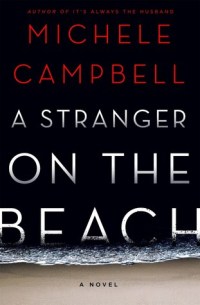
41150430Book: “A Stranger on the Beach” by Michele Campbell
Publishing Info: St. Martin’s Press, July 2019

Where Did I Get This Book: I received an eARC from NetGalley.

Book Description: There is a stranger outside Caroline’s house.

Her spectacular new beach house, built for hosting expensive parties and vacationing with the family she thought she’d have. But her husband is lying to her and everything in her life is upside down, so when the stranger, Aiden, shows up as a bartender at the same party where Caroline and her husband have a very public fight, it doesn’t seem like anything out of the ordinary.

As her marriage collapses around her and the lavish lifestyle she’s built for herself starts to crumble, Caroline turns to Aiden for comfort…and revenge. After a brief and desperate fling that means nothing to Caroline and everything to him, Aiden’s obsession with Caroline, her family, and her house grows more and more disturbing. And when Caroline’s husband goes missing, her life descends into a nightmare that leaves her accused of her own husband’s murder.

Review: Thank you to NetGalley for providing me with an eARC of this book!

I kind of stumbled upon Michele Campbell’s books a year or so ago, picking up “It’s Always The Husband” on a whim and listening to it on eAudiobook. I was immediately taken in by the suspense, the plot twists, and the complex characters. I also enjoyed “She Was The Quiet One”, and at that point I decided that Campbell was going to be one of my go to requests when it comes to authors. I was lucky enough that NetGalley granted my request to read her newest novel “A Stranger on the Beach”. The plot enticed me straight away. A scorned woman decides to get revenge against her potentially cheating husband by having one night stand with a handsome younger man, and it goes terribly awry with secrets, sex, lies, and murder?

giphy-11
Go on. (source)

It became pretty clear that Campbell had more in store for her readers than the simplicity of this tried and true plot line. The problem is that with “A Stranger on the Beach” she didn’t do a good enough job of keeping her cards close to her vest.

I’ll start with what did work for me, as there was a fair amount that did. I am a huge sucker for lurid and soapy thrillers, and “A Stranger on the Beach” is definitely that. The elements of a wealthy woman getting caught up with a man from ‘the wrong side of the tracks’ has a lot of potential for fun and quick thrills, and because of that I breezed through “A Stranger on the Beach” pretty quickly. Caroline’s chapters were first person, and gave you a sense of what was inside her head and what was driving her emotions, and while Aidan’s were from a third person perspective you still knew who he was and what he was about. I also liked the power dynamics that Campbell brought into the story, with Caroline being part of the wealthy tourist population that spends summers in beach houses, and Aidan being a townie struggling to make ends meet and having to see the entitled hoi polloi throw their weight around. This made it so their interactions always had an added tension to them, beyond the tension that is already there because of their uneven affections for each other. It also brought in the questions of who is more trustworthy to the reader, Caroline or Aidan, based on gender, class, and what you know about the two of them and their personal lives. You know that Caroline is a potentially scorned wife, and you know that Aidan has had past run ins with the law. But what do you actually know about them when it comes down to it? I will say that it was fun seeing things get turned sideways.

That said, unlike Campbell’s previous novels, I found pretty much no one to root for in this story, as everyone was pretty much terrible, even if they were all pretty complex. In previous works by Campbell I feel like while there are rotten characters, there are at least some people to root for, and even some who buck the trend. But in “A Stranger on the Beach”, I couldn’t find one character with any redeeming qualities, and that made it very hard to connect to any of them. They weren’t even terribly fun villains that you love to hate, just unpalatable and frustrating to follow. Even the law enforcement officials who are trying to see the best in everyone came off as complete rubes. On top of that, while the plot was well paced and kept me going, I figured out almost all of the big surprises and plot twists very early on, far earlier than I should have been able to do so. I’m not sure if it’s another instance of knowing the clues and the devices and what to look for, or if it was a little too obvious. But even if it was an instance of being a huge thriller reader, given that I imagine thriller readers would be one of the main demographics for this series, it’s not a huge leap to say that I probably wouldn’t be the only person with this problem.

“A Stranger on the Beach” was a bit of a let down. I’m not about to write off Michele Campbell as an author, but I do hope that whatever she comes out with next is a return to form that we saw in her previous novels. 

Rating 5: While I found the read to be addicting and pleasantly fast, I didn’t care for many of the characters and called the big twists a long time before the reveals.

Reader’s Advisory:

“A Stranger on the Beach” is included on the Goodreads lists “So You Love An Unreliable Narrator”, and “Down By The Sea”.

Find “A Stranger on the Beach” at your library using WorldCat!

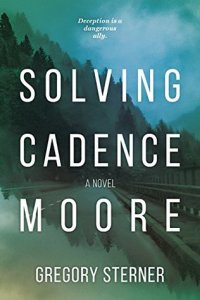
Kate’s Review: “Solving Cadence Moore”

36585390Book: “Solving Cadence Moore” by Gregory Sterner
Publishing Info: Aperture Press, November 2017

Where Did I Get This Book: I received a copy from Book Publicity Services

Book Description: How much will one man risk to solve the unsolvable?

Ten years ago, famous young singer Cadence Moore disappeared without a trace on a remote highway in western Pennsylvania. To this day her fate remains unknown. Was she kidnapped or murdered? Or did she simply run away in search of a new life, leaving behind the abuse and heartbreak that haunted her?

Charlie Marx, host of the popular conspiracy radio show “Underground Broadcast,” is obsessed with Cadence. Desperate to find her after deceiving his boss to save his job, he launches an investigation of his own, digging deep into the missing woman’s past and uncovering her darkest secrets. Working feverishly for weeks, he claims to have solved the mystery and promises to reveal Cadence’s fate at the end of a groundbreaking podcast series and live radio special.

But is it all a lie? As years of twisted details slowly unravel, Charlie races to solve the biggest mystery of the decade. If he succeeds, it will mean closure for Cadence. If he fails, his entire world will come crashing down live on air–and the truth may be lost forever.

Review: Thank you to Book Publicity Services for sending me a copy of this book!

There are two types of true crime podcasts that I find myself listening to, and I think that they span the majority of the genre. There are the stand alone or limited series episodes, like “My Favorite Murder”, “Casefile”, or “Last Podcast on the Left”, which cover a wide array of cases over time and don’t have one central focus, nor do they do any deep investigating. Then there are podcasts like “Serial”, “In the Dark”, and “Dirty John”, which either focus on one case for each season, or just have the one series with the one case, and do involve themselves in the investigations, or at least connect with those involved. I’m more inclined to listen to the shows that cover many cases, but definitely have dabbled in the latter. As podcasts become more popular, it’s no surprise that we see fiction books that hope to tap into the theme and use it as their structural narrative. “Solving Cadence Moore” by Gregory Sterner is one such book, which follows the latter kind of podcast: a radio host finds himself investigating a missing girl and dedicating an entire series to it. It’s a plot that I figured with hit all the checkboxes in terms of things that I’d like, but unfortunately “Solving Cadence Moore” didn’t click in the way I hoped it would.

I will start with what I did like and what did work. The disappearance of Cadence Moore is definitely a compelling mystery, similar to other missing women stories like the case of Maura Murray that have garnered podcast and intrigue. Cadence is young, she’s beautiful, she’s tragic, she’s talented, and she disappeared without so much as a trace after a fight with her boyfriend. Sterner knows all the right beats to hit and all the qualities that would make a convincingly tantalizing show that would gain a huge following. The host, Charlie Marx, is also convincing as someone who has a lot on the line when it comes to how successful the show is. There are definitely building blocks in place that have a lot of potential in terms of plot and story progression. But ultimately, the big reason that this didn’t work is because we didn’t get to see much of the investigation aspects that Marx was participating in. The majority of the book is transcripts from each podcast episode, but written not as transcripts but in a long form narrative. We read what’s going on in the episode, and we read how the story slowly unfolds, and while that is fascinating to a point I didn’t feel like there were many stakes when done this way. There are some parts that take place in ‘real’ time, for lack of a better word, but most of that was Charlie fighting with his boss about whether the podcast was going to garner results. I think that since we didn’t get to see much of the actual investigating on Charlie’s part, I didn’t find myself terribly invested in whether or not he was going to solve it by the end. In turn, I also didn’t find it terribly suspenseful, for either Cadence OR Charlie. At the end of the day I didn’t feel like we got to know very much about Cadence outside of her superficial qualities that are parsed out because of her victim status, and by the time the ultimate solution came around I was feeling less satisfied or wowed and more ‘well, okay then.’ It went very slow overall, and the part that had me MOST intrigued had less to do with Cadence’s story and more to do with two characters who get put on the hot seat for their popular, but problematic documentary about the case. Hell, that part had the most passion for me, and I really enjoyed seeing the breakdown of an ego clash. But that was one part of a long book.

“Solving Cadence Moore” definitely has some good and bright aspects to it, but overall it didn’t take me in the way that I had hoped that it would. Try this mystery out of you are fine with a mystery without fast paced thrills. Ultimately, I need a little more oomph.

Rating 5: While the foundation was there and I found the premise and set up of the story’s podcast believable, the pacing was slow and I didn’t feel like the stakes were very high.

Reader’s Advisory:

“Solving Cadence Moore” isn’t on any Goodreads lists, but I think that it would fit in on “Fiction Books Featuring Podcasts”.

“Solving Cadence Moore” isn’t listed on WorldCat, but you can find access information HERE on the publisher’s page.

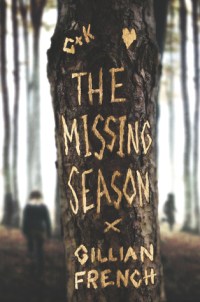
Kate’s Review: “The Missing Season”

39937609Book: “The Missing Season” by Gillian French
Publishing Info: HarperTeen, May 2019

Where Did I Get This Book: I received an eARC from Edelweiss+

Book Description: Whenever another kid goes missing in October, the Pender kids know what is really behind it: a horrific monster out in the marshes they have named the Mumbler.

That’s what Clara’s new crew tells her when she moves to town: Bree and Sage, who take her under their wing; spirited Trace, who has taken the lead on this year’s Halloween prank war; and magnetic Kincaid, whose devil-may-care attitude and air of mystery are impossible for Clara to resist.

Clara doesn’t actually believe in the Mumbler. But as Halloween gets closer and tensions build in the town, it’s hard to shake the feeling that there really is something dark and dangerous in Pender, lurking in the shadows, waiting to bring the stories to life.

Review: Thank you to Edelweiss+ for sending me an eARC of this novel!

I’ve been racking my brain, but given that I lived in a fairly large metro area when I was a kid (and still do for that matter) I can’t think of any ‘urban legends’ that were prevalent in my hometown during my childhood. The closest I can come is when two mean girls in first grade tried to convince me that at midnight if you looked up at the sky you’d see a star that would automatically kill you and everyone you loved, and yes, I totally fell for it. But in terms of rumors turned folklore, I can’t recall any. But I’ve always been fascinated with localized urban legends, even back then, so finding books that have those themes are always going to grab my interest. That’s why I was so eager to read “The Missing Season” by Gillian French, a YA mystery thriller that includes tales of a mysterious figure called “The Mumbler” that supposedly snatches teens up during Halloween season. I went in expecting a mystery thriller with ambiguous horror elements. But instead, I got… a mishmash of themes that didn’t work for me.

giphy-1
Me as I was reading this book and I still wasn’t clear in regards to its intent… (source)

“The Missing Season” takes place in the smallish town of Pender, and our protagonist Clara has just moved there due to her father’s somewhat nomadic career in construction. As our main character, I will say right off the bat that I liked Clara and I liked following her story and point of view. She lacks the luxury of being able to make connections because of the chance she might be moving again, so when she does make these connections there is a palpable fear of losing them, even if it isn’t outright said. The biggest conflict of this kind is the friendship between her and a girl named Bree. Bree, along with another girl named Sage, takes an immediate shine to Clara, and their friendship is a mix of the rush of having a girl pal, and the angst of competing with that girl pal in ways that were unanticipated. I know this familiar feeling all too well from my adolescent years, and I thought that French did a great job of showing it instead of telling it. The conflict in this case is the competing affections for local mysterious outsider Kincaid, who is the deepest in The Mumbler mythology of all the friends that Clara makes. The underlying tension and hurt between the two friends was the strongest aspect of this book, and the ways that Clara did, or in some cases didn’t, deal with that conflict felt very realistic.

But here is the problem with “The Missing Season”: it is very much marketed as a mystery thriller, and the description makes it sound like a new missing kid case is the center of the novel. But it’s very much not. The center of the novel is Clara’s relationships with the kids in town, and how she navigates her friendship with Bree and her need to fit in as those things come in conflict with the relationship she wants with Kincaid. Sure, another kid goes missing, and sure, there’s a question of what happened to her, but it wasn’t focused on nearly as much as I thought it was going to be. Instead, most of the conflict was Clara worrying about what Kincaid’s deal was, and what was going to happen to her new friendship with Bree if Clara and Kincaid did pursue their mutual feelings for each other. It wasn’t until the last fifth of the book that a full conflict with another child kidnapping raised the tension and thriller stakes, and even by then it was wrapped up VERY quickly, so quickly it almost felt like the author realized that oh yes, this was supposed to be a mystery thriller, better toss in a climax and wrap it up as quickly as possible. Even the ultimate solution felt tossed in there, with a couple of hints and clues scattered early on in the book, but not in a way that felt cohesive to a mystery. I kept waiting for the mystery and tension to build, but it plateaued very early at a level that wasn’t terribly high. I would be more inclined to call this book a contemporary realistic YA fiction book with some mysterious elements, but not enough for it to be considered an actual ‘thriller’. And because of that, I was totally let down by “The Missing Season”. If I had gone in with the expectations of this  being about a teenage girl’s bildungsroman I think I would have enjoyed it much more than I actually did, but as it was I couldn’t enjoy the story. I felt too duped.

I hesitate to write off “The Missing Season” for everyone, because my expectations were in a completely different place than they should have been. If you go in without the supposition that it’s a thriller, it may be more appealing. But, given that it’s trying to portray itself that way, I don’t feel comfortable recommending it as it’s presented.

Rating 5: While I liked the protagonist, the description of this being a ‘thriller’ did not fit the content of the story, and because of that I was pretty disappointed with “The Missing Season”.

Reader’s Advisory:

“The Missing Season” is included on the Goodreads lists “Halloween in YA and Middle Grade Fiction”.

Find “The Missing Season” at your library using WorldCat!

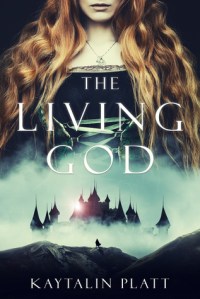
Serena’s Review: “The Living God”

40006251Book: “The Living God” by Kaytalin Platt

Publishing Info: Inkshares, May 2019

Where Did I Get this Book: NetGalley

Book Description: The Living God is foretold to bring about the destruction of the world in order to rebuild it into a paradise. Some worship and welcome His coming, other’s fear Him and would do anything to stop it. “The Living God” follows the internal struggle of two mages, Saran and Keleir, as they confront their fears and attempt to find meaning in the hand that life has dealt them. Saran seeks to overthrow her crazed father and salvage what is left of her country before it falls into complete ruin. Keleir is cursed with a Rauke’s soul, an ancient creature who is only able to survive by merging with an unborn child upon entering our world. Saran and Keleir are touched by fate, gifted with the ability to sense each other, and destined for a future that neither care to know. When Saran’s magic is stolen, she must confront a life without the ability to manipulate time, struggle to see the rebellion finished, and keep Keleir from becoming The Living God.

Review: Other than the gorgeous cover, I really didn’t know much about this book when I placed a request for it on NetGalley. There seemed to be a lot of interesting magical tidbits peppered throughout the book description, so that was a point in its favor. But, unfortunately, none of those little tidbits added up to a book I enjoyed.

Saran is a Time Mage, and as the name suggests, she has the ability to manipulate time. She is also a princess and the daughter of a tyrannical king whose violence is taken out on his family and his country. Saran is joined in her fight for her country by her love, Keleir, a Fire Mage who has his own internal demons, quite literally. Together, they work to overthrow Saran’s father in a rebellion, made only more difficult when Saran loses her time manipulation abilities.

This was…a weird read. Not having a whole lot of expectations going in, it seems weird to now write that it surprised me, but somehow that’s still the case. Most of those surprises weren’t of the good variety, but I’ll start with a few things I did enjoy.

As characters go, I did like Saran and Keleir, though he could veer a little too far into overprotective at times. But, overall, they were both interesting and  complex characters, each dealing with their own traumas: Saran, with the challenging tightrope she walks trying to pull off a rebellion under her vicious father’s nose, and Keleir working to contain a demon that lives within him and had, in the past, forced him to do terrible things before Saran saved him. I also really liked their romance (though some of descriptions of intimacy were awkward at best). It’s not that often that you come across a fantasy novel with an established couple at its heart, so I thought that read as a breath of fresh air.

But other than the basic outlines of those main characters and the novelty of the established romance, I struggled with this book. For one thing, it’s very slow. I’m often ok with slow books, too, so I feel like there was something in particular about this book that made this stand out to me. I think it comes down to two things. One, for a story about a time mage and a fire mage, after the initial first chapter of action, there’s a lot of planning and talking about plans and truly very little action. If action was never going to be at the heart of this story, fine. I can get behind a political fantasy. But this doesn’t feel like that, instead spending an inordinate amount of time talking about plans of action instead of carrying them out.

Two (and I think this is the real issue), there were a lot of references to past events that read as really important, eventful, and potentially more worth reading about than what we got in this book. It was really strange, to the point that in the second or third chapter of this book, I actually set it down and went on Goodreads because I was convinced that this must be the second book in a series, and I should check out the first one first, since man, it looks like some cool stuff happened there! But no. There was no first book and these awesome and important past events are just dropped in casually. I don’t know how to describe it or think of a time I’ve come across something similar. If anything, I think the author has a huge missed opportunity on her hands here as it seems that she missed out on writing a really cool book in lieu of writing a fairly bland one with references to said awesome, but nonexistent, book.

And then there was the sudden introduction of other worlds, including our own. This just hit me out of nowhere and not in a good way. Maybe it’s worth blaming the cover art, but I felt completely blindsided by this twist and it ultimately threw me out of a story that I was already either bored by or confused with.

I was really disappointed not to like this book more. Like I said, I can get behind slower fantasy fiction. Indeed, half the time I read fantasy, especially YA fantasy, I feel like the stories could benefit by being slowed down, giving more attention to fleshing out characters and worlds. But here it didn’t work out, mostly I think because there were so many references to really cool past events that we never got to actually see. And then the established romance was also a pro, but not enough to counterbalance these other issues. If you like slower-moving fantasy novels, you may like this. Especially if you go in prepared, unlike me, about the fact that this will read as if there should have been a prequel and yes, there are alternate worlds involved.

Rating 5: Why oh why didn’t we get a first book before this first book in this series?!

Reader’s Advisory: 

“The Living God” is a newer title, so it isn’t on many Goodreads lists. But it is on “Indie Science Fiction, Fantasy, Paranormal.”

“The Living God” isn’t yet listed on WorldCat, but check our your local library to find a copy!


Kate’s Review: “Bombshells United: Taps”

40996636Book: “Bombshells United (Vol.3): Taps” by Marguerite Bennett, Sandy Jarrell (Ill.), David Hahn (Ill.), and Aneke (Ill.)

Publishing Info: DC Comics, March 2019

Where Did I Get This Book: The library!

Book Description: The Batgirls are back…but some will be called to leave Gotham City behind. Alysia and Felicity head for Hawaii to investigate the mysterious radio signals causing trouble across the world, but they find a new voice for the revolution!

However, their findings leave the Bombshells divided! The Batgirls are determined to track down the source of their friends’ misfortunes, and their investigation leads to an eerie spit of land, where a lone radio tower projects a deadly signal that curses all who hear it.

Spinning off of the hit DC Collectibles statue line, Marguerite Bennett (Earth 2: World’s End) concludes this alternate reality where super-powered women are on the front lines fighting for justice!

Review: We’ve come to the point that I have been dreading basically since I first picked up the “Bombshells” books: the end. At first I dreaded the end because I loved the stories so very much. I remember the absolute joy I felt when reading the very first collection, “Enlisted”. I was blown away by the creativity, the feminism, the diversity, and the optimistic spunkiness, all being showcased in an alternate WWII universe. But once we got into “Bombshells: United”, and the series was abruptly cancelled by DC, my dread became less about missing the stories, and more about how much they had to wrap up in a short amount of time. And, unfortunately, my fears were not unfounded. “Bombshells United: Taps” was an unfocused and rushed mess of an ending.

But first, as always, let’s look at the positive. And there is a good amount of positive before I get to the negative, specifically the entire first half of this collection. The second to last arc of the series not only brings back The Bat Girls, but it also ropes in The Suicide Squad, Black Canary, and introduces Bumblebee! When a mysterious signal is going out over a pirate radio station, it turns listeners into violent, hypnotized automatons. The Batgirls, specifically Alyssa and Felicity, just want to know who has incapacitated their friends. The Suicide Squad has orders to take out Black Canary, as it’s her radio station AND her lover Oliver Queen has gone missing. Two scrappy side teams with very different ethos converging in Hawai’i was a very fun and suspenseful storyline, and anything that is going to showcase Dinah Lance is going to get positive snaps from me. Both the Batgirls and The Suicide Squad have different approaches on how to handle this situation, but as they all start to lose friends to the mysterious radio waves they have to find a way to work together to try and take it down. This side story was a fun one, and the solution harkened back to an older storyline, which I quite enjoyed seeing wrapped up in such a way. It felt like an appropriate send off for The Suicide Squad and The Bat Girls before this series has it’s final farewell, and a nice arc for Dinah Lance that fits her at times morally ambiguous personality.

But the last half, which is the final wrap up of the entire series, was confounding. I want to make clear that I do NOT completely fault Bennett and the other creative minds behind “Bombshells: United” for how this all went down. After all, to be cancelled so suddenly with so many open storylines and brand new ideas had to be not only devastating, but daunting. How could they properly wrap up so many things with such limited time left? It’s a monumental task no matter how you slice it. But instead of perhaps focusing on the core group of women and characters who started out the story, and giving them proper, well thought out send offs, instead it was decided that EVERYONE needs to be addressed, and that we need to wrap up the ENTIRE WAR in spite of the fact we left off in 1944, and we’ve barely addressed much outside of the Western Front! So the final wrap up jumps from Wonder Woman and her gang in one place, to Harley and Ivy in another, to Supergirl and her gang in another, AND YET STILL FEELS A NEED TO INTRODUCE NEW CHARACTERS AND THREATS, in the forms of Parademons, The Black Lanterns, and Lena Luther who happens to be an ALIEN (oh and so is LEX). Oh, and guess who else decides to show up? THE JOKER. As if it wasn’t already a bit nuts that Joker’s Daughter, whom we haven’t seen since the original Bombshells series, pops back in in hopes of snatching up Zatanna AGAIN. No, we also have to throw in THE JOKER, just so Harley can have her ‘I REJECT YOU, YOU BAD BOYFRIEND!’ moment that didn’t feel at all necessary, especially since her relationship with him was barely touched upon AND didn’t seem to have any kind of baggage remaining until this very moment. Why are you wasting time with this when there are so many Bombshells that need addressing? Oh, and The Flash even shows up for a couple of frames, and gets her own wrap up at the end for some reason in spite of the fact she for real pops in, and pops out, and everyone is like ‘who was that?’ So we are STILL introducing new Bombshells when I feel like the focus really ought to be on trying to do justice to the ones you already had, especially when you only have a couple issues to wrap up an entire war and a plethora of storylines. And so unfortunately, when you have a lot of characters and a lot of storylines that need to be wrapped up, none of them feel like they get their due, and a number of them get killed off in unceremonious berserker ways like Family FREAKIN’ Tyrell in “Game of Thrones”. But even there at least they got a send off; for some of our Bombshells that we’ve been following since the first arcs, it happens off page and barely gets a note of acknowledgement.

bombshells
This is one page. The next page does the same thing. Constant action. (source: DC Comics)

And then we get an “American Graffiti’ style wrap up with a ‘here is how they all ended up’ montage. It’s fine, but it’s a bit twee, and it is another reminder that there was so much going on, and so many characters who were barely given anything to do in the last story. It’s Selina who wraps everything up for us as she’s prepping Bruce Wayne to become a ‘space age’ superhero, while reminding him that, essentially, he ain’t shit compared to the ladies she’s seen in her day (oh and since his parents aren’t dead  he was raised with hope and love, because remember, there is nothing more powerful in this universe than the power of LOVE).

giphy-1
It was too much. (source)

Look, ultimately I am going to have fond, fond memories of “Bombshells” as a whole, because while the ending was rough, I can’t place all blame on the creators. And the entire first series was so inspirational and important. Hell, the “United” series has some solid moments as well, some of which are in this issue. I think that the unbridled ambition came back to bite it in the ass, as nothing is guaranteed in this very unfair world where you can keep rebooting tired male superheroes/villains over and over, and women characters need to be ten times more interesting to be even given a shot to keep going. It’s unfair. It’s frustrating. But it doesn’t change that the ending to this series was lackluster, and that isn’t just on the injustice of it being cancelled too soon. Goodbye, Bombshells. You will definitely be missed.

Rating 5: A muddled and frenzied end to a series that I will legitimately miss, “Bombshells United: Taps” was a bit of a mess. I can’t fault it completely, but I was very disappointed that this is how we left my beloved Bombshells.

Reader’s Advisory:

“Bombshells United: Taps” is included on the Goodreads lists “2019 Queer SFF”, and “Upcoming 2019 SFF With Female Leads/Co-Leads”.

Find “Bombshells United: Taps” at your library using WorldCat!

Previously Reviewed:

Serena’s Review: “The Sword and the Dagger”

39863306Book: “The Sword and the Dagger” by Robert Cochran

Publishing Info: Tor Teen, April 2019

Where Did I Get this Book: NetGalley

Book Description: During the time of the Crusades, an unlikely trio—a Christian princess, her affianced prince, and a Muslim assassin—embarks on a quest to the court of the most fearsome warrior the world has ever known, Genghis Khan.

A rousing tale of adventure and romance about three young people who must grapple with fundamental issues of loyalty, friendship, faith, honor, and courage against the backdrop of conflicts that still resonate today.

Review:  I placed a request for this book based on the strength of its plot description and the beautiful cover. Even though there was a massive red flag telegraphed to me with the love triangle set up, I thought “Sure, why the heck not? Who doesn’t like a good ole fun trip into the time of the Crusades?” Alas, right off the bat I struggled to get into this book, and by the last page I was more confused by the editing (or lack thereof?) of this book than anything else.

The story follows our three intrepid adventureres: Princess Elaine, her betrothed Conrad, and Rashid, an assassin sent to kill Elaine. All three are made up of a complicated mixture of the best and worst aspects of their respective belief systems, be those religious or cultural, as well as a myriad of other aspects that go to prove that no person can be defined so simply. While journeying together through various trials and tribulations, they all must learn that their fellow travelling companions are just as complex as they themselves.

As I said, I didn’t love this book. But before I get into its challenges for me, I want to highlight some aspects of the book that I did enjoy. Firstly, I liked the historical setting and the way that was tied into the book. I also really liked a lot of the broader concepts about prejudice and tolerance that our three main characters explored throughout the story. There were the obvious debates about religious disagreements came to by the Christian Conrad and the Muslim Rashid, but the story also explored gender roles with the limitations placed on Elaine as a woman growing up in a time where very little was expected, or permitted, of women. Overall, there was a nice combination of action and adventure mixed in with these larger debates in a way that allowed the book to explore some pretty big topics without coming across as overly preaching. The fast pace of the story also helped in this regard.

So those are my pros. But mixed within some of those same things that I enjoyed were also the parts of this book that I struggled with. As I said, I liked the historical setting of this book and the fast paced nature of the adventure made for a snappy read. But mixed together, it also left the book feeling oddly light and surface-level as far as its world. Our main characters jump from place to place and action piece to action piece so quickly that I never really felt like I had time to really sit back and examine the intricacies of the setting in which these events were taking place. For a book that covers of settings and ground, I never felt like I was really given any time to appreciate that fact. The plot was too busy getting from point A to point B to allow for this.

The fast paced nature of the story was also fun, but it also felt like it undercut some of the more somber moments in the story and restricted some of the character development. While overall I did like the three main characters, I also never really felt overly attached to any one of them. They often felt like the standard, expected characters for a story like this. So, too, the story they were travelling through also felt pretty expected. There weren’t any big surprises, and the few twists that there were, were exactly the ones you’d come to expect. I don’t need huge surprises around any corner, but at a certain point a sense of newness does help.

But my biggest problem came down to the writing itself and one very specific thing: the POVs would change without any indication or warning. Even in the middle of paragraphs! Even to characters who weren’t one of the main three. In the very first chapter, we’re introduced to Elaine, but then random sentences come through from the perspective of those around her commenting on Elaine herself. There’s no explanation for why we’re suddenly in this new character’s mind and then just as suddenly, we’re back to Elaine. It was incredibly distracting and quickly started to drive me crazy as we went on. I’m not sure what was going on there, but this specific aspect is where I think a good editor was needed. This is the kind of writing tic/flaw that a good editor will flag and help an author work through during the revision process. For some reason that didn’t happen and what could have been a better story suffered for it.

Ultimately, this writing issue was really the nail in the coffin of my enjoyment of this book. There are some good bones here, but for me, I couldn’t get past the distraction of this. That, plus the light descriptions of setting and sometimes too-fast nature of the story, ended up outweighing the parts of the story that I did enjoy. This could be good for fans of historical fiction, especially those interested in this time period. But we warned that if you’re sensitive to writing quirks, this one might be a struggle.

Rating 5: It had some good things to say about prejudices and tolerance, but the weird POV issue was too much for me.

Reader’s Advisory: 

“The Sword and the Dagger” is a newer title so it isn’t on many relevant Goodreads lists, but it is on “2019 YA Historical Fiction.”

Find “The Sword and the Dagger” at your library using WorldCat!


Serena’s Review: “The Loneliest Girl in the Universe”

36039614Book: “The Loneliest Girl in the Universe” by Lauren James

Publishing Info: HarperTeen, July 2018

Where Did I Get this Book: audiobook from the library!

Book Description: The daughter of two astronauts, Romy Silvers is no stranger to life in space. But she never knew how isolating the universe could be until her parents’ tragic deaths left her alone on the Infinity, a spaceship speeding away from Earth.

Romy tries to make the best of her lonely situation, but with only brief messages from her therapist on Earth to keep her company, she can’t help but feel like something is missing. It seems like a dream come true when NASA alerts her that another ship, the Eternity, will be joining the Infinity.

Romy begins exchanging messages with J, the captain of the Eternity, and their friendship breathes new life into her world. But as the Eternity gets closer, Romy learns there’s more to J’s mission than she could have imagined. And suddenly, there are worse things than being alone….

Review: I had heard great things about this book both from the general online book community, as well as from some of my friends in person. And the fact that when I went to request it from the library list I found myself at the back of a very long waiting list also spoke to the general popularity of this title. So, patiently, I waited. A few weeks ago, my name finally came around and I immediately checked out the audiobook and dove in. Sadly, this entire story ends with the fact that I once again fell victim to a combination of over-hyped books and, probably, my own science fiction snobbery, resulting in me not loving this book.

For the past several years, teenage Romy has lived alone on her spaceshift. Born aboard to the two astronauts originally selected for this first mission to a far off planet, Romy has known nothing but life in space. Her only connections to humanity have been through media and communications with a NASA councelor who has helped her manage her anxiety. With years still ahead of her before she reaches her destination, Romy’s life is one of boredom and loneliness. That is until she hears that another, faster ship is coming. Aboard is J, her first contact with humanity. But their close friendship, developed through messaging back and forth, quickly begins to highlight questions about Romy’s own time on her ship and J’s ultimate mission.

I really, really wanted to love this book. It’s been a while since I’ve read a really good science fiction story, and the premise of this one sounds fantastic. Seriously, full marks to whomever wrote the book description and designed the cover art: this book has serious “hook” value. But then I started reading it and pretty much had immediate problems.

First things first, as I said above, some of this comes down purely to my own science fiction snobbery. I think that perhaps general YA fiction fans would have a lot fewer issues with this book than I did, especially if science fiction isn’t a go-to genre for them. But if I’m going to read a science fiction/space novel, I want that: science fiction. The story starts out with a bang, and after a short action scene, we’re immediately into a character introspection from Romy herself and her thoughts on anxiety. As a discussion on mental health, sure this is good. But there simply wasn’t enough about the science/space angle of things for me. We barely hear anything about the ship itself, or how it was set up to complete its mission, or what specific skills Romy has developed having lived her entire life on this ship. Instead, again, in that very first scene, we see Romy barely avoiding a disaster and then setting out to “read the manual” on the ship so she knows better what to do next time. What? You’re telling me this girl has lived her entire life on this ship, the last several years all alone, and she’s somehow not a complete expert on everything going on here? This starts to get into my character problems, but to summarize this section, this book simply didn’t have enough of the details about life in space and the ship itself to meet my higher expectations for science fiction. There were also a few things that legitimately don’t make any sense for space travel which left me questioning how much research the author really put into this (Romy uses scissors to open food…pretty sure they have tear-off packets of food rather than packing scissors into space for stuff like this).

Now, the characters. As I alluded to in the previous bit, I had some immediate issues with Romy right from the get go. For one thing, I had very mixed feelings about the discussions about Romy’s anxiety and mental health. I get that these are important topics, and it’s great representation to have them included. However, sometimes it starts to feel like these aspects of a character/story are added simply to check some nebulous box, and this works to the detriment of the story. I wanted a science fiction action/thriller story, and instead was getting a lot of character details that were both too much and yet also never quite enough to carry my interest. Beyond that, I found Romy to be very hard to find believable as a character who has grown up in such a unique environment.

We have the weird lack of knowledge of her own ship, yes. But on top of that, she reads just like your average, every day teenage girl. And I just couldn’t get on board with that type of characterization for a protagonist whose entire existence would be shaped by events so out of the ordinary. She hasn’t had human contact in years, and before that, only ever her parents. She’s lived her entire life on a very small ship. And yet she reads like “Jane Doe Teenager” in almost every way. Not only did this not make her interesting, but it actively rubbed wrong against what we know about her life experience. It felt like such a missed opportunity, really.

As for the story itself, I also had a few problems. Romy writes fanfiction as a pastime. Sure, this makes sense for the character. But that doesn’t mean I want to read pages of said fanfiction. It honestly felt like the author was essentially trying to recreate Rainbow Rowell’s “Fangirl” but in space! And that didn’t work for me. Especially when I couldn’t help but mourn the page time devoted to this aspect of the story in place of more science fiction details.

I will say that the twists of the story were interesting. But interesting in the way that they read as exciting, but if you stop and think about them very hard, they also start to fall apart pretty quickly. J’s backstory, motivation, and actions never made much real sense to me, and some of the twists required huge portions of the book to read as strange before the answers are revealed. I spent a good portion of the book questioning the basic premise of the entire mission in a way that was ultimately more distracting than beneficial when the reveal finally put together the pieces in the end.

So, sadly, in the end this book wasn’t for me. I think general YA fiction fans would quite enjoy it (indeed, obviously they  have!). But if you like science fiction in particular, I think there are a lot of elements of this story that will read as more frustrating than intriguing. I also feel like the character work was lacking throughout. It’s no fault of the book’s, but when you have similar titles like “The Martian” hanging around out there, that succeeded so well based on the great scientific aspects and, more importantly, incredible main character at its heart, this book feels even more flat than it would in a vacuum.

Rating 5: Some science fiction snobbery on my part, and I think a legitimately weak main character left this book not quite hitting the mark for me.

Reader’s Advisory:

“The Loneliest Girl in the Universe” isn’t on many relevant Goodreads lists for some reason, but it is on “YA Space Operas.”

Find “The Loneliest Girl in the Universe” at your library using WorldCat!