Kate’s Review: “The Twisted Ones”

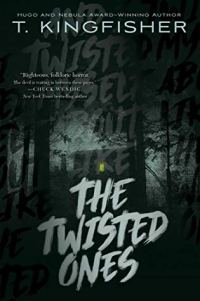
42527596._sy475_Book: “The Twisted Ones” by T. Kingfisher

Publishing Info: Gallery/Saga Press, October 2019

Where Did I Get This Book: The library!

Book Description: When a young woman clears out her deceased grandmother’s home in rural North Carolina, she finds long-hidden secrets about a strange colony of beings in the woods.

When Mouse’s dad asks her to clean out her dead grandmother’s house, she says yes. After all, how bad could it be?

Answer: pretty bad. Grandma was a hoarder, and her house is stuffed with useless rubbish. That would be horrific enough, but there’s more—Mouse stumbles across her step-grandfather’s journal, which at first seems to be filled with nonsensical rants…until Mouse encounters some of the terrifying things he described for herself.

Alone in the woods with her dog, Mouse finds herself face to face with a series of impossible terrors—because sometimes the things that go bump in the night are real, and they’re looking for you. And if she doesn’t face them head on, she might not survive to tell the tale.

From Hugo Award–winning author Ursula Vernon, writing as T. Kingfisher. 

Review: Of all the horror genres, folk horror tends to be one of the few that I have a hard time sinking my teeth into. While I love the movie “The Wicker Man” (and “The Blair Witch Project”, if you can classify it as such? I feel like maybe you could?), I still haven’t seen “Midsommer” and don’t feel a huge draw to do so. I’ve read a few folk horror novels, and none of them really stood out to me as particularly engrossing or engaging. But I am always wanting to give the subgenre a chance. Because of this, I wanted to read “The Twisted Ones” by T. Kingfisher. After all, while it was described as ‘folk horror’ by some reviewers, the idea of monsters in the woods slowly creeping up was too good of a premise to pass by.

rtuq
Have I been burned by this premise before? Yes. Yet I keep the faith that I won’t be frustrated every time I pick up such a book. (source)

“The Twisted Ones” starts out with a lot of promise. A woman named Mouse (our first person narrator) has gone to her grandmother’s house (along with her dog Bongo) to clean it out after she has died. Mouse and her grandmother didn’t get along, as her grandmother was a TERRIBLE human being, but Mouse was close to her stepgrandfather, Cotgrave, and as she’s cleaning memories of her time with him bubble up. At night she has to contend with her grief and guilt regarding Cotgrave, her anger at her grandmother, and strange noises she hears outside that Bongo just won’t leave alone. As one might guess, the noises aren’t just harmless nature sounds, and soon Mouse finds herself being drawn into stories of ‘twisted ones’, and stumbling into landscapes that shouldn’t be there. Throughout all of this, I was definitely enjoying this story and the slow burn that Kingfisher was putting forth. I liked how through Mouse’s narration we are tuned in with her own initial skepticism (and delightful snark), though we have a dread in our gut that the noises and the weird blurs of animals running around in the dark aren’t just run of the mill North Carolina fauna. As it slowly becomes clear that Mouse and Bongo are dealing with something sinister and threatening, the tension is so tightly wound that the reader will potentially look out their own dark window at night and worry about what they will see. The building tension is grand, as are the supporting characters that Mouse meets while she is in the cabin in the woods. From Foxy the eccentric woman down the road to Tomas the helpful handyman, Mouse and the cast of characters feel real and sympathetic, to the point where you care about them and what happens to them.

All that said, once we get to the heart of the horror and find out what these creatures are any why they are here, the fear and scares immediately departed for this reader. I think that when it comes to ‘monsters in the woods stories’, I am only interested until the monster is revealed. The terror and dread is the unknown, the strange noises in the woods, the blurs in the moonlight. When we get to portals and interactions with the actual beings face to face, and the other revelations as to what they may or may not with Mouse, my interest was completely lost. But I think that has more to do with a lot of my own folk horror tastes, which are firmly placed more towards ambiguity and the unknown. I am far more taken in by an unseen Blair Witch who may or may not be stalking a group of filmmakers in the woods, than I am by a reveal of ‘monsters in the woods aren’t real but used to control the town’ two thirds of the way through the narrative. You have me when it’s ambiguous in folk horror. The moment you explain it, my interest wanes.

This is very much an instance of my own personal tastes getting in the way of the story, and that shouldn’t dissuade ride or die folk horror fans from checking it out. “The Twisted Ones” has some tense moments and scary themes regardless of how I felt about the last third of the book. So don’t take my word for it. Give it a go if this sounds like a book that will keep you up at night and out of the woods.

Rating 6: This had some tense moments and a fun and snarky narrator, but the big reveal was a bit of a let down. That said, it could be just me, and not the book itself.

Reader’s Advisory:

“The Twisted Ones” is included on the Goodreads lists “A Walk in the Woods”, and “Best Supernatural Books, No Romance, No Series”.

Find “The Twisted Ones” at your library using WorldCat!

Serena’s Review: “The Weight of a Soul”

43517326Book: “The Weight of a Soul” by Elizabeth Tammi

Publishing Info: Flux, December 2019

Where Did I Get this Book: NetGalley

Book Description: When Lena’s younger sister Fressa is found dead, their whole Viking clan mourns—but it is Lena alone who never recovers. Fressa is the sister that should’ve lived, and Lena cannot rest until she knows exactly what killed Fressa and why—and how to bring her back. She strikes a dark deal with Hela, the Norse goddess of death, and begins a new double life to save her sister.

But as Lena gets closer to bringing Fressa back, she dredges up dangerous discoveries about her own family, and finds herself in the middle of a devastating plan to spur Ragnarök –a deadly chain of events leading to total world destruction.

Still, with her sister’s life in the balance, Lena is willing to risk it all. She’s willing to kill. How far will she go before the darkness consumes her?

Review: I’ve read a few Vikings stories in the past year or so and largely enjoyed them all. Mythology is always a win for me, so it’s been fun to see Norse mythology getting its day in the sun after Roman and Greek had staked out the genre for so long. Combine those things with a story about sisters and this book was a no brainer for me to request. Sadly, all of those things together still somehow didn’t prove to be enough for me to really enjoy this book.

Lena and Fressa have grown up together to be as close as sisters can be. But while Lena is set out to lead a quiet, predictable life as a healer, it is Fressa who draws people to her with the sheer force of her vitality. So it is a shock when Fressa is suddenly found dead. But the life of a Viking is one of violence and sudden endings, so life moves on, for everyone but Lena. Driven to discover not only what happened to Fressa but to bring her beloved sister back, Lena sets out on a mission that will test the boundaries of life and death and draw her into the dark places of the world and herself.

So, as I said, this book wasn’t a hit for me. Even the things I liked are couched between things I disliked. For example, I liked the sisterly relationship. However, the story jumps through plot elements so quickly in the beginning that I was never able to feel fully connected to Fressa, thus lessening the impact of her death and my own commitment to the lengths (some pretty bad) that Lena went to in her attempts to bring her sister back.

I also enjoyed the mythology aspect of the story. However, again, there was really very little of it and only two god characters played a part and even then were more plot devices than anything else. The goddess, in particular, I felt was underwhelming and non-threatening, not something you want from an all-powerful being.

The pacing of the story also felt very off. As I said, the beginning of the book rushes through many important plot points. It’s attempting to not only set up the relationship between the sisters, but between them both and Fressa’s fiance, the girls’ parents, and  a few of the other village members as well. Between this and the brief attempts at history and world-building, the story feels like it’s simply jumping from one plot point to another. And then, suddenly, when Lena begins her journey, the brakes are pumped, hard. The rest of the book felt plodding, meandering, and frankly, rather boring. This left the overall pacing of the story feeling jarring and mismatched.

Beyond this, Lena was simply not a very likable character. The story is all set up to explore some deeper themes with regards to grief and the morality of choosing who lives and dies. And Lena, being a young woman presumably studying to be a healer, seems like a character primed to interact with these tough situations and choices in a compelling manner. Not so. While her descriptions of grief were at times beautiful and touching on some good ideas, the morality of her decisions was pretty terrible. And, even worse, she seems to think nothing of the terrible things she does.

It’s all well and good to have a character get so caught up in their own sorrow that their worldview becomes myopic to the point of a loss of their own morality, but the interesting part there is having the character explore this topic in some meaningful way. Or simply be from there after written as a villain. But Lena is unquestionably the hero of the story and yet she never seems to really care about the things that she does. As I said, it seems even more questionable when paired together with the empathy that it would have taken to be a healer. I was also not a fan of the romance of this story. It felt unnecessary at best and at worst it made Lena even more unlikable.

The idea of balancing a lost soul with the “weight” of another equal soul is a very interesting idea (though the end result is fairly predictable for fans of the genre), but much its potential was wasted behind choppy pacing and an unlikeable main character. Frustratingly, it seems like only a few minor tweaks could have really improved the story. Flashbacks, for example, would have worked better for the scenes before Fressa’s death and would have broken up some of the more plodding bits of the last half of the book. Ah well, what could have been alas was not! Fans of Norse mythology may like this book, but I think in the end it doesn’t live up to its own potential.

Rating 5: The unlikable main character was the last nail in the coffin for a book that unfortunately wasted several good aspects.

Reader’s Advisory:

“The Weight of a Soul” is on these Goodreads lists: “YA & Middle-Grade Norse Mythology” and “YA Vikings.”

Find “The Weight of a Soul” at your library using WorldCat!

Kate’s Review: “Monster, She Wrote”

44594661Book: “Monster, She Wrote: The Women Who Pioneered Horror and Speculative Fiction” by Lisa Kröger and Melanie R. Anderson
Publishing Info: Quirk Books, September 2019

Where Did I Get This Book: The library!

Book Description: Weird fiction wouldn’t exist without the women who created it. Meet the female authors who defied convention to craft some of literature’s strangest tales. And find out why their own stories are equally intriguing.

Everyone knows about Mary Shelley, creator of Frankenstein; but have you heard of Margaret Cavendish, who wrote a science-fiction epic 150 years earlier? Have you read the psychological hauntings of Violet Paget, who was openly involved in long-term romantic relationships with women in the Victorian era? Or the stories of Gertrude Barrows Bennett, whose writing influenced H.P. Lovecraft? Monster, She Wrote shares the stories of women past and present who invented horror, speculative, and weird fiction and made it great. You’ll meet celebrated icons (Ann Radcliffe, V.C. Andrews), forgotten wordsmiths (Eli Coltor, Ruby Jean Jensen), and today’s vanguard (Helen Oyeyemi). And each profile includes a curated reading list so you can seek out the spine-chilling tales that interest you the most.

Review: Even though horror is hands down my favorite literary genre (or genre of any kind of consumable media), that doesn’t exclude it from my general lack of experience with ‘the classics’. Sure, I’ve read books like “Frankenstein”, “Dracula”, and “The Turn of the Screw”, but in general I have kept my horror experiences fairly solidly in the 20th century and beyond. On top of that, a lot of what I’ve read has been fairly male dominated. So when I saw that “Monster, She Wrote: The Women Who Pioneered Horror and Speculative Fiction” was a book that was coming out, I decided that I needed to educate myself about horror classics, specifically those written by women, and to expand my ‘to-read’ list to fit the recommendations made within this book.

And boy are there many recommendations! “Monster, She Wrote” gives us a list of female authors of horror and speculative fiction, gives a comprehensive but succinct biography of each of them, and explains the importance and significance of a few of their works, or at the very least gives us the plot and lets us suss out the significance for ourselves. Lisa Kröger and Melanie R. Anderson are sure to cast a wide net throughout the genres, covering a number of different authors and subgenres within the genres. Each section is divided based on the subgenres, which I liked because it made is so I could give extra focus on the kinds of stories that really tickle my fancy and to hone in on the authors that perfected the stories. While they, of course, cover some of the heavy hitters like Mary Shelley and Shirley Jackson, they also are sure to bring in diverse perspectives, including women like Toni Morrison and Helen Oyeymi, so that the texts discussed and recommended aren’t incredibly white in nature (side note, I loved that “Beloved” was included in this book and Morrison by association. It’s one of my favorite books and at it’s heart it is, indeed, a very effective ghost story). I also got to learn about a number of authors who I had either only heard of in passing, or had never heard of, and because of this I now have added people like Edith Wharton and Anne Radcliffe to my list of ‘must reads’, as well as modern voices like Oyeymi (I will be talking to my Mom so I can borrow her copy of “Boy, Snow, Bird”). Finally, at the end of each biography we get a handy dandy list of books to try out, split into three categories, labeled ‘Not To Be Missed’, ‘Also Try’, and ‘Related Work’. These suggestions are stories by the authors themselves, as well as other stories and tales by different people whose themes are either direct call backs or similar in tone. How great to have a curated and well put together list of suggestions!

It’s also important to note that throughout all of these biographies and personal histories of these women authors, there are hints and senses of the difficulties and obstacles that many of them faced or face as women living at their respective times in their respective societies. These hardships could be due to gender, class, or race, and Kröger and Anderson, while never focusing on it, absolutely acknowledge it and make the reader realize that women voices in the genre have been very important and formative, and yet have been downplayed or, in some cases, almost forgotten (there were a few instances in which an author’s ‘Not To Be Missed’ work was noted as being out of print. How incredibly upsetting).

Any horror or speculative fiction fan ought to do themselves a favor and read “Monster, She Wrote”. You will undoubtedly get some new reading ideas, or gain new appreciation for authors you already love, or authors you have yet to discover.

Rating 8: And informative and expansive history of significant female voices in horror and speculative fiction, “Monster, She Wrote” has a lot of reading ideas and a lot of fun and interesting facts about an array of authors.

Reader’s Advisory:

“Monster, She Wrote” isn’t on many Goodreads lists as of now (why?), but it is included on “Best Books About Genre Fiction”.

Find “Monster, She Wrote” at your library using WorldCat!

Book Club Review: “A Christmas Carol”

5327We are part of a group of librarian friends who have had an ongoing bookclub running for the last several years. Each “season” (we’re nerds) we pick a theme and each of us chooses a book within that theme for us all to read. Our current theme is “American Girl Readalikes”, in which we each pick an American Girl book and a book that can be connected to it, however tenuous as it may be.
For this blog, we will post a joint review of each book we read for book club. We’ll also post the next book coming up in book club. So feel free to read along with us or use our book selections and questions in your own book club!

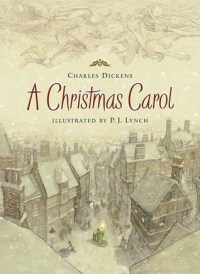
Book: “A Christmas Carol” by Charles Dickens

Publishing Info: Chapman & Hall, 1843

Where Did I Get This Book: The library!

American Girl Book: “Kirsten’s Surprise” by Janet Shaw

Book Description: The celebrated P.J. Lynch captures the spirit of Dickens’s beloved tale in a richly illustrated unabridged edition.

The story of Ebenezer Scrooge opens on a Christmas Eve as cold as Scrooge’s own heart. That night, he receives three ghostly visitors: the terrifying spirits of Christmas Past, Present, and Yet to Come. Each takes him on a heart-stopping journey, yielding glimpses of Tiny Tim and Bob Cratchit, the horrifying spectres of Want and Ignorance, even Scrooge’s painfully hopeful younger self. Will Scrooge’s heart be opened? Can he reverse the miserable future he is forced to see?

Now in an unabridged edition gloriously illustrated by the award-winning P.J. Lynch, this story’s message of love and goodwill, mercy and self-redemption resonates as keenly as ever.

Kate’s Thoughts

It’s just me again this time around, as Serena was unable to make book club this session. But I’m going to do my best to bring in some deep thoughts about a Christmas classic that has been part of the Western zeitgeist for generations. We read “A Christmas Carol” along with “Kirsten’s Surprise” because of the obvious Christmas theme, and honestly, this is going to be a fun cycle of reads because of the connections we make between the American Girl books and the other books we read. This was my second time reading Dickens, as I read “A Tale of Two Cities” in high school, and while I could have sworn that I read “A Christmas Carol” at some point I realized as I was reading that I was probably just creating a memory from the countless, COUNTLESS adaptations I’ve seen over the years. Going in and reading the original text was a fun way to get into the holiday spirit, reading wise.

For anyone who may not know, “A Christmas Carol” is a holiday ghost story in which a bitter selfish man is visited by three (technically four) ghosts to learn about the true meaning of Christmas, and to realize he has to change his dickish ways. I’m so familiar with the story I figured that reading it was going to be just par for the course, but I really enjoyed reading this story in it’s own, original words. The ghosts are sufficiently spooky, the pathos is (for the most part, but we’ll get there later) definitely heartwrenching, and the messages of benevolence and charity resonate throughout the years. Ebenezer Scrooge is a complex character whose journey of self reflection and redemption is old hat, but even though I know the story and know how it was going to go I did like seeing him change. Dickens may have been a little ‘on the nose’ by today’s standards when it comes to Scrooge’s reactions as his journey goes on (lots of head hanging, guys), but it is still satisfying to see him realize that he can change and should change for the good of others and for the good of himself.

The greater metaphors that Dickens was going for in the text, specifically Tiny Tim representing the oppressed and downtrodden in England’s lower classes at the time and the references to child labor, are admittedly pretty well played out these days. I myself don’t really care for Tiny Tim, thinking he’s saccharine and cloying (except for Calvin in “Scrooged”, he is ADORABLE and it probably help that he doesn’t talk), but having the context of what Tiny Tim actually is supposed to be was helpful. Because the symbolism is better in the original text, and doesn’t manifest as a sweet faced but constantly coughing/limping/wise beyond his years child, I appreciated Tim more in the book than I usually do. The setting of the Industrial Revolution and knowing how friggin’ AWFUL that was for the lower class in hindsight made me appreciate these messages all the more. Even beyond Tim there are references to children having to go get jobs and not knowing if and when they will see their loved ones come Christmastime, and gosh if that didn’t just make this book a little sadder.

And finally, the ghosts are great. From Marley to Past, Present, and Yet To Come, Dickens made well characterized and freaky spirits that would have perfectly fit into the ‘telling ghost stories at Christmas’ aesthetic that was so popular during this time period. We should bring that back, quite frankly.

I enjoyed reading “A Christmas Carol”. It was a lovely way to get into the holiday spirit!! If you haven’t read it and have a few hours during this holiday season, it is worth the read.

Rating 8: An enduring Christmas classic.

Book Club Questions

  1. There have been many adaptations of “A Christmas Carol” over the years. Which one is your favorite, and why? How faithful of an adaptation was it compared to the original text?
  2. Scrooge has a very clear transformation in this book, and on the page it is made evident from the get go when he feels bad and when he should feel bad for his actions. Do you think there could have been more nuance in his change, or did you appreciate the blatant moments of him realizing he was wrong throughout the story?
  3. “A Christmas Carol” was one of the first Christmas stories to leave a country or pastoral setting to take place in an urban setting. Do you think that the story would have worked as well if it took place in the country instead of London? Why or why not?
  4. What are your thoughts on Tiny Tim? Is he still an effective character as time has gone on?
  5. Why do you think this story has endured for so long and resonated with so many people?

Reader’s Advisory

“A Christmas Carol” is included on the Goodreads lists “Favorite Christmas Books”, and “Ghost Stories”.

Find “A Christmas Carol” at your library using WorldCat!

Next Book Club Book: “Persepolis” by Marjane Satrapi

Serena’s Review: “Realm of Ash”

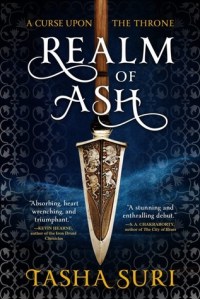
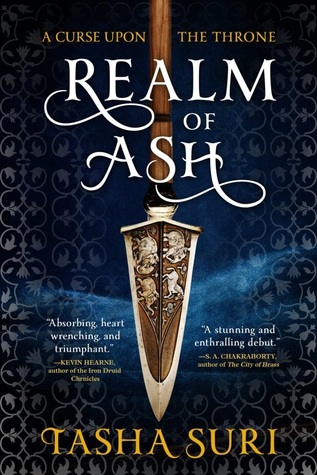
43192642._sy475_Book: “Realm of Ash” by Tasha Suri

Publication Info: Orbit, November 2019

Where Did I Get this Book: ARC from the publisher!

Book Description: The Ambhan Empire is crumbling. A terrible war of succession hovers on the horizon. The only hope for peace lies in the mysterious realm of ash, where mortals can find what they seek in the echoes of their ancestors’ dreams. But to walk there requires a steep price.

Arwa is determined to make the journey. Widowed by a brutal massacre, she’s pledged service to the royal family and will see that pledge through to the end. She never expected to be joined by Zahir, the disgraced, illegitimate prince who has turned to forbidden magic in a desperate bid to save those he loves.

Together, they’ll walk the bloody path of their shared past. And it will call into question everything they’ve ever believed…including whether the Empire is worth saving at all.

Previously Reviewed: “Empire of Sand”

Review: While I had some struggles with “Empire of Sand,” I was intrigued enough by the world-building and fantasy elements presented in that first book to be pleased when I was sent a copy of its sequel. I hadn’t looked into this book before hand, but was happy to find that it wasn’t a direct sequel and instead picked up the story years later following Arwa. I was even more happy when I closed the book and could look back with satisfaction on a sequel that I felt surpassed its predecessor.

All of Arwa’s carefully crafted plans for life, that of a good nobleman’s wife who is loyal to family and the Empire, crash around her in tragedy and death. Now, a young widow with secrets swirling around her, Arwa looks to re-orient her life in service of some larger purpose. To do this, she is asked to work along side the illegitimate prince, a young man who has risked much in his own quest to save all he cares for. But in their theorizing and study, Arwa and Zahir begin to question all that they have learned and must decide what truths shall guide them going forward.

I re-read my review for “Empire of Sand” before writing this review, and it was an interesting experience. For one, I had forgotten much of that book, which I guess makes sense considering one of my biggest complaints had to do with my coming away from it with a very “meh” attitude. It’s no wonder that I forgot many of the details if that was what I thought at the time! (I’ll just add here that given that I remembered so little of the first book, it’s safe to say that while reading that one can add elements to the enjoyment of this book, it’s by no means necessary for understanding it or becoming engaged in the story its trying to tell.) But it was also noting the other things that I noted in that book and how they directly correlated with why this one was a stronger read for me.

For one, while I did like Mehr and had few complaints with her, even in my review I noted that I enjoyed her interactions with Arwa. Being the much younger sister with no real memories of their mother, Arwa was less in the position to straddled worlds than Mehr and also had a closer relationship with their stepmother. I was very happy to discover that it was her story we were reading here. While Arwa has the same mixed heritage as Mehr, she was raised as a traditional daughter of the Empire. Her mother and her now long-lost sister and the heritage and culture they both represented have been largely missing from Arwa’s life for some time. But when the tragedy that kills her husband spares her own life, we see Arwa begin taking steps down her own path to self-discovery. It’s an interesting one, too, given that she begins her arc from a completely different position than Arwa. Her original goal is to nothing more than serve the Empire. When she discovers truths about her own people and the Empire itself, she begins to see her own life and those around her through very different eyes.

One of the main challenges I referenced in my review of the first book was in the awkward position it put itself in with needing to straddle the lines between adult fantasy and YA. Much of the pacing and detailed world building fell more inline with the former, but some of the character beats were strikingly familiar to those found in many YA fantasies of the time. This book had a few moments that were similar…why do these character have to immediately feel heart flutters or having unwilling attractions to the romantic interest in the very first meeting?? I’ll never understand why this is done or felt to be needed. For a book that takes such time setting up its world, cultures, and political motivations, the author is clearly trusting readers to stick around for the ride. But when the romance comes along, what? They think readers are going to bounce if the heroine isn’t immediately noting some level of attraction?

But! That little side-vent aside, I found that this book seemed much more settled as a straight-up fantasy, not dedicated to YA. Arwa is a bit older and is a widowed young woman to boot. While her first marriage was not a love match, she’s still not an idealistic teen raging against the world, but a young woman who has lived in the world (though this, too, was limited by the conservative nature of her marriage). Overall, it felt like there were noticeably fewer beats that hailed from YA fantasy, and the book felt more comfortable in its own skin.

The pacing was still rather slow, however. But here, too, much of the work laid down in the first book helped make these depictions feel more natural as they were only laying more on top of a foundation that had already been built. I particularly enjoyed the added fantasy elements and the court politics that come to play.

In the end, I came away from this book much more satisfied than I had with the first. As a whole, it felt more complete and self-assured. I found Arwa’s arc to be more compelling with its exploration of grief and new love, ostracization  and self-acceptance. Fans of the first book are sure to be pleased with this one. And, while made stronger by being read after that book, I think it can still be an approachable read for new fantasy-loving readers as well. And, of course, don’t forget to enter to win an ARC copy of the book!

Rating 8: A stronger outing than the first and a heroine who is equally, if not more, compelling!

Reader’s Advisory:

“Realm of Ash” is on this Goodreads lists: “2019 Adult SFF by Authors of Color.”

Find “Realm of Ash” at your library using WorldCat!


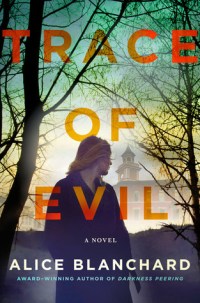
Kate’s Review: “Trace of Evil”

43263388Book: “Trace of Evil” (Natalie Lockhart #1) by Alice Blanchard
Publishing Info: Minotaur Books, December 2019

Where Did I Get This Book: I received an eARC from NetGalley.

Book Description: A riveting mystery that introduces a bold and audacious rookie detective assigned to hunt for a killer who is haunted by the past in this gripping murder case…

Natalie Lockhart always knew she was going to be a cop. A rookie detective on the Burning Lake police force, she was raised on the wisdom of her chief-of-police father. These cases will haunt you if you let them. Grief doesn’t come with instructions.

But the one thing her father couldn’t teach her was how to handle loss. Natalie’s beloved sister was viciously murdered as a teenager, and she carries the scars deep in her heart. Although the killer was locked up, the trace evidence never added up, and Natalie can’t help wondering―is the past really behind her?

As the newest member on the force, Natalie is tasked with finding nine missing persons who’ve vanished off the face of the earth, dubbed “the Missing Nine.” One night, while following up on a new lead, she comes across a savage crime that will change everything.

Daisy Buckner―a popular schoolteacher, wife to a cop, and newly pregnant―lies dead on her kitchen floor. As Natalie hunts for Daisy’s killer in the wake of the town’s shock, her search leads to a string of strange clues―about the Missing Nine, about Daisy’s secret life, and reviving fresh doubts about her sister’s murder.

As the investigation deepens, Natalie’s every move risks far-reaching consequences―for the victims, for the town of Burning Lake, and for herself.

Spellbinding and gripping, Trace of Evil is a novel of twisting suspense that will leave you breathless.

Review: Thanks to NetGalley for sending me an eARC of this novel!

Awhile back one of the librarians I follow on Twitter was speaking highly of a book by an author I hadn’t heard of. He had an ARC of “Trace of Evil” by Alice Blanchard, and when I clicked on the description it sounded like it would be up my alley. Small town police detective, missing people, a victim with secrets, all matters that will pull me into a story on any given day. I got it from NetGalley, and opened it up, expecting all of those things but maybe not much more. And what else did I get?

Witchcraft, covens, and teenagers with secret ties to black magic rituals.

giphy-1
Oh HELL YES. (source)

“Trace of Evil” has three main mysteries that make up the guts of the plot. The first is the most obvious, that of the murder of Daisy Buckner. Natalie Lockhart, our plucky but haunted protagonist, has her own personal connections to Daisy. Not only is she colleagues with Daisy’s husband, Natalie’s older sister Grace wa very close with Daisy, so Natalie’s personal investment is high. I enjoyed seeing Natalie slowly piece together various components to the murder, and how Blanchard was sure to show some of the downfalls of being a woman detective in a small town where everyone knows everything about your past. The second mystery involves a number of missing women, or the Missing Nine, that Natalie has been trying to solve since she joined the force. But along with that obsession, Natalie has her own personal mystery to try and solve; when she was a kid, a masked boy attacked her in the woods. Natalie has spent the rest of her life trying to find out who that boy was. Throw in the fact that her oldest sister Willow was the victim of a horrific murder, and you have a lady cop with a lot of emotional baggage on top of the usual caseload that she has to take on every day. But these various bits of backstory never bog Natalie down, nor does Blanchard make it an excuse to make Natalie overly prickly, overly reckless, or overly damaged. Her traumas absolutely have shaped her, but instead of taking the obvious route of ‘broken but brilliant cop’, Natalie is instead multifaceted and achingly human. I really, really like her as a protagonist (and yes, I’m already rooting for her and her colleague Luke to hook up. She’s had a thing for him since childhood, y’all, it’s great!). Blanchard also is able to take all three mysteries and to show how they are connected, even in the most superficial of ways, and really make the reader buy into the connections. This was one of those instances where I didn’t guess any of the solutions to any of the mysteries, and that left me tickled.

And yes, there is a witchcraft element that I thoroughly enjoyed, if only because I totally saw my own dabbling in Wicca within this plot point. Burning Lake, the town Natalie lives in, has a history of witchcraft and witch trials, and it has permeated a lot of the culture and turned it into a Salem-esque community. Not only did Natalie and her sisters dip their toes into it, but now Natalie’s niece and her friends have started to dabble. But, as is the case in other tales, cliques and infighting tends to lead to a misuse of the ‘magic’, and I loved seeing Blanchard bring that into this story and finding ways to not only connect it to the mystery at hand, but to also show how teen girls who feel powerless can be drawn in to the idea of magic and ritual.

I really, really loved “Trace of Evil”. My hope is that Natalie Lockhart comes back soon, because I now have a new mystery series that I fully intend to keep up with. I highly recommend this thriller to all fans of the genre, and hope that you love it as much as I did.

Rating 10: Suspenseful, detailed, engaging, and filled with great characters, “Trace of Evil” is a promising start to a new series that I thoroughly loved.

Reader’s Advisory:

“Trace of Evil” is new and not included on many Goodreads lists. But I think that it would fit in on “Small Towns with Secrets”, and “Spellbinding Fiction”.

Find “Trace of Evil” at your library using WorldCat!

Giveaway: “Realm of Ash”

43192642._sy475_

Book: “Realm of Ash” by Tasha Suri

Publication Info: Orbit, November 2019

Where Did I Get this Book: ARC from the publisher!

Book Description: The Ambhan Empire is crumbling. A terrible war of succession hovers on the horizon. The only hope for peace lies in the mysterious realm of ash, where mortals can find what they seek in the echoes of their ancestors’ dreams. But to walk there requires a steep price.

Arwa is determined to make the journey. Widowed by a brutal massacre, she’s pledged service to the royal family and will see that pledge through to the end. She never expected to be joined by Zahir, the disgraced, illegitimate prince who has turned to forbidden magic in a desperate bid to save those he loves.

Together, they’ll walk the bloody path of their shared past. And it will call into question everything they’ve ever believed…including whether the Empire is worth saving at all.

Previously Reviewed: “Empire of Sand”

Giveaway Details: While “Empire of Sand” didn’t work for me completely, I was still interested enough in this world to be excited when Orbit sent me an ARC of the next book. What makes this one all the more intriguing is that this isn’t a direct sequel, but instead picks up years later following a now grown Arwa as she finds her life taking a sudden, dark turn towards tragedy, estrangement, and isolation. But in these dark places, she begins to also learn of a truth, not only about herself, but of her long-lost sister and the people they both owe half their bloodline to.

As now typical for many of giveaway, I will be posting a full review for this book this coming Friday so I don’t want to spoil my opinions of it too much here. But I will say that I enjoyed this book much more than the first. There are a couple of similarities with regards to pacing that threw me a bit for a loop, but overall I greatly enjoyed the themes of self-acceptance and scholarship, as well as the deep dive into grief and its effects on love and family.

The world itself continued to deliver giving readers an even closer look into this inspired original creation of Suri’s that reads as just familiar enough as to be recognizably drawing from Indian and Middle Eastern influences but also offers enough elements to remain completely fresh and intriguing. Here, the work that was done in the first book, some of which contributed to my pacing concerns there, pays off more fully.

As I said, my review of “Realm of Ash” will go up this Friday, and in anticipation, I’m offering a giveaway for the ARC version of the book starting today. The giveaway is open to U.S. residents only and ends December 18.

Enter to win!

Kate’s Review: “The Dead Girls Club”

45701350Book: “The Dead Girls Club” by Damien Angelica Waters
Publishing Info: Crooked Lane Books, December 2019

Where Did I Get This Book: I received an eARC from NetGalley

Book Description: A supernatural thriller in the vein of A Head Full of Ghosts about two young girls, a scary story that becomes far too real, and the tragic–and terrifying–consequences that follow one of them into adulthood.

Red Lady, Red Lady, show us your face…

In 1991, Heather Cole and her friends were members of the Dead Girls Club. Obsessed with the macabre, the girls exchanged stories about serial killers and imaginary monsters, like the Red Lady, the spirit of a vengeful witch killed centuries before. Heather knew the stories were just that, until her best friend Becca began insisting the Red Lady was real–and she could prove it.

That belief got Becca killed.

It’s been nearly thirty years, but Heather has never told anyone what really happened that night–that Becca was right and the Red Lady was real. She’s done her best to put that fateful summer, Becca, and the Red Lady, behind her. Until a familiar necklace arrives in the mail, a necklace Heather hasn’t seen since the night Becca died.

The night Heather killed her.

Now, someone else knows what she did…and they’re determined to make Heather pay.

Review: Thank you to NetGalley for sending me an eARC of this novel!

I’ve spoken before about how my childhood was distinctly lacking in spooky urban legends about my community and neighborhood. I don’t know if that’s just larger city living or if I was surrounded by people who didn’t have time for such nonsense, but I do feel a little sad that we had a serious lack in fun, innocent creepy stories (and instead contended with actual creepy stories, like the flasher who’d jump out at joggers on the path by our house). I think that because of this I am especially drawn to stories with scary local folklore themes, and that was the main draw of “The Dead Girls Club” by Damien Angelica Walters. Well, that and the description of a group of teen girls who liked to talk serial killers for funsies. I wish I had that kind of friendship as a teenager. I went into “The Dead Girls Club” with high hopes and expectations that it would meld teenage girl angst with the supernatural, and for awhile I thought it had succeeded. Until it didn’t.

But before we talk about my frustrations, I want to emphasize that “The Dead Girls Club” was a pretty fun ride for the majority of the story. It hops between timelines, that of the present day, and that of the early 1990s. Our focus is mostly on Heather, a woman whose childhood best friend, Becca, was killed one fateful summer, after telling tales of a supposed witch called The Red Lady. Becca, Heather, and their friends were part of a secret club that liked the creepy things in life, but Becca’s obsession with the Red Lady urban legend starts to take over all of their lives. Especially when it seems that this made up story may have some truth to it. In the present we see Heather have to confront this summer when she starts getting secret messages from an anonymous someone (or perhaps something) that hints to knowing the truth about what actually happened to Becca, and what role Heather played in it. We see her try to discern who is stalking her, and see how her lingering fear of The Red Lady starts to take it’s toll on her life and psyche. This is interspersed with flashbacks to when Becca first started telling the stories, and we get to see the slow burn and build up of a deteriorating friendship and what exactly happened between the two girls, which left Becca dead.

I thought that the biggest strengths in this book laid in two factors: the first was the mythology and ambiguity of The Red Lady. Walters gives us enough evidence on both sides of the coin to make the argument that The Red Lady is real, or that The Red Lady is a combination of a lonely child’s imagination run amok and the hysteria shared between friends that are looking to freak themselves out. I do think that the narrative falls on one solution eventually, but I did like that a lot of left up to interpretation for a majority of the story. The other strength was in how Walters portrayed the complicated nature that some teenage friendships can have, specifically between two girls. I know this complexity and complication pretty well from my own experience, and seeing how Becca and Heather both start to grow apart and yet still cling desperately to each other was well written and completely believable. Hell, the Red Lady story itself was a fun and scary one, with smatterings of feminist revenge and all the best ghost stories that come with it. Walters also peels back the motivations for both Heather AND Becca, and once you get to the cores of both of them the spectre of tragedy is just as heavy as the spectre of the Red Lady. They are both sympathetic and frustrating characters, and I think that is the only way they could be written.

But the reason this gets bumped down a few ratings is because, unfortunately, Walters decided to throw in one big and out of left field twist that, for me, derailed the entire story. I won’t spoil it, as I think this is still worth the read, but by the time one of the big reveals came to be I rolled my eyes and muttered a frustrated but not terribly surprised ‘seriously?’ Again, I am not a hater of well done twists. If you can set it up effectively enough that in the moment you have a ‘but of COURSE’ epiphany based on small clues that came before it, I’m going to sing it’s praises forever. But in this case it just felt like a twist for the sake of a twist, and not one that was earned. You gotta earn those twists, people. That’s the only way to stick that landing.

“The Dead Girls Club” is a creepy and unsettling story that didn’t live up to its potential. It’s still worth taking a look, and I am definitely putting Damien Angelica Walters on my radar. But it could have been stronger.

Rating 6: A creepy thriller with a fantastic urban legend at its heart, but it gets derailed by a frustrating twist ending.

Reader’s Advisory:

“The Dead Girls Club” is new and not included on many relevant Goodreads lists, but I think that it would fit in on “Mysteries Featuring Urban Myths/Folklore”.

Find “The Dead Girls Club” at your library using WorldCat!

Fa La La La Films: Our Favorite Christmas Movies!

We’re in December now, and both of us are looking forward to cozying up on the couch with some yummy cookies, some holiday beverages of various kinds, and some great books. But it wouldn’t be the Christmas season without some Christmas movies! So we thought we’d take a break from books and share with you our favorite Christmas films.

Serena’s Picks

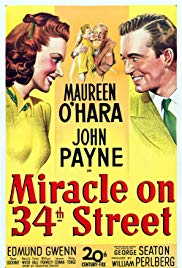
mv5bnjrkogewytuty2e5yy00odg4ltk2zwity2iymzuxogvhmtm1xkeyxkfqcgdeqxvyndk0mdg4ndk40._v1_ux182_cr00182268_al_“Miracle on 34th St.”

I think I’ve highlighted this movie before around Christmas, probably in our “Not Just Books” posts. But it’s impossible to list three of my top Christmas films without including it. It’s so perfectly imperfect with almost all of the characters being believably flawed, but still Kris Kringle is the only true Santa Claus ever, as far as I’m concerned. It’s a yearly tradition for me to watch this movie while I wrap presents. This often results in the present wrapping itself taking way longer than necessary as I’m so often distracted. But what do I care! Anyone who isn’t moved by the part where Santa sings with the Dutch girl is hard-hearted. There, I said. it.

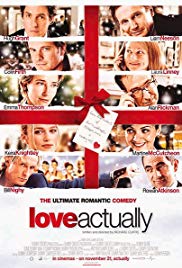
mv5bmty4njq5ndc0nl5bml5banbnxkftztywnjk5ndm3._v1_ux182_cr00182268_al_“Love Actually”

Yes, yes, sappy, overly sentimental “Love Actually” makes the list. But sometimes, you just want to have a good cry around Christmas when all the stress (normal stress, but also now somehow extra stress to STOP BEING STRESSED AND BE MERRY!) really starts to build up. And this movie is the perfect, saccharine flick to hit the spot. Plus, there’s no arguing with the stellar cast. Colin Firth is, obviously, always a favorite even though his story here is arguably one of the less compelling. And watching Alan Rickman be a sleaze who cheats on the wonderful Emma Thompson (who does that!?!) is delightfully hateful. And Liam Neeson is again the most wonderful father ever. So yeah, yeah, cheesy it may be, but I love it.

mv5bztcxnzgzzjmtyzzizc00mme1ltg3mzqtzdaxmtyyzwe4mdnhl2ltywdlxkeyxkfqcgdeqxvymtqxnzmzndi40._v1_ux182_cr00182268_al_“You’ve Got Mail”

This is a seasonal film, obviously, taking place over an entire year and feeling appropriately festive for each and every one of those seasons. But some of the major changes happen during the winter months, and Meg Ryan has some lovely monologues about Christmas and how hard the holiday season can be when we’re also missing those we love who can’t celebrate with us. For me, this makes it a great Christmas movie. Plus, to counteract all of the crying from “Love Actually,” this film has a lot of laughs and is my favorite Ryan/Hanks film. Yes, more than “Sleepless in Seattle” due to the simple fact that the two have much more screen time together in this movie.

Kate’s Picks

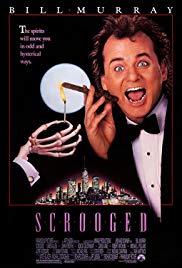
mv5bm2nlmdqzmdktntmyzs00mjbjlwi0mmetmzgzzdm2ztvknze1xkeyxkfqcgdeqxvyntuymze4mzg40._v1_ux182_cr00182268_al_“Scrooged”

I’ve talked about this movie before on this blog, but it remains my be all end all Christmas movie. This is the one Christmas movie I watch at least twice during the season, and the one that on Christmas Day my husband and I watch with mimosas and Christmas cookies. It’s an update of the “Christmas Carol” story, starring Bill Murray as Frank Cross, a cynical and bitter TV executive who has no love for Christmas and all the love for power. As you can imagine, he is visited by a number of ghosts to teach him the true meaning of Christmas. And let me tell you, everything about this movie is delightful. Murray is fantastic (naturally), but the supporting cast is also awesome, including Alfre Woodward as his assistant Grace (Bob Cratchit), Karen Allen as Claire (Belle), and Carol Kane as the Ghost of Christmas Present. It’s witty and dark and weird, and it still has one of the most emotional and touching endings of any Christmas movie, bar none.

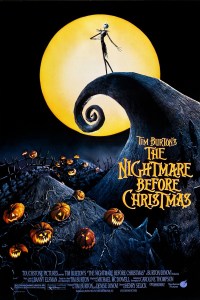
mv5bnwe4otnim2itmjy4ni00ztvilwfizmetzgeyngy2zmnlmziyxkeyxkfqcgdeqxvymdu5ndcxnw4040._v1_“The Nightmare Before Christmas”

I’m solidly on the ‘this is a Christmas movie’ side of the argument. I mean, sure, it stars a skeleton and has other ghosts, ghouls, and creepy things, but they are CELEBRATING CHRISTMAS. “The Nightmare Before Christmas” has had a special place in my heart since my childhood, with catch songs, spooky imagery, and a sweet romance weaved into a heartfelt Christmas tale. For the unfamiliar, Jack Skellington, the Pumpkin King and King of Halloween, has been feeling ennui about his role in the October holiday. So when he stumbles upon Christmas Town and finds out about Christmas, he decides that he wants to be in charge of the Yuletide Cheer. As one can imagine, his interpretations are a little, shall we say, off, and Christmas may be wrecked thanks to his good, misguided intentions. The music is catchy, the claymation is still stunning, and the real hero of the story Sally Ragdoll (played by goddess Catherine O’Hara) really solidifies the story for me. A true must watch in our household.

mv5bowmynje0mzetmzvjny00njixltg0zjmtmwjhngi1ymvjytczl2ltywdlxkeyxkfqcgdeqxvynzc5mja3oa4040._v1_“A Christmas Story”

Obvious? I prefer ‘classic’. Before the cable channels started showing “A Christmas Story” on a loop every Christmas, it was a cult hit and one that my childhood home was quite familiar with. We had the VHS when I was a child, and it was a movie that my parents always enjoyed because their childhoods (though a couple decades past the time period of the film) had a lot of similarities to Ralphie’s. Ralphie is a kid growing up in pre-WW2 Indiana, and all he wants for Christmas is a Red Rider BB Gun. That particular Christmas season for him involves tongues stuck to lamp posts, bullies, foul mouthed fathers, and a saucy lamp, and the anecdotes all come together to tell a very funny, and also very charming, story of youth. While there are many scenes that stand out as fantastic, my favorite (perhaps bolstered by my Mom’s love for it) involves a crabby department store Santa who literally kicks a child down a slide. Mean? Maybe. But hilarious. And the fact that generations of people can relate to Ralphie’s stories shows just how timeless some of the themes are.

What are some of your favorite Christmas movies? Let us know in the comments!

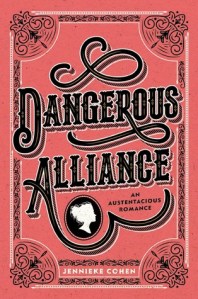
Serena’s Review: “Dangerous Alliance: An Austentacious Romance”

44244324Book: “Dangerous Alliance: An Austentacious Romance” by Jennieke Cohen

Publishing Info: HarperTeen, December 2019

Where Did I Get this Book: Edelweiss+

Book Description: Lady Victoria Aston has everything she could want: an older sister happily wed, the future of her family estate secure, and ample opportunity to while her time away in the fields around her home.

But now Vicky must marry—or find herself and her family destitute. Armed only with the wisdom she has gained from her beloved novels by Jane Austen, she enters society’s treacherous season.

Sadly, Miss Austen has little to say about Vicky’s exact circumstances: whether the roguish Mr. Carmichael is indeed a scoundrel, if her former best friend, Tom Sherborne, is out for her dowry or for her heart, or even how to fend off the attentions of the foppish Mr. Silby, he of the unfortunate fashion sensibility.

Most unfortunately of all, Vicky’s books are silent on the topic of the mysterious accidents cropping up around her…ones that could prevent her from surviving until her wedding day.

Review: “…An Austentacious Romance.” Need I say more? I’ve been debating doing a re-read of all of Jane Austen’s novels for the blog, so as a middle ground in the mean time, this was an obvious book to request. I often don’t enjoy straight re-tellings of Austen’s stories (often they are made into contemporary romances, and I just don’t care for those myself), but this one seemed to have struck on something new: a historical piece that both pulls from the themes found in Austen’s books and straight up references those books as reading material that the heroine herself is fond of. Part of this equation work, however, on the whole, this was less than I had wanted it to be.

Lady Victoria Aston has always tried to model her life around her favorite heroines, those found in Jane Austen’s works. So, when difficulties suddenly strike her family and she finds herself suddenly needing to marry well to secure their futures, she looks to these wise and witty ladies once again for guidance. But be it rogues who are much more dangerous than those found in the pages of a book or a childhood friend who has secrets of his own, Lady Vicky quickly finds that life is much more complicated than she had thought. And it’s not only the typical challenges of the marriage market that plague her, but somehow dangerous accidents seem to be cropping up everywhere as well. Is it all connected and, more importantly, what would Jane Austen do in this situation?

Obviously, for me, this is a fantastic premise for a book. Austen re-tellings are found all over the place, some successful, others…less so. But what a fun idea, to pull from common aspects found within Austen’s novels all while referencing those very books in the story itself with a main character whose story takes place in our own world and the time of Austen’s publications. It’s a fun idea, but unfortunately, it ends up being a bit too much.

The elements of the story that are not direct references to Austen’s work do end up coming across better. We have characters who definitely fall into familiar categories from Austen’s works: the rogues, the fools, the loving sisters. There are also familiar plot points, especially with regards to the romantic confusions and the family relationships. For herself, Vicky is a capable heroine. And, given the necessity of this book being read by modern readers, she’s much more proactive and involved in the action of the plot than some of Austen’s own leading ladies. If this does lend a bit of a anachronistic feeling to the story, it’s at least a familiar flaw for books in the historical romance genre.

That said, while some of the humor and romance do line up well with Austen’s own books, these lighter topics sit awkwardly next to some much darker themes. This is where the first of my complaints really came to play. I’m not saying that books in this genre can’t touch on darker themes, but handling them is a delicate thing. The book is tripping along happily and then BANG! A super dark scene is thrown at the reader. It was jarring and unexpected in a bad way. For a book that has the words “Austentacious romance” in the title,  there are some expectations laid down from the start. And while many of those were fulfilled, some of these darker bits did not lay comfortably with the rest. And after the second such instance, I was thrown out of the book enough to continue reading only warily, which resulted in my inability to fully immerse myself again in the fluffy fun of it all.

My second problem came with the Jane Austen references themselves, bizarrely enough. I’m not quite sure if ultimately I was just less enthralled with this concept as a whole once I actually started reading it, or whether this book just over-played its hand. There were simply too many of them! Almost every situation had Vicky comparing herself to one or another of Austen’s heroines.

And many of these references weren’t to well-known aspects of Austen’s works. This part, to some extent, I did enjoy as it proved that the author wasn’t just cherry picking the popular, well-known, and commonly referenced bits of Austen’s work. No, readers actually need to be familiar with many of Austen’s lesser read books, specifically “Mansfield Park” which received a lot of attention here and whose heroine, Fanny Price, often falls last on many people’s lists of favorites. But, all of that said, this does leave the book in the awkward position of only being truly appreciated by hard and fast Austen lovers, the very people who are likely to be the most critical of other books, such as this one, that are trying to emulate those beloved titles.

All told, however, there were just too many of these references for my taste. There were several moments where the comparisons did nothing to further enlighten the scene or character being contrasted in this book and only served to break up the action and distract the reader. I can’t say for certain that it would have been better without the references at all, but thinking back on it, I’m not sure it would be any worse for losing them either.

Overall, this was kind of a disappointing book for me. Don’t get me wrong, I think for the most part it delivers on what it promises. But I think the story does throw in some darker scenes that don’t mesh well with the light-hearted nature of the rest of the book and the Austen references ended up being more a distraction than anything. Reader who enjoy historical romance will still likely enjoy this book. But know that you’ll need to be familiar with more than just “Pride and Prejudice” and “Emma” to fully appreciate this story!

Rating 7: A neat little book that didn’t feel quite settled with itself: tonal inconsistency and an imbalance between original work and Austen references made up most of my complaints.

Reader’s Advisory:

“Dangerous Alliance: An Austentacious Romance” is on these Goodreads lists: Young Adult Regency and Jane Austen variations published in 2019.

Find “Dangerous Alliance: An Austentacious Romance” at your library using WorldCat!