My Year with Jane Austen: “Emma” [2009]

mv5bmtgxmdc1mzqxmv5bml5banbnxkftztcwmzy0mzuwmw4040._v1_TV Mini Series: “Emma”

Release Year: 2009

Actors: Emma – Romola Garai

Mr. Knightley – Jonny Lee Miller

Harriet Smith – Louise Dylan

Frank Churchill – Rupert Evans

Comparison – “Indulge your imagination in every possible flight.”

As it is so much longer than the previous version, this mini series was able to do what the 1995 BBC version of “Pride and Prejudice” was able to do for that story. Every  major scene and character is included, and the series doesn’t shy away from adding its own touches here and there which further flesh out side characters like Frank Churchill and Jane Fairfax. The series also plays fairly fast and loose with the dialogue, but overall it retains the spirit of every exchange and there are few instances where these changes stand out.

One of the more major changes from the book is in the framing of the story around Emma, Jane Fairfax and Frank Churchill and how their lives were greatly influenced by the losses they experienced as children. This version of the story devotes quite a bit of time to the story before where the book itself picks up. In this way, we really do see how Emma has always been the center of attention. Unlike the other two children without a parent(s), she stays home. We see that even as a governess, Miss Taylor is bewitched by the charming Emma. And, of course, her father can see no flaws in her. Mr. Knightley is the only one to critique her, and even he admits privately that she’s the most beautiful and smart of her family. The movie also does a lot of groundwork to set the stage for Emma’s matchmaking. This version has Emma claiming to be the influence behind her sister and John’s marriage, a change from the book. So by the time she gets to Miss Taylor and Mr. Weston and has success there, it’s hardly any wonder that she believes herself an expert in this area.

The cast is also superb. There’s not a single misstep in the entirety. If forced to single someone out, I might say that this version of Jane Fairfax leaned very heavily into the reserved portion of her character at the expense of her elegance. In this way, the 1996 version may have come out ahead. The Jane we saw there was undeniably elegant, and it was easy to see why Emma would be threatened by her. This Jane had a tendency to fade into the background and read as more shy than anything else. But other than that small quibble, I really loved everyone who was cast in this. Michael Gambon is probably the standout as far as excellent side characters, and he really helps sell the loving, but dependent, relationship Mr. Woodhouse has for his daughter.

Heroines – “I hate to hear you talk about all women as if they were fine ladies instead of rational creatures.”

Romola Garai’s Emma is very different than Gwyneth Paltrow’s. Where Paltrow’s version was more cool and collected, Garai’s is joyous and exuberant.  This version of Emma seems to ground more of her flaws in youth and actual inexperience with the world and people than in any true character flaws. In many ways, I think this is very accurate to the book. Both there and here, we see a character who has always been the center of every social situation she’s in: family, friends, and the greater neighborhood overall. It’s like Frank Churchill notes later, “she presides over all.” It’s no wonder that this early regard from almost everyone in her life, regard pushed to the point of adoration even, would have this effect on her. We only ever see Mr. Knightley be critical of Emma and her decisions and even he can’t resist pairing his criticism with compliments (to her looks, when he is talking to Mrs. Weston, and to her wit, however misused, when he’s fighting with Emma herself).

Garai’s version of the character definitely pops on the screen, and it’s easy to see how the eyes of all would be drawn to her. She has a much more playful take on Emma’s matchmaking than we’ve seen before, but is still able to capture the more serious moments as well. When she confesses to Harriet, after revealing the truth about Mr. Elton, that she would be lucky to resemble Harriet in any small way, it’s very touching.

I also like all the attention that is given to Emma’s relationship with her father in this version. We see many small moments of the two of them together, with Emma fretting over her father’s scarf and worrying over the brewing conflict between him and John Knightley. I also really liked the way they dealt with the situation about their living arrangements after Emma and Mr. Knightley get engaged. It works both as a comedic scene, with Emma barging into Knightley’s office and declaring they can never marry and rushing out again, and as a serious one, as we can also see the true pain Emma is feeling about the prospect of hurting her father and her refusal to put him through that.

Heroes – “What are men to rocks and mountains?”

I absolutely love Jonny Lee Miller in most everything, and his take on Mr. Knightley is probably one of the strongest selling points for this version of the story for me. I really have zero criticisms for the way he portrays this character. In the book, Mr. Knightley really doesn’t have a lot to do in the first half of the story. He kind of pops in and out, has a big fight with Emma, and then disappears for a good bit until reappearing about halfway through the story. But this version makes good work of including him better in scenes and giving him more lines here and there to keep him ever present in viewers minds.

Miller has great delivery on some of the more comedic lines, like his and Emma’s teasing about the use of carriages. And, of course, he excels in the scenes in which he fights with Emma. This version’s fight over the Harriet/Mr. Martin situation is the most extended of all the versions, and it’s great watching them both shine. And then in the Miss Bates scolding, I love the way he delivers his lines, especially the “badly done.” You can see a marked difference in this fight versus the first. Miller’s able to add a new layer of disappointment and concern that speaks well to the character’s change in perspective to Emma.

I also liked all the scenes they include of Mr. Knightley walking about the countryside, playing in the snow with his nieces and nephews, etc. It’s a good highlight of the type of active, outdoorsman that he is presented as. This version also gives us personal insight into Mr. Knightley’s own thoughts. After the ball scene, we see him imaging Emma in his own home. It’s a good contrast to the two scenes we had before where Emma imagines Mr. Knightley married to Jane Fairfax. It’s great having both scenes with the different insights into their different thoughts and feelings.

The movie also includes several little scenes between Harriet and Mr. Knightley. We see them walking together, sitting next to each other, and talking privately. It all comes across in a very natural way, but then when Harriet brings up her hopes for the future, we, the audience, can see the groundwork lain. And it’s easier to understand Emma’s real concern that Harriet may be a true threat to Emma’s future happiness.

Villains – “I do not want people to be very agreeable, as it saves me the trouble of liking them a great deal.” 

The Frank Churchill of this version leans heavily in on the villainous side of the character. He takes every opportunity to criticize Jane behind her back, commenting to Emma about her hair being ugly and how unlovable a reserved person is. He seems to be criticizing her when he sidehandedly comments about the mistake he made in bring up Dr. Perry’s carriage plans when hardly anyone else knew about it. And the flirtation with Emma is at a peak. At the Box Hill party we see him making more snide comments to Jane, all while being completely overboard with his compliments to Emma, even laying on her lap at one point, a shocking level of familiarity at that time.

He also seems often poor tempered. Whining and complaining about his life to Emma during the strawberry picking, and then, again, being a poor tempered brat at Box Hill. The actor’s take on the character really works well with this interpretation of the character, as he has a bunch of perfect facial expressions that highlight how shallow and spoiled Frank can often be. All in all, it’s hard not to agree with Knightley’s assessment of the situation: that Jane could do much better.

There is an interesting added twist to his character in that we see early in the movie the scene where he is sent away from home after his mother dies. And then towards the end, we see him return to the same spot. It seems to be implying that he holds some bitterness towards his father for sending him away. But the movie just barely brushes on this angle, and even the interpretation I’m making from it is by no means super clear. It’s an odd little track that I wish they had either more fully committed to exploring, in context of the character traits Frank exhibits as an adult, or left out entirely. As it is, it’s a bit weak, and like I said, I don’t feel fully confident that I even understand fully what they were going for.

Romance – “A lady’s imagination is very rapid: it jumps from admiration to love, from love to matrimony in a moment.”

I really, really like what they do with the romance in this version. Like I pointed out in my review of the book, the romantic plotline isn’t really even hinted at until over halfway through the story. So if readers aren’t invested in Emma’s comedy and antics, it can be a bit of a letdown. And in a movie version of the story, it’s even harder to pull of this type of late-game introduction of a romantic storyline.  If not handled right, it can make the romance seen as an afterthought and not properly built to.

Here, however, by giving Mr. Knightley more to do and more lines, the movie is careful to lay a thorough groundwork for the romance throughout. There are at least two instances that I can think of specifically where the movie goes out of its way to show how Mr. Knightley’s actions are often motivated by his feelings for Emma. First, when John and Isabella are visiting and John begins to become snappish with Mr. Woodhouse, the camera cuts to Mr. Knightley’s face and we see him observing Emma becoming more and more distressed. Even though they are still fighting a bit over the Harriet/Mr. Martin thing, it’s clear that Mr. Knightley’ speaks up to redirect his brother in an effort to bring Emma more peace. And secondly, at the ball, we see Emma become increasingly upset as she dances nearby Harriet and witnesses the rudeness of Mr. Elton. Again, the camera cuts to Mr. Knightley and we see his face as he watches Emma becoming more and more upset before he steps forward to aide Harriet. Both of these are very small moments, but they are so important for constantly fixing audiences’ attention on the importance of Emma to Mr. Knightley. And in both instances, Emma expresses thanks for Mr. Knightley’s actions, either in a quiet smile towards him or directly spoken to him.

I also really like the way they film the proposal scene and the moments directly afterward. I would say I wish they had filmed it in a bit less of a sunny location as you can tell both actors are having to squint at each other while talking. But as for the added dialogue and the delivery of lines, I think it’s excellent. Miller has perfect delivery on the “If I loved you less, I could talk about it more” line. And I really liked the added lines they gave Emma for her response to his declaration. As the book doesn’t include these lines, all the movies have to make something up here, and I think they did very well.

I also like the scenes after, the quiet, intimate moments when the two are sitting on a private bench discussing when they realized they loved each other. It has a nice balance of romance and a continuation of the type of friendly teasing that will always be in their relationship. And, of course, we get to see them go on their honeymoon and go to the seaside. The movie does a good job of introducing this fact, that Emma has never been to the seaside, early in the movie and then touching on it here and there throughout. So it’s a neat little button on the movie to end with her and Knightley standing on a cliff side looking out over the ocean.

Comedy – “For what do we live, but to make sport for our neighbors, and laugh at them in our turn?”

Louise Dylan does a fantastic job as Harriet Smith. She perfectly captures the character’s simple beauty and charm, but also her lack of real depth. I love her facial expressions as she’s posing for her portrait and trying to secretly sneak Mr. Elton’s pencil. I also think one of the funniest lines in the entire movie is when she’s trying to work out Mr. Elton’s riddle and when asked by Emma to put the words “ship” and “court” together, she excitedly comes up with “Ship court!” Good stuff.

The Eltons are also always good for a laugh in more of a love-to-hate them sort of way. Mr. Elton’s exuberance early in the movie is overwhelming. And he’s at his peak at the Christmas party where he rudely snaps at one of the servants not to crush Emma’s coat. And then constantly bothers her with questions and, later, literally wedges himself in between her and another guest. You have to wonder if Emma was beginning to question whether Elton would even due for Harriet, let alone herself.

One of Mrs. Elton’s best moments is when she commenting about abhorring being over-trimmed while literally being covered with feathers and ruffles. The movie also does a great just with some quick cuts between characters when Emma is trying to plan the trip to Box Hill. We see how instantaneously Mrs. Elton dominates every social plan to make herself the center of attention. It’s also a nice little karma moment for viewers when we see Mr. Elton struggling to pull along the donkey that Mrs. Elton insisted on riding to strawberry picking. It’s completely ridiculous, but he literally yoked himself to this situation, so…

Fun facts – “Life seems but a quick succession of busy nothings.”

I remember hearing in some commentary or another that the stylists exaggerated Mr. Elton’s puffed up hair do more and more throughout the movie to signify is growing ego and ridiculousness.

Jonny Lee Miller and Blake Ritson (Mr. Elton) had both previously played the same Austen hero, Edmund Bertram, in two different adaptations of “Mansfield Park.” We should have seen them both in those first had I reviewed these in the right order, but alas. I bet everyone can guess who I thought did the character better…

There was a surprise spattering of snow outside the house that was staged as Hartfield one day.  And when the director was notified of it, they rushed cameras down, along with the signature swan that was often shown outside of the house, to capture the view for the winter scenes.

Christina Cole (Mrs. Elton) played Caroline Bingley in “Lost in Austen.” A pretty good fit, I’d say.

Emma is often shown at Hartfield wearing a small watch adornment attached to her dress. This was included to signify that she was the lady of the house.

Best Movie Gif/Meme: “I dearly love a laugh.”

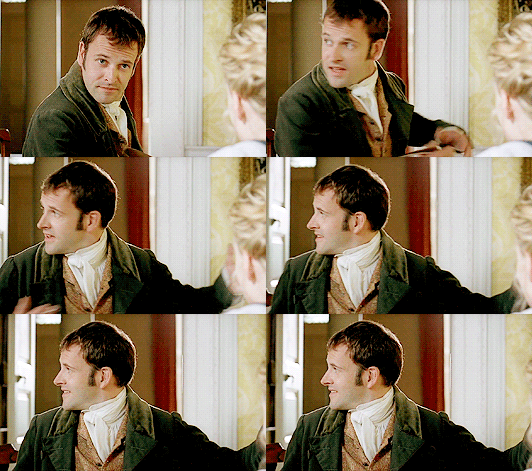
Have I mentioned that I love Jonny Lee Miller’s version of this character? Even in small moments like this, when he’s being exasperated by Emma’s silliness:
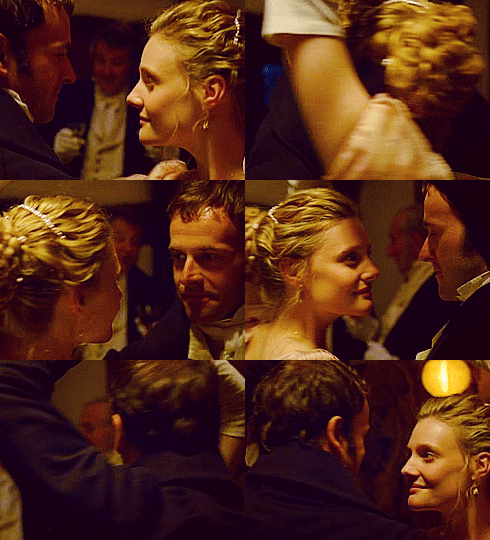
And this movie has one of the best Austen dance scenes, as we get to see our two main characters dance together while clearly enjoying each other’s company. It’s also fun because Miller makes several awkward facial expressions throughout that show that he is becoming more and more aware of how in love with Emma he is, even though she’s still obviously clueless.
In two weeks, I’ll review a modern adaptation, “Clueless.”
Kate’s Review: “The Sandman (Vol.2): The Doll’s House”

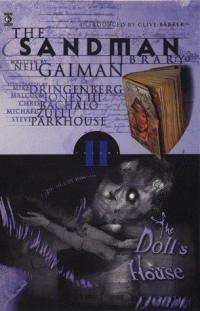
25099Book: “The Sandman (Vol.2): The Doll’s House” by Neil Gaiman, Steve Parkhouse (Ill.), Chris Bachalo (Ill.), Michael Zulli (Ill.), Mike Dringenberg (Ill.), & Malcolm Jones III (Ill.)
Publishing Info: Vertigo, June 1990

Where Did I Get This Book: I own it.

Book Description: A being who has existed since the beginning of the universe, Dream of the Endless rules over the realm of dreams. In The Doll’s House, after a decades-long imprisonment, the Sandman has returned to find that a few dreams and nightmares have escaped to reality. Looking to recapture his lost possessions, Morpheus ventures to the human plane only to learn that a woman named Rose Walker has inadvertently become a dream vortex and threatens to rip apart his world. Now as Morpheus takes on the last escaped nightmare at a serial killers convention, the Lord of Dreams must mercilessly murder Rose or risk the destruction of his entire kingdom.

Collecting issues #9-16, this new edition of The Doll’s House features the improved production values and coloring from the Absolute Edition.

Review: Our revisit of this classic comic series presses on, and now that Morpheus/Dream has reclaimed his power over The Dreaming, he has more work to do! As I continue my re-read I have been struck by how visceral and enchanting “The Sandman” universe is, and while it does still harken to other DC characters and mythos on occasion, we have started to stay firmly within a world of Gaiman’s making. And it is just as engrossing this time as it was the first time.

I don’t know why I waited so long to revisit Dream, The Endless, and the Dreaming, because going back to “The Sandman (Vol. 2): The Doll’s House” really hit home how much I love this series. There’s dark humor, there’s lovely fantastical world building as you get more familiar with The Dreaming (Dream’s domain he rules over) and begin to meet other Endless (specifically Desire in this arc), and there’s an undercurrent of horror to go along with the fantasy. Our main drive this time is that of Rose Walker, a woman who is, unknown to her, a Dream Vortex, and therefore something very dangerous for The Dreaming as her very existence could damage it beyond repair. On top of that, a few of Dream’s Nightmares have escaped, and are wreaking havoc in different ways. In this volume Dream is still trying to re-steer his ship after his captivity, and we see just how far the damage of his absence has  gone. Rose has her own mission, and it is to find her little brother, who has gone missing. With the help of a mysterious but kind man named Gilbert, Rose goes looking for her brother, just as Dream starts looking for her. We see a few callbacks to other parts of “Preludes and Nocturnes”, which were done in slow and subtle ways, which made them feel all the more satisfactory as they were peeled back and revealed. The dreamlike atmosphere of this series is still present, as is the darkness. This time that horror aspect is in the form of a ‘Cereal Convention” that Rose and Gilbert stumble upon, which is actually a gathering of serial killers that are hoping to share insight with each other. I had forgotten how twisted this entire thing was, and let me tell you Gaiman doesn’t hold back. To the point that I really feel a need to give a content warning for abuse and sexual assault (and also a note that there is descriptions of violence against trans people in particular. Which felt very problematic but also very of the time that this series was going).

But once again, it’s a standalone story that has a lot of philosophical oomph and a lot of heart that stood out to me in this volume. While the arc of Rose Walker and the ‘cereal’ convention is definitely stellar, it was the story “Men of Good Fortune”, in which Dream and Death decide to give a man named Hob Gadling eternal life after they hear him waxing philosophical about mortality in a pub in 1389. Every hundred years, Hob and Dream meet at this pub, and Hob tells Dream about what he is doing with his eternity. There are highs and lows as Hob experiences the evolution of London, and we get to see how he changes the direction of his life and how it leads to success and devastation. What struck me the most about this story, outside of seeing how one person might shift and evolve with the world they live in were they to have eternity to do so, is that Hob and Dream are an unlikely set of friends whose friendship feels natural and touching. I remembered that Hob pops up here and there throughout the series, but I had forgotten how lovely his introduction was.

The art is still excellent. We’ve started to see more experimentation in design, style, and placement, and while sometimes there is a very traditional art style (like in “Men of Good Fortune”), sometimes it is very abstract. It really just adds to the flavor of the atmosphere that they’re all trying to create, and for the most part it works.

“The Sandman (Vol.2): The Doll’s House” opens up the series to more possibilities, and more darkness. You can tell that this is something very special on these pages.

Rating 9: More chills and world building along with introductions to more of the Endless, “The Sandman (Vol. 2): The Doll’s House” keeps the horror elements up while also showing moments of true tenderness.

Reader’s Advisory:

“The Sandman (Vol.2): The Doll’s House” is included on the Goodreads lists “Great Non-Superhero Graphic Novels”, and “Psychological and Philosophical Comics”.

Find “The Sandman (Vol.2): The Doll’s House” at your library using WorldCat, or a local independent bookstore using IndieBound!

Previously Reviewed: 

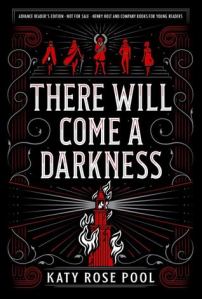
Serena’s Review: “There Will Come a Darkness”

41823536._sx318_Book: “There Will Come a Darkness” by Katy Rose Pool
Publishing Info: Henry Holt Books for Young Readers, September 2019

Where Did I Get this Book: audiobook from the library!

Book Description: For generations, the Seven Prophets guided humanity. Using their visions of the future, they ended wars and united nations―until the day, one hundred years ago, when the Prophets disappeared.

All they left behind was one final, secret prophecy, foretelling an Age of Darkness and the birth of a new Prophet who could be the world’s salvation . . . or the cause of its destruction. As chaos takes hold, five souls are set on a collision course:

A prince exiled from his kingdom.
A ruthless killer known as the Pale Hand.
A once-faithful leader torn between his duty and his heart.
A reckless gambler with the power to find anything or anyone.
And a dying girl on the verge of giving up.

One of them―or all of them―could break the world. Will they be savior or destroyer? 

Review: June has been the month of “better late than never” as far as my reading goes. This is at least the second book that I’ve read this month that was hugely popular last fall and yet…I didn’t get to it until just now. But there’s just so much good fantasy out there, and, I’ll admit, I’m always a bit hesitant about these books that seems to flare up as “the next big thing” in YA fantasy. My track record with these super popular new fantasy series hasn’t been good. But I liked “The Merciful Crow” more than I was expecting, so I thought I’d give another big title a chance. Sadly, this wasn’t as much of a hit for me, though I’ll likely still keep reading the series.

Five young people are living very different lives in very different spheres. Some from wealth, some from poverty, some who are running, and some who know that it is up to them to find what no one else can. But their world is on the brink of change, with powerful forces moving against those with magical abilities and a prophesy that has loomed over the heads of the people for generations. Each with their own role to plays, these disparate lives begin to cross and the pieces begin to fall in place. But who is the savior and who is the source of destruction?

I already gave away that this book wasn’t a hit for me, but I will start with a few positives before getting into my critiques. As the description gives away, this is an ensemble cast, but I was so pleased to find that it wasn’t another YA fantasy ensemble ala “Six of Crows.” For one thing, it’s centered around a prophesy and not heists, and more importantly, besides one exception, all of our main characters start out not knowing anything about the others. And this holds true though out most of of the story. Some characters weave in and out of other’s stories, but by the end, only a few of them have even ended up together with others still scattered to the wind.

But other than the unique approach to its ensemble cast, this book was barely even a book. Instead, it read much more like an extended prologue before the last few chapters sort of got into things. With such a large cast of characters and the fact that they all have unique histories and no nothing about each other (losing the opportunity to cross-tell their stories through various POVs that you often see in other books with large casts), the book has to devote almost two thirds of the story to introducing its main characters. The chapters were also short, so just when I felt like I was settling into one character’s life, struggles, and thoughts, I was suddenly bounced into a completely different character’s story. Between all of these switches, it was hard to become truly invested in any of them. And, like I said, it left very little room for the story to actually develop.

Frankly, very little actually happens in this book. We do get some action towards the end, but even that was a bit of a letdown. Some of the “reveals” I could see from a mile off and fell flat when they came. There was a big bad character who was talked about through much of the story, but when he finally appeared on page, he, too, felt like a let down and not nearly the threat he was meant to represent. The prophesy itself seemed interesting, but we barely scratched the surface of that here. Like I said, it read more like an extended prologue and introduction than a book itself.

Beyond that, I struggled to actually like any of the main characters. Several of them continued to make poor decisions that didn’t seem to fall in line with the roles they were in. Even as things fell apart around them and they began to see the negative consequences of their choices, they just continued to do so. It ended up being incredibly frustrating. One of the main characters, also, has an incredibly predictable story arc and was simply pretty dull all around. There were maybe two characters who I could kind of become invested in. But even I even struggled with them at times. A lot of the character choices and plot points just made several characters very unsympathetic. Even by the end of the book, it felt like many of them had learned nothing at all. This also played into the feeling that the book was an extended introduction. We don’t really see much true character growth on the page, and it ended with them all still feeling rather half-baked.

Overall, I was pretty disappointed by this book. But, like I said in the beginning, I’ll likely give the second one a go just because of the fact that this one read so much more like a prologue than a story itself. I want to see if the action will actually pick up in the next one! If you really like ensemble stories and want one that isn’t focused on heists, this may be worth checking out. But don’t go in with your expectations too high.

Rating 6: Not fully realized on its own, the plot was lacking and the characters shallow, leaving a lot of work for the sequel to improve upon.

Reader’s Advisory: 

“There Will Come a Darkness” is on these Goodreads lists: “Prophecies” and, amusingly enough, “The books that I bought during the pandemic to make me feel better….”

Find “There Will Come a Darkness” at your library using WorldCat!

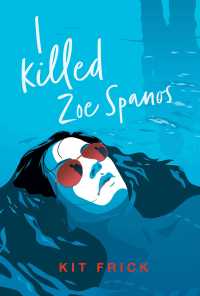
Kate’s Review: “I Killed Zoe Spanos”

50202540Book: “I Killed Zoe Spanos” by Kit Frick
Publishing Info: Margaret K. McElderry Books, June 2020

Where Did I Get This Book: I received an eARC from NetGalley.

Book Description: This gripping thriller follows two teens whose lives become inextricably linked when one confesses to murder and the other becomes determined to uncover the real truth no matter the cost.

What happened to Zoe won’t stay buried…

When Anna Cicconi arrives to the small Hamptons village of Herron Mills for a summer nanny gig, she has high hopes for a fresh start. What she finds instead is a community on edge after the disappearance of Zoe Spanos, a local girl who has been missing since New Year’s Eve. Anna bears an eerie resemblance to Zoe, and her mere presence in town stirs up still-raw feelings about the unsolved case. As Anna delves deeper into the mystery, stepping further and further into Zoe’s life, she becomes increasingly convinced that she and Zoe are connected–and that she knows what happened to her.

Two months later, Zoe’s body is found in a nearby lake, and Anna is charged with manslaughter. But Anna’s confession is riddled with holes, and Martina Green, teen host of the Missing Zoe podcast, isn’t satisfied. Did Anna really kill Zoe? And if not, can Martina’s podcast uncover the truth?

Review: Thank you to NetGalley for sending me an eARC of this novel!

In case you were wondering, I’m still on my bullshit when it comes to True Crime podcasts. I haven’t really strayed into new territory outside of the old reliables, but if you have some recommendations, send them my way! More and more we’re seeing podcast themes making their way into mysteries, perhaps in part due to this true crime boom within the listening world. Sometimes it works, other times it doesn’t, but I’m always game to try that kind of book out. So of COURSE “I Killed Zoe Spanos” by Kit Frick caught my eye! It has elements that I greatly enjoy in my thrillers: a luxurious summer setting, a missing girl, secrets that the privileged and the non-privileged alike keep close to their vests. SO, you throw in a podcast angle and I am gonna be there! “I Killed Zoe Spanos” really hooked me in, and it was just the kind of read I could see myself reading on the beach. You know, if I was going to the beach this summer. Which I’m not.
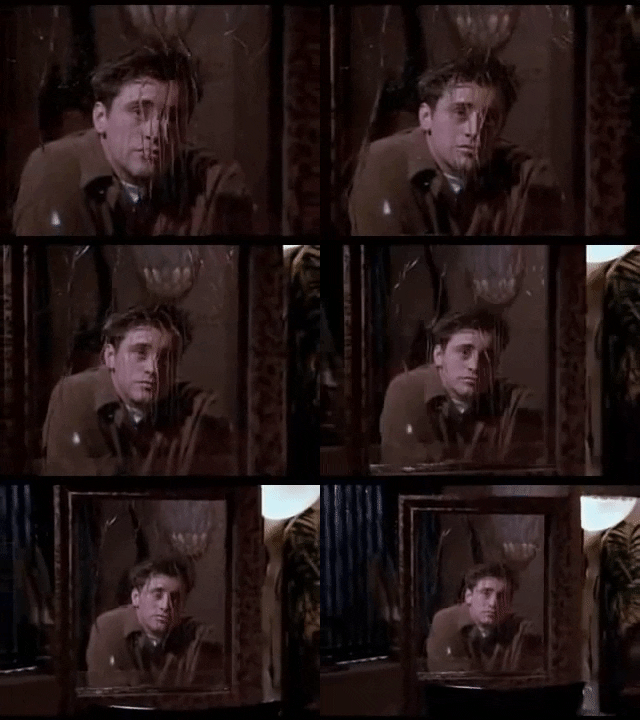
giphy-1
Goddamn pandemic. (source)

“I Killed Zoe Spanos” follows two distinct perspectives. The first is of Anna Cicconi, a teenager who has come to the Hamptons town of Herron Mills to be a live in babysitter. Herron Mills has a lot of money, a lot of privilege, and is currently haunted by the fact that local girl Zoe Spanos has gone missing that past New Year’s. Eventually Anna confesses to killing Zoe, even though as far as anyone knows there is no connection between the two. The other perspective is that of Martina Green, a local teen who is best friends with Zoe’s sister Aster, and puts out a podcast about the case. Anna’s perspective is mostly in the past and in the first person, while Martina’s is in the present and in the third. Sometimes I have a hard time when there are two kinds of POV styles in a book unless I feel it’s warranted, and with “I Killed Zoe Spanos” I felt like it worked fairly well. It made it so that we could get both the unreliability of Anna’s perspective, given that we have no idea what her connection to Zoe is, even though there is clearly something going on, and also the outside third person lens that Martina has as she is trying to solve the mystery herself. Throw in the transcripts for Martina’s podcast, which adds a whole other layer of potential unreliability (or at least bias), and you have a lot of potential for looking at Zoe’s disappearance and death from all sides. I thought that these three views all complemented each other pretty well, and had enough potential for red herrings within them all to make the mystery interesting. I enjoyed a few of the twists and turns quite a bit, though I will admit that I think that there was a bit of an overreach that came up right at the end. You don’t have to overdo it is all I’m saying.

As far as the characters go, no one really stood out too much in terms of going beyond their templates. Anna is unreliable and mysterious, perhaps threatening but maybe not. Martina is tenacious and truth seeking. I think that there was some interesting potential in some of the side characters, particularly Zoe’s boyfriend Caden, a transracial adoptee whose skin Others him within a very wealthy, and white, insular community. But we didn’t really go looking too deeply into many of these side characters, no matter how interesting they might be.

“I Killed Zoe Spanos” is definitely the kind of book that will take you in this summer! If you are a thriller fan and do find yourself able to safely go to a beach, or sit by a pool, this would be a great read to accompany that kind of excursion!

Rating 7: A fun mystery with some interesting turns, “I Killed Zoe Spanos” is a reliable summer read for thriller fans and fans of true crime podcasts alike.

Reader’s Advisory:

“I Killed Zoe Spanos” is included on the Goodreads lists “What’s My YA Name Again”, and “Can’t Wait Crime, Mystery, & Thrillers 2020”.

Find “I Killed Zoe Spanos” at your library using WorldCat, or a local independent bookstore using IndieBound!

Not Just Books: June 2020

While we do love us some books, believe it not, we do have a life outside of reading. So to highlight our other pop culture interests, on the last Monday of each month, we each will highlight three other “happenings” from the last month. Big events on favorite TV shows, new movies we’ve watched, old movies we’ve “discovered,” etc. Pretty much whatever we found of particular interest outside of the book world during the last month. Share your own favorite things in the comments!

Serena’s Picks

mv5byzayodllngutmzy1ms00yzrllwe4mzctmzjknzazngu5nzllxkeyxkfqcgdeqxvymtqxnzmzndi40._v1_ux182_cr00182268_al_TV Show: “Top Chef”

I’ve probably watched all of the seasons of “Top Chef” by now. It’s probably my favorite cooking competition show (not counting “The Great British Baking Show”) due to its low emphasis on drama between the contestants and typically high quality competitors. This season was even more fun as it was an “All Stars” season, so several of my favorites were in the mix. I had one particular favorite that ended up making it all the way to the end, though sadly not winning. But I was satisfied with who did end up winning and enjoyed the run overall. Restaurant Wars is always a fun set of episodes, and it was interesting watching a show that partly filmed in Italy that had to put up disclosures that it was filmed before Covid hit the country.

mv5bodq0ndhjywitytmxzi00ntk2lwizndetowziywyxzjc2mtgxxkeyxkfqcgdeqxvymtqxnzmzndi40._v1_ux182_cr00182268_al_

Movie: “Jumanji: Welcome to the Jungle” 

Naturally, during this stressful time, I think we’re all looking for some light-hearted distractions. I’d been wanting to check out this comedy for a while, and now seemed like the perfect time. I’m pretty picky as far as my comedy movies go, but the preview for this one definitely sparked my interest. Not to mention my love for the 90s Robin Williams version. And I was super excited to see the way that that movie was drawn in and referenced here. I hadn’t been expecting it to really tie back to that movie as much as it did. I think the updates on how the game has adapted for modern kids was very intriguing, and it’s definitely one of those things that appeals even more to those who play video games themselves, like I do. The cast was fun, though Dwayne Johnson definitely stole the show. I’ll have to recommend it to my Mom since she pretty much loves anything “The Rock” does.

mv5bmtiymte3mta2n15bml5banbnxkftztcwmju3ntg1mq4040._v1_uy268_cr90182268_al_TV Series: “Medium”

And on a darker note….I also really enjoy crime procedurals. As long as the cast is good and the mysteries intriguing enough, I’m on board to binge my way through season after season. And given how much I hate trying to find something new, the longer a show’s run, the better! So I’d been mentally saving this 7 season show for desperate times, and here they are! I’m about finished with season 2 and really enjoying it. Some of the episodes have been way darker than I had been prepared for, and those have been a bit tough to deal with. But the lovely representation of Allison’s children and loving husband are always just the right balance to the darker nature of some of the mysteries. I’ve also really liked how creative the show has been with its premise, a medium working for the police. It could have become a very tired concept pretty quickly, but so far the show has been able to keep adding fresh angles to it.

Kate’s Picks

mv5bodqxmmi3zgqtogrlny00mzi3lwe3zmitowrjm2i2yjqyyzgzxkeyxkfqcgdeqxvymzi2mzyynzi40._v1_uy1200_cr17106301200_al_TV Show: “Kim’s Convenience”

If you thought that there was only one delightful CBC comedy to watch on Netflix, do I have news for you! It was just recently that I had heard of “Kim’s Convenience”, a sitcom about a Korean-Canadian family running a convenience store in Toronto. But in need of light and cheerful content, I threw it on one day and then was immediately hooked. The Kim family are all very charming and multi layered, with Kim Sang-il and Kim Yong-mi running the store and their children, Janet and Jung, living their lives as children of immigrants who are trying to have independence from their parents. I find all of the characters sweet and endearing, even when they are sometimes making poor, or at least misguided, decisions. Overall, despite some of the mild dysfunction like many families have, the Kim family is easy to root for, and the show is both notable for taking on an immigrant story as well as the witty comedy that comes with it.

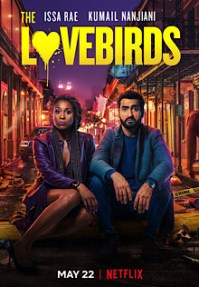
the_lovebirds_posterFilm: “The Lovebirds”

I saw the trailer for “The Lovebirds” during one of my last endeavors to the movie theater before COVID-19 sent us all inside, and I had wanted to see it. So while I was bummed that the movie theater experience wasn’t going to happen with this film, I was stoked when Netflix picked it up! Leilani and Jibran are a couple that is starting to fizzle out, and right as they break up they almost immediately hit a bicyclist… And then another man hijacks their car, and runs the bicyclist over. Now Leilani and Jibran, worried that they will be blamed for the murder, go on their own journey to find out who the bicyclist was, who the murderer was, as to try to clear their names. And what they find is a madcap set of events that had me laughing basically the whole time. Kumail Nanjiani and Issa Rae have great chemistry, both romantic and comedic, and the romantic comedy aspects and tropes are twisted about with some noire-ish tropes as well. If you want a romantic comedy with a little bit of quirkiness, this is the one to check out!

web_largecoverart_series_snowfall_540x796TV Show: “Snowfall”

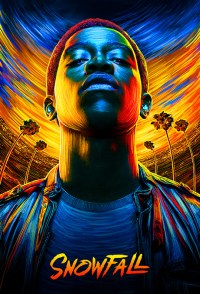
And now we ditch the light hearted content on my list for something completely different and super dark. We take a deep dive into the first big crack epidemic in the 1980s Los Angeles, and how it damaged communities, ravaged lives, and showed hypocrisy of the United States Government and its supposed War on Drugs. “Snowfall” is a crime drama created by John Singleton, director of “Boyz n the Hood”, and it follows dealers, cartels, and CIA agents and how they all play a role in the drug trade. “Snowfall” is violent and unrelenting, and also a little over the top, as some critics have pointed out, but I definitely enjoy the indictment that it is making against corrupt systems and how they fail to protect vulnerable communities, even throwing them under the bus when it suits them. “Snowfall” feels very personal when it comes to the story of Franklin, a Black teen living in South Central who deals drugs to get by, and stumbles into an opportunity to deal coke for an Israeli drug lord. Franklin is very clearly just trying to make ends meet and to keep him and his mother above water… and then he discovers a new drug that guarantees repeat business. Contrast that with the CIA dealing drugs to fund the Contras and you have a stark juxtaposition. “Snowfall” is a tough watch, but I’m hooked.

What non-book media have you enjoyed this month?


Serena’s Review: “Dragonslayer”

40045979Book: “Dragonslayer” by Duncan M. Hamilton

Publishing Info: Tor Books, July 2019

Where Did I Get this Book: NetGalley!

Book Description: Once a member of the King’s personal guard, Guillot dal Villevaurais spends most days drinking and mourning his wife and child. He’s astonished–and wary–when the Prince Bishop orders him to find and destroy a dragon. He and the Prince Bishop have never exactly been friends and Gill left the capitol in disgrace five years ago. So why him? And, more importantly, how is there a dragon to fight when the beasts were hunted to extinction centuries ago by the ancient Chevaliers of the Silver Circle?

On the way to the capitol city, Gill rescues Solène, a young barmaid, who is about to be burned as a witch. He believes her innocent…but she soon proves that she has plenty of raw, untrained power, a problem in this land, where magic is forbidden. Yet the Prince Bishop believes magic will be the key to both destroying the dragon and replacing the young, untried King he pretends to serve with a more pliable figurehead. Between Gill’s rusty swordsmanship and Solène’s unstable magic, what could go wrong?

Review: While, like Kate, I prefer my dragon stories to have the dragons on the good guys’ side, I’ll take what I can get as far as they go. And the title was obvious enough! I also really like this particular cover art illustrator who does a lot of work for books published by Tor, so whenever I see one of his works, I’m often even more interested. But, while this book did deliver on what it promised, it sadly didn’t do much else.

Gill has it fairly well settled that his heroic days are in the past. Content to spend his days drinking and mourning the loss of his family, he’s shocked when he’s call upon by the Prince Bishop to kill a dragon. For one, aren’t dragons gone? And for two, why on earth would the Prince Bishop choose him of all people? But every good hero needs a companion, and Gill finds his in an unexpected place: a witch burning. While Solene has very little control over her powers, it is possible that her abilities could be necessary to dispose of the dragon. And so this odd couple sets out on what could either be a grand adventure or a grand disaster.

This is one of those strange books to review. I know it, and the other two books in the series, were very positively reviewed, and I understand why. The writing is solid. The characterization is interesting and fleshed out. And the adventure is just what is says it is: two oddballs on a dragon-slaying quest. There’s nothing technically wrong with any of these things, and I think I can say with some confidence, judging on all the positive reviews, there is definitely an audience out there who wants this type of straight-forward, non-challenging fantasy adventure. I can even be one of them sometimes, as I know I’ve definitely come across books that haven’t pushed the limit much but still scratched a particular entertainment itch. For me, though, I just wanted…more.

In many ways, we’ve seen Gill and Solene many, many times before. Especially Gill. He’s the drunken, ex-hero who lost his family and lost his vaulted position in society until he gets an unexpected call-to-arms. I get that personal loss is a deep well of emotional motivation and exploration, but man, the drunk dude who loses his wife and kid, sinks into drinking, but then once the adventure starts never gives them a second though? Seen that guy a few too many times. If you’re going to kill off the family and make the loss still poignant enough that your main character is essentially drinking himself to death over it still, I want to see the story address his actual emotional arc for getting through that. Not just have an adventure happen and have it seem like all he really needed was a distraction to put those pesky deaths out of his mind.

Solene, too, was fine enough. But again, we’ve seen the magic user with no control of her powers in a land that hates magic a million times before. The fact that others may want to use her powers for their own ends is no shocker and a theme that has been run to death. Like Gill, she’s a likable character on her own, it’s just that there wasn’t much there to make her stick out from the massive crowd of characters just like her who came before.

I think one of the best and most unique things about this book were the chapters from the antagonist’s perspective, the dragon’s perspective. This was probably one of the few major twists and interesting takes the story had to offer, and I thought the author pulled it off very well. The dragon had a very interesting voice, and hearing that side of the equation is definitely not something I had seen before in this type of book.

Overall, there’s nothing really wrong with this book. I’ve just read this type of swords and staffs fantasy adventure a million times before. The main characters didn’t have enough to make them stand out, and while the adventure was fun enough, it never seemed to dive any deeper than the surface level on any given theme. In many ways, it’s a beach read fantasy story. And that’s not an insult! Sometimes we all just need a solid, expected, non-challenging story to get us through the day. I think I had just hoped for more from this one.

Rating 6: A bit of a let down and not adding much that is new to the genre.

Reader’s Advisory: 

“Dragonslayer” isn’t on many Goodreads lists, but it is on “Fantastical, Bingeable Backlist.”

Find “Dragonslayer” at your library using WorldCat!

Kate’s Review: “Home Before Dark”

50833559._sx318_sy475_Book: “Home Before Dark” by Riley Sager
Publishing Info: Dutton Books, June 2020

Where Did I Get This Book: I received an eARC from NetGalley.

Book Description: What was it like? Living in that house.

Maggie Holt is used to such questions. Twenty-five years ago, she and her parents, Ewan and Jess, moved into Baneberry Hall, a rambling Victorian estate in the Vermont woods. They spent three weeks there before fleeing in the dead of night, an ordeal Ewan later recounted in a nonfiction book called House of Horrors. His tale of ghostly happenings and encounters with malevolent spirits became a worldwide phenomenon, rivaling The Amityville Horror in popularity—and skepticism.

Today, Maggie is a restorer of old homes and too young to remember any of the events mentioned in her father’s book. But she also doesn’t believe a word of it. Ghosts, after all, don’t exist. When Maggie inherits Baneberry Hall after her father’s death, she returns to renovate the place to prepare it for sale. But her homecoming is anything but warm. People from the past, chronicled in House of Horrors, lurk in the shadows. And locals aren’t thrilled that their small town has been made infamous thanks to Maggie’s father. Even more unnerving is Baneberry Hall itself—a place filled with relics from another era that hint at a history of dark deeds. As Maggie experiences strange occurrences straight out of her father’s book, she starts to believe that what he wrote was more fact than fiction.

In the latest thriller from New York Times bestseller Riley Sager, a woman returns to the house made famous by her father’s bestselling horror memoir. Is the place really haunted by evil forces, as her father claimed? Or are there more earthbound—and dangerous—secrets hidden within its walls?

Review: Thank you to NetGalley for providing me with an eARC of this book!

Back when I was a teenager and I was using my Blockbuster privileges to rent horror movies, I took an opportunity to rent “The Amityville Horror”, classic haunted house/’based on a true story’ horror movie. I remember eating take out tacos form a local taqueria and sitting in the basement watching this movie, banished there as no one else in my family likes horror movies and the upstairs VCR was reserved for something else. I remember really enjoying it at the time. It was a few years after that that I came upon the ample evidence that it was all a hoax, a lie to give the Lutz family a nice pay day and to set up a murder defense for Ronny DeFeo, who had murdered his entire family in the house before the Lutzes moved in. I read the book a couple years ago, and taking it as the fiction story that it is I thought it was fun, if not a little cliche. When I found out that Riley Sager’s new book “Home Before Dark” was a haunted house story, and that was basically a homage to the entire “Amityville” saga, let me tell you I was incredibly excited and couldn’t wait to see what kinds of twists and haunts Sager was going to bring to this concept.

tumblr_ojjgcyvx0c1ut1d6co1_540
I will admit I was hoping for a ghost pig. Maybe not named Jody. But some kind of ghost pig anyway. (source)

“Home Before Dark” has two stories within its pages: it tells the story of the book ‘House of Horrors’, a narrative of the Holt Family, who moved into the notorious Baneberry Hall, tried to live within its walls, but then ran after being there for a few weeks due to an increasingly violent haunting, never to return. The second is that of Maggie Holt, the daughter and the main target of the ghosts within the book, who had to live with the runaway hit that ‘House of Horrors’ became, even if she has no memory of such horrors happening and believes that it was all lies her father Ewan made up. The juxtaposition of Maggie’s present reality, and the reality that Ewan perhaps made up for his book, mesh very well together, and lend context to each other just when it’s most needed. Both mysteries we follow are interesting and kept me guessing, and as Maggie starts to wonder if perhaps her father wasn’t lying when her stay at Baneberry Hall starts to take strange and disturbing turns, it makes the reader all the more interested in what is coming next in the ‘House of Horrors’ section in the book. Sager puts the pieces in all the right places, and the suspense keeps building and you will keep questioning if maybe, just maybe, there are ghosts after all that are lying in wait for Maggie after all. I didn’t figure any of the twists or surprises out, which gives this extra points to be certain. Sager has always kept me guessing, and “Home Before Dark” was no different.

The scary moments are very well done, creepy and ominous and definitely scary enough to make me giggle with glee and just a little bit of hesitance. Sager sets the atmosphere and gives the house a very dark history, and while it definitely references some of the tropes that you expect in stories like this, it still feels very fresh and interesting. And ‘House of Horrors’ is just the perfect love letter to “The Amityville Horror”, with cheeky references and nods to an iconic haunted house that still lives (on even if it’s all bullshit at the end of the day). It was a great idea to give us that entire narrative as well, because that way you get two great tales for the price of one, and one of those tales is a stellar ghost story.

“Home Before Dark” continues Riley Sager’s streak of great thriller/horror stories. I always go into his new books worried that there will be a stumble, but as of now, he’s four for four. And “Home Before Dark” might be my favorite of the lot.

Rating 9: Another great scary story from one of my favorite scary story authors, “Home Before Dark” will give you the willies even on the warmest summer day.

Reader’s Advisory:

“Home Before Dark” is included on the Goodreads lists “Horror To Look Forward To in 2020”. And if you want to experience the book it seems to take inspiration from, pick up “The Amityville Horror”.

Find “Home Before Dark” at your library using WorldCat, or at a local independent bookstore using IndieBound!

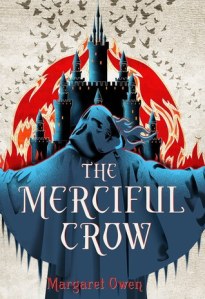
Serena’s Review: “The Merciful Crow”

36483378._sx318_Book: “The Merciful Crow” by Margaret Own

Publishing Info: Henry Holt, July 2019

Where Did I Get this Book: audiobook from the library!

Book Description: A future chieftain.

Fie abides by one rule: look after your own. Her Crow caste of undertakers and mercy-killers takes more abuse than coin, but when they’re called to collect royal dead, she’s hoping they’ll find the payout of a lifetime.

A fugitive prince.

When Crown Prince Jasimir turns out to have faked his death, Fie’s ready to cut her losses—and perhaps his throat. But he offers a wager that she can’t refuse: protect him from a ruthless queen, and he’ll protect the Crows when he reigns.

A too-cunning bodyguard.

Hawk warrior Tavin has always put Jas’s life before his, magically assuming the prince’s appearance and shadowing his every step. But what happens when Tavin begins to want something to call his own?

Review: As with many popular YA fantasy series (there are just too many!), I often don’t get around to them until I see the sequel start popping up on early release sites. And then in a temporary lapse of judgement I request the sequel only to quickly realize that means, oh wait, I have to get my hands on the first one, get it read, and review it before I can even start the book I just so eagerly requested. I do this again and again, and do I ever learn? Nope! It’s even more frustrating when I read the first book and don’t care for it, knowing I’ve already committed myself to the sequel. Luckily, that’s not the case with this one!

Fie belongs to the lowest of the low, a caste of people whose only job is to care for the dead and dying of a deadly plague that sporadically grips various villages and townships. While completely necessary to the function of society, Crows are at best ignored and at worst hunted in the night. So, when one of their typical jobs caring for two dying young men ends up with Fie and her fellow caught up in a plan of an escaping prince and his comrade, Fie takes the opportunity for all its worth, bargaining for a better future for her and her people. But first, she must find a way to deliver these two to safety, despite everything set against them.

Every once in a while when I read an audiobook, I’m aware of how my reading experience is probably affecting my overall take on the book in hand. This can go two ways, of course, with a poor narrator sinking a book almost immediately, and a skilled one catching my in more quickly than I might have been had I been reading in the traditional manner. I think this is one of the latter experiences. The narrator for this book was excellent, giving many characters, especially Fie herself, unique accents and ways of speaking. The book was certainly written to suggest that Fie had a Scottish accent of sorts, so it was great that the narrator was able to fully capture this aspect of the story. She was also able to add a lot of understated tension and emotion to Fie, something that I think probably wasn’t as obvious just on the page itself.

The book obviously had certain things in its favor regardless of media format. I really liked the bird-based caste system and world-building that the author set up. There were interesting connections and powers that neatly aligned with the type of bird that was used to represent a certain caste. Crows, obviously, deal with the dead. Hawks are skilled hunters and warriors. And so on.

While overall I understood the role the Crows played in this society, I did question the vehemence at which they were often hated by those around them. They seem to perform a pretty essential task, dealing with the plague-ridden, and as the only caste that doesn’t suffer from this plague, they’re really the only options for people. We also learn that pretty dire things happen if a plague ridden body isn’t dealt with properly. Given all of this, I can get how a Caste like this might inspire wariness from the general public, but how do we get to the state where they’re literally hunted down and killed at times? Seems pretty backward for really the only Caste that is actually necessary to the ongoing survival of a people. There were bits and pieces of the world-building like this that I never felt were fully explained or lined up properly. It was often distracting when these questions came up, as I was usually able to sink into just enjoying the main character and her journey and was only jarred out of it when these moments arose.

Fie herself was an excellent main character. She’s rough and tumble and perfectly exemplifies the type of no-nonsense person that would survive and grow into a leadership position in this type of society. She’s seen things and has no time for the nonsense of others. Her very different relationships with Tavin and Jasimir are also very interesting. The romantic relationship was perhaps a bit too easy and obvious. But I enjoyed the struggles that she went through in understanding the prince and of them both coming to a place of mutual respect. Each had to learn of the restrictions placed on the other and how their own worldviews influenced how they saw change happening going forward.

While I was interested in Fie’s own personal story, the book did drag a bit in the middle. There’s a lot of traveling.  A lot. And often if felt like not much was really happening in between some of the bigger scenes. It’s also the type of book that, while I enjoyed it in the moment, it hasn’t stuck with me as much as I had hoped. Even now, only a week or so after I finished it, I’m struggling a bit to remember exactly how things lay in the set-up for book two. That said, however, I definitely enjoyed it enough to be looking forward to the sequel and conclusion of this story. It will be interesting to see how it does not in audio format as well.

Rating 7:  A bit forgettable with some questionable world-building, but a strong main character and audiobook narrator really sold this one for me.

Reader’s Advisory:

“The Merciful Crow” for some reason isn’t on many interesting Goodreads lists, but it is on “Crows and Ravens.”

Find “The Merciful Crow” at your library using WorldCat!


Kate’s Review: “The Girl from Widow Hills”

52754102Book: “The Girl from Widow Hills” by Megan Miranda

Publication Info: Simon & Schuster, June 2020

Where Did I Get This Book: I received an eARC from NetGalley.

Book Description: Everyone knows the story of “the girl from Widow Hills.”

Arden Maynor was just a child when she was swept away while sleepwalking during a terrifying rainstorm and went missing for days. Strangers and friends, neighbors and rescue workers, set up search parties and held vigils, praying for her safe return. Against all odds, she was found, alive, clinging to a storm drain. The girl from Widow Hills was a living miracle. Arden’s mother wrote a book. Fame followed. Fans and fan letters, creeps, and stalkers. And every year, the anniversary. It all became too much. As soon as she was old enough, Arden changed her name and disappeared from the public eye.

Now a young woman living hundreds of miles away, Arden goes by Olivia. She’s managed to stay off the radar for the last few years. But with the twentieth anniversary of her rescue approaching, the media will inevitably renew its interest in Arden. Where is she now? Soon Olivia feels like she’s being watched and begins sleepwalking again, like she did long ago, even waking outside her home. Until late one night she jolts awake in her yard. At her feet is the corpse of a man she knows—from her previous life, as Arden Maynor.

And now, the girl from Widow Hills is about to become the center of the story, once again, in this propulsive page-turner from suspense master Megan Miranda.

Review: Thanks to NetGalley for sending me an eARC of this book!

There are some authors out there that I really want to like, but I have very hit or miss interactions with their books. I will usually keep going back unless a book is so poorly done that I decide that I don’t have the reading time to continue giving chance after chance. I thought that Megan Miranda was going to be one of those authors, where I liked one book but nothing else worked for me. After her last book, “The Last Houseguest”, I thought that I was done for good. But something told me that I should give her newest novel “The Girl from Widow Hills” a chance. And am I glad I did. Megan Miranda has missed the chopping block for now, because I think that “The Girl from Widow Hills” is my favorite of her books that I’ve read.

“The Girl from Widow Hills” has a compelling mystery that drives it, a complicated and perhaps unreliable narrator, and a little bit of critiqued nostalgia for human interest journalism, which combined to make a very enjoyable read. Our protagonist is Arden, a woman whose claim to fame was being swept up in a flood when she was six years old and miraculously surviving as a community, and then a nation, watched with bated breath to find out her fate. The trauma of that experience, being trapped for a few days until a man passed by and found her, has followed her the rest of her life, as her mother profited off of the story and the public began to think that she was ungrateful of their support as she tried to live her life. Now living under the name Olivia, I thought that Olivia/Arden’s trauma and need to escape her past was very realistic. It also made for an interesting and perhaps unreliable narration device, as she doesn’t remember much about those days where she was missing. It felt different from unreliable narrations we see in this genre in that the gaps in her story aren’t gaps that she has placed on purpose, but rather the result of being so young at the time, and suffering from PTSD after the fact. The mysteries that she’s trying to solve, mostly why did the man who saved her back then end up dead on her property now, given they have had no connection since, are very compelling and kept me guessing for a lot of the story. I liked following Olivia/Arden, and liked seeing the clues come together. And while it’s true that I did figure a couple things out before the end, and while it’s also true that the reveal at the end felt a little farfetched, just getting there was an enjoyable experience, so I didn’t even mind that it was a bit clunky, reveal wise.

But the thing that I liked the most was the way that Miranda shows the entitlement and ownership that the public can get when it comes to these heartwarming human interest stories. The media and the community focused in on this missing little girl, much like the Baby Jessica story, and rejoiced in her being recovered safely. But then the joy and relief slowly turns poisonous as Arden tries to move on with her life, and people think that she should be more grateful of the donations, well wishes, and care that was sent her way. It’s a very pointed criticism of how people expect to be rewarded for doing good things, and that victims can continue to be victimized when they don’t act or behave in a way that others deem ‘worthy’. That was the aspect of this book that I really, really enjoyed. It felt like the ballsiest thing I’ve seen Miranda put in her books.

“The Girl from Widow Hills” was an addictive thriller, and if you haven’t put it on your summer reading list yet you definitely should! I’ll definitely be taking a look at whatever Megan Miranda has in store next!

Rating 8: A fun and suspenseful thriller with some searing social commentary, and definitely a book that revives my faith in Megan Miranda!

Reader’s Advisory:

“The Girl from Widow Hills” is included on the Goodreads lists “Mother and Daughter Thrillers”, and “Family Secrets (mystery/suspense/thriller only)”.

Find “The Girl from Widow Hills” at your library using WorldCat, or at a local independent bookstore using IndieBound!

Joint Review: “Mexican Gothic”

53152636._sx318_sy475_Book: “Mexican Gothic” by Silvia Moreno-Garcia

Publishing Info: Del Rey, June 2020

Where Did We Get This Book: NetGalley; Edelweiss

Book Description: An isolated mansion. A chillingly charismatic artistocrat. And a brave socialite drawn to expose their treacherous secrets. . . .

From the author of Gods of Jade and Shadow comes “a terrifying twist on classic gothic horror” (Kirkus Reviews) set in glamorous 1950s Mexico—“fans of classic novels like Jane Eyre and Rebecca are in for a suspenseful treat” (PopSugar).

After receiving a frantic letter from her newly-wed cousin begging for someone to save her from a mysterious doom, Noemí Taboada heads to High Place, a distant house in the Mexican countryside. She’s not sure what she will find—her cousin’s husband, a handsome Englishman, is a stranger, and Noemí knows little about the region.

Noemí is also an unlikely rescuer: She’s a glamorous debutante, and her chic gowns and perfect red lipstick are more suited for cocktail parties than amateur sleuthing. But she’s also tough and smart, with an indomitable will, and she is not afraid: Not of her cousin’s new husband, who is both menacing and alluring; not of his father, the ancient patriarch who seems to be fascinated by Noemí; and not even of the house itself, which begins to invade Noemi’s dreams with visions of blood and doom.

Her only ally in this inhospitable abode is the family’s youngest son. Shy and gentle, he seems to want to help Noemí, but might also be hiding dark knowledge of his family’s past. For there are many secrets behind the walls of High Place. The family’s once colossal wealth and faded mining empire kept them from prying eyes, but as Noemí digs deeper she unearths stories of violence and madness.

And Noemí, mesmerized by the terrifying yet seductive world of High Place, may soon find it impossible to ever leave this enigmatic house behind.

Serena’s Thoughts

I love Silvia Moreno-Garcia. She’s such a unique talent.  I’ve now read three or four books by her, and they all spanned different time periods, genres, and themes. It’s truly incredible to find an author who can succeed in so many different lanes. We’ve got fairytale fantasy; we’ve got historical regency romance with a dash of fantasy; and now she comes with a new story mixing fantasy (of course) with gothic horror. And while horror isn’t typically my thing, I do like the creepy novel now and then, and this one seemed like just the thing for me.

The story definitely has some “Yellow Wallpaper” vibes, and I loved every bit of it. When Noemi arrives at the mysterious mansion, High Place, everything is just enough off to feel strange and eerie, but not too strange as to immediately raise alarm. Instead, it’s just the type of creepy dread that makes Noemi, and the reader, begin to question just where the line is drawn between reality and superimposed horror. Are their true mysteries here or is the setting, people, and house, all in their equal strangeness, just enough to spark a wild imagination?

Throughout the story, I found myself routinely falling into the classic horror-bystander role where you scream “just get out of there” at your heroes as they creep into a dark basement or linger in a mysterious place. But the author does a great job creating a situation where the threats are of the sort that if I had been in Noemi’s place, I, too, may have questioned my own reactions. This ties nicely into some fairly well-covered themes about women and how they are almost trained to question their perception of things and doubt their own observations. The question of whether one will be believed or not, or simply dismissed as hysterical, is very real today as it was in the past. And, of course, in the past and the time period during which this is set, women’s choices were that much more limited, especially when married.

I did find elements of the fantastical elements involved in the story to be a bit confusing and hard to track. A long history begins to unfold, and I wasn’t quite sure how exactly it all tied together. But most of the time, this didn’t matter as I was so caught up in the tension that it was enough to accept that it just was. I really loved the Gothic vibes that were brought into the story, and they were blended seamlessly into a location and culture where you don’t typically find this type of story. Overall, I really enjoyed this book, creepiness and all!

Kate’s Thoughts

I love the horror genre as a whole, but it’s hard to deny that a lot of the powerhouses and more popular works are very white dominated. That isn’t to say that progress isn’t being made; on the contrary, as pushes for diversity ramp up in publishing we are seeing more horror tales written by BIPOC. But we still have a long way to go. When I heard about “Mexican Gothic”, I was thrilled to see that we had a take on the Gothic genre from a perspective that wasn’t a white woman, as is the usual suspect within this kind of tale. I will admit that I was a little nervous going in, as Silvia Moreno-Garcia’s other work I’m familiar with is fantasy. Would she be able to make such a huge switch in genre tone? Turns out I was a dope to worry about it, because she nailed the scare factor and creepiness in “Mexican Gothic”.

Noemí is the perfect Gothic protagonist, as she comes from a gregarious and effervescent lifestyle in Mexico City and being thrust into the isolation of the Mexican countryside. It is the exact kind of scenario you see in the genre, and her personality of wanting to figure out what is going on, and then questioning if she is just overreacting when those around her dismiss her, feels so right for the Gothic vibes. But Moreno-Garcia takes it a couple steps further, not only taking on the themes of sexism and misogyny that are prevalent in Gothic lit, but also that of racism and prejudice. Noemí and her cousin are two Latina women who are now living in an English family’s estate, and their history of colonization in the area is what built up their wealth… and also may have something to do with the secrets they are hiding. For Noemí and Catalina, not only are they vulnerable because they are women, but also because they are brown women, and that fact is a really great way to make this story feel all the more fresh and relevant.

And the horror elements were definitely unsettling and outright scary. Not only the fantastical and supernatural ones, but also the real life horrors that Noemí discovers during her time at High Place. As Serena mentioned above, there are the questions as to whether or not Noemí is slowly losing her grip on reality, or if the things she’s experiencing, unsettling imagery and sounds and feelings, are actually happening. There were some really well described moments that made me squirm, which is exactly what I want from a Gothic horror novel.

“Mexican Gothic” is a great spooky read, and Silvia Moreno-Garcia continues to delight and show off her talents! Fans of Gothic novels absolutely need to check it out.

Serena’s Rating 9: Tension-filled and scary, this book makes it easy to feel as if you, too, are being sucked into the mysteries of High Place.

Kate’s Rating 9: A creepy and refreshing take on the genre, “Mexican Gothic” will fill all you may need from a good Gothic tale!

Reader’s Advisory

“Mexican Gothic” is included on the Goodreads lists “2020 Gothic”, and “Paper Lantern Writers: Best Own Voices Historical Fiction”.

Find “Mexican Gothic” at your library using WorldCat, or a local independent bookstore using IndieBound!