Serena’s Review: “The Glass Magician”

45046558Book: “The Glass Magician” by Caroline Stevermer

Publishing Info: Tor Books, April 2020

Where Did I Get this Book: NetGalley

Book Description: What if you could turn into the animal of your heart anytime you want?

With such power, you’d enter the cream of New York society, guaranteed a rich life among the Vanderbilts and Astors, movers and shakers who all have the magical talent and own the nation on the cusp of a new century.
You could. If you were a Trader.

Pity you’re not.

Thalia is a Solitaire, one of the masses who don’t have the animalistic magic. But that is not to say that she doesn’t have talent of another kind—she is a rising stage magician who uses her very human skills to dazzle audiences with amazing feats of prestidigitation. Until one night when a trick goes horribly awry…and Thalia makes a discovery that changes her entire world. And sets her on a path that could bring her riches.

Or kill her.

Review: I was intrigued by the original sounding premise of this book. Set in New York, turn-of-the-century time period, and some type of new class system that is based around one’s magical ability to turn into an animal. All sounds like cool concepts and all put together, I really had no idea what to expect from this book. Unfortunately, it didn’t really turn out to be much of anything at all, so no expectations was about right.

After inheriting her father’s magic business, Thalia has been making her living as a stage magician. Not blessed with actual magical abilities that would vault her into the upper class of New York society, she is still managing to make a name for herself by performing wondrous and dangerous tricks in her act. One night, however, a trick goes wrong and Thalia discovers there is more within her than she had ever known. Now with abilities she doesn’t know how to control and a murder added to the mix, Thalia’s life is beginning to change. Will it be for the better or for the worse?

For the pros for this book, I will say that I still liked the uniqueness of the time period during which it was set and the choice to have it take place in New York City. It’s always a breath of fresh air to find a fantasy novel that isn’t set in some generic “medieval times” setting. And even more so to find one that is set in a city that exists today. However, I do think the author left a lot on the table with regards to what all could have been done with these two elements. The other positive worth noting was the writing itself. It didn’t stand out to me in any particular way, but it was of the sort that is strong enough to get the job done without distracting the reader. And, considering that I didn’t love much about this book, I think it’s a real strength of the writing that it was strong enough that I didn’t ever really feel like just putting the book down for good.

Unfortunately, as I mentioned with the time period and the setting, it felt like the author came up with some cool, individual ideas, but didn’t spend any time really building up the world or system around them. Like, people have this magic to turn into animals and society has been built in such a way that possessing this ability puts you into an elite class. But the why or how of this is never really explained. The history of how this system came to be in place is lacking. And there is really not magic system of any kind to explain the rules, limitations, or even, to some extent, the benefits of having these abilities. The entire world that has been created depends on these magical factors, and yet we get next to nothing about what they really are. It felt like the author simply didn’t want to bother with the details of these things, instead wanting to just jump into her heroine’s own story.

But there, too, I had problems. Thalia is an interesting enough character on her own, but the book simply didn’t have enough story for her. The entire book feels made up of either Thalia struggling to learn to control her new abilities or making small bits of progress solving a murder mystery. I was pretty surprised, actually, when the murder mystery aspect of it became apparent since there wasn’t any hint of that in the general description. But I’m all for historical murder mysteries, so this should have been a benefit to the story. Instead, again, it felt like only the most basic aspects of this part of the story were really explored. Things all come way too easily to Thalia, with people often behaving against their own best interest or out of character to help her on her way.

To make up page time for the lack of world-building, magic system, or complications in the murder mystery, we instead spend an incredible amount of time just in Thalia’s mind exploring her feelings. I don’t have a problem with books that center largely around the introspective thoughts of a main character, but there just has to be more to the story itself to support this. I also didn’t love the romance we were given. It felt forced and lacked chemistry.

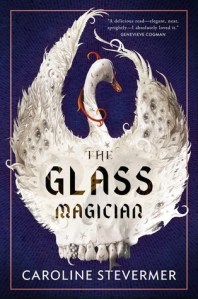
I also have to spend a moment on that cover. Yikes. It’s the kind of thing that immediately attracts the eye (indeed, I clicked on it in NetGalley just because of the swan motif), but the more you look at it, the worse it gets. It’s all kinds of creepy with the teeth and eyes, and I’m not sure it really represents well the book we have. Instead, if I had noticed these details when choosing the book off the shelf, I think I would have most likely put it back just due to how unnerving I find it all.

Overall, I wasn’t impressed with this book. It felt like the author had some really neat ideas at the very core of it, but didn’t spend enough time to fully develop anything. The writing was strong enough, but there wasn’t enough story to go around.

Rating 6: Lack luster and thin, this book didn’t hold up to the promises of its premise.

Reader’s Advisory:

“The Glass Magician” is a newer title and isn’t on any relevant lists. Bizarrely (and inaccurately) it is on “Historical Fiction 2020.”

Find “The Glass Magician” at your library using WorldCat!

My Year with Jane Austen: “Emma” Part I

6969Book: “Emma”

Publication Year: 1815

Book Description: Emma Woodhouse is one of Austen’s most captivating and vivid characters. Beautiful, spoilt, vain and irrepressibly witty, Emma organizes the lives of the inhabitants of her sleepy little village and plays matchmaker with devastating effect.

Note: Yes, this is out of order. I blame the quarantine and general craziness of watching over a one-year-old, but I finished reading “Emma” about a week or two ago, and only then realized that I had skipped “Mansfield Park.” I probably could have banged “Mansfield Park” out in this last week, but I didn’t want to rush my read of that rather hefty book. And then when I would finally get to “Emma,” around July, I’d be several months removed from my actual read through. So, I think this is better than doggedly sticking to my original order. It is what it is!

History – “I read it a little as duty, but it tells me nothing that does not either vex or weary me.”

Jane Austen wrote “Emma” between early 1814 and the spring of 1815. Once she was ready to publish, she decided to switch publishers and went with the well-known London publisher, John Murray. It is thought that she hoped to get a better copyright deal with this publisher and had been put off her previous editor after he refused to publish a second run of “Mansfield Park.” After originally being offered a fixed copyright price for “Emma, “Mansfield Park,” and “Sense and Sensibility,” Austen opted to go with a commission option instead for both, taking on printing and advertising prices. “Emma” had an original first-run of 2,000 copies, Austen’s largest first-run to date.

The book also included dedicated to the Prince of Wales. A fan of her previous books, her identity had been made know to the Prince Regent and his librarian dropped the not-so-subtle comment that she was free to dedicate any future books to him, a hint Austen didn’t feel she could ignore even though she didn’t personally care for Prince Regent

The book was met with middling success at the time, but has grown to be one of her most popular titles with modern audiences. And, despite the author’s fear that readers would not like Emma herself, many fans have connected strongly with the character, faults and all.  (source)

“I am going to take a heroine whom no one but myself will much like.” – Jane Austen

Part I – Volume 1, Chapter 1 – Volume 2, Chapters 11

Story – “The person, be it gentleman or lady, who has not pleasure in a good novel, must be intolerably stupid.”

Emma Woodhouse is the wealthy second daughter of the eccentric Mr. Woodhouse. Her family and their good family friend, Mr. Knightley, share the role as the most prominent families in their small community. A new family group is about to come on the scene, however, with the marriage of Emma’s good friend and former governess to Mr. Weston. Though sad to see her friend go, Emma takes credit for the match herself. Mr. Knightley scoffs at this idea, but Emma is sure of her own abilities.

The marriage also brings up a new topic of gossip, that Mr. Weston’s son, a young man who grew up with his aunt after the death of Mr. Weston’s first wife when the son was young, will likely have to come to visit finally. Mr. Frank Churchill has been long looked for, but due to the sickly and ill-spirited nature of his guardian aunt, he’s never actually visited his original home. But it comes to nothing, and he doesn’t come. Mr. Knightly is the only one to raise an eyebrow at what he sees as poor behavior of an independent man who must know what is due his father on the occasion of a wedding.

To make up for the loss of Mrs. Weston’s daily presence, Emma makes a friend of Harriet Smith, a young boarder at a nearby school. Her parentage is not known, but Emma sees her as a great project. She is dismayed, however, to find that Harriet has already formed a connection with a local farmer family, the Martins, and in particular with the son, Mr. Martin. To ward off the evil of Harriet marrying below what Emma has in mind for her, Emma sets her eyes on Mr. Eldon, the local parson as a better marriage option for Harriet.

Soon enough, however, it comes to a head when Harriet shows Emma a letter from Mr. Martin in which he asks her to marry him. Emma deftly maneuvers Harriet to what she deems the appropriate response: a resounding no. When Mr. Knightly hears of this, he is appalled and he and Emma fight. He says that she is playing with people like they are dolls and that Harriet had a happy future ahead of her with Mr. Martin. Now, Mr. Knightley worries she will look too high and be disappointed by the lack of men who will want to risk a marriage with a girl whose family is unknown. Emma counters that Harriet is beautiful and pleasant, two qualities that are the most important to men, seemingly. And that since Harriet associates with gentleman’s daughters, it is only right to assume that Harriet is a gentleman’s daughter as well. Mr. Knightley also warns that if Emma is thinking of Mr. Elton instead, he’s not all that and it will come to nothing. The two part in unhappy spirits.

Over the next several months, Emma makes great work to throw Mr. Elton and Harriet together, thinking she sees many signs of attachment. He praises, almost to a ridiculous degree, a painting that Emma does of Harriet. And later contributes a riddle to Harriet and Emma’s collection of romantic ditties. The riddle itself makes out the word “courtship,” and though Emma is confused by his references to Harriet’s “ready wit,” she still sees this as a good sign.

Around Christmas, Emma’s older sister and her family, who is married to Mr. Knightley’s younger brother and lives in London, come to visit. They entire group is invited to a party at the Weston’s; Mr. Elton and Harriet are invited, as well. Harriet, however, comes down with a bad cold and has to miss the party. On delivering the news to Mr. Elton, Emma is confused by his seeming lack of real concern for her friend. John Knightley, on seeing the exchange, warns Emma that Mr. Elton seems particularly interested in her. Emma scoffs at the idea. But at the party itself, where Mr. Elton makes a nuisance of himself trying to ingratiate himself with her, Emma is forced to begin to worry about her plans for him and Harriet.

She ends up in a carriage alone with him on the ride home, and her entire plan crashes down around her when he proposes to her. She is appalled, but soon learns that all of the signs she had thought were directed to Harriet were instead meant for her. Worse, Elton reveals himself as an arrogant, rather scheming man who looks down on Harriet for being too much below him but doesn’t seem to equate the situation with himself and Emma, an equally un-equal match. Emma sees it for what it is: he’s only in love enough to see the his gains in a marriage with her. She turns in down soundly. The next day she learns that he has left Highbury, and Emma has to break the terrible news to Harriet.

Around this time, Highbury gains a new person in the form of Jane Fairfax, the niece of Mrs. and Miss Bates. While Miss Bates is rather silly and prone to talking excessively, Emma knows it is her duty to call on Jane. She finds Jane to be too reserved to appeal as a potential close friend and is content not putting much effort into the relationship. Shortly after, Mr. Churchill finally arrives on the scene and Emma is much more struck by his charming, open disposition. The two quickly form a friendship, and it is clear the Westons would like nothing more than an even greater attachment in the future.

As they all circulate within each others’ circles and through various dinners and parties, Emma and Mr. Churchill find great amusement in coming up with scandalous histories for Jane Fairfax that would explain her shutting herself up with her less appealing relatives. Jane receives a piano as gift from an anonymous giver and this only adds to Emma and Mr. Churchill’s fun, trying to guess who would have given her such a great gift. Mrs. Weston suspects Mr. Knightley, but Emma laughs at this and says Mr. Knightley would never do anything in secret.

Heroines – “I hate to hear you talk about all women as if they were fine ladies instead of rational creatures.”

It is easy for readers to understand why Austen was worried fans might not connect with her character. For one thing, Emma is anything but an underdog, very unlike previous Austen heroines. She is wealthy, charming, beautiful, and has no material concerns before her, with a future secured by an independent income and a beloved place in a loving family and happy neighborhood where she is highly esteemed. What she says to Harriet, that a lack of income is all that makes spinsterhood so abhorrent, isn’t quite true in that she is underselling many of the other privileges that make up her existence. On top of that income, she has friends in Mr. Knightley and Mrs. Weston. She is highly valued as a connection to the general public of Highbury. And, of course, she is loved above anything by her father. Compared to Austen’s other heroines so far who have all been held back by finances to some extent, and by family members in other ways, Emma is sitting pretty.

But it’s also easy to see how this very distinction is one of the things that makes Emma such a popular character to modern audiences. Marriage is by no means the goal and, in many ways, Emma herself sees it as more a hindrance than anything. Instead, she’s fully independent and takes joy in the various roles she plays in her community. Her love story is purely based on the joys of a long friendship discovered to be more with no aspects of gratitude, luck, or necessity sprinkled on top to lessen the romance for modern readers who like their love stories to be “pure” like this. Even “Pride and Prejudice,” the most romantic of the previous three books, has a few pretty straightforward lines about Elizabeth feeling a lot of gratitude towards Darcy for taking any interest in her. Joined with the rest of the romance, this is fine. But to modern audiences, again, there is something appealing about Emma’s story having zero strings attached to it other than mutual affection and love. Neither Knightly or Emma need the other, and it is easy enough to see them living out the rest of their lives single and happy.

The other obvious turn-off is Emma’s meddling, the main focus of the entire story. But I think Austen under-estimated how many good qualities Emma has and how much they balance out much of her nonsense. Beyond which, I think many readers like their main characters to have flaws that they overcome throughout the story. Elizabeth Bennet, the other most beloved Austen heroine, definitely has a story arc that involves her overcoming a personal shortcoming. Emma’s flaw hurts more people than Elizabeth’s, however. But like I said, we see important moments that help counterbalance this. Particularly in the way she truly loves and cares for her father, putting forth a lot of effort to fill his days with activities and people he enjoys and attempting to keep family gatherings cordial and not upsetting for him. We also see enough of Mr. Knightley and Mrs. Weston to know they are sensible, kind people and that if they can vouch for Emma’s worth as a friend, there is more to her than the blatant meddling we also see.

This first half, of course, sees Emma commit probably her biggest sin: persuading Harriet to turn down Robert Martin. Beyond that, we see the pain that is caused by her major error with Mr. Elton and the lasting hurt it inflicts on Harriet who falls into a fairly deep depression for several months over his “loss.” But we also spend a lot of time in Emma’s head and do see that she is genuinely distressed over the way this situation unfolds. If still not distressed enough not continue in her ways to some extent throughout the rest of the book.

Heroes – “What are men to rocks and mountains?”

I love Mr. Knightley; he’s one of my favorite Austen heroes. But, I’ll be honest and say that after watching the 2009 “Emma” with Johnny Lee Miller as Mr. Knightley, I have a very hard time not simply picturing him and his performance for all of the Knightley portions. But beyond that, I do always like romantic heroes like his character, those who are stable, reliable, and always there for the heroine, even when she doesn’t know she needs him.

There are none of the dramatics of Mr. Darcy, and none of the indecisive weirdness of feelings for other women, like Edward Ferrars or Edmund. (Technically, I should have read “Mansfield Park” before this, so Edmund gets thrown in the list of Austen heroes who came before Knightley, even if we haven’t covered him in this reread, yet.) No, Mr. Knightley is that long friend of Emma’s who has always been there. He clearly cares about her welfare, worrying to Mrs. Weston about Emma’s friendships and future. And he understands her family, seeming to be pleased to spend quiet evenings at her home with her and her father.

He also is completely spot-on with his views on people. Unlike Emma, we’ll see in the second half that Mr. Knightley is the true match-spotter in the neighborhood when he catches on to the Jane/Frank thing before anyone. But in this half, we see that he values hard-workers like Mr. Martin and sees him as a good match for Harriet. Unlike Emma, Knightley is aware of the precarious situation that Harriet is in and sees all the good in her marrying Mr. Martin. He also is spot-on with his estimation of Mr. Elton, a fact that Emma herself will have to admit to later on in the book.

We also see Mr. Knightley make an effort to befriend and care for Jane, understanding the strains that must be on her living 24/7 in the Bates’ house. He is empathetic and kind, sending his carriage to bring that household to local parties when he knows they’d have to walk anyways. Emma sees all of this and appreciates it in the sense that “of course, that’s what he’d do!” but doesn’t really stop to think how rare of qualities all of these are and how much they should not be taken for granted.

Villains – “I do not want people to be very agreeable, as it saves me the trouble of liking them a great deal.” 

In many ways, Emma herself is the biggest villain in this first half. We see the entire arc of Harriet’s tragic love story play out, all at the hands of Emma. And while we do believe that she was honestly confused by Mr. Elton’s behavior, truly thought she was doing right by Harriet, and felt terribly once the truth came out, there’s no denying the real harm done here. We know how it turns out for Harriet in the end, but things could have went a very different way and followed the dark path Mr. Knightley laid out in which Harriet ends up at the boarding house forever, a spinster living her days at the mercy of others. Turning down the genuinely nice-sound Mr. Martin could have had lasting consequences, and it is clear that, coming form her own privileged position, Emma has not thought about these dangers to her friend whatsoever.

Further, Harriet suffers for quite some time after the loss of Mr. Elton. We know enough about her character to see that she doesn’t have the same resources of self that Emma has, and therefore it is very difficult for her to move past the depression of finding herself not preferred by Mr. Elton. Emma had her fully convinced of a happy future with him, and its loss is felt wholly by poor Harriet.

The other main villain would be Mr. Elton himself at this point. Villain is probably too strong of a word for him, but he still fits best in this category. As readers, we take more heed of Mr. Knightley’s warning about Mr. Elton and his search for a wealthy wife, so it’s less of a surprise when he fully exposes himself. It’s also easier to see how ridiculous and over-the-top Mr. Elton is from the very start. To her credit, Emma sees much of this too, but figures that he’s just so in love with Harriet that his senses aren’t quite right. She’s even more horrified when she realizes that these obnoxious flirtations had been meant to attract her, not Harriet. And, of course, Mr. Elton doesn’t make himself look very good in proposal scene itself. He’s cruel to Harriet and clearly not really in love with Emma at all. Again, knowing how it turns out, and with future Mr. Knightley’s words in our heads, that “Emma chose better for [Elton] than he did for himself,” we know that Mr. Elton will create a punishment of his own by marrying the obnoxious Mrs. Elton.

Romance – “A lady’s imagination is very rapid: it jumps from admiration to love, from love to matrimony in a moment.

Other than poor Harriet’s tragedies, there is really no romance in this first half. Knowing the outcome and knowing the secret hearts of characters who aren’t even aware of themselves, it’s easy enough to see romantic tension between Emma and Mr. Knightley, but there really isn’t anything on the page itself to justify it. There fight is the sort that could be had between any good friends, and the compliments that Mr. Knightley pays Emma when speaking to Mrs. Weston about his concerns about Emma and Harriet’s friendship are, again, of the sort that don’t really raise eyebrows. Mrs. Weston herself doesn’t bat an eyelash at it.

There are other small indicators here and there for Mr. Knightley’s attachment. His dislike of Frank Churchill from the very start is a pretty clear sign, before Frank is even on the scene in person. But, at the same time, Mr. Knightley seems to also be the only one objectively seeing some of the fairly questionable missteps in Frank’s behavior, all the way from the start when Frank failed to visit the new Mrs. Weston. So, it’s kind of half and half to see his dislike as motivated by the knowledge that many people are matchmaking Emma and Frank in their heads or to see it as just another example of Mr. Knightley’s good sense about people and their behavior.

One small moment that stood out was when many of the main characters are gathered at the Bates’ to view Jane’s new piano. Miss Bates sees Knightley riding by and asks him up. Once he hears that Emma is there, he seems to be about to come up, but makes a quick about-face when he hears that Frank is also there. Emma is the temptation, but Frank is the deterrent, especially when Frank is around Emma herself.

Comedy – “For what do we live, but to make sport for our neighbors, and laugh at them in our turn?”

Mr. Woodhouse is just the kind of lovable fool that Austen does best. His concerns and worries about health add the perfect levity needed to some of Emma’s more serious failings. Not to mention, he’s a main source of good in showing Emma’s loving side. There are bunch of small lines thrown in here and there about some of his worries: his concern about the cake at the wedding and dismay at the doctor’s children eating much of it, his worry about the hassle of his driver having to get a carriage ready for this and that small trip, endless frets about the temperature. As a reader, it’s very amusing. But we also see how it could be trying for family members, especially in-laws. During their visit, we see that Emma’s brother-in-law, John Knightley often struggles to deal with Mr. Woodhouse’s eccentricities. Mr. Woodhouse is clearly not aware of how intrusive some of his “concerns” can be into the choices of another person’s family. But we also get to see a lovely example of Emma and Mr. Knightley working in tandem to keep their respective family members polite and to avoid familial conflict.

The other main source of comedy comes from Miss Bates. Austen doesn’t hesitate to devote paragraphs and paragraphs to the dialogue for this character so that readers can truly understand what it would be like to be the listening party, trapped in a one-sided “conversation” with Miss Bates. She’s clearly well-meaning, but man, it can be exhausting just reading her unfiltered, scattered speeches. While Emma clearly over-steps later in the book and could do better in general with regards to Miss Bates, it’s also easy enough to sympathize with her desire to avoid getting trapped in long visits with Miss Bates.

Favorite quotes – “What did she say? Just what she ought, of course. A lady always does.”

Mrs. Goddard was the mistress of a School – not of a seminary, or an establishment, or anything which professed, in long sentences of refined nonsense, to combine liberal acquirements with elegant morality, upon new principles and new systems.

This quote stood out to me as yet another example of Austen’s wit striking on aspects of life that still hold true today. Having worked for many years in academia, the line about “refined nonsense” in the way that colleges and universities try to sell themselves is spot on.

“And till it appears that men are much more philosophic on the subject of beauty than they are generally supposed; till they do fall in love with well informed minds instead of handsome faces, a girl, with such loveliness as Harriet, has a certainty of being admired and sought after…”

While wrong overall, Emma does makes some good points in her argument with Mr. Knightley about Harriet’s future prospects. This then leads, of course, to a general favorite quote when Mr. Knightley comments that it might be better to be without wits than misapply them as Emma does here.

“I lay it down as a general rule, Harriet, that if a woman doubts as to whether she should accept a man or not, she certainly ought to refuse him.”

Again, this is a rather wise line being used in service of a poor scheme overall on Emma’s part. And I think there is a bunch of wiggle room to be made with the word “doubt.” But, in general, if there are doubts, that at least is a sign that more thought needs to be given before the “yes.”

In two weeks, I’ll review the last half of “Emma” and share my final thoughts on the book as a whole.

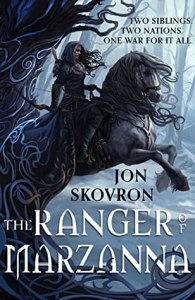
Serena’s Review: “The Ranger of Marzanna”

51113661._sx318_sy475_Book: “The Ranger of Marzanna” by Jon Skovron
Publishing Info: Orbit, April 2020

Where Did I Get this Book: ARC from the publisher

Book Description: When their father is murdered by imperial soldiers, two siblings set out on opposite paths—one will destroy the Empire forever and the other will save it—in this thrilling new Russian inspired epic fantasy from Jon Skovron.

Sonya is training to be a Ranger of Marzanna, an ancient sect of warriors who have protected the land for generations. But the old ways are dying, and the rangers have all been forced into hiding or killed off by the invading Empire.

When her father is murdered by imperial soldiers, she decides to finally take action. Using her skills as a ranger she will travel across the bitter cold tundra and gain the allegiance of the only other force strong enough to take down the invaders.

But nothing about her quest will be easy. Because not everyone is on her side. Her brother, Sebastian, is the most powerful sorcerer the world has ever seen. And he’s fighting for the empire.

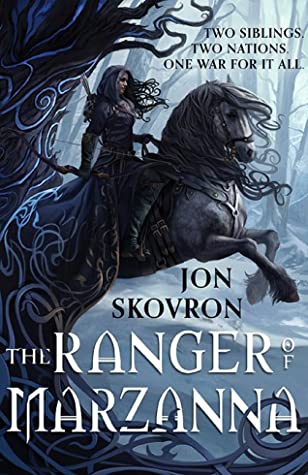
Review: Between the beautiful cover art and the intriguing book description, this was a no brainer for me to request. I always love stories about warrior women, and the fact that it was based on Russian folklore is just the cream on top. I was definitely getting some “The Bear and the Nightingale” vibes off this, which couldn’t have been more of an inducement since I’m still in mourning that that trilogy ended…like more than a year ago now. Get over it! Sadly, however, this book wasn’t quite that. There were some strengths to it, but not quite what I was looking for, in the end.

Sonya is in training to be a Ranger, a member of an elite fighting force. In pursuit of this goal, she travels around the countryside attempting to help her people against the doings of the invading imperial soldiers. While away, however, her family is attacked and her father killed. Her brother, however, a powerful sorcerer-in-training, survives and begins to make a new life for himself, one that sides with the very people who murdered their father. Now these two siblings find themselves on very different paths, paths that will eventually intersect to devastating effect.

So, to start with a few things I liked. I did like the Russian/Ukranian influences on the culture, location, and folklore of the story. The elemental magic system was also interesting enough. It’s not a super new concept, but I felt like the author put enough new twists into how it all works to keep it from feeling flat. I particularly liked the cult-like religion that followed Marzanna and the sacrifices that were required of those who committed themselves to her path (as we see through Sonya’s story.) But, sadly, I had a really hard time connecting to either of the two main characters, and I felt like the pacing and writing of the story weren’t helping matters out.

First, Sonya. I did end up liking her half of the story better than her brother’s, but again this was mostly due to the intriguing concept of having to give up parts of oneself to become a full follower of Marzanna. However, even in this part of the story, I didn’t feel like the author truly explored this concept completely. In many ways, it mostly just made Sonya less likable. She starts out incredibly bad-ass and so some of her struggles then appear out of character. But at the same time, growth for the character comes out of these moments, but never felt like it was really being applied completely. It’s hard to get at exactly what my problem was. I think maybe it was just that the actual character herself felt too flimsy to hold up the more grand adventure she was supposed to be having. And by the time we got to some of the darker portions of her tale, the part where readers have to begin questioning her actions and motives, it’s too late to really feel invested enough in it all.

As for Sebastian, I didn’t like him from the start, and it didn’t get any better as we went along. In the very first chapter we meet him, his father his killed and he and his mother are shipped back to the capitol city. His entire inner thought process of these events was summed up with an actual line saying that he didn’t really get along with his father that much so that must be why he’s not really grieving. From there, it just got worse as he literally teams up with the very people who killed his father and pretty much goes “meh” about the idea that his powers are now going to be used against his own people. There simply wasn’t enough (or any!) real conflict shown between Sebastian and his father to justify to bewildering turn for his character. Sebastian is either a sociopath who can’t care about others or an outright villain. Neither are likable. It’s especially confusing as he’s presented in a way that makes it clear that the author expects you to sympathize with him and read him as an equal protagonist. I just didn’t get it, and what I did get, I didn’t like.

I also felt like the writing and pacing of story were just a bit off. The characters spoke in a very YA manner, but this didn’t mesh well with the super violent descriptions that came with the action scenes. What’s more, the author had an unfortunate habit of info-dumping in his dialogue making it read as unnatural and stiff. Overall, I was pretty disappointed by this book. I know that the author has a fairly popular series already published, so I’m not sure if this was an aberration or whether this story just didn’t mesh with me specifically. If you are a fan of his other work and want to give this one a shot, don’t forget to enter the giveaway for an ARC copy of this book!

Rating 6: The two unlikable protagonists were too much for me to get past.

Reader’s Advisory: 

“The Ranger of Marzanna” is a newer title, so it isn’t on any Goodreads lists. But it should be on “Warrior Women.”

Find “The Ragner of Marzanna” at your library using WorldCat!

Giveaway: “The Ranger of Marzanna”

51113661._sx318_sy475_Book: “The Ranger of Marzanna” by Jon Skovron

Publishing Info: Orbit, April 2020

Where Did I Get this Book: ARC from the publisher!

Book Description: When their father is murdered by imperial soldiers, two siblings set out on opposite paths—one will destroy the Empire forever and the other will save it—in this thrilling new Russian inspired epic fantasy from Jon Skovron.

Sonya is training to be a Ranger of Marzanna, an ancient sect of warriors who have protected the land for generations. But the old ways are dying, and the rangers have all been forced into hiding or killed off by the invading Empire.

When her father is murdered by imperial soldiers, she decides to finally take action. Using her skills as a ranger she will travel across the bitter cold tundra and gain the allegiance of the only other force strong enough to take down the invaders.

But nothing about her quest will be easy. Because not everyone is on her side. Her brother, Sebastian, is the most powerful sorcerer the world has ever seen. And he’s fighting for the empire.

I was excited to receive an ARC copy of this book from Orbit. For one thing, the cover is absolutely stunning and the exact sort of thing that would draw me in when browsing the shelves at a bookstore (oh, how I long to return to browsing shelves…). I was also really interested in the idea of two siblings coming towards some sort of conflict. The book description definitely focuses on the sister more, so I’m curious to see if this book will be a duel narrator situation or what. Her side alone, however, sounds pretty badass!

My full review for the book will go up this Friday. But get a head start on things and enter to win an ARC copy of this book. The giveaway is open to U.S. residents only and ends on May 20.

Enter to win!

My Year with Jane Austen: “The Lizzie Bennet Diaries” [2012]

mv5bmtg1otk0mzg4nf5bml5banbnxkftztcwotm3mtm5oq4040._v1_ux182_cr00182268_al_Web Series: “The Lizzie Bennet Diaries”

Release Year: 2012

Actors: Lizzie Bennet – Ashley Clements

William Darcy – Daniel Vincent Gordh

Jane Bennet – Laura Spencer

Lydia Bennet – Mary Kate Wiles

Comparison – “Indulge your imagination in every possible flight.”

I watched this for the first time a few years ago. It had been out for a while as “Emma Approved” was also up and concluded. I remember flying through both series pretty quickly and enjoying the heck out of them (and, for the first time, being really annoyed by all the YouTube ads that were breaking up my experience). So, to get a wide range of examples of Jane Austen adaptations, I wanted to include both of these web series in this year’s project.

Sadly, it doesn’t quite hold up as much a second time around. This isn’t a mark against it overall, just that I think it’s the kind of thing that is more of an “experience” watching the first time and less enjoyable the second go around where the limitations of the format begin to glare more when the novelty has worn off. But I’ll start with a few of the positive things that stood out this go-around.

First, I think the series is very creative, especially with the way it changed certain aspects of the original story to fit a modern setting. Woes about family finances become more grounded in talks about second mortgages. Different approaches to marriage become different approaches to career paths. Pemberley becomes Darcy’s media company and Catherine DeBourgh becomes a venture capitalist who is funding Mr. Collins’s own media enterprise. Lydia is a party girl and Wickham is a dumb jock. Even small things like changing Mr. Bingley’s name to Bing Lee are creative as heck. I have to imagine it was really fun writing this series.

Also, for the most part, all of the actors are well-cast and, while clearly distinctive from their book counterparts, they all fit well with the same basic personalities and storylines from the original. I’ll obviously talk about some of the big players later, but I’ll just add here that I particularly liked this version of Charlotte (the hilarious and practical behind-the-scenes counterpart in the production of Lizzie’s videos) and of Georgiana/Gigi (a fresh faced and bubbly presence who gets much more involved in the matchmaking side of things with regards to her brother and Lizzie than the original would ever have dreamed of).

However, this go-around, the story felt unnecessarily drawn out and was rather tedious during the middle portion. It takes a long time to even get to the first “proposal,” let alone everything that came later. I think a good number of episodes probably could have been cut and the series would have ultimately kept up its pace and rhythm better. I have to imagine that this was a lesson learned for “Emma Approved” which has a shorter run time even though it is based off the longer book of the two.

The series also struggled with some of its more serious moments. The actors all felt more at ease with the comedy than the drama and there were times where some of it seemed to slip in quality from the rest. It’s just the kind of thing that is going to play more naturally with a comedic topic. Once we get into the drama with Lydia, I was not only beginning to feel the length of the show again but started to become more uncomfortable watching it. Like the romance, it was hard not to feel voyeuristic about these more serious portions. Yes, my brain knew it was all acted out anyways, but the other part of me cringed for seeing these intimate moments of seemingly “regular” people.

Overall,  I think it’s well worth checking out by all Austen fans. Though I will say that for me, at least, it was an experience that didn’t hold up to a repeat. Which is totally fine! I still remember loving it the first time and anyone who hasn’t seen it and loves these stories will probably feel the same. I do remember liking “Emma Approved” better, so we’ll see how that does the second go-around.

Heroines – “I hate to hear you talk about all women as if they were fine ladies instead of rational creatures.”

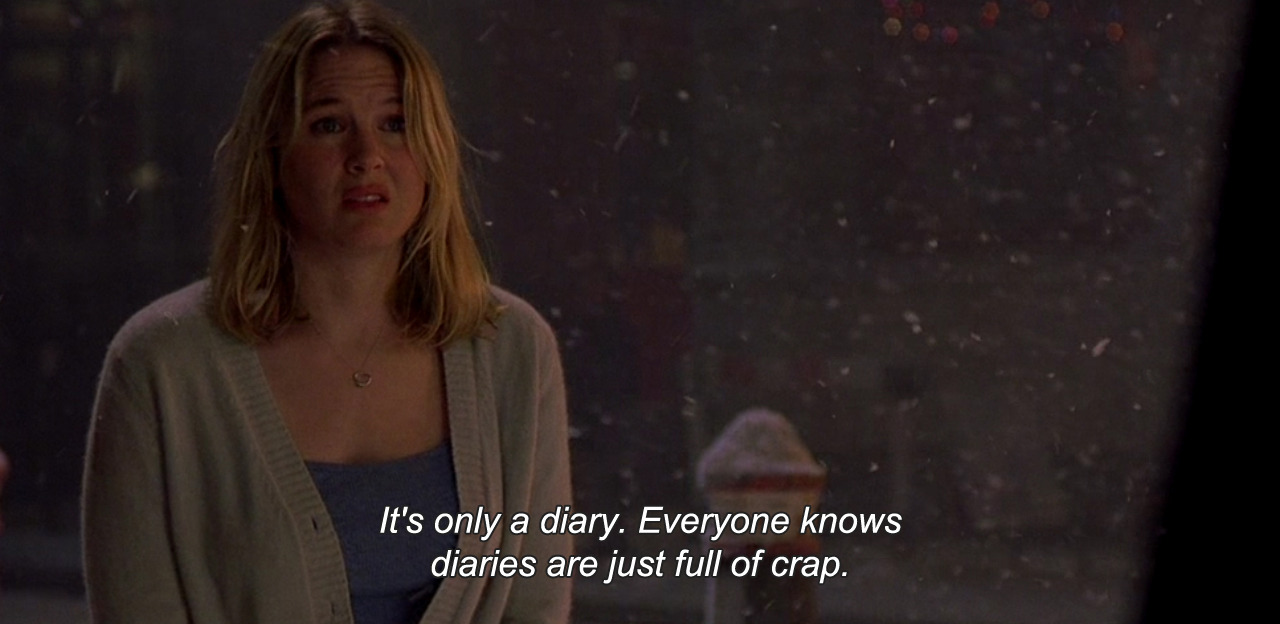
While the show is definitely bringing new twists to this story, I’m not quite sure how I feel about this Lizzie herself. Due to the nature of this story, her prejudice against Darcy does seem extreme to the point of rather obsessive. I mean, we’ve all met rude guys, but she takes it pretty far. And, overall, this Lizzie is much more cynical and judgmental of almost everyone around her than the version in the book. Elizabeth Bennett definitely jumped to conclusions, but she also seemed to generally treat people with a bit more kindness than this Lizzie. Again, the nature of this series, being a video diary for Lizzie, kind of sets her up for failure here. Most all of it is her talking about other people. And what are diaries made up of?

Yep, diaries = talking crap about a bunch of people behind their back. But when it’s a web series and that’s all you have…your heroine kind of comes off like a bit of a jerk to those around her. True, by the end of the series she does come around on all of this, but it’s still a bit much at times.

The worst was her fall-out with Charlotte. The idea is good, to exchange practicality about marriage with practicality about careers, with Charlotte not subscribing to Lizzie’s “go for the dream” job approach. But, like the problem I had with the 2008 version of “Pride and Prejudice,” this Mr. Collins isn’t that bad (at least not for a first boss, and we’ve all had bad bosses, so c’mon) and Lizzie’s reaction seems completely overblown. Even more so here than in other versions of this story.

Charlotte lays out her reasoning pretty clearly: her family is poor, she thinks much of career success is based on luck, and often a job is a job, something that you make a living doing. I mean…this speaks so much truth to my generation, a bunch of people who graduated from college with massive debts right into a recession where jobs were scarce and those that did exist barely paid.  It’s the RIGHT outlook! And, unlike marriage, a job isn’t meant to be forever. This is the exact sort of golden opportunity that you’d be stupid, and Lizzie is stupid for turning down! You start out with a company in a great position, and after a few years, leverage it into your dream job. This is just reality, and it has all the luck that Charlotte mentioned written all over it: just handed to Lizzie, and then Charlotte, on a gold platter for really no good reason other than a past connection and them being in the right place at the right time. And then Lizzie just tears into Charlotte over it. It’s pretty obnoxious, really. Granted, she does come around pretty quickly. But it’s a tough thing to recover from so early in the show. Not a good look for Lizzie.

I also had a few qualms with the acting itself. I think the actress was best in her comedy moments, especially the dramatizations of past scenes with her parodies of other people. But when the script called for more serious moments, be it the angry confrontation with Darcy, the sister squabble with Lydia and eventual reunion, and even the more serious parts of the romance…I just didn’t feel like the actress was really cut out for it. She tended to overact and her expressions and reactions felt a bit forced.

On the other hand, I really liked the actresses who played Jane and Lydia. I’ll talk more about Lydia in the comedy section. Jane, however, was pretty solid. She’s sweet, kind of quiet, and a great interpretation of the book character into a modern woman. We only see her on and off, but she’s a nice balance to both Lizzie and Lydia.

Heroes – “What are men to rocks and mountains?”

We don’t really see much of our heroes in this version. Bing shows up early enough, thinking the videos are just messages to Charlotte. I really like this interpretation of Bing. He’s charming, funny, and easy going. But! Importantly, he’s NOT an idiot. Yes, he does get lead around by his friends, but the series makes great efforts at the end for him to experience his own personal reflection and start making choices for himself. He drops out of med school, admitting he had only been doing it because that’s what his family wanted. And instead he was spending his time working with charities. Jane at first turns down his offer to follower her to NYC where she gets a new job. But after hearing about these moments of clarity on his part and his efforts to begin to make his own choices, she relents and the two are together at least. It’s a nice mini arc for the character, and it ties up some questions about his character quite nicely by allowing him to experience his own personal growth.

I mention this a bit more in the romance section below, but it’s really too bad that we don’t see more of Darcy until at least halfway through the series. Even Bing, we have a face to connect to the stories much earlier which goes a long way for how much we care about his and Jane’s storyline. But I do like the character a lot when we do meet him. His mannerisms are of the sort that it’s easy to see how Lizzie’s interpretations of his rudeness and coldness came to be. And it’s fun to see him loosen up gradually. I particularly liked the last few episodes after they’re together. There’s some fun nods to the book with a mention of his learning to be teased and dealing with Lizzie’s mother and father.

I also liked the way the show used career opportunities instead of proposals as the big kicks for each of the ladies. And through these moments, the heroes also had their moments to shine, with Bing prioritizing Jane’s work and going with her to NYC rather than asking her to stay, and Darcy, perhaps foolishly, originally asking Lizzie to work at his company. She is quick to point out the problems with this, but we also see how he plans to use his network connections to help her with her start-up.

Villains – “I do not want people to be very agreeable, as it saves me the trouble of liking them a great deal.” 

I really liked this take on Wickham. He’s only on a few episodes, but it’s enough to see how charming he can be. It’s also enough for the viewers, at least, to see what a complete idiot he is. He’s full on “dumb jock” through and through. Even Lizzie seems embarrassed by him at a few points. The adjustments to his storyline also work very neatly, switching out an estate for a full ride to Harvard, money that Wickham blows through in one year before asking for more.

His affair with Gigi is also a nice twist, with them forming a relationship and living together until Darcy shows up unexpectedly and proves that Wickham was only in it for the money by offering him a check to leave, which he takes and does. It’s nearly as traumatic as the elopement would have been in the book, but it serves well enough. The only thing that is a bit of a sticking point is that, given the current culture, while it may be embarrassing for Gigi, it’s definitely not the kind of secret that should affect her at all if widely known. It could be easily told and sink Wickham, and I sincerely doubt anyone would think anything bad about the poor girl caught up in it all.

The sex tape with Lydia is far more effective as a stand-in for the life-long horror he intends to bring down on her. The internet is forever, and that kind of thing, once published is almost impossible to put back in a box. It would have followed Lydia forever. It’s a pretty basic practice for most employers to run Google searches on their prospective candidates, so it’s easy to see how this would have had real, tangible effects on her ability to lead a normal life. And, in the end, she gets off way easier than the Lydia in the book. Doesn’t have to have anything to do with Wickham ever again rather than ending up married to the guy.

Lastly, Caroline is the other main villain. I really liked this depiction of Caroline. She’s much more cool and calculated in her manipulation, even hoodwinking Lizzie about her true character. Some of the early videos of her are particularly interesting as the viewer can see Caroline actively fanning the flames of Lizzie’s dislike for Darcy while Lizzie is completely clueless to this manipulation. And then, ultimately, Caroline is the one behind much of the Bing/Jane drama. She arranges a situation at one of her parties to have some drunk guy kiss and unsuspecting Jane right when Darcy is watching. With this in mind, it’s easier to defend Darcy’s interference: he legitimately thought Jane was pulling his friend’s chain. Caroline, however, is the true evil mastermind behind it all.

Romance – “A lady’s imagination is very rapid: it jumps from admiration to love, from love to matrimony in a moment.”

Yikes, the actual romance in this story is by far the most awkward thing in existence. The format of the show is never more working against itself than in these parts. I just felt super uncomfortable and voyeuristic watching the final kiss and conclusion to Lizzie and Darcy’s story. The build-up to this moment is fine, but the actual kiss itself…oof.

I wish there had been a way of introducing Darcy earlier in the series. The way the story is presented, this isn’t really possible, but once we can actually see the interactions between Lizzie and Darcy’s, it’s much easier to feel invested in their relationship. Really, if this wasn’t a retelling of “Pride and Prejudice” which conditions viewers to put importance on the Lizzie/Darcy drama, much of the first half of the series would seem oddly focused on a character we never seem to meet. It makes Lizzie’s fixation and extreme dislike feel all the more strange. Sure, the enactments give us an idea of Darcy’s personality and the social interactions that put Lizzie off in the first place. But all of Lizzie’s enactments are clearly extremes of characters, so when you only have those to rely on for such an important character…It’s just hard to feel invested in any of it, without seeing their awkwardness together. But once he shows up, it’s much better. And it’s even better as we see them develop a tentative friendship with him even participating in some of her mini dramas.

Comedy – “For what do we live, but to make sport for our neighbors, and laugh at them in our turn?”

Lydia is by far the funniest character in this series, especially in the first half of the show when she’s mostly just freely being herself , extremes and all. Once Lizzie starts pushing her to be more grown up and the Wickham drama comes in to play, it all gets a bit too serious almost. In the books what you loved about Lydia was also what you couldn’t stand about Lydia: nothing fazed her. Even in the face of social shaming and shunning, she never seemed to bat an eyelash about it and behaved the same way. Here, the story gets more much serious with how Lydia reacts to Lizzie’s perceptions of her, and even more so, the near miss she has with the sex tape.

But! In the beginning, she’s just hilarious. The actress brought a bunch of fun ticks to the character, with all of the hair flipping and camera poses. She also has a bunch of fun catchphrases, and it’s easy to see why she, of all the characters, ended up with some side videos in her own little series. I didn’t watch any of these for this re-watch, so I can’t speak to what those have to offer. But in a lot of ways her character is a breath of fresh air to the earnest and sweet Jane and the cynical Lizzie. She’s bouncy, bright, and ridiculous and brings new levity to all of her scenes.

I also really liked this version of Mr. Collins. While he is pretty ridiculous, he’s not nearly has intolerable as the character in the books. I really liked how he was always name dropping his VC (venture capitalist) Catherine DeBourgh. It was one example of the many perfect substitutions this series made for aspects of the book that wouldn’t work in a modern setting. Lizzie’s impressions of Catherine DeBourgh were also excellent, but only made me wish we could have actually seen the character on screen somehow!

Fun facts – “Life seems but a quick succession of busy nothings.”

Kitty becomes Lydia’s cat, “Kitty” who follows her everywhere. Mary is a cousin whom most of them seem to regular forget exists.

The movie “Bridget Jones’s Diary” exists in this world as one of the sisters mentions that Darcy’s name is the same as “that character Colin Firth plays.” So, Colin Firth makes it into even this adaptation, if only in name. It seems that the book “Pride and Prejudice” does not exist, however.

Mrs. Bennet has several plans to get Jane stuck over at Netherfield. One includes sending her over with a jello that, due to the rain, is sure to ruin her dress and force her to stay. Mrs. Bennet also arranges for home improvements which force Jane and Lizzie to stay there for several weeks.

Pemberley is the name of William Darcy’s media business, and he mentions it is named after the part of England that his family is originally from.

Caroline Bingley will make a reappearance in “Emma Approved.”

Best Movie Gif/Meme: “I dearly love a laugh.”

The Mrs. Bennet impersonations were by far the best.

In two weeks, I’ll review the first half of “Emma.” Yes, I know this is out of order, but my quarantine brain read this one first and I didn’t want to do either it or “Mansfield Park” a disservice by speed reading the latter and then trying to review the former months after I actually read it. So, it is what it is!

Serena’s Review: “The Body in the Garden”

51318896._sx318_sy475_Book: “The Body in the Garden” by Katharine Schellman
Publishing Info: Crooked Lane Books, April 2020

Where Did I Get this Book: NetGalley

Book Description: London 1815. Though newly-widowed Lily Adler is returning to a society that frowns on independent women, she is determined to create a meaningful life for herself even without a husband. She’s no stranger to the glittering world of London’s upper crust. At a ball thrown by her oldest friend, Lady Walter, she expects the scandal, gossip, and secrets. What she doesn’t expect is the dead body in Lady Walter’s garden.

Lily overheard the man just minutes before he was shot: young, desperate, and attempting blackmail. But she’s willing to leave the matter to the local constables–until Lord Walter bribes the investigating magistrate to drop the case. Stunned and confused, Lily realizes she’s the only one with the key to catching the killer.

Aided by a roguish navy captain and a mysterious heiress from the West Indies, Lily sets out to discover whether her friend’s husband is mixed up in blackmail and murder. The unlikely team tries to conceal their investigation behind the whirl of London’s social season, but the dead man knew secrets about people with power. Secrets that they would kill to keep hidden. Now, Lily will have to uncover the truth, before she becomes the murderer’s next target.

Review: I’m always on the look out for a new historical mystery series. And while I love my Amelia Peabody and Veronica Speedwell mysteries, the two together can begin to feel a bit repetitive. They each are excellent on their own, but Amelia and Veronica have similar personalities and their strong women personas both play of the gruff-with-a-heart-of-gold romantic interests in very similar ways. The mysteries and settings are very different, but reading this last Veronica Speedwell book (I didn’t love it in general, so that doesn’t help), left me feeling a bit like the genre was starting to all feel the same. So I was both excited and nervous when I saw the book description for this one. On one hand, a recently widowed heroine is definitely different than those other stories. But then you add “roguish navy captain”…and would this really be all that different? Yes, it was, and it was just the breath of fresh air I was looking for!

Only one year into mourning her beloved husband, Lily Adler decides that enough is enough: it is time to rejoin the world and what better place than London itself in the midst of a Season? With the help of her dear friend, Lady Walter, Lily is quick to fall back into society, making new friends and visiting with old acquaintances. But amid all the typical gossip and small dramas that are always to be found in society, Lily suddenly finds herself caught up in a mystery: a young man murdered in Lady Walter’s own garden. A murder that no one seems to care much about but Lily and a few of her new friends. Soon enough, however, it seems that this young man’s death was only one small part of a much greater scheme and one that now begins to threaten Lily herself.

I really loved this book. And mostly this was down to the refreshing new characters that the story centers around. Lily is by no means the plucky, go-get-em leading lady that we see in Amelia Peabody or Veronica Speedwell. Instead, her strength comes in a calm, steely resolve to do what she sees right, while always maintaining a strong sense of dignity and knowledge of where her own particular strengths and weaknesses lie. She doesn’t seek out this investigation out of any sense of adventure, but rather she pursues it only because of her strong sense of justice. If, by the end of it all, she finds a new direction for her life, it’s not due to any intrepidness that has always persisted throughout her life. She’s a much more quiet, reserved leading lady, but just as skillful in being more withdrawn. Indeed, I think some of her observations, not only about the case but about people’s general behavior, were even more striking for being discussed in cool tones without much flair or fanfare.

I also really liked Jack Hartley, the aforementioned navy captain. Lily’s recent loss and continuing grief over the loss of her husband is never forgotten, which leaves this book to build up a solid friendship and partnership between these two without any real vibes of romance. Whether the series goes that direction or not is yet to be determined (I’d guess yes, but I’m also fine with it staying as is). One that that really stood out for me with this character were a few brief moments when Jack’s beliefs of himself as a man who greatly respects women was truly put to the test. We all to often see these historical pieces with men that “respect women” in the most obvious ways, but the story never really addresses the underlying tones that undermine this supposed respect. Lily calls Jack out on a few of these points, making him aware that as much as he does respect her, he still can fall into traps of limiting his perception of her due to her gender. These are smaller moments, but they are the kind of observations that often are left without being addressed in historical books like this.

I also really liked the inclusion of Ofelia Oswald, a POC heiress who becomes the third partner in this little crime team (Jack Hartley is also of mixed heritage). It’s rare to find historical books that include many POC characters, let alone two in prominent roles in the story. The author also included a great note at the end about her research into the challenges POC people faced in London society at this time and how she chose to position her characters in a way that was historically accurate but also put them at the forefront of the story.

The story was a bit on the slower side, but as I enjoyed the three main characters so much, I never had a problem with this. But I do want to put it out there for those thinking to pick it up: this book is definitely meant to feel immersive and spends a lot of time putting together all the details and pieces of the mystery and the characters involved. I really enjoyed the mystery itself, too. I was able to guess the villain about halfway through, but I didn’t get all of the pieces to fit together until much later in the book. The mystery was well thought out and the pieces were laid craftily throughout the story. Readers looking for a new take on historical mysteries should definitely check this one out!

Rating 9: Excellent. Lily Adler may be quieter than some other heroines in the mystery market, but she’s definitely one to pay attention to!

Reader’s Advisory: 

“The Body in the Garden” is a newer title, so it isn’t on many Goodreads lists, but it is on “Historical Mystery 2020.”

Find “The Body in the Garden” at your library using WorldCat!

Serena’s Review: “The Will and the Wilds”

44646004._sy475_Book: “The Will and the Wilds” by Charlie N. Holmberg
Publication Info: 47North, January 2020

Where Did I Get this Book: NetGalley

Book Description: Enna knows to fear the mystings that roam the wildwood near her home. When one tries to kill her to obtain an enchanted stone, Enna takes a huge risk: fighting back with a mysting of her own.

Maekallus’s help isn’t free. His price? A kiss. One with the power to steal her soul. But their deal leaves Maekallus bound to the mortal realm, which begins eating him alive. Only Enna’s kiss, given willingly, can save him from immediate destruction. It’s a temporary salvation for Maekallus and a lingering doom for Enna. Part of her soul now burns bright inside Maekallus, making him feel for the first time.

Enna shares Maekallus’s suffering, but her small sacrifice won’t last long. If she and Maekallus can’t break the spell binding him to the mortal realm, Maekallus will be consumed completely—and Enna’s soul with him.

Review: I read “The Paper Magician” by this author a few years back. It was a simple, straight-forward, enjoyable little fantasy story that I quite enjoyed (though I haven’t gotten around to reading any of the other books in the series). But when I came across this title by the same author, I was excited to see what looked like a new fairytale story. It’s always refreshing to find something that isn’t a retelling and the element involving the exchange of souls between the main characters was intriguing.

Enna has always yearned to study mystings that roam the wildwood near her home. But they are as dangerous as they are mysterious, so much of her time is spent instead on warding her home against them in an attempt to protect her and her father from the viscous death her mother suffered when Enna was just a baby. Soon enough, however, she finds herself tangled up with a mysting named Maekallus, a powerful being who steals the soul with a kiss. Now, entwined in a deal that is dooming them both, Enna and Maekallus must unravel the secrets of an enchanted stone Enna’s father stole from the mystings long ago and that may be more powerful than Enna ever imagined.

Like “The Paper Magician,” this was another sweet, little story. There wasn’t anything particularly challenging or unique about the story itself. The world-building was pretty straight-forward. And the characters were all likable. Putting it all together it sounds like I’m criticizing the book for being bland, but I think that a story such as this has just a much a place on most readers’ shelves as even the most complex and deep stories do. While I may not have found myself blown away by any aspect of it, the entire experience of the story was like sinking into a nice warm bath with some low level candles flickering. It was comfortable and safe, something that is even easier to appreciate in times such as this when frankly all I want to do is re-read comfort books all day long.

The most intriguing part of this story was around the idea of the soul and what it provides to those who possess it. Enna, a human girl, naturally goes about life never questioning the role her soul plays in her existence. But when she meets Maekallus and enters into a sort of transactional agreement with him that sees her slowly losing pieces of her soul, we begin to see what it costs her. And, conversely, what Maekallus lacked before gaining pieces bit by bit. The romance between the two is accordingly a slow burn love story.

I will say that there were points in the middle of the book where the plot began to feel a bit repetitive and meandering. There isn’t a whole lot of fast-paced action in this story, and some of the conflicts, such as they are, feel relatively low stakes and don’t add much tension to the proceedings. The main plot line, of course, has some action to it. But as that takes part mostly in the beginning and end of the book, there are some side quests in the middle that don’t seem to add a lot. I also felt like the main confrontation at the end of the  book was fairly anticlimactic, all things considered.

But, like I said, the love story was sweet and our two main characters were interesting enough. If one is looking for a quick fairytale fantasy, this is a good go-to. But if you’re looking for anything of the more “epic” or grand variety, this isn’t going to do the trick. It’s definitely a “right mood” kind of book, and I think I was in it when I read it. Objectively, I think it was probably a bit slower and less developed than it could be, though.

Rating 7: A nice little story, but not one that is pushing any sort of boundaries.

Reader’s Advisory:

“The Will and the Wilds” isn’t on many relevant Goodreads lists, but it is on  “slow-burn romance.”

Find “The Will and the Wilds” at your library using WorldCat!

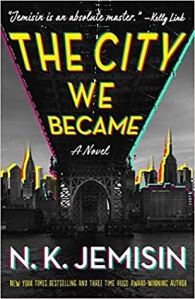
Serena’s Review: “The City We Became”

42074525._sy475_Book: “The City We Became” by N.K. Jemisin
Publishing Info: Orbit, March 2020

Where Did I Get this Book: Edelweiss+

Book Description: Every city has a soul. Some are as ancient as myths, and others are as new and destructive as children. New York City? She’s got five.

But every city also has a dark side. A roiling, ancient evil stirs beneath the earth, threatening to destroy the city and her five protectors unless they can come together and stop it once and for all.

Review: I’ve been a fan of Jemisin’s since years ago when I first read “The Hundred Thousand Kingdoms.” But my love for her didn’t really set in until after I read the “Broken Earth” trilogy. Those books blew me away with the sheer scope of imagination and dexterity of language that were required to pull off such a feat. With those in mind, I went into this book knowing that if anyone could handle the strange set-up that was offered in the book description, it would be Jemisin. And she definitely does! Sadly, this book didn’t hit quite the same mark as the others of hers that I’ve read, but I suspect much of that is just down to my own reading preferences.

Birth is a painful, messy business. It can be as frightening as it is beautiful. A city’s birth is no different, especially for one such as New York City, a behemoth whose very soul can’t be contained in one vessel. Instead, when things begin to go wrong as NYC strives towards its own new life, five individuals are selected to represent the myriad of faces and lives that make up this one spirit. Together they must become the protectors the city needs and fight off a great evil that threatens this new life.

Even though this book wasn’t the huge hit for me that I was hoping for, there is still a lot to praise it for. As always, Jemisin’s creativity is without bounds. The idea of great cities developing souls is just fantastic, and the book takes that theme and runs with it into some crazy and unexpected places. The strength of writing needed to make some of these completely foreign fantasy elements make sense is mind boggling, and it’s here that Jemisin has always shined. There were a bunch of lines that not only jumped off the page, but more so slammed into my unprepared mind with all the beauty and shock of a firework. It was truly impressive.

Part of my struggle, however, also had to do with the writing. Not so much maybe the writing, but the way that it was so clearly an homage to New York City and the many cultures made up within that huge city. I’ve only visited NYC on one frantic, 24 hour period visit. So I know very little about the actual city itself. And for a book so focused on the heart of this city and the pieces that make it unique and tick, I was often left feeling like I was an outsider looking in. Many of the stronger pieces of writing I could see objectively as great, but I couldn’t connect to personally as it was so clearly talking about a specific place and people that I personally don’t know much about. And, unlike most second world fantasy where all readers are “newbies” learning about a world they don’t understand, this was clearly written to some extent with the idea that readers would know and connect to some of these elements, without the book itself needing to do that extra legwork. So, in this way, some of the mileage of this book might depend on the reader’s own familiarity, and to a lesser extent, interest, in New York City itself.

I also had a hard time feeling truly connected to many of the POV characters. The story starts off quite quickly and doesn’t spend much time laying out many details for readers. In some regards, this is a staple trick of Jemisin’s and one can have faith that the answers will come eventually. They do here as well. But this trick then depends on the reader connecting to and investing in the main characters themselves early on to carry one through until plot details begin to clarify. I’m not sure quite what the problem was here for me. Perhaps there were just too many characters, and combining that with the slow moving pieces of putting the plot together, was just too much.

Jemisin is also well-known for putting diverse characters first and foremost in her books, often strong women of color. And here, too, the cast is diverse across all kinds of lines. But there were also moments where I felt like the message (for lack of a better word) was a bit more hamfisted here than the incredibly powerful observations and mirrors that were held up in her previous works.  Really, it felt in some ways like this entire book was a bigger statement (particularly in response to the Lovecraft stuff that has pervaded SFF for so long) that the author needed to get out into the world.  And that’s a good thing! But it also, again, left it a bit harder for me to fully sink into this book as a reading experience.

Overall, I think this book is incredibly powerful and highlights again the strength of Jemisin’s skill as an author, both in her masterful world-building as well as just the strength of her writing. That this one didn’t really hit home for me could, in part, simply be due to my own lack of knowledge of (or real interest in) NYC itself. But for those with a stronger connection to that city, I’m sure some of these elements in particular will strike a much stronger chord. Fans of Jemisin’s work should definitely still try this out and those looking for an urban fantasy novel that breaks the mold for what urban fantasy typically offers are sure to be intrigued!

Rating 7: Incredibly unique with a widely diverse cast, but it was a bit harder to become invested in than other works by this author.

Reader’s Advisory:

“The City We Became” is on these Goodreads lists: “Adult Sci-Fi/Fantasy Releases of 2020” and “SFF Set in Global Cities (No YA).”

Find “The City We Became” at your library using WorldCat!


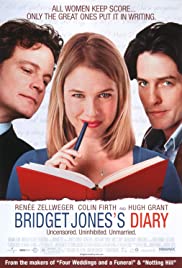
My Year with Jane Austen: “Bridget Jones’s Diary” [2001]

mv5byjc3nju1ztetnmnjni00yznilwi3owqtmtjmytrkzdc1nde2xkeyxkfqcgdeqxvymtqxnzmzndi40._v1_ux182_cr00182268_al_Movie: “Bridget Jones’s Diary”

Release Year: 2001

Actors: Bridget Jones – Renee Zellweger

Mark Darcy – Colin Firth

Daniel Cleaver – Hugh Grant

Bridget’s Mum (actually the character title, according to IMDB!) – Gemma Jones

Comparison – “Indulge your imagination in every possible flight.”

As I mentioned in our comfort reads post on Monday, “Bridget Jones’s Diary” is one of my go-to comfort reads when times are stressful. But, I think like most Americans, I watched the movie before I was aware there was a book. And in many ways, it has served a similar purpose, if in a different format. It’s definitely one of those movies I go to when I need a quick laugh and a guaranteed happy ending.

Having just re-read the book this last winter, however, it was interesting to note the various differences between the two stories. While it’s clear that the book was inspired by “Pride and Prejudice,” in many ways the movie leaned much more into this theme than the book ever did itself. Most notably, the similar history and confusion between Mark Darcy/Mr. Darcy and Daniel Cleaver/Mr. Wickham is missing from the book. There, Bridget simply doesn’t get a long with Mark until she begins to be around him more and appreciate his good qualities. But she doesn’t have any false impressions based on lies from Daniel. Similarly, Daniel is a scumbag for actions he takes in this book itself, not any personal history of breaking up Mark’s marriage. It works well in the book, but with much less time to establish its story, I really like that the movie went full throttle with upping the similarities between these two stories.

The characters themselves (other than perhaps Daniel) are a fairly far cry from the originals. Bridge is not a refined lady who earns respect in spite of a nonsense family. Mark Darcy, while stuck up, is not nearly as clueless with women as Mr. Darcy is (especially with that first proposal in the book). Bridget’s mum (an interesting combination of Mrs. Bennet and Lydia) is probably the most similar to her book counterparts.

I’ve watched the two sequels as well, but they don’t capture the same magic as this one. Having lost the connection to the book, the movies fall back on some tired comedy moments, repeating great scenes from this book to lesser effect. I don’t hate them, but they’re definitely not up to the standard that this one. The most unforgivable aspect of them both are the hurdles that are thrown up between Bridget and Mark. The third one is especially bad on this front, and I’ve still not forgiven it.

Heroines – “I hate to hear you talk about all women as if they were fine ladies instead of rational creatures.”

Bridget Jones is no Elizabeth Bennet, that’s for sure! But that’s not a complaint, as this  movie is clearly not attempting to be a straight modern adaptation (unlike “Clueless” is for “Emma”). Her comedy elements are also not similar to any of the Bennet sisters. In the book, the things that make us laugh at the Bennet sisters are also things that make us, not dislike them, that’s too strong of a word, but things that would disqualify them as leading ladies themselves. Their silliness is of the conceited variety, and they all lack self-awareness. While Bridget is ridiculous, it’s clear that she’s aware of it (if still not able to prevent it in the moment). She’s just the sort of character who is endearing to many women, I think.

We can all sympathize with her struggles with body image. Though I will say that her complaints about weight when starting out from a “whopping” 135 lbs are a bit hard to stomach. I’m not sure if this is a changing times thing or what, but it really stood out to me in this re-watch, how off-base her actual weight was to her struggles. While in some ways this is highly accurate (many women struggle with concerns over weight that wouldn’t occur to anyone looking at them), the way the movie (and book) present it makes it seem like most women are supposed to fall in Bridget’s category. I can’t speak to average weights of women, but I do think that to present 135 lbs as some great normal of “women who want to lose weight” is a bit out of touch. All of that aside, however, the general struggles of beautifying oneself that Bridget goes through are highly relatable.

So, too, her feeling that she always comes across as awkward and ridiculous.

“Because every time I see you, you seem to go out of your way to make me feel like a complete idiot. And you really needn’t bother. I already feel like an idiot most of the time anyway.”

Of course, being an extreme, the character often is those things. But her feelings are just the sort that many women struggle with when stuck in a self-critical spot. What makes this really great, however, are the few moments when the camera shifts perspectives to show us Bridget through Mark Darcy’s eyes. Suddenly, through his lens, she is bright, funny, and magnetic in her ease of just being herself. It’s a wonderful way of contrasting the inner struggles that many women have with self-worth with the way they are viewed by those who love them.

Heroes – “What are men to rocks and mountains?”

There’s no exaggerating the sheer perfection it was on whomever’s part who had the idea to simply recast Colin Firth as the Mr. Darcy character. In 2001, the BBC version was still fresh enough in everyone’s minds that I’m sure it was a challenge to think of a replacement actor. So whoever was smart enough to just say “Hey, why not just get the same guy?” deserves serious kudos. It’s the kind of thing that could read as very campy in a different movie or with a different character/actor. But here, it works perfectly. Just by having the same actor play the part, the movie benefits from a bunch of unspoken and carried over assumptions. Very little leg work needs to be done to lay the foundation of Darcy’s character or his gradual shift in appreciation for Bridget.

There first meeting is one of the moments that is very similar to the book’s version: an immediate distaste on Darcy’s part, an overheard conversation of rudeness, and the stage is set. However, unlike in the book, here it is almost worse because of Bridget’s more real vulnerability to these types of nasty statements. Elizabeth was self-assured and could see the sheer ridiculousness in Darcy’s rudeness in the book and laugh it off. Bridget has real insecurities she’s dealing with and Mark Darcy’s works strike at painful parts of herself and are harder to take for the viewer who is already rooting for her.

But to contrast this more harsh meeting, we also get to see more of Mark Darcy’s kindness and humor. His offer to let Bridget interview his client when she was on the verge of being fired is very noble, not the least because he’s aware of her tendency to make these types of formal moments rather ridiculous and still goes forward with a live TV interview. And, of course, the birthday dinner that follows. Luckily, unlike the 1995 “Pride and Prejudice,” we get to see Colin Firth smile and laugh a lot more in this section. It’s a very necessary moment to establish the good chemistry between these two when they’re on their own, uninfluenced by the negative forces often swirling around them (their parents, Natasha, Daniel, etc).

Villains – “I do not want people to be very agreeable, as it saves me the trouble of liking them a great deal.” 

Natasha, Mark Darcy’s law partner and brief-fiancee, is the Miss Bingley of this story. Though, ending up with even a short engagement, she has much more success than the latter character ever did. She’s only around briefly in a few scenes, but she always serves as a stark contrast to Bridget: cold, uptight, and condescendingly disapproving of anything that approaches fun. Her statements of Bridget and Daniel’s childishness while on their weekend giveaway are in complete opposition to the clear wishfulness that is plastered all over Mark’s face as he watches the other couple goof around. Beyond the comparison, any woman who snaps her fingers at someone to get them to “come along” is by definition a villain. One only wishes that this movie had a similarly cathartic scene between these two as the one where Mr. Darcy shuts Caroline Bingley up with his comments about Elizabeth being one of the handsomest women of his acquaintance.

Daniel, of course, is the true villain. Like Wickham, it’s easy to see the allure and immediate attraction of the character. He’s charming, good looking, and just the sort of confident that makes one feel quite singled-out if he pays you any attention. Bridget is quick to fall under his sway. Unlike Wickham, however, I feel like Daniel is also more obviously sleazy from the start. I’m not sure if it’s just my general “meh”-ness about Hugh Grant or not, but Daniel definitely has a “player” vibe right from the get go that immediately puts up flags. It’s really no shock when Bridget finds another women at his flat half way through the movie.

But his true sleazebag qualities don’t become clear until the last third. Especially during the scene where he breaks up Bridget’s birthday dinner. All of his lines here are just terrible and no woman in her right mind should go for it: “If I can’t make it with you, I can’t make it with anyone.” Yuck! Talk about veiled insults. Luckily, Bridget isn’t taken in a second time. Though it still isn’t until much later that she realizes that Daniel lied about his relationship with Mark, that Daniel slept with Mark’s wife, not the other way around.

Romance – “A lady’s imagination is very rapid: it jumps from admiration to love, from love to matrimony in a moment.”

I’m halfway convinced that Colin Firth was cast as Mark Darcy just so we could get the exact same adoring look from him to Bridget as we had from Mr. Darcy to Elizabeth. It’s so distinctive that you can’t help but notice the similarities between the two. However, extra props go out to the child actor who plays the young Mark Darcy in the flash-back credits scenes we get. Towards the end of the sequence, we see him give the same adoring look to young Bridget, and it’s nearly pitch perfect to Colin Firth’s look. Bravo!

Mark Darcy definitely has one up on Mr. Darcy when it comes to the “first proposal” scene in this movie. Obviously not an actual proposal, but it serves the same purpose: letting the clueless heroine in on the fact that she’s attracted the attention of the hero, someone she’s hated up to this point and thought hated her. But, unlike Mr. Darcy, Mark avoids too many direct insults to her family and doesn’t have the same overarching pride throughout his speech. He does list off some of Bridget’s quirks, but sums it up by saying that he “likes her just as she is.” Notably, not “in spite of what she is,” which is essentially what the original Mr. Darcy said. Bridget’s later meet-up with her friends highlights just how special this little phrase is, with each of her friends bewildered and asking for clarification, is she sure he didn’t mention a smaller nose or something?

Bridget, of course, follows up with her own speech towards the end of the movie. She slips in a funny little line about rethinking the length of his sideburns (something I think most audiences would agree with here and potentially also in the 1995 movie), but she ends with her also liking him. Of course, this is all followed with his engagement announcement and the grand romantic finale doesn’t come until later.

The last scene is really great in that it commits fully to the romance of the moment, but doesn’t lose sight of the comedy. Bridget’s avoiding kisses so she can escape and change into skimpy underwear is hilarious. Leading, of course, to the final “misunderstanding” where Mark spots her journal and leaves suddenly. My only quibble with this final scene is Mark’s last line after Bridget comments that nice guys don’t kiss like that. His line is “Oh yes they fucking do.” And, I don’t know, I’m not a prude about swear words or anything, but this line just feels so off. Colin Firth seems to stumble with the delivery, and it’s unclear what the tone is really supposed to be. I always find it distracting and that it takes away from the climax of romance we’re supposed to be in the midst of. The one line in the entire movie that I think should have been work-shopped some.

Comedy – “For what do we live, but to make sport for our neighbors, and laugh at them in our turn?”

Gemma Jones is simply excellent as Bridget’s mother. Whenever she’s on screen she captures the moment and is hilarious. The movie does an interesting thing by essentially combining the characters of Mrs. Bennet and Lydia into one character here. We have the ridiculous mother, desperate to marry off her daughter on one hand. And then the silly, frivolous woman who dashes off with a sleazy man, leaving her devastated family behind. Of course, it all works out better for Bridget’s mum than it did for Lydia, as she gets to return to her loving, and shockingly forgiving, husband in the end and essentially pick her life back up where she left it.

Bridget’s friends are also good for some laughs, particularly her snobby co-worker Perpetua, and Tom, who is always trying to pick up men with his fading fame from a one-hit-wonder song. I also really love the dinner scene where Bridget finds herself surrounded by “smug married couples” and each couple introduces themselves with matching “hi’s.” It’s cringe-worthy and perfectly puts you in Bridget’s corner during the entire thing.

But, by and large, much of the comedy comes from Bridget herself. It’s really hats off to Zellweger for carrying to much of this movie herself. With the wrong casting, so much of this could have gone poorly.

Fun facts – “Life seems but a quick succession of busy nothings.”

We’ve seen Gemma Jones and Hugh Grant before in “Sense and Sensibility” [1995]. I think they’re each better cast in their roles here. As I said, Hugh Grant isn’t a favorite of mine, but I think he shines in roles like this where he can lean into some of the sleaze. And Gemma Jones, while fine as Mrs. Dashwood, is much better when she’s allowed to spread her wings with the comedy.

Zellweger committed fully to the part and the accent. She used it throughout the entire shooting of the film, even when the cameras weren’t rolling. Apparently, Hugh Grant didn’t hear her real accent until a party after the movie was finished. She pulled it off so well that she was able to pass as a British citizen while studying for her role and working at a publishing industry for a month.

She also gained 25 lbs for the movie. I had heard this fact several times before as some  big deal of commitment to the part. But to my mind, it just adds to the weirdness of 135 lbs being treated as some huge weight that someone would struggle against. If anything, this fact just makes me think that Zellweger was unhealthily skinny before hand if she came in at 110. The book has a nice bit where Bridget gets to her dream weight, and everyone around her comments that she looks sick and looked better before. It was a nice balance to all the concern about weight throughout the rest of the book. The movie, without this bit, does struggle in this area, though luckily it doesn’t focus on it too much.

It’s ironic that the character who plays Jude, Shirley Henderson, is introduced in this movie as crying in a bathroom. She went on to play Moaning Myrtle in “Harry Potter,” a ghost who haunts a bathroom, often crying and flooding it. Also, it’s weird that she plays a teenager in that film which came out a year after this one and a 30-something here.

We will see Embeth Davidtz, who plays Natasha, again in “Mansfield Park” [1999] where she appears as Miss. Crawford.

Best Movie Gif/Meme: “I dearly love a laugh.”

This scene, with Bridget drinking alone and singing “All by myself,” has to be one of my favorite title card sequences ever.

And this is just a favorite reaction gif of mine in general:

In two weeks, I’ll review the YouTube adaptation, “The Lizzie Bennet Diaries”

Serena’s Review: “A Murderous Relation”

35530507Book: “A Murderous Relation” by Deanna Raybourn

Publishing Info: Berkley, March 2020

Where Did I Get this Book: Edelweiss+

Book Description: Veronica Speedwell and her natural historian colleague Stoker are asked by Lady Wellingtonia Beauclerk to help with a potential scandal so explosive it threatens to rock the monarchy. Prince Albert Victor is a regular visitor to the most exclusive private club in London, known as the Club de l’Etoile, and the proprietess, Madame Aurore, has received an expensive gift that can be traced back to the prince. Lady Wellie would like Veronica and Stoker to retrieve the jewel from the club before scandal can break.

Worse yet, London is gripped by hysteria in the autumn of 1888, terrorized by what would become the most notorious and elusive serial killer in history, Jack the Ripper–and Lady Wellie suspects the prince may be responsible.

Veronica and Stoker reluctantly agree to go undercover at Madame Aurore’s high class brothel, where another body soon turns up. Many secrets are swirling around Veronica and the royal family–and it’s up to Veronica and Stoker to find the truth, before it’s too late for all of them.

Previously Reviewed: “A Curious Beginning,” “A Perilous Undertaking,” “A Treacherous Curse” and “A Dangerous Collaboration” 

Review: I was even more excited than usual to pick up the latest “Veronica Speedwell” mystery when it came out. Finally, at the end of the last book, it seemed like Veronica and Stoker were finally confirming their romantic interest in one another. But, in a cruel twist of authorial spite, readers were left right at the brink of these two actually acting on their feelings. So here, in the next book, how would this newly forming relationship affect their working relationship and would we finally see them actually together? Well, yes, but not necessarily in the way I would have preferred.

Immediately upon their return to London, Veronica and Stoker once again find themselves caught up in mystery and scandal. This time, rather than solve a mystery, they are tasked with protecting Veronica’s “family,” the monarchy that has not acknowledged her. To do this, they must go under cover into an elaborate private club in hopes of retrieving a rare jewel that can be used to implicate Prince Albert Victor. But things are never as simple as they seem, and soon enough Veronica and Stoker find themselves mixed up with familiar foes and wandering streets that are plagued by a horrific serial killer.

So, this was a bit of a frustrating read for me. It seems that recently the books in this series have been see-sawing a bit as far as my enjoyment goes. The third book I found to be a bit lagging, but I loved the fourth book. Sadly, here, we see a return to some of the dragging bits. Ultimately, I struggled with two aspects of this: first, like in the third book, it felt like the author was not willing to deal with the burgeoning romance she had started and instead created roadblocks and delays that didn’t feel natural to the story; and second, there was a distinct feeling of familiarity and lack of new material to this particular story.

When I said “immediately” in my book description about how quickly the mystery started, I meant immediately. So much so that the entire question of the burgeoning romance between Stoker and Veronica is effectively sidelined right off the bat. From there, the book is quick to establish how tired they both are, how the beginning of a case is not the right time, etc, etc. And then the rest of the book happens with the entire mystery taking place in one full swoop spanning a hectic day and a half or so. Right there, we have a problem. Regardless of how silly and obvious some of the “tiredness” and “not the right time” conversations felt, the mystery itself did not gain anything for having to frantically move fast enough from one element to another in order to prevent addressing the romantic elephant in the room. Emotional moments didn’t ring as true or feel as earned. The build-up, crescendo, and conclusion to the mystery itself felt rushed, making it hard to feel invested in what was happening. It all felt forced and I think hurt the story more than it accomplished…whatever it was trying to accomplish.

My second problem had to do with the actual elements involved in the story. Almost all of it were retreads of themes, characters, and dilemmas that were found in previous books. We’ve already covered much of the emotional groundwork to be had with regards to Veronica and her feelings towards a royal family who doesn’t want to acknowledge her unless she can do them some favor. There has already been an entire book about a salacious secret society, so the escapades at the private club feel all too familiar. Even the villain, for the most part, is a return to a motivation and individual we’ve seen before. And for all of that, the Jack the Ripper portions that are teased in the book description are barely worth mentioning.

The primary strength of the series has always been Veronica and Stoker themselves. But even they, when given tired material that offers no room for new personal growth, can only do so much. Veronica’s voice is still strong and compelling, but that’s probably the best that can be said. Stoker felt largely absent from the story, even when he was right there on the page. And the small bits of emotional groundwork covered between the two of them felt like, again, retreads of conflicts that had already been resolved. There is a payoff for these two at the end, but I found it to be too little too late.

Overall, I was pretty disappointed by this book. It felt like the author had ran out of ideas as far as the mystery went. And then was too scared to confront the changing romance she had started in the last book, so she threw in a bunch unnecessary and ridiculous roadblocks in order to write one more book between these two prior to any romantic commitment. I honestly don’t understand the concern here. I’ve often compared this series to the “Amelia Peabody” books. And in that series there was only one book before our main characters not only paired up, but got married! And then only one more book or so before they had a kid along with them! And that series never lost anything for resolving the “will they/won’t they” aspect early, let alone 5 books in like this one. Frankly, I feel like this shying away from resolving “will they/won’t they” relationships in general, across all media formats, needs to die a quick and final death.

I believe the author has a contract with a publisher to write at least two more books, so of course I’ll be reading them. And, at least given the events of the end of this book, this whole relationship thing should be settled. Hopefully she’ll come out with some more unique themes and elements, too. But if I catch even a whiff of forced drama to the romance of this story again, I’m pretty sure I’m out.

Rating 6: A disappointing follow-up after one of my favorites in the series so far. The author seemed to run out of ideas and resorted to pulling old tricks out of her hat. And then became a deer in the headlights with the romance she had written herself into at the end of the last book.

Reader’s Advisory: 

“A Murderous Relation” is a newer title so it isn’t on many Goodreads lists, but it is on “Historical Mystery 2020.”

Find “A Murderous Relation” at your library using WorldCat!