I could probably continue on an entire extra year reviewing various adaptations and interpretations of Jane Austen’s works. There are plays, spin-off books, modern adaptations, the list goes on and on. Every year it seems there is a new version coming out in some form or another and this last year was no exception. Not only did we get a new feature film of “Emma” but the BBC also released an 8-part mini series of Austen’s unfinished work “Sanditon.” So I wanted to briefly touch on my thoughts of both those and to add in one other adaptation that has been a favorite of mine for quite a while, “Death Comes to Pemberley,” both the book and the 3-part mini series.
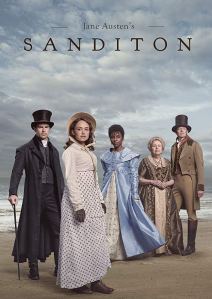
Mini-Series: “Sanditon”
I promise I’ll leave a positive review for one of these “extra” Jane Austen reviews that I’m doing in January. Alas, like “Emma” [2020], this is not one of them. Unlike “Emma,” however, I am more in-line with the general reception of this mini series. All and all, I think most Jane Austen fans were supremely disappointed by it, not least because of how it ends. Let’s dive into my complaints, shall we?
(NOTE: There will be spoilers in this review.)
The whole thing starts from a false premise: that there’s even a story here to adapt. Austen had only written eleven chapters of this story before her death. For reference, Emma has fifty-five chapters, so by comparison, eleven chapters is only scratching the surface of whatever story Austen had in mind. All we really get from these opening chapters is the introduction of our heroine, Charlotte, her relocation to an up-and-coming beach town called “Sanditon,” and the arrival of a potential love interest in the form of the fashionable Sidney Parker. Story-wise, it’s not much. There are the typical cast of side characters as well, but not much as far as clues to Austen’s overarching plot or themes. In most ways, she’s just finished setting the scene and not much else. It was always going to be a fool’s errand to try to expand that out into a mini series and to call it a “Jane Austen adaptation” is really pushing the limits of that term.
Perhaps in the right hands a compelling story could have been made. But sadly, this mini series ain’t that. It falls into too many traps that many modern adaptations risk and, at its heart, seems to miss the overall tone and heart that makes up all Jane Austen stories. To most fans’ chagrin, the story succumbs to the inane need of modern series to be “gritty” and “push the limits.” There are overtly sexual scenes in the very first episode (some of them even bizarrely going a very “Game of Thrones” route, none the less…). And many, if not most, of the characters introduced are supremely unlikable. For some reason, it seems that many directors and screenwriters often confuse writing a character with layers and depth with just writing supreme jerks, and we see plenty examples of it here. The romantic interest is immediately an a-hole to Charlotte, and not in the endearing, prideful “Darcy-esque” way that is the only acceptable form of this behavior in an Austen story.
Gone is the joy. Gone is the wit. And, worst of all, gone is the happy ending. It seems as if the director intentionally ended the series this way in a fit of over-confidence that the series would be picked up for a second season. Indeed, this is the only acceptable reason for ending an Austen story this way. There are plenty of historical fiction stories to be told where the happy, romantic conclusion is not a given. But those are not the stories that Austen wrote. She even said it herself, “let other pens dwell on guilt and misery.”
Every Austen fan who went into this series happily hoping to get one last shot at a new Austen story would have had this one, simple expectation: that the hero and heroine would end up together and happy at the end. Whatever happened from the start to the finish was open for exploration and interpretation. But this ending was a must. Instead, the series not only denies our hero and heroine this happiness, but it essentially resets the story by sending Charlotte back home where her future is once again limited and likely dull. I’ll be blunt: this ending is inexcusable for a Jane Austen adaption and, apart from any other stumbling blocks (of which there were many) would be enough to write this entire thing off on its own.
Unlike “Emma,” which I think I disliked for fairly subjective reasons but is sure to please many fans, this mini series really has nothing to recommend it, as far as I’m concerned. Perhaps for general historical fiction fans it would be an ok watch. But any fan of Jane Austen should simply steer clear, as “Jane Austen” this is not.
Book Description: Katsa has been able to kill a man with her bare hands since she was eight—she’s a Graceling, one of the rare people in her land born with an extreme skill. As niece of the king, she should be able to live a life of privilege, but Graced as she is with killing, she is forced to work as the king’s thug.
She never expects to fall in love with beautiful Prince Po.
She never expects to learn the truth behind her Grace—or the terrible secret that lies hidden far away . . . a secret that could destroy all seven kingdoms with words alone.
Review: I read this book right around when it came out and instantly loved it. I went on to re-read it a few times in the next couple of years. But as my list of re-read favorites grew and grew, after those first few years, I never got back around to this one. So now it’s probably been about ten years since I last read it. Then when I saw that Cashore was returning to her “Graceling” world after so many years with the release of “Winterkeep” later this month, I knew that now was the time and this was the perfect excuse! So in anticipation of this new book, I will be re-reading all three of the “Graceling” books that came before, starting out with this, the first and my favorite.
In a world dotted with individuals with extraodinary powers, marked by their duel colored eyes, Katsa’s unparalleled ability to fight and kill just about anything is frightening to the extreme. Not the least of all to her. Under the thumb of her cruel uncle the king, for years, Katsa has served as his unwilling enforcer. To protect her own sanity and the safety of those she can, Katsa’s also built up an underground life of small rebellions and resistence. During one of these missions she meets Prince Po, another Graceling and one who finally opens her eyes to the opportunities before her. When the two begin to uncover a lurking darkness in the far reaches of the kingdom, they set out to unravel an increasingly malicious tangle. And while they do, they begin to discover there is more to Katsa’s Grace than just killing after all.
There’s a lot to love about this book. I but I think most people can agree that one of its biggest selling points is its main character herself. I can think of a number of books that have attempted an all-powerful, badass female character like this before and bungled it up so badly that the book becomes practically unreadable. So it’s a testament to Cashore’s ability that her main character not only avoids pulling the book down with her but actually turns out to be one of its biggest selling points.
Katsa’s biggest strengths, her seemingly endless ability to excel at practically anything, is just what makes her such a challenging character to write. She arrives on page one seemingly capable of easily handling anything that the story throws out her. So where’s the plot to go? What type of development can you give a character like this? Well, instead of physical limitations, Cashore dives deep into the psychological damage and challenges that a character with these abilities would face. Katsa’s fear of her own strength hinders her ability to trust and form friendships, probably the low hanging fruit as far as personal struggles for this type of character goes.
But Cashore goes even deeper. Because Katsa operates alone so much of the time and has a deep-seated fear, verging on hatred, for herself, her interactions with those around her can be quite toxic at times. She’s rash and prone to striking out. She also struggles to recognize the limitations of others and will push people (and horses!) past their breakingpoint. From this starting point, Cashore weaves together a beautiful character arc that focuses on themes like trust, self-acceptance, and self-control. And throughout this all, Katsa’s very brashness and inability to pick up on the most basic of social cues makes her an incredibly endearing lead character.
Beyond Katsa, the story excels in several areas. While it takes a bit to get started, once it does, there are bunch of fantastic action set-pieces and challenges that are posed to our seemingly unstoppable heroine. And the story quickly moves past the more straightforward aspect of her Grace that would just be one fight scene after another. I also really like the romance in this story. Unlike a lot of other YA books, here the romance establishes itself about halfway through the book. Of course, as any romance novel author will tell you, getting your characters together is only half of the story, and I really appreciate that Cashore left room to dive into the later stages of a romantic storyline. Things like facing losses together, going through fights, figuring out how to be a couple while also maintaining your sense of individuality, making decisions about your future.
I also really like the villain we have here. The build up to the reveal successfully creates a lot of tension that is only compounded upon once the reader discovers what is really going on. The villain is also a great foil for Katsa, being appropriately powered but not in a way that feels like their abilities were created specifically with her in mind (a failing of many archvillains, in my opinion.) My only complaint is that there isn’t more page time with this individual. But, then again, given the nature of the villain, there’s not really a very good way to include more scenes with them that doesn’t hurt the story overall.
So, given my ravings above, it’s pretty obvious that I found this book just as enjoyable ten years later as I did the first time I read it. I’m excited to read the next two books as well since, unlike this one, I never re-read either of those and remember very little about them.
Rating 10: Definitely deserves its place in the YA fantasy ranks as one of the bests.
I could probably continue on an entire extra year reviewing various adaptations and interpretations of Jane Austen’s works. There are plays, spin-off books, modern adaptations, the list goes on and on. Every year it seems there is a new version coming out in some form or another and this last year was no exception. Not only did we get a new feature film of “Emma” but the BBC also released an 8-part mini series of Austen’s unfinished work “Sanditon.” So I wanted to briefly touch on my thoughts of both those and to add in one other adaptation that has been a favorite of mine for quite a while, “Death Comes to Pemberley,” both the book and the 3-part mini series.
Movie: “Emma” [2020]
While I didn’t get to have the “in theater” experience that I wanted to honor the release of a new version of one of my favorite Austen books, I made quite sure to watch it as soon as possible at home. I had made sure to avoid reading any reviews or commentaries about the movie, though I did have the impression that it was generally very well received by Austen fans and the general public. So I went in optimistic.
Unfortunately, this one didn’t hit home for me. It wasn’t a complete flop by any means, and there were new interpretations and takes on the story that I genuinely appreciated. I thought it was really interesting how focused the movie was on the oddness of life for the super rich in this time period. We have Emma pointing out flowers to be cut by a maid following meekly behind her. And we even have Mr. Knightley, arguably the most self-sufficient character we’re given in the entire story, sitting around being intimately dressed by servants. It’s both incredibly awkward but also humorous in just how absurd it feels.
But I also really struggled with several aspects of this film. For one, I didn’t fall in love with the cast. Anya Taylor-Joy is clearly a talented actress, but for me, she came across as too cold for Emma. Because of Emma’s repeated mistakes and blunders, her immediate charm and appeal are crucial to forming a strong attachment between the audience and the character. For me, Taylor-Joy’s version was simply too aloof and distant-feeling to really capture that immediate sense of sympathy that is necessary to make Emma a character you want to root for. I also struggled with Johnny Flynn’s Knightley, though this was mostly because he simply looked to young and to close to Emma’s age more than anything having to do with his actual acting.
From there, I mainly struggled with some strange story choices that movie made. I didn’t like the weird scene after the ball where Knightley runs after Emma, seemingly on the verge of confessing feelings (feelings that she, too, seems to be expecting to hear about when waiting at home). It doesn’t go anywhere, but the scene itself really messes with the progression of this relationship as it implies that Emma is aware of Knightley’s feelings (and returns them to some extent) much earlier in the story. Plus, Mr. Knightley may be an active sort of gentleman, but he doesn’t literally run around town chasing after a woman.
I also really didn’t like the final romantic scene with the nose bleed. This movie was largely praised for how comedic it was, but this scene highlighted just how wrong I think this approach was. Yes, “Emma” is a comedy and any good adaption will hone in on the humorous aspects of the story. But what I absolutely DON’T want is to have that humor intrude on and break up the big romantic climax of the story. The tone during this scene is all over the place and seems to be deliberately cutting the legs out from under the romance that is supposed to be the culmination of a slow build developed throughout the entire movie up to this point. It was incredibly frustrating and resulted in me ending the entire movie with a fairly sour taste in my mouth.
My husband actually really likes “Emma,” (the 2009 version, at least) so there’s a good chance I’ll end up re-watching this version with him at some point. I’m curious to see if my experience of the film will be different with my expectations set a bit lower. I don’t see it ever replacing my beloved 2009 version, but I’d like to see if I can discover what appealed to so many others with a re-watch. If you enjoyed it, please share your thoughts in the comments (or if you didn’t like it, too, of course!)
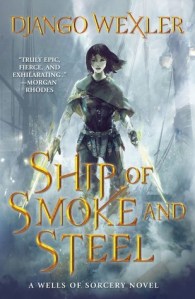
Book Description: Isoka has done the impossible–she’s captured the ghost ship Soliton.
With her crew of mages, including the love of her life Princess Meroe, Isoka returns to the empire that sent her on her deadly mission. She’s ready to hand over the ghost ship as ransom for her sister Tori’s life, but arrives to find her home city under siege. And Tori at the helm of a rebellion.
Neither Isoka’s mastery of combat magic, nor Tori’s proficiency with mind control, could have prepared them for the feelings their reunion surfaces. But they’re soon drawn back into the rebels’ fight to free the city that almost killed them.
Review: After blowing through the first two books in this trilogy last January, I had to hunker down for the long wait until January 2021 to finally get the to the release of the final book. As much as I like being current with many of the books coming out in real-time, I have to say, there’s something to be said for just waiting for a series/trilogy to be finished so you can enjoy it in one, big, binge read. Ah well. And, while this wasn’t my favorite book in the trilogy, I was overall quite pleased with this book and for the way the series wrapped up as a whole.
On her way back to her home city, Isoka imagines that nothing ahead can pose a bigger challenge than what she’s accomplished already. She simply needs to rescue Tori and head back to the mysterious land from which Soliton came. But Tori is no longer the innocent girl Isoka remembers. Instead, she’s a rebel leader caught up in a revolution that seems to be on the brink of failure. What’s more, she has a powerful magical ability to influence the minds and actions of others, a power she had kept hidden from Isoka for all of these years. Together, the sisters must work to re-learn the sibling they thought they knew while also saving a city that seems doomed to fall.
While I did enjoy this book and still love the heck out of Isoka as a main character, I did struggle with this one more than the first two. I think there are a few reasons for this. First, like the second book in this trilogy, Isoka now shares the narrative with Tori which essentially splits her portion in half.
Tori isn’t a bad character in her own right, but she simply can’t compete with the explosive force that is Isoka. Tori’s own story is much less sympathetic and her overall arch feels less complete. The last book saw her do some pretty terrible things and that’s never really addressed going forward. On one hand, I like the fact that the book doesn’t shy away from the terrible things that are done in revolutions, even by those fighting for the “good” side. But Tori also never seems to resolve her feelings of being “monstrous” in any real way. Isoka kind of just brushes the whole thing aside when she learns about it, and Tori just seems to get over it suddenly at the end for no apparent reason.
Isoka’s own story feels like it takes a back seat to Tori’s as this book is largely about the revolution Tori started and thus naturally falls more in her wheelhouse. I still loved Isoka’s chapters, if mostly because her voice and character feel so alive and compelling. But, like Tori, it didn’t feel like she had much of a character arc in this story. She’d already come into her own as a leader and recognized the fact that she didn’t enjoy brutal killing. So there’s nowhere really for her to go in this story.
The second challenge, beyond the lack of character arcs for our two leads, was my own personal preference for the unique, fantastical elements presented in the first two books. There was so much creativity to the fantasy aspect of the story in the first and second book, between the ship Soliton and the Harbor with its spooky leader, Prime. Here, the story of a fairly straightforward rebellion and a pretty predictable resolution just wasn’t cutting it. I really missed the fantasy aspects of the series and was disappointed that not much new was introduced. I never was very invested in Tori’s rebellion and to have this entire last book focused on that was a pretty big let-down. But this was definitely more a matter of personal preference than anything else.
The writing itself was still incredibly strong and Wexler shines with his action scenes. Isoka’s fights were as thrilling as ever and her companions were fun supporting characters. I think it’s telling of Wexler’s skill that Jack, who could easily have become gimmicky and annoying, served well in her role as comedic relief throughout. I was also pleased to see Tori’s romance plotline take a decided backseat role, as that was another aspect of the second book that I was not at all invested in.
Overall, this was definitely the weakest of the three books, but it did tie up the story well and ended in a satisfactory manner. Readers’ enjoyment of it will likely be directly tied to their interest in Tori and the storyline that was introduced with her in the second book. But I’d say that fans of the first two, regardless of preference, should definitely check this last book out.
Rating 7: Lacking the fantasy elements that I’ve come to love, but still a satisfying end to the trilogy.
“Monthly Marillier” is a review series that is, essentially, an excuse for me to go back and re-read one of my favorite author’s back catalog. Ever since I first discovered her work over fifteen years ago, Juliet Marillier has been one of my favorite authors. Her stories are the perfect mixture of so many things I love: strong heroines, beautiful romances, fairytale-like magic, and whimsical writing. Even better, Marillier is a prolific author and has regularly put out new books almost once a year since I began following her. I own almost all of them, and most of those I’ve read several times. Tor began re-releasing her original Sevenwaters trilogy, so that’s all the excuse I needed to begin a new series in which I indulge myself in a massive re-read of her books.
Book: “Daughter of the Forest” by Juliet Marillier
Publishing Info: Tor Books, April 2020 (originally published in 1999)
Where Did I Get this Book: NetGalley
Book Description: Lovely Sorcha is the seventh child and only daughter of Lord Colum of Sevenwaters. Bereft of a mother, she is comforted by her six brothers who love and protect her. Sorcha is the light in their lives, they are determined that she know only contentment.
But Sorcha’s joy is shattered when her father is bewitched by his new wife, an evil enchantress who binds her brothers with a terrible spell, a spell which only Sorcha can lift–by staying silent. If she speaks before she completes the quest set to her by the Fair Folk and their queen, the Lady of the Forest, she will lose her brothers forever.
When Sorcha is kidnapped by the enemies of Sevenwaters and taken to a foreign land, she is torn between the desire to save her beloved brothers, and a love that comes only once. Sorcha despairs at ever being able to complete her task, but the magic of the Fair Folk knows no boundaries, and love is the strongest magic of them all…
Note: I originally posted this review about nine months ago. But I wanted to start this re-read with Marillier’s first book so that the series would be complete, so I’m re-posting it here today.
Review: I was thrilled to see this book pop up on NetGalley. It’s been one of my favorite reads (and the book that introduced me to one of my favorite authors) for many, many years. I couldn’t think of a series that is more due for a re-release than the original Sevenwaters trilogy. Plus, this was the perfect excuse to re-read this book and finally feature a full review for the story on this blog!
Sorcha’s life is full of family and love. With six older brothers who adore her and seek to protect her from everything, her life seems to be on a straight, bright path. Until her family falls under the shadow of her father’s new wife, a powerful sorceress who puts her brothers under a terrible spell, dooming them to the short life of swans. Now Sorcha must become the protector, undertaking a near-impossible task, forced to weave shirts out a painful plant and not allowed to make any noise until task is finished and spell lifted. Life is not made easier when she finds herself caught up by the enemy English and now living in a foreign land among those who distrust and fear her. But Sorcha persists in the face of it all, even has her task seems more and more doomed.
I love fairytale retellings, and this book really introduced me to them and set the bar for what they can be. The “Seven Swans” fairytale is a lesser known tale, and while there have been several other ones that I’ve found since reading this, none have even come close to fully realizing the full potential of the story. Marillier doesn’t simply stick to the basic outline; she creates an entire world, magic system, and fully-fleshed cast of characters, many of whom don’t feature in anything other than name in the original tale and some not at all. But beneath this all, the heart of the story is consistent (though some details differ). All the major plot points are hit, but the book is over 500 pages long, so you know it is rich in detail and not in a rush to get through its story.
Too often fairytale retellings fail to really establish themselves as anything unique from the original stories. Main characters are often lacking in any real personality (fairytales themselves often give them basically none, so there’s not much to go off for the author adapting it). And often the story doesn’t expand much further out than the original tale. Not so, here. Sorcha is the cornerstone around which this entire story hinges. And, given the she spends two thirds of the book not able to speak out loud, it’s important that her character feel real and compelling. We spend the entire book in her head and experience some fairly traumatic things alongside her. But, importantly, you’ll notice that I said “two thirds.” That’s because, smartly, Marillier adds a bunch of extra story to the beginning of this book. This not only gives Sorcha ample opportunity to be set up as a compelling character, but it adds stakes to her quest. We’ve met her brothers. We know their individual strengths and weaknesses, and, importantly, their close attachment to their sister. This makes their loss feel real and helps the reader feel fully committed to the terrible task set out before our leading lady.
The book also deals with some pretty serious and tough topics. There’s a very graphic, traumatic scene that occurs fairly early in the story. The author doesn’t hold back on the details of this attack, but what justifies this, I think, is the great work she does to explore how this affects Sorcha going forward. It’s not swept away or easily solved. Instead, we see how this experience shapes all of Sorcha’s choices and reactions going forward. And, ultimately, we see how she slowly goes through the experience of healing from it. This book is probably the best example I can point to for how a tough topic like this can and should be handled. Not only does our heroine go through the entire process, the book lays down some needed examples of how those around her help and wait as she deals with this.
Marillier’s writing is also exceptional. Atmospheric, lyrical, and emotional, she makes you feel the same strong connection to the forests and lakes of Sorcha’s wild home. Small moments land with unexpected emotion, and the action is tense and high stakes while not straying far from the intimate perspective we have through Sorcha’s eyes with everything that is going on around her. Throughout all of Marillier’s books, her writing is always consistent, but it’s a joy to go back to this first book that I read of hers and see why it stood out so much in the first place.
Marillier started a new trilogy this last fall, and I’m eagerly awaiting getting my hands on the second boo, due out this September. If you’re waiting as well, take this chance to explore her backlog with this beautiful renewed edition. I love the cover art for this and the other two books in the trilogy. If you haven’t read any of Marillier’s work before, boy, are you in for a treat! Get started with this one, and away you go!
Rating 10: Everything that a fairytale retelling should be and then some!
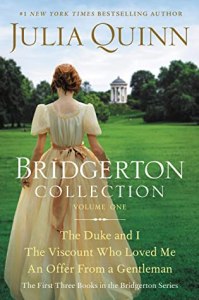
Book: “Bridgerton Collection: Volume One” by Julia Quinn
Publishing Info: Kindle Edition, May 2020
Where Did I Get this Book: own the e-book
Book Description: The first three Bridgerton books all in one e-book volume! Includes The Duke and I, The Viscount Who Loved Me, and An Offer From a Gentleman.
Set between 1813 and 1827, the Bridgerton Series is a collection of eight novels, each featuring one of the eight children of the late Viscount Bridgerton.
I’m going to do a quick mini-review for all three books in this series. I’ve reviewed a couple random books by Julia Quinn on this blog over the years, but I’ve jumped all over the place from random books in this main series to ones from the prequel series, etc. But with the Netflix show just coming out, I thought it was high time to at least familiarize myself with the first three in the correct order so that when I watched the show I wouldn’t be completely lost. Because obviously I was going to watch the show! Historical romance?? Yes, please!
“The Duke and I“
So I had actually read this, the first book in the series, once before years ago. I didn’t remember much about it except that, unfortunately, I had rated it fairly low on Goodreads at the time. I went in with some skepticism. Unfortunately, this wasn’t a great start to my read through of these first books in the series, and my original rating wasn’t far off for how I would rate this book now.
The strengths of Quinn’s writing is clear, and it’s easy to understand how she has become one of the most popular romance authors of the time. This book completes its most important edict: it sets the stage for a million and a half sequels, creates an interesting window in this version of British society, and has quick, snappy writing that move the story along.
Unfortunately, the actual story in this book and especially its heroine and hero’s relationship was a huge let down. Each were very toxic in their own ways, and I’m not one for throwing that word around lightly. There are some extreme inconsistencies in how knowledgeable Daphne is about certain aspects of life that stretch the point of believability to its breaking point. And the great “conflict” between the Simon and Daphne leads to each treating the other in very despicable ways, with Daphne committing a pretty unforgivable crime against Simon. I’m sure this wasn’t the intent of the author with this scene, but it’s definitely how it reads and how it would (and should!) be understood. As our first two paired up grouping, I’m sure we’ll see more of Simon and Daphne on the sidelines in other books, but I’ll try to just put this one behind me. I’m also really curious how they’ll play this particular relationship in the Netflix adaptation.
Rating 6: A good start to the series, but the horrid actions of both the hero and the heroine really drops it down.
“The Viscount Who Loved Me”
First things first: this second book was a great improvement on the first. While I still had some problems with the hero, Anthony (the Bridgerton in this little story), the heroine, Kate, was vastly better than Daphne. Not only was she not bizarrely ignorant of some pretty basic facts of life, she also didn’t assault her husband. So there’s that. But beyond all of that, Kate is just a fun character. She’s spunky, smart, and a fun character to follow through this story.
Anthony takes a bit more time to warm up. For one thing, he’s presented as the go-to historical romance leading man character type: a rake. I could probably write an entire thesis on why this type of character seems to dominate these books and why most of them get it wrong, but I’ll resist. To sum up, Mr. Darcy is considered the epitome of romance heroes, and I think many authors confuse the appeal that comes from his being a catch due to his lack of interest with the idea that rakes are a decent sit-in as they, too, have no interest in love and marriage. Big difference being that Mr. Darcy didn’t have a reputation for toying with women’s hearts. But enough on that. Anthony’s rake-ness is part of his problem, as is the fact that he has some pretty unappealing ideas about the relationship between husbands and wives initially. Thankfully, he seems to work through that and does end up being a likeable enough character.
What stood out the most about this book was the dialogue. Maybe it was just the nature of the story, Kate’s trying to spare her sister from the devious rake, but there was a lot of snappy, fun interchanges between our leading lady and leading man. There were several moments where I chuckled out loud, which was a nice reminder of why I’ve liked other books by this author in the past. Overall, I’m much more excited to see this relationship play out on the show than the first one.
Rating 8: Much better than the first, but still marked down for the hero being kind of an ass for a good chunk of the first half.
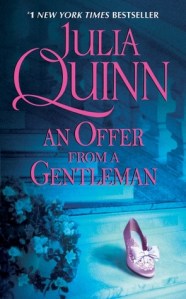
“An Offer from a Gentleman”
This book was a bit different than the two that came before it. As the cover implies, it’s a very loose re-telling of Cinderella. Sophie is an illegitimate daughter who meets our her, Benedict Bridgerton, at a ball where she’s undercover as a true lady. Sparks fly. Two years later, the two meet again, but Benedict doesn’t recognize his lady love in the servant girl before him. An intriguing enough premise and a fun twist on the more traditional retellings out there.
I, again, liked the heroine, Sophie, better than the hero (I guess Daphne goes down as the worst of the three). She was earnest and stood up for herself well enough given the situation (I’ll touch on that when I get to Benedict). But she also kept unnecessary secrets that created a bunch of angst and drama for no good reason. I always struggle with these types of narrative mechanisms that are clearly put in there to move the story one way or another but defy any understanding. There’s no good reason for Sophie to keep these secrets other than the fact that it creates the drama and fallout the author was looking for.
And Benedict. Oh, Benedict. He’s probably my least favorite hero of the three we’ve seen. When he meets Sophie again, he pressures her to be his mistress or a servant in his house. And when I say pressure, I mean he puts the screws to her over it. It’s pretty obnoxious. And from there, he goes on to warn her that somehow it is her responsibility to head him off early because if he gets too, um, excited, he wouldn’t be able to stop. Nope! Don’t like that! Throughout it all, he’s pretty self-absorbed and unable to understand Sophie or her motives. Even when the truth is revealed, somehow Benedict is the injured party in all of this. I hope the show makes some big improvements on this particular story. Well, this one and the first one.
Rating 7: Not as bad as the first one, but the hero had some big problems and the heroine created unnecessary drama.
Another a year, another almost impossible task trying to each choose our Top 10 Reads of the year! For me, the word “favorite” is an important part of this list. As I go through the last year’s worth of reading, I often found that some books would strike particular chords within me more deeply than others, even if, quality-wise, another book might be stronger. Of course, this just makes it all that much harder to put them in any order. But here it goes! Today I’m going to countdown my favorites reads, five to one. And since it’s the end of the reading year, don’t forget to enter our “12 Days of Christmas Giveaway!”
#5 “Ship of Smoke and Steel” & “City of Stone and Silence” by Django Wexler
I read the first book in a military fantasy series by Django Wexler a few years back. I really enjoyed it, but was following so many other series at the time, that I still haven’t managed to get back to it. But I was gifted the first in Wexler’s YA fantasy series over Christmas and absolutely adored it. Luckily for me, the second one was slated to come out shortly afterwards, so I was able to read both of them in a short amount of time. And what a blast they were! The action is nonstop, the magic system is fun, the monsters are creepy, and the stakes are high with real teeth behind the threats to our main character(s). I liked the first one a bit more than the second, but still really enjoyed them both. I have the third all queued up on my Kindle and will have a review of it coming up here shortly in January. I’m so nervous. I’m so excited.
#4 “The Invisible Life of Addie LaRue” by V.E. Schwab
I’ve liked most everything I’ve read by V.E. Schwab to a certain extent. My favorite probably still is her “Shades of Magic” trilogy. But I was very intrigued when I saw that she was releasing a stand-alone, adult fantasy novel with a really unique concept: a young woman blessed (cursed) with the ability to live forever but to never be remembered by those around her. I wasn’t quite sure what I was getting into, but I was so happy with the story Schwab presented. It delved much more deeply into the importance of memory and identity, and explored concepts of art and individuality in a really interesting way as well. The magic was incorporated in a very natural way that felt authentic but didn’t overwhelm what was ultimately a more literary, reflective novel. There was a sweet romance at the heart, but the story also didn’t follow the trajectory I had initially thought it might, instead throwing in a few twists and turns towards the end that took my completely by surprise. Fans of Schwab’s work or literary fantasy are sure to like this one!
Talk about a book taking you by surprise! I didn’t really care for Roth’s “Insurgence” trilogy. As a matter of fact, I’m fairly certain that I didn’t even finish it! I know she also came out with a duology since then which I also hadn’t read. But the description of this book, the story of what happens to the “chosen one(s)” after they kill the big villain, was intriguing enough that I thought I’d give it a shot. And here we have it! Number three on my Top 10 list for the year! It was everything I had wanted from this type of story and more. There was a great exploration of the type of PTSD and trauma that would be long-lasting for the heroes who survived this type of childhood and teenage period of years spent fighting some great evil on behalf of humanity. But on top of the reflective portion of the story, there was an excellent adventure and conflict that kept the pace moving at a swift clip. I really, really liked this book and am definitely more on board with checking out future books by Roth in the future.
Unlike some of the other books on this list, this one comes as no surprise. I’m pretty sure the first and second book in this trilogy also made this list each year they were released. But it’s always the scariest going into the third and final book. Will the author stick the landing? Or will it end in such a disappointing way that it taints one’s ability to appreciate the books that came before? Luckily, this one did just what it should and even more than I had hoped for. With the fall of Daevabad, Nahri and Ali have been forced to return to Cairo. But once there, it becomes clear that they can’t simply leave their other lives behind. How can they fight against the almost all-powerful Dara, though? And does Nahri even want to? Their adventures take them to new and unexpected destinations, and the story unravels an even more complicated history of mixed loyalties and broken promises that we’d had before. And yet, somehow Chakraborty manages to wind it all up in a way that is both believable and satisfying. Fans of the series so far are sure to love it!
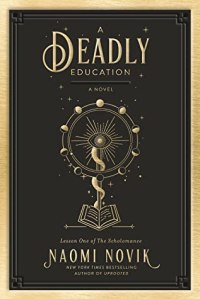
#1 “A Deadly Education” by Naomi Novik
“A Deadly Education” Review
Novik is definitely an absolute favorite author of mine, so it’s no wonder that her new book this year is at the top of my list. Really, I think she’s moved into the “instant buy” category for me, as far as authors go. There are only a handful of them, so it’s quite the distinction! This book was marketed as a more adult “Harry Potter.” I can see where this reference comes from with the story taking place in a darker, more dangerous magical school, and it plays around with the idea of “chosen ones” and the limitations of this title. But at the same time, I think this undersells the sheer novelty and imagination to be found in this book. This is definitely not Hogwarts, and not only is our heroine, not the “chosen one,” but the “chosen one” himself is a bit of a weirdo enigma. Also, kids die left and right in this thing to the point that the reader becomes almost equally blasé about it as our main character and the other students. And yet, the book is hilarious and fun, never becoming too dark or depressing. It’s a miracle of master storytelling and balance. The story also ends in a satisfying manner, but introduces a new twist at the very end that leaves you on tenterhooks waiting for the next one. Pretty much any fantasy fan should enjoy this one!
So there’s my complete list! What were your top five reads of 2020?
Another a year, another almost impossible task trying to each choose our Top 10 Reads of the year! For me, the word “favorite” is an important part of this list. As I go through the last year’s worth of reading, I often found that some books would strike particular chords within me more deeply than others, even if, quality-wise, another book might be stronger. Of course, this just makes it all that much harder to put them in any order. But here it goes! Today I’m going to countdown my favorites reads, ten to six. And since it’s the end of the reading year, don’t forget to enter our “12 Days of Christmas Giveaway!”
#10 “The Body in the Garden” by Katharine Schellman
This was a book that definitely took me by surprise this last year. I had fairly randomly requested it on NetGalley just based on the fact that it was a historical mystery. The cover looked kind of derpy and I hadn’t heard of the author. But then it absolutely blew me away! Not only do I just love this type historical mystery featuring a crime-solving lady, but this one broke a lot of the molds and tropes that I had begun to tire of from other similar series I’ve been reading recently. Our main character is a widow, for one thing, and one who has only fairly recently lost her husband and is still clearly mourning him. There is, of course, a gentleman friend introduced in the story, but given the circumstances, the development of any romance will look very different and there was none in this book. I also liked the inclusion of a more racially diverse cast with one of the main character’s friends being a POC young woman. The book also featured a solid mystery and found ways for a lady such as Lily Adler to solve the crime without falling into too many traps of anachronisms in behavior for a woman of the time.
I also read the first in Brennan’s popular “The Memories of Lady Trent” series this year, but it was this, her recently released stand-alone novel that really captured me. It’s a strange little book about essentially the afterlife where worlds go to finally die after whatever apocalyptic event took them out in the first place. There, these worlds shrink slowly and whatever people remain, must make due in a patchwork place made up of all sorts of different peoples and worlds. It’s a place where change is everything, except for one man, Last, an individual who no one seems to really know but who has been around forever. The story jumps through various people’s tales of their interactions with Last, and through these tales, we explore a taste of the wide variety of worlds and peoples that make up Driftwood. It was such a unique story, I don’t think I’ve ever read anything like it. It’s definitely a must-read for fans of science fiction/fantasy.
This was a joint review for both Kate and I, and we both enjoyed it immensely. I think I’ve included a book by Moreno-Garcia on my last two “Top 10” lists, as well, so that should demonstrate my general love for this author. All of her books have been completely different, a Regency romance/fantasy, a Mexican folklore/fable, and here we have a Gothic horror story also set in Mexico. I never know what I’m going to get, but I do know that it’s always good. This book was definitely the creepiest thing I’ve read by her. It plays with all of the Gothic horror tropes in really creative ways and even has tinges of other horror stories like “The Yellow Wallpaper.” The setting is so cool, a rural town in Mexico during the 1950s, and Noemi is an excellent heroine. Fans of the author will definitely enjoy this, and as Kate can attest, horror-lovers will likely enjoy it, too.
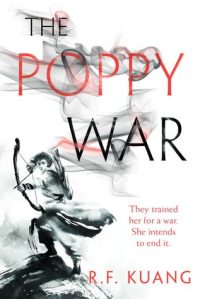
I’m currently reading the second book in this series, “The Dragon Republic,” and it’s bringing back all the memories of why I enjoyed the first book so much. Don’t get me wrong, both the fist and the second are tough reads, but that’s also because Kuang doesn’t shy away from the absolute horror that is warfare, especially the terrible impact it has on innocents caught in the crossfire. The series also explores the burdens that warfare places on its soldiers. Rin’s story is dark, heavy, but also completely compelling. She’s just the sort of character you can’t help but fall in love with while also wanting to constantly shake her and say “No, don’t do that!! Can’t you see??” I also really enjoy the interesting magic system and pantheon of gods that are introduced. Magic comes with a heavy, heavy price, and we see Rin’s struggle with it lead her into incredibly challenging moral areas. The third book came out this fall, so I’m a bit late to this series, overall. But fantasy lovers, especially military fantasy lovers, are sure to enjoy this.
I think this was the most straight-up science fiction story I read this year, and it’s only fitting that it made it’s way onto this list. It’s also another one that came out a bit ago and for whatever reason, I didn’t get to until this fall. I blame long library audiobook wait lists for delaying the pure joy that was my experience reading this book. I really loved everything about it: the interesting technology that is introduced, the various cultures that we see, the exploration of topics such as colonialism, empire, and reform. And, of course, our main character Mahit Dzmare is lovely. Taking on the role as a new ambassador to the sprawling Empire, Mahit’s story is one of untangling a complex web of politics and opposing motivations. Through her eyes, we, too, get to explore the tensions that come between both loving and fearing such an immense force as an Empire that is slowly sprawling out across the galaxy and subsuming all it finds in its path. The second book in the series is coming out this spring, and I have an e-ARC all queued up, so this time I’ll be more on top of things!
So that’s ten through six. Next time I will give a countdown of my top five. What have been some of your favorite reads of 2020?
Comparison – “Indulge your imagination in every possible flight.”
I really like this adaptation of “Persuasion.” I think it captures the overall tone of the book really well, and introduces a useful trick of the having Anne journal throughout the story to get at the deeper, emotional points of her story. Really, the book is all about the emotional arcs for both of our main characters. The actual events taking place around them are almost secondary. So between having the inner monologue from Anne showing her feelings throughout and the inclusion of more scenes of Wentworth on his own, we get a much better progression of this aspect of the story.
I also think the casting was much, much better here than in the 1995 version. Other than perhaps Mrs. Croft who I preferred in the older movie (though I have no problems with the Mrs. Croft here either), I liked every secondary actor they used here better than the ones from that movie. I think I also like the Sally Hawkins and Rupert Penry-Jones better, too, but I didn’t have a problem with the other actors there either. I particularly think they improved on the casting for Sir Walter and Elizabeth (they do away with the silly emotional outbursts that the other movie did), the two Musgrove sisters (Louisa seems more lively and a better fit for the character described in the book), and Captain Benwick. The Benwick we see here is all the emo-esque, dour young man that we’d expect. While it’s a fairly significant change to the story, I thought it also worked well having Anne and Benwick have the conversation about men, women, and loving longest. It fit in really well with their general conversation about morose poetry.
Heroines – “I hate to hear you talk about all women as if they were fine ladies instead of rational creatures.”
I really like Sally Hawkins’ version of Anne in this adaptation. Unlike the 1995 version, this Anne is clearly a do-er from the very beginning and comes across as less withdrawn overall. She’s first introduced as busy at work taking stock of the house and preparing it to be let. While her father and sister laze around, Anne is the one actually getting things done. This idea is quickly reinforced with the way this movie tackles the injury to Mary’s son. Anne quickly jumps in and diagnoses the problem, a disjointed collar bone, and then just as quickly fixes it. I’m not sure how realistic this is, really, but I think it serves a good purpose of distinguishing Anne’s character as someone who puts others before herself, is very humble, etc. (all the things that would lead her to turn Wentworth away originally), but is also ready and able to jump in when she sees a need. This then neatly sets up her later actions during Louisa’s fall.
I also like what she does with the journaling/breaking of the third wall with the camera. It’s kind of a tough thing to sell, having to look directly at the camera to express deeper emotions. It’s all well and good to pull a Jim from “The Office” and roll your eyes at the camera all the time for humorous effect. Hawkins has to express heartbreak and all of its stages while staring directly at a camera. Seems really challenging, but I think she does a good job. It really helps tell Anne’s story. As so much of it is internal and deeply personal, it’s a hard thing to convey in a movie. I don’t think the 1995 version quite managed it. But this method works well, though I think in a lesser actress’s hands it could also have gone very badly.
Heroes – “What are men to rocks and mountains?”
I also like Rupert Penry-Jones as Captain Wentworth. He doesn’t quite have the same grizzled look of a Navy sea captain that Ciaran Hinds brought to the role, but I think he also fits better to the immediate, natural charm that Wentworth was described as having. It’s easy to see why everyone around him would be immediately taken in by him. He also does a good job of balancing the humor and good manners that would attract the Musgrove girls while also giving brief glimpses into the lingering anger and hurt feelings that still bubble just below the surface whenever he’s around Anne. It’s played in just the right way that the viewer feels like only they and Anne would really catch the double-meaning behind some of his looks and words.
I also really like how this movie devotes a good amount of time to showing us scenes between Captain Wentworth and Captain Harville that give us even more insight into Wentworth’s mindset. We see the moment he realizes he may have trapped himself into an engagement with Louisa and all the horror that comes with it. And we also get a great scene later between these two when he goes on about his awakening to his true feelings about Anne. I think this was a big improvement on the way the 1995 version handled Wentworth’s story. There, his change of heart kind of seemed to come out of nowhere. Here we get to see the progression and get to use a lot more of the romantic statements and sentiments that Wentworth expresses in the book (there most of it comes out in the final few chapters after the two have reconciled, but I think it works better in a movie the way they do it here).
There’s also a really small moment where Captain Wentworth first introduces Anne to Captain Harville as “Miss Elliot.” Harville than clarifies, “Anne Elliot?” making it pretty clear that Wentworth has talked to Harville about her in the past. It’s these small things that I think really bolster this version.
Villains – “I do not want people to be very agreeable, as it saves me the trouble of liking them a great deal.”
While I think that Tobias Menzies does a good job as Mr. Elliot, he’s definitely one of those actors who is type cast into villain roles. Anyone familiar with the actor can pretty easily guess that whenever he shows up, he’s not going to be a great guy. He does have good chemistry with Sally Hawkins, however, and plays up the charm of this character very well. I think there’s also something particularly unctuous about his version of the character that makes the reveal of his motives very understandable. Unlike the 1995 version, this movie sticks with the idea that he’s only really in it for the title. It’s a harder sell to modern audiences, but I think Menzies’ version of the character sells this idea pretty well. It’s easy enough to believe that he’d be all in on getting his hands on a title like this.
Romance – “A lady’s imagination is very rapid: it jumps from admiration to love, from love to matrimony in a moment.”
I also like the romance in this movie. It feels like we get a lot more of it, being more privy to Anne’s inner thoughts and seeing/hearing more from Wentworth. It’s also interesting that this movie chose to include the scene with Wentworth asking Anne about whether she and Mr. Elliot will want the Crofts to move out when they become married. It’s a scene that wasn’t in the book but was added in the 1995 movie. I think it works even better here, since Anne at least as the presence of mine to more clearly refute these rumors about her and Mr. Elliot.
Unfortunately, this then leads into one of the more ridiculous sequences in the movie where Anne runs around Bath trying to chase down Captain Wentworth. It’s a bit much. She starts out running, gets caught up by Mrs. Smith who shares the truth about Mr. Elliot. Then she runs some more. And some more. Then she gets the letter from Captain Wentworth delivered by Captain Harville. Then she reads it and, you guessed, it runs some more. I think the point is to illustrate how determined she has become in the years since she was persuaded to give him up, but it becomes a bit over the top. It isn’t then helped by the ridiculous kissing scene where it takes like 30 seconds for the two to actually get there. It’s pretty awkward, really, and I’m not sure why they went this route.
It’s definitely a change from the book and probably not that believable (who really thinks that Sir Walter would sell his home to a Navy captain?), but I do like the last scene where Wentworth surprises Anne with the purchase of her home. Throughout the movie, we’ve seen that Anne values her family’s home much more than the rest of them do, so it’s a nice little button on this aspect of the story to have the happy couple settle there in the end.
Comedy – “For what do we live, but to make sport for our neighbors, and laugh at them in our turn?”
Sir Walter is both funny and horrible in this version. I think the actor pretty perfectly captured the casual snobbery of the character, and his delivery on some of the classic lines (like the shrubberies being approachable) is great. And then to later see him and Elizabeth tripping all over themselves to be introduced to the Dalyrimples. Good stuff.
I also really liked Mary in this version. She’s sniveling and silly which just offsets her moments of extreme pride all the better. I particularly like the scene towards the end where she arrives in Bath and declares it to be her last hope. And then, with a burst of pure energy and healthy, jumps in to say hello to her father and invite herself to a dinner party. She also is very easy to dislike, especially in the scene where she’s essentially whining her way into Anne’s role as nursemaid to Louisa, yet again claiming that it is all due to “her condition.”
Fun facts – “Life seems but a quick succession of busy nothings.”
Tobias Menzies and Joseph Mawle (Captain Harville) appeared on “Game of Thrones.” I obviously recognized Menzies (yet again playing an unlikable character in that show), but I didn’t recognize Mawle as Benjen Stark.
Anne’s costuming is deliberately left simple in Bath to reflect the fact that she dislike the city and does not actively join into society or embrace the culture there.
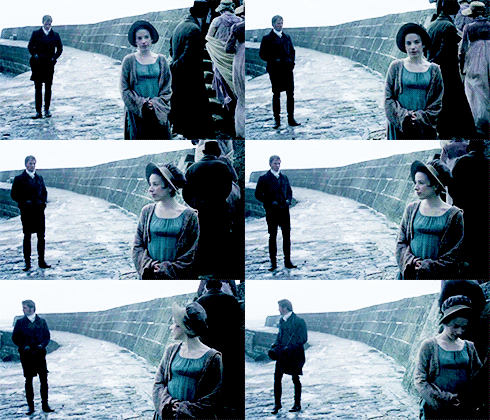
Best Movie Gif/Meme:“I dearly love a laugh.”
I like the little moments like this that highlight the ongoing tension between the two throughout throughout the movie.
This rounds out my official year of reviewing Jane Austen books/adaptations. I’m planning one bonus post in two weeks, however, to cover a few other adaptations that didn’t make the list for full reviews.
Book: “Knight of the Silver Circle” by Duncan M. Hamilton
Publishing Info: Tor Books, November 2019
Where Did I Get this Book: NetGalley
Book Description: Three dragons wreak havoc throughout Mirabay–eating livestock, killing humans, and burning entire villages to ash. It was nearly impossible to kill one, using a legendary sword and the magic of the mysterious Cup; to tackle three, Guillot dal Villerauvais will need help.
The mage Solène fears having to kill again; she leaves Gill to gain greater control over her magic.
The Prince Bishop still wants Gill dead, but more than that, he wants the Cup, and he’ll do whatever he has to to get it, even sending his own daughter–a talented thief and assassin–into the dragons’ path.
As secrets mount on secrets and betrayals on betrayals, both Guillot and Solène face critical decisions that will settle not only their own fate but that of all Mirabaya.
Review: While I didn’t absolutely love the first book in this series, I could still appreciate what it was trying to do and the type of approachable, sword and magic fantasy story it was telling. The characters, while fairly predictable, were also well-drawn and familiar enough that I was definitely not set against continuing with the series. On a whim, I requested this one a while back. It took a while to get to it, but here we are! Overall, while it’s still not my favorite fantasy series ever, I did like this one better than “Dragonslayer.”
After returning with a dragon’s head, Gill has re-established himself as a dragonslayer of note. Parting ways with Solene, the two are set to go about their lives again, not expecting to see one another again. But it soon becomes apparent that dragons aren’t done with them let. Three new ones begin pestering the countryside, drawing Gill out once again and now against worse odds than ever. For her part, Solene fears what is coming and is still working on gaining full control of her powers. But there may not be time as the Prince Bishop continues to make his own moves.
So, overall, this was very similar to the first book. It’s your tried and true classic fantasy story where the heroes are heroic, the mages struggle with their magic, and the bad guy does ad things. But in a lot of ways I think it also improved on the first book. For one thing, part of what I liked about the first book was the inclusion of POV chapters from the dragon’s perspective. Here we get more of that, which I still think is pretty unique, but we also dive more into dragon culture. We learn the variety of dragons out there, how some are just rampaging beasts essentially, but how others are quite intellectual and have a sort of society amongst themselves. I definitely continued to be interested in this angle of the story.
As far as Gill goes, I still think that he’s a bit of a cookie-cutter hero in that he’s almost exactly what you’d expect. In my review of the first book, I struggled with the lack of exploration into his emotional arc dealing with the loss of his family. But I was glad to see here that his struggles with alcoholism weren’t simply swept under the rug after the first book. Yes, he had success again as a dragonslayer and is largely coming into his own again as an esteemed fighter. But we still see him struggle with his past and the part of him that has dwelled in booze for so long.
I also liked that we got more from the villain of the story, the Prince Bishop. In the first book, he, too, was fairly one dimensional. Here, we see more from him and learn more about his own motives and how far he is willing to go against our heroes. It gave him enough depth to make him more of an interesting character to follow in his own right.
The writing is also still solid and Hamilton is clearly an adept storyteller. However, the series continues to feel a bit one note. And, like I said in my first review, it still seems as if it’s not bringing much new to the genre as a whole. There’s definitely an appeal and an audience for this type of book, but I also like fantasy stories that surprise me in some way or another. A good example would be Michael J. Sullivan’s “Age of Myth” series. That, too, is a fairly typical fantasy adventure story with elves, dwarves, humans, and dragons. But the story also takes several surprising turns, focusing in on characters you originally cast as side-characters and doing away with some whom you thought would be around for the long haul and occupying important roles in the story. But, all of that said, fans of classic fantasy will still likely enjoy this second entry from Hamilton.
Rating 7: Improves on the first novel, but still a bit bland to really hit home for me.












 The Library Ladies