Publication Info: Walker Childrens, September 2013
Where Did I Get this Book: the library!
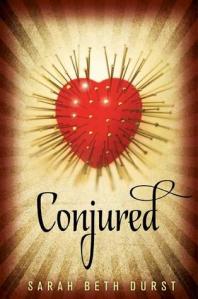
Book Description:Eve has a new home, a new face, and a new name—but no memories of her past. She’s been told that she’s in a witness protection program. That she escaped a dangerous magic-wielding serial killer who still hunts her. The only thing she knows for sure is that there is something horrifying in her memories the people hiding her want to access—and there is nothing they won’t say—or do—to her to get her to remember.
At night she dreams of a tattered carnival tent and buttons being sewn into her skin. But during the day, she shelves books at the local library, trying to not let anyone know that she can do things—things like change the color of her eyes or walk through walls. When she does use her strange powers, she blacks out and is drawn into terrifying visions, returning to find that days or weeks have passed—and she’s lost all short-term memories. Eve must find out who and what she really is before the killer finds her—but the truth may be more dangerous than anyone could have ever imagined.
Review: I’ve read several of Sarah Beth Durst’s books in the past, and they are if anything, always unique. So when I discovered this one, with its creepy carnival imagery, amnesia, and serial killer nemesis, I knew that the story would be in the hands of an author capable of fully taking advantage of these elements.
The story started off slowly for me, to be honest. While Eve’s amnesia is an important part of the story, it also leaves the reader in an awkward place being equally (perhaps even more so!) in the dark as she is. We’re pretty much plopped down into a situation with no background information and a narrator who doesn’t know anymore than we do, but who is clearly involved in something nefarious, with hints being thrown every direction by other characters. Durst also wasn’t in a rush to resolve this. I was about a third of the way into the book before I started feeling truly invested in the story. And while this is a rather large hurdle to leap for many readers, I would say the later pay off is definitely worth it.
Eve herself is such a unique narrator. Her voice is so strange and it speaks to the deftness of Durst’s abilities that she can show Eve’s growth through even the most minute of changes in Eve’s outlook on what goes on around her. When the reveal comes towards the end of the story, I actually found myself paging back through the book trying to spot these change points, many of which I missed in my initial read through.
As for the twist itself, parts of it I was able to guess, but others came completely out of the blue. The motivation of the villain, Eve’s true back story in relation to the villain, was both heart breaking and distinctly chilling. I particularly appreciated the fact that the story is not quickly wrapped up once some of these twists become clear and we get to fully explore the reality of these developments and spend time in this new world order.
Further, the confusion and distrust that leads to these reveals were excellent. Eve has been told everything, she remembers/knows none of it for herself. So as she begins to question those around her, so do we, the reader. Her bouts of amnesia were both frustrating and refreshingly new to this type of story. She isn’t just a narrator who doesn’t remember her past but whose stories unfolds neatly from there on out. Eve keeps forgetting. Between chapters even! Like I said, frustrating, but also very interesting.
As for supporting characters, these were a bit more hit and miss. I loved Malcom from the get go, and grew to love his partner as well. However, I was less thrilled with the three other teens Eve meets: Aiden, Victoria, and Topher. They seemed like a neat idea, but ultimately, I feel like they didn’t even need to be in the story. Very little of the outcome would have been changed, and they were often so unlikable that I found myself wanting to skim read through their portions.
And as for the love interest, Zack…I just don’t know. There are elements of his character that I liked, but he never fully recovered for me from his introductory line of dialogue when first meeting Eve:“I think it’s a shame that it’s customary to shake hands upon greeting when what I really want to do is kiss your lips and see if you taste like strawberries.”
Personally, if a guy introduced himself to me that way the door would be slammed on the chance of us even be acquaintances, let alone romantically involved, right then and there. It’s supposed to be twisted together with Zack’s defining characteristic: he does not tell lies. And while this plays an important role later in the story, I think there is an obvious miss between “not telling lies” and “not spewing out every ridiculous-bordering-on-creepy thought that comes into your head to a complete stranger.”
Slow start and creepy Zack aside, once pieces of the mystery started fitting together, I couldn’t put this book down. If you like dark, fantasy stories and can be patient with unreliable narrators and a slow start, definitely check this one out!
Book: “Only the Dead Know Burbank” by Bradford Tatum
Publishing Info: Harper Perennial, October 2016
Where Did I Get This Book: The library!
Book Description:With Lon Cheney and Boris Karloff among its characters, this sweeping and stylish love letter to the golden age of horror cinema tells the wonderful, tragic story of Maddy Ulm. It takes readers through her rise from the complicated shadows of Berlin’s first experiments with expressionist cinema to the glamorous deserts of Hollywood. For Maddy has a secret. A secret that has given her incredible insight into the soul of horror. A secret that has a terrible price as well.
A young girl awakens in a hastily dug grave—vague memories of blood and fever, her mother performing a mysterious ceremony before the world went away. Germany has lost the first great war and Europe has lost millions more to the Spanish Flu epidemic. But Maddy has not only survived, she has changed. No longer does she eat, sleep, or age. No longer can she die. After taking up with a pair of street performers, she shocks and fascinates the crowds with her ability to survive outrageous traumas. But at a studio in Berlin, Maddy discovers her true calling: film.
With her intimate knowledge of fear, death, and realms beyond the living, she practically invents the modern horror genre on the spot. Before long, she travels to California and insinuates herself in Hollywood as the genius secretly behind The Phantom of the Opera, Dracula, and Frankenstein. And yet she must remain in the shadows—a chilling apparition suspended eternally between worlds.
Clever, tragic, and thoroughly entertaining, Only the Dead Know Burbank introduces readers to one of the most unique, unforgettable characters in fiction.
Review: This past Halloween weekend, I was attending a bonfire gathering of former coworkers. Me and my friend Scott were the first to arrive, and as we build the bonfire and chatted he told me about a book that he had heard of and was interested in. When he told me it was about a girl in Germany is some kind of immortal state who takes an interest in movie making and moves to Hollywood, having a hand in making the Golden Age of Horror movies that define the time… I too was interested. As someone who likes horror, someone who likes vampire(?) lore, and someone who really likes the Golden Age of Horror Films, this should have been a home run right out of the park.
The bad news is that it didn’t quite even get a double.
The good news is, Boris Karloff is a treasure.
I spent a majority of this book wanting to keep him safe and loved. (source)
I stand by my assertion that this plot does have a lot of serious potential and promise. Madchen, or Maddy, is a very well rounded and relatable protagonist, a girl who is trapped in stasis and has ambitions that are beyond a world she does not fit into anymore. She is a tragic figure who never asked for this eternal life, the ‘victim’ of a ritual performed by her negligent and narcissistic mother who, in a rare moment of love for her daughter, tried to save her from the Spanish Flu. Maddy is haunted by her immortality, and also haunted by the spirit of a cruel man named Volker, who may or may not be her father, and fell victim to murder at the hands of her mother. Unfortunately, the tangles and drama in Weimar Germany and Austria really dragged the narrative down, and while I appreciated the references to German Expressionism and the undoubted influence it had on Maddy, and therefore the films she would influence, I just kind of wanted for her to go west, young vampire(?).
By the time we did get to Hollywood, things picked up, and it was lots of fun seeing Maddy interact with familiar icons of the Universal Horror circuit. From Lon Chaney to Tod Browning to a superb and sweet Boris Karloff, Maddy interacts with legends of old and her unique perspective on death and existential crises helps create the masterpieces of cinema that are still heralded today. And yet the song is still the same, as she is influential and instrumental, but as a young woman she gets absolutely no credit and is never taken seriously. These parts were the best parts of the book for me, and her friendships with Chaney and Karloff (especially Karloff, whom she affectionately called “Billy”) gave her that much more heart and rounded out two real life giants who had flaws, dreams, and spirit. Karloff is such a gentle and thoughtful soul in this book, and for whatever reason that just plucked at all my heartstrings.
But Maddy’s greatest relationship is the one she has with Mutter, a gentle giant she meets while still in Europe, who was wounded in WWI and permanently maimed both physically and mentally. Mutter is the other great tragedy of this book, as while he is so unattached from others around him for being different and special needs, his affection for and connection to Maddy is one of those tenuous threads that does connect her to humans. Maddy’s fondness for him is absolutely touching, and it leads to many moments where the two of them, defined and limited by their Otherness, are in this together, and against the world. True, one of his storylines felt awkward and superfluous (he ends up living with a number of the Native American actors who live on the studio lot, on call for roles as disposable extras, and the view and description of them made me uncomfortable because they too were so Othered), but their final bit together really, really hit me right in the gut. Because Maddy and Mutter find themselves being shipped back to Germany, right when Hitler has taken power…
Unfortunately, while I liked these really well done nuggets of characterization and mythology, the pacing was very slow, almost to the point where I was close to giving up on it. Whenever Maddy was back in Germany, the odd storyline with Volker and the baggage that comes with Maddy and her mother weighed down the narrative. It wasn’t as bad the second time, but it definitely hurt the tone to the point where I couldn’t really get past it. I also feel like it probably went on a bit longer than it had to, as the extended adventures with her mother in Hollywood were just not what I was here for. I was here for Boris Karloff. I wanted more Boris Karloff.
There were moments of “Only the Dead Know Burbank” that were absolutely beautiful in their power, tenderness, and despair. I lived for those moments. I just wish that it hadn’t taken so long to get there, and that we didn’t get slogged in parental angst. Overall, Maddy was a lovely and fascinating creature, and I will no doubt think of her whenever I rewatch an old monster movie from the 1930s.
Rating 6: Though it had moments of beautiful pathos and super fun and moving portrayals of classic movie stars, the slow start and disjointed focus in certain plot points made the book a bit harder to swallow than I had hoped for.
We are part of a group of librarian friends who have gone the extra mile and created our own bookclub. Each “season” (we’re nerds) we pick a theme and each of us chooses a book within that theme for us all to read. Our current theme is “Across the Decades,” we each drew a decade and had to select a book that was either published or set in that decade.
For this blog, we will post a joint review of each book we read for bookclub. We’ll also post the next book coming up in bookclub. So feel free to read along with us or use our book selections and questions in your own bookclub!
Book: “A Brief History of Montmaray” by Michelle Cooper
Publishing Info: Knopf Books for Young Readers, October 2009
Where Did We Get This Book: audiobook from the library!
Book Description:Sophie Fitzosborne lives in a crumbling castle in the tiny island kingdom of Montmaray with her eccentric and impoverished royal family. When she receives a journal for her sixteenth birthday, Sophie decides to chronicle day-to-day life on the island. But this is 1936, and the news that trickles in from the mainland reveals a world on the brink of war. The politics of Europe seem far away from their remote island—until two German officers land a boat on Montmaray. And then suddenly politics become very personal indeed.
Kate’s Thoughts
So as a fan of “Downton Abbey”, and as a fan of kicking the shit out of Nazis, I had high hopes that “A Brief History of Montmaray” would combine the best of both worlds. I had this vision of Mary Crawley punching an S.S. officer in the face a la “Indiana Jones” while making some snippy and cruel remark, and in my mind that was just the best damn thing that I had ever thought of in the history of ever, crossover wise.
And she’ll never tell where the bodies are buried either. (source)
While the book did have some likable characters (the cousin Veronica, in particular) overall I was a bit disappointed that “A Brief History of Montmaray” was more focused on the dysfunctional, if quirky, royal family and the problems that they are facing in love, life, and succession. Our narrator, Sophie, is pretty good at laying out the family lines and showing how the royal family connects to each other (King John has no male heir, so the next in line should be his nephew Toby, Sophie’s older brother). Sophie, not having as much investment in the royal line to the throne, is a good choice for narrator, as she doesn’t have the pressure of being a direct heir like her brother, nor does she have the frustration of being an ineligible heir like her cousin based solely on her gender. Because of this she can present a pretty fair view of how things are supposed to work in this family. She is a fine narrator and a good lens to see these conflicts, but at the same time she isn’t as interesting as I wanted her to be. I much preferred Veronica, the incredibly intelligent and capable daughter of the King, who would make a fine queen if only Montmaray approved of female succession. She was by far the most interesting character, as she has so much more interest in her home country than Toby, the flaky rightful heir. It’s the perfect example of an unjust and sexist society that is probably really screwing itself over. Veronica is also quite well rounded, probably the most well rounded of all the characters. She is cunning and ambitious, but also loves her home and her family, so much so that she puts rightful succession above all else even though you know she is aching for it. Had the story been following Veronica’s POV, I think that I would have been able to forgive it a bit more for not focusing on the Nazi storyline, and the storyline about how Europe was in serious, serious danger at this time. I do realize that this is a series and that there were two other novels to focus on that, and that this novel was more about introducing us to this family. But to me, the family wasn’t the part that I wanted to focus on outside of Veronica. It was a bit too “I Capture The Castle” for me, a book that I recognize as being significant and a classic, but one that I also am not terribly fond of as a whole.
And yes, I’m resentful that there weren’t enough Nazis, at least not as much as the summary would suggest. True, the Germans do land on Montmaray, sending the FitzOsbourne family into turmoil for many reasons. But they are there for a moment in the middle, and then come back at the end. The rest of the book is about the family and their squabbles and scandals. And hey, I like a nice soap as much as the next person, but it all felt kind of trite compared to the things I knew were coming, even further into the series. It’s hard for me to care about awful (AWFUL) housekeepers and their stupid secrets when I know that a whole lot of awful pain is about to rain down on the rest of Europe. And maybe for me it’s still a little raw since there was recently just footage of a bunch of these guys doing the Hitler salute in D.C. But had I known that the family malarky and hoopla was going to be the focus (aka, more “Downton” and less “Indiana Jones”), my expectations would have been more in line with how it turned out, and therefore I would have been more receptive to it. As it was, I kept saying to myself “BUT WHEN ARE ALL THE NAZIS GOING TO REALLY GET THEIR COMEUPPANCE?!”
Preferably in this kind of endgame situation. (source)
So I think that it’s fair to say that “A Brief History of Montmaray” was at a disadvantage because of misplaced expectations. It’s not necessarily the fault of Cooper, but more so how it was promoted. I loved Veronica, but that was about the only thing that I really enjoyed, and sadly that’s not really enough to keep me going.
Serena’s Thoughts
This book had been on my reading list for a while as it was well reviewed by several other blogs that I followed. And when I ended up with the 30s as my decade of choice for our bookclub theme this go-around, it seemed like a perfect time to finally get around to it!
As the historical fiction reviewer on this blog, it’s probably not a surprise that I enjoyed this book more than Kate. For the most part, the historical detail is what captures me in these stories, and I enjoy books about quirky families (ala “Anne of Green Gables” and Jane Austen novels). The addition of a bit more action than is usually found in this type of book was the extra cherry on the top for me.
I agree with Kate’s assessment of the characters themselves. Sophie was an interesting narrator and I enjoyed the transformation she goes through during this book. The combination of teenage silliness mixed with a healthy dose of self-awareness with regards to said silliness made her a very endearing teenage protagonist. Veronica, however, is the type of character I generally gravitate towards. Intelligent, snappy, and a girl who firmly has her head on her shoulders. Seriously, nothing would get done if Veronica wasn’t there. And she has by far the most challenging set of circumstances to deal with, what with the sexism involved in the rules of ascension and the terrible family life (crazy dad who hates her, abandoned by her mother).
As for the boys involved, I found myself increasingly frustrated with Simon, the set up love interest for Sophie. I couldn’t help agreeing with Veronica’s assessment of him as a bit of a self-serving prat. And while I generally liked Toby, I found myself becoming more and more annoyed with his selfishness. I mean, the guy gets to go out and live in the world to go to school, make friends, be in society, and, yes, there are responsibilities to being the heir, but that’s a huge amount of privilege, too. So for him to whine to his cousin and sisters who are living in a castle that is literally falling down around them and who have no friends of any sort really just seems ridiculous and made me want to slap some sense into him.
As for the Nazi involvement: I actually really appreciated that this book didn’t go the expected route with them. There was a lot of discussion with regards to the political climate in Europe and it does a lot to remind modern readers that the Nazi party didn’t just sprout out of the ground fully formed. There were a lot of moving pieces and many years went by before it became clear just what everyone was dealing with. There were some interesting nuggets that were very…Indiana Jones-ish…and were quite fun, and another lesser used mode of introducing Nazis into the story. I do agree that the book summary can be misleading, so if you go into it expecting clashes with Nazis and said comeuppance served upon them it might not be for you. However, given the year that this is set in, and that it’s the first in a trilogy, I guess I was more prepared for delayed gratification re: Nazi destruction.
All in all, I enjoyed this book quite a bit. It’s definitely more geared towards readers who enjoy slower paced historical novels. There’s a good amount of family drama, family mystery ala books like “Rebecca,” and historical detail. And, while there is action and Nazis towards the end, those aspects definitely come later and don’t take up as much page time as the rest.
Kate’s Rating 6: Though I greatly enjoyed the character of Veronica, overall the story didn’t match my expectations, and therefore didn’t grab me as I thought it would.
Serena’s Rating 8: Strong historical detail and interesting characters, though beware the lighter Nazi involvement if that’s what you were here for!
Bookclub Questions:
1.) How did we feel about Sophie as a narrator? What do you think the story would have been like if it had been told from the perspective of a different character?
2.) Montmaray is an imaginary kingdom that is meant to exist in an otherwise historically accurate version of Europe. Did it succeed in this way? Were there aspects of the historical set-up that you particularly enjoyed or found distracting?
3.) The Nazis: How did you feel about them? Their entrance into the story, their mission, and the resolution to their involvement?
4) For a first-person narrated story, it feels as if we get a good amount of detail about many of the side characters. Were there characters who stood out? What about Rebeca and Simon?
5) The book does seem to involve some supernatural elements, how did you feel about this inclusion and twist?
6.) This is the first in a trilogy. Where do you think/want the story to go from here?
The Next Book Selection: Not sure yet! We’re at the switching point between one “season” and another. For our next theme, we all chose two things (“a book that’s been turned into a musical!” or “a book about animals!”) and had to draw from a hat for our own options. We’ll see what comes up!
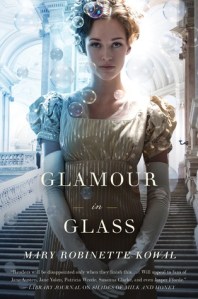
Book Description:In the tumultuous months after Napoleon abdicates his throne, Jane and Vincent go to Belgium for their honeymoon. While there, the deposed emperor escapes his exile in Elba, throwing the continent into turmoil. With no easy way back to England, Jane and Vincent’s concerns turn from enjoying their honeymoon…to escaping it. Left with no outward salvation, Jane must persevere over her trying personal circumstances and use her glamour to rescue her husband from prison…and hopefully prevent her newly built marriage from getting stranded on the shoals of another country’s war.
Review: The second in the “Glamourist Histories” sereis, “Glamour in Glass” resolved many of the issues I had with the first book and introduced an expanded world and magic system.
While the appeal of the first book lay largely in its comparisons to a Jane Austen novel with magic, this aspect was also its biggest downfall. Let’s face it: more often than not, being compared to a Jane Austen novel is a kiss of death for many historical books since it will only raise expectations to impossible heights. While “Shades of Milk and Honey” wasn’t sunk by the comparison, it didn’t do the story any favors either. The plot devices or characters who struck to closely to aspects of “Emma,” “Sense and Sensibility,” or “Pride and Prejudice” were at best distractions and at worst lacking the heart and wit that lies at the core of these originals. However, this book, taking place after the marriage of Jane and Vincent, is freed from these comparisons as it ventures into unknown territory to Jane Austen stories: Life after the wedding.
I enjoyed reading about Jane and Vincent’s struggles learning to adjust to married life. While very much in love, the reality is that they still have much to learn about each other, both in regards to their own personal relationship, and with how they balance their “professional” lives as gifted glamourists, each in their own way.
The expanded descriptions and explanations for this magic system were particularly interesting. It is a very unique take on magical and I enjoyed discovering more about how it work and the varying ways it can be adapted for different uses. I remember noting in my last review that this type of magic seemed as if it would have more important applications than simply as an art form, and this book explores this concept, much to my delight. Particularly, the book dives into the ways that glamour magic is used as strategy in military maneuvering.
As the description highlights, there is much more action in this story, particularly for Jane. I enjoyed watching her make proactive choices, rather than simply react to the circumstances presented to her.
My only complaint was the decreased role that some of the original characters played in this story. While the setting places some obvious constraints on the involvement of these characters (obviously Melody would not be on their honeymoon with them!), I still missed them.
All in all, this book improved on both of my complaints of the original: freeing itself from comparisons and expanding the use of its magic system. If you were only half-sold on the first book, definitely check this one out as I see it as a great improvement in the series.
Rating 8: A step in the right direction for the series as a whole!
Book: “Transmetropolitan (Vol.2): Lust for Life” by Warren Ellis and Darick Robertson (Ill.).
Publishing Info: Vertigo, February 1999
Where Did I Get This Book: I own it!
Book Description:Outlaw journalist Spider Jerusalem has become a household name in the future City he calls home. This latest collection of twisted tales showcases Spider’s horrific yet funny screeds on subjects as diverse as religion, politics, and his ex-wife’s cryogenically frozen head (which has been stolen). “Transmetropolitan” has been called “brilliant future-shock commentary” (Spin), and this new volume shows why.
Review: It boggles my mind, the things that I remember about “Transmetropolitan” and the things that I forgot. I definitely remember Spider and his ways, how couldn’t one? I remembered The Cat, the two faced feline, and Channon, and other characters that have yet to show up. But various plot points completely left my mind, and I Think that those plot points had more to do with the vignettes that you find in the comics every once in awhile. Because while “Transmetropolitan” has it’s overall progression and story arc, it also has stories that stand alone, even if they sometimes affect the broader plot. “Lust for Life” is one of those collections, where none of the stories really apply to The Beast, or the campaign, or Spider’s role in the political climate of The City or the world he inhabits. This collection is really there to give more depth to the characters and the world that they live in, and I forgot how filled with pathos this series could be until I picked this one up.
The stories in this collection do have some absurd moments (the frozen head of Spider’s ex-wife going missing, for example, and the romp that ensues). But there were two storylines that really stood out as heart felt and just plain sad. The sadness that comes in this collection really gives all the more strength to the series as a whole, to show that it’s not just one big cyber punk filth and cynicism festival. The first involves Channon, my favorite character in the whole series, and her inability to come to terms with letting her degenerate boyfriend out of her life. Channon is strong and she has the patience of a saint to put up with Spider, but you can tell that she’s also very lonely, and looking for validation. She never falls into a trope, but she has a turning point as a character when her boyfriend decides that he wants to leave his body and transfer his consciousness into a gaseous vapor. Sounds oddball, and it is, but Ellis does a great job of making this story more about letting go of loved ones, no matter how much it hurts, and how necessary it is. The entire sequence is both tragic and beautiful, and seeing Channon in this new, vulnerable role is incredibly rewarding.
The second storyline that really punched me in the gut was that of Mary. Mary is a subject of one of Spider’s columns, a woman who lived a vibrant and exciting life in the 20th century. She was a photographer who travelled the world and was present at a number of historic events. When she was older, she and her husband decided to go through cryogenesis so they could wake up in the future…. Except, her husband died before he could be frozen. And when Mary wakes up in the world of Spider Jerusalem and The City, she is in the body of a twentysomething… And completely alone in a place that she cannot comprehend. It’s a story about wanting to live beyond your time, and taking a chance on it only to find yourself all the more isolated within a world that is already incredibly isolating. It was a story that reminded me that Ellis can write snide and cynical and crude stories, but he can also write some seriously existential and pathos ridden stuff. The City is already claustrophobic for the people who live there and are used to it. But to bring in a person who is, by and large, an analog for the reader and the time frame that we are more comfortable with, it makes you really think about what the hell it would be like to live there instead of just reading about it from the outside. And for me, damn was it lonely and really, really scary. I remember once one of my classes asked me if I would take a chance on being frozen to be awakened at a future date. While a number of classmates said yes, I was a solid ‘no’. And I wonder if in the back of my mind I was remembering the story of Mary, and how she goes from a formidable and thriving woman to a scared and lost stranger in an alien land.
I do wish that more actual plot line had happened in this book, but overall I did enjoy “Transmetropolitan: Lust for Life”. It’s nice to see that Spider does cover more than just the crazy campaign that is going to be a huge part of this story as a whole.
Rating 9: Though it isn’t as focused on the main storyline, “Transmetropolitan (Vol.2): Lust for Life” does a good job of examining philosophical issues that could apply to it’s world, as well as our world.
Where Did I Get this Book: audiobook from the library!
Book Description:A cunning and impetuous scout, Alix only wishes to serve quietly on the edges of the action. But when the king is betrayed by his own brother and left to die at the hands of attacking Oridian forces, she winds up single-handedly saving her sovereign.
Suddenly, she is head of the king’s personal guard, an honor made all the more dubious by the king’s exile from his own court. Surrounded by enemies, Alix must help him reclaim his crown, all the while attempting to repel the relentless tide of invaders led by the Priest, most feared of Oridia’s lords.
But while Alix’s king commands her duty, both he and a fellow scout lay claim to her heart. And when the time comes, she may need to choose between the two men who need her most…
Review: Another book that landed on my to-read pile quite a while ago that now I have no memory of selecting. But, luckily for me, my past self must have been on top of things, because this lesser known fantasy novel hit just the spot!
I’m going to whip through the basic review portions to devote the rest of this post to two things that I feel make this book noteworthy in the long list of fantasy fiction being published currently.
General worldbuilding: pretty typical European-centric, medieval fantasy world. The bloodbinding magic used to create super weapons is interesting, but isn’t breaking any hugely new ground. I was fairly well into the book when I started questioning whether this even was a fantasy novel given how little these magical elements were mentioned. Later, however, it did play a bigger role, but if you’re interested in complex magical systems, this is not that book.
Characters: Alix is great. She’s a competent, funny, independent character whose abilities and intelligence are never questioned. She makes mistakes and is flawed, but her character arc takes her through these struggles smoothly, never undermining the stronger aspects of her character. The dialogue, both her own and those around her, was witty and I caught myself laughing out loud several times.
So, all of that aside there were two things that I found notable about this story. First, I was dismayed to find a love triangle smack dab in the middle of my adult fantasy novel.
As we all know, I do not appreciate most love triangles. I find them unrealistic, and they often seem to bring out the worst in all characters involved (selfish heroines, ridiculous-verging-on-abusive love interests). Now, I won’t say that I loved the inclusion of a love triangle even here. I’ve just never really been too entertained by the drama of multiple love interests. Seems like it would be stressful and, for me, it is the exact opposite of wish fulfillment. That said, this one righted many of the wrongs I’m used to seeing with love triangles. Perhaps the simple fact that the author is writing about adults and for adults makes the difference here. There are real consequences to the choices that are made. Hearts are broken. Confusion is unpleasant, not thrilling. And the relationships between all characters involved are real and priorities are rightly placed beyond the romance of it all. I still struggled with some of Alix’s internal musings about the situation, as it still seems unrealistic to me to be equally drawn to two different people. However, the author provided a decent explanation for this, if one that I still somewhat questioned in reality. Further, the reaction of the two men involved was a highlight. No silly posturing. No abusive possessiveness. Actual hurt and confusion. They are people who have real feelings involved. Further, they have lives, relationships, friendships, duties, and families outside of Alix that they rightly keep in perspective throughout all of this. I was particularly pleased with the way this love triangle resolved itself. So, all of that said, while I still don’t find love triangles particularly entertaining, this book proves that they can be told from a more realistic and appealing angle.
My second notable aspect of the story was its treatment of women. I am continually frustrated by stories that justify the maltreatment of its women characters (or, frankly, the glorification of very objectionable material) and the creation of generally very traditionally sexist societies by hand-waving it all under the claim that this is somehow “more realistic.” You’re writing a damn fantasy novel with magic, unicorns, and zombies for heaven’s sake. You’ve left “realistic” far behind, so why is this one aspect somehow imperative to the “reality” of your story? This book highlights how to create a fairly typical medieval fantasy world while leaving that all behind. It’s not preaching “woman power.” It’s not bashing anyone over the head with A MESSAGE. It’s just telling a story in a world where women simply are there in the army, are there in politics, are there representing the head of their family. No big deal. Sure, it’s mentioned that as women are not as physically strong, they’re often found as archers in the military. But this is by no means a rule, with the doors to others roles left wide open. And no one blinks an eye at any of this. This book is a perfect example and response to the aforementioned narrative that it is somehow impossible to balance this type of typical fantasy world with a more inclusive approach to women’s roles.
All said, I very much enjoyed this book. It’s not breaking any walls as far as plot, following a pretty simple plot structure. But the strong characters, entertaining dialogue, and well-represented world recommend it to anyone who enjoys traditional fantasy fare with a dash of romance.
Rating 7: A fun fantasy story, notable for a not-gag-worthy love triangle and a strong representation of a more inclusive fantasy world.
Book Description:As a thirty-something Classics and English literature teacher, working at a school in Cambridge, Margot Lewis leads a quiet life. In her spare time, she writes an advice column for the local newspaper. But she can’t help feeling that she’s the last person who should be doling out advice, because her marriage has failed.
When one of Margot’s students, fifteen-year-old Katie Browne, disappears, the police immediately suspect she’s been kidnapped. Then, not long after Katie goes missing, Margot receives a disturbing letter at the newspaper offices. The letter is supposedly from Bethan Avery, a fifteen-year-old girl who was abducted from the local area twenty years ago…and never found. In the letter, Bethan states that she is being held captive and is in terrible danger. The letter ends with a desperate plea for her rescue.
The police analyze the letter and find it matches a sample of Bethan’s handwriting which they’ve kept on file since her disappearance. This shocking development in an infamous cold case catches the attention of Martin Forrester, a criminologist who has been researching Bethan Avery’s puzzling disappearance all those years ago. Spurred on by her concern for both Katie and the mysterious Bethan, Margot sets out—with Martin’s help—to discover if the two cases are connected. But then Margot herself becomes a target…will she be next?
Riveting to the final page, this is a masterful, sophisticated, and electrifying debut.
Review: Oh Grit Lit, I wish I could quit you. Well, maybe that’s a bit harsh. When it’s good, it’s really quite entertaining, a genre that keeps me interested and on my toes. When it’s bad, well……
Given the pendulous possible outcomes, I definitely go in treading lightly, and try to keep my expectations low enough that I’m not terribly disappointed, but high enough that I don’t just give up on it. Sometimes this works. Other times it kind of just a was from the get go and I can see it from a mile away. And this is what happened with “Dear Amy” by Helen Callaghan. I found myself charging through it not so much because I wanted to know what was going to happen, but because I just wanted to get it over with. Which is never really a resounding cheer for a book. Now it wasn’t “Gone Girl” levels of hot boiling rage on my part, but I did have just a few too many qualms with it as a whole that left me less than enthused about it. So let’s just kind of unpack it, shall we? I think there are going to be spoilers here, guys. I need to talk about them to really show you why I’m irritated.
So first of all, Margot just punches every single Bingo square for stereotypical Grit Lit Heroine. She has been betrayed by her rat bastard husband (Eddy left her for another woman). She is outwardly pretty together as a teacher and advice columnist, but is afraid that if her dark past were to come out (heroin addiction being the worst part of it in her mind) everything would be ruined. And she is, of course, mentally unstable, with moments of questioning her sanity and the things that she is seeing in front of her. Old hat stuff, to be sure. But that’s not all. Oh no. Because in trope-y fashion, there of course has to be a huge twist, and this one was a doozy. Okay, here come the spoilers, folks. Get ready. Skip ahead if you really don’t want to be spoiled.
Margot is Bethan. Bethan is Margot. Margot has been in a dissociative fugue state all this time in regards to her trauma, and has been writing the letters to herself, as the Katie kidnapping set her off.
Okay, look, I like a good twist as much as the next person, but this one was a bit too ludicrous for me to swallow. I’m all for unreliable narrators, but when you have to work really hard to make them unreliable, going to ludicrous lengths to do it, that’s when I start to have a hard time with it. I think I actually said ‘what?’ when it was revealed, and then it felt like just a way to say ‘what is real and what is a lie?!’. Come off it. And given that this is the second thriller novel I’ve read in the past couple of months that has ‘dissociative fugue!’ as one of the ‘what a twist’ moments, it’s already starting to feel played out as well as totally random and unnecessary. That said, there is one more twist that I did like, involving Margot and a friend of hers named Angelique from when she was in a halfway house as a teenager. This was a plot point that I did enjoy, and while I saw it coming as well, it was still more believable than the huge Bethan Avery twist. Hell, had this twist I did like been the only curveball, I probably would have liked it more.
Overall I was more interested in the Katie parts of the book, but even they felt a bit out of place because while Margot’s were in the first person, we’d jump to Katie’s chapters in the third person just so we could see what was going on with her. I think that it may have worked better if she had been in the first person as well, just because the way that it jumped into a different perspective made it feel almost like a cheat instead of a literary device to tell both stories in a consistent and interesting way. If this book had been from Katie’s POV I probably would have liked it more, even if it would have had the potential to get a BIT exploitative.
So while I liked parts of this book, “Dear Amy” ultimately didn’t really do much for me. I think that Helen Callaghan definitely has writing skills, and I think that I could see myself giving her another shot, this one was a little too far on the Billy Eichner side of the pendulum.
Rating 5: “Dear Amy” had promise but then it fell into far too many familiar traps of the Grit Lit genre. Some parts were interesting, but overall it wasn’t my thing.
Christmas is almost here! Christmas is almost here! This is both great (Christmas music!) and not so great (Christmas music EVERYWHERE!) But it is a month full of festivities and holidays, many others than just Christmas, so Happy Holidays to everyone! Here are some books that are being published this December that we are each looking forward to.
Serena’s Picks
Book: “Upon a Time” by R. L. Stedman
Publication Date: December 1, 2016
Why I’m Interested: This collection of retold fairytales sounds intriguing. I’m always looking for new fairytale re-tellings, and these sounds like classics with twists: an assassin on a dealing, a “Charming Ball,” a fairy godfather (!) and sleeping beasts. Fairytale re-tellings have had a bit of a “moment” the last several years with decreasing returns it seems. Hopefully this book will prove that there is still new life to be breathed into these types of stories!
Book: “A Want of Kindness” by Joanne Limburg
Publication Date: December 6, 2016
Why I’m Interested: It’s been a while since I’ve highlighted a historical book, and when I came across this one, it sounded right up my alley, telling the story of Queen Anne who ascended to the throne in 1702 and was the last of the Stuart line. I’ve read a good amount of Phillipa Gregory in my day (a staple in historical regency fiction, though she mainly focuses on the Tudors), and this sounds very similar. Mixing fact and fiction, Limburg re-creates the intrigue and tragedy that made up Anne’s life. While the potential for crying is high with this one, I’m excited to check it out!
Book: “Miniatures: The Very Short Fiction of John Scalzi” by John Scalzi
Publication Date: December 31, 2016
Why I’m Interested: Another short story collection, this one by the well-known sci-fi author John Scalzi. The collection spans the last 20 years of Scalzi’s work and features four new stories. I haven’t read a lot of Scalzi’s work, but he has won a Hugo award for his novel “Redshirts” and is known for mixing sci fi stories with humor featuring the absurd. Just look at a few of these stories’ titles to get an idea: “Morning Announcements at the Lucas Interspecies School for Troubled Youth,” “Your Smart Appliances Talk About You Behind Your Back,” and “The AI Are Absolutely Positively Without a Doubt Not Here to End Humanity, Honest.”
Kate’s Picks
Book: “Paper Girls 2” by Brian K. Vaughan, Cliff Chiang (Ill.)
Publication Date: December 6th, 2016
So I liked the first volume of “Paper Girls” a fair amount, and while I’m hesitant about the hard line Sci-Fi bent that it seems to be taking (just look at the cover…), I like the characters. I like them a lot. My hope is that even if it does go pretty deep into Sci-Fi that the girls keep me interested enough that I’ll want to keep going. I’m also hoping that a couple of the girls who didn’t get as much play last time around will get some more fleshed out characterizations. Given the huge hit that was “Stranger Things”, I hope that the love for 80s Nostalgia keeps going in this series, as obviously it has an audience. “Paper Girls” has that potential.
Book: “The Lost Boys #3” by Tim Seeley, Scott Godlewski (Ill.)
Publication Date: December 12th, 2016
This is kind of a new thing, but it’s kind of the first time in awhile that I’ve started following a comic series as the issues come out. It probably doesn’t surprise anyone that the series I am doing this for is “The Lost Boys”!!!! This series picks up where the movie left off (and I’m guessing erases the two sequels from the canon), and it follows Michael, Sam, and the Frog Brothers as they deal with a new group of vampires. This time it’s a group of ladies called The Blood Belles, and BOY are they badass!!! I’m really enjoying this series, and I hope that it can keep the laughs and scares going.
Book: “Normal” by Warren Ellis
Publication Date: November 29th, 2016 (a cheat, maybe, but it’s close enough to December)
Given that I’ve started a re-read of Warren Ellis’s classic “Transmetropolitan”, when I found out he’d written a techno thriller I was on board. Though I do kind of get nervous about the idea of techno-thrillers (man am I not a science or math person), I love Ellis and his stories, so I am more than willing to give this a chance. Plus, it sounds very strange, with strategists trying to prepare for ‘upcoming doom’ either by adapting technologies to stave it off, or by plotting about how to survive civil upheaval and chaos. One of the more positive strategists may have stumbled upon a vast conspiracy about the future and the doom that it predicts….. I’m a bit confused, but super intrigued too!
What upcoming books are you looking forward to this month? Let us know in the comments!
Book: “The King of Attolia” by Megan Whalen Turner
Publishing Info: Greenwillow Books, January 2006
Where Did I Get this Book: the library!
Book Description:By scheming and theft, the Thief of Eddis has become King of Attolia. Eugenides wanted the queen, not the crown, but he finds himself trapped in a web of his own making.
Then he drags a naive young guard into the center of the political maelstrom. Poor Costis knows he is the victim of the king’s caprice, but his contempt for Eugenides slowly turns to grudging respect. Though struggling against his fate, the newly crowned king is much more than he appears. Soon the corrupt Attolian court will learn that its subtle and dangerous intrigue is no match for Eugenides.
Review: We’re back for some more of Eugendides’ hi-jinks and even more fantasy political drama. After the shake-up with narrative style that came with the previous book (going from a first person narrative from Gen’s perspective in the first book, to a third person POV with multiple characters in the second), I wasn’t sure what to expect with this one. How can an author keep her main character so tricky when readers are on to the cons after two books? Well, without spoiling it, Whalen Turner is definitely up to the task!
Our story starts with poor Gen exactly where he never wanted to be: ruling a country. Further, he’s now the King in a land ruled by a clear-headed, hard-handed Queen who rules over a land that was often at odds with his own native Eddis. I very much enjoyed the exploration of this relationship. This is by no means the happy, fluffy, “ever after” story that one is used to seeing after a royal wedding. Gen and Attolia have a complicated relationship, both in regards to their own rather, ahem, strife-ridden history, but also due to the aforementioned political power posturing that comes with a foreigner gaining a position of authority in a new land. Attolia is not the easiest woman to understand, as is made clear in the last book. And Gen plays his own thoughts and feelings close, for all that he seems so lackadaisical about everything. The exploration of this relationship was excellent.
Further, while the third person POV style was kept for this book, we are introduced to a new character, Costis, a guard in Attolia’s court. Costis is our eyes and ears representing both the feelings of many in the land of Attolia after Gen’s ascension to the throne, but also the necessary fop to be conned by Gen’s playacting. And while it is, of course, immensely enjoyable watching Costis’s eyes be opened to the true genius that is Gen, I continue to be impressed by how effectively Whalen Turner can still con the reader, as well. From the last two books, it is clear that Gen is the type of character who would chafe under the restrictions of royal life. This being the case, even I had a hard time knowing what was or was not an act on his part.
Other than Gen’s struggles at court, the larger plot of this story deals with the continued political turmoil going on in this region between the three main power houses: Attolia, Eddis, and the often-aggressive, Sunnis. Between this and the corruption in Attolia’s own court, the book’s plot is mainly political strategy and lighter on the action than both previous books (though after the action-packed “The Thief,” the previous book’s action was also much lighter). With this, the third in the series, it increasingly feels as if the first book stood alone in many ways, both in style, tone, and the type of story it was telling. These last two books seem represent the true direction that Whalen Turner is wanting to take this series. While I very much enjoyed “The Thief,” I’m loving these last two. If you’re looking for a series that doesn’t fall into any of the tropes or familiar storylines that are often present in fantasy series, definitely check out this series!
Rating 9: Excellent. I continue to be impressed with the author’s ability to retain Gen’s “trickiness!”
Book: The “March” Trilogy by John Lewis, Andrew Aydin, and Nate Powell (Ill.)
Publishing Info: Top Shelf Production, August 2013 (1), January 2015 (2), and August 2016 (3).
Where Did I Get These Books: The library!
Book Description:Congressman John Lewis (GA-5) is an American icon, one of the key figures of the civil rights movement. His commitment to justice and nonviolence has taken him from an Alabama sharecropper’s farm to the halls of Congress, from a segregated schoolroom to the 1963 March on Washington, and from receiving beatings from state troopers to receiving the Medal of Freedom from the first African-American president.
Now, to share his remarkable story with new generations, Lewis presents March, a graphic novel trilogy, in collaboration with co-writer Andrew Aydin and New York Times best-selling artist Nate Powell (winner of the Eisner Award and LA Times Book Prize finalist for Swallow Me Whole).
March is a vivid first-hand account of John Lewis’ lifelong struggle for civil and human rights, meditating in the modern age on the distance traveled since the days of Jim Crow and segregation. Rooted in Lewis’ personal story, it also reflects on the highs and lows of the broader civil rights movement.
Review: John Lewis, noted Civil Rights Activist and Georgia Congressman, can now add another fabulous moniker to his name: National Book Award Winner. On November 16th, 2016, he won the National Book Award (in the Young Readers category) for his book “March: Book 3”, the conclusion to his autobiographical graphic novel series about his time during the Civil Rights Movement. I caught his acceptance speech, and like many other people, cried deeply because I was so happy for him, and it clearly meant so so much on so many levels. By total coincidence, I had just read “March: Book 2” that morning. It had been awhile since I read “Book 1”, and was playing catch up. So then all I had to do was wait for “Book 3” to come in, vowing that once it did I was going to review the entire work as a whole. Because that’s what the “March” Trilogy is: it’s one large story about a remarkable man during a tumultuous time, a story about a movement that changed the nation and a movement that seems all the more relevant today. So I waited. And “Book 3” finally came in for me. So now, let me tell you about this fabulous series.
“March: Book 1” starts with Lewis’s childhood as the son of a sharecropper in rural Alabama and goes through the Lunch Counter Protests in Nashville. From a young age Lewis had a drive and a passion to lead and learn, his early aspirations of being a preacher evolving into the leadership and commitment that he put forth while in the Nashville Student Movement, and then into the broader Civil Rights Movement as a whole. “March: Book 2” talks about his time with the Freedom Riders and the violence they faced during their non violent protests and demonstrations, all leading up to the March on Washington and Martin Luther King Jr.’s “I Have A Dream” speech. This book deals more with the growing aggression of the white citizens and government, as well as the Federal Government starting to waffle and teeter and struggle with the role that it should be playing. It’s also the book that shows Lewis and his own inner struggles, as while non violence is always the mission and the goal, his resentment and anger threatens to boil over. “March: Book 3” is the conclusion, and addresses Freedom Summer, Voting Rights, and Selma. And this story is told all within the frame of the Inauguration of President Barack Obama. Stunning framework, absolutely beautiful. There are multiple parallels between things in “Book 1” that come up again in “Book 3”, and there are themes that link all of them together not just with Lewis, but with other prominent figures as well. Lewis sets out to tell all of their stories as best he can, and the result is one of the best damn graphic novel series I have ever read.
This series is so powerful and personal, and it goes to show just how remarkable John Lewis is. He’s one of the ‘Big Six’, aka one of the most influential members of the Civil Rights Movement, and one of the only ones left, as he reminds us in “Book 1”. These books are very straight forward and simple, but they are so honest and personal that the power they have is immense. I found myself crying many times during my reads of all these books, but also laughing, and cheering, and seething. Lewis brought out so many emotions in me with his story, and his immense talent as a storyteller comes through, just as his charisma does. We get to see the story of the Civil Rights Movement through his eyes, and he tells us the stories of those involved within the movement and those who influenced it from the outside as well. Yes, at times these books are violent, and upsetting, but they need to be, because the horrors that fell upon many people during their non violent protests must never be forgotten. I think that the entirety is an accomplishment, but I understand why they gave the National Book Award to “Book 3”. After all, while it is probably symbolic of awarding the whole darn thing, I think that “Book 3” was the most powerful in terms of emotion being served, be it pride, fear, rage, or determination. It certainly was the one that had me weeping from the get go, as the very first moment was the bombing of the 16th Baptist Church that killed four little girls. The violence is absolutely horrifying, but it cannot be forgotten or glossed over. It absolutely cannot. “March: Book 3” also was the one to really address the differences of ideologies within the movement as a whole, not just between King and X, but Lewis and SNCC as well. And Lewis also has no qualms addressing the fact that LBJ, while he did ultimately get things going on a Federal level, was incredibly reluctant to do much in terms of help until he absolutely HAD to. I think that realities get lost in the historical narratives that come in our educations, and that is absolutely why the “March” Trilogy is fundamental reading when it comes to the Civil Rights Movement in this country.
And, like other graphic novels before it, I want to address the artwork in this series. Because it is beautiful in it’s simplicity, and yet powerful in it’s design. It’s all black and white, and stark and striking on every page. Nate Powell brings the story to life on the page, and he did it both with bits of humor to go along with the hope, horror, and courage. There were bits of realism to accompany the distinct style, but it always felt very tangible and very authentic. As I mentioned before, the illustrations do not gloss over the violence that was prevalent during the time, and while it certainly is disturbing, it’s done in a way that could never be dismissed as exploitative or ‘over the top’. It is incredibly honest and upsetting, but it needs to be. The reader needs to be upset and outraged by it. Because it IS upsetting, and it is outrageous.
I cannot stress enough how important the “March”Trilogy is in these uncertain and scary times. John Lewis is a treasure and an inspiration, and I feel that this is required reading. Get this in schools, get this in curriculums, get this in peoples hands. And you, you should likewise go out and get your hands on this series. You will not regret it. You will learn something. And you will be moved. Thank you, John Lewis. Thank you for so much.
Rating 10: A phenomenal and deeply personal series, John Lewis tells his story of activism through this astounding graphic novel trilogy. He speaks on the Civil Rights Movement from his perspective, and shows parallels to recent fights for rights and freedoms.
 Book: “Conjured” by Sarah Beth Durst
 Book: “Only the Dead Know Burbank” by Bradford Tatum
 Book: “A Brief History of Montmaray” by Michelle Cooper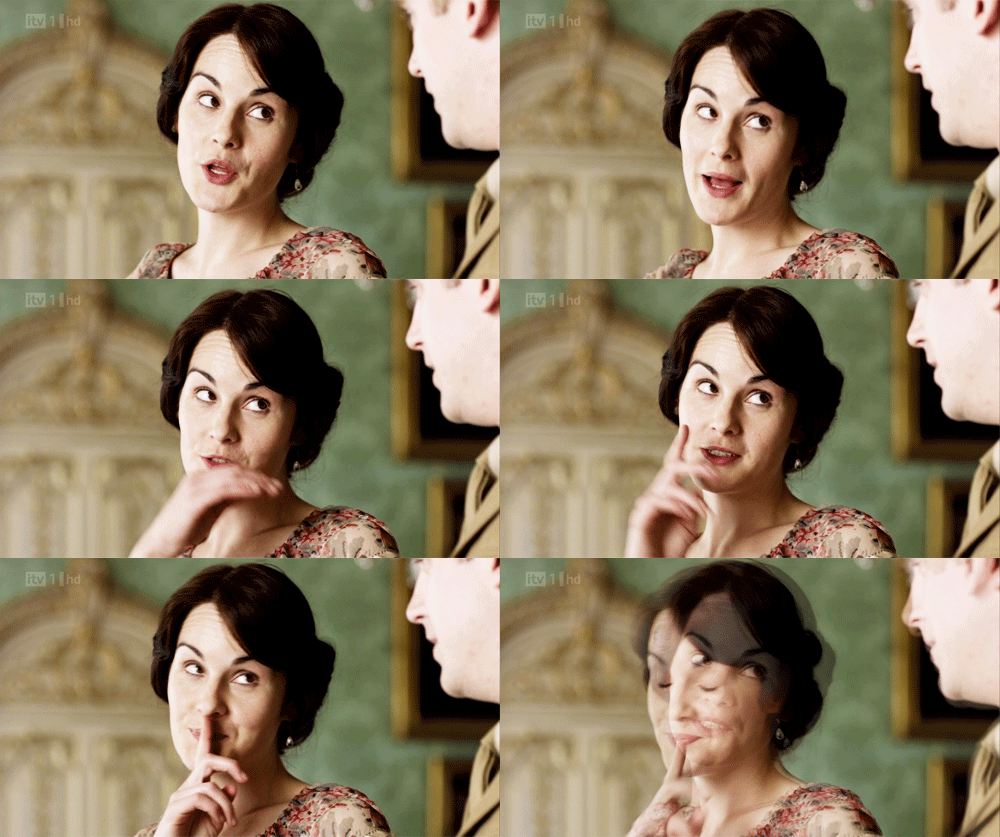

 Book: “Glamour in Glass” by Mary Robinette Kowal
 Book: “Transmetropolitan (Vol.2): Lust for Life” by Warren Ellis and Darick Robertson (Ill.).
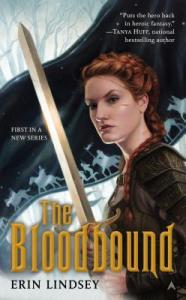 Book: “The Bloodbound” by Erin Lindsey
 Book: “Dear Amy” by Helen Callaghan

 Book: “Upon a Time” by R. L. Stedman
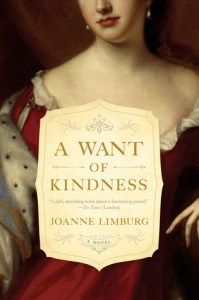 Book: “A Want of Kindness” by Joanne Limburg
 Book: “Miniatures: The Very Short Fiction of John Scalzi” by John Scalzi
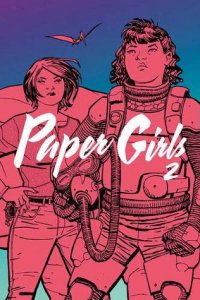 Book: “Paper Girls 2” by Brian K. Vaughan, Cliff Chiang (Ill.)
 Book: “The Lost Boys #3” by Tim Seeley, Scott Godlewski (Ill.)
 Book: “Normal” by Warren Ellis
 Book: “The King of Attolia” by Megan Whalen Turner


 The Library Ladies