Serena’s Review: “The Weight of a Soul”

43517326Book: “The Weight of a Soul” by Elizabeth Tammi

Publishing Info: Flux, December 2019

Where Did I Get this Book: NetGalley

Book Description: When Lena’s younger sister Fressa is found dead, their whole Viking clan mourns—but it is Lena alone who never recovers. Fressa is the sister that should’ve lived, and Lena cannot rest until she knows exactly what killed Fressa and why—and how to bring her back. She strikes a dark deal with Hela, the Norse goddess of death, and begins a new double life to save her sister.

But as Lena gets closer to bringing Fressa back, she dredges up dangerous discoveries about her own family, and finds herself in the middle of a devastating plan to spur Ragnarök –a deadly chain of events leading to total world destruction.

Still, with her sister’s life in the balance, Lena is willing to risk it all. She’s willing to kill. How far will she go before the darkness consumes her?

Review: I’ve read a few Vikings stories in the past year or so and largely enjoyed them all. Mythology is always a win for me, so it’s been fun to see Norse mythology getting its day in the sun after Roman and Greek had staked out the genre for so long. Combine those things with a story about sisters and this book was a no brainer for me to request. Sadly, all of those things together still somehow didn’t prove to be enough for me to really enjoy this book.

Lena and Fressa have grown up together to be as close as sisters can be. But while Lena is set out to lead a quiet, predictable life as a healer, it is Fressa who draws people to her with the sheer force of her vitality. So it is a shock when Fressa is suddenly found dead. But the life of a Viking is one of violence and sudden endings, so life moves on, for everyone but Lena. Driven to discover not only what happened to Fressa but to bring her beloved sister back, Lena sets out on a mission that will test the boundaries of life and death and draw her into the dark places of the world and herself.

So, as I said, this book wasn’t a hit for me. Even the things I liked are couched between things I disliked. For example, I liked the sisterly relationship. However, the story jumps through plot elements so quickly in the beginning that I was never able to feel fully connected to Fressa, thus lessening the impact of her death and my own commitment to the lengths (some pretty bad) that Lena went to in her attempts to bring her sister back.

I also enjoyed the mythology aspect of the story. However, again, there was really very little of it and only two god characters played a part and even then were more plot devices than anything else. The goddess, in particular, I felt was underwhelming and non-threatening, not something you want from an all-powerful being.

The pacing of the story also felt very off. As I said, the beginning of the book rushes through many important plot points. It’s attempting to not only set up the relationship between the sisters, but between them both and Fressa’s fiance, the girls’ parents, and  a few of the other village members as well. Between this and the brief attempts at history and world-building, the story feels like it’s simply jumping from one plot point to another. And then, suddenly, when Lena begins her journey, the brakes are pumped, hard. The rest of the book felt plodding, meandering, and frankly, rather boring. This left the overall pacing of the story feeling jarring and mismatched.

Beyond this, Lena was simply not a very likable character. The story is all set up to explore some deeper themes with regards to grief and the morality of choosing who lives and dies. And Lena, being a young woman presumably studying to be a healer, seems like a character primed to interact with these tough situations and choices in a compelling manner. Not so. While her descriptions of grief were at times beautiful and touching on some good ideas, the morality of her decisions was pretty terrible. And, even worse, she seems to think nothing of the terrible things she does.

It’s all well and good to have a character get so caught up in their own sorrow that their worldview becomes myopic to the point of a loss of their own morality, but the interesting part there is having the character explore this topic in some meaningful way. Or simply be from there after written as a villain. But Lena is unquestionably the hero of the story and yet she never seems to really care about the things that she does. As I said, it seems even more questionable when paired together with the empathy that it would have taken to be a healer. I was also not a fan of the romance of this story. It felt unnecessary at best and at worst it made Lena even more unlikable.

The idea of balancing a lost soul with the “weight” of another equal soul is a very interesting idea (though the end result is fairly predictable for fans of the genre), but much its potential was wasted behind choppy pacing and an unlikeable main character. Frustratingly, it seems like only a few minor tweaks could have really improved the story. Flashbacks, for example, would have worked better for the scenes before Fressa’s death and would have broken up some of the more plodding bits of the last half of the book. Ah well, what could have been alas was not! Fans of Norse mythology may like this book, but I think in the end it doesn’t live up to its own potential.

Rating 5: The unlikable main character was the last nail in the coffin for a book that unfortunately wasted several good aspects.

Reader’s Advisory:

“The Weight of a Soul” is on these Goodreads lists: “YA & Middle-Grade Norse Mythology” and “YA Vikings.”

Find “The Weight of a Soul” at your library using WorldCat!
Serena’s Review: “Winterwood”

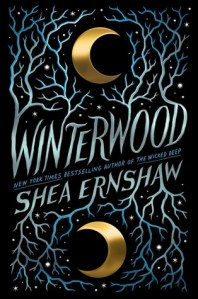
40148425._sy475_Book: “Winterwood” by Shea Ernshaw

Publishing Info: Simon Pulse, November 2019

Where Did I Get this Book: NetGalley

Book Description: Be careful of the dark, dark wood . . .

Especially the woods surrounding the town of Fir Haven. Some say these woods are magical. Haunted, even.

Rumored to be a witch, only Nora Walker knows the truth. She and the Walker women before her have always shared a special connection with the woods. And it’s this special connection that leads Nora to Oliver Huntsman—the same boy who disappeared from the Camp for Wayward Boys weeks ago—and in the middle of the worst snowstorm in years. He should be dead, but here he is alive, and left in the woods with no memory of the time he’d been missing.

But Nora can feel an uneasy shift in the woods at Oliver’s presence. And it’s not too long after that Nora realizes she has no choice but to unearth the truth behind how the boy she has come to care so deeply about survived his time in the forest, and what led him there in the first place. What Nora doesn’t know, though, is that Oliver has secrets of his own—secrets he’ll do anything to keep buried, because as it turns out, he wasn’t the only one to have gone missing on that fateful night all those weeks ago.

Review: Yet another sophomore book from an author whom I missed out on the first go around. Not quite sure why I never got around to “The Wicked Deep,” but when I saw this one pop up, once again I decided to be late to the party and see what all the fuss was about. Unfortunately, while this strategy has worked with other books (shout out again to “Song of the Crimson Flower”!), here it just proved that I probably made the right choice with the first book and these are just not for me.

Nora is out in the woods after one of the worst winter storms in years. Everything is closed down, but she is not like others: she is a Walker woman and does not fear the woods. Instead, she shares a close bond with this strange, mysterious place where others dare not to walk. This connection leads to her a lost boy, missing for weeks and presumed dead. But he has survived the forest…somehow. As they grow closer to each other, Nora begins to suspect that Oliver has secrets of his own. Perhaps he, too, shares a connection with the forest? But what is it and does it pose a threat?

There were several reasons this book didn’t work for me, and most of them have to do with either the YA fantasy genre reading as a bit tired recently, or it’s just me. But the first thing that stood out to me as a warning sign that this book and I might not get along was the writing itself. I had heard that this, like the author’s first book, was noted for its atmospheric writing. I think I may have a different understanding of that word than the way it is often used. I have used it myself, don’t get me wrong. Probably recently, because if I didn’t say it in my review of “The Starless Sea,” then that’s an example of the type of book that I would describe that way. But when I use that word it has to do with how an author draws a scene. It doesn’t have to be restrained to the physical characteristics of setting, but to a scene as a whole: the action of it, the location, the indescribable “feel” of a situation. An atmospheric style of writing adds depth and is beautiful to read on its own, often with a poetic choice of words.

But I feel that when it is used to describe books like this one, most reviewers are getting at something different. I think it’s still consistently used for these books, but in a different way than what I described above. Most notably, I think the “atmosphere” is often applied to the characters themselves. Perhaps there is still some sense of poetry to the words chosen, but beautiful words devoid of rational meaning don’t result in much, in my opinion. This then ends up with books that use random, disconnected phrases to describe characters. In this book, only two pages in, the main character is describing herself as “more darkness than girl.” Ok. Sounds nice enough, I guess. But what does that actually mean? I have no idea, and given that we’re only two pages into the book, I don’t even have any context where I could try to parse out an actual meaning from that. Instead, it reads as if the author is simply throwing around  pretty phrases and not bothering to ground them in anything, or, frankly, make them worth while to the story at all. This is only one example, but it continues throughout the book.

This is the type of “atmosphere” that I find all too often in YA fantasy, and it’s always a red flag for me. It may not always be true (I’m sure there are exceptions if I really thought about it), but usually it’s a good predictor that the author seems to be having more fun writing pretty strings of words than constructing an actual story. Paired with this habit often comes bland characters, convenient plots, and stories that sound good on paper but prove to be underwhelming. Unfortunately, that all proved to be true here as well.

I didn’t care about our main characters. Neither of them were bad, but I also didn’t feel particularly attached to them. How can I be attached to someone who introduces herself to me as “more darkness than girl?” I don’t know what that means, and honestly I’m too lazy to find out. It’s the books job to make me care, and that doesn’t do it. I did like the general overview of the story, and the witchy elements and spooky woods were promising. But they were paired with a convenient and predictable plot. I was able to guess many of the twists (including the big one) right away which cut the legs out of it right from the start.

I feel like I’ve come down hard on this book, and I don’t want to make it seem that this one is any worse than most of the run-of-the-mill YA fantasy stories out there like this. I guess I was just in a mood to talk about this particular frustration, and this book had the bad luck of being the most recent one to show up on my reading list featuring this specific peeve. Fans of the author’s first book and her writing style will likely be pleased with this. But those who recognize the traits I’m talking about may find themselves underwhelmed by this story.

Rating 6: Hits a nerve for one of my pet peeves, but is otherwise a fairly standard, if uninspiring, story.

Reader’s Advisory:

“Winterwood” is a newer title, so it isn’t on many relevant Goodreads lists. But it should be on “Magical Trees.”

Find “Winterwood” at your library using WorldCat!

Kate’s Review: “The Burned House”

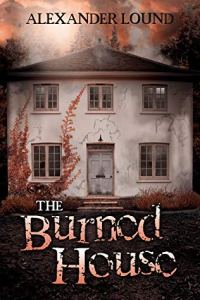
48575470._sy475_Book: “The Burned House” (Jonny Roberts #2) by Alexander Lound

Publishing Info: Self Published, November 2019

Where Did I Get This Book: The author sent me an eARC

Book Description: Nearly a year after learning that he can speak to the dead, Jonny Roberts has spent much of his time working with his new medium friend, Aaron. Whether it’s reconnecting loved ones with dead relatives, or helping spirits to cross over, Jonny has been happy to help.

That is, until a young boy is found dead, his body impaled with floorboards, sharpened into knife points; and in the same house where a family died seven years earlier, in a tragic fire.

Suspecting that the event might be down to the supernatural, Aaron and Jonny soon investigate. But when the spirit makes it clear that it doesn’t intend to stop at the boy, they begin to wonder if this might be their most dangerous case yet…

Review: Thank you to Alexander Lound for approaching our blog and sending me an eARC of this book!

Halloween has long passed, but there’s always time for a ghost story as far as I’m concerned. So when Alexander Lound emailed me asking if I would be interested in reading and reviewing the second book in the Jonny Roberts series, “The Burned House”, there was really only one way I could answer.

giphy
Honestly I’m halfway convinced that all of my reactions to anything could be summed up by one of the Rose siblings. (source)

If you recall, I enjoyed the first in the series, “The Spirit in the Crypt” as I found it to be an engaging ghost story with likable characters and high stakes. Teenage medium Jonny Roberts is a fun protagonist, and I was eager to see where things went next for him and his girlfriend Cassy, as well as his medium mentor Aaron. Now that we’ve established Jonny as a full fledged medium, that meant that he’d have to delve deeper into his powers, and with that could mean upped stakes and higher tension. And boy oh boy did we go in both those directions.

In “The Burned House”, Jonny has started to come into his own as a medium, helping Aaron with various spirit cases, and while he and his girlfriend Cassy are still happy and in love, the tension with his ‘profession’ has started to come to the surface. And in this story, there is reason to believe that Cassy’s hesitance may be right, as Jonny and Aaron are soon entangled in the death of a boy, whose body was found in a house in which a family burned to death a few years prior. It soon becomes clear that it’s the work of an angry spirit, and the only insight they have is from the surviving family member, a teenage girl named Megan. Jonny, of course, wants to help, but the good intentions he has involve more and more risk. The story is basically Jonny potentially biting off more than he can chew, and how that threatens not only his life, but his relationships. I liked that Lound showed how someone with his abilities would potentially have a lot of difficulties with relationships with ‘normal’ people, and that you can understand why both he AND Cassy have legitimate reasons to feel the way they do about his new calling. It also means that we get some deliciously angsty scenes with teenagers. And as a teenager who was in love with her boyfriend and had to deal with some problems that felt earth shattering at the time, these scenes felt very, very true to life.

The mystery and motivation behind the angry spirit was well plotted out and fun to get through. I cracked the code early on, but that doesn’t necessarily mean it was easy to crack. I’ve just been reading these kinds of stories for years, so I know what to look for. And even though I guessed the outcome early, I still enjoyed the journey that we took to get to said outcome. Lound really does up the stakes this time around, with the looming threat of injury and death at the hands of an angry spirit a very real issue. And we don’t pussyfoot around what all of this could mean for Jonny and his friends; on the contrary, there is a very significant loss in this book, one that I didn’t see coming, and one that was a bit of a bummer. But no spoilers here. I just want to hit the point home that we are starting to see the consequences that Jonny has to contend with because he has decided to pursue being a medium.

“The Burned House” was a thrilling and fun follow up to “The Spirit in the Crypt”. It checks all of my favorite boxes of a ghost story and medium story, and I’m eager to see where Jonny Roberts goes next!

Rating 8: Another satisfying YA ghost story, “The Burned House” continues the adventures of Jonny Roberts, and shows the upped stakes that being a medium means, both physically and emotionally.

Reader’s Advisory: 

“The Burned House” isn’t on any Goodreads lists, but I think that it would fit in on “YA Novels and Psychic Abilities”, and “Young Adult Ghost Stories”.

“The Burned House” isn’t available on WorldCat as of now, but it will be available for purchase this week. For more information, go to Alexander Lound’s WEBSITE.

Previously Reviewed: “The Spirit in the Crypt”

Serena’s Review: “Sisters of Shadow and Light”

9781250208408_8e486Book: “Sisters of Shadow and Light” by Sara B. Larson

Publishing Info: Tor Teen, November 2019

Where Did I Get this Book: NetGalley

Book Description: “The night my sister was born, the stars died and were reborn in her eyes…”.

Zuhra and Inara have grown up in the Citadel of the Paladins, an abandoned fortress where legendary, magical warriors once lived before disappearing from the world―including their Paladin father the night Inara was born.

On that same night, a massive, magical hedge grew and imprisoned them within the citadel. Inara inherited their father’s Paladin power; her eyes glow blue and she is able to make plants grow at unbelievable rates, but she has been trapped in her own mind because of a “roar” that drowns everything else out―leaving Zuhra virtually alone with their emotionally broken human mother.

For fifteen years they have lived, trapped in the citadel, with little contact from the outside world…until the day a stranger passes through the hedge, and everything changes.

Review: I highlighted this book as one I was looking forward to reading this month. I had requested it based on the fact that it seemed to be a YA fantasy that centered around a relationship between sisters, a pretty basic plot that I typically enjoy. Unfortunately, while it does deliver on the elements that drew me to it originally, there wasn’t enough else to keep me invested, and a few too many YA tropes that induced eyerolls.

Zuhra and Inara have grown up in the wreckage of what was once a great power in the world. Locked in a fortress and surrounded by a sentient hedge that keeps out all others, the two sisters have grown up isolated from the world with only their fragile mother as a connection to not only their origins but also the world outside the walls. Inara is isolated even further by a power that manifests itself in ways that produce great effects but also cut her off from the world outside her own mind. But the world has continued to move outside their small home, and one day it breaks in, bringing new faces and new challenges.

While this book wasn’t for me, I do, as always, want to start with the things I did appreciate. I requested this book based on my love for sister stories, and luckily for me, that was the aspect of the story that was the strongest throughout. There was a clear, consistent bond between the two from start to finish, without any delving into melodrama or cattiness. We start out the story with only Zuhra’s POV, so there was a lot of time spent setting up how she view the relationship between herself and her sister, who is very cutoff from those around her. This was all well and good. But this aspect of the story was greatly strengthened when, about a third of the way in, we’re given Inara’s perspective as well. Having both POVs really fleshed out the nuances of their relationship, and while I did struggle with much of the rest of the book, I did still enjoy this portion of the story throughout.

Alas, much of the rest of it wasn’t as much of a hit. For me, part of the problem was how similar this read felt to “Strange the Dreamer.” The set up of siblings, some with magical abilities, growing up isolated from the world in the husk of a place that used to belong to god-like beings, one of whom was the father of said siblings? It’s pretty identical. And “Strange the Dreamer” was a superb book, so it’s rare that a direct comparison like this is going to go well for another book. Had I read this one without that one in mind, perhaps some things would have been better received. But that’s also the world of books: readers will always approach stories in the context of what they’ve read before. This can be a good or bad thing; unfortunately, here it was a bad thing. While the elements were similar, they were noticably weaker than Laini Taylor’s similar set-up.

While I liked the sister relationship between our two main characters, I still never really connected to either of them as wholly realized characters on their own. Zuhra, in particularly, was hard to identify with, especially in the beginning when we are left with only her perspective. Both sisters fell into the unfortunate trap of immediately going googly-eyed over the first boys they see, which felt not only silly, but also undermined some of the strengths we had been told they possess, having grown up needing to be so self-reliant.

The world and plot suffered from a writing style that erred more towards telling rather than showing. The middle of the book especially dragged, which I find is often a problem with this style of writing. When you have a new world to introduced, it’s easier for a “tell vs show” style to go unnoticed amid all of the new things being thrown at the reader. And the end typically has enough action when building to the climax of the story to also get away with it. But the middle is where it always shows up, and it was just as true here as in other books with a similar writing issue.

There were some good ideas in this book, and I did enjoy the sister relationship. I was able to predict a few of the twists, but one or two did actually catch me by surprise. However, all of that was not enough to pull the book through. The characters fell into a few too many YA “boy crazy” tropes, the world and plot were a bit on the limp side, and the style of writing was particularly captivating. Not to say that this book should be written off anyone’s list full-stop. But I do think there are betters versions of it out there.

Rating 6: An OK read, but one that felt flat and dim in comparison to its contemporaries.

Reader’s Advisory: 

“Sisters of Shadow and Light” can be found on this Goodreads list: “We Fire the Darkness And Flame At Night.”

Find “Sisters of Shadow and Light” at your library using WorldCat!

Book Club Review: “An Ember in the Ashes”

20560137We are part of a group of librarian friends who have had an ongoing bookclub running for the last several years. Each “season” (we’re nerds) we pick a theme and each of us chooses a book within that theme for us all to read. Our current theme is ‘Books On Our To Read Shelf’, where we pick books that we’ve been meaning to read but haven’t gotten to.
For this blog, we will post a joint review of each book we read for book club. We’ll also post the next book coming up in book club. So feel free to read along with us or use our book selections and questions in your own book club!

Book: “An Ember in the Ashes” by Sabaa Tahir

Publishing Info: Razorbill, April 2015

Where Did We Get This Book: The library!

Book Description: Laia is a slave.  Elias is a soldier. Neither is free.

Under the Martial Empire, defiance is met with death. Those who do not vow their blood and bodies to the Emperor risk the execution of their loved ones and the destruction of all they hold dear.

It is in this brutal world, inspired by ancient Rome, that Laia lives with her grandparents and older brother. The family ekes out an existence in the Empire’s impoverished backstreets. They do not challenge the Empire. They’ve seen what happens to those who do.

But when Laia’s brother is arrested for treason, Laia is forced to make a decision. In exchange for help from rebels who promise to rescue her brother, she will risk her life to spy for them from within the Empire’s greatest military academy.

There, Laia meets Elias, the school’s finest soldier—and secretly, its most unwilling. Elias wants only to be free of the tyranny he’s being trained to enforce. He and Laia will soon realize that their destinies are intertwined—and that their choices will change the fate of the Empire itself.

Kate’s Thoughts

I like to think of myself as a good sport when it comes to my willingness to read genres that I’m not too keen on. Be it in an effort to stretch my reading wings or going off a recommendation from a close friend, I will try and be open minded about a book even if I wouldn’t really pick it up on my own or of my own volition. This happens a lot of book club with YA fantasy fiction, and I will be the first to admit that I’ve found some pretty good books this way that I wouldn’t have normally read. But when it comes to “An Ember in the Ashes”, it HAD been on my list in spite of the genre, it just never came up in my reading rounds. So when it was the selection for the month, I went in apprehensive but hopeful. YA fantasy, sure, but based on Roman history! That’s something I could enjoy, right?

giphy-2
(source)

“An Ember in the Ashes” does have strengths that I did like about it. For one, as mentioned, the Roman influenced world was unique for me and fun to see, as I’ve had a fascination with Ancient Rome (specifically the Julio-Claudian Emperors) since college. I liked that Tahir took influence from the culture in terms of not only the way the characters were, but in the way that world was built. While it’s been tweaked to fit the story, there were definitely aspects of the society that felt familiar, and the society itself was definitely interesting enough that I wanted to know more about it. On top of that, the story itself was engaging and filled with enough conflict and stakes that I wanted to know what was going to happen next. I wanted to see what was going to happen to Elias and Laia, and wanted to know how their fates were going to tie together, as promised. We get two narratives within this story, of Laia and Elias, and of the two I liked Elias’s narrative more. One of the reasons for that is that I thought that his voice was more interesting to me as someone who is incredibly good at what he does, though he secretly despises it and plans to abandon it as soon as he can. The other reason, and the far more pressing one, is that while I liked Laia and was interested in what she was doing her ‘reluctant but willing rebel who has devoted everything to avenging and saving her family’ is a theme we have seen in YA for a very long time now, and it didn’t feel all that new or unique, nor did it stand out from the other narratives out there. Throw in some awfully cartoony/not terribly well fleshed out antagonists, and you have a story that has promise, but doesn’t quite land.

I thought that “An Ember in the Ashes” was an entertaining read, but I don’t think that I’m going to go on in the series. Should someone tell me that I should give it a chance, I will happily be a good sport and do so. But as it stands now, I am parting ways with Elias and Laia where we left them.

Serena’s Thoughts

I…wasn’t a fan of this book. I’ll also admit that right out of the gate I wasn’t feeling super hopeful about this one, as I remember it coming out and then looking into it at the time and choosing to pass. It then blew up into a huge read of the year, and I still didn’t read it. I can’t remember now why I didn’t read it, but I’m guessing that some of the trusted reviewers I follow must have flagged it and I had enough other things on my plate (a perpetual non-problem!problem) to write it off as likely not for me. But, like Kate said, bookclub is super handy in that it pushes me to read books that I otherwise wouldn’t, for whatever reason. And as I said, this was a huge fantasy novel, so really, it’s good that I read it so I could form my own opinion.

Most of what I liked about the book, Kate already covered. Though, even there, I had some pretty big qualifiers to my enjoyment of most of them. First off, the world-building. I did enjoy the Roman aspects that were being used and the unique world that was built around it. However, having read a lot of YA fantasy, these elements also didn’t standout as breaking some huge mold. Roman society and influences are at the heart of a lot of second world fantasy. I did find it interesting, however, that the rebellion seemed to be stemming from a different cultural background. Irish, I would guess, based on the naming conventions. One of our booklcub members had a theory that the world here was essentially the Roman empire shrunk down to a more manageable size. So some of the nearby cultures could be representing other place in the world that Romans expanded out to, like Ireland. It’s an interesting theory, and one that I think would be super clever. However, this is never explicitly said in the book itself, and I’m not sure there’s enough to conclusively say that that was the purpose behind some of these choices. If it was, I wish the author had made it more clear, because it is a very interesting idea.

The other thing that stands out as notable about this book was the violence of it all. I think that this was one of the aspects of the story that made it stand-out when it was first published, that it went further than other YA fantasy. But this is also where I started having major problems with the book. Primarily, the violent, serious nature of the world that our characters are living in didn’t match up with the often frivolous and silly nature of their thoughts and priorities, especially with regards to their romances. In other words, the book was trying to walk an unnatural line. It wanted to be “Game of Thrones,” but still have “Twilight” level romances. This simply doesn’t work. “Game of Thrones” is known for having teen characters involved at the heart of the story. The difference here is that when presented with the dire and very serious nature of the world around them, their thoughts and actions appropriately reflect that.

Laia and Elias have grown up in a world where violence and the threat of violence is around every corner. Beyond this, sex is used as a weapon and prostitution is a fairly normal thing for soldiers to participate in. Yet, Laia and Elias don’t reflect this as characters. Instead, right next to rape threats and horrific deaths, we have two characters who read so PG as to be almost laughable. It also weirdly worships the purity of these two characters. Elias is not like other boys and while he is constantly admiring the beauty of the women around him, he’s never engaged in anything himself. They both talk about physical attraction and love in the same way that teenagers today would. But that doesn’t work in a world where they would have grown up past this type of purity quickly (if they ever had it in the first place). You just can’t convince me that a character whose family has been murdered and is a spy for an evil queen would be so caught up in this love square or whatever it was.

I also didn’t appreciate the repeated rape threats made to Laia and Elias’s near constant worry about rape happening to the women in his life. It felt like the topic was used to further darken the world but was never explored further on how it would shape the lives of these women. Attempted rape has its own horrific aftereffects and yet none of this is explored with Laia.

Perhaps if this book had been written for adults I would have appreciated it more. There were some strong bones with the world and the political nature of the story. Elias and Laia, if aged out of their teenage swooning, could have also been good characters. But as it stands, the book seems to be presenting a weird position where tons of violence and rape threats are a totally ok topic for teen readers, but consensual sex between characters would be too “adult” so Laia and Elias must weirdly fixate the belly flutters. It’s a strange position to take and I don’t think it fits well.

Kate’s Rating 6: An engaging read to be sure, though a lot of the themes and characterizations we’ve seen in this genre over and over again.

Serena’s Rating 5: Not for me. I don’t think it did enough to address some of the serious topics it throws around and the romance didn’t mesh with the world that was created.

Book Club Questions

  1. What did you think of the world building in this novel? Did you think that it took accurate aspects from Ancient Rome and applied them well?
  2. There are two narrative POVs within this book. Did you connect more with Laia’s storyline, or Elias’s storyline?
  3. This book is labeled as a YA fantasy, though some would argue that it doesn’t have as many fantasy elements as other fantasies do. What do you think of this genre classification?
  4. What are your opinions on the antagonists of this story, specifically Marcus and The Commandant?
  5. Do you think that the romance aspects of the book lined up with the world that the characters lived within? More specifically, can people still be fixated on potential romance or attraction when they are surrounded by darkness and horrors?
  6. This is the first in a four book series. Do you have predictions on where the plot is going to go? Do you think you’ll keep reading?

Reader’s Advisory

“An Ember in the Ashes” is included on the Goodreads lists “Free Range and Morally Complex YA”, and “‘High Fantasy’ With Female Leads/Protagonists”.

Find “An Ember in the Ashes” at your library using WorldCat!

Next Book Club Book: “A Christmas Carol” by Charles Dickens

Kate’s Review: “Pumpkinheads”

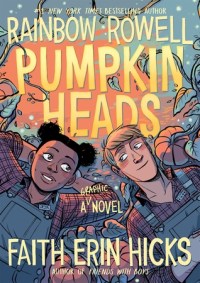
40864790Book: “Pumpkinheads” by Rainbow Rowell and Faith Erin Hicks (Ill.)
Publishing Info: First Second, August 2019

Where Did I Get This Book: The library!

Book Description: Deja and Josiah are seasonal best friends.

Every autumn, all through high school, they’ve worked together at the best pumpkin patch in the whole wide world. (Not many people know that the best pumpkin patch in the whole wide world is in Omaha, Nebraska, but it definitely is.) They say good-bye every Halloween, and they’re reunited every September 1.
But this Halloween is different—Josiah and Deja are finally seniors, and this is their last season at the pumpkin patch. Their last shift together. Their last good-bye.

Josiah’s ready to spend the whole night feeling melancholy about it. Deja isn’t ready to let him. She’s got a plan: What if—instead of moping and the usual slinging lima beans down at the Succotash Hut—they went out with a bang? They could see all the sights! Taste all the snacks! And Josiah could finally talk to that cute girl he’s been mooning over for three years . . .

What if their last shift was an adventure?

Beloved writer Rainbow Rowell and Eisner Award–winning artist Faith Erin Hicks have teamed up to create this tender and hilarious story about two irresistible teens discovering what it means to leave behind a place—and a person—with no regrets.

Review: Halloween has come and gone (pardon me while I sigh deeply over this fact), but it’s still technically Fall, even if in Minnesota our weather starts to trend towards Winter a bit earlier than other places. Given that Fall is such a short season here, I cherish it as long as we get to experience it. “Pumpkinheads” is the perfect Autumn story. It has a pumpkin patch, it takes place on Halloween, and it brings to life all of the best Autumn sights, games, and treats. Rainbow Rowell has always been great at creating charming and relatable characters and settings, and therefore she was probably the perfect person to create a story about two pumpkin patch workers on their last shift ever. Highjinx, nostalgia, and candy apples galore ensue!

Josiah (or Josie) and Deja are our seasonal BFF protagonists, coworkers who only interact when they are working at DeKnock’s World Famous Pumpkin Patch & Autumn Jamboree. Josiah is shy and pragmatic, while Deja is effervescent and free spirited. They work at the succotash stand together (this concept alone was so ridiculously endearing) and are besties until the season ends. This is their last night working at the patch, as it’s Halloween and they are both graduating in the spring and moving on. Their friendship was the beating heart of this book, and Rowell is superb at showing why they are such a good friend match through one night of misadventures. It reminded me of the classic film “American Graffiti”, as both in that film and in this book we really get a sense of these two people based on one seemingly random night. But we get to see through the happenings of that night so much about both of these characters that I felt like I knew everything about them by the time I was finished and their last shift had come to an end. I loved both of them for different reasons, and found them both to have lots of layers that were well explored. Josiah is sweet and shy, but also filled with hesitation that has prevented him from talking to his crush Marcy for three years. Deja is kind and adventurous, but she also can be capricious and impulsive. They balance each other out and their relationship is fun to see as she drags him around the patch in hopes of making his romantic dreams come true (and in hopes of finding all the delicious food to munch on. SO relatable). There is also the always looming bittersweet reality that once their night is done, they aren’t sure if they will ever see each other again. It’s light hearted and yet bittersweet.

Rowell also nails the joys of the Autumn season. This is certainly a kinder and gentler way to spend one’s Halloween, but the pumpkin patch is filled with all the fun things you want from this kind of thing: hayrides, candied apples, pumpkin picking, a corn maze, you name it, this place has it. I could practically smell the hay and the apple cider, and it felt like I was seeing a number of my favorite Autumn festivals come to life on the page. I WANTED TO VISIT DEKNOCK’S WORLD FAMOUS PUMPKIN PATCH & AUTUMN JAMBOREE!

giphy-5
And I can’t guarantee I would leave unless I was dragged away. (source)

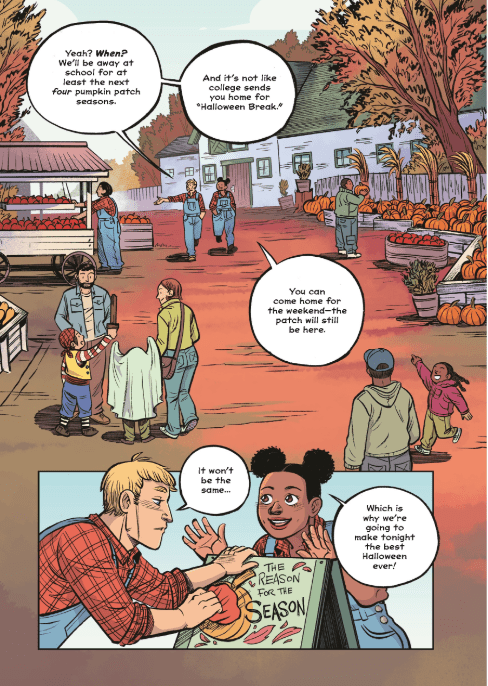
And the icing on this pumpkin cake is that the illustrations by Faith Erin Hicks perfectly complement Rowell’s story. They are expressive and detailed, but also have this coziness to them that just evokes feelings of Autumnal nostalgia.

Screen Shot 2019-09-23 at 6.10.23 PM
(source)

I really enjoyed reading “Pumpkinheads”. Rainbow Rowell is such a delightful author who always writes such pleasing stories. Keep that Fall spirit alive and grab this one to read over some hot apple cider and something pumpkin-y!

Rating 8: A very cute seasonal story with fun characters, a cheerful setting, and an adorable plot.

Reader’s Advisory:

“Pumpkinheads” isn’t on very specific Goodreads lists as of yet, but it would fit in on “Best Books to Read in Autumn”, and “Black Girl Comics”.

Find “Pumpkinheads” at your library using WorldCat!

Blog Tour: “Song of the Crimson Flower”

Blog Tour Banner

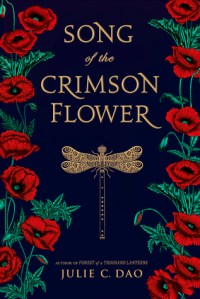
32605126._sy475_Book: “Song of the Crimson Flower” by Julie C. Dao

Publishing Info: Philomel, November 2019

Where Did I Get this Book: ARC from the publisher!

Book Description: Will love break the spell? After cruelly rejecting Bao, the poor physician’s apprentice who loves her, Lan, a wealthy nobleman’s daughter, regrets her actions. So when she finds Bao’s prized flute floating in his boat near her house, she takes it into her care, not knowing that his soul has been trapped inside it by an evil witch, who cursed Bao, telling him that only love will set him free. Though Bao now despises her, Lan vows to make amends and help break the spell.

Together, the two travel across the continent, finding themselves in the presence of greatness in the forms of the Great Forest’s Empress Jade and Commander Wei. They journey with Wei, getting tangled in the webs of war, blood magic, and romance along the way. Will Lan and Bao begin to break the spell that’s been placed upon them? Or will they be doomed to live out their lives with black magic running through their veins?

In this fantastical tale of darkness and love, some magical bonds are stronger than blood.

Review: First off, I would like to send out a big thanks for being included in the blog tour for this book! It’s always great to be included in a collaboration between between authors, publishers, and bloggers. I hadn’t read any other books by this author, but “Forest of a Thousand Lanterns” has been on my TBR pile for a long time (this is more a reflection of how out of control my TBR pile is than anything about the book itself). But this recent release seemed like a great time to jump on the bandwagon, and here I am! Fully on board!

Lan’s future is simple: marry the man she loves who just so happens to love her back and to be a perfectly appropriate match, thank you very much. Problem is, that man is not who she thinks and when Bao, a lowly apprentice, makes this known to her, the exchange doesn’t go well for either. When a witch’s curse binds the two together once more, Bao and Lan find themselves on an adventure that involves not only Bao’s mysterious origins but catches them up in the maneuverings of rulers and countries, bringing with it a few familiar faces from previous books.

There were many things to love about this book. For me, one of the best part was the fairytale-like nature of the story. It’s well-documented that this type of fantasy is one of my favorites, and it’s all the more exciting when I stumble across one that is unique, rather than just a re-telling of the ever popular “Beauty and the Beast” and “Cinderella.” While I do wish the rules of the curse itself had been fleshed out a bit more, I did like the fact that, while new, much of it was based on familiar staples of fairytales: a curse involving a witch, some type of magical object, family ties, and, of course, love as a cure. But while these elements on their own were wholly original, I think the way the author incorporated them into her original world lent them a feeling of freshness.

I think this was especially clear in the way the cure played out and the romance at the heart of the story. While the two characters have known each other since childhood, the beginning of the book makes it clear that they each saw this friendship very differently. And when the truth of the original romance is revealed, each behave poorly (most especially Lan). From there, the romance really begins to build as each has to get to know the real version of the other, metaphorical “warts” and all. I really enjoyed the slow burn of this love story. Aside from the lovely romance at the heart of it, the way their story developed allowed for each character to go through a lot of self discovery, exploring themes of forgiveness, patience, and understanding.

As I haven’t read the other stories by this author, I wasn’t familiar with some of the characters who showed up here but had clearly been the main characters in previous books. Readers familiar with those books will likely get a lot more out of these appearances than I did. But I can say that this book is also fully capable of standing alone and introducing these characters and this world on its own. While I may not have had any previous attachment, I was never confused or felt like more reading was necessary to understand the players at the table.

The world-building was also very interesting. And for being such a short book, I was impressed by how fully fleshed out this world was. To top that off, the secondary plot of the story (I would argue that the romance is mostly the main plot) was interesting and had many twists and turns. A mysterious illness, an illegal plant/drug, and, of course, how Bao is connected to it all. Even if I was there mostly for the relationship drama, there were enough other things going on to keep me on my toes.

I really enjoyed this story. It’s a fresh, fairytale fantasy with a sweet romance at its heart. Fans of the author’s other books will likely be happy with this one and pleased to see familiar faces. However, readers new to the story will have an easy introduction to the world and characters. Those looking for a lovely, standalone fairytale are sure to be happy with this one!

Rating 8: Sweet and unique, this story was lovely from start to finish.

Reader’s Advisory:

“Song of the Crimson Flower” is on these Goodreads lists: “Apprentices” and “Fairy tales & Retellings.”

Find “Song of the Crimson Flower” at your library using Worldcat!

Check out these other stops on the blog tour!

Week One

November 4 – Velarisreads – Review + Creative Instagram Picture

November 5 – A Gingerly Review – Dream Cast

November 6 – Love.books.and.coffee – Creative Instagram Picture

November 7 – Lovely Loveday – Review

Week Two

November 11 – Old.enough.for.fairytales – Creative Instagram Picture

November 12 – Confessions of a YA Reader – Author Q&A

November 13 – Library Ladies – Review

November 14 – The Paige-Turner – Creative Instagram Picture + Tumblr post

Book Club Review: “Gone”

2536134We are part of a group of librarian friends who have had an ongoing bookclub running for the last several years. Each “season” (we’re nerds) we pick a theme and each of us chooses a book within that theme for us all to read. Our current theme is ‘Books On Our To Read Shelf’, where we pick books that we’ve been meaning to read but haven’t gotten to.
For this blog, we will post a joint review of each book we read for book club. We’ll also post the next book coming up in book club. So feel free to read along with us or use our book selections and questions in your own book club!

Book: “Gone” by Michael Grant

Publishing Info: Katherine Tegen Books, June 2008

Where Did We Get This Book: From the library!

Book Description: In the blink of an eye, everyone disappears. Gone. Except for the young.

There are teens, but not one single adult. Just as suddenly, there are no phones, no internet, no television. No way to get help. And no way to figure out what’s happened.

Hunger threatens. Bullies rule. A sinister creature lurks. Animals are mutating. And the teens themselves are changing, developing new talents—unimaginable, dangerous, deadly powers—that grow stronger by the day. It’s a terrifying new world. Sides are being chosen, a fight is shaping up. Townies against rich kids. Bullies against the weak. Powerful against powerless. And time is running out: On your 15th birthday, you disappear just like everyone else…

Kate’s Thoughts

When I was in middle school I had already dived right into adult fiction. I would imagine that part of that was because when I was that age (totally dating myself a bit here) we were still a number of years off from the YA boom and I had already read horror and thrillers for teens by the time I had entered fifth grade. Because of this, I had a few preconceived notions about what to expect from “Gone” by Michael Grant. True, it was published in 2008, a time when the YA book dynamics had already started to change, but I thought that it was going to be straight forward and ‘kid gloved’. I was wrong. I was so wrong.

giphy-2
Probably my face as disturbing detail after disturbing detail came to fruition. (source)

“Gone” is an imperfect YA end of world tale, with a lot of ideas, a lot of characters, and a lot of details that are building to something that has yet to be seen. It also has a lot of darkness within its pages, at least compared to other YA end of world thrillers that I’ve read. Nothing I can’t handle, of course, but damn, Michael Grant, you went all in. That said, I LIKED that he went all in, because it makes it seem like he trusts that his readers can handle whatever he tosses their way. And boy, does he toss some rough things their way. From grotesque wounds to spates of violence perpetrated against children to the very concept of very small children being left alone with no one to protect them, “Gone” was bleaker than I anticipated, but that made it all the more enjoyable.

That said, there is a LOT going on in this book. It makes some sense, given that 1) Michael Grant used to work on the “Animorphs” books with Katherine Applegate and those had a lot of details and world building, and 2) it has six books in the entire run. But I think that the reason it didn’t really work for me was because so much was crammed in and only touched upon, and there were so many characters to address that a lot of them didn’t get a lot of attention or development. True, there are more books to flesh all of these things out, but, at the same time, there are MORE BOOKS TO FLESH THIS ALL OUT. In other words, I wish that Grant had saved some of the details and developments for later books, just because this story did feel bloated and there were multiple characters that I didn’t feel like we really got to know. Luckily, it was the villains who were the most interesting, which is what I like to see in books like this.

This is also a very 2008 book in terms of how it approaches a number of themes, and it didn’t age well in that regard. From an autistic character to the very clear gender roles of some of the girl characters, I totally see how these things wouldn’t have been seen as problematic back then, but are definitely a bit hard to read now. I’m not going to write this book off completely because of this, as it is very of the time and that’s just the reality of it. But I wanted to note it.

I don’t think that I will keep going in this series, but I was pleasantly surprised that “Gone” trusts its YA readers to be able to take on some bleak, bleak themes.

Serena’s Thoughts

The timing of reading this book couldn’t really be better. I had just finished up my re-read of “Animorphs,” a middle grade science fiction series that Grant collaborated on with his partner, K.A. Applegate, and our bookclub theme (books on our TBR pile) gave me the perfect excuse to inflict it upon the entire group! “Inflict” being purely a dramatic term, as, while it was darker than some of our group preferred, it was still a quick, action-packed read. But oof, talk about dark.

From a non-“Animorphs” perspective, I agree with almost everything Kate said, especially about just how much is packed into this book. It didn’t really hit me until I was starting to write up questions for our bookclub discussion, but this book really through everything in at once. You have the post-apocalyptic setting with the adults suddenly gone, kids with powers, family drama, a mysterious nuclear power plant, mutated animals, some dark force potentially behind it all. There are a lot of cards on the table, and for a book that is quite obviously the beginning of the series, I do wonder if it would have been better served to introduce some of these mysteries in the next books. As it is, there is a lot to get done and I think some of the issues Kate highlighted with the characters could have been better served had they been given more time, no longer needing to fight for page time against the numerous mysteries being set up.’

The character stuff is what really struck me in this book, however, both in a good and bad way. Having read “Animorphs,” it is very easy to see bits and pieces of those characters here, and I think in some ways, these are almost better in that they are not, in fact, better people. Our main character, for example, is essentially the Jake of this story. Except that Jake accepted the call to action as a leader almost from the get go and fairly seamlessly fit into that role. There were some bumps along the way and he struggled with this role throughout, but he took up the mantle quite quickly and with little real conflict. Here, Sam is much more reluctant, and with his reluctance come real consequences. I mean, REAL. As in kids die because he backs off originally. And he knows it. This makes Sam in some ways a much more believable character than Jake. He messes up big time right off the bat because of a the very real reaction of any kid in that situation, not wanting to be the one responsible.

So that’s a good example of characters. Kate mentioned some of the negatives. To be honest, I have a hard time separating this book from Grant’s collaboration with Applegate on the “Animorphs” in this regard. Having read that series, which came first, it’s hard not to read this book through the lens of faith that some of the problematic character issues, most especially the women, will be resolved some how. If this book is of its time for handling some things poorly, “Animorphs” was way ahead of it by offering up a very diverse team and making its most badass character a girl. This makes it hard for me to reconcile the two together. I think I can objectively say that while a few things stuck out to me (there’s an unfortunate line about the autistic character, for sure), I still felt that there was enough groundwork laid in other areas to excuse some of the more gendered roles some female characters were given. For one thing, I think Diana, an enigmatic character on the bad side, was set up as one of the more complicated characters in the entire book. Does this make up for the fact that a girl is running the daycare and another the hospital while the boys duke it out for leadership? I’m not sure. But I feel like enough was done to make me want to read more and find out how everything plays out.

Where the book was definitely ahead of its time, however, was the way it treated its readers as capable of handling darker elements of the story. It almost made me wonder if YA has regressed a bit in this regard, as the stakes felt much higher and more real in this book than they have in other YA stories I’ve read recently where YA protagonists are leading armies and the fate of the world!!! yada yada. As hard as some of it was to read, this commitment to the harsh realities of what this situation would look like is probably one of the biggest reasons I want to keep reading. The next books is called “Hunger,” for heaven’s sake!

Kate’s Rating 7: A darker than I expected YA novel with lots of components, “Gone” is entertaining, a little much, and a good fit for YA readers who want more thrills than juvie fiction but aren’t necessarily ready for adult end of world sagas.

Serena’s Rating 8: This book takes it premise and goes full throttle, but its wackiness is quickly squashed beneath a serious, “Lord of the Flies”-like exploration of human nature. Also talking coyotes.

Book Club Questions

  1. This book explore similar themes to “Lord of the Flies.” If you’ve read that, how does it compare? In what ways does this book tackle themes of power and civilization?
  2. There are a lot of characters who perspectives are covered in this book. Which ones stood out to you and why?
  3. If there was an element of the story that could have been explored more in this book, which one was it? Which element would you leave out (perhaps for the second book) to make room for this?
  4. Some of the roles in this burgeoning civilization seem to be falling along traditionally gendered lines. Are there examples of the book challenging this? Particular failures that you struggled with and wish were changed?
  5. We have several explanations offered up as to what caused this situation. Which one are you leaning towards?
  6. What predictions do you have for book two?

Reader’s Advisory

“Gone” is included on the Goodreads lists: “Best Dystopian and Post-Apocalyptic Fiction” and “Original Stories . . . a Breath of Fresh Air.”

Find “Gone” at your library using WorldCat!

Next Book Club Book: “An Ember in the Ashes” by Sabaa Tahir

Serena’s Review: “In the Woods”

46650269._sy475_Book: “In the Woods” by Carrie Jones and Steven E. Wedel
Publishing Info: Tor Teen, July 2019

Where Did I Get this Book: NetGalley

Book Description: It should have been just another quiet night on the farm when Logan witnessed the attack, but it wasn’t.

Something is in the woods.
Something unexplainable.
Something deadly.

Hundreds of miles away, Chrystal’s plans for summer in Manhattan are abruptly upended when her dad reads tabloid coverage of some kind of grisly incident in Oklahoma. When they arrive to investigate, they find a witness: a surprisingly good-looking farm boy.

As townsfolk start disappearing and the attacks get ever closer, Logan and Chrystal will have to find out the truth about whatever’s hiding in the woods…before they become targets themselves. 

Review: This was kind of a whim request on my part. The description itself sounds more like the kind of book Kate would typically read than me. But I knew I’d need to have a few scary-ish stories lined up for October to at least pretend to be in the season of things, so here we are! However, it turned out that this book was more closely aligned to my reading habits than I had thought. Alas, that didn’t necessarily translate into increasing my enjoyment of it.

Something or someone is attacking things in Logan’s rural hometown. First it was cattle, but now people are beginning to be attacked as well. And the killer is only growing more bold, coming literally out of the shadows to attack in broad daylight. When Chrystal and her father, a man who chases adventure, arrive on the scene, they team up with Logan and his family to try and catch whomever or whatever is behind these mutilations. And as Logan and Chrystal grow steadily closer to each other romantically, and closer to the truth of the mystery, they soon find themselves no longer the hunters, but now the hunted.

So this was a tricky book for me. It’s so different than what I thought it would be that it’s hard to know how much of my experience was due to my expectations and how much was due to the book just not hitting the mark for me. It’s a strange twist, however, when the fact that I had thought I was intentionally reading out of my preferred genre somehow backfired when I found out I was actually reading more within it. I’m not quite sure what the marketing decisions were behind why this book was presented as it was, but I definitely went in thinking it was going to be some type of creepy, YA, serial killer story. Nope! Much more aligned with monster horror and cryptozoology stories. And yeah, on the face of it, those are my thing, but something about the way it was presented here just didn’t click for me.

Really, I don’t think it had anything to do with the monster angle. Yeah, I was looking for serial killer, but let’s face it, I’m not super dedicated to that or anything. My bigger problems had to do with the story itself and its two main character. There are hints of good characters here, but the writing itself let them down. The dialogue was almost laughable at times, and their relationship falls into the worst traps of instalove. They literally first meet and “feel a connection.” Not only is this not interesting, but it’s the laziest kind of romance building. No need to establish why two characters come together when they both “just know” instantly! Done, hard work finished. Now onto the mushy stuff! Ugh. My feelings about instalove have been well-established, so I’ll stop there.

The plot itself was rather lackluster. Sure, there were some fun, tense scenes sprinkled here and there, but there were too many moments where things happened that didn’t make sense or stretched my sense of plausibility beyond enjoyment. Much of the mystery is telegraphed to the reader pretty early in the story, so the reader is often ahead of the characters in terms of reveals. This is all made harder due to the writing which was just kind of banal. As I mentioned before, the dialogue was the real problem; didn’t read as natural which made it a constant distraction.

In the end I think it was six of one as to why this book didn’t click for me. On one hand, it wasn’t what I expected and contemporary stories featuring instalove have to be up there on my “most disliked” list. On the other hand, the strained writing and lackluster plot didn’t recommend it to me either. Readers who are more interested in contemporary YA and monster stories (notably NOT serial killers) might enjoy this. But I also think there are better options out there doing similar things.

Rating 5: Right down the middle of my rating system and largely forgettable.

Reader’s Advisory: 

“In the Woods” isn’t on any Goodreads lists, but it should be on “Cryptofiction.”

Find “In the Woods” at your library using Worldcat!

Serena’s Review: “Angel Mage”

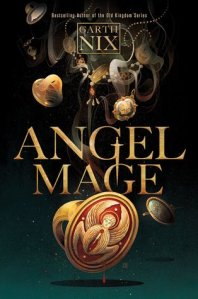
41951611Book: “Angel Mage” by Garth Nix

Publishing Info: Katherine Tegen Books, October 2019

Where Did I Get this Book: Edelweiss+

Book Description: More than a century has passed since Liliath crept into the empty sarcophagus of Saint Marguerite, fleeing the Fall of Ystara. But she emerges from her magical sleep still beautiful, looking no more than nineteen, and once again renews her single-minded quest to be united with her lover, Palleniel, the archangel of Ystara.

A seemingly impossible quest, but Liliath is one of the greatest practitioners of angelic magic to have ever lived, summoning angels and forcing them to do her bidding.

Liliath knew that most of the inhabitants of Ystara died from the Ash Blood plague or were transformed into beastlings, and she herself led the survivors who fled into neighboring Sarance. Now she learns that angels shun the Ystaran’s descendants. If they are touched by angelic magic, their blood will turn to ash. They are known as Refusers, and can only live the most lowly lives.

But Liliath cares nothing for the descendants of her people, save how they can serve her. It is four young Sarancians who hold her interest: Simeon, a studious doctor-in-training; Henri, a dedicated fortune hunter; Agnez, an adventurous musketeer cadet; and Dorotea, an icon-maker and scholar of angelic magic. They are the key to her quest.

The four feel a strange kinship from the moment they meet, but do not know why, or suspect their importance. All become pawns in Liliath’s grand scheme to fulfill her destiny and be united with the love of her life. No matter the cost to everyone else. . .

Review: I’m not caught up with all of the books in the “Sabriel” series (know that’s not really the name, but it might as well be), so it’s been quite a while since I’ve read a new book by Garth Nix. So when I saw this title pop up on Edelweiss+ it seemed like a perfect opportunity to revisit a past favorite.

Long ago, Ystara, the homeland of the patron archangel Pallenial, fell amidst horror and terror. It was suspected that a powerful angelic mage, Liliath had something to do with this fall, but no one knows the truth of it. After many years pass, however, Liliath miraculously returns, still young, still powerful, still driven to accomplish a plan only known to her. Caught up in her ambitions are not only the remnants of the Ystaraian people, now shunned by the countries they live in as refugees, but four specific young people. Not knowing why they are connected or what Liliath wants from them, a medical student, a scholar, a musketeer, and a scribe must work together to not only discover their own role, but help aid or thwart Liliath in her grand plans.

This is another great example of a lesser used source story (similar to “The Republic” and “The Lady and the Tiger” that we seen earlier). Here, Nix is clearly drawing from “The Three Musketeers,” and it’s pretty excellent. He perfectly finds the balancing point between making enough references to the original as to make it recognizable to most readers and layering so much new world-building and plot that the story remains feeling completely unique. In many ways, it seems that Nix had an original idea, world, and magic system teed up to go and then looked through some of his own fan favorites and discovered “The Three Musketeers.” This is in no way a criticism of the story. More so, it’s a testament to his skill that he can superimpose favored elements from another story in a way that makes it clear he is largely wanting to just play in that world while still ending up with a book that so completely stands on its own as unalike anything I’ve read before.

The “Mustketeer” elements are most evident in the style of writing, especially in the dialogue between the characters. It’s hard to put my finger on it for this review; it’s more a “know it when you read it” kind of thing. The culture is also heavily influenced by the France that we see in that book, with much of the style of dress, honor system, and conflicting political and religious powers ringing as familiar. These political/religious conflicts were particularly intriguing. Nix spends a good amount of time setting up the different power players in the story and their differing connections to the angelic magic that plays such a large role in society. And each of our four main characters has a unique connection to these divisions and their differing priorities.

All four of the characters were very well-drawn. There is excellent diversity between them all in most every way you can ask for. I enjoyed reading all of their sections equally pretty much, but I will say that I particularly enjoyed the portions that dealt with Agnez, our musketeer in the making. For those who read my Animorphs reviews, Agnez is a very “Rachel-like” character: she’s brave, a bit reckless, and has a clear view of right/wrong/and what should be done, regardless of others’ perceptions of it. She’s also the most clearly connected to the original Musketeers, with the same charming bravado.

The story is also blessedly free of a romance between any of these four members. I love a good romance at the heart of my story, but I must confess that I’m pretty burned out on these YA fantasy ensemble stories (usually heists), particularly with the romances at the heart of them. They’ve gotten incredibly predictable and almost farcical in their similarities to each other. And at the heart of each are yawn-inducing, lazy romances that are built completely on the fact that they are what readers expect to find in these stories. No work is done to make any couple/pairing particularly relatable or believable; it just is because they know that’s what readers expect. So it was a breath of fresh air to open this book and have the more sibling-like relationships between these group members laid out fairly early in the story, immediately putting to rest any mental predictions on romantic pairs that the reader may already be forming.

I also enjoyed how much time we got to spend with Liliath. In many ways, she’s just as much a main character as the four others. We learn her motivations, her strengths, as well as the ambitions and single-mindedness that drive her. We see her plans play out while the four main characters must piece things together, all while we, the reader, are still not clear on Liliath’s endgame. This makes for a nice mixture of mystery and tension as the story plays out.

Overall, I very much enjoyed this book. It’s definitely different than anything I’ve read before, and anyone going into with expectations derived from what’s popular in YA fantasy right now may be disappointed. This a slower moving story with world-building at its heart. The connections to “The Three Musketeers” will also be appreciated depending on the reader’s familiarity with that story. Readers looking for a unique, fresh-feeling YA ensemble fantasy, this is a great place to start!

Rating 8: Enough hints of “The Three Musketeers” to add some extra fun, but stands on its own with an incredibly unique and fresh world.

Reader’s Advisory:

“Angel Mage” is a new book, so it isn’t on many relevant Goodreads lists. But it should be on “Angels & Demons.”

Find “Angel Mage” at your library using WorldCat!