Kate’s Reviews: “When I Am Through With You”

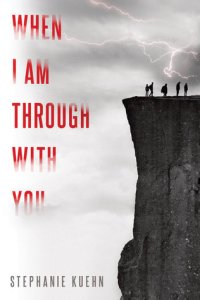
32957193Book: “When I Am Through With You” by Stephanie Kuehn

Publishing Info: Dutton Books for Young Readers, August 1st, 2017

Where Did I Get This Book: I received an ARC at ALA thanks to the publisher.

Book Description: “This isn’t meant to be a confession. Not in any spiritual sense of the word. Yes, I’m in jail at the moment. I imagine I’ll be here for a long time, considering. But I’m not writing this down for absolution and I’m not seeking forgiveness, not even from myself. Because I’m not sorry for what I did to Rose. I’m just not. Not for any of it.”

Ben Gibson is many things, but he’s not sorry and he’s not a liar. He will tell you exactly about what happened on what started as a simple school camping trip in the mountains. About who lived and who died. About who killed and who had the best of intentions. But he’s going to tell you in his own time. Because after what happened on that mountain, time is the one thing he has plenty of. 

Review: I am always on the lookout for well done and legitimately suspenseful YA thriller fiction. While sometimes it’s well written and holds my attention, there are other times that the characters are too trope-ridden and the plot is too spoonfed to the reader, as if teens couldn’t possibly stomach a bit of nuance once in awhile. This is why I thank my lucky stars for Stephanie Kuehn, as she is one of the consistently shining stars of the genre when it comes to writing it for teens. I have loved her ever since I read her book “Charm and Strange”, and every book she’s written since has pleased me and sated my need for cerebral and dark themes with complex and damaged characters. Because boy, do I LOVE complex and damaged characters, and no I’m not sorry about it.

giphy7
Case in point, my longtime obsession with Bobby Briggs from “Twin Peaks”, who demonstrates how resigned I am to my tastes. (source)

Our complex and damaged character this time is Ben Gibson, a migraine-riddled teen who lives with an addict mother who resents him and has no hope of ever leaving his small California town. True, he has a girlfriend named Rose, but she is a bit manipulative and has big dreams of college, and a life that’s on the other side of the tracks. Ben is our narrator, and while he does sort of fit the mold of unreliable, he also is incredibly honest, so the reader is left not sure if what he’s saying is true, but knows he believes that it is. While Ben has accepted that his life is pretty much going to be stuck park and not deviate from it’s current path, he still tries to make those around him happy, even if it’s to his detriment. Be it trying to please Rose, or striking a deal with his teacher Mr. Howe to become a wilderness guide for a modest fee so that he can support his mother, Ben is both a doormat and a knight in shining armor for those who don’t want saving. Kuehn slowly peels back the layers to show just why Ben is like this, and his added dimensions and complexity make him all the more interesting, and yet slightly uncomfortable, to follow.

The wilderness survival story also went above and beyond expectations. I had expected one way that it was going to go, but then it went in a whole different way than I anticipated. I don’t want to give much away, but I will say that Kuehn doesn’t pull her punches when it comes to portraying a bunch of multi-faceted, and pretty realistic, teenagers who make trouble for themselves and don’t know how to react when it blows up in their faces. The group is filled with a few different tropes, the artsy and mysterious girl, the troublemakers, the emo snob (who also happens to be Rose’s twin brother), the sporty girl, but while they all have their niches to fill, Kuehn gives all of them their due and fleshes most of them out. It would be easy to keep them in the lines of their various stereotypes, but instead we kind of get to see the perspectives of a good number of them and that makes them a bit messier and also sympathetic to a degree. Along with being unafraid to try and draw complexity from these kids, Kuehn is also unafraid to be frank and honest in depictions of violence and sexuality. The violence and the consequences of the violence are upsetting and appropriately gory, but it never feels like it’s being written just for the sake of shocking the reader. She seamlessly walks the line between exploitative and realistic, and while some of it made me cringe, it wasn’t because I felt like a voyeur to something gross. She also does a good job of portraying sex and sexuality in a number of ways, from a couple of momentary sex scenes to brief portrayals of fleeting intimacy between lovers. I know that some people would probably be uncomfortable with the sex in this book, and while even I was like ‘whoa’ during one scene in particular, I think that Kuehn clearly gives her readers credit and thinks that they can handle it. If they can handle the violence, they can certainly handle the sex.

I think that for me the one problem I was was a final twist that didn’t feel like it really fit in too well. I understood the thought behind it and while it was set up pretty well, ultimately I didn’t really feel that it added much to the story overall. But given that everything else was so well done I wasn’t too upset about it, and was far more willing to accept it.

And it wouldn’t be a Stephanie Kuehn book if there wasn’t a whole lot of tragedy. I just want to put that out there because 1) fair warning, and 2) I love that Kuehn is more than willing to pile it on, and does so in a way that never feels melodramatic. I love melodrama, but the fact that this ISN’T melodrama makes it all the more tragic.

If you haven’t already picked up books by Stephanie Kuehn, “When I Am Through With You” would be a good place to start. If you like dark and suspenseful, and super honest, thrillers, I implore you to check out her entire body of work. You will not be disappointed.

Rating 8: Kuehn once again delivers a dark and suspenseful book that takes the YA genre above and beyond the usual expectations.

Reader’s Advisory

“When I Am Through With You” is new and isn’t on many relevant lists yet, but I think that it would fit in on “Books About Survival”, and “Best Wilderness Survival Books”.

Find “When I Am Through With You” at your library using WorldCat!

Summer Giveaway: “We Were Liars”

It’s time for another Library Ladies giveaway! And since we’re in the heart of summer, what could be more perfect than giving away a SIGNED hardback copy of “We Were Liars!” Perhaps you’ve heard of it. But it may be better if you haven’t. Read on…..

16143347Book: “We Were Liars” by e. lockhart

Publishing Info: Delacorte Press, May 2014

Book Description: A beautiful and distinguished family.
A private island.
A brilliant, damaged girl; a passionate, political boy.
A group of four friends—the Liars—whose friendship turns destructive.
A revolution. An accident. A secret.
Lies upon lies.
True love.
The truth.

Mini review & Synopsis:

Kate here! So I read “We Were Liars” a few months after it was first published. I knew that it had a lot of buzz surrounding it, and I knew that people were keeping pretty tight lipped as well. I basically swallowed it whole over the course of two days, reluctant to put it down unless I absolutely had to, and I can say that it is amazing, and the perfect summer book to give away.

So why is it the perfect summer book? For one, it’s compulsively readable. Like I said, I couldn’t put it down while I was reading it. It would be a great read for the beach, or an airplane, or just sitting around your house on a super hot day whilst drinking lemonade. And for another, the story and setting really set the mood of summer. It’s about a teenage girl named Cady Sinclair who spends her summers on the family island out east (think Kennedys). She goes with her mother, and spends a lot of time with her cousins. She is closest to cousins Mirren and Johnny, but is also very close to the nephew of Johnny’s mother’s boyfriend, Gat. They’re all so close that they formed a little clique that calls itself The Liars, and Cady and Gat even strike up a summer romance. But during the fifteenth summer, something happened that has left Cady with horrible headaches and few memories. After taking a summer away from the island, she and her mother return for the seventeenth, and she’s reunited with The Liars. But what did happen that fifteenth summer? And why did she forget?

Seriously, this book is a major treat and a lot of fun with its twists and turns. You may not have a private family island to read it on, but the story will nearly whisk you away so that won’t be necessary. Good luck, everyone! You’ll want to get a hold of this book! For a fun bonus, this book has been signed by the author!

Enter the Giveaway!

Kate’s Review: “Saint Death”

31145190Book: “Saint Death” by Marcus Sedgwick

Publishing Info: Roaring Book Press, April 2017

Where Did I Get This Book: The library!

Book Description: In a shack on the outskirts of the border city of Juarez, a teenage boy is visited by a long-lost friend.

Arturo scrapes together a living working odd jobs and staying out of sight. His friend Faustino has joined one of the city’s violent drug gangs. Now Faustino is in trouble: he’s stolen money from the narcos to smuggle his girlfriend and her baby into the U.S., and he wants Arturo’s help getting it back before they kill him for what he’s done.

Review: One of the greatest discoveries that our book club helped me make was Marcus Sedgwick. When we read “Midwinterblood” I was completely enthralled by it, it’s dark fantasy/horrorscape sucking me in and twisting me all around. When we went to ALA in 2014, one of my greatest moments was meeting Mr. Sedgwick at a book signing (and a coffee klatch!), and getting to talk a little bit about the movie “The Wicker Man” with him, as “Midwinterblood” definitely took influence from it (and I’m talking about the original “Wicker Man”, not the one with Nicholas Cage in a bear suit). So now I do my best to read any Marcus Sedgwick books that cross my path. While none have quite lived up to “Midwinterblood”, Sedgwick has become one of my favorite YA authors. And that brings me to his newest YA novel, “Saint Death”. And amazingly, I think it’s his darkest one yet.

I will admit that I was a little hesitant to pick this one up when I first heard about it. After all, the subject of life for Mexicans in the border towns, especially Juarez, is a difficult and painful one. American corporate interests and consumption of illegal drugs has led to massive poverty, and lots of gang warfare between various Cartels. So yeah, my teeth got set a little bit on edge when I found out that a British man was going to tell a story set with this backdrop. I’m still not totally certain if I think it’s his story to tell. BUT, that said, I think that Sedgwick did take it on and portray it in a sensitive and responsible way. It’s pretty clear that he did some massive research on his own, and asked for input from those who may be more familiar with the realities of this situation. And besides, “Saint Death” pulls no punches in postulating where some of the blame can be laid for the violence, corruption, and poverty that is seen in Juarez. American corporations exploit NAFTA to profit off of factories across the border that make them richer but barely pay anything to the workers, and the American consumption of illegal drugs fuels the Cartels. Throw in the topics of undocumented immigration and closed borders, as well as some climate change to boot, and you have yourself a very political book that makes it’s readers question how culpable they are through Capitalist ideals and the supposed free market.

But even without the frank and brutal politics, the characters in “Saint Death” really kept me interested and invested. Arturo and Faustino both make terrible decisions in this book, decisions that may have baffled and frustrated me. But at the same time, because of how well written they both were, I not only believed that they would make them, but I also understood exactly why they were making them. Though it’s Faustino whose choice to steal money to save his girlfriend and baby sets our story in motion, it’s ultimately Arturo whose story we follow. His journey to try to get one thousand dollars for his friend is a short one, and only takes place over a couple of days, but so much happens and he grows and changes so much you really see how his circumstances have completely changed him and the course of his entire life. Even if we spend a comparatively short time with Arturo, Sedgwick does a great job of getting you attached to him. I felt completely tensed up as he got deeper and deeper into Faustino’s mess, especially because of the impending sense of doom that lingers throughout the pages. In part this is because of the presence of Santa Muerte, a folk saint that the people in Arturo’s community have come to worship, including Faustino. While Arturo goes in not believing in Santa Muerte, she is in the pages, given her own perspective points and waxing about the human race as a whole. I loved this device, as it was a great way to tie in the global politics to Arturo’s story.

Finally, while I don’t want to spoil anything about this book and the places it goes, I need to address one thing in vaguest terms possible. Remember all those times I’ve said that I hate last minute twists that feel like a cheap way to try and shock the readers one last time? Well, this book did that. But it did it SO WELL that it achieved what those kind of twists are supposed to achieve! When I got to that quick and fleeting passage that changed SO MUCH, I literally gasped out loud and yelled

giphy5
(source)

Now THAT is how you pull off the end page twist. I salute you, Mr. Sedgwick!

“Saint Death” is a difficult book to read, but I think that it’s a pretty important one. I’m impressed that Sedgwick trusts his YA readers to be able to take on these topics and think critically about them, and hope that more authors follow his lead. Just be sure to steel yourself for something very dark, as important as it may be.

Rating 8: A tense and politically relevant thriller that raises a lot of questions about politics, capitalism, and American social values, and how they affect people living in Mexican border towns.

Reader’s Advisory:

“Saint Death” is pretty new still and isn’t on many Goodreads lists. It is, however, on “2017 Titles By/For/About Latinx”, and I think it would fit in on “Books for Fans of BREAKING BAD”.

Find “Saint Death” at your library using WorldCat!


Kate’s Review: “The Secret Diary of Laura Palmer”

119427Book: “The Secret Diary of Laura Palmer” by Jennifer Lynch

Publishing Info: Pocket, January 1990

Where Did I Get This Book: ILL from the library!

Book Description: Laura Palmer was introduced to television audiences in the opening scenes of “Twin Peaks”–as a beautiful dead girl, wrapped in plastic. Now available in print for the first time in many years (and in e-book for the very first time!), THE SECRET DIARY OF LAURA PALMER chronicles Laura’s life from age 12 to her death at 17, and is filled with secrets, character references, and even clues to the identity of her eventual killer. Fans of the show will love seeing their favorite characters again, and Laura’s diary makes compelling reading as she turns from a naive freshman having her first kiss to a “bad girl” experimenting with drugs, sex and the occult.

“As seen by” Jennifer Lynch, creator David Lynch’s daughter, THE SECRET DIARY OF LAURA PALMER is authentic, creepy, and a perfect book for anyone who loves supernatural suspense.

Review: In case it hasn’t become abundantly clear at this point, I am a HUGE HUGE HUGE “Twin Peaks” fan. It was a show that burned too bright and went out too fast, but went on to change television as we know it. When I finally got to start watching the recent revival, I felt a need to actually get my hands on one of the tie ins to the show that I had heard of, but never actually experienced. That is, of course, the notorious “The Secret Life of Laura Palmer”, a book that is supposed to be the journal of the doomed and tragic Laura Palmer, the victim whose murder kicks off the series. It’s notorious because, similar to books like “Flowers in the Attic” and “Go Ask Alice”, it has a reputation for being salacious and scandalous.

There is definitely something that should be said right away about this book: if you are not familiar with the show “Twin Peaks” and it’s mythos, this book is probably not going to make much sense to you. Jennifer Lynch, daughter of the show’s creator (and amateur meteorologist) David Lynch, writes these diary entries and expects that the reader is going to understand who these characters are and what the significance is to the various situations that Laura describes. So while I knew why it was absolutely upsetting when on page 4 Laura write ‘p.s., I hope BOB doesn’t come tonight’, those who are going in blind would not. My advice would be that if you haven’t seen the show this book should probably be avoided until you have, not only because of confusion but also major spoilers to the plot. All that said, I found it to be a fun(?) read because of the hidden references and the first person perspective from the girl who was dead in episode one. I also have to admit that I smiled pretty broadly every time there was mention of one of my favorite characters from the show, like Bobby Briggs or Audrey Horne. This book also does a good job of expanding upon characters that we only saw through the show’s perspective, and showing sides that perhaps they couldn’t or wouldn’t show after Laura’s murder. This mostly applies to my bae Bobby Briggs. On the show we mostly see an angry teenage boy who makes dumb decisions and generally acts like a brooding whiner. But I loved that in this book we saw the sweet side that was long extinguished by the time we get to know him.

giphy4
When you are both vindicated and hurting in your love for Bobby Briggs. (source)

But, all that said, as fun as the references and new perspectives were, this book doesn’t really tell me anything that I don’t know about Laura Palmer and how awful and sad her life was. If anything, it merely puts the awful abuse, torture, and sadness that she endured on full display. I need to give Jennifer Lynch the utmost credit for writing the voice of a pre-teen to teenage girl so well. As I was reading this book there were so many moments that I thought to myself ‘yep, my diary entries at this age totally sounded like this’ (to an extent), and I think that it was a genius move to let not only a woman, but the daughter of the series creator as well write it. But the authenticity just made all the stories of sexual abuse, drug use, sex work, and violence feel all the more awful. I know that some of the appeal of books like this one and “Flowers in the Attic” is the taboo-ness of reading them, but when you are reading about a teenage girl recounting all the awful things she has been made to do and the reckless and dangerous coping mechanisms she finds herself in, I was less ‘wow this is fun’ and more ‘ugh, this makes me want to take a shower’. It’s not that I found it exploitative, exactly, as I think that Lynch is very good and making it uncomfortable and decidedly NOT sexy. But I did find it upsetting. Which, at it’s heart, Laura Palmer’s story is supposed to be. By seeing this side of her, it shows her as more than just that smiling picture that everyone thinks of when they think of the show.

“The Secret Diary of Laura Palmer” isn’t necessarily a ‘must read’ for fans of the show, and it certainly isn’t a way for people to get an introduction to the show’s universe. But I appreciate that it gives Laura Palmer a more personal voice than the show did (and I can’t speak for the movie “Twin Peaks: Fire Walk With Me” as I have not seen it). Maybe I would have had more fun if it was the secret diary of Audrey Horne.

Rating 6: While it’s enjoyable for a “Twin Peaks” fan like me, it doesn’t really add much new to the canon beyond a personal perspective. But that personal perspective is super sad and tragic.

Reader’s Advisory:

“The Secret Diary of Laura Palmer” is included on the Goodreads lists “Epistolary Fiction”, and “Twin Peaks”.

Find “The Secret Diary of Laura Palmer” at your library using WorldCat!

Kate’s Review: “Gwendy’s Button Box”

34430839Book: “Gwendy’s Button Box” by Stephen King and Richard Chizmar

Publishing Info: Cemetery Dance Publications, May 2017

Where Did I Get This Book: The library!

Book Description: The little town of Castle Rock, Maine has witnessed some strange events and unusual visitors over the years, but there is one story that has never been told… until now.

There are three ways up to Castle View from the town of Castle Rock: Route 117, Pleasant Road, and the Suicide Stairs. Every day in the summer of 1974 twelve-year-old Gwendy Peterson has taken the stairs, which are held by strong (if time-rusted) iron bolts and zig-zag up the cliffside.

At the top of the stairs, Gwendy catches her breath and listens to the shouts of the kids on the playground. From a bit farther away comes the chink of an aluminum bat hitting a baseball as the Senior League kids practice for the Labor Day charity game.

One day, a stranger calls to Gwendy: “Hey, girl. Come on over here for a bit. We ought to palaver, you and me.”

On a bench in the shade sits a man in black jeans, a black coat like for a suit, and a white shirt unbuttoned at the top. On his head is a small neat black hat. The time will come when Gwendy has nightmares about that hat…

Journey back to Castle Rock again in this chilling new novella by Stephen King, bestselling author of The Bazaar of Bad Dreams, and Richard Chizmar, award-winning author of A Long December. This book will be a Cemetery Dance Publications exclusive with no other editions currently planned anywhere in the world!

Review: One of my favorite things about Stephen King (and there are so, so many things to love about this man, in my opinion) is that he likes to make references to his past works within his books. It makes it feel like his stories exist in their own universe, and it makes it fun to try and spot references as you read his books. He also brings some characters from some books into other books. For example, in his Science Fiction/Suspense book “11/22/63”, his main character travels back in time to stop the Kennedy Assassination… and makes a detour in Derry, Maine, the infected town in “It”. We even got to see some of the characters from “It” in that book, even though they were definitely just treats for his readers. But the character that he does this the most with is Randall Flagg, aka The Man in Black, aka The Walkin’ Dude, aka Walter O’Dim. Flagg is mostly seen in “The Stand” and “The Dark Tower” Series, but every once in awhile he’ll show up in other King works. It’s rumored that he’s He Who Walks Behind The Rows in “The Children of the Corn”, and Raymond Fiegler in “Hearts in Atlantis”. I’m always on the look out for Flagg to come back, as he’s one of my favorite villains of all time.

And in “Gwendy’s Button Box”, the new novella by King and Richard Chizmar, it’s very possible that he has.

giphy2
M-O-O-N that spells ELATED! (source)

Gwendy is a typical awkward pre-teen girl. Teased by her peers and living a less than ideal home life, she’s taken it upon herself to slim down before she starts high school. She does this by running up a very steep set of stairs every day in her hometown of Castle Rock, Maine. And it’s on one of these days that she meets Richard Farris, a mysterious stranger wearing a black hat and coat. The Initials R.F. tell us right away that this is very likely to be Flagg, as does his appearance due to his penchant for wearing black. Oh, and the fact he gives her a magical box covered in buttons, and tells her that it is her responsibility at this moment to keep this box safe. While he doesn’t say it outright, he implies that pressing the buttons could have dire consequences for the world around her. It’s such a terrifying and fascinating concept to hold such a small yet powerful thing in your hands, and Gwendy is the one who is going to be the keeper of that responsibility. At least for now. This is Flagg at a more benign level, as he feels less destructive and more impish, almost like a mentor to Gwendy. The Box rewards her with beautiful chocolate animals, antique coins, and a boost of self esteem. While it didn’t feel like the Randall Flagg that I know and love, this potentially kinder, gentler Randall was pretty fun to read and rather ‘aw’ inducing. After all, how kind and gentle could he be truly if he knows that this box could potentially spell doom for mankind if it falls into the wrong hands?

I think that King and Chizmar did a very good job of writing Gwendy. Even though this is a novella and doesn’t have many pages to delve into her psyche, I felt that she was a realistic and relatable pre-teen girl. She isn’t too popular, she is unsure of herself, and she is happy to take the highs of this box and it’s responsibilities, but reluctant and scared of the lows. I enjoyed that as I was reading this book it was hard to know if there was a cause and effect going on, at least part of the time. When Gwendy pushes one of the buttons, shortly thereafter the Jonestown Massacre happens. Is that coincidence? Or did Gwendy cause it? It’s philosophical tension at it’s finest, making the reader question if she has any affect on the world, or if Richard Farris (aka Randall Flagg) is merely toying with her. She struggles with the knowledge that she has this thing that could potentially be destructive, and yet lives for the perks that it may be giving her. I also think that King and Chizmar did a good job of capturing adolescence as a whole, even if a magical button box wasn’t there. Gwendy makes friends, loses others, finds first love and has to deal with cruel and bad people who are in her life, and it always felt so real and bittersweet watching her go through her teenage years, button box or not.

King and Chizmar created a pretty cohesive book. It’s hard enough to pull off a novella, to hit all the points that you want to hit, and I imagine that doing it with another person is harder still. But it never felt like I was reading two competing voices in this book. It sounds like they created a system that worked for the two of them, and I have to say that I was very impressed with what they came up with. It has that undercurrent of thriller, wondering if Gwendy is going to keep hitting buttons and cause a catastrophe. But it also has that coming of age feel as Gwendy learns about herself and life. Given that King and his son Owen just wrote another book together, I see this as a positive sign that King has the ability to adapt, or at least tweak, his writing to mesh with another person’s.

“Gwendy’s Button Box” was a quick and very satisfying read. We get a nice taste of a return of The Walkin’ Dude, but we also get a heroine grounded in realism, and an existential crisis that kept this reader on the edge of her seat.

Rating 8: Filled with ambiguity and philosophical horror, “Gwendy’s Button Box” doesn’t only bring us back to Castle Rock, it may bring back The Man In Black. King and Chizmar work well to make a cohesive story between two voices.

Reader’s Advisory:

“Gwendy’s Button Box” is fairly new and isn’t on many Goodreads lists. It is, however, on “Best Books to Read In Summer”, and I think that it would fit in on “Weird and Freaky Books”, partially because Richard Matheson’s “Button, Button” is on that list and this book is super similar.

Find “Gwendy’s Button Box” at your library using WorldCat!

Kate’s Review: “Into the Water”

33151805Book: “Into the Water” by Paula Hawkins

Publishing Info: Riverhead Books, May 2017

Where Did I Get This Book: The library!

Book DescriptionA single mother turns up dead at the bottom of the river that runs through town. Earlier in the summer, a vulnerable teenage girl met the same fate. They are not the first women lost to these dark waters, but their deaths disturb the river and its history, dredging up secrets long submerged.

Left behind is a lonely fifteen-year-old girl. Parentless and friendless, she now finds herself in the care of her mother’s sister, a fearful stranger who has been dragged back to the place she deliberately ran from—a place to which she vowed she’d never return.

With the same propulsive writing and acute understanding of human instincts that captivated millions of readers around the world in her explosive debut thriller, The Girl on the Train, Paula Hawkins delivers an urgent, twisting, deeply satisfying read that hinges on the deceptiveness of emotion and memory, as well as the devastating ways that the past can reach a long arm into the present.

Beware a calm surface—you never know what lies beneath.

Review: A couple years ago I got the book “The Girl on the Train” from my library, a spoil of war known as the ‘New Items Wall’. I had been waiting for it to be up for the allotted amount of time employees have to wait before it’s up for grabs, and as soon as that time was up I grabbed it and claimed it as my own. It didn’t take me long to read it. I found it pretty okay. I was entertained, even if I guessed the big twist long before the reveal was meant to happen. Though it’s gotten a bit of backlash as of late, I knew that anything else that Paula Hawkins wrote would get a lot of attention, and that I would be interested in reading it. So enter “Into the Water”, the newest book by Paula Hawkins. Like “The Girl on the Train”, I had to wait for this one to pass the time limit. And then I grabbed it for myself.

When “Into the Water” took me in, it took me in pretty hard. The book is told through multiple perspectives, each of them slowly giving tiny pieces of the overall puzzle as to what exactly happened to the two dead ladies who drowned in the local pond. The first is Katie, a teenage girl who jumped to her death from the cliff above the drowning pool. The second is Nel, a single mother whose daughter, Lena, was best friends with Katie. No one knows what happened to Nel. She was writing a book about the large number of women who died in the drowning pool over the years, either by suicide, witch craft trial, or straight up murder. Various perspectives include the eyes of Jules, Nel’s sister, Lena, Nel’s daughter, Sean, a detective and a man with his own connection to the pool, and Erin, Sean’s partner on the force. These four voices were the strongest of the bunch, as others either felt overdramatic (the mother of Katie was especially grating, even though I did feel sympathy for her), superfluous (a local psychic who has her own beef with Sean’s family), or just downright yucky (Mark, a teacher who may have had an improper relationship with one of his students). While they all added their own important pieces, it was hard to keep track of all of them at times at first. You add in chapters from Nel’s book about the other women who died in the drowning pool and you get a lot of information to process as you are paging through quickly because it’s so enthralling.

I had a few theories about what was going on this book, and unlike “The Girl on the Train” I wasn’t totally convinced about what had happened very early one. While I liked that it kept me guessing pretty well, I did take issue with the fact that this book is the kind of story that likes to keep yanking the rug out from under you. I am okay with twists and turns, but I get really sore when a solution is presented, a conclusion is presumed, and then in the last paragraph, NAY, the last SENTENCE, the solution is completely thrown out the window and a new reality is set in place. That’s not clever to me, that’s not inventive or an ‘ah ha!’ moment. That’s a cop out, and I am not impressed with cop outs.

giphy1
(source)

I think that I need to just start to accept the fact that while I am definitely going to keep up with Paula Hawkins books in the future, I’m going to have to accept that for me it’s going to be less about the solution and more about the journey getting there. I would definitely say that “Into the Water” kept me entertained and captivated well until the final pages were turned, but on the other side of the coin the ending was a huge let down. What I will say is that Hawkins knows how to construct a mystery and a thriller, and just because the endings have disappointed me it doesn’t mean that I will completely overlook the experience as a whole.

Rating 6: Incredibly engrossing and addictive, but with a dud of an ending, “Into the Water” kept me going but left me frustrated.

Reader’s Advisory:

“Into the Water” is included on the Goodreads lists “2017 Crime Books You’re Excited For!”, and “2017 Suspense and Thrillers”.

Find “Into the Water” at your local library using WorldCat!

Kate’s Review: “The River At Night”

29430686Book: “The River At Night” by Erica Ferencik

Publishing Info: Gallery/Scout Press, January 2017

Where Did I Get This Book: The library!

Book Description: A high-stakes drama set against the harsh beauty of the Maine wilderness, charting the journey of four friends as they fight to survive the aftermath of a white water rafting accident, The River at Night is a nonstop and unforgettable thriller by a stunning new voice in fiction.

Winifred Allen needs a vacation.

Stifled by a soul-crushing job, devastated by the death of her beloved brother, and lonely after the end of a fifteen-year marriage, Wini is feeling vulnerable. So when her three best friends insist on a high-octane getaway for their annual girls’ trip, she signs on, despite her misgivings.

What starts out as an invigorating hiking and rafting excursion in the remote Allagash Wilderness soon becomes an all-too-real nightmare: A freak accident leaves the women stranded, separating them from their raft and everything they need to survive. When night descends, a fire on the mountainside lures them to a ramshackle camp that appears to be their lifeline. But as Wini and her friends grasp the true intent of their supposed saviors, long buried secrets emerge and lifelong allegiances are put to the test. To survive, Wini must reach beyond the world she knows to harness an inner strength she never knew she possessed.

With intimately observed characters, visceral prose, and pacing as ruthless as the river itself, The River at Night is a dark exploration of creatures—both friend and foe—that you won’t soon forget.

Review: As I have mentioned before, I have some serious guilty pleasures (though I don’t REALLY believe in guilty pleasures when it comes to reading) when it comes to the books that I stack up on my nightstand. One of those guilty pleasures is wilderness survival horror/thriller. I am not an outdoorsy person by any stretch of the imagination beyond the occasional hike or walk, and so I love stories that involve people getting messed up by wilderness. Seriously, I think that I’m so scared of nature that I love seeing fictional people finding terror in the woods, or on the open ocean, or in the mountains, or whatever. This is the girl who freaked out about the Nutty Putty Cave Incident, made her entire book club listen to a long rant about it, and then watched “The Descent” a few times in a row as personal therapy, because she LOVES that movie due to the wilderness survival theme. So yeah. When I found a book that kind of sounds like “The Descent” exists, but takes out the cave, replaces it with a river, and replaces monsters with tangible real life horrors… Oh, I was so there.

7e1e765ade6959582e218422993504ae
Me leaving the library with my copy. (source)

“The River At Night” even seems like “The Descent” in it’s premise, at least a little bit. A group of ladyfriends go on a trip that involves adrenaline pumping extreme sports, with one of them recovering from a serious loss in her life while the others don’t really know how to approach her about it. Winifred is our protagonist, and she is still reeling from her divorce and the death of her brother Marcus. Her friends Pia, Sandra, and Rachel have always been her travel companions, on out-there and intense adventures (thanks to Pia, a true free spirit with no fear), and while Wini has reservations, the thought of white water rafting in the Maine Wilderness sounds… fun? I will be the first to admit that these four women are all pretty two dimensional caricatures, with the self involved adrenaline junkie (Pia), the tightly wound recovering addict (Rachel), the quiet sweetheart with a troubled home life (Sandra), and the wounded but determined wallflower (Wini). And I will also be the first to admit that some of the situations they found themselves in were a bit convenient, and cliche, and a little bit farfetched.

But guess what? I didn’t care because DAMN was “The River At Night” a fun as hell read!!!!

giphy
Cliche, shmiche, I’m just here to be entertained. (source)

“The River At Night” has just the right amount of suspense, as well as the right amount of relationship tension, that I had a hard time putting it down once I was completely absorbed by it. I had thoughts on where things were going to go, plot wise, but I was kept guessing for a lot of the big reveals. Ferencik did a really good job of building up the tension and setting the scene, and I felt like I could very easily and plainly see the Maine Wilderness as I made my way through the story.

I also really did like Wini as a protagonist. She is, of course, the character we get to know the best, and I felt like I understood her motivations in every choice that she made. I felt for her and I really did connect to the undercurrent of pain that she was fighting against, be it the end of her marriage or the loss of her brother, who was mute, and never really fit in outside of when he was with her. Her guilt in both of these losses was never overdone, but it was always present, like a very sad elephant in the room. It was pretty refreshing that Wini and her friends were all women who were encroaching upon middle age, an age range that we don’t really get to see much when it comes to women in books such as these. The way that they interacted with each other was pretty believable in terms of how sometimes friendships can be rife with tension, especially friendships that have gone on for so long and have seen so much. I believed every single action and choice that each of the characters made, and while I liked some more than others (Rachel was just the absolute worst and Pia was also pretty insufferable) I think that each of them added a unique piece to the whole of the story.

On top of that there were very sweet moments involving Wini and a character who is introduced a little more than halfway through the story. I don’t want to give any of it away, but just know that I thought that it was very touching for a book that had a slew of moments where I thought I was going to fall of my seat because of the ratcheted up tension. It was nice to see some legitimate moments of tenderness, even if some of the circumstances were a bit hard to swallow, realism wise. I absolutely found myself a bit teary eyed at a few of these moments, especially when Wini was thinking about Marcus and how she felt she failed him.

Realistic or not, “The River At Night” was an unsettling and adrenaline pumping survival thriller that captured my attention for a full evening. Thriller fans, MAKE NOTE. This will be a great book for the upcoming summer months to take along on a vacation.

Rating 9: Super fun, pushing all my guilty pleasure buttons, and suspenseful as all get out. I really enjoyed “The River At Night” and think that any fan of a nature survival thriller should check it out ASAP.

Reader’s Advisory:

“The River At Night” is, for whatever reason, not on many relevant Goodreads lists, but I think it would fit in on “Best Wilderness Horror Stories”, and “Best Wilderness Survival Books”.

Find “The River At Night” at your library using WorldCat!

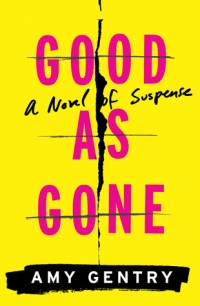
Kate’s Review: “Good As Gone”

29975458Book: “Good As Gone” by Amy Gentry

Publishing Info: Houghton Mifflin Harcourt, July 2016

Where Did I Get This Book: The library!

Book Description: Thirteen-year-old Julie Whitaker was kidnapped from her bedroom in the middle of the night, witnessed only by her younger sister. Her family was shattered, but managed to stick together, hoping against hope that Julie is still alive. And then one night: the doorbell rings. A young woman who appears to be Julie is finally, miraculously, home safe. The family is ecstatic—but Anna, Julie’s mother, has whispers of doubts.  She hates to face them. She cannot avoid them. When she is contacted by a former detective turned private eye, she begins a torturous search for the truth about the woman she desperately hopes is her daughter.

Propulsive and suspenseful, Good as Gone will appeal to fans of Gone Girl and The Girl on the Train, and keep readers guessing until the final pages.

Review: So back in the day there was a “Law and Order: Special Victims Unit” episode called “Stranger” in which a girl who disappeared a number of years prior came back to her family, but it turned out that she wasn’t actually the girl who had disappeared. She was an imposter, and it turned out that the reason the sister was so skeptical and cruel towards her was because SHE HERSELF HAD KILLED THE MISSING GIRL ALL THOSE YEARS AGO. WHAT A TWIST.  God I love “SVU”. This is run of the mill nonsense on that show and I come back for it seventeen years in.

giphy3
I can’t even deny this. (source)

This episode is based on the real life case of Nicholas Barclay, a Texas boy who disappeared at age 13 in 1994. His family was reunited with a man saying that he was Barclay years later… But it turned out he was a fraud named Frédéric Bourdin, a French man who conned many people using false identities. If I’m being honest, when I picked up the book “Good As Gone”, I half expected that to be the case (well maybe not so far as the sister doing the deed in the first place. That’s Grade A SVU malarky right there). But instead of detached and procedural methodical Benson/Stabler realness, I got a book that was actually a bit more twisty and turny, and one that attempts at genuine emotional connection along with the mystery it puts forth.

It’s established right away that Julie may or may not actually be who she says she is. We see these mysterious deceptions through the eyes of Anna, the mother, and through ‘Julie’ herself. I kind of liked that the mystery itself wasn’t based on whether Julie was actually Julie, and that the mystery was whether or not Anna was going to figure it all out. And really, this book is more about the tragedy and trauma that a family has to endure when one of their children disappears, and how everyone copes should they suddenly come back. I think that a lot of the time we only hear about the family being reunited, but rarely do we hear about how hard it can be for everyone to readjust when so much has changed. “Room” certainly takes that theme on, and honestly, “Room” does it better. While it’s good that Gentry did make it clear that the damage is far reaching in this family, and that a potential reappearance isn’t going to just fix everything, I think that the problem for me is that, outside of younger sister Jane, I didn’t really connect to any of the characters in this book. Anna, while I have no doubt her actions are in step with how a person would react in her situation, was so cold and cruel to Jane and sometimes Tom, her husband, I just couldn’t quite get behind her completely. While I don’t doubt that the emotional trauma of losing a child is going to make anyone act in ways that aren’t always healthy, Anna didn’t grab at my sympathy heartstrings so much as put me completely off.

‘Julie”s sections were interesting, going backwards from her ending up on the family doorstep and marching back through time, showing how she got there and the experiences she had to go through. While I know this was done to humanize her and to better understand her psyche, I found myself tempted to skim through these parts. It was a neat way to explain who she was, I will fully admit that, but since she herself didn’t do much for me I wasn’t as invested as others may be. We’re meant to have a lot of mixed feelings about her, and unfortunately it was hard to recover from deep suspicion. And like Anna, I just didn’t quite feel myself attaching to her as a character, even when I saw her going through really horrible and terrible things. Ultimately, it didn’t matter to me if she was who she said she was. The moments I liked best were between her and Jane, the younger sister who always blamed herself for letting a man walk out the door with her older sister as she hid in the closet. Jane was by far the character who intrigued me most, as she has basically been emotionally neglected by her parents because she’s the child who was left behind. Her own guilt festers and manifests in self imposed isolation, and her mother’s veiled resentment throws a wall between them that neither really can push through. It really did make me think about what it must be like for the kids who are left behind in stories like this, and how they handle it.I think that had this book had some perspective chapters from Jane I probably would have enjoyed it quite a bit more.

And on top of everything, the ending (which I’ll leave a mystery for everyone so as not to spoil anything) felt so haphazardly thrown together, with a number of things tied up neatly in a number of bows, that I had a hard time swallowing it. Some things were just too conveniently explained away, and other things were not really addressed as much as I wanted them to be.

“Good As Gone” has all the elements that it needs to make a great book, but the execution left a little to be desired for me. So instead of a great read, it was a fine one. I think that it’s worth your time if you like this genre, but it may leave readers as satisfied as they wish to be.

Rating 6: Yeah, it surprised me a bit here and there, and I liked the overall focus. But I didn’t really connect with any of the characters. I wasn’t really invested in whether the girl claiming to be Julie was actually Julie, and I wasn’t completely satisfied with how it all shook out.

Reader’s Advisory:

“Good As Gone” is included on the Goodreads lists “Female Psychological Thrillers/Suspense”, and “Thrillers You Must Read!”.

Find “Good As Gone” at your library using WorldCat!

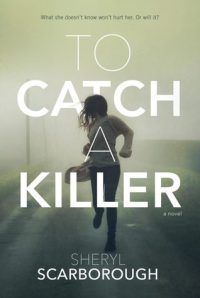
Kate’s Review: “To Catch a Killer”

29939266Book: “To Catch a Killer” by Sheryl Scarborough

Publishing Info: Tor Teen, February 2017

Where Did I Get This Book: The library!

Book Description: Erin Blake has one of those names. A name that, like Natalee Holloway or Elizabeth Smart, is inextricably linked to a grisly crime. As a toddler, Erin survived for three days alongside the corpse of her murdered mother, and the case—which remains unsolved—fascinated a nation. Her father’s identity unknown, Erin was taken in by her mother’s best friend and has become a relatively normal teen in spite of the looming questions about her past.

Fourteen years later, Erin is once again at the center of a brutal homicide when she finds the body of her biology teacher. When questioned by the police, Erin tells almost the whole truth, but never voices her suspicions that her mother’s killer has struck again in order to protect the casework she’s secretly doing on her own.

Inspired by her uncle, an FBI agent, Erin has ramped up her forensic hobby into a full-blown cold-case investigation. This new murder makes her certain she’s close to the truth, but when all the evidence starts to point the authorities straight to Erin, she turns to her longtime crush (and fellow suspect) Journey Michaels to help her crack the case before it’s too late.

Review: Back in the mid 2000s, the world was introduced to the character of Dexter Morgan in the book “Darkly Dreaming Dexter”, which in turn became a hit television series. In this book/TV series, the premise is that Dexter, a forensics lab employee in Miami, is a murderous psychopath, his psychopathy put into place when he witnessed his mother brutally murdered when he was a toddler and was left in a storage locker with her body for a couple of days. In “To Catch A Killer” similar circumstances just leaves Erin with some mild PTSD and a deep interest in forensics. Now I don’t know which situation is more true to life, and my guess is that for a lot of people it would be more a happy medium between the two. But that said, I’m less inclined to believe Scarborough’s scenario than Dexter’s.

Honestly, there were a few things in “To Catch A Killer” that I had a hard time stomaching. For one thing, it felt to me like many of the characters weren’t terribly well thought out. First of all, there’s Erin. I liked Erin enough, actually, she had a solid voice and some pretty fun snappy moments. But like I mentioned above, I just have a hard time thinking that a person who went through that kind of trauma would have more issues than a fascination with forensics and some pretty remote and just mentioned in passing PTSD symptoms. Oh, and a hard time trusting boys, leading to a dating drought in her life. While I did appreciate her quirks and her interests (as I too was a fan of “Natural Born Killers” when I was a teenager), I was never quite buying how together she was, especially since it made it sound like Rachel, her guardian, never really wanted to discuss the murder with her, or even talk about her mother at all. Along with Erin feeling a bit unrealistic, her friends were broad templates of the ‘awesome best friends’ without ever really having much depth added to them. Spam especially, who is the ‘cool gamer girl with the funky sense of style’ trope, and never really moves beyond it. Lysa also functions as a loyal but pragmatic sidekick, there to be a voice of reason and to temper down Spam’s spitfire. I did enjoy that the three of them have their own “Cheater Check” service, where they offer up their forensic investigative services to catch cheating boyfriends and girlfriends, so it wasn’t just Erin who was a science minded lady. I’ll always support girls having science minded role models in fiction. And then there’s Journey, the love interest/potential suspect. Erin knows that he couldn’t have done it, which takes on an interesting angle that could have been explored. While it may be a sort of trite angle, without it Journey is a bit watered down. He has a tragic backstory as well involving his father, but it never really elicited much emotion from me. These teens never felt like they were real teens, but a broad idea of what teenagers act like.

The mystery of ‘who killed Miss P/Erin’s Mom’ is the bigger theme of this book, and the smaller one is ‘who is Erin’s Dad’. Within the first few chapters I had pretty clearly figured out the answers to both questions, and while many red herrings were thrown at me, I ended up being right in the end. I think that had I enjoyed the journey of getting to the conclusion, had I enjoyed the characters and enjoyed how they pieced things together, I would have liked this book more overall. I don’t necessarily read books like this just for the mystery, but for the detection and the investigation. The only parts that I really enjoyed involved Erin’s uncle Victor, Rachel’s brother. He’s an FBI Agent who has written a number of books about crime investigations, and I did enjoy it when he and Erin interacted and geeked out over forensics. These scenes were both fun because of the well researched science that was involved, and because the chemistry between Erin and Victor did feel genuine. Their moments of science and tech geekery were really fun ways to introduce this kind of stuff to the reader, and I really can appreciate that.

I think that overall “To Catch A Killer” had promise, but it just wasn’t the book for me. Perhaps someone super into forensics would enjoy it more, but it didn’t quite stand on it’s own when it wasn’t talking about that stuff.

Rating 4: While it had scenes and moments of cool science and a pretty solid (if not at times unrealistic) main character, “To Catch A Killer” didn’t stand up underneath all it wanted to do.

Reader’s Advisory:

“To Catch a Killer” is fairly new and not on many specific lists, but I think that it would fit in on “Forensics: If It Doesn’t Walk, We Bring Out The Chalk”, and  “Forensic Fiction”.

Find “To Catch a Killer” at your library using WorldCat!

Kate’s Review: “Her Every Fear”

29938032Book: “Her Every Fear” by Peter Swanson

Publishing Info: William Morrow, January 2017

Where Did I Get This Book: The library!

Book Description: Growing up, Kate Priddy was always a bit neurotic, experiencing momentary bouts of anxiety that exploded into full-blown panic attacks after an ex-boyfriend kidnapped her and nearly ended her life. When Corbin Dell, a distant cousin in Boston, suggests the two temporarily swap apartments, Kate, an art student in London, agrees, hoping that time away in a new place will help her overcome the recent wreckage of her life.

Soon after her arrival at Corbin’s grand apartment on Beacon Hill, Kate makes a shocking discovery: his next-door neighbor, a young woman named Audrey Marshall, has been murdered. When the police question her about Corbin, a shaken Kate has few answers, and many questions of her own—curiosity that intensifies when she meets Alan Cherney, a handsome, quiet tenant who lives across the courtyard, in the apartment facing Audrey’s. Alan saw Corbin surreptitiously come and go from Audrey’s place, yet he’s denied knowing her. Then, Kate runs into a tearful man claiming to be the dead woman’s old boyfriend, who insists Corbin did the deed the night that he left for London.

When she reaches out to her cousin, he proclaims his innocence and calms her nerves–until she comes across disturbing objects hidden in the apartment and accidentally learns that Corbin is not where he says he is. Could Corbin be a killer? What about Alan? Kate finds herself drawn to this appealing man who seems so sincere, yet she isn’t sure. Jet-lagged and emotionally unstable, her imagination full of dark images caused by the terror of her past, Kate can barely trust herself, so how could she take the chance on a stranger she’s just met?

Review: In February of 2016, I was on a lovely family vacation in Hawai’i. On this trip I brought a number of books, one of which was Peter Swanson’s “The Kind Worth Killing” (I reviewed it on this blog here). I read that book in the span of about one day, sitting on a Lanai on Kauai and devouring it ravenously. In February of 2017, I was in St. Cloud, Minnesota, sitting in the Stearns County Courthouse and waiting for my husband to finish up judging a Mock Trial competition. Perhaps not as glamorous of a setting, but I brought Peter Swanson’s book “Her Every Fear”. It was almost a year to the day later. And boy, did I devour this one as well.

The thing about Peter Swanson’s thrillers is that he has a knack for completely making you question everything, and taking the reader by complete surprise. Much like in “The Kind Worth Killing”, there is a moment in “Her Every Fear” where the game completely changes, and I had to set the book down for a moment and try and regroup after the big reveal. But before I talk more about the plot, I want to talk about the characters in this book, specifically Kate and Alan. I really, really appreciated how Swanson portrayed Kate and her anxiety disorder/PTSD. As someone who also has an anxiety disorder, I thought that he captured the constant, if not usually mild, fears that just kind of plague you in your day to day life, be it intrusive thoughts, or the feeling that something awful is going to happen even if there is no reason to believe so. In a lot of books like this this could be used as a character flaw to show just how broken she is, but with Kate there is nothing but sympathy for her and what she went through in her past. Alan is a character I had a harder time wrapping my head around, as he’s someone who is definitely a little bit off, mentally. I don’t want to spoil anything because there are so many reveals that are masterfully executed, but I will say that there is lots of sympathy for Alan as well in his own crippling oddness. He could have easily been painted one way, but I ended up kind of understanding him, and like that Swanson put him together the way that he did.

The mystery itself is very well done, with twists and turns that come slowly to the surface. It’s a slow burn, and you think that you may have something figured out, but then things will completely change on you. He also does a very good job of slowly turning the screws of suspense, and wrote moments that really messed with my memory and consciousness. There was a moment involving a cat being let out of Kate’s apartment, only to be found in the apartment again in the middle of the night. Not only did she question if she had let him out in the first place, I TOO QUESTIONED IT, and had to prevent myself from flipping back and checking. It’s this kind of uncanny and upsetting horror that really gets me, and makes me super squeamish (so much so that I had to set the book down and go watch “Frasier” for a couple of hours). Swanson is also deft at skillfully switching perspectives, be it Kate, or Alan, or one of the other perspective chapters of other characters (whom I shan’t spoil here). All of them had complete and well rounded voices, and I feel like he really lets the reader get into all of their heads. The puzzle pieces are laid out for the taking, and gosh did I enjoy picking them up and putting them together. While I managed to figure it out eventually, it wasn’t long before the reveal, and I was still pretty blown away by it all.

“Her Every Fear” is a great thriller, one that I tore through and highly recommend to fans of the genre. And if you haven’t already, go back and pick up “The Kind Worth Killing” as well, and treat yourself to a double header of awesome twisty thrills!

Rating 9: Another home run by Peter Swanson! I devoured this book and it had me on the edge of my seat the entire time!

Reader’s Advisory:

“Her Every Fear” is included on the Goodreads lists “Twisty Page Turners”, and “2017 Crime Novels You’re Excited For”.

Find “Her Every Fear” at your library using WorldCat!