My Year with Jane Austen: “Persuasion” [1995]

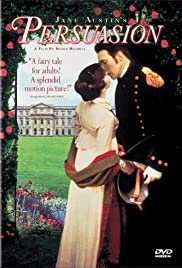
Movie: “Persuasion”

Release Year: 1995

Actors: Anne Elliot – Amanda Root

Captain Wentworth – Ciaran Hinds

Mr. Elliot – Samuel West

Comparison – “Indulge your imagination in every possible flight.”

My mom always loved “Persuasion,” and as this was the most recent adaptation she had, we all watched it quite a bit as kids. But as an adult, the 2007 version came out, and for better or worse, that’s been my go-to over the years. I hadn’t actually re-watched this one for who knows how long. So it was interesting watching it again after all of this time, after having re-read the book so recently, and with having a very clear memory of the 2007 version in my head the entire time.

Overall, I think it’s a fairly faithful adaptation of the book. I think it particularly shines with its casting of our two main characters. But I think it also struggles the most with casting for almost every other character. Other than the Crofts (I particularly liked the actress who played Mrs. Croft), I felt like almost everyone was miscast in one way or another. The Musgrove girls both felt more bland, less lively, and not as engaging as they are described as being in the book. Sir Walter’s vanity seems to be mainly reflected in this penchant for wearing weirdly flowerly suits, but the actor himself wasn’t very good looking. Elizabeth was not only not as good looking as one would expect her to be, but her characterization seemed all wrong, with her having temper flare-ups all over the place that weren’t reflective of anything in the book. Captain Benwick seemed cast as a more bumbling, comical figure than the angsty, emo-ish man the book describes. It was all very odd and off-putting. But at least Anne and Captain Wentworth were good!

The movie is definitely dated feeling, but overall I liked the scenery and sets. There were a few strange camera angles and shots that I don’t think added much, but overall, I think it was pretty well-done. Having now watched it after all of these years, I think I can appreciate it more than I did as a kid (but that’s also just my general greater appreciation for the story “Persuasion” tells), but, in the end, I’m pretty sure I’ll still end up preferring the 2007 version.

Heroines – “I hate to hear you talk about all women as if they were fine ladies instead of rational creatures.”

As I said, I like the two main characters’ casting the most of anyone in the movie. That said, however, I don’t find even them to be pitch perfect as we’ve seen other actors do for past adaptations. Amanda Root is fairly good, overall, but I do think she comes across a bit to mousy and reserved, especially in the first half of the movie. I’ve made a lot of comparisons between Anne Elliot and Fanny Price in these reviews, and I have another one here: Root’s Anne initially comes across as more like Fanny than Anne. I do like how the movie shows this change cove over here. Not only do they make adjustments to her costuming and and hairstyle to emphasize her “renewed bloom,” but we see her standing up for herself more with her father and even in the face of Wentworth’s rudeness at the concert. But, initially, I think they erred too far into the mousy, reserved-ness of it all. She also simply looks older than she should be. I mean, I get that 27 was considered past prime in those days, but still…it’s only 27!

Root is definitely at her best during the conversation regarding men, women, and who loves longest. I liked her delivery and the entire conversation and scene played out very well. She also does an excellent job with her reaction to the letter and the sudden meeting with Wentworth later. (Notably, these last scenes are also the weaker/weirder ones from the 2007 version.)

Heroes – “What are men to rocks and mountains?”

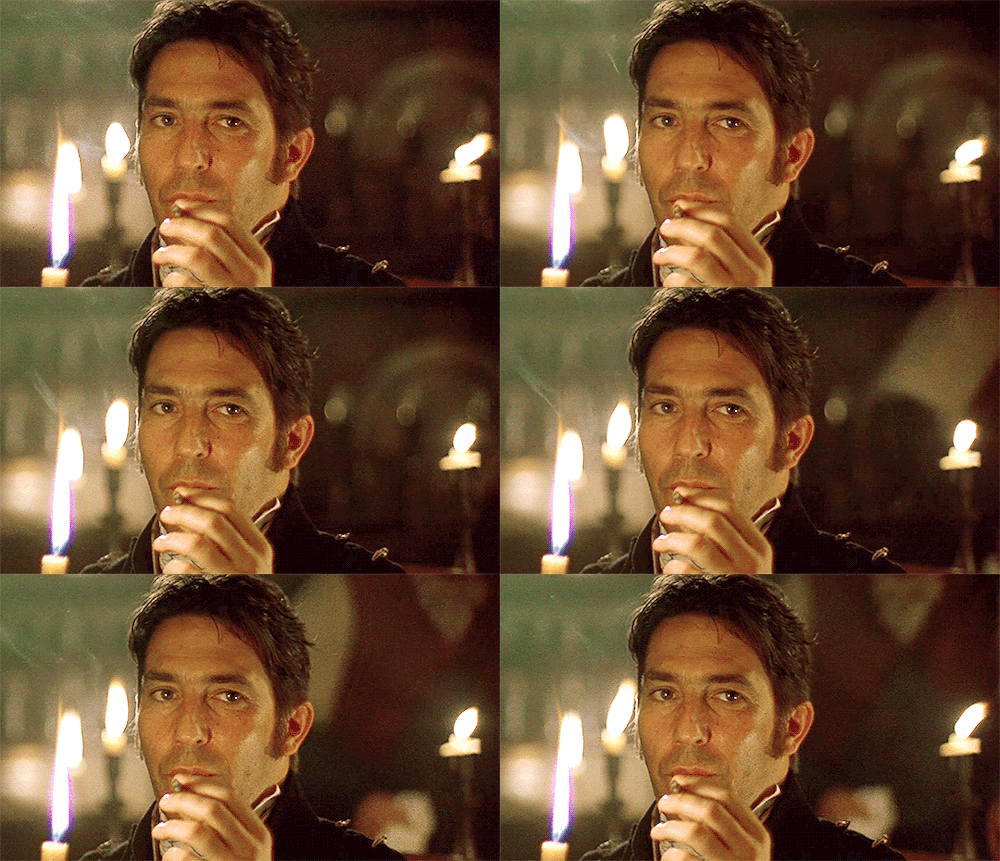
As a kid, part of my problem with this movie was that I just couldn’t get behind Ciaran Hinds as a romantic hero. My other comparisons at this point were Hugh Grant from “Sense and Sensibility” and, most importantly, Colin Firth from “Pride and Prejudice.” I still don’t particularly finds Hinds that good looking (plus I can’t stop seeing him as the “King Beyond the Wall” from “Game of Thrones” now). But I will say that this was one of my biggest surprises when re-watching it now. He really manages to lay on the charm in the first half of the movie, neatly capturing Wentworth’s charisma in a way that I hadn’t remembered. He also has the rough and tumble looks of an active Navy captain which I think fits the part particularly well.

I do think he overplayed the part a bit at the concert, however. I’m not sure if this was really Hinds fault though, as the lines were pretty harsh on their own. This is already Wentworth at his most petty (to have this kind of momentary tantrum over the barest hint of Anne being pursued by another man, after Wentworth has supposedly come to his senses about things). But in the movie they really play it up. Wentworth is almost aggressively rude to Anne, and one almost has to wonder at her ability to continue after him when he’s like this.

Villains – “I do not want people to be very agreeable, as it saves me the trouble of liking them a great deal.” 

They make some strange choices with Elizabeth here. Not only does the actress they cast not really fit the physical description of Elizabeth as a poised, beautiful woman, even in her *gasp* upper 20s, but they revamp her entire personality. She is initially portrayed as lazy and silly, eating candies while they discuss the future of the estate. And then when we meet her again at Bath, she as full-on anger flare ups at unexpected moments, yelling at Anne and generally making a scene. Not only does this not hold true to the book, but I’m not sure what purpose it serves. Anne’s being ignored, forgotten, and taken advantage of are all there in the book and here. There’s no reason to add her being the victim of her sister’s verbal abuse to the list. Plus it again undermines the respected role that she and her father are supposed to have in society. We, the readers/viewers, are getting behind the scenes information, but there’s never meant to be any reason to suspect that the Elliots don’t move smoothly through society. And it’s hard to imagine that anyone who behaves as Elizabeth does here would get a pass with that.

The movie also makes a change with Mr. Elliot. Here, when Mrs. Smith relays her inside information on his motives, Mr. Elliot is in fact broke and that’s why he’s so concerned with retaining his role as heir to the family estate. It’s a fairly understandable change, as his obsession with the role of titles is a bit harder to fully convey to modern audiences. Going broke is easy to get on board with. The actor they cast here also doesn’t really sit right with me. There’s nothing overtly wrong with this casting, but he’s also simply not very memorable. The moments in Lyme where he admires Anne barely strike any sort of note, and if you weren’t familiar with the story, I’m not sure would even come across as anything. It isn’t helped that Wentworth’s reaction to the first meeting is barely recognizable as a reaction at all.

Romance – “A lady’s imagination is very rapid: it jumps from admiration to love, from love to matrimony in a moment.”

I thought the romance was pretty good in this adaption. I especially liked some of the small moments in the first half, like the way the handled Wentworth quickly giving up his seat at the piano when he saw Anne approaching, and his move to make sure Anne had a ride home with the Crofts after the long walk. They also add some stilted lines in the carriage ride back home after Louisa’s fall that hint at Wentworth’s slow realization of Anne’s true character and his own silliness.

The movie does make an odd choice with regards to the conversation between the two regarding Benwick’s quick engagement to Louisa. In the book, it’s Wentworth’s statements during this conversation at this first meeting in Bath that first give Anne hope. It also gives her the courage and motivation to approach him so directly at the concert that evening. Here, her sudden confidence and willingness to pursue him don’t really feel based in any actual change. It’s like she just suddenly decided to go after him, without ever having had any hints of a change of heart on his behalf. And then he gets so rude when leaving, it’s very strange.

The movie also adds a scene where Wentworth approaches Anne later with a message from the Crofts about giving up their rental of Kellynch Hall if/when she becomes engaged to Mr. Elliot. It’s an interesting addition (so interesting, in fact, that the 2007 version of the story also included a scene like this), but it also doesn’t seem to really go anywhere. Anne stumbles through the exchange, not being as clear with her position with Mr. Elliot as she could/should be. And then it leads into a strange, brief exchange where Wentworth and Lady Russell exchange harsh words.

Comedy – “For what do we live, but to make sport for our neighbors, and laugh at them in our turn?”

There are a few good comedic moments in this movie. For one thing, I like that they included a funny set of cut-scenes at the Musgroves’ showing a revolving group of characters all confiding their complaints about others to Anne. It’s a small moment in the book, but I’m glad they were able to fit it in here.

For her part, Mary is is hitting all the right notes in her role. She plays up the sickness angle well in the beginning, and then we get a really funny little moment during the walk. Anne and Mary stay behind to wait for Charles and Henrietta to visit the Hayters. They are each sitting on a log, but Mary complains that her side is wet. She gets up to wander around a bit, and then returns and causally informs Anne that it’d probably be best if she moved over into the wet spot so that she, Mary, could have Anne’s seat. And Anne just silently does it.

This adaptation also includes the final scene at the Elliot’s party, after Anne and Wentworth have reconciled and gotten engaged. It’s a rather strange little scene, and I think a bit unrealistic in that Captain Wentworth just strides in and, in front of everyone, announces that he and Anne are to be married and they’d like Sir Walter’s blessing. But it does lead to the funny line of Sir Walter looking completely bewildered and blurting out “Anne? But whatever for?”

Fun facts – “Life seems but a quick succession of busy nothings.”

This movie was originally made for TV and aired on the BBC. because of that, it had a low budget and used natural lighting throughout and even re-used the final shot of Captain Wentworth’s ship from the movie “The Bounty.” The movie was later released theatrically.

The actress who played Lady Russell passed away 5 months after the movie was released on TV and only a few days after its theatrical release. On a weird side note, I thought the actresses who played Lady Russell and Mrs. Croft looked too alike. They were both styled the same and had similar hair colors, cuts, and general face shapes. I was actually confused in the first scene with the Crofts viewing Anne’s home because I couldn’t figure out why Lady Russell was walking around with the Colonel.

Victoria Hamilton, who plays Henrietta here, goes on to play Maria in the 1999 version of “Mansfield Park.” I think she was much better cast in that role than this, though this one is also very minor and she has hardly any lines.

Best Movie Gif/Meme: “I dearly love a laugh.”

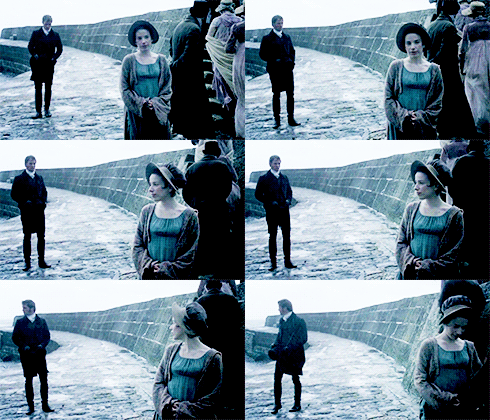
I guess he can be fairly attractive…

In two weeks, I’ll review the 2007 version of “Persuasion.”

Serena’s Review: “The Luckiest Lady in London”

Book: “The Luckiest Lady in London” by Sherry Thomas

Publishing Info: Berkley Sensation, November 2013

Where Did I Get this Book: from the library!

Book Description: Felix Rivendale, the Marquess of Wrenworth, is The Ideal Gentleman, a man all men want to be and all women want to possess. Felix himself almost believes this golden image. But underneath is a damaged soul soothed only by public adulation.

Louisa Cantwell needs to marry well to support her sisters. She does not, however, want Lord Wrenworth—though he seems inexplicably interested in her. She mistrusts his outward perfection and the praise he garners everywhere he goes. But when he is the only man to propose at the end of the London season, she reluctantly accepts.

Louisa does not understand her husband’s mysterious purposes, but she cannot deny the pleasure her body takes in his touch. Nor can she deny the pull this magnetic man exerts upon her. But does she dare to fall in love with a man so full of dark secrets, anyone of which could devastate her, if she were to get any closer?

Review: Yes, this is what it looks like. I’m reviewing a straight up historical romance novel. Pretty outside of my typical genres, but I’ve loved everything by Sherry Thomas that I’ve read, and I knew that she had started out as a historical romance author. So I wanted to go back and see what some of her earlier work was like when she was primarily publishing in this genre. I found this one kind of on a whim, and overall, I liked it pretty well and can definitely see the foundations of the traits in Thomas’s writing that I like in her other genres of writing.

Going into her first season, Louisa has one goal and one goal only: snag a rich husband to help support her family. She knows she’s not the most beautiful woman in society nor the most rich, but she’s made a study of how to succeed in London society. So with surgical precision, she goes to work. What she doesn’t expect is to draw the attention of “The Perfect Gentleman,” a Lord Wrenworth that ladies have been trying to capture for years. But she distrusts this outward appearance of perfect and is more than bewildered when his is the only proposal she receives after months in society. Now going into a marriage where the attraction is clear but the motives less so, Louisa must uncover the truth of Lord Wrenworth and discover just how “perfect” this man could be.

I feel like even if I didn’t know Thomas was the author of this book, I would have been able to guess. She has a certain way of writing her characters that is very distinctive. I’m not sure exactly how to describe it…Many of her heroes and heroines are very level-headed, have an analytical approach to life, and coolly asses those around them. There are very few emotional outbursts, and the ones they do have, are often shrouded in cold wit more than anything else. And yet, for these traits being fairly universal in the books I’ve read, all of her characters have still felt unique and new.

I really liked Louisa in this book. Her approach to a London season has many elements that I can see were drawn upon when creating Charlotte Holmes. She tackles the entire thing like a scientific experiment. The right dress here, the correct, bland smile there, some clearly targeted prospects who meet her criteria, regardless of personal looks or charm. And yet, we also see Louisa rattled by Lord Wrenworth. But even here, she rises to the challenge in some very unexpected ways. She doesn’t understand her own attraction to him, but she refuses to be shamed by it or let him use it against her. It’s an interesting dynamic.

Lord Wrenworth is more your typical romance hero. Perfect on the outside with all the brooding issues on the inside that come out at the worst times. I liked the backstory that Thomas gives for him, as I think it goes further to explain his lapses than other romantic heroes I’ve read in the past. But he still falls into the same pitfalls that often frustrate me with this genre. Just get over yourself! And quit hurting the woman you can’t admit you love for whatever reason!

Most of the typical romance beats are hit here, so what mostly stood out for me was Thomas’s strong writing. But I can also see has she’s grown as an author since producing this. The ending is fairly abrupt and the reconciliation seems to come out of nowhere a bit. I was happy enough with the conclusion, but still smarting a bit on Louisa’s behalf. If you like historical romances, this is probably worth checking out. But I wasn’t enamored enough that I feel the need to make my way through all of Thomas’s other romance novels.

Rating 7: Good for what it is with especially strong characters, but still follows a fairly standard romance plotline.

Reader’s Advisory:

“The Luckiest Lady in London” is on these Goodreads lists: Best Historical Romances – Married Couples and Lords, Dukes, Rakes…Oh My!.

Find “The Luckiest Lady in London” at your library using WorldCat!

My Year with Jane Austen: “Persuasion” Part II

Book: “Persuasion” by Jane Austen

Publication Year: 1818

Book Description: Twenty-seven-year old Anne Elliot is Austen’s most adult heroine. Eight years before the story proper begins, she is happily betrothed to a naval officer, Frederick Wentworth, but she precipitously breaks off the engagement when persuaded by her friend Lady Russell that such a match is unworthy. The breakup produces in Anne a deep and long-lasting regret. When later Wentworth returns from sea a rich and successful captain, he finds Anne’s family on the brink of financial ruin and his own sister a tenant in Kellynch Hall, the Elliot estate. All the tension of the novel revolves around one question: Will Anne and Wentworth be reunited in their love?

Part II – Chapters 15 – End

Story – “The person, be it gentleman or lady, who has not pleasure in a good novel, must be intolerably stupid.

In Bath, Anne is reunited with her father, Elizabeth, and Lady Russell. She is dismayed to see that Mrs. Clay remains with them and appears to be going nowhere anytime soon. She’s also clearly risen in the estimation of Sir Walter who comments much less on her freckled face. In other developments, she hears that Mr. Elliot is also in Bath and has completely reconciled with the family who are all delighted with him. Anne is confused by his sudden interest in being on good terms with people he’s ignored for years, but, upon meeting with him again, can’t help but acknowledge that he is quite charming. He also is delighted to discover that Anne is the very woman he was so interested in when in Lyme, and he quickly becomes a frequent visitor of hers. Lady Russell begins to hope for an eventual union between the two.

While in Bath, Anne reconnects with an old school friend who has fallen on hard times. Widowed and ill with very little money, Mrs. Smith is practically bed-ridden but still presents a optimistic face to the world and is a breath of fresh air to Anne in her reasonableness. Mrs. Smith is also a good source of information, as her nurse seems to know the goings-on of everyone in the city.

Eventually, Anne hears news of the Musgroves. Louisa is mostly recovered, and in a shocking turn of events, has become engaged to Benwick. Anne can’t imagine a bigger mismatch, but is also extremely relieved and happy to know that Captain Wentworth is still single, even if it means nothing to her, practically speaking. One by one, various parties begin making their way to Bath as well. First the Crofts come, followed shortly by Captain Wentworth himself.

Anne runs into him unexpectedly in a shop where she is waiting for Mr. Elliot to escort her home through the rain. She immediately notices that Captain Wentworth seems much more self-conscious and uncomfortable. They have a brief discussion about Louisa and Benwick in which Captain Wentworth makes some surprising (and pleasing) speeches about how first loves to superior women can never be gotten over, that Louisa is sweet, but nothing to Benwick’s first fiancé. Anne is confused but pleased, seeing hints that he may be talking about more than Benwick and Louisa and more of himself and her. Mr. Elliot arrives, however, and whisks her away.

They meet again at a music concert where Anne goes out of her way to approach Captain Wentworth. Her family publicly shuns him however, not acknowledging that they know him. He seems more stilted than he had in the shop, though Anne makes efforts throughout the night to make herself approachable. She isn’t helped by Mr. Elliot who continues to try to dominate her time and attention.

Soon after, she is called to visit Mrs. Smith. At first, Mrs. Smith is eager praise Mr. Elliot, hinting that she has a favor she’d ask Anne to speak to him about. Anne is bewildered to learn that it is generally understood that she will soon become engaged to Mr. Elliot. She insists to Mrs. Smith that it isn’t so. Mrs. Smith then lays out her true feelings about Mr. Elliot. Not only did he lead Mrs. Smith’s late husband into ruin, but he wrote and spoke horribly of the Elliots the entire time. Mrs. Smith believes that he is only now making an effort because he has suddenly learned to value the rank that will be bestowed on him with Sir Walter’s death and fears any upsets in the form of Mrs. Clay getting her claws in Sir Walter and providing an alternative heir. For her part, Mrs. Smith’s own finances are largely in ruin because a piece of property her husband owned is not accessible to her without the executor of her husband’s will, Mr. Elliot, who so far has refused to even speak to Mrs. Smith about it. Anne is horrified to learn all of this, but also not completely surprised as she never fully trusted Mr. Elliot’s strange motives to reconcile with her family.

The Musgroves also come to Bath to buy wedding clothes for Henrietta. This causes concern for Sir Walter and Elizabeth, as they aren’t very proud of Mary’s lower connections. One morning, Anne goes to visit the Crofts where she finds Captain Wentworth as well as Captain Harville. Captain Wentworth sits down to write a letter while Anne and Captain Harville stand nearby. The two get into a debate about lost love and men and women. Anne insists that women love longest, when all other hope is lost. Captain Harville points to poetry and books as proof of women’s fickleness but Anne argues that those are all written by men. Throughout this discussion, she gets the sense that Captain Wentworth is eagerly listening. Eventually, the party begins to break up and everyone leaves the room while Anne waits behind. Captain Wentworth rushes back in and quickly passes off a letter to Anne.

The letter is a proclamation of love, love that has lasted this entire time. He confesses to being angry and proud, and that he confused this anger for no longer being attached. But that he came to see that she was the most superior woman he has ever known, and can’t go on any longer, especially not hearing her discuss how men’s feelings fade faster. He goes on to say that he will come to a dinner at her family’s house to which he’s been invited and there, all it will take is a look from her to have his answer one way or another.

Mr. Musgrove returns to walk Anne back home. On the way, they meet with Captain Wentworth. Mr. Musgrove asks if Wentworth can take her the rest of the way as he has business elsewhere. The two walk together and confess their feelings for each other. Over the next few days, the news is broken to the family and to Lady Russell. Anne’s family now sees more value in Captain Wentworth since he’s made is fortune and has become popular in society. Lady Russell also is more determined to like him. He also intercedes on Mrs. Smith’s behalf and sees her land restored to her and her financial situation made right. For his part, Mr. Elliot runs of to London with Mrs. Clay: his best bet of preventing a marriage between her and Sir Walter is to take her on himself, though Anne suspects she may have the right of him and become mistress of Sir Walter’s home and fortune one way or another, through the father or the nephew heir.

Heroines – “I hate to hear you talk about all women as if they were fine ladies instead of rational creatures.”

Anne really comes into her own in this second half. She stands up to everyone around her to some degree or another and makes an effort to put herself forward to Captain Wentworth in a way that likely encouraged him to act more quickly than he would have on his own. She’s also the only one to continuously suspect Mr. Elliot’s sudden interest in her family.

To her family, she refuses to give up her acquaintance with Mrs. Smith, standing her ground in the face of her father’s anger. She also doesn’t worry about their disapproval when she approaches Captain Wentworth at the concert. For Lady Russell’s part, Anne is briefly tempted by her paintings of a life with Mr. Elliott, but she also points out her concerns with him and is not swayed by her overly much.

As for Captain Wentworth, though it’s not stated in the text explicitly, one has to imagine the near miss with Louisa inspired Anne somewhat to put herself more forward. The fact that, when they first meet when waiting out the rain, he is so clearly more discomposed than he was before, of course helps. And then makes that interesting speech about past loves. But Anne doesn’t let it rest there and goes out of her way to speak to him at the concert and to maneuver her seating arrangement to be more available to be approached (I think most of women can sympathize with tactics like this!)

Heroes – “What are men to rocks and mountains?”

I really like that we get so much information on Captain Wentworth’s thoughts and feelings here in the end. Throughout the book, not only does he not speak to Anne directly often at all, we really hear very little from him. We hear a lot about him, but not directly from him. Like Anne, we’re left trying to piece together what his actions reflect about his inner emotions.

But here at the end, not only do we get his entire letter detailing his emotions throughout, but Austen goes into even more detail later about what he’s been up to while Anne has been in Bath. Captain Wentworth admits that his pride almost got the better of him in the end. He let himself be too free with Louisa Musgrove in an attempt to prove (mostly to himself, one has to think) that he was over Anne. Not only did this leave Anne open to being poached by the likes of Mr. Elliot (as he began to see and worry about at Lyme), but he comes to realize that his actions almost spoke for him, with an engagement being expected to the point of it being dishonorable if he didn’t. We hear about how he took himself away in the hopes to weaken the connection and then set off for Bath once it was clear he as free.

But all of that, still, and he was almost set back again by the such a small thing as a meeting or two’s worth of jealousy over Mr. Elliot. Captain Wentworth is clearly an honorable, good man, but I think it’s pretty clear that Anne will be the more steady, sure-footed of the two. Wentworth is, to some extent at least, ruled by the emotion of the moment. Not only did he not spend the time to work out Anne’s true motives at 19 (something that was definitely possible if he hadn’t been brooding and resentful), but he continued to let his emotions get the better of him even after he had the fortune her family wanted. One has to assume that when she turned him down she gave some explanation. He admits, here at the end, that he did them both a disservice by giving in to resentment all of these years and losing them both much happiness in the meantime.

Villains – “I do not want people to be very agreeable, as it saves me the trouble of liking them a great deal.” 

Mr. Elliot is revealed to be the true villain of this story. It’s not such a shock as Anne, like Fanny, is firmly established at this point as the best judge of character in the book, and she’s always skeptical of Mr. Elliot’s motives. But, in a strange twist, his true villainy is really directed at any of our main characters. Instead, poor Mrs. Smith seems to be the one who suffers the most. Sure, Sir Walter gets some insults thrown at him in a letter and Elizabeth didn’t come off super well in that initial flirtation, but really, neither of them have it too bad. Sir Walter largely deserves criticism and isn’t ever made aware of the letter, and Elizabeth’s ego seems fine too. But poor Mrs. Smith! Not only to have her husband lead astray throughout the marriage, but then to be fooled by Mr. Elliot into thinking he was their friend altogether and have him abandon her in her time of need after her husband’s death!

As for the current circumstances, Mr. Elliot seems to be genuinely interested in Anne to some degree (as much as he is capable of at least). And his abandonment of the family once again is probably not any bigger of a shock the second go-around. Indeed, one would think that Sir Walter and Elizabeth would be more hurt by Mrs. Clay’s defection than anyone’s! And, in the end, it kind of seems like these two deserve each other and no real harm is done to anyone, especially after Captain Wentworth and Anne can help restore Mrs. Smith.

For her part, we see Lady Russell and Anne’s family come around on Captain Wentworth. Sir Walter and Elizabeth will probably always be a trial, but it seems like there is hope that with a concentrated effort on both Lady Russell’s and Captain Wentworth’s part, that they will get along well enough in the end. They both love Anne, which is what they have going for them.

Romance – “A lady’s imagination is very rapid: it jumps from admiration to love, from love to matrimony in a moment.”

This second half of the book is much more romantic than the first. It’s clear to the reader (and even Anne pretty quickly) that Wentworth has finally come to his senses and gotten over himself and is interested in re-connecting. He, himself, attributes it to noticing Mr. Elliot stare at Anne at Lyme and realizing that he could still lose her if he continues playing games. That, and the fact that he realizes that he is seen as half-engaged to Louisa already and only narrowly misses that bullet by the lucky chance of Benwick interceding.

His speech about Harville’s sister, Louisa, and Benwick’s change in attachment is pretty revealing, and it’s a credit to Anne that she understands him fully. None of this silly drama of miscommunication. She’s picking up what he’s laying down. Instead, any remaining drama comes from him when he gets jealous of Mr. Elliot and becomes cold again at the musical concert. Anne has to make a lot of effort there to engage him and then it still doesn’t seem like he was going to take any action soon until he overheard her conversation with Captain Harville while writing the letter. I think the general understanding is that they would have gotten there eventually, though, either way. But it’s nice to see Anne putting out this much effort to encourage him, proving to him that she is just as capable as pursuing what she wants as others, even if she is still very humble and willing to put others before herself.

We again don’t see the actual proposal or exchange of declarations of love between the two, a staple move of Austen’s at this point. But I think that Captain Wentworth’s letter probably goes down as the most romantic “speech” we have in all of Austen’s works. Darcy has his moments, yes, but the letter wins over by sheer length. It’s the longest and most extensive declaration of feelings that we see from any of our heroes. And, not only does Anne deserve this level of romance, but us readers do, too! If you look at the book as a whole, we probably have the least dialogue between our hero and heroine as we’ve seen in all the books. And probably by a lot, at that! So it’s nice to finally have this nice, long love letter at the end to shore up all those romantic pinings.

Comedy – “For what do we live, but to make sport for our neighbors, and laugh at them in our turn?”

Again, not a lot of comedy in this second half. Most of the humor probably comes from how obsequious Sir Walter and Elizabeth are towards the Dalrymples when they come to town. Anne looks on with pity at their antics, and in a shared moment, she and Mr. Elliot discuss the lack of true interest these high and mighty relatives deserve based on their own merit. There are some good lines about the definition of “good company,” but here we also see the first ideas of Mr. Elliot caring more for rank than Anne does or than he had previously in life.

Really, other than that I can’t think of any comedy bits. The Musgroves show up and Mary has a few funny lines here and there, mostly at Anne’s expense (that see, Benwick is marrying Louisa, of course he was never interested in Anne!) We also see Sir Walter and Elizabeth having to properly balance their obsession with keeping up a good face for the Dalrymples but still include these lesser relatives they have through Mary’s marriage to the Musgroves. No need to acknowledge the fact that the Musgroves are much nicer, more entertaining people on the whole!

Favorite quotes – “What did she say? Just what she ought, of course. A lady always does.”

This good one from Anne in the discussion about loving longest between men or women:

“Men have had every advantage of us in telling their own story. Education has been theirs in so much higher a degree; the pen has been in their hands. I will not allow books to prove anything.”

And, of course, the classic romantic line from this book. I’m pretty sure this line would still work today. If some man said “you piece my soul” to you…c’mon, we’d all fall for that.

“You pierce my soul. I am half agony, half hope…I have loved none but you.”

Final thoughts – “I declare after all there is no enjoyment like reading!”

“Persuasion” is probably the book that’s went through the biggest change in my estimation as a reader from the first time I read to my re-reads as an adult. “Pride and Prejudice” and “Emma” were always favorites. “Mansfield Park” was always a bit more of a struggle and “Sense and Sensibility” and “Northanger Abbey” were always solidly in the middle. “Persuasion” originally was lower down. The lack of interaction between the romantic characters was a detriment, and, on the face of things, Anne had similarities to Fanny as being a bit too reserved and shrinking to immediately appeal to my teenage self. But as an adult, it’s risen to be one of my favorites, pretty much equal with with “Pride and Prejudice” and maybe even above “Emma.”

I don’t think this change is even all that surprising. Anne is an older, more mature heroine, and much of her story surrounds the changes in her perspective on life and love that has come through a decade of adult life. Without having gone through my 20s myself when I originally read it, I didn’t really connect to this arc in the same way I do now. Beyond that, the story of lasting love over a decade of separation now appears as the most romantic of all the romances we’ve seen in the books. Having gone through the ups and downs of romantic pitfalls, false starts, etc., this sure, steady love appeals in a way I couldn’t understand when first reading it.

It’s also probably the most serious of Austen’s books other than “Mansfield Park.” But I think, overall, this one feels much more settled in its overall tone. “Mansfield Park” had odd breaks in the “action,” for lack of a better word, to hear long speeches from various characters on topics that weren’t directly tied to anything outwards of themselves.

For another thing, this book is shorter which I think works better for this type of more serious story. Anne is also a more engaging heroine than Fanny is, which helps carry the story. Not to mention that Captain Wentworth is a more romantic hero than Edmund. Unlike Edmund, his flirtation with Louisa is pretty obviously a shallow, reactionary thing from the very start. We don’t get any silly proclamations of “not imagining any other woman as his wife” either. Instead, much better, we have grand romantic statements of Wentworth’s having loved “none but her.” Much more appealing.

Overall, this was a great book to end this re-read on. I was particularly looking forward to re-visiting it, and it didn’t let me down. Now for reviews of two movie adaptations and, I think, a last “bonus” review of a few other Austen adaptations/spin-offs that didn’t directly fit into the review series as I had it originally planned.

In two weeks, I’ll review the last half of “Persuasion” and share my final thoughts on the book as a whole.

My Year with Jane Austen: “Persuasion” Part I

Book: “Persuasion” by Jane Austen

Publication Year: 1818

Book Description: Twenty-seven-year old Anne Elliot is Austen’s most adult heroine. Eight years before the story proper begins, she is happily betrothed to a naval officer, Frederick Wentworth, but she precipitously breaks off the engagement when persuaded by her friend Lady Russell that such a match is unworthy. The breakup produces in Anne a deep and long-lasting regret. When later Wentworth returns from sea a rich and successful captain, he finds Anne’s family on the brink of financial ruin and his own sister a tenant in Kellynch Hall, the Elliot estate. All the tension of the novel revolves around one question: Will Anne and Wentworth be reunited in their love?

History – “I read it a little as duty, but it tells me nothing that does not either vex or weary me.”

“Persuasion” was the last novel Jane Austen completed before her death only a few short months later. At the time of its completion, it didn’t appear as if Austen had any immediate plans for publication. The book had already went through one re-write where she added two additional chapters to the end of the story. She could have been considering further edits to the entire work before moving forward with publication.

After her death, the copyright for her published works was transferred to her sister and her brother. Her brother worked to have both “Persuasion” and “Northanger Abbey” published after her death. Notably, the set of books also included a biography of the author written by Austen’s brother which first identified Jane Austen by name. Looking at many of the initial reviews of both “Northanger Abbey” and “Persuasion,” it is clear that reviewers were just as focused on the revelation of the author of these books as in the books themselves. Both books garnered praise and some critiques, but many reviews spent much of their time writing glowing praise of Austen herself as an author would remain popular in the future. They were right. (source)

“You may perhaps like the Heroine, as she is almost too good for me.”

Part I – Chapters 1 – 14

Story – “The person, be it gentleman or lady, who has not pleasure in a good novel, must be intolerably stupid.

Anne Elliot is the middle daughter of Sir Walter Elliot. Having lost his practical and more sensible wife when Anne was a teenager, Sir Walter has gone on to slowly but surely run his family into unsustainable debt. He and his eldest daughter, vain and thinking much of themselves, are finally convinced to let their house to and Admiral Croft and re-locate to Bath. This news is significant to the 27-year-0ld Anne due to a past connection to the Admiral’s wife’s brother, Captain Wentworth.

When Anne was 19, she formed a mutually strong and loving relationship with Captain Wentworth. But at this point, Captain Wentworth’s prospects were questionable and he wouldn’t be able to marry immediately or, possibly, even in the near future. Given her youth, her family’s position, and Wentworth’s questionable prospects, Anne’s family and the family friend (Lady Russell) who had often served as a mother-figure to Anne, strongly opposed the union. Eventually, Anne was persuaded to believe that it was her duty to give up the engagement. Wentworth left, hurt and angry. Over the years, Anne followed his career through the papers and saw him garner all the success any of her family could have wanted, and more quickly than any of them could have imagined. She never heard from him, however. Now, at age 27, Anne’s prospects are low, and while she doesn’t blame her younger self for her decisions, she knows that now, if asked, she would give very different advice to a young person.

Sir Walter and Elizabeth move to Bath (taking with them a companion for Elizabeth, a widow named Mrs. Clay whom both Lady Russell and Anne suspect of having designs on Sir Walter). But Anne, who dislikes Bath, is called to stay with her younger sister, Mary, who lives nearby. Mary is a silly woman who often believes herself to be ill in an attempt to gain attention. However, she’s happy to have Anne’s company. Mary’s husband’s parents and their two daughters, Louisa and Henrietta Musgrove, live a short walk away and often come to visit Anne and Mary. Soon enough, the news travels that the Crofts have moved in and Mrs. Croft’s brother, Captain Wentworth is expected shortly. Anne is able to avoid a first meeting by staying home to care for Mary’s injured son, but she soon hears more than enough: everyone is enchanted by Captain Wentworth, particularly Louisa and Henrietta.

Eventually the two are forced to meet again. It is clear to Anne that Captain Wentworth has not forgiven her and is cold and distant. His attention is all for the two Musgrove girls, and everyone spends much time debating which of the two he prefers. Anne finds all of these meetings and discussions very painful, as she sees the same man she fell in love with all those years ago. The debate between the two girls comes to a head with the return of a cousin who had previously made much headway with securing Henrietta’s affection.

One day, a large party forms to make their way to the house of this cousin. It consists of Anne, Mary and her husband, the two Musgrove girls, and Captain Wentworth. The walk is long and tiring, so when they get to the cousin’s house, Anne is happy to stay behind with part of the group as Henrietta and her brother go on to visit. While sitting quietly, she is able to hear Captain Wentworth and Louisa talking nearby. Louisa is sharing a history of her family, that originally Mary’s husband had wanted to marry Anne, but Anne had refused him, presumably due to Lady Russell’s persuasion. Captain Wentworth is surprised, but he expresses high praise of Louisa’s insistence that her character is much more firm and she should never be persuaded out of doing what she liked. Anne is greatly hurt by this discussion, seeing it the way Captain Wentworth must: that Anne is of weak character and that Louisa is a highly desirable woman who has the very trait he has just expressed such praise of.

On the way back, Anne becomes increasingly tired. When they run across the Crofts who are out on a buggy ride, Captain Wentworth makes an effort to ensure that Anne has a ride home. Anne sees that while he can never forgive her, he also can’t forget their history and let her suffer. She is gratified, but even more sad at her loss of such a good man.

The group then decides to make a mini trip to Lyme, a coastal town where Captain Wentworth has a few friends from the Navy. Once there, they are all delighted with the town, even if it is the fall and the off-season. They meet up with Captain Wentworth’s friends, which includes a man named James Benwick who is staying with a Captain Harville as he mourns the loss of his fiance, Captain Harville’s sister. Anne goes out of her way to talk to Benwick. They both enjoy reading, though Anne suspects that Benwick’s love of morose poetry is not helping him boulster his spirits. While out on a walk by the ocean, they pass by another gentleman who is quite obviously struck by Anne’s beauty. Captain Wentworth takes notices, and Anne wonders if perhaps she’ll have a second bloom of beauty later in life.

The next morning, on her way to breakfast, Anne runs into the same gentleman at the inn. Later, the party sees him driving off and asks about him. It turns out to be William Elliott, the nephew of Sir Walter who will be the heir of the estate. He had a falling out with Sir Walter years before after marrying a lower-class lady for her money and cutting off contact with the Elliots, including Elizabeth whom Sir Walter had hoped would marry Mr. Elliot.

Before they leave, they group takes one last walk down to the beach. They must descend a steep set of stairs to reach the beach, and Louisa insists on being jumped down by Captain Wentworth. After one go, she runs back up even higher and insists on jumping again. Captain Wentworth protests that it is too high but she won’t listen and jumps. She falls and hits her head hard on the ground, knocking her out. The entire party goes into hysterics, except for Anne who quickly instructs someone to fetch a doctor and that they should carry Louisa to the the nearby house of the Harvilles. Once there, she continues her steady nursing abilities.

She overhears Captain Wentworth and Mr. Musgrove making plans. Captain Wentworth suggests that Anne stay behind as she is clearly the most capable nurse that Louisa could hope for. When hearing this plan, however, Mary falls into fits insisting that she means more to Louisa than Anne so she should be the one to stay. Anne relents in the face of this fit and Captain Wentworth looks on in dismay. He, Anne, and Henrietta return home to inform Louisa’s parents of what has happened since it is likely that Louisa will need to remain in Lyme for some time to recover. Anne does what she can to help, but eventually must make her way to Bath to meet up again with her father and older sister.

Heroines – “I hate to hear you talk about all women as if they were fine ladies instead of rational creatures.”

As Jane Austen herself stated in the quote I shared above, Anne Elliot is almost too good of a character. She’s practically perfect in every way. Sure, she’s persuaded into giving up her love at age 19, but as this first half goes out of its way to establish, this is due to an excess of familial loyalty and a sense of obligation to put others before herself. But unlike Fanny, one of Austen’s other seemingly “perfect” heroines, Anne is not sunk under this sense of obligation and duty. She’s still confident enough to put herself forward when she sees that she can help, watching over her injured nephew when Mary wants to go to the family dinner at the Musgroves, and, more importantly, taking charge of the Louisa situation when all turns to havoc. But soon after, we see her again step back in the face of Mary’s hissy fit about staying on at Lyme instead of Anne. It’s more like true humility than some of Fanny’s more weak-willed withering under the criticism of Mrs. Norris and such.

Anne is also a keen observer. She accurately sees those around her, for their strengths and their weaknesses. She can properly judge the good spirits of the Musgrove sisters while also understanding the limits of their true characters as being somewhat shallow. She notes the dangers of Mrs. Clay when her sister, Elizabeth, is blinded. And she sees Wentworth’s struggles with regards to herself, his lingering anger but inability to completely shun her. All of this good judgement is also recognized by those around her, and she finds herself in the uncomfortable position of being everyone’s confidant but with very little ability to do much about any of the complaints she hears.

The Anne we see here, of course, is the older, more adult version of the character who made the important decisions in the past that lead to the current circumstances. She’s also the oldest heroine we’ve seen in any of the books, so her strong sense of self is pretty in line with that. But what we see here also makes it easy to understand the character of the 19-year-old version of Anne, a young woman who would have the same sense of duty and humility but with a less strong sense of her own self and trust in her own judgement. It’s mentioned, further, that the teenage Anne believed that she was ultimately helping Wentworth by freeing him from an engagement that might have bound him for an unknown length of time.

Heroes – “What are men to rocks and mountains?”

Captain Wentworth is an interesting hero. His anger and hurt over Anne’s actions are all very understandable. And his similar wish to avoid much contact with her rings true to, I would guess, many of our own experiences with exes. Austen provides us with a few brief insights into his mentality that highlight how her actions were particularly painful for him, being the exact opposite of the strong, confident way he himself approached decisions. I would say that he doesn’t make appropriate allowances for gender, in that as a man, he was always much more capable of carrying forward his own plans without much reference to others. Anne, on the other hand, being a young woman of 19, had very few real options She is/was beholden to her family in a way that he would never be, and had the engagement went forward, she would be the one remaining home with constant disapproval surrounding her.

We do see much evidence of why Anne was initially attracted to him. While we don’t get a lot of dialogue, we hear a lot about how charmed everyone is by him. He’s also considerate of Anne when it matters, making sure she has a ride home when she’s tired, etc. We can also make some judgements based on what we know of his friends and family. The Crofts are generally described as a very good set of people. And Captain Wentworth’s two Navy friends are also of estimable character. We hear stories from each that reinforce the good of Captain Wentworth, notably that Wentworth takes it upon himself to deliver the awful news of Benwick’s fiancé’s death to him and stays by his side as he mourns.

Villains – “I do not want people to be very agreeable, as it saves me the trouble of liking them a great deal.” 

There really aren’t any outright villains in this first half. Much can be said against Sir Walter, both for his general personality and for his poor financial decisions that lead to the family being evicted from their family home. On top of that, he and Lady Russell are both behind Anne’s current unhappy situation. But while these aren’t factors in either of their favors, it doesn’t really make them villains either. It’s clear that Anne still has a very close relationship with Lady Russell and doesn’t even really blame her for the advice she gave Anne when she was 19.

Elizabeth and Mary are definitely not great sisters, but neither is really a villain either. Elizabeth is cut from the same cloth as her father and is vain and dismissive of Anne. Mary values Anne more, but in more in the sense of Anne’s being a captive audience to her endless complaints of illness than anything else.

Romance – “A lady’s imagination is very rapid: it jumps from admiration to love, from love to matrimony in a moment.”

There’s very little romance in this first half, other than much reflection on the past whirlwind romance between Anne and Wentworth when they were young. Austen’s strength as a writer is on clear display as she’s able to paint a lovely image of this happy couple of the past, even though we never see it for ourselves. She then contrasts that with the sad state of their relationship now. Anne refers to it as a “perpetual estrangement,” which is all the more painful for there once never being “two hearts so open.” It’s beautifully tragic.

We do see the beginnings of change coming though. Captain Wentworth’s reaction to the news that Anne turned down another proposal in the years since he left can raise a few flags as to his thoughts. We also see the steps that he takes to care for Anne when others forget her and the high value he puts on her judgement during the situation with Louisa. And, of course, the marked look he gives Anne when he notices Mr. Elliot staring at her. We later learn that this small moment is one of the real eye-openers Captain Wentworth needed to view how risky his current behavior was to his future happiness.

Comedy – “For what do we live, but to make sport for our neighbors, and laugh at them in our turn?”

Mary is probably the funniest character we have here, but often its funny in the infuriating sense. I think many of us know a Mary-like character, which is always the way with Austen’s best comedic characters: they reflect nonsense traits that we see often ourselves in those around us. Mary’s constant complaints about illness to gather attention. Her easy offense at Anne’s getting any sort of attention, even if it’s of the sort that would just result in more work, like nursing Louisa.

Really, it’s hard to come up with much other comedy in this first half. “Persuasion” is a fairly serious, solemn book with more reflection than anything else. Most of the characters are of a serious nature and many of the weaknesses of the lesser characters are of the sort that aren’t necessarily funny and more just kind of sad. The Musgrove girls are described as charming, but it seems that they more have high spirits than any truly great sense of humor.

Probably one of the funniest moments in the entire first half comes from a very brief description of Anne’s ride back home in the buggy with the Crofts. She notes how casually Mrs. Croft reaches over and re-directs the buggy to safety as the Admiral drives so casually they almost hit ditches and fences. Anne reflects that this likely illustrates the nature of their relationship as a hole. As we’re lead to believe that the Crofts are both very good people and truly attached, it’s a funny little insight into the different ways couples manage their lives and relationship together.

Favorite quotes – “What did she say? Just what she ought, of course. A lady always does.”

This quote is from Mary in reference to her husband going to the dinner party and leaving her and Anne behind with injured boy. But, given that she then promptly leave Anne to shift alone, I think we can only take it with a grain of salt. Though it’s still pretty funny and tempting to pull out now and then:

“If there is any thing disagreeable going on, men are always sure to get out of it.”

This is just a nice quote, I think:

“She had been forced into prudence in her youth, she learned romance as she grew older: the natural sequel of an unnatural beginning.”

In two weeks, I’ll review the last half of “Persuasion” and share my final thoughts on the book as a whole.

Serena’s Review: “The Awakening”

Book: “The Awakening” by Nora Roberts

Publishing Info: November 24, 2020

Where Did I Get this Book: NetGalley

Book Description: When Breen Kelly was a girl, her father would tell her stories of magical places. Now she’s an anxious twentysomething mired in student debt and working a job she hates. But one day she stumbles upon a shocking discovery: her mother has been hiding an investment account in her name. It has been funded by her long-lost father—and it’s worth nearly four million dollars.

This newfound fortune would be life-changing for anyone. But little does Breen know that when she uses some of the money to journey to Ireland, it will unlock mysteries she couldn’t have imagined. Here, she will begin to understand why she kept seeing that silver-haired, elusive man, why she imagined his voice in her head saying Come home, Breen Siobhan. It’s time you came home. Why she dreamed of dragons. And where her true destiny lies—through a portal in Galway that takes her to a land of faeries and mermaids, to a man named Keegan, and to the courage in her own heart that will guide her through a powerful, dangerous destiny…

Review: I read a few of Nora Roberts’s more traditional romances back in the day (way, way back in the day, now that I think about it). But I know that she’s written a lot of books in other genres, too, most notably, perhaps, mysteries. I’ve also seen that she’s released more fantasy novels recently, and having missed the “Year One” trilogy when it was coming out, I thought I’d jump on the first book in a new fantasy series she started up this fall. And so, I nabbed an e-ARC of ‘The Awakening.” Sadly, it wasn’t all that I was hoping it would be.

Breen has lived a simple life full of doing what is expected of her and not expecting much in return. But when she discovers that her mother has been keeping a massive secret from her, a massive 4 million dollars worth secret, Breen decides that enough is enough and it’s time to take control of her life. And the first thing she decides to do is to travel to Ireland, the homeland of the father who left home never to return when she was a child. But she discovers much more than a new country, instead finding herself in a completely new land and one that comes with a destiny for her even greater than she had ever imagined.

To start with the pros for this book, there’s simply no denying that Roberts has a very appealing and approachable style of writing. She’s able to deftly paint a picture of all kinds of locations and peoples and immediately create connections between the reader and her story. These strengths were particularly on display in the opening chapter of this book that is set in the fantasy world. I was quickly drawn in and curious to know more about Keegan and the history of his people and land.

Unfortunately, the strengths of this opening chapter made the switch to Breen’s story land with quite a thud. For one thing, Breen simply isn’t the most exciting character. Yes, that is part of her story, her learning to come more into her own. But it’s still a long slog through the thoughts and actions of a character who is bland to the extreme. It got to the point where I was even beginning to be frustrated by the friends around her who were all described as being great people. It’s almost a constant stream of support and encouragement from everyone around her to the point that A.) the friends are almost unbelievable in their goodness and B.) Breen’s complete inability to expect better for herself and have confidence without all of this validation becomes strange.

I also felt that some of these friendships fell into pretty stereotypical patterns. Her friend, Marco, read as the “gay best friend” straight out of the early 2000s. He’s right there telling her to update her wardrobe and reclaim her natural hair color, etc etc. It felt a little shallow and dated, to be honest. And then she starts a blog, which of course immediately takes off and she has a bunch of followers and has found a natural ability in writing. Which…don’t even get me started on that. Obviously, being a writer and blogger myself, this raised some serious eyebrows on my part. I mean, I have an easier time believing in a magical land of dragons and fairies than that someone started a random travel blog and somehow immediately has thousands of followers reading and commenting.

The story got better when she finally makes her way to the new land, but it was a bit too late for me. It took a long, long time for her to even get there, and by the time she does, I was already struggling too much with Breen herself to really redeem the book for me. I did like the romance and fantasy elements when we go there, though. This is the first book in a trilogy, but I’m still unsure whether I’ll keep on with it. Fans of Nora Roberts will probably like this, but it could have been better, in my opinion.

Rating 6: A decent fantasy story, but the main character dragged it down.

Reader’s Advisory:

“The Awakening” is a newer title, so it isn’t on many relevant Goodreads lists, but it is on Books with parallel world.

Find “The Awakening” at your library using WorldCat!

Serena’s Review: “Eidolon”

Book: “Eidolon” by Grace Draven

Publishing Info: Smashwords Edition, April 2016

Where Did I Get this Book: from the library!

Book Description: In a bid for more power, the Shadow Queen of Haradis has unleashed a malignant force into the world. Her son Brishen, younger prince of the Kai royal house, suddenly finds himself ruler of a kingdom blighted by a diseased darkness and on the brink of war. His human wife Ildiko must decide if she will give up the man she loves in order to secure his throne.

Three enemy kingdoms must unite to save each other, and a one-eyed, reluctant king must raise an army of the dead to defeat an army of the damned.

A tale of alliance and sacrifice.

Previously Reviewed: “Radiance”

Review: It’s been a bit since I read “Radiance,” the first book in this fantasy romance series. But it has stuck with me ever since as an excellent example of creating a romantic storyline that is free of angst and drama but still incredibly compelling. Turns out, people being nice to each other and falling in love in a natural way can be entertaining! No need for love triangles, failures to communicate for no good reason, or constant misunderstandings! So, with that happy memory in mind, I was excited to see what this sequel had to offer, especially since it was going where most romance stories fear to go: after love has been discovered and the relationship is established.

At the end of “Radiance,” we saw Brishen’s mother, the Shadow Queen, unleash a force of demons (much to her instant dismay as she was immediately killed). So when this story begins, Brishen and Ildiko are blissfully unaware of the monstrous force that is about to threaten their entire world, but that soon ends when they hear about the mass casualties and destruction that is coming their way. But with the Kai’s magical abilities greatly reduced since their ancestors faced such a force, Brishen and Ildiko’s choices are limited. Not only must they face a dangerous magical decision, but with the crown of the Kai people suddenly coming to Brishen, their marriage itself will face its greatest test.

Writing a sequel is always a challenge. Writing a sequel to a romance novel in which your main characters are already married and in love is practically unheard of. Of course, this series also has the fantasy angle going for it, but the love story is really at its heart. So right off the bat, I have to applaud the author for taking such a risk and secondly, for succeeding so well!

The nature of the demon disaster that is sweeping the country side works in two ways. On one hand, the description of this force is truly terrifying, and we immediately see the power that the Kai (and the entire world) faces. As fantasy monsters go, they’re creepy in all the right ways. But they also work in that they immediately take out a large chunk of the royal family, forcing Brishen into the role of leader of the country. Naturally, this brings a lot of added pressure and stress to his and Ildiko’s lives, not least of which is the unconventional nature of the relationship was never meant to be one that must sustain a monarchy.

I really enjoyed the way both of these threats highlighted the different strengths and weaknesses that Brishen and Ildiko bring to their relationship and their roles now as future monarchs. And while we see the beginnings of cracks, what I appreciated the most was the very adult way that each continues to deal with the other, even in the midst of misunderstanding and fear. Yes there is drama. But no there is no unnecessary angst or silliness. We have two different people dealing with an impossible situation in different ways. I can’t rave enough about how lovely it is to read a love story about two people who actually behave like well-adjusted adults and treat those around them with respect. It’s such a refreshing take on romance when many insist on miring themselves in silliness almost constantly.

Beyond the romance, I also really enjoyed the action of this story. The dial has been turned up to 10, and it’s clear from the beginning that no one will escape this situation unscathed. Indeed, choices are made that will affect the entire nature of Kai society going forward perhaps forever. I see that there is a third book in this series, but it looks like it will pivot to new characters. On one hand, due to the events of this book, I’m super curious to see what the fallout will be in that one. But on the other hand…I just love Brishen and Ildiko so much that I’m not sure I’m ready to switch to a new pair!

Rating 8: An excellent sequel. Fans of the first book will definitely be pleased with this one!

Reader’s Advisory:

“Eidolon” is on these Goodreads lists: NEW ADULT fantasy & paranormal romance and YA and NA Royalty.

Find “Eidolon” at your library using WorldCat!

Kate’s Review: “The Haunting of Beatrix Greene”

Book: “The Haunting of Beatrix Greene” by Rachel Hawkins, Ash Parsons, and Vicky Alvear Shecter.

Publishing Info: Serial Box, October 2020/January 2021 (this is expanded upon in the review)

Where Did I Get This Book: I received an eARC from NetGalley.

Book Description: Beatrix Greene has made a name for herself in Victorian England as a reputable spiritual medium, but she’s a fraud: even she knows ghosts aren’t real. But when she’s offered a lucrative job by James Walker—a scientist notorious for discrediting pretenders like her—Beatrix takes the risk of a lifetime. If her séance at the infamously haunted Ashbury Manor fools him, she will finally have true financial freedom. If she fails, her secret will become her public shame.

But James has his own dark secrets, and he believes only a true medium can put them to rest. When Beatrix’s séance awakens her real gift—and with it, a vengeful spirit—James finds that the answers he seeks are more dangerous than he could have imagined. Together, with a group of supernatural sleuths, Beatrix and James race to settle the ghost’s unrest before it strikes— or else they might not make it out of the haunted manor alive.

New York Times bestselling author Rachel Hawkins, along with Ash Parsons and Vicky Alvear Shecter, weaves darkness, death, and a hint of desire into this suspenseful mystery for fans of Sherlock Holmes and Crimson Peak.

Review: Thank you to NetGalley for providing me with an eARC of this novel!

We are wrapping up our Horrorpalooza reads, and Halloween is this weekend. First and foremost, Happy Halloween everyone! What better way to end the spooky reading season than with a good old fashioned haunted house story? “The Haunting of Beatrix Greene” is that, but with some modern lens tweaks and a unique storytelling style that I’m still kind of trying to wrap my head around. But if a fraudulent medium and an old manor on the English moors are involved, I’m going to be on board regardless of stylistic choices.

Would I do that? Can’t be sure. Would I READ about it? Every time. (source)

Since I’ve been noting the format, that’s the aspect of the story I’ll address first. “The Haunting of Beatrix Greene” is published by Serial Box, an organization that releases books and audiobooks in weekly episodes, each episode written by different authors. Our authors for this book are Rachel Hawkins, Ash Parsons, and Vicky Alvear Shecter. It feels like it’s a Round Robin writing exercise, which is definitely unique and not something that I’ve really encountered outside of fan fiction. I think that when you are experiencing it in this way, that is in weekly episodes like a TV show or podcast, that is a pretty cool thing. But in this format where it’s just a book that collects them all together but still calls them episodes as opposed to chapters, it feels a little strange. That is a bit exacerbated by the fact that the actual complete book isn’t going to be coming out until January, but the episodes have started dropping on Serial Box now, something that I wasn’t totally aware of when I requested this book. I think that this is confusing, frankly, and the ‘one chapter a week’ format may not appeal to all. If you want to do the whole book in one go, January will be when your time comes, according to Amazon.

But, there was a lot that I liked about this story in terms of the bare bones of the haunted house theme. The biggest stand out for me is Beatrix herself, a woman who is making a life as a medium during the time in England when Spiritualism was having its first big boom. Beatrix doesn’t actually believe in ghosts, and uses the kinds of tricks and strategies that many of those charlatan spiritualists used, like cold reading and ringers. But we also get to see that Beatrix isn’t doing this because she’s conniving or sociopathic. Rather, she’s trying to survive as a single woman during a time where options are limited. When she is invited by skeptical scientist (and charlatan exposer) James Walker to conduct a seance at an old manor called Ashbury Hall, she feels a need to prove herself to a seemingly arrogant scientist, and to protect her reputation so she can keep making a living. I loved Beatrix, and felt that she was nuanced and complicated. James, too, had some complexities and nuance to his character, and didn’t just serve as an antagonist foil who is ultimately going to be a love interest to Beatrix. He has his own personal stake in wanting to have her come to Ashbury Manor.

And yes, there is a romance between them, and yes, it feels a little unrealistic given that this story takes place in such a short time AND they find themselves in a very haunted and dangerous house. But the chemistry and banter between Beatrix and James sizzles, so I was very easy to forgive it. Along with the romance, of course, is a ghost story, and I thought that that part of it was also pretty well done. We have some fun nods to the genre, with believers and unbelievers getting in way too deep, and a house with a tragic history that goes back far beyond the time that the first brick was laid. The horror aspects have some moments of genuine scares and a little bit of gore, but I would also say that this is a friendlier read for horror lite people who may not want to be SUPER scared. A lot is crammed into this short tale (clocking in at less than two hundred pages), but I feel like Hawkins, Parsons, and Shecter are able to pull it all together and never make it feel rushed or haphazard. And going back to the format for just a moment, even though the chapters alternate between different authors, their styles meld together well enough that it always felt like a unified narrative, which isn’t always easy to do.

“The Haunting of Beatrix Greene” is fun and just a little bit spooky, and a nice addition to the many other ghostly Gothic tales that came before it.

And that wraps up Horrorpalooza 2020! I hope that you all have a safe and happy Halloween!

Rating 7: A spooky and entertaining Gothic tale of (semi)terror, “The Haunting of Beatrix Greene” has some good scares and some good characters, but the format seems unnecessary and the way it’s released may be confusing to some people.

Reader’s Advisory:

“The Haunting of Beatrix Greene” is new and not included on any Goodreads lists yet, but it would fit in on “Haunted Houses”, and “Historical Ghost Fiction”.

Find “The Haunting of Beatrix Greene” at Serial Box. In January, find it at your local library using WorldCat, or a local independent bookstore using IndieBound!

My Year with Jane Austen: “Northanger Abbey” [2007]

Movie: “Northanger Abbey”

Release Year: 2007

Actors: Catherine Morland – Felicity Jones

Mr. Tilney – JJ Field

Isabella Thorpe – Carey Mulligan

John Thorpe – William Beck

Comparison – “Indulge your imagination in every possible flight.”

I really like this adaptation of “Northanger Abbey.” To be fair, I haven’t seen any others, so there isn’t much of a comparison to be had. But in comparison to the book itself, I feel like it hits all the right points. The characters are all perfectly cast. The tone is just right, landing somewhere happily between romance and comedy. And it manages to use a clever device of dream sequences to capture Austen’s satiric intent with Catherine’s preoccupation with gothic novels and the fanciful thoughts they can bring about.

The dream sequences are probably the most notable point out of those three. They’re handily sprinkled throughout the movie, so from the very beginning, we have a clear idea of Catherine’s own head space. The movie also cleverly uses the same actors in many of the fanciful imagings, highlighting how Catherine herself is casting those around her. Henry, of course gets to be the hero, while John Thorpe and Captain Tilney are villains. Isabella, before Catherine wakes up to her true character, is a helpless victim of Captain Tilney’s.

There are a few bigger changes towards the end of the movie with the order of operations between Henry discovering Catherine’s suspicions about his family and her being turned out of the house. It does lose some of the gallantry of Henry, but probably makes for a more dramatic move overall. The audience, like Catherine, is left in suspense of his thoughts and feelings. And, what’s more, we’re given a red herring explanation for why she is suddenly thrown out by General Tilney.

The movie also makes good use of the narrator. The voice, meant to be Jane Austen I believe, only really picks up at the beginning and the ending of the movie. But it does a nice job of bookending the story and, again, giving it that meta sense that the book itself had with regards to stories: stories talking about stories, heroines inspiring heroines, and so on.

Heroines – “I hate to hear you talk about all women as if they were fine ladies instead of rational creatures.”

Felicity Jones is pitch perfect for Catherine. She’s an excellent balance of youthful naivete and earnest goodwill. Catherine could easily come across as silly, what with her dramatic and rather silly mental dramas. But Jones manages to reign that in, leaving Catherine seeming simply young, but at her heart, good-natured. Her wide-eyed depiction of the character also makes it easy to understand why Catherine is so easily forgiven and taken in by the more level-headed characters around her.

She also does a good job portraying the balancing act that Catherine undertakes initially, between the silly vivacity that her first friends, the Thorpes, are encouraging, and her own wishes to be esteemed by the more polished Tilney siblings. At the same time, Jones’ Catherine is never overshadowed by the larger-than-life characters around her, and she has excellent chemistry with JJ Field.

Heroes – “What are men to rocks and mountains?”

For his part, JJ Field also fits the role of Henry Tilney perfectly. He’s affable, charming, and wholesome. As I mentioned in my review of the book, Tilney stands out as the most approachable and easy of all of Austen’s main heroes. He doesn’t have any angst to speak of and his road to romance is the most straight forward. Field has great delivery with many of the Tilney’s comedic lines, teasing Catherine and being teased back himself. There’s a joyousness to his portrayal that is very appealing.

Of course, he also has a bit harder of a sell towards the end, in that unlike the book, he’s not given the chance to fulfill Tilney’s most romantic overture: the immediate forgiveness of Catherine for her silliness and all the effort put out afterwards to make her feel secure again. Instead, he has to do all the lifting in the final scene that includes the explanation of his father’s behavior, his feelings towards Catherine despite her imaginings, and the proposal itself. It’s all handled neatly, and I think is a testament to all the goodwill that has already been built up for the character. Even if we don’t see him immediately forgive Catherine, it’s easy to believe that that was the case. He even admits that his own teasing of Catherine early on, mentioning a certain sort of vampirism at Northanger Abbey, makes him at least partly responsible for her wild theories.

Villains – “I do not want people to be very agreeable, as it saves me the trouble of liking them a great deal.” 

The villainous characters are all also well-cast. We can see the appeal of Isabella to Catherine, but the viewer is never quite as taken in as she is. Isabella’s obvious disappointment in the lack of wealthy coming her way through her engagement to James is pretty telling. And from there, it’s just a skip and a hop to talking to Catherine about how Captain Tilney is the heir of the family. Of course, the movie goes a much more dire route with this entire affair, having Captain Tilney actually seduce Isabella into his bed, a much bigger transgression than the book presents.

The book does hint that he must have given Isabella some strong signals for her to give up her engagement in pursuit of him, but I don’t think it really meant that things had went as far as the movie portrays. For one thing, it makes Captain Tilney into quite the villain himself. In the book, he’s fairly disagreeable and obviously pursues Isabella inappropriately. We know he means to marry well. But that’s about it. Here, he’s cast with characters such as Wickham and Willoughby, the blackest scoundrels of Austen’s villains, in following their footsteps in ruining young women.

General Tilney is also presented in a fairly foreboding light from the start. The book does a lot of work talking about how thickly he lays on the charm for Catherine, but how oppressive his presence still is overall. That comes through very clear here, it perhaps not too clear. He’s fairly off-putting from the very beginning, and the few lines he gets hint fairly heavily to his confusion about Catherine’s coming wealth from the Allens. The movie is even more strict with his comeuppance, however, as it does away with the bargaining aspect of Eleanor Tilney’s engagement. Instead, it implies that both Eleanor and Henry marry against their father’s wishes leaving him lonely and angry at the gloomy Northanger Abbey.

Romance – “A lady’s imagination is very rapid: it jumps from admiration to love, from love to matrimony in a moment.”

The romance is also very sweet in this movie. Like I said early, the chemistry between Jones and Fields is great, making all the flirty dialogue ring true and their mutual teasing is very cute. I like the effort that is put into building this relationship, not only at Bath but at Northanger Abbey itself. There, we see Henry and Catherine going on walks, with Catherine quizzing him on his feelings about marrying not to great wealth. There are also nice smaller moments of them and Eleanor roasting food by the fire. The movie also replaces the entire family’s visit to Henry’s estate with a horseback ride taken by just Henry and Catherine.

I also really like the final scene with the proposal. Most of Austen’s other stories all are still attempting to resolve misunderstandings or greater dramas by the time the proposal comes along. So it’s often a bit more of a serious situation. Here, that’s not so much the case. Yes, there are misunderstandings that are cleared up. But here the entire thing is played with a much lighter feeling and the semi-awkward fumblings of two youngish people declaring their feelings for each other. The movie then goes straight into them having a baby to round out the story, which, from a modern perspective, feels very strange given said young-ness, but you know, such were the times.

Comedy – “For what do we live, but to make sport for our neighbors, and laugh at them in our turn?”

I really liked the comedy in this movie, too. Obviously, as I’ve mentioned, Tilney is the most comedic hero we see in Austen’s books, so it’s important that they hit that right with the casting and with the script. But they also did good work with the Allens, giving them almost more of a presence than they had in the book. We see less of Mrs. Allen’s insipidity, but she retains her preoccupation with clothes, even mentioning Tilney’s good eye for muslin and a recommendation for him still even after the bewildering events that lead to Catherine’s being sent home alone.

John Thorpe is also pretty funny in just how intolerable he is. He perfectly captures the brash, loud, uncouth character that Austen describes. And his attempts at hinting around to Catherine about a second wedding after the engagement between Isabella and James is pretty funny. It’s clear to the audience what is happing, but Catherine is so obviously clueless, and even John doesn’t seem to really want to clue her in on what he’s getting at.

I think one of the funniest little bits comes towards the very end of the movie. Henry Tilney is visiting the Morlands and suggests Catherine show him the way to the Allens’ so he can pay his respects. And then one of the younger sisters points out that you can see their house from the window before being quickly cut-off by her mother, who knows what’s what. The actress who plays Mrs. Morland doesn’t have tons of screen time, but she nails this little moment, and it’s pretty funny.

Fun facts – “Life seems but a quick succession of busy nothings.”

There weren’t too many fun facts that I could find, other than costume-related things. But the one costume thing did stand out: that Mr. Tilney wears the same green coat and tan pants as Mr. Darcy does in the 1995 film.

Best Movie Gif/Meme: “I dearly love a laugh.”

Just some good, ole reaction comedy here:

I also like this one:

In two weeks, I’ll review the first half of “Persuasion.”

My Year with Jane Austen: “Northanger Abbey”

Book: “Northanger Abbey”

Publication Year: 1817

Book Description: Jane Austen’s first novel—published posthumously in 1818—tells the story of Catherine Morland and her dangerously sweet nature, innocence, and sometime self-delusion. Though Austen’s fallible heroine is repeatedly drawn into scrapes while vacationing at Bath and during her subsequent visit to Northanger Abbey, Catherine eventually triumphs, blossoming into a discerning woman who learns truths about love, life, and the heady power of literature. The satirical novel pokes fun at the gothic novel while earnestly emphasizing caution to the female sex.

History – “I read it a little as duty, but it tells me nothing that does not either vex or weary me.”

“Northanger Abbey” was written long before it was published, likely around 1798 or 1799. Austen then shelved the novel and didn’t even send it to a publisher until 1803 for 10 pounds. And there it languished, even though Austen has been assured it would be published soon. After six years, Austen wrote to the publisher under a pseudonym to complain. She signed it thus:

I am Gentlemen &c &c                                                                 

– MAD.

She was given the option to buy it back, but couldn’t afford to do so until several years later. At this point, Austen was concerned that the novel would be as relevant as many of the gothic novels and authors that are referenced in the book were decidedly of the time when it was originally written, now over a decade earlier. Austen was also focused on her new novel, “Persuasion.” Shortly there after, Austen passed away. The book along with her others and the copyrights to the published novels passed to her sister. After some negotiation, “Northanger Abbey” finally came to the public in December of 1817 almost twenty years after it was originally written.

Story – “The person, be it gentleman or lady, who has not pleasure in a good novel, must be intolerably stupid.”

Catherine Morland comes from a large but perfectly normal family. But adventure makes its way to her in the form of a trip to Bath with some wealthy family friends, the Allens. Once there, she is ready to view the world through the lens of her gothic novels that she loves to read. However, life seems rather ordinary, if still more exciting than her small-town. Luckily, a hero enters her world in the form of a gentleman named Mr. Tilney who is very lively and perfectly suits Catherine. Her social circle then extends further with the introduction of the Thorpe family and the eldest daughter, Isabella, who quickly becomes Catherine’s fast friend.

While Isabella’s temperament is much more lively than Catherine’s with much nonsense about hating flirting while flirting constantly herself, Catherine is happy to have a friend. Soon after, Isabella’s brother, John, comes to bath bringing with him Catherine’s own brother, James. It becomes quite clear that James has been in love with Isabella for some time (having met the family earlier that year). Catherine is informed that John is a good man more than she sees it herself, often finding him to be loud and verging on rude. Her biggest complaint comes at a ball where she is forced to uphold a commitment to dance with John at the detriment of her greater desire to dance with Mr. Tilney. She does make the acquaintance of his sister Miss Tilney and makes plans to go on a country walk with the two of them the following day.

The next morning, however, she is bombarded by James, John, and Isabella to join them on carriage rides out to visit a castle. Catherine informs them that she has previous plans, but they continue to badger her on and on. Eventually, John informs her that he saw the Tilney’s heading off in their own carriage, so they clearly meant to skip the walk based on the early morning rain. Catherine doesn’t know what to do, but eventually gives in, more in the hopes of seeing the castle than spending more time with John in his carriage. But shortly after setting off, Catherine sees the Tilneys walking down the street towards her house. John refuses to stop and let her out, however, and Catherine ends up trapped on the trip. They don’t even make it to the castle, and Catherine ends the day very upset knowing the Tilneys must be confused and hurt by her behavior.

The next day, she goes out of her way to track down the Tilneys and explain the situation. She’s so earnest and clearly upset that they both quickly forgive her. She also meets their father, General Tilney, a stately man who Catherine saw John speaking to earlier. He is extremely gracious and urges the friendship on between Catherine and his son and daughter. Soon after, they are able to schedule their walk, and Catherine grows closer with Miss Tilney and continues to enjoy greater attachment to Mr. Tilney.

Soon, Isabella approaches Catherine with exciting news: she and James are engaged! Catherine is thrilled, though confused by Isabella’s worries that she is not James’s financial equal. James quickly makes his way home and returns with glad tidings that his parents approve and will be able to give him a decent, though not large, amount of money and living in a few years. Isabella is greatly put-out, but insists she never complains. Much to Catherine’s dismay, however, she sees Isabella behaving more and more poorly by flirty with Mr. Tilney’s older brother who has also come to town. Catherine sees that this behavior hurts her brother and doesn’t know what to make of it.

She is diverted to more pleasant things when she receives an invitation to visit the Tilney’s at their home of Northanger Abbey. Catherine is thrilled, not only to be spending more time with her dear friends, but also at the prospect of wandering through such a dramatic, gothic location that is sure to hide all sorts of dreadful mysteries (per her novels, of course). Mr. Tilney laughs at her anticipations, and Catherine is happy enough to laugh at herself, too. But upon arrival, she can’t help but become intrigued by mysterious, old chests and wardrobes set up in her room. All she discovers, however, are old washing lists and the extent of her own silliness.

Life at the Abbey is ruled by the strict schedule of the General. While still very gracious to Catherine, he also has strange habits and refuses to let Eleanor show Catherine the deceased Mrs. Tilney’s rooms. Catherine begins to become more and more suspicious of the General’s relationship with the dead Mrs. Tilney. Is she even dead at all, or locked up in some drafty corner of the Abbey? Catherine decides to explore on her own, but is caught by Mr. Tilney in Mrs. Tilney’s very normal-looking rooms. He immediately figures out what Catherine was up to and chastises her for letting her imagination rule her. Catherine is extremely ashamed of herself and upset that she has lost Mr. Tilney’s respect forever. However, he goes out of his way to make her comfortable over the next few days, and Catherine comes out of the ordeal having learned a much needed lesson about sensational novels and real life.

During her visit, she receives an upsetting letter from her brother James saying that the engagement between him and Isabella is off. He hints to her behavior being increasingly concerning and notes that Catherine will soon hear news about Isabella’s upcoming attachment to the Tilney family. Both Miss and Mr. Tilney are sure that whatever poor behavior has taken part, it is very unlikely that their older brother will become engaged to someone as poor and lowly as Isabella. Sure enough, Catherine does hear from Isabella who pleads with Catherine to intercede with James on her behalf fearing there has been some sort of “misunderstanding.” Catherine is appalled and, now finally seeing Isabella for what she is, swears off the friendship forever.

Her happy visit comes to an abrupt and confusing end, however, when the General returns from a trip and insists that Catherine leave at once. She is practically forced out the very next day and sent home alone and by post. Catherine is confused and upset. Eleanor is beside herself at the poor treatment of her friend. And Mr. Tilney is from home when it all happens, so Catherine doesn’t even get to say goodbye to him. She arrives home safely, but is much out of spirits, to her parents’ great dismay.

Shortly after, however, Mr. Tilney arrives to clear matters up. He confesses that General Tilney is a bad tempered man who only wants his children to marry fortunes. He was deceived by John Thorpe into thinking that Catherine was very wealthy, hence his immediate approval of her. Later, a bitter John also exaggerated just how poor Catherine’s family was which lead to her dismissal from Northanger Abbey. Mr. Tilney proposes to Catherine, and while they are happily in love, they worry about their future, needing the General’s approval to marry. Eventually, however, Miss Tilney becomes engaged to a very rich man and insists that her father approve of Mr. Tilney and Catherine which he grudgingly does, and the two get married.

Heroines – “I hate to hear you talk about all women as if they were fine ladies instead of rational creatures.”

Catherine Morland is the quintessential heroine. For all that she’s the main character in a book that is largely a satire of the popular Gothic novels of the time, she’s still a very likable, undestandable character in her own right. She both acts her age, but is also not overly silly and dramatic. Especially against the backdrop of Isabella’s behavior, Catherine’s own nonsense is all kept well in check for the most part (silliness at the Abbey aside). It’s easy to see how both Tilney siblings would be drawn in by her earnest, naive goodness. She’s truly bewildered when coming up across the Thorpe’s and elder Tilney’s of the world, having very little ability to anticipate the foibles or meaner streaks of others. The reader easily sees through both Isabella and John, but not poor Catherine.

She does make her fair share of mistakes, but they all are of the type that seem to come from her young age rather than anything else. She also always pays a price for her poor choices. We see her get talked into the carriage ride with Isabella, James, and John. Though to be fair to her, this is only after she resists for quite a while and then is lied to. But, again, she’s so earnest in her apology to the Tilneys, so not bothered by laying all of her feelings out in the open, it’s easy to understand why she is quickly forgiven. Later, when John Thorpe tries to pull a similar move, she’s even stronger and immediately corrects the situation.

Obviously, her behavior at the Abbey is her at her worst, though even there much of her nonsense is contained to her own antics in her room. But she is discovered by Mr. Tilney in her grim imaginings of the late Mrs. Tilney and is quite chastised by him. One can only imagine how humiliating this entire situation would be. It’s a credit to both of them that they recover as well as they do. From there, one can only expect that Catherine has gotten most of her nonsense out of her system and will grow into a very proper young woman. At her heart, she’s clearly a good sort of girl. She’s definitely the most simple of Austen’s heroines, but this doesn’t make her less compelling. And, as an excuse if she even needs one, she’s definitely the heroine of the most straight-forward story. There is very little drama, confusion, or general angst that she must deal with. And thus she’s allowed her simple flaws and her vast reward at the end.

Heroes – “What are men to rocks and mountains?”

While it can be argued that Edmund rather deserves to be one of the more forgotten Austen heroes, what with his main love arc being with an entirely different woman than the one we’re rooting for, it’s unfortunate that Henry Tilney is routinely also falls in this lesser-known category. Unlike Edmund, Henry has his head on straight from the very beginning, and beyond that, he is probably the most likable hero we’ll find in Austen’s entire catalog. He’s definitely the best humored. We don’t have pride, or restraint, or shyness, or prior bad decisions that are haunting him, etc. etc. No, he’s gallant, funny, and likable from start to finish. The worst that can be said for him is that he probably comes to love Catherine largely due to her initial interest. And this speaks more to Austen’s clear-eyed view of how love affairs often go than to any actual flaw on Tilney’s part.

Probably one of his best moments in the book is how he handles discovering Catherine’s wild suspicions about his father. Of course, he’s been teasing her about her love for gothic novels (though admits to devouring them himself, as well), but it had to be truly shocking to see her take her imagination that far. He’s fairly frank in his assessment of her behavior and tells her so. But then…but then! Austen goes into great detail to describe the effort that Mr. Tilney puts out that evening and over the next couple of days to make Catherine feel comfortable again. It shows not only great awareness on his part, understanding how awkward and uncomfortable she must be feeling, but also just a truly kind spirit who does not hold things like this against a young Catherine.

Villains – “I do not want people to be very agreeable, as it saves me the trouble of liking them a great deal.” 

For villains, we have the Thorpe siblings and Colonel Tilney himself. The Thorpes are both the more obviously rotten apples from the very start. This is where poor Catherine is truly let down by the shoddy guardianship of Mrs. Allen. Most of Mrs. Allen’s foibles are contained to silliness about clothes and not having much to say, but in overseeing her young ward’s new friends, she really drops the ball. Isabella is less obviously bad, but John Thorpe shows his colors almost immediately. He’s rude, brash, and generally unpleasant. The wildness of many of the group’s plans are also clear warning signs to any good guardian, and even Catherine goes so far as to express surprise that Mrs. Allen didn’t say anything about whether the planned carriage rides were all together proper. To her credit, Catherine is never convinced that John is quite the thing from the very start and even wonders a bit at her brother’s praise of him. And then, of course, the shock and horror of finding out that John thought she was encouraging him!

Isabella is a tougher nut to crack, and it’s easier to see how Catherine could have the wool pulled over her eyes easily by a young woman who so quickly proclaims Catherine dear to her. Up to the point where Catherine meets Isabella, it’s clear that she is quite lonely. So a firm friend with almost built-in intimacy was sure to be a great temptation. And it would take some very clear thinking to really dig through all of Isabella’s grand speeches about her own values and compare them, clear-eyed, with Isabella’s actual behavior. But Catherine is still quick to see that something is not right in Isabella’s treatment of her brother and with her flirtations with the elder Tilney. While we feel for Catherine’s distress when it all comes crashing down, the reader at least feels a good amount of smug approval at the way Isabella’s blatant scheming leaves her ultimately with nothing.

Colonel Tilney fulfills the more traditional villain role as the one to keep our hero and heroine from each other. Of course, this only after he spends a good majority of the book pushing them together. We later learn, of course, that his behavior, first at encouraging the couple and then evicting Catherine, all come from John Thorpe’s big mouth. But these are still actions of a selfish, hard-hearted man. The Mr. Tilney and Miss Tilney’s clear discomfort when around their father is the first clue, and even Catherine notes that his presence a

Romance – “A lady’s imagination is very rapid: it jumps from admiration to love, from love to matrimony in a moment.”

This is the most straight-forward romance in all of Austen’s books. Girl meets boy. Girl falls in love with boy. Boy falls in love with girl. Girl does something foolish, but boy quickly forgives her with no misunderstandings or drawn-out angst. Father tries to interceded, but boy and girl get married in the end. But it’s also a testament to the fact that a good romance story doesn’t need to be mired in drama, lack of communication, and unnecessary misunderstandings. Mr. Tilney and Catherine are sweet, likable, and the reader is invested in their relationship from the very beginning.

Of course obstacles are put in their way, but even those are few and far between and often fairly quickly dealt with. Any early misunderstandings between the two of them are quickly rectified by, shocker!, actually talking about the situation. Catherine goes out of her way to track down Mr. Tilney and explain what happened over the missed engagement for their country walk. And when Catherine is caught in her nonsense and the Abbey, Mr. Tilney is quick to go out of his way to reassure her that his attachment to her is unchanged. And, of course, after Catherine is banished from Northanger, Mr. Tilney quickly follows to make his apologies to her and her family and declare himself to Catherine. From their, being a Jane Austen novel, the rest of the couples problems are succinctly dealt with while also assuring that Eleanor Tilney also gets her own happy ending.

Comedy – “For what do we live, but to make sport for our neighbors, and laugh at them in our turn?”

Before she shows the depths of her true character, Isabella Thorpe is good for some laughs early in the book. Unlike Catherine, the reader quite quickly picks up on the disconnect between Isabella’s statements and her actions. There is an especially funny moment when Isabella starts bemoaning two gentleman that she claims are plaguing her with their unwanted attention. But then they leave, and she essentially drags Catherine after them in a chase to catch up to them once again and regain their attention.

Mrs. Allen is also a pretty good comedic character. She doesn’t have a ton of page time, but we still get a pretty good picture of her personality. Constantly fretting about her clothes and repeating the same useless sentiments over and over again followed by no change in her actions, it’s easy to see how Catherine could be quickly taken in by the excitement of a new companion like Isabella Thorpe.

And, like I said earlier, Mr. Tilney himself is pretty funny. More than any other Austen hero, we see Tilney poking fun at Catherine as well as himself throughout the story. We also see a lovely sibling relationship between him and Eleanor Tilney, with Eleanor often stepping in to explain her brother’s ridiculousness to a bewildered Catherine. We’ve seen a lot of good sibling relationships, but Eleanor and Mr. Tilney stand out in being the most equal-seeming and essentially teamed up against the trials of their family life. Catherine really strikes gold in them both, ending up with an excellent husband and a supreme sister-in-law to boot.

Favorite quotes – “What did she say? Just what she ought, of course. A lady always does.”

“[I]t is well to have as many holds upon happiness as possible.”

I’ve always loved this quote and have used it as a touchstone in my own life at points. It’s just such straight-forward, good common sense. And a nice reminder to not let any one thing or person becoming too defining in our own life. Of course our loved ones are at the center of it all, but our happiness is not reliant on them. Happiness is entirely our own responsibility, not someone else’s, and with that in mind, why not give yourself the best chance of success by finding happiness in a wide range of things?

“Miss Morland, no one can think more highly of the understanding of women than I do. In my opinion, nature has given them so much, that they never find it necessary to use more than half.”

This is a quote from Mr. Tilney and one that is immediately followed by Eleanor Tilney’s continued scolding/teasing that he is misrepresenting himself to Catherine. It’s a funny comment on its own, and a good example of Mr. Tilney’s excellent sense of humor.

“I cannot speak well enough to be unintelligible.”

Another good, short quip that I always wish I could remember to pull out at just the right moment. Alas, I cannot speak well enough to quote literature at the perfect moments.

Final thoughts – “I declare after all there is no enjoyment like reading!”

I’m not going to go into much as far as final thoughts for this book. Funnily enough, “Northanger Abbey” had previously been probably one of my least re-read books of Austen’s, but I’ve now read and reviewed it in some form or another twice in the last year and a half! That, and because the book itself is fairly short, is why I’m only devoting one post to reviewing this book. But for some more general thoughts from both me and Kate, check out our Bookclub Review of “Northanger Abbey.”

In two weeks, I’ll review the 2007 movie “Northanger Abbey.”

My Year with Jane Austen: “Mansfield Park” [2007]

Movie: “Mansfield Park”

Release Year: 2007

Actors: Fanny – Billie Piper

Edmund – Blake Ritson

Mary Crawford – Haley Atwell

Henry Crawford – Joseph Beattie

Comparison – “Indulge your imagination in every possible flight.”

For all my complaints about the 1999 version of this story, there’s a reason I’ve seen that one a decent number of times while this is only my second viewing of this version. Sure it’s free of some of the truly upsetting changes that the 1999 version made, but it also feels strangely dull and heartless, nothing something you ever want to see from an Austen adaptation.

With the exception of Haley Atwell, I think most of the casting is wrong is film. Or, at the very least, worse than the 1999 version’s cast. There is very little chemistry between any and all of the characters up to and including our main romantic pair. Atwell, alone, manages to have good chemistry with most of those she works alongside. The rest seem to be largely working alongside each other rather than directly with one another. It’s hard to buy into any of the relationships we’re being presented with, let alone become terribly invested.

I also think the overall tone of the movie is working against our main characters. Fanny and Edmund are both serious characters. But the movie insists on making them run around and frolic like children. The grand ball scene becomes a capering picnic. And the final romantic climax is marred by our two love birds chasing each other around like little kids. There’s just something off about the whole thing that never allows the movie to feel like it has settled into what it wants to be.

It, too, changes aspects of the original story, most notably cutting out the entire Portsmouth scene (to save money on actors and locations??). This single change alone I think hurts the movie quite a lot. And strangely, like I said, that while the 1999 version arguably made bigger (and often worse) changes, the smaller, seemingly less offensive, changes made here somehow make this movie, as a whole, less engaging. Even while remaining more true to the book in many ways (the inclusion of Fanny’s brother William, for example), I would say this movie fails just as much as an adaptation of Austen’s work. And, when given the choice, I’ll still watch the 1999 version before this.

Heroines – “I hate to hear you talk about all women as if they were fine ladies instead of rational creatures.”

I really don’t love this version of Fanny Price. Full disclosure, I’m not a huge fan of Billie Piper at the best of times, but I don’t think it’s just her acting that I don’t like here. Like the previous version of “Mansfield Park,” this one takes a similar route with Fanny by making her much more exuberant. Even more so, I’d say. We have multiple scenes of her running around through the house, chasing a dog around, playing with children. I’m sure it’s supposed to emphasize her innocence, but combined with her hair styling (loose hair is only for very young girls in this time period), all it does is serve to make Fanny seem overly child-like herself.

Other changes, like re-imagining the ball as a picnic do nothing to help with this perception. No lovely, noble dance scenes, but instead, again, children’s yard games that do nothing to help Fanny’s coming across as little girl-ish. I also don’t like the change of having her remain at Mansfield Park by herself rather than go to Portsmouth. By removing this contrast of settings, we’re left with even less to highlight the truly well-bred refinement of Fanny that is supposed to be hiding beneath her quiet nature. And, of course, the final “romantic” scene that has her and Edmund chasing each other around the house…like children.

Heroes – “What are men to rocks and mountains?”

I have a bit of a “chicken or the egg” issue with Blake Ritson’s version of Edmund. I saw the 2009 “Emma” where he plays the sleazy Mr. Elton before I saw this one, so that impression was firmly in my mind the first time I saw this movie. But, on the other hand, he was cast into that role very shortly after portraying Edmund in this film in 2007. So obviously someone else saw his performance here and thought “Eh, maybe not romantic hero material…but this kind of slimy character? Perfect!”

Edmund as a character is always a tough role. His morality can come across as patronizing and preachy. He falls for the obviously wrong woman and spends most of his time with his head in the sand. And then the book itself does very little to show him coming to his sense, so any adaptation is left almost entirely on its own for how to navigate this transition.

Unfortunately for him, Ritson also had to go up against Miller’s version of the character from the 1999 movie, one of the few aspects of that movie that most fans agree was solidly good. And I just don’t think Ritson was up to the task. He’s very hard to take seriously and often comes across more as a caricature of a gentleman than anything else. Him, also, running around after Fanny during the big “romantic” scene doesn’t help this version of Edmund’s character be taken seriously.

Villains – “I do not want people to be very agreeable, as it saves me the trouble of liking them a great deal.” 

I really like Haley Atwell’s version of Mary Crawford. She has a natural easy charm that makes it much easier to buy into Edmund’s blind infatuation with her. She’s beautiful, but also brings a different type of warmth to the character that makes her very engaging. If anything, it’s almost a bit harder to see faults in this version of Mary than in others. For one thing, when Henry Crawford approaches her about his plans to woo Fanny, this Mary seems to be much more earnestly concerned for Fanny’s welfare, which endears her more to viewers.

Henry Crawford is also well-cast, having that roguish and somewhat wild look that appeals to certain women. It’s easy to see why flags go up for Fanny, and this version doesn’t hesitate from pushing the Crawford/Maria romance to its extremes, having them actually make out while practicing for the play, almost being caught by Rushworth and Julia. Again, however, the decision to have Fanny simply stay on at Mansfield Park instead of making her trip to Portsmouth doesn’t serve the story well. Crawford showing up here has much less impact that it did having him show up on the poor doorstep of Fanny’s original family. If anything, it’s even easier to see why Fanny would be unmoved by all of this. She doesn’t have the comparison of Mansfield and Portsmouth that Sir Walter mentions when hatching a plan to urge her towards Crawford in both the book and the 1999 version of the movie. Her just being lonely at Mansfield doesn’t seem like it would at all serve the same purpose. Given how little many of the family members pay attention to her anyways (and when they do, it’s just to give her orders, so in some lights, this is almost a vacation for her), it’s hard to think that the lack of “society” is really all that much for a young woman who stayed home much of the time anyways. And then, what’s more, Fanny doesn’t have an opportunity to see Crawford at his best when he’s behaving so nicely to her often rude and uncouth family in Portsmouth. Altogether, it’s no wonder she doesn’t waver here.

The biggest miss as far as villains go, however, is Mrs. Norris. This version of the character is all over the place and the movie never seems to really settle on what aspect of her personality it wants to highlight. It’s never clear exactly what her motives are, why she says/does what she says/does, or what her problem with Fanny is in the first place. Obviously, the book has plenty of time to flesh out her character, but even the 1999 version of the story was able to provide a clear image of who Mrs. Norris is. Here, she just kind of flits in and out of scenes and makes an odd comment here or there. Without having the book as a mental reference, I’m not sure if the casual viewer would have any idea what to make of her.

Romance – “A lady’s imagination is very rapid: it jumps from admiration to love, from love to matrimony in a moment.”

Shocking no one, as I’ve already referenced it in both the heroine and hero sections, I don’t love the romance in this movie. I don’t think that Piper and Ritson had very good chemistry. In fact, I think they almost worked against each other in some ways. Unlike the 1999 version of this story, this movie doesn’t put nearly as much effort into establishing Edmund’s underlying feelings for Fanny. I think Jonny Lee Miller was much better at some of the smaller, more subtle facial expressions that indicated interest in Fanny along the way. And the screenplay itself wrote in more opportunities for this relationship to be brought forward. Not having a grand ball scene really doesn’t help this. I can’t remember where I read this, but some commentator once noted that the ball scenes were almost like the sex scenes for Austen romances, often the pinnacle and brimming over point for building up these relationships.

And, I really can’t express this enough…I hated, hated, the whole running after one another scene as the grand finale of this romance. It’s just so silly and juvenile. Any romantic tone is completely undercut, and it just feels anticlimactic. There is a fairly big change to Lady Bertram’s character in this scene, as she is instrumental in getting Fanny and Edmund alone, and then notes to Sir Walter that Fanny’s always been in love with Edmund and it looks like he finally noticed. There’s obviously no hint of this type of perception in the book version of the character, but it’s the kind of funny little change that I didn’t mind in this movie. If anything, it felt more “Austen-like” than anything else in this last scene. So, with everything else, I’ll take it.

It’s only a small thing, but I do like the inclusion of Fanny and Edmund waltzing at the end of this movie. It’s one of those small, throw-away moments that will appeal to history fans who will recognize that this type of dancing was just coming onto the scene around this time. It’s a nice little wink of the eye.

Comedy – “For what do we live, but to make sport for our neighbors, and laugh at them in our turn?”

The comedy is always the challenge for this story. The book itself is probably the least comical of all of Austen’s works and the adaptations have to come to their own decisions about what to do with a leading lady who is so aggressively earnest, quiet, and good-natured that the thought of her cracking jokes is almost unheard of. The 1999 version did a fairly decent job of getting some humor in for Fanny, but, of course, that version was also way off base with much of Fanny’s characterization (as far as it resembling the character in the book, at least) so it’s no wonder that they could make this practically original heroine funny on top of the rest. Here, Fanny is more in line with the book version, but also just more dull.

The loss of Mrs. Norris is pretty huge here. The other movie used her for comedy to great success, even if it was the “love to hate” kind of comedy. But she’s such a non-presence here that the same can’t be said. The Crawfords, too, with their limited screen time, don’t have much humor. Rushworth is still good, of course, but he also doesn’t capture the screen the same way that the previous Rushworth did. I have a harder time even remembering anything distinctive about this version where I can point to several instances of laughs from the 1999 version of the character.

Overall, the movie feels fairly joyless, for all that they’re trying to make some grand point of Fanny’s child-like wonder of life with her constant frolicking.

Fun facts – “Life seems but a quick succession of busy nothings.”

Really not much here, other than the usual costume connections between many of these Austen adaptations.

The actress who plays young Fanny also played a younger version of Billie Piper character in “Doctor Who.”

And, speaking of “Doctor Who,” a whole host of actors from this film have made appearances in the long-running show, including Billie Piper, Julia Joyce, Michelle Ryan and Jemma Redgrave.

Best Movie Gif/Meme: “I dearly love a laugh.”

This is the big moment where Edmund realizes his love for Fanny…about sums it up, I think. *snores*

In two weeks, I’ll review “Northanger Abbey.”