Kate’s Review: “The Ex Hex”

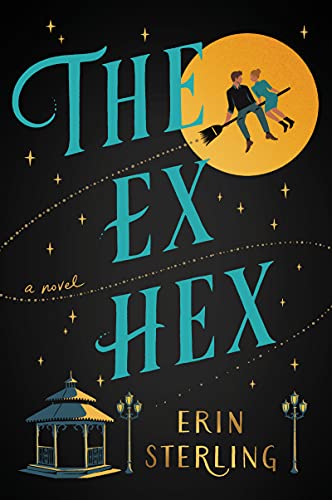
Book: “The Ex Hex” by Erin Sterling

Publishing Info: Avon, September 2021

Where Did I Get This Book: I own it.

Book Description: New York Times bestselling author Rachel Hawkins, writing as Erin Sterling, casts a spell with a spine-tingling romance full of wishes, witches, and hexes gone wrong.

Nine years ago, Vivienne Jones nursed her broken heart like any young witch would: vodka, weepy music, bubble baths…and a curse on the horrible boyfriend. Sure, Vivi knows she shouldn’t use her magic this way, but with only an “orchard hayride” scented candle on hand, she isn’t worried it will cause him anything more than a bad hair day or two.

That is until Rhys Penhallow, descendent of the town’s ancestors, breaker of hearts, and annoyingly just as gorgeous as he always was, returns to Graves Glen, Georgia. What should be a quick trip to recharge the town’s ley lines and make an appearance at the annual fall festival turns disastrously wrong. With one calamity after another striking Rhys, Vivi realizes her silly little Ex Hex may not have been so harmless after all.

Suddenly, Graves Glen is under attack from murderous wind-up toys, a pissed off ghost, and a talking cat with some interesting things to say. Vivi and Rhys have to ignore their off the charts chemistry to work together to save the town and find a way to break the break-up curse before it’s too late.

Review: Though on this blog I’m known as the resident horror, thriller, and graphic novel reviewer (with non fiction on occasion), Serena is fully the romance reader in terms of blog content. But this past year I’ve been reading more romance, if only because of the pure escapist good feeling vibes it has. I mean, during these past couple of years we could all use as many good vibes as we can get, right? So I told myself that I should review at least ONE romance book for the blog, especially if it could fall into the parameters of my other genres. Enter “The Ex Hex” by Erin Sterling, a romance about witches, hexes, lost love, and talking cats. I got it from Book of the Month Club, feeling like it would be a good fit for the month of October, and finally sat down to read it recently. I had made up my mind that it would be a good way to combine my recent genre adventures with the old reliables, so that I would review it on the blog. After all, witches, right? Well…. the results were mixed.

Solidly meh. (source)

But I will start with the good. Because I like to start on positive notes most of the time. “The Ex Hex” is absolutely cute, and has a fun premise that I just ate up. The idea of a broken hearted witch half seriously casting a hex on a man who broke her heart, and therein cursing him and causing havoc that they have to solve together is a solid premise. I also liked Vivi, said broken hearted witch, as she is plucky, and relatable, and comes from the typical supportive and kooky but ultimately powerful witch family that consists of sarcastic cousin Gwyn and wise aunt Elaine. I also liked Gwyn as a banter-y side character, as her cousinly relationship with Vivi is fun to read about, mostly because Gwyn is clearly the bad girl of the two. I would probably be super into a spin off book with Gwyn, as I see a lot of potential with her. And once the magic in the town of Graves Glen starts to go awry, there are some genuinely entertaining fall out consequences, like a cat that can now talk bust mostly just screams ‘TREATS!’. Because of course that’s exactly what a cat would do if it could talk.

But I think that the rest of the book didn’t really click with me as well. For one, the other half of our romance, Rhys, wasn’t nearly as endearing as Vivi. Like, he was fine as a character, but he was pretty darn boring in my opinion. We have the usual ‘he broke her heart but had no choice and didn’t really want to’ trope, and that’s fine, but it means that the reunification of the two characters really needs to pay off. And this one didn’t. One reason it didn’t bounce back is because I didn’t feel like Rhys did enough apologizing for the way he treated Vivi back in the day, in which they had a very intense romance and he neglected to tell her that he was betrothed to someone else (hence the broken heart and hex). The other reason is that I didn’t really feel the chemistry between the two of them. We are told that they were deeply, deeply into each other, and yes, there are sexy moments and scenes to convince us of this, but I wasn’t ever really into the two of them as a couple, as there weren’t enough little moments of romantic build up for me, or moments of actual resolution of their past issues that felt real and productive. On top of that, I think that the magic aspects of the book probably could have used some more fleshing out, but I mean at the same time we all know that my grasp on fantasy elements can be tenuous as best. But it all just seemed cobbled together to be magical without much thought into how it would actually need to work.

Honestly I feel a little bad, because while “The Ex Hex” didn’t really move beyond the ‘meh’ for me in the romance department, I’ve read some really good romances this year! And also, don’t let my general ambivalence towards this book deter you! It has cute moments and a fun premise. I mean, who doesn’t like witches going on misadventures with sexy results? This could be a good holiday read if that sounds fun, even if the holiday it best matches was over two months ago.

Rating 5: Cute for the most part, but not the highest tier romance I’ve read this year, “The Ex Hex” brings witches into a rom com setting with some mixed results.

Reader’s Advisory:

“The Ex Hex” is included on the Goodreads lists “All Hallows Reads”, and “Feel Good Rom Coms”.

Find “The Ex Hex” at your library using WorldCat, or at a local independent bookstore using IndieBound!

Kate’s Review: “Our Violent Ends”

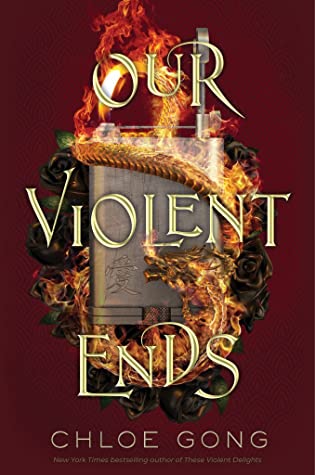
Book: “Our Violent Ends” by Chloe Gong

Publishing Info: Margaret K McElderry Books, November 2021

Where Did I Get This Book: I received an eARC from NetGalley

Book Description: Shanghai is under siege in this captivating and searingly romantic sequel to These Violent Delights, which New York Times bestselling author Natasha Ngan calls “deliciously dark.”

The year is 1927, and Shanghai teeters on the edge of revolution. After sacrificing her relationship with Roma to protect him from the blood feud, Juliette has been a girl on the warpath. One wrong move, and her cousin will step in to usurp her place as the Scarlet Gang’s heir. The only way to save the boy she loves from the wrath of the Scarlets is to have him want her dead for murdering his best friend in cold blood. If Juliette were actually guilty of the crime Roma believes she committed, his rejection might sting less.

Roma is still reeling from Marshall’s death, and his cousin Benedikt will barely speak to him. Roma knows it’s his fault for letting the ruthless Juliette back into his life, and he’s determined to set things right—even if that means killing the girl he hates and loves with equal measure.

Then a new monstrous danger emerges in the city, and though secrets keep them apart, Juliette must secure Roma’s cooperation if they are to end this threat once and for all. Shanghai is already at a boiling point: The Nationalists are marching in, whispers of civil war brew louder every day, and gangster rule faces complete annihilation. Roma and Juliette must put aside their differences to combat monsters and politics, but they aren’t prepared for the biggest threat of all: protecting their hearts from each other.

Review: Thank you to NetGalley for providing me with an eARC of this novel!

Last year I took a bit of a chance on the book “These Violent Delights”, Chloe Gong’s historical fiction fantasy romance thriller retelling of “Romeo and Juliet”. That’s a true mouthful for a genre description, but it’s the only way to truly describe the wide breadth that this book had. I ended up enjoying it, and found myself waiting anxiously to find out what happened next. Well great news! The conclusion, “Our Violent Ends”, has been released, and let me tell you, the year long wait was worth it. Juliette and Roma are back, and I happily dove into the sweet, sweet agony that was sure to follow.

Me fully ready to watch things go horribly south for all my favorite characters in 1920s Shanghai. (source)

Just as a quick additional refresher, this “Romeo and Juliet” retelling takes place in 1920s Shanghai, as two rival gangs, the Scarlet Gang and the White Flowers, have a blood feud that has led to constant tension and violence. Juliette is the heir to the Scarlet Gang, Roma is the heir to the White Flowers, they had a passionate love affair and in the last book teamed up to try and stop a monster from wreaking pure havoc on the city they love. When we finished the first book, Juliette had just killed Roma’s best friend Marshall, though she hadn’t REALLY killed him, it was all a ruse to keep Roma safe vis a vis his hatred of her.

Plot wise, Gong balances the source material with a lot of new themes and plot points, as well as an update to the time and place that the story takes place. There are still threats from monsters in this one, which makes the Scarlet Gang and the White Flowers have an uneasy truce/team up in hopes that Juliette and Roma can find the vaccine that is rumored to stop the monsters (and of course the tension is off the charts in all kinds of ways). But there are also threats of the time period, like the simmering tensions between the Nationalists and the rising Communists. And we are still dealing with the two gangs having conflicts, which could be ceasing due to a common enemy of the monsters, but is always on the precipice. It’s a lot to cram in there, and while sometimes it felt like it was a little too much (and that we’d gloss over aspects of the plot because of it), overall Gong still managed to have a clear connection to the original play through things that would happen in the story. Even when she would twist some things around to better fit the story that she was telling. These moments were done in such a way that usually felt more true to the circumstances, however, and never like she was just trying to fit square pegs into round holes.

It is still the characters, however, that are the books greatest strengths. While the original cast of “Romeo and Juliet” has a kind of charisma to a degree (I mean, I don’t like the play but I recognize the appeal of the characters), Gong continues to draw far more complexity from her versions of the players. With Roma you have a brooding and brokenhearted Romeo, who is mourning the supposed death of his friend Marshall at the hand of his former lover. With Juliette you have a woman who is being torn up by her feeling of duty to her family as the heir to the Scarlet Gang, as well as her deep love for a man that she had to pretend to betray. And oh how I continued to love this version of Juliette. She gets shit done and isn’t given ANY credit for it, and I loved her inner turmoil even as she has to hold EVERYTHING together to be the strongest player in the whole damn story. It gives both the main characters FAR more pathos than the play did, and I really enjoyed how Gong gave both of them a lot more agency, smarts, and will than their inspirations were ever given. I was actively rooting for both of them, but especially Juliette, who is constantly trying to prove herself as worthy, though as a woman she is never going to be seen as such (and her psychopathic cousin Tyler is given more glory than she ever gets). But it’s also side players that are highly enjoyable, be it Juliette’s cousins Kathleen and Rosalind, or Roma’s younger sister Alisa. For me, though, I LOVED Marshall and Benedikt, the two lovers who have been separated due to Marshall faking his death, and Benedikt’s agony over it. Oh these two. You cannot help but root for them.

“Our Violent Ends” finished out the duology on a perhaps expected but still satisfying high note. Chloe Gong made me into a “Romeo and Juliet” fan, at least the way she tells it, and I definitely recommend checking it out if you want to see a really unique twist on the original tale!

Rating 8: A complex and satisfying end to a truly unique Shakespeare retelling.

Reader’s Advisory:

“Our Violent Ends” is new and not included on any Goodreads lists yet, but it would fit in on “Rewriting Shakespeare (YA Edition)”, and “YA Fiction Set in the 1920s”.

Find “Our Violent Ends” at your library using WorldCat, or at a local independent bookstore using IndieBound!

Previously Reviewed: “These Violent Delights”.

Serena’s Review: “The Duchess War”

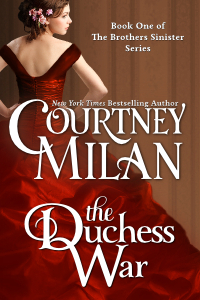
Book: “The Duchess War” by Courtney Milan

Publishing Info: Createspace, December 2021

Where Did I Get this Book: the library!

Book Description: Miss Minerva Lane is a quiet, bespectacled wallflower, and she wants to keep it that way. After all, the last time she was the center of attention, it ended badly-so badly that she changed her name to escape her scandalous past. Wallflowers may not be the prettiest of blooms, but at least they don’t get trampled. So when a handsome duke comes to town, the last thing she wants is his attention. But that is precisely what she gets. Because Robert Blaisdell, the Duke of Clermont, is not fooled. When Minnie figures out what he’s up to, he realizes there is more to her than her spectacles and her quiet ways. And he’s determined to lay her every secret bare before she can discover his. But this time, one shy miss may prove to be more than his match…

Review: There have been a few articles circulating in readers’ circles noting the increased interest in romance as a genre throughout the pandemic. I think the reasons are probably fairly self-explanatory, so I won’t get into them myself. But I’ll definitely note that this point really hit home when fairly spontaneously at our last bookclub, we all seemed to realize we were all reading significantly more in the genre, so much so that we decided to make romance the theme of our entire next round! My reviews here on the blog don’t necessarily reflect this increase, but that’s largely due to the challenges of writing about book in a genre that by necessity are often fairly similar in structure. But I do want to throw reviews out there every once in a while when a particular one stands out. Hence, “The Duchess War.”

Minerva Lane understands the strategy of being a wallflower. Unnoticed, she can quietly observe everyone and make her subtle maneuvers with little attention drawn to herself. And, while her choices are very limited, at least they will be hers. But her carefully laid plans are upended when a Duke arrives on the scene. Minnie quickly realizes that Robert Blaisdell is more than he seems. Unfortunately, he, too, takes notice of her and before she can protest, begins pulling her inevitably out from her quiet corners and back into the center of attention. But will their own smarts be each of their own down falling? Or do they each desperately need the recognition that only the other can give.

When I logged on to Goodreads to mark this book as read, I realized that I must have read the second book in this series sometime in the past. And, judging by my low star rating, I didn’t like it much (honestly, I have zero memory of reading that book, even after looking at the description). Thank goodness I didn’t spot that before picking this one up, as I really enjoyed this historical romance!

There were several things that stood out to me as unique about this romance novel as compared other similar titles. For one thing, while most “historical romances” are set somewhere in the Regency or Victorian period, other than a few mentions of the current monarch or a particular style of dress (empire waste or bustles), there are often few historical markers to be found. It’s all very general, upper-class, social entertainments from end to end. This book, however, dove into some of the political and culture undercurrents moving at the time. In particular, there was a focus on the working conditions for the common man and the uneven wealth distribution at the heart of British society. Yes, it’s still a romance novel at heart so all of this is only lightly touched upon, but the fact that it all plays a rather key role to the story is fairly unique as a whole.

I also really liked our main two characters and their backstories. Their histories were slow to unfold, but once we fully understood the lives they had lead up to this point, it really help ground each character in the decisions they made going forward. I was particularly pleased to see strong aspects of their characters remain true even throughout the typical upheavals found near the end of romance novels. The conflicts that arose came through believable choices that each character would make, and, refreshingly, neither one of them completely loses their head. I was particularly pleased with Minnie, as in many ways she became the force of reason that held these two together in the end.

I really enjoyed this book. It was a perfect blend of wish-fulfillment on the romance side as well as an increased dedication to including interesting elements on the historical side. Fans of historical romances are sure to enjoy this and should definitely add it to their TBR lists!

Rating 8: Romantic and funny, everything I want from a feel-good story.

Reader’s Advisory:

“The Duchess War” is on this Goodreads list: 1st Book in Historical Romance Series.

Find “The Duchess War” at your library using WorldCat, or at a local independent bookstore using IndieBound!

Serena’s Review: “Given”

Book: “Given” by Nandi Taylor

Publishing Info: Wattpad Books, January 2020

Where Did I Get this Book: Edelweiss+

Book Description: As a princess of the Yirba, Yenni is all-but-engaged to the prince of a neighboring tribe. She knows it’s her duty to ensure peace for her people, but as her father’s stubborn illness steadily worsens, she sets out on a sacred journey to the empire of Cresh, determined to find a way to save him at any cost, even though failure could mean the wrath of her gods and ruin for her people. One further complication? On the day she arrives at the Prevan Academy for Battle and Magical Arts, she meets an arrogant dragon-shifter named Weysh who claims she’s his “Given”, or destined mate. Muscular, beautiful (and completely infuriating), he’s exactly the kind of distraction Yenni can’t afford while her father’s life hangs in the balance.

But while Yenni would like nothing more than to toss Weysh the man into the nearest river, Weysh the dragon quickly becomes a much-needed friend in the confusing northern empire. Yet when her affection for the dragon starts to transfer to the man, Yenni must decide what is more important: her duty to her tribe, or the call of her own heart.

Review: This book had two things going for it immediately: first, the cover is so cool! There was an alternative cover that was much less compelling, but the one I highlighted here was the one I saw and the one that initially drew me in. And second, it’s a book about dragons. Lump me in with all the other unoriginal fantasy fans who love dragons, I don’t care! A good dragon story will always be right up my alley. A bad dragon story, however….

Yenni has always grown up with duty at the heart of her life. But when her father falls prey to a mysterious illness, this duty takes on a new form. Not only must she travel to a distant academy to follow through on her next steps to queendom, but while there, she desperately hopes to find a cure for her beloved father. The last thing she needs is distractions. Especially not distractions that show up in the form of infuriating, handsome, young men. And frankly, the only thing in this particular young man’s favor is his dragon form whom Yenni forms a close relationship. Sadly, one comes with the other. But as Yenni finds herself growing closer to man and dragon, the choices before her and the duties that call to her begin to blend and meld.

I probably should have known from the description that this probably wasn’t going to be a winner for me. YA books that describe their romantic heroes as “infuriating” and “arrogant” are almost always underselling it, with the terms “demeaning” and “borderline-abusive” often being the words I would substitute. Alas, so was the case here.

There were so many cringe-worthy lines (also to be expected from most fantasy romances that center around some sort of “mate bond”…can we just stop with this entire idea??). And what was worse was how quickly Yenni ultimately got over her first impression made by some of these rude interactions. Her initial reaction of dislike is completely justified. Her 180-turn like five pages later was….less so. And that’s all without touching the utter lack of romance involved in an insta-love connection. Or any of the other trope-ridden high school romance boxes that were dutifully checked off as the story progressed. All the worse in that these were supposedly more adult characters! Sadly, every aspect of this romance didn’t work for me and pretty much ruined my experience.

Perhaps it’s for the best, then, that I also didn’t feel like there was overly much to ruin in the first place. The writing was strong enough, but wasn’t accomplishing anything truly note-worthy. There was an over-reliance on the author telling readers how they should feel about things, rather than creating situations and dialogue that would resonate with readers and do the showing for her. And the world-building and magical school were incredibly predictable and unoriginal feeling. Sure, one can say that with “Harry Potter” looming large, it’s almost impossible to write a magical school book that doesn’t feel like either a straight-up copy attempt or a pale comparison. But in response, I will point you to Naomi Novik’s “A Deadly Education” and leave it at that. It definitely can be done. This one just doesn’t manage it.

Ultimately, I was really disappointed by this book. Not only did it not live up to the awesome, bad-ass heroine who seemed to be depicted on the cover, but it fell into every negative romance trope you can think of in recent years. I really wouldn’t recommend this book to anyone. There are better dragon stories out there. Better leading ladies. Better worlds. In a word, better books.

Rating 4: Not only did it not bring anything new to the table, but it highlighted another unhealthy romantic dynamic as some sort of wish-fulfillment.

Reader’s Advisory:

“Given” is on these Goodreads lists: 2020 Fantasy and Science Fiction Books by Black Authors and Fantasy That Isn’t Fantastic Straight White Men Doing Epic Things….

Find “Given” at your local library using WorldCat!

Book Club Review: “The Right Swipe”

We are part of a group of librarian friends who have had an ongoing bookclub running for the last several years. Each “season” (we’re nerds) we pick a theme and each of us chooses a book within that theme for us all to read. Our current theme is “Outside the Genre Box”, in which we each picked a book from a genre or format that we don’t usually read.

For this blog, we will post a joint review of each book we read for book club. We’ll also post the next book coming up in book club. So feel free to read along with us or use our book selections and questions in your own book club!

Book: “The Right Swipe” by Alisha Rai

Publishing Info: Avon, August 2019

Where Did We Get This Book: I own it.

Genre/Format: Romance

Book Description: Alisha Rai returns with the first book in her sizzling new Modern Love series, in which two rival dating app creators find themselves at odds in the boardroom but in sync in the bedroom.

Rhiannon Hunter may have revolutionized romance in the digital world, but in real life she only swipes right on her career—and the occasional hookup. The cynical dating app creator controls her love life with a few key rules:

– Nude pics are by invitation only

– If someone stands you up, block them with extreme prejudice

– Protect your heart

Only there aren’t any rules to govern her attraction to her newest match, former pro-football player Samson Lima. The sexy and seemingly sweet hunk woos her one magical night… and disappears. Rhi thought she’d buried her hurt over Samson ghosting her, until he suddenly surfaces months later, still big, still beautiful—and in league with a business rival. He says he won’t fumble their second chance, but she’s wary. A temporary physical partnership is one thing, but a merger of hearts? Surely that’s too high a risk…

Kate’s Thoughts

Though I tend to stick to a few genres that I tackle on this blog, in my overall reading habits I try to be varied and open minded when it comes to what book I decide to pick up. But like most people, I do have my blind spots in genres. My goal this year is to try and read more romance because of this. So the fates were lining up when I decided to take on the Outside the Genre Box book for February. After all, our book club meeting was going to be on Galentine’s Day, the day before Valentine’s Day. Obviously picking a romance was going to happen. I decided on “The Right Swipe” by Alisha Rai for a couple of reasons. 1) It had some good reviews and solid hype. 2) I saw that it had a diverse cast of characters, and 3) I’m not quite ready to jump into Regency era bodice rippers, so something contemporary felt just right.

And I really enjoyed “The Right Swipe”. I liked our main characters, Rhiannon and Samson, whose one night stand could have turned into something more, had Samson not ghosted on Rhiannon before their second date. It’s a pretty typical premise, and I was expecting it to be fairly obvious in execution of the plot (they meet again, it’s frosty at first, then it gets hot, then it gets cold, then it ends up okay in the end). But that may have just been my preconceived notions of the genre, because it didn’t go in ways that were expected for me. I liked both Rhiannon and Samson as characters, as they both had their flaws and their strengths, and all of that felt realistic. Their chemistry is palpable, and it’s very easy to root for them because they are both good people who clearly are right for each other. But you also understand why Rhiannon is reluctant to give him another chance with her past relationship traumas, and why Samson has his own insecurities and hurt from past experiences. They just click, but aren’t perfect, nor melodramatic.

But what really struck me was that Rai brings in some really relevant and meaty social issues into this story that both Rhiannon and Samson have to deal with. For Rhiannon, it’s the fact that she is a social media mogul on the rise, but has to work twice as hard and be twice and brilliant because she is a Black woman in a white dominated industry, and has an unearned difficult reputation because of a vindictive white man whom she used to be involved with. You see her drive and her hunger, as well as the emotional labor and pain that comes with the constant roadblocks because of her race and her gender. For Samson, his history of being a professional football player from a family of football greats is darkened by the very real issue of CTE. While he himself doesn’t have it, people he cared about suffered and deteriorated because of it, and while Rai doesn’t overtly call out the NFL for how it has ‘handled’ the issue, the commentary is very much there.

And yeah, it’s definitely steamy. It lives up to all my expectations of the genre in that regard, and that is a compliment to be sure.

I really liked “The Right Swipe”, and I am definitely going to continue on in Rai’s series. I’m expanding my literary horizons, people, and it feels good!

Kate’s Rating 8: A cute and steamy romance with some really good social commentary, “The Right Swipe” is a fun read, and a great place to begin if you want to check out the romance genre with little experience within it.

Book Club Questions

  1. What did you think of Rhiannon and Samson’s relationship? Healthy? Unhealthy?
  2. What were your thoughts on Rhi’s personal rules for dating? Did you find the rules too stringent? Not stringent enough?
  3. Both Rhi and Samson have some pretty significant back stories. What did you think of them? Did you like one more than the other?
  4. What were your opinions on the CTE subplot? How aware were you of CTE before this book?
  5. Rhi has a number of roadblocks she has to deal with being a Black woman in the dating app industry. Did you think that Rai did a good job balancing these themes with the plot?
  6. This is the first in a series. Assuming the next books are going to follow side characters, whose story would you like to hear in the coming books?

Reader’s Advisory

“The Right Swipe” is included on the Goodreads lists “Radical Romance”, and “2019 Romance Books by Authors of Color”.

Find “The Right Swipe” at your library using WorldCat, or a local independent bookstore using IndieBound!

Next Book Club Book: “Red at the Bone” by Jacqueline Woodson

My Year with Jane Austen: “Death Comes to Pemberley”

I could probably continue on an entire extra year reviewing various adaptations and interpretations of Jane Austen’s works. There are plays, spin-off books, modern adaptations, the list goes on and on. Every year it seems there is a new version coming out in some form or another and this last year was no exception. Not only did we get a new feature film of “Emma” but the BBC also released an 8-part mini series of Austen’s unfinished work “Sanditon.” So I wanted to briefly touch on my thoughts of both those and to add in one other adaptation that has been a favorite of mine for quite a while, “Death Comes to Pemberley,” both the book and the 3-part mini series.

Mini Series: “Death Comes to Pemberley”

I’ve read the book this was based on as well (same title and written by P.D. James), but I wanted to focus on the mini series adaptation here as, ultimately, I enjoyed it the most of the two. The book was a solid “Pride and Prejudice” sequel; frankly, it’s probably the best, and only, sequel I’d recommend to people. So the fact that I liked the mini series more is in no way a ding against the book itself. I only read it the one time, so I also wouldn’t bet against my not remembering it well enough to give it the credit it deserves. But on to the mini series itself!

As I mentioned above, this story is a sequel to “Pride and Prejudice.” It takes place mostly at Pemberley and occurs 5 or so years after the book (Darcy and Elizabeth have a 4-ish son, so I’m just guessing, if they mentioned it in the movie/book, I don’t remember). The story is a murder mystery at its heart, revolving around Wickham (who else!) who has been accused of killing his dear friend Denny while in Pemberley woods. The show is a three part mini series that slowly follows Elizabeth and Darcy as they try to put together the clues as to what really happened and whether or not Wickham is innocent or guilty. Along the way, we meet a cast a familiar faces and are given extra information about their histories that wasn’t provided in the original story. We also meet a few new characters, but it’s mostly a returning cast, though the focus is more on characters who played only small roles in the original book, like Georgiana and Colonel Fitzwilliam.

This mini series succeeds at both of its main goals: It is a worthy (and believable!) sequel to a beloved story that ended in such a way that a sequel would typically feel completely unnecessary; and it holds up as a compelling murder mystery in its own right. Had this story been almost exactly the same but with original characters, it would likely be almost just as good (though more fleshing out for characters would obviously be necessary since you couldn’t count on general familiarity and previous knowledge). That is a truly extraordinary feat.

Obviously, much of this comes down to James’ heavy lifting with her book. But I’d wager that of all of the Jane Austen adaptations, “Pride and Prejudice” is the only one with a film/mini series that is almost as beloved and the book itself. Just like James’ had an uphill battle in writing a sequel to the book, this mini series was attempting to re-cast and continue the stories of characters whom many thought couldn’t be improved upon from Colin Firth and Jennifer Ehle’s version. Both Matthew Rhys and Anna Maxwell Martin perfectly balance carrying forward characters who have already been seen on screen several times while keeping them familiar as well as bringing their own twists and mannerisms.

I really liked the mystery itself, too. There are plenty of red herrings and possible scenarios that can lead viewers down false trails. Even better, every aspect reveals new layers to Pemberley, its family, and the people that have lived on the estate for generations. I particularly liked the exploration of Darcy and Georgiana’s feelings towards stewardship and Pemberley. It’s an interesting topic, especially when contrasted with Elizabeth’s experience of life, that while they generally see eye to eye on many things, this is simply something that she can’t really understand. This feeling of responsibility to a place, its people, and one’s own history.

I also really liked the brief moments that showed us some of the challenges that Elizabeth faced (faces) as the new lady of Pemberley. It’s obvious that she’s not the lady of the house that anyone would have expected and with that would come its own set of trials. We also get a look into the insecurities and doubts that both Darcy and Elizabeth still struggle with. Yes, the ending of “Pride and Prejudice” was happily ever after, but marriage has its own set of challenges and one’s personal demons don’t simply disappear when one’s true love shows up.

The only ding I have against this adaptation is its depiction of Colonel Fitzwilliam (again, this was following the book’s lead so it’s not unique to the mini series itself). Personally, I really like what they do with the character here. So my quibble is more about continuality and what feels like a pretty thorough character re-write from what we’re given in the original novel. True, the novel really doesn’t show us much, but we have Darcy’s own esteem for the Colonel and his dual role in bringing up Georgiana to speak to his general good character. But unless you’re a die-hard Fitzwilliam fan, the changes shouldn’t be that distracting.

I really enjoy this mini series, and it’s my regular rotation of Jane Austen re-watches. Like I said, it’s the only worthy sequel to “Pride and Prejudice” I’ve come across, and it also checks all the boxes as a good historical mystery, another favorite of mine. If you haven’t read the book or watched this adaptation, I definitely recommend it for all Jane Austen fans!

My Year with Jane Austen: “Sanditon” [2019]

I could probably continue on an entire extra year reviewing various adaptations and interpretations of Jane Austen’s works. There are plays, spin-off books, modern adaptations, the list goes on and on. Every year it seems there is a new version coming out in some form or another and this last year was no exception. Not only did we get a new feature film of “Emma” but the BBC also released an 8-part mini series of Austen’s unfinished work “Sanditon.” So I wanted to briefly touch on my thoughts of both those and to add in one other adaptation that has been a favorite of mine for quite a while, “Death Comes to Pemberley,” both the book and the 3-part mini series.

Mini-Series: “Sanditon”

I promise I’ll leave a positive review for one of these “extra” Jane Austen reviews that I’m doing in January. Alas, like “Emma” [2020], this is not one of them. Unlike “Emma,” however, I am more in-line with the general reception of this mini series. All and all, I think most Jane Austen fans were supremely disappointed by it, not least because of how it ends. Let’s dive into my complaints, shall we?

(NOTE: There will be spoilers in this review.)

The whole thing starts from a false premise: that there’s even a story here to adapt. Austen had only written eleven chapters of this story before her death. For reference, Emma has fifty-five chapters, so by comparison, eleven chapters is only scratching the surface of whatever story Austen had in mind. All we really get from these opening chapters is the introduction of our heroine, Charlotte, her relocation to an up-and-coming beach town called “Sanditon,” and the arrival of a potential love interest in the form of the fashionable Sidney Parker. Story-wise, it’s not much. There are the typical cast of side characters as well, but not much as far as clues to Austen’s overarching plot or themes. In most ways, she’s just finished setting the scene and not much else. It was always going to be a fool’s errand to try to expand that out into a mini series and to call it a “Jane Austen adaptation” is really pushing the limits of that term.

Perhaps in the right hands a compelling story could have been made. But sadly, this mini series ain’t that. It falls into too many traps that many modern adaptations risk and, at its heart, seems to miss the overall tone and heart that makes up all Jane Austen stories. To most fans’ chagrin, the story succumbs to the inane need of modern series to be “gritty” and “push the limits.” There are overtly sexual scenes in the very first episode (some of them even bizarrely going a very “Game of Thrones” route, none the less…). And many, if not most, of the characters introduced are supremely unlikable. For some reason, it seems that many directors and screenwriters often confuse writing a character with layers and depth with just writing supreme jerks, and we see plenty examples of it here. The romantic interest is immediately an a-hole to Charlotte, and not in the endearing, prideful “Darcy-esque” way that is the only acceptable form of this behavior in an Austen story.

Gone is the joy. Gone is the wit. And, worst of all, gone is the happy ending. It seems as if the director intentionally ended the series this way in a fit of over-confidence that the series would be picked up for a second season. Indeed, this is the only acceptable reason for ending an Austen story this way. There are plenty of historical fiction stories to be told where the happy, romantic conclusion is not a given. But those are not the stories that Austen wrote. She even said it herself, “let other pens dwell on guilt and misery.”

Every Austen fan who went into this series happily hoping to get one last shot at a new Austen story would have had this one, simple expectation: that the hero and heroine would end up together and happy at the end. Whatever happened from the start to the finish was open for exploration and interpretation. But this ending was a must. Instead, the series not only denies our hero and heroine this happiness, but it essentially resets the story by sending Charlotte back home where her future is once again limited and likely dull. I’ll be blunt: this ending is inexcusable for a Jane Austen adaption and, apart from any other stumbling blocks (of which there were many) would be enough to write this entire thing off on its own.

Unlike “Emma,” which I think I disliked for fairly subjective reasons but is sure to please many fans, this mini series really has nothing to recommend it, as far as I’m concerned. Perhaps for general historical fiction fans it would be an ok watch. But any fan of Jane Austen should simply steer clear, as “Jane Austen” this is not.

My Year with Jane Austen: “Emma” [2020]

I could probably continue on an entire extra year reviewing various adaptations and interpretations of Jane Austen’s works. There are plays, spin-off books, modern adaptations, the list goes on and on. Every year it seems there is a new version coming out in some form or another and this last year was no exception. Not only did we get a new feature film of “Emma” but the BBC also released an 8-part mini series of Austen’s unfinished work “Sanditon.” So I wanted to briefly touch on my thoughts of both those and to add in one other adaptation that has been a favorite of mine for quite a while, “Death Comes to Pemberley,” both the book and the 3-part mini series.

Movie: “Emma” [2020]

While I didn’t get to have the “in theater” experience that I wanted to honor the release of a new version of one of my favorite Austen books, I made quite sure to watch it as soon as possible at home. I had made sure to avoid reading any reviews or commentaries about the movie, though I did have the impression that it was generally very well received by Austen fans and the general public. So I went in optimistic.

Unfortunately, this one didn’t hit home for me. It wasn’t a complete flop by any means, and there were new interpretations and takes on the story that I genuinely appreciated. I thought it was really interesting how focused the movie was on the oddness of life for the super rich in this time period. We have Emma pointing out flowers to be cut by a maid following meekly behind her. And we even have Mr. Knightley, arguably the most self-sufficient character we’re given in the entire story, sitting around being intimately dressed by servants. It’s both incredibly awkward but also humorous in just how absurd it feels.

But I also really struggled with several aspects of this film. For one, I didn’t fall in love with the cast. Anya Taylor-Joy is clearly a talented actress, but for me, she came across as too cold for Emma. Because of Emma’s repeated mistakes and blunders, her immediate charm and appeal are crucial to forming a strong attachment between the audience and the character. For me, Taylor-Joy’s version was simply too aloof and distant-feeling to really capture that immediate sense of sympathy that is necessary to make Emma a character you want to root for. I also struggled with Johnny Flynn’s Knightley, though this was mostly because he simply looked to young and to close to Emma’s age more than anything having to do with his actual acting.

From there, I mainly struggled with some strange story choices that movie made. I didn’t like the weird scene after the ball where Knightley runs after Emma, seemingly on the verge of confessing feelings (feelings that she, too, seems to be expecting to hear about when waiting at home). It doesn’t go anywhere, but the scene itself really messes with the progression of this relationship as it implies that Emma is aware of Knightley’s feelings (and returns them to some extent) much earlier in the story. Plus, Mr. Knightley may be an active sort of gentleman, but he doesn’t literally run around town chasing after a woman.

I also really didn’t like the final romantic scene with the nose bleed. This movie was largely praised for how comedic it was, but this scene highlighted just how wrong I think this approach was. Yes, “Emma” is a comedy and any good adaption will hone in on the humorous aspects of the story. But what I absolutely DON’T want is to have that humor intrude on and break up the big romantic climax of the story. The tone during this scene is all over the place and seems to be deliberately cutting the legs out from under the romance that is supposed to be the culmination of a slow build developed throughout the entire movie up to this point. It was incredibly frustrating and resulted in me ending the entire movie with a fairly sour taste in my mouth.

My husband actually really likes “Emma,” (the 2009 version, at least) so there’s a good chance I’ll end up re-watching this version with him at some point. I’m curious to see if my experience of the film will be different with my expectations set a bit lower. I don’t see it ever replacing my beloved 2009 version, but I’d like to see if I can discover what appealed to so many others with a re-watch. If you enjoyed it, please share your thoughts in the comments (or if you didn’t like it, too, of course!)

In two weeks, I’ll review “Sanditon.”

Serena’s Review: “Bridgerton Collection”

Book: “Bridgerton Collection: Volume One” by Julia Quinn

Publishing Info: Kindle Edition, May 2020

Where Did I Get this Book: own the e-book

Book Description: The first three Bridgerton books all in one e-book volume! Includes The Duke and I, The Viscount Who Loved Me, and An Offer From a Gentleman.

Set between 1813 and 1827, the Bridgerton Series is a collection of eight novels, each featuring one of the eight children of the late Viscount Bridgerton.

I’m going to do a quick mini-review for all three books in this series. I’ve reviewed a couple random books by Julia Quinn on this blog over the years, but I’ve jumped all over the place from random books in this main series to ones from the prequel series, etc. But with the Netflix show just coming out, I thought it was high time to at least familiarize myself with the first three in the correct order so that when I watched the show I wouldn’t be completely lost. Because obviously I was going to watch the show! Historical romance?? Yes, please!

The Duke and I

So I had actually read this, the first book in the series, once before years ago. I didn’t remember much about it except that, unfortunately, I had rated it fairly low on Goodreads at the time. I went in with some skepticism. Unfortunately, this wasn’t a great start to my read through of these first books in the series, and my original rating wasn’t far off for how I would rate this book now.

The strengths of Quinn’s writing is clear, and it’s easy to understand how she has become one of the most popular romance authors of the time. This book completes its most important edict: it sets the stage for a million and a half sequels, creates an interesting window in this version of British society, and has quick, snappy writing that move the story along.

Unfortunately, the actual story in this book and especially its heroine and hero’s relationship was a huge let down. Each were very toxic in their own ways, and I’m not one for throwing that word around lightly. There are some extreme inconsistencies in how knowledgeable Daphne is about certain aspects of life that stretch the point of believability to its breaking point. And the great “conflict” between the Simon and Daphne leads to each treating the other in very despicable ways, with Daphne committing a pretty unforgivable crime against Simon. I’m sure this wasn’t the intent of the author with this scene, but it’s definitely how it reads and how it would (and should!) be understood. As our first two paired up grouping, I’m sure we’ll see more of Simon and Daphne on the sidelines in other books, but I’ll try to just put this one behind me. I’m also really curious how they’ll play this particular relationship in the Netflix adaptation.

Rating 6: A good start to the series, but the horrid actions of both the hero and the heroine really drops it down.

“The Viscount Who Loved Me”

First things first: this second book was a great improvement on the first. While I still had some problems with the hero, Anthony (the Bridgerton in this little story), the heroine, Kate, was vastly better than Daphne. Not only was she not bizarrely ignorant of some pretty basic facts of life, she also didn’t assault her husband. So there’s that. But beyond all of that, Kate is just a fun character. She’s spunky, smart, and a fun character to follow through this story.

Anthony takes a bit more time to warm up. For one thing, he’s presented as the go-to historical romance leading man character type: a rake. I could probably write an entire thesis on why this type of character seems to dominate these books and why most of them get it wrong, but I’ll resist. To sum up, Mr. Darcy is considered the epitome of romance heroes, and I think many authors confuse the appeal that comes from his being a catch due to his lack of interest with the idea that rakes are a decent sit-in as they, too, have no interest in love and marriage. Big difference being that Mr. Darcy didn’t have a reputation for toying with women’s hearts. But enough on that. Anthony’s rake-ness is part of his problem, as is the fact that he has some pretty unappealing ideas about the relationship between husbands and wives initially. Thankfully, he seems to work through that and does end up being a likeable enough character.

What stood out the most about this book was the dialogue. Maybe it was just the nature of the story, Kate’s trying to spare her sister from the devious rake, but there was a lot of snappy, fun interchanges between our leading lady and leading man. There were several moments where I chuckled out loud, which was a nice reminder of why I’ve liked other books by this author in the past. Overall, I’m much more excited to see this relationship play out on the show than the first one.

Rating 8: Much better than the first, but still marked down for the hero being kind of an ass for a good chunk of the first half.

“An Offer from a Gentleman”

This book was a bit different than the two that came before it. As the cover implies, it’s a very loose re-telling of Cinderella. Sophie is an illegitimate daughter who meets our her, Benedict Bridgerton, at a ball where she’s undercover as a true lady. Sparks fly. Two years later, the two meet again, but Benedict doesn’t recognize his lady love in the servant girl before him. An intriguing enough premise and a fun twist on the more traditional retellings out there.

I, again, liked the heroine, Sophie, better than the hero (I guess Daphne goes down as the worst of the three). She was earnest and stood up for herself well enough given the situation (I’ll touch on that when I get to Benedict). But she also kept unnecessary secrets that created a bunch of angst and drama for no good reason. I always struggle with these types of narrative mechanisms that are clearly put in there to move the story one way or another but defy any understanding. There’s no good reason for Sophie to keep these secrets other than the fact that it creates the drama and fallout the author was looking for.

And Benedict. Oh, Benedict. He’s probably my least favorite hero of the three we’ve seen. When he meets Sophie again, he pressures her to be his mistress or a servant in his house. And when I say pressure, I mean he puts the screws to her over it. It’s pretty obnoxious. And from there, he goes on to warn her that somehow it is her responsibility to head him off early because if he gets too, um, excited, he wouldn’t be able to stop. Nope! Don’t like that! Throughout it all, he’s pretty self-absorbed and unable to understand Sophie or her motives. Even when the truth is revealed, somehow Benedict is the injured party in all of this. I hope the show makes some big improvements on this particular story. Well, this one and the first one.

Rating 7: Not as bad as the first one, but the hero had some big problems and the heroine created unnecessary drama.

My Year with Jane Austen: “Persuasion” [2007]

Movie: “Persuasion”

Release Year: 2007

Actors: Anne Elliot – Sally Hawkins

Captain Wentworth – Rupert Penry-Jones

Mr. Elliot – Tobias Menzies

Comparison – “Indulge your imagination in every possible flight.”

I really like this adaptation of “Persuasion.” I think it captures the overall tone of the book really well, and introduces a useful trick of the having Anne journal throughout the story to get at the deeper, emotional points of her story. Really, the book is all about the emotional arcs for both of our main characters. The actual events taking place around them are almost secondary. So between having the inner monologue from Anne showing her feelings throughout and the inclusion of more scenes of Wentworth on his own, we get a much better progression of this aspect of the story.

I also think the casting was much, much better here than in the 1995 version. Other than perhaps Mrs. Croft who I preferred in the older movie (though I have no problems with the Mrs. Croft here either), I liked every secondary actor they used here better than the ones from that movie. I think I also like the Sally Hawkins and Rupert Penry-Jones better, too, but I didn’t have a problem with the other actors there either. I particularly think they improved on the casting for Sir Walter and Elizabeth (they do away with the silly emotional outbursts that the other movie did), the two Musgrove sisters (Louisa seems more lively and a better fit for the character described in the book), and Captain Benwick. The Benwick we see here is all the emo-esque, dour young man that we’d expect. While it’s a fairly significant change to the story, I thought it also worked well having Anne and Benwick have the conversation about men, women, and loving longest. It fit in really well with their general conversation about morose poetry.

Heroines – “I hate to hear you talk about all women as if they were fine ladies instead of rational creatures.”

I really like Sally Hawkins’ version of Anne in this adaptation. Unlike the 1995 version, this Anne is clearly a do-er from the very beginning and comes across as less withdrawn overall. She’s first introduced as busy at work taking stock of the house and preparing it to be let. While her father and sister laze around, Anne is the one actually getting things done. This idea is quickly reinforced with the way this movie tackles the injury to Mary’s son. Anne quickly jumps in and diagnoses the problem, a disjointed collar bone, and then just as quickly fixes it. I’m not sure how realistic this is, really, but I think it serves a good purpose of distinguishing Anne’s character as someone who puts others before herself, is very humble, etc. (all the things that would lead her to turn Wentworth away originally), but is also ready and able to jump in when she sees a need. This then neatly sets up her later actions during Louisa’s fall.

I also like what she does with the journaling/breaking of the third wall with the camera. It’s kind of a tough thing to sell, having to look directly at the camera to express deeper emotions. It’s all well and good to pull a Jim from “The Office” and roll your eyes at the camera all the time for humorous effect. Hawkins has to express heartbreak and all of its stages while staring directly at a camera. Seems really challenging, but I think she does a good job. It really helps tell Anne’s story. As so much of it is internal and deeply personal, it’s a hard thing to convey in a movie. I don’t think the 1995 version quite managed it. But this method works well, though I think in a lesser actress’s hands it could also have gone very badly.

Heroes – “What are men to rocks and mountains?”

I also like Rupert Penry-Jones as Captain Wentworth. He doesn’t quite have the same grizzled look of a Navy sea captain that Ciaran Hinds brought to the role, but I think he also fits better to the immediate, natural charm that Wentworth was described as having. It’s easy to see why everyone around him would be immediately taken in by him. He also does a good job of balancing the humor and good manners that would attract the Musgrove girls while also giving brief glimpses into the lingering anger and hurt feelings that still bubble just below the surface whenever he’s around Anne. It’s played in just the right way that the viewer feels like only they and Anne would really catch the double-meaning behind some of his looks and words.

I also really like how this movie devotes a good amount of time to showing us scenes between Captain Wentworth and Captain Harville that give us even more insight into Wentworth’s mindset. We see the moment he realizes he may have trapped himself into an engagement with Louisa and all the horror that comes with it. And we also get a great scene later between these two when he goes on about his awakening to his true feelings about Anne. I think this was a big improvement on the way the 1995 version handled Wentworth’s story. There, his change of heart kind of seemed to come out of nowhere. Here we get to see the progression and get to use a lot more of the romantic statements and sentiments that Wentworth expresses in the book (there most of it comes out in the final few chapters after the two have reconciled, but I think it works better in a movie the way they do it here).

There’s also a really small moment where Captain Wentworth first introduces Anne to Captain Harville as “Miss Elliot.” Harville than clarifies, “Anne Elliot?” making it pretty clear that Wentworth has talked to Harville about her in the past. It’s these small things that I think really bolster this version.

Villains – “I do not want people to be very agreeable, as it saves me the trouble of liking them a great deal.” 

While I think that Tobias Menzies does a good job as Mr. Elliot, he’s definitely one of those actors who is type cast into villain roles. Anyone familiar with the actor can pretty easily guess that whenever he shows up, he’s not going to be a great guy. He does have good chemistry with Sally Hawkins, however, and plays up the charm of this character very well. I think there’s also something particularly unctuous about his version of the character that makes the reveal of his motives very understandable. Unlike the 1995 version, this movie sticks with the idea that he’s only really in it for the title. It’s a harder sell to modern audiences, but I think Menzies’ version of the character sells this idea pretty well. It’s easy enough to believe that he’d be all in on getting his hands on a title like this.

Romance – “A lady’s imagination is very rapid: it jumps from admiration to love, from love to matrimony in a moment.”

I also like the romance in this movie. It feels like we get a lot more of it, being more privy to Anne’s inner thoughts and seeing/hearing more from Wentworth. It’s also interesting that this movie chose to include the scene with Wentworth asking Anne about whether she and Mr. Elliot will want the Crofts to move out when they become married. It’s a scene that wasn’t in the book but was added in the 1995 movie. I think it works even better here, since Anne at least as the presence of mine to more clearly refute these rumors about her and Mr. Elliot.

Unfortunately, this then leads into one of the more ridiculous sequences in the movie where Anne runs around Bath trying to chase down Captain Wentworth. It’s a bit much. She starts out running, gets caught up by Mrs. Smith who shares the truth about Mr. Elliot. Then she runs some more. And some more. Then she gets the letter from Captain Wentworth delivered by Captain Harville. Then she reads it and, you guessed, it runs some more. I think the point is to illustrate how determined she has become in the years since she was persuaded to give him up, but it becomes a bit over the top. It isn’t then helped by the ridiculous kissing scene where it takes like 30 seconds for the two to actually get there. It’s pretty awkward, really, and I’m not sure why they went this route.

It’s definitely a change from the book and probably not that believable (who really thinks that Sir Walter would sell his home to a Navy captain?), but I do like the last scene where Wentworth surprises Anne with the purchase of her home. Throughout the movie, we’ve seen that Anne values her family’s home much more than the rest of them do, so it’s a nice little button on this aspect of the story to have the happy couple settle there in the end.

Comedy – “For what do we live, but to make sport for our neighbors, and laugh at them in our turn?”

Sir Walter is both funny and horrible in this version. I think the actor pretty perfectly captured the casual snobbery of the character, and his delivery on some of the classic lines (like the shrubberies being approachable) is great. And then to later see him and Elizabeth tripping all over themselves to be introduced to the Dalyrimples. Good stuff.

I also really liked Mary in this version. She’s sniveling and silly which just offsets her moments of extreme pride all the better. I particularly like the scene towards the end where she arrives in Bath and declares it to be her last hope. And then, with a burst of pure energy and healthy, jumps in to say hello to her father and invite herself to a dinner party. She also is very easy to dislike, especially in the scene where she’s essentially whining her way into Anne’s role as nursemaid to Louisa, yet again claiming that it is all due to “her condition.”

Fun facts – “Life seems but a quick succession of busy nothings.”

Tobias Menzies and Joseph Mawle (Captain Harville) appeared on “Game of Thrones.” I obviously recognized Menzies (yet again playing an unlikable character in that show), but I didn’t recognize Mawle as Benjen Stark.

Anne’s costuming is deliberately left simple in Bath to reflect the fact that she dislike the city and does not actively join into society or embrace the culture there.

Best Movie Gif/Meme: “I dearly love a laugh.”

I like the little moments like this that highlight the ongoing tension between the two throughout throughout the movie.

This rounds out my official year of reviewing Jane Austen books/adaptations. I’m planning one bonus post in two weeks, however, to cover a few other adaptations that didn’t make the list for full reviews.