My Year with Jane Austen: “Emma” Part I

6969Book: “Emma”

Publication Year: 1815

Book Description: Emma Woodhouse is one of Austen’s most captivating and vivid characters. Beautiful, spoilt, vain and irrepressibly witty, Emma organizes the lives of the inhabitants of her sleepy little village and plays matchmaker with devastating effect.

Note: Yes, this is out of order. I blame the quarantine and general craziness of watching over a one-year-old, but I finished reading “Emma” about a week or two ago, and only then realized that I had skipped “Mansfield Park.” I probably could have banged “Mansfield Park” out in this last week, but I didn’t want to rush my read of that rather hefty book. And then when I would finally get to “Emma,” around July, I’d be several months removed from my actual read through. So, I think this is better than doggedly sticking to my original order. It is what it is!

History – “I read it a little as duty, but it tells me nothing that does not either vex or weary me.”

Jane Austen wrote “Emma” between early 1814 and the spring of 1815. Once she was ready to publish, she decided to switch publishers and went with the well-known London publisher, John Murray. It is thought that she hoped to get a better copyright deal with this publisher and had been put off her previous editor after he refused to publish a second run of “Mansfield Park.” After originally being offered a fixed copyright price for “Emma, “Mansfield Park,” and “Sense and Sensibility,” Austen opted to go with a commission option instead for both, taking on printing and advertising prices. “Emma” had an original first-run of 2,000 copies, Austen’s largest first-run to date.

The book also included dedicated to the Prince of Wales. A fan of her previous books, her identity had been made know to the Prince Regent and his librarian dropped the not-so-subtle comment that she was free to dedicate any future books to him, a hint Austen didn’t feel she could ignore even though she didn’t personally care for Prince Regent

The book was met with middling success at the time, but has grown to be one of her most popular titles with modern audiences. And, despite the author’s fear that readers would not like Emma herself, many fans have connected strongly with the character, faults and all.  (source)

“I am going to take a heroine whom no one but myself will much like.” – Jane Austen

Part I – Volume 1, Chapter 1 – Volume 2, Chapters 11

Story – “The person, be it gentleman or lady, who has not pleasure in a good novel, must be intolerably stupid.”

Emma Woodhouse is the wealthy second daughter of the eccentric Mr. Woodhouse. Her family and their good family friend, Mr. Knightley, share the role as the most prominent families in their small community. A new family group is about to come on the scene, however, with the marriage of Emma’s good friend and former governess to Mr. Weston. Though sad to see her friend go, Emma takes credit for the match herself. Mr. Knightley scoffs at this idea, but Emma is sure of her own abilities.

The marriage also brings up a new topic of gossip, that Mr. Weston’s son, a young man who grew up with his aunt after the death of Mr. Weston’s first wife when the son was young, will likely have to come to visit finally. Mr. Frank Churchill has been long looked for, but due to the sickly and ill-spirited nature of his guardian aunt, he’s never actually visited his original home. But it comes to nothing, and he doesn’t come. Mr. Knightly is the only one to raise an eyebrow at what he sees as poor behavior of an independent man who must know what is due his father on the occasion of a wedding.

To make up for the loss of Mrs. Weston’s daily presence, Emma makes a friend of Harriet Smith, a young boarder at a nearby school. Her parentage is not known, but Emma sees her as a great project. She is dismayed, however, to find that Harriet has already formed a connection with a local farmer family, the Martins, and in particular with the son, Mr. Martin. To ward off the evil of Harriet marrying below what Emma has in mind for her, Emma sets her eyes on Mr. Eldon, the local parson as a better marriage option for Harriet.

Soon enough, however, it comes to a head when Harriet shows Emma a letter from Mr. Martin in which he asks her to marry him. Emma deftly maneuvers Harriet to what she deems the appropriate response: a resounding no. When Mr. Knightly hears of this, he is appalled and he and Emma fight. He says that she is playing with people like they are dolls and that Harriet had a happy future ahead of her with Mr. Martin. Now, Mr. Knightley worries she will look too high and be disappointed by the lack of men who will want to risk a marriage with a girl whose family is unknown. Emma counters that Harriet is beautiful and pleasant, two qualities that are the most important to men, seemingly. And that since Harriet associates with gentleman’s daughters, it is only right to assume that Harriet is a gentleman’s daughter as well. Mr. Knightley also warns that if Emma is thinking of Mr. Elton instead, he’s not all that and it will come to nothing. The two part in unhappy spirits.

Over the next several months, Emma makes great work to throw Mr. Elton and Harriet together, thinking she sees many signs of attachment. He praises, almost to a ridiculous degree, a painting that Emma does of Harriet. And later contributes a riddle to Harriet and Emma’s collection of romantic ditties. The riddle itself makes out the word “courtship,” and though Emma is confused by his references to Harriet’s “ready wit,” she still sees this as a good sign.

Around Christmas, Emma’s older sister and her family, who is married to Mr. Knightley’s younger brother and lives in London, come to visit. They entire group is invited to a party at the Weston’s; Mr. Elton and Harriet are invited, as well. Harriet, however, comes down with a bad cold and has to miss the party. On delivering the news to Mr. Elton, Emma is confused by his seeming lack of real concern for her friend. John Knightley, on seeing the exchange, warns Emma that Mr. Elton seems particularly interested in her. Emma scoffs at the idea. But at the party itself, where Mr. Elton makes a nuisance of himself trying to ingratiate himself with her, Emma is forced to begin to worry about her plans for him and Harriet.

She ends up in a carriage alone with him on the ride home, and her entire plan crashes down around her when he proposes to her. She is appalled, but soon learns that all of the signs she had thought were directed to Harriet were instead meant for her. Worse, Elton reveals himself as an arrogant, rather scheming man who looks down on Harriet for being too much below him but doesn’t seem to equate the situation with himself and Emma, an equally un-equal match. Emma sees it for what it is: he’s only in love enough to see the his gains in a marriage with her. She turns in down soundly. The next day she learns that he has left Highbury, and Emma has to break the terrible news to Harriet.

Around this time, Highbury gains a new person in the form of Jane Fairfax, the niece of Mrs. and Miss Bates. While Miss Bates is rather silly and prone to talking excessively, Emma knows it is her duty to call on Jane. She finds Jane to be too reserved to appeal as a potential close friend and is content not putting much effort into the relationship. Shortly after, Mr. Churchill finally arrives on the scene and Emma is much more struck by his charming, open disposition. The two quickly form a friendship, and it is clear the Westons would like nothing more than an even greater attachment in the future.

As they all circulate within each others’ circles and through various dinners and parties, Emma and Mr. Churchill find great amusement in coming up with scandalous histories for Jane Fairfax that would explain her shutting herself up with her less appealing relatives. Jane receives a piano as gift from an anonymous giver and this only adds to Emma and Mr. Churchill’s fun, trying to guess who would have given her such a great gift. Mrs. Weston suspects Mr. Knightley, but Emma laughs at this and says Mr. Knightley would never do anything in secret.

Heroines – “I hate to hear you talk about all women as if they were fine ladies instead of rational creatures.”

It is easy for readers to understand why Austen was worried fans might not connect with her character. For one thing, Emma is anything but an underdog, very unlike previous Austen heroines. She is wealthy, charming, beautiful, and has no material concerns before her, with a future secured by an independent income and a beloved place in a loving family and happy neighborhood where she is highly esteemed. What she says to Harriet, that a lack of income is all that makes spinsterhood so abhorrent, isn’t quite true in that she is underselling many of the other privileges that make up her existence. On top of that income, she has friends in Mr. Knightley and Mrs. Weston. She is highly valued as a connection to the general public of Highbury. And, of course, she is loved above anything by her father. Compared to Austen’s other heroines so far who have all been held back by finances to some extent, and by family members in other ways, Emma is sitting pretty.

But it’s also easy to see how this very distinction is one of the things that makes Emma such a popular character to modern audiences. Marriage is by no means the goal and, in many ways, Emma herself sees it as more a hindrance than anything. Instead, she’s fully independent and takes joy in the various roles she plays in her community. Her love story is purely based on the joys of a long friendship discovered to be more with no aspects of gratitude, luck, or necessity sprinkled on top to lessen the romance for modern readers who like their love stories to be “pure” like this. Even “Pride and Prejudice,” the most romantic of the previous three books, has a few pretty straightforward lines about Elizabeth feeling a lot of gratitude towards Darcy for taking any interest in her. Joined with the rest of the romance, this is fine. But to modern audiences, again, there is something appealing about Emma’s story having zero strings attached to it other than mutual affection and love. Neither Knightly or Emma need the other, and it is easy enough to see them living out the rest of their lives single and happy.

The other obvious turn-off is Emma’s meddling, the main focus of the entire story. But I think Austen under-estimated how many good qualities Emma has and how much they balance out much of her nonsense. Beyond which, I think many readers like their main characters to have flaws that they overcome throughout the story. Elizabeth Bennet, the other most beloved Austen heroine, definitely has a story arc that involves her overcoming a personal shortcoming. Emma’s flaw hurts more people than Elizabeth’s, however. But like I said, we see important moments that help counterbalance this. Particularly in the way she truly loves and cares for her father, putting forth a lot of effort to fill his days with activities and people he enjoys and attempting to keep family gatherings cordial and not upsetting for him. We also see enough of Mr. Knightley and Mrs. Weston to know they are sensible, kind people and that if they can vouch for Emma’s worth as a friend, there is more to her than the blatant meddling we also see.

This first half, of course, sees Emma commit probably her biggest sin: persuading Harriet to turn down Robert Martin. Beyond that, we see the pain that is caused by her major error with Mr. Elton and the lasting hurt it inflicts on Harriet who falls into a fairly deep depression for several months over his “loss.” But we also spend a lot of time in Emma’s head and do see that she is genuinely distressed over the way this situation unfolds. If still not distressed enough not continue in her ways to some extent throughout the rest of the book.

Heroes – “What are men to rocks and mountains?”

I love Mr. Knightley; he’s one of my favorite Austen heroes. But, I’ll be honest and say that after watching the 2009 “Emma” with Johnny Lee Miller as Mr. Knightley, I have a very hard time not simply picturing him and his performance for all of the Knightley portions. But beyond that, I do always like romantic heroes like his character, those who are stable, reliable, and always there for the heroine, even when she doesn’t know she needs him.

There are none of the dramatics of Mr. Darcy, and none of the indecisive weirdness of feelings for other women, like Edward Ferrars or Edmund. (Technically, I should have read “Mansfield Park” before this, so Edmund gets thrown in the list of Austen heroes who came before Knightley, even if we haven’t covered him in this reread, yet.) No, Mr. Knightley is that long friend of Emma’s who has always been there. He clearly cares about her welfare, worrying to Mrs. Weston about Emma’s friendships and future. And he understands her family, seeming to be pleased to spend quiet evenings at her home with her and her father.

He also is completely spot-on with his views on people. Unlike Emma, we’ll see in the second half that Mr. Knightley is the true match-spotter in the neighborhood when he catches on to the Jane/Frank thing before anyone. But in this half, we see that he values hard-workers like Mr. Martin and sees him as a good match for Harriet. Unlike Emma, Knightley is aware of the precarious situation that Harriet is in and sees all the good in her marrying Mr. Martin. He also is spot-on with his estimation of Mr. Elton, a fact that Emma herself will have to admit to later on in the book.

We also see Mr. Knightley make an effort to befriend and care for Jane, understanding the strains that must be on her living 24/7 in the Bates’ house. He is empathetic and kind, sending his carriage to bring that household to local parties when he knows they’d have to walk anyways. Emma sees all of this and appreciates it in the sense that “of course, that’s what he’d do!” but doesn’t really stop to think how rare of qualities all of these are and how much they should not be taken for granted.

Villains – “I do not want people to be very agreeable, as it saves me the trouble of liking them a great deal.” 

In many ways, Emma herself is the biggest villain in this first half. We see the entire arc of Harriet’s tragic love story play out, all at the hands of Emma. And while we do believe that she was honestly confused by Mr. Elton’s behavior, truly thought she was doing right by Harriet, and felt terribly once the truth came out, there’s no denying the real harm done here. We know how it turns out for Harriet in the end, but things could have went a very different way and followed the dark path Mr. Knightley laid out in which Harriet ends up at the boarding house forever, a spinster living her days at the mercy of others. Turning down the genuinely nice-sound Mr. Martin could have had lasting consequences, and it is clear that, coming form her own privileged position, Emma has not thought about these dangers to her friend whatsoever.

Further, Harriet suffers for quite some time after the loss of Mr. Elton. We know enough about her character to see that she doesn’t have the same resources of self that Emma has, and therefore it is very difficult for her to move past the depression of finding herself not preferred by Mr. Elton. Emma had her fully convinced of a happy future with him, and its loss is felt wholly by poor Harriet.

The other main villain would be Mr. Elton himself at this point. Villain is probably too strong of a word for him, but he still fits best in this category. As readers, we take more heed of Mr. Knightley’s warning about Mr. Elton and his search for a wealthy wife, so it’s less of a surprise when he fully exposes himself. It’s also easier to see how ridiculous and over-the-top Mr. Elton is from the very start. To her credit, Emma sees much of this too, but figures that he’s just so in love with Harriet that his senses aren’t quite right. She’s even more horrified when she realizes that these obnoxious flirtations had been meant to attract her, not Harriet. And, of course, Mr. Elton doesn’t make himself look very good in proposal scene itself. He’s cruel to Harriet and clearly not really in love with Emma at all. Again, knowing how it turns out, and with future Mr. Knightley’s words in our heads, that “Emma chose better for [Elton] than he did for himself,” we know that Mr. Elton will create a punishment of his own by marrying the obnoxious Mrs. Elton.

Romance – “A lady’s imagination is very rapid: it jumps from admiration to love, from love to matrimony in a moment.

Other than poor Harriet’s tragedies, there is really no romance in this first half. Knowing the outcome and knowing the secret hearts of characters who aren’t even aware of themselves, it’s easy enough to see romantic tension between Emma and Mr. Knightley, but there really isn’t anything on the page itself to justify it. There fight is the sort that could be had between any good friends, and the compliments that Mr. Knightley pays Emma when speaking to Mrs. Weston about his concerns about Emma and Harriet’s friendship are, again, of the sort that don’t really raise eyebrows. Mrs. Weston herself doesn’t bat an eyelash at it.

There are other small indicators here and there for Mr. Knightley’s attachment. His dislike of Frank Churchill from the very start is a pretty clear sign, before Frank is even on the scene in person. But, at the same time, Mr. Knightley seems to also be the only one objectively seeing some of the fairly questionable missteps in Frank’s behavior, all the way from the start when Frank failed to visit the new Mrs. Weston. So, it’s kind of half and half to see his dislike as motivated by the knowledge that many people are matchmaking Emma and Frank in their heads or to see it as just another example of Mr. Knightley’s good sense about people and their behavior.

One small moment that stood out was when many of the main characters are gathered at the Bates’ to view Jane’s new piano. Miss Bates sees Knightley riding by and asks him up. Once he hears that Emma is there, he seems to be about to come up, but makes a quick about-face when he hears that Frank is also there. Emma is the temptation, but Frank is the deterrent, especially when Frank is around Emma herself.

Comedy – “For what do we live, but to make sport for our neighbors, and laugh at them in our turn?”

Mr. Woodhouse is just the kind of lovable fool that Austen does best. His concerns and worries about health add the perfect levity needed to some of Emma’s more serious failings. Not to mention, he’s a main source of good in showing Emma’s loving side. There are bunch of small lines thrown in here and there about some of his worries: his concern about the cake at the wedding and dismay at the doctor’s children eating much of it, his worry about the hassle of his driver having to get a carriage ready for this and that small trip, endless frets about the temperature. As a reader, it’s very amusing. But we also see how it could be trying for family members, especially in-laws. During their visit, we see that Emma’s brother-in-law, John Knightley often struggles to deal with Mr. Woodhouse’s eccentricities. Mr. Woodhouse is clearly not aware of how intrusive some of his “concerns” can be into the choices of another person’s family. But we also get to see a lovely example of Emma and Mr. Knightley working in tandem to keep their respective family members polite and to avoid familial conflict.

The other main source of comedy comes from Miss Bates. Austen doesn’t hesitate to devote paragraphs and paragraphs to the dialogue for this character so that readers can truly understand what it would be like to be the listening party, trapped in a one-sided “conversation” with Miss Bates. She’s clearly well-meaning, but man, it can be exhausting just reading her unfiltered, scattered speeches. While Emma clearly over-steps later in the book and could do better in general with regards to Miss Bates, it’s also easy enough to sympathize with her desire to avoid getting trapped in long visits with Miss Bates.

Favorite quotes – “What did she say? Just what she ought, of course. A lady always does.”

Mrs. Goddard was the mistress of a School – not of a seminary, or an establishment, or anything which professed, in long sentences of refined nonsense, to combine liberal acquirements with elegant morality, upon new principles and new systems.

This quote stood out to me as yet another example of Austen’s wit striking on aspects of life that still hold true today. Having worked for many years in academia, the line about “refined nonsense” in the way that colleges and universities try to sell themselves is spot on.

“And till it appears that men are much more philosophic on the subject of beauty than they are generally supposed; till they do fall in love with well informed minds instead of handsome faces, a girl, with such loveliness as Harriet, has a certainty of being admired and sought after…”

While wrong overall, Emma does makes some good points in her argument with Mr. Knightley about Harriet’s future prospects. This then leads, of course, to a general favorite quote when Mr. Knightley comments that it might be better to be without wits than misapply them as Emma does here.

“I lay it down as a general rule, Harriet, that if a woman doubts as to whether she should accept a man or not, she certainly ought to refuse him.”

Again, this is a rather wise line being used in service of a poor scheme overall on Emma’s part. And I think there is a bunch of wiggle room to be made with the word “doubt.” But, in general, if there are doubts, that at least is a sign that more thought needs to be given before the “yes.”

In two weeks, I’ll review the last half of “Emma” and share my final thoughts on the book as a whole.

Kate’s Review: “The Mountains Sing”

49631287._sy475_Book: “The Mountains Sing” by Nguyễn Phan Quế Mai

Publishing Info: Algonquin Books, March 2020

Where Did I Get This Book: I own it.

Book Description: With the epic sweep of Min Jin Lee’s Pachinko or Yaa Gyasi’s Homegoing and the lyrical beauty of Vaddey Ratner’s In the Shadow of the Banyan, The Mountains Sing tells an enveloping, multigenerational tale of the Tran family, set against the backdrop of the Viet Nam War. Tran Dieu Lan, who was born in 1920, was forced to flee her family farm with her six children during the Land Reform as the Communist government rose in the North. Years later in Hà Noi, her young granddaughter, Hương, comes of age as her parents and uncles head off down the Ho Chí Minh Trail to fight in a conflict that will tear not just her beloved country but her family apart.

Vivid, gripping, and steeped in the language and traditions of Viet Nam, The Mountains Sing brings to life the human costs of this conflict from the point of view of the Vietnamese people themselves, while showing us the true power of kindness and hope. This is celebrated Vietnamese poet Nguyen Phan Que Mai’s first novel in English.

Review: I’ve decided that every once in awhile I’m going to branch out from my usual genres that I review on here and dive into something different. Don’t worry, reviews of all that’s scary, thrilling, or picture heavy will still be dominant when it comes to what I talk about on here! But when I come across a book like “The Mountains Sing” by Nguyễn Phan Quế Mai, I really want to share it with anyone who will listen! Because while I love me horror and thrillers, I also really love family sagas in my fiction. And “The Mountains Sing” is the best family saga I’ve encountered since “Homegoing” by Yaa Gyasi.

“The Mountains Sing” is a lyrical and bittersweet family saga that follows the Tran Family in North Vietnam. There are two main perspectives. The first is that of Hương, a young girl who is living with her grandmother during the last days of the Viet Nam War as her parents are fighting on the Ho Chi Min Trail. The second is the story of her grandmother, Dieu Lan, who had to escape her farm during the Land Reform Movement lest she and her children be murdered as landowners. These two stories follow significant moments in North Vietnamese/Vietnamese history, and the repercussions for the people who were living there during those times. Nguyễn Phan Quế Mai paints a beautiful picture of the setting, and draws complex and engrossing characterizations. Both Dieu Lan and Hương have to confront difficult decisions for themselves, and the difficult decisions of others. As someone who grew up in the United States, Vietnamese history isn’t something that was covered in the classes I took in high school. Hell, even though I went to a pretty progressive private school with better and more honest history texts than others, we still didn’t take a deep look into the Vietnamese side of the Viet Nam War. So reading this book from the perspective of a Vietnamese author whose characters had to live the consequences of the war as civilians on the Northern side, it was eye opening and very worthwhile. It should also be noted that the deep complexities living under the North Vietnamese Communist Party’s rule aren’t ignored or swept away. I had never heard of the Land Reform, and it is absolutely horrific. That said, the horrors of being attacked by the United States with imperialist motivations isn’t dismissed as nothing. If anything, this story shows how those seeking power will exploit those below them to do their dirty work, be it French colonists trying to take over and using locals to inflict rule, or farmers murdering landowners to take land for the movement, or soldiers from America being sent to fight a war for the upper classes and killing civilians on the ground.

I also greatly liked the characters and the various journeys that each one took, and the emphasis on family. Hương learns the truth about her family history, just as she learns the truth about the things that her family members have had to do to survive during times of great violence and tragedy, and you see her grow in empathy and character. But it was Dieu Lan’s story that really hit me in the heart, as she tries to keep her children safe as they escape their village and go on the road to Ha Noi. The horrible choices that she had to make, and the repercussions of those choices, were heartbreaking and left me in tears many times, and seeing her become more resilient and tough was a character journey that had the most effect on me. I enjoyed the contrast between these two women and their experiences, and how each of them had ripple effects upon the other. Their strengths manifest in different ways, but it’s a great way to show that strength comes in many forms.

“The Mountains Sing” is a heart rendering and hopeful story from a gifted voice. I eagerly await any other novels that Nguyễn Phan Quế Mai may write in the future.

Rating 9: A beautifully written family saga set in Viet Nam, “The Mountains Sing” gives the perspective of the Vietnamese people during times of conflict and shows how hope and family can get people through difficult times.

Reader’s Advisory:

“The Mountains Sing” is included on the Goodreads lists “Family Saga Novels”, and “Books by Vietnamese/Vietnamese-Diaspora Writers”.

Find “The Mountains Sing” at your library using WorldCat, or at your local independent bookstore using IndieBound!

Serena’s Review: “The Body in the Garden”

51318896._sx318_sy475_Book: “The Body in the Garden” by Katharine Schellman

Publishing Info: Crooked Lane Books, April 2020

Where Did I Get this Book: NetGalley

Book Description: London 1815. Though newly-widowed Lily Adler is returning to a society that frowns on independent women, she is determined to create a meaningful life for herself even without a husband. She’s no stranger to the glittering world of London’s upper crust. At a ball thrown by her oldest friend, Lady Walter, she expects the scandal, gossip, and secrets. What she doesn’t expect is the dead body in Lady Walter’s garden.

Lily overheard the man just minutes before he was shot: young, desperate, and attempting blackmail. But she’s willing to leave the matter to the local constables–until Lord Walter bribes the investigating magistrate to drop the case. Stunned and confused, Lily realizes she’s the only one with the key to catching the killer.

Aided by a roguish navy captain and a mysterious heiress from the West Indies, Lily sets out to discover whether her friend’s husband is mixed up in blackmail and murder. The unlikely team tries to conceal their investigation behind the whirl of London’s social season, but the dead man knew secrets about people with power. Secrets that they would kill to keep hidden. Now, Lily will have to uncover the truth, before she becomes the murderer’s next target.

Review: I’m always on the look out for a new historical mystery series. And while I love my Amelia Peabody and Veronica Speedwell mysteries, the two together can begin to feel a bit repetitive. They each are excellent on their own, but Amelia and Veronica have similar personalities and their strong women personas both play of the gruff-with-a-heart-of-gold romantic interests in very similar ways. The mysteries and settings are very different, but reading this last Veronica Speedwell book (I didn’t love it in general, so that doesn’t help), left me feeling a bit like the genre was starting to all feel the same. So I was both excited and nervous when I saw the book description for this one. On one hand, a recently widowed heroine is definitely different than those other stories. But then you add “roguish navy captain”…and would this really be all that different? Yes, it was, and it was just the breath of fresh air I was looking for!

Only one year into mourning her beloved husband, Lily Adler decides that enough is enough: it is time to rejoin the world and what better place than London itself in the midst of a Season? With the help of her dear friend, Lady Walter, Lily is quick to fall back into society, making new friends and visiting with old acquaintances. But amid all the typical gossip and small dramas that are always to be found in society, Lily suddenly finds herself caught up in a mystery: a young man murdered in Lady Walter’s own garden. A murder that no one seems to care much about but Lily and a few of her new friends. Soon enough, however, it seems that this young man’s death was only one small part of a much greater scheme and one that now begins to threaten Lily herself.

I really loved this book. And mostly this was down to the refreshing new characters that the story centers around. Lily is by no means the plucky, go-get-em leading lady that we see in Amelia Peabody or Veronica Speedwell. Instead, her strength comes in a calm, steely resolve to do what she sees right, while always maintaining a strong sense of dignity and knowledge of where her own particular strengths and weaknesses lie. She doesn’t seek out this investigation out of any sense of adventure, but rather she pursues it only because of her strong sense of justice. If, by the end of it all, she finds a new direction for her life, it’s not due to any intrepidness that has always persisted throughout her life. She’s a much more quiet, reserved leading lady, but just as skillful in being more withdrawn. Indeed, I think some of her observations, not only about the case but about people’s general behavior, were even more striking for being discussed in cool tones without much flair or fanfare.

I also really liked Jack Hartley, the aforementioned navy captain. Lily’s recent loss and continuing grief over the loss of her husband is never forgotten, which leaves this book to build up a solid friendship and partnership between these two without any real vibes of romance. Whether the series goes that direction or not is yet to be determined (I’d guess yes, but I’m also fine with it staying as is). One that that really stood out for me with this character were a few brief moments when Jack’s beliefs of himself as a man who greatly respects women was truly put to the test. We all to often see these historical pieces with men that “respect women” in the most obvious ways, but the story never really addresses the underlying tones that undermine this supposed respect. Lily calls Jack out on a few of these points, making him aware that as much as he does respect her, he still can fall into traps of limiting his perception of her due to her gender. These are smaller moments, but they are the kind of observations that often are left without being addressed in historical books like this.

I also really liked the inclusion of Ofelia Oswald, a POC heiress who becomes the third partner in this little crime team (Jack Hartley is also of mixed heritage). It’s rare to find historical books that include many POC characters, let alone two in prominent roles in the story. The author also included a great note at the end about her research into the challenges POC people faced in London society at this time and how she chose to position her characters in a way that was historically accurate but also put them at the forefront of the story.

The story was a bit on the slower side, but as I enjoyed the three main characters so much, I never had a problem with this. But I do want to put it out there for those thinking to pick it up: this book is definitely meant to feel immersive and spends a lot of time putting together all the details and pieces of the mystery and the characters involved. I really enjoyed the mystery itself, too. I was able to guess the villain about halfway through, but I didn’t get all of the pieces to fit together until much later in the book. The mystery was well thought out and the pieces were laid craftily throughout the story. Readers looking for a new take on historical mysteries should definitely check this one out!

Rating 9: Excellent. Lily Adler may be quieter than some other heroines in the mystery market, but she’s definitely one to pay attention to!

Reader’s Advisory: 

“The Body in the Garden” is a newer title, so it isn’t on many Goodreads lists, but it is on “Historical Mystery 2020.”

Find “The Body in the Garden” at your library using WorldCat!

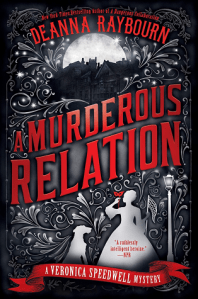
Serena’s Review: “A Murderous Relation”

35530507Book: “A Murderous Relation” by Deanna Raybourn

Publishing Info: Berkley, March 2020

Where Did I Get this Book: Edelweiss+

Book Description: Veronica Speedwell and her natural historian colleague Stoker are asked by Lady Wellingtonia Beauclerk to help with a potential scandal so explosive it threatens to rock the monarchy. Prince Albert Victor is a regular visitor to the most exclusive private club in London, known as the Club de l’Etoile, and the proprietess, Madame Aurore, has received an expensive gift that can be traced back to the prince. Lady Wellie would like Veronica and Stoker to retrieve the jewel from the club before scandal can break.

Worse yet, London is gripped by hysteria in the autumn of 1888, terrorized by what would become the most notorious and elusive serial killer in history, Jack the Ripper–and Lady Wellie suspects the prince may be responsible.

Veronica and Stoker reluctantly agree to go undercover at Madame Aurore’s high class brothel, where another body soon turns up. Many secrets are swirling around Veronica and the royal family–and it’s up to Veronica and Stoker to find the truth, before it’s too late for all of them.

Previously Reviewed: “A Curious Beginning,” “A Perilous Undertaking,” “A Treacherous Curse” and “A Dangerous Collaboration” 

Review: I was even more excited than usual to pick up the latest “Veronica Speedwell” mystery when it came out. Finally, at the end of the last book, it seemed like Veronica and Stoker were finally confirming their romantic interest in one another. But, in a cruel twist of authorial spite, readers were left right at the brink of these two actually acting on their feelings. So here, in the next book, how would this newly forming relationship affect their working relationship and would we finally see them actually together? Well, yes, but not necessarily in the way I would have preferred.

Immediately upon their return to London, Veronica and Stoker once again find themselves caught up in mystery and scandal. This time, rather than solve a mystery, they are tasked with protecting Veronica’s “family,” the monarchy that has not acknowledged her. To do this, they must go under cover into an elaborate private club in hopes of retrieving a rare jewel that can be used to implicate Prince Albert Victor. But things are never as simple as they seem, and soon enough Veronica and Stoker find themselves mixed up with familiar foes and wandering streets that are plagued by a horrific serial killer.

So, this was a bit of a frustrating read for me. It seems that recently the books in this series have been see-sawing a bit as far as my enjoyment goes. The third book I found to be a bit lagging, but I loved the fourth book. Sadly, here, we see a return to some of the dragging bits. Ultimately, I struggled with two aspects of this: first, like in the third book, it felt like the author was not willing to deal with the burgeoning romance she had started and instead created roadblocks and delays that didn’t feel natural to the story; and second, there was a distinct feeling of familiarity and lack of new material to this particular story.

When I said “immediately” in my book description about how quickly the mystery started, I meant immediately. So much so that the entire question of the burgeoning romance between Stoker and Veronica is effectively sidelined right off the bat. From there, the book is quick to establish how tired they both are, how the beginning of a case is not the right time, etc, etc. And then the rest of the book happens with the entire mystery taking place in one full swoop spanning a hectic day and a half or so. Right there, we have a problem. Regardless of how silly and obvious some of the “tiredness” and “not the right time” conversations felt, the mystery itself did not gain anything for having to frantically move fast enough from one element to another in order to prevent addressing the romantic elephant in the room. Emotional moments didn’t ring as true or feel as earned. The build-up, crescendo, and conclusion to the mystery itself felt rushed, making it hard to feel invested in what was happening. It all felt forced and I think hurt the story more than it accomplished…whatever it was trying to accomplish.

My second problem had to do with the actual elements involved in the story. Almost all of it were retreads of themes, characters, and dilemmas that were found in previous books. We’ve already covered much of the emotional groundwork to be had with regards to Veronica and her feelings towards a royal family who doesn’t want to acknowledge her unless she can do them some favor. There has already been an entire book about a salacious secret society, so the escapades at the private club feel all too familiar. Even the villain, for the most part, is a return to a motivation and individual we’ve seen before. And for all of that, the Jack the Ripper portions that are teased in the book description are barely worth mentioning.

The primary strength of the series has always been Veronica and Stoker themselves. But even they, when given tired material that offers no room for new personal growth, can only do so much. Veronica’s voice is still strong and compelling, but that’s probably the best that can be said. Stoker felt largely absent from the story, even when he was right there on the page. And the small bits of emotional groundwork covered between the two of them felt like, again, retreads of conflicts that had already been resolved. There is a payoff for these two at the end, but I found it to be too little too late.

Overall, I was pretty disappointed by this book. It felt like the author had ran out of ideas as far as the mystery went. And then was too scared to confront the changing romance she had started in the last book, so she threw in a bunch unnecessary and ridiculous roadblocks in order to write one more book between these two prior to any romantic commitment. I honestly don’t understand the concern here. I’ve often compared this series to the “Amelia Peabody” books. And in that series there was only one book before our main characters not only paired up, but got married! And then only one more book or so before they had a kid along with them! And that series never lost anything for resolving the “will they/won’t they” aspect early, let alone 5 books in like this one. Frankly, I feel like this shying away from resolving “will they/won’t they” relationships in general, across all media formats, needs to die a quick and final death.

I believe the author has a contract with a publisher to write at least two more books, so of course I’ll be reading them. And, at least given the events of the end of this book, this whole relationship thing should be settled. Hopefully she’ll come out with some more unique themes and elements, too. But if I catch even a whiff of forced drama to the romance of this story again, I’m pretty sure I’m out.

Rating 6: A disappointing follow-up after one of my favorites in the series so far. The author seemed to run out of ideas and resorted to pulling old tricks out of her hat. And then became a deer in the headlights with the romance she had written herself into at the end of the last book.

Reader’s Advisory: 

“A Murderous Relation” is a newer title so it isn’t on many Goodreads lists, but it is on “Historical Mystery 2020.”

Find “A Murderous Relation” at your library using WorldCat!

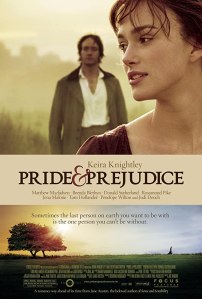
My Year with Jane Austen: “Pride and Prejudice” [2005]

mv5bmta1ndq3ntcyotneqtjeqwpwz15bbwu3mda0mza4mze40._v1_sy1000_cr006741000_al_Movie: “Pride and Prejudice”

Release Year: 2005

Actors: Elizabeth Bennett – Keira Knightley

Mr. Darcy – Matthew Macfadyen

Jane Bennett – Rosamund Pike

Mr. Bingley – Simon Woods

Comparison – “Indulge your imagination in every possible flight.”

So I’ll just preface this entire post with the fact that I’ve never particularly cared for this movie. For me, there are several problems with it as an interpretation of “Pride and Prejudice,” several characters seem to be completely out of character, and…ok, I also really dislike Keira Knightley almost always and this is by no means an exception to that.

I think it’s important to note, when comparing this movie to the BBC version, that the additional length is not a trump card for the latter. It isn’t simply better because it had much more time (though of course this doesn’t hurt it either.) But in this review series, this comparison is directly following “Sense and Sensibility,” a book that was successfully translated into BOTH a longer mini series and a feature length film to great effect. And I would go as far as saying that every other book has a feature length version that is more successful as an adaptation than this one is for “Pride and Prejudice.”

There are good things about it, of course. The cinematography is beautiful, vibrant, and definitely out classes the 1995 version that, not only due to age and time but style choices, is very washed out at times. The score is also dramatic and, combined with artistic uses of weather, brings an increased vitality to the story. I would also say that Rosamund Pike stands out as one of the characters who is better cast in this movie than Jane was in the 1995 version. Her beauty better matched the type of rare good looks that Jane was described as having. There’s also no denying that Keira Knightley is beautiful, too, but Pike’s glowing good looks do put even Knightley to the test, adding to the sense that Jane, not Elizabeth, would be credited as the beautiful one.

But as for many of the other characters, I think they were woefully miscast. Either miscast or their interpretations of the characters were so far from the ones we’re given on page that it feels as if either they or the writers (or both!) didn’t actually read the book. I’ll go into more specifics about the cast in the sections below as most of them neatly fill all the categories.

To end this section on a good note, there were some additions to this movie that were left out from the 1995 one that I liked a great deal. It’s only a little part, but I loved that this Lydia has the bit where she sticks her hand out the window to display her ring when she returns home after marrying Wickham. It’s only a small line in the book, but it perfectly illustrates how unchanged Lydia is by this whole debacle, and I love that it was included here. While I don’t like Knightley or Matthew Macfadyen in their roles, I do like that the movie added the bit of the two of them at Pemberley after they’re married. I wouldn’t have picked this scene and dialogue in particular, but it’s a nice nod to the fact that the book had several pages of story left after the proposal (something we didn’t really see in the 1995 version other than the weirdly-toned wedding itself).

Heroines – “I hate to hear you talk about all women as if they were fine ladies instead of rational creatures.”

Like I said, I don’t care for Keira Knightley as an actress in general, so this was always going to be a hard sell for me. I think she often overacts, and she has a few particular quirks that she brings to every role that I find incredibly distracting. Most notably, her mouth is always hanging open. Once you see it, you can’t stop seeing it! But beyond my personal distaste for her style, I think she was miscast in this role. That, or like I said before, the writing/directing really missed the mark if she was lead to this performance in any way. It feels like she read the character description and all she saw was “independent woman” and completely blocked out “refined and polished.”

Her emotions are all over the place, and even smaller confrontations, like that between Lizzy and Charlotte, feel blown completely out of proportion. And then there’s the proposal scene….oof. Looking at how this entire thing was staged, it’s clear the director was going for a dramatic, powerful scene (I don’t like this take on the scene in general, but that’s not on the actress). But for me, it was simply melodramatic and Knightley’s antics completely lost me. She in no way fits the bill of a lady of her time, all too often presenting Lizzy more like a “Jo March” type character than the respected, accomplished lady she was supposed to be. Lizzy stood out for her wit and sense (most of the time), not for wild bouts of adventure and emotion. Her liveliness was expressed in smaller moments, as typical of a lady of her time. Instead, Knightley translates that liveliness much more literally in a way that undercuts the respectability that is so important to the character, especially as it’s meant to be a contrast to the other three sisters.

To give props where props are due, I think Knightley does the best in the more comedic moments in the script. In particular, I always laugh at the part where she’s just heard the news of Lydia and Wickham’s “elopement” and is pacing in and out of the scene. Like in”Bend It Like Beckham,” Knightley is at her best in a comedy role rather than a dramatic one. So, too, her stronger moments in the original “Pirates of the Caribbean” were also centered around comedy. As that series progressed and the character moved in a more serious direction, Knightley’s performance followed a similar dip in quality.

I already mentioned Rosamund Pike as one of the standouts in this movie. She fits the bill perfectly for Jane, and unlike Knightley, her interpretation of the character felt more grounded in the time period of the movie.

Heroes – “What are men to rocks and mountains?”

Matthew Macfadyen definitely brings a unique take on Mr. Darcy. I get that he wanted to distance his performance from Colin Firth’s, especially considering how iconic Firth’s take on the character had become over the years, but I’m also not a fan of this interpretation of the character. Between Macfadyen’s take on the character, making Darcy seeming to simply suffer from excessive shyness more than anything, and the styling that has his hair all over the place and him looking like a general mess most of the time, I felt that the entire thing didn’t read Darcy at all. He definitely reads as a generic romantic hero, but Darcy he is not.

During the first proposal, readers (and viewers) should feel equally justified in Elizabeth’s righteous anger towards Darcy as she does. At that point in the story, her opinions seem solid and Darcy’s behavior is atrocious. But here, with Knightly getting right up in his face reaming him one over, I just felt sad for the poor, pathetic Darcy that Macfadyen gave us. It’s not the type of role reversal that does either character any favors in the long run.

I also hate, hate, hate this version of Bingley. I’m not sure if this was the actor’s decision or just the writing, but I have the exact same problem with Bingley here that I do with how Ron is presented in the Harry Potter movies versus the book. Both adaptations took a character who is all heart over head and reduced that down to a bumbling fool playing almost entirely for comedic value, completely at the expense of the character, leaving both as nothing more than caricatures. How are we to believe the friendship between Darcy and this dunderhead?

Again, one of the few moments where I think these versions of the characters do well are in the overtly comedic moments. Particularly, I like the scene where Bingley is practicing his proposal. It’s light, funny, and does a good job portraying the friendship between them.

Villains – “I do not want people to be very agreeable, as it saves me the trouble of liking them a great deal.” 

I have mixed feelings about Rupert Friend’s Mr. Wickham. On one hand, he’s much more good-looking than the 1995 actor, so it’s easier to understand Elizabeth being so quickly and thoroughly taken in by him. And everyone else for that matter also being enamored by him! But he also seemed too young. Obviously there doesn’t need to be a huge age difference, but I need to buy that this is a guy whose has already gone far enough in life to have tried to seduce a 16 year old and is now moving on to different strategies. He just seemed a bit too fresh faced for that aspect of things.

Judi Dench is fantastic as Lady Catherine. I like the 1995 version of this character, but in a comparison between the two, it’s easier to understand how others could be intimidated by Dench’s version of the character. The 1995 version of the character was more ridiculous seeming in all of her pomp and ego. It’s almost impossible to not take Judi Dench seriously, and it’s very believable that people would be quelled by her sheer presence. The way her visit to Longbourn was staged added drama and made her come across as truly sinister.  Like the broken record I am, I again had problems with Knightley’s take on this scene, but Dench killed it.

Romance – “A lady’s imagination is very rapid: it jumps from admiration to love, from love to matrimony in a moment.”

I genuinely think that if this had simply been a historical romance completely disconnected from the book, I would have enjoyed it a lot more. Again, Knightley was always going to be a problem for me, but that’s neither here nor there. Her acting aside, there’s no denying the great chemistry she has with Macfadyen. And if I wasn’t so distracted by how far off these characters are from what we were given in the book, I think I’d really appreciate the love story that’s presented.

This movie is simply beautiful to look at, and many of the more dramatic images are connected with important moments in the development of the romance. For a “Pride and Prejudice” retelling, I don’t like the overly dramatic rain proposal scene. For a generic romance though? It’s gorgeously shot. And the long, drawn out moment when Elizabeth and Darcy meet in the dawning morning towards the end? Lovely to look at, though perhaps a bit too long. I also really enjoyed the Netherfield ball scene, especially the long single shot that sweeps through many different rooms catching small moments with all of the characters.

As a romance story, all of these moments come together well. The actors have great chemistry, and if they were original characters, their personalities and the conflict, misunderstanding, and slowly built love story would all come across very well. I can just never escape the comparisons and how off they both felt from the original characters. I suspect, however, that this movie is much beloved by viewers who haven’t read the book or only read it once or twice. And I think a lot of that appreciation goes to how well the romance plays out.

Comedy – “For what do we live, but to make sport for our neighbors, and laugh at them in our turn?”

This movie definitely presents a different take on Mrs. Bennett, Mr. Bennett, and their relationship. Essentially, it’s much more kind to them all than the 1995 version or the book were. As I said in my review of the book, there really isn’t anything given on page that would hint that Austen was offering any true commentary on the plight of mothers with only daughters and very little income to justify Mrs. Bennett’s actions. She’s comedy all the way at best, and at worst actively hinders her daughters’ chances. Here, the movie goes out of its way, even offering up direct lines from Mrs. Bennett herself, to attempt to redeem some of the character’s antics. Overall, I’m fine with this, I guess, but I think it’s yet another example of this movie drifting away from the actual book characters in an attempt to make the movie more palatable to the average movie goer. I think this can be seen here, in the adjustments to Mrs. and Mr. Bennett (making them both more likable and their marriage better overall), and in the Elizabeth we are given who is definitely trying to check a more modern box of an “independent woman.”

I also want to touch on Tom Hollander’s Mr. Collins. This Mr. Collins is much easier to take than the one we saw in the 1995 version. Yes, he still has his ridiculous moments, but he’s nowhere near as smarmy as the Mr. Collins of the previous film. In this way, it makes Elizabeth’s even stronger negative reaction to Charlotte’s agreeing to marry him even more off-putting. This Mr. Collins is by no means the worst of the worst, and her extreme distaste to the union does in fact seem very judgy and snobby. The book definitely offers up this scene as an example of Elizabeth “not making allowances for differences in temper and situation” as Jane says, but *sigh* again this scene is way more dramatic than that small moment was in the book. It actually makes Lizzie quite unlikable, which is never a good thing for your heroine.

Fun facts – “Life seems but a quick succession of busy nothings.”

I wrote this section of the post last. This is important to note because you’ll have already read the part where I specifically mentioned the scene of Lizzie pacing in and out of the room when trying to deliver the news about Wickham and Lydia as one of my favorites. Turns out, Emma Thompson was brought in for a re-write of the script, and this was one of the specific scenes/directions that she gave. I knew I liked it for a reason, and it makes sense, then, that it stood out for me in this movie (one that I overall don’t particularly care for), given how much I liked Thompson’s script for “Sense and Sensibility.”

Also (again, just researching this bit after writing the rest of the post already), apparently the practice proposal scene was supposed to be much shorter and was lengthened because of how funny Simon Woods was. So…I think the takeaway is that I don’t really like the original writing/directing of this movie. And the parts that I did like came from other places!

Romola Garai auditioned for the role of Elizabeth. She was later cast as Emma in the 2008 version of “Emma.” She also played alongside Keira Knightley in “Atonement.” Keira Knightley also appears with Tom Hollander in the last two “Pirates of the Caribbean” movies in the original trilogy.

Best Movie Gif/Meme: “I dearly love a laugh.”

The one part of this movie that has stuck the most with me over the years is this delivery of lines by Tom Hollander as Mr. Collins. I find myself quoting it pretty regularly. Pretty much whenever we have potatoes for dinner. This, and the lines by Sam in “Lord of the Rings” also about potatoes. There’s something about the way both actors over-enunciate the word that makes both sets of lines immensely quotable.

In two weeks, I’ll review a modern adaptation, “Bridget Jones’s Diary.”

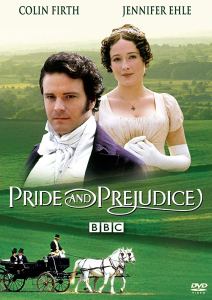
My Year with Jane Austen: “Pride and Prejudice” [1995]

mv5bmdm0mjflogytntg2zc00mmrkltg5otqtm2u5zjuyytgxzthixkeyxkfqcgdeqxvyntayodkwoq4040._v1_sy1000_sx706_al_Movie: “Pride and Prejudice”

Release Year: 1995

Actors: Elizabeth Bennett – Jennifer Ehle

Mr. Darcy – Colin Firth

Jane Bennett – Susannah Harker

Mr. Bingley – Crispin Bonham-Carter

Comparison – “Indulge your imagination in every possible flight.”

I am definitely in the camp of fans who believe that this version of “Pride and Prejudice” is the definitive, will-never-be-topped, adaptation of this book. Pretty  much everything is perfect, as far as I’m concerned. The casting in particular is so spot-on that I find it impossible to read the book now without picturing these people as the characters. There are stand-outs, of course, but I don’t have a single quibble with any of the choices. If I had to pick, I might say that I thought Matthew Goode’s Wickham in “Death Comes to Pemberley” might be a smidge better. But that’s only if I was forced to pick, as I have no complaints with Adrian Lukis’ take.

The fact that is a six part mini series allows this version to include not only all the big moments in the book (and many of the little ones to boot), but even add in some smaller, quieter moments that just help to flesh out characters even further. We see hints at Lizzy’s active, independent nature with scenes of her frolicking through the fields (of course making sure she’s not watched; she is a proper lady after all!) Bingley and Darcy have moments as friends, riding horses and viewing Netherfield; and in the end we get to actually see the scene where Darcy apologizes for meddling in his love affair with Jane. The camera drifts through the Bennett household through out the show, giving us small glimpses in the day-to-day ways each member of the household spends their time when not caught up in grand balls and the like. For the romance angle, we get lovely scenes like a recently bathed Darcy being entranced by Elizabeth as she play with a dog during her stay at Netherfield. And, of course, the lake scene, an added element that pretty much turned into the defining moment of this adaptation (so much so that it was listed All of these moments and more just add to the joy that is this story.

The one area in which is lacks, however, is the ending. A proposal while on a walk serves its purpose well enough on the page. But in a movie/mini series, the movement and inability for the actors to look directly at each other as they speak hurts the romance of the moment. And, for all of its length, much of the last few chapters of the book are cut out leaving us without some of the nicer moments of Darcy and Elizabeth while engaged and interacting with various family members. It’s really too bad as the inclusion of these post-proposal scenes was something that really stood out to me in this re-read as a strength of the book. Instead, this movie jumps almost directly from the proposal to the marriage (other than a nice scene between Jane and Lizzy, which, to be fair, if you’re only going to include only one, this was the right choice by far!).

I also love the light, bright score that makes up much of the music for this version. It fits so perfectly with the overall mood  as well as feeling

Heroines – “I hate to hear you talk about all women as if they were fine ladies instead of rational creatures.”

Jennifer Ehle is a treasure. Even more so than Firth’s Darcy, hers is the character that most perfectly fits how I imagined the book character and who now always serves as my mind’s image when I re-read the story. She perfectly balances the wit and vivacity of Elizabeth while never losing touch with the propriety of the times for which Elizabeth was also credited. She has a great ability to, I don’t quite know how to say it, but keep her face active? There’s a lot of sitting and talking in this story, but her face is always telling a story of its own, even if she’s not speaking and it adds to the sense of Elizabeth’s lively and playful nature. Even when she doesn’t laugh out loud (that would be improper!), it’s easy to see that she’s laughing on the inside. Her eyes even do sparkle, for heaven’s sake! I also liked that they really emphasized her independent nature by not only having her out walking about on her own (often used to indicate the passage of a season), but by setting several scenes around walks and being in out of doors settings.

Ehle also has great chemistry with Susannah Harker who plays Jane. The moments between the sisters at night in their bedroom are just the sort of scenes that ground this story in a realistic place that one still recognizes today: sisters sprawled out in their rooms talking about the hot gossip. Of course, they look much more refined while doing it than any of us do, I’m sure. Harker’s Jane is also pitch perfect. She is quiet, calm, and willing to go to great lengths to look for the good in people. But, like Bingley (who I’ll discuss next), Harker gives Jane enough earnestness and sense as to not come across as silly and foolish.

Heroes – “What are men to rocks and mountains?”

Of course, I love Colin Firth as Mr. Darcy. He manages perfectly to be both highly unlikable in the first half of the movie, and then, practically on a dime, turn to being highly likable and heroic. He’s handsome the entire time, which doesn’t hurt. But the movie definitely doesn’t shy away from showing Darcy at his worst in the beginning. He’s rude in public and in private, snobby and insulting of those around him, and, worst of all, playing along with Caroline’s own disdain.

I will, say, however, that the one misstep in this willingness to show Darcy at his worst was the letter he wrote Elizabeth. In the book, there’s a long section in which he details not only his problems with Elizabeth’s family, but also goes on at length about how he was convinced Jane didn’t return Bingley’s affection. There’s a brief line or two about this in the letter in this movie, but there isn’t nearly the amount of explanation around this that we have in the book. There, while still pretty harsh, it is easy to understand that Darcy could really have been lead astray here and, like Elizabeth, begin to forgive him for even that. But in the movie, it’s left feeling still pretty bad on his part. Luckily the Wickham stuff comes next and that’s the part that sticks with you, but it still leaves Darcy kind a worse light than I think he was in in the book.

I do like how they added scenes showing Darcy’s search for Wickham. Not only did it give him more action, but we got to see his heroics in action and it was clearly more than just a rich guy paying someone off to fix it. He’s out there on the streets tracking Wickham down.

I really like Crispin Bonham-Carter’s Mr. Bingley, too. He’s sweet, charming, but, unlike some adaptations, not a buffoon. His romance with Jane is adorable, but his relationship with his sisters and Darcy also makes sense. I particularly enjoy one scene when they’re back at Netherfield and he keeps trying to get a word in only to be interrupted by Caroline. It’s funny and also just adds to the “love to hate” quality for Caroline. I also really enjoy having the scene where Darcy apologizes to Bingley included. It’s also another good moment for Bingley in that we see him angry at Darcy but, just as quickly, go back to wishing for his friend’s approval. But, again, Bonham-Carter manages to play this quick switch with a sense of sincerity and earnestness that doesn’t leave Bingley looking foolish.

Villains – “I do not want people to be very agreeable, as it saves me the trouble of liking them a great deal.” 

As I said above, Adrian Lukis would be my only tough call if I had to pick a character whose been done better elsewhere. But even then, I think it is context dependent. The Wickham in “Death Comes to Pemberley” has a very different story than the Wickham we see here. Most notably, he’s already a known villain, so much so that he’s suspected of murder. Here, however, Wickham must not only be an unknown, but immediately likeable enough to fool our beloved Elizabeth. And in this, Lukis excels. He is charming, easy-going, and completely believable as just an average, good kind of guy. And to contrast that, he’s also equally smarmy at the end of the movie when he attempts to continue ingratiating himself to Lizzy after his “elopement” with Lydia. It’s uncomfortable to watch and just excellent.

Catherine de Bourgh is also particularly good. She sneers with the best of them, and I love the image of her literally chasing Elizabeth through the yard shaking her cane at her as she tries to get her to promise not to marry Darcy. There’s a particular facial expression, a narrowing of the eyes at Elizabeth, that the actress does during the first meeting at Rosings Park that my mom says is a look that I give. To this day I can’t decide whether to be insulted or pleased.

I also enjoy Anna Chancellor’s Miss Bingley quite a lot. She entirely hateable in the most fun way. One particular moment that comes to mind is when she confronts Darcy early in the movie asking what he’s thinking about. He says fine eyes and Chancellor does a very distinct flick of her own eyes at just the right point in her line to make it clear that Caroline is expecting herself to be the answer. It’s great.

Romance – “A lady’s imagination is very rapid: it jumps from admiration to love, from love to matrimony in a moment.”

There are quite a few added moments that help build the romance. Of course, the lake scene where its implied that Darcy is so tormented by his love for Elizabeth that he literally has to cool down by diving into the nearest body of water. But there are several other goods ones too. I already mentioned the early moment when he spots Elizabeth playing with a dog outside (notably, another opportunity for the movie to show a drenched Colin Firth as the scene involves Darcy bathing). There’s also another great moment where we see Darcy in London practicing dueling. At the end of a bout, he exclaims to himself “I shall beat this, I shall.” What woman doesn’t  want a man to be so besotted with her that he tries to drive it out of himself physically?

And, of course, the coup de gras: the look of pure adoration that he gives Elizabeth while she plays piano during her visit to Pemberley. My mom, sister and I once put together a list of romantic moments from movies that when put together would make the perfect romantic hero. This look from Darcy to Elizabeth was always top of the list. Firth practically trademarked it, and it’s immediately recognizable when he pulls it out again in “Bridget Jones’s Diary,” a modern retelling of “Pride and Prejudice” where he once again plays Darcy. We’ll get to that movie in a few weeks!

Like I said above, the movie does cut out many scenes from the end of the book as well as one of the visits Darcy and Bingley make before Bingley and Jane’s engagement. The visit makes sense, but I do wish they had included a few more moments of Elizabeth and Darcy happy together. Mostly, we just get a kind of somber wedding scene at the end, before it closes with a few joyful minutes of the happy couples riding off into the sunset. Notably, I think this is the only time in the entire movie that we see Colin Firth smile with teeth.

Comedy – “For what do we live, but to make sport for our neighbors, and laugh at them in our turn?”

Lydia really shines in this adaptation. In the book, she’s mentioned often enough as ridiculous, but we don’t really get to see her in action other than small snippets of dialogue here and there. But here, she really comes to life: all of the giggling, the running about, the forwardness. By the time she runs off with Wickham, it feels more like it was only a matter of time than a shock. There were a lot of great moments, probably best all around for comedy in general was the ball at Netherfield where we really feel how much of a challenge the elder miss Bennetts have at finding good husbands when surrounded by so much foolishness. But for Lydia in particular I really enjoyed the juxtaposition of her and Kitty coming to meet Elizabeth on her return trip from Rosings Park and Lydia saying how jolly a party they’ll make on the carriage ride home. The scene then immediately switches to the next day and we hear Lydia and Kitty squabbling as the carriage pulls away.

Mr. Collins is also excellent in all of his smarminess. The actor portrays him as hunched over in a false sense of humility and often has him out of breath when accompanying the ladies on walks. The book makes a brief reference to the fact that he doesn’t know all the steps to the dances at the Netherfield Ball, but here we actually get to witness it as he bumbles head first into another lady when dancing with poor Elizabeth.

And, of course, Mrs. Bennett is great, particularly with the actor’s portrayal of when Mrs. Bennett is taken to her room with nerves while Lydia is missing. She’s over-the-top, emotional, and irrational. Throughout the entire movie, this representation of Mrs. Bennett does nothing to excuse her ridiculous behavior as a worried mother figure going to extremes. And, given that so many of her lines are directly from the book, I feel that it’s a pretty honest take on what Austen had in mind.

Fun facts – “Life seems but a quick succession of busy nothings.”

Jennifer Ehle wanted the part so badly that she dyed her eyebrows a darker color and didn’t wash her hair the day before casting as she was worried that her naturally blonde color would be a mark against her.

Ehle was perhaps right to be concerned about hair color as Colin Firth was almost passed over for being “too ginger.” Andrew Davies, the showrunner, had to be talked into giving Firth a chance with hair dye as an option.

Joanna David (Mrs. Gardiner) and Emilia Fox (Georgianna Darcy) are  mother and daughter. David was cast first and when they were looking for a Georgianna (they went through 70 or so actresses) David’s daughter, Emilia was mentioned.

Susannah Harker, Jane, was pregnant while filming but the flowing outfits worked well enough for her to conceal it. She is also the daughter of Polly Adams who played Jane in the 1967 version of “Pride and Prejudice.”

Best Movie Gif/Meme: “I dearly love a laugh.”

This has been a favorite of mine for quite awhile:

In two weeks, I’ll review the 2005 version of “Pride and Prejudice.” 

My Year with Jane Austen: “Pride and Prejudice” Part II

1886._sy475_Book: “Pride and Prejudice”

Publication Year: 1813

Book Description: The romantic clash between the opinionated Elizabeth and her proud beau, Mr. Darcy, is a splendid performance of civilized sparring. And Jane Austen’s radiant wit sparkles as her characters dance a delicate quadrille of flirtation and intrigue, making this book the most superb comedy of manners of Regency England.

Part II – Chapters 35 – 61

Story – “The person, be it gentleman or lady, who has not pleasure in a good novel, must be intolerably stupid.”

While out walking the morning after the disastrous proposal, Elizabeth runs into Mr. Darcy once again who quickly passes off a letter to her and leaves. She reads it and discovers some shocking news. First, while she was correct about Darcy separating Jane and Mr. Bingley, she gets a better insight into his evaluation of her family’s behavior. He points to instances where all of her family, her father, mother, and three younger sisters behaved badly in public. He excludes Jane and Elizabeth, noting that they have always been perfectly proper and charming. Elizabeth is angry, but also recognizes the truth in what he says. He also points out Jane’s calm demeanor as misleading him into thinking she didn’t care much for Mr. Bingley. Again, Elizabeth is angry, but then reflects back on what Charlotte had advised months ago about Jane’s needing to show more of what she feels and concedes that perhaps for those who don’t know her, Jane might be hard to interpret.

But then the more shocking tale comes out, that of Darcy’s history with Wickham. While the first half of Wickham’s story is true, Darcy alludes to poor behavior in Wickham’s lifestyle almost from the moment of his reaching adulthood. And once Darcy’s father passed away, Wickham asked for money instead of the living. This was given and Wickham went his own way. But then when the living became vacant, he returned, presumably much in debt, and demanded the living be given to him anyways. This was refused. Later, Wickham went on to pursue Georgiana, only sixteen at the time, when she was staying with a governess and convinced her to elope with him. It was only Darcy’s surprise visit and Geogiana’s love for her brother that prevented her from not sharing the truth that prevented the elopement from happening. Darcy suspected that while Georgiana’s fortune was part of Wickham’s goal, revenge on Darcy was also part of it. He also writes that Colonel Fitzwilliam is also Georgiana’s care taker and thus knows all of these details if Elizabeth is so suspecting of him as to need to double check the truth.

Elizabeth is horrified, not only be the truth of these claims which she quickly realizes can’t be lies (it’s close to Wickham’s story, no brother would make up a story like that about his sister, and, of course, he’d not suggest she check with Fitzwilliam if it were untrue) but by her own lack of solid information to justify her prior opinions. Thinking back, she realizes that Wickham’s behavior has always been odd, sharing this information with her in the first place, having only known her for a day. And his avoidance of Darcy at the ball and the fact that once Darcy was gone from the neighborhood, suddenly the story was everywhere, even though Wickham had first claimed he’d never share it, for his supposed love of Darcy’s father. Elizabeth is miserable and is secretly relieved when she returns to the Collins’ and learns she’s missed Darcy’s leave-taking of the neighborhood.

Elizabeth heads back home. On the way, she stops in London to meet up with Jane and travel the rest of the way back with her. Jane is still obviously upset about Bingley, but Elizabeth distracts her with news of Darcy’s proposal and Wickham’s true history. Jane desperately tried to create a situation where they’re both good people, but Elizabeth claims that she now believes all goodness to be only Darcy’s. Back home, the hear that the regiment is scheduled to leave their town. Elizabeth is relieved. However, Lydia is soon asked to be the special companion of the wife of the colonel of the regiment and accompany them. Elizabeth warns her father about the evils of Lydia continuing to run about as a wild flirt, that it hurts not only Lydia’s own future respectability but she also harms her sisters by proxy. Mr. Bennett essentially pats Elizabeth on the head and says that peace will only be had at home if Lydia is allowed go. And so she does.

Elizabeth’s travels continue as she joins her Uncle and Aunt Gardner on a tour of the countryside. They eventually come into the neighborhood of Pemberley and the Gardner’s express an interest in seeing it. After learning Darcy is not at home, Elizabeth agrees. However, while they’re their, Darcy unexpectedly returns catching Elizabeth by surprise. Much awkwardness ensues, but Darcy is quick to put on the most social and friendly face that Elizabeth has ever seen from him. He is kind to her aunt and uncle and expresses a wish to introduce his sister to Elizabeth while she’s in the neighborhood. He’s so intent on this goal that he brings his sister to visit the very next day, the same day she arrives home. With her comes Mr. Bingley who fishes around for information about Jane.

The next day Elizabeth and her aunt call on Georgiana while at home. While there, Caroline needles Elizabeth about the militia leaving her town, clearing hinting about Wickham, much to Georgiana’s dismay. Later, once the guests have gone, Caroline once again begins negatively evaluating Elizabeth. She finally goads Darcy into speaking only to hear him proclaim that he thinks Elizabeth is one of the most handsome women he knows.

The next day still Elizabeth finally hears from Jane. She writes of terrible news, that Lydia has eloped to London. Worse, they’re not sure the marriage has taken place and she begs for Elizabeth and co. to return. Darcy comes upon Elizabeth right after she finishes the letter and she confesses all of it to him. He comforts her, but leaves fairly quickly; she imagines this is the last she’ll see of him given this new shame on her family.

Once home, Mr. Gardner quickly goes to London to meet up with Mr. Bennett who is already there. Eventually, however, Mr. Bennett has to return after not accomplishing much. Soon enough, though, they hear news from Mr. Gardner that Wickham and Lydia have been found, they are to married, and there will be some money leftover after it all. Mr. Bennett sees this for what it is: Wickham has been paid off handsomely to persuade him to marry Lydia, likely by Mr. Gardner himself. Mrs. Bennett insists they invite the new Wickhams to visit and they do. While there, Mr. Wickham once again starts up conversations with Elizabeth about his wrongs at the hands of Mr. Darcy. She hints enough about knowing the truth that he quickly shuts up.

While visiting, Lydia lets it slip that Mr. Darcy was at their wedding. Elizabeth quickly writes to her Aunt Gardener to get to the truth of the matter. Her aunt writes back saying Darcy did everything: located Wickham and Lydia, arranged all matters, and paid off Wickham to marry Lydia. Darcy claimed responsibility for Wickham’s bad reputation not being known and thus Lydia falling into his clutches. Her aunt also hints that they were OK with him taking such a lead because he obviously has an interest in the family…if Elizabeth knows what she means.

Shortly after Wickham and Lydia leave, Mr. Bingley unexpectedly comes back to the area, bring Mr. Darcy with him. On their visit, Mr. Bingley clearly remains interested in Jane, but Darcy in stand-off-ish. Soon enough, Mr. Bingley finally proposes to Jane. Everyone is overjoyed, but Elizabeth is worried to hear Darcy has gone back to town before she is able to thank him for what he did for her family. Not long later, Lady Catherine makes a sudden appearance. She demands a private audience with Elizabeth and proceeds to inform her that she’s heard that Elizabeth is soon to be engaged to Mr. Darcy; Lady Catherine is not pleased. The two argue, with Lady Catherine insisting that Elizabeth promise never to do such a thing and Elizabeth adamantly refusing to agree to such a ridiculous request. Lady Catherine leaves, unsatisfied.

Soon after, Mr. Darcy returns. On a walk with Elizabeth, while Jane and Bingley  wander behind them, Elizabeth finally manages to thank him for his help with Lydia. He protests and says he did it for her and again asks her to marry him. This time she agrees.

The book concludes with some shorter scenes describing Elizabeth breaking the news to her mother, writing a joyous letter to her aunt, and sharing her happiness with her sister. After the wedding, we learn that she forms a good friendship with Georgiana, and that after a year living close to the Bennett family, Jane and Bingley break down and move close to Pemberley themselves. All is well, and Mrs. Bennett ends with not one, not two, but three daughters married (though no one really wants to talk about the one…)

Heroines – “I hate to hear you talk about all women as if they were fine ladies instead of rational creatures.”

Oh, Elizabeth, our beloved Austen heroine. Many people point to her as the most approachable heroine for modern readers due to her wit and independence. Alongside her, Emma is often also named, another witty, independent lady. But do you know what else both of these favorites have in common? Both of their stories revolve largely around their own personal growth. Each starts out feeling very comfortable with themselves, but over the course of the story, they both realize they have some pretty big flaws that have misled them and hurt people. And then they go on to do the personal work to improve themselves. What’s more, this personal work is directly responsible for bringing about their own happy endings. Elizabeth wouldn’t have ended up with Darcy if she didn’t acknowledge her own role in their previous bad relationship. Emma wouldn’t have ended up with Mr. Knightley if she didn’t realize that she shouldn’t play games with other people. This is what I think truly makes these two heroines people’s favorites. There’s nothing more sympathetic to a reader than a character who reflects ourselves, flaws and all. One who highlights that these flaws can be overcome, past wrongs can be made right (or at least avoided in the future), and maybe this effort will be rewarded with some hot, rich dude falling in love with you! Cuz it’s still a wish-fulfillment book, let’s be real.

For me, personally, the other big appeal of Elizabeth is her smart conversation. Particularly her come-backs to the attacks from Lady Catherine. I’m definitely one of those people who spends too much time in the shower thinking up all the smart responses I should have said in the midst of some argument. I’ve pretty much given up hope of every having the perfect response come off my tongue at the right time. But Elizabeth, she’s a master. Lady Catherine says something rude. Boom! Elizabeth has the perfect zinger in reply. One after another. It’s all very cathartic.

Poor Jane, on the other hand. First she’s in London having to endure the harsh realization that Caroline Bingley is kind of a b. Then she ends up being home without Elizabeth, her other source of sanity, when all of the Lydia nonsense first goes down. And even in the end, with her happy ending in hand, there’s a line about how the Wickhams would often over stay their welcome with the Bingleys. Ah well, there’s the price of too much niceness! It’s all well and good, but Elizabeth had several wise points about there being a line between reason and foolish goodwill. At least they eventually moved away from Netherfield and at least go some semblance of distance from the more immediate Bennett drama.

Heroes – “What are men to rocks and mountains?”

In many ways, the reader experiences a similar sense of surprise and shock as Elizabeth does by Mr. Darcy’s about face at Pemberley. What’s more, we have even more insights into his changed behavior as we see his interactions with Caroline Bingley later. But what makes these changes feel real, and not just a facade put on to please a woman who has called him out (like perhaps the relationship between Fanny and Henry Crawford in “Mansfield Park”) are all the smaller moments they are paired with.

Elizabeth and her aunt and uncle rightly recognize the weight of the praise that comes from the housekeeper. And Mr. Bingley’s good opinion begins to reassert itself as an important testament to Darcy’s long-standing goodness, even if it was shrouded in pride before. We also see enough evidence of Darcy remaining the same in many ways, if better behaved overall. Elizabeth notes that Mr. Bingley likely got something like permission/a blessing from Darcy before pursuing Jane again. Darcy is still removed and distant in large groups. And, of course, the secrecy and rather forceful (if still good) insistence on doing everything himself with regards to Wickham.

Whenever I re-read this book, I always find myself falling into a similar camp as Elizabeth does early on with regards to Mr. Bingley: any man who can be talked out of his love for a woman based on his friends’ criticisms of her is not worth having. But then we get the letter that highlights, in particular, the fact that Bingley was convinced by others that Jane didn’t actually care for him. And then as the book continues, and as we come across Mr. Bingley again at Pemberley, all the smaller character moments for him begin to settle in again and it becomes easy to understand and forgive. From very early moments in the book, we see how, while confident in general, Mr. Bingley does look to Darcy as a source of sound judgement. We also see a lot of reminders of Bingley’s humble nature (of the extreme sort, similar to Jane) that would make him even more prone to not trusting his own opinion with regards to Jane’s feelings for him.

Villains – “I do not want people to be very agreeable, as it saves me the trouble of liking them a great deal.” 

Wickham is by far the most famous of Austen’s villains, and for good reason. While Willoughby was potentially worse (unlike Wickham who probably did intend to marry Georgiana for her fortune and his revenge on Darcy, Willoughby seduces Brandon’s ward for nothing and then ends up abandoning her to her ruin),  we see a lot more of Wickham in this book, both before and after his character is known. But like Elizabeth, it is easy to be taken in by him at first. There are a few clues sprinkled here and there that reveal his true character, but they are of the sort that only become glaring after Darcy’s history is provided and Elizabeth reflects back.

But the letter itself is condemning in all of the worst ways. It’s impossible not to feel for Elizabeth as months-worth of preconceptions come crashing down around her, revealing unflattering aspects of her own self she hadn’t been aware of. But what is even worse is the sheer sense of sliminess that exudes from even the mention of Wickham from there on out. Lydia, on first meeting back up with Elizabeth, crows about how Wickham is freed from having to marry the unpleasantly-freckled Miss King. But Elizabeth sees this for what it was: yet another botched, mercenary attempt by Wickham to pursue a vulnerable young woman.

And, of course, his coup de gras, the elopement with Lydia. But in this re-read, what really stood out was Wickham’s behavior when he and Lydia return to the Bennett household. First off, the sheer ballsiness of returning at all! This is a family whose daughter he recently whisked away and who knows he had planned to simply abandon at a moments notice had he not been paid off! There has to be something off in the head of a person who could walk back through that door, apparently without any shame or remorse. And then, to go a step further, and start up a conversation with Elizabeth again about his past. If it ever needed to be made more clear that Wickham never truly respected or cared for Elizabeth, this conversation confirms it. If he had had any true respect for her, she would have been the one to avoid the most, let alone start up a conversation about lies that he must have suspected she already had begun to question. Even without that, any respect for her or understanding of her character would have a made it clear to him that she would not forgive and forget, even if the more silly members of the rest of her family would. This all makes it clear that his friendship with her was based on nothing more than his enjoyment in basking in her attention and growing esteem without sharing any similar respect for her.

The other villain pales in comparison to Wickham, but I have to think Lady Catherine belongs in this category. That her efforts had no effect on one party and actually encouraged the other is beside the point; her intentions were clearly villainous. Though I will say that this is one of the instances of having a “villain” who you love to hate. I’m pretty sure one of my high school friends, Hallie, loved this book almost purely for this last scene between Elizabeth and Lady Catherine.

Romance – “A lady’s imagination is very rapid: it jumps from admiration to love, from love to matrimony in a moment.”

I think it’s fairly undisputed that the romance between Darcy and Elizabeth is one of literature’s greatest love stories. Of course, many lovers of romance stories enjoy the “enemies to lovers” tropes and this is one of the early examples of it. And it still holds up as one of the best examples of it, in my opinion. Mostly because Austen wasn’t lazy about it. Both of these “enemies” had to reconcile within themselves their own failings that lead them to being enemies in the first place. And from there, we see each have to make concrete steps to self-betterment and have the grace to accept what the other is offering. Darcy makes a concentrated effort to be welcoming to the Gardners (two people he had previously scoffed at, if only in theory). And Elizabeth makes her own efforts to re-start their relationship, being open to the revised histories that she’s now hearing of him (from the housekeeper and from Georgiana). All of this leg work that is done in the middle of their romance is the part that is all too often left out of modern “enemies to lovers” stories. There, we often see two characters “hate” each other (usually for no real reason), then realize how super hot the other one is, make out for a bit, and then suddenly be in TRU LUV 4EVER. The middle section is completely skipped over. They literally go directly from enemies to lovers. It’s not only unbelievable, but nowhere near as compelling as the very human changes we see Darcy and Elizabeth go through. Not to mention, we all love that scene where Darcy shuts down Caroline with the line about Elizabeth being one of the most handsome women in his acquaintance.

All of this presents a stark departure from the romances we saw in “Sense and Sensibility.” Like the first half of the book, we have brief moments where we see our heroes experiences (the Caroline/Darcy moment that I mentioned just a bit ago). And we also see the lead up to, the actual engagement itself, and even several scenes after the fact. This is a lot more payoff than we saw between either Elinor/Edward or Marianne/Brandon.

Comedy – “For what do we live, but to make sport for our neighbors, and laugh at them in our turn?”

There’s really not a whole lot of comedy in this second half. The serious nature regarding Wickham’s past and the even more serious real time events with regards to him and Lydia overwhelm many of the comedic characters. Mrs. Bennett is still ridiculous, but beneath that is a mother who is truly worried about a lost daughter. And her nerves, in the past a largely harmless quirk, become an active burden upon a family who has more than enough on their plate without having to devote extra care to a needlessly bedridden woman. It is also harder to laugh at her nonsense when that nonsense includes the complete 180 back to adoring both Lydia and Wickham, with her fawning over the two of them during their visit, all past harms forgotten. And for her part, Lydia is so obnoxious that it’s hard to not feel viscerally uncomfortable whenever she or Wickham are on page.

Mr. Collins, too, is mostly represented in this half by the truly awful letter he writes to the Bennetts while Lydia is lost, saying that it would be better for her to be dead than their current situation. Sure, there are elements of the comedic here, but again, it’s overwhelmed by the terrible things he’s saying to those who are his family. Also, one can only imagine that he also joined in with Lady Catherine’s toxic assessment of Elizabeth’s failings as a potential Mrs. Darcy.

Favorite quotes – “What did she say? Just what she ought, of course. A lady always does.”

There a bunch of popular quotes from this book, but I want to focus on a few that aren’t always seen on mugs and the like. Not that I don’t love those, too.

“Angry people are not always wise.”

This one is pretty self-explanatory. Very true, very insightful, and should in fact be on a mug.

“If gratitude and esteem are good foundations of affection, Elizabeth’s change of sentiment will be neither improbable nor faulty. But if otherwise – if regard springing from such sources is unreasonable or unnatural, in comparison of what is so often described as arising on a first interview with its object, and even before two words have been exchanged, noting can be said in her defense, except that she had given somewhat of a trial to the latter method in her partiality for Wickham, and that its ill success might, perhaps, authorize her to see the other less interesting mode of attachment.”

This is a very thoughtful little paragraph towards the end of the book. And it’s especially interesting after having just read “Sense and Sensibility.” Between that entire book’s theme and this paragraph, I think we can definitively say that Austen was skeptical to the highest degree of the romantic, sentimental “love at first sight” attitude. I suspect that had Austen been alive today, she’d be writing novels, “Northanger Abbey-like,” in response to the YA trend about ten years ago of over-the-top love at first sight found in books like “Twilight” and its ilk.

“Are the shades of Pemberley to be thus polluted?”

This line makes me laugh out loud every time. It’s so ridiculous and hyperbolic that in one fell swoop Lady Catherine shows all her cards as far as her poor manners and character go.

Final thoughts – “I declare after all there is no enjoyment like reading!”

This was my first favorite Jane Austen novel, as it is for many fans, I think. As I’ve re-read all of Austen’s books and gotten older, others have risen, and I’d probably have a hard time now picking an all-time favorite. But it’s easy to see the general appeal of this story. Elizabeth is by far the easiest Austen heroine to immediately love. She’s smart, independent, charming: pretty much everything every woman wants to be! And on top of it all, she has flaws that keep her grounded as a believable character, flaws of the sort that many of us likely catch ourselves struggling with every now and then.

It has a whole host of great comedic characters, with Mrs. Bennett and Mr. Collins likely vying for the best comedy throughout all of Austen’s works (though “Emma” does have a good number of great ones, too). The other supporting characters all offer interesting insights into the story as it goes, with Jane’s goodness (sometimes to the point of blindness) and Charlotte’s sense of practicality (sometimes to the point of foolishness).

And, of course, the romance is of the sort that still greatly appeals to people today. The “enemies to lovers” trope is everywhere and anywhere to be found. But Austen does it best! By grounding both our hero and heroine on solid foundations, their original conflicts are believable and the slow process of their growing to understand and appreciate each other is not rushed. They aren’t even on the same time line with this process, making it all the more realistic. But I think a lot of it comes down to the simple fact that many of us whole-heartedly agree with this sentiment:

“It was gratifying to have inspired unconsciously so strong an affection.”

In two weeks, I’ll review the 1995 version of “Pride and Prejudice.”

Kate’s Review: “The Deep”

46371247Book: “The Deep” by Alma Katsu

Publishing Info: G.P. Putnam’s Sons, March 2020

Where Did I Get This Book: I received an eARC from NetGalley

Book Description: From the acclaimed and award-winning author of The Hunger comes an eerie, psychological twist on one of the world’s most renowned tragedies, the sinking of the Titanic and the ill-fated sail of its sister ship, the Britannic.

Someone, or something, is haunting the ship. That is the only way to explain the series of misfortunes that have plagued the passengers of the Titanic from the moment they set sail. The Titanic’s passengers expected to enjoy an experience befitting the much-heralded ship’s maiden voyage, but instead, amid mysterious disappearances and sudden deaths, find themselves in an eerie, unsettling twilight zone. While some of the guests and crew shrug off strange occurrences, several–including maid Annie Hebbley, guest Mark Fletcher, and millionaires Madeleine Astor and Benjamin Guggenheim–are convinced there’s something more sinister going on. And then disaster strikes.

Years later, Annie, having survived that fateful night, has attempted to put her life back together by going to work as a nurse on the sixth sailing of the Britannic, newly refitted as a hospital ship to support British forces fighting World War I. When she happens across an unconscious Mark, now a soldier, she is at first thrilled and relieved to learn that he too survived the tragic night four years earlier. But soon his presence awakens deep-buried feelings and secrets, forcing her to reckon with the demons of her past–as they both discover that the terror may not yet be over.

Featuring an ensemble cast of characters and effortlessly combining the supernatural with the height of historical disaster, The Deep is an exploration of love and destiny, desire and innocence, and, above all, a quest to understand how our choices can lead us inexorably toward our doom.

Review: Thank you to NetGalley for providing me with an eARC of this novel!

It’s been ten years since I was working at our local Science Museum and had shifts in the Special Exhibit about the Titanic, and while I am intrigued by the story still, I’m also a tiny bit burnt out on it. This doesn’t necessarily discourage me from reading stories that are related to or based upon the maritime disaster, however, because if I love the author or the premise sounds promising I’ll happily give it a whirl. Because of this, when I heard that Alma Katsu’s newest horror novel, “The Deep”, took place on the Titanic (and also on the similarly doomed sister liner The Britannic), I immediately requested an eARC from NetGalley. Lucky for me, I was given access. Given how much I LOVED Katsu’s take on the Donner Party in “The Hunger” (as reviewed HERE), I was all in for what she could do with the Titanic.

giphy-2
And I hoped it would leave out a hokey romance. (source)

Katsu has once again brought beautiful prose and an eerie supernatural twist to a well known tragedy, and I think that I liked “The Deep” even more than I did “The Hunger”. She utilizes both actual historical figures such as Madeleine Astor, Lady Duff Gordon, and W.T. Stead, as well as original characters to give an all encompassing view of what happened during the ill fated voyage, and what roles everyone played in each other’s experiences both before and after the iceberg. It is the characterizations of all these characters that “The Deep” found it’s greatest strength, and given how much I loved the other parts that says something. Katsu mostly uses the real life characters to examine the social roles that they all played at the time, to great effect. My favorite to follow was Madeleine Astor, the VERY young, pregnant wife of mogul J.J. Astor. Her age is definitely alluded to through her immaturity compared to other characters, but we also get to see how the position she was in couldn’t have been easy. She was always seen as a trophy wife and her legitimacy was questioned by Astor’s family after his death, and Katsu gets into her head and really explores the insecurities that a young wife at this time in her situation almost certainly would have had. I really looked forward to her chapters, because they always left me with such bittersweet feelings. Our original characters mostly focus on stewardess Annie, whose story is told in flashbacks on the Titanic and in the present on the Britannic, where she has become a nurse thanks to her friend Violet Jessup (an actual woman who survived BOTH sinkings). We slowly find out that something strange is afoot on the Titanic, a ghostly presence of some sort, and see through the flashbacks and the present just how it has affected Annie, and how she has affected others. Annie is clearly traumatized by the time she gets on the Britannic, but there are hints that even before she was on the Titanic that something is afoot with her. Along with her we get Mark and Caroline, a young married couple with a small child in tow. Annie is drawn to Mark, and her interest begins to feel like downright obsession over him and his daughter. There, too, is the mystery, as it seems like Mark reciprocates, but then perhaps he doesn’t. The unreliable narration that comes from multiple characters really helped the mystery at hand. I was kept guessing pretty much the entire time as to what kind of supernatural hijinks were afoot, and how it connected to our cast of characters.

And speaking of the supernatural, like in “The Hunger” Katsu perfectly balances the eerie and unsettling along with more subtle and underlying horrors of the real world. It isn’t completely clear from the get go just what we are dealing with in terms of supernatural themes, but as it’s slowly revealed we get to explore the ideas of spiritualism that were popular at the time, as well as lesser known mythologies that line up with some of our characters backgrounds and culture. This easily could have gone in a predictable fashion, as a ghostly presence on a ship like this is no doubt filled with possibilities, no matter how obvious. But instead we got a suspenseful story that combines things that go bump in the night with the horrors of gender, class, and obsession. I really, really loved how she tied it all together and how well she pulled it off.

“The Deep” is another triumph from Alma Katsu. She brings historical fiction horror to new heights, and if The Donner Party was a little too gruesome, The Titanic will be a good way to experience what she can do with the genre.

Rating 9: Haunting and chilling, “The Deep” brings new spooky life to the Titanic story, and paints a supernatural picture that is effortlessly as emotional as it is suspenseful.

Reader’s Advisory:

“The Deep” is new and not yet on many Goodreads lists, but I think that it would fit in on “Fiction Books About The Titanic”.

Find “The Deep” at your library using WorldCat!

My Year with Jane Austen: “Pride and Prejudice” Part I

1886._sy475_Book: “Pride and Prejudice”

Publication Year: 1813

Book Description: The romantic clash between the opinionated Elizabeth and her proud beau, Mr. Darcy, is a splendid performance of civilized sparring. And Jane Austen’s radiant wit sparkles as her characters dance a delicate quadrille of flirtation and intrigue, making this book the most superb comedy of manners of Regency England.

History – “I read it a little as duty, but it tells me nothing that does not either vex or weary me.”

 When “Pride and Prejudice” was first completed, Jane Austen’s father, believing it to be quality writing, submitted it for publication. It was rejected. Austen then moved on to writing “Sense and Sensibility” and self-publishing that title herself. After its success, she sold the copyright to “Pride and Prejudice” to a publisher who listed the title as by the author of “Sense and Sensibility.” Like that first novel, “Pride and Prejudice” was an immediate success, and the publisher ordered several reprints of the story after the first  run sold out. This, of course, resulted in the publisher profiting much more from this title than did Austen who only earned 110 pounds on the original copyright sale. Austen, however, was pleased with its success and especially with the critical praise that was garnered by her heroine, Elizabeth Bennet. (source)

“”I must confess that I think her [Elizabeth] as delightful a creature as ever appeared in print, & how I shall be able to tolerate those who do not like her at least, I do not know.” 

 —Jane Austen, letter to Cassandra Austen,  January 29, 1813

Part I – Chapters 1 – 34

Story – “The person, be it gentleman or lady, who has not pleasure in a good novel, must be intolerably stupid.”

We are first introduced to the Bennet family as we hear Mrs. Bennet share the exciting news that a wealthy gentleman has moved into the neighborhood. To her, this provides much hope that one of her five daughters might marry well, a necessity in a family that is by no means wealthy, has no sons, and whose estate is entailed away to a distant cousin. After teasing his wife and the sillier of his daughters, Mr. Bennet does visit Mr. Bingley.

The rest of the family then meets him at a ball. There, the eldest Miss Bennet, Jane, does in fact gain the attention of Mr. Bingley. But Elizabeth, the second oldest, gets spurned by the more rich but more proud Mr. Darcy, a friend of Bingley’s. Elizabeth finds this mostly amusing and is happy enough to see her sister be happy. As the weeks progress, they see more of Mr. Bingley and his snobby sisters. Jane is invited over for a dinner by the sisters, but comes down with a bad cold after her mother insists she ride in the rain (hoping for an outcome where Jane is forced to stay the night, though illness was not part of the plan.) Elizabeth goes to care for Jane and spends a good deal of time with the entire party. She draws more and more of Mr. Darcy’s attention (who, we learn, has begun to admire her fine eyes), but neither are particularly pleased by this fact. Jane recovers and the two go home.

The Bennet family is then visited by their cousin, Mr. Collins, who is in line to inherit their home. Mr. Collins is a silly, pompous man, much inclined to give nonsensical speeches and praise his wealthy patroness, Catherine de Bourgh. He also sets his eyes on marrying one of the Bennet sisters and decides on Elizabeth once he learns that Jane is out of the question due to her informal attachment to Mr. Bingley. The family also meet a new officer (a regiment of the army is stationed in the town nearby, much to the delight of the two youngest, and silliest, of the sisters), Mr. Wickham. In the process of making their first introductions, Mr. Darcy and Mr Bingley stop by. Elizabeth notes the cold meeting of Mr. Darcy and Mr. Wickham and privately wonders about it.

They are all charmed by Mr. Wickham’s easy nature and open temperament, but Elizabeth is the lucky woman who is singled out by him for more attention. In the course of an evening on their second meeting, he shares the shocking history between him and Mr. Darcy. The two grew up together, Wickham’s father being the late Mr. Darcy’s groundskeeper, and Mr. Darcy’s father was very attached to Wickham. So much so that he left a valuable estate to him on his death. But when the tragic event happened, the son refused to uphold his father’s will and Wickham was cast out into the world to fend for himself. Elizabeth is shocked that Darcy, whom before she had thought was only proud and rather rude, is as bad as this. She later retells the story to Jane who warns her about making quick judgments against either man.

Mr. Bingley hosts a grand ball at Netherfield, an event all of the Bennet sisters look forward to greatly. Once there, however, Elizabeth is disappointed to find that Wickham has decided not to come, not wanting to be near Mr. Darcy. Instead, she ends up having to dance first with Mr. Collins, and then, shockingly, with Mr. Darcy himself. The two have an awkward dance filled with alternating silences and conversation hidden with double meanings as Elizabeth tries to get to understand Darcy better. The evening is a disaster from there on out. Mary, the middle daughter, makes a poor display on the piano, followed by an even more awkward display by Mr. Bennet has he tries to get her off the piano. The two youngest flirt wildly with everyone in their path. Mr. Collins confronts Mr. Darcy without introduction having found out that Darcy is the nephew of Lady Catherine. And Mrs. Bennet loudly congratulates herself on what she suspects to be the likely marriage between Jane and Mr. Bingley.

The next morning Mr. Collins proposes to Elizabeth. She turns him down. And then has to keep turning him down for quite some time before being forced to just leave the room as he insists on not getting the point. But, to everyone’s amazement, his trip does not end with him returning home, still single, because he then proposes to Elizabeth’s dear friend, Charlotte, who, being in her late 20s and from a family without many prospects, agrees.

Around this same time, Jane receives the distressing news that Mr. Bingley and his entire party have removed themselves back to London. His sister, Caroline, even goes so far as to say that she and her sister are hoping for a quick engagement between Bingley and Mr. Darcy’s younger sister, Georgiana. Jane is distressed, but Elizabeth is quick to tell her that this is clearly a plot by the sisters and friend who never approved of Jane and Mr. Bingley’s attachment. But weeks go by with no news of their returning. Their Uncle and Aunt Gardner come to visit and Jane is asked to go back with them to London when they return home. All are hopeful that she will meet with Bingley again there.

Charlotte asks Elizabeth to come visit her in her new home with Mr. Collins. Elizabeth agrees, though not particularly looking forward to it. Once there, she gets to meet the famed Lady Catherine. She’s a overly proud woman who takes a great deal of interest making proclamations about even the smallest aspects of the Collins’ lives. While there, Mr. Darcy and his cousin Colonel Fiztwilliam come to visit their aunt. Charlotte notes that Mr. Darcy is making more of an effort to call on her family than usual and says it must be due to Elizabeth. Elizabeth scoffs at this idea, though she does wonder at the number of times she meets him while on walks around the park.

She finds Colonel Fitzwilliam to be a very charming man and gets along with him well. On one walk, Colonel Fitzwilliam share some details about how his cousin, Mr. Darcy, congratulates himself on recently saving his dear friend, Mr. Bingley, from a bad marriage. Elizabeth is furious and hurt that her sister’s happiness was ruined by his friend’s interference. Later, alone at the parsonage, Mr. Darcy arrives and unexpectedly proposes to Elizabeth. She refuses. The encounter ends with the two fighting. Elizabeth accuses Darcy of separating Jane and Bingley and also points to his dishonorable treatment of Mr. Wickham. Mr. Darcy makes more belittling comments about Elizabeth’s family and her situation saying that he was kinder to Bingley than to himself in preventing his friend from a connection so beneath himself. He is shocked by the accusations about Wickham but doesn’t directly refute them. He leaves and Elizabeth remains behind, stewing.

Heroines – “I hate to hear you talk about all women as if they were fine ladies instead of rational creatures.”

I think it can be reasonably assumed that Elizabeth is one of the most beloved heroines to ever be penned. Her character is one that could be appreciated in the time she was written but who also appeals to modern readers who can be put off a bit by the more reserved leading ladies of books written at a similar time. She handles a lot of uncomfortable situations in a way that I think most of wish we could, with a smirk, a witty reply, and the ability to say what she thinks without offending others. She’s romantic, wishing to marry for love, but also the most practical of her sisters, being much more cynical than Jane. She’s also flawed. But unlike Emma, the other famously flawed Austen heroine, Elizabeth’s flaws are of the sort that many of us can sympathize with, especially her own lack of awareness that she even possesses this flaw. For the most part, she’s clear-eyed and an excellent judge of character. So it’s easy for her to then slip into a judgement of someone and not question or challenge her own thoughts further. It’s not until the second half of the book that she has to confront this challenge, but I think this self-reflection and learned self-awareness is still very appealing to modern readers. That, and, as I’ll go into later, she has the best lines, especially when arguing.

Jane is our other heroine. She’s an interesting character, really. Elizabeth clearly respects Jane, and Jane is spoken about as being of good sense and rationality. But she pairs these traits with an almost aggressive level of optimism that leaves her almost paralyzed in the face of the evils of the world. And yet Elizabeth, and the reader by proxy, never judges her as foolish. Yes, she’s wrong about Caroline. Yes, when she tries to make both Darcy and Wickham into good guys somehow it’s fairly silly. But she’s written so well that it all feels truly earnest; readers are left, like Elizabeth, wishing they could think so well of others as Jane does.

Heroes – “What are men to rocks and mountains?”

Our two heroes benefit greatly from the increased time with their respective heroines as well as the added scenes we have of them on their own. This does away with most of the problems that the heroes suffered from in “Sense and Sensibility.” While we don’t see a lot of Mr. Bingley and Jane’s actual romance, we do see enough of the two individually interacting with friends and family to easily understand their relationship. Indeed, I’m inclined to agree with Mr. Bennet’s assessment at the end of the book that, if anything, Jane and Mr. Bingley are almost too alike. It is nice to see so much of Bingley and through the more clear eyes of Elizabeth even. Her time at Netherfield cements readers understanding that Bingley deserves all the credit he gets as a charming, good natured gentleman. Even in the face of his sisters’ poor manners and Mr. Darcy’s standoffishness, Bingley holds true as an excellent host and the only one among them to truly behave well under the circumstances.

And, of course, we see much of Darcy as well, both the good and the bad. In the beginning of the book there’s no denying that he could use some improvement. Even if he has always behaved properly (in his dealings with Georgiana and to gain the respect and friendship of a man like Bingley), he is still fairly lacking. His open rudeness to Elizabeth at their first meaning and general aloofness at his surroundings makes him deserving of the early poor reputation he has in the neighborhood (even if Wickham’s contributions to it aren’t true). And we see even further with his snobby comments after the fact when he willing plays along with Caroline’s game of mocking everyone around her, including Elizabeth.

Knowing what we do about his growing interest in Elizabeth, it’s easier to see his actions through a lens of expressing interest. His attentions at Rosings in particular stand out. But, without that inner knowledge, it’s also very easy to see Elizabeth’s side of things. Even without Wickham’s lies, she’s right about his actions with Jane and at best, he’s taken an interest in her to debate points and to sit in silence. Maybe a big concession from his standpoint, but not so for any reasonable woman.

Villains – “I do not want people to be very agreeable, as it saves me the trouble of liking them a great deal.” 

Since at this point in the story Wickham’s version of his history with Darcy is all we have, we’re left in the awkward position where we at best have no real villain and at worst…maybe the villain is Darcy himself? Obviously even the most oblivious reader sees the writing on the wall about Darcy and the inevitable revelation that he is the true hero of the story and the bogus tale Wickham put out there is just that, bogus. But that fact aside, we’re left with a lot of comedic characters who maybe dabble in wrong-doings but mostly get into trouble more due to buffoonery than any actual ill intent. Mr. Darcy, on the other hand, outright admits to separating Jane and Bingley. Which, again, at this point in the story, is the only real, known, and accepted by the perpetrator himself, wrongdoing we have! We get a better understanding of his reasoning in the letter to come in the second half, but by the end of the book Mr. Darcy still reflects back on his actions with regards to this pair as in the wrong.

Caroline, of course, is the other more true villain. She was complicit in convincing Bingley that Jane didn’t care for him. The text never states this, but one would suspect their her view of this matter might have held even more weigh than Darcy’s. She’s a woman (assumed to be more knowledgeable in matters of the heart, whether true or not) and is still considered to be a dear friend of Jane. Of course she should have knowledge of Jane’s inner heart, and if she  says Jane doesn’t care, it’s pretty understandable that Mr. Bingley would believe her. And, unlike Jane, we see Caroline’s behind-the-scenes cruel commentary about her friend and her friend’s family, especially Elizabeth.

This, truly, is a testament to the wrongness of Darcy’s pride in action, that he tolerates and even agrees with some of Caroline’s early snobbery. By the end of the book, Darcy tells Elizabeth that he had been left to follow the good morals he’d been raised with in pride and conceit and would have still been like that if not for her. More so than even Elizabeth saw, we, the readers see this to be true in the change of his private behavior from a man who criticized Jane for “smiling too much” to the one who welcomes the Gardners to his home and shuts down Caroline when she tries to start up the “Elizabeth isn’t all that much” speech again.

But for much of this half of the book, Caroline and Darcy are on the same side of many matters and work together to quell Jane and Mr. Bingley’s burgeoning love affair. Caroline’s treatment of Jane in London is also a good example of why she deserves to be solidly in this category. The reader, however, like Elizabeth, is almost gratified that at least Jane won’t be duped any more as Caroline has now so thoroughly shown her true colors.

Romance – “A lady’s imagination is very rapid: it jumps from admiration to love, from love to matrimony in a moment.”

The most interesting commentary on romance in this first half is the ongoing disagreement between Elizabeth and Charlotte on how to go about courtship and what to expect from matrimony. Charlotte, early in Jane and Bingley’s romance, comments to Elizabeth that Jane should show more affection than she feels to ensure a quick engagement.  Elizabeth laughs at this idea, but later Charlotte puts her own words in action, agreeing to marry Mr. Collins, who she knows to be foolish, after only a few days acquaintance. While Elizabeth is quick to come down harshly against this action, Jane herself weighs in on the argument that different temperments and circumstances will call to different actions. While it is clear that Austen is writing true romances where love is of course necessary for her main protagonists, Jane’s argument here, and even Elizabeth later acceptance of Charlotte’s situation, are nice balances to these lucky few women. Many women of the time would have made a similar choice to Charlotte and, in many ways, her was the more practical and realistic option. We can’t all wait around for handsome, kind, 10,000 pounds a year men to come around! Austen carries this point further in Mansfield Park where we see the other, more unfortunate, side of the “marry for love” choice in Fanny’s mother’s situation.

But, of course, the main romance is between Elizabeth and Darcy. One of the major differences that stood out to me in this re-read, especially reading this one directly after “Sense and Sensibility” is how important are the scenes we witness of Darcy that Elizabeth isn’t privy to. Not only are readers aware of his admiration the entire time, in general, we get a much better understanding of him as a character than we did the romantic leads in the previous book. And there are simply more scenes between Elizabeth and Darcy than we had there, too. We witness scenes of their verbal sparring which reinforce the idea that Darcy would naturally be attracted to her lively nature. There is also Caroline Bingley lingering about as a perfect contrast to Elizabeth.

The failed proposal scene has to be one of my favorite scenes in literature. It’s just so painfully perfect! Darcy’s terrible original attempt, his slow slip into shocked bewilderment at the realization that he’s being turned down, and the sharp anger when the accusations start flying. And Elizabeth’s righteousness and masterclass put-downs are priceless. But what makes it a perfect fight is that in between the honest anger and words, we clearly can identify the moments when each goes overboard in their anger and just gets mean. It’s a point in fighting that almost everyone is familiar with and everything about this scene reads so true to life.

Comedy – “For what do we live, but to make sport for our neighbors, and laugh at them in our turn?”

There are so many great comedic characters in this book! I mean, other than the four characters from the two couples, almost everyone else in this first half play for laughs at one point or another. But there are two that always come up when talking about this book and for good reason: Mrs. Bennet and Mr. Collins.

There has been a more sympathetic eye turned towards Mrs. Bennet recently, given the very real uncertainties and struggles of the future should Mr. Bennet die and none of the daughters be married well. It would definitely be hard, and the girls’ future is largely left to Mrs. Bennet to worry about. This is the kind of thing that would almost always fall on the mother anyways, and Mr. Bennet is particularly unsuited to be of help, what with his general lack of concern regarding what he largely sees as frivolities.

But in many ways this is similar to the circumstances of Mrs. Dashwood and her daughters. But there, while Mrs. Dashwood could be sentimental and romantic to the extreme, she didn’t materially damage the very goal she had in mind. Mr. Darcy’s letter in the second half of the book will lay this out more clearly, but it doesn’t take an astute reader to pick up on the fact that Mrs. Bennet’s nonsense would have a impact on potential suitors wishing to pursue her daughters. Not only would they have to look forward to a future of her as a mother-in-law, but many would likely assume the daughters to be the same and not bother getting to no them further and discovering that the eldest two, at least, have seemed to escape this familial trait.

All of this to say, while I do have some sympathy for Mrs. Bennet, I think she is pretty firmly written as a ridiculous person, a detriment to her daughters, and a character that is not meant to be largely felt for by the reader. One can both be in a bad situation and also make that bad situation worse, and that’s Mrs. Bennet. But with all the seriousness of the situation aside, she’s great fun to read about. Her inconsistencies (particularly with her quick about-face with regards to Darcy’s handsomeness), her nerves, her crowing over her neighbors. Good stuff all.

And, of course, Mr. Collins. No attempt here to redeem him as he just gets worse in the second half of the book. His humor is tinged with a greater feeling of awkwardness and embarrassment. Reading over some of his interactions with others, I almost felt my own discomfort for what Elizabeth and Jane must have felt. Secondary embarrassment for a fictional character! But, again, it’s the proposals where Austen shines in this book. His “wooing” of Elizabeth is the best/worst. There is a very fine line here that is walked perfectly: his buffoonery and pompousness are at a peak, but it’s also still believable enough that a man like him could exist. And, of course, Elizabeth once again shines in her repeated refusals. This scene in particular is almost impossible for me to read now without picturing the 1995 movie version of it. Spoilers: I loved that movie (but doesn’t every Austen fan??).

Favorite quotes – “What did she say? Just what she ought, of course. A lady always does.”

A decent number of the quotes I use in my section titles come from this book, so there’s that. And one cannot write a “Pride and Prejudice” review with a “favorite quotes” section and not highlight one of the most famous opening lines in all of literature:

“It is a truth universally acknowledged, that a single man in possession of a good fortune, must be in want of a wife.”

And, if he had left it at this, perhaps…

“You must allow me to tell you how ardently I admire and love you.”

But I always like this meme with regards to Darcy’s first proposal:

453f066eb2029f85d54e9316be261504

In two weeks, I’ll review the last half of “Pride and Prejudice” and share my final thoughts on the book as a whole.

Kate’s Review: “Deathless Divide”

38124119._sy475_Book: “Deathless Divide” by Justina Ireland

Publishing Info: Balzer + Bray, February 2020

Where Did I Get This Book: The library!

Book Description: The sequel to Dread Nation is a journey of revenge and salvation across a divided America.

After the fall of Summerland, Jane McKeene hoped her life would get simpler: Get out of town, stay alive, and head west to California to find her mother.

But nothing is easy when you’re a girl trained in putting down the restless dead, and a devastating loss on the road to a protected village called Nicodermus has Jane questioning everything she thought she knew about surviving in 1880’s America.

What’s more, this safe haven is not what it appears – as Jane discovers when she sees familiar faces from Summerland amid this new society. Caught between mysteries and lies, the undead, and her own inner demons, Jane soon finds herself on a dark path of blood and violence that threatens to consume her.

But she won’t be in it alone.

Katherine Deveraux never expected to be allied with Jane McKeene. But after the hell she has endured, she knows friends are hard to come by – and that Jane needs her, too, whether Jane wants to admit it or not.

Watching Jane’s back, however, is more than she bargained for, and when they both reach a breaking point, it’s up to Katherine to keep hope alive – even as she begins to fear that there is no happily-ever-after for girls like her.

Review: A couple years ago, Justina Ireland wrote the YA horror/historical fiction book “Dread Nation”, a novel about the zombie uprising during Reconstruction in the U.S. Her main character, Jane, was a black teenage girl being trained to be a personal bodyguard for upper class white people, as after the zombies came Black and Indigenous people were recruited to protect the white people of society. It ended with an overrun town and Jane, her frenemy and fellow attendant Katherine, her old flame Jackson, and a group of refugees deciding to head West to California, as Jane was hoping to find her mother. When I heard about “Deathless Divide”, the sequel to “Dread Nation”, I was anticipating another zombie horror novel with the usual apocalypse themes. What I got was something completely different. This time, we get a horror historical fiction novel with distinct themes of a Western, and the lonesome redemptive attempts that come with that genre.

giphy-4
Spoiler Alert: It does. (source)

“Deathless Divide” picks up right after the end of “Dread Nation”, and almost immediately it gets turned on it’s head as to what I had expected from the narrative. For one thing, we are not only getting Jane’s POV, we also get the POV of Katherine, the high strung, prim, and incredibly talented classmate and sometimes friend of Jane. I wanted to know more about Katherine in “Dread Nation”, so when we got to get inside her head in “Deathless Divide” I was overjoyed. Katherine always intrigued me the most from the first book because I loved that she is unabashedly feminine, and is still an incredible fighter, perhaps the best in the book. Too often we see women characters who are made ‘strong’ at the expense of having their femininity stripped away. This is fine, of course, as there are lots of ways to write female characters, but women can fight and kick butt in a corset if they want to, dammit! I also liked getting a deeper exploration of Katherine and the issues that she has to contend with as a very attractive woman who is constantly underestimated, and who, as a woman who passes for white, doesn’t always feel like she has her identity all figured out. Getting to see more of Katherine was delightful. 

The other unexpected shift in the narrative was, as I mentioned before, the fact that it has a distinctly Western theme about it. Usually as a rule I am not a fan of Westerns, as the themes usually don’t grab me AND so many of the Westerns that I think of feel imperialistic. But in “Deathless Divide” Ireland does a really good job of taking the theme of the lone gunslinger and applying it to Jane as her journey progresses, especially since the usual trope of that is a white man. I loved the role for Jane, as she has endured so much trauma and loss and violence because of her race and the fact that Black and Native people have been used as protectors and bodies to protect the White people in a zombie ravaged society. It’s no wonder she would become morally ambiguous as she travels the west looking for revenge. It makes the idea incredibly tragic. And it’s just another of many ways that Ireland once again explores themes and issues of race and racism in America, and like in “Dread Nation” it works very well. From POC being used as guinea pigs to further scientific research to race and class relations in urban settings and capitalism to colorism, “Deathless Divide” shows that some times don’t really change much, and that we still have a long way to go. 

As for the zombies, not much has changed from the first book, and they aren’t as centered this time around. But that said, we do get to delve into the ideas of potential cures, and how different science experiments can bring different outcomes when it comes to the zombies and how they interact with their potential prey. I don’t want to spoil anything here, but just know that Ireland still manages to make the zombies feel fresh and interesting even when they aren’t at the forefront. After all, like in all good zombie stories, it’s the humans that are the bigger threat.

(note: As I mentioned in my review for “Dread Nation”, there had been criticism of the Native characters in that book. I’ve not seen anything in that regard about this book, and I don’t think that I as a white woman can say if Ireland has been more responsible this time around. We do get a more complex and deeper dive into the character of Daniel Redfern, however. If anything changes on this front I will update this post.)

“Deathless Divide” is the end of the road for this world and characters (at least for now; Ireland has said that it COULD happen that more gets written, maybe), and I think that it’s a great follow up and completion. I’ll miss Jane and Katherine.

Rating 8: A satisfying ending with a bold new genre take, “Deathless Divide” wraps up a world of zombies, racism, and empowerment for Black women.

Reader’s Advisory:

“Deathless Divide” is included on the Goodreads Lists “Black Heroines 2020”, and “LGBT SciFi and Fantasy 2015-2020”.

Find “Deathless Divide” at your library using WorldCat!