Serena’s Review: “Murder at Kensington Palace”

This post may contain affiliate links for books we recommend.  Read the full disclosure here.
Book: “Murder at Kensington Palace” by Andrea Penrose

Publishing Info: Kensington Books/Kensington Publishing Corp, September 2019

Where Did I Get this Book: audiobook from the library!

Where Can You Get this Book: Amazon | IndieBound | WorldCat

Book Description: Though Charlotte Sloane’s secret identity as the controversial satirical cartoonist A.J. Quill is safe with the Earl of Wrexford, she’s ill prepared for the rippling effects sharing the truth about her background has cast over their relationship. She thought a bit of space might improve the situation. But when her cousin is murdered and his twin brother is accused of the gruesome crime, Charlotte immediately turns to Wrexford for help in proving the young man’s innocence. Though she finds the brooding scientist just as enigmatic and intense as ever, their partnership is now marked by an unfamiliar tension that seems to complicate every encounter.

Despite this newfound complexity, Wrexford and Charlotte are determined to track down the real killer. Their investigation leads them on a dangerous chase through Mayfair’s glittering ballrooms and opulent drawing rooms, where gossip and rumors swirl to confuse the facts. Was her cousin murdered over a romantic rivalry . . . or staggering gambling debts? Or could the motive be far darker and involve the clandestine scientific society that claimed both brothers as members? The more Charlotte and Wrexford try to unknot the truth, the more tangled it becomes. But they must solve the case soon, before the killer’s madness seizes another victim…

Previously Reviewed: “Murder on Black Swan Lane” and “Murder at Half Moon Gate”

Review: Once I discover a good audiobook series, I get pretty addicted. It also usually goes that this happens with the historical mystery series I read. Mostly this is because I’ve found I greatly prefer British audiobook narrators (something about the accent seems to elevate even pretty boring books to a more interesting level, let alone the boost they give to already entertaining stories) and these are the narrators often chosen for the historical mysteries I typically enjoy. And while I’m still really enjoying the narrator’s presentation of this book, I did begin to struggle with this story more than the first two in the series.

This time murder falls at Charlotte’s door after she and Wrexford learn of the brutal murder of Charlotte’s cousin, a wealthy and powerful young man. When his twin brother is accused of committing the crime, Charlotte knows he must be innocent and persuades Wrexford to join her quest to find the real murderer. Though the two are still unsure of where they stand with each other, their partnership and devotion to uncovering the truth lead them to pursue all avenues of investigation. And for Charlotte, this may mean uprooting the quiet, anonymous life that she has built for herself and her two young wards.

So, let’s start out with the good stuff. I’m continually impressed by the quality of the mysteries at the heart of these stories. The author sets up several compelling motives and possible culprits as the story goes on. All of the classic stuff: for love, for money, for power. Wrexford and Charlotte each uncover various aspects of each of these possible motives, and it was fun seeing how these stories began to interweave, with characters Wrexford interrogated and received certain clues then wandering across Charlotte’s path, and, because of her different perspective, yielding different and new information.

There were also some rather major changes to Charlotte’s life that were explored in this book. We only got to see the barest hints of these changes in action, but it was fun to see that character’s trajectory travelling along a compelling arch of change. For his part, Wrexford felt a bit more stagnant, with the author more unsure where to take this character beyond the basic premise of who and what he is. I’m hopeful that more can be done to create a story for Wrexford on his own, but we’ll have to see.

However, I did start to have problems with the general layout and progression of the story. In so many ways, it felt like a simple retread of the exact same plot we’ve seen in the first two books. Like I said, the mysteries have all been good on their own and very different (I also want to add that I’ve liked the different areas of science that have been explored and the interesting culture of science in Victorian England at this time), but the actual layout of the plot has been almost exactly the same each time. To an almost comical level! The last half of each book, in particular, follows a very predictable train of events that was fairly tiring to retread once again here.

Also, in a direct contradiction to my concerns over the second book where I worried that the romance had been too rushed, here, the author fell into the exact opposite problem. We have here an example of the classic “characters fail to talk about basic things” trope to develop tension and draw out a romantic progression. It was an equally unsuccessful trope here as it has been almost every other time I’ve encountered it. I was also disappointed to see the romance, too, follow the exact same arch we’ve seen in the previous book, with Wrexford and Sloane suddenly confessing feelings and thoughts while under duress at the conclusion of the mystery.

This was my least favorite book in the series so far. It was far too obvious how much the author seemed to be following a “paint by number” plot format, and the romance swung wildly from one misfire in the previous book to a very different, but equally frustrating, misfire here. I will be continuing with the series, however, as there were enough changes to the basic set-up of the situation (notably, Charlotte’s change in society) that I’m curious to see where the series will go from here. But if the same plot line shows up again, I may have to call it quits.

Rating 7: An all too familiar chain of events really crippled a story that once again had a good mystery at its heart.

Reader’s Advisory:

“Murder at Kensington Palace” is on these Goodreads lists: Strong Female lead historical and History through Novels: 1000-1899 Western Europe.

Kate’s Review: “The Witch Haven”

Book: “The Witch Haven” by Sasha Peyton Smith

Publishing Info: Simon & Schuster Books for Young Readers, August 2021

Where Did I Get This Book: I own it.

Book Description: The Last Magician meets The Lady’s Guide to Petticoats and Piracy in this thrilling and atmospheric historical fantasy following a young woman who discovers she has magical powers and is thrust into a battle between witches and wizards.

In 1911 New York City, seventeen-year-old Frances Hallowell spends her days as a seamstress, mourning the mysterious death of her brother months prior. Everything changes when she’s attacked and a man ends up dead at her feet—her scissors in his neck, and she can’t explain how they got there.Before she can be condemned as a murderess, two cape-wearing nurses arrive to inform her she is deathly ill and ordered to report to Haxahaven Sanitarium. But Frances finds Haxahaven isn’t a sanitarium at all: it’s a school for witches. Within Haxahaven’s glittering walls, Frances finds the sisterhood she craves, but the headmistress warns Frances that magic is dangerous. Frances has no interest in the small, safe magic of her school, and is instead enchanted by Finn, a boy with magic himself who appears in her dreams and tells her he can teach her all she’s been craving to learn, lessons that may bring her closer to discovering what truly happened to her brother.

Frances’s newfound power attracts the attention of the leader of an ancient order who yearns for magical control of Manhattan. And who will stop at nothing to have Frances by his side. Frances must ultimately choose what matters more, justice for her murdered brother and her growing feelings for Finn, or the safety of her city and fellow witches. What price would she pay for power, and what if the truth is more terrible than she ever imagined?

Review: I am now at that age where if someone asks me what I want for my birthday or the holidays, more often than not I think ‘ah crap’. Given that one of my biggest hobbies is reading, one might think that books are always an option, but more often than not I just use the library, especially since I work for one. But I keep a few in mind, especially for my husband, so this past November when he asked for birthday ideas I told him “The Witch Haven” by Sasha Peyton Smith. I’d seen it bumping around my social media feeds on and off, and on top of that it is not only a mysterious boarding school story, it also has witches! And you know me, I’m always down for some teenage coven shenanigans!

(source)

I should definitely say right away that “The Witch Haven” is more of a YA Urban Historical Fantasy, a genre that isn’t usually my wheelhouse, especially on the blog. But I figured that witches, being one of my faves, was fair-ish game, and while the genre tropes constrained it a bit (for me at least), overall I enjoyed this book. Firstly, I really enjoyed the time and place. We find ourselves in 1911, and in New York City, so the time period is one that I’m not as familiar with books wise. This post Gilded Age, solidly Progressive Era timeframe makes for interesting themes and historical footnotes, and I felt that Smith used these to her advantage. We both address the constraints of women during this time, be it the factory work that many had to endure (and yes, there are references to the Triangle Shirtwaist Fire), the Suffrage Movement, and the way that men, even in magical settings, are constantly trying to hold them back and take their power. Sometimes literally. Frances, our protagonist, is whisked away to Haxahaven School because her powers manifested after she was attacked by her boss at the shop she works at as a seamstress, and the mythology of Haxahaven and the way witches are seen and function in historical New York City is unique and entertaining.

I also appreciated that Smith doesn’t look back at every element of this time period as rosy when it comes to progressive ideas, nor does she paint Haxahaven School as a super positive and supportive ‘yasss queen’ institution (though the friendships that Frances makes there are VERY positive and show a supportive and feminist group of women). This is most revealing when it comes to Frances’s roommate and close friend Lena. The girls who attend Haxahaven are plucked from their lives and taken to the school to learn how to control their magic and to become witches who can harness their powers, even if that means sometimes stifling them. For Lena, however, it is not an empowering place, as she is Indigenous, and longs to return to her family and her community. I liked that Smith had Lena in this story for a couple of reasons. The first is that it shows that the feminism of this time period was reserved for white women only, and that women like Lena were ignored or abused because of their race. It also was a way to address the Boarding Schools for Indigenous children in this country during this time period (as Lena was taken from a boarding school to attend Haxahaven), and how it was a tenant of genocide that our government was committing against Natives. I can’t speak to whether Smith did her due diligence when it comes to telling Lena’s story, but I liked that the broader themes of this story were told.

But there were some stumbles along the way in “The Witch Haven”. For one, the pacing feels a little off. It has a lot of fast paced plotting at the beginning, but we get a little bogged down as Frances and her friends make connections with Finn, a young man who is a magic student at a male institution. It ramps up again once we get to the last third of the book, but it slogs a bit as Frances interacts with Finn in hopes of learning some of his magic to find out what happened to her murdered brother William. I think that part of the problem is that I didn’t really care for Frances as a character, so therefore her story and her journey didn’t keep me as interested when we needed that exposition. I think my biggest issue with her is that she is purely defined by her brother’s death and wanting to solve what happened, with little other interesting character traits. I also found her decisions to be unclear, like why she is so suspicious of the people she is living with and learning with, but more than happy to trust Finn and the people he is allied with without any questions. It just felt like her character development was less for her and more to progress the plot.

All that said, the ending is a bit open ended, and my interest was piqued enough by it that should Smith write a sequel I would probably pick it up, just to see what happens next. “The Witch Haven” didn’t quite live up to my hopes, but it was fine for what it was.

Rating 6: Though the pacing is a little off at times and the main character a bit grating, overall “The Witch Haven” has a fun setting that lets witches shine, albeit with complexities of the time period.

Reader’s Advisory:

“The Witch Haven” is included on the Goodreads lists “ATY 2022: Academia or Teacher Impacted”, and “Popsugar 2022 #16: A Book About Witches”.

Find “The Witch Haven” at your library using WorldCat, or at a local independent bookstore using IndieBound!

Serena’s Review: “Murder at Half Moon Gate”

This post may contain affiliate links for books we recommend.  Read the full disclosure here.

Book: “Murder at Half Moon Gate” by Andrea Penrose

Publication Info: Kensington, March 2018

Where Did I Get this Book: audiobook from the library!

Where Can You Get this Book: Amazon | IndieBound | WorldCat

Book Description: When Lord Wrexford discovers the body of a gifted inventor in a dark London alley, he promptly alerts the watchman and lets the authorities handle the matter. But Wrexford soon finds himself drawn into the murder investigation when the inventor’s widow begs for his assistance, claiming the crime was not a random robbery. It seems her husband’s designs for a revolutionary steam-powered engine went missing the night of his death. The plans could be worth a fortune . . . and very dangerous in the wrong hands.
 
Joining Wrexford in his investigation is Charlotte Sloane, who uses the pseudonym A. J. Quill to publish her scathing political cartoons. Her extensive network of informants is critical for her work, but she doesn’t mind tapping that same web of spies to track down an elusive killer. Each suspect—from ambitious assistants to rich investors, and even the inventor’s widow—is entwined in a maze of secrets and lies that leads Wrexford and Sloane down London’s most perilous stews and darkest alleyways.
 
With danger lurking at every turn, the potent combination of Wrexford’s analytical mind and Sloane’s exacting intuition begins to unravel the twisted motivations behind the inventor’s death. But they are up against a cunning and deadly foe—a killer ready to strike again before they can recover the inventor’s priceless designs . . .

Previously Reviewed: “Murder on Black Swan Lane”

Review: Once I discover a “goody,” my self-control really goes out of the window. This is especially true for good books that likewise have good audiobook versions. I’ve found that audiobook narrator preferences are among the more individualized preferences in readers, and a good or bad narrator can really make or break a book for me. So when I read the first book in this series and discovered that I greatly enjoyed the writing itself, I was excited. When I also realized that the narrator, James Cameron Stewart, was just of the variety that I prefer, I was thrilled. So, buckle in as we likely review this series one after another over the next few months!

After forming an unlikely team to solve one mystery, both Mrs. Sloane and Lord Wrexford doubt their paths will cross in quite the same way again. They’ve maintained their blossoming friendship, but their social circles by no means intersect. That is until Lord Wrexford literally stumbles across the scene of a new crime, and after having his heartstrings (such as they are) tugged on upon by a becoming widow, he finds himself yet again caught up in a mystery. And knowing the value of the unique eye that Charlotte brings to these sorts of crimes, she, too, finds herself caught up once again in murder. But as they circle closer and closer to the truth amidst a complicated web of science, ambition, and greed, the killer also draws closer and closer to them.

Given the way the other murder landed on our two main characters’ tables, I was curious to see how the author was going to get them entangled in another. Not every murder in London can be personally tied to one of the two! But I thought the method here was effective. Nominally, it’s a random murder that Wrexford is only drawn into after being personally petitioned. But as the plot thickens, so, too, do we see how it provides an opportunity to gather more insight into our main characters. Wrexford begins to question how he see those around him, why this particular widow was able to pull on his heartstrings and how this insight reflects on his burgeoning relationship with Charlotte.

For her part, Charlotte is beginning to expand her life outwards, starting with a move to a larger house in a more respectable part of London. This comes with the unique challenge of appropriately drawing on the support systems she has while not compromising her pride in the independent lifestyle she has created for herself and the two boys under her care. Given her unique position, she’s able cross the boundaries between a respectable lady who can call upon the grieving widow and an independent entity who can call upon sources on the streets to turn over the darker underside of London itself. But this balance is becoming precarious, and in this story, we see the costs that Charlotte bears trying to maintain both sides of things.

The mystery itself was intriguing and complicated. I feel like half of the books one reads about this time period have some reference to the Luddite protests that were so prevalent in public discourse. But I liked the way this book tackled the topic while also delving into other modern aspects of business that we take for granted now but that were relatively new at the time. And even with all of these factors at play, the murder itself was still grounded in human emotions and motivations that get to the core of individuals.

My only quibble comes with the relationship between Wrexford and Sloane. In the first book, they meet each other and form a tenuous working relationship that slowly blooms into a sort of friendship. Here, we begin to see that friendship tested with hard truths being spoken and levels of trust explored. But then it felt like the end of the book took a hard dive in a particular direction. The direction itself is unsurprising (I mean, I barely think it’s a spoiler at this point to see where this is going…), but I found the sudden jump in both characters to begin to see/admit to other aspects of the relationship so quickly felt a bit out of left field. It also leaves me wondering where the story will go from here. Honestly, I had this particular storyline pegged out as taking place over several more books before coming to a head, so I’m not as sure now how the author has it plotted out.

But other than that small point, I really enjoyed this book. The author has perfectly nailed the language and feel of this time period in London, and her two main characters are both complicated and layered. I’m hopeful that she hasn’t played too many of her cards too early, but either way, I’m excited to find out in the next book!

Rating 8: An intriguing mystery centered around two increasingly compelling main characters! Count me in for the next one!

Reader’s Advisory:

“Murder at Half Moon Gate” is on these Goodreads lists: Regency and Victorian Mysteries and History through Novels: 1000-1899 Western Europe.

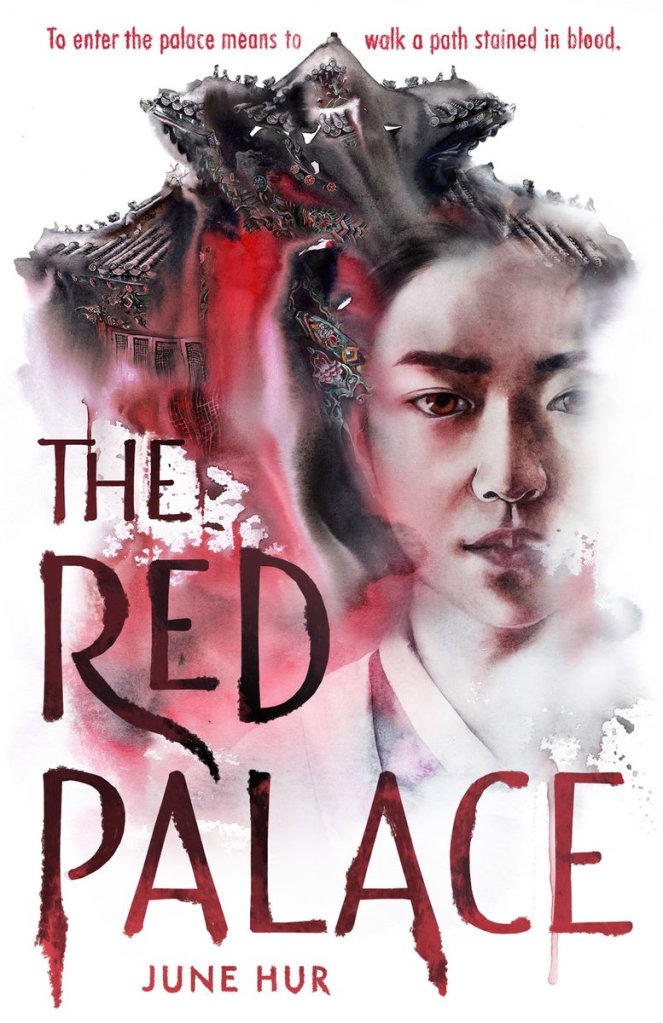
Kate’s Review: “The Red Palace”

Book: “The Red Palace” by June Hur

Publishing Info: Feiwel & Friends, January 2022

Where Did I Get This Book: I received access to an eARC via NetGalley from the author.

Book Description: Joseon (Korea), 1758. There are few options available to illegitimate daughters in the capital city, but through hard work and study, eighteen-year-old Hyeon has earned a position as a palace nurse. All she wants is to keep her head down, do a good job, and perhaps finally win her estranged father’s approval.

But Hyeon is suddenly thrust into the dark and dangerous world of court politics when someone murders four women in a single night, and the prime suspect is Hyeon’s closest friend and mentor. Determined to prove her beloved teacher’s innocence, Hyeon launches her own secret investigation.

In her hunt for the truth, she encounters Eojin, a young police inspector also searching for the killer. When evidence begins to point to the Crown Prince himself as the murderer, Hyeon and Eojin must work together to search the darkest corners of the palace to uncover the deadly secrets behind the bloodshed.

June Hur, critically acclaimed author of The Silence of Bones and The Forest of Stolen Girls, returns with The Red Palace—a third evocative, atmospheric historical mystery perfect for fans of Courtney Summers and Kerri Maniscalco.

Review: Thank you to June Hur for providing me with an eARC of this novel via NetGalley!

I was amped to see that June Hur had another historical mystery/thriller coming out this year, and I was very lucky to get an eARC from Hur herself through NetGalley. Given that Hurs books, which take place in historical Korea, are always a hit with me, I was eager to check out “The Red Palace”, a mystery involving shady royals, a palace nurse, and a creepy moment in Korean history involving murder.

The story itself is at times creepy and always suspenseful, given that someone is murdering palace nurses and it may well be the Crown Prince himself. As our characters Palace Nurse Hyeon and Inspector Eojin investigate, the puzzle pieces fall into place, but as they do so the stakes raise higher and higher. I liked both of them so much (and I loved their chemistry as they investigated together) that I was fully invested in their safety, almost as much as I was invested in their romance. Maybe that should be switched around in terms of priorities, but whatever. I thought that Hur did a really good job of putting all the clues in place and revealing them at just the right times, and I was genuinely surprised by some of the reveals. They all made perfect sense upon reflection, and I enjoyed going on the investigation with our protagonists. It feels a lot like a procedural formula that you could see in modern times, of the medical person assisting the police officer, and it is a tried and true trope that works here too.

And I really loved the protagonists, specifically Hyeon. Her backstory has a good balance of angst and determination, and I completely bought her motive for wanting to solve this mystery given her close relationship with Nurse Jeongsu, her mentor and mother figure (as he own mother is cold and their relationship is complicated) that has been accused of the murders of their fellow nurses. We didn’t see as much of Jeongsu as I would have liked, and there was more telling as opposed to showing their relationship, but we DID get to see the complicated one between Hyeon and her concubine mother, while her Lord father has denied her acknowledgement and care. It’s established that while Hyeon has a lot to lose by investigating, but we completely believe why she pursues it, doggedly so. And as I mentioned above, I really loved her working (and romantic tension filled) relationship with the young inspector Eojin. He, too, has a lot to prove and a lot to lose, and it means that they work as good foils for each other.

And finally, the time and place is great. Given that “The Red Palace” is partially inspired by the notorious life and death of Crown Prince Sado (a prince who did, indeed, murder a number of people and then was executed at the behest of his father), we get a look into a dark footnote in Korean history and get some expansion on the themes it harkens to. Hur’s books are always so great for time and place, jumping through various centuries in Korea, and this one had some good insight into the workings of the Palace culture and hierarchy for those who serve it. I also liked the fact that she put an author’s note in about Crown Prince Sado, which contextualized the story at hand and gave it a bit more depth. Man do I love me an author’s note that has to do with historical context!

I quite enjoyed “The Red Palace”. I implore historical mystery and thriller fans to pick up June Hur if you haven’t already.

Rating 8: A creepy and tense historical mystery based in notorious fact, “The Red Palace” is another fun thriller from June Hur with very likable characters and a unique time and place.

Reader’s Advisory:

“The Red Palace” is included on the Goodreads lists “Historical Fiction w/ POC”, and “ATY 2022: Asian or Pacific Islander Author”.

Find “The Red Palace” at your library using WorldCat, or at a local independent bookstore using IndieBound!

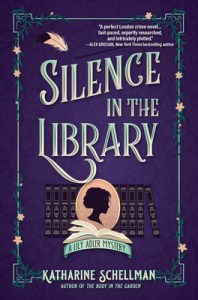
Serena’s Review: “Silence in the Library”

Book: “Silence in the Library” by Katharine Schellman

Publishing Info: Crooked Lane Books, July 2021

Where Did I Get this Book: audiobook from the library

Book Description: Regency widow Lily Adler has finally settled into her new London life when her semi-estranged father arrives unexpectedly, intending to stay with her while he recovers from an illness. Hounded by his disapproval, Lily is drawn into spending time with Lady Wyatt, the new wife of an old family friend. Lily barely knows Lady Wyatt. But she and her husband, Sir Charles, seem as happy as any newly married couple until the morning Lily arrives to find the house in an uproar and Sir Charles dead.

All signs indicate that he tripped and struck his head late at night. But when Bow Street constable Simon Page is called to the scene, he suspects foul play. And it isn’t long before Lily stumbles on evidence that Sir Charles was, indeed, murdered.

Mr. Page was there when Lily caught her first murderer, and he trusts her insight into the world of London’s upper class. With the help of Captain Jack Hartley, they piece together the reasons that Sir Charles’s family might have wanted him dead. But anyone who might have profited from the old man’s death seems to have an alibi… until Lily receives a mysterious summons to speak with one of the Wyatts’ maids, only to find the young woman dead when she arrives.

Mr. Page believes the surviving family members are hiding the key to the death of both Sir Charles and the maid. To uncover the truth, Lily must convince the father who doesn’t trust or respect her to help catch his friend’s killer before anyone else in the Wyatt household dies.

Previously Reviewed: “The Body in the Garden”

Review: Somehow I missed this coming out way back in July! This just goes to show how out of control my TBR list is, since I had been eagerly awaiting a new installment in this series almost since the moment that I finished the last page of the first book. “The Body in the Garden” was such a supreme pleasure to read and a great discovery that my expectations were quite high for this next book. Luckily, those expectations were met in every way!

Fairly recently I found myself complaining about the lack of information given in a book description, but here we have the opposite case! This intro spoils events that don’t happen until almost halfway through the book! I couldn’t believe it (though, luckily, I didn’t read this description until after reading the book, so I wasn’t actually spoiled, but only through sheer laziness on my part). Given how much information (for better or worse) is laid out in the official book description, I won’t waste anyone’s time re-reading my attempts at a summary here.

I was so excited when I saw that this book was out already and that my library had a readily available audiobook copy! I had read the first book as an ebook, but I really enjoyed the story through this medium and the narrator was excellent.

The mystery was another great one. I had a few theories early on, but only one of those turned out to be right, with many more surprises and reveals along the way. It was a clever murder with only a small cast of characters up for suspicion, all of whom had both motives for conducting the murder as well as strong evidence pointing towards their innocence. I also really enjoyed the way the mystery was wrapped up, with cleverness behind both putting the clues together and catching the murderer themselves.

We had two angles on the mystery, as well. One, of course, was our heroine Lily Adler. Alongside her burgeoning mystery-solving career, here, we see her begin to further emerge from her shell of mourning. Rightly, a number of potential love interests and suitors begin to circle, and I enjoyed the exploration of the complicated feelings this new return to non-mourning brought to Lily. Overall, the series has been such an excellent examination of grief and the long journey the loved ones left behind must travel. We also see more adventures from Lily with her taking things into her own hands and putting herself in situations that are unusual for a woman of her station and life. At the same time, all of these choices were still restrained enough to be believable, with the author neatly side-stepping the too-often anachronistic “strong woman” tropes that can pop up when trying to write this sort of character.

We also got to see a few chapters from the perspective of Simon Page, the constable in charge of solving the murder. It was lovely to see him much more respectful and appreciate of Lily, and I really enjoyed seeing his unique take on the murder, as well as the detective work that only he could complete. He was rather unlikable in the first book, but I really enjoyed what we got from him here.

We also had a return of several familiar faces, as well as an introduction of new characters. Lily’s father was all the villain the summary makes him out to be. If anything, he was much, much worse than the typical “disapproving parental figure” that one sees in these stories. I also liked the addition of a young boy who was growing up with autism (or something like this, obviously it was unnamed at the time.) With additions like this, the series continues to do its excellent work at highlighting how you can write a historical novel while also including a diverse cast of characters. It’s very well done.

This was another stand-out mystery novel, and this next go around, I WILL NOT miss the publication date of the next story. Fans of the first book and fans of general historical fiction mysteries are sure to enjoy it.

Rating 9: Excellent all around, a great mystery paired with a diverse cast of characters.

Reader’s Advisory:

“Silence in the Library” is on these Goodreads lists: Cozy Mystery/Romance/History and Books with Library in the Title.

Find “Silence in the Library” at your library using WorldCat or at a local independent bookstore using IndieBound!

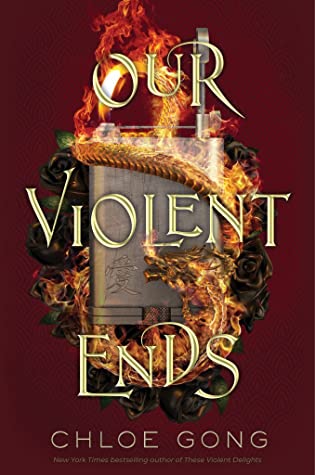
Kate’s Review: “Our Violent Ends”

Book: “Our Violent Ends” by Chloe Gong

Publishing Info: Margaret K McElderry Books, November 2021

Where Did I Get This Book: I received an eARC from NetGalley

Book Description: Shanghai is under siege in this captivating and searingly romantic sequel to These Violent Delights, which New York Times bestselling author Natasha Ngan calls “deliciously dark.”

The year is 1927, and Shanghai teeters on the edge of revolution. After sacrificing her relationship with Roma to protect him from the blood feud, Juliette has been a girl on the warpath. One wrong move, and her cousin will step in to usurp her place as the Scarlet Gang’s heir. The only way to save the boy she loves from the wrath of the Scarlets is to have him want her dead for murdering his best friend in cold blood. If Juliette were actually guilty of the crime Roma believes she committed, his rejection might sting less.

Roma is still reeling from Marshall’s death, and his cousin Benedikt will barely speak to him. Roma knows it’s his fault for letting the ruthless Juliette back into his life, and he’s determined to set things right—even if that means killing the girl he hates and loves with equal measure.

Then a new monstrous danger emerges in the city, and though secrets keep them apart, Juliette must secure Roma’s cooperation if they are to end this threat once and for all. Shanghai is already at a boiling point: The Nationalists are marching in, whispers of civil war brew louder every day, and gangster rule faces complete annihilation. Roma and Juliette must put aside their differences to combat monsters and politics, but they aren’t prepared for the biggest threat of all: protecting their hearts from each other.

Review: Thank you to NetGalley for providing me with an eARC of this novel!

Last year I took a bit of a chance on the book “These Violent Delights”, Chloe Gong’s historical fiction fantasy romance thriller retelling of “Romeo and Juliet”. That’s a true mouthful for a genre description, but it’s the only way to truly describe the wide breadth that this book had. I ended up enjoying it, and found myself waiting anxiously to find out what happened next. Well great news! The conclusion, “Our Violent Ends”, has been released, and let me tell you, the year long wait was worth it. Juliette and Roma are back, and I happily dove into the sweet, sweet agony that was sure to follow.

Me fully ready to watch things go horribly south for all my favorite characters in 1920s Shanghai. (source)

Just as a quick additional refresher, this “Romeo and Juliet” retelling takes place in 1920s Shanghai, as two rival gangs, the Scarlet Gang and the White Flowers, have a blood feud that has led to constant tension and violence. Juliette is the heir to the Scarlet Gang, Roma is the heir to the White Flowers, they had a passionate love affair and in the last book teamed up to try and stop a monster from wreaking pure havoc on the city they love. When we finished the first book, Juliette had just killed Roma’s best friend Marshall, though she hadn’t REALLY killed him, it was all a ruse to keep Roma safe vis a vis his hatred of her.

Plot wise, Gong balances the source material with a lot of new themes and plot points, as well as an update to the time and place that the story takes place. There are still threats from monsters in this one, which makes the Scarlet Gang and the White Flowers have an uneasy truce/team up in hopes that Juliette and Roma can find the vaccine that is rumored to stop the monsters (and of course the tension is off the charts in all kinds of ways). But there are also threats of the time period, like the simmering tensions between the Nationalists and the rising Communists. And we are still dealing with the two gangs having conflicts, which could be ceasing due to a common enemy of the monsters, but is always on the precipice. It’s a lot to cram in there, and while sometimes it felt like it was a little too much (and that we’d gloss over aspects of the plot because of it), overall Gong still managed to have a clear connection to the original play through things that would happen in the story. Even when she would twist some things around to better fit the story that she was telling. These moments were done in such a way that usually felt more true to the circumstances, however, and never like she was just trying to fit square pegs into round holes.

It is still the characters, however, that are the books greatest strengths. While the original cast of “Romeo and Juliet” has a kind of charisma to a degree (I mean, I don’t like the play but I recognize the appeal of the characters), Gong continues to draw far more complexity from her versions of the players. With Roma you have a brooding and brokenhearted Romeo, who is mourning the supposed death of his friend Marshall at the hand of his former lover. With Juliette you have a woman who is being torn up by her feeling of duty to her family as the heir to the Scarlet Gang, as well as her deep love for a man that she had to pretend to betray. And oh how I continued to love this version of Juliette. She gets shit done and isn’t given ANY credit for it, and I loved her inner turmoil even as she has to hold EVERYTHING together to be the strongest player in the whole damn story. It gives both the main characters FAR more pathos than the play did, and I really enjoyed how Gong gave both of them a lot more agency, smarts, and will than their inspirations were ever given. I was actively rooting for both of them, but especially Juliette, who is constantly trying to prove herself as worthy, though as a woman she is never going to be seen as such (and her psychopathic cousin Tyler is given more glory than she ever gets). But it’s also side players that are highly enjoyable, be it Juliette’s cousins Kathleen and Rosalind, or Roma’s younger sister Alisa. For me, though, I LOVED Marshall and Benedikt, the two lovers who have been separated due to Marshall faking his death, and Benedikt’s agony over it. Oh these two. You cannot help but root for them.

“Our Violent Ends” finished out the duology on a perhaps expected but still satisfying high note. Chloe Gong made me into a “Romeo and Juliet” fan, at least the way she tells it, and I definitely recommend checking it out if you want to see a really unique twist on the original tale!

Rating 8: A complex and satisfying end to a truly unique Shakespeare retelling.

Reader’s Advisory:

“Our Violent Ends” is new and not included on any Goodreads lists yet, but it would fit in on “Rewriting Shakespeare (YA Edition)”, and “YA Fiction Set in the 1920s”.

Find “Our Violent Ends” at your library using WorldCat, or at a local independent bookstore using IndieBound!

Previously Reviewed: “These Violent Delights”.

Book Club Review: “Front Desk”

We are part of a group of librarian friends who have had an ongoing bookclub running for the last several years. Each “season” (we’re nerds) we pick a theme and each of us chooses a book within that theme for us all to read. Our current theme is “Award Winners”, in which we each picked a book that has won an award of some kind.

For this blog, we will post a joint review of each book we read for book club. We’ll also post the next book coming up in book club. So feel free to read along with us or use our book selections and questions in your own book club!

Book: “Front Desk” by Kelly Yang

Publishing Info: Arthur A Levine Books, May 2018

Where Did We Get This Book: The library!

Award: Asian/Pacific American Award for Children’s Literature

Book Description: Mia Tang has a lot of secrets.

Number 1: She lives in a motel, not a big house. Every day, while her immigrant parents clean the rooms, ten-year-old Mia manages the front desk of the Calivista Motel and tends to its guests.

Number 2: Her parents hide immigrants. And if the mean motel owner, Mr. Yao, finds out they’ve been letting them stay in the empty rooms for free, the Tangs will be doomed.

Number 3: She wants to be a writer. But how can she when her mom thinks she should stick to math because English is not her first language?

It will take all of Mia’s courage, kindness, and hard work to get through this year. Will she be able to hold on to her job, help the immigrants and guests, escape Mr. Yao, and go for her dreams?

Kate’s Thoughts

I don’t usually seek out Middle Grade fiction unless it’s in graphic novel form. There are always exceptions to this, but Young Adult is about as young as I go these days. So when our book club picked “Front Desk” by Kelly Yang, I was interested to see what the Middle Grade landscape was looking like, and it also just so happened that this book was being targeted by angry white adults completely scandalized that a children’s book would dare talk about racism. Talk about timely!

I enjoyed “Front Desk” as a children’s book to be sure! I think that Yang did a really good job of making our protagonist Mia super relatable to her target audience, as Mia has some pretty familiar hang ups and anxieties, all while having to work the front desk at the motel her parents have found themselves working at. It’s definitely true that this book follows a lot of Middle Grade patterns in terms of how certain scenarios set up and play out, and that isn’t a bad thing for the target audience, it still made my reading of this an exercise in suspending my disbelief here and there. But all that said, I thought that Yang also does a great job of tackling the relevant social issues of the difficulties immigrants face, to racism, to exploitative labor practices, to how life in America has a lot of problems for a lot of people. And she does this in a way that makes it very easy to understand for the age group that is going to be reading this book.

“Front Desk” is a good book to give to kids who are starting to learn about certain injustices of the world, as while it doesn’t sugar coat them, it has a hopeful story through Mia, and one that will probably be enjoyable for lots of the kids that do pick it up.

Serena’s Thoughts

Like Kate, Middle Grade isn’t an age-range of books that I read very often. Even in the last few years I’ve noticed my inner curmudgeon coming out more and more with Young Adult, so the prospect of reading even younger was a bit daunting. That said, objectively, I think “Front Desk” succeeds at all it sets out to do and will appeal perfectly to its target audience (as demonstrated by the many very worn-down copies our bookclub members have checked out from the library).

I knew going in that “Front Desk” set out to tackle a lot of important, touch topics. That said, I was surprised by the level of emotion and depth it went into. The work “dark” is too strong for a Middle Grade book like this, but if you tone that word down some, you get to what I’m talking about. The author is definitely setting out to challenge her readers while still creating a safe environment in which to engage with these topics. Mia’s good-hearted, self-starting persistence is just the sort of character strengths that are sure to appeal to middle graders and allow the story to not let any of these bigger topics weight down to the story too much.

As an adult reading this, like Kate mentioned, there was a decent amount of suspension of disbelief needed. Some of the problems seemed to be tidied up much too easily and the solution to many of these situations was often the same. After the first couple of rounds, it began to feel fairly repetitive and predictable. The ending was also a bit too fairytale-like for my taste, especially given the very real challenges the rest of the book tackled. But, again, I think these are the kinds of flaws that stand out to me as an adult reader but will not read as flaws at all to the target audience.

Kate’s Rating 7: A well done children’s book that has enjoyable characters and tackles a lot of good and important issues in a way that kids can understand.

Serena’s Rating 7: The perfect combination of fun characters and important issues, a very good book for middle grade readers. Perhaps less so for an adult.

Book Club Questions

  1. Did you have expectations going into “Front Desk”? If so, were they met as you read the book?
  2. Did you think that Mia was a realistic ten year old?
  3. What did you think about Mia’s parents? Was there anything about their portrayals that stuck out to you?
  4. What were your thoughts on the portrayals of Mr. Yao and Jason?
  5. How did you think Yang did when it came to talking about some themes that are sometimes hard to talk about?
  6. Who would you recommend this book to?

Reader’s Advisory

“Front Desk” is included on the Goodreads lists “Middle Grade Equity, Diversity, and Inclusion”, and “Middle Grade Books Featuring Characters of Color”.

Find “Front Desk” at your library using WorldCat, or at a local independent bookstore using IndieBound!

Next Book Club Book: “Eleanor Oliphant Is Completely Fine” by Gail Honeyman

Serena’s Review: “Miss Moriarty, I Presume?”

Book: “Miss Moriarty, I Presume?” by Sherry Thomas

Publishing Info: Berkley Books, November 2021

Where Did I Get this Book: Edelweiss+

Book Description: A most unexpected client shows up at Charlotte Holmes’s doorstep: Moriarty himself. Moriarty fears that tragedy has befallen his daughter and wants Charlotte to find out the truth.

Charlotte and Mrs. Watson travel to a remote community of occult practitioners where Moriarty’s daughter was last seen, a place full of lies and liars. Meanwhile, Charlotte’s sister Livia tries to make sense of a mysterious message from her beau Mr. Marbleton. And Charlotte’s longtime friend and ally Lord Ingram at last turns his seductive prowess on Charlotte–or is it the other way around?

But the more secrets Charlotte unravels about Miss Moriarty’s disappearance, the more she wonders why Moriarty has entrusted this delicate matter to her of all people. Is it merely to test Charlotte’s skills as an investigator, or has the man of shadows trapped her in a nest of vipers?

Previously Reviewed: “A Study in Scarlet Women” and “A Conspiracy in Belgravia” and “The Hollow of Fear” and “The Art of Theft” and “Murder on Cold Street”

Review: I was extra excited for this book (beyond my typical excitement for any book by Sherry Thomas) when I saw the title. Moriarty has been a player in most all of the books so far, but he’s always been in the background. “The Art of Theft” was the closet we got, and we still never actually saw the character on the page. But with a Moriarty, if not the Moriarty referenced in the title, we had to finally see the character, now right?

Charlotte and her friends have known that Moriarty’s attention has been turning towards them for some time. What she didn’t expect was for Moriarty himself to turn up on her doorstep, ostensibly to hire her for a job of his own. But Charlotte suspects that Moriarty is rarely the type of man to not attempt to kill (perhaps quite literally) two birds with one stone. So when she and Mrs. Watson head out to locate Moriarty’s wayward daughter, she’s on alert for signs of other purposes. She soon discovers that the apple does not fall far from the tree, and the disappeared Miss Moriarty seems to have had as many secrets and alternative motives as her dangerous sire. With potentially two Moriarties on the board, will Charlotte be up to the task of outmaneuvering them all?

I think it’s rather unfortunate that the book description itself confirms that Moriarty is, indeed, in this book. He shows up early enough (quite, quite early in fact) that it’s not a drawn out wait for the reader wondering when he’ll arrive. And even then, it’s still thrilling seeing Thomas’s rendering of this classic villain. I probably shouldn’t be surprised by this fact. One of the things that has most stood-out in this version of Sherlock Holmes is the creativity Thomas has had with re-imagining these characters. They are all very unique from the originals, and yet there are just enough tidbits included to make them instantly recognizable. It’s not just gender-swapping, the most simple of changes. Moriarty, too, gets this treatment. Here, his abilities are more differentiated from Charlotte’s. It’s clear that he is also a mastermind, but his particular skills are different than hers. Her ability to observe and reason are without comparison, even to Moriarty. For his part, he has a magnetic presence that he wields like a scalpel. Even Charlotte feels the threat of it. It was such a clever twist on the character, giving him a coiled, snake-like feeling and allowing the threat he poses to seep out of the pages.

I also really enjoyed this mystery on its own. It’s always nice when our group has to travel outside of London and into new settings. The remote community they travel to is filled with interesting (and suspicious) characters. And the setting itself, with its imposing walls and buildings filled with occult imagery were perfect landscapes for our heroes to travel through. With so many new characters and moving parts, it was difficult to grasp all of the mysteries at hand. I was able to figure out one of the central secrets, which has been a rare thing for me with this series, as I’m mostly completely in the dark still by the time we get to the reveals. But there were still a number of plots and twists that I didn’t fully untangle myself and were exciting to see come to fruition.

The over-arching problem I’ve had with this series has sometimes been the lack of use for all of its character. They tend to move forward and backward in prominence as the story requires, something that largely works. However, Livia is one of the constants as a POV character, and I do think she would be better served to move forward and backward like the other more secondary characters. Often, her plots have been the ones I struggle with, and here, too, that was my one hold-up in not completely enjoying this story. Her storyline seemed to exist almost solely disconnected from the rest of the action, and I always found myself becoming impatient with her sections. Part of me simply struggles to become truly attached to this character, for whatever reason. .

But that said, I still feel like this was one of the strongest outings in the series yet. Obviously, finally seeing Moriarty in person was a huge step. And the book also takes a few massive swerves that will have a lasting impact on any books in the future. Fans of this series are sure to enjoy this one and shouldn’t hesitate to pick it up!

Rating 9: Our classic villain finally arrives and with him a game-changer of a story!

Reader’s Advisory:

“Miss Moriarty, I Presume?” is on these Goodreads lists: Victorian Lady Detectives and Asian Authored Books in 2021.

Find “Miss Moriarty, I Presume?” at the library using WorldCat, or at a local independent bookstore using IndieBound!

Serena’s Review: “Murder on Black Swan Lane”

This post may contain affiliate links for books we recommend.  Read the full disclosure here.

Book: “Murder on Black Swan Lane” by Andrea Penrose

Publishing Info: Kensington Books, June 2017

Where Did I Get this Book: audiobook from the library!

Where Can You Get this Book: Amazon | IndieBound | WorldCat

Book Description: In Regency London, an unconventional scientist and a fearless female artist form an unlikely alliance to expose unspeakable evil . . .

The Earl of Wrexford possesses a brilliant scientific mind, but boredom and pride lead him to reckless behavior. He does not suffer fools gladly. So when pompous, pious Reverend Josiah Holworthy publicly condemns him for debauchery, Wrexford unsheathes his rapier-sharp wit and strikes back. As their war of words escalates, London’s most popular satirical cartoonist, A.J. Quill, skewers them both. But then the clergyman is found slain in a church—his face burned by chemicals, his throat slashed ear to ear—and Wrexford finds himself the chief suspect.

Review: I’m not quite sure how I missed this series when it started up a few years ago. It’s quite obviously up my alley: historical mysteries featuring a man and woman duo. It’s to the point where I almost feel guilty about how specific my reading tastes are for both historical fiction and mysteries. But I finally tracked it down and received my audiobook from the library. Bonus points for being narrated by one of my faves!

The Earl of Wrexford and A.J. Quill operate in very different circles. Their paths only seem to intersect when Wrexford becomes the unwilling star of Quill’s satirical cartoons. But when the feud between Wrexford and a priest that Quill had so delightfully been illustrating goes south with the priest dead and Wrexford suspected, their paths cross in real life. Both are not what the other had thought, with Wrexford hiding a true scientific mind behind his rakish outward persona and Quill turning out to be not a man, but a widow who has her fingertips on the pulse of the city. As they begin investigating the priest’s death, more mysteries begin to appear and the perpetrator may be closer than either had suspected.

Recently, most of the historical mystery pair-ups I’ve read have a distinct “comfort mystery” vibe to them. Both the Amelia Peabody series as well as the Veronica Speedwell are very light-hearted, with equal attention given to the romance and comedy of the story as the mystery itself. So I was excited to see that this was a more serious mystery series. The murder itself is violent, the motives for the various players are appropriately dastardly, and the story doesn’t shy away from the very real challenges of life in this time period.

Mrs. Sloane, of course, most represents this aspect of the story. A widow making a living for herself as a satirical cartoonist, you can feel the way her livelihood balances on the edge of the knife. But her two young wards, a pair of brothers who have grown up on the streets, paint an even more stark picture. At every turn, we see Mrs. Sloane’s desperate attempts to carve out a place for herself and these two boys, both representing groups that society neglects and forgets. She is an excellent character, and I love the fact that there were a number of mysteries about her past and character that were not fully resolved even here. We have enough to paint a general picture and become attached to the character, but enough teases are left to have me eager to pick up the next entry.

For his part, Wrexford is the more typical rich, snarky, seemingly care-free aristocrat. But as the story progressed, he, too, began to reveal new layers. There are fewer mysteries to be found here, but I’m equally intrigued by his ability to put together the pieces behind Mrs. Sloane’s secrets as I am about their ultimate reveals. I also liked the fact that Wrexford was a nice balance between the cluelessness that would be natural to a man in his position dealing with a woman like Mrs. Sloane, while also being progressive enough to be heroic. The balance struck between these two aspects felt believable and compelling.

I also really liked the mystery itself. There were a good number of red herrings and a lot of historical scientific elements that were all particularly interesting. The author also included a great note at the end that went into how she used these elements and which are based in fact and which had been adjusted somewhat to meet the needs of the story. The writing was also very strong and drew me immediately into the story, deftly painting scenes and grounding the world in Regency London. Fans of historical mysteries should definitely check this out, especially if you’re looking for a more serious tone than some of the cozy historical mystery series running right now.

Rating 9: A super solid start to a new historical mystery series with two compelling protagonists at its heart. Of course, I already want them to just kiss.

Reader’s Advisory:

“Murder on Black Swan Lane” is on these Goodreads lists: Regency and Victorian Mysteries and Art & Artists in Fiction.

Serena’s Review: “The Duchess War”

Book: “The Duchess War” by Courtney Milan

Publishing Info: Createspace, December 2021

Where Did I Get this Book: the library!

Book Description: Miss Minerva Lane is a quiet, bespectacled wallflower, and she wants to keep it that way. After all, the last time she was the center of attention, it ended badly-so badly that she changed her name to escape her scandalous past. Wallflowers may not be the prettiest of blooms, but at least they don’t get trampled. So when a handsome duke comes to town, the last thing she wants is his attention. But that is precisely what she gets. Because Robert Blaisdell, the Duke of Clermont, is not fooled. When Minnie figures out what he’s up to, he realizes there is more to her than her spectacles and her quiet ways. And he’s determined to lay her every secret bare before she can discover his. But this time, one shy miss may prove to be more than his match…

Review: There have been a few articles circulating in readers’ circles noting the increased interest in romance as a genre throughout the pandemic. I think the reasons are probably fairly self-explanatory, so I won’t get into them myself. But I’ll definitely note that this point really hit home when fairly spontaneously at our last bookclub, we all seemed to realize we were all reading significantly more in the genre, so much so that we decided to make romance the theme of our entire next round! My reviews here on the blog don’t necessarily reflect this increase, but that’s largely due to the challenges of writing about book in a genre that by necessity are often fairly similar in structure. But I do want to throw reviews out there every once in a while when a particular one stands out. Hence, “The Duchess War.”

Minerva Lane understands the strategy of being a wallflower. Unnoticed, she can quietly observe everyone and make her subtle maneuvers with little attention drawn to herself. And, while her choices are very limited, at least they will be hers. But her carefully laid plans are upended when a Duke arrives on the scene. Minnie quickly realizes that Robert Blaisdell is more than he seems. Unfortunately, he, too, takes notice of her and before she can protest, begins pulling her inevitably out from her quiet corners and back into the center of attention. But will their own smarts be each of their own down falling? Or do they each desperately need the recognition that only the other can give.

When I logged on to Goodreads to mark this book as read, I realized that I must have read the second book in this series sometime in the past. And, judging by my low star rating, I didn’t like it much (honestly, I have zero memory of reading that book, even after looking at the description). Thank goodness I didn’t spot that before picking this one up, as I really enjoyed this historical romance!

There were several things that stood out to me as unique about this romance novel as compared other similar titles. For one thing, while most “historical romances” are set somewhere in the Regency or Victorian period, other than a few mentions of the current monarch or a particular style of dress (empire waste or bustles), there are often few historical markers to be found. It’s all very general, upper-class, social entertainments from end to end. This book, however, dove into some of the political and culture undercurrents moving at the time. In particular, there was a focus on the working conditions for the common man and the uneven wealth distribution at the heart of British society. Yes, it’s still a romance novel at heart so all of this is only lightly touched upon, but the fact that it all plays a rather key role to the story is fairly unique as a whole.

I also really liked our main two characters and their backstories. Their histories were slow to unfold, but once we fully understood the lives they had lead up to this point, it really help ground each character in the decisions they made going forward. I was particularly pleased to see strong aspects of their characters remain true even throughout the typical upheavals found near the end of romance novels. The conflicts that arose came through believable choices that each character would make, and, refreshingly, neither one of them completely loses their head. I was particularly pleased with Minnie, as in many ways she became the force of reason that held these two together in the end.

I really enjoyed this book. It was a perfect blend of wish-fulfillment on the romance side as well as an increased dedication to including interesting elements on the historical side. Fans of historical romances are sure to enjoy this and should definitely add it to their TBR lists!

Rating 8: Romantic and funny, everything I want from a feel-good story.

Reader’s Advisory:

“The Duchess War” is on this Goodreads list: 1st Book in Historical Romance Series.

Find “The Duchess War” at your library using WorldCat, or at a local independent bookstore using IndieBound!