Kate’s Review: “Redbone: The True Story of a Native American Rock Band”

Book: “Redbone: The True Story of a Native American Rock Band” by Christian Staebler, Sonia Paoloni, and Thibault Balahy (Ill.)

Publishing Info: IDW Publishing, September 2020

Where Did I Get This Book: I received an eARC from NetGalley.

Book Description: Experience the riveting, powerful story of the Native American civil rights movement and the resulting struggle for identity told through the high-flying career of west coast rock n’ roll pioneers Redbone.

You’ve heard the hit song “Come and Get Your Love” in the movie Guardians of the Galaxy, but the story of the band behind it is one of cultural, political, and social importance.

Brothers Pat and Lolly Vegas were talented Native American rock musicians that took the 1960s Sunset Strip by storm. They influenced The Doors and jammed with Jimmy Hendrix before he was “Jimi,” and the idea of a band made up of all Native Americans soon followed. Determined to control their creative vision and maintain their cultural identity, they eventually signed a deal with Epic Records in 1969. But as the American Indian Movement gained momentum the band took a stand, choosing pride in their ancestry over continued commercial reward.

Created with the cooperation of the Vegas family, authors Christian Staebler and Sonia Paolini with artist Thibault Balahy take painstaking steps to ensure the historical accuracy of this important and often overlooked story of America’s past. Part biography and part research journalism, Redbone provides a voice to a people long neglected in American history.

Review: Thank you to NetGalley for providing me with an eARC of this graphic novel!

As we all know, I am not really all that versed in Marvel movies, though I did see “Guardians of the Galaxy” once and enjoyed it overall. One of the things that made me realize I was in for a treat was when Star Lord started playing “Come And Get Your Love” on his Walkman as he went to salvage some stuff. I like that song, having first heard it via sample by Cyndi Lauper in her remix of “Girls Just Wanna Have Fun” for “To Wong Foo”. So I liked the song, but had no knowledge of the band Redbone, who sings it. When “Redbone: The True Story of a Native American Rock Band” was brought to my attention, I jumped at the chance to read it. I was expecting a pretty straightforward rock and roll biographic novel, but was pleasantly surprised to find out that it had a bit more to say.

“Redbone” tells two stories, one being a personal recollection and the other being of a growing movement in the United States. The book follows brothers Pat and Lolly Vegas (thought Pat’s eyes), who eventually formed Redbone, the first commercially successful Native rock band. We follow their history on the Sunset Strip in the 1960s, hanging out with famous acts like The Doors and Jimi Hendrix, and see how they formed their own band that seemed to be on the way to stardom. The other story is of the American Indian Movement (or AIM), a social justice/activist group that focuses on Native rights and formed in Minneapolis in the 1960s. As Pat, Lolly, and the rest of the band began to live the rock and roll lifestyle, the rights of other Native people started being promoted and fought for, which intertwined with their rock careers as they wanted to bring their heritage and own activism into the band.

I liked hearing the backstories of the band itself, and also seeing a broad but informative look into the Residential School system in this country, and AIM and the activism and protests that it brought to the public consciousness. I was fairly familiar with most of the activism and protests that this book covers, and found the explanations to be easy to understand and powerful in both the personal and the communal effects it had. Given that history classes neglect so much non-white history in our schools, I thought that this book would be a great resource for educators to use when wanting to give an introduction to AIM and the social justice issues it tackles both then and now. I also appreciated that this story did address the racism that Redbone had to face in the music industry because of their heritage, and how it’s very clear that their pride in their heritage and want to assert their rights as Native people is what ended their careers when they had SO much talent. I’m pretty damn mad that I didn’t know anything about this band before now, when their most famous song is one that I’ve known and liked for a long time. That’s partially on me, of course. And I’m happy that this book is out there to educate readers on their story, and the broader story of AIM.

I did have a little hard time with the graphic style at first. The images aren’t in a clear linear box design, in that a lot of the time they all bleed together into larger images. Sometimes I had a hard time parsing out which dialogue bits happened where, but I eventually adjusted. And it wasn’t exactly hard to figure it out based on context. Overall I like the unique and nontraditional style.

“Redbone: The True Story of a Native American Rock Band” is a great introduction to the greater fight for Native Rights in the U.S., and finally puts a spotlight on a band that had success taken from them. If you want to know more about an important part of Rock and Roll history, check this out!

Rating 8: A fascinating history of a long neglected band, as well as an overview of the beginnings and contributions of the American Indian Movement, “Redbone: The True Story of a Native American Rock Band” is an informative and interesting graphic novel!

Reader’s Advisory:

“Redbone: The True Story of a Native American Rock Band” isn’t on any Goodreads lists yet, but I think it would fit in on “Native American Biography (Non-fiction)”, and “Best Books on Rock and Roll”.

Find “Redbone: The True story of a Native American Rock Band” at your library using WorldCat, or at a local independent bookstore using IndieBound!

Kate’s Review: “Superman Smashes the Klan”

Book: “Superman Smashes the Klan” by Gene Luen Yang and Gurihiru (Ill.)

Publishing Info: DC Zoom, May 2020

Where Did I Get This Book: I own it.

Book Description: The year is 1946, and the Lee family has moved from Chinatown to Downtown Metropolis. While Dr. Lee is eager to begin his new position at the Metropolis Health Department, his two kids, Roberta and Tommy, are more excited about being closer to the famous superhero Superman!

Tommy adjusts quickly to the fast pace of their new neighborhood, befriending Jimmy Olsen and joining the club baseball team, while his younger sister Roberta feels out of place when she fails to fit in with the neighborhood kids. She’s awkward, quiet, and self-conscious of how she looks different from the kids around her, so she sticks to watching people instead of talking to them.

While the Lees try to adjust to their new lives, an evil is stirring in Metropolis: the Ku Klux Klan. The Klan targets the Lee family, beginning a string of terrorist attacks. They kidnap Tommy, attack the Daily Planet, and even threaten the local YMCA. But with the help of Roberta’s keen skills of observation, Superman is able to fight the Klan’s terror, while exposing those in power who support them–and Roberta and Superman learn to embrace their own unique features that set them apart. From multi-award-winning and New York Times bestselling author Gene Luen Yang comes an exciting middle grade tale featuring Superman. 

Review: Gene Luen Yang is no stranger to Superman. He’s written for Superman before, as well as creating an offshoot character Super-Man that is based in China (and that I have reviewed here on the blog). But I think that “Superman Smashes the Klan” is the Superman story of his that almost immediately caught my eye when I heard it was a thing. I had seen this bouncing around various book and comics circles, and bought it for myself as I love Yang’s work, and I am always in the mood to see a good smashing of racists and fascists. Especially these days.

“Superman Smashes the Klan” follows both Superman as he tries to come to terms with his own identity, as well as the Lee Family, a Chinese-American family that is moving from Chinatown to downtown Metropolis. Our main focuses are on charismatic and popular Tommy and his younger sister Roberta, who is a little more reserved and unsure of herself. While Tommy can seemingly easily code switch with the white kids in their new community, Roberta has a harder time reconciling her Chinese-American identity with this new environment. When the Lees become a target of the hate group The Klan of the Fiery Cross (more on this name in a bit), both Tommy and Roberta want to fight back in their own ways, while their parents are just trying to not make waves to keep themselves and their children safe. I liked how Yang not only addressed the full blown bigotry and violent racism of the Klan, but also the more subtle and systemic racism of society, mostly through Tommy and Roberta’s parents. Dr. Lee, their father, has taken a new job at the health department, and encourages his children and wife to assimilate (many a time does he tell his wife to speak English instead of Chinese), as well as wanting to fit in with his white colleagues and superiors and not be associated with other minorities. We also see Tommy playing down his Chinese identity by being self deprecating in hopes of fitting in too.

And as I mentioned earlier, Superman himself is dealing with his own identity crisis in this story, as he has been downplaying some of his powers that make it more clear that he isn’t just a very strong or gifted human. Specifically, he hasn’t allowed himself to really fly after an incident in his childhood where he lost control of that ability for a moment, and some people in Smallville nearly turned on him because they thought he was possessed. I LOVED this for two reasons. The first is that initially in the comics Superman couldn’t fly, he just could jump really, really high and far. It was genius for Yang to incorporate this character change into the story in this way. But the other reason is that it’s a great way to show kids who are reading this book that Superman, a strong, nearly perfect, ideal of a superhero, ALSO has struggles with his own identity, and that he too is from a group that could easily be Othered and discriminated against because he’s different.

I do want to talk about The Klan of the Fiery Cross as well. What I didn’t realize until we got to the super helpful author’s note at the end is that this is based on a story arc from the Superman Radio Show from the 1940s! That story was pretty similar, a Chinese-American family moves into a white neighborhood, and the Klan of the Fiery Cross (at the time the KKK was a powerful group after its second wave post “Birth of a Nation” with many members, and the radio show didn’t want to get sued for using their actual name) targets them, and Superman saves the day. Yang, of course, expands upon this within this new story, and it works very, very well. We see the Klan for the hate filled racists that they are, but he also touches on how some people who are really just looking for power and money will latch on to racist and fascist movements in hopes of getting the power and clout they crave (sounds familiar). You’d think that it would be hard to break this down in a kids book, but Yang does it and makes it super understandable for the audience the book has been written for.

And finally, the art work. Gurihiru has some clear manga influences and styles, and it works for the story. I also loved the use of colors and the character designs, be it body designs or period appropriate clothing.

“Superman Smashes the Klan” is a fast paced and charming story that has a lot to say without getting heavy handed or too bogged down. Yang’s story telling talents match perfectly with the story at hand, and fans of Superman should definitely read it!

Rating 9: An action-filled screed against racism that is filled with empathy and hope, “Superman Smashes The Klan” is no doubt an exciting read for children and adults alike.

Reader’s Advisory:

“Superman Smashes the Klan” is included on the Goodreads lists “Middle School Social Justice”, and “Paper Lantern Writers: Best Own Voices Historical Fiction”.

Find “Superman Smashes the Klan” at your library using WorldCat, or a local independent bookstore using IndieBound!

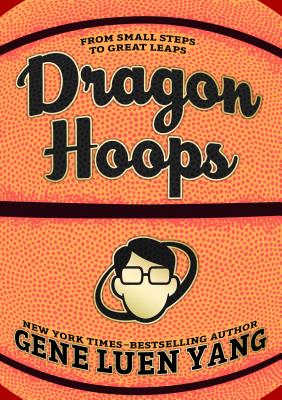
Kate’s Review: “Dragon Hoops”

44280830Book: “Dragon Hoops” by Gene Luen Yang

Publishing Info: First Second, March 2020

Where Did I Get This Book: The library!

Book Description: In his latest graphic novel, New York Times bestselling author Gene Luen Yang turns the spotlight on his life, his family, and the high school where he teaches.

Gene understands stories—comic book stories, in particular. Big action. Bigger thrills. And the hero always wins.

But Gene doesn’t get sports. As a kid, his friends called him “Stick” and every basketball game he played ended in pain. He lost interest in basketball long ago, but at the high school where he now teaches, it’s all anyone can talk about. The men’s varsity team, the Dragons, is having a phenomenal season that’s been decades in the making. Each victory brings them closer to their ultimate goal: the California State Championships.

Once Gene gets to know these young all-stars, he realizes that their story is just as thrilling as anything he’s seen on a comic book page. He knows he has to follow this epic to its end. What he doesn’t know yet is that this season is not only going to change the Dragons’s lives, but his own life as well. 

Review: Though I’m not really a huge sports fan in general, if you asked me what my least favorite ‘mainstream’ sport to watch was, I’d undoubtedly say basketball. I can’t even tell you why that is, but I’ve never enjoyed it, even when I was playing on the basketball team in sixth grade. But given that Gene Luen Yang is one of my favorite comics writers, I knew that I was going to read his newest book “Dragon Hoops”, even if it was about basketball. Looking into it more, I realized that this wasn’t going to be a book that was just about basketball. And because of that, I was immediately hooked on this story that’s part memoir, part history, and part inspirational sports story.

We follow Yang as he’s following his school’s basketball team in it’s journey to hopefully win State, and he finds a lot of layers and depth and heart to put on display. While he could have had a structure that was purely factual, or perhaps a story that profiles just one player, or even a story that focuses on a coach’s deferred dreams that are possibly going to come true, he manages to take aspects of all these things and balance them into a combination. We get profiles of the various members of the team, from the players themselves and their varied backgrounds, to Coach Lou and his own personal connection as a former player, to Yang himself as he is thinking about his own dreams. I really enjoyed getting the context of the various team members, but I thought that Yang putting his own story in there was a nice touch, as it shows that even those who don’t have a specific sports connection can find commonality with these inspirational, and sometimes difficult, sports stories that we hear about ever so often. He uses devices and symbolism that repeats throughout the story, and it almost always landed. Yang has always been really good at showing the deeper meaning of what he’s trying to say without outright saying it, and it comes through in this non fiction story just as well as it does in his fictional stories. I also really enjoyed Yang’s way of toying with the fourth wall, as he would have have himself in comic form acknowledge things that were being done for story telling purposes, as well as toying with the other characters perceptions of things that were going on or had gone on. While the action of the basketball games still kind of lagged on the page for me, I do acknowledge that Yang really captured the action and the tension of the moments as the Dragons are trying to get to State.

But ironically enough, it was the introductions to each section which focused on different parts of the history of basketball that clicked with me the most. Yang would give us a pretty easy to follow but comprehensive moment of history of the game, and that moment would then provide context or connect with the focus on that chapter, which was usually another member of the team or support system. I’m a history buff to be sure, and the way that Yang grounded his story within the context of this history was really well done. Plus, it all connects to the fact that Coach Lou, after his dreams of basketball success ended prematurely, decided to focus his education on history because he knows that history can inform us in the present. LOVED that, and it’s exactly the kind of theme I would expect from Yang.

And, of course, I love Yang’s style of artwork. It’s definitely a bit cartoony, but that doesn’t make it any less resonant or emotional when it needs to be. There were multiple moments where the emotions being portrayed were so well done both in writing and in imagery that I was moved to tears. Yang’s style is unique and well known at this point, but it always works.

dragon-hoops-gene-meets-coach-lou_orig
(source)

“Dragon Hoops” is another triumph for Gene Luen Yang! And if you’re hesitant to read it because of the basketball thing, take it from me. It’s absolutely worth it.

Rating 8: A charming graphic novel about basketball dreams, and dreams of doing something great, “Dragon Hoops” is a personal and emotional story from one of my favorite comics writers.

Reader’s Advisory: 

“Dragon Hoops” is included on the Goodreads lists “Project LIT”, and “Asian American Pacific Islander Heritage Month Book List”.

Find “Dragon Hoops” at your library using WorldCat, or a local independent bookstore using IndieBound!
Kate’s Review: “The Sandman (Vol.5): A Game of You”

Book: “The Sandman (Vol.5): A Game of You” by Neil Gaiman, Shawn McManus (Ill.), Colleen Doran (Ill.), Bryan Talbot (Ill.), George Pratt (Ill.), Stan Woch (Ill.), & Dick Giordano (Ill.)

Publishing Info: Vertigo, 1992

Where Did I Get This Book: I own it.

Book Description: Volume Five of New York Times best selling author Neil Gaiman’s acclaimed creation THE SANDMAN collects one of the series’ most beloved storylines.Take an apartment house, add in a drag queen, a lesbian couple, some talking animals, a talking severed head, a confused heroine and the deadly Cuckoo. Stir vigorously with a hurricane and Morpheus himself and you get this fifth installment of the SANDMAN series. This story stars Barbie, who first makes an appearance in THE DOLL’S HOUSE and now finds herself a princess in a vivid dreamworld.

Review: Since “The Sandman” series has now slipped mostly into full fantasy, we got a small break from it during Horrorpalooza. But now we’re back in, and I have revisited “A Game of You”, a collection that has been both lauded as a fan favorite, and also been criticized in more recent years. I honestly had NO memory of this collection on this re-read, which didn’t really bode well for how well I connected to it the first time around. But I was happy to go back in, as it’s always kind of fun to see Gaiman tinker with other characters and build upon past stories and plot points that didn’t seem relevant in the moment. And oof. Going back was uncomfortable.

I will start with what I did like about “A Game of You”. In this story, instead of having a focus on Morpheus or any of the Endless, we focus on the character of Barbie, one of the side characters in “The Doll’s House”. She and Ken were other residents in the house that Rose Walker lived in, and functioned as a cheeky nod to Barbie dolls. By the end of that arc things weren’t going so well for them. Now Barbie is living in New York City in an apartment complex with a number of quirky neighbors, including a lesbian couple and a trans woman named Wanda (the description says ‘drag queen’, but that’s not accurate. Wanda is trans and we are going to talk about her a LOT in a bit). Barbie finds herself going into a dreamscape in which she is a princess of a kingdom that is being threatened by a malevolent entity known as The Cuckoo, and while she is unconscious, her neighbors want to help bring her back. Gaiman builds a whole new fantasy world, and even within the limited scope of this arc I felt like I got a sense of what kind of place this was. I liked seeing Barbie get a bit of her own agency in this tale, though I do admit that the severe lack of Morpheus outside of a couple moments was a little disappointing. I liked that Gaiman wanted to give other characters within his massive world some spotlight. But I thought that Morpheus really should have bad a bigger part to play. This could have been its own story very easily if you took Morpheus out.

The bigger issue is one of those moments where “The Sandman” hasn’t aged as well as time has gone on, and that is with the character of Wanda. It is clear that Gaiman wrote Wanda with the very best of intentions. For the early 90s, even having a trans character who has her own side plot, a multi faceted personality, and a sympathetic and very relatable characterization was HUGE for trans representation. Like, I can’t imagine that any other author, comics or not, with a big name project would have given Wanda the kind of story that Gaiman gives her. In 1993, Wanda is an important character. But in 2020, Wanda’s characterization is incredibly dated, with tropes, stereotypes, and harmful thematics galore. There was a lot of misgendering, there were many moments of ‘are you a boy or a girl’, and there was a fixation on her genitalia that really didn’t sit well with me. What was hardest to stomach was a moment regarding magic that undercut her identity (essentially there was moon magic that Wanda couldn’t participate in because, at the end of the day, she isn’t seen as a TRUE woman). Throw in some ‘bury your LGBTQIA’ things, and it just felt harmful and tone deaf for 2020. Again, I don’t believe that Gaiman’s intentions were anything other than good, given that just recently he signed his name to an open letter by authors in support of trans and non binary people. But as time has gone on, the portrayal is problematic at best, bordering on offensive.

I think that when I eventually re-read “The Sandman” in the future (as I’m sure I will), I probably will skip “A Game of You”. As of now, it doesn’t seem like later plot points will build upon it (that said I could be wrong; I just don’t remember), and the stereotypes were just too much.

Rating 5: With a complete side track of the story and some well intentioned representation feeling cringe in the decades after it was first written, “A Game of You” didn’t live up to the past collections.

Reader’s Advisory:

“The Sandman (Vol.5): A Game of You” is included on the Goodreads lists “Mythic Fiction Comics”, and “Best Books Concerning Dreams”.

Find “The Sandman (Vol.5): A Game of You” at your library using WorldCat, or at a local independent bookstore using IndieBound!

Previously Reviewed:

Kate’s Review: “The Dollhouse Family”

51233715Book: “The Dollhouse Family” by Mike Carey, Peter Gross (Ill.), and Vince Locke (Ill.)
Publishing Info: DC Black Label, September 2020

Where Did I Get This Book: I received an eARC from NetGalley.

Book Description: Alice loves to talk to her dolls, and her dolls and dollhouse love to talk back.

When Alice is six, she is given a beautiful antique dollhouse. When things in her life get scary, Alice turns to her dolls and dollhouse for comfort. One day, they invite her to come play inside with them. As Alice’s life is turned upside down in the “big” world, she is always welcomed home to the little world inside the dollhouse; the house will even grant her a wish if she agrees to live with them!

Follow Alice through the door of the dollhouse and into the demon’s den.

Review: Thank you to NetGalley for providing me with an eARC of this graphic novel!

Let it be said that Hill House Comics has gotten some pretty legitimate authors on board of their imprint! It’s not that surprising, as Joe Hill seems like a cool guy who knows talent when he sees it. “Basketful of Heads” was an awesome first experience for me in regards to this imprint, and when I saw that M.R. Carey was getting in on the action with “The Dollhouse Family” (though writing under his usual comic name Mike Carey) I was pleased. When Carey does straight up horror, like “Someone Like Me”, I am fully on board with his works. So I’m definitely all in to see what he can do with a creepy dollhouse!

“The Dollhouse Family” is a generation spanning family saga that wraps itself in a dark fantasy horror story, and for the most part I felt like it worked pretty well. We have a couple of paths that we’re following, and while the way they connect isn’t completely apparent at first, Carey does a really good job of building upon then until we do reach that connecting point. The first is of Alice, a young girl who inherits an old dollhouse from an estranged relative. Alice’s father is abusive and her mother is passive, and Alice finds solace in the dollhouse… especially when the dolls start talking to her, and she finds out that she can shrink down to join them inside. The other path is in the past, as a man named Joseph, while doing survey work, finds himself in a cave, and comes face to face with a mysterious woman, and a sleeping giant.

As mentioned, it isn’t totally clear how these two stories relate, but they are both interesting enough in their own rights that you will want to see how they do. After Alice makes a decision that completely shifts her life’s path, due to a suggestion by a mysterious being in the dollhouse called The Black Room, she ultimately ends up with a daughter of her own, and a fear of the dollhouse that just keeps showing up. I really liked Alice, and while the unfolding of the other timeline wasn’t as interesting to me, the world building and mythology building that Carey did with it definitely laid a foundation that made sense for where Alice and daughter Una end up. I liked the build up and the horror elements of demons, as well as cosmic/Lovecraftian body horror that gave me a serious case of the squicks.

But where this book ultimately fumbles is that for all the world building and build up, the ending is incredibly abrupt. I was reading this on my computer, and when I saw that I only had tenish pages left I was convinced that the file I had was cut off prematurely, as there was no WAY that it could all be wrapped up in ten pages. And yet, it was, and because of that it all felt SUPER rushed and unsatisfying. For all that background and foundation, the climax was way too quick, and the let down after the climax was even quicker.

The art style, though, was a good match for the tone. It felt a bit old school in its design, but the details were intricate, as intricate as that on the strange dollhouse within the story itself.

dollhouse-family-comic-characters
(source)

Overall, I think that “The Dollhouse Family” is probably worth it for horror comics fans just because of the things that do work. But I do wish that Carey had taken a little more time to wrap things up.

Rating 7: A creepy and well planned out horror fantasy, “The Dollhouse Family” is an entertaining comic, but resolves itself a little too quickly.

Reader’s Advisory:

“The Dollhouse Family” is included on the Goodreads list “Haunted Dolls”.

Find “The Dollhouse Family” at your library using WorldCat, or a local independent bookstore using IndieBound!

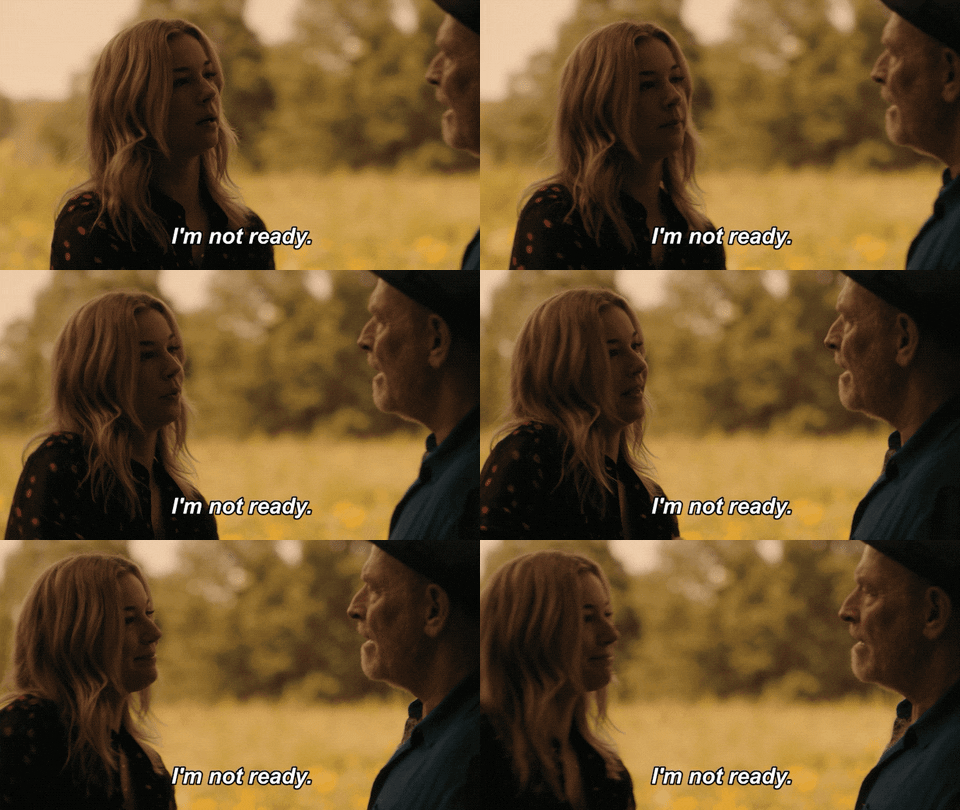
Kate’s Review: “The Tea Dragon Tapestry”

51323376Book: “The Tea Dragon Tapestry” by Katie O’Neill
Publishing Info: Oni Press, September 2020

Where Did I Get This Book: I received an eARC from NetGalley.

Book Description: Join Greta and Minette once more for the heartwarming conclusion of the award-winning Tea Dragon series!

Over a year since being entrusted with Ginseng’s care, Greta still can’t chase away the cloud of mourning that hangs over the timid Tea Dragon. As she struggles to create something spectacular enough to impress a master blacksmith in search of an apprentice, she questions the true meaning of crafting, and the true meaning of caring for someone in grief. Meanwhile, Minette receives a surprise package from the monastery where she was once training to be a prophetess. Thrown into confusion about her path in life, the shy and reserved Minette finds that the more she opens her heart to others, the more clearly she can see what was always inside.

Told with the same care and charm as the previous installments of the Tea Dragon series, The Tea Dragon Tapestry welcomes old friends and new into a heartfelt story of purpose, love, and growth.

Review: Thank you to NetGalley for providing me with an eARC of this graphic novel!

I don’t know if not being at work has made my advanced knowledge of titles a little rusty or what, but when I was perusing NetGalley for a new batch of books I saw that Katie O’Neill had written a new “Tea Dragon” book that I hadn’t heard of. So I of course immediately accessed it, counting my luck stars that once again we were going to join Greta, Minette, Hesekiel, and Erik, and all of their adorable Tea Dragons.

And then I found out that it was the last story in the series.

giphy-7
How can this possibly be the end? HOW? (source)

“The Tea Dragon Tapestry” takes us back to the characters in “The Tea Dragon Society”, as we are reunited with blacksmith Greta, tea shop apprentice Minette, tea shop owners Hesekiel and Erik, and the always adorable Tea Dragons. Everyone is a bit older, and now Greta and Minette are starting to wonder about their places in the world and what they are going to do next with their lives. All the while, the Ginseng Tea Dragon that has ended up in Greta’s care after its owner passed away hasn’t been flourishing, and Greta is worried that she will never be able to bond with it. So right off the bat, identity and grief are presented as the themes of this book. O’Neill has a real gift for taking on heavy topics and making them feel digestable and gentle for the reader, and no matter how much anxiety or conflict a character may be feeling, you never get the sense that things are going to turn out badly for anyone. While this may come off as a lack of conflict and therefore a lack of investable plot, I actually really liked the calm atmosphere of this book. I also liked that there were moments dedicated to addressing the grief of the Ginseng Tea Dragon, and that grief is natural and doesn’t have to abide by timelines, nor does it mean that a person (or Tea Dragon) is broken. It was a great way to teach the young reader demographic potentially reading this (as this is generally a Middle Grade series) that when someone you care about is dealing with it, just being there is better than trying to find a fix so YOU feel better. Important lessons that even lots of adults don’t quite get, so I loved seeing it here.

Along with some great themes, revisiting characters from both “The Tea Dragon Society” and “The Tea Dragon Festival” was such a joy. O’Neill ties the two stories together and finally brings all of the characters to one place, with Rinn and Aedhan visiting Erik and interacting with Greta and Minette, and helping them with their self reflection. It was delightful seeing Rinn all grown up, and seeing her relationship with Aedhan and how it has changed and progressed. And even with the treat of familiar faces, O’Neill still manages to bring in some new characters, and lets us get to know them and learn to love them just as much as the old. I was particularly taken with Ginseng Tea Dragon, as it had a different, and just as valid, personality to some of it’s compatriots. New favorite Tea Dragon? Very possibly.

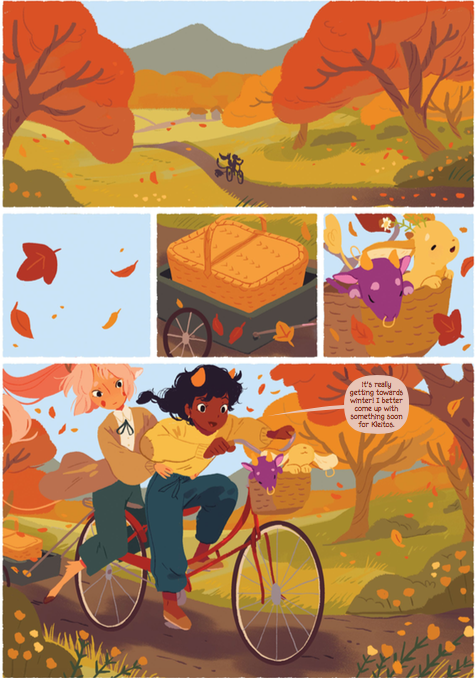
But it’s hard to choose, of course, because the Tea Dragons REMAIN EVER SO CUTE!! The design of this story is the same unique imagery that O’Neill has had for her previous books, and I still love it and how sweet and dreamy it is. The simplicity and bright and vibrant colors really bring out such joy and bring the story to life.

Screen Shot 2020-07-30 at 2.46.44 PM
Source: Oni Press

While I am not ready to say goodbye to the charming and wonderful characters of this series, “The Tea Garden Tapestry” gives it the best kind of send off I could have hoped for. I am very interested in seeing what Katie O’Neill does next now that she’s leaving her Tea Dragons and those who care for them.

Rating 8: A heartwarming and sweet conclusion to a series that I have come to associate with kindness and tranquility, “The Tea Dragon Tapestry” gives us one more adventure with Greta, Minette, and all the Tea Dragons.

Reader’s Advisory:

“The Tea Dragon Tapestry” is included on the Goodreads lists “Fantasy Fiber Fiction”, and “2020 YA Books with LGBT Themes”.

Find “The Tea Dragon Tapestry” at your library using WorldCat, or a local independent bookstore using IndieBound!

Previously Reviewed:

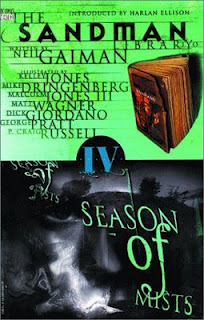
Kate’s Review: “The Sandman (Vol.4): Season of Mists”

25101Book: “The Sandman (Vol.4): Season of Mists” by Neil Gaiman, Matt Wagner (Ill.), George Pratt (Ill.), Dick Giordano (Ill.), Kelley Jones (Ill.), P. Craig Russell (Ill.), Mike Dringenberg (Ill.), & Malcolm Jones III (Ill.).

Publishing Info: Vertigo, 1991

Where Did I Get This Book: I own it.

Book Description: Ten thousand years ago, Morpheus condemned a woman who loved him to Hell. Now the other members of his immortal family, The Endless, have convinced the Dream King that this was an injustice. To make it right, Morpheus must return to Hell to rescue his banished love — and Hell’s ruler, the fallen angel Lucifer, has already sworn to destroy him.

Review: Up until this point, “The Sandman” has been a combination of vignettes, massive world building, and showing how Morpheus/Dream is adjusting to trying to rebuild The Dreaming after his captivity. I think that it’s safe to say, however, that we don’t really know THAT MUCH about Morpheus as a character in terms of his wants, desires, and personality. He’s a deity of sorts. He’s a bit grumpy. He can be vengeful, or merciful. But in “The Sandman (Vol.4): Season of Mists”, we finally get to see him grapple with some very tough decisions, as well as having to look inwards and grapple with his own demons and mistakes. After a meeting with the other Endless, aka his siblings, Morpheus is taken to task by Death for banishing his former lover Nada to Hell after she refused to marry him and rule The Dreaming by his side. Realizing that he did something reprehensible, he decides to go to Hell, confront Lucifer Morningstar, and see if he can set her free. You think that the story you’re about to read is going to be a great battle between two powerful beings, and that it’s going to be a focus on the big fight between the two to save Nada.

But instead, when Dream arrives to confront Lucifer…. Lucifer quits his mantle as the ruler of Hell, and tells Dream that he is now responsible for what happens next to his former kingdom.

giphy-1
Lucifer as he peaces out. (source)

So in a great twist and subversion, now Dream has to hold court to those who would want to take Hell over, and The Dreaming becomes host to Gods, Goddesses, Deities, Demons, and others who all think that they should get this prime real estate. Frankly, I loved that this was the main conflict. Seeing Morpheus have to bring all of these beings into his home and to let them say their piece, and then have to do some critical thinking about the pros and cons of giving one of them Hell (through sucking up, threats, or bribes no less), was such a fascinating turn of events. We get to see Gods from various mythologies come in, from Odin to Anubis to Bast to Susanoo-no-mikoto, Gaiman gives all of them a reason to want Hell for themselves. It also gives Dream time to think about what kind of terrible fate he left Nada to. That was actually the greatest weakness of this arc, in that things with Dream and Nada is almost resolved too quickly and easily. I liked seeing Death read Dream the Riot Act about how AWFUL he was to her. It doesn’t sit as well these days for MANY reasons (given that she was also of African royalty, so seeing Morpheus subjugate a Black woman just feels all the more tone deaf and problematic). But over all, I really liked this entire arc, and feel that this is where “The Sandman” has finally become it’s own thing, even more so than “The Doll’s House”.

But more significant for me within the whole of “The Sandman” mythos and universe is that this is the collection in which we finally get to meet Delirium, the youngest Endless and my number one favorite character in this series. Sure I’ve sang the praises of Death, and while she is my number two gal, Delirium holds the key to my heart. I love her so much that in 2015 I was her for Halloween.

delerium2
Not many people at my party got it, but those who did were LIVING. 

Along with the intros of Delirium and Destiny, we get to see the Endless interacting with each other, and seeing the power dynamics, as well as hints towards a missing Endless, but more on that in later collections. They are definitely dysfunctional, but you at least get the feeling that they, mostly, care for each other, as well as otherworldly godlike beings can (though Dream seems to have no love for Desire, which is fair as Desire is the wooooorst in many ways). This extended scene felt natural and was incredibly charming.

As I’m sure you noticed above, there are SO MANY illustrators with this arc, and they all added something unique to each story. But once again my favorite is the one that deals with the Endless, with illustrations by Dringenberg and Jones. The dreamy details of the Endless as they confer and debate really made me feel like I was in a strange place between worlds.

sandman2021-08
(source)

Rating 9: A fascinating and twisted (yet also somewhat lighthearted) storyline that brings together many myths and legends, “Season of Mists” gives Morpheus a lot to think about in terms of fairness, and his own culpability in monstrous acts. We also meet my favorite character in the series.

Reader’s Advisory:

“The Sandman (Vol.4): Season of Mists” is included on the Goodreads lists “Great Non-Super Hero Graphic Novels”, and “Mythic Fiction Comics”,

Find “The Sandman (Vol.4): Season of Mists” at your library using WorldCat, or a local independent bookstore using IndieBound!

Previously Reviewed: 

Kate’s Review: “Basketful of Heads”

50490087._sy475_Book: “Basketful of Heads” by Joe Hill and Leomacs (Ill.)
Publishing Info: DC Comics, September 2020

Where Did I Get This Book: I received an eARC from NetGalley.

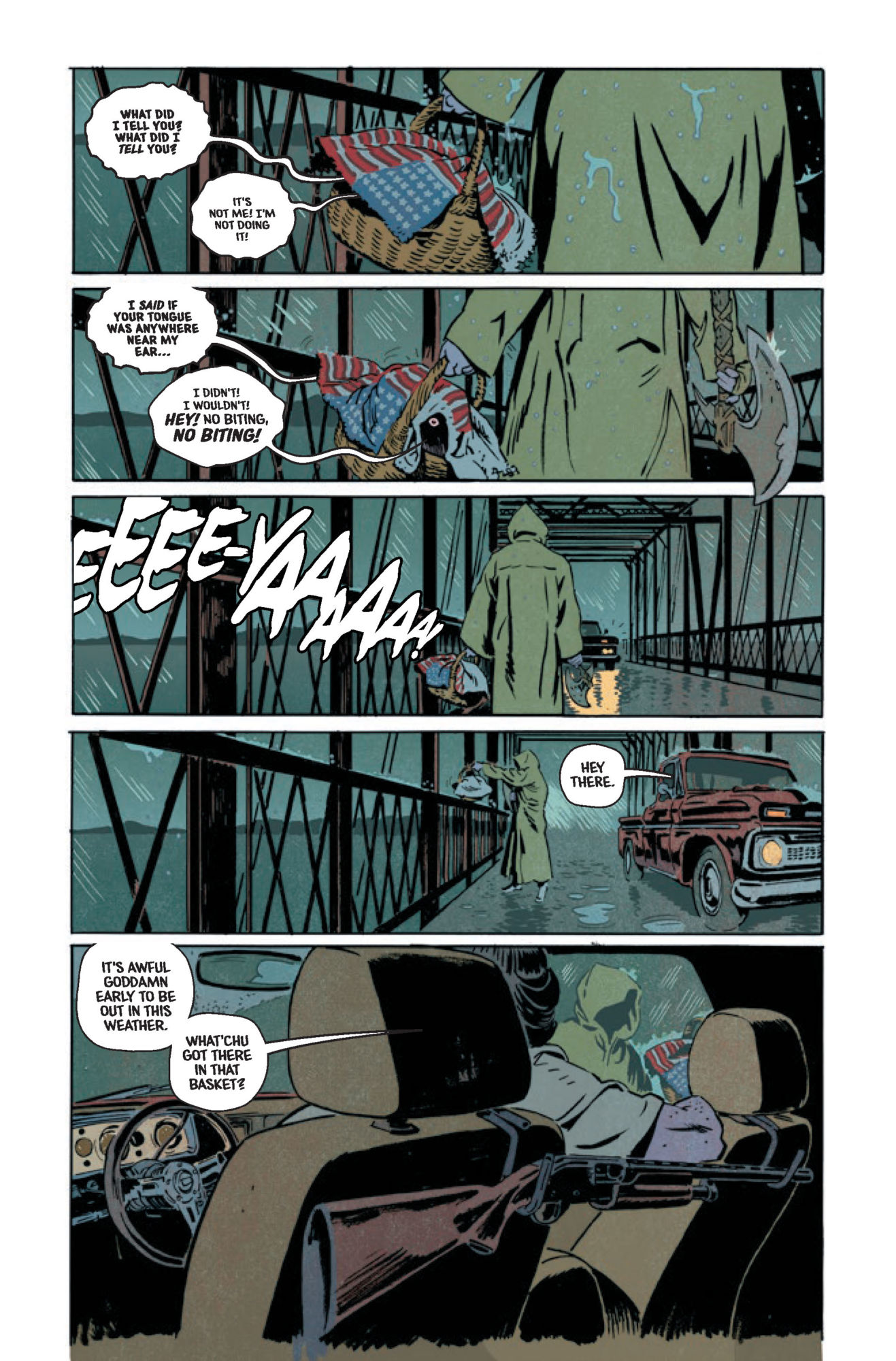
Book Description: June Branch visits her boyfriend, Liam, on Brody Island for a relaxing last weekend of summer. After an escaped group of criminals breaks into the house that June and Liam are watching, Liam is taken by them. June grabs a strange Viking axe and flees from the intruders. When one of the attackers finds her, she swings the axe and takes off his head, which rolls away and begins to babble in terror. For June to uncover the truth, she’ll need to hear the facts straight from the mouths of her attackers, with…or without their bodies attached. Collects issues #1-7.

Review: Thank you to NetGalley for sending me an eARC of this graphic novel!

While it’s true that we aren’t getting a new Joe Hill novel this year, never fear fellow Hill lovers! He has made his triumphant return into the comics world with DC’s imprint Hill House Comics! Given how intricate and awesome “Locke and Key” is, when I heard that he was coming up with his own comic imprint I was very happy. When his premiere contribution “Basketful of Heads” became available in its full form on NetGalley I downloaded it almost immediately after I saw it. I had high hopes, and like most Hill content that comes my way, it met my expectations.

First thing is first, Hill has created some fun characters and a fun setting for this story. Brody Island feels exactly like the kind of beach town you would see in 1970s and 80s lore, with heavy nods to “Jaws” in particular (as this is one of Joe Hill’s favorite movies I wasn’t surprised; Brody Island named for the police chief in that movie, as well as a character saying someone should be hung up by their ‘buster browns’, a la the mayor). In this limited scope of a story you get a sense of the town and the people who live there, and the nostalgia factor was on point. Our protagonist June is the kind of lady character I’ve come to expect from Hill. She’s tough, she’s no nonsense, but she isn’t forced into a stereotypical ‘badass woman’ box we sometimes see when these kinds of characters are on the page. While it’s true that she’s lopping people’s heads off in hopes of saving herself and her boyfriend Liam, which is incredibly badass, she retains her personality and her core being. June also has some well done complexity, as she loves her boyfriend but has aspirations of her own through her education and focus on psychology. While others disparage her aspirations, she values them and holds true to them. I loved June. Add her to the list of excellent Hill heroines.

And then there’s the horror and mystery aspects of this story. As June takes off the heads of violent men who want to do her and Liam harm, we see a lot of gore and splatterpunk-esque violence that is very entertaining. We don’t really know what it is about the axe that June is carrying that makes people’s heads stay alive after being removed from the body, but ultimately it doesn’t matter. The bigger question is why were June and Liam targeted by their attackers. And as that mystery slowly unfolds, we get a well plotted and full of twists ride that I really enjoyed. Hill has a number of tricks up his sleeves, and I found all of them entertaining as hell. I sped through this story wanting to know how it was all going to turn out, and with every reveal I was excited to learn more. Throw in some really fun Easter egg references to Stephen King and his work (prisoners from Shawshank on the run, the location of “Derry County”) and I could barely contain the smiles on my face that kept breaking out.

On top of all that, I liked the art style quite a bit. It is splatterpunk and gory when it needs to be, but also has some moments of cartoony camp and intimate expressions on our characters faces.

basketfulofheads11
(source)

“Basketful of Heads” was a really fun story, and I couldn’t be happier now that Joe Hill is back to doing some work in comics. I will definitely be looking into his imprint more to see what other stories come out of it. Summer may be over, but if you want to cling to it a little while longer and you like this kinda thing, pick it up!

Rating 8: Super fun, super gory, super twisty, “Basketful of Heads” is a hoot and a half and a hell of a ride.

Reader’s Advisory:

“Basketful of Heads” is new and isn’t included on any Goodreads lists, but I think that it would fit in on “Best Horror Comics/ Graphic Novels”.

Find “Basketful of Heads” at your library using WorldCat, or at a local independent bookstore using IndieBound!

Kate’s Review: “Heartstopper (Vol.1)”

50160417Book: “Heartstopper (Vol.1)” by Alice Oseman
Publishing Info: Graphix, May 2020

Where Did I Get This Book: I own it.

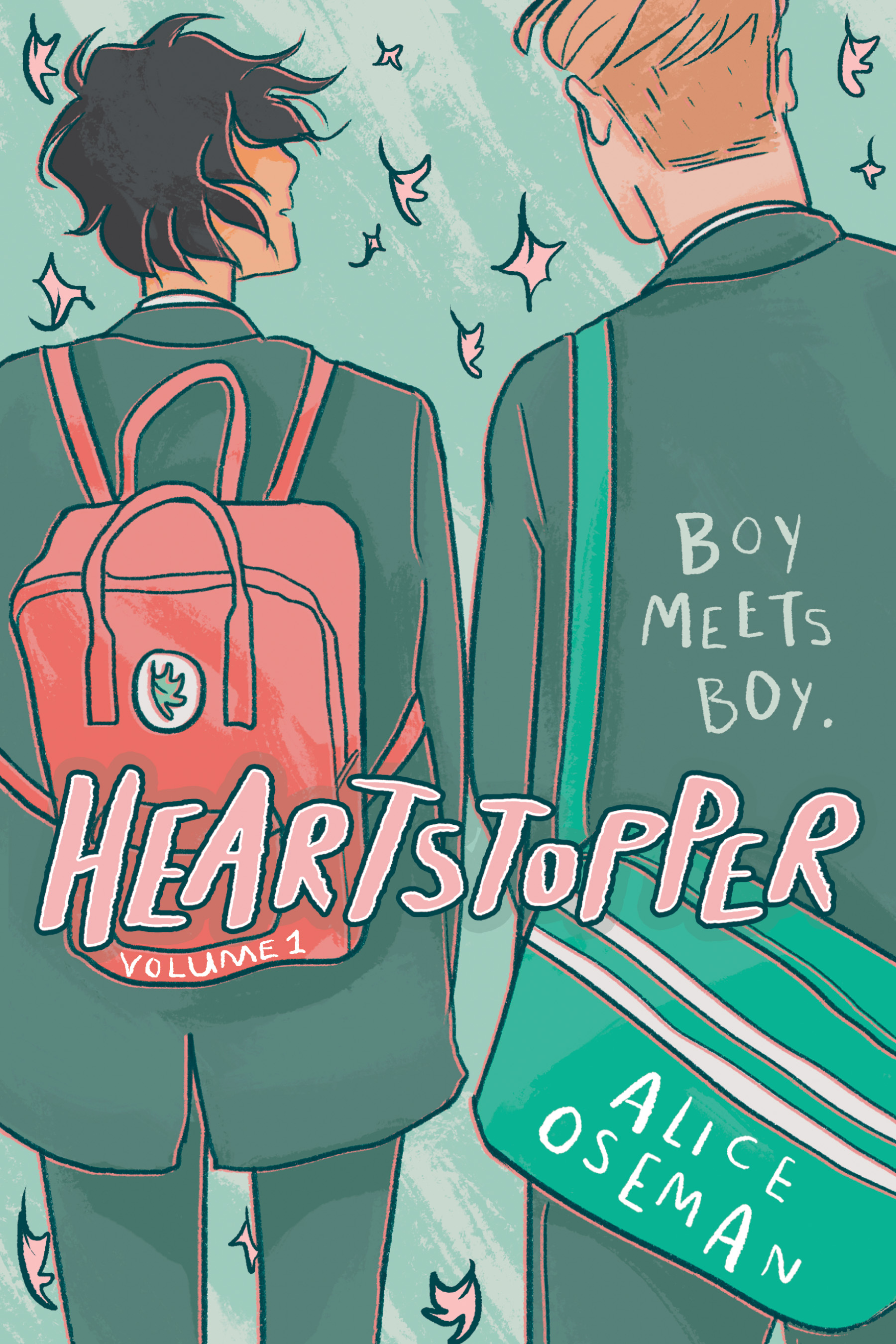
Book Description: Boy meets boy. Boys become friends. Boys fall in love. A sweet and charming coming-of-age story that explores friendship, love, and coming out.

Shy and softhearted Charlie Spring sits next to rugby player Nick Nelson in class one morning. A warm and intimate friendship follows, and that soon develops into something more for Charlie, who doesn’t think he has a chance.

But Nick is struggling with feelings of his own, and as the two grow closer and take on the ups and downs of high school, they come to understand the surprising and delightful ways in which love works.

Review: Sometimes you just need a good romance. While it’s not really my go to genre, I do have a soft spot for a kissing book every once in awhile, and in graphic novel form that’s all the better. Given how things have been going as of late, when I was throwing money at my local indie bookstore I decided to order “Heartstopper (Vol.1)” by Alice Oseman, given that a few of my friends had read it and enjoyed it. I waited for a day where I was stressed out and needed a nice fluffy distraction. And if you too are looking for a nice fluffy distraction, “Heartstopper (Vol.1)” will do you just fine.

giphy-4
This book showing up to shower you with romantic goodness. (source)

“Heartstopper (Vol.1)” is about two teenage boys. The first is Charlie, a shy and introverted 10th year at his school who is out and used to be bullied because of it. The other is Nick, a gregarious and charming rugby player who gets along with all sorts of people. After being seated next to each other in class they strike up a friendship, and then perhaps something more starts to develop. This is a very straightforward story about two boys who are still trying to find themselves, and by finding each other they grow and change and blossom. While there isn’t much in terms of twists or turns or crazy drama or conflict, the quiet pangs of seemingly impossible crushes and the confusing moments of shifting (or perhaps merely expanding) sexuality bring enough relatable angst and joy to the reader that you will still be invested. Charlie and Nick’s friendship is realistic and darling, and seeing Charlie yearn for Nick while thinking he has no chance, and seeing Nick become more and more drawn to Charlie makes it so that you are completely taken in by their tale and will want to see what happens. Both Charlie and Nick are extremely likable, and I loved seeing how they interacted with each other and how their potential romance slowly built up through these interactions. What I found the most satisfying about this story is that while Charlie makes mention of past bullying, and while there are definitely moments of ‘soft’ homophobia from some characters (by no means to I mean not harmful, but more thinking in stereotypes of what a gay person is ‘supposed’ to be), it isn’t the main conflict for Charlie within the narrative. After all, while addressing the oppression that members of the LGBTQIA+ have to face is important, it’s also important not to define their stories by that oppression. So to have Charlie and Nick navigating the highs and lows of a potential romance in very run of the mill ways was refreshing. I also appreciated how Oseman addressed that one’s sexuality can shift and change when you are trying to figure out who you are, as Nick is going through a lot of self discovery. And that can be hard. The story is definitely soft and sweet, and while it does end on something of a cliffhanger you also have hope going into the next volume. Whenever that may be. Soon, I hope!

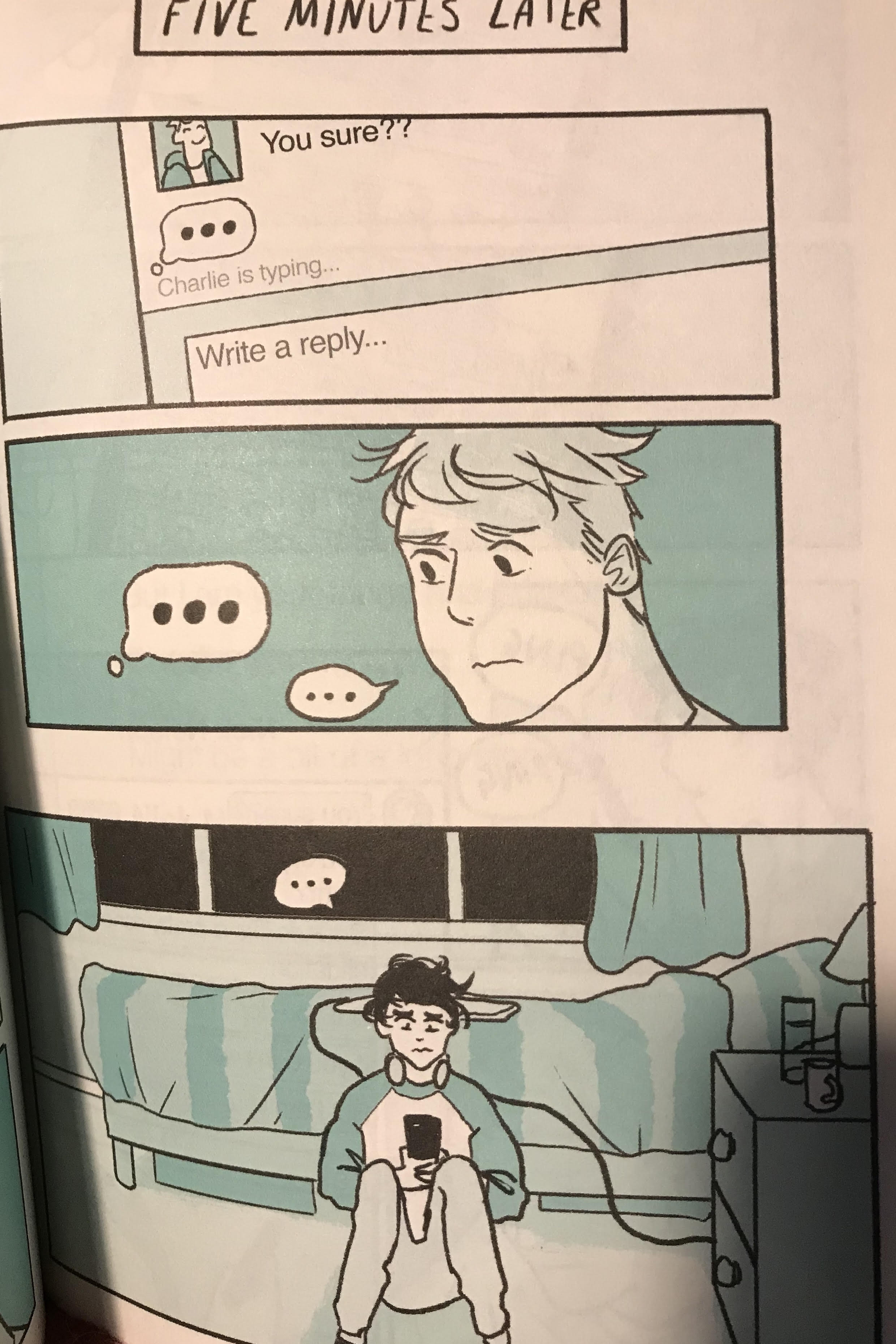
And finally, I really liked the artwork for this comic. Oseman’s style is very simple, but there are little hints of originality that I found very endearing. Be it sometimes writing out sound effects to have in the panel, or how the words are hand written and typed out letters are reserved for texts and messages between characters, or how body language gets translated into words, there is something very endearing and charming about how Oseman tells her story with her imagery.

heartstopper
Please ignore the not so good quality picture, I had to improvise. (Source: Graphix)

“Heartstopper (Vol.1)” is a lovely start to this pleasant story, and I am very eager to see where Charlie and Nick go from here.

Rating 8: Soft and sweet, “Heartstopper (Vol.1)” is a darling romance with lovely characters and a charming coming of age plot line.

Reader’s Advisory:

“Heartstopper (Vol.1)” is included on the Goodreads lists “Great M/M Webcomics”, and “Let Boys Be Soft”.

Find “Heartstopper (Vol.1)” at your library using WorldCat, or at a local independent bookstore using IndieBound!

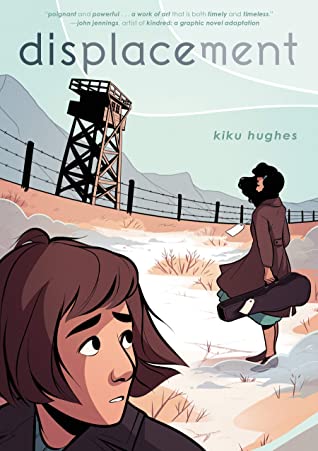
Kate’s Review: “Displacement”

39908611._sx318_Book: “Displacement” by Kiku Hughes

Publishing Info: First Second Books, August 2020

Where Did I Get This Book: I received an eARC from NetGalley.

Book Description: A teenager is pulled back in time to witness her grandmother’s experiences in World War II-era Japanese internment camps in Displacement, a historical graphic novel from Kiku Hughes.

Kiku is on vacation in San Francisco when suddenly she finds herself displaced to the 1940s Japanese-American internment camp that her late grandmother, Ernestina, was forcibly relocated to during World War II.

These displacements keep occurring until Kiku finds herself “stuck” back in time. Living alongside her young grandmother and other Japanese-American citizens in internment camps, Kiku gets the education she never received in history class. She witnesses the lives of Japanese-Americans who were denied their civil liberties and suffered greatly, but managed to cultivate community and commit acts of resistance in order to survive.

Kiku Hughes weaves a riveting, bittersweet tale that highlights the intergenerational impact and power of memory.

Review: Thank you to NetGalley for providing me with an eARC of this graphic novel!

I am always going to keep hammering home the point that if we don’t know our own history, we are going to repeat it, especially now when our country seems to be determined to undercut civil liberties of its own citizens. Between police brutality, towards minorities (particularly Black people), a Muslim ban, and children in cages at the border, it feels like we are slipping more towards times in American history where we committed terrible atrocities that we haven’t really faced as of yet. That brings me to “Displacement” by Kiku Hughes, a graphic novel on the Japanese American Internment during World War II. I’ve read my fair share about this horrific practice (and reviewed another graphic novel on the topic, “They Called Us Enemy” by George Takei), and figured that this would be another powerful, but familiar, take on this period in history. And I can safely say that “Displacement” wasn’t really what I was expecting.

“Displacement” is both fiction, and non-fiction. The non-fiction aspect is that Kiku Hughes’s grandmother Ernestina was held prisoner at both Tanforan and Topaz Internment camps, and that Kiku and her mother did a lot of research into it as Ernestina didn’t open up about it while she was alive. But the fictional aspect is a device that works very well, in which Kiku tells a story of herself being transported back in time, or ‘displaced’ to the 1940s, and ending up at the same Internment sites as Ernestina, therein letting the reader see this historical atrocity through the same modern lens that Kiku may. It’s very similar to “Kindred” by Octavia Butler, and Hughes mentions her specifically in her acknowledgements. I thought that it worked really well because it makes the story feel more personal than perhaps a textbook would, and more relatable since Hughes is a young adult who doesn’t know that much about the camps and what life there was like for Ernestina. It’s a perfect read for tweens and teens who might be wanting to learn about this topic, as while it’s ‘fantasy’, it’s also very realistic and provides the same perspective that they may be going in with. I read “Farewell to Manzanar” by Jane Watasuki Houston when I was in seventh grade, and while I did like it and got a lot from it, I think that if I had something like “Displacement” I may have connected more with it just because of the modern lens. Hughes also makes very clear connections to the current political climate we are in today with Trump and his goons in power, and how there are stark, STARK similarities between the prejudices they hold and the policies they are inflicting upon marginalized groups, and the ones inflicted upon the Issei and Nisei in this country during the Internment.

While “Kindred” is the book Hughes mentions specifically as influence, I also see a lot of similarities to Jane Yolen’s “The Devil’s Arithmetic”, in which a modern day (well modern when it came out) Jewish girl named Hannah is transported back to Poland right as the Nazis take over. I kept going back to that story as I saw Kiku pre-displacement, thinking about how Hannah, like Kiku, doesn’t feel that much connection to her heritage. While “Displacement” certainly does a great job of talking about what specifically happened to her grandmother during the Internment, Hughes also makes direct connections as to how the Internment facilitated a loss of identity for Japanese Americans, and played a part in generational trauma that still lingers today. It’s a theme that I haven’t seen as much in other books, be they fiction or non-fiction, about the Internment, and it is a really powerful way to show that there are far reaching consequences that touch later generations when it comes to trauma and violence directed towards a group of people. Kiku recounts (in the true story part of this book) how she and her mother decided to do their own research about Ernestina’s life in the camps, and about the camps themselves, and find out things that neither of them knew because of survivors not wanting to talk about it due to trauma and shame. This was the aspect that stood out to me the most.

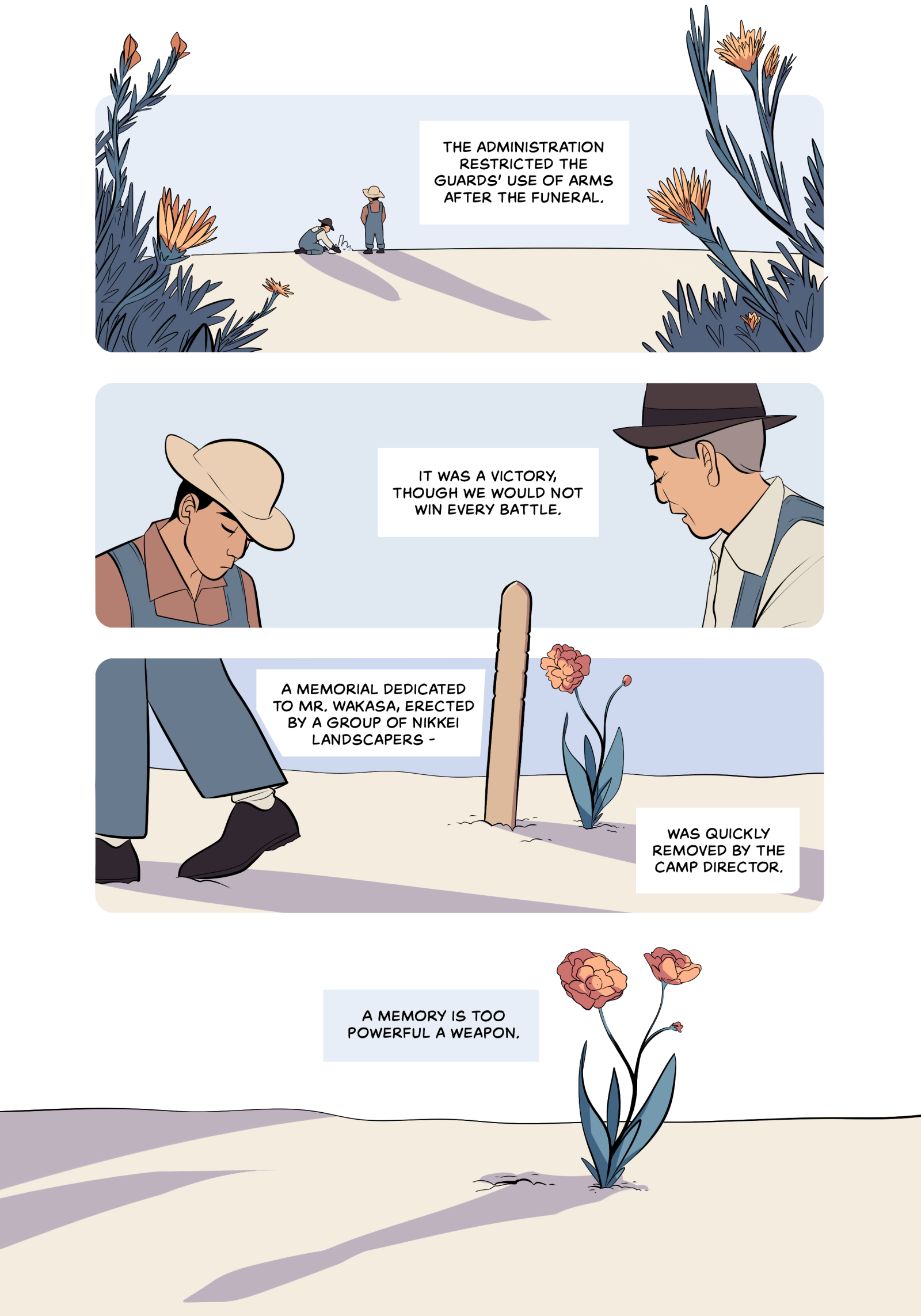
And finally, I really liked Hughe’s artwork style. It feels not dissimilar to what you might expect from modern comics, but there are undercurrents of more realistic artwork and imagery that kind of remind the reader that this is based on something real, and terrible.

wtbchhrnj1x3brfhsqpb
(source)

“Displacement” is a book that I really think educators should have in their curriculums when teaching teens about the Japanese American Internment. It’s easy to understand, easy to parse, and has a whole lot to say about identity, racist policy, and trauma that can last beyond a generation.

Rating 8: A powerful graphic novel and the perfect introduction to the subject for tween and teen audiences, “Displacement” takes on a reprehensible part of American history with a magical realism twist.

Reader’s Advisory:

“Displacement” is included on the Goodreads lists “Surviving in the Japanese Relocation Centers of WW2”, and “2020 YA/MG Books With POC Leads”.

Find “Displacement” at your library using WorldCat, or a local independent bookstore using IndieBound!