
Serena’s Review: “The Dire King”

31438747Book: “The Dire King” by William Ritter

Publishing Info: Algonquin Young Readers, August 2017

Where Did I Get this Book: the library!

Book Description: The fate of the world is in the hands of detective of the supernatural R. F. Jackaby and his intrepid assistant, Abigail Rook. An evil king is turning ancient tensions into modern strife, using a blend of magic and technology to push Earth and the Otherworld into a mortal competition. Jackaby and Abigail are caught in the middle as they continue to solve the daily mysteries of New Fiddleham, New England — like who’s created the rend between the worlds, how to close it, and why zombies are appearing around. At the same time, the romance between Abigail and the shape-shifting police detective Charlie Cane deepens, and Jackaby’s resistance to his feelings for 926 Augur Lane’s ghostly lady, Jenny, begins to give way. Before the four can think about their own futures, they will have to defeat an evil that wants to destroy the future altogether.

Previously Reviewed: “Jackaby,” “Beastly Bones,” and “Ghostly Echoes”

Review: “Ghostly Echoes” did a nice job of tying together all the pieces methodicly laid out in the previous two books. More than that, it gave us some much needed history for many of our main characters, as well as, importantly, the villain. The stage was set, and all that remained was whether or not Ritter would be able to balance the light tone and quirkiness at the core of the series with this more serious plotline. The answer is mostly! While there are spots that I believe could have been improved or more fleshed out, I’m happy to report that I finished this book, and this series, pleasantly satisfied.

There was a lot to get done in this book. The supernatural world has been exposed to the general public, once and for all. The series “big bad” is gearing up to make its move. And there are two romantic plotlines that needed to be handled, both with fairly large obstacles standing in there way. Charlie is still a wanted man for this actions back in book one that exposed his identity as a shapeshifter. And now, in a city that is spooky at the barest hint of the strange, his position and future are all the more uncertain. And Jenny, while making great strides forward with her ability to function more fully in the living world, is still, well, a ghost.

After learning that his wife is a supernatural being who has been operating behind the scenes for years in the service of her villainous leader, the governor of New Fiddleham is not messing around. But with this new found belief comes fanaticism, and Abigail and Jackaby are horrified to see the city’s jail cells filling up with all manner of innocent, supernatural beings. It’s a literal witch hunt. I very much enjoyed this portion of the story. Many of the side characters we’ve met throughout this series were either already familiar with the supernatural world, or, for whatever reason, more open-minded to the positive aspects of these beings. Here, we see the negative side of humanity when confronted with beings they don’t understand, and I think this balance added a healthy dose of realism to a series that could, at times, veer into the twee with its characters.

I also very much enjoyed the exploration of the two main romantic plotlines to the story. Jenny and Jackaby’s relationship has been later to the show, and while I’m still not convinced that this was a necessary addition, I was pleasantly surprised with the way this played out. Importantly, Jackaby’s utter cluelessness wasn’t undercut by his being turned into a second romantic hero. While I may still have preferred the series to have left his character single in the more traditional “Sherlock Holmes” manner, I was satisfied with what Ritter did with him here.

Abigail and Charlie, however, have been slowly building towards this point throughout the series. They have had to confront not only the challenges of Charlie’s public image issues, but also explore the balance between their personal and professional lives. It was fun seeing these two work together on a case in this book, witnessing the fact that they work together not only as romantic interests, but as equals who respect what the other brings to the table.

The larger story, that of the Dire King himself, was also very intriguing. The fae world was blown out and we see that up to this point we, and the characters, have mostly been operating in a tiny slice of this strange and complicated world.

The story concludes on a bitter sweet and more serious note than I had expected. But I found this to be particularly refreshing. When I picked up this book, it took me a bit of time to again slip into the particular tone of this series. All four books have been written in a rather simple style, often playing with words and phrases in a comedic way. This style, while fun, also tends to undercut more serious moments in the story, and knowing that this was the conclusion to the series, I was a bit more put off my this lightness when dealing with these more serious issues. However, Ritter doesn’t shy away from consequences in this book, light writing tone or no light writing tone.

All in all, I very much enjoyed this book and the series as a whole. Definitely check it out if you enjoy re-imagingings of Sherlock Holmes type characters, and historical fantasy. The writing style is on the lighter side, however, something that may read as strange to fans of adult fiction. But keep an open mind! For all of its quirkiness, there are real monsters hidden in this text!

Rating 8: A great conclusion to a unique, creative series!

Reader’s Advisory:

“The Dire King” is included on this Goodreads list: “Teen & YA Detective Mysteries.”

Find “The Dire King” at your library using Worldcat!

Serena’s Review: “Silver in the Blood”

22929540Book: “Silver in the Blood” by Jessica Day George
Publishing Info: Bloomsbury USA Childrens, July 2015

Where Did I Get this Book: audiobook from the library!

Book Description: Society girls from New York City circa 1890, Dacia and Lou never desired to know more about their lineage, instead preferring to gossip about the mysterious Romanian family that they barely knew. But upon turning seventeen, the girls must return to their homeland to meet their relatives, find proper husbands, and—most terrifyingly—learn the deep family secrets of The Claw, The Wing, and The Smoke. The Florescus, after all, are shape-shifters, and it is time for Dacia and Lou to fulfill the prophecy that demands their acceptance of this fate… or fight against this cruel inheritance with all their might.

Review: I’ve read a few of Jessica Day George’s books, mostly her fairytale retellings. I’ve enjoyed them for the most part, even if the middle grade tone read as a bit simplistic for my taste. But when I stumbled upon this original fairytale type story featuring some of my favorite things (sisters/cousins! shapeshifters! Romania!), I knew I’d need to dive right in.

The story alternates perspectives between two American-born heiresses, Dacia and Lou. Their mothers both emigrated to New York from Romania, and now it is time for the girls to travel back to this homeland and meet their maternal family, a family that is old and has many secrets. The chapters are broken up with short interludes, either letters written between the two characters when they are separated, journal entries, or news entries.

While not everything worked for me in this book, Dacia and Lou as characters were a definite highlight. Both girls have distinct story arcs, and I appreciated the fact that neither was allowed to wallow in the stereotypes of the characters type they are originally introduced as. Dacia starts the story as a confident, independent young woman, constantly testing the boundaries that are set upon her and fearless in the face of others’ disapproval. Lou, however, is more thoughtful, reserved, and cautious with the route she takes through life. Through the story Dacia’s confidence, or over confidence, is shaken and she must confront who she believes she is and make serious adjustments. Lou, on the other hand, comes into her own, discovery her own inner strength.

And, importantly, each girl takes turns supporting or being supported by the other. In the beginning I worried that this was going to follow a typical path where Lou would be “brought out of her shell” by her brilliant, shining cousin. But I was pleased to see their roles swapped, and by the end, each girl has learned more about herself and come to see the value in the others’ original approach to life.

I also very much enjoyed the setting. While we don’t get a lot of detail about the city and countryside of Romania, there was enough to highlight its cultural differences to Paris and New York, the girls’ other points of reference. The family history, hierarchy, and creativity of the actual shapeshifter types was also a pleasant surprise. We don’t only have wolf shifters, but bats and another mysterious type that we discover halfway through. It was refreshing to find a shapeshifter story that expanded upon many of teh tropes we are used to seeing. George introduces a complicated history for the Florescus family, one that is intimately connected with another ancient family, the Draculs. And before you guess, I will say that this second part doesn’t necessarily play out the way you would expect!

For all of these pros, there were a few points of this story I found myself struggling with. One was, again, the writing style. While Dacia and Lou are interesting, their narrating voices often read as younger than they were presented to be. The general tone of the book, again, read as very middle grade. This would be fine if it weren’t for the fact that in other ways the story is very adult. There are some very serious scenes dealing with sexual violence, battles, and straight up murder. This gruesomeness and darker tone jarred with the light and rather simplistic style of writing that surrounded it and often through me off balance as I was reading.

I also struggled with the villain of the story. He was just evil. And crazy. And while yes, this is what we expect from villains, his sheer and utter madness often left me unable to take him seriously. Many of his plans dealt with inflicting harm or reigning in the power of people who were much stronger than him. Some of his threats didn’t make any logical sense if you thought about it. So, yes, he was meant to be a crazy character. But the fact that everyone around him reacted to his madness seriously at times read as very strange. His threats were so completely empty and the solution to the whole problem so easy that it very much undercut any actual urgency for the final act.

The ending was also a bit unclear. There seemed to be several loose ends that were left hanging, and I can’t find anywhere that this was ever meant to read as more than just a standalone. The storylines that we did get wrapped up were closed all too quickly and easily. And I felt that there were many important scenes that were only referenced but left off the page, which was very disappointing.

So, while I did enjoy the main characters and the unique take on shapeshifter mythology, I was left a bit disappointed  by this read. At this point, I think it is probably best to just admit that George’s writing style is not to my taste and leave it at that. However, if you enjoy light (for the most part??) historical fantasy that is set in a unique locale and features two awesome ladies, this still might be the book for you!

Rating 6: Two strong characters and an interesting magic system weren’t enough for me to get past some of the strange plot choices in the end and an off-putting writing style.

Reader’s Advisory:

“Silver in the Blood” is on these Goodreads lists: “Best Shapeshifter/Werewolf books” and “Victorian Paranormal YAs.”

Find “Silver in the Blood” at your library using WorldCat


Serena’s Review: “City of Miracles”

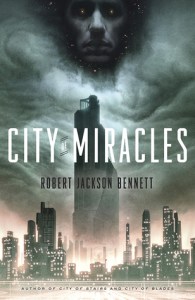
31522139Book: “City of Miracles” by Robert Jackson Bennett

Publishing Info: Broadway Books, May 2017

Where Did I Get this Book: Blogging for Books

Book Description: Revenge. It’s something Sigrud je Harkvaldsson is very, very good at. Maybe the only thing.

So when he learns that his oldest friend and ally, former Prime Minister Shara Komayd, has been assassinated, he knows exactly what to do — and that no mortal force can stop him from meting out the suffering Shara’s killers deserve.

Yet as Sigrud pursues his quarry with his customary terrifying efficiency, he begins to fear that this battle is an unwinnable one. Because discovering the truth behind Shara’s death will require him to take up arms in a secret, decades-long war, face down an angry young god, and unravel the last mysteries of Bulikov, the city of miracles itself. And — perhaps most daunting of all — finally face the truth about his own cursed existence.

Previously Reviewed: “City of Stairs” and “City of Blades”

Review: It’s no secret that I absolutely adored “City of Stairs” and “City of Blades.” In both books, Bennett established a seemingly endless world full of wonder and madness. He also accomplished the rare feat of producing a second book that I believe was even better than the first! It seems that resting on his laurels is simply something Bennett is incapable of doing, as “City of Miracles” is a perfect closely act for this trilogy.

It’s been 13 years since the events of “City of Blades,” and Sigrud lives a lonely, tired existence on the edge of society, waiting and waiting for a call from his former partner and friend Shara to call him back to the fight. To the world. To anything. The call finally comes, but not in a way he could ever have wished for: Shara has been assassinated. With this news, and the consuming grief and rage that has driven him throughout his life, Sigrud comes to live once again, blazing his way through the world hoping to servce justice for his friend’s senseless murder. Along the way, he finds new purpose in protecting Tatiana, Shara’s adopted daughter, and a girl who is tangled up in much more than Sigrud can imagine. Once again, the Divine is at work in the world. And once again, Sigrud will rampage through anything and everything in his way to protect and avenge those he loves.

What made “City of Blades” stand out from the first book in the series, was the added gravitas of subject matter that was layered upon an already fantastical story and world. The fantasy elements, the miraculous, even the Divine, served only as platforms upon which Bennett explored the deeply complicated history, purpose, and definition of warfare and what makes up the mind of a solder.

“City of Miracles” is excellent for following in this pattern. We have all the boundless creativity that can now be expected of this author and this world: Divinities of Night itself, steampunk-ish tramcars that trek across arctic mountainscapes, magical clothes and wondrously impossible buildings. But through these flashes of fantasy action and detailed world-building, Bennett is telling a much more grounded story.

Sigrud’s life is one of tragedy. The villain’s life is one of tragedy. The villain’s parent’s life is one of tragedy. It is all circular, and death follows death, vengeance and justice doling out the same misery and atrocity they work to revenge. Through Sigrud’s own life, and those he works to aid in this book, we see this pattern replay itself endless. Where is the live between justice and simply committing more crimes? At what point does the power gained through grief justify more grief itself to perpetuate its own existence? The the book before it, this story challenges its readers to think beyond common storytelling tropes. We’ve re-defined the soldier through a woman whose seen the damage and power that warfare brings. And here we’re redefining the avenging hero as more than the white knight we’re always given.

I was also pleasantly surprised by the inclusion of characters from previous books and the ways their stories were tied into the narrative of this book. Further, the new characters who are introduced were intriguing, particularly Ivanya, a character we met oh, so briefly back in book one but who plays a critical role in this story.

The author also cuts out quite a lot of work for himself with this story. It’s the final book in a trilogy, so our main characters’ story lines must all be tied off and resolved, any lingering questions about their pasts drawn to a close. But he also takes it upon himself to provide much needed information on the years that came before the first book itself. The ending is bittersweet and perfect. It closes in small moments and fantastic explosions (both literally and figuratively). These characters’ stories may be ending, but we’re left with a wide open world of possibility stretching out ahead.

I’m not sure if the author has any plans of revisiting this world, but if he is, the groundwork has been lain for a continuation, and I would be the first one in line at the bookstore. I can’t recommend this book, and this series, enough! If you enjoy fantasy with complicated heroes and challenging ideas, definitely check these out!

Rating 9: An excellent conclusion to an excellent trilogy. Fun, fast-paced, and challenging its readers at every turn!

Reader’s Advisory:

“City of Miracles” is included on these Goodreads lists: “Best Science Fiction & Fantasy Books” and “Best Fantasy Books of the 21st Century.”

Find “City of Miracles” at your library using Worldcat!

More Information: book information & author information.

Kate’s Review: “Sing, Unburied, Sing”

32920226Book: “Sing, Unburied, Sing” by Jesmyn Ward

Publishing Info: Scribner, September 2017

Where Did I Get This Book: The library!

Book Description: A searing and profound Southern odyssey by National Book Award winner Jesmyn Ward.

In Jesmyn Ward’s first novel since her National Book Award winning Salvage the Bones, this singular American writer brings the archetypal road novel into rural twenty-first-century America. Drawing on Morrison and Faulkner, The Odyssey and the Old Testament, Ward gives us an epochal story, a journey through Mississippi’s past and present that is both an intimate portrait of a family and an epic tale of hope and struggle. Ward is a major American writer, multiply awarded and universally lauded, and in Sing, Unburied, Sing she is at the height of her powers.

Jojo and his toddler sister, Kayla, live with their grandparents, Mam and Pop, and the occasional presence of their drug-addicted mother, Leonie, on a farm on the Gulf Coast of Mississippi. Leonie is simultaneously tormented and comforted by visions of her dead brother, which only come to her when she’s high; Mam is dying of cancer; and quiet, steady Pop tries to run the household and teach Jojo how to be a man. When the white father of Leonie’s children is released from prison, she packs her kids and a friend into her car and sets out across the state for Parchman farm, the Mississippi State Penitentiary, on a journey rife with danger and promise.

Sing, Unburied, Sing grapples with the ugly truths at the heart of the American story and the power, and limitations, of the bonds of family. Rich with Ward’s distinctive, musical language, Sing, Unburied, Sing is a majestic new work and an essential contribution to American literature.

Review: Every once in awhile, a book comes along that just blows me the hell away. One that feels like an elevated experience just reading it, pouring over it, immersing oneself in it. “Sing, Unburied, Sing” by Jesmyn Ward did that for me, and I am still staggered by how fantastic it was. I’ve come to expect nothing less from Jesmyn Ward, one of the best writers out there today, bar none. I’ve read two of her other books, both of which are transcendent and incredibly emotional. The first is the novel “Salvage the Bones”, a story about a rural and poor African American family living in Mississippi as Hurricane Katrina lurches and looms towards them. The other is “Men We Reaped”, a memoir about the numerous black men in Ward’s life who all died far too young, brutal casualties of overt and systemic racism that is all too present in the U.S. When I heard she had a new book coming out, I requested it, and then steeled myself for it as I picked it up.

The first thing that I must mention is the characters and characterization in this novel. We follow a couple main perspectives. The first is Jojo, a thirteen year old boy who has been raised mostly by his grandparents (Mam and Pop), as his mother is addicted to drugs and his father is in prison. He has also taken on the caregiver role to his little sister Kayla, wanting to keep her safe from the ills of the world. Mam is very ill with cancer, and Pop tells Jojo stories from the past in hopes that Jojo can learn from them. The second is Leonie, Jojo and Kayla’s mother. Her boyfriend Michael is getting out of prison soon, and her all encompassing love for him blinds her to most other things. Her drug addiction is fueled in part by the fact that she sees visions of her dead brother Given while she’s high. The final perspective is from Richie, the ghost of a thirteen year old boy who died at Parchman, the prison Michael is at. Richie knew Pop when he was alive, and he has unfinished business with him. Jojo starts seeing Richie on their travels, as Richie knows that there’s a connection there. All of these characters are well rounded and explored, and I got a feel for every one of them (as well as a number of the other characters like Mam and Pop). I understood the motivations of each of them. I was especially moved by Leonie, as while she makes terrible and selfish decisions when it comes to her children, I completely understood why she made those choices, and how factors both within her control and outside of it have made her into the person that she is.

The themes of this book also blew me away. For one, I’m a huge sucker for a ghost story, and this one has the feel of a Southern Gothic novel with the isolation and wide open spaces that still feel claustrophobic. But Ward brings in other ghosts that haunt this country and our culture, as the setting and characters are still plagued by the racism that has so infected this country. From the remnants of Jim Crow laws to the consequences of the War on Drugs to police brutality and violence, the journey that this family takes, physical and emotional, always has the specter of racism hanging over it. Ward doesn’t offer any solutions or answers or happy endings of conclusions to this, and all you can hope for is that this family will continue to survive in face of explicit (Michael’s family) and implicit racism that surrounds them. It’s really the perfect use of a ghost story, as the all too true horrors of our racist culture and society still haunt us, as much as we may hate to acknowledge it.

And the writing is just beautiful. Ward has a serious talent for creating a story and an imagery that leaps and flows in the pages of this book. I felt like I could see everything that was happening in my mind’s eye, and I was so engrossed I devoured this book in a day’s time. Ward is an author who is being called a ‘modern Faulkner’ by a number of people, and while I understand the sentiment (examinations of the American South are a commonality between the two), I think that she easily stands in a league of her own. This book is exactly why, and I urge everyone to give it a try and see why, because nothing I write here will be able to do it justice.

“Sing, Unburied, Sing” is one of the best books I’ve read this year, no question. Please please please go read it and see for yourselves.

Rating 10: I cannot tell you how much I loved this book. A heart rendering story about literal and metaphorical ghosts, family, the South, and Americana.

Reader’s Advisory:

“Sing, Unburied, Sing” is included on the Goodreads lists “Anticipated Literary Reads for Readers of Color 2017”, and “Anticipated/Best 2017 Literary Fiction”.

Find “Sing, Unburied, Sing” at your library using WorldCat!

Serena’s Review: “The Beautiful Ones”

335741431Book: “The Beautiful Ones” by Silvia Moreno-Garcia
Publishing Info: Thomas Dunne Books, October 2017

Where Did I Get this Book: e-book from NetGalley

Book Description: In a world of etiquette and polite masks, no one is who they seem to be.

Antonina Beaulieu is in the glittering city of Loisail for her first Grand Season, where she will attend balls and mingle among high society. Under the tutelage of the beautiful but cold Valérie Beaulieu, she hopes to find a suitable husband. However, the haphazard manifestations of Nina’s telekinetic powers make her the subject of malicious gossip.

Yet dazzling telekinetic performer and outsider Hector Auvray sees Nina’s powers as a gift, and he teaches her how to hone and control them. As they spend more and more time together, Nina falls in love and believes she’s found the great romance that she’s always dreamed of, but Hector’s courtship of Nina is deceptive.

Review: Like my recent review of “The Goblins of Bellwater,” I think this book is another example of a poorly written book description. Unlike “Goblins” which read more as contemporary romance, the more true genre focus (historical romance) of this book happens to be one that I enjoy and was particularly in the mood for, thus coloring my reaction to this initial misdirection. Like in that case, however, I do think both of these books would be better received had they been marketed more appropriately to the groups of readers who are true fans of these types of books.

I know that “fantasy” is kind of going through a boom right now, but targeting every book towards that community when there may only be the barest hint of actual fantasy elements in your book, is unlikely to be met with a positive reaction. This book, for example, is presented as if it is going to be a “fantasy apprenticeship” type book, leading the reader to assume much of the book is about Nina learning to navigate her own abilities. Not so. This is much more closely aligned with historical romance fiction with a brief dash of fantasy.

Getting off that soap box and on to the review itself! As I mentioned above, “The Beautiful Ones” ticked many boxes for me, and the fact I was surprised by the story I was getting almost added to my personal enjoyment. Nina is has come to the city to experience her first Grand Season. Under the tutelage of her glittering and popular married cousin Valerie, she soon comes to realize that she does not fit the typical mold of a debutante. Luckily, she meets Hector Auvrey, a performer who has leveraged his own telekinetic powers to raise himself to position and influence. But Hector and Valerie have a history of their own.

The story is told from the perspectives of all three characters, something that I was initially skeptical of (my own personal preference is always to follow one main character), but I quickly grew to love this format. Nina, Valerie, and Hector all have distinct voices and are fully realized characters of their own, each with strengths, weaknesses, and their own agendas. Valerie, in particular, is the type of villainous character who you simply love to hate. And Hector is the perfect example of a flawed hero. Nina, on the other hand, may have read as a bit too perfect, but her naivete and the growth she goes through, particularly in the last half of the story, are enough to keep her from falling into a “special snowflake” category. Further, with Valerie and Hector being as frustrating as they were at times, Nina’s chapters proved a bit of a relief.

We all know my feelings on instalove plot lines (recently I DNF’d “Juliet Immortal” for committing this sin in the most blatant way, choosing to not even review the book on this blog out of sheer and utter frustration). “The Beautiful Ones” seems to be Moreno-Garcia’s answer to this trend. It serves as a perfect rebuttal to all the things that are wrong with an instalove storyline. Not only is the main romance a slow burn story, based on many interactions, and taking place over a full year, but the failures of previous romances that followed the instalove equation are fully explored and the repercussions are serious.

This book is almost completely character driven. There is little action (other than balls and visits to the country side). The fantasy elements of this story are very minimal. You could remove them all together, honestly, and not much would change in this story. There are many scenes of characters simply talking to each other. In this way, it is a slow read, and yet, loving this genre as I do, I blew through it in a day. If you enjoy historical romances, ala Jane Austen, this is the perfect book for you!

Rating 9: A complete and utter surprise with characters you couldn’t help but root for, both to succeed and fail miserably!

Reader’s Advisory:

“The Beautiful Ones” is on these Goodreads lists: “2017 Latinx/Latin American SFF” and “Fantasy of Manners.”

Find “The Beautiful Ones” at your library using WorldCat

Serena’s Review: “The Sweet, Far Thing”

While I make an effort to complete most books I read, every once in a while I come upon one  that I just can’t get through. When I find myself repeatedly putting down a book to the point that attempting to finish it is taking up weeks of my time, I sometimes come to the conclusion that a book is a book, not a life and death contract to read until completion. There are too many books in the world that I will never get to to spends days on end trying to finish a book that I already know will not be my cup of tea.

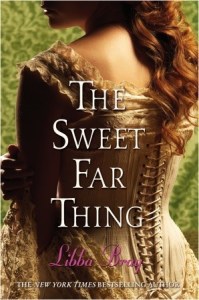
127459Book: “The Sweet, Far Thing” by Libba Bray
Publishing Info: Delacorte Press, December 2007

Where Did I Get this Book: audiobook from the library!

Book Description: It has been a year of change since Gemma Doyle arrived at the foreboding Spence Academy. Her mother murdered, her father a laudanum addict, Gemma has relied on an unsuspected strength and has discovered an ability to travel to an enchanted world called the realms, where dark magic runs wild. Despite certain peril, Gemma has bound the magic to herself and forged unlikely new alliances.

Now, as Gemma approaches her London debut, the time has come to test these bonds. The Order – the mysterious group her mother was once part of – is grappling for control of the realms, as is the Rakshana. Spence’s burned East Wing is being rebuilt, but why now? Gemma and her friends see Pippa, but she is not the same. And their friendship faces its gravest trial as Gemma must decide once and for all what role she is meant for.

Previously Reviewed: “A Great and Terrible Beauty” and “Rebel Angels”

Review: As I said above, I try to push through most books, and those I can’t, I often choose not to review on this blog. After all, I rarely have much positive to say about the experience (and we do try to include positives in most of our reviews, even for lower rated ones), and…I didn’t finish the book! Can I really accurately speak to the book as a whole in a review? But since I’ve reviewed the previous two books in this trilogy, I didn’t want to leave the series hanging without a conclusion to my thoughts. So here they are.

The thing I most enjoyed about the first book was the juxtaposition of these young girls growing up in a very prim, restrained Victorian boarding school against a wild and mysterious magical backdrop made up of an organization of powerful women who have operated behind the scenes throughout history. Gemma and her friends are challenged to re-think their position in society, their own abilities, and the way they relate to each other and those around them. The magical world was unique and by no means “fluffy,” full of lurking danger and unknowns. By the end of the story, our main characters had learned that they did know all that much in the grand scheme of things, and perhaps there were more important things out there than petty, girl fights. They had lost a friend, discovered a new enemy, and seemingly grown closer, knowing that together they must face the challenges ahead.

The second book squandered all of this excellent set up, dialing back any growth the characters had gone through in the first book, making their decisions and thought processes confusing and frustrating. They still focused on the silly, bickered as if they had learned nothing, casually dismissed warnings, knowing full well the major consequences this type of behavior had lead to before, and generally behaved as if the first book had not happened, other than knowing that magic existed. Beyond this, the author introduced a terrible love triangle and some truly problematic scenes about consent.

So, with this second book as an example, I did not have high hopes going into the third. My only reassurance was that, after the events of the second book which were even more dire and traumatic than the first, there was no way that the author couldn’t address the growth and new outlook on the world that Gemma, Felicity and Anne must now have gained. How wrong I was.

I made it about a third of the way into the book before realizing that nothing had changed. Absolutely nothing. The girls were still caught up in petty nonsense, made decisions that made no sense, and behaved as if nothing had happened in the previous two books now that would influence the choices they made going forward. The author actively walked back on all progress that had been made in book two. I quickly realized that I was simply reading the same book over again.

Pippa was turning to the dark side? Nope, she’s still just there in the Realms, hanging out and making Gemma feel guilty for a decision that Pippa made herself back in book one. Gemma had decided to share the magic with everyone in the Realms? Nope, best to re-debate that decision AGAIN for huge chucks of this book,too. Kartik had decided to support Gemma and the girls? Nope, he’s distancing himself again and, of course, won’t tell Gemma why. Learned that when others much more experienced with the Realms warn you about something then you should really listen? Nope, Gemma will stop listening to others (when did she ever??) and maker her own choices!

It was truly incredible how neatly and quickly the author pulled back any and all progress that had been made in the last book and quickly seemed to start re-writing that book all over again. It was inexplicable to me. That last point, where Gemma once again refused to listen to warnings given to her by those in the Realms, was the point where I put down the book. Gemma does not read as a real person, or at least not one whom I could have any respect for at that point. Somehow she had learned nothing, and I’m not interested in reading another 700 pages about a character who is nothing more than a device for the author to indulge herself in a writing exercise that badly needed an editor.

I can’t speak to the end of the novel, but I’ve read a few reviews that further justify my decision to set it down. I won’t speak to these ending issues, as I didn’t technically get to them myself, but it doesn’t surprise me that the author ended up scrambling to pull things together and then missed the mark. How can you end a story when you haven’t really told a story? A story involves characters who learn, grown, and come out the other side as different people than they went in. That just didn’t happen in this trilogy.

Bray is an author with ideas, but she couldn’t write a single character arc for any of these girls. In a stand alone book (or the first in a series, like in this case), limited abilities with characterization might be passable. But it’s unacceptable for a trilogy. I’m having a hard time thinking of another trilogy that started as promising and then plummeted so steadily over the next two books.

Kate read only the first book in this series and liked it, as did I. For those out there in the same boat? Just stop there. Turns out you’ve already read books two and three as well in one go! Why waste the time re-reading that one again for another 1400 pages?

Rating: DNF

Reader’s Advisory:

“The Sweet, Far Thing” is included on these Goodreads lists “Thickest Books Ever” and “Worst Ending.” Yes, I know those are negative lists, but that’s how I feel about this book and others seem to agree.

Find “The Sweet, Far Thing” at your library using Worldcat!


Serena’s Review & Giveaway: “The Goblins of Bellwater”

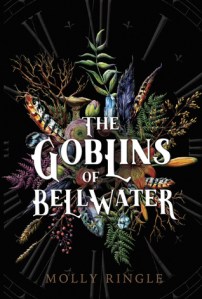
33973968Book: “The Goblins of Bellwater” by Molly Ringle

Publishing Info: Central Avenue Publishing, October 2017

Where Did I Get this Book: e-galley from NetGalley

Book Description: Most people have no idea goblins live in the woods around the small town of Bellwater, Washington. But some are about to find out.

Skye, a young barista and artist, falls victim to a goblin curse in the forest one winter night, rendering her depressed and silenced, unable to speak of what happened. Her older sister, Livy, is at wit’s end trying to understand what’s wrong with her. Local mechanic Kit would know, but he doesn’t talk of such things: he’s the human liaison for the goblin tribe, a job he keeps secret and never wanted, thrust on him by an ancient family contract.

Unaware of what’s happened to Skye, Kit starts dating Livy, trying to keep it casual to protect her from the attention of the goblins. Meanwhile, unbeknownst to Kit, Skye draws his cousin Grady into the spell through an enchanted kiss in the woods, dooming Grady and Skye both to become goblins and disappear from humankind forever.

It’s a midwinter night’s enchantment as Livy, the only one untainted by a spell, sets out to save them on a dangerous magical path of her own.

Review: First off, thanks to NetGalley for providing me with a copy of this book! I’ve had my eye on it for a while, with its intriguing description mixing goblin trickery, a romantic plot line, and set in my own home region of the Pacific Northwest. It was a quick read and I buzzed through it in one day, however, I did have a mixed reaction to the story as a whole.

The description sums up the plot pretty well, so I won’t re-hash much there. And the portions of the story that stuck to this plot were strong. The goblins themselves were probably the most intriguing part of the story. It was clear that the author had a clear vision and voice for these otherworldly beings, and their magic and mischief jumped off the page with every scene they stole. I loved the mix of the dark, wet forests of the Puget Sound area that are the perfect setting to hide a mysterious and dangerous fae realm. The goblins were tricky, smart, and best of all, viciously witty. We also got much more actual characterization for a few of the goblins than I had been expecting, backstories and all, that added greater depth of meaning to the choices they made and their interactions with humanity, in particular, Kit and his family.

As I said, setting the story in the Puget Sound worked well for this plot line. All too often fae stories always pop up in the typical places like Ireland and Great Britain. But at the same time, the tropes of the area seemed to jump out at me in a kind of grating way. Of course Skye is a barista who loves art and the woods. Of course Livy works for the Forest Services and is first introduced while kayaking around the sound. Of course Kit is a chainsaw sculpture artist in his spare time. It’s just a bit too on the nose.

Reading the description, I remember it mentioning that this was a contemporary romance, so perhaps it’s on me that I focused more on the fantasy elements and assumed the romance was a supporting piece to this story. Especially for the first half of this story, the book is almost purely a romance novel, and not the kind that I enjoy.

Look. I’ve read my share of romance and I’ve read my share of YA romance. This book is in the unfortunate position of existing somewhere between the two. Our main characters are all adults, early to mid twenties (though here’s another problem: Kit and Livy are constantly referring to themselves as “long-time bachelors.” Um. Guys. You’re barely at the mid-point of your twenties! It seems like such an easy fix to write them in their 30s, a choice that I think would have fit their more mature characterization much more naturally). But for some strange reason, the author chose to write about everything before and after the sex scenes themselves. Which would be fine if she was setting out to right a clean novel.  But the before and after descriptions are of the very unclean, erotic variety. Way too many descriptions about condom management, and some pretty smutty imaginings on all characters’ sides. So then to fade to black at the critical moment…just read strange.

Not to mention that there was a noticeable shift in writing style during these romantic subplots. During the fantasy story lines, the authors writing is strong and assured. But the romantic plot lines seemed to stumble around, filled with disjointed sexual language, an unfortunate bout of magically-induced instalove, and just a whole heap of awkwardness where there shouldn’t be any (phrases like “soak up her hotness” and “congenial sex” were used a few times too many for my taste.) It all read as very strange. Kit and Livy’s relationship was definitely the stronger of the two, but even it progressed in a way that didn’t seem to fit comfortably alongside the other subplots. It’s hard to put my finger on just what felt off about all of this, but something did. I will give credit for the author’s choice to make her two women characters older than their love interests, something you don’t often see in romance novels.

Towards the last half to last third of the story, the fantasy elements began to take over the story again, and I felt like the book gained back a bit of its footing, ending on a strong note. All of this to say, I have very mixed feelings about this book. Part of it is a failure of expectations on my end, and a general preference for A.) fantasy stories and B.) romance novels that are going to at least commit to being a romance novel, something this one always seemed to shy away from. But the story also felt awkward at times and uncomfortable in its own skin, some dialogue didn’t land as solidly as one would hope, and all four characters weren’t equally strong, with Kit and Livy washing out Skye and Grady.

The publisher is hosting a massive giveaway for this book, however, so you have the chance to judge for yourself! If you enjoy clean (for the most part??) romance novels with more of a hint of fantasy (rather than fantasy with a hint of romance), you might find yourself enjoying this book more than I did. Never hurts to give it a go! See below for full descriptions of the prizes available. Open to U.S. entrants only and running late into October!

Enter the Giveaway!


Rating 5: Right down the middle. I didn’t particularly love it, but I didn’t hate it either.

Reader’s Advisory:

“The Goblins of Bellwater” is on these Goodreads lists: “Best Goblin Books” and “Books about Faery.”

Find “The Goblins of Bellwater” at your library using WorldCat

Prize Descriptions

Grand prize package:

• Signed paperback copy of The Goblins of Bellwater
• $10 Starbucks gift card
• “Flowerwatch” necklace/pocket watch
• Artistic guided journal/sketchbook
• Copy of Brian Froud’s Goblins!


Air prize package:

• Signed paperback copy of The Goblins of Bellwater
• Air-element necklace
• 1 oz of Goblin Market tea from Dryad Tea
Earth prize package:


• Signed paperback copy of The Goblins of Bellwater
• Earth-element necklace
• 1 oz of Goblin Market tea from Dryad Tea


Fire prize package:


• Signed paperback copy of The Goblins of Bellwater
• Fire-element necklace
• 1 oz of Goblin Market tea from Dryad Tea


Water prize package:


• Signed paperback copy of The Goblins of Bellwater
• Water-element necklace
• 1 oz of Goblin Market tea from Dryad Tea


Serena’s Review & Giveaway: “The Stone Sky”

31817749Book: “The Stone Sky” by N. K. Jemisin

Publishing Info: Orbit, August 2017

Where Did I Get this Book: ARC provided by Orbit

Book Description: The Moon will soon return. Whether this heralds the destruction of humankind or something worse will depend on two women.

Essun has inherited the power of Alabaster Tenring. With it, she hopes to find her daughter Nassun and forge a world in which every orogene child can grow up safe.

For Nassun, her mother’s mastery of the Obelisk Gate comes too late. She has seen the evil of the world, and accepted what her mother will not admit: that sometimes what is corrupt cannot be cleansed, only destroyed.

Previously Reviewed: “The Fifth Season” and “The Obelisk Gate”

Review: At this point, I’m honestly baffled by N. K. Jemisin. The fact that the previous two books both won Hugo awards is awe-inspiring enough. But to not miss a single step in a complete trilogy? Crazy impressive. What’s more, as I was reading this book and unpacking the many, many more new layers being added to an already impossibly complex  history and world, I was seriously questioning my own mental capacity to even keep track of it all, let alone write an entire trilogy with all of these details in mind from the first. All of this, she had to have all of this in her mind when she started the first book! These aren’t tiny little breadcrumbs that could be sprinkled in early with only vague ideas for how they are going to be used later. This is an entire history, on top of another history, on top of ANOTHER HISTORY and our slow-revealed narrator, Hoa, has been talking about it all right in front of our faces since the very beginning! I really can’t express my bafflement at the mastery that one needs to possess to juggle this type of storytelling.

But I should probably start a more coherent review at this point. When we finished off “The Obelisk Gate,” Nassun and Essun were set up on opposite sides of a final confrontation that would determine the future of the world. Nassun, broken, hurt, and disillusioned to the point of hopelessness about humanity, sees only one way forward: it can’t be fixed, so let’s just end the bad things. Essun, on the other hand, has only recently begun to see that through all the brokenness, through all the loss of children, family, lovers, and communities, there still might be a way forward, a way to change things and fix what isn’t right.

These two dynamics are so incredibly strong. Through these three books, we’ve seen a lifetime of pain and horror through Essun’s eyes. She has been devastated, horrified, apathetic, furious, and here, in the last, she still manages to find hope. Her time with the comm of Castrima has opened her eyes to a new way of life where orogene and still can live and work together. It’s not perfect by any means, and there are a million fights ahead to make progress, but here, in the end, she sees that fight as one that is worth having and saving.

Nassun sees nothing worth saving, but for Schaffa, and even he is plagued by a life riddled with pain and confusion. Wouldn’t it be best for it all to just end? Her story has been the most tragic in this series. Essun at least has been an adult for the majority of it, and to some extent (while very small at times), she’s had the ability to choose and make a path for herself, even if that path leads into more darkness. Nassun is a child, and while she’s had to grow up much too fast, she still sees the world through eyes of a person whose only lived 11 years on it, and those 11 years have been filled with nothing but abandonment, horror, and no signs that things will ever improve. After killing her father at the end of the last book, Nassun is done. If even a father sees only a monster in his orogene child, then she will be that monster and end it all, for the sake of all monsters everywhere.

Nassun and Essun’s stories are poignant and beautiful, and by setting the two on opposite sides of this fight, as a reader, you’re caught wishing for the impossible. And Jemisin delivers it! The conclusion to these two’s story ended in the only way it could and was immensely satisfying.

But this isn’t only Nassun and Essun’s book. While in the last book we learned much more about the stone eaters and their involvement in this war for the future of the Earth, here we go even farther back in time, back to the great civilization in the past that understood magic just well enough to become greedy, building the Obelisk Gate in an attempt to tap the life magic of the Earth as well and triggering the Shattering. This is Hoa’s origin story, finally. And with it comes, you guessed it, more tragedy and evidence of the brokenness of humanity, the shortsightedness that comes with greed and small lives, and the ever present fear for those who find themselves in power and are frantic to keep it. We learn how and why the Obelisks were created, we learn more about the living Evil Earth itself, we see the history of the Guardians and who they were, and we see that the same terrible choices have been made again and again.

Not only do I not want to spoil the many reveals presented in this book, I’m fairly certain that I need to immediately re-read the entire series to fully appreciate the story that’s been told and finally connect all of the dots of this complicated world. If you asked me to  storyboard this series in chronological order, I’m pretty sure I’d struggle. But that is absolutely no criticism of the book. The best books, in my opinion, are the ones that are so fully alive that you can’t possible fully understand them in one (or even two!) go-arounds.

So hopefully by this time you’ve already read the first two in the series, because here’s your chance to get your hands on the final book in this amazing series! Enter to win a paperback copy of “The Stone Sky!” Giveaway ends Sept. 21 and is open to U.S. entries only. Happy reading!

Enter the Giveaway!

Rating 10: If this doesn’t win another Hugo, I’ll be shocked.

Reader’s Advisory:

“The Obelisk Gate” is on these Goodreads lists: “#ReadPOC: List of Speculative Fiction by Authors of Color” and “Best Picks: Adult Science Fiction, Fantasy and Horror Novels of 2017.”

Find “The Stone Sky” at your library using WorldCat


Serena’s Review: “City of Blades”

23909755Book: “City of Blades” by Robert Jackson Bennett

Publishing Info: Broadway Books, January 2016

Where Did I Get this Book: audiobook from the library!

Book Description: The city of Voortyashtan was once the domain of the goddess of death, war, and destruction, but now it’s little more than a ruin. General Turyin Mulaghesh is called out of retirement and sent to this hellish place to try to find a Saypuri secret agent who’s gone missing in the middle of a mission, but the city of war offers countless threats: not only have the ghosts of her own past battles followed her here, but she soon finds herself wondering what happened to all the souls that were trapped in the afterlife when the Divinities vanished. Do the dead sleep soundly in the land of death? Or do they have plans of their own?

Previously read: “City of Stairs”

Review: It’s been over a year now since I read the first book in this series, “City of Stairs” and in that time the third and final book, “City of Miracles” has been published. I’d like to say I plan my reviews like this, as I have a preference for reading series in a binge-like style and this works best when that series is completed. But the honest answer is that I get distracted by the million other good books out there, so when I am reminded of a good series by a more recent publication…it just a lucky coincidence for my binge-reading style!

That said, “City of Blades” is not a direct sequel to “City of Stairs,” picking up several years after the fact and re-focusing the story on General Turyin Mulaghesh who we met in the first book when she fought off a resurgence of Gods in Bulikov alongside our heroes of that book, Shara and Sigrud. Now, years later, Shara has been elected Prime Minister, Sigrud has been roped into a delegate role, representing his nation of origin, and Mulaghesh has retreated in retirement, suddenly quitting, for unknown reasons, the political atmosphere in which she had been steadily rising. But things are not all well on the Continent and Shara, whose popularity has greatly waned (turns out many people can’t and won’t just forget a past that was ruled by cruel Gods), calls on one of the few people she still trusts to discover what has been going on in the city of Voortystan, the capital city of the late Voortya, Goddess of War. So Mulaghesh is off, albeit grumpily, to a city that is in the midst of a forced transformation to the modern, but whose past is perhaps more close than anyone would have guessed.

I had really and truly forgotten just how excellent this series is. This book, like “City of Stairs” before it,  checks all the boxes for fantasy I love. World-building is excellent. The characters are complicated, interesting, and, importantly, have a wicked sense of humor. The themes are drawn upon using masterful technique.

While Shara’s story was one of a young woman discovering her dreams are not quite what she once thought, Mulaghesh’s story is that of a middle-aged woman who feels that the imprint she’s left on the world is not one to be proud of. Throughout the story, we have a slow reveal of Mulaghesh’s past history with the military, the choices she and her troops were forced to make, and the influence these choices have had on her life since. Throughout this all, Mulaghesh’s voice is strong, surly, and darkly witty.

Her own story ties neatly into a larger discussion of what it means to be a soldier. Voortya, the Goddess of War, and her followers created a complete culture around this question. War was art. War was life. War was at the center of every choice her people made. And now, decades after the Gods have been killed off, is this fact any different?

One thing that particularly stood out as I was reading this, and that makes Bennett’s writing and his characters so excellent is that he never dumbs things down. Not the mysteries or history for the reader: there were many times that I had to stop reading for a bit to re-order my thinking of the timeline of this world, or how this one magical element or another worked again, as it had been explained chapters ago. And, especially, not his own protagonist. All too often I’ll read a story where the heroine fails to ask the most obvious questions. This is, of course, necessary by the author’s thinking to draw out the mystery or the suspense. In reality, all this does is frustrate the reader and make your characters seem stupid. Mulaghesh is a smart protagonist, and it was beyond satisfying that at multiple points in this story, right when I came up with a theory about what was going on, she almost immediately voiced it herself. This might seem like a small thing, but I truly think that when it comes to the general enjoyment of books like this, it is one of the most crucial elements.

The fantasy elements that are tied up with this complicated history of the Continent and their Gods almost played even better in this book than in the first. Here, we have a deep-dive into one specific divinity and how her influence shaped a people and a city. And, as can be expected with this series at this point, the lingering remains of these long-gone Gods are not quite as distant as the people would wish. I particularly loved the way Voortya’s legacy was brought to life in this book. After the first story, there seemed to be only one path laid forth for bringing these Gods’ stories back into this world and I was half-expecting Bennett to simply recycle this process. Oh me of little faith.

Beyond Mulaghesh herself (who is an utter joy), this book saw the return of our protagonists from the first book, as well. Shara makes a few brief appearances, but Sigrud plays a vital role. Alongside these familiar faces, we get an excellent cast of new characters, including Signe, Sigrud’s long-lost daughter who is a brilliant technician and hopes to restore the city of Voortaystan to a place of influence and innovation.

It’s hard to say whether I liked one of these book more than the other. While “City of Stairs” laid forth an enormous new world and history, full of lost Gods and a bright-eyed leading lady, “City of Blades” presents a darker, more intricate look at one city, one God, and one woman who struggles to define herself and to determine what it means to have lived a life full of violence.

While technically you could probably read this book without checking out the first in the series, why would you?? But for those who were wondering where the story could go from there, never fear. “City of Blades” is a worthy successor and now I’ll move right along to “City of Miracles,” thank you very much. Binging commence!

Rating 10: If you love detailed fantasy stories with a strong dose of action and a grumpy but lovable heroine, this is the book for you!

Reader’s Advisory:

“City of Blades” is on these Goodreads lists: “Favorite Epic Grit” and “Best Sci Fi Books with Female Main Characters.”

Find “City of Blades” at your library using WorldCat

Kate’s Review: “The Changeling”

31147267Book: “The Changeling” by Victor LaValle

Publishing Info: Spiegel & Grau, June 2017

Where Did I Get This Book: The library!

Book Description: One man’s thrilling journey through an enchanted world to find his wife, who has disappeared after seemingly committing an unforgiveable act of violence, from the award-winning author of the The Devil in Silver and Big Machine. Apollo Kagwa has had strange dreams that have haunted him since childhood. An antiquarian book dealer with a business called Improbabilia, he is just beginning to settle into his new life as a committed and involved father, unlike his own father who abandoned him, when his wife Emma begins acting strange. Disconnected and uninterested in their new baby boy, Emma at first seems to be exhibiting all the signs of post-partum depression, but it quickly becomes clear that her troubles go far beyond that. Before Apollo can do anything to help, Emma commits a horrific act—beyond any parent’s comprehension—and vanishes, seemingly into thin air. 

Thus begins Apollo’s odyssey through a world he only thought he understood to find a wife and child who are nothing like he’d imagined. His quest begins when he meets a mysterious stranger who claims to have information about Emma’s whereabouts. Apollo then begins a journey that takes him to a forgotten island in the East River of New York City, a graveyard full of secrets, a forest in Queens where immigrant legends still live, and finally back to a place he thought he had lost forever. This dizzying tale is ultimately a story about family and the unfathomable secrets of the people we love.

Review: Victor LaValle is one of our most under-appreciated dark fantasy/horror writers today, and I say this with conviction. Everything I have read by him I have really enjoyed. I was sufficiently creeped out by “The Devil in Silver” and deeply fascinated by his Lovecraft deconstruction “The Ballad of Black Tom”. And now I come to his newest book, “The Changeling”. Changelings, as I’m sure you may know, were a superstition that people back in the day had, in which a fairy or other kind of creature would kidnap a child and leave an imposter, or ‘changeling’, in it’s place. This concept no doubt led to a lot of abuse, cruelty, and murder towards children over the years, specifically those with developmental disabilities. Nowadays we just think of them as folklore, seen in books like “Outside Over There”, or as metaphors like in the movie “The Changeling” with Angelina Jolie. But LaValle has taken the changeling myth and given it a new, dark story that I deeply enjoyed.

One of the many things I liked about “The Changeling” is that it really kept me guessing as I read it. While it’s true that at the end of the day I knew that yes, this HAD to have supernatural elements to it, it also made me think about the very real issue of post-partum depression and the pressure on new parents, mothers in particular, to be great at it right from the start. If this book had been about an untreated mental illness and the tragedies that can happen because of it, LaValle would have told a sensitive and thoughtful story about tragedies that we just don’t like to talk about or acknowledge. Even though it was fantasy, so many elements of it felt incredibly real and plausible, from the horrors of modern technology making us less safe than we can imagine, to the struggles new parents face from family, society, and themselves. He also does a great job incorporating themes of race and gender into this story, with racism and misogyny being underlying and indirect villains towards Apollo and Emma alike. So many real world horrors come into this book and yet all have a dreamy sort of air about them, and it left me feeling under a spell as well as on edge.

There is also a lovely theme in this book that has to do with books and storytelling. Apollo is not only a book dealer, he is greatly attached to a copy of the book “Outside Over There”, one of the few things that his father left for him before he up and vanished. Apollo’s love for this book about a girl who needs to save her baby sister from those that stole her away may seem a bit on the nose for the story, but the other themes of paternal abandonment and parental failure and anxiety are also present. Apollo’s father wasn’t there for him, much like Ida’s father is away. Apollo’s love for his child blinds him when things may not be what they seem, just as Ida’s love for her sister blinded her. Parental failings and anxieties both in “Outside Over There” and “The Changeling” dance between the pages, as Ida has to grow up fast when her mother isn’t there for her emotionally and Apollo has to grow up fast when his mother can’t be there for him physically. Even New York becomes a dreamy fairy world you can’t quite trust, just like the world of Outside Over there, which Ida falls into when she starts her journey going out the window the wrong way. And there are fair reminders in this book that trolls are no longer just mystical creatures that want to eat up children, but are very real dangers in a world where your life is online for the entire world to see. That kind of felt heavy-handed at times, but overall it was just another clever way to update our fairy tale for an NYC setting.

I think that if I had a quibble with it, it would be that it was mostly from a male point of view. I would have liked to have seen some of Emma’s journey as well. I understand that revealing her secrets was another subversion of fairy tales and the roles that women are held to (damsels or witches), but I think that her own path would have been highly enjoyable to read.

A haunting and breathtaking story, “The Changeling” is dark and sad, but also hopeful and vibrant. If you want a modern and dark fairy tale, this book should be one that you put on your ‘to read’ list.

Rating 8: A complex and dark fairy tale, “The Changeling” is a beautiful and striking work of dark fantasy/horror with a modern twist and a relevant commentary.

Reader’s Advisory:

“The Changeling” is included on the Gooreads lists “Beautifully Disturbing”, and “2017 SFF by Authors of Color”.

Find “The Changeling” at your library using WorldCat!