Serena’s Review: “Beast: A Tale of Love and Revenge”

31019831 Book: “Beast: A Tale of Love and Revenge” by Lisa Jensen

Publishing Details: Candlewick Press, July 2018

Where Did I Get this Book: ARC from the publisher

Book Description: They say Château Beaumont is cursed. But servant-girl Lucie can’t believe such foolishness about handsome Jean-Loup Christian Henri LeNoir, Chevalier de Beaumont, master of the estate. But when the chevalier’s cruelty is revealed, Lucie vows to see him suffer. A wisewoman grants her wish, with a spell that transforms Jean-Loup into monstrous-looking Beast, reflecting the monster he is inside. But Beast is nothing like the chevalier. Jean-Loup would never patiently tend his roses; Jean-Loup would never attempt poetry; Jean-Loup would never express remorse for the wrong done to Lucie. Gradually, Lucie realizes that Beast is an entirely different creature from the handsome chevalier, with a heart more human than Jean-Loup’s ever was. Lucie dares to hope that noble Beast has permanently replaced the cruel Jean-Loup — until an innocent beauty arrives at Beast’s château with the power to break the spell.

Review: Oof, another challenging “Beauty and the Beast” retelling. I think I could probably write an entire PhD on the pitfalls of re-telling this fairytale. When I first saw the book description, I was excited to read a version that was seemingly focused on an entirely new character, not “Beauty” herself. And while that aspect was still interesting, the book itself was very difficult to read and I will have a hard time recommending it to others, unfortunately.

Lucie is a servant in the house of the rich lord, Jean-Loup. After a horrific event, she is the one to wish the worst on her master, resulting in him turning into a beast, and her into a sentient household item. As time passes, she begins to suspect that this new, beastly version of her master might not be the same, and when a stranger arrives on the scene, the world begins to change once again.

So this is obviously not a positive review, but there are a few things I’d like to highlight as positives for this book. One, I still very much appreciate the originality behind the concept of this story. We’ve all read a million and one versions told from various “Beauty’s” perspectives. Some are better than others, but the basic construct is the same. They all arrive on the scene, confused and scared. And slowly come to change their minds and fall in love with the Beast. Here, Lucie knows Jean-Loup before his change and her experiences with him as a Beast are from the perspective of a servant, not the traditional heroine’s role. What’s more, Lucie isn’t even the “Beauty” in this story, and that character does make an appearance and play a part in the story unfolding. It’s a very creative take on things, and I truly wish that other choice had been made that would have allowed this new version to stand well on its own.

Further, I did like the writing for the most part. The “voice” fits well with the re-telling of a fairytale. It verges on rather simplistic and “younger” sounding, but I think that, done right, this tone actually works really well for fairytales which can be unique for having a different cadence, such as this. However, the writing also directly lines up with some of my major criticisms of the book.

It is very simplistic and straight forward. As I began reading, I started thinking “Huh, ok. So this is maybe more of a middle grade version of ‘Beauty and the Beast.’ Great!” Mentally, I started aligning it with the words of Shannon Hale, who’s written a bunch of fairytales, many of which have a younger-sounding voice and simple story-telling technique. But alas, this comparison died a sudden, very harsh death only a few chapters into the story.

(This might be a spoiler, but it’s pretty crucial to understanding the negative reaction I’ve had to this book, so if you want to go in blind, skip the rest!)

The prologue to the story sets it up that Lucie is the one who directed the fairy to go “all in,” as it were, on the curse on Jean-Loup. So we know that something awful has to happen to inspire this level of hatred. And something awful does indeed happen, in the form of a graphic sexual assault scene.

This was shocking to see on several accounts, but not least of all is the direct contradiction that the graphic nature of this scene lays across the middle-grade nature of the writing itself. I was mentally comparing this book to Shannon Hale, of all people, based on the writing style itself. The most sweetest fairytale writer you can find! And that’s a problem. Likely, the type of reader who is going to appreciate the tone of this writing style is going to verge younger. Even for me, a fan of middle grade and YA fiction, I was distracted by the simplistic nature of this writing. So those who may truly enjoy it are going to be young. And then you get a scene that could have been straight out of “Game of Thrones.” It’s going to be tough to read for even the most hardened among us who are semi-used to running across scenes like this in adult fantasy, let alone younger readers. But, on this side of things, readers who are prepared for this type of dark scene, are likely going to be completely turned off by the young-sounding writing. So there’s a contradiction there where the writing and content are, conversely, going to turn off both options for a reader-base.

Beyond this, I have problems with the actual story line, having included a scene like this as the basis for Lucie’s hatred of Jean-Loup. For all intents and purposes, Lucie ends up as the romantic interest for the Beast, instead of Belle. The book tries to roll out the tried and true rug of “magically separated/changed selves” that would absolve the Beast of past actions, as he is now no longer truly that person. I will always struggle with this type of wand-waving. Regardless of the fact that the “reasons” that Lucie points to as evidence that these two beings are inherently different are horribly minor (like food preferences and fears of spiders), there’s always going to be an insurmountable hill, in my mind, between forgiving an attacker (a hard ask on its own) and falling in love with him. I just can’t get behind that story, and I don’t think this book did nearly enough, even, to highlight any exception that could be made.

While the latter argument could be a matter of personal preference (though I still don’t think there is a huge swath of readers out there who are just searching for that great tale highlighting a victim falling in love with her attacker), my first point about the very real conflict between writing style and content is enough for me to give this a low rating. I honestly just have a hard time really focusing in on who exactly the audience is supposed to be for this book. At the very least, I wasn’t part of it.

Rating 4: Not for me. I don’t think this is a message we want to send out, regarding victims and their attackers, and the writing style was in direct conflict with the content.

Reader’s Advisory:

Again, honestly, if you want a good “Beauty and the Beast” retelling, go read “Beauty,” (the classic, in my opinion), “Heart’s Blood,” (by may favorite author, Juliet Marillier), or “Hunted” (for a more recently published option).

Find “Beast: A Tale of Love and Revenge” at your library using WorldCat!
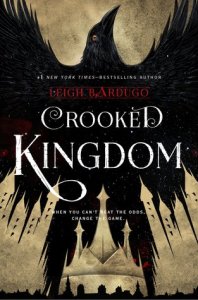
 

Serena’s Review: “Crooked Kingdom”

22299763Book: “Crooked Kingdom” by Leigh Bardugo
Publishing Info: Orion Children’s Books, September 2016

Where Did I Get this Book: own it!

Book Description: Kaz Brekker and his crew have just pulled off a heist so daring even they didn’t think they’d survive. But instead of divvying up a fat reward, they’re right back to fighting for their lives. Double-crossed and badly weakened, the crew is low on resources, allies, and hope. As powerful forces from around the world descend on Ketterdam to root out the secrets of the dangerous drug known as jurda parem, old rivals and new enemies emerge to challenge Kaz’s cunning and test the team’s fragile loyalties. A war will be waged on the city’s dark and twisting streets―a battle for revenge and redemption that will decide the fate of the Grisha world.

Previously reviewed: “Six of Crows”“Six of Crows”

Review: As was established in our bookclub review of this book, I was definitely the side of our blogging duo who loved the first book. I was all the more surprised given the massive burn I’m still nursing from the author’s original Grisha trilogy that I’ve come to see as an example of how even great writing and great characters can fall prey to some unfortunate YA fantasy tropes. But “Six of Crows” seemed blessedly free of the concerns that plagued those original books, and I was so excited after reading it that I immediately ordered this, the second half of the duology. And, I’m pleased to report, that she stuck the landing on this one!

Kaz and crew are in a tight spot. While they pulled off their last crazy stunt, the reward they were promised not only wasn’t forthcoming, but the powerful merchant with whom they had bargained instead kidnapped Inej and tanked the reputation of the entire crew with the other powerful gangs that make up Ketterdam. Now, stuck between a rock and a hard place, the group must not only recover their lost member and loot, but somehow resolve a political situation has the potential the change the world for the worse.

What sold me on the fist book was the strength of this cast of characters. There are a lot of them, and it speaks to Bardugo’s abilities as an author that she was able to balance so many competing personalities and story arcs. Many of those continue into this book, though there are slight shifts in focus. While much of the first book was taken up by slowly revealing Nina and Mattias’s shared past and resolving their ongoing prejudices, here, their romance and role in each other’s lives has settled down more. The fallout of Nina’s use of the highly addictive, powerful stimulant that she used in the last book to save the team at the very end, was an important and captivating arc for her.

Jesper and Wylan, instead, received more word count and chapters than they had had in the first book. Jesper’s own past was delved into, as well as his continued confrontation with his own gambling addition and the ongoing damage that his past poor choices are wreaking on his own life and the lives of those he loves. Wylan, too, further explores his own highly toxic familial relationships and the true horror that lies at the heart of many of his father’s lies. Their relationship, together, is also given more focus, especially as Jesper begins to realize that his crush on Kaz is a dead end and that Wylan may have always been the better match for him.

Of course, for me, Inej and Kaz were my main points of interest. I enjoyed both of these two the most in the first book, and I continued to enjoy their chapters here. I do feel like they each had a bit less, ultimately, due to the increased focus on Jesper and Wylan, however, I still loved what we were given. Inej, specifically, had come to some pretty frank realizations about what she saw for herself in the future by the end of the last book. And here, it was learning how to follow through with two competing desires. She’s also confronted by a mysterious assassin who may actually be even more skilled than the Wraith herself. Kaz, too, still struggles to overcome the lasting effects of his past. His arc didn’t have as many clear points, as it was more a simple continuation of his rise as a force to be reckoned with in Ketterdam. However, his relationship with Inej and the vulnerability that is required to maintain (begin!) it, is a continual point of challenge for him.

As for the plot itself, I very much enjoyed the complicated heist that was put into effect. There were several points that were laid down here and there that later came to play in new and surprising ways. There was just enough made clear to see the building blocks of the plan, but enough was hidden from various characters to have a good number of surprises in store (this is probably another reason why we had fewer Kaz chapters than I’d like, since, by necessity of the plot remaining a mystery, the man who knows it all can’t have a lot of focus). I liked the multiple showdowns that came into play and the ways in which various crew members’ strengths were called upon at different times to solve different problems.

The story was a bit more sprawling than the close-focused mission of the first book and I both appreciated the added complication but also felt a bit more adrift in the middle when the pieces were still being put together. The goal itself was almost too ambiguous to give the action a clear focus. This resulted in some of what should have been compelling action scenes feeling a bit disjointed from the book, as it wasn’t clear until the end how they all added together to get the result.

I also really enjoyed the ending. The story definitely didn’t shy away from some grim choices, and while I know this will disappoint some readers, I felt that these decisions were necessary to reflect the true dangers of the situation at hand. Further, while broad paths were laid before each character, their stories were by no means neatly wrapped up. Instead, we saw glimpses into what could be the future, but they were left so wide-open that there’s room to imagine various outcomes for them all.

Overall, I very much enjoyed this duology. It’s hard to think of many fantasy/heist books (of course, there’s the insurmountable Megan Whalen Turner), so in many ways these stories felt like a breath of fresh air in YA fantasy fiction (is it even YA? This was a question we discussed at bookclub, and I’m not sure of the answer for books like this). If you enjoyed “Six of Crows,” or Megan Whalen Turner’s “Queen’s Thief” series, or other books by Leigh Bardugo, definitely check this one out!

Rating 9: A thoroughly satisfying conclusion to this duology.

Reader’s Advisory:

“Crooked Kingdom” is included on these Goodreads lists: “YA fantasy/sf novels with major LGBTQ Characters” and “Thieves.”

Find “Crooked Kingdom” at your library using WorldCat!

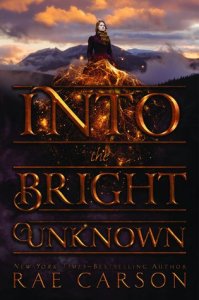
Serena’s Review: “Into the Bright Unknown”

18054074Book: “Into the Bright Unknown” by Rae Carson

Publishing Info: Greenwillow Books, October 2017

Where Did I Get this Book: audiobook from the library!

Book Description: Leah Westfall, her fiancé Jefferson, and her friends have become rich in the California Territory, thanks to Lee’s magical ability to sense precious gold. But their fortune has made them a target, and when a dangerous billionaire sets out to destroy them, Lee and her friends decide they’ve had enough—they will fight back with all their power and talents. 

Lee’s magic is continuing to strengthen and grow, but someone is on to her—someone who might have a bit of magic herself. The stakes are higher than ever as Lee and her friends hatch a daring scheme that could alter the California landscape forever. 

Previously reviewed: “Walk on Earth a Stranger” and “Like a River Glorious”

Review: This is the last in the “Gold Seer” trilogy and after the previous book which seemed to wrap up much of the story and do-away with its main villain, I wasn’t sure where this book would go from there. I was also still smarting from the pretty graphic and hard-to-read scenes that made up a good chunk of that book, so I went into this one hopeful that we’d have a return to the “Oregon Trail” adventures of the first book. What we got was probably something in-between.

Life is moving along in Glory, California. Lee and her friends have on their hands what looks to be a growing and bustling town. Except for the fact that the town charter they had paid for from the wealthy Henry Hardwick in the last book has yet to arrive. With this problem before them, a large chunk of our main characters head off to San Fransisco. What they find is a man much more villainous than they had suspected and before long, Lee and her friends have much more to deal with than just a small town charter.

With this as the last book in the trilogy, looking back, it’s hard to get a real sense for this series as a whole. The first one was a fairly straight-forward travelogue with fun call-outs to the tropes of Oregon Trail games and stories. The second took a nose dive into the worst parts of humanity and left Lee as a bit of a passive character. And this one gets the gang back together, adds a new villain, and pretty much turns into a heist story. It’s all a little strange, from that angle.

But to judge this book on its own, there were definite areas of improvement from the last book but it still didn’t manage to reclaim the highs of the first. I very much enjoyed the return of many of our familiar characters who were largely absent in the second book. In particular, Becky, who had snuck up on me in the first book as a favorite and then disappeared in the second installment. As a heist story, it makes sense to have this large cast and the book already had many of these people on hand, so it was fun seeing them all interact and plan together in a way that was intentional, rather than the hap-hazard manner in which they had been forced by circumstances on the trail to work together before.

Lee and Jefferson’s relationship was also good. I was glad to see them working together for much of this book after being separated for so much of it during the previous one. The lack of relationship drama was also a welcome relief given that all too often it seems as if authors feel the need to throw a wrench in their romances in the last book from a misguided attempt to “build tension.”

One of the strongest portions of this book, for me, was the increased focus on Lee’s abilities. There was a big shift in the end of the last book with how her gold sense operated, and it was interesting watching Lee continue to practice and explore the possible new uses of her powers. There were several moments in this book where she came up with clever ways to put this power to use, and after being mostly useless in the second book, the success of their plans ultimately did fall to Lee’s own abilities, both with her powers and her planning. I was also surprised when an arc was introduced that dealt more fully with where these abilities might have come from and what other forms of magic might exist in the world. It was a nice addition as, up to this point, it felt a little strange to have Lee be the only exception to a world that otherwise seemed magic-less and true to history.

Those were the stronger aspects of the book. However, I did still struggle with the main plot itself and the villains. It’s a weird complaint, but like the second book, the villains were almost TOO villainous. In that they all seemed evil simply…because. And while I know that money and influence could go a long way then (and still can today), it also bordered on unrealistic that some of the villains’ actions could have been overlooked for so long. A man is killed in a crowd of people at one point, and no one bats an eye. Even with prejudices in mind, I have to think that this would have lead to something more.

The heist itself was interesting enough. But it was also a bit too complicated, for my thoughts. Or, barring that, not easy enough to put together on ones own without a massive infodump at the end explaining it all. A good heist story keeps some cards hidden, but still leaves room for the reader to put things together for themselves. Here, while there were parts that I could guess, the infodump where “all was told” was still long and confusing. This could partly be due to the simple fact that no finesse was used for said infodump: characters just spilled it out in long chunks of dialogue. At the best, it was just boring. At the worst, it left me still confused but not wanting to expose myself to the boredom again in an attempt to try to understand with a second read-through.

In the end, the series never quite regained the high that was the first book and seemed to flounder around for purchase and focus in the last two books, each presenting wildly different stories both in tone and topic. If I was to recommend this series, I’d almost say to just stop with the first. The second two are not worthless, but they’re also the kind of books that I will quickly forget. But if you are still enjoying these characters and the unique combination of realistic history with small doses of magic, this book was still an improvement on the second and might be worth checking out.

Rating 6: A serviceable story with a few highs relating to Lee’s magic, but a heist that was too confusing to be truly enjoyable.

Reader’s Advisory:

“Into the Bright Unknown” can be found on these Goodreads lists: “California Gold Rush in YA & Middle Grade Fiction” and “Young Adult Books Without Insta-Love.”

Find “Into the Bright Unknown” at your library using WorldCat!

Serena’s Review: “Spinning Silver”

36896898Book: “Spinning Silver” by Naomi Novik

Publishing Info: Del Rey, July 2018

Where Did I Get this Book: Edelweiss!

Book Description: Miryem is the daughter and granddaughter of moneylenders… but her father isn’t a very good one. Free to lend and reluctant to collect, he has loaned out most of his wife’s dowry and left the family on the edge of poverty–until Miryem steps in. Hardening her heart against her fellow villagers’ pleas, she sets out to collect what is owed–and finds herself more than up to the task. When her grandfather loans her a pouch of silver pennies, she brings it back full of gold.

But having the reputation of being able to change silver to gold can be more trouble than it’s worth–especially when her fate becomes tangled with the cold creatures that haunt the wood, and whose king has learned of her reputation and wants to exploit it for reasons Miryem cannot understand.

Review: I was so excited when I saw that this book was coming out! “Uprooted” is one of my favorite more recent fairytale novels, and part of the reason I loved it was that it was a stand alone book. So to see that Novik was releasing yet another fairytale that would likely also be a standalone made my day. I was even more excited when I realized that it looked to be a reinterpretation of “Rumpelstiltskin” which has been, by far, one of the more underutilized fairytales in the midst of this retellings resurgence. And all of my wildest hopes and dreams have come true! I absolutely adored this book and my hardback copy is already pre-ordered.

Miryem’s life has been one filled with strained relationships. Her grandfather, a wealthy money lender, has struggled to watch his daughter’s family slowly slip into poverty as his son-in-law, Miryem’s father, has failed to make an earning as a moneylender himself. What’s more, Miryem, a decisive and strong-willed young woman, has never understood her father’s struggles to collect. After being pushed to far, with her mother’s health at risk, Miryem finally takes over the business, to her father’s shame and sadness, as this is by no means a “proper” task for a young lady. But Miryem excels. Far too well even, as she draws the attention of the magical beings who wander the winter woods looting and raiding villages for gold. And who could be more valuable than a woman you seems to turn anything she touches to gold? Now tangled in a complicated world of fairy rules and wars, Miryem will need to  draw on all the strength she has to save not only herself but perhaps even her country.

It’s no secret that I love fairytales, be they original or retellings. But as I’ve had a string of bad luck with “Beauty and the Beast” retellings (oof, there’s another one coming, folks, so look forward to that!), I have been hankering for a more original tale, unbound from conventions that all too often skew what could have been a good story. What’s more, Novik has already proven herself as being able to masterfully take the bare bones of a fairytale and make it something that only marginally resembles the original. And this held true for “Spinning Silver,” as well. While there are the barest tinges of the original “Rumplestilskin” tale before the story quickly (I’m talking a few chapters in) swerves into new and uncharted territory. And much better territory, when it comes down to it.

For one thing, given the description above and my own false assumption that it would follow the standard set by “Uprooted,” I went into this book fully expecting it to be Miryem’s tale following her struggles to turn rooms of silver into gold. And for the first several chapters, that’s what I got. But then a new character was introduced, a young woman from the same village whose home life is terrible and who is looking for a way out for her and her young brothers. Ok, now we have two. A few chapters more and yet another new character comes in, this time a young woman who is the disappointingly plain heiress to a father who has high hopes of rising his family’s position in the nobility. And that’s only the first three and the three who would turn out to be the more traditional lead characters for a book like this! But Novik doesn’t stop there and we get even more chapters from characters like the younger brothers, the nurse maid to the heiress, and even the villain himself at one point.

As has been documented on this blog several times before, I typically prefer books with only one narrator. I can handle two. But, like all silly reading “rules,” an exception was bound to come along, and that exception came here. While I did have favorites, Miryem herself, of course, as well as the heiress who played a much bigger role than I had expected at first, I enjoyed ALL of these characters. Not only did they all contribute important view changes on what became a very twisty plot, but each had a distinct voice, a “must” for any multiple POV book, and the point where I usually have criticisms for same-ness. They also all experienced clear character growth as the story progressed, though the amount of this was tied to the varied amount of page time each was given. Miryem’s sense of responsibility warred with the pride that lead her to become entangled in fairy wars. The peasant girl with the bad home life grew to have an appreciation for what family should mean. And the heiress found her own power in a world that had already written her off.

It also takes a lot of plot to provide ample room for movement and growth for a book with a cast of characters as large as this. And, again, Novik met this challenge head-on. The story slowly builds with several seemingly disparate through lines following each of these characters. But as the book continues, steadily these lines get woven together until by about halfway through the book the complicated network of intrigue is coming together. The players have been established and it is now up to several young women, all of whom are hugely out of their depth with creatures of magic and power surrounding them, to come together and save a country that is more and more plagued by long-lasting winters.

The magical elements were also surprising and unique. With the “Rumpelstilskin” parallel presented right at the get-go, I fully expected to see plenty of struggles regarding turning various things into gold. But that was only a small part of the fantasy world Novik created here. For one thing, the villain came completely out of left-field and was appropriately threatening and devious. Further, Miryem is not the only one to encounter and wield power in this story, and I was thrilled to see small references to other fairytales sprinkled here and there throughout the story.

The book also surprised me with a careful look at the anti-Sematism that Miryem, her family, and her people experienced throughout this book. While the story is set in a fantasy world, the challenging tension that is balanced between the Jewish people, their neighbors, and their roles in finance and banking was all too familiar to real-life history. Through Miryem, we see the struggles her family has faced with these prejudices, but also the important role her religion and culture holds in her life. Through other characters, we see their own biases and prejudices challenged and changed. It’s a nice added commentary in an otherwise purely fantastical tale.

Like “Uprooted,” the romance is understated in this story and isn’t a driving force for any of its characters. While I could have liked a bit more of it, I was quite pleased with what we did get, and, again, surprised that it wasn’t limited to our primary main character.

All in all, I absolutely loved this book. If you liked “Uprooted,” or like fairytales, or like fantasy, or just like good books, get your hands on this one!

Rating 10: Should I have been surprised? No. Was I thrilled? Yes. I can pretty much guarantee this will make my “Top Ten” list in December.

Reader’s Advisory:

“Spinning Silver” is on these Goodreads lists: “All that Glitters: Rumpelstiltskin Retellings” and “Upcoming 2018 Sci-Fi/Fantasy With Female Leads or Co-Leads.”

Find “Spinning Silver” at your library using WorldCat!


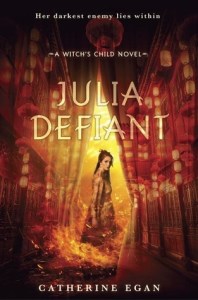
Serena’s Review: “Julia Defiant”

30634295Book: “Julia Defiant” by Catherine Egan

Publication Info: Knopf Books for Young Readers. June 2017

Where Did I Get this Book: audiobook from the library!

Book Description: Julia and a mismatched band of revolutionaries, scholars, and thieves have crossed the world searching for a witch. But for all the miles traveled, they are no closer to finding Ko Dan. No closer to undoing the terrible spell he cast that bound an ancient magic to the life of a small child. Casimir wants that magic will happily kill Theo to extract it and every moment they hunt for Ko Dan, Casimir s assassins are hunting them.

Julia can deal with danger. The thing that truly scares her lies within. Her strange ability to vanish to a place just out of sight has grown: she can now disappear so completely that it s like stepping into another world. It s a fiery, hellish world, filled with creatures who seem to recognize her and count her as one of their own.

So . . . is Julia a girl with a monster lurking inside her? Or a monster wearing the disguise of a girl? If she can use her monstrous power to save Theo, does it matter?

Previously reviewed: “Julia Vanishes”

Review: I saw that the third novel in this series was due to come out shortly, so it was a good reminder to check out this second book. Somehow the “Julia Vanishes” had slipped completely off my radar, all the more surprising for it having a few rare qualities that stand out in a sea of fantasy fiction that can be all too filled with tropes. These rarities were on display once again in this second book, and some of the quibbles I had with the first have also largely been resolved.

Several months have passed and miles have been crossed since the ending of the first book. Julia and her rather enormous cast of fellows now find themselves in a foreign land, loosely based on China, still on the search for a way to remove the magical book from the body of little Theo. Julia, in particular, is devoted to this mission in an effort to make up for her past disastrous choices with regards to Theo. But as she works towards this cause, she begins to discover more aspects of her unique vanishing ability and with these discoveries come unwelcome questions about her own history and identity.

First off, it is absolutely necessary to read the first book in this series before getting to this one. Even the several months break I had between the two lead to a longer than usual re-familiarizing period of time when I started this one. Several of the points that make this book and series so good (a large cast of characters, unique worlds, complicated histories) also make it very challenging to jump into with out refreshing oneself on the events of the past book. Beyond our cast of familiar characters, we’re also dropped into the middle of a new portion of this world with its own politics with regards to witches, its own powerful individual with whom Julia and co. must work, and new settings. After I finally felt like I had caught myself up, I greatly enjoyed this change in scenery. (It’s also noteworthy that for all of these challenges with complicated names/histories/etc., I greatly appreciated the author’s choice to trust her audience to catch up with things on their own. There were no info-dumps or clunky prologues to help with this process, but instead readers are left to put the pieces together on their own, which, with some patience, is perfectly doable.)

One of my criticisms of the first book was the fact that it felt like it had two dueling stories competing against each other, both detracting from the other. This problem has been completely handled in this book. The plotting felt much more streamlined and there was an appreciated increase in the action of the story. The book is driven by the mission to save Theo and this action is balanced by the character growth and inspection that comes through the ongoing mystery into Julia’s past and her abilities. Rather than having two plot pieces tangling together, this balance of plot and character development feel much more natural and give this book a stronger sense of natural flow.

Julia’s development is probably one of my favorite parts of this story. Her increased confidence and clever use of her vanishing powers could have opened a door for her character to lose value due to being “over powered.” But instead, the author finds ways to not only bring large questions into her magical abilities and history, but also focus in on the very human struggles that Julia is still managing. Her feelings of self-hatred with regards to her past choice to give up Theo to the enemy. Her relationship with a brother and her realization that he has lived a restricted life in an effort to support her. The ongoing fallout from her broken heart in the last book, and her realization that there are more fish in the sea.

What makes this last point stand out so well is the way the author introduces other fishes without setting any of them up as a “soul mate” or “one true love.” I loved the “Alanna” series by Tamora Pierce growing up. And I think one part that I liked then and have grown to appreciate more and more as I get older was the way that Pierce exposed Alanna to different romantic interests throughout the series until, in the end, she finally is able to recognize what is important in a partner and what she specifically needs. All to often in YA fiction, romantic interests are introduced who are A.) the protagonists first love of any kind and B.) perfect for them in every way, no questions asked. This never sits well, and I commend the author of this book for exploring a more honest take on the trials and tribulations of young love. Your first love may not be perfect for you. What’s more, your SECOND love also may not be perfect for you. But you learn things from them all. I had a hard time thinking of a similar current series that has tackled this subject as well as this book has, especially given how small a role the romantic aspects play in either book, all told.

I really enjoyed this book, even more than the first. My quibbles about the plotting where deftly handled, and this one was a quick read full of intense action sequences, strong characterization for a large cast, and solid character growth and exploration for Julia herself. Of course, as I’ve said, you have to read the first book first. But if you enjoyed that one at all, I definitely recommend this book as I think it’s even better!

Rating 8: With a realistic portrayal of the challenges of young love and an increased amount of action, “Julia Defiant” is an even better novel than the first!

Reader’s Advisory:

“Julia Defiant” isn’t on any relevant Goodreads lists, but it should be on “Fantasy Books about Thieves.”

Find “Julia Defiant” at your library using WorldCat!

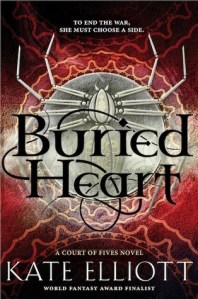
Serena’s Review: “Buried Heart”

29750595Book: “Buried Heart” by Kate Elliott

Publishing Info: Little, Brown Books for Young Readers, July 2017

Where Did I Get this Book: audiobook from the library!

Book Description: In this third book in the epic Court of Fives series, Jessamy is the crux of a revolution forged by the Commoner class hoping to overthrow their longtime Patron overlords. But enemies from foreign lands have attacked the kingdom, and Jes must find a way to unite the Commoners and Patrons to defend their home and all the people she loves. Will her status as a prominent champion athlete be enough to bring together those who have despised one another since long before her birth? Will she be able to keep her family out of the clutches of the evil Lord Gargaron? And will her relationship with Prince Kalliarkos remain strong when they find themselves on opposite sides of a war?

Previously reviewed: “Court of Fives” & “Poisoned Blade”

Review: This review is a long time in coming given how much I enjoyed the first two books in the trilogy since we’re coming up fast on a years since it’s been out! But I will blame my audiobook library queue. I had this one almost finished months ago, and then had to return it to the library and had to wait in line patiently to get it back. Yes, yes, I could have just read a physical copy or done any number of things to get it sooner. But my dedication to one format and the library knows no bounds! Even if that leads me to nonsensical places like writing a review months later and then dedicating an entire paragraph to these very trials and tribulations. Anyways, on to the review!

Things are coming to a head in the fight for the future of Jes’s homeland. And not only are her parents on opposing sides of this battle, but her beloved Prince Kal is finding himself more and more likely to be called upon as a leader in these trying times. While Jes’s prowess as an athlete and the star-power she has won for herself there has gotten her this far, what role will she play as events greater than she ever imagined begin to unfurl?

The story picks up immediately following the events of “Poisoned Blade.” I always like books that could be read as one, continuous story, but coming after a long break between reads, it did prove a bit challenging for me to fall back into this world. There is just so much here! After two books already, Elliott has set up not only a complex and believable world, but one that is peopled and driven by two different cultures with very different outlooks on life, and, importantly, history. That’s not to mention the ever growing cast of characters, all of whom have been slowly revealed to have their own motives in the ongoing conflict. Once I caught myself up again, all of these details fell neatly into place and this same complexity reestablished itself as firmly a plus for the series.

Especially the history aspect of the book. Throughout the series, Elliott has done a thorough deep-dive into what it really looks like to have a history that has only been told by the winners. Through all three books we have begun to see just how thoroughly retold and rewashed events of the past have been, and how now, in the third book, people are trying to reclaim these lost bits of history. This also was carefully crafted and presented. There are no easy pathways and correct decisions that can be made to right the wrongs of the past. And Elliott explores how the choices made in the present will continue to play into this narrative as the future of these two peoples continues to unfold.

Jes, as always, is a great character through whom to view this conflict. As a girl from both worlds, we are given front row seats to her own harsh realizations about what actual change would entail. Throughout the first two books and a large portion of this one, Jes’s outlook on the future has been, frankly, pretty naive. Here she is forced to truly confront her own ignorance of the political powers at play and the limitations that exist for even rulers themselves.

The action takes a swing away from the excitement of the court of fives games that has made up much of the other books. With stakes as high as these, there simply isn’t room for these type of trials as often. However, even with that being the case, I was impressed by how neatly Elliott was able to tie this aspect of the story into the greater conflict as a hole. Don’t get me wrong, Jes’s skill as a competitor is still important and relevant to this book, and the few races we saw all had incredibly high stakes and were just as thrilling as always.

However, the real action came back to the conflict itself. We saw more battles, more personal struggles in Jes’s ongoing conflict with Lord Gargaron, and a epic resolution to the entire chain of events that was both heartbreaking and incredibly satisfying. Elliott doesn’t back away from the ugliness that would take place in an overthrow of this kind, even with the most benevolent and wise of leaders at its head. Further, Jes and Kal’s romance does not get the “magic wand” treatment and they, too, much confront the challenges of any future they may have together.

I thoroughly enjoyed this final installment in the trilogy. I did knock it down one point from the previous two, simply because there were portions in the beginning and middle of the book where the pacing seemed off (events would move quickly, only to suddenly lag for several pages). This book had to fit a lot into one story and there were times where I felt like it had a few missteps simply due to the challenges of getting it all in there. But that said, this was still a thoroughly enjoyable read and very gratifying end to a solid fantasy trilogy.

Rating 8: An epic conclusion to a high stakes fantasy trilogy, full of action, heartbreak, and an introspection on what it means for a nation to rediscover its history and reclaim its future.

Reader’s Advisory:

“Buried Heart” isn’t on many Goodreads lists, but it should be on “The Games We Play” and “Best Books About Family Relationships.”

Find “Buried Heart” at your library using WorldCat!

Serena’s Review: “My Plain Jane”

363010231Book: “My Plain Jane” by Cynthia Hand, Brodi Ashton, and Jodi Meadows
Publishing Info: HarperTeen, June 2018

Where Did I Get this Book: Edelweiss

Book Description: You may think you know the story. After a miserable childhood, penniless orphan Jane Eyre embarks on a new life as a governess at Thornfield Hall. There, she meets one dark, brooding Mr. Rochester. Despite their significant age gap (!) and his uneven temper (!!), they fall in love—and, Reader, she marries him. (!!!)

Or does she?

Prepare for an adventure of Gothic proportions, in which all is not as it seems, a certain gentleman is hiding more than skeletons in his closets, and one orphan Jane Eyre, aspiring author Charlotte Brontë, and supernatural investigator Alexander Blackwood are about to be drawn together on the most epic ghost hunt this side of Wuthering Heights.

Previously reviewed: “My Lady Jane”

Review: I picked up the first book in this series (?) pretty much on a self dare: how could the tragic story of Lady Jane Grey  somehow be turned into a fantasy/comedy YA story and NOT be terrible? Well, I was definitely proven wrong, so when I saw this book coming out, I did nothing more than glance at it, see that it was somehow a Jane Eyre retelling, and instantly request it. Seriously, I didn’t even read the actual book description, because I was surprised as heck that there were two other narrators when I actually started reading, even though it states it right there in the blurb. Anyways, long story short, I loved this book.

Jane Eyre is working as a teacher at the orphanage/school where she was raised, alongside her friend Charlotte Bronte. Their quiet, but not so happy, lives are interrupted with the arrival of ghost hunter extraordinaire, Alexander Blackwell, who sees in Jane a powerful addition to the supernatural services organization for which he works. Jane doesn’t see it the same way and flees to be a certain governess at a certain dark and creepy house with a certain brooding gentleman in residence. Charlotte, on the other hand, is all too willing to prove that she, too, has what it takes to hunt ghosts and gets herself involved, like all good heroines do.

It’s really hard to blurb this book as so much of the plot is caught up in the twists that the authors are constantly lobbing into what is a very well known classic tale of tragic love. And man, I don’t want to ruin the surprises that are in store! In many ways, I enjoyed this book even more than the first book. Other than her terrible end, I didn’t really know anything about the history behind the original Lady Jane Grey and, from what I do know, the story veered from that path pretty early on to allow for our leading lady to have a proactive role, rather than sitting alone and doomed on a throne for a few days.

But here, I am very familiar with the original plot line of “Jane Eyre” so watching the story unfold in a completely unexpected way, artfully tying in characters and events that mirror those from the original but who show up and do things that I would never have guessed was an utter delight. For all that we gain two additional characters, one of whom is the author of the original book in question, it was truly impressive how closely these authors managed to tie it all together with that story. They also neatly explored some of the criticisms that can be thrown at the door of the original, as well.

As characters go, I actually ended up enjoying Charlotte and Alexander more than Jane herself. Charlotte has the go-getter gumption that I like in my leading ladies, and Alexander was appropriately put off but also endeared by her, which I like in my romantic heroes. This all left poor Jane to still have to fulfill the role of the one who falls in love with the very brooding, slightly suspicious Mr. Rochester. Yes, things don’t all turn out as they do in the book, but given the dueling goals of retelling the story while also criticizing some of the peculiarities of its romance, this left Jane in the awkward position of having to mimic some of the foibles (at least they are presented as foibles in this view of the story) of the original Jane as well. But, don’t get me wrong, the book takes a massive turn halfway through the story, and in the latter half Jane gives it as good as she got.

I’m sure this was true of the first book as well, but what stood out to me the most in this one was the bunches of fun I was having simply spotting references to other pop culture memes and moments. I know that “Ready Player One” has come under a lot of fire (I don’t think deserved, save it for the second book!) for being nothing but a loose plot full of 80s references. And while I had fun with that book and those nods, I’m not a pop culture aficionado like Kate, especially not about the 80s, so I’m sure I missed the majority of the more subtle Easter eggs.  Not so here! These are the kind of references that I can get behind. We have “The Princess Bride,” “Harry Potter, ” “Ghostbusters,” “Lord of the Rings” and so many more! They were everywhere, and what made this even better was how artfully they were sewn into the story itself. It never felt like they were shoehorned in, but instead each reference came about in a natural and often very subtle way.

I again loved the way that the authors wove supernatural events into this story. Yes, it’s probably a bit easier to sell a ghost story with actual ghosts for “Jane Eyre” than shapeshifters in a real historical event like with the first book, but there are still a million ways this thing could have gotten away from them. Instead, the entire production felt tightly controlled and masterfully directed the entire time. The characters each had distinct and interesting character arcs, the magic was well thought out and integral to the story itself, and the original “Jane Eyre” was deftly retold and lampooned at the same time. I zipped through this book in one day! If you enjoyed “My Lady Jane” or are up for a good comedy version of “Jane Eyre,” than I definitely recommend checking out “My Plain Jane.”

Rating 9: Adding comedy, magic, and bucket loads of literary references only improves this retelling of “Jane Eyre.”

Reader’s Advisory:

“My Plain Jane” is on these Goodreads lists: “Derivatives of Jane Eyre” and “Brontës in Fiction.”

Find “My Plain Jane” at the library using Worldcat!


Book Club Review: “Six of Crows”

23006119We are part of a group of librarian friends who have had an ongoing bookclub running for the last several years. Each “season” (we’re nerds) we pick a theme and each of us chooses a book within that theme for us all to read. Our current theme is “B-Sides,” where we pick different books from previous authors that we read in the club.
For this blog, we will post a joint review of each book we read for book club. We’ll also post the next book coming up in book club. So feel free to read along with us or use our book selections and questions in your own book club!

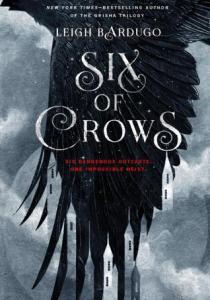
Book: “Six of Crows” by Leigh Bardugo

Publishing Info: Henry Holt and Company, September 2015

Where Did We Get This Book: Serena owns it, Kate got it from the library

A-Side Book: “Shadow and Bone”

Book Description: Ketterdam: a bustling hub of international trade where anything can be had for the right price–and no one knows that better than criminal prodigy Kaz Brekker. Kaz is offered a chance at a deadly heist that could make him rich beyond his wildest dreams. But he can’t pull it off alone…

A convict with a thirst for revenge.

A sharpshooter who can’t walk away from a wager.

A runaway with a privileged past.

A spy known as the Wraith.

A Heartrender using her magic to survive the slums.

A thief with a gift for unlikely escapes.

Six dangerous outcasts. One impossible heist. Kaz’s crew is the only thing that might stand between the world and destruction—if they don’t kill each other first.

Serena’s Thoughts

This book is probably one of the perfect diverging points for Kate and my own differing book tastes. I’m pretty sure that everything I love about these genres are the same things that turn off Kate, so be ready for some whiplash in our opinions!

It’s no secret that I love fantasy. Pretty much any fantasy, but high fantasy (rather than, say, urban fantasy) is definitely my preferred type. After all, that’s the primary genre that I cover on this blog. But I also love heist stories. I don’t read many heist books, because frankly most of the ones I’ve tried fall into the worst category of “beach reads” where the writing and plotting is so simplistic that I just can’t acknowledge it as worth my time to read. But I do love heist movies (though even I have my doubts about this new “Oceans 11” reboot…). So reading this book description, I was all over this!

I did have a few points of hesitancy, however, going in. I don’t typically prefer books with multiple narrators, let alone five. And I’ve been burned by Bardugo in the past. While I liked the first book in her “Grisha” series, my rage boiled over in the second and I don’t think I even finished the third. So, I was excited, but hesitant.

All for nothing! I had a blast with this book! Set in the same world and a few years (?) after the events in the last book of the “Grisha” trilogy, our team is made up of a ragtag group of individuals all with complicated pasts and motivations that lead them to be involved in what everyone says is an impossible mission.

I very much enjoyed the world building in this story. It’s been a few years since I read the other two books, but for the most part this world and history is presented in such a way that prior knowledge of it was not necessary. If anything, I think my half reading of the first trilogy almost made it worse, as I could sort of remember things here and there and was never quite sure whether something new was being introduced or whether I should be remembering it from before. In that respect, it might even be easier to read this book with zero knowledge of the original trilogy. All of that said, this story takes place in two new and distinct locations: the gang-riddled streets of Ketterdam and the Ice Court where the people of the north capture and exterminate Grisha, as they see their magic as contrary to the natural world. Bardugo does an excellent job in painting clear and brilliant scenes on which to work her stories. I particularly liked the Ice Court itself, and the complex inner workings that the team had to overcome to break in and out.

As for the characters, Bardugo masterfully juggled a very full cast, somehow managing to weave together a very action-packed story while also slowly revealing the complicated and often dark histories of each individual character on this journey. I had a few favorites, but I ultimately enjoyed them all. I would say that Jesper was probably my least favorite, due to the fact that he had the least developed back story of the group and, for plot reasons, had to be kept in the dark about certain events. I enjoyed Inej the most, as her character type (silent, deadly, masterfully proficient at what she does best) is one of my favorites. But I think that Nina and Matthias, as a pair, had the most compelling journey in this story. Raised in very different cultures and with very different views on the world, they both have to confront prejudices and the darker side of their own beings.

I had a few quibbles of plausibility here and there, as far as the heist itself goes. But for the most part, I was having such a blast that I didn’t have time to pause and really think about the viability of some of their more outrageous plans. Bardugo is particularly effective with her dialogue, and with a cast of 6+ characters, there were ample opportunities for this strength to shine and overcast any weaker plot points. Over all, I greatly enjoyed this book and have the second one sitting on my shelf ready to read!

Kate’s Thoughts

Say it with me folks: I don’t like heist stories, I don’t like high fantasy, and while I read “Shadow and Bone” in Leigh Bardugo’s Grishaverse, I didn’t particularly care for it and never went back to that trilogy. So yeah, going into “Six of Crows” I wasn’t terribly stoked. But I like to think that I’m a good sport and something of a trooper, and given that I really liked other works by Bardugo (specifically “Wonder Woman: Warbringer”, and the short story “Verse Chorus Verse”), I had a little bit of hope that I would enjoy at least parts of it.

Turns out I was right on both counts. So, yay?

For not liking heists or high fantasy, there were plenty of things that I did find likable in this book. As Serena mentioned, Bardugo has a knack for world building, and while I remember very little from her Grishaverse I greatly enjoyed seeing aspects of it popping up in this book, even if it was in a different time and place. The Dutch influence in Ketterdam is a fun thing to watch as well, with references to various familiar landmark types and certain words clearly being derived from the Dutch language. Bardugo has a clear world idea, and in some ways she expands upon it in this book (as far as I know) with how Grishas (or witches) are viewed, and how this society functions in a more poverty stricken and corrupt society.

Bardugo also has a talent for characterization and dialog, and I ended up really enjoying a number of the characters. While in book club the solid consensus seemed to list Inej as a favorite, I myself greatly, GREATLY enjoyed Nina and her morally grey, duplicitous yet empathetic ways. Like Serena I was quite intrigued by her relationship with Matthias, and how they both have a deep connection but deep resentment and mistrust because of past actions. Whenever the story was focused on her, it had my rapt attention.

But, at the end of the day, Serena knows me very well: “Six of Crows” manages to run with a number of story themes that I don’t care for, mostly heists and high fantasy. And because of that, I didn’t enjoy it as much as I could have, and as much as others have. I am not a good judge for how good this story is because this is not a book that was written with me in mind, and it’s not quite strong enough (outside of a few aspects I did like) to rise above my preferences and prove me wrong. It’s no one’s fault. It just didn’t do it for me as a whole.

Serena’s Rating 9: Strong dialogue and a great cast of characters added to what was already a thrilling heist story.

Kate’s Rating 6: While the characters compelled me and the dialog was snappy, the story line and themes didn’t interest me.

Book Club Questions:

  1. This story is set in the same world as Bardugo’s original “Grisha” trilogy. How did reading that trilogy before (or not reading it) affect your experience with this book?
  2. This book is made up of a large cast of characters. Which ones stood out to you as particularly interesting? Were there any that you felt less connected to?
  3. Through Nina and Matthias’s story arc, this book confronts some challenging themes regarding prejudice and persecution. What moments stood out to you in this area? Do you think this could have been explored even further?
  4. The heist itself is made up of several moving pieces and changed throughout the story. Did any parts of it strike you as particularly surprising or fun to read about? Did you have questions about any parts of it?
  5. There are a lot of surprises revealed throughout the story. Which ones took you by surprise and which ones could you predict?
  6. The story ends on a bit of a cliffhanger. Where do you think it will go from here?

Reader’s Advisory:

“Six of Crows” is on these Goodreads lists: “Villain Protagonist” and “Speculative Fiction Heist/Caper Stories.”

Find “Six of Crows” at your library using WorldCat!

Next Book Club Pick: “Deathless” by Catherynne M. Valente


Serena’s Review: “Whisper on the Tide”

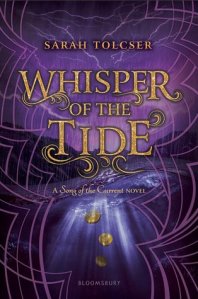
345195361Book: “Whisper on the Tide” by Sarah Tolscer
Publishing Info: Bloomsbury USA Childrens, June 2018

Where Did I Get this Book: ARC from the publisher

Book Description: Caro Oresteia spent her life waiting to be called by the river god, as those in her family had been for generations. But when she’s swept away on an adventure to save the Akhaian royal prince, Markos, her destiny is sealed by the sea god instead.

For now, Caro is landlocked, helping Markos reclaim his throne after nearly his entire family was assassinated in a political coup. Without any financial or military support, Markos is desperate for allies, and Caro has fought off more than one attempt on his life. When a powerful Archon offers his army in exchange for Markos’s marriage to his daughter, Caro must choose: Her love for Markos, or the fate of Akhaia? And more importantly: How much is she willing to risk to defy the sea god’s wishes and chart her own course? 

With shipwrecks, lost treasure, old and new enemies, dark magic, and breathtaking romance, Sarah Tolcser weaves another epic story about chasing your fate.

Previously reviewed: “Song of the Current”

Review: Remember a time, not so long ago, when “Pirates of the Caribbean” was actually acclaimed and not a national joke? I mean, those first few movies were a blast! I may, may,  have even seen the first one in theaters three times. I remember being almost giddy over just how much unadulterated, unquestioned fun that first movie was offering up. Adventure! Romance! Great characters! And some top notch humor that the other films never seemed to really understand or replicate in all the many, MANY, iterations that followed. So you can imagine just how thrilled I was when I discovered about halfway through this book, that “Whisper on the Tide” was essentially what you’d get if you took that first movie and then took Kiera Knightley’s character from the third movie, but actually made her, you know, a good character and had her run the show.

While Caro has finally discovered her true calling, with the goddess of the ocean in her ear and a ship to her name, her time of late has been spent decidedly NOT at sea. After pledging herself to help Markos regain his lost throne, she’s recently discovered that much of what this help is made up of is running a few messages here and there and sitting through various speeches and rallies while Markos looks to drum up support for his cause. And all is not going well. The ocean god is displeased with Caro’s lack of sea time adventures and Markos few followers are pushing towards a marriage of convenience that would bring in much needed support. Caro has more and more difficulty seeing a path forward that allows her to keep both of her loves, the sea and Markos himself.

For all that the description of the story, both mine and the official one, puts a lot of weight on Caro’s decision about her future, part of what has made me like this series so much so far is Caro’s no nonsense approach to life and decision making. She doesn’t wilt away from tough choices and she is endlessly practical. In many ways, she sees her ability to make hard calls as her biggest asset to Markos, whom she often derides as getting too caught up in the emotions of things. Here, these character traits move the story along and keep it from being marred in the emotional duldrums of soap opera-ness that could have come about with a different character in this situation. But what makes it all the better is that through this book, Caro must learn that her own practicality and willingness to follow the harder path is not always a boon.

In short order, she’s back out on the ocean and beginning to understand how very little she knows of life as a sea captain, for all that she has her own ship and the ear of the sea goddess. The action never lets up and Caro’s adventures are filled with everything you’d want from a pirate adventure. We have storms, and ships sinking, and maroonings on islands, and lost treasure, and pirate lairs. Really, like I said at the beginning, all the best parts of the “Pirates of the Caribbean” movies, though each with their own unique spin and connection to the larger plot.

For secondary characters, we sadly saw much less of not only Markos, but Caro’s magic-wielding cousin, Kente, was also out of commission much of the time. But what we did get from her was integral to the plot, and I liked the the fact that she had a role at all, as with the way the last book ended, I wasn’t sure we were going to see more from her. Markos, also, was abscenfor much of the middle portion of the book. I was ok with this. I still very much enjoyed the romance between him and Caro, and their banter and Markos’ own cluelessness about certain things were still some of the most fun pieces of dialogue in the story. However, by sidelining him and their romantic entanglements, Caro was given the space and time to really come into her own as a character and drive the plot on her own.

This also gave room to add a surprising new (?) character who I had not expected to see at all. I don’t want to spoil it, but I thoroughly enjoyed this addition and the character added a much needed sense of ambiguity and moral greyness to an otherwise fairly straightforward adventure story. To continue the “Pirates” compariosons, if Caro is Elizabeth and Markos is Will, this new character was Jack Sparrow and lived up to the utter delight that any character should be if trying to fill that role.

I also greatly enjoyed the expanded idea of Caro’s relationship with the sea god. While we heard a lot about the river god and the solid, calm prescense that he transferred to those who were chosen by him, we only briefly met the sea god in the last book. And true to the nature of the sea, she is much more volatile and unpredictable than the god of the river seemed to be. I was relived that she wasn’t reduced to just another magical ability for Caro, but given her own agendas and whims that often came into conflict with Caro’s. Their ongoing battle of wills was a large secondary driver of much of the story and I was very pleased with how it played out.

In the end, I enjoyed this book even more than the first. While “Song of the Current” had a slow start, this one jumped right into the action and never let off the gas pedal. Caro was her same sassy self, but was given more room to proactively drive the plot herself this go around. I still very much enjoyed the romance, but was pleased to see that it played second fiddle to the action and adventure. And between the ocean god and the surprise Jack Sparow-esque character, there was enough double crossing and cross purposes to keep readers on their toes about what would be coming next. If you enjoyed the first book, I’m sure you’ll love this one!

Rating 9: Take all the good parts of the “Pirates” movies, make them even better, and turn it into a book and ta da!

Reader’s Advisory:

“Whisper on the Tide” is a new title, so it isn’t on many relevant Goodreads lists, but it is on “Teen Pirate Books.”

Find “Song of the Current” at your library using WorldCat!

Kate’s Review: “Bruja Born”

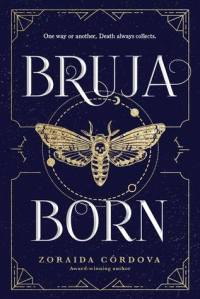
33918887Book: “Bruja Born” by Zoraida Córdova

Publishing Info: Sourcebooks Fire, June 2018

Where Did I Get This Book: I received an ARC from NetGalley.

Book Description: Three sisters. One spell. Countless dead.

Lula Mortiz feels like an outsider. Her sister’s newfound Encantrix powers have wounded her in ways that Lula’s bruja healing powers can’t fix, and she longs for the comfort her family once brought her. Thank the Deos for Maks, her sweet, steady boyfriend who sees the beauty within her and brings light to her life.

Then a bus crash turns Lula’s world upside down. Her classmates are all dead, including Maks. But Lula was born to heal, to fix. She can bring Maks back, even if it means seeking help from her sisters and defying Death herself. But magic that defies the laws of the deos is dangerous. Unpredictable. And when the dust settles, Maks isn’t the only one who’s been brought back…

Review: I first want to say a special thanks to NetGalley for providing me with an ARC to this book!

Awhile back I read the book “Labyrinth Lost” by Zoraida Córdova, a fantasy novel that took some influence from “Alice In Wonderland”. I remember liking the characters in it for the most part (well, mostly Alex, our teen witch protagonist), but having a harder time with the fantasy world setting that she found herself in. Look, I have lots of opinions about “Alice in Wonderland,” as you guys know, and that one didn’t really live up to my very high expectations. But I liked Alex and her family enough that I told myself I’d continue in the series, so when I saw that “Bruja Born” was on the way I requested a copy from NetGalley, thinking I had little to lose. But I have great news. If “Labyrinth Lost” has similarities to “Alice in Wonderland,” “Bruja Born” also has a book to which it has similar themes and concepts. And that book is “Pet Sematary”.

giphy13
Words that we should all take to heart. Especially if we live on cursed soil in Maine. (source)

The whimsical and dreamy fantasy setting from the first book has gone out the window, and Córdova has taken us straight into dark fantasy/horror for the second book of her “Brooklyn Brujas” series. And this is where, for me, the series has spread it wings and flown high, because THIS is the kind of book I was waiting for. This time, our main character is Lula, Alex’s older sister who was one of those who was in need of rescue in book one. Her emotional and physical scars from her time in Los Lagos have really weighed her down, and she has changed from popular and bubbly extrovert to sullen and bitter killjoy. I was really happy to see that we got to focus on her this time, as while I liked Alex I liked having a new character to explore. And Lula was so flawed and complex, more so than Alex, and getting to know her (as well as Rose, their youngest sister) made this book all the more rich. In fact, this book gave us a better grasp on all of the family members, and world building exploded and really sucked me in. Lula’s relationships, be it with her sisters or her mother or Maks as he becomes the living dead due to a spell that was cast, felt deeper and more rewarding this time around. I also really have to give Córdova props because while I found Lula to be really hard to take at times, I TOTALLY understood the choices that she made and believed every single one of them. And her romance with Maks is so, so emotional and tragic, as you know that it is doomed once he becomes more and more in tune with the undead side of him. But his emotions and feelings and memories are still there, and we have to slowly watch him fall away, and watch Lula potentially lose him all over again. Man was it painful and an emotional rollercoaster, and I, of course, was living for all the agony it was causing me.

The stakes have grown exponentially in this one as well. While those in danger in “Labyrinth Lost” was limited to the Mortiz family alone (which are high stakes for them, of course), the threat of an undead horde threatens all of New York City after the Mortiz Sister’s healing/resurrection spell goes terribly wrong. We get to see how the magical systems within the book not only affect the characters, but how they could potentially affect the world that they live in. There was a lot of loss in this book, loss that actually caught me off guard. This book goes dark, far darker than “Labyrinth Lost”, but I think that it is richer for it. Córdova also brings in concepts from her other stories outside of the “Brooklyn Brujas”, and fits them into this world and the Bruja culture seamlessly. When we find out that this world is not limited to witches, Córdova opens up a world of possibilities that I cannot wait to see her explore as the series goes on. This series has officially gone from ‘yeah, I guess I will go on with it’ to ‘OKAY SERIOUSLY WHEN DOES THE NEXT ONE COME OUT?!’, and now looking at both “Labyrinth Lost” and “Bruja Born” as two parts to the same whole, I’ve gained more appreciation for the former. The stories are very complementary, and the next one, almost assuredly following the youngest sister Rose, can only strengthen it more.

If you like teen horror and an emotional chaser to your terror, “Bruja Born” is definitely a book that you need to pick up. You do need to read “Labyrinth Lost” before going into this story, but given that I have a feeling that the “Brooklyn Brujas” series is going to be VERY strong overall, you’ll be glad that you did. And now seriously, when does the next one come out?

Rating 9: A solid dark fantasy that borders towards horror, “Bruja Born” brings the Mortiz Family into their own and expands into complex and deeply satisfying world building and magical systems.

Reader’s Advisory:

“Bruja Born” is included on the Goodreads lists “Latinx MG/YA Speculative Fiction”, and “#OwnVoices Novels of 2018”.

Find “Bruja Born” at your library using WorldCat!