
Serena’s Review: “Cruel Beauty”

15839984Book: “Cruel Beauty” by Rosamund Hodge

Publishing Info: Balzer + Bray, January 2014

Where Did I Get this Book: audiobook from the library!

Book Description: Since birth, Nyx has been betrothed to the evil ruler of her kingdom-all because of a foolish bargain struck by her father. And since birth, she has been in training to kill him.

With no choice but to fulfill her duty, Nyx resents her family for never trying to save her and hates herself for wanting to escape her fate. Still, on her seventeenth birthday, Nyx abandons everything she’s ever known to marry the all-powerful, immortal Ignifex. Her plan? Seduce him, destroy his enchanted castle, and break the nine-hundred-year-old curse he put on her people.

But Ignifex is not at all what Nyx expected. The strangely charming lord beguiles her, and his castle—a shifting maze of magical rooms—enthralls her.

As Nyx searches for a way to free her homeland by uncovering Ignifex’s secrets, she finds herself unwillingly drawn to him. Even if she could bring herself to love her sworn enemy, how can she refuse her duty to kill him? With time running out, Nyx must decide what is more important: the future of her kingdom, or the man she was never supposed to love.

Review: Sigh. I don’t know, I think I’m in some very specific, “Beauty and the Beast” related slump. Don’t get me wrong, you can tell from the above alone, this was better than the “Star-Touched Queen.” I mean, at least I finished it! There were things I legitimately liked about this story, but in the end, I was still very disappointed by yet another much-lauded retelling of this classic tale.

Nyx has known her entire life that she only has one destiny: to marry the Gentle Lord and try to save her world. But in reality, she is likely a sacrifice who will die on her wedding night at the hands of a demon lord who has imprisoned her world and tempted her people (including her father) with wicked bargains that never turn out well. But when she finds herself finally married and in a castle with secrets around every corner, she begins to question this mission. Who is this Gentle Lord really? How did he get here and what will it take to truly save herself and her people?

This story started out strong. As I said in my review of “The Star-Touched Queen,” I was enjoying this read as a palate cleanser for the first several chapters. The writing is strong, freed from the syrupy prose that drove me nuts with the former, the world-building was unique, and Nyx herself was complicated and interesting.

Nyx’s world is essentially a version of England had it remained under its Roman influences. Her people have combined the folklore of the original residents of Arcadia and the Roman pantheon of gods and myths. These myths and characters are sprinkled throughout the story, and I enjoyed this new take on the magical elements that came directly from some of these myths and how they could be twisted to fit a Beauty and the Beast like story.

Nyx also started off as a promising heroine. She’s a brave, strong young woman, but also embittered and resentful of the role she is meant to play. Her father’s deal required he choose one of his twin daughters to marry the Gentle Lord, and Nyx has felt the weight of being the lesser loved for her entire life. What’s more, her sweet and naive sister has played a complicated role in Nyx’s life. She is innocent and has done no wrong, and Nyx can’t help but resent her. And this resentment leads to Nyx’s own self-loathing at her inability to disconnect her father’s choices from her relationship with her sister. So this was all a strong foundation. Nyx is presented as conflicted, but determined. Not perfect, but recognizing her own flaws. Seemingly, a character I should root for.

The problem became that Nyx was SO conflicted that I couldn’t root for her because I could never be sure what her actual goals were from one page to the next. Once she gets into the castle, meets the Gentle Lord, and begins going about her mission, Nyx becomes a bundle of confusion and indecision. This would be fine, except for the fact that every other page she states that she is DETERMINED to do such and such. Then a few pages go by and she’s DETERMINED to do the exact opposite. Her emotions are all over the place, and they are all the most extreme at any point. She hates her sister and the Gentle Lord. But no, she loves her sister and maybe the Gentle Lord is OK. It got to the point that whenever she had a new revelation, I couldn’t invest any true meaning into it, because chances were good she was going to walk back that decision/emotion in just a few pages, depending on whatever position on things the person she next interacted with had.

There was also a dreaded love triangle introduced almost immediately. Granted it was a unique version of a love triangle (more on that later), but a love triangle it remained. What’s more, both points of the love triangle capitalized on flaws that particularly irk me in romances. One was pretty much an instalove connection, with Nyx and this man kissing on almost their first interaction and their practically announcing their love a few interactions later.

The other came with all the complications of the romantic character being a truly bad guy as far as Nyx knows at this point. Obviously, with any Beauty and the Beast story (or Hades/Persephone, what have you), you know going in that there is going to be a change of heart somewhere along the line. But my one requirement for these types of romances is that the change of heart comes AFTER the love interest has done something to make the heroine begin to question her assumptions about his cruelty. He needs to earn not only her love, but first even the opportunity for her to consider him as even a decent person who might be worthy of love. When the heroine, like Nyx here, falls for the “Beast” when he’s still full-on in beast mode and has done nothing to redeem himself, it’s not a tragic love story but instead another example of setting up unhealthy and scary expectations for the type of behavior that is acceptable in a romantic partner. No amount of “hotness” makes it OK. When Nyx first starts feeling drawn to him, he’s still only the demon who killed her mother and is actively killing more of her people. She has no reason to question this, even if we the readers know this tale backwards and forwards and can suspect there’s more to it than that. She doesn’t know that, and it makes any attachment she feels for him at this point just another example of problematic romances in YA fiction.

The other big problem I had was that this love triangle also gave away the answer to the end of the book. I had no problem whatsoever immediately guessing the secrets involved in this story right off the bat. Not only does this drain any dramatic tension from the story, but it damages Nyx’s characterization by making her seem rather dull-witted for not figuring it out herself. What’s worse, the author makes the bizarre choice of having Nyx discover the answer halfway through the story and then conveniently forget. And that’s not even getting into the fact that the device used to reveal these facts to her had killed every wife of the Gentle Lord before, but not Nyx. It’s never explained why not Nyx, not even a tertiary throw-away comment that would somehow make her an exception. Nope, she’s just special because the story needs her to be.

Between the love triangle, Nyx’s inconsistent and hard to root for characterization, and the early reveal of an obvious conclusion, I really struggled with this book. It did have a unique magical world set up and I enjoyed Nyx at the beginning, but after she arrived at the castle, the story took a distinct downwards trajectory and never managed to recover.

Rating 4: Another disappointing “Beauty and the Beast” retelling, this time with improvements to the heroine, but an unnecessary and plot-revealing love triangle.

Reader’s Advisory:

“Cruel Beauty” is included on a million Goodreads lists about heroines who fall for bad guys and best fairytale retellings, but I just can’t. Go read “Beauty” if you haven’t already. And if you have, give yourself a treat and re-read it!

Find “Cruel Beauty” at your library using WorldCat!
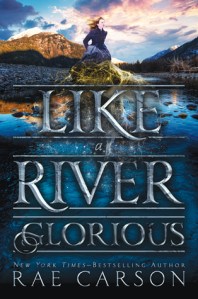
Serena’s Review: “Like a River Glorious”

18054071Book: “Like a River Glorious” by Rae Carson

Publishing Info: Greenwillow, September 2016

Where Did I Get this Book: audiobook from the library!

Book Description: After a harrowing journey across the country, Leah Westfall and her friends have finally arrived in California and are ready to make their fortunes in the Gold Rush. Lee has a special advantage over the other new arrivals in California—she has the ability to sense gold, a secret known only by her handsome best friend Jefferson and her murdering uncle Hiram.

Lee and her friends have the chance to be the most prosperous settlers in California, but Hiram hasn’t given up trying to control Lee and her power. Sabotage and kidnapping are the least of what he’ll do to make sure Lee is his own. His mine is the deepest and darkest in the territory, and there Lee learns the full extent of her magical gift, the worst of her uncle, and the true strength of her friendships. To save everyone, she vows to destroy her uncle and the empire he is building—even at the cost of her own freedom.

Previously reviewed: “Walk on Earth a Stranger”

Review: As I said in my review of the first book in this series, “Walk on Earth a Stranger” was pretty much what you’d get if you turned the old Oregon Trail game into a full length novel. Add in a small dash of fantasy with Lee’s gold sense, a few more references to the prejudices and wrongs of the time, and there ya go! As a travelogue, I very much enjoyed the story. But in the end, they arrived at California. Without the travel/Oregon Trail part of the story, would this series continue to hold up. And the answer is…kind of?

Lee and her friends have finally arrived in California, found a claim spot ripe with gold, relying on Lee’s gold sense, and begun to set up their own little town. But when a string of misfortune’s start befalling the growing township and its residents, Lee’s the only one to suspect the truth: her uncle Hiram is back after her and these little “accidents” are his way of warning her. Determined to set things straight once and for all, Lee and Jefferson set out to confront her uncle and gain Lee’s freedom. But it all goes wrong, and Lee is about to find out just how awful her uncle truly is.

So I have very mixed feelings on this book. But I’ll start with the things that I know I enjoyed. I still very much liked the mixture of a historical setting and Lee’s magical abilities. If nothing else, the author makes you feel like you’re in this time period. There are no missteps, and I always felt fully immersed in this world. The challenges of living during this period are clear: weather, nature, sickness/injury, they must overcome it all and the day to day life is so distinct and well-described that I never questioned the authenticity of this world. The real skill was then in merging Lee’s magical abilities into this world without disturbing the balance of realism. Her gold sense played a background role in the first book, serving primarily as a motivation for the villain and coming into play here and there when needed. Here, even with Lee’s growing understanding of her own powers, her gold sense still remains mostly in the background. It is the crux of the conflict, but it isn’t really used much beyond that, besides in the final conflict. This balance allowed the historical elements and characters themselves to serve instead as the main point of interest for the book.

I also still enjoyed Lee as a character.  Here, she is forced to confront the role that she plays in the way that history is unfolding. Yes, she is sympathetic and “ahead of her time” for a character living in this period of history, but she is not excused from responsibility. She’s still claimed land that belonged to others and through her and the others mining for gold, irrecoverably changed the very landscape upon which they’re living. I liked that she wasn’t let off the hook for these actions and, while she recognizes the harm, she doesn’t have, or is given, any quick and easy solutions. What’s more, she doesn’t always come to these conclusions on her own, but must be informed of her own ignorance and remaining prejudices by those around her.

However, Lee wasn’t given much to do in this book, frankly. In the last, we saw how she contributed to the wagon train which she was a part of. She took action on her own and used her own skills, not just her gold sense, to solve problems. Given the nature of this story, Lee is sidelined for much of this book. It is up to others to plan and plot, and while she’s not strictly speaking a damsel in distress, she’s probably only one step away. And, because the story is told from her point of view, the reader is left with a lot of inaction and waiting, just as Lee is herself.

And in that time, the book becomes very hard to read. As I said, the author doesn’t flinch away from portraying some very ugly realities for what this time period could be like for many people, especially at the hands of the worst of the white settlers (though, as I said, even the “best” are not let off the hook for their own compliance and ultimate self-interest). While I admire this dedication to revealing the ugliness that existed, it also began to be almost too much as the story progressed. Because of Lee’s own captivity, the reader also feels like a captive audience to pages and pages of depravity and various horrors.

It is this combination of reduced action for Lee herself and this laser focus on some very tough scenes that made the story lag quite a bit in the middle. “Lag” is even a strange word for it, since boredom was definitely not the emotion most sparked by the harsh images presented. But plot-wise, the story did feel adrift and wallowing. The action picked up again in the end, and I liked that even in the resolution, things do not end in any type of perfect, utopia-like fashion. This specific horror might have been ended, but the world that they all are living in is unchanged.

Again, this story also resolves in a way that leaves me questioning where the third book will go from here, similarly to the first. While I did struggle with this book a bit, I’m still curious to see where things will ultimately end up and I’m sure I’ll pick up the next one soon!

Rating 6: A reduced role for our heroine combined with some really tough scenes seemed to negatively affect the pacing of this book. But the historical aspects are still excellent.

Reader’s Advisory:

“Like a River Glorious” can be found on these Goodreads lists: “YA & Middle Grade California Gold Rush Fiction” and “YA Historical Fiction of 2016.”

Find “Like a River Glorious” at your library using WorldCat!


Serena’s Review: “The Star-Touched Queen”

While I make an effort to complete most books I read, every once in a while I come upon one  that I just can’t get through. When I find myself repeatedly putting down a book to the point that attempting to finish it is taking up weeks of my time, I sometimes come to the conclusion that a book is a book, not a life and death contract to read until completion. There are too many books in the world that I will never get to to spends days on end trying to finish a book that I already know will not be my cup of tea. Sadly, one such of these books came across my desk recently.

25203675Book: “The Star-Touched Queen” by Roshani Chokshi

Publishing Info: St. Martin’s Griffin, April 2016

Where Did I Get this Book: audiobook from the library!

Book Description: Maya is cursed. With a horoscope that promises a marriage of death and destruction, she has earned only the scorn and fear of her father’s kingdom. Content to follow more scholarly pursuits, her whole world is torn apart when her father, the Raja, arranges a wedding of political convenience to quell outside rebellions. Soon Maya becomes the queen of Akaran and wife of Amar. Neither roles are what she expected: As Akaran’s queen, she finds her voice and power. As Amar’s wife, she finds something else entirely: Compassion. Protection. Desire…

But Akaran has its own secrets—thousands of locked doors, gardens of glass, and a tree that bears memories instead of fruit. Soon, Maya suspects her life is in danger. Yet who, besides her husband, can she trust? With the fate of the human and Otherworldly realms hanging in the balance, Maya must unravel an ancient mystery that spans reincarnated lives to save those she loves the most…including herself.

Review: Thankfully, it’s been a while since I’ve had to write a DNF review. There have been a few stinkers here and there, but usually I was able to push through for one reason or another. In all honesty, I’m not quite sure what makes up the real difference between a very low rated book that I managed to get through, and one that I just put down. But with this one, since it was an audiobook, I had the extra discouragement of looking down at my book and seeing how many hours, and hours, and hours were left of it. And I just couldn’t.

The story is one that we’ve all (those of us who read fantasy/fairy tale fiction, at least) read before. And that’s not a mark against it! I love “Beauty & the Beast”/”East of the Sun, West of the Moon”/Hades & Persephone stories. They’re probably my favorite of the typical fairytale inspiration pieces out there. And luckily for me, there are a lot of them. But unluckily for this book, there are a lot of them THAT ARE BETTER.

As Kate and I have said many times, each reader has their book and each book, its reader. What’s more, this was a very popular book when it come out so I know this is an unpopular opinion. And I can even see some of the aspects that would have drawn other readers to it. For me, the best part of this story was its connection to India, its traditions, food, clothes, and own fairytales and legends. This setting and cultural connection provided a unique stage upon which to set a very familiar story. And if it had been successful in other ways, I would have been praising this all the day long for pushing the conventions of what we’re used to seeing for stories like this.

However, it was not successful in other ways. There were three main flaws that lead me to reaching a breaking point with this book: the main character, the instalove relationship, and the writing style itself.

Maya is a terrible leading character. If you asked me right now to name personality traits for this character, I couldn’t. Is she brave? Does she have a good sense of humor? What drives her? I don’t have an answer. In the very beginning of this book, we get a few hints that she has an interest in scholarly pursuits, but this never comes into play throughout the rest of the story, leaving it less as a character development piece and more of a “oh, well Disney’s Belle loved books, so…” What’s worse, the entire story is driven by events happening around her and her being lead by the nose by others. She literally decides to kill herself because someone tells her to. And then five minutes later, marries a complete stranger because he tells her to. She also has strong tendencies towards the “too stupid too live” trope. What’s that? The castle is dangerous and might tempt me down bad paths? Yes! I will immediately run away from those I know and not tell them about a mysterious door that is COVERED IN BURN MARKS AND CHAINS that is calling to me. Nothing suspicious there!

This all leads into the instalove. Amar arrives out of no where, tells her to marry him, and then proceeds to wax poetic about his great love for her throughout the rest of the story. But why. Not only can I not identify a single personality trait that Maya can call her own (besides cow-like docility, perhaps), but given the nature of their “marriage” they know nothing about one another. It’s not flattering to have a complete stranger proclaim undying love, it’s creepy. What’s worse, the “happy ending,” as it were, is arrived at about halfway through the story. But, again, because Maya is an idiot, she must make terrible decisions and ruin this. Again, because a complete stranger tells her to and against all of the “love” that she has for Amar.

The older I’ve gotten, the more curmudgeony I’ve been about instalove stories. I never liked them, but now it’s almost an immediate death knoll to any enjoyment I might find in a book. Do you know what readers mostly like about romance? They like reading about how it develops! What makes these two people form this incredible and rare connection with each other? How do they learn to know, trust, and rely on the other? What challenges do they overcome, either plot-wise or emotionally to make this burgeoning relationship work? I only need about a paragraph tops of them fully in love telling readers about how great it is. Authors like this have taken literally the most boring part of the story and made it the ENTIRE story.

And this ties neatly to the writing itself. This book takes purple prose and melodrama to a whole new level. If you cut out the metaphors (and that’s a generous term for what’s going on here) and sugary drool of prose out of this book, you’d be left with maybe half? a third? of what the book is now. Let me put my English major nerd glasses on for a moment here. A metaphor or simile or comparative description of some kind is meant to draw an image in the reader’s mind. It might not be the common image associated with whatever you’re discussing, but it must be clear and make sense.

“I want to measure eternity with your laughter.”

“I see only night and smoke, dreams and glass, embers and wings. And I would not have you any other way.”

What does this mean. Seriously. What. And that’s only two examples. When it wasn’t straight out not making a lick of sense, the insta-love congealed with the prose to form a sappy, saccharine, gushy mess. Amar (again, after knowing Maya for a day) says that he would literally trade anything…for a strand of her hair.

His voice echoed with all the desperation of someone who has not slaked his thirst in eons and had just spied a goblet of water sweating beads of condensation, thick as planets. His voice lulled me, coated me.

Sentence, after sentence, after sentence of this. It was exhausting. If, as an author, you just want to string together pretty words that sound pretty together, perhaps write a nice poem. A novel requires more. Words that makes sense together is a very low bar.

I did not enjoy this book at all. The Indian setting was unique and there was a horse friend that I liked, but neither were enough to get me past the overly wrought language and a heroine who I began to actively root against shortly into the book. There was a very distinct decision that she made about halfway through the book that cemented my decision to put this down, and I really have no regrets. There are too many books in the world. And, most notable in this case, there are too many books in the world that tell almost this exact same story but do it well. I actually moved straight on to “Cruel Beauty,” a book this has been compared to, and am already enjoying it so much more. And I’m on page 30.

Rating: DNF

Reader’s Advisory:

“The Star-Touched Queen” is included on these Goodreads lists: “Hades and Persephone” and “South Asian YA/MG.”

Find “The Star-Touched Queen” at your library using Worldcat!

Serena’s Review: “Onyx and Ivory”

34739766Book: “Onyx and Ivory” by Mindee Arnett
Publishing Info: Balzer + Bray, May 2018

Where Did I Get this Book: Edelweiss

Book Description: They call her Traitor Kate. It’s a title Kate Brighton inherited from her father after he tried to assassinate the high king years ago. Now Kate lives as an outcast, clinging to the fringes of society as a member of the Relay, the imperial courier service. Only those most skilled in riding and bow hunting ride for the Relay; and only the fastest survive, for when dark falls, the nightdrakes—deadly flightless dragons—come out to hunt. Fortunately, Kate has a secret edge: she is a wilder, born with magic that allows her to influence the minds of animals.

The high king’s second son, Corwin Tormane, never asked to lead. Even as he waits for the uror—the once-in-a-generation ritual to decide which of the king’s children will succeed him—he knows it’s always been his brother who will assume the throne. And that’s fine by him. He’d rather spend his days away from the palace, away from the sight of his father, broken with sickness from the attempt on his life.

With their paths once more entangled, Kate and Corwin have to put the past behind them. The threat of drakes who attack in the daylight is only the beginning of a darker menace stirring in the kingdom—one whose origins have dire implications for Kate’s father’s attack upon the king and will thrust them into the middle of a brewing civil war in the kingdom of Rime.

Review: This is another book that I requested primarily based on the beautiful cover art. Another win for the “no models on covers” team! I was also intrigued by the dueling narratives, though I think I generally tend to be a reader who prefers only one POV. But, if done right, I’ve loved alternating narrators in the past, and I was hopeful for this one. Plus, I’m always there for any fantasy story that involves animal magic!

Kate is living a life in hiding. After her father was executed for attempting to murder his good friend, the king, Kate’s life fell to pieces. Where once she had a best friend and burgeoning love in Prince Corwin, now she has only estrangement and bitterness at his failure to stand up for her and her father. Her cozy life working alongside her father in the palace stables has turned to one fraught with danger and hard work as she tries to support herself as a mail carrier in a land full of dangerous beasts that kill any out after dark. All of this while she tried to hide her magical ability to influence animals from the inquisitionists roaming the realm looking to round up and dispose of those like her.

Corwin’s life, too, is not what he once believed it would be. After years in self-imposed exile, he has returned to a country that doesn’t seem to need him, being well run by his brother in his ailing father’s place. But when strange attacks begin to happen in daylight, Corwin and Kate find there paths crossing again, as they both strive against dark forces at work in the kingdom.

Both Kate and Corwin were strong narrators with compelling arcs of their own, plus the storyline of their re-building relationship. Kate’s magic was intriguing and throughout the story, we learn alongside her what she is truly capable of. What’s more, her story is an interesting take on persecution and privilege. Up to this point, Kate has been comfortable enough hiding her magic. She has believed the stories she has been told about the dangers of her magic and that of others like her. So, while she lives in fear of being caught, she hasn’t had to truly confront what life is like for those who didn’t grow up in a palace, free from suspicion primarily because of position. Throughout the story, Kate witnesses the harsh realities of what this type of persecution, based on nothing more than fear, is like for those who have not had this type of shield. Once she is thrown back into life alongside those in power, she begins to see that her role can no longer be that of a passive player, content to use her powers in secret and live a quiet life.

Corwin’s story is fraught with insecurity and doubt. His self-esteem and self-respect have been poisoned by regret over his lost relationship with Kate and his perceived failures of her and of his country. The story introduces an intriguing concept with a sort of test that historically has been signaled by the arrival of a two-toned animal. This test determines which heir will inherit the throne. In his early 20s, the time is well past when this sign should have arrived and Corwin sees this as confirmation of his own failures. When the sign finally does arrive, Corwin must learn to accept his own strengths and make his own choices.

I also very much enjoyed the romance between these two characters. This isn’t first love, as that happened earlier in each of their lives only to be cut short by the trauma of Kate’s father’s betrayal of Corwin’s father. So when they are forced back to each other, their is doubt, hurt, and betrayal that must be dealt with. Beyond this is the understanding that Kate, the daughter of a traitor, will never be considered a worthy consort for a would-be king. What’s more, they each have secrets: Kate’s own magic, which she fears to reveal to Corwin whose own mother was killed by an out-of-control magic wielder; and Corwin’s lost years which clearly added to the self-doubt he feels with regards to himself.

The world-building and magic system were fairly standard, but I didn’t really see this as a down side. I very much enjoyed the magical creatures who descriptions were terrifying and whose presence and limitations based on day and night clearly shaped much of what goes on in this kingdom. I particularly liked the magical system set up for the process of inheritance. It was a unique concept and the trials themselves were exciting. The villain was also quite good. There were numerous red herrings and the motivations and methods of said villain were also a good reveal.

Overall, I had a blast reading this book. I was able to slip quickly and easily into this world. I cared about both Kate and Corwin’s stories separately, and was invested in their relationship as a couple. My only criticism comes with the ending. There’s this great battle scene full of magic, fighting, and sufficient stakes, and then it kind of just…ends. I was reading an ebook version, so maybe I was just caught by surprise more than I would have been had it been a physical book, but things did feel as if they got wrapped up fairly quickly. I’m also assuming there is going to be a sequel, though I haven’t seem mention of that anywhere! All in all, however, I thoroughly enjoyed this book. It was a fairly standard fantasy, but the strength of its two narrators and the solid romance kicked it up pretty high on my own personal rating scale.

Rating 9: Two main characters whom you can’t help but root for!

Reader’s Advisory:

“Onyx and Ivory” is a new title, so it isn’t on any relevant Goodreads lists, but it should be on “Multiple POV Fantasy Books.”

Find “Onyx and Ivory” at your library using WorldCat!


Serena’s Review: “Song of the Current”

31450960Book: “Song of the Current” by Sarah Tolcser

Publishing Info: Bloomsbury Children’s, June 2017

Where Did I Get this Book: the publisher!

Book Description: Caroline Oresteia is destined for the river. For generations, her family has been called by the river god, who has guided their wherries on countless voyages throughout the Riverlands. At seventeen, Caro has spent years listening to the water, ready to meet her fate. But the river god hasn’t spoken her name yet—and if he hasn’t by now, there’s a chance he never will.

Caro decides to take her future into her own hands when her father is arrested for refusing to transport a mysterious crate. By agreeing to deliver it in exchange for his release, Caro finds herself caught in a web of politics and lies, with dangerous pirates after the cargo—an arrogant courier with a secret—and without the river god to help her. With so much at stake, Caro must choose between the life she always wanted and the one she never could have imagined for herself.

Review: First off, a bit thanks to the publisher for sending this my way! Just in time for us all to gear up for the second in the series, “Whisper of the Tide,” to come out this June. And this was a super solid outing for a new fantasy series, so count me as on board that excitement train!

So I was one of those kids who went to summer camp. During middle school I just went to the regular camp, but then I discovered the magnificence of “themed” camps also offered through the sane organization. Specifically, sailing camp. It was a week long camp where a bunch of high schoolers and a few counselors pretty much sailed around this massive lake in northern Idaho and camped overnight at various places. So…yeah…I’m pretty much a sailing expert. Ha! Not all. But this little jaunt into memory lane is one of the reasons that I loved this book.

We’ve all read a million and one epic fantasies with dragons and magical powers A few trillion fairy tale retellings. And as much as I love both of those, it’s always nice to find a new take on the genre, and that’s what we get here. Not only does the majority of the story take place on the water, be it rivers or the ocean, but the main character’s entire life and that of her family revolves around living on and operating ships. What’s more, it is a crucial aspect of the magic system, the economy of the world, and its belief system.

I loved that the author went all in on this concept. She doesn’t hesitate to devote a decent amount of time describing ships and the skills necessary to successfully navigate them. I had a lot of fun picking out the few bits of knowledge I recognized, and it was interesting to learn even more. This may read as a bit dull to some readers, but I think if you know what you’re going to get and have an interest in sailing and ships, this sharp focus will be appreciated.

But the world-building goes beyond just detailed ship knowledge. As I said, the politics and economics of this world revolve in one way or another around the waterways. Caro’s path through this adventure is tied to the different parties involved who have an interest in what goes on out on the water. Caro’s mother and father both come from very different worlds, and I loved the very different outlook they both brought to what it means to love the water and the ships on it.

Caro, herself, was an excellent protagonist. It’s clear from the beginning that she is a skilled sailor, and as she moves through the story, she gains even more confidence in this area, all while still trying to find her exact role in this world. She’s pulled between the two opposite forces of her parents, and also is starting to suspect that she may be something altogether different than either of them would suspect. Here, the magic system was particularly interesting, including a very unique river god.

The other major player is Markos,  a young man full of arrogance and swagger, and whose lot gets thrown in with Caro’s, much to her initial displeasure. This was a perfect example of one of my much loved romances: the dislike changing to love arc. But it’s also a tough one to pull off, with many authors succeeding a bit too well at the “dislike” portion, so much so that they can’t justify the love to follow. Here, Markos’s vanity and incompetence are humorous. And while it’s easy to see why he gets under Caro’s skin, as a reader, I was just having blast reading about his foibles. And, as Caro gets to know him better, he has clear strengths, such as an unbreakable love for his family and some pretty stellar sword skills.

For me, the unique world-building and the spot-on characterization of Caro and Markos are what truly sold me on the story. It does focus quite a bit on the sailing aspect of things, so if you have zero interest in ships and how they work, this might be a struggle. But for everyone else, jump on board!

Rating 8: This book was a romp, a fast-moving adventure full of ships, magic, and high stakes.

Reader’s Advisory:

“Song of the Current” is on these Goodreads lists: “Teen Pirate Books” and “Mixed Race MG, YA.”

Find “Song of the Current” at your library using WorldCat!

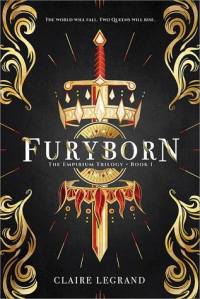
Serena’s Review & Giveaway: “Furyborn”

34323570Book: “Furyborn” by Claire Legrand

Publishing Info: Sourcebooks Fire, May 2018

Where Did I Get this Book: NetGalley and BookishFirst

Book Description: When assassins ambush her best friend, the crown prince, Rielle Dardenne risks everything to save him, exposing her ability to perform all seven kinds of elemental magic. The only people who should possess this extraordinary power are a pair of prophesied queens: a queen of light and salvation and a queen of blood and destruction. To prove she is the Sun Queen, Rielle must endure seven trials to test her magic. If she fails, she will be executed…unless the trials kill her first.

A thousand years later, the legend of Queen Rielle is a mere fairy tale to bounty hunter Eliana Ferracora. When the Undying Empire conquered her kingdom, she embraced violence to keep her family alive. Now, she believes herself untouchable–until her mother vanishes without a trace, along with countless other women in their city. To find her, Eliana joins a rebel captain on a dangerous mission and discovers that the evil at the heart of the empire is more terrible than she ever imagined.

As Rielle and Eliana fight in a cosmic war that spans millennia, their stories intersect, and the shocking connections between them ultimately determine the fate of their world–and of each other.

Review: I’m pretty sure “Furyborn” wins the competition for most hyped book this spring. Everywhere I look there are lists including it as most looked forward to, rave reviews, or options to get your hands on it early. So props to the marketing team for getting this one out there. However, as has become a bit of a habit for me with much-hyped books, I had some mixed feelings on this one. Mixed though! I did enjoy this more than “The Cruel Prince” which was my last big letdown from the hype machine.

Most of the things I enjoyed in this story were also directly tied to aspects that I did not. Unlike other books, the problems I had with this story weren’t connected as much to the actual characterizations we’re given or the overall story. Both were mostly strong. But there are writing choices throughout the story that frankly sabotaged the good efforts made elsewhere.

For example, to start out. Both Rielle and Eliana are strong enough characters on their own. They live in very different worlds, and while some of their struggles are similar (trying to find their place in the world & hiding/fighting against perceptions that might set others against them and those they love), they are distinct in their own right. They each have a unique voice, always an important element in shared POV books. I personally found myself a bit more drawn to Eliana. Her story has a bit more mystery (for reasons we’ll discuss later), and as a character, I enjoyed her more morally grey worldview. However, I didn’t dislike Rielle either.

The other side of this coin, though, is the fact that both of these characters feel cut off at the knees by the alternating POVs. It’s not even a complicated problem: each POV is simply too short. The reader is being constantly bounced back and forth between each girl’s story, that one can never really settle into either character or plotline. This results in me kind of just not caring, when all is said and done. Readers need a chance to settle into a character, to really come into their world and understand their motivations and challenges. But when we’re constantly bounced back and forth between two very different stories every few pages, there is never a chance to really get that moment where you become invested. It was a fine read, but it was just that, a read. I never felt like I was really in this world. I was always just reading about it.

This problem extends to the world-building. There’s a lot that needs to happen on this front for a story that is going to try to present two very different worlds, thousands of years apart. The author essentially has to do twice the world-building to successfully pull it off. But, again, because of the quick switches between one character and the other, I never felt like I had a clear understanding of either of these worlds. There are angels in one? But the details are foggy. The other world has a empire that is set on taking over the world, but why and how? These details are all interesting on their own, but it ultimately felt like the author had bit off more than she could chew. Or, at the very least, more than could be reasonably fit in one novel that also has a lot of other things going on.

The action was fun. There is no denying that this book moves, and it was this that got me through some of the failings in my full connection to either character or the world itself. What’s more, I enjoyed that the action was very different between each girl’s storylines. Rielle’s ongoing magical trials were exciting and fast-moving. Whereas Eliana’s were caught up in politics and the violent nature of what the world has become under this ambitious empire. But, again, this same fast-moving action was also part of the reason the world-building and character development felt stunted. There simply weren’t enough pages to fit in all of this action while also developing two fully-realized characters and two fully expanded worlds.

I did  also have one major criticism of this book. I read a good article recently that questioned whether a prologue is ever necessary for a book. The author of the essay mentioned that very talented authors could pull them off (like J.K. Rowling and her prologue in the first Harry Potter book), but even then, did you need them? This book serves as a perfect example where, for me, the prologue actively damaged my perception of the story right off the bat. It’s not long, but in even those few pages, the author managed to spoil almost every single reveal that was to come throughout the rest of the book. I already new the secrets that plagued some of our characters, thus making their confusion and ultimate surprise incredibly uninteresting to read about.

Further, I feel like this prologue was meant to inspire curiosity about how one character ended up where she did. But instead, I felt spoiled for her entire plot and thus her chapters held very little interest. There was no real threat behind any of the things she confronted because I knew where she ended up. If I hadn’t already been losing interest in characters because of the quick jumps back and forth due to the POV switches, this prologue alone did enough to pretty much kill off my interest and curiosity in at least one of these two.

All of that said, there book is still a fairly strong outing in a new fantasy world. There isn’t a lack of action or story, and the characters are interesting on their own. The problems I had were all down to stylistic choices (too short of chapters between switches, an uneven balance between action and world-building, and an unnecessary and ultimately harmful prologue). I’ll probably still stick around to read the next books in the series, however.

Want to judge for yourself? Get your hands on an ARC of “Furyborn” before it comes out! Giveaway is open to U.S. residents only and ends May 10, 2018.

Click here to enter!

Rating 6: Had some good things going for it, but the author made a few writing choices that seemed to shoot the book in the foot.

Reader’s Advisory:

“Furyborn” is an upcoming title, but it it is included on this Goodreads list: “Badass YA Heroines.”

Find “Furyborn” at your library using WorldCat!


Serena’s Review: “Song of Blood and Stone”

36347830Book: “Song of Blood and Stone” by L. Penelope

Publishing Info: St. Martin’s Press, May 2018

Where Did I Get this Book: ARC from the publisher

Book Description: Orphaned and alone, Jasminda lives in a land where cold whispers of invasion and war linger on the wind. Jasminda herself is an outcast in her homeland of Elsira, where her gift of Earthsong is feared. When ruthless soldiers seek refuge in her isolated cabin, they bring with them a captive–an injured spy who threatens to steal her heart.

Jack’s mission behind enemy lines to prove that the Mantle between Elsira and Lagamiri is about to fall nearly cost him his life, but he is saved by the healing Song of a mysterious young woman. Now he must do whatever it takes to save Elsira and it’s people from the True Father and he needs Jasminda’s Earthsong to do it. They escape their ruthless captors and together they embark on a perilous journey to save Elsira and to uncover the secrets of The Queen Who Sleeps.

Thrust into a hostile society, Jasminda and Jack must rely on one another even as secrets jeopardize their bond. As an ancient evil gains power, Jasminda races to unlock a mystery that promises salvation.

The fates of two nations hang in the balance as Jasminda and Jack must choose between love and duty to fulfill their destinies and end the war.

Review: I was super excited when I received this in the mail. For one, look at that gorgeous cover? I’m not usually a fan of covers with models, but I’ll make an exception for this one. Beyond that, I was intrigued by the premise and am always stoked when I can find fantasy fiction featuring a diverse cast of characters. And while there were some slower moments, overall, I really enjoyed this read!

The world is literally split in two by an impenetrable magic force field that has kept two warring civilizations separate for as long as anyone can remember, with only brief breaks of warfare every few centuries when the field falters. On one side, Elsira, a technologically advanced civilization has risen, longing for the day when their sleeping Queen will again awaken. On the other side, Lagamiri, a nation full of magic wielders who can control the elements, but who are ruled by a tyrannical and vicious God King. The prejudices are strong on each side. Jasminda, a daughter of both races, has grown up in a country where her skin marks her as the enemy, as an Earthsinger. She’s kept to herself these long years, finding isolation to be her best bet for a quiet life. That is until she meets Jack, an Elsiran soldier with his own secrets, but who also shows her that there are those out there who see her as more than just an “other.”

I loved the world-building in this story. The idea of magic users vs. technology isn’t anything new, but what really added to this take on it was combining it with other prejudices, on both sides, and the fear and ignorance that can come from these sorts of long-standing built up generalizations about people. Throughout the story, we are also given glimpses into the ancient history of this world, and this is really what solidified the concept for me. Through these, we see that the world wasn’t always this way, and in fact many things had been turned on their heads. The origin story was compelling and each chapter was intro’d with little parables from this almost forgotten time. I particularly enjoyed how each parable loosely connected to the happenings of each chapter.

Through this history and the current situation, Jasminda and Jack both portray different roles and experiences of segregation and prejudice. Jasminda has lived a life of not belonging. She’s grown up in a country that judges her for her skin color and her power, but it is her home. I enjoyed how much this fact was hit home. Just because she looked like those on the other side of the wall, didn’t mean she would be any more welcome there or that that should in any way be her place, based on only one part of her being. Jack, as an advocate and an example of a more tolerant and enlightened individual, still must learn to understand the true battles that those like Jasminda face. His idealism is often based in naivety. But through him, Jasminda, too, learns that not everyone is as they seem, and that there may be a way forward for both peoples together.

The story also had a strong through line on the experiences of refugees, and the terrible choices they face. Here, many Lagamiri secretly cross the border, hoping to escape the terror that is their homeland. This choice isn’t only leaving behind all they have known, but is to willing walk into a country knowing they will face a different kind of persecution there. They live in camps and face many injustices at the hands of a struggling nation looking for someone to blame. And yet, this is still a better choice than the horrors that wait back home.

For all of these positives, I did struggle with a few things. While the story took on some big concepts, giving detailed focus and attention to these challenges, I never quite felt connected to the story. Jasminda and Jack, while interesting protagonists, were each a little too perfect to feel real. They were just kind of…fine. I wasn’t hugely invested in their individual struggles, but happy to go along for the ride.

The story also isn’t helped out by a few strange choices with pacing and explanations for the magic system. The plot would zip through a few key moments, with very little clarity on what was actually taking place, and then suddenly move very slowly through other, more character-driven scenes. I think this is likely a show of where the author’s true interests and talents as a writer lie, but it makes for a rather bumpy reading experience.

Also, at different times, it felt like distances on the map changed drastically, or didn’t match with the expanse of the world that we’re told exists. It seemed, at times, that the entire country could be traveled in only a few hours, which doesn’t make sense given the references to geographical elements and the population that is hinted at. Further, while the magic system was interesting, I struggled to understand how it actually worked. For example, it was referenced several times that Earthsingers couldn’t kill with their magic, but could use the elements in every other way. But what does that actually look like? If they sent fire at someone, wouldn’t that still be killing with their magic? Or does it do nothing, and if that’s the case, then what power does that actually give them? I found it confusing, especially given the fact that this restriction was referenced more than once.

The romance, kind of like the two main characters, was also a bit too perfect. For all of theirs struggles, Jasminda and Jack’s love is never really the complicated or tragic “Romeo and Juliet” story that we’re promised. I enjoyed the romance, don’t get me wrong, but I think the misleading description played against it, in the end.

All in all, I very much enjoyed “Song of Blood and Stone.” It’s a great example of fantasy fiction tackling bigger topics like diversity, prejudice, and the challenges faced by refugees. However, there is a large focus on romance, so readers who don’t enjoy those elements might want to avoid this one, and the characters are also a bit flat.

Rating 7: Even with some missteps, would still recommend it based on the strengths of the challenges it addresses, especially set against an interesting fantasy backdrop.

Reader’s Advisory

“Song of Blood and Stone” can be found on these Goodreads lists: “Non-Caucasian Protagonists in Science Fiction, Fantasy, Horror, and Paranormal Romance” and “Fantasy Romance.”

Find “Song of Blood and Stone” at your library using WorldCat!

Serena’s Review & Giveaway: “The Queen of the Tearling”

22864842Book: “The Queen of the Tearling” by Erika Johansen

Publishing Info: Harper, July 2014

Where Did I Get this Book: bought it!

Book Description: An untested young princess must claim her throne, learn to become a queen, and combat a malevolent sorceress in an epic battle between light and darkness in this spectacular debut—the first novel in a trilogy.

Young Kelsea Raleigh was raised in hiding after the death of her mother, Queen Elyssa, far from the intrigues of the royal Keep and in the care of two devoted servants who pledged their lives to protect her. Growing up in a cottage deep in the woods, Kelsea knows little of her kingdom’s haunted past . . . or that its fate will soon rest in her hands.

Review: I know, I know. How have I not read this one already? But I’ve been burned by the hype machine before, so sometimes I just like to, you know, wait and see. And, also, I have a massive TBR list and some these slip on through! But while I was on vacation a few weeks ago, I was in the bookstore (cuz obviously this is what one does when one is on vacation: check out the Barnes and Noble in THIS new town!!). And while I was browsing I ran across this book and was like “why the heck not?” So here we are.

Kelsea has lived a remote life, kept away from all of society and trained up by a reclusive couple. But the day has come when all of that changes, and Kelsea must set out with stranger to reclaim her throne. But while she knows her goal, she doesn’t know the secrets of the past, her own or that of her kingdom’s. Now, not knowing who to trust, Kelsea must set a new course for herself and her kingdom.

So let’s just get it out there. I had very mixed feelings about this book. It started out, I was loving it. Then there were a couple of characterization bits that I hated with a passion. Then more story, liked that. Then BAM! Oops, didn’t know what was really going on the entire time, so dislike that. It was all over the place, really.

It’s hard even to say things that I liked because while I liked parts of them, there were other parts I very much didn’t like. But let’s start with the plot. I loved the beginning of this book and the mysteries that were set up for Kelsea. The logic behind why so much was kept from her never quite sat right, but as it wasn’t a new conceit, I was happy enough going with it (just don’t think too hard about how “prepared” someone could be if they’ve never even interacted with anyone but the couple who raised them..).

The writing was solid, and I, personally, can enjoy a slower moving plot, which this definitely was. Much of this book was essentially a travelogue, but I was all there for it. Give me an epic quest book any day of the week!

Kelsea herself was also a sympathetic character. Until she wasn’t. I really don’t understand why we keep getting characters like this, who have very unhealthy ideas about beauty standards. Here, Kelsea makes the terrible comment about the only thing worse than being ugly (Kelsea of course doesn’t think she is beautiful at all) is being ugly and thinking you’re beautiful. Cuz yes, how dare you have good self-esteem if you’re not conventionally beautiful! It was terrible. But again, this was one particularly bad moment within an entire book. Much of the rest of the time, I found Kelsea to be a compelling and interesting heroine.

The world building was where things got batty. For a good chunk of this book, the world is presented as a fairly standard other-world, Medieval Age, fantasy novel, of the type we’re all familiar with. But nope! Out of nowhere comes the reveal that this is actually some type of dystonian world set in the future after things went really wrong? This seems like it could be a cool idea on paper, but in reality, it kind of just pissed me off. For one, I didn’t like being caught by surprise by it. It wasn’t the type of reveal that added to the story, but instead made me start questioning all of the things I had been completely on board with before it happened. Now suddenly that Medieval Age type setting seems kind of dumb and how the heck would that even happen? Maybe if the author had introduced this concept at the beginning of the story, it would have been less jarring. But, for me, I didn’t appreciate the bait and switch of it all and it left a bad taste in my mouth.

I did enjoy the villain, and again, much of the story of Kelsea’s travels. But, as I said, I had some fairly big problems, too: the fixation on beauty (whether one has it or not, whether it leads to rape, etc) and, ultimately, the world-building itself after the reveal that this is in some future time. I’m betting that people’s appreciation of this book must have lived and died on how that switch was received. Given the general popularity of this book, I must be in the minority in finding it jarring. But I know that people love this book, so I’m looking to re-home my book with a giveaway! The giveaway is open to US residents only  and ends May 1.

Click here to enter!

Rating 6: Had some really good stuff going for it, but burned me a few too many times with weird character beats and an unappreciated bait and switch with the world itself.

Reader’s Advisory

“The Queen of the Tearling” is on these Goodreads lists: “NEW ADULT fantasy & paranormal romance” and “Best Dystopian and Post-Apocalyptic Fiction.”

Find “The Queen of the Tearling” at your library using WorldCat!


Serena’s Review: “Owl Eyes: A Fairy Tale”

38739033Book: “Owl Eyes: A Fairy Tale” by Molly Larzer

Publishing Info: Fire and Ice YA, March 2018

Where Did I Get this Book: NetGalley

Book Description: Nora knows three things: she is a servant, her parents are dead, and she lives in the kitchen house with her adoptive family. But her world is torn apart when she discovers that her birth father has always been right there, living in the house she serves.

This discovery leads Nora to more questions. Why was she thrown in an ash-covered room for asking about her father? Why is a silver-bladed knife the only inheritance from her birth mother? Why is magic forbidden in her household—and throughout the province of the Runes? The answers may not be the ones Nora hoped for, as they threaten a possible romance and her relationship with the adoptive family she loves.

With the announcement of a royal ball, Nora must decide what she is willing to give up in order to claim her stolen birthright, and whether this new life is worth losing her family—and herself.

Review: What? Another fairy tale retelling book review by me? Shocking, I know! It’s like I have some personal mission to read every single one that is ever published! (I don’t, but at this point, does it really make a difference?) As I have a particular fondness for fairy tales that lean in on the darkness that was inherent to many of the originals, I jumped all over this title when I saw it pop up on NetGalley. But, while the darkness and world building did deliver, I was overall left underwhelmed with this new entry to the vast world of Cinderella stories.

For the good: the story delivers on the essentials of what is laid out in the book description above. This is indeed a Cinderella story, but nicely twisted on its head so as to not simply be another rehashing of a very often rehashed story. I enjoyed the tension that was built throughout the story between Nora’s desire to uncover the truth about her family and herself alongside her realizations of the good things that have made up her life as is. As it’s mentioned in the description, the scene early in the book when she is thrown in the ash covered room plays for particularly good effect throughout, and her ongoing struggles with the fallout of this event are repeatedly hit home. She was, after all, a very young girl when it took place.

I also enjoyed much of the world-building, but here also is where my criticisms begin to come to play. The world of Colandaria sounds like an intriguing place, with an interesting magic system and a history of wars between it and its neighbors. However, none of this is fleshed out or explored in any meaningful way. Instead, details are sprinkled here and there on the periphery of Nora’s tale, but never quite enough to give me a solid sense of place or investment in the world’s effect on the plot line that was unfolding.

The plot was another stumbling block. While things do pick up towards the last third of the book, the action itself felt very stilted. It’s hard to really put my finger on what exactly the problem was. The writing is solid enough, but things seemed to simply progress from one event to another and I was just kind of…there. Every once in a while a few pages would grab me, like the aforementioned scene in the ash room, but then the book would fall back to mundane details for pages on end.

Most of my problem probably lies at the feet of Nora herself. She was simply not an engaging protagonist to follow through this story. Her arc is laid before her, but as she moved through it, her character itself wasn’t one whom I became invested in. She felt very flat, and I had a hard time pinning down any attributes to her as a person. Was she feisty? Reflective? Shy? Ambitious? I couldn’t tell you. Instead, she simply moves through the book, and we move with her. But, as we are seeing this story through her eyes, I was never sure how I felt about it because it was never clear what lens Nora was using herself.

This, in turn, colored my perceptions of the other characters. While some of them seemed to have interesting parts to them (Jack, in particular), because Nora read so flat herself, her views of these others also read as fairly flat. A story like this really lives and dies on the strength of its lead, and my lack of investment in Nora spread easily to those around her.

While I did like the twists and turns the story took, particularly the ball itself, I also wasn’t a huge fan of the romance in this. Simply put, there just wasn’t enough of it. This is a very subjective point of view, however, as I can also see how the lack of romance could be a plus for other readers. I, however, always like a solid romance plot line in my fantasy, particularly in my fairy tale retellings that are, often, inherently romantic tales on their own.

Overall, I was pretty disappointed with this read. There wasn’t anything bad about it, per se, but I just couldn’t seem to care. I found myself often putting the book down and having to force myself to pick it up again. If you absolutely love Cinderella stories, particularly ones with less of a romantic subplot, this may be the book for you. But, all in all, my recommendation is a solid “meh.”

Rating 5: A dull main character ultimately polluted what might have been an interesting retelling of “Cinderella.”

Reader’s Advisory:

“Owl Eyes: A Fairy Tale” is a newer title so isn’t on any Goodreads lists. It should be on “Cinderella Retellings.”

Find “Owl Eyes: A Fairy Tale” at your library using WorldCat!

Serena’s Review: “Torn”

35959724Book: “Torn” by Rowenna Miller

Publishing Info: Orbit, March 2018

Where Did I Get this Book: from the publisher!

Book Description: Sophie is a dressmaker who has managed to open her own shop and lift herself and her brother, Kristos, out of poverty. Her reputation for beautiful ball gowns and discreetly-embroidered charms for luck, love, and protection secures her a commission from the royal family itself — and the commission earns her the attentions of a dashing but entirely unattainable duke.

Meanwhile, Kristos rises to prominence in the growing anti-monarchist movement. Their worlds collide when the revolution’s shadow leader takes him hostage and demands that Sophie place a curse on the queen’s Midwinter costume — or Kristos will die at their hand.

As the proletariat uprising comes to a violent climax, Sophie is torn: between her brother and the community of her birth, and her lover and the life she’s striven to build.

Review: I love to cross-stitch, have loved it for years since I learned to stitch as a little girl. It’s also a handy hobby to support a very unhealthy Netflix binging habit. But it’s also a less common craft nowadays. I have a bunch of friends who knit, a couple of crocheters, but none of my friends embroider. So I was stoked when I saw this book coming this spring from Orbit. A fantasy novel where embroidery IS the magic? I immediately requested a copy and started reading when it arrived (though this then lead to mental confusion: should I READ about embroidery or actually DO my embroidery? Which will be more fun?!?!)

Sophie is a successful business woman, and in a land that is highly regulated with limited mobility for common folk, she is unique in her quick rise. But she possesses a special skill, the ability to sew charms into her elaborate garments. However, her clientele, the nobility of the city, put her in the awkward position of hovering between the wealthy aristocrats whom she serves and the poorer working class where she was born and still lives. Just as she begins to break into this upper class of clients (maybe even a dress commission for the princess and queen!), things begin to go sideways, starting with her brother, Kristos, who is leading a grassroots revolution. Tensions rise as Kristos and his ilk push against the restrictions of their current lives and Sophie tries to balance her ties to her brother, while also maintaining her relationship with her noble clients. But the situations is untenable, and eventually, something will fall…

I always love unique magic systems. There are far too many that simply say “and then magic!” But here, Miller has brilliantly mixed a subtle sort of magic in with a task that is often brushed aside as menial. It is a clever expansion on the “hedge witch” motif that so often appears in the background of other novels, women with barely understood abilities that they tie to the work of their gender, often in cooking and healing. It’s a clever way of taking a domestic task and imbuing it with power, all while acknowledging the value of the task itself, with or without magical elements. All along, Sophie’s success comes not only from her magical abilities, but from her acumen as a business woman and her sheer skill at constructing and predicting fashion.

Sophie also only has a limited understanding of how exactly her charms work, so as the book progresses, the reader gets to explore the inner workings and expanding possibilities of charms alongside her. But from the beginning, I enjoyed the small scenes of her sewing light into garments. It was such a peaceful, lovely image, especially for someone who sews herself.

Other than the magical elements, the majority of the story is devoted to the growing unrest between Kristos’s revolution and the nobility whom Sophie works with and befriends. Miller presents an excellent exploration of what it means to exist between the battle lines of a revolution such as this. When evaluating history, it’s too easy to slot everyone into one camp or the other, but to do so is to ignore what has to be the large number of individuals who just want to go about their lives, understanding the positions of both parties. Sophie has familial ties on one hand and a general sympathy to the plight of the less lucky commoner, but she also has faces to put to the nobility, and through her work with them, understands them to be individuals with their own worries and concerns. At its core, this is a story of the line where idealism meets pragmatism, and the truth of what revolt and revolution looks like for all involved.

The book isn’t perfect, however, and it was perhaps a bit long for my taste. The story begins to sag a bit towards the middle as Sophie struggles to find her role in this building conflict. It also focuses heavily on the ins and outs of her day-to-day life and work in the shop. I enjoyed many of these details, but it might be a struggle for others who are looking for a more action-packed story.

It also has a sweet romantic plot line. While I enjoyed Theodore, and thought that his and Sophie’s relationship was developed well, I also never became fully attached to it. I’m not sure why, really. I very much enjoyed Sophie as a character, but I think maybe Theodore was also a bit TOO perfect, which made him a bit less interesting. This is a minor quibble, however.

All in all, I really enjoyed “Torn.” It stands out as a unique in several ways, presenting a magical system built around a common, domestic task, as well as its close examination of what the middle ground could look like in the midst of a brewing revolution. For fans of classic fantasy, and those who are ok with a slower building read, definitely check out “Torn.”

Rating 7: Magical sewing and an introspective story of revolution make this a fun read, if a bit slower read.

Reader’s Advisory:

“Torn” is a newer book so isn’t on many Goodreads lists, but it is on “Crafty Magic.”

Find “Torn” at your library using WorldCat!