Book Club Review: “A Christmas Carol”

5327We are part of a group of librarian friends who have had an ongoing bookclub running for the last several years. Each “season” (we’re nerds) we pick a theme and each of us chooses a book within that theme for us all to read. Our current theme is “American Girl Readalikes”, in which we each pick an American Girl book and a book that can be connected to it, however tenuous as it may be.

For this blog, we will post a joint review of each book we read for book club. We’ll also post the next book coming up in book club. So feel free to read along with us or use our book selections and questions in your own book club!

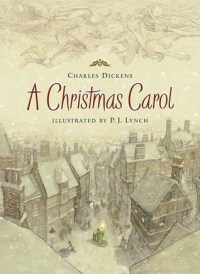
Book: “A Christmas Carol” by Charles Dickens

Publishing Info: Chapman & Hall, 1843

Where Did I Get This Book: The library!

American Girl Book: “Kirsten’s Surprise” by Janet Shaw

Book Description: The celebrated P.J. Lynch captures the spirit of Dickens’s beloved tale in a richly illustrated unabridged edition.

The story of Ebenezer Scrooge opens on a Christmas Eve as cold as Scrooge’s own heart. That night, he receives three ghostly visitors: the terrifying spirits of Christmas Past, Present, and Yet to Come. Each takes him on a heart-stopping journey, yielding glimpses of Tiny Tim and Bob Cratchit, the horrifying spectres of Want and Ignorance, even Scrooge’s painfully hopeful younger self. Will Scrooge’s heart be opened? Can he reverse the miserable future he is forced to see?

Now in an unabridged edition gloriously illustrated by the award-winning P.J. Lynch, this story’s message of love and goodwill, mercy and self-redemption resonates as keenly as ever.

Kate’s Thoughts

It’s just me again this time around, as Serena was unable to make book club this session. But I’m going to do my best to bring in some deep thoughts about a Christmas classic that has been part of the Western zeitgeist for generations. We read “A Christmas Carol” along with “Kirsten’s Surprise” because of the obvious Christmas theme, and honestly, this is going to be a fun cycle of reads because of the connections we make between the American Girl books and the other books we read. This was my second time reading Dickens, as I read “A Tale of Two Cities” in high school, and while I could have sworn that I read “A Christmas Carol” at some point I realized as I was reading that I was probably just creating a memory from the countless, COUNTLESS adaptations I’ve seen over the years. Going in and reading the original text was a fun way to get into the holiday spirit, reading wise.

For anyone who may not know, “A Christmas Carol” is a holiday ghost story in which a bitter selfish man is visited by three (technically four) ghosts to learn about the true meaning of Christmas, and to realize he has to change his dickish ways. I’m so familiar with the story I figured that reading it was going to be just par for the course, but I really enjoyed reading this story in it’s own, original words. The ghosts are sufficiently spooky, the pathos is (for the most part, but we’ll get there later) definitely heartwrenching, and the messages of benevolence and charity resonate throughout the years. Ebenezer Scrooge is a complex character whose journey of self reflection and redemption is old hat, but even though I know the story and know how it was going to go I did like seeing him change. Dickens may have been a little ‘on the nose’ by today’s standards when it comes to Scrooge’s reactions as his journey goes on (lots of head hanging, guys), but it is still satisfying to see him realize that he can change and should change for the good of others and for the good of himself.

The greater metaphors that Dickens was going for in the text, specifically Tiny Tim representing the oppressed and downtrodden in England’s lower classes at the time and the references to child labor, are admittedly pretty well played out these days. I myself don’t really care for Tiny Tim, thinking he’s saccharine and cloying (except for Calvin in “Scrooged”, he is ADORABLE and it probably help that he doesn’t talk), but having the context of what Tiny Tim actually is supposed to be was helpful. Because the symbolism is better in the original text, and doesn’t manifest as a sweet faced but constantly coughing/limping/wise beyond his years child, I appreciated Tim more in the book than I usually do. The setting of the Industrial Revolution and knowing how friggin’ AWFUL that was for the lower class in hindsight made me appreciate these messages all the more. Even beyond Tim there are references to children having to go get jobs and not knowing if and when they will see their loved ones come Christmastime, and gosh if that didn’t just make this book a little sadder.

And finally, the ghosts are great. From Marley to Past, Present, and Yet To Come, Dickens made well characterized and freaky spirits that would have perfectly fit into the ‘telling ghost stories at Christmas’ aesthetic that was so popular during this time period. We should bring that back, quite frankly.

I enjoyed reading “A Christmas Carol”. It was a lovely way to get into the holiday spirit!! If you haven’t read it and have a few hours during this holiday season, it is worth the read.

Rating 8: An enduring Christmas classic.

Book Club Questions

  1. There have been many adaptations of “A Christmas Carol” over the years. Which one is your favorite, and why? How faithful of an adaptation was it compared to the original text?
  2. Scrooge has a very clear transformation in this book, and on the page it is made evident from the get go when he feels bad and when he should feel bad for his actions. Do you think there could have been more nuance in his change, or did you appreciate the blatant moments of him realizing he was wrong throughout the story?
  3. “A Christmas Carol” was one of the first Christmas stories to leave a country or pastoral setting to take place in an urban setting. Do you think that the story would have worked as well if it took place in the country instead of London? Why or why not?
  4. What are your thoughts on Tiny Tim? Is he still an effective character as time has gone on?
  5. Why do you think this story has endured for so long and resonated with so many people?

Reader’s Advisory

“A Christmas Carol” is included on the Goodreads lists “Favorite Christmas Books”, and “Ghost Stories”.

Find “A Christmas Carol” at your library using WorldCat!

Next Book Club Book: “Persepolis” by Marjane Satrapi
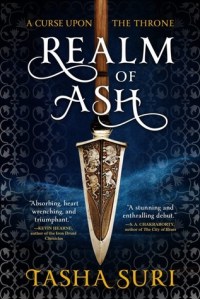
Serena’s Review: “Realm of Ash”

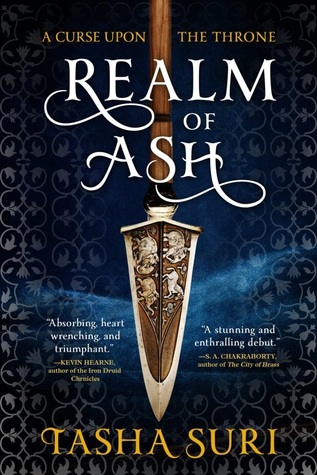
43192642._sy475_Book: “Realm of Ash” by Tasha Suri

Publication Info: Orbit, November 2019

Where Did I Get this Book: ARC from the publisher!

Book Description: The Ambhan Empire is crumbling. A terrible war of succession hovers on the horizon. The only hope for peace lies in the mysterious realm of ash, where mortals can find what they seek in the echoes of their ancestors’ dreams. But to walk there requires a steep price.

Arwa is determined to make the journey. Widowed by a brutal massacre, she’s pledged service to the royal family and will see that pledge through to the end. She never expected to be joined by Zahir, the disgraced, illegitimate prince who has turned to forbidden magic in a desperate bid to save those he loves.

Together, they’ll walk the bloody path of their shared past. And it will call into question everything they’ve ever believed…including whether the Empire is worth saving at all.

Previously Reviewed: “Empire of Sand”

Review: While I had some struggles with “Empire of Sand,” I was intrigued enough by the world-building and fantasy elements presented in that first book to be pleased when I was sent a copy of its sequel. I hadn’t looked into this book before hand, but was happy to find that it wasn’t a direct sequel and instead picked up the story years later following Arwa. I was even more happy when I closed the book and could look back with satisfaction on a sequel that I felt surpassed its predecessor.

All of Arwa’s carefully crafted plans for life, that of a good nobleman’s wife who is loyal to family and the Empire, crash around her in tragedy and death. Now, a young widow with secrets swirling around her, Arwa looks to re-orient her life in service of some larger purpose. To do this, she is asked to work along side the illegitimate prince, a young man who has risked much in his own quest to save all he cares for. But in their theorizing and study, Arwa and Zahir begin to question all that they have learned and must decide what truths shall guide them going forward.

I re-read my review for “Empire of Sand” before writing this review, and it was an interesting experience. For one, I had forgotten much of that book, which I guess makes sense considering one of my biggest complaints had to do with my coming away from it with a very “meh” attitude. It’s no wonder that I forgot many of the details if that was what I thought at the time! (I’ll just add here that given that I remembered so little of the first book, it’s safe to say that while reading that one can add elements to the enjoyment of this book, it’s by no means necessary for understanding it or becoming engaged in the story its trying to tell.) But it was also noting the other things that I noted in that book and how they directly correlated with why this one was a stronger read for me.

For one, while I did like Mehr and had few complaints with her, even in my review I noted that I enjoyed her interactions with Arwa. Being the much younger sister with no real memories of their mother, Arwa was less in the position to straddled worlds than Mehr and also had a closer relationship with their stepmother. I was very happy to discover that it was her story we were reading here. While Arwa has the same mixed heritage as Mehr, she was raised as a traditional daughter of the Empire. Her mother and her now long-lost sister and the heritage and culture they both represented have been largely missing from Arwa’s life for some time. But when the tragedy that kills her husband spares her own life, we see Arwa begin taking steps down her own path to self-discovery. It’s an interesting one, too, given that she begins her arc from a completely different position than Arwa. Her original goal is to nothing more than serve the Empire. When she discovers truths about her own people and the Empire itself, she begins to see her own life and those around her through very different eyes.

One of the main challenges I referenced in my review of the first book was in the awkward position it put itself in with needing to straddle the lines between adult fantasy and YA. Much of the pacing and detailed world building fell more inline with the former, but some of the character beats were strikingly familiar to those found in many YA fantasies of the time. This book had a few moments that were similar…why do these character have to immediately feel heart flutters or having unwilling attractions to the romantic interest in the very first meeting?? I’ll never understand why this is done or felt to be needed. For a book that takes such time setting up its world, cultures, and political motivations, the author is clearly trusting readers to stick around for the ride. But when the romance comes along, what? They think readers are going to bounce if the heroine isn’t immediately noting some level of attraction?

But! That little side-vent aside, I found that this book seemed much more settled as a straight-up fantasy, not dedicated to YA. Arwa is a bit older and is a widowed young woman to boot. While her first marriage was not a love match, she’s still not an idealistic teen raging against the world, but a young woman who has lived in the world (though this, too, was limited by the conservative nature of her marriage). Overall, it felt like there were noticeably fewer beats that hailed from YA fantasy, and the book felt more comfortable in its own skin.

The pacing was still rather slow, however. But here, too, much of the work laid down in the first book helped make these depictions feel more natural as they were only laying more on top of a foundation that had already been built. I particularly enjoyed the added fantasy elements and the court politics that come to play.

In the end, I came away from this book much more satisfied than I had with the first. As a whole, it felt more complete and self-assured. I found Arwa’s arc to be more compelling with its exploration of grief and new love, ostracization  and self-acceptance. Fans of the first book are sure to be pleased with this one. And, while made stronger by being read after that book, I think it can still be an approachable read for new fantasy-loving readers as well. And, of course, don’t forget to enter to win an ARC copy of the book!

Rating 8: A stronger outing than the first and a heroine who is equally, if not more, compelling!

Reader’s Advisory:

“Realm of Ash” is on this Goodreads lists: “2019 Adult SFF by Authors of Color.”

Find “Realm of Ash” at your library using WorldCat!


Giveaway: “Realm of Ash”

43192642._sy475_

Book: “Realm of Ash” by Tasha Suri

Publication Info: Orbit, November 2019

Where Did I Get this Book: ARC from the publisher!

Book Description: The Ambhan Empire is crumbling. A terrible war of succession hovers on the horizon. The only hope for peace lies in the mysterious realm of ash, where mortals can find what they seek in the echoes of their ancestors’ dreams. But to walk there requires a steep price.

Arwa is determined to make the journey. Widowed by a brutal massacre, she’s pledged service to the royal family and will see that pledge through to the end. She never expected to be joined by Zahir, the disgraced, illegitimate prince who has turned to forbidden magic in a desperate bid to save those he loves.

Together, they’ll walk the bloody path of their shared past. And it will call into question everything they’ve ever believed…including whether the Empire is worth saving at all.

Previously Reviewed: “Empire of Sand”

Giveaway Details: While “Empire of Sand” didn’t work for me completely, I was still interested enough in this world to be excited when Orbit sent me an ARC of the next book. What makes this one all the more intriguing is that this isn’t a direct sequel, but instead picks up years later following a now grown Arwa as she finds her life taking a sudden, dark turn towards tragedy, estrangement, and isolation. But in these dark places, she begins to also learn of a truth, not only about herself, but of her long-lost sister and the people they both owe half their bloodline to.

As now typical for many of giveaway, I will be posting a full review for this book this coming Friday so I don’t want to spoil my opinions of it too much here. But I will say that I enjoyed this book much more than the first. There are a couple of similarities with regards to pacing that threw me a bit for a loop, but overall I greatly enjoyed the themes of self-acceptance and scholarship, as well as the deep dive into grief and its effects on love and family.

The world itself continued to deliver giving readers an even closer look into this inspired original creation of Suri’s that reads as just familiar enough as to be recognizably drawing from Indian and Middle Eastern influences but also offers enough elements to remain completely fresh and intriguing. Here, the work that was done in the first book, some of which contributed to my pacing concerns there, pays off more fully.

As I said, my review of “Realm of Ash” will go up this Friday, and in anticipation, I’m offering a giveaway for the ARC version of the book starting today. The giveaway is open to U.S. residents only and ends December 18.

Enter to win!

Serena’s Review: “To the Waters and the Wild”

45440239._sy475_Book: “To the Waters and the Wild” by S.C. McGrath
Publishing Info: Seanchie Press, May 2019

Where Did I Get this Book: BookishFirst

Book Description: Shrouded in mystery, ancient Eire nurtured a people both eloquent and fierce. Scholars and warriors were honored with like reverence and women were recognized as equals to men. Within this isolated world of poetry and warfare, Keelin, a fearless chieftain’s daughter, struggles to understand her fate. Gifted by the gods in the arts of healing and telepathy, and destined to become a priestess, she nonetheless rails against such a solitary and self-sacrificing life. She chafes under the strict tutelage of the austere priestess, Nuala, who demands unerring scholarship and dedication. Torn by conflicting emotions, Keelin imagines a life possible only in her dreams.

Keelin’s troubles are soon overshadowed by a dire threat to her island home: the most powerful civilization in the ancient world has turned a covetous eye toward Eire and an invasion is imminent. Rife with clan rivalries and blood feuds, Eire and its defiantly independent people seem doomed, forcing Keelin to resolve her internal strife and quickly hone her extrasensory powers to help defeat the invader. So, too, Eire’s clans must unite their warriors to battle the forces of the Roman Empire. Among these warriors is Brian, who Keelin has alternately hated and loved for as long as she can remember. The approaching battle will irrevocably seal their fate.

Review: I was excited when I snagged a copy of this title from BookishFirst. The description and short synopsis that I had early access to made it seem like just the kind of book that would be up my alley being in a similar vein as many of Juliet Marillier’s works (which we all know are my favorite). When I received my copy I dove right in, but sadly it didn’t live up to these, perhaps too high, expectations.

Set in an alternative ancient Ireland, Keelin has her future before her. Destined to be one of the wise women, valued for their gifted abilities, Keelin brings to the table her own abilities as a healer and a variation of telepathy. But any fears she has about the restriction placed on her in this role are suddenly done away by the very real threat of war on her people’s doorstep. Now she, and a warrior who has always inspired strong feelings, both good and bad, find themselves with the fate of their people in their hands.

As I mentioned above, this was a pretty easy book request for me to place. On paper it had everything I liked: a historical setting mixed with a dash of fantasy, romance, and a lyrical style of writing ala one of my favorite authors. But also as I mentioned, it ended up not being for me. For most of the book, this boiled down to my feeling rather “meh” about the entire thing. And then we got to end and while a stronger feeling was drawn forth, it was definitely not a positive one.

The biggest thing that stood out to me throughout the story was the fact that I simply didn’t feel connected to the main character. Either through the presentation or the fact that she was simply not that compelling, I never truly cared about Keelin’s arc. And she was still the best drawn character of the batch. Part of my struggle to connect to her could have had to do with the numerous time jumps in the story. They seemingly struck out of nowhere and left the story feeling disjointed and choppy. Because I was always off-balance due to this, I struggled even more to connect to Keelin herself and the events taking place around her.

I also found the romance to be much less of a factor than I had expected. Obviously this wasn’t presented as a romance novel, and I didn’t want it to be one, but my own personal preference would have been for this aspect of the story to have been given a bit more attention. There was also only a scattering use of the fantasy elements, which read as kind of strange given Keelin’s own abilities.

With both of these elements taking a back seat, the story was left mostly focusing on the war itself. Again, it’s not that I don’t enjoy stories that focus on warfare and action; I very much do! But combined with the weaker characterization and the lack of balance between the other story elements, the focus on the war itself and the larger battle scenes left little effect. Because I wasn’t wholly invested in Keelin herself or those around her, I didn’t care as much about the outcome.

And then the ending was not something I enjoyed. I don’t want to spoil it, but I feel like it’s the kind of ending that will frustrate many readers, coming out of nowhere and effectively undercutting its own story. My own personal preferences also played a part in my frustrations here, so some readers may have less of a problem with this. But I do want to put out a general warning that the ending is noteworthy, at the least. Overall, this book was a disappointing read for me. At best I wasn’t as invested as I would have liked, and when I did become invested, it was in regards to a strongly negative reaction to the choices made in the end.

Rating 5: A lackluster character and weaker fantasy elements leaves a story with a war at its heart that I didn’t particularly care about.

Reader’s Advisory:

“To the Waters and the Wild” isn’t on any Goodreads lists, but it should be one “Popular Celtic Fantasy Novels.”


Serena’s Review: “Winterwood”

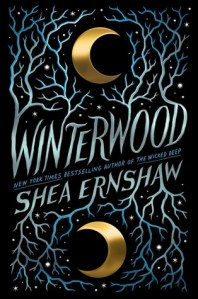
40148425._sy475_Book: “Winterwood” by Shea Ernshaw

Publishing Info: Simon Pulse, November 2019

Where Did I Get this Book: NetGalley

Book Description: Be careful of the dark, dark wood . . .

Especially the woods surrounding the town of Fir Haven. Some say these woods are magical. Haunted, even.

Rumored to be a witch, only Nora Walker knows the truth. She and the Walker women before her have always shared a special connection with the woods. And it’s this special connection that leads Nora to Oliver Huntsman—the same boy who disappeared from the Camp for Wayward Boys weeks ago—and in the middle of the worst snowstorm in years. He should be dead, but here he is alive, and left in the woods with no memory of the time he’d been missing.

But Nora can feel an uneasy shift in the woods at Oliver’s presence. And it’s not too long after that Nora realizes she has no choice but to unearth the truth behind how the boy she has come to care so deeply about survived his time in the forest, and what led him there in the first place. What Nora doesn’t know, though, is that Oliver has secrets of his own—secrets he’ll do anything to keep buried, because as it turns out, he wasn’t the only one to have gone missing on that fateful night all those weeks ago.

Review: Yet another sophomore book from an author whom I missed out on the first go around. Not quite sure why I never got around to “The Wicked Deep,” but when I saw this one pop up, once again I decided to be late to the party and see what all the fuss was about. Unfortunately, while this strategy has worked with other books (shout out again to “Song of the Crimson Flower”!), here it just proved that I probably made the right choice with the first book and these are just not for me.

Nora is out in the woods after one of the worst winter storms in years. Everything is closed down, but she is not like others: she is a Walker woman and does not fear the woods. Instead, she shares a close bond with this strange, mysterious place where others dare not to walk. This connection leads to her a lost boy, missing for weeks and presumed dead. But he has survived the forest…somehow. As they grow closer to each other, Nora begins to suspect that Oliver has secrets of his own. Perhaps he, too, shares a connection with the forest? But what is it and does it pose a threat?

There were several reasons this book didn’t work for me, and most of them have to do with either the YA fantasy genre reading as a bit tired recently, or it’s just me. But the first thing that stood out to me as a warning sign that this book and I might not get along was the writing itself. I had heard that this, like the author’s first book, was noted for its atmospheric writing. I think I may have a different understanding of that word than the way it is often used. I have used it myself, don’t get me wrong. Probably recently, because if I didn’t say it in my review of “The Starless Sea,” then that’s an example of the type of book that I would describe that way. But when I use that word it has to do with how an author draws a scene. It doesn’t have to be restrained to the physical characteristics of setting, but to a scene as a whole: the action of it, the location, the indescribable “feel” of a situation. An atmospheric style of writing adds depth and is beautiful to read on its own, often with a poetic choice of words.

But I feel that when it is used to describe books like this one, most reviewers are getting at something different. I think it’s still consistently used for these books, but in a different way than what I described above. Most notably, I think the “atmosphere” is often applied to the characters themselves. Perhaps there is still some sense of poetry to the words chosen, but beautiful words devoid of rational meaning don’t result in much, in my opinion. This then ends up with books that use random, disconnected phrases to describe characters. In this book, only two pages in, the main character is describing herself as “more darkness than girl.” Ok. Sounds nice enough, I guess. But what does that actually mean? I have no idea, and given that we’re only two pages into the book, I don’t even have any context where I could try to parse out an actual meaning from that. Instead, it reads as if the author is simply throwing around  pretty phrases and not bothering to ground them in anything, or, frankly, make them worth while to the story at all. This is only one example, but it continues throughout the book.

This is the type of “atmosphere” that I find all too often in YA fantasy, and it’s always a red flag for me. It may not always be true (I’m sure there are exceptions if I really thought about it), but usually it’s a good predictor that the author seems to be having more fun writing pretty strings of words than constructing an actual story. Paired with this habit often comes bland characters, convenient plots, and stories that sound good on paper but prove to be underwhelming. Unfortunately, that all proved to be true here as well.

I didn’t care about our main characters. Neither of them were bad, but I also didn’t feel particularly attached to them. How can I be attached to someone who introduces herself to me as “more darkness than girl?” I don’t know what that means, and honestly I’m too lazy to find out. It’s the books job to make me care, and that doesn’t do it. I did like the general overview of the story, and the witchy elements and spooky woods were promising. But they were paired with a convenient and predictable plot. I was able to guess many of the twists (including the big one) right away which cut the legs out of it right from the start.

I feel like I’ve come down hard on this book, and I don’t want to make it seem that this one is any worse than most of the run-of-the-mill YA fantasy stories out there like this. I guess I was just in a mood to talk about this particular frustration, and this book had the bad luck of being the most recent one to show up on my reading list featuring this specific peeve. Fans of the author’s first book and her writing style will likely be pleased with this. But those who recognize the traits I’m talking about may find themselves underwhelmed by this story.

Rating 6: Hits a nerve for one of my pet peeves, but is otherwise a fairly standard, if uninspiring, story.

Reader’s Advisory:

“Winterwood” is a newer title, so it isn’t on many relevant Goodreads lists. But it should be on “Magical Trees.”

Find “Winterwood” at your library using WorldCat!

Kate’s Review: “Ninth House”

43263680Book: “Ninth House” (Alex Stern #1) by Leigh Bardugo
Publishing Info: Flatiron Books, October 2019

Where Did I Get This Book: The library!

Book Description: Galaxy “Alex” Stern is the most unlikely member of Yale’s freshman class. Raised in the Los Angeles hinterlands by a hippie mom, Alex dropped out of school early and into a world of shady drug dealer boyfriends, dead-end jobs, and much, much worse. By age twenty, in fact, she is the sole survivor of a horrific, unsolved multiple homicide. Some might say she’s thrown her life away. But at her hospital bed, Alex is offered a second chance: to attend one of the world’s most elite universities on a full ride. What’s the catch, and why her?

Still searching for answers to this herself, Alex arrives in New Haven tasked by her mysterious benefactors with monitoring the activities of Yale’s secret societies. These eight windowless “tombs” are well-known to be haunts of the future rich and powerful, from high-ranking politicos to Wall Street and Hollywood’s biggest players. But their occult activities are revealed to be more sinister and more extraordinary than any paranoid imagination might conceive.

Review: I was never going to be Ivy League material and I never had the aspirations to be. The only thing that sounded at all interesting about Yale was the collection of secret societies that are scattered throughout the campus community, but even that came off as pretentious as hell to teenage me (though secretly I thought how cool to be admitted into one). Never did I consider that these secret societies would make a genuinely solid premise to a dark fantasy novel, but if anyone could pull it off, it would be Leigh Bardugo. Which brings us to “Ninth House”, Bardugo’s foray from YA fantasy into adult dark fantasy, a jump that I was very interested in seeing in motion. While I haven’t really cared for Bardugo’s fantasy tales like the “Grisha” series or the “Six of Crows” duology, I liked her take on “Wonder Woman”, and LOVED her short story “Verse Chorus Verse”. It stood to reason that Bardugo would probably do something at least interesting with a dark fantasy magic story set on the Yale Campus. I went in with midlevel expectations, and those expectations were blown out of the water. I loved “Ninth House”.

Bardugo has created a fun melding of the real world and a magical environment, with Yale University as an unlikely and yet seamless backdrop. She brings in themes class, privilege, and misogyny, and stirs them into magic, ghosts, the afterlife, and the occult. It’s no surprise that these themes can blend together with little problem, but Bardugo does it in a way that really packs a punch and gets her intent across. At first glance the idea of Yale’s secret societies as magical groups could feel a bit “Harry Potter”, but the darkness is there from the get go, with histories of said groups abusing their powers and preying on the less privileged and ‘less valued’, at least in their eyes, all for a perceived ‘greater good’. It’s up to Lethe House to keep them in line, lest they start abusing their stature and powers again, though you get the impression that Lethe is more there to work as ‘fixers’ should things go wrong, as the corruption is still very much in play. The social commentary may seem a little obvious, but it’s written in such a charming and engaging way that I didn’t even care. Bardugo also creates a unique ghost system. The ghosts, or ‘Grays’ as they are called, are everywhere, though they are mostly unseen by regular people (more on that in a moment). They can also disrupt magical rituals, and that would be a bad thing to the secret societies. I loved the descriptions of the Grays, from the ones who just meander around campus, to the more sinister and scary, to one whose notorious reputation may not be earned. This one in particular was great. His name is North, he may have killed his fiancee during the Victorian Era, he’s dark and broody and I, of course, fell in love with him almost immediately.

giphy-3
Is he a potential murderer? Yes. Do I care even a little bit? No. (source)

The person tying all of this together is Alex Stern, a first year student at Yale who has a dark past and a purpose for her enrollment. Stern has been able to see Grays her entire life, and a horrific encounter with one left her traumatized (quick content warning moment here: there is a scene of sexual assault in this book that was upsetting and potentially triggering). After falling into drugs to cope, Alex fell into the wrong crowd and ended up the lone survivor of a multiple murder. This is when Yale set their sights on her, her talent to see Grays incredibly valuable, valuable to offer her a full ride and a fresh start. Alex is a fish out of water at Yale, and her pluckiness and grit makes for a fun character whose determination is very easy to root for. While at first she’s perfectly happy being a member of Lethe house and getting the perks of the Ivy League, the murder of a townie girl plunges her into the very dark past of the secret societies. Add in the loss of her mentor, Darlington, and Alex has to find her footing in a strange and dangerous world. Her story is told through time jumps and a nonlinear structure, and it’s an effective way to show how Alex got to where she is, and the influences people and events from her past have shaped her. I especially liked her relationship with Darlington, a Golden Boy of Lethe whose idealistic nature and earnest personality is a fun contrast to Alex, and whose absence makes for a lingering sense of sadness over the story, for both the characters and the reader. But it also makes Alex figure things out on her own, which makes her journey and investigation a bit more empowering.

On top of all this, the story is very engaging and paced perfectly. I had a hard time putting it down, finding myself reading during my down time when I should have been taking care of various tasks around the house. Oh well! What’s a neglected laundry pile in comparison to an addictive read?

“Ninth House” was a fun and fantastic dark fantasy story with lots to love. It’s set up for another book, and I for one cannot wait to get my hands on the next one. I need to know what Alex is going to do next!

Rating 10: A fast paced and well plotted dark fantasy, “Ninth House” builds a complex world of magic and ghosts within an unlikely setting. I’ll be looking forward to the next Alex Stern adventure!

Reader’s Advisory:

“Ninth House” is included on the Goodreads lists “Dark Academia”.

Find “Ninth House” at your library using WorldCat!

Serena’s Review: “The Starless Sea”

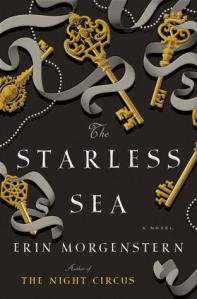
43575115._sy475_Book: “The Starless Sea” by Erin Morgenstern

Publishing Info: Doubleday Books, November 2019

Where Did I Get this Book: Edelweiss+

Book Description: Zachary Ezra Rawlins is a graduate student in Vermont when he discovers a mysterious book hidden in the stacks. As he turns the pages, entranced by tales of lovelorn prisoners, key collectors, and nameless acolytes, he reads something strange: a story from his own childhood. Bewildered by this inexplicable book and desperate to make sense of how his own life came to be recorded, Zachary uncovers a series of clues–a bee, a key, and a sword–that lead him to a masquerade party in New York, to a secret club, and through a doorway to an ancient library, hidden far below the surface of the earth.

What Zachary finds in this curious place is more than just a buried home for books and their guardians–it is a place of lost cities and seas, lovers who pass notes under doors and across time, and of stories whispered by the dead. Zachary learns of those who have sacrificed much to protect this realm, relinquishing their sight and their tongues to preserve this archive, and also those who are intent on its destruction.

Together with Mirabel, a fierce, pink-haired protector of the place, and Dorian, a handsome, barefoot man with shifting alliances, Zachary travels the twisting tunnels, darkened stairwells, crowded ballrooms, and sweetly-soaked shores of this magical world, discovering his purpose–in both the mysterious book and in his own life.

Review: I had to do a double-take when I saw this book pop up on Edelweiss+. I was like, “I know that author! But…but is she finally publishing something new??” It’s been several years since “The Night Circus” was published. Long enough that I look fondly at the book on my shelf but hadn’t really thought to check up again on what the author was doing. This is not a complaint about the time taken between books. Some authors can pump them out seemingly one after another. But as it stands, Morgenstern can take all the time she wants if it means we keep seeing books like “The Night Circus” and now the wonder that is “The Starless Sea.”

Once upon a time there was a book. And in that book were stories. And in those stories were characters reading books. Too, there were doors. And through those doors more books, and characters reading those books. The story winds in and out, but this one begins with Zachary, a college graduate who once saw a door but chose not to open it. A simple moment, seemingly, until he discovers that same moment described in detail in a book he discovers in the library while conducting research. But his is only one among many stories contained with this book’s pages. And as he searches for answers, he finds that through that door that he didn’t take are a million other doors just waiting to be opened.

Books, authors, and readers have a strange, self-celebrating relationship. Readers love books. Some readers love them so much that they go out and write their own. Often about how much they love books. Other readers find those books and gain all the more pleasure from reading a book about characters who love reading books. And some readers go on to be librarians who like nothing more than stocking their shelves with books, especially those books that wax poetic about a love for reading, libraries, and, of course, books themselves. It’s all very “snake eating its own tail,” but in the best of ways possible. All of this to say: “The Starless Sea” is one of the most beautiful love letters to stories and books that I have ever read.

The book starts off slowly, with several seemingly unconnected stories coming one after another to the point that the reader may start to question whether they are reading a collection of tales or a novel. But soon enough Zachary’s story starts to come together and the pieces oh, so slowly begin to fall into place. It takes the entire book to get a full picture of what Morgenstern has accomplished here, which makes it all the more challenging to review. This is a nested-doll of a story and even now I feel that I might have missed some clues here and there.

The world itself is intricate, lush, and a bit spooky around the edges. Like Hogwarts is to many of us, the Starless Sea and its vast libraries are to readers. What reader doesn’t wish to live Zachary’s story? To open a door and find oneself part of a story? And if not that, I want to go there just to cozy up with the millions of books and the hundreds of cats wandering around (I mean, honestly, it’s like she wrote this book for me). There are details galore and half of the fun is simply wandering into the next scene alongside Zachary to see what marvels lay beneath the next. There are just enough strings holding it all together to make it feel connected and approachable. But I was still caught off guard again and again by the directions the story took in its many twists and turns.

There are two love stories at the heart of this book. One, a love that spans centuries, a story that keeps looking for its ending. And the other is Zachary’s. Each is beautiful in its way, one highlighting the testament of love over time and the other the connections that can be formed more quickly but still inspire the greatest of undertakings on each other’s behalf. Each was lovely in its own way, though given Zachary’s role in this book, his stood out all the more.

Like “The Night Circus,” this book highlights just how well-matched Morgenstern’s creativity is with her stylistic writing. In another author’s hands, some of these scenes could have come off as pretentious or grandiose, but her simple, yet delicate, manner of laying down words on a page makes them seem like just more magic to be discovered. As I said, the book builds slowly, and even towards the end when the action begins to pick up, Morgenstern still devotes a decent amount of page time to her descriptive settings and poetic observations. Readers who enjoyed her previous book will be pleased to see her talents put to work in another such story. Those looking for a faster-paced story might struggle a bit, however.

So close to the end of the year and with my “Top 10” on the mind, this was an instant winner for me. I think I would even go so far as to say that I preferred this book to “The Night Circus.” In many ways, that book now seems as if it was a primer, or simply Morgenstern testing the water, as she prepared for the tour de force that is “The Starless Sea.”

Rating 10: A love letter to stories and books that makes you wish for nothing more than to visit the Starless Sea yourself.

Reader’s Advisory: 

“The Starless Sea” is on these Goodreads lists: “Best Books with Underground Setting” and “Scifi/Fantasy for when you are feeling down.”

Find “The Starless Sea” at your library using WorldCat!

Serena’s Review: “Sisters of Shadow and Light”

9781250208408_8e486Book: “Sisters of Shadow and Light” by Sara B. Larson

Publishing Info: Tor Teen, November 2019

Where Did I Get this Book: NetGalley

Book Description: “The night my sister was born, the stars died and were reborn in her eyes…”.

Zuhra and Inara have grown up in the Citadel of the Paladins, an abandoned fortress where legendary, magical warriors once lived before disappearing from the world―including their Paladin father the night Inara was born.

On that same night, a massive, magical hedge grew and imprisoned them within the citadel. Inara inherited their father’s Paladin power; her eyes glow blue and she is able to make plants grow at unbelievable rates, but she has been trapped in her own mind because of a “roar” that drowns everything else out―leaving Zuhra virtually alone with their emotionally broken human mother.

For fifteen years they have lived, trapped in the citadel, with little contact from the outside world…until the day a stranger passes through the hedge, and everything changes.

Review: I highlighted this book as one I was looking forward to reading this month. I had requested it based on the fact that it seemed to be a YA fantasy that centered around a relationship between sisters, a pretty basic plot that I typically enjoy. Unfortunately, while it does deliver on the elements that drew me to it originally, there wasn’t enough else to keep me invested, and a few too many YA tropes that induced eyerolls.

Zuhra and Inara have grown up in the wreckage of what was once a great power in the world. Locked in a fortress and surrounded by a sentient hedge that keeps out all others, the two sisters have grown up isolated from the world with only their fragile mother as a connection to not only their origins but also the world outside the walls. Inara is isolated even further by a power that manifests itself in ways that produce great effects but also cut her off from the world outside her own mind. But the world has continued to move outside their small home, and one day it breaks in, bringing new faces and new challenges.

While this book wasn’t for me, I do, as always, want to start with the things I did appreciate. I requested this book based on my love for sister stories, and luckily for me, that was the aspect of the story that was the strongest throughout. There was a clear, consistent bond between the two from start to finish, without any delving into melodrama or cattiness. We start out the story with only Zuhra’s POV, so there was a lot of time spent setting up how she view the relationship between herself and her sister, who is very cutoff from those around her. This was all well and good. But this aspect of the story was greatly strengthened when, about a third of the way in, we’re given Inara’s perspective as well. Having both POVs really fleshed out the nuances of their relationship, and while I did struggle with much of the rest of the book, I did still enjoy this portion of the story throughout.

Alas, much of the rest of it wasn’t as much of a hit. For me, part of the problem was how similar this read felt to “Strange the Dreamer.” The set up of siblings, some with magical abilities, growing up isolated from the world in the husk of a place that used to belong to god-like beings, one of whom was the father of said siblings? It’s pretty identical. And “Strange the Dreamer” was a superb book, so it’s rare that a direct comparison like this is going to go well for another book. Had I read this one without that one in mind, perhaps some things would have been better received. But that’s also the world of books: readers will always approach stories in the context of what they’ve read before. This can be a good or bad thing; unfortunately, here it was a bad thing. While the elements were similar, they were noticably weaker than Laini Taylor’s similar set-up.

While I liked the sister relationship between our two main characters, I still never really connected to either of them as wholly realized characters on their own. Zuhra, in particularly, was hard to identify with, especially in the beginning when we are left with only her perspective. Both sisters fell into the unfortunate trap of immediately going googly-eyed over the first boys they see, which felt not only silly, but also undermined some of the strengths we had been told they possess, having grown up needing to be so self-reliant.

The world and plot suffered from a writing style that erred more towards telling rather than showing. The middle of the book especially dragged, which I find is often a problem with this style of writing. When you have a new world to introduced, it’s easier for a “tell vs show” style to go unnoticed amid all of the new things being thrown at the reader. And the end typically has enough action when building to the climax of the story to also get away with it. But the middle is where it always shows up, and it was just as true here as in other books with a similar writing issue.

There were some good ideas in this book, and I did enjoy the sister relationship. I was able to predict a few of the twists, but one or two did actually catch me by surprise. However, all of that was not enough to pull the book through. The characters fell into a few too many YA “boy crazy” tropes, the world and plot were a bit on the limp side, and the style of writing was particularly captivating. Not to say that this book should be written off anyone’s list full-stop. But I do think there are betters versions of it out there.

Rating 6: An OK read, but one that felt flat and dim in comparison to its contemporaries.

Reader’s Advisory: 

“Sisters of Shadow and Light” can be found on this Goodreads list: “We Fire the Darkness And Flame At Night.”

Find “Sisters of Shadow and Light” at your library using WorldCat!

Book Club Review: “An Ember in the Ashes”

20560137We are part of a group of librarian friends who have had an ongoing bookclub running for the last several years. Each “season” (we’re nerds) we pick a theme and each of us chooses a book within that theme for us all to read. Our current theme is ‘Books On Our To Read Shelf’, where we pick books that we’ve been meaning to read but haven’t gotten to.
For this blog, we will post a joint review of each book we read for book club. We’ll also post the next book coming up in book club. So feel free to read along with us or use our book selections and questions in your own book club!

Book: “An Ember in the Ashes” by Sabaa Tahir

Publishing Info: Razorbill, April 2015

Where Did We Get This Book: The library!

Book Description: Laia is a slave.  Elias is a soldier. Neither is free.

Under the Martial Empire, defiance is met with death. Those who do not vow their blood and bodies to the Emperor risk the execution of their loved ones and the destruction of all they hold dear.

It is in this brutal world, inspired by ancient Rome, that Laia lives with her grandparents and older brother. The family ekes out an existence in the Empire’s impoverished backstreets. They do not challenge the Empire. They’ve seen what happens to those who do.

But when Laia’s brother is arrested for treason, Laia is forced to make a decision. In exchange for help from rebels who promise to rescue her brother, she will risk her life to spy for them from within the Empire’s greatest military academy.

There, Laia meets Elias, the school’s finest soldier—and secretly, its most unwilling. Elias wants only to be free of the tyranny he’s being trained to enforce. He and Laia will soon realize that their destinies are intertwined—and that their choices will change the fate of the Empire itself.

Kate’s Thoughts

I like to think of myself as a good sport when it comes to my willingness to read genres that I’m not too keen on. Be it in an effort to stretch my reading wings or going off a recommendation from a close friend, I will try and be open minded about a book even if I wouldn’t really pick it up on my own or of my own volition. This happens a lot of book club with YA fantasy fiction, and I will be the first to admit that I’ve found some pretty good books this way that I wouldn’t have normally read. But when it comes to “An Ember in the Ashes”, it HAD been on my list in spite of the genre, it just never came up in my reading rounds. So when it was the selection for the month, I went in apprehensive but hopeful. YA fantasy, sure, but based on Roman history! That’s something I could enjoy, right?

giphy-2
(source)

“An Ember in the Ashes” does have strengths that I did like about it. For one, as mentioned, the Roman influenced world was unique for me and fun to see, as I’ve had a fascination with Ancient Rome (specifically the Julio-Claudian Emperors) since college. I liked that Tahir took influence from the culture in terms of not only the way the characters were, but in the way that world was built. While it’s been tweaked to fit the story, there were definitely aspects of the society that felt familiar, and the society itself was definitely interesting enough that I wanted to know more about it. On top of that, the story itself was engaging and filled with enough conflict and stakes that I wanted to know what was going to happen next. I wanted to see what was going to happen to Elias and Laia, and wanted to know how their fates were going to tie together, as promised. We get two narratives within this story, of Laia and Elias, and of the two I liked Elias’s narrative more. One of the reasons for that is that I thought that his voice was more interesting to me as someone who is incredibly good at what he does, though he secretly despises it and plans to abandon it as soon as he can. The other reason, and the far more pressing one, is that while I liked Laia and was interested in what she was doing her ‘reluctant but willing rebel who has devoted everything to avenging and saving her family’ is a theme we have seen in YA for a very long time now, and it didn’t feel all that new or unique, nor did it stand out from the other narratives out there. Throw in some awfully cartoony/not terribly well fleshed out antagonists, and you have a story that has promise, but doesn’t quite land.

I thought that “An Ember in the Ashes” was an entertaining read, but I don’t think that I’m going to go on in the series. Should someone tell me that I should give it a chance, I will happily be a good sport and do so. But as it stands now, I am parting ways with Elias and Laia where we left them.

Serena’s Thoughts

I…wasn’t a fan of this book. I’ll also admit that right out of the gate I wasn’t feeling super hopeful about this one, as I remember it coming out and then looking into it at the time and choosing to pass. It then blew up into a huge read of the year, and I still didn’t read it. I can’t remember now why I didn’t read it, but I’m guessing that some of the trusted reviewers I follow must have flagged it and I had enough other things on my plate (a perpetual non-problem!problem) to write it off as likely not for me. But, like Kate said, bookclub is super handy in that it pushes me to read books that I otherwise wouldn’t, for whatever reason. And as I said, this was a huge fantasy novel, so really, it’s good that I read it so I could form my own opinion.

Most of what I liked about the book, Kate already covered. Though, even there, I had some pretty big qualifiers to my enjoyment of most of them. First off, the world-building. I did enjoy the Roman aspects that were being used and the unique world that was built around it. However, having read a lot of YA fantasy, these elements also didn’t standout as breaking some huge mold. Roman society and influences are at the heart of a lot of second world fantasy. I did find it interesting, however, that the rebellion seemed to be stemming from a different cultural background. Irish, I would guess, based on the naming conventions. One of our booklcub members had a theory that the world here was essentially the Roman empire shrunk down to a more manageable size. So some of the nearby cultures could be representing other place in the world that Romans expanded out to, like Ireland. It’s an interesting theory, and one that I think would be super clever. However, this is never explicitly said in the book itself, and I’m not sure there’s enough to conclusively say that that was the purpose behind some of these choices. If it was, I wish the author had made it more clear, because it is a very interesting idea.

The other thing that stands out as notable about this book was the violence of it all. I think that this was one of the aspects of the story that made it stand-out when it was first published, that it went further than other YA fantasy. But this is also where I started having major problems with the book. Primarily, the violent, serious nature of the world that our characters are living in didn’t match up with the often frivolous and silly nature of their thoughts and priorities, especially with regards to their romances. In other words, the book was trying to walk an unnatural line. It wanted to be “Game of Thrones,” but still have “Twilight” level romances. This simply doesn’t work. “Game of Thrones” is known for having teen characters involved at the heart of the story. The difference here is that when presented with the dire and very serious nature of the world around them, their thoughts and actions appropriately reflect that.

Laia and Elias have grown up in a world where violence and the threat of violence is around every corner. Beyond this, sex is used as a weapon and prostitution is a fairly normal thing for soldiers to participate in. Yet, Laia and Elias don’t reflect this as characters. Instead, right next to rape threats and horrific deaths, we have two characters who read so PG as to be almost laughable. It also weirdly worships the purity of these two characters. Elias is not like other boys and while he is constantly admiring the beauty of the women around him, he’s never engaged in anything himself. They both talk about physical attraction and love in the same way that teenagers today would. But that doesn’t work in a world where they would have grown up past this type of purity quickly (if they ever had it in the first place). You just can’t convince me that a character whose family has been murdered and is a spy for an evil queen would be so caught up in this love square or whatever it was.

I also didn’t appreciate the repeated rape threats made to Laia and Elias’s near constant worry about rape happening to the women in his life. It felt like the topic was used to further darken the world but was never explored further on how it would shape the lives of these women. Attempted rape has its own horrific aftereffects and yet none of this is explored with Laia.

Perhaps if this book had been written for adults I would have appreciated it more. There were some strong bones with the world and the political nature of the story. Elias and Laia, if aged out of their teenage swooning, could have also been good characters. But as it stands, the book seems to be presenting a weird position where tons of violence and rape threats are a totally ok topic for teen readers, but consensual sex between characters would be too “adult” so Laia and Elias must weirdly fixate the belly flutters. It’s a strange position to take and I don’t think it fits well.

Kate’s Rating 6: An engaging read to be sure, though a lot of the themes and characterizations we’ve seen in this genre over and over again.

Serena’s Rating 5: Not for me. I don’t think it did enough to address some of the serious topics it throws around and the romance didn’t mesh with the world that was created.

Book Club Questions

  1. What did you think of the world building in this novel? Did you think that it took accurate aspects from Ancient Rome and applied them well?
  2. There are two narrative POVs within this book. Did you connect more with Laia’s storyline, or Elias’s storyline?
  3. This book is labeled as a YA fantasy, though some would argue that it doesn’t have as many fantasy elements as other fantasies do. What do you think of this genre classification?
  4. What are your opinions on the antagonists of this story, specifically Marcus and The Commandant?
  5. Do you think that the romance aspects of the book lined up with the world that the characters lived within? More specifically, can people still be fixated on potential romance or attraction when they are surrounded by darkness and horrors?
  6. This is the first in a four book series. Do you have predictions on where the plot is going to go? Do you think you’ll keep reading?

Reader’s Advisory

“An Ember in the Ashes” is included on the Goodreads lists “Free Range and Morally Complex YA”, and “‘High Fantasy’ With Female Leads/Protagonists”.

Find “An Ember in the Ashes” at your library using WorldCat!

Next Book Club Book: “A Christmas Carol” by Charles Dickens

Serena’s Review: “Skin”

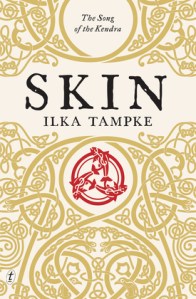
24721903Book: “Skin” by Ilka Tampke

Publishing Info: Consortium Book Sales & Distribution, October 2019

Where Did I Get this Book: Edelweiss+

Book Description: Southwest Britain, AD 43.

For the people of Caer Cad, ‘skin’ is their totem, their greeting, their ancestors, their land.

Ailia does not have skin. Abandoned at birth, she serves the Tribequeen of her township. Ailia is not permitted to marry, excluded from tribal ceremonies and, most devastatingly, forbidden to learn. But the Mothers, the tribal ancestors, have chosen her for another path.

Lured by the beautiful and enigmatic Taliesin, Ailia embarks on an unsanctioned journey to attain the knowledge that will protect her people from the most terrifying invaders they have ever faced.

Review: I believe this book was self-published a few years ago (or published from a smaller, independent publisher?), so I wasn’t aware of it until I saw it and its sequel, due out in January, pop up on Edelweiss. Always in the mood for historical fiction and intrigued by the unique time period in which this was set, I was quick to request it! And while it was darker than I had expected, the beautiful writing and gripping story swept me along in a quick read-through.

Ailia has grown up living a half-life. Her mysterious origins left her without a skin, an identifier by which tribes connect to each other and their land. Without this marker, she exists outside of the normal structure of life, unable to fully participate and with a large question mark looming over her future. But when their quiet life is interrupted by the threat of war, Ailia journeys far and wide to not only find her own place, but to save her people.

This book was a bit hit and miss for me. But if I’m honest about it, the “misses” are likely just personal preferences at the moment and maybe not being in the correct headspace for some of the darker elements of this story. To start with the good stuff, however! The first thing that really stood out to me immediately was the beautiful style of writing. This book was very reminiscent of Juliet Mariller’s writing, and I really couldn’t give out a better compliment than that! It is lyrical and heart-wrenching, perfectly painting the picture of life in this early part of history in Britain. It’s the kind of thing that is hard to pin down; somehow the style of writing itself lends a sense of atmosphere to the story.

I also really liked the setting and time period of this book. It’s set in early AD Britain where Roman influence and invasion has been ebbing and flowing for a while. I don’t know much about this time period, so I can’t speak to the historical accuracy of the story. The author does include a good note at the end which does detail some of the historical influences behind the work. But beyond that, again perhaps due to the strength of the writing, it was easy to sink into the time and place being presented, even when elements of this life felt completely foreign.

I also like Ailia as the main character. The book is written in first person from her point of view, so it is quick and easy to fall into line with her character. While the general outline of her story isn’t the most original (outsider comes into her own power as a central figure in a growing conflict), I was still invested in her arc throughout the story. The idea of “skins” was also very intriguing, especially in connection with how Ailia sees herself and how other see her.

Now for the downsides. This book is dark. Very, very dark. Right from the start the reader is thrown into a pretty violent scene. And given the nature of the story, the lifestyle, and the growing conflict, this violence does continue to pop up throughout the story. Typically I’m not overly squeamish about violence, and it never felt gratuitous or glorified here. In fact, I would even say that this violence was part of what made the book feel so grounded in the time period and events that it was trying to depict. So, again, I think it was largely that I was just surprised by it and wasn’t in a good emotional place to read about some of these topics. Perhaps re-reading it later I wouldn’t struggle as I did here. And other readers may not have the same qualms I did.

My one other struggle with the book has to do with the ending, so this is obviously a hugely subjective problem. For me, the ending was of the sort that left me more focused on the grim nature of the story than on the beauty of the writing. It felt incredibly realistic, but it was the kind of reality that I didn’t necessarily want to be left with at the end of a story. I guess I needed a bit more light to counterbalance all of the brutality, and for me, the book just ended on yet another grim note.

It’s hard to rate and review books when you struggle with how they end. Obviously, that’s the last experience I had of the book, and it wasn’t an overly positive one. I’m definitely curious to see where the sequel goes from here. There is a chance that, depending on how that book goes, the ending of this one might be retroactively improved for me. And all of this to say, my qualms with this one were very much based on my own preferences. Overall, the writing, story, and characters are all strong. It was just too much darkness for me. Readers who aren’t put off by that and enjoy atmospheric historical fiction (with a dash of fantasy, of course!) will likely enjoy this.

Rating 7: A reader’s case of “it’s not you; it’s me.”

Reader’s Advisory:

“Skin” is on these Goodreads lists: “Coming of Age Stories” and “Books for the INFJ.”

Find “Skin” at your library using Worldcat!