Kate’s Review: “The Sandman (Vol.6): Fables and Reflections”

Book: “The Sandman (Vol.6): Fables and Reflections” by Neil Gaiman, Bryan Talbot (Ill.), Stan Woch (Ill.), P. Craig Russell (Ill.), Shawn McManus (Ill.), John Watkiss (Ill.), Jill Thompson (Ill.), Duncan Eagleson (Ill.), & Kent Williams (Ill.)

Publishing Info: Vertigo, 1993

Where Did I Get This Book: I own it.

Book Description: FABLES & REFLECTIONS follows the Lord of Dreams through nine remarkable tales as he touches lives from the mists of the past to the nightmares of the present. In these episodes, kings and spies, emperors and actors, ravens and werewolves all share their stories and their dreams–dreams of life and love, and of power and darkness.

Review: When I picked up “The Sandman (Vol.6): Fables and Reflections”, I sighed in disappointment. We were once again going to be focusing on stories that exist within the universe and within Morpheus’s world and realities (or unrealities). While I do appreciate how expansive Gaiman is when it comes to his various mythologies, I admit that coming on the heels of “Game of You” I really just wanted to jump back in with Dream, Death, and the like. But as I started getting back into “Fables and Reflections”, I realized that even though we are still off the main storyline track, there are a lot of really excellent moments in these side stories.

The main thematics of “Fables and Reflections” is various dreamers and leaders throughout history, and how dreams and their dreaming natures affected their lives for better or for worse (worse probably being the story “Thermidor”, which focuses on Robsepierre during the Reign of Terror, the time that no one likes to think about when it comes to revolution fantasies). I had a couple of stories that I especially liked, the first being “Three Septembers and a January”. In this tale, we focus on the obscure but real story of Emperor Norton, a man who just kind of declared himself the Emperor of the United States back in the 1800s. Yes, he was real, and a bit of a local celebrity in San Francisco. In this tale, we get to see snippets of his life as the Endless siblings engage in a wager as to which will claim him before Death does so permanently (with Dream being the least nefarious in his intentions, though Delirium can’t know what she’s doing, she’s Delirium dammit!). We get to see Norton live his life under the delusion of his ‘power’, but also see that while he may be ‘mad’, he’s also just a harmless and pretty good guy. There is a lovely moment between him and Death at the end, which emphasizes the overarching point of the “Emperor” in this collection who had the least amount of power is the one who was the best and kindest ‘ruler’ (see Robespierre above, though Augustus also shows up in this collection). It’s a sweet story that really resonated with me.

The other story that stood out has the most connection to Dream and the Endless, and that is “The Song of Orpheus”. As mentioned in earlier collections, in this universe Orpheus is the son of Calliope and Morpheus, and this is basically a retelling of the Orpheus and Euridyce myth with that twist. It’s a story of fathers and sons, lost love, fate, and how parents can fail their children. It is a gut punch seeing Dream have to reconcile with the fact that Orpheus went against his warnings, and in turn refuses to put Orpheus out of his misery after his dismemberment by the Maenads, dooming his son to live eternity as a disembodied head, all because Orpheus didn’t listen to him about saving Eurydice (well, and because of a ‘rule’ The Endless have about killing family, but that feels second to his own wounded ego). It really emphasizes that while Dream is a great character in a lot of ways, he is horrifically pig headed when it comes to those that he loves, to the point where he treads away from morally grey and into villain territory. But, all the more complexity and depth that will no doubt be explored later!

The artwork shifts between the stories (did you SEE the list of artists at the top?!), and the strongest style for me was in “Ramadan”, a story of Harun al-Rashid ruling in historical Baghdad (I will also say that this story has a lovely grace to it, as it was written during the first Gulf War and Gaiman isn’t afraid to make comment of that). P. Craig Russell is the main artist for this story, and WOW. The style appears to be influenced by art from the time and place, as well as illuminated religious texts, and my goodness it’s just beautiful and vibrant.
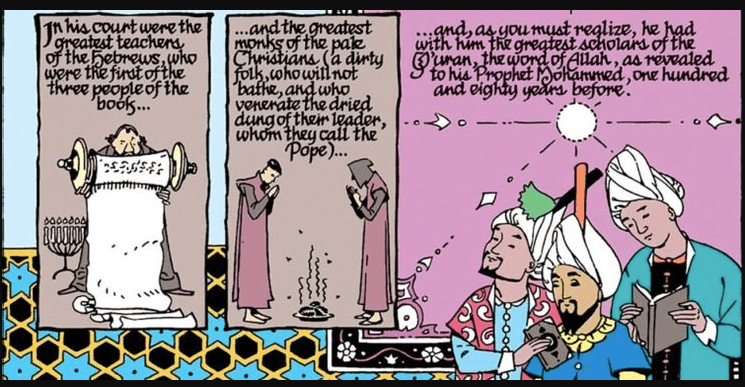
(source: Vertigo)

All in all, I ended up enjoying “The Sandman: Fables and Reflections” more than I thought I would on this re-read. It’s wistful and dreamy, and it adds a lot of depth to this amazing world.

Rating 8: A ponderous collection of stories about power, empires, love, and death, “The Sandman: Fables and Reflections” doesn’t really advance the plot, but adds flourish to the universe it exists within.

Reader’s Advisory:

“The Sandman (Vol.6): Fables and Reflections” is included on the Goodreads lists “Mythic Fiction Comics”, and “Graphic Novels With The Best Artwork”.

Find “The Sandman (Vol.6): Fables and Reflections” at your library using WorldCat, or a local independent bookstore using IndieBound!

Previously Reviewed:
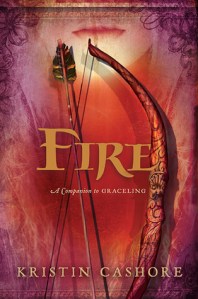
Serena’s Rev-Up Review: “Fire”

Book: “Fire” by Kristin Cashore

Publish: Dial Books, 2009

Where Did I Get this Book: own it!

Book Description: It is not a peaceful time in the Dells. The young King Nash clings to his throne while rebel lords in the north and south build armies to unseat him. The mountains and forests are filled with spies and thieves and lawless men.

This is where Fire lives. With a wild, irresistible appearance and hair the color of flame, Fire is the last remaining human monster. Equally hated and adored, she had the unique ability to control minds, but she guards her power, unwilling to steal the secrets of innocent people. Especially when she has so many of her own.

Then Prince Brigan comes to bring her to King City. The royal family needs her help to uncover the plot against the king. Far away from home, Fire begins to realize there’s more to her power than she ever dreamed. Her power could save the kingdom.

If only she weren’t afraid of becoming the monster her father was.

Previously Reviewed: “Graceling”

Review: Unlike “Graceling,” I never got around to re-reading “Fire” closer to when I read it the first time. Not that I didn’t really enjoy it then, just that, like I said, the TBR list was just starting to get out of control around this time. So going into this re-read, I remembered even less about this book than that. That made it lots of fun to read now as it almost felt like an entirely new book, but one that I already knew I’d enjoy! Win win!

The Dells is a colorful land, marked by the bright, over-powering beauty of its monsters: blue horses, purple raptors, pink mice. But Fire is the only human monster after the death of her cruel father several years prior. Her extreme beauty inspires both wonder and hatred from those around her, so Fire’s life world has been small to stay safe. She also greatly fears the mind control abilities that come alongside her beauty. But when a prince arrives on her doorstep requesting her aide to save the king, Fire is obligated to venture out and put her abilities to the test.

While this is technically a prequel to “Graceling,” it most ways it stands a lone. We have one character (albeit an important one!) who crosses over, but their page time is limited so even there we’re left with mostly new material. I really loved the world-building that went into the Dells and the creativity around the native monsters and how their powers worked. The animals themselves are quite terrifying, especially the monster raptors that seem to constantly lurk in the sky. Though this was also the one point where I was confused. Are these regular raptors, like hawks and falcons that aren’t that big? Or are these some type of unique bird of prey that is bigger? They seemed to be discussed and treated as pretty severe threats to people which was confusing if we’re talking about smaller birds of prey. Not really a big deal, but it was something I kept getting caught up on throughout the story.

Fire herself is an incredible creation. It makes complete sense that extreme beauty would inspire both love and hatred, and seeing how this plays out in Fire’s every day existence was really intriguing. She has some strong abilities, but we also see how very vulnerable her monster looks are to her. She attracts monster animals who want to eat her, and humans aren’t much better, either becoming obsessed with her (often in the grabby, forceful kissing manner) or essentially go mad and want to kill her. Her life seems very challenging, full of fear and tension. This makes it all the more touching to see her begin to form real relationships with the other characters in this book, because we’ve been prepped to understand just how many challenges there are in this for Fire.

I really liked the romance in this book, perhaps even more than I did the one in “Graceling.” Everyone loves a good “enemies to lovers” romantic plot line, and as much as I liked Po, Brigan checked off more on my romantic hero wish list, like steady and a bit solemn. While Katsa and Po were all about the fiery drama, Fire and Brigan have a slow build that is beautiful to watch unfold.

This book was a bit slower than “Graceling,” and the villain(s) were also a bit underwhelming. We see the return of one evil character, and they’re good for the small amount of page time we get from them. But what accounts for the main antagonist and challenge was a bit to removed from the story to feel too invested in it. By the nature of her being, Fire’s work is mostly done from the safety of the castle and is largely passive with most of the action taking place off-page.

I really enjoyed re-reading this book. I really remembered very little of it, and I was pleased to find the romance, in particular, even better than I had remembered. Next up is “Bitterblue!”

Rating 9: A quieter, more introspective book than “Graceling,” but also a bit more heart-breaking (in a good way!) overall.

Reader’s Advisory:

“Fire” is on these Goodreads lists: Original Stories . . . a Breath of Fresh Air and Princes, Other Worlds and Future Lands.

Find “Fire” at your library using WorldCat!

Serena’s Rev-Up Review: “Graceling”

Book: “Graceling” by Kristin Cashore

Publishing Info: Harcourt, October 2008

Where Did I Get this Book: own it!

Book Description: Katsa has been able to kill a man with her bare hands since she was eight—she’s a Graceling, one of the rare people in her land born with an extreme skill. As niece of the king, she should be able to live a life of privilege, but Graced as she is with killing, she is forced to work as the king’s thug.

She never expects to fall in love with beautiful Prince Po.

She never expects to learn the truth behind her Grace—or the terrible secret that lies hidden far away . . . a secret that could destroy all seven kingdoms with words alone.

Review: I read this book right around when it came out and instantly loved it. I went on to re-read it a few times in the next couple of years. But as my list of re-read favorites grew and grew, after those first few years, I never got back around to this one. So now it’s probably been about ten years since I last read it. Then when I saw that Cashore was returning to her “Graceling” world after so many years with the release of “Winterkeep” later this month, I knew that now was the time and this was the perfect excuse! So in anticipation of this new book, I will be re-reading all three of the “Graceling” books that came before, starting out with this, the first and my favorite.

In a world dotted with individuals with extraodinary powers, marked by their duel colored eyes, Katsa’s unparalleled ability to fight and kill just about anything is frightening to the extreme. Not the least of all to her. Under the thumb of her cruel uncle the king, for years, Katsa has served as his unwilling enforcer. To protect her own sanity and the safety of those she can, Katsa’s also built up an underground life of small rebellions and resistence. During one of these missions she meets Prince Po, another Graceling and one who finally opens her eyes to the opportunities before her. When the two begin to uncover a lurking darkness in the far reaches of the kingdom, they set out to unravel an increasingly malicious tangle. And while they do, they begin to discover there is more to Katsa’s Grace than just killing after all.

There’s a lot to love about this book. I but I think most people can agree that one of its biggest selling points is its main character herself. I can think of a number of books that have attempted an all-powerful, badass female character like this before and bungled it up so badly that the book becomes practically unreadable. So it’s a testament to Cashore’s ability that her main character not only avoids pulling the book down with her but actually turns out to be one of its biggest selling points.

Katsa’s biggest strengths, her seemingly endless ability to excel at practically anything, is just what makes her such a challenging character to write. She arrives on page one seemingly capable of easily handling anything that the story throws out her. So where’s the plot to go? What type of development can you give a character like this? Well, instead of physical limitations, Cashore dives deep into the psychological damage and challenges that a character with these abilities would face. Katsa’s fear of her own strength hinders her ability to trust and form friendships, probably the low hanging fruit as far as personal struggles for this type of character goes.

But Cashore goes even deeper. Because Katsa operates alone so much of the time and has a deep-seated fear, verging on hatred, for herself, her interactions with those around her can be quite toxic at times. She’s rash and prone to striking out. She also struggles to recognize the limitations of others and will push people (and horses!) past their breakingpoint. From this starting point, Cashore weaves together a beautiful character arc that focuses on themes like trust, self-acceptance, and self-control. And throughout this all, Katsa’s very brashness and inability to pick up on the most basic of social cues makes her an incredibly endearing lead character.

Beyond Katsa, the story excels in several areas. While it takes a bit to get started, once it does, there are bunch of fantastic action set-pieces and challenges that are posed to our seemingly unstoppable heroine. And the story quickly moves past the more straightforward aspect of her Grace that would just be one fight scene after another. I also really like the romance in this story. Unlike a lot of other YA books, here the romance establishes itself about halfway through the book. Of course, as any romance novel author will tell you, getting your characters together is only half of the story, and I really appreciate that Cashore left room to dive into the later stages of a romantic storyline. Things like facing losses together, going through fights, figuring out how to be a couple while also maintaining your sense of individuality, making decisions about your future.

I also really like the villain we have here. The build up to the reveal successfully creates a lot of tension that is only compounded upon once the reader discovers what is really going on. The villain is also a great foil for Katsa, being appropriately powered but not in a way that feels like their abilities were created specifically with her in mind (a failing of many archvillains, in my opinion.) My only complaint is that there isn’t more page time with this individual. But, then again, given the nature of the villain, there’s not really a very good way to include more scenes with them that doesn’t hurt the story overall.

So, given my ravings above, it’s pretty obvious that I found this book just as enjoyable ten years later as I did the first time I read it. I’m excited to read the next two books as well since, unlike this one, I never re-read either of those and remember very little about them.

Rating 10: Definitely deserves its place in the YA fantasy ranks as one of the bests.

Reader’s Advisory:

“Graceling” is on these Goodreads lists: Best “Strong Female” Fantasy Novels and Magic, Adventure, Romance.

Find “Graceling” at your library using Worldcat!

Book Club Review: “Sailor Moon Eternal Edition (Vols 1 and 2)”

We are part of a group of librarian friends who have had an ongoing bookclub running for the last several years. Each “season” (we’re nerds) we pick a theme and each of us chooses a book within that theme for us all to read. Our current theme is “Outside the Genre Box”, in which we each picked a book from a genre or format that we don’t usually read.

For this blog, we will post a joint review of each book we read for book club. We’ll also post the next book coming up in book club. So feel free to read along with us or use our book selections and questions in your own book club!

Book: “Sailor Moon Eternal Edition (Vols 1 & 2)” by Naoko Takeuchi

Publishing Info: Kodansha Comics, September 2018/November 2018

Where Did I Get These Books: I own them.

Genre/Format: Manga

Book Description: The guardians in sailor suits return in this definitive edition of the greatest magical girl manga of all time! Featuring an extra-large size, premium paper, and an all-new translation and cover illustrations by creator Naoko Takeuchi!

Teenager Usagi is not the best athlete, she’s never gotten good grades, and, well, she’s a bit of a crybaby. But when she meets a talking cat, she begins a journey that will teach her she has a well of great strength just beneath the surface and the heart to inspire and stand up for her friends as Sailor Moon! Experience the Sailor Moon manga as never before in these extra-long editions.

Kate’s Thoughts

Though I have read some manga here and there and have watched a fair number of anime series (I actually just started watching “Death Note” for the first time, and I’m DIGGING it!), I never go into “Sailor Moon”. I had friends in high school who liked it, but by the time I did get into anime and ‘Magical girl’ stories, I pretty much just went with “Princess Tutu” and left it at that. So when our new Book Club session started up and one of our members wanted to read the first two books in “Sailor Moon”, I figured that now was as good a time as any to read one of the most influential Magical Girl mangas.

I think that had I been in a very specific time frame when reading “Sailor Moon” for the first time (perhaps after grade school but before I entered my ‘I’m not like other girls and too cool for girly shit’ punk and Goth phase in high school) I would have probably appreciated it more than reading it now. That isn’t to say that I don’t get why “Sailor Moon” is such a phenomenon. I liked the mythology of the Sailor Scouts, and I liked how we slowly got to meet each one and the different things that they all bring to the table. I also can tell that there is a LOT of mythology we haven’t even gotten to yet, and that as Usagi and her friends/teammates go forward there will be a lot more to learn regarding their identities, how Tuxedo Mask (the mysterious love interest) fits into it all, and how Usagi will balance this with her normal life as a teenage girl. In the first volume there is a lot of this kind of set up, while the second volume there is more solid adventuring and conflict that escalates. It was also pretty neat to see that things weren’t afraid to get dark as the plot arcs went on in Volume 2, and there were some pretty high stakes involved for Usagi and the others, as well as some legitimate peril to wrangle with. But at the end of the day Usagi herself was hard to connect with because there is a lot of effort to make her super imperfect to contrast with the amazing Sailor Moon alter ego that she has inside of her. But at the end of the day, these stories are not written for me as the intended audience, and because of that this is definitely a ‘your mileage may vary’ situation, as I DEFINITELY get the appeal in theory. Just not in my own practice.

I now feel like I have a better understanding of a story that has a very firm and well earned place in pop culture. It may not be for me, but I love that it is a story for teenage, fantasy loving girls who want their own kind of power fantasy. My hat does off to that and to them.

Serena’s Thoughts

Unlike Kate, I did read a lot of magical girl fantasy right around when this was coming out. But, unlike Kate in general, I’ve never really gotten into reading Manga or graphic novels much at all. As an adult, I’ve discovered more graphic novels that I enjoy, but it’s still not a go-to type of reading for me, even within my preferred genres. And as a middle school girl, I think I just associated any/all graphic novels with comic books and filed them away under “boring boy stuff.” I went on to have a complicated relationship with “Sailor Moon” in high school due to my on again off again boyfriend’s love of the series and my suspicion that he only wanted to date me initially based on my name being the same as the Americanized version of the main character’s. I was pleased to find that on reading the series now the main character’s name has been reverted back to the original, thus reducing my flashbacks to teenage years and highschool love letters between Serena and “Tuxedo Mask” (yes, he would sign off like that!)

With that little jaunt down memory lane out of the way, I had a lot of similar impressions to Kate. I can definitely see the appeal of this story and understand how it came to have such a far-reaching fanbase. The characters are all intriguing, the magic is fun, and the story is willing to engage with some darker themes. It also has much of the drama and awkwardness that teenagers enjoy, with Sailor Moon’s teenage identity providing a stark contrast to her magical girl persona.

Like Kate said, the second volume had more to work with after the first one spent much of its time laying down the foundation for the series. But even in the second one, it was clear that the story was just scratching the surface of all the stories it wanted to tell with these characters. I was pleased to see it go a bit deeper than the first volume did.

Overall, this also wasn’t really my thing. But I think that’s probably mostly due to my age and my generally picky approach to graphic novels and Manga. I picked up a “Pride and Prejudice” Manga at ALA a few years ago, and even that wasn’t really my jam. So this one had a steep hill to climb. But I definitely see the appeal for fans of the format and fantasy lovers in general, especially teenagers.

Kate’s Rating 6: Definitely ground breaking and assuredly appealing to magical girl fantasy fans, but not really my cup of tea at the end of the day.

Serena’s Rating 6: Approachable and fun for those who fit its audience type; unfortunately that wasn’t me.

Book Club Questions

  1. Have you read any manga before this? If so, what manga have you read and how does it compare to “Sailor Moon”? If not, what did you think of this first foray into the format?
  2. What did you think of the structure of the story as a stream of consciousness path that Usagi is taking? Did you like learning things as she did, or do you wish there had been a more organic way to explore the mythology?
  3. Did any of the Sailor Scouts appeal to you more than the others? If so, who, and why do you think that is?
  4. What did you think of the relationship between Sailor Moon/Usagi and Tuxedo Mask?
  5. Which elements, if any, of the ‘magical girl’ genre did you find most appealing?

Reader’s Advisory

“Sailor Moon Eternal Edition” Vols 1 and 2 (in other formats) are included on the Goodreads lists “Magical Girl Manga”, and “Fandom Origins”.

Find “Sailor Moon Eternal Edition” Vols 1 and 2 at your library using WorldCat, or a local independent bookstore using IndieBound!

Next Book Club Book: “The Widows of Malabar Hill”

Serena’s Review: “Siege of Rage and Ruin”

Book: “Siege of Rage and Ruin” by Django Wexler

Publishing Info: Tor Teen, January 2021

Where Did I Get this Book: Edelweiss+

Book Description: Isoka has done the impossible–she’s captured the ghost ship Soliton.

With her crew of mages, including the love of her life Princess Meroe, Isoka returns to the empire that sent her on her deadly mission. She’s ready to hand over the ghost ship as ransom for her sister Tori’s life, but arrives to find her home city under siege. And Tori at the helm of a rebellion.

Neither Isoka’s mastery of combat magic, nor Tori’s proficiency with mind control, could have prepared them for the feelings their reunion surfaces. But they’re soon drawn back into the rebels’ fight to free the city that almost killed them.

Previously Reviewed: “Ship of Smoke and Steel” and “City of Stone and Silence”

Review: After blowing through the first two books in this trilogy last January, I had to hunker down for the long wait until January 2021 to finally get the to the release of the final book. As much as I like being current with many of the books coming out in real-time, I have to say, there’s something to be said for just waiting for a series/trilogy to be finished so you can enjoy it in one, big, binge read. Ah well. And, while this wasn’t my favorite book in the trilogy, I was overall quite pleased with this book and for the way the series wrapped up as a whole.

On her way back to her home city, Isoka imagines that nothing ahead can pose a bigger challenge than what she’s accomplished already. She simply needs to rescue Tori and head back to the mysterious land from which Soliton came. But Tori is no longer the innocent girl Isoka remembers. Instead, she’s a rebel leader caught up in a revolution that seems to be on the brink of failure. What’s more, she has a powerful magical ability to influence the minds and actions of others, a power she had kept hidden from Isoka for all of these years. Together, the sisters must work to re-learn the sibling they thought they knew while also saving a city that seems doomed to fall.

While I did enjoy this book and still love the heck out of Isoka as a main character, I did struggle with this one more than the first two. I think there are a few reasons for this. First, like the second book in this trilogy, Isoka now shares the narrative with Tori which essentially splits her portion in half.

Tori isn’t a bad character in her own right, but she simply can’t compete with the explosive force that is Isoka. Tori’s own story is much less sympathetic and her overall arch feels less complete. The last book saw her do some pretty terrible things and that’s never really addressed going forward. On one hand, I like the fact that the book doesn’t shy away from the terrible things that are done in revolutions, even by those fighting for the “good” side. But Tori also never seems to resolve her feelings of being “monstrous” in any real way. Isoka kind of just brushes the whole thing aside when she learns about it, and Tori just seems to get over it suddenly at the end for no apparent reason.

Isoka’s own story feels like it takes a back seat to Tori’s as this book is largely about the revolution Tori started and thus naturally falls more in her wheelhouse. I still loved Isoka’s chapters, if mostly because her voice and character feel so alive and compelling. But, like Tori, it didn’t feel like she had much of a character arc in this story. She’d already come into her own as a leader and recognized the fact that she didn’t enjoy brutal killing. So there’s nowhere really for her to go in this story.

The second challenge, beyond the lack of character arcs for our two leads, was my own personal preference for the unique, fantastical elements presented in the first two books. There was so much creativity to the fantasy aspect of the story in the first and second book, between the ship Soliton and the Harbor with its spooky leader, Prime. Here, the story of a fairly straightforward rebellion and a pretty predictable resolution just wasn’t cutting it. I really missed the fantasy aspects of the series and was disappointed that not much new was introduced. I never was very invested in Tori’s rebellion and to have this entire last book focused on that was a pretty big let-down. But this was definitely more a matter of personal preference than anything else.

The writing itself was still incredibly strong and Wexler shines with his action scenes. Isoka’s fights were as thrilling as ever and her companions were fun supporting characters. I think it’s telling of Wexler’s skill that Jack, who could easily have become gimmicky and annoying, served well in her role as comedic relief throughout. I was also pleased to see Tori’s romance plotline take a decided backseat role, as that was another aspect of the second book that I was not at all invested in.

Overall, this was definitely the weakest of the three books, but it did tie up the story well and ended in a satisfactory manner. Readers’ enjoyment of it will likely be directly tied to their interest in Tori and the storyline that was introduced with her in the second book. But I’d say that fans of the first two, regardless of preference, should definitely check this last book out.

Rating 7: Lacking the fantasy elements that I’ve come to love, but still a satisfying end to the trilogy.

Reader’s Advisory:

“Siege of Rage and Ruin” isn’t on many Goodreads lists yet, but it is on Can’t Wait Sci-Fi/Fantasy of 2021.

Find “Siege of Rage and Ruin” at your library using WorldCat!

Monthly Marillier: “Daughter of the Forest”

“Monthly Marillier” is a review series that is, essentially, an excuse for me to go back and re-read one of my favorite author’s back catalog. Ever since I first discovered her work over fifteen years ago, Juliet Marillier has been one of my favorite authors. Her stories are the perfect mixture of so many things I love: strong heroines, beautiful romances, fairytale-like magic, and whimsical writing. Even better, Marillier is a prolific author and has regularly put out new books almost once a year since I began following her. I own almost all of them, and most of those I’ve read several times. Tor began re-releasing her original Sevenwaters trilogy, so that’s all the excuse I needed to begin a new series in which I indulge myself in a massive re-read of her books.

45046625

Book: “Daughter of the Forest” by Juliet Marillier

Publishing Info: Tor Books, April 2020 (originally published in 1999)

Where Did I Get this Book: NetGalley

Book Description: Lovely Sorcha is the seventh child and only daughter of Lord Colum of Sevenwaters. Bereft of a mother, she is comforted by her six brothers who love and protect her. Sorcha is the light in their lives, they are determined that she know only contentment.

But Sorcha’s joy is shattered when her father is bewitched by his new wife, an evil enchantress who binds her brothers with a terrible spell, a spell which only Sorcha can lift–by staying silent. If she speaks before she completes the quest set to her by the Fair Folk and their queen, the Lady of the Forest, she will lose her brothers forever.

When Sorcha is kidnapped by the enemies of Sevenwaters and taken to a foreign land, she is torn between the desire to save her beloved brothers, and a love that comes only once. Sorcha despairs at ever being able to complete her task, but the magic of the Fair Folk knows no boundaries, and love is the strongest magic of them all… 

Note: I originally posted this review about nine months ago. But I wanted to start this re-read with Marillier’s first book so that the series would be complete, so I’m re-posting it here today.

Review: I was thrilled to see this book pop up on NetGalley. It’s been one of my favorite reads (and the book that introduced me to one of my favorite authors) for many, many years. I couldn’t think of a series that is more due for a re-release than the original Sevenwaters trilogy. Plus, this was the perfect excuse to re-read this book and finally feature a full review for the story on this blog!

Sorcha’s life is full of family and love. With six older brothers who adore her and seek to protect her from everything, her life seems to be on a straight, bright path. Until her family falls under the shadow of her father’s new wife, a powerful sorceress who puts her brothers under a terrible spell, dooming them to the short life of swans. Now Sorcha must become the protector, undertaking a near-impossible task, forced to weave shirts out a painful plant and not allowed to make any noise until task is finished and spell lifted. Life is not made easier when she finds herself caught up by the enemy English and now living in a foreign land among those who distrust and fear her. But Sorcha persists in the face of it all, even has her task seems more and more doomed.

I love fairytale retellings, and this book really introduced me to them and set the bar for what they can be. The “Seven Swans” fairytale is a lesser known tale, and while there have been several other ones that I’ve found since reading this, none have even come close to fully realizing the full potential of the story. Marillier doesn’t simply stick to the basic outline; she creates an entire world, magic system, and fully-fleshed cast of characters, many of whom don’t feature in anything other than name in the original tale and some not at all. But beneath this all, the heart of the story is consistent (though some details differ). All the major plot points are hit, but the book is over 500 pages long, so you know it is rich in detail and not in a rush to get through its story.

Too often fairytale retellings fail to really establish themselves as anything unique from the original stories. Main characters are often lacking in any real personality (fairytales themselves often give them basically none, so there’s not much to go off for the author adapting it). And often the story doesn’t expand much further out than the original tale. Not so, here. Sorcha is the cornerstone around which this entire story hinges. And, given the she spends two thirds of the book not able to speak out loud, it’s important that her character feel real and compelling. We spend the entire book in her head and experience some fairly traumatic things alongside her. But, importantly, you’ll notice that I said “two thirds.” That’s because, smartly, Marillier adds a bunch of extra story to the beginning of this book. This not only gives Sorcha ample opportunity to be set up as a compelling character, but it adds stakes to her quest. We’ve met her brothers. We know their individual strengths and weaknesses, and, importantly, their close attachment to their sister. This makes their loss feel real and helps the reader feel fully committed to the terrible task set out before our leading lady.

The book also deals with some pretty serious and tough topics. There’s a very graphic, traumatic scene that occurs fairly early in the story. The author doesn’t hold back on the details of this attack, but what justifies this, I think, is the great work she does to explore how this affects Sorcha going forward. It’s not swept away or easily solved. Instead, we see how this experience shapes all of Sorcha’s choices and reactions going forward. And, ultimately, we see how she slowly goes through the experience of healing from it. This book is probably the best example I can point to for how a tough topic like this can and should be handled. Not only does our heroine go through the entire process, the book lays down some needed examples of how those around her help and wait as she deals with this.

Marillier’s writing is also exceptional. Atmospheric, lyrical, and emotional, she makes you feel the same strong connection to the forests and lakes of Sorcha’s wild home. Small moments land with unexpected emotion, and the action is tense and high stakes while not straying far from the intimate perspective we have through Sorcha’s eyes with everything that is going on around her. Throughout all of Marillier’s books, her writing is always consistent, but it’s a joy to go back to this first book that I read of hers and see why it stood out so much in the first place.

Marillier started a new trilogy this last fall, and I’m eagerly awaiting getting my hands on the second boo, due out this September. If you’re waiting as well, take this chance to explore her backlog with this beautiful renewed edition. I love the cover art for this and the other two books in the trilogy. If you haven’t read any of Marillier’s work before, boy, are you in for a treat! Get started with this one, and away you go!

Rating 10: Everything that a fairytale retelling should be and then some!

Reader’s Advisory: 

“Daughter of the Forest” is on these Goodreads lists: “The Best Fairytales and Retellings” and “Best Romance in Traditional Fantasy.”

Find “Daughter of the Forest” at your library!

Next up is “Son of Shadows” on the first Friday of next month!

Serena’s Review: “Knight of the Silver Circle”

Book: “Knight of the Silver Circle” by Duncan M. Hamilton

Publishing Info: Tor Books, November 2019

Where Did I Get this Book: NetGalley

Book Description: Three dragons wreak havoc throughout Mirabay–eating livestock, killing humans, and burning entire villages to ash. It was nearly impossible to kill one, using a legendary sword and the magic of the mysterious Cup; to tackle three, Guillot dal Villerauvais will need help.

The mage Solène fears having to kill again; she leaves Gill to gain greater control over her magic.

The Prince Bishop still wants Gill dead, but more than that, he wants the Cup, and he’ll do whatever he has to to get it, even sending his own daughter–a talented thief and assassin–into the dragons’ path.

As secrets mount on secrets and betrayals on betrayals, both Guillot and Solène face critical decisions that will settle not only their own fate but that of all Mirabaya.

Previously Reviewed: “Dragonslayer”

Review: While I didn’t absolutely love the first book in this series, I could still appreciate what it was trying to do and the type of approachable, sword and magic fantasy story it was telling. The characters, while fairly predictable, were also well-drawn and familiar enough that I was definitely not set against continuing with the series. On a whim, I requested this one a while back. It took a while to get to it, but here we are! Overall, while it’s still not my favorite fantasy series ever, I did like this one better than “Dragonslayer.”

After returning with a dragon’s head, Gill has re-established himself as a dragonslayer of note. Parting ways with Solene, the two are set to go about their lives again, not expecting to see one another again. But it soon becomes apparent that dragons aren’t done with them let. Three new ones begin pestering the countryside, drawing Gill out once again and now against worse odds than ever. For her part, Solene fears what is coming and is still working on gaining full control of her powers. But there may not be time as the Prince Bishop continues to make his own moves.

So, overall, this was very similar to the first book. It’s your tried and true classic fantasy story where the heroes are heroic, the mages struggle with their magic, and the bad guy does ad things. But in a lot of ways I think it also improved on the first book. For one thing, part of what I liked about the first book was the inclusion of POV chapters from the dragon’s perspective. Here we get more of that, which I still think is pretty unique, but we also dive more into dragon culture. We learn the variety of dragons out there, how some are just rampaging beasts essentially, but how others are quite intellectual and have a sort of society amongst themselves. I definitely continued to be interested in this angle of the story.

As far as Gill goes, I still think that he’s a bit of a cookie-cutter hero in that he’s almost exactly what you’d expect. In my review of the first book, I struggled with the lack of exploration into his emotional arc dealing with the loss of his family. But I was glad to see here that his struggles with alcoholism weren’t simply swept under the rug after the first book. Yes, he had success again as a dragonslayer and is largely coming into his own again as an esteemed fighter. But we still see him struggle with his past and the part of him that has dwelled in booze for so long.

I also liked that we got more from the villain of the story, the Prince Bishop. In the first book, he, too, was fairly one dimensional. Here, we see more from him and learn more about his own motives and how far he is willing to go against our heroes. It gave him enough depth to make him more of an interesting character to follow in his own right.

The writing is also still solid and Hamilton is clearly an adept storyteller. However, the series continues to feel a bit one note. And, like I said in my first review, it still seems as if it’s not bringing much new to the genre as a whole. There’s definitely an appeal and an audience for this type of book, but I also like fantasy stories that surprise me in some way or another. A good example would be Michael J. Sullivan’s “Age of Myth” series. That, too, is a fairly typical fantasy adventure story with elves, dwarves, humans, and dragons. But the story also takes several surprising turns, focusing in on characters you originally cast as side-characters and doing away with some whom you thought would be around for the long haul and occupying important roles in the story. But, all of that said, fans of classic fantasy will still likely enjoy this second entry from Hamilton.

Rating 7: Improves on the first novel, but still a bit bland to really hit home for me.

Reader’s Advisory:

“Knight of the Silver Circle” isn’t on any other Goodreads lists other than November 2019 Book Releases.

Find “Knight of the Silver Circle” at your library using WorldCat!

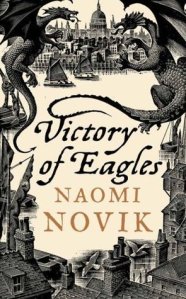
Serena’s Review: “Victory of Eagles”

Book: “Victory of Eagles” by Naomi Novik

Publishing Info: Del Rey, August 2008

Where Did I Get this Book: audiobook from the library!

Book Description: It is a grim time for the dragon Temeraire. On the heels of his mission to Africa, seeking the cure for a deadly contagion, he has been removed from military service – and his captain, Will Laurence, has been condemned to death for treason. For Britain, conditions are grimmer still: Napoleon’s resurgent forces have breached the Channel and successfully invaded English soil. Napoleon’s prime objective: the occupation of London.

Separated by their own government and threatened at every turn by Napoleon’s forces, Laurence and Temeraire must struggle to find each other amid the turmoil of war and to aid the resistance against the invasion before Napoleon’s foothold on England’s shores can become a stranglehold.

If only they can be reunited, master and dragon might rally Britain’s scattered forces and take the fight to the enemy as never before – for king and country, and for their own liberty. But can the French aggressors be well and truly routed, or will a treacherous alliance deliver Britain into the hands of her would-be conquerors?

Previously Reviewed: “His Majesty’s Dragon” and “Throne of Jade” and “Black Powder War” and “Empire of Ivory”

Review: It’s so nice to have a long-running series that one can return to every once in a while. It’s fun to discover new books, of course, but with the fantastic new stories also comes the chance of having to slog through something that isn’t a good fit. Not only do I love Novik’s “Temeraire” series, but I also particularly enjoy the audiobook version of the series and the narrator who reads it. So, when waiting on a few of my holds at the library to come through, I thought it was about time to re-visit this series.

Things are not going well for Temeraire and Laurence. After sharing the cure to the deadly dragon disease with their enemies in France, Temeraire has been banished to the north where he is to remain the rest of his days, and Laurence has been sentenced to death as a traitor. But when Napoleon lands on English shores, Britain quickly realizes that it can’t lose one of its best dragons and dragon captains. But Temeraire is no longer interested in blinding following orders. After seeing the advancements back in his native land, he’s sure that England can do better with its treatment of its own dragons, and Temeraire is prepared to go to great lengths to see that it is so.

This book was a bit different than others in the series in that, for a large part of it, we’re following the separate stories of Temeraire and Laurence. But as the series has progressed, Temeraire has become more and more of a character in his own right, with thoughts and opinions of his own that sometimes differ from Laurence’s own. So it also makes sense that at some point we would begin to follow him as his own character with his own arc. And I really liked what we got from him here! Aside from his obvious anxiety over Laurence’s situation, we see Temeraire begin to actively pursue a new role for dragons in England’s society and military, something he’s been discussing for the last several books since their trip to China.

In an interesting twist, while Temeraire is in the north, we see that it isn’t only the humans of England who are set in their ways. He has to convince the dragons, too, that change is in their own best interest. As the story continues, we see Temeraire’s vision turn more and more into a reality, but with that comes challenges of its own. I liked how this wasn’t simply done easily, and Temeraire himself, while knowing the direction he wants things to move, hasn’t thought out the details of what dragons serving in the military under their own command would really look like.

Laurence’s own story is also interesting. We see the fall-out of his and Temeraire’s decision, not only in his initial imprisonment, but in the different ways those around him view what he did. For many, it is seen as out-right treason with very little sympathy for the reasoning behind it. Others might understand, but they still can’t behave the same way around Laurence. It’s all painful to hear about, especially because of how honorable we know Laurence to be. But it’s also very realistic of what a situation like that would look like.

I also really liked how this alternative history is really leaning into the “alternative” aspect of it all. Napoleon actually lands on English soil in this version of history and makes significant inroads in an occupation. Much of the story is highlighting how desperate the English situation really is, and Laurence and Temeraire are clearly fighting on the underdog’s side of this war all of a sudden.

In the end, this was another solid entry in the “Temeraire” series. I really enjoyed the continued exploration of what reform for the dragons would look like in this situation. And how far Novik is willing to play with history in her alternative world is always surprising and a joy. For those who have been reading this series, this is more of the same: good stuff all around!

Rating 8: Veers into some surprising new territory but never loses sight of what we’re there for: Temeraire and Laurence and their lovely friendship!

Reader’s Advisory:

“Victory of Eagles” is on these Goodreads lists: Best Alternate History Novels and Stories and Best Book With or About Dragons.

Find “Victory of Eagles” at your library using WorldCat!

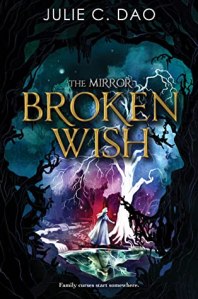
Serena’s Review: “Broken Wish”

Book: “Broken Wish” by Julie C. Dao

Publishing Info: Disney Hyperion, October 2020

Where Did I Get this Book: Edelweiss+

Book Description: 1865
Hanau, Germany

Sixteen-year-old Elva has a secret. She has visions and strange powers that she will do anything to hide. She knows the warnings about what happens to witches in their small village of Hanau. She’s heard the terrible things people say about the Witch of the North Woods, and the malicious hunts that follow. But when Elva accidentally witnesses a devastating vision of the future, she decides she has to do everything she can to prevent it. Tapping into her powers for the first time, Elva discovers a magical mirror and its owner—none other than the Witch of the North Woods herself. As Elva learns more about her burgeoning magic, and the lines between hero and villain start to blur, she must find a way to right past wrongs before it’s too late.

Review: I’ve only read one other book by Dao, but it was one I definitely liked. She had a steady, beautiful way of writing that really captured the feeling or essence of a place and time. This is just the story of writing technique that is required for writing good fairytales, in my opinion. So, like always, I was excited to see a new fairytale book make its way onto the publication lists and even more intrigued when I saw that Dao was the author.

The 1800s in Germany is a time and place where women have very few options. But for Elva, it’s not only the typical things that are off-limits, but a part of her very identity: her magical abilities. Growing up, her family has instilled in her the importance of always, always keeping her abilities a secret. The dangers of being thought of as a witch are very real. But when Elva discovers a real witch and sees a glimpse into a terrible future, she realizes that she can’t hide from who she is and what she can do forever.

I feel like the book description is a bit off, as Elva herself doesn’t show up for about a third of the story. Instead, we follow the developing friendship of Elva’s mother with a local witch. The fall-out of this relationship is what puts Elva’s feet on the path of this story. Part of my struggle with this book was how much I really loved this first third, unfortunately. I really liked the beautiful friendship that was built up between Elva’s mother and the witch and then the inevitable moment where things go wrong. It had all the right markers of a fairytale while also focusing on the type of relationship (friendships between adult women) that is rarely seen in just these sorts of stories.

I did like Elva’s story well enough when she did show up. But the story took a more dramatic turn in YA stereotypes at this point, too. There were elements that seemed all too familiar, and I wasn’t super into the romance that we got either. I did like the magic and Elva’s struggles between obeying her parents and recognizing the obligations that come with the power she has. Not only the typical obligations that you usually hear about, but ones that have to do with righting past wrongs, which I thought was an interesting new take on the general concept.

The concept of this series is also interesting. Here, we have Elva’s story and the development of the curse that follows her family (for every two good things that happen, a very bad one follows). The next three (I think three?) books will jump generations and tell new stories focusing on different characters. They will also be written by different authors. This could either be really cool, or it could lead to the series feeling very disjoined and mismatched. Dao’s style of writing worked perfectly for the type of dark fairytale she’s trying to tell here. Will the next books also read like fairytales? Or will they have different tones? And will the other authors being able to capture these tones correctly?

For all the good things (the strength of Dao’s writing and the first third), I did struggle with this book once we got to Elva and the more typical YA fare. But I am curious to see where new authors will take the story in the future and how much they will verge away from or remain true to the story that was started here. Fans of fairytales or Dao’s previous books will likely enjoy this!

Rating 7: An interesting start to an interesting new series, though a bit too reliant on some YA tropes near the end.

Reader’s Advisory:

“Broken Wish” isn’t on many Goodreads lists, but it is on Oct 2020 – Middle Grade/YA – New Releases.

Find “Broken Wish” at your library using WorldCat!

Kate’s Review: “These Violent Delights”

Book: “These Violent Delights” by Chloe Gong

Publishing Info: Margaret K. McElderry Books, November 2020

Where Did I Get This Book: I received an ARC from a librarian friend.

Book Description: Perfect for fans of The Last Magician and Descendant of the Crane, this heart-stopping debut is an imaginative Romeo and Juliet retelling set in 1920s Shanghai, with rival gangs and a monster in the depths of the Huangpu River.

The year is 1926, and Shanghai hums to the tune of debauchery. A blood feud between two gangs runs the streets red, leaving the city helpless in the grip of chaos. At the heart of it all is eighteen-year-old Juliette Cai, a former flapper who has returned to assume her role as the proud heir of the Scarlet Gang—a network of criminals far above the law. Their only rivals in power are the White Flowers, who have fought the Scarlets for generations. And behind every move is their heir, Roma Montagov, Juliette’s first love…and first betrayal.

But when gangsters on both sides show signs of instability culminating in clawing their own throats out, the people start to whisper. Of a contagion, a madness. Of a monster in the shadows. As the deaths stack up, Juliette and Roma must set their guns—and grudges—aside and work together, for if they can’t stop this mayhem, then there will be no city left for either to rule.

Review: Confession time! I don’t really care for Shakespeare’s classic tragedy “Romeo and Juliet”. Even as a teen when I was even more emotional than I am now (shocker!), it never really connected with me. Well, that’s not totally true. I do enjoy Baz Lurhmann’s take on the story, but that’s because it’s SO DAMN OVER THE TOP.

That and John Leguizamo as Tybalt. I mean my GOD. (source)

But I am someone who is open minded to tinkering with the classics, so when I heard about “These Violent Delights” by Chloe Gong it caught my eye. If you take the “Romeo and Juliet” story, set it in 1920s Shanghai, involve two gangs, and have a Juliet who is nobody’s fool, you will almost certainly get my attention. And if you toss a monster into it as well? YA GOT ME.

“These Violent Delights” follows Juliette Cai and Roma Montogrov, two young adults who are heirs to their family gangs, but have a tumultuous and star crossed past. While it’s third person, we do get to alternate between their third person perspectives, seeing their sides of their ultimate falling out, and how hurt, and angry, they both are about it. I was more invested in Juliet’s perspectives, mostly because I felt that Gong really fleshed out her characterization in fascinating ways, not just making her be a love lorn and somewhat passive character. This Juliette is a calculating higher up of a violent gang, and uses her knowledge of Shanghai and her culture along with her Western education to make chess moves in the ongoing conflicts. Through her we also got to see the colonial and imperialist issues that were facing Shanghai at the time, with Western interests establishing themselves via merchants after a number of treaties after warfare. Gong addresses a number of the issues of Western influence and manipulation within this narrative, and having Juliette there to parse it out for the reader was a great device (I was so ignorant about a lot of this that I found that to be the most intriguing aspect of this story). It was also pretty cool to see not just Juliette but her cousins Rosalind and Kathleen using their wits and their own strengths as women to try to keep the Scarlet Gang in control, especially after things in the main storyline go to hell (more on that in a bit).

Roma, however, is part of a Russian family that relocated to Shanghai and that has tried to claim its own stake in the power pie. His conflicts were more family based, and seeing him (and his heavies Marshall and Benedikt, who were GREAT and WONDERFUL and I would totally read a book just about them) try to reconcile his love for Juliette and his loyalty to his family (some of which is forced upon him) wasn’t as interesting as Juliette’s journey. But all of that said, because of these conflicts that both have, some known, some unspoken, their romance is far easier to invest in than their inspirations in the original play. The two characters (as well as the side characters) harken back enough to be adaptations, but stand on their own and breathe new life into the story.

As for the main conflict, that being a monster that is infecting people in Shanghai with an illness that makes them commit suicide, it was a bit out of left field but I liked it enough. I enjoyed watching Roma and Juliette try to solve the mystery, and how the story still followed beats of the original play in subtle ways. This is where more Imperialist issues come into play, and while a less skilled author may have stumbled into some heavy handed moments, for the most part Gong pulls it off that keeps the story flowing and making good points. It did go on a little long for my taste, but a lot had to be covered for world building, as this is the first in a series. Which I will definitely be following, as the cliffhanger was searing with DELICIOUS, DELICIOUS PAIN.

Let’s call this a visual hint on where we leave off. But it has some tweaking I loved. (source)

“These Violent Delights” is a creative and fun historical fiction fantasy romance thriller (whew!) , and has me fully invested in a “Romeo and Juliet” story. Can’t wait to see where we go next.

Rating 7: A creative and unique retelling of a classic tragedy, “These Violent Delights” goes on a LITTLE long, but breathes some new life into “Romeo and Juliet”.

Reader’s Advisory:

“These Violent Delights” is included on the Goodreads list “YA Fiction Set in the 1920s”, and would fit in on “Romeo and Juliet Retellings”.

Find “These Violent Delights” at your library using WorldCat, or a local independent bookstore using IndieBound!