Serena’s Review: “For the Wolf”

Book: “For the Wolf” by Hannah Whitten

Publishing Info: Orbit Books, June 2021

Where Did I Get this Book: ARC from the publisher

Book Description: As the only Second Daughter born in centuries, Red has one purpose-to be sacrificed to the Wolf in the Wood in the hope he’ll return the world’s captured gods.

Red is almost relieved to go. Plagued by a dangerous power she can’t control, at least she knows that in the Wilderwood, she can’t hurt those she loves. Again.

But the legends lie. The Wolf is a man, not a monster. Her magic is a calling, not a curse. And if she doesn’t learn how to use it, the monsters the gods have become will swallow the Wilderwood-and her world-whole.

Review: Here we are with “Red Riding Hood” themed book number two of the month! As I said before, I always get a bit nervous when there are many books coming out around the same time that explore a similar fairytale or theme. They can’t all be good. Right?? Well, second verse same as the first with this one! Except, I think I liked this book even better than “The Wolf and the Woodsman!”

For centuries it has been know: the first daughter is for the throne, the second daughter is for the wolf. It has been many decades since the last second daughter was born and sent duly to her fate in the dangerous Wilderwood. But it is Red’s fate to once again live out this piece of history. While her sister, Neve, the heir to the throne, is aghast at the future before her beloved Red, Red herself is thankful to be locked away from the people she loves, people she fears she may injure with the dark magic growing within her. But once she finally makes her way beneath the shadowy bows of the forest, she begins to learn that the tales have twisted throughout the years and not everything is as she once thought. Neve, for her part, works diligently to save her doomed sister, and between these two, long-sleeping forces will begin to awaken.

Well, that was something else! I really like how this is now the second of these books I’ve read this month and both have had very little to do with the original “Red Riding Hood” tale. Not that I have any problems with that story, but it would have been a challenge to read three re-tellings in a month. So far, I’ve actually read zero retellings! Both of these books have only resembled that story in their use of names and the infamous red coat. Instead, imagine my surprise and joy when I got a bit into this and realized that not only was I not reading a “Red Riding Hood” retelling but I was, in fact, reading a “Beauty and the Beast” adaptation? And, like the best retellings, it was also unique and fully its own.

Much of what made it similar to “Beauty and the Beast” could be found in the basic concept and in the small call-backs littered throughout the story. You have the mysterious, other-worldly love interested, locked away in a gloomy castle, forgotten (or in this case, warped) by history. There’s the unknowing heroine, thrust into this magical world with no compass to guide her, missing a beloved family member back home (this time a sister rather than a father). And then there were small details, like the use of a glass mirror to view other places and the placement of a library as central to much of the interaction between the heroine and hero. So, very much Disney’s “Beauty and the Beast” hints.

But this is not a kid’s fairytale. The woods itself was a character, and a dark, unknowable one at that. The violence of the woods’ history is clear from the beginning and the painful measures that are required to contain it sap the strength from the Wolf, the guardian of this place. Red’s own connection to the woods and the Wolf is no less comfortable. While she begins to understand the toll the woods takes on the Wolf, she sees that any help she has to offer will come with a similar price.

I was also surprised to see that Neve had her own POV chapters in this book. While Red definitely has the majority, Neve has a distinct arch and story of her own. It was equally compelling, if also frustrating in that we, the reader, have more information than Neve does and can see the pitfalls before her. But, as always, I love a book that focuses on a strong sisters relationship, and I like that Neve was not a passive character here, simply accepting her sister’s loss as fact but instead working against it.

The romance was also very sweet. The book took its time to develop this relationship properly, devoting appropriate page time for each party to work through their own personal challenges. The pieces of the puzzle and mystery behind the Wolf and the Wilderwood also only come together slowly as the story plays out. Overall, this slow pacing worked well, balanced out by the high stakes tension that looms in the ever-present danger presented by the woods itself. My one mark against the book, however, is that towards the end, the story seems to come to a head but then regroups and ramps up for what feels like a second ending tacked on. Both are necessary for the story itself, but it just read a little strange, erring a bit too close to feeling resolved to let the reader really easily step back in for heightened action all of a sudden.

I really enjoyed this book. Fans of fairytale re-tellings, particularly “Beauty and the Beast,” should definitely check it out. It’s the first in (I think) a duology, so expect another book to come, but it’s not a killer cliffhanger either.

Don’t forget to enter the giveaway and win an ARC copy of “For the Wolf!”

Rating 9: Dark, twisty, and romantic. Just how I like it!

Reader’s Advisory:

“For the Wolf” is on these Goodreads lists: Adult Sci-Fi/Fantasy of 2021 and Villain/Monster Romance.

Find “For the Wolf” at your library using WorldCat!

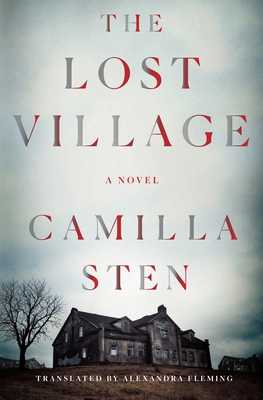
Kate’s Review: “The Lost Village”

Book: “The Lost Village” by Camilla Sten

Publishing Info: Minotaur Books, April 2021

Where Did I Get This Book: I own it.

Book Description: The Blair Witch Project meets Midsommar in this brilliantly disturbing thriller from Camilla Sten, an electrifying new voice in suspense.

Documentary filmmaker Alice Lindstedt has been obsessed with the vanishing residents of the old mining town, dubbed “The Lost Village,” since she was a little girl. In 1959, her grandmother’s entire family disappeared in this mysterious tragedy, and ever since, the unanswered questions surrounding the only two people who were left—a woman stoned to death in the town center and an abandoned newborn—have plagued her. She’s gathered a small crew of friends in the remote village to make a film about what really happened. But there will be no turning back.

Not long after they’ve set up camp, mysterious things begin to happen. Equipment is destroyed. People go missing. As doubt breeds fear and their very minds begin to crack, one thing becomes startlingly clear to Alice: They are not alone. They’re looking for the truth… But what if it finds them first?

Review: Awhile back I was perusing the titles on NetGalley, and I kept stumbling upon a book called “The Lost Village” by Camilla Sten. Every time I would see it I’d ask myself ‘why haven’t I looked into that?’, but then I’d look again and the description was the key. You have me at “Blair Witch Project”, but you lose me at “Midsommar” (sacrilege? Maybe. I just didn’t like that movie). But eventually I decided that I needed to give it a go. So I bought it, and as soon as I started it I never should have waited as long as I did.

Me contemplating the time I wasted. I dislike the movie, but love this meme! (source)

“The Lost Village” is a slow burn horror story that (absolutely) has similar elements to “The Blair Witch Project” and “Midsommar”, but stands very well on its own. The story is told through various channels. The first and most prominent follows Alice and her film crew in the modern day, as they start to explore the abandoned village of Silvertjärn. Alice’s grandmother was a resident who had left before the disappearance, and who lost her entire family. Alice is obsessed and determined to make a documentary about the town in hopes of getting answers, but there is tension in her crew due to messy histories and secrets. In this timeline strange things start happening, and the crew slowly starts finding themselves in danger. The second channel follows Elsa, Alice’s great grandmother who is seeing her town slowly become seduced by a new pastor, whose zealotry is manipulating everyone and leading them down a dangerous path. The third is through letters between Elsa’s daughters Margareta and Aina, which slowly shows Aina becoming more and more entranced with the new leader. All of these pieces come together to tell a well thought out horror story that slowly builds the dread and terror. I liked the back and forth through the narrative, as each storyline contained clues about the others, and the ultimate fate of Silvertjärn. The strongest was the modern day perspective, as not only did it have some of the scariest moments, it also had the most interesting characters. Alice is a flawed but interesting protagonist, and her interactions with her compatriots (particularly with Emmy, an ex-friend that Alice harbors some bitter resentment towards) are realistic as the situation turns from intriguing to dire. I found myself invested in them, so when the stakes are raised, the fallout has true weight. Sten makes you care about these characters, and that ultimately amps up the horror aspects.

And let’s talk about the horror aspects. Because they are spot on and very, very disturbing. The more obvious is that of the feeling that the crew is being watched in the abandoned town, and the slow build of paranoia as strange things start to happen, and one of the members of the crew starts acting strange as well. Some of the images that Sten brings forth in the narrative really messed with me in this regard, from descriptions of a corpse on a post to a shadowed silhouette staring towards Alice and her crew in the dark. The other horror, of course, is set firmly in the past storyline, as a town of generally decent people start to form a cultish devotion to a sociopathic con artist who twists religious fervor to suit his own needs. You eventually kind of see where this is all going, knowing that eventually Silvertjärn’s population just vanishes without a trace, but it still made me tense and completely horrified as people fell under his spell and terrible things came about because of it. The horrors of real life are put on perfect display here, and boy oh boy does it pack a wallop.

Fans of horror stories absolutely need to read “The Lost Village”. I cannot, CANNOT wait to see what Camilla Sten comes out with next.

Rating 9: Tense and ultimately horrifying, “The Lost Village” is sure to disturb any avid fans of horror in all the best ways.

Reader’s Advisory:

“The Lost Village” is included on the Goodreads lists “Haunting Reads”, and “Books Set in Sweden”.

Find “The Lost Village” at your library using WorldCat, or at a local independent bookstore using IndieBound!

Kate’s Review: “The Sandman (Vol.10): The Wake”

Book: “The Sandman (Vol.10): The Wake” by Neil Gaiman, Michael Zulli (Ill.), Jon J. Muth (Ill.), & Charles Vess (Ill).

Publishing Info: Vertigo, 1996

Where Did I Get This Book: I own it.

Book Description: When a Dream ends, there is only one thing left to do…

THE WAKE

In which the repercussions of the Death of Lord Morpheus are felt, and, in an epilogue, William Shakespeare learns the price of getting what you want.

This is the tenth and final volume of Neil Gaiman’s Sandman, described by author Mikal Gilmore in his introduction as “nothing less than a popular culture masterpiece, and a work that is braver, smarter and more meaningful than just about anything “high culture” has produced during the same period.”

Review: When I’m coming to the end of a series that I’ve spent a lot of time with, I almost always feel melancholy. It’s like saying goodbye for a comfortable friend. The interesting thing about “The Sandman (Vol.10): The Wake” is that we have already reached the crux of the ending of the story, and said goodbye to that friend. After all, at the end of “The Kindly Ones” Morpheus, aka Dream, died. For many stories, that would be the end. But Neil Gaiman knows that true closure means that there is a need for a wake. And that is what this final volume gives us: a moment of goodbye, some ruminations on the memories and the people that Dream has left behind, and the promise of moving on. It’s a volume that serves as an epilogue. And it’s beautiful.

Pretty much my entire being during this final re-read. (source)

As mentioned above, the real climax of the story was in the last volume, and now we get to see the fallout in the form of an actual wake for Dream, attended by not only his siblings, his friends, and other dieties, but also by mortals he encountered throughout the series (though they attend through their dreams, of course). I loved the quiet and gentle tone that this story took as we see those who loved Morpheus mourn and come to terms with his death, the most effective being that of Matthew, his messenger Raven, who is now lost without his master and friend. I haven’t really talked about Matthew in this re-read. He’s always around, ready to provide some insight or a sarcastic remark, but I found his journey to process Dream’s death to be the most bittersweet moment in this volume (well, it may be a tie, but more on that later). But his ambivalence ties into the other aspect of this whole plot point, and that is that, since Dream is Endless, and Endless are ideas and concepts, Dream isn’t really gone. Morpheus is. But now Daniel, Lyta’s son, has transformed into a new version of Dream, as the Endless are, well, Endless. As the other siblings say goodbye to Morpheus, they have to contend with meeting their new sibling, and Daniel!Dream (this is how I’m going to refer to him going forward) has to contend with starting over as someone new, even though he has elements of Morpheus still. It all connects back to the conversation that Morpheus and Delirium had with Destruction in “Brief Lives”, and it all ties up so wonderfully because of it. Daniel!Dream continues on, and nothing ever really ends.

There are two more stories in this volume which both serve as epilogues. The one that the book truly ends on has to do with Shakespeare, as earlier in the series we see the creative relationship and connection he has to Morpheus. But the other one, and the one that I think really works better, involves Hob, Morpheus’s immortal friend whom he meets up with at a pub ever century. Hob’s final bow is him with his current girlfriend, going to a Renaissance Festival, looking at how the life that he literally led at one time has now become re-enacted in modern times. It’s so poignant, knowing what he’s been through, what he’s seen, and seeing him meet up with Death and getting confirmation about Morpheus just feels like the right way for this series to end. I loved this story, as it has all the best things about Hob; his grumpiness, his sarcasm, and his deep love and respect for his friend.

I am so happy that we have “The Wake” to process the end of a truly magnificent series. “The Sandman” is so influential, so engaging and ambitious, and it changed comics as we know them. It doesn’t feel a need to go out in a huge and dramatic fashion, and instead opts for something more bittersweet, and it just fits perfectly. I’ll miss Morpheus. and Delirium, and Death. But luckily, I can always go back and start over again.

Rating 9: A lovely, sad, and hopeful ending to a truly remarkable and transformative series.

Reader’s Advisory:

“The Sandman (Vol.10): The Wake” is included on the Goodreads lists “Graphic Novels that Rocked My World”, and “Mythic Fiction Comics”.

Find “The Sandman (Vol.10): The Wake” at your library using WorldCat, or a local independent bookstore using IndieBound!

Previously Reviewed:

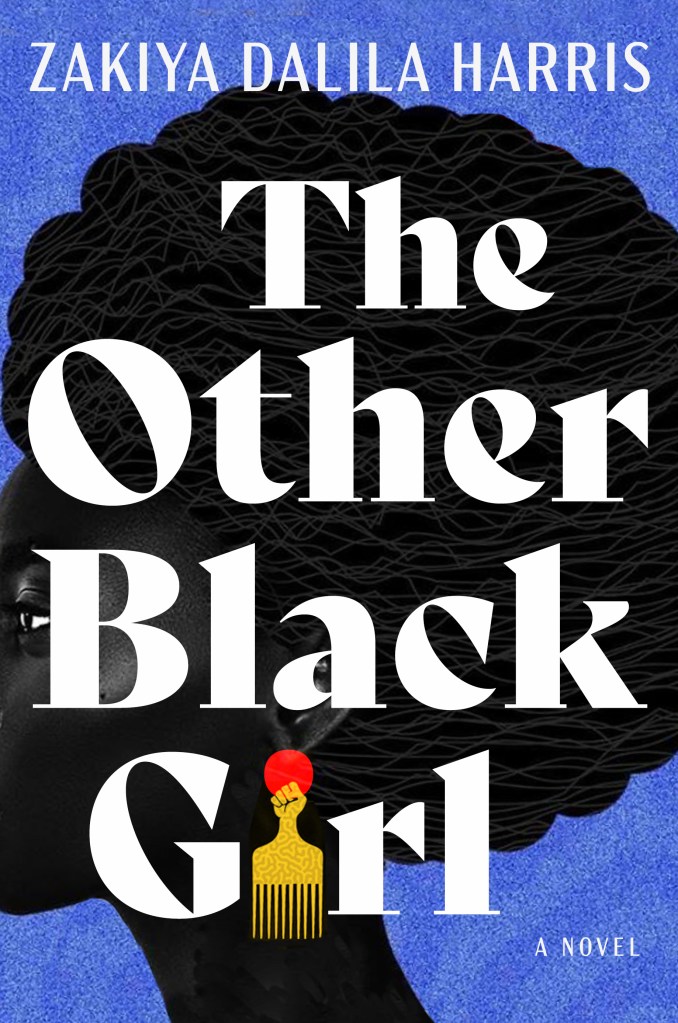
Kate’s Review: “The Other Black Girl”

Book: “The Other Black Girl” by Zakiya Dalila Harris

Publishing Info: Atria Books, June 2021

Where Did I Get This Book: I received an eARC from NetGalley.

Book Description: Get Out meets The Devil Wears Prada in this electric debut about the tension that unfurls when two young Black women meet against the starkly white backdrop of New York City book publishing.

Twenty-six-year-old editorial assistant Nella Rogers is tired of being the only Black employee at Wagner Books. Fed up with the isolation and microaggressions, she’s thrilled when Harlem-born and bred Hazel starts working in the cubicle beside hers. They’ve only just started comparing natural hair care regimens, though, when a string of uncomfortable events elevates Hazel to Office Darling, and Nella is left in the dust.

Then the notes begin to appear on Nella’s desk: LEAVE WAGNER. NOW. It’s hard to believe Hazel is behind these hostile messages. But as Nella starts to spiral and obsess over the sinister forces at play, she soon realizes that there’s a lot more at stake than just her career.

A whip-smart and dynamic thriller and sly social commentary that is perfect for anyone who has ever felt manipulated, threatened, or overlooked in the workplace, The Other Black Girl will keep you on the edge of your seat until the very last twist.

Review: Thank you to NetGalley for providing me with an eARC of this novel!

Satire and horror go together like cheese and crackers as far as I’m concerned, and I’m always looking for some good commentary in the horror stories that I consume. When I came across “The Other Black Girl” by Zakiya Dalila Harris on my Twitter feed, I was immediately interested. Described as a mix of “Get Out” and “The Devil Wears Prada”, I went to see if I had access to a copy on NetGalley, and downloaded it post haste. I’m always one for workplace drama thrillers, but even more important it’s always great to see more diverse voices have space in genres that can feel very white a lot of the time. And if you’re going to say “Get Out” as a descriptor, well, I’m almost certainly in.

“The Other Black Girl” definitely lives up to the pop culture descriptors, though I would also throw in the horror movie “Bad Hair” as well, as “The Other Black Girl” takes on not only racism and microaggressions, but specifically Misogynoir in a work place that doesn’t think it has a racism problem, and weaponized tokenism. Our main character is Nella, an editorial assistant at the prestigious Wagner publishing house, and is the only Black woman in her department. Her job is exhausting enough on its own, and having to maneuver a work place that is filled with seemingly well intentioned white people who are constantly tossing microaggressions her way just makes it all the more isolating and tiring. Harris does a really good job of establishing the work environment and culture of Wagner, and how it bogs Nella down. Nella is a sympathetic and relatable protagonist, who is really hoping for success at Wagner, but is also insecure in her wants and needs to be accepted by a workplace that doesn’t really give her a chance. From the jump, you understand Nella, and her characterization is drawn in a way that her choices down the line make sense.

So when Hazel is hired on, Nella’s relief and excitement is palpable that she may at least have a companion in this difficult sea to navigate. Of course, nothing is ever that easy, and what seems could be a racist and sexist industry making two Black women feel like they have to be pitted against each other, is actually something far more insidious. What that is, we don’t know, but Harris is more than happy to slowly unpack and reveal darker and more far reaching dangers for Nella, all of it satirizing and critiquing white industries and how they treat their Black employees, and how these power structures can in turn make these employees feel the need to outgun each other, or conform to racist mores in order to succeed. Especially if those employees are women. And while these themes may be taken to outlandish places within this story (I’m holding this all close to the vest, though, as I think you need to go in with little idea of where Harris is going to take you), as satire is works really, really well.

And as a thriller novel, I’d even go so far as to say horror novel, “The Other Black Girl” is completely effective. I was totally sucked in right away, wondering who was trying to intimidate Nella, wondering what Hazel’s motivation was, and wondering how everything connected. Especially since early one, we see that there are other players who are a part of this story, some of whom we don’t know how they connect to Nella’s situation. I loved how Harris slowly established settings, timelines, and players, and then carefully and slowly brought them together. While sometimes the structure could be a little confusing (there were moments where we’d go into an extended flashback in the middle of an action point, which caused a little whiplash), overall I felt that all the pieces fall into place when they need to. On top of that, there is also a lot of humor in these pages, most of which comes from Nella’s close friend Malaika, who is a bit more confident and willing to give Nella some hard truths with wit and sarcasm. All of these things make this book not only a biting social commentary, but also super entertaining and a page turner until the very end.

“The Other Black Girl” is a buzz worthy and propelling horror-thriller that has a lot to say about Misogynoir and racism. If you like satire in your horror like I do, absolutely do not miss this.

Rating 9: A suspenseful an satirical horror-thriller about race, identity, and the workplace, “The Other Black Girl” has bite and hard truths, as well as some genuinely funny moments.

Reader’s Advisory:

“The Other Black Girl” is included on the Goodreads lists “Well-Read Black Girl Book Suggestions”, and “Horror/Thriller Books by Black Authors”.

Find “The Other Black Girl” at your library using WorldCat, or at a local independent bookstore using IndieBound!

Kate’s Review: “Untamed Shore”

Book: “Untamed Shore” by Silvia Moreno-Garcia

Publishing Info: Agora Books, February 2020

Where Did I Get This Book: I own it.

Book Description: A coming-of-age story set in Mexico quickly turns dark when a young woman meets three enigmatic tourists.

Baja California, 1979. Viridiana spends her days watching the dead sharks piled beside the seashore, as the fishermen pull their nets. There is nothing else to do, nothing else to watch, under the harsh sun. She’s bored. Terribly bored. Yet her head is filled with dreams of Hollywood films, of romance, of a future beyond the drab town where her only option is to marry and have children. Three wealthy American tourists arrive for the summer, and Viridiana is magnetized. She immediately becomes entwined in the glamorous foreigners’ lives. They offer excitement, and perhaps an escape from the promise of a humdrum future.

When one of them dies, Viridiana lies to protect her friends. Soon enough, someone’s asking questions, and Viridiana has some of her own about the identity of her new acquaintances. Sharks may be dangerous, but there are worse predators nearby, ready to devour a naïve young woman who is quickly being tangled in a web of deceit.

Silvia Moreno-Garcia is one of the most exciting voices in fiction, and with her first crime novel, UNTAMED SHORE, she crafts a blazing novel of suspense with an eerie seaside setting and a literary edge that proves her a master of the genre.

Review: It is probably becoming clear to all of you that this blog is very much a Silvia Moreno-Garcia Stan page. Given that she has been dipping her toes into all kinds of genres, there are things for both Serena and myself to love. This time I’m taking on a good old fashioned crime thriller novel called “Untamed Shore”, which promises suspense, secrets, death, and sharks. All while also being a coming of age story in 1970s Baja, Mexico. I mean my goodness, everything about this just screams ‘YOU SHOULD BE READING THIS KATE, AND HOW DARE YOU MISS IT THE FIRST TIME AROUND?!’

Me to my reading tastes. Also, holy “Detroit Rock City” gif, Batman! (source)

Something that has become very clear about Moreno-Garcia is that she can genre hop with ease, and that her stories will always be incredibly strong no matter what kind of themes that they take on. This is something that I have seen not very often with authors I like, as they either stick to one thing, or if they do branch out it doesn’t work as well. But for Moreno-Garcia, she makes it look easy. “Untamed Shore” is both a crime novel and a bildungsroman about Viridiana, an eighteen year old living in small town Baja who dreams of more for herself. She’s smart, she’s feisty, she’s misunderstood due to her ambition and her background, and she’s also naive, due to her youth and her lack of worldliness. All of these things make for an easy to root for character, and she’s well rounded and tenacious and everything I like to see in a female protagonist at that. You completely understand why she would be drawn to Ambrose, Daisy, and Gregory, three American tourists with money, privilege, and a somewhat dark dynamic that Viridiana sees when she becomes a live in assistant. Ambrose is cold, Daisy is magnetic and unpredictable, and Gregory is charming and seductive, and I love how we get a sense for all of them through Viridiana’s eyes, but also through the behaviors that she sees but may not quite catch. It’s Gregory’s wooing of Viridiana that feels the most dangerous, as her pie in the sky romantic nature and hopes for better things makes their romance feel sinister, even as she is led to believe that it’s real. So our suspense is ratcheted up because Viridiana may be in serious danger the closer she gets to them, and yet as the story goes on Viridiana takes a very interesting journey in which she adapts, grows, and makes moves of her own. Bottom line, I loved Viridiana, and her growth was fascinating to watch. Especially when she has to start figuring out if she has alliances to her supposed friends/the man she loves, or to those who may want to take her supposed friends down.

Moreno-Garcia has also set her story in a place that, once again, feels unique to me and my reading tastes. When I think of crime novels, I tend to think of New York, Los Angeles, maybe somewhere in Europe or MAYBE Asia. I am always trying to expand my horizons, however, so the setting of 1970s Mexico was very enjoyable. I felt like I knew the ins and outs of Desegaño, the small fishing town that is becoming more and more suffocating to Viridiana as days go by, and that doesn’t see TOO many tourists (which means the three she falls in with are all the more compelling). The setting is compelling, and it also is the perfect way to explore the way that American tourists take places like this for granted, thinking that they can waltz in, throw their weight around, and use the locals in whatever way they feel like. Ambrose, Daisy, and Gregory have their own preconceived notions about Viridiana, because of her youth and her ethnicity/nationality, and it all feels like a very ugly but apt metaphor that I greatly enjoyed.

And oh, the suspense! It’s pretty clear to the reader what happened when one of the Americans ends up dead, so the story there on out is wondering if Viridiana is going to realize what exactly she has been pulled into, or if she is going to be so desperate to leave Desegaño and so desperate to believe that she and Gregory are in love that she will believe anything that the two left alive will tell her. Her desperation is palpable and understandable, and I was barreling through to the end not necessarily wanting to know if all the garbage the Americans did would come to light, but if Viridiana would come out okay.

Overall, I loved “Untamed Shore”. I ran the gamut of emotions and am now even more excited to continue on my Silvia Moreno-Garcia journey.

Rating 9: A sizzling and suspenseful crime thriller with a likable, if not a little morally ambiguous, protagonist and a fun backdrop.

Reader’s Advisory:

“Untamed Shore” is included on the Goodreads lists “Mysteries/Thrillers by BIPOC Authors”, and “Historical Fiction Set in Latin America”.

Find “Untamed Shore” at your library using WorldCat, or or a local independent bookstore using IndieBound!

Serena’s Review: “Dustborn”

Book: “Dustborn” by Erin Bowman

Publication Info: HMH Books for Young Readers, April 2021

Where Did I Get this Book: Edelweiss+

Book Description: Delta of Dead River has always been told to hide her back, where a map is branded on her skin to a rumored paradise called the Verdant. In a wasteland plagued by dust squalls, geomagnetic storms, and solar flares, many would kill for it—even if no one can read it. So when raiders sent by a man known as the General attack her village, Delta suspects he is searching for her. 

Delta sets out to rescue her family but quickly learns that in the Wastes no one can be trusted—perhaps not even her childhood friend, Asher, who has been missing for nearly a decade. If Delta can trust Asher, she just might decode the map and trade evidence of the Verdant to the General for her family. What Delta doesn’t count on is what waits at the Verdant: a long-forgotten secret that will shake the foundation of her entire world.

Review: This book was marketed as appealing to fans of “Mad Max.” That was probably enough for me right there. The cover also worked perfectly for this description, luring me in even further. It is super unique, kind of creepy, and sets a perfect tone for the type of brutal, wasteland existence the book’s description references. I hadn’t read anything else by this author, which is also exciting. And it all worked out perfectly for me here, as I ended enjoying the heck out of this book.

Delta has always been distrustful. On her back she carries a deadly secret, one that she’s been warned to always hide. But luckily for her, this distrust of strangers is not a great weight to carry as there are so few strangers in the first place. Her pack is barely surviving on the barren wastelands, anxiously watching their only water supply slow shrink back. When Delta returns from a brief mission away to find her home destroyed and her pack abducted by a powerful man calling himself the “General,” she knows she was and the secret she carries were the likely target. Now she must venture out into the wasteland to decrypt this ancient secret before it’s too late for those she loves.

Like I said, I really enjoyed this story. For one thing, the world-building is very strong. I was immediately able to picture the wasteland that Delta lives in and the powerful storms that plague it instantly felt like a viable and fearful threat. The story touches on many of the small elements of life that would be challenging living under these circumstances that the reader might not immediately think of. It made the entire thing feel very lived in and tangible. The ever-present dust, the constant underlying fear of running out of water, the emptiness stretching out in every direction. Too afraid to move, but unable to stay where you are. Delta’s descriptions of this all are matter-of-fact and blunt, occurring organically as the story rolls out.

Delta herself was very sympathetic, partly for just how hardened and rough she was with those around her. She’s definitely a product of the life she’s been raised into, one full of difficulty but with the added layer of fear surrounding the secret map on her back. Her story is one of learning to trust, sometimes against reason. It’s also one of faith, how one can lose it and how sometimes hope and faith are needed even in the face of terrible odds. I really liked Delta’s ponderings on truth and faith, and her attempts to strike the appropriate balance between the two.

I also really enjoyed the side characters. Asher was a fairly predictable love interest, without a lot that made him stand out from the pack. But there were a bunch of surprise side characters that the general description doesn’t even mention who play, arguably, even a bigger role than Asher does in Delta’s journey, both her physical trek across the waste and her personal journey of self-discovery. I don’t want to spoil any of the elements of the book, since these characters continue to pop up throughout the book, even fairly late into the story and each surprise is as good as the last.

Speaking of surprises, while I can definitely see the comparisons to “Mad Max” and I think that is an apt sum-up of the story, this is book is definitely its own thing. There was a really big surprise towards the end that I didn’t see coming at all. I always love when I come across books that can truly shock me with a twist like this. You don’t even realize how many elements have been laid down pointing towards this reveal until it suddenly comes.

Overall, I had a blast reading this book. It was action-packed, fresh, and had a tough-as-grits heroine to lead us through the story. It strikes the perfect balance between post-apocalyptic and country western, varying between its themes of hope in the face of terrible odds and the go-get ’em attitude of our leading lady. Fans of “Mad Max” and post-apocalyptic stories are sure to enjoy this one!

Rating 9: Dive into the dusty landscape and make sure to have a glass of water on hand. Not only will it help with the prevalent worry over water throughout the book, but you may not be able to put down this page-turner for quite a while!

Reader’s Advisory:

“Dustborn” is on these Goodreads lists: [ATY 2021] – Related to Past, Present, Future – FUTURE and Best Traveling Vicariously.

Find “Dustborn” at your library using WorldCat!

Kate’s Review: “You Love Me”

Book: “You Love Me” (You #3) by Caroline Kepnes

Publishing Info: Random House, April 2021

Where Did I Get This Book: I received an eARC from NetGalley.

Book Description: Joe Goldberg is done with cities, done with the muck and the posers, done with Love. Now, he’s saying hello to nature, to simple pleasures on a cozy island in the Pacific Northwest. For the first time in a long time, he can just breathe.

He gets a job at the local library–he does know a thing or two about books–and that’s where he meets her: Mary Kaye DiMarco. Librarian. Joe won’t meddle, he will not obsess. He’ll win her the old fashioned way . . . by providing a shoulder to cry on, a helping hand. Over time, they’ll both heal their wounds and begin their happily ever after in this sleepy town.

The trouble is . . . Mary Kaye already has a life. She’s a mother. She’s a friend. She’s . . . busy.

True love can only triumph if both people are willing to make room for the real thing. Joe cleared his decks. He’s ready. And hopefully, with his encouragement and undying support, Mary Kaye will do the right thing and make room for him.

Review: Thank you to NetGalley for providing me with an eARC of this novel!

Long have I waited for Caroline Kepnes to continue the story of Joe Goldberg, my favorite literary psychopath/hopeless romantic/obsessive stalker. When I first encountered Joe back in 2016, in which I read “You” and “Hidden Bodies” almost in direct succession of each other, I was hoping we’d get more, but didn’t want to hold my breath lest I be disappointed. Well thank you, Netflix, for picking up the show “You” starring Penn Badgely, and making it a bonafide hit. Because now we are DEFINITELY getting more Joe stories, and the newest one is “You Love Me”. When I saw that I was approved to read it, I could have cried I was so happy (I may have a little bit, actually). I waited for five years, and it was pretty much worth the wait.

Hello again, creep. Oh how I’ve missed you. (source)

I missed Joe. And diving back into his mind was both fun and a bit jarring. “You Love Me” has similar traits to the previous books; we still have Joe obsessing, we still have a cast of over the top scumbag characters he encounters, and we still have the eerie and voyeuristic sensation of watching him as he stalks someone and worms his way into her life. But we also get some more complexity to Joe, complexity that certainly doesn’t let him off the hook for his misdeeds, but makes him a bit more semi-tragic than he was back in the early days of “You” and “Hidden Bodies”. Kepnes really dives into the darkness of his character here, and keeps mining out disturbing things, though at the same time she’s letting him grow in other ways that I found really interesting. I suppose it would be too repetitive to just keep him static, and that’s kind of a ballsy move given that this is a man who victimizes basically everyone he encounters. Even when he doesn’t mean to.

Since it’s from his POV again (and we’re back to the second person perspective in the unique way that Kepnes does it, in that it actually WORKS), we have to surmise that a LOT of what we’re getting from him is unreliable. But at the same time, I felt like that I did get a sense for many of the new characters this time around, from Mary Kay to her daughter Nomi (or “Meerkat” as Joe calls her), to Mary Kay’s obnoxious friends, to other thorns in his side. While I don’t know if anyone was going to live up to Love Quinn in my mind (more on that in a bit…..), Mary Kay felt like the exact kind of nuanced and complicated person that Joe would be drawn to. Kepnes manages to make all of these characters feel real, even though they are all a bit exaggerated just because of who the narrator is. 

The story itself has some of the same stumbling blocks that the previous books have. There are some moments or arcs that feel a little hastily tacked on to keep Joe a few steps away from his ultimate goal. There are a couple deus ex machinas. There are a couple of REALLY nutty moments of peril for Joe. My biggest issue was how the story wrapped up the L.A. storyline, as while I know we had to have Joe be able to move on to a new object of obsession, it felt VERY rushed. When we did revisit Love she felt a little stilted and out of character for my tastes, which was a shame because I felt like there was a FOUNT of depths, mostly dark, that we could have explored, so that was a disappointment. But ultimately these shortcomings I can pretty easily put aside, because it’s Joe. I read these books not for the believability of them, or to see how a plot will keep itself together, or to avoid over the top craziness. I read them because Joe Goldberg is scary, hilarious, and in some ways (not the killing ways) very relatable.

I don’t know where we’re going to go from here. I do know that a fourth book is going to happen. “You Love Me” is a welcome return to Joe Goldberg and his twisted obsessions. I’m happy to see him again.

Rating 9: A soapy, creepy, and funny return to one of my favorite series of all time, “You Love Me” brings Joe Goldberg back to freak us all out, and it goes splendidly.

Reader’s Advisory:

“You Love Me” is included on the Goodreads list “2021 Horror Releases” . That said, this is not a horror novel but it’s the ONLY list that is at all specific to theme. I may add more if more pop up that are more specific.

Find “You Love Me” at your library using WorldCat, or a local independent bookstore using IndieBound!

Previously Reviewed:

Serena’s Review: “The Broken Kingdoms”

Book: “The Broken Kingdoms” by N.K. Jemisin

Publishing Info: Orbit, November 2010

Where Did I Get this Book: audiobook from the library!

Book Description: In the city of Shadow, beneath the World Tree, alleyways shimmer with magic and godlings live hidden among mortal kind. Oree Shoth, a blind artist, takes in a homeless man who glows like a living sun to her strange sight. This act of kindness engulfs Oree in a nightmarish conspiracy. Someone, somehow, is murdering godlings, leaving their desecrated bodies all over the city.

Oree’s peculiar guest is at the heart of it, his presence putting her in mortal danger — but is it him the killers want, or Oree? And is the earthly power of the Arameri king their ultimate goal, or have they set their sights on the Lord of Night himself?

Previously Reviewed: “The Hundred Thousand Kingdoms”

Review: Having re-familiarized myself with Jemisin’s first novel and after discovering the joy that is the audiobook version, it was a quick hop and skip over to the library website to check out the next book in the series. I wasn’t quite sure what to expect, as I didn’t read a book description beforehand and it had seemed as if the first book wrapped up fairly neatly. But I’m pleased to report that while telling a wholly unique story focused on a new cast of characters, this sequel is just as wonderful as the first book.

Set several years after the events of the first book, Oree’s world looks very different than the one that existed before. Godlings walk among humans, a gigantic tree grows at the heart of what once was the most powerful city in the land, and dark new forces grow with the rumors that a new god, a new lady, has joined the pantheon. But for Oree, life is made up of small moments as she tries to lead a peaceful life selling her artwork. For, even without eyesight, able only to see magic and its users, Oree creates wonderous works that draw the eyes of many. But this simple life is interrupted when she finds herself drawn into a dark mystery: godlings are being murdered and Oree and her strange house guest, a man who shines bright as the sun, but only at dawn, are suspected as being behind it all.

“The Broken Kingdoms” is both a quieter novel and a more complex one. In many ways, it feels like Jemisin came more into her own in this second outing. While the first one was lovely and I might have preferred it as an overall reading experience, I think this was the stronger book. All of the little glimpses into this fantastical world that were laid down in the first story seemed to blossom and weave themselves into an interlocking tapestry here in the second. The history of the gods and godlings, the politics and cultures that have warred and formed alliances throughout history, and the smaller lives of those just trying to get by while cosmic battles wage around them. Oree’s story is very much that, the story of a young woman who quickly finds herself caught up in something stronger than she is…or so she believes.

As a character, Oree has the quiet strength and inner will of iron that I find so appealing in a leading lady. She has no grand desires and spends much of the book fighting against her own involvement in the mystery surrounding the godlings and her strange houseguest whom she has dubbed “Shiny.” Readers of the first book will be quick to identify this character, and I was pleased to see that Jemisin didn’t draw out the suspense too long for Oree, as well. As fun as it is to be in the know against the main character in a book, it’s a short-lived joy and one that can also end up working against itself very quickly if drawn out too long. The main character can often be left looking unnecessarily foolish or slow to pick up on clues that seem obvious to the better-informed reader. But here, Oree learns the truth in a timely manner, and, what’s more, her reaction to this discovery adds a new layer of interest to the story and the friendship building between these two.

I was also pleased with how Jemisin used this character. From the first book, it was easy to have strong opinions of him from the start. And Jemisin doesn’t undermine those, but she also develops layers beneath this surface version that draw a picture of a complicated, flawed individual who is none the less a worthy companion for our Oree.

I also really enjoyed the expanded world building and exploration of magic and the godlings. The world has certainly changed since the events of the first book, and it is interesting to see the many small and large effects that those events have inspired. The villains, in particular, were very interesting and appropriately threatening. What makes them all the more scary is how understandable some of their motivations are. The world has changed drastically and quickly, and everyone’s reactions to that sort of upheaval would be very different.

My only ding against the book was perhaps the ending. But this is a largely personal evaluation, and I think, narratively, it works quite well. I had my own hopes for how things would go, and the ending took me by surprise, both in a good way and, a bit, in a disappointing one as well. I’m curious to see if any of these events are revisited in the third and final book!

Rating 9: While I had more fun with the first book, this might be the stronger work of the two.

Reader’s Advisory:

“The Broken Kingdoms” is on these Goodreads lists: Speculative Fiction by Authors of Color and Non-Caucasian Protagonists in Science Fiction, Fantasy, Horror, and Paranormal Romance.

Find “The Broken Kingdoms” at your library using WorldCat!

Kate’s Review: “She’s Too Pretty To Burn”

Book: “She’s Too Pretty To Burn” by Wendy Heard

Publishing Info: Henry Holt & Co. (BYR), March 2021

Where Did I Get This Book: I received an eARC from NetGalley.

Book Description: An electric romance set against a rebel art scene sparks lethal danger for two girls in this expertly plotted YA thriller. For fans of E. Lockhart, Lauren Oliver and Kara Thomas.

The summer is winding down in San Diego. Veronica is bored, caustically charismatic, and uninspired in her photography. Nico is insatiable, subversive, and obsessed with chaotic performance art. They’re artists first, best friends second. But that was before Mick. Delicate, lonely, magnetic Mick: the perfect subject, and Veronica’s dream girl. The days are long and hot―full of adventure―and soon they are falling in love. Falling so hard, they never imagine what comes next. One fire. Two murders. Three drowning bodies. One suspect . . . one stalker. This is a summer they won’t survive.

Inspired by The Picture of Dorian Gray, this sexy psychological thriller explores the intersections of love, art, danger, and power.

Review: Thank you to NetGalley for providing me with an eARC of this novel!

While I have a vague working knowledge of the main themes of “The Picture of Dorian Gray” by Oscar Wilde thanks to pop culture, I haven’t actually read the book, nor have I seen any source material stringent adaptations. I figure I should probably get on that at some point, but man, the To Be Read pile is so big that it just keeps falling by the wayside. That didn’t stop me, however, from being totally interested in “She’s Too Pretty to Burn” by Wendy Heard when I read the description. Sure, the “Dorian Gray” adaptation is already kind of a tantalizing detail, but when you throw in teenage girls, sapphic romance, AND what sounds like a “Velvet Buzzsaw”-esque pretentious art scene/bloodbath? Baby, you got a stew going.

This movie is a mess, but it’s a mess that I couldn’t stop watching. (source)

“She’s Too Pretty To Burn” has two perspectives. The first is Mick, a shy, awkward, friendless teenage girl who lives with her narcissistic mother. Her self esteem is low and she hates having any attention on her. The second is Veronica, a budding photographer from a privileged home who has dreams of art school after high school, and who pals around with Nico, a passionate political performance artist who is always on the edge with his art. After Mick and Veronica meet at a party, their connection is immediately forged in passion as well as boundary treading, in that Veronica takes Mick’s picture without her knowing. This, of course, sets off a disturbing and highly readable chain of events. I liked having both Mick’s and Veronica’s perspectives, as I feel like we got a really good sense for both their passions, their hopes, and their insecurities, as well as how they both are deeply into each other, but know how to hurt each other. There were moments where I loved each of them, and moments where I would get so mad at each of them, but I was wholly invested in them, their relationship, and their fates. I also really enjoyed how Heard explored their differing levels of privilege, be it based on race, class, home life, what have you, showing that while Mick may have the upper hand in one way, Veronica may have it in another, and neither of them can see past their own issues to REALLY understand how their varying advantages manifest. Nico is a bit of a wild card in all of this at first glance, until he starts to manipulate both girls in different ways to suit his own purposes, and as that slow burn threw in a whole other dynamic to this story, I went from hooked to lined and sunk as well (does this metaphor work? I don’t care, I was all in is what I’m saying).

The plot, which I’m going to keep a little vague, is a slow build of suspense and dread as to what is going to happen. The unease is apparent from the get go, but you aren’t totally certain as to why you feel that way. Is it because of Mick’s unease with everything around her? Is it because of Veronica’s obsession with that photo she took of Mick and what it drives her to do? Is it the two of them, is it something else? Since I haven’t read “Dorian Gray” I can’t tell you as to how well it fits the narrative of that story, or how it reinterprets those themes, but what I can tell you is that this book is just off and unnerving enough that you will be on edge even before things really start to go south for all of our characters. And then when it does go that way, the tension is massive. At least it was for me. I was ripping through the final chapters, nearly breathless as I waited to see what was going to happen. I don’t know what it was about this book, but it really laid its talons in my brain and I am still shaken up. The only reason that this didn’t get a ten out of ten is because I felt like it went a LITTLE long by the end, extending past the climactic events and laying a little last minute groundwork that I don’t think was fully explored. That said, if it was laying groundwork for a potential sequel? I would be chomping at the bit to see what happens next.

“She’s Too Pretty to Burn” is going to be on my mind for awhile. Deeply disturbing but compelling as hell. Definitely check this out if you like YA thrillers, or even just thrillers in general.

Rating 9: A twisted and unnerving thriller that had me hooked almost immediately.

Reader’s Advisory:

“She’s Too Pretty to Burn” is included on the Goodreads lists “2021 Sapphic Releases”, and “Dorian Gray”.

Find “She’s Too Pretty to Burn” at your library using WorldCat, or a local independent bookstore using IndieBound!

Serena’s Review: “The Bone Maker”

Book: “The Bone Maker” by Sarah Beth Durst

Publication Info: Harper Voyager, March 2021

Where Did I Get this Book: Edelweiss+

Book Description: Twenty-five years ago, five heroes risked their lives to defeat the bone maker Eklor—a corrupt magician who created an inhuman army using animal bones. But victory came at a tragic price. Only four of the heroes survived. 

Since then, Kreya, the group’s leader, has exiled herself to a remote tower and devoted herself to one purpose: resurrecting her dead husband. But such a task requires both a cache of human bones and a sacrifice—for each day he lives, she will live one less.

She’d rather live one year with her husband than a hundred without him, but using human bones for magic is illegal in Vos. The dead are burned—as are any bone workers who violate the law. Yet Kreya knows where she can find the bones she needs: the battlefield where her husband and countless others lost their lives. But defying the laws of the land exposes a terrible possibility. Maybe the dead don’t rest in peace after all.  

Five warriors—one broken, one gone soft, one pursuing a simple life, one stuck in the past, and one who should be dead. Their story should have been finished. But evil doesn’t stop just because someone once said, “the end.”

Review: Sarah Beth Durst has always been a bit of a hit or miss author for me. When she’s on her game, I really love her books. But there are others of her titles that have really not worked for me. So I never quite know which one I’m going to get when I pick up a new book by her. But this one, with its interesting premise and its focus on an older woman as its heroine, sounded like something that would be right up my alley!

What was a day of triumph to the nation was a day of horror to Kreya. While she and her four companions were successful in the heroic mission they set out upon, to take down the viscous bone maker Eklor, Kreya lost her husband in the process. Now, years later, Kreya is living as a recluse, desperately working forbidden magic to buy just one more day with her lost love. When she seeks out a method to work this magic on a more long-term basis, she discovers horrors that she thought were long ago settled. Now she and the others must grapple with the reality that their story may not actually be finished, and they’re not sure they can win this time.

This book checked two boxes of interest for me. Recently, I’ve really been enjoying stories that look at the “after” of heroic tales. Veronica Roth’s “Chosen” was one of my favorite reads last year and dealt with this very topic. While both that book and this one essentially present the same story, that the first “ending” wasn’t really the end at all but simply a pause on everything, they each tackle the topic of what life is like for these heroes in what they think is the end. While this book is mostly Kreysa’s story, Durst also offeres insights into the other heroes who fought alongside her. Through them all, we see the various methods each is using to handle an entire lifetime after such a momentous start. You save the world in your twenties…then what? Not only is the resulting PTSD and trauma something that must be carried afterwards, but the sense that one’s biggest moment in life is already behind one has to play with the mind. I really like the variety we see between the heroes and how they are all coping, nor not coping, with these challenges.

The second point of interest is its focus on an adult heroine. The book never specifies Kreya’s or her friends’ age, but we know their fight happened 25 years ago and that Kreya was married at the time. It’s like that she’s in her late forties or older. It’s always refreshing to read a book that focuses on older characters. By necessity, their lives look very different than the young adult heroes and heroines we so often see. Instead of new love, it’s often an established relationship or a second love. Instead of the challenges of coming into one’s power for the first time, it’s managing a life that has already contained a multitude of defining moments. Kreya and her friends have lived a quarter of a century’s worth of life since their grand adventure. During that time they’ve built lives and come to terms with the events of their youth. They also have to face these new challenges as the people they are now, not the people they were when they first fought their foe. There are both new strengths and challenges that come with taking up the mantle of heroism again later in life.

I specifically enjoyed the established romance between Kreya and her husband. We see all the strengths that have been built into it over the years of loving the same person. But there are also some unique challenges that come along with this. Specifically, of course, the fact that one member of the marriage has been dead on and off for the last 25 years…but it also speaks to the way that relationships grow and change alongside the individuals in them.

The only ding I have against the book is that the world-building and magic system are kind of simplistic and lack detail and depth. There are some cool monsters that live in a particular forest, some magically-operated cable cars, and a few other things. But none of them are described very fully or really made to feel like they are part of a fully-realized world. However, it was also clear that the focus of the book was meant to be largely about its characters, so while the world wasn’t very complex, I wasn’t necessarily feeling that it was lacking while I was reading. Fans of Durst’s work are sure to enjoy this, and fantasy lovers who prefer a more mature hero and stories focused on the “after” of the heroic journey should definitely check it out!

Rating 9: A very enjoyable, fast read that highlights the fact that no hero’s journey is every really over.

Reader’s Advisory:

“The Bone Maker” isn’t on many Goodreads lists, but it is on Can’t Wait Sci-Fi/Fantasy of 2021.

Find “The Bone Maker” at your library using WorldCat!