Book Description:“Prickle Moon” is a collection of Juliet Marillier’s best short fiction. It contains eleven previously published stories and five new ones. Included are the Sevenwaters novella, “’Twixt Firelight and Water”, the epic Nordic story, “Otherling”, and “In Coed Celyddon”, a tale of the young man who would one day become King Arthur.
The title story, especially written for the collection, concerns an old Scottish wise woman facing an impossible moral dilemma.
Other new stories in the book include “By Bone-Light”, a contemporary retelling of the Russian fairy tale “Vasilissa the Wise”, and “The Angel of Death”, a dark story about a puppy mill rescue.
Review: I don’t typically read many short story compilations. I like my stories lengthy with lots of room for world-building and character development. And yet, I bought this book! Well this is simply because Juliet Marillier is one of my all-time favorite authors. I’ve read all of her books and she is on a very short list (maybe 3?) of authors whose works I will buy without reading first. I’m sure as the months go by I will feel compelled to ultimately post reviews of all of her books, just out of sheer love and a tendency towards being a completionist. But my first post will be on this more recently read book of hers.
“Prickle Moon” features sixteen total stories; the length of each story varies quite a bit with a few lasting only a handful of pages and others taking up more meaty chunks of the total page count. Many of the stories featured Marillier’s staple touch: mixing fantasy elements with, often Irish, folklore and heritage. Her writing is beautiful, lyrical, and often heart-wrenching.
One of my favorites was the title story “Prickle Moon” which features, as the cover art would imply, hedgehogs and a wise woman struggling to find her place in a small world seemingly going mad with grief where she must face the terrible choices put upon her. I’m not ashamed, I ugly cried during this story.
I also really enjoyed “’Twixt Firelight and Water,” though this is one of the lengthier stories and also one that is directly tied to Marillier’s “Sevenwaters” series. I’m not sure how approachable it would be to casual readers who are not already familiar with the world and the characters. However, if you have read that series, it was such a joy to read this short story and get more details on some of the more sidelined characters from the original stories.
Mariller is also known for her fairy tale retellings, another reason she’s a favorite of mine. And here she tackles Rapunzel and the story of Baba Yaga, both of which were also highlights of mine.
There were a few contemporary stories, as well as one that would have to be labeled science fiction. While I still enjoyed these, they were a bit jarring to run into after zipping through the high fantasy tales that mostly make up this collection. I wasn’t completely sold on the science fiction story, especially, but once I got into the rhythm of the contemporary tales, I found myself enjoying them as well. But it is ultimately pretty clear where her strengths as a storyteller lie.
As I said, I don’t have a strong background in short story collections, so I don’t have a lot of other books to compare it to. However, as a newcomer to this type of book, I found myself really enjoying “Prickle Moon.” I did catch myself often wishing that each story could be its own book, but, alas, I imagine that is always the challenge with short stories. If you enjoy short story collections, especially if you are a fantasy/fairy tale retelling genre lover, I strongly recommend “Prickle Moon.” Just make sure to have that box of tissues ready at hand.
Rating 8: A few of the stories were weaker than the others, but the strong ones were fantastic. Marillier’s beautiful writing style and strengths with fantasy writing were well-represented.
Book: “Lady Killer (Vol.1)” by Jöelle Jones and Jamie S. Rich (Ill.)
Publishing Info: Dark Horse Books, September 2015
Where Did I Get This Book: The library!
Book Description:Betty Draper meets Hannibal! Josie Schuller is a picture-perfect homemaker, wife, and mother—but she’s also a ruthless, efficient killer for hire! A brand-new original comedy series that combines the wholesome imagery of early 1960s domestic bliss with a tightening web of murder, paranoia, and cold-blooded survival.
Review: As much as the 1950s was an incredibly toxic time for just about anyone who wasn’t a white Christian straight man, I must say that the cover of “Lady Killer (Vol.1)” drew me in because of the very Susie Homemaker aesthetic. Well, and the bucket of gore. But really, I think that the 1950s setting for Josie Schuller and her assassin life is a perfect time and place because of how restricted women were during this time period. Not only is it the darkest of gallows humor, it’s also a commentary on gender politics during the time period, which I didn’t expect from this book. Josie is a cold hearted assassin working for a secretive group, but she also has a husband and twin daughters at home that she appears to love very much. Her skills at balancing this family life with her job raises questions for her male bosses, Stenholm and Peck, as they think that being a wife and mother is going to ultimately make her unable to do her job, which leads to the main conflict of this series. So essentially, “Lady Killer” takes the idea of women being unable to have it all and shoves it into a 50s motif, and I was living for it.
Josie herself is a very fun and fascinating protagonist. Balancing this double life seems to be something she can do with ease, and it is, in fact, Stenholm (the big boss) and Peck (her handler) that set her up to fail based of their fear that as a woman she won’t be able to do her job. The rampant sexism that was thrown at a top female assassin was both infuriating and yet so damn appropriate for the time period (and also recent times) that I was seething and yet nodding in recognition. So too was it very satisfying to see her turn the tables on them and prove that not only can she do it all, she can do it better than they can. Sometimes it felt like Josie might be a little too good at her job, but hey, if James Bond can be practically perfect in every way, why not Josie Schuller? It was also very refreshing seeing that Josie isn’t like James Bond in the sense that she had no interest in Peck, whose constant advances on her were met with scorn instead of flirtation. I was worried that to be seen as a perfect assassin she would have to also have no actual attachments to her husband and children, but that isn’t the case. Jones opted to give her a more complex value system than one could have, as while she is a murderer for hire, she does love her husband and children with all her heart, and wants to keep them safe, both physically and emotionally.
I also appreciated that there were gross and unfortunate signs of the times that could have easily been ignored. For example, the first time we meet Josie’s daughters they are playing Indian, which was jarring and set my teeth on edge. There is also a moment that Josie follows Peck to a Chinese restaurant, that is clearly overdone and done up to appeal to the white clientele who expect a certain Chinese Fantasy of the female waitresses. This moment was brief and it introduced us to a very cool fellow assassin named Ruby, but you definitely get the sense that Ruby has her own set of nasty expectations thrust upon her being both a woman and Asian.
The drawings in this book are by Jamie S. Rich. They are also something of note, as they are very throw back with their pastels and bright hues, but realistic and gritty when they need to be. In the same frame there can be vibrant 50s retro chic style mixed with extreme violence and bleakness, which offered a fun juxtaposition and just adds to the gallows humor of the series.
Source: Dark Horse Books
“Lady Killer (Vol.1)” was a fun and nasty romp, and it makes me sad that the next trade collection isn’t expected until December of 2017. Seriously. So I guess that just means that I’m going to have to head on down to the local comic book shop and see if they have the newest series in single issue form. I’m not going to wait for Josie Schuller, I want her now.
Rating 8: A fun and gritty series with dark humor and social commentary, “Lady Killer (Vol.1) has introduced another kick ass female comic character that I am obsessed with.
Where Did I Get this Book: audiobook from the library!
Book Description:Georgie McCool knows her marriage is in trouble; it has been in trouble for a long time. She still loves her husband, Neal, and Neal still loves her, deeply — but that almost seems beside the point now.
Maybe that was always beside the point.
Two days before they’re supposed to visit Neal’s family in Omaha for Christmas, Georgie tells Neal that she can’t go. She’s a TV writer, and something’s come up on her show; she has to stay in Los Angeles. She knows that Neal will be upset with her — Neal is always a little upset with Georgie — but she doesn’t expect him to pack up the kids and go home without her.
When her husband and the kids leave for the airport, Georgie wonders if she’s finally done it. If she’s ruined everything.
That night, Georgie discovers a way to communicate with Neal in the past. It’s not time travel, not exactly, but she feels like she’s been given an opportunity to fix her marriage before it starts…
Is that what she’s supposed to do?
Or would Georgie and Neal be better off if their marriage never happened?
Review: I had read two of Rowell’s young adult novels, “Fangirl” and “Eleanor and Park” and really liked them before coming to this book. I had heard that she had an adult novel floating around, and had it casually on my mental “to read” list, but had never made a real effort to pick it up as it falls out of my usual favorite genres. Last week, however, it happened to pop up as an available audiobook at the library, and that was my sign that now was the time!
I went into this story not knowing much about it. In fact, I had even less than the book description given above, since I was really only checking it out on the strength of Rowell’s other books and the general knowledge that this was about a married couple. That’s about it. So, it was quite a shock when I got to the magical, time-travel phone about 1/4 of the way into the story! A good surprise though.
Georgie is a television writer with her longtime friend and partner, Seth, who has been married for the past 17 years to her college sweetheart, Neal, and has two small girls to complete her family. From the outside, they look like the poster family for a working mom/stay-at-home father lifestyle, with Georgie financing the family, and Neal caring for the two daughters. However, after years of struggles balancing her work/home life, Neal and Georgie’s marriage is coming to a crisis state. Enter time travel, magical phone. A connection for Georgie back to the Neal she knew in college when they were going through a similar rough patch in their relationship.
So, just from that description, this book was quite a step out from my typical reading habits. Magical phones aside (which largely, it really is, as it functions as a plot device and not a lot more), this book was mostly about the relationship between Georgie and Neal, how they got to where they are now and discovering whether they have a future. It’s a romantic, non-romance book, I guess, featuring two lead characters who are anything but typical romantic leads.
I really enjoyed this book. It perfectly balanced the emotional challenges of a long term relationship without vilifying either of the main characters. I’ve read a few other reviews where Georgie came under strong fire as a narrator, but I felt that her struggles, her realization of poor choices and her own failings was the whole point of the story. She is not written to be an unlikable character, just an honest, flawed human being. Being frustrated with her for these traits misses the journey of the story itself. Neal, too, is not written as a perfect partner, and while Georgie is our primary focal point, one can see the role he plays in their relationship fairly clearly.
I also really enjoyed the role that Georgie’s best friend and writing partner, Seth, plays in the story. I had quite a few concerns when he showed up initially, wondering whether we were heading into love triangle territory, but I should have had faith! If there is one thing that Rowell has proven with her previous books, it’s that she knows how to write honest relationships. And, at their core, I don’t believe love triangles can reflect any honesty about human relationships. It’s just not the way people truly form relationships and attachments. Seth’s role in Georgie’s life is refreshing and integral. He has played a role in the weakening bonds between Georgie and Neal, but not due to any romantic entanglements.
I also really enjoyed Georgie’s interactions with the rest of her family, both her young daughters as well as with her mother, step father, and much-younger sister. I’m going to repeat the word “refreshing” here for how much I appreciated this focus on the other people and relationships that make up Georgie’s life. She is not only defined by the primary romantic relationship in her life, but it is clear that the influence and love that she relies on from these other members is paramount in her life. I always enjoy reading about sisters, especially, and Georgie’s mother was a great character, too.
I sped through this audiobook! Usually I just listen to my audiobooks during my commute and call it good, but I found myself listening to this one as I cleaned my house and even before bed. The reader was very good, and I felt the story itself was very engaging. If you enjoy contemporary novels, with a good dash of humor and an honest look at the challenges and joys of married life, I highly recommend “Landline.”
Rating 8: Very good, especially the deeper look into all the many relationships that make up the central character’s life.
Publishing Info: Dutton Books for Young Readers, August 2016
Where Did I Get This Book: The library!
Book Description:17-year-old Arman Dukoff is struggling with severe anxiety and a history of self-loathing when he arrives at an expensive self-help retreat in the remote hills of Big Sur. He’s taken a huge risk—and two-thousand dollars from his meth-head stepfather—for a chance to “evolve,” as Beau, the retreat leader, says.
Beau is complicated. A father figure? A cult leader? A con man? Arman’s not sure, but more than anyone he’s ever met, Beau makes Arman feel something other than what he usually feels—worthless.
The retreat compound is secluded in coastal California mountains among towering redwoods, and when the iron gates close behind him, Arman believes for a moment that he can get better. But the program is a blur of jargon, bizarre rituals, and incomprehensible encounters with a beautiful girl. Arman is certain he’s failing everything. But Beau disagrees; he thinks Arman has a bright future—though he never says at what.
And then, in an instant Arman can’t believe or totally recall, Beau is gone. Suicide? Or murder? Arman was the only witness and now the compound is getting tense. And maybe dangerous.
As the mysteries and paradoxes multiply and the hints become accusations, Arman must rely on the person he’s always trusted the least: himself.
Review: This summer my husband and I went on a few airplane trips, and on one of them we were overhearing (okay, eavesdropping on) a conversation between two people in front of us. While we only got the context of their trip from this one conversation, it sure sounded like we were sitting behind a couple of members going to a big cult meeting. We kept hoping that they wouldn’t turn around and see us and try to sell us whatever kind of nutritional supplement pyramid scheme they had gotten themselves into, and the moment that they mentioned that at the big welcome concert they had a strict dress code of all white, we looked at each other like
Is this going to be on the news in the near future? (source)
I’m sure it was all harmless, but I did have a few fleeting moments of thinking about Heaven’s Gate and things like that. I also thought of a book I’d requested from the library, “The Smaller Evil” by one of my favorite YA authors Stephanie Kuehn. Kuehn has written some pretty intense thrillers for teenagers, thrillers that have enough appeal that I think would be pretty tempting to adult audiences if they were willing to just give YA literature a try already. I love her debut novel “Charm and Strange”, and I have had her on my radar ever since I picked it for Book Club during our inaugural session. Kuehn writes with intensity, passion, and a searing amount of pathos, as her characters are all very messed up and very alone in the world. I’m a true sucker for that. I had pretty high hopes for “The Smaller Evil”, what with the fact that it sounded like it was going to tackle the topic of cults. Because with psychopathy, child abuse, sexual assault, and mental illness, why not add something like this to her repertoire, especially since she writes on these matters with sensitivity and eloquence.
The cult storyline itself was a bit more Lifespring than Jonestown, which was not as interesting to me as I had hoped it would be. Which probably makes me kind of monstrous but eh, I’ll own it. I had hoped that there would be some really creepy scenes with group think and herd mentality, and while Beau and his followers were by no means totally on the up and up, bordering into unhealthy, I never felt like there was much of a threat from them. This made it so I wasn’t as worried about Arman, which in turn made me not as invested in him as I probably should have been. I also had a feeling about what the big reveal or twist was going to be, and then really felt it when a reference was made to a 1960s film called “Bunny Lake is Missing”, in which a mother of a missing little girl has her sanity questioned. I did appreciate the fact that it was unclear as to whether or not the main conflict, specifically Beau’s disappearance and possible death, was an actuality, or all in Arman’s head. And I think that had I not seen “Bunny Lake Is Missing” I wouldn’t have been able to figure out just what was gong on, but since I’m a cinephile with a taste for the obscure there mystery was kind of sucked out of the story for me. But then, I don’t think that it would have been so clear to me had I never seen that movie, so that is hardly Kuehn’s fault. I just wish that the conflict with the cult had been a bit more pressing, as as it was, even without knowing the connection, I just never quite bought them as totally threatening as a whole. Misguided and saps, sure. But not dangerous, and that took some of the suspense out.
However, this made it so my focus and interest could be solely on Arman and trying to figure out what makes him tick. Like I mentioned, Kuehn does a really good job of writing mentally ill characters in a realistic and gentle way. Arman suffers from very severe anxiety from the get go, and the reader is slowly shown what has happened to him in his life that has brought him to such a precarious state. He is always on the verge of an anxiety attack, and his first instinct is to run from the issues. When we meet him he’s on his way to Evolve, the compound in the beautiful backdrop of Big Sur, California, he’s stolen a lot of money from his drug dealing stepfather. Arman is searching for a father figure, as his biologial father is a criminal and his stepdad is just as dangerous. I wholly believed that Arman would find himself mixed up with the charismatic and potentially manipulative Beau, and I never questioned the choices that he made throughout this book. His mental illness also felt very real, and his anxiety never treaded into campy territory. It also always felt real enough that one could plausibly wonder if he was just a victim of his own delusions, without portraying him as a complete ranting and raving lunatic. The only aspect of Arman that I did question was his relationships to a fellow teenage member of Evolve named Kira, and his simultaneous dalliances with the beautiful and sexually aggressive camp cook. Neither of these characters were really fleshed out enough for me to really understand their motivations when it came to Arman, and it felt a bit too bad to me that the two potential love interests were kind of relegated to the sexual awakening (the cook) and the idealized but out of reach romance (Kira). The other female character at the forefront was Mari, one of the lower ranked officials at Evolve who puts the screws to Arman when Beau disappears. This book is definitely more about Arman and his journey, and while I really liked finding out what his journey was, it was kind of a shame that the ladies didn’t have as much time to shine or grow as they could have.
Though I think that “The Smaller Evil” isn’t as strong as “Charm and Strange” or “Delicate Monsters”, even a weaker story from Kuehn is still far and away some of the best writing for Young Adults out there. I am continually impressed by the stories that she tells, and I am once again going to have to wait for her next novel to come out. I really hope I don’t have to wait too long.
Rating 8: I was expecting more cult, but “The Smaller Evil” had me questioning everything that I was reading and on the edge of my seat.
We are part of a group of librarian friends who have had an ongoing bookclub running for the last year and a half. Each “season” (we’re nerds) we pick a theme and each of us chooses a book within that theme for us all to read. Our current theme is “Across the Decades,” we each drew a decade and had to select a book that was either published or set in that decade.
For this blog, we will post a joint review of each book we read for bookclub. We’ll also post the next book coming up in bookclub. So feel free to read along with us or use our book selections and questions in your own bookclub!
Book: “Revolution” by Deborah Wiles
Publishing Info: Scholastic Press, May 2014
Where Did We Get This Book: The library!
Book Description:It’s 1964, and Sunny’s town is being invaded. Or at least that’s what the adults of Greenwood, Mississippi, are saying. All Sunny knows is that people from up north are coming to help people register to vote. They’re calling it Freedom Summer. Meanwhile, Sunny can’t help but feel like her house is being invaded, too. She has a new stepmother, a new brother, and a new sister crowding her life, giving her little room to breathe. And things get even trickier when Sunny and her brother are caught sneaking into the local swimming pool — where they bump into a mystery boy whose life is going to become tangled up in theirs. As she did in her groundbreaking documentary novel COUNTDOWN, award-winning author Deborah Wiles uses stories and images to tell the riveting story of a certain time and place — and of kids who, in a world where everyone is choosing sides, must figure out how to stand up for themselves and fight for what’s right.
Kate’s Thoughts
So “Revolution” is part of a series called the “Sixties Trilogy”. A chunk of our bookclub read the first in the series, “Countdown”, in our Children’s Literature class in grad school, and I was wondering if “Revolution” was going to need “Countdown” to serve as a context and foundation. But I was pleasantly surprised to see that a reader could easily skip over “Countdown” and read “Revolution” first if they so chose. While I did enjoy “Countdown” (which is about a girl living on an army base during the Cuban Missile Crisis), I actually enjoyed “Revolution” a bit more. “Revolution” takes on one of the most important and tumultuous times from the 1960s, Freedom Summer in Mississippi. Like “Countdown” this book is both a novel and a documentation of the time period through photos, quotes, and documents. There are many photos of African Americans in Mississippi and the SNCC volunteers, along with biopic sections and influential quotes and song lyrics from civil rights leaders and activists. Being able to juxtapose the actual people in the movement along with the characters in the story and their progressions was incredibly powerful, and I think that this book would be very good to use in tandem with history classes when studying this time period and the Civil Rights Act of 1964.
The characters are fictional, but portray two different experiences of teenagers at this time. The first, and most prominent, perspective is that of Sunny. She’s about to turn thirteen, adjusting to a new stepmom and two new step siblings, and is becoming more aware of her surroundings, specifically the tensions in her community. She yearns for adventure and to learn, and is drawn to the Freedom Righters and activists that are ‘invading’ her hometown of Greenwood, Mississippi. I felt that Sunny was a well written and believable tween girl, who thinks that she knows everything and that she knows what the world is like. She is close to her step brother Gillette, but resents her stepmother Annabelle, still holding out hope that her mother will eventually come back for her, even though she left her and her father Jamie when she was just a baby. This book is from Sunny’s perspective, so we explored the opinions of those around her through her eyes. We see her Meemaw who just can’t understand why the ‘negroes’ are being so ‘uppity’ when they were so ‘happy’ up until now. We see her great Uncle Vivian, who is a jolly older man who loves his grand niece, but harbors serious racist views. And we see Annabelle, who is seen as meek and weak by Sunny (or at least unapproachable), but is in actuality an activist with deep convictions and devotion to the Student Nonviolent Coordinating Committee (SNCC) and the Civil Rights Movement. Our other perspective is that of Raymond, a fourteen year old African American boy who is inspired by the galvanization of his community and the Freedom Righters who have come to his part of town. He goes from covert acts of defiance (like sneaking into the segregated swimming pool after hours) to blatant acts of rebellion, standing up for his rights in light of the Civil Rights Act, and facing violence from angry whites in the community.
I liked both of these perspectives, but I think that it’s a damn shame that the dominant perspective was that of the white girl. While Raymond did gets sections of his POV, this book was very much about Sunny and her discovering the evils of racism in 1964 Mississippi. It’s a story that’s been told before, over and over again, and I had gone in hoping that this was going to be more about the African American perspective. I was glad to see that the documentary sections of this book did have a lot of that POV, but even then there were three well drawn out bio sections of various important figures in the Civil Rights Movement, and two of them were of white people. Like, really?
Overall, though, I did really like “Revolution”. I think that it’s a valuable resource and I feel that it was well written. I am also really really REALLY intrigued by what the final book in the trilogy will be about. I’m thinking it’s gonna be ‘Nam. Which is going to hurt like a bitch.
Serena’s Thoughts
As one of the aforementioned classmates in the Children’s Literature class that read the first book in this series, “Countdown,” I had a good understanding of what I was getting into with this book. While I liked “Countdown” well enough, what sold me on the book was the slick way the author incorporated real news articles, ads, and images from the time, creating a fictional story and a documentary style narrative side-by-side. While I wasn’t blown away by the story in that book, I was truly impressed by this take on historical novels, especially for middle grade readers.
I think here, in “Revolution,” she really comes into her own with this style. Even more so than “Countdown,” I feel like the historical documents and articles really added to the story. I was fascinated by what she chose to include, how the placement of certain items aligned with the facts of the fictional narrative, and just by the stylistic choices that were made in how, and what, was presented.
I also was more invested in the fictional story as well. I thought Sunny was a brilliant character and witnessing the events of Freedom Summer through her eyes was a very interesting choice. I especially appreciated seeing the many adults’ reactions to events as seen through Sunny’s perspective, both her stepmother who she initially dismisses but learns to appreciate, as well as her Uncle Vivian who’s love of her is unquestionable but has opinions and views that are less than praise-worthy.
I also very much enjoyed Raymond’s sections and the voice and perspective that he offered. While Sunny did get the majority of the narrative, Raymond’s portions were equally important when fleshing out the full story.
While I agree with Kate that it would have been preferable to have more from Raymond’s character, I’m going to play a bit of a devil’s advocate role here. I don’t remember if this came up with regards to this particular series and “Countdown,” but in the same Children’s Literature class, we discussed writers of different racial/cultural backgrounds writing across racial/cultural lines. There can not, and I believe, should not, be any right or wrong answer to this question, nor a hard and fast rule with regards to this. But I would surmise that the reason Sunny’s perspective was given more weight might have to do with, perhaps, a sense of imposition that could have arisen from Deborah Wiles, a white woman, writing this story primarily from the perspective of a young African American boy. I have no idea whether or not this was the case. Just goes to show how challenging it can be to be an author and write about tough subjects like these! All the more power to her, though, for tackling the subject, and discussions like this are always important.
Overall, I, too, found myself enjoying this book even more than I did the first in the series. The documentary style elements were even stronger I felt, and I was more connected to the characters in the fictional story.
Serena’s Rating 8: A really great combination of fiction and documentary. I would strongly recommend this to any middle grader with an interest in history (or to a classroom teacher who’s looking to pair some fiction with a lesson plan on this time period).
Kate’s Rating 8: Though I feel like there weren’t enough voices or perspectives from the African American POV, I did like the story and found the historical content incredibly fascinating and valuable.
Bookclub Questions:
1.) There are a lot of images/documents/quotes included in this story. Did any stand out to you? Why?
2.) Did you connect with the characters of Sunny and Raymond? With one more than the other?
3.) This book would pair well with a class that is learning about this era in time. Are there any particular issues/scenes/thoughts that are expressed that would perhaps be more challenging and need discussion when reading with children? How would you approach these discussions? Are there things that weren’t addressed?
4) What did you think of Sunny’s relationship with her stepmother Annabelle? Did Annabelle’s characterization surprise you in any way? What about her relationship with her father Jamie?
5) Did you learn anything new about Freedom Summer in this book that you hadn’t known before? Do you think that “Revolution” did a good job of bringing up new issues that some of us may not be as familiar with?
Book: “The Curse of the Pharaohs” by Elizabeth Peters
Publishing Info: Dodd, Mead and Company, 1991
Where Did I Get this Book: the library!
Book Description:Victorian Amelia Peabody continues to journal her Egypt adventures, toddler Ramses left in England. Husband Radcliffe Emerson’s old friend Lady Baskerville fears a curse killed her husband Sir Henry, and soon engages the attentions of American Cyrus. The will funds continued excavation. But a lady dressed in white floats, flutters, spreads fear, and more death.
Review: Now that I’ve discovered these books, I can’t stop myself! On to the next Amelia Peabody adventure, where we learn that nothing, not home, not baby, not grumpy husbands, is too much for Amelia!
This book picks up a few years after the first. Amelia and Emerson are home in England with their toddler son, Ramses (cuz, of course, that’s his name!). Right off the bat, I loved what Peters does with this new family dynamic. It is clear that Amelia loves her son dearly, but her practical, acerbic wit holds for no man or baby! I love the no-nonsense approach to parenthood that she brings to her interactions with Ramses, especially when paired with Emerson’s own approach. It’s kind of a traditional gender-swap, with Emerson cooing over the infant, while Amelia lovingly scoffs at his failures to recognize Ramses’ toddler faults. It’s all very adorable.
But, of course, disturbance must intrude on this domestic affair, and it comes with the death of Sir Henry while on a dig in Egypt. Amelia and Emerson are appealed to take over the dig and to stamp out the rumors of curses that now threatened to overrun the exhibition. Honestly, a lot of the elements in the mystery itself were similar to those found in the first book in this series: the setting, the growing body count, and the ever-present superstitious fears of the locals. Amelia and Emerson’s reactions to these elements are also similar, though in this book, they do develop a very fun competitive approach to the whole ordeal, which is as amusing as it sounds.
The cast of characters is also very expansive, which serves both as a benefit and a detriment to the story at various times. We have cartoon-ish characters (like an elderly lady who dresses up as ancient Egyptians and is convinced that Emerson is her reincarnated pharaoh lover), as well as side character with no less than three love interests! Some of these characters were fun, while others…I just couldn’t keep track of! The love interests, specifically, seemed to merge in my head and I often found myself flipping back pages trying to remember which gentleman was which. There was one, however, who is American and his overblown “American-isms” were pretty humorous, I must say. I did find myself missing Evelyn and Walter, but if this novel serves as a reference going forward, I think I must come to accept the fact that other than Amelia, Emerson, and now, likely Ramses, the supporting cast is likely to be a rotating door. Ah well.
Ultimately, I breezed through this book as quickly as the first! I was curious to see how Peters had Amelia approach the vast difference in her life, now being a wife and a mother (so many stories can struggle with these types of transitions), but overall, I was impressed and look forward to many, many more adventures with Amelia Peabody!
Rating 8: Strong follow up novel. Rated a bit less due to repeated elements in the mystery and weaker supporting characters, but still a very fun read.
Book: “The Natural Way of Things” by Charlotte Wood
Publishing Info: Europa Editions, June 2016 (originally Allen & Unwin, October 2015)
Where Did I Get This Book: The library!
Book Description:Two women awaken from a drugged sleep to find themselves imprisoned in an abandoned property in the middle of a desert in a story of two friends, sisterly love and courage – a gripping, starkly imaginative exploration of contemporary misogyny and corporate control, and of what it means to hunt and be hunted.
Strangers to each other, they have no idea where they are or how they came to be there with eight other girls, forced to wear strange uniforms, their heads shaved, guarded by two inept yet vicious armed jailers and a ‘nurse’. The girls all have something in common, but what is it? What crime has brought them here from the city? Who is the mysterious security company responsible for this desolate place with its brutal rules, its total isolation from the contemporary world? Doing hard labour under a sweltering sun, the prisoners soon learn what links them: in each girl’s past is a sexual scandal with a powerful man. They pray for rescue – but when the food starts running out it becomes clear that the jailers have also become the jailed. The girls can only rescue themselves.
The Natural Way of Things is a gripping, starkly imaginative exploration of contemporary misogyny and corporate control, and of what it means to hunt and be hunted. Most of all, it is the story of two friends, their sisterly love and courage.
With extraordinary echoes of The Handmaid’s Tale and Lord of the Flies, The Natural Way of Things is a compulsively readable, scarifying and deeply moving contemporary novel. It confirms Charlotte Wood’s position as one of our most thoughtful, provocative and fearless truth-tellers, as she unflinchingly reveals us and our world to ourselves.
Review: Have you ever wondered what it would be like to read a version of “The Handmaid’s Tale” that was amped up on steroids? Well “The Natural Way of Things” takes it a few steps further and puts it on PCP. This is one of the books that I heard about through a description my mother sent me via email. She knows what I like. Set in a desolate Outback wasteland, I also got hints of “Mad Max: Fury Road” from this book, as it’s a violent tale of misogyny run amok. Unfortunately in this one the imprisoned women don’t have an Imperator Furiosa or Max Rockatansky there to whisk them away in a tanker truck. These women, their crimes getting caught in a sex scandal with a man or men with a considerable amount of power, are trapped in a desert complex with sadistic guards and a dwindling food supply. Rough, rough stuff. Thanks for sending it my way, Mom. This is the same woman who sent me a review of the awesome “What Belongs To You”, a book that starts with a gay hook-up in a public bathroom in Bulgaria.
Probably my Mom whenever she shoots me an edgy book recommendation. (source)
But I’m glad that it’s rough stuff. I like that Charlotte Wood takes a hideous thing and doesn’t make it titillating, doesn’t gloss it over. There are descriptions in this book, from wounds to violence to homemade tampons with gross supplies, that made me cringe and flinch. The crime these women committed was the crime of being sexual beings whose sexuality threatened male power structures. Is it a little on the nose? Sure. But that doesn’t make it any less effective.
We mainly follow two women in particular. There’s the young and fierce Yolanda, who had sex with a number of players on a sports team (though the consent of this was, to me, questionable at best). Then there’s Verla, a bit more mild mannered and caught in an affair with a high powered politician. They cope in different ways with their capture. Yolanda becomes obsessed with trapping and skinning rabbits for food, while Verla hunts ceaselessly for mushrooms. Their routines and their deep friendship is what keeps them going, but their circumstances are so horrific you kind of wonder why they would want to. I loved both of them in their own ways, Yolanda for her ferocity and Verla for her cunning. They are strong in very different ways, being two examples of well written and tough female characters who are still realistic within their circumstances. The other women are also given a lot of depth, with a lot of them having their own unique personalities. Some of them are kind, others are not, but they are all victims and Wood makes it clear that none of them deserve what is being heaped upon them.
Wood’s writing is literary and her prose is haunting. There are passages and phrases in this book that flow effortlessly and evoke vivid imagery. She portrayed this camp so well that I could see the dust in the air, feel the heat, smell the stenches. It was a hard read, but in it’s horror and devastation there was a beauty in her words and a poetry in her writing. Her characters are also well drawn out, from the prisoners to the guards as well. There are a couple of guards we focus on, and while they do have their moments of extreme violence towards women, their disdain for women in general adds to the violence in another way. One of the guards is described as a hippie type who loves yoga, but his poisonous bile he spews about his ex girlfriend goes to show that words can also reduce women to animals, almost as much as leashes and prisons can. I almost had a harder time reading these horrible words he was saying about a woman who wasn’t even present, just because who knows how many women are spoken of in such a dehumanizing and objectifying way every minute of every day. This was the realest part of the book, and it was a punch in the gut.
I think that the only part of this book I had an actual critical hard time with (because I mean, I had a hard time with a lot of it) was that I wasn’t totally certain if this was supposed to be set in the present, real Australia, or a fictional dystopian Australia. Lots of people have listed it as Sci-Fi and Speculative fiction, but I didn’t really see much that would imply that this was the case. Well, outside of the whole ‘women rounded up and sent to a prison camp for being involved in sex scandals’ thing. I guess that to me it didn’t really scream Sci-Fi as a whole with just that aspect of it.
In a time where rape culture and misogyny is being spoken of more and more, I think that a book like “The Natural Way of Things” is an important work to showcase and talk about. “Mad Max: Fury Road” brought up these themes and attracted the ire of angry misogynists all over the Internet. “The Natural Way of Things” pushes these themes further, and flat out spits in the faces of those same creeps. It wasn’t an easy book to read, but it’s scathing take down of societal hypocrisy and violent chauvinism makes it a must read.
Rating 8: A scathing and well written novel about dangerous misogyny and rebellion. This should probably be on Women’s Studies reading lists everywhere, and that’s not snark.
Publishing Info: Gallery/Scout Press, July 2016 (first published in June 2016)
Where Did I Get This Book: The library!
Book Description:From New York Times bestselling author of the “twisty-mystery” (Vulture) novel In a Dark, Dark Wood, comes The Woman in Cabin 10, an equally suspenseful novel from Ruth Ware—this time, set at sea.
In this tightly wound story, Lo Blacklock, a journalist who writes for a travel magazine, has just been given the assignment of a lifetime: a week on a luxury cruise with only a handful of cabins. At first, Lo’s stay is nothing but pleasant: the cabins are plush, the dinner parties are sparkling, and the guests are elegant. But as the week wears on, frigid winds whip the deck, gray skies fall, and Lo witnesses what she can only describe as a nightmare: a woman being thrown overboard. The problem? All passengers remain accounted for—and so, the ship sails on as if nothing has happened, despite Lo’s desperate attempts to convey that something (or someone) has gone terribly, terribly wrong…
With surprising twists and a setting that proves as uncomfortably claustrophobic as it is eerily beautiful, Ruth Ware offers up another intense read.
Review: Earlier this year I reviewed the book “In a Dark, Dark Wood” by Ruth Ware, and if you recall I greatly enjoyed it. Ware created a very creepy and tense thriller, with some very fun and interesting characters. When I found out that she had written another book that was coming out this summer, I was pretty stoked! I had a feeling that it was going to be difficult to follow up “In a Dark, Dark Wood”, at least in my eyes, but I was hoping that Ware would be able to prove that she has what it takes to stick around and become a pillar in the grit-lit writing community. Suffice to say, I was very, very hopeful that it would be good…. okay, I was nervous. PLEASE let it be good.
I was a little nervous at first as I started reading too. Lo Blacklock starts out and seems like a typical Grit Lit mess. Since I am not fond of that trope and since I had recently come off another book that had that trope as the main character, I was feeling quite a bit sensitive to it. The good news, though, is that Ware is very, very conscientious about how she writes her main characters. While she may appear typical, Lo has a very well plotted out backstory, one that gives every reason for her to be this way, and not because of any one specific life changing incident. The PTSD she is suffering post-break in is just another layer to it, and I really liked that it wasn’t the one thing that totally messed her up for ever and always. But all that said, since it is first person and since she does have a number of problems, the reader does sort of question everything, and you do wonder if she is just imagining things and losing it, or if something really did happen on this ship. There were many shades of grey in this book, and it could have very easily been one circumstance over the other. It was written believably for multiple outcomes.
The setting of a cruise ship was also absolutely perfect. I already am totally not on board with cruise ships. Between the horror stories you hear about illness and malfunction, or the fact that it is, indeed, very social (introvert’s nightmare), there have been instances of people just disappearing off of ships. So not only is it claustrophobic, it’s also an expansive void. If you are in the middle of the ocean and fall off the side and no one sees, you are probably going to die and no one will ever know what happened to you.
So the claustrophobic atmosphere in conjunction with Lo’s paranoia and unreliable first person POV really made a creepy and tense story. Everyone on this damn boat is a suspect, but then maybe there are no suspects! But ultimately, I did kind of guess at least part of the puzzle that was presented to us in this book. Not all of it, but some of it. That isn’t saying much, because I am usually pretty good at guessing these things, so don’t take this as me condemning the mystery. There are plenty of red herrings to go around.
There was one aspect of the book that kind of caught me off guard and seemed very awkward, out of place, and kind of upsetting. It’s just one scene, but I did want to address it because, wow. So Lo’s ex boyfriend Ben is on the ship as well, as he’s a writer too. The night of the possible murder, before all that, Lo drinks a lot, as does Ben, and then he corners her and grabs her breast. Which she is pretty clearly not cool with. She does push him off and he stops right away, realizing that he was misreading her signals (WHAT SIGNALS, I couldn’t tell you, as she sure seemed not interested), but it wasn’t treated like the sexual assault that it was! It was more brushed off and seen as inconsequential, more like a cherry on top to an already not great night. That didn’t sit well with me, personally, as it wasn’t really given the weight that it should have been given. Which was all the more frustrating because outside of that Ben wasn’t exactly a terrible character or meant to be a bad guy. Kind of a prick but certainly not predatory. From that moment on every scene with him just felt off, and he never recovered in my eyes. Odd choice and not a great one.
“The Woman in Cabin 10”, however, did almost live up to “In a Dark, Dark Wood”, and I am happy that Ruth Ware has managed to solidify herself as a major talent in this genre! Grit-lit fans rejoice! We have Ruth Ware and it seems like she is here to stay!
Rating 8: A twisty and well plotted out mystery with a well written main character. Some strange choices were made, but overall this thriller is sufficiently creepy and tense!
Book Description:After a year at the king’s palace, Miri has learned all about being a proper princess. But the tables turn when the student must become the teacher!
Instead of returning to her beloved Mount Eskel, Miri is ordered to journey to a distant swamp and start a princess academy for three sisters, cousins of the royal family. Unfortunately, Astrid, Felissa, and Sus are more interested in hunting and fishing than becoming princesses.
As Miri spends more time with the sisters, she realizes the king and queen’s interest in them hides a long-buried secret. She must rely on her own strength and intelligence to unravel the mystery, protect the girls, complete her assignment, and finally make her way home.
Review: Sadly, this is the last “Princess Academy” story in the trilogy, and I was more sad to see it end than I had been expecting. While never the pinnacle of excitement, this series was a steady crowd-pleaser, and in a the book world where a series taking a sudden drop with follow up books after an excellent start is all too common, it not only maintains its core story, but goes out with a bang! I liked this third and last book almost as much as the first and more than the second.
“The Forgotten Sisters” picks up a few months after the last book, with Miri and Peder looking forward to finally returning home to Mount Eskel. But, because this is the end of a trilogy, nothing goes to plan and suddenly Miri finds herself charged to establish her very own Princess Academy for three noble-born girls who have run amok in the swampy southern lands for many years. No surprise, they are not what they first seemed and Miri quickly becomes tangled in the complicated web of politics that seems to find her wherever she goes.
This book differs from the previous two in the absence of several of the characters I had come to know and love from the previous stories. But Miri, steady and lovable Miri, is still at the center of it all. Further, while in the previous book I often found myself growing frustrated with Miri’s naivety and overly -simplified view of the world and people, in this book Miri was back on form: spunky, but grounded.
The three sisters were each a great addition to the cast. While it would be easy to pigeon-hole the girls (Astrid: the warrior! Felissa: the one who cares! Sus: the book-worm!), I found myself enjoying all three characters, most especially the way they each completed one another in their very strong, small family group. Though, Astrid, I did always picture her thusly:
And, while some of my other favorite characters weren’t around much, Peder has an active role in this story. He always kind of existed on the periphery of the action in the last two novels, so it was refreshing to see him set into the spotlight somewhat. Not only did this give me for from the character, but it helped cement why Peder and Miri work together as a couple.
These are middle grade novels, however, so it must be admitted that a lot of the action gets wrapped up in a very “G rated” way. This can at times be jarring when the books are often tackling very serious issues, but things work out in the best way possible due to amazing amounts of luck and human understanding from all sides. But it’s very sweet nonetheless. That being said, this book did take a few unexpected turns into places that were quite sad. This added level of gravitas helped excuse later “easy outs.”
All in all, I really enjoyed this book and the series as a whole. When I finished the second novel in the trilogy, it was ended in such a way that could have allowed for the series to end, and if that had been the case, I would have left a bit disappointed. It was not only a relief to find out there was a third, but after reading it, this book bumps the whole series back up as a strong recommendation for any readers looking for light, middle grade fantasy, especially for young girls.
Rating 8: A great conclusion, with solid showings from staple characters and fun new additions!
Book: “Disappearance at Devil’s Rock” by Paul Tremblay
Publishing Info: William Morrow, June 2016
Where Did I Get This Book: The library!
Book Description:Late one summer night, Elizabeth Sanderson receives the devastating news that every mother fears: her fourteen-year-old son, Tommy, has vanished without a trace in the woods of a local park.
The search isn’t yielding any answers, and Elizabeth and her young daughter, Kate, struggle to comprehend his disappearance. Feeling helpless and alone, their sorrow is compounded by anger and frustration. The local and state police haven’t uncovered any leads. Josh and Luis, the friends who were with Tommy last, may not be telling the whole truth about that night in Borderland State Park, when they were supposedly hanging out a landmark the local teens have renamed Devil’s Rock— rumored to be cursed.
Living in an all-too-real nightmare, riddled with worry, pain, and guilt, Elizabeth is wholly unprepared for the strange series of events that follow. She believes a ghostly shadow of Tommy materializes in her bedroom, while Kate and other local residents claim to see a shadow peering through their own windows in the dead of night. Then, random pages torn from Tommy’s journal begin to mysteriously appear—entries that reveal an introverted teenager obsessed with the phantasmagoric; the loss of his father, killed in a drunk-driving accident a decade earlier; a folktale involving the devil and the woods of Borderland; and a horrific incident that Tommy believed connected them all and changes everything.
As the search grows more desperate, and the implications of what happened becomes more haunting and sinister, no one is prepared for the shocking truth about that night and Tommy’s disappearance at Devil’s Rock.
Review: So the other night, the moment finished “Disappearance at Devil’s Rock”, I closed the book, set it on my night stand, and thought to myself
I knew that I would need to ruminate on it for a little bit and let it stew. Its interesting, because Tremblay’s other book I’ve read, “A Head Full Of Ghosts”, seemed pretty straight forward and clear cut to me. I devoured that one, made an opinion, and called it a day, even though I know that others contest my theory about it (my friend Hillary in particular). But with “Disappearance at Devil’s Rock” I found myself filled with questions. After going back and not only thinking about it, but re-reading parts of it as well, I have made up my mind about this book: I greatly enjoyed it. Part of that enjoyment comes from the fact that there isn’t really any clarity as to what really happened. We have about as much knowledge as the characters in this book, cobbled together from diary entries, hearsay, unreliable witness statements, and local legends and rumors. The big question is what happened to Tommy Sanderson? Is it supernatural, or just a regular, worldly evil? Tremblay is great at making you question the things that you read in his books, and boy was I questioning everything.
I first want to talk about the family that is holding out hope for Tommy. Tremblay writes the horror a parent feels when their child is missing in an honest and empathetic way, as Elizabeth is at times both completely panicked and anxiety driven, to numb and almost subdued. She has her moments of doubting everyone around her, even her other child, Kate, and wondering if anyone is being one hundred percent honest with her and what they know. It doesn’t help matters that she is convinced that she saw a vision of Tommy in his room after his disappearance, a shadowy shape crouched down and looking distorted. She feels his presence, she sees him, she smells him, but questions if it’s Tommy, or a ghost, or an omen, or merely her faculties starting to fall apart. This isn’t the first horrific loss that the family has experienced, as the family patriarch left them and then was killed in a drunk driving accident, which raises more questions about Tommy as well. Is this something that has haunted him and affected him for all these years? Is this a trauma that he never really recovered from, and that has altered his state of emotional being? Is this why he’s obsessed with zombies and disaster? Elizabeth’s inability to know and the fact that it is driving her mad is so heartbreaking, but so real. It’s also very hard to read about how it’s all affecting Kate, her other child and Tommy’s little sister. Kate is also hurting and scared, but has this twelve year old girl need to be tough and a supportive, so much so that she makes some very bad decisions when she thinks that she is taking care of her Mom. Seeing the role reversal of a child caring for a parent in this way is always so sad, and Elizabeth and Kate are just another well done example of this dichotomy. I really liked Kate and how Tremblay wrote her, complications and all.
The only insight we get into Tommy’s state of mind is through a frenzied journal, and what his friends and loved ones say about him. His friends portray him as just one of the gang, part of a group that is still having their long summer adventures a la “Stand By Me” or “The Goonies”. But Tremblay slowly reveals that maybe this isn’t the case, and that maybe even their perceptions and depictions of him, even beyond the secrets they are keeping, aren’t quite true either. Those around him only see him through the lenses of a mother, a little sister, and his pals, until the strange and upsetting diary is found. And even that is unclear as to what is the truth and what isn’t. I think that by making Tommy so mysterious, even when so much of him is laid out in the open, is what makes this book all the more scary, and all the more tragic. The one thing that is clear from all of the misdirection and false fronts is that Tommy is lost in more ways than one, and seeing it all written out and pieced together was incredibly heartbreaking. He is searching for someone to really understand him, and unfortunately a rather cryptic and strange character realizes this, and decides to take advantage of it. In this way, the horror of the story is far more real than ghosts, or devils, or other things that go bump in the night. It became evident that, even though perhaps there are strange and supernatural things afoot, the real scary thing is that sometimes we don’t really know those that we care about the most, and if they disappear we will be left with a huge, gaping hole that is filled with far too many questions. And we ultimately may not be able to protect them from those who want to take advantage of them.
And since this is a horror book, and since Tremblay is a damn fine horror writer, I need to talk about the creepy and weird shit that goes down. I already have an abject fear of waking up in the night to see a strange shadow person in the window or in the corner of my room, so whenever this part of the story happened shivers ran up my spine. Shadow people are present in many different kinds of folklore, and the way that they were described in this book was so effective and upsetting that I still feel a bit disturbed by it, a few days after finishing it. I like that Tremblay gives different explanations, from mass hysteria to the Third Man Phenomenon to just plain out supernatural terror. There is one scene written out in transcript form, that describes a Shadow Being combined with a bit of Uncanny horror to top it off, and I was practically shaking I was so tense. I don’t want to give anything away, but my God, it was so unsettling that it’s really sticking with me. Ultimately, the concept of shadow figures and shadow doubles could be a metaphor for other things, or it could just be a flat out creepy entity to instill fear into the reader. But it doesn’t really matter. What does matter is that it scared the hell out of me, as unless it were a “Parent Trap” kind of situation I think that the thought of running into a Shadow Double or Doppelganger is just the very worst. Ugh. Thanks, Mr. Tremblay, for freaking me the hell out in that regard.
More like ‘let’s stalk outside peoples’ windows together’, am I right?! (source)
I was left super disturbed by “Disappearance at Devil’s Rock”, and though it took a bit to build up and terrify me, terrify me it did. Paul Tremblay has continued to prove himself to be one of the best horror writers out there at the moment, filling his stories with scares and also a lot of emotions. And a whole lot of ambiguity, which I have accepted and come to really, really appreciate. If you read it at night, don’t do it by a window.
Rating 8: A slow burn horror story that is both terrifying and tragic, this newest book from the fabulous Paul Tremblay is another true winner. Ambiguity abound, but that can be the best thing about a horror story.
Reader’s Advisory:
Since “Disappearance at Devil’s Rock” is still fairly new, it isn’t on many Goodreads Lists at the moment. However, with the themes it has, I would say look at “Popular Missing Persons Books” and “Popular Coming of Age Books”. And hey, if you have Netflix, give “Stranger Things” a try because MAN are they similar in a lot of ways (and I mean that it absolutely the best way possible)!

 Book: “Prickle Moon” by Juliet Marillier
 Book: “Lady Killer (Vol.1)” by Jöelle Jones and Jamie S. Rich (Ill.)
 Book: “Landline” by Rainbow Rowell
 Book: “The Smaller Evil” by Stephanie Kuehn


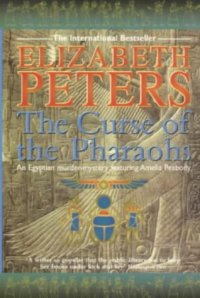 Book: “The Curse of the Pharaohs” by Elizabeth Peters
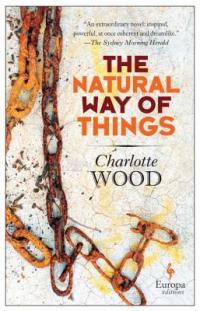 Book: “The Natural Way of Things” by Charlotte Wood
 Book: “The Woman in Cabin 10” by Ruth Ware

 Book: “The Forgotten Sisters” by Shannon Hale
 Book: “Disappearance at Devil’s Rock” by Paul Tremblay

 The Library Ladies