
Serena’s Review: “The Shadowglass”

38504533Book: “The Shadowglass” by Rin Chupeco

Publishing Info: Sourcebooks Fire, March 2019

Where Did I Get this Book: Edelweiss+

Book Description: Tea is a bone witch with the dark magic needed to raise the dead. She has used this magic to breathe life into those she has loved and lost…and those who would join her army against the deceitful royals. But Tea’s quest to conjure a shadowglass—to achieve immortality for the one person she loves most in the world—threatens to consume her heart.

Tea’s black heartsglass only grows darker with each new betrayal. And when she is left with new blood on her hands, Tea must answer to a power greater than the elder asha or even her conscience…

Previously Reviewed: “The Bone Witch” and “The Heart Forger”

Review: Given the timing of when I started reading this series, I was able to get through the first two books quite close together. Which meant I had a long wait ahead of me getting to this one. And, since the storytelling presented in this book is broken into two portions, there were quite a number of cliffhangers and unresolved plotlines left dangling after the second book. All the more nerve wracking as I waited for this, the final book in the trilogy. And, well, I’m not sure that the extra time between reads worked in this book’s favor. Or perhaps I was already on a downward trajectory overall. Either way, unfortunately, I felt like this was a frustrating end to the series.

Things are finally starting to come ahead for both Teas, past and present. The past version of our main character is beginning to feel the walls close around her as one disaster after another seems to strike. Surrounded by a small band of loyal followers, she finds herself on the run from not only the elder Asha but entire nations. Driven by the knowledge that secrets about shadowglass and bone witches are being kept from her and the world, Tea goes on a path of discovery that will lead ultimately to her banishment and the death of many of her loved ones. Present Tea, on the other hand, has come fully into her own, surrounded by her powerful beasts and on a rampage throughout nations. Her plans are not fully clear, but it’s clear that those who stand in her way are not coming out of things on the winning side. Is Tea’s mission one of justice or is it simply the darkness inside of her fully taking control?

I’ve always found these books a bit confusing. The world-building is incredibly unique, and that’s a huge pro for the series. But there is something about its execution that doesn’t read clearly. The writing style, perhaps, leaves something wanting in the clarity department, and the choice to alternate between two story lines, each with its own complications and mysteries, doesn’t help matters. There are aspects of past Tea’s life that are referenced way back in book one, but aren’t answered until this, book three. That’s simply too long for me to have kept track of everything involved in the timeline, especially when all references made in the “present” timeline are obscured through the strange way that present-Tea is made to speak.

This has annoyed me from the start: Tea’s sudden tendency to rattle of pert little phrases of wisdom and mystery. It’s not a natural way to talk and reads in stark contrast to the past Tea who reads and speaks more like a typical person. The mode of present-Tea’s speech added extra layers of confusion to all of the references she made to events from the past. This being the case, as I was reading this book, I constantly felt like I was missing things. And then when I referenced back to the first book, I would fine that present-Tea has entirely misrepresented the situation, usually, again, with some type of unnecessarily cryptic remark. This made for an incredibly frustrating reading experience. I was lucky that I still had copies of the first two books on hand, but even so, I found this need to refer back very annoying.

I also had had some concerns from the very start about how well these two storylines would merge, and I was right to worry. Again, Tea’s sudden transformation from the past version of the character to the cryptic, almost all-powerful Tea of the present didn’t read as natural. Had the chapters been laid out in order, the jump would have been sudden and strange, and the fact that it was broken up over three books didn’t do enough to obfuscate the matter.

I was also unsatisfied with the reveals themselves. Like I said, there were about a million and one referenced mysteries that had been dropped throughout the first two books that needed resolutions here. But as these resolutions appeared, I found them increasingly annoying. Several of the referenced events don’t really make much sense and require characters to be willfully blind to some pretty basic facts to pull off. Tea’s own regrets and feelings of guilt also don’t make sense, now seeing some of these events play out. Everything just felt a bit off.

This feeling of being offkilter was all the worse because the bones (pardon the pun) of the story are still good. Like I said, the worldbuilding is incredibly unique, and I’m always going to applaud an author for creating a complicated world, magic system, and arc for her story. But the slight “offness” of everything, be it the writing itself  or the way the storyline actually unfurled, became increasingly hard to read as the series progressed.

Like I said, maybe the fact that I was able to read the first two books more closely together played in their favor. I definitely had to spent a lot more time reminding myself of a lot of details of this world, character, and story as I got into this book which made it hard to simply sink in and enjoy it. I also feel like the time away left me freed up to think more critically about the story and character arc itself, as well as be a bit more put off by the writing style.

This was a disappointing return to the series. Though, I will say that now that the series is complete, readers might have more luck and enjoyment if they are able to read all three books back to back. That mode of reading could play highly in the series’ favor, reducing the confusion of a returning reader and retaining the interest of readers across books. If you do like dark fantasies, I still recommend checking this series out, but definitely plan on reading them all at once. As for returning readers, your experience may be different than mine, but I was left disappointed by this conclusion, not because of the ending itself, but by basic mechanics of the storytelling that seemed to stand out in a more negative light in this book than they had in the first two.

Rating 6: For me, a disappointing end. The writing felt more strained and the storylines didn’t feel like they ultimately linked up together naturally.

Reader’s Advisory: 

“The Shadowglass” is on these Goodreads lists: “Asian Fantasy & Science Fiction” and “Speculative Fiction by Women of Color.”

Find “The Shadowglass” at your library using WorldCat!

Kate’s Review: “Daughters of the Lake”

38927017Book: “Daughters of the Lake” by Wendy Webb
Publishing Info: Lake Union Publishing, November 2018

Where Did I Get This Book: The library!

Book Description: The ghosts of the past come calling in a spellbinding heart-stopper from the “Queen of the Northern Gothic.”

After the end of her marriage, Kate Granger has retreated to her parents’ home on Lake Superior to pull herself together—only to discover the body of a murdered woman washed into the shallows. Tucked in the folds of the woman’s curiously vintage gown is an infant, as cold and at peace as its mother. No one can identify the woman. Except for Kate. She’s seen her before. In her dreams…

One hundred years ago, a love story ended in tragedy, its mysteries left unsolved. It’s time for the lake to give up its secrets. As each mystery unravels, it pulls Kate deeper into the eddy of a haunting folktale that has been handed down in whispers over generations. Now, it’s Kate’s turn to listen.

As the drowned woman reaches out from the grave, Kate reaches back. They must come together, if only in dreams, to right the sinister wrongs of the past.

Review: As someone who grew up in Minnesota, I have fond childhood memories of spending summer trips by Lake Superior. Even in my adult life I try to get up to Duluth and the north shore at least once a year, as the beauty of the lake shore and the north woods is hard to resist. Because of my affection for this part of the state, I am almost always going to give Wendy Webb a shot when it comes to her books. And given that she’s a local author, the wait list at the library is usually pretty long, so unless you’re on top of the publication dates it may be a wait. When “Daughters of the Lake” came out I wasn’t on top of it, but after a few months wait it came in for me, and I was eager to start it.

Webb’s books have always managed to capture the feel and essence of Lake Superior towns and what it’s like to live there. She describes the lake itself just how it is in real life, with the beauty, power, and danger that comes with it. Her descriptions of the lake shore and the towns on it really transported me to a part of this state that I love, and that alone made it so that I was going to finish this book no matter what. The characters were plenty likable as well. Kate, our main character, is a relatable protagonist, and you believe her pain as a woman whose marriage has fallen apart due to her husband’s infidelity and lies, and her need to have a change of scenery. More interesting, still, was her cousin Simon, a sympathetic and supportive bed and breakfast owner who has turned the family estate into a cozy resort. I liked their relationship, though sometimes Simon treaded little close to the ‘supportive gay bestie’ trope, especially since it seemed his sole purpose was to play as her sidekick. I was definitely invested in both of them, though, and the mystery at hand. I also liked the moments in the past, told both through Kate’s strange psychic visions and also perspective chapters. In those sections the focus on on Addy, a young woman whose birth culminated with her literally floating on the waters of the Lake with no harm done. The supernatural aspect of her story is slowly peeled away, and I enjoyed seeing those layers peeled back.

But unfortunately, a promising plot with fairly solid characters gets muddled in the last half of the book. The first issue I had I can’t really go into much detail about, as I don’t want to spoil anything. But some of the supernatural aspects of this book seemed to work without a magical system that was sorely needed to make believable. By the time the book had wrapped up I still wasn’t totally sure that there had been a full explanation of how this twist of fate worked. Secondly, there were small hints of other ghostly elements in this book that implied they were building up to something big, but by the time it was revisited it was rushed and crammed in near the last minute. There were also a number of plot twists that were either a little too obvious, or out of left field without any sort of build up. And one of these twists was the kind that I absolutely cannot abide: the plot twist that happens in the last few pages, which completely changes the outcome of the entire story.

giphy-11
(source)

I’m occasionally willing to give this kind of thing a pass, mostly if it’s inconsequential in it’s outcome, or if it’s SO well done and so well placed that it takes my breath away. But in this case it just felt like a cheap last moment ‘gotcha’, and I rolled my eyes as it unfolded because it felt totally unnecessary. My fear about this kind of turn of events in thrillers is that authors will start to think that a well plotted story is all about the twists, and will therefore try to add twists for the sake of twists. I don’t recall Webb doing this in her past works (well, not in ALL of them anyway), so I don’t think I need to worry about her future books. But it always makes me wary.

Ultimately, while I liked the setting and the building blocks of the plot and characters to “Daughters of the Lake”, there were a few too many stumbles for me to be able to give it a really high rating. It’s an eerie gothic read to be sure, but I had wanted more from it.

Rating 6: While the plot was fun and the setting kept me interested, “Daughters of the Lake” had a few too many hokey twists and felt disjointed in the story telling.

Reader’s Advisory:

“Daughters of the Lake” isn’t featured on any Goodreads lists, but I think that it would fit in on “Lake Superior Mysteries”.

Find “Daughters of the Lake” at your library using WorldCat!

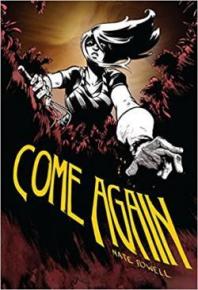
Kate’s Review: “Come Again”

36710841Book: “Come Again” by Nate Powell

Publishing Info: Top Shelf Productions, July 2018

Where Did I Get This Book: The library!

Book Description: The first and only comic book artist ever to win a National Book Award returns with a haunting tale of intimacy, guilt, and collective amnesia.

As the sun sets on the 1970s, the spirit of the Love Generation still lingers among the aging hippies of one “intentional community” high in the Ozarks. But what’s missing?

Under impossibly close scrutiny, two families wrestle with long-repressed secrets… while deep within those Arkansas hills, something monstrous stirs, ready to feast on village whispers.

Nate Powell, artist of the National Book Award-winning March trilogy returns with a new creator-owned graphic novel.

Review: I have read a couple of graphic novels that Nate Powell did the artwork on, and given that one of those was the stupendous “March” Trilogy I hold him in high regard. I first heard about his new graphic novel, “Come Again”, at work, when a coworker had requested it and couldn’t remember why. When she told me what it was about and who wrote it, I requested it myself. Not only was I interested in a supernatural story that takes place on a commune in the fading days of communes, I was also curious to see what Nate Powell would do as a writer as well as an illustrator.

“Come Again” has a number of themes that it addresses, and some of these themes work better than others. I will start with the aspects that I liked, because I liked them a lot. Our main character, Haluska, has lived in an Ozark based ‘intentional community’ (or as some laymen may call it, a commune) with her close friends and son Jake for the greater part of the 1970s. The idealistic 1960s are long over, though when Hal, her ex Gus, and their friends Adrian and Whitney first started living there it was 1971, and the world seemed filled with possibility. Now we are at the end of the decade, and though the community remains it has shrunk considerably, and Hal has been carrying on an affair with Adrian that is based in an underground cave they found in the forest. Their affair doesn’t seem to have much joy or passion to it, though neither seem willing to give it up, even though they have to take it literally underground. Haluska certainly feels guilt, but not enough to end it, and her attachment to a comfortable relationship that may not be what it used to be resonates within the greater storyline. The ideals of the Love movement, and the commune itself, are fading away, and with that change comes uncertainty and the impulse to cling harder to something that may not be there anymore. There was a moment that I found to be quite powerful, when Hal and Adrian go into town to sell goods at a farmer’s market. Their somewhat strained relationship with the ‘traditional’ town has been buoyed by the give and take system they have with each other. But on this specific day, a local band has been booked to perform. They happen to be a punk band, and their angry song of rebellion angers the townsfolk, but connects with Hal in ways she may not totally understand in that moment. Knowing that the 80s are coming, and the cynical and predatory social changes that are in store, it feels like a greater reflection of what’s to come, though Hal may not know it. These aspects of this book, of isolation, and guilt, and the secrets we keep from even the ones we love most, worked supremely well for me.

It was the dark fantasy and supernatural elements that fell a bit flat. There is something living in the cave that Hal and Adrian use, a disembodied voice that sinks into the various pages. After Hal’s son Justin and Adrian’s son Shane find the cave, Shane is lost within the depths, depths that may not be there all the time. This, of course, helps feed into Hal’s guilt about her affair with his father, but then it becomes clear that something supernatural is going on that only Hal can see. While I usually really like strange supernatural elements (and am enough of a ghoul that missing people is a theme that I like), I didn’t feel that this part of the book was as strong as it could have been. We don’t know what it is that is living in this cave, we don’t know why the spell it casts manifests in the way that it does, and as we see the consequences of the disappearance and spell start to unfold, we don’t really get answers as to why or how it’s happening. I understand that ambiguity is a key component of a story like this, and I can appreciate it to a point, but in this story I was left more confused than anything else. It ultimately leads to a sacrifice that Hal has to make, and though I understood the resonance of the sacrifice it also felt a bit like a cop out when it came to her having to own up to some of her past mistakes (and the mistakes that others have made as well). I think if the story had leaned in more to the magical or supernatural system I would have liked that part more, but it could have easily functioned as a historical fiction meditation on self, secrets, and guilt.

But Nate Powell’s style is still very unique and stands out in my mind. I liked seeing how he used shades, shadows, and a semi-realistic stylization to tell this story. I especially liked how the disembodied voice of the monster/whatever was written, in ways that made it seem like it was literally floating on the wind.

comeagain_01
(source)

“Come Again” was a book that didn’t quite give me what I want from the premise and author. It certainly had strong moments, but overall it didn’t have to ghostly oomph I expected.

Rating 6: While I enjoyed the broader themes of isolation, secrets, and guilt, the supernatural elements left much to be desired.

Reader’s Advisory:

“Come Again” isn’t on many Goodreads lists, but it is included on “NPR’s Best Books of 2018”.

Find “Come Again” at your library using WorldCat!

Serena’s Review: “Through the White Wood”

39735900Book: “Through the White Wood” by Jessica Leake
Publishing Info: HarperTeen, April 2019

Where Did I Get this Book: Edelweiss+

Book Description: Katya’s power to freeze anything she touches has made her an outcast in her isolated village. And when she loses control of her ability, accidentally killing several villagers, she is banished to the palace of the terrifying Prince Sasha in Kiev.

At the castle, though, she is surprised to find that Sasha is just like her—with his own strange talent, the ability to summon fire. Instead of punishment, Sasha offers Katya friendship, and the chance to embrace her power rather than fear it.

But outside the walls of Kiev, Sasha’s enemies have organized their own army of people who can control the very earth. Bent on taking over the entire world, they won’t stop until they’ve destroyed everything.

Katya and Sasha are desperate to stop the encroaching army, and together their powers are a fearsome weapon. But as their enemies draw nearer, leaving destruction in their wake, will fire and frost be enough to save the world? Or will they lose everything they hold dear?

Review: I’ve had some good luck recently with Russian-based fairytale/fantasy novels. Plus, I’m always on the look out for a good standalone as I have way too many series I’m currently invested in. It’s a problem. All of that plus a pretty cover, and I was quick to place a request to read an early coy of this. Ultimately, however, it didn’t live up to all of the expectations I had placed on it.

Katya’s life has been one of fear and isolation, except by the elderly couple who has raised her. One night, her worst fears are realized when she releases her incredible power over ice with horribly destructive results. But her banishment turns out nothing like she had imagined. Instead of punishment, she finds more of her kind, people with incredible powers over elements. Even the Prince of Kiev whose own power over fire seems to perfectly balance her own. Now, not only has she found a place of acceptance, but she finds herself drawn into a greater conflict where her rare abilities may be the turning point that saves her entire nation.

As a pro for this book, the greatest thing that stood out to be was the commitment to the darkness at the heart of Katya’s story and the true danger of her powers. This isn’t just Elsa from “Frozen.” People die when Katya loses control. The original incident that results in her banishment is rightly horrifying, and while yes, she is definitely provoked into it, we see how terrible the results are, not only for the villagers but for Katya herself, as at this point in time, she only has limited control of how her abilities manifest. Then, further into the story, when we begin to hear about the larger threats against the country itself, these incidents aren’t left as purely stories of terrible things happening elsewhere to other people. Again, we see the results of these attacks, and it has a direct impact on Katya and her story. I really appreciated that the author made not only the dangers of Katya’s powers, but the villains themselves, feel more real by raising the stakes in this way.

But other than that, this book simply felt too standard to spark my real interest. Even trying to type out that summary above was a struggle because it just sounds so similar to so, so many stories that are just like it. Ice powers, fire powers, what have you. A book about a teenage girl who has some incredible power, is misunderstood, and then turns out to be the “chosen one” essentially to save a nation? Been there, seen that. Add in a love story with, of course, the prince, and you have pretty much checked off every requirement for the base model of YA fantasy novels.

Katya herself could be incredibly frustrating at times, especially early in the story. Yes, her initial confusion about what is going on and what her role is in everything makes sense. But as the story continues, she bizarrely flips back and forth between being trusting of and then suddenly antagonistic against those around her. And there is never any clear instigating factor behind the switch. It never read as a natural reaction to events happening around her, and instead felt like authorial intervention to add drama.

I also hated the romance. It was a terrible case of instalove where I couldn’t see any true chemistry built between the characters and it happened incredibly fast, especially on Sasha’s side. While Katya is going through her little song and dance of “I like him! I don’t trust him! But he’s great! But no, I must be opposed to him!” Sasha was pretty fully invested in Katya from the start. But…why? Again, no reason is actually presented in the book. We’re simply told that this is how it is.

There was nothing truly bad about this book. But there was also nothing that made it stand out to me. The story felt incredibly familiar. The characters seemed to be just going through the motions that we expect from YA fantasy. And the entire read felt slow and plodding, except for a few instances of action thrown in here and there. I can’t even say the idea behind the book was exceptional, as, like I said, it felt very familiar to many other fantasy YA stories featuring powered young women. If you really love those stories, this is more of the same, and you’ll probably like it. But if you’re looking for a new take on things, this isn’t it.

Rating 6: Pretty much exactly what you’d expect after reading the book description. No surprises here, and that was a bad thing.

Reader’s Advisory:

“Through the White Wood” isn’t on many relevant Goodreads lists, but it is on “2019 Must Read Fantasy.”

Find “Through the White Wood” at your library using WorldCat!


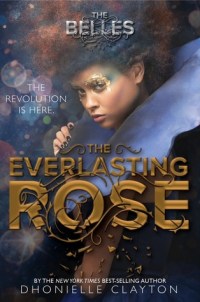
Kate’s Review: “The Everlasting Rose”

39080472Book: “The Everlasting Rose” by Dhonielle Clayton
Publishing Info: Freeform, March 2019

Where Did I Get This Book: I was received an eARC from NetGalley.

Book Description: In this sequel to the instant New York Times bestseller, Camille, her sister Edel, and her guard and new love Remy must race against time to find Princess Charlotte. Sophia’s Imperial forces will stop at nothing to keep the rebels from returning Charlotte to the castle and her rightful place as queen. With the help of an underground resistance movement called The Iron Ladies-a society that rejects beauty treatments entirely-and the backing of alternative newspaper The Spider’s Web, Camille uses her powers, her connections and her cunning to outwit her greatest nemesis, Sophia, and restore peace to Orleans.

Review: I want to extend a big thank you to NetGalley for sending me an eARC of this novel!

Last year you may remember that Serena and I both reviewed the book “The Belles” by Dhonielle Clayton. We both enjoyed it for the most part, it’s fantasy world focused on beauty and opulence a neat new theme to bring to a fantasy story. I was lucky enough to snag a copy an eARC from NetGalley, and while I gave it some time on my Kindle I finally caved and had to read it around the beginning of 2019. Given that it’s kind of rare for me to enjoy fantasy novels, I had really high hopes for “The Everlasting Rose,” the sequel and final installment in this duology. And there will be allusions to plot points of “The Belles” in this review, so tread carefully if you want to remain spoiler free for that book.

When we left off in “The Belles,” Camille, her fellow Belle/sister Amber, and former Imperial Guard Remy had escaped Orleans after the sociopathic Princess Sophia was positioned to take the crown after his mother died. Meeting up with rebellious and escapee Belle Edel, the group now knows that the only way to save Orleans from a cruel and capricious ruler is to find her sister Charlotte, believed dead but possibly only in hiding (and still comatose). So the stakes are high from the get go, with Camille under threat of capture and certain torture, if not death. There is so much action and so many plot points that need to be introduced that there are few moments of quiet and organic exposition. For the most part this wasn’t a bad thing; it made it so the action was fast paced and kept me in its thrall. But I did find it to be too bad that, unlike in “The Belles”, that these points couldn’t slowly unfold at a more ruminative pace. But I did like a good number of these points, from information on what Sophia is doing to The Belles who didn’t escape (sufficiently horrifying!) to how the kingdom is starting to fight back against her upcoming coronation and reign. It just felt a bit stuffed in. On top of that, the ending was a bit rushed, and I ended up wanting more focus and exposition there as well. I know that people are burnt out of YA trilogies, especially in stories of fantasy and dystopic themes, but I think that perhaps this series could have benefited from one more book.

I also was on a higher alert after I read some criticism of “The Belles”, a criticism I feel like I should have seen last time. A number of people were critical that in “The Belles”, the two prominent LGBTQIA+ characters were killed off for plot device and character conflict. The “Bury Your Gays” trope is certainly one that is not only overdone, but can also be damaging and hurtful to LGBTQIA+ readers. It was with that new perspective in my mind that I went into “The Everlasting Rose”. The good news is that there are more LGBTQIA+ characters in this one, and no, not all of them get fridged, but I would warn readers that there may still be some problematic optics regarding these characters. I don’t feel that I can say for sure given that I’m a hetero and cis, but just know that there were still things that I found a bit questionable.

But some of the huge strengths this book does have are the characters and the setting of Orleans. I was once again completely taken in with the descriptions of the world, from the tea cup animals (and YES, there are TEA CUP DRAGONS THIS TIME!!) to the descriptions of the foods and the colors and the beauty treatments. Clayton’s writing makes it so that the reader can really visualize what she sees in her mind’s eye. And I loved seeing more of Edel, my favorite Belle, whose rebellion and questioning personality has made her a formidable member of the Resistance. She and Camille are great foils for each other, as they have both experienced similar things in different ways, which makes them have to see the other’s perspective. Camille herself has changed a lot from the beginning of the first novel, and I still like how developed she is, from her strengths to her flaws. Her relationships all feel real and filled with complexity. Her burgeoning romance with Remy feels very in character with both of them, and while Clayton does tread a bit too much towards love triangle for my tastes, the interactions she does have with Auguste (her initial love interest and now consort of Sophia) aren’t overwrought or too sappy. It, too, felt a little quick to resolve, but ultimately it went in a satisfying way.

It was kind of a bummer that “The Everlasting Rose” was a bit of a disappointment, but I’m glad that we got to go back to Orleans one last time, and that we got to see how Camille’s story ended. If Clayton wanted to revisit this world, I would absolutely go along for the ride.

Rating 6: A bit of a let down from its predecessor, “The Everlasting Rose” was an okay finish to a story filled with beauty and darkness.

Reader’s Advisory:

“The Everlasting Rose” is included on the Goodreads lists “#ReadPOC: List of Books by Authors of Color”, and “Most Anticipated 2019 SFF Books”.

Find “The Everlasting Rose” at your library using WorldCat!

Previously Reviewed:

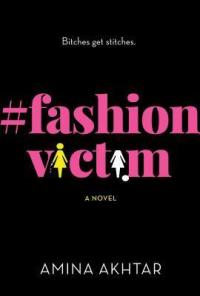
Kate’s Review: “#FashionVictim”

39049255Book: “#FashionVictim” by Amina Akhtar

Publishing Info: Crooked Lane Books, September 2018

Where Did I Get This Book: The library!

Book Description: Fashion editor Anya St. Clair is on the verge of greatness. Her wardrobe is to die for. Her social media is killer. And her career path is littered with the bodies of anyone who got in her way. She’s worked hard to get where she is, but she doesn’t have everything.

Not like Sarah Taft. Anya’s obsession sits one desk away. Beautiful, stylish, and rich, she was born to be a fashion world icon. From her beach-wave blonde hair to her on-trend nail art, she’s a walking editorial spread. And Anya wants to be her friend. Her best friend. Her only friend.

But when Sarah becomes her top competition for a promotion, Anya’s plan to win her friendship goes into overdrive. In order to beat Sarah…she’ll have to become her. Friendly competition may turn fatal, but as they say in fashion: One day you’re in, and the next day you’re dead.

ReviewEven though on any given day you will probably find me lounging around my house in leggings and an oversized Sex Pistols tee shirt, I do have a certain pleasure for various aspects of the fashion industry. I used to watch “Project Runway” fairly religiously, loved the fashion shoots on old school “America’s Next Top Model”, and still enjoy seeing whatever nutty campaigns the likes of Gucci, Chanel, and Versace have going on at any given time. But it’s really an acknowledged fact that the fashion industry as a whole can be incredibly toxic and dehumanizing, so my enjoyment is probably fairly problematic. But toxic and dehumanizing means that it is ripe for the picking when it comes to satire, and that is where Amina Akhtar comes in. Akhtar used to be a fashion writer and editor, having been on the staff of such powerhouses and Vogue and Elle, but has now settled into the life of a novel writer. Her experiences I’m sure inspired her to write the deliciously named “#FashionVictim”. Just hearing about this book made me giggle with pleasure. Fashionistas resorting to murder to get ahead? I can’t get on board fast enough.

giphy3
File footage of me as I read the description of this novel. (source)

Our main character is Anya St. Clair, a fashion writer and associate editor who is at a prestigious fashion magazine called La Vie, who starts a killing spree in hopes of making it to the top. She’s obsessive and deranged, and her object of obsession is her colleague Sarah, the entirely unlikable poster child of the privileged fashion darling. Anya isn’t likable by any stretch of the imagination, but then, no one in this book is. After all, if you’re going to do a satire of the fashion industry, everyone needs to live up to the highest of stereotypes, so screeching and vapid bitches, both of the female and male persuasion, is the way to go. Anya is outwardly a perfect fit for this world, but in her mind lies a true maniac who idolizes Sarah yet despises her for the praise and accolades she has heaped upon her. Her inner monologue is frenzied and at times very funny, with delusions and intrusive thoughts intermingling with “Law and Order: SVU” trivia. Her drawn out massacre of those around her and those who get between her and what she wants (be it a promotion or the coveted BFF friendship with Sarah) is violent and jarring, but also has moments of gallows humor that you can’t help but laugh at, even if it feels kind of wrong to do so. “#FashionVictim” achieves the satirical levels that I’ve seen other books attempt, yet falter on. It digs its heels into the mess and violence, but at always feels like a nudge and a wink to the reader because the characters are such caricatures. And really, isn’t the fashion industry itself brutal and unforgiving in its own ways, pitting women against other women to do incredibly destructive things? Perhaps not murder. But destructive nonetheless.

But I think that as much as this is satire and a fun read, it doesn’t quite have the teeth that it could have had to really drive the point home. I think that because “#FashionVictim” is so over the top, you can say ‘oh, this is just a book, this could never happen in real life’. And while though the reader is in on the joke, I think that it could have been FAR more effective had it gone for a little bit of realism to go along with the satire. By being so out there and laughably ridiculous, it made it so that by the end I was less unsettled, and more ‘ha, what a romp’. That’s not a bad thing by any means, but it did make to so that it never quite made it to ‘great’ satire levels, and I think that it really could have gotten there had it not limited itself in such a way. I know that you’re all probably sick of my constant comparisons to “You”, but I think that kind of satire is stupendous BECAUSE you can see it happening in real life. While I don’t always need my satire to be based in realism, I do think that “#FashionVictim” could have had that extra oomph if it had stepped back just a little bit.

“#FashionVictim” was definitely a fun read, and I absolutely want to see what Amina Akhtar comes out with next. Go in expecting some bloody satire, but don’t expect to walk away totally creeped out.

Rating 6: Fun and dripping with satire, “#FashionVictim” was a breezy read, though I wish it had a little more creepy bite.

Reader’s Advisory:

“#FashionVictim” isn’t on many Goodreads lists as of yet, but it is included on “2018 Books by Authors of Color/Native Authors”, and I think that if you want “The Devil Wears Prada” with a little more teeth it would be for you.

Find “#FashionVictim” at your library using WorldCat!


Serena’s Review: “Four Dead Queens”

34213319Book: “Four Dead Queens” by Astrid Scholte

Publishing Info: Putnam, February 2019

Where Did I Get this Book: BookishFirst

Book Description: Get in quick, get out quicker.

These are the words Keralie Corrington lives by as the preeminent dipper in the Concord, the central area uniting the four quadrants of Quadara. She steals under the guidance of her mentor Mackiel, who runs a black market selling their bounty to buyers desperate for what they can’t get in their own quarter. For in the nation of Quadara, each quarter is strictly divided from the other. Four queens rule together, one from each region:

Toria: the intellectual quarter that values education and ambition
Ludia: the pleasure quarter that values celebration, passion, and entertainment
Archia: the agricultural quarter that values simplicity and nature
Eonia: the futurist quarter that values technology, stoicism and harmonious community

When Keralie intercepts a comm disk coming from the House of Concord, what seems like a standard job goes horribly wrong. Upon watching the comm disks, Keralie sees all four queens murdered in four brutal ways. Hoping that discovering the intended recipient will reveal the culprit – information that is bound to be valuable bartering material with the palace – Keralie teams up with Varin Bollt, the Eonist messenger she stole from, to complete Varin’s original job and see where it takes them.

Review: There are definitely some staple fantasy tropes that are sure to draw me in: dragons, women disguised as men, sisterhood, fairytale elements, etc. etc. Included in these is “thieves as protagonists.” While nothing has ever topped Megan Whalen Turner’s “Queen’s Thief” series, I’m still always on the lookout for a new favorite take on this theme. Not only does “Four Dead Queens” meet that criteria, but it was given an extra boost in that it’s a stand-alone novel. Rare, indeed, in this YA fantasy climate! But while there were definitely some good elements and legitimate surprises to be had in the story, in the end I was left feeling a bit flat after getting through this book.

Keralie is just your typical thief, happy to continue her life of petty crime and freedom. The politics and greater movements of the complicated city that she calls home, made up of four quadrants each ruled by its own queen, exist largely outside of her life and she’s fine with that. Until, that is, one of her jobs goes side-ways and she finds herself caught up in a murder mystery that is greater than could be imagined. Not one. Not two. Not even three. No, all four queens have been brutally murdered. And now Keralie and the mark she hit that lead her into all of this mess find themselves wrapped up in a conspiracy that goes further than they could have ever imagined.

I really liked the complicated world-building that was constructed for this story. The four quadrants and the various cultures and philosophical approaches they take were well-established and interesting. The world felt “lived in” and fully realized in a way that I think is fairly impressive given the fact that there have been, again, a sort of over-abundance of this type of world-building in YA fantasy in the past (ascribing generic traits to regions/cultures and calling your world good). Given the fast-paced nature of the book and the fact that it was a stand-alone, I was pleased to see a decent avoidance of info-dumping to convey this type of background information. Could more have been done? Yes. But it’s hard to both rant about how there aren’t enough stand-alone novels out there and then ding the ones that do come out too heavily for having a restricted word count within which to do their work. So I’ll give that a pass here.

As I mentioned, the story was fast-paced. The action starts from the very first page and there is very little let-up as the mystery unfolds. I was able to guess at a few things here and there, but there were also a surprising number of twists and turns that I failed to see coming. That said, the fast-paced nature of the story could also work against the plot as well. Time itself didn’t feel very well delineated or established. Some of the action felt like it was all happening at once and then a bit later I would realize that no, several days had actually taken place. Again, kind of a weird complaint, but the fact that I was buzzing through the book as quickly as I was almost worked against it. I couldn’t quite settle in, at times. So while I didn’t guess some of the reveals, I’m not sure whether this was because they were truly surprising or because I was so off-balance by the speed of the book that I didn’t have time to think about it.

I also only felt marginally attached to our main characters. While Keralie had many of the traits that I like to see in my thief protagonists, she also felt a bit like a cardboard cut-out of everything we’ve come to expect from a character like this. The romance, also, was incredibly dull and uninteresting to me.

Like I said, I’m always really excited to come across a stand-alone fantasy novel. But they are, by their nature, very different things than books that are setting up, or continuing, a series. Much needs to be done with fewer words and fewer pages. That being the case, I often find myself wishing that authors would choose to simply leave somethings out when they go the stand-alone route. You simply can’t fit in every standard YA fantasy trope that usually takes place over a trilogy or series into one, single book. Does there have to be a romance at its heart? Does the world-building need to be simplified or the action condensed to a few big scenes? Simply put, this book felt like it was trying to mash every fantasy expectation we have into one book and the word count simply couldn’t support it. Luckily, the fast-moving plot largely distracted from this as I was reading. But looking back, I do find it disappointing. If you’re looking for more of a “beach read” fantasy story, however, the past, hard-hitting action of this book might be just the ticket!

Rating 6: Had a lot of good bones in all the places that mattered, but never felt fully fleshed out in a way that is necessary for me to fully buy-in.

Reader’s Advisory:

“Four Dead Queens” is included on these Goodreads lists: “NEW ADULT fantasy & paranormal romance” and “Queen in Title.”

Find “Four Dead Queens” at your library using WorldCat!

Kate’s Review: “The Deceivers”

39863259Book: “The Deceivers” by Kristen Simmons

Publishing info: Tor Teen, February 2019

Where Did I Get This Book: The publisher sent me an ARC.

Book Description:Pretty Little Liars meets Ocean’s 11 in this intrigue-filled contemporary drama from acclaimed author Kristen Simmons.

Welcome to Vale Hall, the school for aspiring con artists.

When Brynn Hilder is recruited to Vale, it seems like the elite academy is her chance to start over, away from her mom’s loser boyfriend and her rundown neighborhood. But she soon learns that Vale chooses students not so much for their scholastic talent as for their extracurricular activities, such as her time spent conning rich North Shore kids out of their extravagant allowances.

At first, Brynn jumps at the chance to help the school in its mission to rid the city of corrupt officials–because what could be better than giving entitled jerks what they deserve? But that’s before she meets her mark–a senator’s son–and before she discovers the school’s headmaster has secrets he’ll stop at nothing to protect. As the lines between right and wrong blur, Brynn begins to realize she’s in way over head.

Review: Thank you to Tor Books for sending me an ARC of this novel!

One of my husband’s favorite movies is “The Sting”, the classic grifter feature in which Robert Redford and Paul Newman run an elaborate con job on Robert Shaw. While I am more than happy to indulge the guy on watching an old favorite every once in awhile (lord knows he has to sit through “Purple Rain” every so often), the ‘con artist’ trope isn’t one of my favorites. So when I got an ARC of “The Deceivers” by Kristen Simmons I was a little bit hesitant. But when I saw that it takes place at an ELITE BOARDING SCHOOL for special kids (aka budding con artists), my interest had officially been piqued. Bring on the sudsy drama of boarding school brats compounded with the promise of back stabbing. That’s all in the game when it comes to con artists, right? So while “The Deceivers” was out of my wheelhouse, I was more willing to give it a go.

The first thing that struck a chord with me in this book was our protagonist, Brynn. Brynn is cut from a similar cloth to a number of YA heroines; she’s snarky, she’s scrappy, and she comes from a troubled background that has solidly placed a chip on her shoulder. Her father was murdered while working at his convenience store job, and Brynn’s mother has bounced from lout to lout ever since, leaving Brynn in a precarious, and sometimes outright dangerous, position. But through it all Brynn maintains her composure and never treads into overused plot points of devices. I like that she feels like a realistic teenage girl in a world that isn’t exactly smacking with realism, and her need to escape from this life strikes the right chords. Her motivations are clear, and while she is something of a fish out of water at Vale Academy (aka the boarding school for budding con artists, more on that whole thing in a bit), her character growth is believable and interesting.

And while the plot is based in a theme that isn’t usually my cup of tea, I did find the meat of the plot and the cogs within pretty entertaining. While Vale Academy itself feels little under cooked as of now, this is a series and there is a lot of room to grow and to bring the school history to a closer focus. There were also a good deal of plot twists that did take me by surprise, and I felt like the most important ones worked very well, especially when they changed the game and turned Brynn’s perceptions (as well as the reader’s) on their heads.

But that said, there were a number of moments and devices that didn’t quite come to fruition in satisfactory ways. Brynn went from potentially stumbling into a new educational setting with no guarantee of admission, to having the deal in the bag already without much reasoning beyond ‘because she needs to be here for the story to work’. There were moments and characters who felt like they could have had more focus on them, or at least more exploration and elaboration. On top of that, this book was nearly four hundred pages long, which felt a bit too long for the story in itself. There were repetitive aspects to the plot, mostly regarding whether or not Brynn could trust any given person at any given time, and the ultimate backstabbing that would come of that. I felt like had this been parsed down a bit more and tightened up, the plot wouldn’t have seemed to drag on as much as it did. And as I mentioned above, Vale Academy itself is still a very vague idea by the end of this book. In other books with magical and/or questionable boarding schools that I have enjoyed I’ve gotten a good feel for what the school as an institution stands for, and what the stakes are in regards to that school. But here, Vale Academy feels less like an actual place, but more of an excuse for these teenagers to be trying to trick, con, and manipulate people. Whether or not this will expand in later books, I can’t be sure, but I think that it will have to if it wants to stand out.

Overall, “The Deceivers” had a fun main character and some good twists and turns, but it dragged on a little longer than it could have. People who do like con artist stories may be more receptive to the premise than I was.

Rating 6: With a strong protagonist, “The Deceivers” has a lot of potential, but felt a bit scattered and unfocused, and a little too long.

Reader’s Advisory:

“The Deceivers” is new and isn’t on many Goodreads lists as of yet, but I think it would fit in on “Popular Caper Heist Books”.

Find “The Deceivers” at your library using WorldCat!

Serena’s Review: “Crown of Feathers”

35715518Book: “Crown of Feather” by Nicki Pau Preto
Publishing Info: Simon Pulse, February 2019

Where Did I Get this Book: Edelweiss +

Book Description: I had a sister, once…

In a world ruled by fierce warrior queens, a grand empire was built upon the backs of Phoenix Riders—legendary heroes who soared through the sky on wings of fire—until a war between two sisters ripped it all apart.

I promised her the throne would not come between us.

Sixteen years later, Veronyka is a war orphan who dreams of becoming a Phoenix Rider from the stories of old. After a shocking betrayal from her controlling sister, Veronyka strikes out alone to find the Riders—even if that means disguising herself as a boy to join their ranks.

But it is a fact of life that one must kill or be killed. Rule or be ruled.

Just as Veronyka finally feels like she belongs, her sister turns up and reveals a tangled web of lies between them that will change everything. And meanwhile, the new empire has learned of the Riders’ return and intends to destroy them once and for all.

Sometimes the title of queen is given. Sometimes it must be taken.

Review: As I mentioned in the Highlights post for this book, I was pretty excited about this one purely based on the phoenixes. While I love me some dragons, there have been approximately a million and a half books written about them, often including dragon riders as well, over the last several years. Obviously this has always been an appealing topic to writers and readers alike, but I have to think a certain HBO show has also had a hand in the sheer explosion of dragon books we’ve seen. But, all of that said, there are a lot more fantastical beasts out there to feature in books, so I was thrilled when I saw this cover and read the description that features riders not of dragons but of phoenixes! Add in some sister drama, and it sounded like it would be right up my alley. Unfortunately, while there were a lot of good elements included, it fell a bit flat for me.

Veronyka and her older sister have been living a vagrant life almost since Veronyka can remember. And all that has kept them going has been their shared dream of finding phoenix eggs and bringing back the famed Phoenix Riders who have faded almost into myth in the midst of civil war. But when things go wrong, Veronyka finds herself alone with this dream, hiding her identity from those around her. And, of course, there is much more going on than what there seems. What is the truth behind Veronyka and her sister’s strange family history? And what role will they each play in building a new future?

Most of what I liked about this book had to do with the world-building, and, of course, the entire concept of an organization of phoenix riders. Yes, there is a lot of cross-over between this and what we’ve seen from similar dragon rider books, but the unique attributes of phoenixes (notably their regenerative proprieties) adds a new layer of intrigued to how these great birds would operate with their partners. I also liked the complicated relationship laid out between Veronyka and her sister. From the very beginning, we see the tension that lies between them. There is love, but its always tinged with just a bit more. Sometimes jealousy, sometimes anger, sometimes suspicion. As the book plays out, this relationship becomes even more important to the story, and while I was able to guess at the reveal in the end, it was still a pretty interesting concept and a great set-up for the next book.

But beyond those things, I simply had a hard time getting into this book. I was never able to slip fully into the experience and instead the process of reading it began to feel like a chore. I think there were probably a few reasons for this.

One, there is a lot of info-dumping in the first quarter to a third of the book. The story alternates between Veronyka and another character, and between the two of them, they almost end up repeating the exact same historical and cultural lessons back to back. Information provided by one character will be almost directly repeated by the other, but with a few changes in perspectives (but by no means enough to justify the repeated dump). Not only was the repetition annoying, but info-dumping on its own is always a quick way to kick me out of a reading experience. Most of this information could have been sprinkled throughout and come up in more natural ways.

Second, the story drags. There are blips of exciting action only to be followed with long chunks of very slow plot movement. The story probably could have been significantly shorter and be better for it.

Third, the characters on their own weren’t all that interesting. While I did like the complicated sisterly relationship, that aspect of the characters’ relationships would often fall to the side. And when left with Veronyka herself and the other male character, Sev, I was often simply bored. Which is really saying something, given how much I typically enjoy girls-disguised-as-boys stories.  They both simply felt pretty flat. I was also not terribly interested in the romance included in the story.

So, while the book had a lot of good things going for it (world-building, unique fantasy elements, a diverse cast of characters), I have to ding it down a few ratings simply because I didn’t enjoy reading it. And really, at its heart, that’s my main requirement for a book! Readers who have more patience than me and who are looking for a YA fantasy novel that is still pretty awesome with its handling of phoenixes, this may be the book for you! Just wasn’t for me, sadly.

Rating 6: Info-dumping and a floundering plot bogged down this book despite the cool factor that comes with having a story about girls riding around on phoenixes!

Reader’s Advisory:

“Crown of Feathers” is included on these Goodreads lists: “Fantasy / Sci-fi Books With POC Leads” and “Fiction: Phoenix (Mythological Bird).”

Find “Crown of Feathers” at your library using WorldCat!

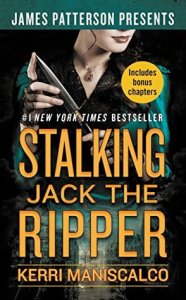
Serena’s Review: “Stalking Jack the Ripper”

40727470Book: “Stalking Jack the Ripper” by Kerri Maniscalco

Publishing Info: Jimmy Patterson, September 2016

Where Did I Get this Book: audiobook from the library!

Book Description: Seventeen-year-old Audrey Rose Wadsworth was born a lord’s daughter, with a life of wealth and privilege stretched out before her. But between the social teas and silk dress fittings, she leads a forbidden secret life.

Against her stern father’s wishes and society’s expectations, Audrey often slips away to her uncle’s laboratory to study the gruesome practice of forensic medicine. When her work on a string of savagely killed corpses drags Audrey into the investigation of a serial murderer, her search for answers brings her close to her own sheltered world.

Review: I’m always on the lookout for another good historical mystery series. While I have several that I’m currently following, there’s always room for more! I’d seen this title floating around in a few discussions with other fans of historical mysteries and was intrigued by not only the concept (while I’m not at Kate’s level of knowledge of famous serial killers, we all know about Jack the Ripper!), but also by the fact that it was  YA series. So off to the library I went where I was pleased to find a lovely audiobook version ready and waiting!

Ever since her mother’s death, Audrey Rose has turned to science to understand the world. Under the tutelage of her eccentric uncle, she has learned the ins and outs of anatomy and even begun conducting procedures herself. But what began as a pursuit of knowledge turns a deadly angle when a streak of murders of women hit London. Called upon for the forensic knowledge, Audrey Rose, her uncle, and his apprentice, the irritating but handsome, Thomas, are pulled into the dark and disturbing mind of a mad man. And as they begin unraveling the crimes, Audrey Rose begins to suspect that the mysterious “Jack” may be stalking them, in turn.

So, right off the bat, this is going to be a mixed review. On one hand, I genuinely enjoyed reading this book and whizzed through it quite quickly. But on the other side of things, once completed, I found myself looking back on many aspects of the storytelling with some dissatisfaction. But, as always, we shall begin with the strengths!

One of the things that intrigued me most about this book and series was the combination of a historical mystery based on a real-life crime spree and the young adult genre. I’ve mostly read adult historical mysteries in the past, and it’s pretty obvious that fantasy, and now to some extent contemporary fiction, is still dominating the YA genre. Historical mysteries/thrillers are hard to come by! And I do think the author managed to pull off the merging of all of these elements quite well. For fans of historical mysteries, there were familiar elements in the detailed depiction of the time period and the creation of a romantically-tinged buddy cop duo in Audrey Rose and Thomas. The mystery was solid enough, probably enhanced mostly by its connection to the true crimes, and it walked right up to the horror line, if not crossing it a bit towards the end in a surprisingly gruesome manner. And for YA fans, Aubrey Rose and Thomas checked most of the boxes for what readers expect from their teenage protagonists.

This horror aspect and the reveal at the end of the murderer and their motivations was also one of the strongest aspects of the book. While I felt that the identity of the murderer was telegraphed fairly early on, the motivation came as a complete surprise and the manner of its explanation and end game was particularly horrific. There was almost a cross-over with another famous story in a way that I hadn’t been expecting at all.

The writing was also snappy and quick-moving, with the dialogue between Aubrey Rose and Thomas rising to the top as often particularly enjoyable. However, here was also where I began to struggle with the story. There was something verging on anachronistic in the relationship and mode of speaking that was built up between these two. As I said, this type of buddy cop/romantic relationship is fairly standard for historical mystery fare, and often that involves a rather progressive man and woman at its heart. However, here, there were a few elements that pushed this typical pattern over some unseen line in my mind. Part of it could have to do with their age. For example, both Veronica and Amelia were independent, fully grown women when they set off on their adventures. Age, experience, and, importantly, financial and social freedom that was rarely seen in the time, allowed them to interact with others and the world in the way they did. Aubrey Rose is still quite young, not even “out” in society, and still a member of her father’s household. This then ended up rubbing up wrongly against some of her choices and ways of speaking, especially in her interactions with Thomas.

So, too, Thomas’s flirty and sarcastic way of speaking was also hampered by not only his relatively young age, but also the fact that he was supposedly raised to be a gentleman and was interacting with a young, often unchaperoned, girl. This left some of his more suggestive remarks reading not as the fun flirtation that I’m sure they were meant to portray, but instead as rather boorish and unflattering. All together, it was the kind of an odd, unhappy mixture of modern YA romance tropes on top of a historical setting that isn’t equipped to manage those tropes in the same way.

Further, while I generally enjoyed Aubrey Rose as a character, she did have her fair share of really poor decision making and thinking. And while these flaws were often made clear to her, eventually, it was still a frustrating read at times when aspects of the mystery were only too clear to readers, but Aubrey Rose, through plot necessity, was forced to remain and act clueless. In this same way, her interactions with Thomas became equally frustrating as she insisted on “misinterpreting” his flirtations throughout the entire book, even when those same flirtations became almost inappropriately obvious.

In the end, it was a bit of a mixed bag. I really enjoyed what the author was attempting to do, and I think she should be applauded for managing to merge so many genres together. However, this same merging of genres also let the author and the book down at times when tropes from each didn’t play well together. But, as I said, I also whizzed through this book quite quickly, so I still plan on checking out the next in the series. We’ll evaluate again from there! Fans of historical mysteries may want to check this series out, but if you’re not a fan of YA fiction to some extent, you may be frustrated by some of those elements.

Rating 6: A fast-paced, fun read, just try not to think about it too much afterwards though or you may become frustrated.

Reader’s Advisory: 

“Stalking Jack the Ripper” isn’t on many Goodreads lists for some reason, but it is on  “YA Fiction set in the 1880s.”

Find “Stalking Jack the Ripper” at your library using WorldCat!