Kate’s Review: “Delicate Condition”


This post may contain affiliate links for books we recommend.  
Read the full disclosure here.

Book: “Delicate Condition” by Danielle Valentine

Publishing Info: Sourcebooks Landmark, August 2023

Where Did I Get This Book: I received and ARC from the publisher.

Where You Can Get This Book: WorldCat.org | Amazon | Indiebound

Book Description: Anna Alcott is desperate to be pregnant. But as she tries to balance her increasingly public life with a grueling IVF journey, she starts to suspect that someone is going to great lengths to make sure her pregnancy never happens. Crucial medicines are lost. Appointments get swapped without her knowledge. And even when she finally manages to get pregnant, not even her husband is willing to believe that someone’s playing a twisted game with her.

When the increasingly cryptic threats drive her out of her Brooklyn brownstone and into hiding in the cold, gray ghost town that is the Hamptons in the depths of winter, Anna is almost at the end of her rope.

Then her doctor tells her she’s had a miscarriage—except Anna’s convinced she’s still pregnant, despite everything the grave-faced men around her claim. Could it be that her mind is playing tricks on her? Or is something more sinister at play? As her symptoms become ever more horrifying and the sense of danger ever more present, Anna can’t help but wonder what exactly she’s carrying inside of her…and why no one will listen when she says something is horribly, painfully wrong.

Review: Thank you to Sourcebooks Landmark for sending me an ARC of this novel!

Perhaps you have noticed, readers, that we are getting a fair amount of horror books centered around pregnancy and motherhood as of late. Which shouldn’t come as a shock to any well versed and in touch horror reader, given that horror trends tend to like to tap into social anxieties that are going on at the time. And seeing as reproductive rights have been getting struck down and attacked in the United States ever since Roe v Wade fell, it’s just par for the course, anxiety wise. “Delicate Condition” by Danielle Valentine is the newest entry to this sub genre, and it already has a bit of hype going in because it is going to be the inspiration for the new “American Horror Story” season coming out later this year. With all these things swirling around in my mind, I dove into this book, eager to see the directions it went. And I really, really loved it.

“Delicate Condition” has gotten a lot of comparisons to “Rosemary’s Baby”, one of the earliest pregnancy horror tales that really captured the mainstream consciousness, but it tweaks and twists it into something far more powerful. There are so many themes that Valentine addresses when it comes to pregnancy, reproduction, motherhood, and misogyny that on paper it would seem like too much to have to juggle. But it is all done so well. We have Anna, an actress in her late thirties whose career has just had a massive windfall right when she is trying to start a family with her husband Dex, and who has been unable to get pregnant thus far and has started IVF treatments. Already we have so much to work with. For one, we have the woman who wants to have a career and is proud of it but now wants to have a family as well, and feels torn between two desires that seem to compete with each other. We also have the frustrations and heartbreak of infertility that has no explanation, and pregnancy loss, and the stresses and trauma around that. We ALSO have the themes of how the medical field can feel somewhat dismissive and callous when it comes to Anna and her infertility (with notes and acknowledgements that it is even worse for BIPOC women and non gender conforming people), and then her actual pregnancy struggles (more on that in a bit), with her doctors being condescending at times and at other times straight up rude or hostile. On top of all of THAT, Anna is also possibly contending with a stalker, and as that starts to ramp up and even seemingly focus on her pregnancy, her fear is written off as stress or paranoia or hormones by most everyone around her. It captures the real life horrors of the way that people treat and view women, be they pregnant or trying to become pregnant or already mothers, and it made my blood boil.

And then there are the more, shall we say, supernatural horrors of Anna’s pregnancy in this story. Early in her pregnancy Anna seems to have a miscarriage, but as time goes on something is still growing inside of her. Her doctors are unwilling to believe that this is anything outside of a hysterical pregnancy at first, but as time goes on she is clearly pregnant, though her symptoms go from run of the mill to extreme nightmare fuel. I loved how Valentine tackled this, as all of the things that Anna experiences, like hair loss, and skin issues, and pain, these are all things that do actually happen to pregnant women, just to the nth degree. And as these things happen, once again they are dismissed as just normal things an she is basically told to take a Tylenol and drink some water. Even as someone is clearly following her. Even as she is having visions of talons trying to cut through her body. It’s exaggerated, but again, boy does it reflect the actual horrors of pregnancy. I was especially sympathetic to all of the ‘just take Tylenol and rest’ bits, given that early in my own pregnancy (which was generally pretty uncomplicated and easy) I had such bad cramping that I called the generic nurses line and was just told to take a Tylenol and drink more water. I ended up fainting from the pain. It all turned out fine, but in that moment being told to just drink more water and take a painkiller that did NOTHING was stressful and confusing. So as I was reading all of these things that are depicted as a body horror tale, knowing FULL WELL that a lot of it is really something that pregnant people deal with, even if it’s to a less degree, I was just super, super impressed.

And finally, there is also the way that Valentine brings together a broader story of other women throughout the centuries who are dealing with a similar thing that Anna is dealing with. We get cut scenes and vignettes of women who are pregnant, or have just given birth, or are trying to become pregnant, who are having the same weird encounters, visions, experiences, and horrors that Anna is encountering. It’s all pretty vague and mysterious, but it is done in a way that when Valentine does eventually weave it all together, it fits so well that I just blew my mind. I’m not going to spoil anything here because I just loved the execution and I loved the ultimate reveal as to what exactly is happening. What I will say is while “Rosemary’s Baby” is an obvious comparison that people will know, there is so much more going on, and not everything is as obvious as it seems.

I really loved “Delicate Condition”. It’s another great pregnancy and motherhood related horror tale that cuts to the bone.

Rating 10: A feminist reimagining of “Rosemary’s Baby” themes with a lot of bones to pick with those who discount the experiences of pregnant people, “Delicate Condition” is a perfect read to reflect the horrors of pregnancy, and the culture that touts it as uncomplicated while ignoring its darkness.

Reader’s Advisory:

“Delicate Condition” is new and isn’t included on any Goodreads lists of of now. But if you liked “Graveyard of Lost Children” or “Rosemary’s Baby” this would probably be a good book for you.

Kate’s Review: “Night’s Edge”

This post may contain affiliate links for books we recommend.  Read the full disclosure here.

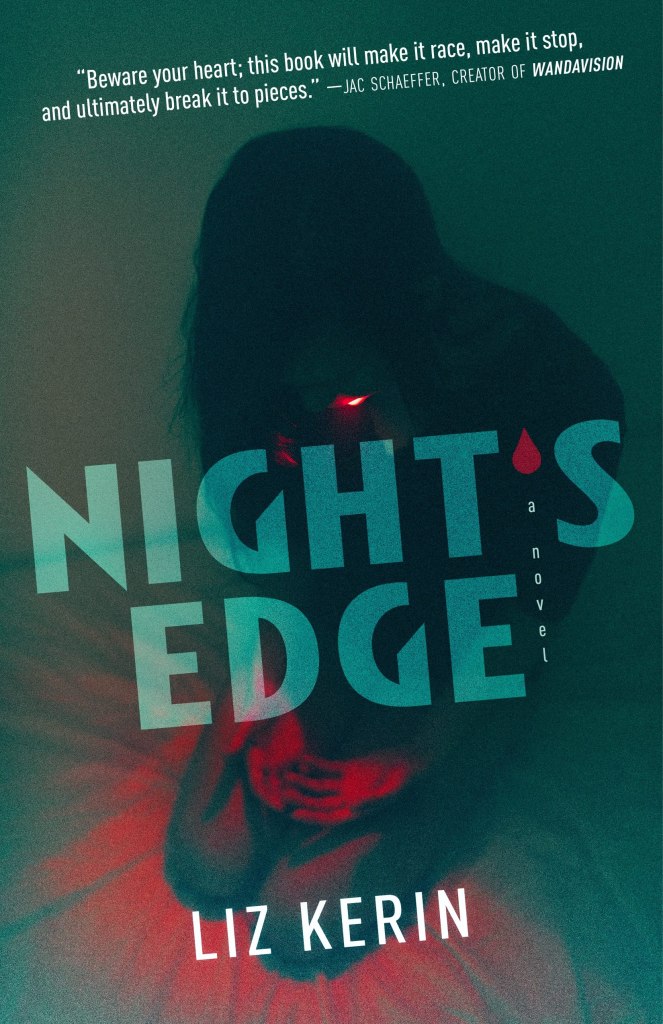
Book: “Night’s Edge” by Liz Kerin

Publishing Info: Tor Nightfire, June 2023

Where Did I Get This Book: I received an ARC from the publisher.

Where You Can Get This Book: WorldCat.org | Amazon | Indiebound

Book Description: Liz Kerin’s Night’s Edge is a sun-drenched novel about the darkest secrets we hide and how monstrous we can be to the ones we love most.

Having a mom like Izzy meant Mia had to grow up fast. No extracurriculars, no inviting friends over, and definitely no dating. The most important Tell no one of Izzy’s hunger – the kind only blood can satisfy.

But Mia is in her twenties now and longs for a life of her own. One where she doesn’t have to worry about anyone discovering their terrible secret, or breathing down her neck. When Mia meets rebellious musician Jade she dares to hope she’s found a way to leave her home – and her mom – behind.

It just might be Mia’s only chance of getting out alive.

Review: Thank you to Tor Nightfire and Wunderkind PR for sending me an ARC of this novel!

Vampires hold near and dear places in my horror heart, though I am very picky about the way these stories are told. I’m glad that we are kind of past the ‘vampires as super romantic supernatural lovers’ stories from the early 2000s, just as I am always glad to see creators mine within the numerous metaphors you can take from this specific horror tale. So I was very interested when “Night’s Edge” by Liz Kerin ended up in my mailbox for a few reasons. The first is that Tor Nightfire is pretty damn reliable when it comes to horror fiction, so any title they have is sure entertain. The second is that the description is very much a mother/daughter tale, with darker “Rapunzel”-esque implications. And the third is that any unique take on vampires is going to catch my attention. Boy, was did this book live up to my interest and expectations. “Night’s Edge” is fantastic, scary, and heartbreaking.

First off, the vampire (known as Saras) world building is superb in this book. Kerin takes some of the bare bones of vampire mythos (blood thirst, vulnerability to the sun and various elements) and sends them through the lens of a modern disease that has changed and terrified modern real world societies. We get a fabulous background of the Sara epidemic in a very easy to follow and engaging info drop through the eyes of Mia, a young woman whose mother Izzy has been infected and turned into a being that relies on blood to survive, and we get some good explanations as to how a society would have to adapt to dealing with Saras, usually in ways that would isolate them away and are potentially punitive (ie scanned for it before being able to enter a building, or being sent away to facilities that are secretive and perhaps more like prisons). It makes it so that you can absolutely understand why a person like Izzy, who is a single mom with a child who depends on her, would want to hide her condition, and how hiding it makes her life and Mia’s life that much more difficult, stressful, and dangerous, especially as Mia gets older and starts to come into her own. We get the vampire goods with this approach, but we also get to see it within the context of modern society that is trying to grapple with it, and that has led to more problems as more and more Saras start to become angry, isolated, and feral due to their inability to properly feed and keep themselves under control. Think “True Blood” if the fake blood supplement never came to be.

And it’s really the mother daughter dynamic between Izzy and Mia that brings out all the complicated and heart wrenching feelings in “Night’s Edge”. Izzy was changed into a Sara by a crappy boyfriend named Devon, whose poisonous influence on her could be due to his Sara nature where he’s trying to survive and has turned hardened and cynical… or it could be that he’s just another shithead dude who mistreats the women in his life (I feel like it’s probably the latter). And even after they leave Devon behind (though these shitty guys just won’t stay away, will they?), her being a Sara has transformed and damaged her relationship with Mia because Mia has to give up so much to keep Izzy safe, and Izzy doesn’t seem very grateful. She has to keep other people at arm’s length lest they find out at rat them out. She can’t live a normal life on her own due to the reliance her mother has on her. And, most grotesque of all, she has to give Izzy blood from her body every night to keep her from going fully feral. The codependency is there, but the emotional abuse is apparent as well. I love how I completely feel awful for Izzy because she had no say in this. BUT, at the same time, Kerin makes no excuses for the way she manipulates her daughter to keep herself safe and comfortable without thinking about the sacrifices, like LITERAL BLOODLETTING, her child is making for her. It’s so complex and so upsetting and you root for Mia so much, especially as she starts to want more for herself when she meets the charismatic musician Jade, but also has no idea how to function without her mom. It just killed me as I was reading it, especially since I am a mother with a daughter and this kind of thing just cuts to the bone a little more these days.

AND THERE IS GOING TO BE A SEQUEL! Which is good, because this ends on a note that was a sucker punch, but also opens up the door for more. And I can’t wait to see where Kerin takes the next phase of this story, because “Night’s Edge” is phenomenal. Simply phenomenal. READ THIS BOOK!

Review 10: A visceral, scary, and devastating story about vampires, toxic relationships, codependency, and mothers and daughters that hit me right in the feelings over and over again.

Reader’s Advisory:

“Night’s Edge” is included on the Goodreads list “Horror to Look Forward To in 2023”.

Serena’s Review: “Witch King”

This post may contain affiliate links for books we recommend.  Read the full disclosure here.

Book: “Witch King” by Martha Wells

Publishing Info: Tor, May 2023

Where Did I Get this Book: ARC from the publisher!

Where Can You Get this Book: Amazon | IndieBound | WorldCat

Book Description: “I didn’t know you were a… demon.”
“You idiot. I’m the demon.”
Kai’s having a long day in Martha Wells’ Witch King….

After being murdered, his consciousness dormant and unaware of the passing of time while confined in an elaborate water trap, Kai wakes to find a lesser mage attempting to harness Kai’s magic to his own advantage. That was never going to go well.

But why was Kai imprisoned in the first place? What has changed in the world since his assassination? And why does the Rising World Coalition appear to be growing in influence?

Kai will need to pull his allies close and draw on all his pain magic if he is to answer even the least of these questions.

Review: While I’m not up-to-date with Martha Well’s current, very popular “Murderbot” series, I am a big fan of her in general. I read all of her “Books of Raksura” series a decade or so ago, for example. As with many SFF authors, it can become quite intimating to start up on a long-running series, regardless of how much one likes the author in general. So when I saw that she was releasing a stand-alone fantasy novel, I jumped on the opportunity to get back to reading her work. Let’s dive in!

After awakening from his own murder, Kai is fairly disturbed. As a demon, changing bodies is not pleasant, but it is manageable. What’s more worrying is the loss of time and the changing political movements of the world at large. With generations of lives making up his own long life-span, Kai is dependent on the few allies he has who have also experienced both his past and his present. But now they, too, are missing, and Kai is desperate not only to find them but to uphold a promise made long ago.

Brandon Sanderson is indisputably the current master of fantasy world-building. But I think what is not acknowledged is Martha Wells’ dynasty as a master of original character work. Not only are all of her characters enfolded in complex, layered arcs in each of their books, but she also has a real skill at writing non-human protagonists that, none the less, reflect very human challenges, joys, and sorrows but through very unique angles. The “Murderbot” series is an obvious example, but the series I read about a decade ago also featured an entire world “peopled” by alien creatures without a humanoid in sight (that I remember at least). And here, in this book, Wells is back at it, presenting us not only with Kai, a demon, but with an entire society built up around various peoples, many humanoid but not quite human either.

But, of course, Kai is our main character. And while some of the typical lore around demons is touched on, it is clear early on that Kai is not the sort of demon we are familiar with. Instead, his kind have formed a symbiotic pact with a group of human people where both societies benefit from the intermingling of their kind. But, through a series of flashbacks seen throughout the book, a powerful and ruthless new group of magic users began a marching conquest of the known world that resulted in the decimation not only of demon kind but also of the many peoples who make up this world.

The use of these flashbacks was incredibly effective, though I will say they highlight another crucial aspect of Wells’ writing style. She’s definitely of those high fantasy authors who creates incredibly complex and nuanced worlds and just plops her readers down right in the middle of the action. You basically have to be comfortably not understanding everything you’re currently reading on the page. Instead, the joy is found in trusting that understanding will come, and it will come in a very specifically constructed and directed manner laid out by the author. In this book, as the story is about a being who has lived for generations, these flashbacks do a lot of work to really set up the stakes of the current situation. Not only the history behind the current political upheaval, but also the relationships Kai has formed with his small band of allies, all of whom we slowly meet throughout the story.

The writing and plotting is also incredibly tight. There were moments when I was laughing out loud at the dialogue and Kai’s distinctly unhuman manner of looking at the world. But then there would be heart-wrenching scenes that perfectly highlighted that while not all of these characters are human, they still experience the same sense of love and betrayal, hope and despair. The pace was steady and even throughout the story, and I enjoyed the themes of found family, trust, and the struggle of individual cultures and peoples when facing a powerful enemy. Overall, I can’t recommend this book enough to SFF readers. It’s definitely not an “entry level” story, but if you’re a fantasy fan who enjoys slowly building an understanding of a world and story, than this is the perfect book for you!

Rating 10: A sprawling world and history to explore alongside the best grumpy, snark demon I can imagine!

Reader’s Advisory:

“Witch King” can be found on this Goodreads list: Can’t Wait Books of 2023

Kate’s Review: “Graveyard of Lost Children”

This post may contain affiliate links for books we recommend.  Read the full disclosure here.

Book: “Graveyard of Lost Children” by Katrina Monroe

Publishing Info: Poisoned Pen Press, May 2023

Where Did I Get This Book: I received an ARC from the publisher.

Where You Can Get This Book: WorldCat | Amazon | Indiebound

Book Description: Once she has her grip on you, she’ll never let you go.

At four months old, Olivia Dahl was almost murdered. Driven by haunting visions, her mother became obsessed with the idea that Olivia was a changeling, and that the only way to get her real baby back was to make a trade with the “dead women” living at the bottom of the well. Now Olivia is ready to give birth to a daughter of her own…and for the first time, she hears the women whispering.

Everyone tells Olivia she should be happy. She should be glowing, but the birth of her daughter only fills Olivia with dread. As Olivia’s body starts giving out, slowly deteriorating as the baby eats and eats and eats, she begins to fear that the baby isn’t her daughter at all and, despite her best efforts, history is repeating itself.

Soon images of a black-haired woman plague Olivia’s nightmares, drawing her back to the well that almost claimed her life―tying mother and daughter together in a desperate cycle of fear and violence that must be broken if Olivia has any hope of saving her child…or herself.

Baby Teeth meets The Invited in a haunting story of the sometimes-fragile connection between a woman’s sense of self and what it means to be a “good” mother.

Review: Thank you to Poisoned Pen Press for sending me an ARC of this novel!

The second night in the hospital after my daughter was born, I have a stark memory of calling the nurse in the middle of the night because the kid just wouldn’t stop crying. I wasn’t having any luck with breastfeeding so we were relying on formula to be brought to the room, and they were taking their sweet time while my daughter was in hysterics. Eventually they showed up with formula, and then after she was fed and still screaming they swaddled her up nice and tight, and put on a lullaby, and she was quiet again. Both my husband and myself burst into tears, and this was our WHAT HAVE WE FUCKING DONE? moment of early parenthood. Luckily, it basically only went up from there, as we had an awesome support system in place from our family, friends, and various supportive and affirming medical professionals (never mind that four months later COVID hit and the world shut down, at least it waited until after the fourth trimester was over!). I was having flashbacks to this one vividly awful night as I was reading “Graveyard of Lost Children” by Katrina Monroe, a horror story so evocative and unrelenting and in some ways SO REAL that it overtook me and really, really unnerved me while also breaking my heart. Sure, there are definitely supernatural elements in this book. But it’s also about the horrors of early motherhood and postpartum depression/anxiety/psychosis, which are all too real horrors.

The narrative is told through two different perspectives. The first is that of Olivia, a brand new mother to a baby named Flora, whose own family history involved her teen mother Shannon trying to kill her at four months by throwing her down a well. While Olivia had no contact with Shannon and has found herself in a loving marriage to her wife Kris, Flora’s birth kickstarts a lot of fears and anxieties. The second is the first person perspective of Shannon herself, and follows her pregnancy and the months leading up to Olivia’s attempted murder. Throughout these timelines both women are seeing and hearing visions of a Black Haired Woman, which leads them to self loathing, paranoia, and delusions about their respective babies. I loved seeing both perspectives, and felt like I got to know both women very, very well as their stories went on, so by the time the two storylines were coming together they melded well and I fully believed how they were shaking out. The slow burn of suspense involving the Black Haired Woman, starting with whispers and intuition and evolving into something more visceral and terrifying, was so well done and so effective that it can stand with any of the ghost story titans while being a well done metaphor for postpartum mental illness. There are so many moments that freaked me out, and so many reveals that genuinely surprised me, and Monroe really knows how to create not only a very unsettling ghost/supernatural being, but also how to create very real human characters who have edges, baggage, and many complex sides to them. Every beat hits effectively and perfectly.

But it’s the little things that turn into big things and the cultural and misogynistic things that really set me on edge as I read this book. We see the new mother experiences of Olivia and Shannon as the story goes on, and see the ways that they are chipped away at and torn to shreds even when it ISN’T the Black Haired Woman doing the damage. For Olivia, it’s the constant comparison between her experience and the experiences of other new mothers, as the transition for her is difficult and exhausting when it seems seamless and easy for others. Or it’s the fact that her wife Kris is loving and tries to be supportive, but still has to prioritize work due to a crappy family leave policy and is gone a lot and just doesn’t GET it. Or it’s that breastfeeding for Olivia is awful and painful, but the narrative is ‘breast is best’ makes her feel like a failure and pushes her to push through the pain, even when it’s too much. Or it’s medical professionals who are dismissive and flippant when she raises concerns. And seeing Shannon’s experience as a teen mother in a conservative household in the 1980s, which has her met with outright hostility from her community and even her own mother, and sees the way that OTHER young unwed mothers were treated when she is made to work in a home for unwed mothers, well….. It really shows that this whole idea of ‘motherhood is a blessing’ can be absolute poison to struggling women who aren’t experiencing it as the miracle it is supposed to be. Or, even worse, are punished for it because they did it outside of an acceptable circumstance. The Black Haired Woman is definitely a villainess in this story, but the other villain is the unsupportive culture our society has towards mothers, and how mothers are supposed to just grin and bear it because the baby is more important. And that’s only compounded further if a mother has mental health issues to boot (Andrea Yates comes to mind). The Black Haired Woman is a metaphor for PPD/PPA/PPP, but she thrives in environments that Olivia and Shannon had to live within. And that is what really got to me.

“Graveyard of Lost Children” is outstanding and gut wrenching horror. I absolutely loved it, even as it tore my heart out of my chest. DO NOT SLEEP ON THIS BOOK. Get it, even if the topics are hard to handle.

Rating 10: Searing, devastating, harrowing and scary as hell. “Graveyard of Lost Children” is magnificent.

Reader’s Advisory:

“Graveyard of Lost Children” is included on the Goodreads list “Horror to Look Forward to in 2023”.

Year of Sanderson: “Mistborn: The Final Empire”

This post may contain affiliate links for books we recommend.  Read the full disclosure here.

“Year of Sanderson” is an on-going, monthly series that will post on the last Friday of each month in which I will cover various Brandon Sanderson-related things. This will largely be comprised of book reviews (some from his back catalog and some from the books being released this year), as well as assorted other topics like reviews of the items in the swag boxes that will be coming out as part of Sanderson’s Kickstarted campaign. Frankly, we’ll just have to see what we get from this series, very much like the Kickstarter itself!

Book: “Mistborn: The Final Empire” by Brandon Sanderson

Publishing Info: Tor Fantasy, 2006

Where Did I Get this Book: own it!

Where Can You Get this Book: Amazon | IndieBound | WorldCat

Book Description: For a thousand years the ash fell and no flowers bloomed. For a thousand years the Skaa slaved in misery and lived in fear. For a thousand years the Lord Ruler, the “Sliver of Infinity,” reigned with absolute power and ultimate terror, divinely invincible. Then, when hope was so long lost that not even its memory remained, a terribly scarred, heart-broken half-Skaa rediscovered it in the depths of the Lord Ruler’s most hellish prison. Kelsier “snapped” and found in himself the powers of a Mistborn. A brilliant thief and natural leader, he turned his talents to the ultimate caper, with the Lord Ruler himself as the mark.

Kelsier recruited the underworld’s elite, the smartest and most trustworthy allomancers, each of whom shares one of his many powers, and all of whom relish a high-stakes challenge. Then Kelsier reveals his ultimate dream, not just the greatest heist in history, but the downfall of the divine despot.

But even with the best criminal crew ever assembled, Kel’s plan looks more like the ultimate long shot, until luck brings a ragged girl named Vin into his life. Like him, she’s a half-Skaa orphan, but she’s lived a much harsher life. Vin has learned to expect betrayal from everyone she meets. She will have to learn trust if Kel is to help her master powers of which she never dreamed.

Review: While “Elantris” was the first book that Sanderson published, he really took off with the release of his “Mistborn” trilogy. One funny note now looking back, when the books were first released, this first book was very prominently labeled “Mistborn” as its title. I can’t remember if the subtitle “The Final Empire” was even on the cover? But in later years, the trilogy itself is labeled the “Mistborn” trilogy and this first book has been re-released with various covers and “The Final Empire” made more prominent. Indeed, Goodreads lists “The Final Empire” as the title outright, which I always find immediately confusing until I do a double-take. Anyways, on with the review!

Vin, a young woman who has grown up on the streets, has no expectations from life. Indeed, if she must expect something, it’s that everyone is using one another and will betray you for the barest scrap of advantage. So when she is approached by Kel, a man with powerful abilities, a gang of misfits, and a dream of revolution, she is wary to the say the least. But Kel has abilities that haven’t been seen in this world for years, so much so that he has hopes of challenging the tyrannical Lord Ruler himself. As Vin begins to trust Kel’s vision of the future, she discovers that she, too, is much more powerful than she had every imagined.

This book is the worst! Ha, no! I’m just very aware that I’m writing a review for a book that is almost twenty years old and is massively popular within the fantasy genre. Many reviews have come before mine, and there’s probably nothing original under the sun to be said of this book, so if anyone is looking for a novel take from me, you’re probably going to be disappointed. Instead, I’m here to parrot the same old lines that fantasy fans have been saying for years now: this book is an astonishing work of fantasy craftmanship on its own and an almost unbelievable precursor for the books that would follow, not only in this trilogy but in the larger Cosmere universe itself. It’s honestly kind of astonishing. Not only does this book stand on its own, but reading it now, after years and multitudes of additional books have been added to this universe, there’s no evidence of it buckling under that weight or feeling like a lesser entity that was still an author growing into what he was to become. No, this book feels fully realized and polished on its own.

It’s also just a super fun story. For one thing, all of the characters are so incredibly likable. This, perhaps, does make it feel the most like a relic of the past, but I think that says something more negative about our current fantasy climate than anything else. Nowadays, so many fantasy books that come out are clearly suffering from the “G.R.R. Martin” effect: they must be overbearingly grim and all characters must be tormented, brooding, and generally pessimistic. Somehow it’s come to be thought that any fantasy novel that is optimistic or features characters who laugh and can enjoy life at all must mean that the world is “unbelievable” and “unrealistic.” What does that even mean?? Looking around at the actual “real world,” I’d say any person trying to recreate it using only paint brushes loaded with the most grim parts of the human experience are failing pretty badly at depicting “reality.”

All of this to say, Sanderson highlights how you can write epic fantasies that can have stakes, can have grim, dark aspects, but can also have characters who are fun to read about, who experience joy and wonder at the fantastical parts of their lives, who are generally people that one enjoys reading about. Kel and Vin are incredible characters. Vin, in particular, is probably one of my all-time favorite fantasy leading ladies. Her journey throughout this trilogy is impressive, and in this book, she highlights how the whole “mentor trains newbie in the ways of magic” storyline can still feel fresh and new.

Beyond the characters, this story also highlights Sanderson’s skills at action. It’s well-known that he creates incredible magic systems, but I don’t think that alone would stand-out as much as it does if it wasn’t for how he leverages those magic systems into incredible action sequences. Reading descriptions of how Kel and Vin use their ability to “burn” metals to fling themselves through the air and whip weapons to and fro across a room is simply breathtaking.

Honestly, how this hasn’t already been adapted into a TV show is beyond me. This book has all the elements of a stand-out hit: a large cast of interesting characters, fast-paced action, political maneuvering, disguises, romance, tragedy! It’s all there. I know the entire “Cosmere” universe has had its rights sold, but still, where’s the active development already?? Honestly, I could probably rave about this book all day long, but at a certain point it would simply boil down to me just saying “wow” over and over again. Reading this again, it’s no wonder that Sanderson went on to be the fantasy powerhouse that he now is. It was all there right from the beginning, and “Mistborn” is the perfect example of fantasy at its best.

Rating 10: Perhaps the rare example of how a book that was once fantastic on its own has grown to represent the true might of its author from the very beginning.

Reader’s Advisory:

“Mistborn: The Final Empire” is on these Goodreads lists: Most Interesting Magic System and Best “Strong Female” Fantasy Novels.

Kate’s Review: “Lore Olympus: Volume 3”

This post may contain affiliate links for books we recommend.  Read the full disclosure here.

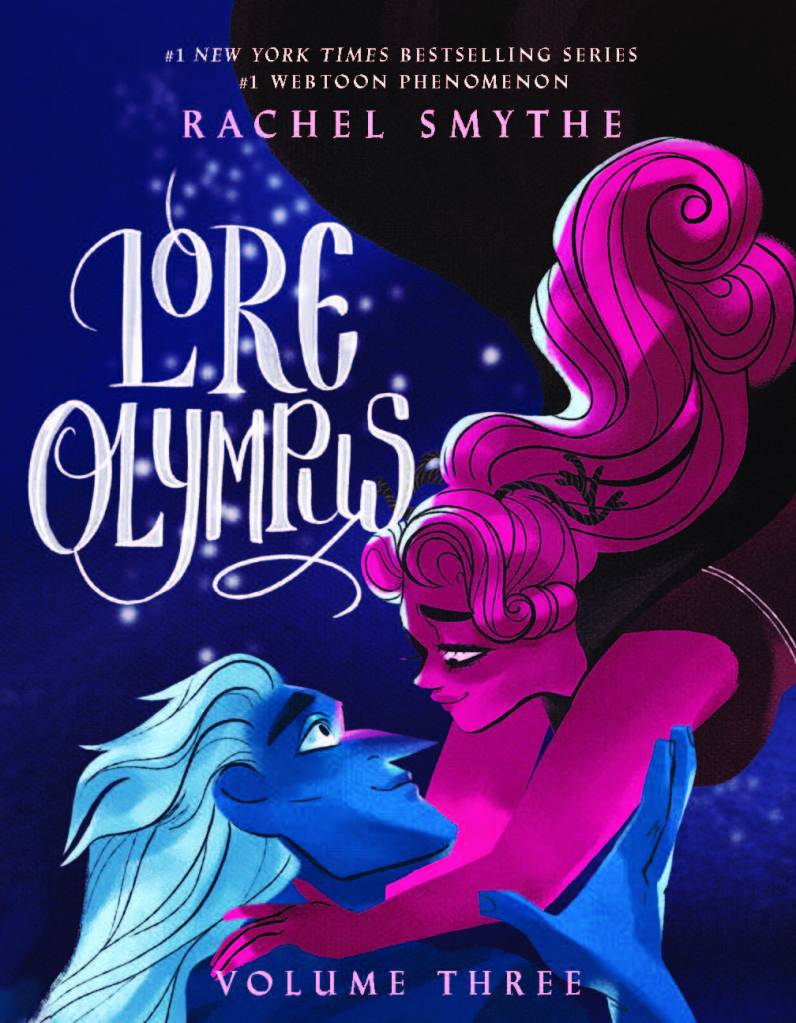
Book: “Lore Olympus: Volume 3” by Rachel Smythe

Publishing Info: Del Rey, October 2022

Where Did I Get This Book: I own it.

Where You Can Get This Book: WorldCat | Amazon | Indiebound

Book Description: All of Olympus–and the Underworld–are talking about the God of the Dead and the sprightly daughter of Demeter. But despite the rumors of their romance, Hades and Persephone have plenty to navigate on their own.

Since coming to Olympus, Persephone has struggled to be the perfect maiden goddess. Her attraction to Hades has only complicated the intense burden of the gods’ expectations. And after Apollo’s assault, Persephone fears she can no longer bury the intense feelings of hurt and love that she’s worked so hard to hide.

As Persephone contemplates her future, Hades struggles with his past, falling back into toxic habits in Minthe’s easy embrace. With all the mounting pressure and expectations–of their family, friends, and enemies–both Hades and Persephone tell themselves to deny their deepest desires, but the pull between them is too tempting, too magnetic. It’s fate.

This full-color edition of Smythe’s original Eisner-nominated webcomic Lore Olympus brings Greek mythology into the modern age in a sharply perceptive and romantic graphic novel.

Review: We are back to my favorite deity filled soap opera/love story “Lore Olympus”, this time diving into the third volume. This story has been taking over our book club as almost everyone has at least started it, and I cannot stop fawning over it because of every single beat it hits that just work for me. And “Volume Three” keeps the streak going, as, once again, I loved this.

Now let’s get into why! THIS IS GOING TO BE LONG! (source)

Both Persephone and Hades have some huge emotional summits they are starting to climb in this volume, and it’s still fairly separate outside of them being at work in the Underworld together. As Persephone has started her first job, Hades is trying to remain professional and emotionally disconnected, and she is trying to find her footing while dealing with a lot of feelings she needs to sort out. We still don’t really know a lot about Persephone’s time in the Mortal Realm before all of this, all we know is that she has been given a scholarship by The Goddesses of Eternal Maidenhood to go study in Olympus so long as she commits to remaining celibate. We finally get to explore how she started this journey in this volume, as we see how she was approached by Hestia, how she got paired up with Artemis as roommates, and how she may be a little hesitant about the whole thing. But then there is something else that is being hinted at. Something about Persephone’s nature, and how there is perhaps something else that she is trying to leave behind, and how Demeter is trying to cover something up. Smythe starts laying out these clues in a more earnest nature this time around, with hints towards a more fiery temperament, hints towards Demeter changing her mind on a dime about Persephone’s place in the mortal realm, and hints about a destiny to be fulfilled. Seeing all of this in tandem with Persephone’s anxieties about fitting in at school, anxieties about working at a strange job, and anxieties about her crush on Hades makes for a VERY compelling character arc, and I just love what Smythe is doing with her.

Hades, too, is dealing with his own inner battles, mostly with trying to avoid Persephone as he feels like his feelings for her are inappropriate and that he’s reading far too much into it. So of course he’s decided to make it official with Minthe, the scheming and manipulative (but also very much hurting and damaged) nymph that works for him and has been is on again, off again girlfriend for a long time. But as Hecate finds more and more reasons to try and push him and Persephone together, he starts to wonder if perhaps he has a connection to her that has been in place even before he saw her at that party. Hades as a guy who is doing his best to not be a creep and doing his best to repress his feelings, because of his fear of hurting her but also because of a hinted at past trauma (if you know the broader mythology you can probably guess it), is a bit refreshing, as it puts a lot of the agency on Persephone, which is a VERY good thing in reimaginings of this tale. He also isn’t left totally off the hook when it comes to how he is probably using Minthe, while also conceding that in some cases BOTH parties can be very, very bad for each other. It all leads to a very heartbreaking sequence for the both of them. Arg, complexity when portraying the character getting in between my ship? How very dare you, Rachel Smythe?!

But the biggest stand out for me this volume was Eros. (There will be mild spoilers here because I need to spoil to talk about why I loved this!) Eros is a figure that happens to be at the center of my second favorite Greek Myth (that of him and Psyche), and while we are getting some hints that we are moving in that direction for his plot, his main function as of now is to be a kick ass and supportive friend to Persephone as she starts to come to terms with her rape by Apollo. I think that it would be an easy out to make Eros a very flamboyant and over the top romance fiend, because Eros, BUT Smythe instead makes him, yes, a bit of a drama llama, but also SO in touch with love and appropriate ways to show love and boundaries. His reaction to Persephone’s reveal was so, so perfect for the character, and it hit me right in the feels. We are also getting a little more insight into his own background and baggage, specifically about Psyche, and how something he did has put Aphrodite into a tenuous position, and it makes him all the more complicated and interesting. I just love the role he’s playing, and very much look forward to seeing his role continue to grow and evolve as the series goes on.

Oh and also there is a lot of interesting Hera stuff here too in that she knows that something happened to Persephone, she thinks she knows that Apollo is involved, and when she tries to investigate further Zeus decides to sweep it all under the rug because PATRIARCHY. I really love what Smythe is doing with Hera too, because again, she could have just been a shrewish wife to Zeus as she seems to be portrayed in the original myths. But in this we get to see why she is so damn frustrated and weary, and it’s because she is having to remain by the side of a man that she doesn’t REALLY like who won’t even give her a modicum of respect, or really any respect to ANY women. I’m always for calling out Zeus, but I especially love it when Hera gets leeway while still being complicated.

So obviously I’m still all about “Lore Olympus” and “Volume Three” is continuing the love. It’s just so well done. I’ve pre-ordered “Volume Four”, so you know that when it comes out this summer I will be back on my fan girl bullshit.

Rating 10: Oh be still my heart, so many feelings this time around. You’re killing me, Greek Gods and Goddesses! In the best, best way.

Reader’s Advisory:

“Lore Olympus: Volume 3” is included on the Goodreads lists “Greek Mythology Retellings!”, and “Hades and Persephone”.

Previously Reviewed:

“Year of Sanderson”: “Elantris”

This post may contain affiliate links for books we recommend.  Read the full disclosure here.

“Year of Sanderson” is an on-going, monthly series that will post on the last Friday of each month in which I will cover various Brandon Sanderson-related things. This will largely be comprised of book reviews (some from his back catalog and some from the books being released this year), as well as assorted other topics like reviews of the items in the swag boxes that will be coming out as part of Sanderson’s Kickstarted campaign. Frankly, we’ll just have to see what we get from this series, very much like the Kickstarter itself!

Book: “Elantris” by Brandon Sanderson

Publishing Info: Tor Fantasy, 2006

Where Did I Get this Book:

Where Can You Get this Book: Amazon | IndieBound | WorldCat

Book Description: Elantris was the capital of Arelon: gigantic, beautiful, literally radiant, filled with benevolent beings who used their powerful magical abilities for the benefit of all. Yet each of these demigods was once an ordinary person until touched by the mysterious transforming power of the Shaod. Ten years ago, without warning, the magic failed. Elantrians became wizened, leper-like, powerless creatures, and Elantris itself dark, filthy, and crumbling.

Arelon’s new capital, Kae, crouches in the shadow of Elantris. Princess Sarene of Teod arrives for a marriage of state with Crown Prince Raoden, hoping—based on their correspondence—to also find love. She finds instead that Raoden has died and she is considered his widow. Both Teod and Arelon are under threat as the last remaining holdouts against the imperial ambitions of the ruthless religious fanatics of Fjordell. So Sarene decides to use her new status to counter the machinations of Hrathen, a Fjordell high priest who has come to Kae to convert Arelon and claim it for his emperor and his god.

But neither Sarene nor Hrathen suspect the truth about Prince Raoden. Stricken by the same curse that ruined Elantris, Raoden was secretly exiled by his father to the dark city. His struggle to help the wretches trapped there begins a series of events that will bring hope to Arelon, and perhaps reveal the secret of Elantris itself.

Review: It is only fitting to start out this year’s series on Brandon Sanderson by reviewing his first book, “Elantris.” Like many people, “Elantris” wasn’t the first book I read by Sanderson. Instead, I got on the Sanderson train after reading his “Mistorborn” trilogy as it was released. Then I finished it and, feeling suddenly bereft, I checked out his writing history and low and behold, there was this little stand-alone novel that had been quietly waiting in the background. After reading it, I knew that Sanderson was going to be a “go-to” author for me going forward: not only did I like it as much as the “Mistborn” trilogy, I might have even liked it more!

Elantris was once the golden light of Arelon, not only a beautiful city in and of itself, but populated by the Elantrians, a powerful group of magical individuals who grace those around them with the benefits of their abilities. But then disaster strikes: the city, and its people, crumbles and in the city’s ruined shadow clings the remnants of this once great people. Into this outskirts city, Princess Sarene arrives to marry a prince, only to find he has died, and she has been left a widow. But as she tries to navigate her new existence, she never suspects the truth: the prince is not dead, but banished having become cursed with the same cruel plague that struck down the Elantrians.

While this wasn’t my first experience with Sanderson, I do think that had I read this one first, I would have been even more on-board with his writing than I was after reading the “Mistborn” trilogy. There, Sanderson had three entire books to lay out a complex world, construct multi-layered characters, and depict all the intricate ins and outs of a very complicated magic system. But in “Elantris,” he shows all of these same skills but contained within one novel. Yes, it’s a very long novel, but it’s still one book as compared to three.

As compared to some of his later works, this one has been dinged by other reviewers for lacking the polish of his more recent books. However, in re-reading it for this series, and looking at it purely on its own merits, I don’t think there’s much I can say to that. To me, this book is a pretty perfect example of a solid, stand-alone epic fantasy. It checks off so many boxes without stumbling in any of the three major areas: world-building, characterization, and magic system. Instead, all three come through with flying colors.

In this book, the world-building and the magic system are very closely intertwined. Much of the story surrounds the mystery behind the sudden downfall of the Elantrians and the remaining curse that still randomly strikes individuals in the present day. The curse itself is quite unique, and we explore the lives of those living with it through the eyes of the Crown Prince, Raoden. We learn alongside him of the strange society that now exists within the crumbling city of Elantris where those who are cursed cannot die, but any injury they sustain will never heal, leaving them fragile and susceptible to a never-ending pain that will, eventually, drive them mad.

Outside Elantris’s walls, readers can begin to piece together more of this world-gone-wrong through the eyes of Sarene, a princess who has just arrived in this land only to find her one source of contact, the prince she had been writing, has “died” and she is now widowed and alone. Sarene is exactly the sort of heroic female character I love reading. She’s set up into a situation that is as disempowering as it can get, but she rises against these limitations and plays an integral role in the ultimate solution.

Readers who picked up this book when it was first released probably didn’t realize that they were getting a sneak peak into a toolkit that Sanderson would go on to perfect over the years. Other than his unworldly writing speed, the author is probably best known for his creative magic systems. And here we get a small peak into the beginnings of his abilities in this regard. Not only is the curse that struck the Elantrians incredibly interesting and unique, but the ultimate explanation and solution are as surprising as they are creative. It’s fantasy at its best: fun, exciting, and pushing the boundaries of our expectations.

Overall, “Elantris” is a magnificent novel. And regardless of how others may compare it to Sanderson’s incredible catalog of works, I believe it stands on its own as a near-perfect epic fantasy.

Rating 10: If an alien species came to earth and wanted an example of what “epic fantasy” is all about, “Elantris” would be the go-to pick.

Reader’s Advisory:

“Elantris” can be found on these Goodreads lists: Fantasy Books Written for Adults and Best Stand-Alone Fantasy Book.

Serena’s Review: “The Magician’s Daughter”

This post may contain affiliate links for books we recommend.  Read the full disclosure here.

Book: “The Magician’s Daughter” by H. G. Parry

Publishing Info: Redhook, February 2023

Where Did I Get this Book: from the publisher!

Where Can You Get this Book: Amazon | IndieBound | WorldCat

Book Description: It is 1912, and for the last seventy years magic has all but disappeared from the world. Yet magic is all Biddy has ever known.

Orphaned in a shipwreck as a baby, Biddy grew up on Hy-Brasil, a legendary island off the coast of Ireland hidden by magic and glimpsed by rare travelers who return with stories of wild black rabbits and a lone magician in a castle. To Biddy, the island is her home, a place of ancient trees and sea-salt air and mysteries, and the magician, Rowan, is her guardian. She loves both, but as her seventeenth birthday approaches, she is stifled by her solitude and frustrated by Rowan’s refusal to let her leave. He himself leaves almost every night, transforming into a raven and flying to the mainland, and never tells her where or why he goes.

One night, Rowan fails to come home from his mysterious travels. When Biddy ventures into his nightmares to rescue him, she learns not only where he goes every night, but the terrible things that happened in the last days of magic that caused Rowan to flee to Hy-Brasil. Rowan has powerful enemies who threaten the safety of the island. Biddy’s determination to protect her home and her guardian takes her away from the safety of Hy-Brasil, to the poorhouses of Whitechapel, a secret castle beneath London streets, the ruins of an ancient civilization, and finally to a desperate chance to restore lost magic. But the closer she comes to answers, the more she comes to question everything she has ever believed about Rowan, her origins, and the cost of bringing magic back into the world.

Review: First things first, I absolutely love this book’s cover! It’s so unique and eye-catching. I’m on the record as disliking books using cover-models, and I’m even starting to burn out a little on the cartoonish characters (though there are still versions of this theme I can get behind.) But I think this cover does exactly what a good cover is meant to do: it communicates exactly what kind of book you’re going to get. And here, that would be a book taking place in a historical setting and featuring a fairytale-like tone of fantasy. So, well done cover artist! Let’s get to the book itself, though.

While Biddy understands that a world exists beyond the boundaries of the smile island that she shares with her magician guardian, Rowan, and his rabbit familiar, but all that she knows of it comes from books. Not only has she never seen a city, but while she knows that magic disappeared from the larger world decades ago, for her, growing up, she has been surrounded by it. But soon she sees that there are darker shadows growing in Rowans eyes every time he returns from the mysterious ventures to the outer world he goes on each night. As she finally begins to demand answers to her growing questions, she learns that there is much more going on in the world outside her home than she had ever suspected. And soon she may be needed to play a much larger role in shaping the future than she ever could have imagined.

I absolutely adored this book, as I knew I would almost from the first page of the novel. Of course, things could have always taken a turn for the dire, but the tone and style of the writing was exactly the sort that always appeals to me. The author was direct, and yet whimsical, deftly exploring the world and characters she had created while never falling into the trap of exposition or strange, narrated infodumps. On top of this, the dialogue was witty and had me laughing right from the start, particularly the interactions between Rowan and his familiar, Hutchingson.

But a book cannot live on funny dialogue alone. Indeed, for me, it really comes down to the characters themselves, and as Biddy is the protagonist with whom we travel this story alongside, the book lived and died based on her characterization. She, too, was exactly the sort of leading teenage character I enjoy. It’s a coming of age story where the character is doing exactly that…coming of age. She doesn’t start out as some “best assassin/thief/princess/etc.” and, indeed, the stories she paints about herself are challenged throughout the book. As she comes to understand the world and her own place in it, she must grow into understand the complexities of all the moving pieces and people in it. Rarely is anyone a true hero or true villain. Biddy must come to understand the adults in her life and the stories they, too, have built up around themselves and how they behave in the world and the choices they make. There were strong themes of family, choice, and the duties we have to those around us, both those with whom we are familiar and care for and those stranger who we will never meet but who we understand as humans too who deserve care and kindness as much as the next person.

I also really liked the way that the magic system was used to explore these themes. For what starts as a simple fantasy premise, that magic is leaving/has left the world, the author leverages this topic into deeper conversations about how society responds to emergencies. From what can be well-intentioned decisions going wrong to how those who seek power can take advantage to consolidate wealth into their own pockets at the expense of the many. It was really well done, and the story definitely took some twists and turns towards the last half that really surprised me and left me on the edge of my seat.

Indeed, I really have nothing to criticize about this book! I think it perfectly accomplished everything it set out to do, and it will surely appeal to all fantasy fans who are looking for a great fairytale-esque stand-alone fantasy. I can’t wait to see what the author does next! I’ll definitely be first in line to find out.

Rating 10: Heart-wrenching in all the right ways, this fairytale fantasy deftly explores important themes of individual choice and the responsibilities we have towards the least of those in society.

Reader’s Advisory:

“The Magician’s Daughter” isn’t on any Goodreads lists yet, but it should be on Magicians in Historical Fiction.

Kate’s Review: “Lore Olympus: Volume 1”


This post may contain affiliate links for books we recommend.  
Read the full disclosure here.

Book: “Lore Olympus: Volume 1” by Rachel Smythe

Publishing Info: Del Rey, November 2021

Where Did I Get This Book: The library!

Where You Can Get This Book: WorldCat | Amazon | Indiebound

Book Description: Experience the propulsive love story of two Greek gods—Hades and Persephone—brought to life with lavish artwork and an irresistible contemporary voice.

Scandalous gossip, wild parties, and forbidden love—witness what the gods do after dark in this stylish and contemporary reimagining of one of mythology’s most well-known stories from creator Rachel Smythe. Featuring a brand-new, exclusive short story, Smythe’s original Eisner-nominated web-comic Lore Olympus brings the Greek Pantheon into the modern age with this sharply perceptive and romantic graphic novel.

Review: It has come up before on this blog, but I absolutely adore the story of Hades and Persephone from Greek Mythology. That said, I am always VERY wary of new and updated takes on this myth, as I am always worried that well meaning creators will take this thousands of years old story and critique it through a modern day lens and decide that it is wholly unacceptable (and to be fair, it’s not like I can blame them because HOO BOY, the optics of it). I am always FAR more interested in adaptations that, instead of making it about grooming, abuse and uneven power dynamics, tap into the very ample potential of a story about a woman discovering her own power and coming into her own on her own terms and with agency… And yeah, it sure doesn’t hurt if there is some steamy romance involved (what can I say, I love a depressive demon nightmare boy and Hades is the originator). So when a Book Club friend asked me if I had heard of “Lore Olympus” and told me what it was, my first question was “okay…. you know my tastes with this story, am I going to like this?” And she said “OH yeah”. So I got “Volume One” from the library, and sat down one night intending to start it. But then I proceeded to finish it and ordered all available volumes to be added to my personal library. Suffice to say, I loved “Lore Olympus: Volume One”.

This is everything I need in a Persephone and Hades story. Everything. (source)

“Lore Olympus” is a long running web comic that takes on the Taking of Persephone with a lot of modern sensibilities, a distinct soap opera attitude, and a slow burn romance between two super different, super complex, and super likable Greek deities. The first is Hades, the sullen and emotionally damaged King of the Underworld. In this Hades is a corporate overlord who lives alone, tolerates his more fun loving brothers Zeus and Poseidon, dotes over his EXTENSIVE dog collection, and buries his past traumas of being a son of Kronos and ALL the baggage that entails. The other is Persephone, the goddess of Spring who has just come into her own, leaving a very sheltered life in the Mortal Realm to be roommates with Artemis on Olympus as she begins her studies and starts a (reluctant) journey to remain a maiden devoted to purity. Through a series of coincidences and the pettiness of other Gods, Hades and Persephone meet, and thus begins a very, very slow burn that brings in not only a VERY lovely romance, but also other well known deities and their nonsense, updated interpretations of various myths, and the start of a story of two people who have a deep, deep connection finding out things about each other as well as themselves. “Volume One” is setting up a lot of the groundwork, introducing us to a huge cast and a lot of settings, and it is done with a lot of heart, a lot of humor, and so many different emotional beats. I loved this start of getting to know both Persephone and Hades, seeing their aspirations and their slowly building friendship and the peeling back of their layers. I love how sad and awkward and brooding Hades is. I love how effervescent and charming and, shall I say, edgy Persephone is. I love that we are getting teasing moments about their characters and what multitudes they contain. I love how Rachel Smythe is being slow and deliberate as she starts to carefully explore the romance that these two will surely have. Because when they interact, it is such a joy.

I also really loved the way that Smythe brings in all sorts of other Greek Mythology players and inserts them into this modernish remix of the lore. You get some fun contemporary interpretations of these characters, like Zeus and Poseidon forcing Hades to attend rowdy brunches with them, or Artemis being a well meaning but condescending roommate, or Eros being a bit of a hot mess romantic (who is dealing with his OWN baggage, with hints to his messy relationship situation with Psyche, YES PLEASE, MY OTHER FAVORITE MYTH). But we also get some darker moments and characterizations, with Smythe turning well known players on their heads and making them more sinister. The most obvious example of this is Apollo, whose Golden Boy reputation hides a personality that oozes with malevolent privilege run amok. But my favorite was Hera, the long suffering wife of Zeus who, in original mythology, is always portrayed as a shrew of sorts. In “Lore Olympus” she definitely has a nasty streak, but you can tell that it is due to a deep unhappiness that she is living with, and not just because of her philandering husband. I really, REALLY love Hera in this series.

And finally, the artwork is very cute. Smythe has this really easy to connect to style, that can shift on a dime from cartoony and quirky humor to absolutely breathtaking imagery. The use of color is phenomenal and I just love how she has designed all of the characters.

(source)

We are off to a fantastic start in “Lore Olympus: Volume One”. I look forward to seeing how Hades and Persephone grow as a couple and as individuals.

Rating 10: BE STILL MY HADES/PERSEPHONE LOVING HEART. What a fun, emotional, and slow burn take on one of my favorite Greek Myths of all time.

Reader’s Advisory:

“Lore Olympus: Volume One” is included on the Goodreads lists “Greek Mythology Retellings!”, and “Hades and Persephone”.

Kate’s Review: “White Horse”

This post may contain affiliate links for books we recommend.  Read the full disclosure here.

Book: “White Horse” by Erika T. Wurth

Publishing Info: Flatiron Books, November 2022

Where Did I Get This Book: I received an eARC from NetGalley.

Where You Can Get This Book: WorldCat | Amazon | Indiebound

Book Description: Heavy metal, ripped jeans, Stephen King novels, and the occasional beer at the White Horse have defined urban Indian Kari James’s life so far. But when her cousin Debby finds an old family bracelet that once belonged to Kari’s mother, it inadvertently calls up both her mother’s ghost and a monstrous entity, and her willful ignorance about her past is no longer sustainable

Haunted by visions of her mother and hunted by this mysterious creature, Kari must search for what happened to her mother all those years ago. Her father, permanently disabled from a car crash, can’t help her. Her Auntie Squeaker seems to know something but isn’t eager to give it all up at once. Debby’s anxious to help, but her controlling husband keeps getting in the way. Kari’s journey toward a truth long denied by both her family and law enforcement forces her to confront her dysfunctional relationships, thoughts about a friend she lost in childhood, and her desire for the one thing she’s always wanted but could never have.

Review: Thank you to NetGalley for providing me with an eARC of this book!

It is such a good time to be a horror fan right now. I’m sure I’ve said that before, but it remains true. We are getting so many varied stories with so many different perspectives and voices right now, and it makes for such rewarding and interesting reading. I saw “White Horse” by Erika T. Wurth on a few different platforms, and it took me a few times to really look into it. Once I did, however, I knew that I needed to read it. The buzz was promising and the premise really caught my eye. And once I started reading I slowly began to realize that this was going to be an awesome reading experience. “White Horse” is a fantastic horror novel from a new Indigenous voice in horror literature.

The horror elements in this book are some of the most unique moments and beats that I have read in recent memory. Wurth takes a concept that sounded pretty straightforward (a haunted bracelet that brings protagonist Kari visions of her dead mother as well as some kind of monster), but it never feels hokey and it feels fresh and original with the way she approaches it. The visions she has are unsettling bordering on scary, with the imagery of her mother Cecilia being both eerie but also filled with a deep sadness that permeates the pages. Kari, who is of of Apache and Chickasaw descent and lives in urban Denver, is realizing that her missing mother Cecilia didn’t leave, but is actually a Missing and Murdered Indigenous Woman, and that Kari’s visions are going to haunt her and drive her into despair if she doesn’t find out what really happened. It is clear that Wurth has a very clear idea of how she wants to construct these supernatural and real life horrors, and it works very, very well, especially since so much Indigenous culture and spiritual aspects drive the story themes. Whether it’s visions or the story of the Lofa, Wurth uses these mythologies and beliefs and fits them into the story at hand perfectly. We also get a love letter to a more familiar horror icon, as Kari’s love for Stephen King connects to her journey as she finds herself at the Stanley Hotel, where King was inspired to write “The Shining”, and this part of the book was so jovial AND creepy that it was one of the horror highlights I’d experienced in my reading this year. Wurth really captured the Stanley, from the descriptions to the history to the way that it can make a Stephen King fan feel just be stepping foot inside (as someone who visited a few years ago, it was like going back and experiencing it all over again). I loved all of these elements so much.

And Kari herself is a very compelling protagonist, for so many reasons. She is wry and funny, for one, and I loved the way she gives no fucks about how other people think of her. I love her complicated relationship with her cousin Debby, how she clings to her and loves her fiercely, and I ached over her relationship with her father, whom she cares for after he was in an accident that left him with some pretty significant brain damage. Kari is rough and tumble, but she has endured a lot of trauma and loss in her life, which also enters into the horror themes of this book. So much of the foundation for this horror story is rooted in generational and communal trauma, specifically towards Indigenous women living in modern American society. From the MMIW aspect to microaggressions Kari endures here and there to the way that addiction can strain a person and make them do monstrous things, to even aspects of the magical and supernatural systems at hand, this story is from an Indigenous lens and perspective, and it make the book stand out all the more.

“White Horse” is a must read horror novel. I urge horror fans to pick it up, because it’s phenomenal.

Rating 10: Dark and soulful, “White Horse” is an effective horror story that also examines modern Indigenous life and the trauma that can come with it.

Reader’s Advisory:

“White Horse” is included on the Goodreads lists “Magical Realism”, and “Colorado”.