Kate’s Review: “Lore Olympus: Volume 3”

This post may contain affiliate links for books we recommend.  Read the full disclosure here.
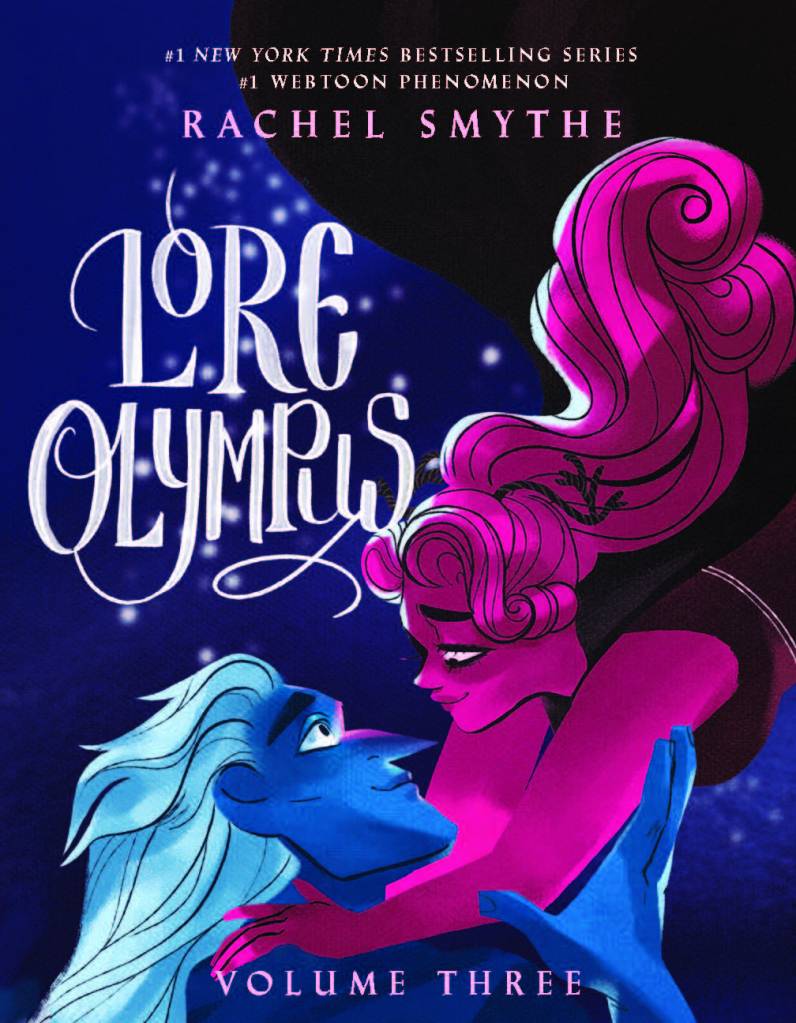
Book: “Lore Olympus: Volume 3” by Rachel Smythe

Publishing Info: Del Rey, October 2022

Where Did I Get This Book: I own it.

Where You Can Get This Book: WorldCat | Amazon | Indiebound

Book Description: All of Olympus–and the Underworld–are talking about the God of the Dead and the sprightly daughter of Demeter. But despite the rumors of their romance, Hades and Persephone have plenty to navigate on their own.

Since coming to Olympus, Persephone has struggled to be the perfect maiden goddess. Her attraction to Hades has only complicated the intense burden of the gods’ expectations. And after Apollo’s assault, Persephone fears she can no longer bury the intense feelings of hurt and love that she’s worked so hard to hide.

As Persephone contemplates her future, Hades struggles with his past, falling back into toxic habits in Minthe’s easy embrace. With all the mounting pressure and expectations–of their family, friends, and enemies–both Hades and Persephone tell themselves to deny their deepest desires, but the pull between them is too tempting, too magnetic. It’s fate.

This full-color edition of Smythe’s original Eisner-nominated webcomic Lore Olympus brings Greek mythology into the modern age in a sharply perceptive and romantic graphic novel.

Review: We are back to my favorite deity filled soap opera/love story “Lore Olympus”, this time diving into the third volume. This story has been taking over our book club as almost everyone has at least started it, and I cannot stop fawning over it because of every single beat it hits that just work for me. And “Volume Three” keeps the streak going, as, once again, I loved this.

Now let’s get into why! THIS IS GOING TO BE LONG! (source)

Both Persephone and Hades have some huge emotional summits they are starting to climb in this volume, and it’s still fairly separate outside of them being at work in the Underworld together. As Persephone has started her first job, Hades is trying to remain professional and emotionally disconnected, and she is trying to find her footing while dealing with a lot of feelings she needs to sort out. We still don’t really know a lot about Persephone’s time in the Mortal Realm before all of this, all we know is that she has been given a scholarship by The Goddesses of Eternal Maidenhood to go study in Olympus so long as she commits to remaining celibate. We finally get to explore how she started this journey in this volume, as we see how she was approached by Hestia, how she got paired up with Artemis as roommates, and how she may be a little hesitant about the whole thing. But then there is something else that is being hinted at. Something about Persephone’s nature, and how there is perhaps something else that she is trying to leave behind, and how Demeter is trying to cover something up. Smythe starts laying out these clues in a more earnest nature this time around, with hints towards a more fiery temperament, hints towards Demeter changing her mind on a dime about Persephone’s place in the mortal realm, and hints about a destiny to be fulfilled. Seeing all of this in tandem with Persephone’s anxieties about fitting in at school, anxieties about working at a strange job, and anxieties about her crush on Hades makes for a VERY compelling character arc, and I just love what Smythe is doing with her.

Hades, too, is dealing with his own inner battles, mostly with trying to avoid Persephone as he feels like his feelings for her are inappropriate and that he’s reading far too much into it. So of course he’s decided to make it official with Minthe, the scheming and manipulative (but also very much hurting and damaged) nymph that works for him and has been is on again, off again girlfriend for a long time. But as Hecate finds more and more reasons to try and push him and Persephone together, he starts to wonder if perhaps he has a connection to her that has been in place even before he saw her at that party. Hades as a guy who is doing his best to not be a creep and doing his best to repress his feelings, because of his fear of hurting her but also because of a hinted at past trauma (if you know the broader mythology you can probably guess it), is a bit refreshing, as it puts a lot of the agency on Persephone, which is a VERY good thing in reimaginings of this tale. He also isn’t left totally off the hook when it comes to how he is probably using Minthe, while also conceding that in some cases BOTH parties can be very, very bad for each other. It all leads to a very heartbreaking sequence for the both of them. Arg, complexity when portraying the character getting in between my ship? How very dare you, Rachel Smythe?!

But the biggest stand out for me this volume was Eros. (There will be mild spoilers here because I need to spoil to talk about why I loved this!) Eros is a figure that happens to be at the center of my second favorite Greek Myth (that of him and Psyche), and while we are getting some hints that we are moving in that direction for his plot, his main function as of now is to be a kick ass and supportive friend to Persephone as she starts to come to terms with her rape by Apollo. I think that it would be an easy out to make Eros a very flamboyant and over the top romance fiend, because Eros, BUT Smythe instead makes him, yes, a bit of a drama llama, but also SO in touch with love and appropriate ways to show love and boundaries. His reaction to Persephone’s reveal was so, so perfect for the character, and it hit me right in the feels. We are also getting a little more insight into his own background and baggage, specifically about Psyche, and how something he did has put Aphrodite into a tenuous position, and it makes him all the more complicated and interesting. I just love the role he’s playing, and very much look forward to seeing his role continue to grow and evolve as the series goes on.

Oh and also there is a lot of interesting Hera stuff here too in that she knows that something happened to Persephone, she thinks she knows that Apollo is involved, and when she tries to investigate further Zeus decides to sweep it all under the rug because PATRIARCHY. I really love what Smythe is doing with Hera too, because again, she could have just been a shrewish wife to Zeus as she seems to be portrayed in the original myths. But in this we get to see why she is so damn frustrated and weary, and it’s because she is having to remain by the side of a man that she doesn’t REALLY like who won’t even give her a modicum of respect, or really any respect to ANY women. I’m always for calling out Zeus, but I especially love it when Hera gets leeway while still being complicated.

So obviously I’m still all about “Lore Olympus” and “Volume Three” is continuing the love. It’s just so well done. I’ve pre-ordered “Volume Four”, so you know that when it comes out this summer I will be back on my fan girl bullshit.

Rating 10: Oh be still my heart, so many feelings this time around. You’re killing me, Greek Gods and Goddesses! In the best, best way.

Reader’s Advisory:

“Lore Olympus: Volume 3” is included on the Goodreads lists “Greek Mythology Retellings!”, and “Hades and Persephone”.

Previously Reviewed:
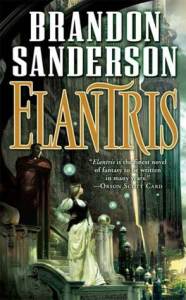
“Year of Sanderson”: “Elantris”

This post may contain affiliate links for books we recommend.  Read the full disclosure here.

“Year of Sanderson” is an on-going, monthly series that will post on the last Friday of each month in which I will cover various Brandon Sanderson-related things. This will largely be comprised of book reviews (some from his back catalog and some from the books being released this year), as well as assorted other topics like reviews of the items in the swag boxes that will be coming out as part of Sanderson’s Kickstarted campaign. Frankly, we’ll just have to see what we get from this series, very much like the Kickstarter itself!

Book: “Elantris” by Brandon Sanderson

Publishing Info: Tor Fantasy, 2006

Where Did I Get this Book:

Where Can You Get this Book: Amazon | IndieBound | WorldCat

Book Description: Elantris was the capital of Arelon: gigantic, beautiful, literally radiant, filled with benevolent beings who used their powerful magical abilities for the benefit of all. Yet each of these demigods was once an ordinary person until touched by the mysterious transforming power of the Shaod. Ten years ago, without warning, the magic failed. Elantrians became wizened, leper-like, powerless creatures, and Elantris itself dark, filthy, and crumbling.

Arelon’s new capital, Kae, crouches in the shadow of Elantris. Princess Sarene of Teod arrives for a marriage of state with Crown Prince Raoden, hoping—based on their correspondence—to also find love. She finds instead that Raoden has died and she is considered his widow. Both Teod and Arelon are under threat as the last remaining holdouts against the imperial ambitions of the ruthless religious fanatics of Fjordell. So Sarene decides to use her new status to counter the machinations of Hrathen, a Fjordell high priest who has come to Kae to convert Arelon and claim it for his emperor and his god.

But neither Sarene nor Hrathen suspect the truth about Prince Raoden. Stricken by the same curse that ruined Elantris, Raoden was secretly exiled by his father to the dark city. His struggle to help the wretches trapped there begins a series of events that will bring hope to Arelon, and perhaps reveal the secret of Elantris itself.

Review: It is only fitting to start out this year’s series on Brandon Sanderson by reviewing his first book, “Elantris.” Like many people, “Elantris” wasn’t the first book I read by Sanderson. Instead, I got on the Sanderson train after reading his “Mistorborn” trilogy as it was released. Then I finished it and, feeling suddenly bereft, I checked out his writing history and low and behold, there was this little stand-alone novel that had been quietly waiting in the background. After reading it, I knew that Sanderson was going to be a “go-to” author for me going forward: not only did I like it as much as the “Mistborn” trilogy, I might have even liked it more!

Elantris was once the golden light of Arelon, not only a beautiful city in and of itself, but populated by the Elantrians, a powerful group of magical individuals who grace those around them with the benefits of their abilities. But then disaster strikes: the city, and its people, crumbles and in the city’s ruined shadow clings the remnants of this once great people. Into this outskirts city, Princess Sarene arrives to marry a prince, only to find he has died, and she has been left a widow. But as she tries to navigate her new existence, she never suspects the truth: the prince is not dead, but banished having become cursed with the same cruel plague that struck down the Elantrians.

While this wasn’t my first experience with Sanderson, I do think that had I read this one first, I would have been even more on-board with his writing than I was after reading the “Mistborn” trilogy. There, Sanderson had three entire books to lay out a complex world, construct multi-layered characters, and depict all the intricate ins and outs of a very complicated magic system. But in “Elantris,” he shows all of these same skills but contained within one novel. Yes, it’s a very long novel, but it’s still one book as compared to three.

As compared to some of his later works, this one has been dinged by other reviewers for lacking the polish of his more recent books. However, in re-reading it for this series, and looking at it purely on its own merits, I don’t think there’s much I can say to that. To me, this book is a pretty perfect example of a solid, stand-alone epic fantasy. It checks off so many boxes without stumbling in any of the three major areas: world-building, characterization, and magic system. Instead, all three come through with flying colors.

In this book, the world-building and the magic system are very closely intertwined. Much of the story surrounds the mystery behind the sudden downfall of the Elantrians and the remaining curse that still randomly strikes individuals in the present day. The curse itself is quite unique, and we explore the lives of those living with it through the eyes of the Crown Prince, Raoden. We learn alongside him of the strange society that now exists within the crumbling city of Elantris where those who are cursed cannot die, but any injury they sustain will never heal, leaving them fragile and susceptible to a never-ending pain that will, eventually, drive them mad.

Outside Elantris’s walls, readers can begin to piece together more of this world-gone-wrong through the eyes of Sarene, a princess who has just arrived in this land only to find her one source of contact, the prince she had been writing, has “died” and she is now widowed and alone. Sarene is exactly the sort of heroic female character I love reading. She’s set up into a situation that is as disempowering as it can get, but she rises against these limitations and plays an integral role in the ultimate solution.

Readers who picked up this book when it was first released probably didn’t realize that they were getting a sneak peak into a toolkit that Sanderson would go on to perfect over the years. Other than his unworldly writing speed, the author is probably best known for his creative magic systems. And here we get a small peak into the beginnings of his abilities in this regard. Not only is the curse that struck the Elantrians incredibly interesting and unique, but the ultimate explanation and solution are as surprising as they are creative. It’s fantasy at its best: fun, exciting, and pushing the boundaries of our expectations.

Overall, “Elantris” is a magnificent novel. And regardless of how others may compare it to Sanderson’s incredible catalog of works, I believe it stands on its own as a near-perfect epic fantasy.

Rating 10: If an alien species came to earth and wanted an example of what “epic fantasy” is all about, “Elantris” would be the go-to pick.

Reader’s Advisory:

“Elantris” can be found on these Goodreads lists: Fantasy Books Written for Adults and Best Stand-Alone Fantasy Book.

Serena’s Review: “The Magician’s Daughter”

This post may contain affiliate links for books we recommend.  Read the full disclosure here.

Book: “The Magician’s Daughter” by H. G. Parry

Publishing Info: Redhook, February 2023

Where Did I Get this Book: from the publisher!

Where Can You Get this Book: Amazon | IndieBound | WorldCat

Book Description: It is 1912, and for the last seventy years magic has all but disappeared from the world. Yet magic is all Biddy has ever known.

Orphaned in a shipwreck as a baby, Biddy grew up on Hy-Brasil, a legendary island off the coast of Ireland hidden by magic and glimpsed by rare travelers who return with stories of wild black rabbits and a lone magician in a castle. To Biddy, the island is her home, a place of ancient trees and sea-salt air and mysteries, and the magician, Rowan, is her guardian. She loves both, but as her seventeenth birthday approaches, she is stifled by her solitude and frustrated by Rowan’s refusal to let her leave. He himself leaves almost every night, transforming into a raven and flying to the mainland, and never tells her where or why he goes.

One night, Rowan fails to come home from his mysterious travels. When Biddy ventures into his nightmares to rescue him, she learns not only where he goes every night, but the terrible things that happened in the last days of magic that caused Rowan to flee to Hy-Brasil. Rowan has powerful enemies who threaten the safety of the island. Biddy’s determination to protect her home and her guardian takes her away from the safety of Hy-Brasil, to the poorhouses of Whitechapel, a secret castle beneath London streets, the ruins of an ancient civilization, and finally to a desperate chance to restore lost magic. But the closer she comes to answers, the more she comes to question everything she has ever believed about Rowan, her origins, and the cost of bringing magic back into the world.

Review: First things first, I absolutely love this book’s cover! It’s so unique and eye-catching. I’m on the record as disliking books using cover-models, and I’m even starting to burn out a little on the cartoonish characters (though there are still versions of this theme I can get behind.) But I think this cover does exactly what a good cover is meant to do: it communicates exactly what kind of book you’re going to get. And here, that would be a book taking place in a historical setting and featuring a fairytale-like tone of fantasy. So, well done cover artist! Let’s get to the book itself, though.

While Biddy understands that a world exists beyond the boundaries of the smile island that she shares with her magician guardian, Rowan, and his rabbit familiar, but all that she knows of it comes from books. Not only has she never seen a city, but while she knows that magic disappeared from the larger world decades ago, for her, growing up, she has been surrounded by it. But soon she sees that there are darker shadows growing in Rowans eyes every time he returns from the mysterious ventures to the outer world he goes on each night. As she finally begins to demand answers to her growing questions, she learns that there is much more going on in the world outside her home than she had ever suspected. And soon she may be needed to play a much larger role in shaping the future than she ever could have imagined.

I absolutely adored this book, as I knew I would almost from the first page of the novel. Of course, things could have always taken a turn for the dire, but the tone and style of the writing was exactly the sort that always appeals to me. The author was direct, and yet whimsical, deftly exploring the world and characters she had created while never falling into the trap of exposition or strange, narrated infodumps. On top of this, the dialogue was witty and had me laughing right from the start, particularly the interactions between Rowan and his familiar, Hutchingson.

But a book cannot live on funny dialogue alone. Indeed, for me, it really comes down to the characters themselves, and as Biddy is the protagonist with whom we travel this story alongside, the book lived and died based on her characterization. She, too, was exactly the sort of leading teenage character I enjoy. It’s a coming of age story where the character is doing exactly that…coming of age. She doesn’t start out as some “best assassin/thief/princess/etc.” and, indeed, the stories she paints about herself are challenged throughout the book. As she comes to understand the world and her own place in it, she must grow into understand the complexities of all the moving pieces and people in it. Rarely is anyone a true hero or true villain. Biddy must come to understand the adults in her life and the stories they, too, have built up around themselves and how they behave in the world and the choices they make. There were strong themes of family, choice, and the duties we have to those around us, both those with whom we are familiar and care for and those stranger who we will never meet but who we understand as humans too who deserve care and kindness as much as the next person.

I also really liked the way that the magic system was used to explore these themes. For what starts as a simple fantasy premise, that magic is leaving/has left the world, the author leverages this topic into deeper conversations about how society responds to emergencies. From what can be well-intentioned decisions going wrong to how those who seek power can take advantage to consolidate wealth into their own pockets at the expense of the many. It was really well done, and the story definitely took some twists and turns towards the last half that really surprised me and left me on the edge of my seat.

Indeed, I really have nothing to criticize about this book! I think it perfectly accomplished everything it set out to do, and it will surely appeal to all fantasy fans who are looking for a great fairytale-esque stand-alone fantasy. I can’t wait to see what the author does next! I’ll definitely be first in line to find out.

Rating 10: Heart-wrenching in all the right ways, this fairytale fantasy deftly explores important themes of individual choice and the responsibilities we have towards the least of those in society.

Reader’s Advisory:

“The Magician’s Daughter” isn’t on any Goodreads lists yet, but it should be on Magicians in Historical Fiction.

Kate’s Review: “Lore Olympus: Volume 1”


This post may contain affiliate links for books we recommend.  
Read the full disclosure here.

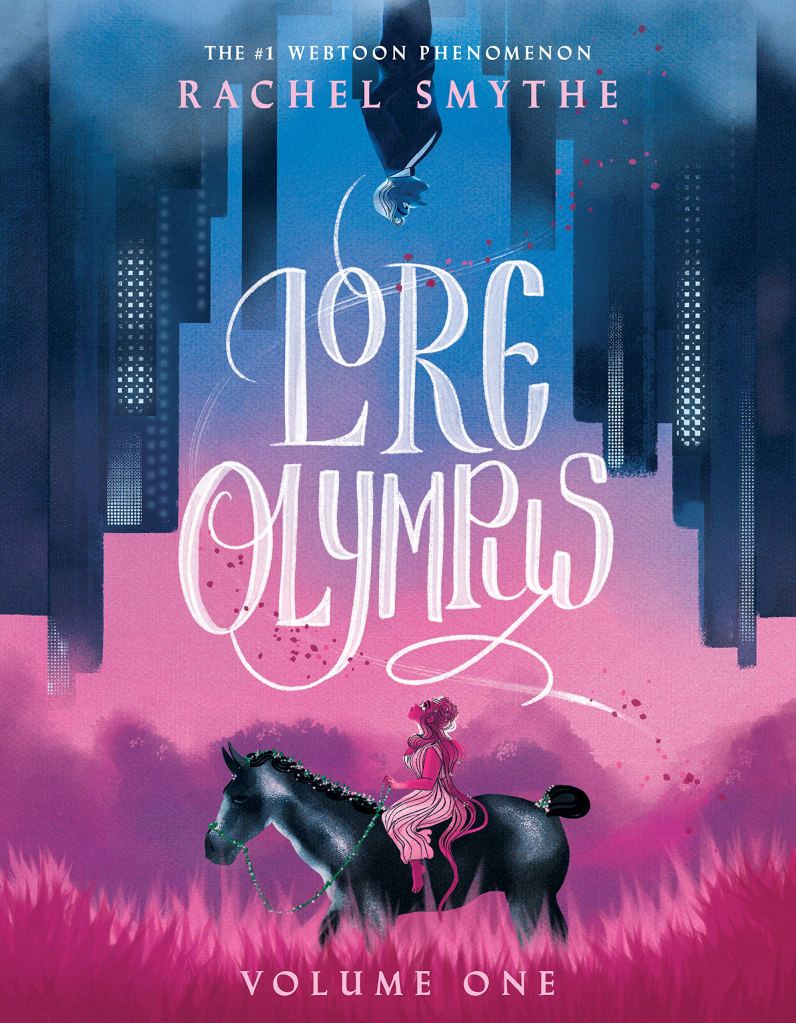
Book: “Lore Olympus: Volume 1” by Rachel Smythe

Publishing Info: Del Rey, November 2021

Where Did I Get This Book: The library!

Where You Can Get This Book: WorldCat | Amazon | Indiebound

Book Description: Experience the propulsive love story of two Greek gods—Hades and Persephone—brought to life with lavish artwork and an irresistible contemporary voice.

Scandalous gossip, wild parties, and forbidden love—witness what the gods do after dark in this stylish and contemporary reimagining of one of mythology’s most well-known stories from creator Rachel Smythe. Featuring a brand-new, exclusive short story, Smythe’s original Eisner-nominated web-comic Lore Olympus brings the Greek Pantheon into the modern age with this sharply perceptive and romantic graphic novel.

Review: It has come up before on this blog, but I absolutely adore the story of Hades and Persephone from Greek Mythology. That said, I am always VERY wary of new and updated takes on this myth, as I am always worried that well meaning creators will take this thousands of years old story and critique it through a modern day lens and decide that it is wholly unacceptable (and to be fair, it’s not like I can blame them because HOO BOY, the optics of it). I am always FAR more interested in adaptations that, instead of making it about grooming, abuse and uneven power dynamics, tap into the very ample potential of a story about a woman discovering her own power and coming into her own on her own terms and with agency… And yeah, it sure doesn’t hurt if there is some steamy romance involved (what can I say, I love a depressive demon nightmare boy and Hades is the originator). So when a Book Club friend asked me if I had heard of “Lore Olympus” and told me what it was, my first question was “okay…. you know my tastes with this story, am I going to like this?” And she said “OH yeah”. So I got “Volume One” from the library, and sat down one night intending to start it. But then I proceeded to finish it and ordered all available volumes to be added to my personal library. Suffice to say, I loved “Lore Olympus: Volume One”.

This is everything I need in a Persephone and Hades story. Everything. (source)

“Lore Olympus” is a long running web comic that takes on the Taking of Persephone with a lot of modern sensibilities, a distinct soap opera attitude, and a slow burn romance between two super different, super complex, and super likable Greek deities. The first is Hades, the sullen and emotionally damaged King of the Underworld. In this Hades is a corporate overlord who lives alone, tolerates his more fun loving brothers Zeus and Poseidon, dotes over his EXTENSIVE dog collection, and buries his past traumas of being a son of Kronos and ALL the baggage that entails. The other is Persephone, the goddess of Spring who has just come into her own, leaving a very sheltered life in the Mortal Realm to be roommates with Artemis on Olympus as she begins her studies and starts a (reluctant) journey to remain a maiden devoted to purity. Through a series of coincidences and the pettiness of other Gods, Hades and Persephone meet, and thus begins a very, very slow burn that brings in not only a VERY lovely romance, but also other well known deities and their nonsense, updated interpretations of various myths, and the start of a story of two people who have a deep, deep connection finding out things about each other as well as themselves. “Volume One” is setting up a lot of the groundwork, introducing us to a huge cast and a lot of settings, and it is done with a lot of heart, a lot of humor, and so many different emotional beats. I loved this start of getting to know both Persephone and Hades, seeing their aspirations and their slowly building friendship and the peeling back of their layers. I love how sad and awkward and brooding Hades is. I love how effervescent and charming and, shall I say, edgy Persephone is. I love that we are getting teasing moments about their characters and what multitudes they contain. I love how Rachel Smythe is being slow and deliberate as she starts to carefully explore the romance that these two will surely have. Because when they interact, it is such a joy.

I also really loved the way that Smythe brings in all sorts of other Greek Mythology players and inserts them into this modernish remix of the lore. You get some fun contemporary interpretations of these characters, like Zeus and Poseidon forcing Hades to attend rowdy brunches with them, or Artemis being a well meaning but condescending roommate, or Eros being a bit of a hot mess romantic (who is dealing with his OWN baggage, with hints to his messy relationship situation with Psyche, YES PLEASE, MY OTHER FAVORITE MYTH). But we also get some darker moments and characterizations, with Smythe turning well known players on their heads and making them more sinister. The most obvious example of this is Apollo, whose Golden Boy reputation hides a personality that oozes with malevolent privilege run amok. But my favorite was Hera, the long suffering wife of Zeus who, in original mythology, is always portrayed as a shrew of sorts. In “Lore Olympus” she definitely has a nasty streak, but you can tell that it is due to a deep unhappiness that she is living with, and not just because of her philandering husband. I really, REALLY love Hera in this series.

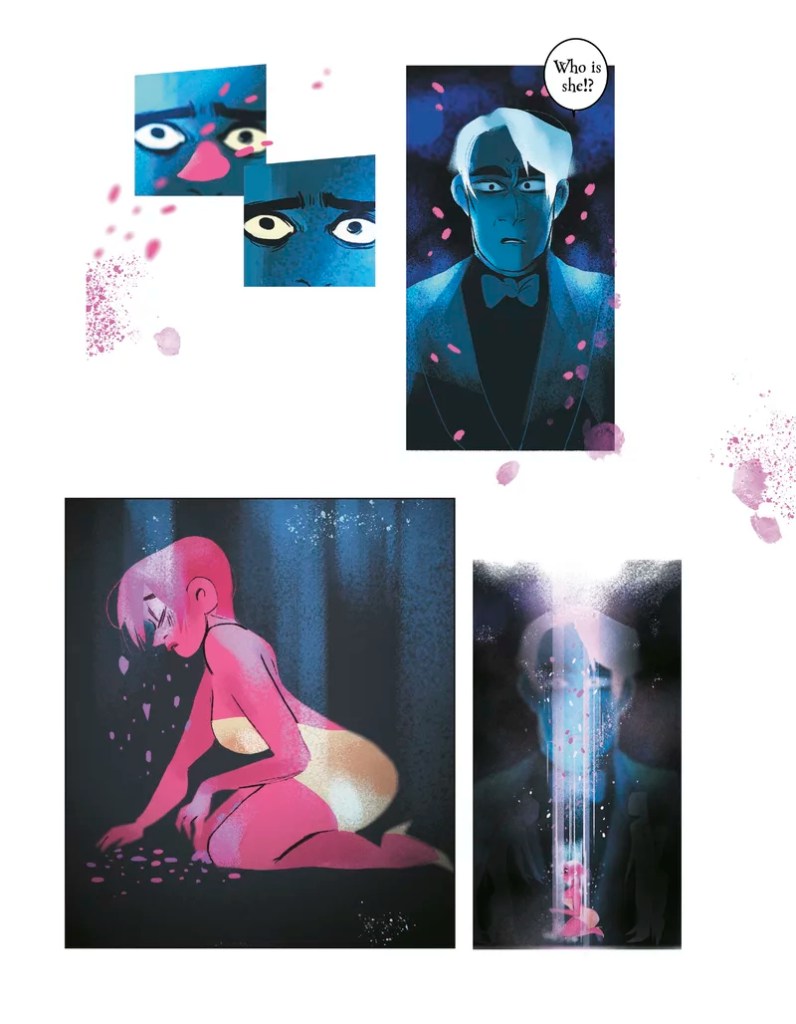
And finally, the artwork is very cute. Smythe has this really easy to connect to style, that can shift on a dime from cartoony and quirky humor to absolutely breathtaking imagery. The use of color is phenomenal and I just love how she has designed all of the characters.

(source)

We are off to a fantastic start in “Lore Olympus: Volume One”. I look forward to seeing how Hades and Persephone grow as a couple and as individuals.

Rating 10: BE STILL MY HADES/PERSEPHONE LOVING HEART. What a fun, emotional, and slow burn take on one of my favorite Greek Myths of all time.

Reader’s Advisory:

“Lore Olympus: Volume One” is included on the Goodreads lists “Greek Mythology Retellings!”, and “Hades and Persephone”.

Kate’s Review: “White Horse”

This post may contain affiliate links for books we recommend.  Read the full disclosure here.

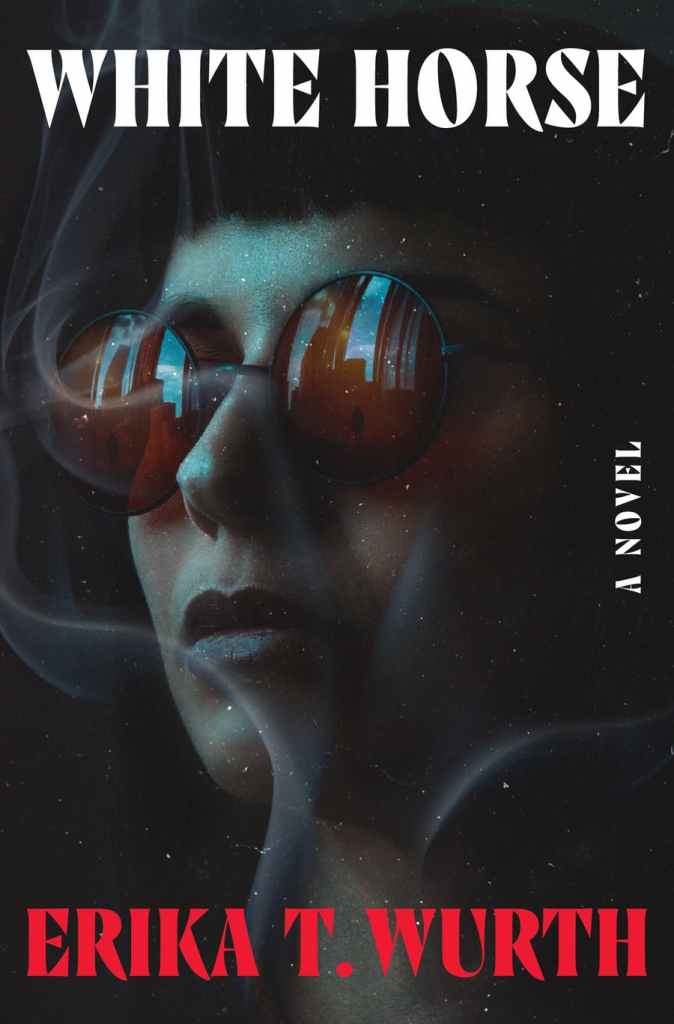
Book: “White Horse” by Erika T. Wurth

Publishing Info: Flatiron Books, November 2022

Where Did I Get This Book: I received an eARC from NetGalley.

Where You Can Get This Book: WorldCat | Amazon | Indiebound

Book Description: Heavy metal, ripped jeans, Stephen King novels, and the occasional beer at the White Horse have defined urban Indian Kari James’s life so far. But when her cousin Debby finds an old family bracelet that once belonged to Kari’s mother, it inadvertently calls up both her mother’s ghost and a monstrous entity, and her willful ignorance about her past is no longer sustainable…

Haunted by visions of her mother and hunted by this mysterious creature, Kari must search for what happened to her mother all those years ago. Her father, permanently disabled from a car crash, can’t help her. Her Auntie Squeaker seems to know something but isn’t eager to give it all up at once. Debby’s anxious to help, but her controlling husband keeps getting in the way. Kari’s journey toward a truth long denied by both her family and law enforcement forces her to confront her dysfunctional relationships, thoughts about a friend she lost in childhood, and her desire for the one thing she’s always wanted but could never have.

Review: Thank you to NetGalley for providing me with an eARC of this book!

It is such a good time to be a horror fan right now. I’m sure I’ve said that before, but it remains true. We are getting so many varied stories with so many different perspectives and voices right now, and it makes for such rewarding and interesting reading. I saw “White Horse” by Erika T. Wurth on a few different platforms, and it took me a few times to really look into it. Once I did, however, I knew that I needed to read it. The buzz was promising and the premise really caught my eye. And once I started reading I slowly began to realize that this was going to be an awesome reading experience. “White Horse” is a fantastic horror novel from a new Indigenous voice in horror literature.

The horror elements in this book are some of the most unique moments and beats that I have read in recent memory. Wurth takes a concept that sounded pretty straightforward (a haunted bracelet that brings protagonist Kari visions of her dead mother as well as some kind of monster), but it never feels hokey and it feels fresh and original with the way she approaches it. The visions she has are unsettling bordering on scary, with the imagery of her mother Cecilia being both eerie but also filled with a deep sadness that permeates the pages. Kari, who is of of Apache and Chickasaw descent and lives in urban Denver, is realizing that her missing mother Cecilia didn’t leave, but is actually a Missing and Murdered Indigenous Woman, and that Kari’s visions are going to haunt her and drive her into despair if she doesn’t find out what really happened. It is clear that Wurth has a very clear idea of how she wants to construct these supernatural and real life horrors, and it works very, very well, especially since so much Indigenous culture and spiritual aspects drive the story themes. Whether it’s visions or the story of the Lofa, Wurth uses these mythologies and beliefs and fits them into the story at hand perfectly. We also get a love letter to a more familiar horror icon, as Kari’s love for Stephen King connects to her journey as she finds herself at the Stanley Hotel, where King was inspired to write “The Shining”, and this part of the book was so jovial AND creepy that it was one of the horror highlights I’d experienced in my reading this year. Wurth really captured the Stanley, from the descriptions to the history to the way that it can make a Stephen King fan feel just be stepping foot inside (as someone who visited a few years ago, it was like going back and experiencing it all over again). I loved all of these elements so much.

And Kari herself is a very compelling protagonist, for so many reasons. She is wry and funny, for one, and I loved the way she gives no fucks about how other people think of her. I love her complicated relationship with her cousin Debby, how she clings to her and loves her fiercely, and I ached over her relationship with her father, whom she cares for after he was in an accident that left him with some pretty significant brain damage. Kari is rough and tumble, but she has endured a lot of trauma and loss in her life, which also enters into the horror themes of this book. So much of the foundation for this horror story is rooted in generational and communal trauma, specifically towards Indigenous women living in modern American society. From the MMIW aspect to microaggressions Kari endures here and there to the way that addiction can strain a person and make them do monstrous things, to even aspects of the magical and supernatural systems at hand, this story is from an Indigenous lens and perspective, and it make the book stand out all the more.

“White Horse” is a must read horror novel. I urge horror fans to pick it up, because it’s phenomenal.

Rating 10: Dark and soulful, “White Horse” is an effective horror story that also examines modern Indigenous life and the trauma that can come with it.

Reader’s Advisory:

“White Horse” is included on the Goodreads lists “Magical Realism”, and “Colorado”.

Serena’s Review: “The Golden Enclaves”

This post may contain affiliate links for books we recommend.  Read the full disclosure here.

Book: “The Golden Enclaves” by Naomi Novik

Publishing Info: Del Rey Books, September 2022

Where Did I Get this Book: own it!

Where Can You Get this Book: Amazon | IndieBound | WorldCat

Book Description: The one thing you never talk about while you’re in the Scholomance is what you’ll do when you get out. Not even the richest enclaver would tempt fate that way. But it’s all we dream about, the hideously slim chance we’ll survive to make it out the gates and improbably find ourselves with a life ahead of us, a life outside the Scholomance halls.

And now the impossible dream has come true. I’m out, we’re all out–and I didn’t even have to turn into a monstrous dark witch to make it happen. So much for my great-grandmother’s prophecy of doom and destruction. I didn’t kill enclavers, I saved them. Me, and Orion, and our allies. Our graduation plan worked to perfection: we saved everyone and made the world safe for all wizards and brought peace and harmony to all the enclaves of the world.

Ha, only joking! Actually it’s gone all wrong. Someone else has picked up the project of destroying enclaves in my stead, and probably everyone we saved is about to get killed in the brewing enclave war on the horizon. And the first thing I’ve got to do now, having miraculously got out of the Scholomance, is turn straight around and find a way back in.

Previously Reviewed: “A Deadly Education” and “The Last Graduate”

Review: This was probably my most anticipated release for the entire year. My sister was getting married the week it came out, and I forewarned her that I would have limited time to help as I would need to prioritize reading. JK, I didn’t actually do that (though, as she’s also an avid reader and loves this trilogy, she might just have joined me in avoiding wedding work for reading!). So, without any more prelude, let’s get into it!

Things both did and yet so very much did NOT go to plan. Yes, El and her friends managed to save the students of the Scholomance, fill the school with mals, and send it careening off into the void. No, they did not live happily ever after. In one last heroic effort, Orion was trapped and left behind in the Scholomance, doomed to a horrific end at the mercy of the most terrible type of mals there is, a mawmouth. And now a mysterious force is crippling the enclaves, provoking them into suspicion and fear, a hair’s breath away from all-out war with one another. With forces spiraling out of control and only an array of awful choices before her, El must find away to avoid her fate of becoming a world-destroying maleficier.

I was worried about this book in much the same way that I was worried about the seventh “Harry Potter” book when it came out. For one thing, the books that came before were pretty much perfection in my estimation, but the end to a series can really make or break the entire thing, even ruining excellent books that came before. For a second thing, both “Deathly Hollows” and “The Golden Enclaves” abandon the formula and setting that was so central to the series up to this point. The Scholomance was not just a school, it was a character that drove almost all of the story and plot of the first two books. So, without it…would the story hold up? Well, long story short, yes, yes it did!

What I continue to love about this series is how creatively Novik tackles concepts and themes that are very relatable to a modern reader. But under all the magical guild and guise, they’re also presented as completely organic to the story, no one message feeling particularly preachy or heavy-handed. Given the title, it will come as no surprise that much of this story revolves around the Enclaves, the powerful communities that provided shelter from the many dangers facing magical beings. But these communities are incredibly difficult to get into, leading to a very stratified culture between the haves and have-nots. Like the other two books, a large part of this book is taken up by El’s exploration and explanation of how these Enclaves work, many of their secrets being new to not only the reader but El as well. And from there, the book dives into the real meat of the story: where is the line in “the sacrifice of one for the good of the many?”

What I really appreciated in the exploration of this theme throughout the book was how handily Novik avoided coming to any easy, pat explanations. Instead, she meticulously lays out a problem, a world, and the people in that world handling that problem as nuanced and complicated. El must make choices, but these choices do not come with all the feel-good material of a righteous easy path. Instead, her path is full of rage, devastation, and the hard realization that more often than not the world is not made up of monstrous people but of monstrous situations or systems that cause people to make monstrous choices again and again.

I also loved how so many aspects of the first two books were tied up into this one. Not only do we have the prophesy that has hounded El her entire life (that she will become a destroyer of worlds), but there is also the question surrounding Orion and his unique abilities. There were some genuinely shocking reveals in this book. I had the inkling of a guess on one tiny aspect of it, but most of it was a complete surprise and I was there for it.

This book is also much darker and more grim than the previous two entries (not that they were particularly light-hearted, what with all the discussion about child and teen death rates). But from the very first page, El’s journey is one of bare, tortured persistence in the face of horror after horror. Those looking for much in the realm of quirky teenage romance (not a lot to be found before, but at least some) should prepare for a much darker tale than that. However, all of that being said, El, and this book, doggedly strive towards the hopeful, even in the face of horrible odds and terrible choices. I loved how it all came together in the end. And while no one rides off into a utopian sunset, the story felt complete and completely satisfying. Fans of the first two books (as long as you weren’t only in it for the love story) are should to love this book just as I did!

Rating 10: Superb! A perfect landing for what feels like a perfect trilogy full of challenging themes of power, family, and hope.

Reader’s Advisory:

“The Golden Enclaves” can be found on these Goodreads lists: Dark Academia and Best Adult Sci-Fi/Fantasy Trilogies.

Kate’s Review: “House of Hunger”

This post may contain affiliate links for books we recommend.  Read the full disclosure here.

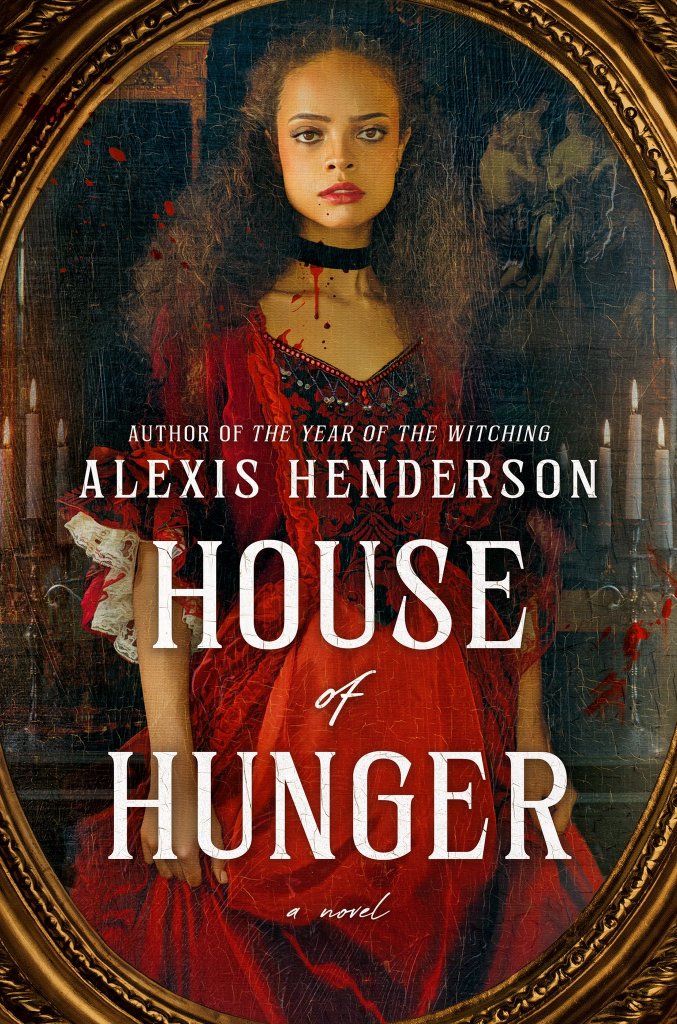
Book: “House of Hunger” by Alexis Henderson

Publishing Info: Ace, September 2022

Where Did I Get This Book: I received an eARC from NetGalley.

Where You Can Get This Book: WorldCat | Amazon | Indiebound

Book Description: A young woman is drawn into the upper echelons of a society where blood is power, in this dark and enthralling gothic novel from the author of The Year of the Witching. Marion Shaw has been raised in the slums, where want and deprivation is all she knows. Despite longing to leave the city and its miseries, she has no real hope of escape until the day she spots a peculiar listing in the newspaper, seeking a bloodmaid.

Though she knows little about the far north–where wealthy nobles live in luxury and drink the blood of those in their service–Marion applies to the position. In a matter of days, she finds herself the newest bloodmaid at the notorious House of Hunger. There, Marion is swept into a world of dark debauchery–and at the center of it all is her.

Countess Lisavet, who presides over this hedonistic court, is loved and feared in equal measure. She takes a special interest in Marion. Lisavet is magnetic, and Marion is eager to please her new mistress. But when her fellow bloodmaids begin to go missing in the night, Marion is thrust into a vicious game of cat and mouse. She’ll need to learn the rules of her new home–and fast–or its halls will soon become her grave.

Review: Thank you to NetGalley for providing me with an eARC of this novel!

Alexis Henderson’s debut novel “The Year of the Witching” was my favorite book in 2020. Her unique and dark witchcraft story really connected with me, as Henderson took familiar witch themes and turned them into broader commentaries on identity, groupthink, and fanaticism, and hell yes did it work for me. It’s probably no shock that when I heard she was writing a new book I was very excited. And when I read the description of “House of Hunger”, and realized that it was going to be Henderson’s take on vampires, my excitement went that much higher. I’m very particular about vampire stories, as I’ve mentioned before, but I had high hopes and full trust in Henderson.

This book is just awesome. It’s a fascinating deconstruction and reworking of a typical vampire story, and it also delves into the always complicated themes of class and privilege from our society and applies them to a fantasy world that is well conceived and interesting. Henderson’s world of the North and the South has a great set up and some fantastic world building, and I had a solid feel for the world that the story is set in. The nobles of the north who take on the bloodmaids are never referred to as vampires, per se, though there are plenty of hints that this is kind of what we are working with here: they live in a part of the world that has longer nights than the area that our protagonist Marion comes from, for one. There is the very obvious aspect of the blood drinking, and the harkening back to Lisvet’s ‘illness’ (probably extreme hemophilia) and how she needs blood to survive. And there is also the aristocratic lives that the nobles live, a theme that has been connected to vampire lore from the early days of the genre. I liked that Henderson opted to not go full vampire in the story, as it makes Lisvet and the other nobles of the houses more mysterious and seductive, and gives the story more room to explore the mythology of the world at hand. And we slowly get to see the tension and threat build, going at a pace that makes not only Marion, but also the reader, in a ‘frog in the pot of boiling water’ situation, unaware of the actual threat at hand until it is far, far too late. There are so many unsettling aspects of this story in terms of horror, and once it builds to some of the bigger reveals it jumps off the page and is solidly scary, scary stuff.

Speaking of Marion, I really liked her as our protagonist, as she is so many shades of grey and incredibly multi-faceted as a character. She is the perfect way to explore the other themes of the upper class exploiting the lower classes out of the sheer desperation that the have nots experience. When we meet Marion she is living in poverty with a sick and abusive brother, working under a cruel mistress at a backbreaking job with nothing to show for it. Of course the temptation of escape to live in the opulence of being a bloodmaid is going to tempt her! Sure, you have to give your mistress your blood, but in exchange Marion gets pampering, glamorous housing, all the delicious food she can eat, and then the attention of Lisvet, who makes her feel special and extraordinary. Marion is desperate, but she’s also ambitious, and Henderson definitely delves into darker areas with her character as she sees things that are questionable, but opts to explain them away as she loves her new life as a bloodmaid and the perks that it seems to have. And oh the metaphors of a wealthy elite like Lisvet literally drinking the blood from a lower class girl with few options like Marion and her other bloodmaid companions! I mean, there is a reason that Lisvet’s last name is Bathory, after all. It’s a great commentary on how the haves take the have nots for everything they’re worth, and can make them think that it’s some kind of honor or choice.

“House of Hunger” is a fantastic horror dark fantasy. Alexis Henderson is a horror voice to be paying attention to, as her deconstructions of familiar tropes turn into stories that are so incredibly special and unique. Cannot wait to see what she does next.

Rating 10: Unsettling, suspenseful, and a well done exploration of the haves and have nots, “House of Hunger” is another successful horror novel from Alexis Henderson.

Reader’s Advisory:

“House of Hunger” is included on the Goodreads list “Bathory Books”.

Kate’s Review: “The Weight of Blood”

This post may contain affiliate links for books we recommend.  Read the full disclosure here.

Book: “The Weight of Blood” by Tiffany D. Jackson

Publishing Info: Katherine Tegan Books, September 2022

Where Did I Get This Book: I received an eARC from NetGalley.

Where You Can Get This Book: WorldCat | Amazon | Indiebound

Book Description: When Springville residents—at least the ones still alive—are questioned about what happened on prom night, they all have the same explanation . . . Maddy did it.

An outcast at her small-town Georgia high school, Madison Washington has always been a teasing target for bullies. And she’s dealt with it because she has more pressing problems to manage. Until the morning a surprise rainstorm reveals her most closely kept secret: Maddy is biracial. She has been passing for white her entire life at the behest of her fanatical white father, Thomas Washington.

After a viral bullying video pulls back the curtain on Springville High’s racist roots, student leaders come up with a plan to change their image: host the school’s first integrated prom as a show of unity. The popular white class president convinces her Black superstar quarterback boyfriend to ask Maddy to be his date, leaving Maddy wondering if it’s possible to have a normal life.

But some of her classmates aren’t done with her just yet. And what they don’t know is that Maddy still has another secret . . . one that will cost them all their lives.

Review: Thank you to NetGalley for providing me with an eARC of this novel!

I’ve reviewed Stephen King’s “Carrie” on the blog before, and in my review I mentioned how much I love that book. Like, I LOVE it and have loved it since I was in middle school. I have also come to love the books of Tiffany D. Jackson, one of my favorite YA authors writing today, as her stories are always rife with well done tension as well as great examinations of social issues about race in the U.S. So when it was announced that Jackson was going to write a book that was a reimagining of “Carrie”, I just about lost my mind with glee. Suffice to say, I had been looking forward to “The Weight of Blood” ever since the publishing notice fell across my Twitter feed. When I finally sat down to read it, I told myself to go slow and savor it… and immediately burned through it in two days time. She’s done it again, folks, and this time she took one of my favorite horror novels along for the ride.

I really, really enjoyed this book, so buckle up for a long review.

First and foremost, this is a “Carrie” re-telling/re-imagining, and Jackson really does a good job of making it her own while still drawing clear connecting lines to the original plot, themes, and characters. But I really love how she takes it a few steps further and bolder and makes it not only a story about bullying, but racial bullying and systemic racism that fosters and creates environments where racial bullying thrives. Maddy is our protagonist, who is a biracial teenage girl that has been able to pass as white in her small southern town, mostly due to her fanatical father and his insistence that she do so. Once she is outed as Black due to a rain storm having a reaction with her hair, her white classmates, already using her as a target because of her social awkwardness, amp up the bullying in ways that become far more vicious. It’s biting commentary and it works really, really well, as plot points from the source material are tweaked to take on more complex meanings. The Prom that Maddy ends up going to (to disastrous results of course) is the first desegregated Prom the high school has ever had. Her tyrannical parent this time is her white father, and his zealotry is as much Christian Evangelism as it is worshiping at the altar of whiteness in America. Our Sue Snell analog, Wendy, is a white girl with a Black quarterback boyfriend named Kenny, and her motives for getting Kenny to take Maddy to Prom are more a white savior complex at work than a nice girl feeling bad about being an accessory to bullying. And so forth. It all feels like “Carrie” but it goes further and feels like a different kind of gut punch as racism is at the forefront, and it works incredibly well.

The story is told through a third person narrative between a few different characters, as well as podcast transcripts, official police reports, and articles and book excerpts, and they all come together in ways to slowly show not only what disaster happened the night of Prom, but also to show the racist history of Springville, and how the town has been fostering racial animosity and inequity up through the events of the book. I really liked learning about the town and the people in it in this way, as it really does drive home the greater point that the the ugly truths about race and racism have rotted the town through, and by the time we get to the story at hand, it all comes to a head on Prom night. Again, a direct line to the story that the book is paying homage to with the transcripts and interviews, but expanding upon it to make the story at hand all the richer.

And finally, and this is probably one of the less important points of this re-telling (mild spoiler alerts here too), but I loved, LOVED that Jackson fully leans into the romance between Maddy and popular quarterback turned prom date Kenny. I have always been a huge proponent of the Tommy Ross and Carrie White romance, as the book and both movies make it clear, at least to me, that had the Prom not ended up with Carrie burning it all down and Tommy being killed by a falling bucket, they absolutely would have ended up together PROBABLY FOREVER, OKAY? So when it became clear that Maddie and Kenny were absolutely falling in love with each other, I was hooting and hollering, and then, of course, preparing for the worst given how the source material ends for them both. Though, all that said, Jackson definitely makes this tale her own in spite of the great homage, and that is all I am going to say about THAT, so….

Did I put my kindle down for a moment during my read just to rewatch the ‘Someone Like Me’ scene in this movie and then cry a little bit to myself? You’re DAMN RIGHT I DID! (source)

“The Weight of Blood” is a great remix of one of my favorite books, and Jackson knows how to draw the comparisons out while making her own points and plot. I really enjoyed this one as a fan of her work, and a fan of “Carrie”. Just stupendous.

Rating 10: A fantastic re-imagining of “Carrie” that takes on social issues of racism and bigotry that are, unfortunately, still all too relevant, “The Weight of Blood” is another page turner from Tiffany D. Jackson!

Reader’s Advisory:

“The Weight of Blood” isn’t on many Goodreads lists as of yet, but it would fit in on “Popsugar 2022 #33: A Social Horror Book”.

Book Club Review: “Circe”

This post may contain affiliate links for books we recommend.  Read the full disclosure here.

We are part of a group of librarian friends who have had an ongoing book club running for the last several years. Each “season” (we’re nerds) we pick a theme and each of us chooses a book within that theme for us all to read. Our current theme is “Book Bingo” where we drew reading challenges commonly found on book bingo cards from a hat and chose a book based on that.  For this blog, we will post a joint review of each book we read for book club. We’ll also post the next book coming up in book club. So feel free to read along with us or use our book selections and questions in your own book club!

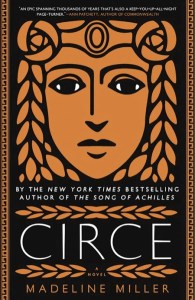
Book: “Circe” by Madeline Miller

Publishing Info: Little Brown and Company, April 2018

Where Did We Get This Book: The library!

Where You Can Get This Book: WorldCat | Amazon | Indiebound

Book Bingo Prompt: a book with a map

Book Description: In the house of Helios, god of the sun and mightiest of the Titans, a daughter is born. But Circe is a strange child – not powerful, like her father, nor viciously alluring like her mother. Turning to the world of mortals for companionship, she discovers that she does possess power – the power of witchcraft, which can transform rivals into monsters and menace the gods themselves.

Threatened, Zeus banishes her to a deserted island, where she hones her occult craft, tames wild beasts and crosses paths with many of the most famous figures in all of mythology, including the Minotaur, Daedalus and his doomed son Icarus, the murderous Medea, and, of course, wily Odysseus.

But there is danger, too, for a woman who stands alone, and Circe unwittingly draws the wrath of both men and gods, ultimately finding herself pitted against one of the most terrifying and vengeful of the Olympians. To protect what she loves most, Circe must summon all her strength and choose, once and for all, whether she belongs with the gods she is born from, or the mortals she has come to love.

Kate’s Thoughts

I was obsessed with Greek Mythology as a kid, so much so that I would be constantly checking out books of that topic from the library, or taking little extracurricular classes on the subject in my grade school (these classes were called ‘Minis’ and we could sign up for just about any topic). In high school I took a class on Greek mythology, and one of the books we read was “The Odyssey”, the well known tale of Odysseus trying to make his way home after the Trojan War. I didn’t REALLY care for the book, but I did love the time he spent on Aeaea with Circe, the witch who turns his men into pigs. When Serena picked “Circe” for book club I was happy for two reasons. The first is that I love Madeline Miller’s book “The Song of Achilles”. The second is that “Circe” had been sitting on my shelf ever since it first came out and this was the kick to the pants I needed to pick it up.

Much like “Song of Achilles”, Miller takes a well known Greek myth and character and delves into a backstory that fits the greater mythology while exploring more modern themes and notions. In this we get the backstory of Circe the witch, from her time as the child of a Titan and a nymph to her banishment to her desert island to her time with Odysseus and beyond, while also exploring her womanhood, her isolation, her thought process, and her traumas. We see her role in other parts of Greek Mythology, sometimes being a passive player and other times being very active, and so in turn see new perspectives on some of these stories. Who could make the Minotaur pitiful, or Medea a little more complicated, or Odysseus less heroic? Madeline Miller can, and it works perfectly through the eyes of Circe as she weathers her own storms and learns her own lessons.

You need not be a fan of Greek Mythology to pick up “Circe”, as the themes are broad and relatable as a woman who has been disenfranchised has to stake a claim to her ability to live her life and keep herself and her loved ones safe. It’s resonant and powerful and I really enjoyed it.

Serena’s Thoughts

I’ve had “Circe” sitting on my TBR pile for quite a while also. That said, I also have “Song of Achilles” right there next to it. While I’ve heard great things, I’m just not up for all the tears! So it was an easy pick to just skip ahead to “Circe,” a tale that, while tragic at times, didn’t come with a foregone, ball bawl-worthy conclusion.

I can echo everything Kate said. I, too, very much enjoyed Greek mythology as a kid and teen. I didn’t have the same resources for taking classes on the subject, but I definitely gobbled up everything I could. Even with that being the case however, I haven’t re-familiarized myself with the pantheon or myths for quite some time, so reading this book, I can speak to the fact that it’s still approachable for those with less (or older) knowledge of the original stories. For one thing, I didn’t remember just how entwined some of these stories became. It was truly impressive how many various different myths, gods, heroes, and monsters the author was able to weave Circe’s story through and around.

Circe’s story was also very much one of power, especially the unique power of being a woman. It was an all inclusive exploration, not looking away from the restrictions placed on women with power but also acknowledging the specific destructive tendencies that some powerful women can turn to in a world that would limit their options. Circe’s own experience with her magic progress over literally centuries. And we see several examples of other powerful women working with their own forms of power and existence, both to good and bad outcomes. I also really liked the versions of womanhood we see through Circe’s life. We see a daughter, a sister, a lover, a mother, a friend. All tied within her own ongoing story of self-acceptance and growth.

I really liked this book. I think it’s the kind of story that has a lot of great cross-over appeal, likely to please fans from almost all genres.

Kate’s Rating 9 : A truly marvelous exploration of a notorious character of Greek Mythology, “Circe” gives the Witch of Aeaea a compelling backstory and some well done connections to other myths while taking on themes of womanhood, power, and resilience.

Serena’s Rating 10: Simply brilliant, a powerful re-imagination of a powerful female character who has existed largely on the sidelines of mythology.

Book Club Questions

  1. How familiar were you with the Greek myths that are touched on in this story? Particularly “The Odyssey” itself?
  2. Circe and her siblings all take very different paths in life. In what ways did their upbringings make them similar and in what ways did they differ? Why do you think they each chose the paths they did?
  3. This book has many themes revolving around women and power. What aspects of this theme stood out to you? How did Circe’s attitude towards her own power shift throughout the book?
  4. Circe come from a dysfunctional family. In what ways do we see this impact her choices when raising her son? Does she fall into any of the same traps? How do her choices compare to those she was raised with?
  5. What did you think of the portrayal of the various gods and titans we see in this story? Did they align with what you knew of these mythical beings from before? In what ways did they surprise you?

Reader’s Advisory

“Circe” is on these Goodreads lists: Best Books About Mythology and Awesome Women of the Ancient World.

Kate’s Review: “The Pallbearers Club”

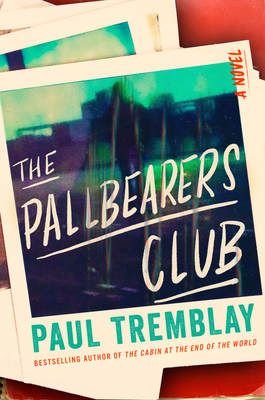
Book: “The Pallbearers Club” by Paul Tremblay

Publishing Info: William Morrow, July 2022

Where Did I Get This Book: I received an eARC from NetGalley.

Where You Can Get This Book: WorldCat | Amazon | Indiebound

Book Description: A cleverly voiced psychological thriller about an unforgettable—and unsettling—friendship, with blood-chilling twists, crackling wit, and a thrumming pulse in its veins—from the nationally bestselling author of The Cabin at the End of the World and Survivor Song.

What if the coolest girl you’ve ever met decided to be your friend?

Art Barbara was so not cool. He was a seventeen-year-old high school loner in the late 1980s who listened to hair metal, had to wear a monstrous back-brace at night for his scoliosis, and started an extracurricular club for volunteer pallbearers at poorly attended funerals. But his new friend thought the Pallbearers’ Club was cool. And she brought along her Polaroid camera to take pictures of the corpses. Okay, that part was a little weird. So was her obsessive knowledge of a notorious bit of New England folklore that involved digging up the dead. And there were other strange things – terrifying things – that happened when she was around, usually at night. But she was his friend, so it was okay, right?

Decades later, Art tries to make sense of it all by writing The Pallbearers’ Club: A Memoir. But somehow this friend got her hands on the manuscript and, well, she has some issues with it. And now she’s making cuts.

Seamlessly blurring the lines between fiction and memory, the supernatural and the mundane, The Pallbearers’ Club is an immersive, suspenseful portrait of an unforgettable and unsettling friendship.

Review: Thank you to NetGalley for providing me with an eARC of this novel.

It’s finally time, everyone! Paul Tremblay has a new horror novel out, and it’s one that caught my attention VERY quickly when I read about it. For one reason, obviously, is that it’s Paul Tremblay. He’s one of my favorite horror authors, and one of the best ones writing today. But the bigger issue at hand is that while he has taken on other horror themes and twisted them onto their head (possession, zombies, ghosts, etc), he is taking on a subgenre that is near and dear to my heart, and that I am VERY picky about: vampires. I love vampire stories, but I want very specific things from my vampire stories. And Paul Tremblay gave me everything I need. Oh, and yes, like in most of his other works, I ended up weeping relentlessly by the end.

It almost always comes to this when I read his books. (source)

Let’s start with the plot and the way this story is told. The narrative structure of this book is so fantastic. It is framed as a memoir written by Art Barbara. Going in, we know nothing about Art, or why he would have written a memoir about himself. We also almost immediately notice that there are seemingly handwritten annotations and footnotes written by a mystery voice, and those footnotes are critiquing the story as written. We soon realize that this story Art is telling is about his friendship with mysterious cool girl Mercy Brown, whom he met through the Pallbearers Club, a group he formed in high school as a community service opportunity. Teens work at funerals of forgotten people to serve as mourners and pallbearers. Mercy saw the ad Art put out, and called him. Thus began a friendship built on punk music, 80s yearning, and a mutual interest in working funerals. Art for extracurricular brownie points, Mercy for… other reasons. As Art talks about their friendship, he slowly reveals that he believes her to be a vampire. Mercy, in the footnotes, is constantly questioning his words, editorializing, and it is through both of their POVs that we see a slow burn creepy story about toxic friendship and potential vampirism come to be. I loved how Tremblay decided to tell this story, as it makes both of our narrators have truths and lies that the are sprinkling in. And given that Tremblay is a master at creating deeply disturbing horror moments, the vampire stuff (as Art describes it) is well done, unique, and taps into an actual folktale from New England that is about, in fact, a woman named Mercy Brown who was thought to be a vampire. Look it up! Start HERE. I loved how he brought in this actual story of American mythology and connected it to a metaphor about toxic friendships. The vampire mythos that we get feels fresh and new, and it taps into the non-romanticized themes of vampires as users, superstitions around illness, and codependence. It’s so damn good.

Now I need to talk about Mercy. Mercy is the shining star of this book, of all Paul Tremblay books. He so effortlessly captures the ‘cool girl as seen through the geek boy’s eyes’ trope and turns it into something that is both malevolent as well as bittersweet. We have this great tactic in which we see how Art views Mercy through his memoir, and we also get to see Mercy’s voice not only tell him how badly he has projected his own insecurities into he perception of her (which I believe so many ‘cool girls’ have to deal with when it comes to these kinds of geek boys and their worshiping), but also reflect that cool girl-ness she absolutely DOES have, as well as the clear love (and resentment) she also has for him. There is no question that both Art and Mercy are terrible for each other, and that they both get a lot of things wrong about each other. But the way that Tremblay gives both of them voices to construct a broader truth is great, and he does it in a way that doesn’t make Mercy just a potential vampire that is also a well worn manic pixie dream girl trope. She is basically what I wanted Samara Weaving’s character in “The Babysitter” to be in terms of meeting her full potential, and I absolutely adored her with my entire heart.

Bee is pretty great too, don’t get me wrong, but Mercy is Bee with a bit more depth. (source)

And finally I need to talk about this pathos I keep mentioning. Because this book is just brimming with it in the way that Tremblay does. He really, really knows how to just gut the reader. As said above, Art and Mercy’s friendship is not healthy, really, given that the entire ‘is it a vampire thing?’ question harkens back to the parasitic nature of vampirism, and therein the parasitic natures of some bad human relationships. But I will say, without spoiling things, there is some serious emotional depth that Tremblay taps into with their friendship, about their mutual outcast status and loneliness that connected them in the first place, and at once makes you think ‘this is so unhealthy’, while also feeling the mutual, real love they have for each other. And, once again, I found myself bawling during a Paul Tremblay horror novel. God DAMN do I love how this man knows how to destroy my soul.

“The Pallbearers Club” is a phenomenal take on a vampire story. It is definitely my favorite of Tremblay’s books. I urge horror fans, especially if you like new takes on vampire stories, to pick this one up.

Rating 10: Loved it so much. Mixing humor, horror, and a whole lot of pathos, “The Pallbearers Club” is Tremblay’s best work.

Reader’s Advisory:

“The Pallbearers Club” is included on the Goodreads list “Horror To Look Forward To in 2022”, and it would fit right in on “The Ultimate List of Vampire Books”.