My Year with Jane Austen: “Emma” Part II

6969Book: “Emma”

Publication Year: 1815

Book Description: Emma Woodhouse is one of Austen’s most captivating and vivid characters. Beautiful, spoilt, vain and irrepressibly witty, Emma organizes the lives of the inhabitants of her sleepy little village and plays matchmaker with devastating effect.

Note: Yes, this is out of order. I blame the quarantine and general craziness of watching over a one-year-old, but I finished reading “Emma” about a week or two ago, and only then realized that I had skipped “Mansfield Park.” I probably could have banged “Mansfield Park” out in this last week, but I didn’t want to rush my read of that rather hefty book. And then when I would finally get to “Emma,” around July, I’d be several months removed from my actual read through. So, I think this is better than doggedly sticking to my original order. It is what it is!

Part II – Volume 2, Chapters 11 – End

Story – “The person, be it gentleman or lady, who has not pleasure in a good novel, must be intolerably stupid.”

Frank Churchill is called back to his ill aunt, leaving the entire neighborhood bereft. Before he leaves, however, he visits Emma and seems to be on the cusp of some great confession. He doesn’t get it out, but Emma assumes it was a profession of love. She believes she must be in love, too; how could she not be?

Soon enough, however, a new distraction arrives in the return of Mr. Elton with a new bride. Mrs. Elton soon makes a poor impression on Emma, coming across as snobby, full-of-herself and, especially bad, overly familiar with Mr. Knightley, calling him “Knightley” after only one meeting. Mrs. Elton soon cools towards Emma, too, and between herself and Mr. Elton, the two become quite unpleasant neighbors, though Emma puts on a good face about it. For a new companion, Mrs. Elton takes Jane Fairfax under her wing, eagerly hoping to help with Jane’s need to look for a governess position soon. Jane attempts to dissuade her, but Mrs. Elton is persistent.

Frank’s aunt decides to take up residence much closer to Highbury, so he becomes a much more frequent visitor of the neighborhood. Emma finds, on his return, that she didn’t seem to miss him much at all and must not have really loved him. He, too, seems to be less in love, though the two still enjoy joking around with one another. Frank, Emma, and the Westons arrange to have a ball in the town center. It’s a fancy affair and everyone arrives decked out, though Frank comments negatively on Jane’s looks.

Early in the dance, while most people are paired up already, Mr. Elton rudely and publicly snubs Harriet who is still sitting alone without someone to dance with. Mr. Knightley arrives and asks her to dance, pleasing Emma to see her friend so happy. Later, she admits to Mr. Knightley that she was wrong about Mr. Elton, and Mr. Knightley concedes that Harriet has some first rate qualities that the new Mrs. Elton with without. The two dance together.

A while later, the neighborhood is thrown into confusion when Harriet and her friend are set upon by gypsies while walking. Frank arrives in the nick of time and whisks Harriet back to Hartfield. Emma believes she may see a spark between the two after this incident. Later, when she and Harriet are talking, Harriet confesses that she no longer plans to marry and Emma guesses to her that it may be because the man she prefers is so far above her. Harriet confesses that it is true. Emma reassures her that unequal marriages happen all the time and its no wonder Harriet fell for him after he rescued her like that. Harriet goes on about her feelings at the moment, though both she and Emma agree not to name the gentleman in question so there are no mistakes this time around.

As the summer progresses, there are many opportunities for the group to gather together. They all go to Mr. Knightley’s home one summer day do pick strawberries; even Mr. Woodhouse is convinced to come and Mr. Knightley makes great effort to make sure he is comfortable. Mrs. Elton continues to hound Jane about her future as a governess, and in a quiet moment, Emma catches Jane sneaking away. Jane begs her to let her go on her own and claims that she is emotionally exhausted. Emma helps her and worries about her health. Soon after Jane leaves, Frank Churchill arrives in a poor temper, saying his life is a series of frustrations and he will soon leave the country. Emma convinces him to come on a trip to Box Hill that they are all are taking.

The trip is immediately a poor affair. It is hot and everyone seems to be in bad moods. After wandering around, they all sit down for a picnic lunch though no one seems to talk much. Frank and Emma try to carry the conversation with Frank becoming more and more exuberant and ridiculous, prodding Emma that she must find him a wife who is just like her. Emma thinks of Harriet. Jane pipes up that it is hard to truly know someone on short acquaintances, and Frank seems put out. He insists everyone play a game in which they must say something clever, two things sort of clever, or three things dull indeed. Miss Bates says she will succeed easily as she always says dull things. Emma laughingly says that the struggle will be only saying three at one time. This hits with a thud. Everyone gradually wanders away. As Emma is walking, she is caught up by an angry Mr. Knightley. He berates her for being so cruel to Miss Bates and says it was badly done. Emma feels the truth of his words, but he walks away before she has time to apologize.

The next day, Emma gets up early to call on Miss Bates in an attempt to apologize and start to behave better by her. When she gets there, she meets with Miss Bates but Jane refuses to see her. Miss Bates says that Jane has accepted a governess position, taking them all by surprise, though Jane seems very sad about it. Upon returning home, Emma meets with Mr. Knightley who is just taking his leave. He is told about her trip to the Bates’ and seems to know what she was about. He says that he is leaving on a substantial trip to London. Emma is saddened to see him go.

Over the next few weeks, Emma tries to befriend Jane but is turned away at every attempt. Eventually, news comes that Frank’s aunt has passed away. Soon after, Emma is called to the Westons for urgent news. It turns out that Frank and Jane have been secretly engaged since before either of them came to Highury. Mrs. Weston is beside herself, worrying that Emma was in love with Frank and knowing that that is what she and her husband had been wanting. Emma is hurt and confused by Frank’s behavior, but reassures Mrs. Weston that she never loved Frank. She understands, now, why Jane avoided her, however, seeing as Frank flirted with her constantly in front of Jane.

Emma goes to Harriet, feeling the awful weight of having to deliver the bad news once again that the man Harriet loves is with someone else. But Harriet seems unaffected! Emma soon learns that she was again, mistaken: Harriet never meant Frank Churhill when she spoke of being in love, she meant Mr. Knightly. They go over all the details of their confusion, and Emma sees how she, again, misinterpreted things. Harriet feels confident that Mr. Knightley returns her affections and Emma admits that he is the last man who would ever intentionally lead someone on. The entire affair makes one thing blatantly clear: she, Emma Woodhouse, is in love with Mr. Knightley.

Wretched, Emma returns home. A few days later, Mr. Knightley arrives at Hartfield. He and Emma walk about the house and Mr. Knightley hurries to reassure Emma that Frank is a scoundrel who never deserved her. Emma confesses that while Frank did use her to continue his scheme of hiding his relationship with Jane, she was never in love with him. Mr. Knightley says that he is jealous of Frank in a way, that Frank’s secret is known. Emma cuts him off quickly, not wanting to hear his confession of love for Harriet. Shortly after, however, she feels what she has done and rushes to tell Mr. Knightley that he can say anything to her, as her friend. Mr. Knightley says he doesn’t want to be just friends and asks if he has a chance with her? Emma realizes that she was mistaken once again, and the two confess their love for each other.

Eventually all is settled. Harriet, again heart broken, manages to find love for a third time with Mr. Martin and the two are married. Mr. Knightley, knowing Emma cannot leave her father who depends on her so much, decides to move into Hartfield after they marry. John and Isabella come to stay with Mr. Woodhouse and give Emma and Mr. Knightley the chance to go on a honeymoon to the seaside.

Heroines – “I hate to hear you talk about all women as if they were fine ladies instead of rational creatures.”

I think what really sells Emma to the most readers, something that Austen didn’t put enough stock into when she worried people wouldn’t like her heroine, is just how much page time is devoted to her feelings of regret, sorrow, and duty. She makes mistakes, huge ones and small, but it can be argued that she pays equally high prices for those mistakes.

In her misleading of Harriet, she ends up in a situation where Harriet sees a future for herself with the very man Emma now knows she loves. And the book spends pages really exploring how Emma realizes all of the little mistakes and steps that she took that lead to this situation. But on top of her regrets, there are even better small moments, like a line detailing Emma’s inner thoughts about how she had no right to crush or criticize Harriet’s dreams of a life with Mr. Knightley. Emma recognizes that it was she who formed this friendship with Harriet, she who encouraged attachment and the trust Harriet now puts in her sharing these deep secrets. Emma has no right to smack her down, and so she stays quiet and says what needs to be said: that she will support Harriet and that Mr. Knightley would never lead any woman on.

We also see Emma pay the price of her foolishness with Frank Churchhil. Delayed, yes, but she does try to form a friendship with Jane and gets no where. Once the truth comes out, she sees the part she played in Jane’s ongoing torment and deeply regrets her behavior. She admits to Mr. Knightley that it is her own behavior more than anything that pains her when she thinks back on that entire situation.

And, of course, the Miss Bates situation. Unlike Mr. Knightley, we see how immediate is Emma’s reaction to his words. She not only recognizes how right he is in this situation but sees how easily she has given way to selfish neglect of Miss Bates in the past. The scene where Emma visits Miss Bates the next morning is awkward and uncomfortable, but we see a reformed Emma who is willing to pay that price to begin again on the right foot.

Beyond all of these moments where we see Emma confront her own inner demons, there is plenty of opportunity given throughout the series to appreciate her innate good qualities. Any and every interaction between Emma and her father shows just how good-hearted Emma can be. She does sacrifice much of the independence and fun that many young women in her position would crave to make sure her father is comfortable and happy. She recognizes her own power in his life, either as a force of good or evil. And she always chooses the good, arranging his evenings to be quiet and comfortable and not pushing him too much as far as her own social plans go. And, obviously, in the end we see just how far she is willing to take this. She fully expects to only be engaged to Mr. Knightley for many years. It never crosses her mind to leave her father, and instead she is ready to put off the biggest happiness of her life, marriage to her true love, in an effort to keep him happy and comfortable while he lives.

Heroes – “What are men to rocks and mountains?”

We see a lot more of Mr. Knightley in general in this second half. And not only does it feel like he’s around more often, but he has some pretty great moments. Rescuing Harriet at the ball, of course, serves as a pretty major lynchpin in the following romantic confusion. He has some excellent lines with regards to Mrs. Elton, effectively putting her in her place when he refuses to let her invite whomever she wants to his house for strawberry picking, noting that only “Mrs. Knightley” will have the privilege of doing that. And he’s the only one to pick up on the weirdness between Frank Churchill and Jane. He even goes so far as to warn Emma about what he suspects, though she laughs him off. You’d think that after admitting to Mr. Knightley himself that he saw things in Mr. Elton that she didn’t, she might be more open to his maybe cluing in on things she isn’t. But, again, she really has no reason to suspect anything like this, what with Frank’s unnecessarily rude comments about Jane’s hair and such.

The only thing he gets wrong is Emma’s regard for Frank, and you can hardly blame him for that given the two of them and their behavior. But it’s funny to see how much of Mr. Knightley’s opinion of Frank depends on Emma’s opinion of Frank:

He found [Emma] agitated and low. – Frank Churchill was a villain.- He hear her to declare that she had never loved him. Frank Churchill’s character was not desperate. – She was his own Emma, by hand and word, when they returned to the house; and if he could have thought of Frank Churchill them, hi might have deemed him a very good sort of fellow.

Villains – “I do not want people to be very agreeable, as it saves me the trouble of liking them a great deal.” 

Frank Churchill is the closest thing to a villain in this second half of the story. As Mr. Knightley rightly points out, he treats everyone poorly and then everyone is eager to forgive and forget. He is lucky that Emma didn’t fall in love with him, what with his constant flirtations. And for what? He by no means needed to have another object of interest to deflect attention from his engagement to Jane. It’s pretty clear that no one would have put those pieces together (except, obviously, Mr. Knightley).

What’s more, we’re meant to think that he truly loves Jane. And yet, he continually goes out of his way to hurt her by his behavior. Some of it to her face and some of it behind. Talking badly about her appearance to Emma? Why?? For no obvious reason other than his poor character. And then, again, flirting continuously with Emma. He’s at his worst at the picnic at Box Hill, but it’s pretty bad the entire time. Getting Emma to tease Jane alongside him and everything. He really doesn’t deserve Jane, who, other than the questionable decision of being in a secret engagement, really does seem like a nice woman. All of it throws back to Mr. Knightley’s original assessment of Frank: that any man who knows what is right but chooses not to do it is not a man to be admired. Mr. Knightley says this in context of Frank not visiting the new Mrs. Weston, but it applies here, too. Of the two, Jane is the one who suffers more for their secret engagement. And at least half of her torment is due to Frank’s own, intentional behavior. It’s no way to treat someone you claim to love.

Even in the end, with his apologies to Emma, it seems clear that Frank is only half-heartedly feeling the true weight of his poor behavior. He’s still quick with a joke and seems barely able to remain serious long enough to get the basic words out.

Romance – “A lady’s imagination is very rapid: it jumps from admiration to love, from love to matrimony in a moment.

I have a note in my Kindle that flags the first real signs of romance in this book, and it comes about two thirds into the story in the second chapter of the third volume. It’s certainly another example of how “Emma” differentiates itself from Austen’s prior novels. Emma herself, as we’ve discussed, is very different than the other heroines. And here we see how much of a back burner the romance plays in this story to the comedy itself. Of course, once it comes it’s immensely gratifying, but again…two thirds of the way through. And even then, it’s Emma admiring Mr. Knightley’s fine figure at the ball and still placing him right aside Frank Churchill as being uncomparable in the room.

It’s kind of an odd thing, but having talked to many “Emma” fans, both of the book and of the various film adaptations, two scenes often stand out between Emma and Mr. Knightley and they both involve the two fighting. Or at the very least, Mr. Knightley scolding Emma. The first, of course, is the fight over Harriet’s future in the first half. And the second is Mr. Knightley’s lecture to Emma about her bad behavior at Box Hill. Let these instance note that for centuries now, people have found romance in this kind of “enemies to lovers” story. Obviously, Mr. Knightley is never Emma’s enemy, but why do people always comment on his “badly done, Emma” as such a notable, almost romantic line? It’s an interesting thing, I’ll say that.

Readers are too sauvy to ever buy into the whole Mr. Knightley/Harriet thing like Emma does. But Austen does do a good amount of work to lay groundwork for why Harriet might think what she does. And really, the entire reason she thinks these things is due to Emma herself. Not only the obvious line about unequal marriages, but the entire way she essentially trained Harriet to look for romance. During the Elton situation, Emma raised even the smallest interaction to heights of importance that of course Harriet would adapt this same method for evaluating all men’s actions. Simple conversations suddenly mean interest. Small moments of kindness mean true love. This all goes to say, that Emma is right when she says she only has herself to blame for the Harriet situation, even if she was more hands off in this second round.

But, of course, it all turns out well. The scene between Mr. Knightley and Emma is everything one could want. We see personal growth on Emma’s side when she catches herself being selfish and turning away from hearing Mr. Knightley. We see how long Mr. Knightley has struggled against his feelings for Emma, going back to the very beginning of the book when he was criticizing Emma, even if he wasn’t aware of it at the time. And we see Emma finally be wrong for one last time, but in the best way possible.

And, ultimately, I don’t think there’s another Austen hero that pulls off as romantic a gesture as Knightley does here. Moving in to Emma’s house for her. Giving up large portions of his own independence, something he has had probably for the last 18 years of life. Now, to live in another man’s house and a man who is by no means the easiest person to live with. And all for Emma. I mean, Darcy’s got some moves, but in all practical senses, I think Mr. Knightley has him beat with this one.

Comedy – “For what do we live, but to make sport for our neighbors, and laugh at them in our turn?”

Mrs. Elton could also be in the villains category, such as it is. But I think she fits better in comedy in that she really has very little power to inflict real harm on people, unlike Frank Churchill. Instead, her jabs and barbs are more of a nuisance to most than any real threat. Emma, herself, feels very little other than annoyance that Mrs. Elton doesn’t like her. And it seems that by the end of the book, that even Mrs. Elton herself sees the writing on the wall with regards to her dwindling power over those around her. Mr. Knightley proves he won’t be bullied by her on his own, and the combined forces of the Knightleys and Woodhouses once they are married will be more than enough to quell any further major maneuverings by Mrs. Elton.

Because Emma is so secure from Mrs. Elton’s attempts to make her unhappy, Mrs. Elton instead comes off as the kind of non-threatening character who is made all the more fun for being so unlikable. One does feel bad for poor Jane, and it does serve as another example of Emma’s failings in that respect. But Mrs. Elton on a whole is pretty funny. All of her fancy-schmancy mannerisms, her false humility, her assurance that she is the most fashionable, the most influential. Good stuff.

Favorite quotes – “What did she say? Just what she ought, of course. A lady always does.”

The classic favorite line, of course. But I think this is also proof that besides the fact that she wrote romances, Austen seemed to struggle the most writing the actual romantic dialogue. There’s really very little in many of the books, if you actually look for spoken lines specifically.

“If I loved you less, I might be able to talk about it more.”

Emma is redeemed largely by how much time Austen devoted to her really feeling the weight of her actions, both in the Miss Bates situation and with Harriet’s love for Mr. Knightley.

With insufferable vanity had she believed herself in the secret of every body’s feelings; with unpardonable arrogance proposed to arrange every body’s destiny. She was proved to have been universally mistaken; and she had not quite done nothing – for she had done mischief. She had brought evil on Harriet, on herself, and she too much feared, on Mr. Knightley.

And a small line, but one that I found extremely funny this read through:

Mr. Knightley seemed to be trying not to smile; and succeeded without difficulty, upon Mrs. Elton’s beginning to talk to him.

Final thoughts – “I declare after all there is no enjoyment like reading!”

I’ve always loved “Emma.” Perhaps less romantic than some of the others, I think the balance of comedy and romance plays perfectly. The fact that Emma has more to her life than her love interest (in fact, he’s a literal afterthought!) is a perk for modern audiences. And I think the personal growth she experiences and her original flaws make her all the more relatable to many readers.

While Mr. Knightley is by no means the most overtly romantic of Austen’s heroes (Darcy has the brooding and grand gestures, Captain Wentworth has that letter), he’s the kind of romantic lead that always appeals to me. I always love the friends-to-lovers storyline, and he has the rare ability to somehow make lecturing sexy.

There are also very few “villainous” characters in this story. The Eltons are more just nonsensical than anything, and Frank Churchill’s wrongs are quickly gotten over, for better or worse. As I’ve discussed previously, Emma herself causes the most actual harm to poor Harriet. Harriet not only loses a year of a presumably happy life as Robert Martin’s wife, but also spends much of that year caught up in foolish ploys followed by crushing disappointments. The fact that their friendship wanes in the end of the book is definitely best for both of them. And while Mr. Knightley may not have been completely wrong when he said they’d both do each other harm, he wasn’t far off base either.

I’m excited to get into the movie adaptations of this movie. From my general memory, “Emma” is the book that has the most versions that I generally liked. So we’ll see if that holds true in the coming weeks!

In two weeks, I’ll review the 1996 version of “Emma.” 

Kate’s Review: “The Silence of Bones”

44280973Book: “The Silence of Bones” by June Hur

Publishing Info: Feiwel & Friends, April 2020

Where Did I Get This Book: I own it.

Book Description: I have a mouth, but I mustn’t speak;
Ears, but I mustn’t hear;
Eyes, but I mustn’t see.

1800, Joseon (Korea). Homesick and orphaned sixteen-year-old Seol is living out the ancient curse: “May you live in interesting times.” Indentured to the police bureau, she’s been tasked with assisting a well-respected young inspector with the investigation into the politically charged murder of a noblewoman.

As they delve deeper into the dead woman’s secrets, Seol forms an unlikely bond of friendship with the inspector. But her loyalty is tested when he becomes the prime suspect, and Seol may be the only one capable of discovering what truly happened on the night of the murder.

But in a land where silence and obedience are valued above all else, curiosity can be deadly.

June Hur’s elegant and haunting debut The Silence of Bones is a bloody tale perfect for fans of Kerri Maniscalco and Renée Ahdieh.

Review: Book buying is my version of retail therapy, so you can imagine that lately I’ve been doing a lot of it. While I mostly decide to get print books I can hold from local booksellers, on occasion I will snag something for my Kindle, to save space on my physical shelf and to get some instant gratification as well. “The Silence of Bones” was that kind of scenario, as I had heard of it on and off various book circles online and was interested to check it out and just have it at the ready. I finally dove in over the weekend as chaos and unrest overtook the Twin Cities, needing moments of escape to a completely different place. 19th Century Korea seemed like the perfect place to visit, so “The Silence of Bones” by June Hur was the right book to pick up.

What struck me most is the time and place of this YA mystery thriller. While you can find oodles of historical mysteries that take place in the U.S., or Europe, or other Western cultures, I’m not as aware of the genre branching out to other parts of the world that often. That very well just may be my own levels of exposure to such things, but because of this “The Silence of Bones” felt incredibly unique to me. I know so little about Korean history that I felt like I was learning a lot as I was following Seol as she tried to solve a series of murders as she works as an indentured servant for the police. The descriptions of the urban settings and rural settings alike were vibrant and detailed, and I felt like I could picture the places in my mind and got a good sense for how the society was structured. June Hur clearly did her research, and it really paid off. I especially liked the way that geopolitics of the time entered into it, with hints and whispers of Western Influences starting to move in no matter how local Governments try to stamp them out, sometimes in extreme and violent ways. The sense of impending threat from Catholicism, and the actions taken towards Catholics and other Western traditions, was a very fascinating angle to throw into this story, as knowing what we know about Imperialism in that part of the world now (and other parts not addressed in this book) there was a lot of nuance to parse through.

I also just really liked Seol as a protagonist and the mystery at hand. Seol definitely felt like a sixteen year old girl, even though she was living in incredibly difficult and different circumstances than one sees for sixteen girls in YA today. Her story addresses indentured servitude, the oppression of lower classes, misogyny, and trauma, and her perseverance (and at times stubbornness) was really satisfying to read. Being taken from her home and losing everything to go serve as an indentured servant is quite the backstory, and I really liked it. She sometimes makes mistakes and jumps to conclusions, which makes her all the more real and complex, but overall you can’t help but really want her to figure out what is going on, especially when she begins to find herself in danger. The mystery of who killed a local noblewoman is very well crafted, and Hur throws in a lot of twists and turns that keep the reader wondering and on their toes. There is also the mystery of what is up with Seol’s boss, Inspector Han, who Seol is drawn to and forms a friendship with before he becomes a suspect in the mystery. Han feels like he is steeped in a lot of greys, and I was genuinely on the edge of my seat wondering if Seol’s faith in him is unfounded. By the time everything comes together, you can trace how it does so and it is done seamlessly.

“The Silence of Bones” is a unique and thrilling mystery, and if you like historical mysteries I cannot recommend it enough!

Rating 7: A unique and fascinating historical mystery in a not as seen setting, “The Silence of Bones” has a lot to offer to fans of YA mysteries!

Reader’s Advisory:

“The Silence of Bones” is included on the Goodreads lists “Historical Fiction: Korea”, and “2020 YA/MG Books with POC Leads”.

Find “The Silence of Bones” at your library using WorldCat, or a local independent bookstore using IndieBound!

Serena’s Review: “The Guinevere Deception”

43568394Book: “The Guinevere Deception”  by Kiersten White
Publishing Info: Delacorte Press, November 2019

Where Did I Get this Book: audiobook from the library!

Book Description: There was nothing in the world as magical and terrifying as a girl.

Princess Guinevere has come to Camelot to wed a stranger: the charismatic King Arthur. With magic clawing at the kingdom’s borders, the great wizard Merlin conjured a solution–send in Guinevere to be Arthur’s wife . . . and his protector from those who want to see the young king’s idyllic city fail. The catch? Guinevere’s real name–and her true identity–is a secret. She is a changeling, a girl who has given up everything to protect Camelot.

To keep Arthur safe, Guinevere must navigate a court in which the old–including Arthur’s own family–demand things continue as they have been, and the new–those drawn by the dream of Camelot–fight for a better way to live. And always, in the green hearts of forests and the black depths of lakes, magic lies in wait to reclaim the land. Arthur’s knights believe they are strong enough to face any threat, but Guinevere knows it will take more than swords to keep Camelot free.

Deadly jousts, duplicitous knights, and forbidden romances are nothing compared to the greatest threat of all: the girl with the long black hair, riding on horseback through the dark woods toward Arthur. Because when your whole existence is a lie, how can you trust even yourself?

Review: I’ve been a big fan of White’s work since I read her re-imaging of the life of Vlad the Impaler, gender swapping the main character and creating a tension-filled and deeply stressful (but fantastic) trilogy. From that reading experience, when I heard of this book, a re-imaging of the Camelot story from Guinevere’s perspective, I knew the author was up to the task! And I wasn’t wrong!

Guinevere arrives at Camelot with a mission: to marry Arthur. But that’s only the beginning of her story, for she’s not really Guinevere at all, but a protector sent by Merlin to watch over Arthur himself from all magical threats. While well-versed in magical protections and wards, Guinevere soon learns there is much more to this task than simply being on the look-out for threats to the king. She must actually be the queen, as well, something she feels much less suited for. And as she begins to peel back the layers of the mysterious Camelot and its political maneuverings, she starts to see that there is more at stake than she had thought, and that even she, the woman sent to protect Arthur, may not know the whole story.

This book surprised me in many ways, not least of all in its protagonist herself. We soon discover that Guinevere is not a reliable narrator. I love it when books can pull off an unreliable narrator approach as it opens up so many new doors for discovery as the story unfolds. Here, Guinevere herself isn’t aware of her own unreliability, and in many ways, the reader begins to put together pieces before she does herself. We know that she is an envoy sent by Merlin to protect Arthur. But we don’t know much more than that. It’s only as the story begins to move forward that the layers in Merlin’s plots become clear, and Guinevere begins to suspect larger things at play than a simple protection task.

She’s a very sympathetic character, a necessity for one of fiction’s most vilified female characters. Like she did with Lada Dracul, White builds open and adds to the original character blocks in such a way that the character is easy to understand and root for. Beyond that, the author doesn’t hold back from re-imaging all of the characters involved. If you suspect you know the role that any given familiar name will play, prepare to be surprised. I saw a few of these twists coming, but there were definitely one or two that took me by surprise. Luckily, one of the biggest twists towards the end was one of those surprises.

This was also one of the books I referenced a few weeks ago that has a love triangle that I miraculously didn’t hate. I guess I shouldn’t have been surprised since White also included an unconventional love triangle in her “And I Darken” series. But, again, here I was very pleased with the direction this love story ended up taking. Again, knowing the author’s way, I won’t pretend that this book really establishes any end game as far as the romance goes, but for this book, I was satisfied. It’s always nice to be reminded that even much-detested tropes can be done right by a skilled writer.

The story also doesn’t answer all the mysteries it sets up. There are still a bunch of questions on the table, and I have my own theories about Guinevere’s past and the role she will play going forward. The stage has been set with magical mysteries, old villains and new, and a main character who has only now realized just how under-prepared she really is. I can’t wait to see where it goes from here!

Rating 8: Another excellent twist on a classic tale from Kiersten White!

Reader’s Advisory:

“The Guinevere Deception” is on these Goodreads lists: “Best Retellings of fairytales, legends and history” and (just for kicks) “Covers With Beautiful Art.”

Find “The Guinevere Deception” at your library using WorldCat!

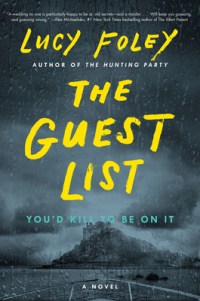
Kate’s Review: “The Guest List”

51933429Book: “The Guest List” by Lucy Foley

Publishing Info: William Morrow, June 2020

Where Did I Get This Book: I received an eARC from NetGalley.

Book Description: The bride ‧ The plus one ‧ The best man ‧ The wedding planner ‧ The bridesmaid ‧ The body

On an island off the coast of Ireland, guests gather to celebrate two people joining their lives together as one. The groom: handsome and charming, a rising television star. The bride: smart and ambitious, a magazine publisher. It’s a wedding for a magazine, or for a celebrity: the designer dress, the remote location, the luxe party favors, the boutique whiskey. The cell phone service may be spotty and the waves may be rough, but every detail has been expertly planned and will be expertly executed.

But perfection is for plans, and people are all too human. As the champagne is popped and the festivities begin, resentments and petty jealousies begin to mingle with the reminiscences and well wishes. The groomsmen begin the drinking game from their school days. The bridesmaid not-so-accidentally ruins her dress. The bride’s oldest (male) friend gives an uncomfortably caring toast.

And then someone turns up dead. Who didn’t wish the happy couple well? And perhaps more important, why?

Review: Thank you to NetGalley for sending me and eARC of this novel!

Last May, I spent a lovely Colorado trip with my husband at the Stanley Hotel in Estes Park, Colorado. While it wasn’t exactly ‘isolated’ in the way that we think of isolation, it felt removed enough from the hustle and bustle of a big city that the tranquility of solitude was definitely present. It was here that I read “The Hunting Party”, Lucy Foley’s isolated whodunnit. I was very taken with this book, and when I saw that her newest novel, “The Guest List” was available on NetGalley I immediately opted to read it. It sounded similar to “The Hunting Party” with the isolation and the circle of friends/acquaintances hiding secrets from each other, but it worked well enough last time I was happy to dive into a similar story again. Even if isolation this time feels a little too close to home.

The first thing that really captured my attention in “The Guest List” was the setting. A somewhat spoiled bride and her charismatic and B-List famous fiance have decided to hold their wedding on a remote island off of Ireland, and boy oh boy did Foley really bring this locale to life. I could practically see the waves crashing against the rocks, and smell the salt in the air, and feel the odd foreboding of a rough terrain and perilous landscape for the unfamiliar. It also serves as a perfect spot for a gathering in which a murder is going to take place. Foley sets up the story with multiples narratives, and tells it between present time and flashbacks to give an entire picture as to who the potential victim is, and what exactly they did that ended with their cruel fate. I always like a non linear mystery if it’s done well, and Foley has no problem with keeping multiple balls in the air as the lays out various puzzle pieces as to who the victim is, and why they were killed. I am also happy to report that I was mostly caught off guard by the mystery as a whole, from who the victim was to who committed the crime to the motive. There are plenty of red herrings along with justifiable grudges that, in familiar Agatha Christie style, everyone is a possible suspect. Did it sometimes seem like the ‘everyone has a reason’ angle feel a little unbelievable? Sort of. But did that detract from the mystery or make it any less suspenseful? Not for me! I was able to overlook some of the REALLY coincidental stuff, because overall I thought that the work was put in to really pull off a satisfactory web of motives, secrets, and twists.

In terms of the characters and their perspectives, overall I thought that their characterizations were well rounded and interesting. Even though we are really only getting into who they are and what they are like in regards to their relationship to the bride and or groom, and even though it’s really only a snapshot taken within this one event, we learn a lot about all of them. From Aoife the wedding planner to Johnno the Best Man to Jules the Bride, everyone gets a moment to shine, and to show why they could be either a victim, or a perpetrator. My favorite of the perspectives was Olivia, the younger half sister of the bride, who is struggling with a fragile mental state. While it may have been tempting to fall back on tried and true tropes when it comes to characters who struggle with depression or depressive episodes, I really appreciated the effort and care that Foley put into Olivia, and how we learned where he difficulties stem from, and the difficulties those around her have to contend with when dealing with a mentally unstable loved one.

“The Guest List” was an enjoyable thriller mystery, and Lucy Foley continues to delight and entertain. If you’re looking for a fun mystery this summer, consider picking this one up!

Rating 8: A mystery filled with turns and surprises, “The Guest List” kept me guessing and held me in suspense.

Reader’s Advisory:

“The Guest List” isn’t on any super relevant Goodreads lists as of now, but I think that it would fit in on “And Then There Were None: Deadly Parties”.

Find “The Guest List” at your library using WorldCat!

Highlights: June 2020

Things in the Twin Cities are very tough right now as summer is starting. But just know that we are safe, though we are also heartbroken and angry like many in our community over the events of the past week. Though it’s hard sometimes to turn our brains off from these things, we do have some books that we’re looking forward to this month. And along with that, please take a look at some of the links we’re providing to see how you can possibly help our community and George Floyd’s loved ones. Thank you. Say his name: George Floyd. Black Lives Matter.

Organizations

Official George Floyd Memorial Fund: The official Go Fund Me by George Floyd’s loved ones.

We Love Lake Street: An organization that is raising money to help clean up and rebuild the damage done to small businesses on Lake Street, one of the neighborhoods hardest hit. Many of the people in this area are BIPOC, including the business owners.

Migizi Fundraiser: A local organization for Indigenous Youth burnt down and hopes to rebuild.

Neighbors United Funding Collaborative: A group that is raising money to give to small businesses in the Midway neighborhood, an area that was hard hit in St. Paul.

Northstar Health Collective: Medics that are on site during protests as well as community health activists.

Minnesota Freedom Fund: A local group that raises money for bail and bond to put up for those who have been arrested with a focus on social justice and immigration.

Serena’s Picks

50147675._sx318_sy475_Book: “The Obsidian Tower” by  Melissa Caruso
Publication Date: Jun 4, 2020

Why I’m Interested: I really enjoyed Caruso’s original “Swords and Fire” trilogy. It featured a strong heroine, an interesting magic system, and strong world-building. So I was excited to see that she was coming out with a new series so quickly. Even better, it is one that is set in the same world, but this time focuses on a young woman who heralds from Vaskandar, the wild, nature-based magical kingdom that was the predominant villains of the first trilogy. What’s more, it sounds like the story will be less about a conflict between Vaskandar and Rivera, like the original trilogy was, but will be introducing some new magical elements and characters. I’m super excited to see what it has to offer!

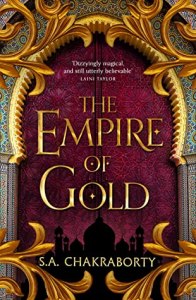
46033842._sy475_Book: “The Empire of Gold” by S.A. Chakraborty
Publication Date: June 30, 202

Why I’m Interested: “The Daevabad Trilogy” has been my favorite current fantasy series for several years. The first two books each ended up high on my “Top 10” lists each year, and I’d be hard pressed to think of a better debut fantasy author on the scene right now. Chakraborty seemingly came out of nowhere and blew me away with an incredible, original fantasy story feature a complicated Daeva society whose roots and conflicts go back thousands of years. And this is the conclusion. I have to say, I’m equally terrified as I am excited. The last book ended with the such a high stakes cliff-hanger and so many complicated threads all tangled up that it’s impossible for me to see a way out of this that won’t just be tragedy all around. I’m prepared for some sadness, but please, please, let my dear Nahri come out of it ok.

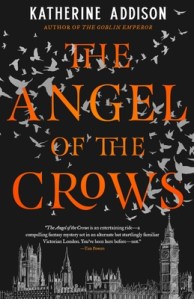
52378874._sx318_sy475_Book: “The Angel of Crows” by Katherine Addison

Publication Date: June 23, 2020

Why I’m Interested: I obviously love both historical fiction and fantasy, so I’m all the more intrigued when the two are combined. In this version of 1888 London, humans and paranormal creatures, such as vampires, werewolves, and even angels, share the streets. So this time, when history makes its turn and Jack the Ripper arrives on the scene, the story will play out very differently. The last “Jack the Ripper” story I read was in the latest installment of the Veronica Speedwell mystery series and, wow, was that a disappointment. Jack the Ripper was LITERALLY a passing figure and the entire book was a pretty big let down. So, the stakes are high for this one coming off that. The fact that its incorporating all of these fantastical beings is definitely a new twist, especially angels which are less common than vampires and werewolves. I’m really curious to see what angle this story takes on the most famous serial killer there ever was.

Kate’s Picks

50833559._sx318_sy475_Book: “Home Before Dark” by Riley Sager

Publication Date: June 30, 2020

Why I’m Interested: Riley Sager hasn’t steered me wrong yet! He’s definitely up there with other favorite thriller authors right now, so you know that I was very happy to see a new book coming out. And this one takes on an Amityville-like tale of hauntings. Or maybe fraud. Maggie’s father wrote a memoir about the time he and his family spent in a haunted house. The book was a runaway hit, but was met with skepticism as well as love. Now Maggie is an adult, and doesn’t really want to associate with that tale as she has no memory of the things her father claimed happened. But after her father’s death she inherits the old house, and hopes to renovate it before she puts it up for sale. And when strange things start happening while she’s there, she has to wonder if maybe he wasn’t lying after all. SIGN. ME. Up.

50202540Book: “I Killed Zoe Spanos” by Kit Frick

Publication Date: June 30, 2020

Why I’m Interested: We have another book that is exploring the idea of the true crime podcast! When Anna moves to a new town for a job, the community is still reeling from the disappearance of local girl Zoe Spanos. Anna’s resemblance to Zoe is uncanny, and she starts to become obsessed with the case. Her obsession implicates her when Zoe’s body is eventually found. Teen podcaster Martina, whose show is all about Zoe and her disappearance, thinks that something else is up, and vows to find the truth. This really sounds like it’s going to tap into my love for both YA thrills and true crime podcasting, so I’m VERY excited for it.

53152636._sx318_sy475_Book: “Mexican Gothic” by Silvia Moreno-Garcia

Publication Date: June 30, 2020

Why I’m Interested: I can safely say that we are BOTH interested in “Mexican Gothic”, here on the blog.  My reasoning is that I enjoyed Moreno-Garcia’s last book, “Gods of Jade and Shadow”, and I love me some Gothic creepiness. So a book that is quoted as being a ‘terrifying twist on classic gothic horror’ by an author I’ve enjoyed is absoLUTELY going to be of interest to me. When Noemí, a debutante in 1950s Mexico, receives a call for help from her newly married cousin, she rushes to an isolated house in the country called High Place, where her cousin lives with her mysterious new husband. Noemí finds herself in the presence of not only a potentially dangerous aristocrat, but also in a house that seems menacing, and perhaps hiding secrets. Moreno-Garcia’s writing style is already very enjoyable, and it definitely sounds like a fresh take on a classic genre!

What books are you looking forward to this month? Let us know in the comments!

Serena’s Review: “Into the Crooked Place”

INTO_THE_CROOKED_PLACE6Book: “Into the Crooked Place” by Alexandra Christo

Publishing Info: Feiwel and Friends, October 2019

Where Did I Get this Book: Edelweiss+

Book Description: The streets of Creije are for the deadly and the dreamers, and four crooks in particular know just how much magic they need up their sleeve to survive.

Tavia, a busker ready to pack up her dark-magic wares and turn her back on Creije for good. She’ll do anything to put her crimes behind her.

Wesley, the closest thing Creije has to a gangster. After growing up on streets hungry enough to swallow the weak whole, he won’t stop until he has brought the entire realm to kneel before him.

Karam, a warrior who spends her days watching over the city’s worst criminals and her nights in the fighting rings, making a deadly name for herself.

And Saxony, a resistance fighter hiding from the very people who destroyed her family, and willing to do whatever it takes to get her revenge.

Everything in their lives is going to plan, until Tavia makes a crucial mistake: she delivers a vial of dark magic—a weapon she didn’t know she had—to someone she cares about, sparking the greatest conflict in decades. Now these four magical outsiders must come together to save their home and the world, before it’s too late. But with enemies at all sides, they can trust nobody. Least of all each other.

Review: I never got around to reading Christo’s “To Kill a Kingdom,” but I heard a lot of good things about it. So when I saw she had another book coming out this fall, I was eager to jump in and see what the fuss was about. I’ll admit, I was a bit wary when reading the book description, because I think these ensemble/gang/YA fantasy stories ala “Six of Crows” have become the number one genre to regularly burn me recently. But I thought I’d still give it a go based on the recommendations for the author herself. Unfortunately, my wariness was deserved, and this book wasn’t the hit I was hoping for.

Creije is both a wondrous and dangerous place. But whether if is dangerous or wondrous depends largely on one’s own abilities. And four different individuals know that with the right combination of magic, wits, and guts, the streets are where you make a life for yourself. Each with their own role to play and their own proficiency, a simple misunderstanding will quickly draw them together in an adventure where no one can be trusted.

Confession: I read this book back in the fall closer to when it was actually published. But I had also just reviewed (rather negatively) several other books that were very similar to this (ensemble, YA fantasy novels that centered around gangs/heists) and was, frankly, too tired out to want to right up yet another review. But as I did receive this book from a publisher, I thought better late than never. Alas, all of that leads to the obvious point: this book was not my jam and was way too familiar to a million other books that I’ve read just like it.

Look, I loved “Six of Crows.” But in retrospect I’m starting to hold a serious grudge against the deluge of similar YA titles that have now flooded the market. I swear, there was a point where I read about five of these in a row and was beginning to confuse them all (there’s at least two others that I’ve read and *sigh* will get around to reviewing at some point). I mean, the genre has always had trends that come and go, but for some reason this one seems worse than others. I think its because, other than “Six of Crows,” I’ve yet to come across a version of this trope/subgenre that I’ve actually liked.

I hate love triangles (a previous trope found all too often), but I can name at least two books I’ve read in the last year that had this trope and were still good! Because the authors still managed to make it their own and add new and interesting twists to the concept. But for some reason, with these ensemble, YA gang stories…they’re all almost literally exact copies of each other. To the point that some of the staple characters could be interchanged between books with a simple name change and not much would alter. Their personalities are the same. Their relationships are the same. The general mood/banter in the group as a whole is the same. It’s just…exhausting. I don’t know if there’s just not enough to plum with this this particular subgenre or whether “Six of Crows” just set too high of a bar. But something has gone wrong here, and it needs to stop.

And look, I’ve written two entire paragraphs without even talking about this book itself. And that’s because it’s just the same as all of the others. The characters feel like bland re-imaginings of characters we’ve seen before. The dialogue was tired and familiar. The relationships were…ok, I liked that they added the relationship between the two women, but the other was super familiar and predictable. The plot did pick up about half way through the book, but it never felt like it was really coming into anything of its own. Instead, it feels like the author just cobbled together a bunch of things that have been popular in other stories and whipped this one out there as fast as she could. There’s really not much to say in reviewing this book that I haven’t said before about similar books in the past that have tried and failed at this plot.

Eventually, I guess, I’ll have to get around to reviewing the other two books like this I’ve read. One I won’t be continuing and the other I already have the sequel to (though this more a case of “not as bad as the others” than anything else). But I have to space them out so my poor readers don’t have to just re-read the same review from me over and over again. I’m sorry! I just seem to keep reading the same book over and over again, and this is the result!

Rating 5: Adds nothing to a tired and needs to be put to bed subgenre of YA fantasy.

Reader’s Advisory:

“Into the Crooked Place” isn’t on any relevant lists (other than ones having to do with the year of its publication), which I think is telling. But it probably should be on “Villain Protagonists.”

Find “Into the Crooked Place” at your library using WorldCat!

Kate’s Review: “The Glass Hotel”

45754981Book: “The Glass Hotel” by Emily St. John Mandel
Publishing Info: Knopf Publishing Group, March 2020

Where Did I Get This Book: I own it.

Book Description: From the award-winning author of Station Eleven, a captivating novel of money, beauty, white-collar crime, ghosts, and moral compromise in which a woman disappears from a container ship off the coast of Mauritania and a massive Ponzi scheme implodes in New York, dragging countless fortunes with it.

Vincent is a bartender at the Hotel Caiette, a five-star glass and cedar palace on an island in British Columbia. Jonathan Alkaitis works in finance and owns the hotel. When he passes Vincent his card with a tip, it’s the beginning of their life together. That same day, Vincent’s half-brother, Paul, scrawls a note on the windowed wall of the hotel: “Why don’t you swallow broken glass.” Leon Prevant, a shipping executive for a company called Neptune-Avramidis, sees the note from the hotel bar and is shaken to his core. Thirteen years later Vincent mysteriously disappears from the deck of a Neptune-Avramidis ship. Weaving together the lives of these characters, The Glass Hotel moves between the ship, the skyscrapers of Manhattan, and the wilderness of northern Vancouver Island, painting a breathtaking picture of greed and guilt, fantasy and delusion, art and the ghosts of our pasts.

Review: Though I cannot possibly imagine going back and reading it right now, I really loved Emily St. John Mandel’s post-apocalyptic book “Station Eleven”. While it’s true that it takes place in a world that has been ravaged by a super flu (no thanks right now), it is also a lovely and quiet meditation on the power of art, the ties and connections that keep us together, and humanity as a whole. When I saw that she had a new book coming out called “The Glass Hotel”, I put it on my library hold list. And when the libraries closed, it was the first book that I decided to buy to own. Honestly, Mandel should be one of my must buy authors anyway, and she once again has delivered a quiet and introspective tale, this time about Ponzi schemes, of all things. Of course, it’s about as much about Ponzi schemes as “Station Eleven” was about a pandemic. It’s merely a backdrop to something much more intimate.

We follow a few different paths in this book, and a few different timelines, realities, and narratives. They do all connect together in ways that seem more tenuous than they are, but then that’s one of Mandel’s greater talents. The three main characters, I would argue, are the half siblings Paul and Vincent, and John Alkaitis, Vincent’s eventual husband and Ponzi scheme perpetrator. All are running away from something, be it guilt, or the truth, or grief, though it could be argued that all of them are running from all three in different ways and manifestations. Though the biggest thing they’re all running from is responsibility, and all start seeing various ghosts as they do so. It’s unclear as to whether they are real or not, but ultimately it doesn’t really matter. In the end, they are seen because they are the unshakeable reminders of those that these characters have hurt or wronged, so even if they aren’t ‘real’, they still very much are.

None of these characters we meet are exactly ‘good’ people, but because of their depth and their perspectives you become invested in them and their outcomes regardless of their likability. Vincent’s story, being the largest connector of all narratives, is in many ways the most engrossing and haunting, as her complicated relationship with her brother, her ill fated marriage to a criminal, and her longing for her mother (who died when Vincent was a tween, her death mysterious, and mirroring Vincent’s own disappearance later in life) drive her constant moves, shifts, and changes in lifestyle and in some ways personality. Alkaitis, too, runs from his responsibility in the wreckage of so many lives, though his running is mostly done by letting himself disappear into a ‘counterlife’ in which he was never caught, a life that bleeds in and out of his narrative, and then some. Paul’s story is perhaps the smallest of the threads, but in many ways it has some of the largest impacts on the paths that all the characters take. As his overall purpose and his role in the story slowly fell into place, I found myself astounded by the intricacies and how carefully Mandel made sure to bring it all together. And truly, it’s a wonder to behold as it all does flow and merge. By the time I had finished this novel, having read it mostly in one night and definitely staying up far too late to finish it, I just let out a long sigh, knowing that by reading it I had really experienced something remarkable. Like “Station Eleven”, “The Glass Hotel” has a lot of pain and trauma, but it almost feels muted and quiet, as those are not the points of the story. The point is resilience, no matter the cost. It’s wonderful and tragic all at once.

(and yes, this story does have connections to “Station Eleven”. But it stands so well on it’s own it’s more like Easter Eggs than an actual canonical link.)

Gosh I loved this book. It’s haunting and I know that it’s going to stick with me for a long while.

Rating 10: Phenomenal. Mandel has done it again.

Reader’s Advisory:

“The Glass Hotel” is included on the Goodreads lists “Covid-19: Books to Read on Lockdown”, and “Books Unbound Podcast”.

Find “The Glass Hotel” at your library using WorldCat, or a local independent bookstore using IndieBound!

Serena’s Review: “The Glass Magician”

45046558Book: “The Glass Magician” by Caroline Stevermer

Publishing Info: Tor Books, April 2020

Where Did I Get this Book: NetGalley

Book Description: What if you could turn into the animal of your heart anytime you want?

With such power, you’d enter the cream of New York society, guaranteed a rich life among the Vanderbilts and Astors, movers and shakers who all have the magical talent and own the nation on the cusp of a new century.
You could. If you were a Trader.

Pity you’re not.

Thalia is a Solitaire, one of the masses who don’t have the animalistic magic. But that is not to say that she doesn’t have talent of another kind—she is a rising stage magician who uses her very human skills to dazzle audiences with amazing feats of prestidigitation. Until one night when a trick goes horribly awry…and Thalia makes a discovery that changes her entire world. And sets her on a path that could bring her riches.

Or kill her.

Review: I was intrigued by the original sounding premise of this book. Set in New York, turn-of-the-century time period, and some type of new class system that is based around one’s magical ability to turn into an animal. All sounds like cool concepts and all put together, I really had no idea what to expect from this book. Unfortunately, it didn’t really turn out to be much of anything at all, so no expectations was about right.

After inheriting her father’s magic business, Thalia has been making her living as a stage magician. Not blessed with actual magical abilities that would vault her into the upper class of New York society, she is still managing to make a name for herself by performing wondrous and dangerous tricks in her act. One night, however, a trick goes wrong and Thalia discovers there is more within her than she had ever known. Now with abilities she doesn’t know how to control and a murder added to the mix, Thalia’s life is beginning to change. Will it be for the better or for the worse?

For the pros for this book, I will say that I still liked the uniqueness of the time period during which it was set and the choice to have it take place in New York City. It’s always a breath of fresh air to find a fantasy novel that isn’t set in some generic “medieval times” setting. And even more so to find one that is set in a city that exists today. However, I do think the author left a lot on the table with regards to what all could have been done with these two elements. The other positive worth noting was the writing itself. It didn’t stand out to me in any particular way, but it was of the sort that is strong enough to get the job done without distracting the reader. And, considering that I didn’t love much about this book, I think it’s a real strength of the writing that it was strong enough that I didn’t ever really feel like just putting the book down for good.

Unfortunately, as I mentioned with the time period and the setting, it felt like the author came up with some cool, individual ideas, but didn’t spend any time really building up the world or system around them. Like, people have this magic to turn into animals and society has been built in such a way that possessing this ability puts you into an elite class. But the why or how of this is never really explained. The history of how this system came to be in place is lacking. And there is really not magic system of any kind to explain the rules, limitations, or even, to some extent, the benefits of having these abilities. The entire world that has been created depends on these magical factors, and yet we get next to nothing about what they really are. It felt like the author simply didn’t want to bother with the details of these things, instead wanting to just jump into her heroine’s own story.

But there, too, I had problems. Thalia is an interesting enough character on her own, but the book simply didn’t have enough story for her. The entire book feels made up of either Thalia struggling to learn to control her new abilities or making small bits of progress solving a murder mystery. I was pretty surprised, actually, when the murder mystery aspect of it became apparent since there wasn’t any hint of that in the general description. But I’m all for historical murder mysteries, so this should have been a benefit to the story. Instead, again, it felt like only the most basic aspects of this part of the story were really explored. Things all come way too easily to Thalia, with people often behaving against their own best interest or out of character to help her on her way.

To make up page time for the lack of world-building, magic system, or complications in the murder mystery, we instead spend an incredible amount of time just in Thalia’s mind exploring her feelings. I don’t have a problem with books that center largely around the introspective thoughts of a main character, but there just has to be more to the story itself to support this. I also didn’t love the romance we were given. It felt forced and lacked chemistry.

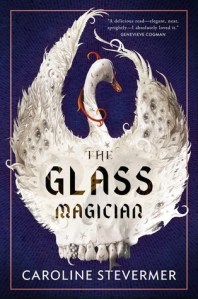
I also have to spend a moment on that cover. Yikes. It’s the kind of thing that immediately attracts the eye (indeed, I clicked on it in NetGalley just because of the swan motif), but the more you look at it, the worse it gets. It’s all kinds of creepy with the teeth and eyes, and I’m not sure it really represents well the book we have. Instead, if I had noticed these details when choosing the book off the shelf, I think I would have most likely put it back just due to how unnerving I find it all.

Overall, I wasn’t impressed with this book. It felt like the author had some really neat ideas at the very core of it, but didn’t spend enough time to fully develop anything. The writing was strong enough, but there wasn’t enough story to go around.

Rating 6: Lack luster and thin, this book didn’t hold up to the promises of its premise.

Reader’s Advisory:

“The Glass Magician” is a newer title and isn’t on any relevant lists. Bizarrely (and inaccurately) it is on “Historical Fiction 2020.”

Find “The Glass Magician” at your library using WorldCat!

Kate’s Review: “Something Is Killing the Children (Vol. 1)”

52757827._sx318_sy475_Book: “Something Is Killing the Children (Vol.1)” by James Tynion IV and Werther Dell’Edera (Ill.).
Publishing Info: BOOM!Studios, May 2020

Where Did I Get This Book: I received an eARC from NetGalley.

Book Description: When children begin to go missing in the town of Archer’s Peak, all hope seems lost until a mysterious woman arrives to reveal that terrifying creatures are behind the chaos – and that she alone will destroy them, no matter the cost.

IT’S THE MONSTERS WHO SHOULD BE AFRAID.

When the children of Archer’s Peak—a sleepy town in the heart of America—begin to go missing, everything seems hopeless. Most children never return, but the ones that do have terrible stories—impossible details of terrifying creatures that live in the shadows. Their only hope of finding and eliminating the threat is the arrival of a mysterious stranger, one who believes the children and claims to be the only one who sees what they can see. 

Her name is Erica Slaughter. She kills monsters. That is all she does, and she bears the cost because it must be done.

GLAAD Award-winning writer James Tynion IV (The Woods, Batman: Detective Comics) teams with artist Werther Dell’Edera (Briggs Land) for an all-new story about staring into the abyss.

Collects Something is Killing the Children #1-5.

Review: Thank you to NetGalley for sending me an eARC of this book!

It’s been awhile since I tackled a straight up horror comic, so when I saw “Something Is Killing the Children (Vol.1)” I was immediately interested in reading it. I am vaguely familiar with James Tynion IV, as we read one of his comics for our book club a few years ago, but I hadn’t sought him out otherwise. I went into “Something Is Killing the Children” with my expectations of what I remembered from his other comic, but those expectations were tossed out the window almost immediately. “Something Is Killing the Children” doesn’t hold back, and it jumps almost immediately into the darkness that surrounds it.

And I should probably throw content warnings out there, because this comic doesn’t shy away from a lot of gore, gore involving children.

The plot is straightforward enough, with terrible things happening in a small town and a mysterious stranger coming to fight the evil that’s hiding in the shadows. Standard stuff, but I was still immersed because I’m a sucker for small towns with dark undertones. We mostly follow our monster hunter Erica Slaughter, but we also get to see the perspective of James, one of the teens who was attacked but spared, and therefore under suspicion from the other people in town. Throw in a couple others, like the brother of a missing girl, and the police officer on the case, though theirs are not as interesting as Erica’s and James’s. That said, we do get to have a number of sides of the plot through all these strings, and we slowly learn about the monsters that are plaguing the town, and also about the town and its inhabitants. A world and a mythos is being built slowly, and this volume was very much setting up dominoes that are undoubtedly going to fall as the story goes on. I like seeing these moments of building blocks being set in place, and I liked learning what we did about the mythology of the monsters, and those who hunt them. And they are genuinely scary. And super disturbing. That content warning I gave is no joke.

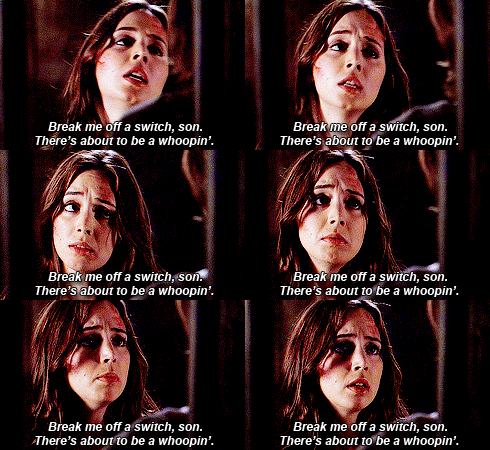
Plot aside, I also am very much intrigued by our protagonist, the mysterious Erica Slaughter. We know that she’s a monster hunter, and we know that she is part of some kind of group that goes out to take care of these things, but outside of that she is a mystery. She’s jaded, she’s determined, and she’s cold as ice, even though we see glimmers of empathy for James and his situation. She isn’t afraid to use violence if she needs to, but it’s also hinted at that this life is starting to make her weary. As someone who was a huge “Buffy” fan back in the day, she reminds me a LOT of Faith Lehane, but without the sarcasm, and just the potential damage and baggage she’s carrying. So I, of course, am so in love with her that it hurts, and I want to know EVERYTHING about her. But Tynion is keeping that close to the vest for now, which just makes me want to dive into the next arc even more, because we need more female characters that remind me of Faith Lehane.

382f3a5b4ffc061eb2108eee7663cd52
Queen. (source)

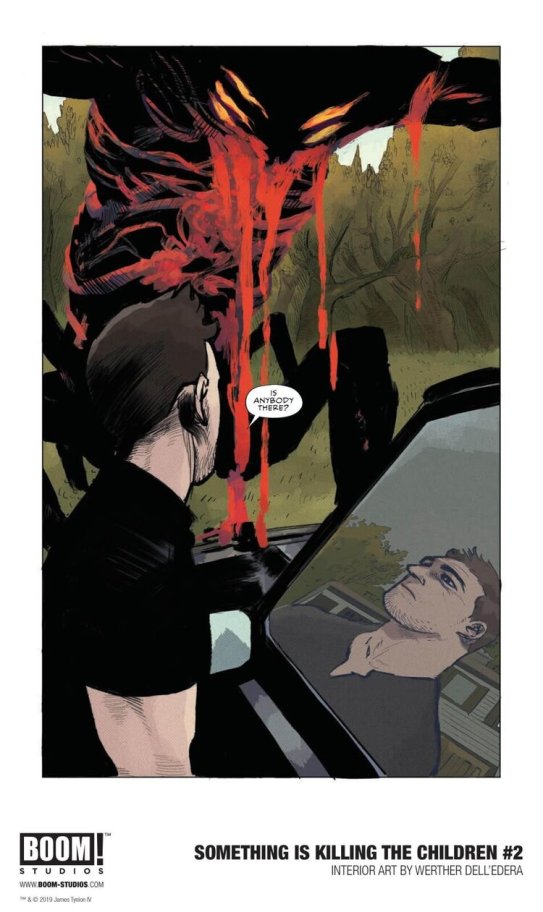
I really liked the artwork too, as it’s visceral and intense, which matches the story very well. I’m unfamiliar with Werther Dell’Edera, but his style works very well with the plot at hand. The reds are VERY red, and while other colors are muted a bit it serves for a powerful contrast that makes the violence all the more horrific.

something2
(source)

My one complaint is less to do with the story itself, and more to do with the formatting. The way that this book downloaded through NetGalley only would load one page at a time, so reading it on my screen was difficult when more creative styles layered one panel over multiple pages. I’m sure that this could be tweaked and adjusted on other eReaders and in other platforms, but it goes to show that sometimes designs with one format in mind don’t translate as well to others.

Overall, I was completely taken with “Something Is Killing the Children (Vol.1)”. I will absolutely be on the lookout for the next in the trade collection, and I can’t say that I will be terribly patient as I wait.

Rating 8: A scary horror comic with a lot of interesting potential, “Something Is Killing The Children (Vol.1)” has set up a creepy and intriguing world of monsters and monster hunters.

Reader’s Advisory:

“Something Is Killing the Children (Vol.1)” is included on the Goodreads list “North American Supernatural Realism”.

Find “Something Is Killing the Children (Vol.1)” at your library using WorldCat, or at a local independent bookstore using IndieBound!

Not Just Books: May 2020

While we do love us some books, believe it not, we do have a life outside of reading. So to highlight our other pop culture interests, on the last Monday of each month, we each will highlight three other “happenings” from the last month. Big events on favorite TV shows, new movies we’ve watched, old movies we’ve “discovered,” etc. Pretty much whatever we found of particular interest outside of the book world during the last month. Share your own favorite things in the comments!

Serena’s Picks

mv5bnzuxzjrlymetmtvkoc00ymu3ltlmmtktnwy4m2i3ztvjowmxxkeyxkfqcgdeqxvymdm2ndm2mq4040._v1_ux182_cr00182268_al_Amazon Prime Show: “Making the Cut”

As I’ve highlighted “Project Runway” in the past, it’s clear I have a thing for reality fashion competitions. I held out for quite a while on the more recent seasons of “Project Runway” due to Heidi Klum and Tim Gunn leaving the show. But the pair left to create their own show teamed up with Amazon. Overall, I like it. But I do think that it probably released at an unfortunate time with all the C19 stuff going around. The show definitely errs towards the more expensive side of fashion and the budget is clearly over the top. It makes it all read a bit strange in the current times, but that’s hardly the shows fault. I’m not sure how I feel about all of the music choices, as well, as I often think it’s kind of distracting. But Heidi and Tim are as charming as ever, and the contestants are enjoyable. It still feels as if the show is finding its footing, so I’ll be curious to see if it’s renewed for a second season and if/how it would be tweaked for that. My main takeaway is that I now think Naomi Campbell should be a judge on ALL the fashion TV series.

OneSheet (Page 1)Move: “Son of Rambow”

My husband suggested this movie the other night when we were browsing around trying to find something to watch. It’s been kind of tough lately as neither of us have been in the mood for anything too dark or heavy. He had watched this movie back when it came out, but I had never heard about it. It’s a very sweet, quirky British comedy about two boys growing up in the 80s and making a home movie called, obviously, “Son of Rambow.” The child actors are very good, and there’s a hilarious French kid who kind of steals the show at times. Overall, it was just the kind of heart-warming movie we both needed, and I highly recommend it as a family movie if you’re looking for something of that sort.

mv5bntu5m2zjnwitmjgwyi00zmmwlwiynmitmwjhogi5y2y4otfjxkeyxkfqcgdeqxvymtawmzm3ndi3._v1_ux182_cr00182268_al_Web Series: “Some Good News”

John Krasinski is charming as heck, so it’s no surprise that his web series “Some Good News” took off like wildfire. It was one of those perfect marriages of a good idea, great time, and a perfect host to pull it off. It seems a simple enough idea, but there’s no denying about appealing the idea of a show that features only happy and uplifting stories is in a time when you can barely open a web browser without being bombarded by travesty. It doesn’t hurt that Krasinski has a whole host of celebrity friends he can call upon to pop in for surprise visits. As a perennial fan of “The Office,” the few episodes that included visits from random cast members were some of my favorites. But there’s stuff in there for everyone. In fact, the show ended up being so popular that Krasinski sold it to CBS All Access where it will continue to live. We’ll see how well it holds up in that format and over time, but I’m happy enough with it even as a flash-in-the-pan event that came at just the right time.

Kate’s Picks

cad0ee8eb3fd943d3c588bf372f3a5eaTV Show: “The Sopranos”

Since I have been spending more time at home due to the pandemic (though let’s be honest, with an infant at home I wasn’t really going out during the week anyway), I decided that I needed to start tackling shows that were on my TV Bucket List. The first on the list was “The Sopranos”, the show that is credited with being one of the shows that ushered in our current Golden Age of TV. For those who may not know, it follows Mafia Capo Tony Soprano as he navigates his work with the Mob, and the various dysfunctions within his family life. He does this by going into therapy to treat his anxiety attacks and depression. Is it dark? Absolutely. Is it fantastic? Also absolutely. I am glad that I am finally able to experience this show.

mv5botgxode5yjmtmje2oc00ytu5lwfmntgtztc5zjrkngm4zgjmxkeyxkfqcgdeqxvynjq0mdqxotm40._v1_Netflix Show: “Giri/Haji”

Another show that involves organized crime, but this time it’s the Yakuza, and we’re on the side of law enforcement. Kind of. Inspector Mori Kenzo, a detective in Tokyo, is dealing with the loss of his brother Yuto, who was in the Yakuza and assumed dead by his family. But when a murder of a nephew of a high ranking Yakuza officer happens in London, gang leaders tell Kenzo they think it was Yuto, and a gang war looms on the horizon. Kenzo goes to London to try and find his brother, and meets a DC named Sarah, and a sex worker named Rodney, both of whom may be able to help him. This suspenseful and gripping show really had me hooked, and the themes of family, loyalty, and duty all came together to make it all the more high stakes.

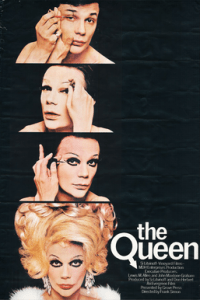
the_queen_1968_movie_posterFilm: “The Queen”

No, not the Helen Mirren one! The documentary that shed light and insight into the drag pageant world! “The Queen” follows a drag pageant in New York with a focus on the Mistress of Ceremonies, Sabrina, as she organizes it. We also get to meet and get to know some of the contestants, such as Sabrina’s protege Rachel Harlow, and the now infamous Crystal LaBeija (whose completely appropriate rant about her final placement in the pageant and the inherent racial bias in the drag scene is LEGENDARY). There are also some really interesting looks at the social lens of drag in the 1960s, and how race and gender was received as well as moments of political candor (one contestant talks about trying to enlist in the military, but being turned away for being ‘too feminine’). Honestly, I came for Crystal LaBeija, but enjoyed the entire thing.

What have you been enjoying over the last month?